Our Top Picks


What's inside
- Why a shaped tube changes the pictures a lens makes
- Sony ALC-SH codes: reading the model numbers
- Bayonet twist-lock hoods versus screw-in hoods
- Petal geometry for wide angles, round geometry for telephoto
- Vignetting: the wrong hood on the wrong lens
- Flare, ghosting, and contrast: the optical case for a hood
- Physical protection for the front element
- The sliding window: adjusting a circular polarizer with the hood on
- Third party hoods: Haoge metal, JJC molded copies, and printed hoods
- Hood lookup for popular Sony E-mount lenses
- Tamron and Sigma E-mount lenses: hoods in the box
- Reversed hoods, bags, and everyday carry
- Check prices on Amazon
- When a hood hurts: flash, ultra-wide, and other exceptions
As an Amazon Associate I earn from qualifying purchases. This post may contain affiliate links at no extra cost to you.
A lens hood looks like the simplest accessory in a camera bag: a shaped tube of plastic or metal that clicks onto the front of a lens. Yet the wrong hood can darken the corners of every frame, the right hood can rescue contrast on a bright afternoon, and a missing hood can leave the front element one dropped bag away from a scratch. For Sony E-mount shooters the subject has its own vocabulary, built around ALC-SH model codes, bayonet mounts tuned to a single lens, and a split between petal shapes for wide angles and round shapes for longer focal lengths. This guide works through that vocabulary in full.
Affiliate disclosure: This article contains affiliate links, and the site may receive a commission from purchases made through them, which helps fund the site at no additional cost to the reader. The recommendations and explanations here come from published specifications, manufacturer manuals, and maker documentation; the site does not handle or use the hoods and lenses discussed in person. Hood codes, dimensions, and compatibility notes reflect what Sony and third party makers publish, and readers should verify the exact code for their lens variant before ordering a replacement.
The sections below start with what a hood does optically, then decode the Sony naming system and the two attachment methods, bayonet and screw thread. From there the guide covers geometry, vignetting on APS-C and full frame bodies, flare and ghosting behavior, the sliding filter window found on many Sony hoods, and the third party market led by metal hoods from Haoge and molded copies from JJC. A lookup section ties hood codes to popular lenses, from the 16-35mm zooms to the 85mm f/1.8. Photographers building out a first kit may also want the camera side of the story at best 4k mirrorless cameras before spending on accessories.
Why a shaped tube changes the pictures a lens makes
A lens hood has one optical job: keep light that is not part of the picture from reaching the front element. Sunlight or a bright window just outside the frame can strike the glass at an angle, bounce among the elements, and land on the sensor as flare, a washed out haze that lowers contrast across the whole image, or as ghosting, the bright polygons and arcs that mirror the aperture shape. A hood walls off much of that stray light before it reaches the glass. The deeper and better matched the hood, the wider the range of angles it blocks, which is why hood design is tied to the field of view of a specific lens.
The second job is mechanical. A hood holds the front element back from the world, so a lens set face down on a table rests on the hood rim, a bag bump lands on plastic rather than glass, and rain or snow meets the hood first. Photographers who shoot in crowds, at events, or around children treat the hood as the cheapest insurance in the bag. It also gives fingers a place to steady the lens that is not the focus ring or the front element. None of these roles needs electronics or glass, which is why a hood can do all of them for the weight of a few grams.
The third job is easy to overlook: a hood signals the working shape of the lens. Its length and opening are a physical summary of the field of view, and experienced shooters read a lens by its hood. A short wide petal hood means a wide angle that sees a broad scene and needs clearance at the corners. A long round hood means a telephoto that sees a narrow slice and can accept deep shading. When a hood looks wrong for the lens, it usually is wrong, and the sections on geometry and vignetting below explain the cost of that mismatch in visible terms.
Cost is the last part of the case, and it is a short one. A genuine Sony hood is a modest part compared with the lens it protects, faithful copies cost less again, and even a machined metal hood costs a small fraction of a front element repair. The economics explain why experienced photographers treat a missing hood as a fault to fix rather than a quirk to live with. A lens bought used without its hood should be priced with the replacement already in mind, and the code lookup in this guide tells the buyer exactly which part closes the gap.
Sony ALC-SH codes: reading the model numbers
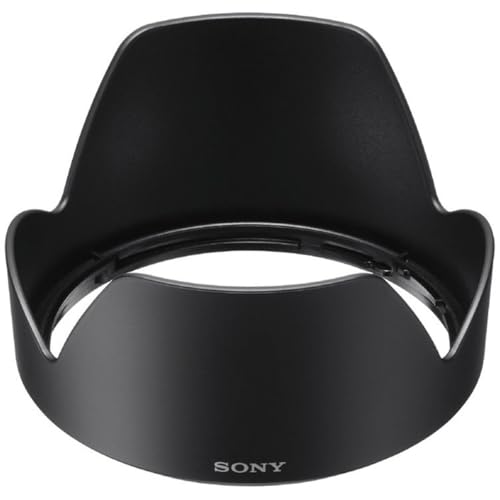
Sony names its lens hoods with the prefix ALC-SH followed by a number, as in ALC-SH142 or ALC-SH164. ALC marks the part as a lens accessory in Sony naming, and SH stands for the hood family. The number identifies a specific hood drawn for a specific lens or a small group of lenses that share a front geometry. The code is printed in the lens manual, molded into the hood itself on many models, and listed on the Sony support page for the lens. When a hood is lost, that code, rather than the lens name alone, is the reliable search term for a genuine replacement.
The codes do not decode into dimensions. A higher number does not mean a larger hood, and two hoods with nearby numbers may fit lenses of very different sizes, because the numbering follows release order more than geometry. This is why guessing from a photograph is risky: two petal hoods can look near identical in a listing image and differ by a few millimeters in bayonet diameter or petal depth. The manual for the exact lens variant settles the question, and Sony publishes those manuals and accessory lists by lens model on its support site.
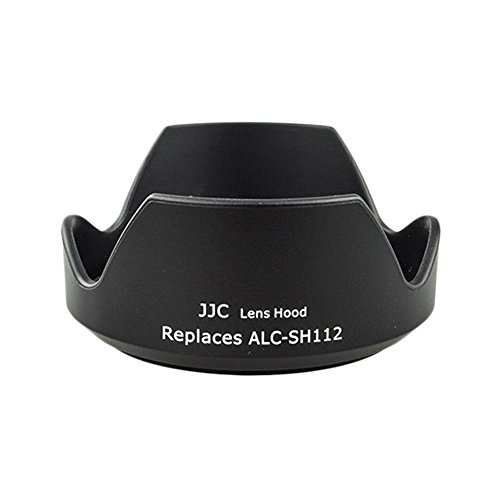
Third party makers organize their catalogs around the same codes, which makes the Sony system a shared language. A JJC copy will name the ALC-SH code it reproduces, and a Haoge metal hood will name the lens and often the code it replaces. Keeping the code in the notes for each lens, in a phone note or on a label inside the bag, turns a lost hood from a research project into a two minute order. Shooters who own several E-mount lenses will find the lookup section later in this guide a useful starting point for building that list.
Bayonet twist-lock hoods versus screw-in hoods
Most Sony E-mount lenses use a bayonet hood mount. Lugs on the lens barrel near the front engage slots in the hood, and a short twist locks the hood in place with a click or a firm stop. Alignment marks, usually a dot or line on the lens and a matching mark on the hood, show the starting position. The bayonet system is fast, it indexes the hood to the correct rotation every time, which matters for petal hoods that must sit at one exact angle, and it reverses for storage, as a later section describes. Wear shows up as a loose fit or a missing click, and a worn hood is a replacement candidate.
Screw-in hoods follow the other path: they thread into the filter thread at the front of the lens and are sized by that thread diameter, such as 49mm, 55mm, 67mm, or 77mm. This pattern is common on older designs, on some third party lenses, and on compact primes where the maker chose simplicity. A screw hood cannot index a petal shape reliably, since the thread may stop at any rotation, so screw hoods are almost always round. They also stack with filters in either order depending on the design, and a hood threaded onto a filter can be hard to remove in cold weather with gloves on.
Each system fails in its own way. Bayonet hoods can crack a lug in a drop or loosen after years of twists, and a loose hood can rotate into the frame on a wide lens. Screw hoods can cross thread, bind onto a filter ring, or vignette when stacked over a thick filter on a wide lens. Knowing which system a lens uses also predicts the replacement market: bayonet hoods are lens specific and priced as parts, while screw hoods are generic by diameter and cheap, with fit quality that varies. The lens manual names the system, and the front of the barrel shows it at a glance.
A note on markings rounds out the bayonet story. Most Sony hoods carry a small index line near the mount and a second mark for the reversed position on some models, and the lens barrel carries the matching dots. In dim venues the marks are hard to see, and photographers learn the fit by feel: the hood drops on with the petals level, then twists a short arc to a stop. A hood that needs force is misaligned, and forcing it is how lugs crack. A quarter turn of patience at the start of a shoot is cheaper than a replacement part and a week of shooting without shade.
Petal geometry for wide angles, round geometry for telephoto
A petal hood, also called a tulip or flower hood, has a scalloped rim: longer petals at the top and bottom, shorter petals at the sides, and cutaways at the corners. The shape mirrors the rectangular frame. A lens sees a rectangle, not a circle, so the corners of the frame reach farther diagonally than the edges do. A round hood deep enough to shade the top edge would block the corners of the image, while a petal hood extends shade where the frame is narrow and pulls back where the frame is wide. The result is the deepest effective shading a wide angle lens can wear without entering its own picture.
Round hoods suit standard and telephoto lenses because their narrow field of view leaves room for a deep, even tube. An 85mm or 135mm lens can carry a hood far longer than any wide angle could tolerate, and that length pays off in strong backlight and in rain. Some round hoods taper, some are straight cylinders, and some carry a matte inner surface or fine ridges to trap reflections inside the tube. On a telephoto the hood also becomes a grip and a rest, steadying the lens on a fence or a monopod without touching the barrel.
Zoom lenses complicate the geometry because the field of view changes with focal length. A hood for a 24-70mm zoom must clear the frame at 24mm, so at 70mm it shades far less than a dedicated 70mm hood would. This compromise is built into every kit zoom hood and is one reason prime lenses, with hoods drawn for one focal length, often hold contrast better in hard light. A few makers have tried adjustable or two piece hoods, but the mainstream answer remains a hood sized for the wide end. Understanding that compromise stops a common misdiagnosis, where a zoom is blamed for flare that its hood was never shaped to prevent.
Vignetting: the wrong hood on the wrong lens
Vignetting from a hood is mechanical and unforgiving: the hood itself enters the field of view and blocks the corners or edges of the frame. It shows as hard dark corners rather than the soft falloff of optical vignetting, and it appears at the wide end of a zoom first. Causes include a hood made for a different lens, a petal hood mounted one bayonet step off its index so a long petal sits at a corner, a screw hood stacked over a thick filter, and a hood that has warped or cracked and sags into the frame. The fix begins with reseating the hood to its marks before any money is spent.
Body format changes the risk. A hood drawn for a full frame lens used on an APS-C body has spare clearance, because the smaller sensor reads the center of the image circle. The reverse pairing is the trap: a hood drawn for an APS-C lens, fitted to a full frame lens of similar mount diameter, may clear the small sensor and cut into the full frame corners. Sony E-mount spans both formats on one mount, so hoods cross format lines in bags and in used listings. Checking the code against the lens, not the body, keeps the pairing honest.
Filters add a quieter version of the same problem. A slim filter under a bayonet hood changes nothing, because the hood mounts to the barrel, but a standard thickness filter plus a step ring plus a screw hood can push the rim into the frame on a wide lens. Wide angle shooters should check corners at the widest aperture and the shortest focal length after any front of lens change, since that is the combination where clearance is tightest. Shooters moving between formats may find the format discussion at best compact mirrorless digital cameras helpful background for why one mount serves two sensor sizes.
Flare, ghosting, and contrast: the optical case for a hood
Flare is not one artifact but a family. Veiling flare is a general haze that lifts the dark tones and flattens the scene, ghosting is the set of bright shapes that appear when a strong source sits in or near the frame, and streaks or spots can come from a dirty or wet front element. A hood attacks the first two when the light source sits outside the frame, which is the common case in outdoor shooting: sun over a shoulder, a stadium light above the stands, a window beside a portrait subject. When the source is inside the frame, the hood can do little, and lens coatings carry the fight.
Contrast is where the hood earns its keep in ordinary light. Even on an overcast day, sky light from outside the frame can wash a scene gently, and a hood restores some snap to shadows and color. The effect is modest per frame and large across a year of shooting, rather like the difference between a clean and a dusty front element. Portrait shooters working near windows, landscape shooters working near sunrise, and event shooters under mixed venue lights all work in the angles where stray light is constant. For them the hood is not an accessory for bad days; it is part of the lens.
There is a limit worth stating plainly. A hood cannot fix flare that starts inside the lens from a source in the frame, cannot match a flag or a carefully placed hand for a specific setup, and cannot help when the front element itself is smeared or wet. It also cannot replace lens coatings, which is why two lenses with similar hoods can behave differently against the light. The hood is the first and cheapest layer of a system. Used every time, it removes the flare that never needed to happen and leaves the photographer free to manage the rest with angle, timing, and exposure.
A short field routine makes the flare discussion concrete without any special gear. On a bright day, frame a shaded subject with the sun just outside the top corner of the frame, and note the contrast in the shadow areas. Then shade the front element with a hand held well clear of the frame and note the change. The difference between those two views is roughly what a correct hood delivers on every frame, with no hand at risk of entering the picture. Repeating the check at a few angles shows why petal depth matters most at the corners, where the frame reaches widest.
Physical protection for the front element
The front element of a modern lens is tougher than it looks, with hard coatings that shrug off careful cleaning, but it is also the most exposed surface in the kit and often the most costly to repair. A hood moves the contact point forward. The lens that tips off a table lands on the hood rim, the camera swinging from a strap meets a door frame with plastic first, and the bag that gets set down hard presses on the hood rather than the glass. Event and travel photographers, who work in motion and in crowds, rate this protection as the main reason the hood stays on.
Weather protection is the second half of the story. A deep hood keeps rain and snow off the front element for longer, and every drop that never lands is a spot that never needs wiping mid shoot. In dusty or sandy places the hood slows the grit that reaches the glass and the filter thread. None of this makes a lens weather sealed on its own; sealing lives in the lens and body design, with gaskets and tolerances the maker specifies. The hood is a buffer that reduces how often the sealing and the coatings are asked to prove themselves.
A clear protective filter is the usual alternative offered for the same job, and the two are not enemies. A filter guards against contact and grit even with the hood off, while a hood guards against flare, which a filter can worsen by adding two more air to glass surfaces. Many working photographers run both; many run the hood alone and skip the filter except in harsh places. The deciding facts are the shooting environment and the value of the lens. What the hood does better than any filter is cost nothing in image quality when it is the correct hood, correctly seated.
The sliding window: adjusting a circular polarizer with the hood on
A circular polarizer must rotate to do its work, and a deep hood puts the filter ring out of fingertip reach. Sony answers this on many hoods with a small sliding window or removable panel on the underside of the hood. Slide the window open, reach a fingertip to the filter ring, rotate the polarizer while watching the effect through the viewfinder, then close the window. The feature appears across much of the Sony hood range, from mid range zooms to the G and GM lines, and its presence is noted in lens manuals and on the hood description in Sony support material.
The window matters because the alternative is removing the hood for every polarizer adjustment, which trains photographers to leave the hood off or leave the polarizer unadjusted, and both habits cost images. Landscape shooters working a shoreline or a forest canopy rotate the polarizer often as the angle to the sun changes, and the window keeps that adjustment to a few seconds. The window also helps with variable neutral density filters, which rotate the same way, a point video shooters appreciate when light changes during a scene.
Not every hood has the window, and third party copies vary. Some JJC copies reproduce the window faithfully, others omit it, and most metal screw or bayonet hoods from Haoge skip it in favor of a clean tube. A buyer who relies on a polarizer should treat the window as a listed feature to confirm, the same way the ALC-SH code is confirmed. A hood without a window is not a bad hood, but it changes the daily routine with filters, and routines decide whether accessories get used or get left in the bag.
Third party hoods: Haoge metal, JJC molded copies, and printed hoods
Haoge occupies the metal end of the third party market. Its hoods are machined from aluminum, often with a matte black finish and fine internal threading or flocking to manage reflections, and the range covers popular Sony primes and zooms with bayonet fit where the original is bayonet. Metal hoods feel dense and precise, shrug off knocks that would crack plastic, and suit photographers who like the handling of older metal era lenses. The trade offs are weight, a harder surface against the front of the lens in a bag, and in some designs the loss of the sliding filter window.
JJC takes the opposite approach: molded copies that follow the original Sony hood shape closely, including petal geometry and, on many models, the filter window. For a lost or cracked hood, a JJC copy in the correct ALC-SH pattern restores the factory fit and function at a fraction of the genuine part cost, and the bayonet fit on the popular codes is generally faithful. Plastic quality and the crispness of the lock vary by model, so the copy for a heavily used code is a safer bet than an obscure one. For lenses where the genuine hood is costly or slow to source, this category keeps cameras working.
Printed hoods form the third branch. Photographers with 3D printers publish and sell hoods for unusual lenses, for filter combinations no maker anticipated, and for vintage glass adapted to E-mount, where no factory hood exists. A printed hood can be tuned to a measured field of view and printed in matte filament that handles stray light well. Fit depends on the printer and the file, and bayonet lugs in printed plastic wear faster than molded ones. Between the three branches, the pattern is consistent: match the code or the measured geometry, confirm the filter window if it matters, and treat fit at the corners as the deciding check. Kit builders comparing whole systems can cross reference autofocus performance across bodies at best autofocus mirrorless cameras while sorting accessories.
Hood lookup for popular Sony E-mount lenses
The wide zooms anchor the lookup list. The Sony FE 16-35mm f/2.8 GM uses the ALC-SH149 petal hood, and the FE 16-35mm f/4 PZ uses the ALC-SH167. The FE 24-70mm f/2.8 GM uses the ALC-SH141, while the FE 24-70mm f/2.8 GM II moved to the ALC-SH168, a reminder that a mark II lens often changes the hood even when the name barely changes. The FE 24-105mm f/4 G uses the ALC-SH152. Each of these hoods is a petal design sized to the wide end of its zoom, and each reverses over the barrel for storage in a bag.
The fast primes carry their own codes. The FE 85mm f/1.8 uses the ALC-SH150, a round hood that suits the short telephoto field of view. The FE 35mm f/1.8 uses the ALC-SH159, and the FE 50mm f/1.8 uses the compact ALC-SH146. The FE 55mm f/1.8 ZA, an older Sonnar design, uses the ALC-SH131. These prime hoods are smaller, cheaper to replace, and easier to mix up in a shared bag, which is exactly why the code molded into the hood matters more than a family resemblance in a drawer of similar black plastic.
APS-C lenses follow the same system with their own numbers. The E 16-55mm f/2.8 G uses the ALC-SH161, and the E 70-350mm f/4.5-6.3 G OSS uses the ALC-SH160, a deep round hood for the telephoto end. Codes in this guide reflect Sony published accessory lists, and because Sony revises lenses and hood assignments across production runs, the manual for the exact lens in hand remains the final word. A mismatch between a listing and the manual is a reason to walk away from the listing, not from the manual. Readers speccing a first kit around these lenses can start from the models gathered at best entry mirrorless cameras and work outward to glass and hoods.
Two more lookup habits protect buyers in the used market. First, match the hood code to the lens version, not only the lens name, because a mark II or a revised production run can change the front barrel while the marketing name stays close. Second, treat a listing that shows a hood mounted with its petals rotated off level as a warning sign about the seller rather than the part, since a genuine hood on the correct lens seats square. A minute spent on the Sony support page for the lens, where the hood appears in the accessories list, settles both points before payment.
Tamron and Sigma E-mount lenses: hoods in the box
Third party lens makers treat the hood as part of the lens rather than an accessory hunt. Tamron E-mount lenses such as the 28-75mm f/2.8 Di III series and the 17-28mm f/2.8 ship with a dedicated hood in the box, shaped for the lens and using a bayonet mount with alignment marks much like the Sony pattern. Tamron names its hoods with HA codes, for example HA047 for a recent 28-75mm generation, and lists the code in the lens specifications. A lost Tamron hood is ordered by that code through Tamron service or a dealer, and generic copies trail the genuine part by a wide margin.
Sigma follows the same practice across its Contemporary, Art, and Sport lines for E-mount. The 24-70mm f/2.8 DG DN Art ships with the LH878-03 petal hood, and Sigma primes ship with hoods matched to their barrels, some with a rubber grip surface on the hood itself. Sigma publishes hood codes in the accessories section for each lens. Because these hoods are tuned to the lens and included from the start, the Sigma and Tamron owner rarely faces the Sony style code hunt, but the same rules apply when a hood cracks: replace by code, seat it to the marks, and check the corners at the wide end.
The practical lesson for a mixed kit is to record every hood code in one place. A bag that holds a Sony body, one Sony zoom, a Tamron standard zoom, and a Sigma prime holds four hoods from three naming systems, and they all look like black plastic at a glance in low light. A strip of tape inside each hood with the lens name, a habit borrowed from rental houses, ends the mix ups. It also speeds the sad day when a hood stays behind at a location: the code list turns a vague loss into a precise order.
Reversed hoods, bags, and everyday carry
Bayonet hoods reverse. Twist the hood off, flip it so it wraps back over the lens barrel, and twist it onto the same lugs in the storage position. The lens keeps most of its protection for the barrel, the package shortens by the full hood length, and the camera fits the bag slot it was measured for. Sony designs its hoods and cases around this trick, and the reversed hood still allows the lens cap to seat on many models. For travel, where bag volume is fixed and lenses compete for slots, the reversed position is the difference between a two lens kit and a three lens kit.
Reversed carry has two small costs. The focus and zoom rings can be partly covered by a reversed hood on some lenses, which slows the first frame after the camera comes out of the bag, and a reversed petal hood can press against a hand grip on compact bodies. Most shooters accept the trade and flip the hood forward when the camera goes on the strap. The habit to build is a fixed sequence: camera out, hood forward to its click, cap off. Rental houses and working photojournalists run on sequences like this because they remove a decision from a busy moment.
Storage at home deserves the same order. Hoods stored mounted, forward or reversed, cannot be lost in a drawer migration, and they protect the lens on the shelf. A hood stored separately should live with its lens name taped inside, as the earlier sections suggest. Spare hoods for the most used lenses are a rational purchase for working photographers, since a cracked hood discovered the night before a job is a scramble. For hobby kits, the genuine hood plus one faithful copy for the main lens covers nearly every realistic accident.
Check prices on Amazon
Live listings for the shortlist in this guide are pulled from Amazon below, so prices and availability are always current at the moment you look.

When a hood hurts: flash, ultra-wide, and other exceptions
The built in flash is the clearest case where a hood works against the picture. A flash sitting just above the lens axis fires into the back of a deep hood, and the hood shadow falls across the lower part of the frame, worst at wide angles and close distances. Sony manuals warn about this pairing for lenses with long hoods, and the fix is simple: remove the hood when using the pop-up or built in flash, or move the light off the camera axis with an external unit on a bracket or a stand. The hood is not at fault; the geometry of a light source inches from the lens is.
Ultra-wide lenses test the other limit. At focal lengths near 12mm to 16mm on full frame, the field of view is so broad that some lenses carry a fixed, shallow petal hood built into the barrel, because any removable hood deep enough to help would enter the frame. Fisheye lenses go further and treat the tiny built in hood as a handling aid rather than an optical tool. On these lenses the hood decision is already made by the maker, and the photographer manages flare with angle and with a hand or a flag held just outside the frame, the oldest shade in photography.
Reflections and filters close the list of exceptions. A hood cannot stop flare from a bright source inside the frame, and a cheap uncoated filter under a good hood can undo the hood work by adding reflections of its own. Video shooters using matte boxes follow the same logic at a larger scale, swapping the hood for a box that holds filters and flags. The through line of this guide is that a hood is a matched part of a specific lens, not a generic tube: correct code, correct seating, correct call on the rare days it should come off. Get those three right and the plain black accessory quietly improves contrast, protects the glass, and asks for nothing in return.
Related guides
- Best 1080p IP Cameras: PoE Domes, Turrets, Bullets and a PTZ That Earn Their Cable
- Best AC Powered Wireless Security Cameras: Wi-Fi Data, Mains Power, Zero Sleep
- Best Sony Full Frame Cameras for Astrophotography: Sensitivity vs Resolution
- Best Canon Point and Shoot Digital Cameras: PowerShot Picks From Pocket Compacts to Travel Zooms


