What's inside
- Key Takeaways
- Quick Picks
- How Did We Weigh Cameras for Work Done in the Dark?
- What Was the Star Eater Issue, and Should It Worry You Now?
- Which Matters More at Night: the Body or the Lens?
- How Do You Actually Run a Night Session with These Bodies?
- What About Trackers, Stacking and the Software Half of the Night?
- What Separates the Five Linked Bodies Under a Dark Sky?
- Which Body Fits Each Kind of Night Photography?
- What Should You Spend on After the Body?
- What Ruins More Astro Sessions Than Any Camera Choice?
- How Do You Test a Body’s Night Manners Before Committing?
- Final Recommendation
- Frequently Asked Questions
- Related Guides
As an Amazon Associate I earn from qualifying purchases. This post may contain affiliate links at no extra cost to you.
gizmoverdict.com is reader-supported. When you buy through links on our site, we may earn an affiliate commission.
Where to buy: Sony’s full-frame bodies are stocked widely, and the five linked cameras below all point to retail pages confirmed during this guide’s preparation. Night-sky work is hard on equipment budgets in a specific way — the lens matters as much as the body — so buy the body through a route with painless returns while you confirm the copy of any fast wide lens you pair with it, because sample variation in wide-open corner performance is a real phenomenon that daylight photographers never meet.
The best Sony full frame cameras for astrophotography divide along a fault line that daylight photographers rarely think about: pixel size versus pixel count. A 12-megapixel full-frame sensor spreads its light across enormous photosites that sip photons and shrug at high ISO; a 61-megapixel sensor crowds smaller photosites together and repays you with mosaics, crops and print sizes the low-resolution bodies cannot touch. Both philosophies are represented in this guide’s five linked picks, because both are legitimately right — for different night skies, different lenses and different definitions of the finished picture.
Honesty about measurement belongs at the top of an astrophotography guide, so here is ours: this article contains no invented laboratory noise figures. High-ISO behaviour is described the way working night photographers actually judge it — by reputation earned across thousands of stacked and single frames, by how a sensor behaves in long exposures at 2 a.m. temperatures, and by the community’s accumulated evidence — not by decimal numbers we cannot verify. Where Sony’s own history complicates the story, notably the “star eater” controversy that attached to earlier bodies’ long-exposure noise reduction, the relevant review says so and explains what it means for the camera in front of you.
One more framing before the reviews, because it decides how to read them: astrophotography is the genre where the photographer’s calendar matters as much as the camera’s sensor. Milky Way season, moon phase, and the simple willingness to be awake at 3 a.m. in February govern output more than any body choice in this article. The reviews below therefore judge each camera partly on friction — how much effort stands between a clear sky appearing and a finished frame — because the body that lowers that friction gets used on the marginal nights, and the marginal nights, accumulated over years, are where a night photographer’s portfolio actually comes from.
The sixth pick is deliberately different. Dedicated astro-converted cameras — factory specials in the mould of Canon’s discontinued EOS Ra, and H-alpha conversions performed by specialist services — are the connoisseur’s route to nebula work, and they appear here as a prose-only discussion because our listing check found no clean Amazon listing for that class. They are included because a guide that omitted the conversion route would mislead deep-sky photographers about their best option, and excluded from the links because we do not attach purchase routes we could not verify.
Key Takeaways
- Pixel size is the astrophotographer’s first decision: the 12.1MP bodies gather light with an ease the high-resolution bodies trade for detail.
- The a7S III remains the low-light reference in Sony’s line — its reputation rests on clean high-ISO files and well-behaved long exposures.
- Sony’s early “star eater” spatial filtering drew justified criticism on older bodies; the current generation handles long exposures far more honestly.
- The a7R V’s 61MP sensor is a mosaic and landscape-astro instrument: tracked and stacked, its detail is in another class entirely.
- Screen articulation is a night feature, not a convenience — a camera on a tripod pointed at the zenith is operated from below, in the dark, with gloves.
- Converted H-alpha bodies are the deep-sky specialist route, bought through conversion services rather than listings, with warranty consequences stated plainly.
Quick Picks
| Pick | Badge | Why it earns its place |
|---|---|---|
| Sony a7S III | Best overall | The 12.1MP low-light specialist whose huge photosites and clean high-ISO output define easy night-sky shooting. |
| Sony a7R V | Best resolution | 61MP for tracked mosaics and galactic-core landscapes where detail, not sensitivity, is the limiting factor. |
| Sony ZV-E1 | Best compact full-frame | The a7S-class 12.1MP sensor in a smaller, lighter body for hike-in dark sites — with no viewfinder, stated upfront. |
| Sony a7 IV | Best hybrid value | 33MP that balances night sensitivity against daylight resolution, for photographers who shoot around the clock. |
| Sony a7C II | Best for travel | The 33MP hybrid sensor in a rangefinder-sized body that disappears into a travel kit until the sky clears. |
| Dedicated astro-converted bodies | Best deep-sky specialist route | H-alpha-sensitive conversions discussed without a link — the nebula photographer’s tool, sourced through specialists. |
How Did We Weigh Cameras for Work Done in the Dark?
Daylight criteria were inverted where the night demands it. High-ISO file character came first — not a laboratory number, but the sensor’s established behaviour when a Milky Way core must be lifted from a single frame or a short stack at the ISOs night work actually uses. Long-exposure behaviour came second: how the body treats faint stars during the multi-second and bulb exposures that are this genre’s grammar, which is where the star-eater history had to be examined body by body rather than waved at. Third was the physical night workflow — screen articulation for zenith-pointing tripods, control layout usable by touch, battery endurance in the cold, and an intervalometer or bulb workflow that does not fight the photographer at 3 a.m.
Lens ecosystem shadowed every judgement. A night body is only as good as the fast wide glass in front of it, and Sony’s E-mount holds an unusually deep bench of astro-grade wides — the 14mm and 24mm GM primes and the 20mm G among them — which is a structural reason this guide can recommend across five bodies with confidence. We also weighed the two sensor philosophies against the two dominant night genres: untracked and lightly tracked Milky Way landscape work, which rewards sensitivity, and tracked deep-sky and mosaic work, which rewards resolution and patience in equal measure.
What Was the Star Eater Issue, and Should It Worry You Now?
Some background, because the term still haunts Sony astro discussions. On several earlier Sony bodies, the camera’s noise reduction applied spatial filtering to long exposures — most notoriously in bulb mode — that could erase or dim the faintest stars, treating pinpoint light sources as noise to be cleaned. Astrophotographers noticed stars vanishing between otherwise identical frames, documented it thoroughly, and the nickname stuck. For single-frame Milky Way work at a few seconds it was largely a non-issue; for long tracked exposures of faint deep-sky fields, it was a genuine defect in the tool.
The current generation’s position is materially better, and this guide states it carefully rather than triumphantly. Sony adjusted its long-exposure processing across successive bodies, and the cameras in this guide — the a7S III foremost among them — have built their night reputations in a community that tests exactly this behaviour and publicises failures loudly. That earned reputation, not a specification sheet, is the evidence we rely on. The practical advice is unchanged for any body: shoot a test sequence at your intended exposure length on a rich star field before the trip that matters, and inspect the faintest stars at full magnification. Ten minutes of testing outweighs a decade of forum argument.
Which Matters More at Night: the Body or the Lens?
The lens, and it is not close — a truth this guide states before the reviews so the reviews can be read in proportion. A fast, well-corrected wide prime is the astrophotographer’s primary instrument: its aperture sets the exposure, its corner correction decides whether stars at the frame’s edge are points or seagulls, and its coma behaviour is the difference between a printable galactic core and a disappointing one. Sony’s E-mount is blessed here, with the 14mm f/1.8 GM, 20mm f/1.8 G and 24mm f/1.4 GM forming a fast-wide bench few systems match, plus a third-party ecosystem that keeps widening it.
The body’s contribution is real but secondary: sensitivity and long-exposure manners from the sensor, a screen you can compose with at the zenith, and controls that survive gloves and darkness. Buy the body that fits your wider photography from this list, then spend the serious money on the wide prime, a sturdy tripod and — when the bug bites — a star tracker. That ordering is how the photographers whose work fills the astro forums actually allocated their budgets.

Sony a7S III — Best overall
The a7S III’s astrophotography case is written in its pixel pitch. Twelve megapixels spread across a full-frame sensor means photosites of a size no high-resolution body can imitate, and the consequences at night are exactly what physics promises: at the high ISOs Milky Way work demands, its files stay clean, colour stays true in the faint nebulosity that cheaper files turn to mud, and single untracked frames emerge with a completeness that reduces the stacking burden on everything except serious deep-sky work. Its dual-gain sensor architecture is part of that story — the second gain stage arrives precisely in the ISO territory where night photographers live.
The body around the sensor was clearly designed by people who shoot in the dark. The fully articulating screen swings out and tilts for the zenith-pointing tripod geometry that defines this genre, the menus and controls survive operation by touch, and the electronic viewfinder’s resolution makes manual focus on a bright star — the focusing method that actually works at night — a precise rather than approximate act. Battery endurance from the Z-series pack is the strongest in this guide, which at freezing temperatures on a mountain is not a convenience but a session-saver. Its in-body stabilisation is irrelevant on a tripod and mildly useful for the handheld twilight scouting that precedes the night’s real work.
Its compromises are the mirror of its virtues. Twelve megapixels forgives nothing in composition — crop a frame meaningfully and the file thins fast — and landscape photographers who print large in daylight will feel the ceiling that night shooters never touch. It is also a video-famous camera carrying a video-famous price, and a stills-only buyer funds capabilities they may never open. But for the night itself, nothing in Sony’s line makes the work easier: this is the body that turns a clear dark sky into a photograph with the least fighting, and that is the definition of best overall in this guide.
- Sensor: 12.1MP full-frame backside-illuminated Exmor R, dual-gain output
- High-ISO character: the cleanest in this guide at astro working sensitivities
- Screen: fully articulating — composed for zenith-pointing tripod work
- Stabilisation: 5-axis in-body, for the twilight hours around the session
- Battery: Z-series endurance, the strongest cold-night stamina here
- Focus at night: high-resolution EVF makes star-point manual focus precise
Strengths
- Enormous photosites deliver clean, colour-true files at working night ISOs.
- Long-exposure behaviour has earned the community’s trust after the star-eater era.
- Articulating screen and battery life suit real sessions, not just specifications.
Trade-offs
- 12.1MP leaves no cropping headroom and caps large daylight printing.
- You are paying for an elite video specification whether you use it or not.
- Resolution-led genres — detailed landscapes, wildlife — belong to other bodies.
Best for: Milky Way and nightscape photographers who shoot untracked or lightly tracked and want the easiest, cleanest files in the Sony system. Not suited for: photographers whose daylight work needs resolution to spare, or whose night plan is built on mosaics and heavy cropping.
Video deserves one honest sentence in this review, because many owners arrive here through it: the same sensitivity that flatters the night sky makes this the strongest low-light video body in Sony’s line, and aurora timelapse shooters in particular exploit both halves of that identity in a single session — real-time aurora footage at sensitivities stills photographers would not believe, followed by stacked stills when the display fades. If the northern lights are on your list, this dual talent is not a footnote; it may be the deciding paragraph of the entire guide.

Sony a7R V — Best resolution
Where the a7S III whispers, the a7R V resolves. Its 61-megapixel sensor is the instrument for the night genres where detail is the entire point: tracked Milky Way mosaics whose panels stitch into prints measured in metres, galactic-core landscapes where the star fields must hold individual points to the corners, and deep-sky work through camera lenses where the final crop is a fraction of the frame. Stacked and tracked — the working method this body assumes — its smaller photosites’ sensitivity disadvantage is repaid with interest by integration time, and the file that emerges has no rival in this guide.
The supporting systems serve that patient workflow. Sony’s AI processing unit gives the autofocus its subject intelligence for the daylight hours, while at night the relevant tools are the humbler ones: a bright, tilting screen for composition, focus bracketing and an interval workflow for sequences, and in-body stabilisation strong enough for the handheld scouting frames. The body’s weather sealing and dual card slots suit expedition use, and its USB power delivery lets a power bank carry a long tracked session without a battery swap in the dark — a detail every cold-night photographer will read with feeling.
Discipline is the price of admission. At 61 megapixels, tracking accuracy, polar alignment and focus precision stop being virtues and become requirements, because the sensor records every error at full magnification. Untracked single frames at high ISO show more noise than the a7S III’s — physics again — so this body rewards photographers who stack, track and plan. If that is your practice, the a7R V is not the compromise choice; it is the summit of what Sony’s line can resolve under a dark sky, and its daylight supremacy comes along unasked.
- Sensor: 61MP full-frame backside-illuminated Exmor R
- Night role: tracked mosaics, core landscapes, deep-sky through lenses
- Processing: dedicated AI unit for subject autofocus in daylight hours
- Power: USB power delivery for long tracked sessions from a power bank
- Screen: tilting mechanism suited to tripod composition at odd angles
- Storage: dual slots for expedition-grade file security
Strengths
- Resolution that turns tracked stacks into metre-scale prints.
- Full professional body systems — sealing, slots, power — for field nights.
- Daylight performance is flagship-class; the night specialisation costs nothing.
Trade-offs
- Untracked high-ISO frames trail the 12MP bodies in cleanliness.
- Demands tracking and focusing precision; errors are recorded faithfully.
- Files are large and stacking workflows are correspondingly heavy.
Best for: tracked and stacked specialists — mosaic builders, core landscapers and lens-based deep-sky shooters who print very large. Not suited for: untracked grab-and-go nightscape work, where the a7S III’s sensitivity makes the same sky easier.
Mosaic technique is where this body quietly changes what a camera — rather than a telescope — can attempt. A tracked panorama of the galactic core at this resolution, stitched from a grid of frames, carries enough information for exhibition prints that hold viewers at arm’s length, and the camera’s focus and exposure consistency across a long automated sequence is the unglamorous trait that makes the grid succeed. Photographers graduating from single-frame nightscapes to that discipline will find this is the body the discipline was waiting for.
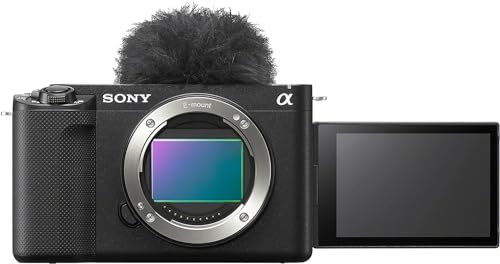
Sony ZV-E1 — Best compact full-frame
The ZV-E1 performs a useful trick: it takes the 12.1-megapixel full-frame sensor family that made the a7S III famous — the same large-photosite, dual-gain philosophy — and houses it in a body notably smaller and lighter, designed for creators who carry their camera everywhere. For astrophotography, the implication is direct. The hike-in dark site, the remote bothy, the flight-weight-restricted expedition: the camera that actually arrives at the dark sky is the one that was painless to carry, and this is the easiest full-frame night camera in the guide to have with you when the sky clears unexpectedly over a campsite.
Its night manners inherit the sensor’s virtues — clean high-ISO files, honest colour in faint nebulosity, single-frame Milky Way results that embarrass larger-sensored rivals — and its fully articulating screen suits tripod composition at the zenith as well as its vlogging day job. The compromises are physical and must be stated in the open: there is no electronic viewfinder at all, so focusing on a star is done on the rear screen’s magnification — workable, and practised by many, but a step below the a7S III’s finder precision. The single card slot and the compact body’s control layout also mark it as a creator’s tool rather than a professional’s primary.
Heat and battery deserve a sentence each on a small body. Long video is where compact bodies sweat; for stills sequences across a night, the practical limit is the smaller battery ecosystem it shares with its siblings, solved by carrying spares warmed in a pocket, as night photographers have always done. Choose the ZV-E1 when the trip matters more than the toolkit: it is the night sky camera for travellers, hikers and creators whose best dark site is the one they reach on foot.
- Sensor: 12.1MP full-frame Exmor R — the a7S-class low-light design
- High-ISO character: matches the guide’s best for single-frame night work
- Viewfinder: none — star focusing is done via the rear screen
- Screen: fully articulating for tripod and vlogging duties alike
- Cards: single slot, a creator-body compromise stated plainly
- Body: the smallest, lightest full-frame option in this guide
Strengths
- Flagship night sensitivity in a body that travels without negotiation.
- Articulating screen handles zenith composition comfortably.
- The sensor’s clean files flatter single-frame, untracked shooting.
Trade-offs
- No viewfinder — screen-only focusing on stars takes adjustment.
- Single card slot limits professional redundancy.
- Compact controls are less glove-friendly than the a7-series bodies.
Best for: travellers, hikers and creators whose dark skies are reached on foot and whose camera must earn its pack space every day of the trip. Not suited for: photographers who focus critically through a finder, or who need dual-slot security on paid night work.
Creators add a use case the stills world underrates: the night-sky timelapse and real-time aurora clip filmed on the same body that shot the evening’s stills, in a package light enough for a gimbal by day. The ZV-E1’s creator toolset — product modes, breathing compensation with supported lenses, and its general video fluency — is dead weight to a pure stills shooter and genuine value to the hybrid traveller. Guides should say which reader a feature serves; this one’s features serve the travelling storyteller, and they serve them well.

Sony a7 IV — Best hybrid value
The a7 IV is the answer to the question most buyers actually bring to this guide: which Sony body shoots the night sky well and everything else well too, at a price that does not require a specialist’s commitment? Its 33-megapixel sensor sits deliberately between the guide’s poles — photosites large enough for clean, confident high-ISO night files that stack and print respectably, resolution enough for serious daylight landscapes and cropping. For the photographer whose year holds a dozen dark nights among hundreds of ordinary shoots, that balance is not a compromise; it is the correct engineering answer.
Its night workflow is thoroughly modern. The fully articulating screen serves the tripod-at-zenith geometry, the menus and custom buttons can be arranged for dark operation, and the body’s interval shooting covers sequence work for stacking and timelapse without external triggers. Long exposures behave with the current generation’s honesty — this is a post-star-eater-debate body whose faint-star rendering has been examined by the community and found sound. Battery life from the Z-series pack is strong, and the dual card slots bring a professional’s file security to a body priced for enthusiasts.
What it is not is a specialist. At the extremes of either philosophy it yields: the a7S III’s files are cleaner frame-for-frame at the highest ISOs, and the a7R V’s resolution is in another league for mosaics. Autofocus, while excellent, lacks the newer AI unit’s subject breadth. But a guide that only recommended extremes would fail the majority of its readers, and the a7 IV’s position — very good at the night, very good at everything else, priced below both specialists — makes it the value centre of this list and the default recommendation for the hybrid majority.
- Sensor: 33MP full-frame backside-illuminated Exmor R
- Night character: clean high-ISO files with real stacking headroom
- Screen: fully articulating for dark-sky tripod geometry
- Sequences: built-in interval shooting for stacks and timelapse
- Cards: dual slots — professional security at an enthusiast price
- Stabilisation: 5-axis in-body for the daylight majority of its life
Strengths
- The balanced sensor serves night and day without a weak genre.
- Dual slots, strong battery and modern handling at a mid-line price.
- Current-generation long-exposure behaviour the community has verified.
Trade-offs
- Neither the cleanest high-ISO files nor the highest resolution here.
- Autofocus lacks the dedicated AI processing of the newer bodies.
- Rolling-shutter character in its video modes is a daylight footnote to note.
Best for: hybrid photographers whose nights are a beloved minority of their shooting and who need one body to be right everywhere. Not suited for: dedicated night specialists, who should buy the sensor philosophy — sensitivity or resolution — that matches their sky.
One constituency keeps this body at the top of real-world recommendation lists: the wedding and event photographer who shoots astro on holiday. For them the calculus is unanswerable — one body, professional in daylight with dual slots and dependable autofocus, and entirely credible under a dark sky on the year’s two dark trips. Specialists may out-spec it at both ends; nobody out-conveniences it, and convenience across a whole year of shooting is a photographic virtue that specification tables have never learned to score.
Sony a7C II — Best for travel
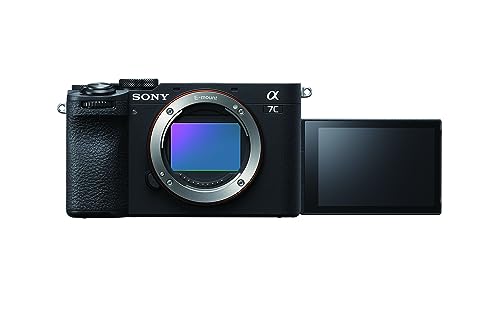
The a7C II miniaturises the a7 IV’s formula into a rangefinder-styled body, and for travel astrophotography that shrinkage is a feature with consequences. The same 33-megapixel sensor class, the newer AI-assisted autofocus, and in-body stabilisation rated among the strongest Sony fits to a compact body, all inside a shell that rides in a jacket-grade bag beside a fast wide prime and a travel tripod. The travel photographer’s eternal equation — the best camera is the one present when the sky clears over a foreign coastline — is this body’s entire design brief.
Night work on it is better than its size suggests. The sensor’s high-ISO files stack cleanly, the stabilisation is irrelevant on the tripod but welcome at blue hour, and the tilting screen handles low tripod composition, though it does not fully articulate like the a7 IV’s — front-facing presentation is not its game, and tripod work at extreme angles takes a touch more contortion. The electronic viewfinder is small, as compact bodies demand, yet it exists — which distinguishes it from the ZV-E1 for photographers who focus on stars through a finder by preference.
Its ergonomic taxes are the familiar compact-body ones: a single card slot, fewer custom controls under gloved fingers, and a grip that pairs best with the smaller primes rather than the big GM glass, which unbalances it comically. None of that matters at a dark site reached by a day of trains and walking, where the alternative camera is the one left at the hotel. The a7C II is the travel pick because travel is a logistics problem before it is a photography problem, and this body solves the logistics while keeping the sensor honest.
- Sensor: 33MP full-frame backside-illuminated Exmor R
- Autofocus: AI-assisted subject detection, newer generation
- Stabilisation: strong in-body system in a compact shell
- Viewfinder: compact EVF present — star focusing through a finder works
- Screen: tilting rather than fully articulating
- Cards: single slot, the compact-body standard compromise
Strengths
- Full hybrid sensor performance in the guide’s most portable serious body.
- An EVF is included, unlike the smaller ZV-E1.
- Pairs naturally with compact fast primes for a genuine travel night kit.
Trade-offs
- Small grip and controls are less glove-friendly on cold nights.
- Single card slot and a tilting-only screen mark its class.
- Large GM lenses unbalance the body badly on a tripod head.
Best for: travelling photographers who want one small body that shoots the whole trip and still delivers under a dark sky at the journey’s edge. Not suited for: expedition professionals needing dual slots and full-size ergonomics, or video-led creators who need the fully articulating screen.
Pairing advice completes this body’s case. The compact fast primes — Sony’s own small G lenses and the better third-party compacts — keep the kit’s total weight in the class where a travel tripod remains a rational support, and a two-lens travel set (a fast wide for the night, a compact standard for the day) covers a journey’s photography in a sling bag. That total-system lightness, not the body alone, is what gets this camera to the dark site; judge it as a kit philosophy and its recommendation becomes obvious.
Dedicated astro-converted bodies — Best deep-sky specialist route (prose-only)
This final pick carries no purchase link, and the reason is structural rather than reluctant: our check found no clean Amazon listing for a dedicated astro-converted body, so the specialist route is discussed here as guidance, not as a product. The class has two branches. Factory specials — Canon’s EOS Ra was the famous example, a camera built with heightened hydrogen-alpha sensitivity and then discontinued — occasionally surface through specialist dealers. And conversion services will modify a body you already own, replacing its internal filter so the sensor records the deep red H-alpha emission at 656 nanometres where nebulae actually shine.
The physics is worth the paragraph. A stock camera’s internal filter blocks most H-alpha light to keep daylight colour sane, which is why unmodified photographs of emission nebulae show their structure in muted, bluish tones while the great red clouds stay shy. A converted sensor admits that light, and the same telescope or lens, the same integration time, suddenly records the nebula as the astrophotographers’ images promise. For Milky Way landscape work the conversion is unnecessary and can complicate daylight use; for deep-sky imaging it is close to transformative, which is why the dedicated astro body is usually a second body, converted and kept for the telescope.
The cautions are as real as the gains. Conversion voids the manufacturer’s warranty on the modified body, daylight white balance requires corrective filtration or custom profiles, and the work should be done by an established specialist whose dust-control and filter quality are proven — a sensor conversion is surgery, not an accessory. Budget the service, a clip-in or front filter for occasional daylight use, and the acceptance that the body is now a specialist instrument. For the deep-sky photographer, that is not a warning; it is the correct shape of the tool, and no stock body in this guide pretends to replace it.
- Modification: internal filter replaced for full H-alpha sensitivity at 656nm
- Best subjects: emission nebulae and deep-sky fields through lenses or telescopes
- Sourcing: conversion services or specialist dealers — no verified listing here
- Warranty: manufacturer warranty is voided by conversion
- Daylight use: possible with corrective filters, no longer the body’s purpose
- Pairing: usually a second body alongside a stock camera for landscapes
Strengths
- Records emission nebulae with a sensitivity no stock body approaches.
- Transforms existing lenses and telescopes rather than replacing them.
- A dedicated body keeps the stock camera free for every other genre.
Trade-offs
- No verified purchase listing — sourcing takes research and patience.
- Warranty voided and daylight colour needs corrective filtration.
- Unnecessary cost and complexity for Milky Way landscape work alone.
Best for: deep-sky imagers chasing emission nebulae through lenses or telescopes, as a dedicated second body. Not suited for: nightscape and Milky Way landscape photographers, whose stock bodies already record everything their genre needs.
A final practical note for readers pricing this route: the donor body need not be new or flagship. Many imagers convert a previous-generation body they already own, or buy a modest used body expressly for conversion, keeping total cost below a single new specialist purchase while ending with an instrument more sensitive to nebulae than anything sold stock. That second-hand pathway is part of why this pick has no listing to link — its market is a service, not a shelf — and why it remains, for its defined photographer, the most capable option in this entire article.
How Do You Actually Run a Night Session with These Bodies?
A workflow that respects the equipment looks like this. Arrive before dark and compose the foreground while it can still be seen; the night’s first frames, at blue hour, often become the landscape layer of a blend. Focus once on a bright star at full magnification through the finder or screen, then protect that focus — tape the ring on manual lenses, disable autofocus entirely, and treat every accidental touch as a refocus event. Set the intervalometer for the sequence with a small gap between frames for the sensor’s sake and your own review, and shoot a test frame at working settings to inspect the corners, because coma and focus errors are free to fix at 9 p.m. and expensive at 2 a.m.
Exposure strategy divides by sensor philosophy. The sensitivity bodies reward fewer, longer individual frames at moderate ISO, because their clean files need less stacking to reach a given smoothness. The resolution bodies reward the opposite discipline: more frames, shorter each, tracked precisely, with the stack doing the noise work and the sensor doing the detail work. Both philosophies converge on the same closing ritual — dark frames if your workflow uses them, a lens cap sequence, and the discipline to let the last planned frame finish rather than packing up during the night’s best transparency, which experienced night photographers swear arrives in the hour before dawn with suspicious regularity.
What About Trackers, Stacking and the Software Half of the Night?
The camera is half the instrument; the other half is motion and mathematics. A star tracker — a small equatorial mount that rotates with the sky — converts every body in this guide into a long-exposure instrument, and it flattens the sensitivity hierarchy considerably: tracked, the a7 IV and a7C II stack their way toward results that embarrass untracked flagships, and the a7R V becomes a mosaic machine. Alignment is the skill that governs it all, and the modern aids — polar scopes, phone-assisted alignment, plate-solving in advanced rigs — have made that skill an evening’s learning rather than a season’s.
Stacking software performs the complementary miracle, averaging away random noise across frames while the signal — the stars, the nebula — compounds. The practical consequence for buyers is liberating: differences between these bodies that look decisive in single frames shrink honestly under a good stack, which is why this guide keeps returning to workflow fit — screen, battery, controls, size — as the real purchase criteria once a competent sensor is in hand. Buy the body whose night manners you will enjoy at hour four, because hour four is when the photographs you planned the trip for are usually made.
What Separates the Five Linked Bodies Under a Dark Sky?
| Camera | Sensor | Night philosophy | Screen for tripod work | Card slots |
|---|---|---|---|---|
| Sony a7S III | 12.1MP | Sensitivity first — cleanest single frames | Fully articulating | Dual |
| Sony a7R V | 61MP | Resolution first — tracked mosaics and stacks | Tilting, tripod-friendly | Dual |
| Sony ZV-E1 | 12.1MP | Sensitivity in the smallest body | Fully articulating | Single |
| Sony a7 IV | 33MP | The balance point for hybrid shooters | Fully articulating | Dual |
| Sony a7C II | 33MP | The balance point, miniaturised for travel | Tilting | Single |
| Dedicated astro-converted bodies | Converted, varies | H-alpha sensitivity above all | Depends on donor body | Depends on donor body |
The philosophy column is the decision. Sensitivity-first bodies make an untracked night easy; resolution-first bodies make a tracked night magnificent; the 33MP pair refuses to choose and serves the photographer whose nights are occasional. The converted row stands apart because its question is different — not how well the sensor behaves, but which light it is allowed to see at all.
Which Body Fits Each Kind of Night Photography?
Milky Way nightscape. The signature genre — a landscape, a sky, one composition — rewards sensitivity and wide-lens corner quality above all. The a7S III makes it easiest, the ZV-E1 makes it most portable, and the 33MP pair make it entirely respectable with a short stack. This is the genre where money beyond the body belongs to the lens and the journey to darkness.
Tracked deep-sky through lenses. Longer focal lengths, a tracker doing the sky’s rotation, and targets measured in minutes of integration. Resolution and patience govern: the a7R V leads, the a7 IV follows honourably, and the converted route — the prose-only pick — ultimately owns this genre outright once nebulae become the subjects rather than the backdrop.
Aurora. The sky moves, which changes everything: exposures shorten, sensitivity rules, and real-time video sensitivity becomes a genuine creative tool. The 12MP pair are the aurora bodies, the a7S III foremost; the articulating screens matter here too, because aurora compositions are re-framed constantly as the display evolves overhead.
Meteor showers and timelapse. Endurance genres. Battery stamina, intervalometer reliability and card capacity decide the night more than sensor character, and every body here can do the work — the larger bodies simply do it longer between interventions, which at a cold site at 4 a.m. is the whole argument.
The occasional clear night. Travel and hybrid shooters whose astro happens opportunistically should buy for their daylight and take the night as a bonus: the a7 IV for the full-size answer, the a7C II for the carried one. Both produce night files their owners are proud of, which is the only test an occasional genre must pass.
What Should You Spend on After the Body?
The honest order of astro spending, after any body in this guide, runs: the fast wide lens first, because it defines the image; the tripod second, because it defines the sharpness; the journey to dark skies third, because it defines the ceiling; a tracker fourth, when the genres that need one have actually arrived in your practice; and only then a second body or a conversion, when a specialisation has proven it is a direction rather than a mood. Photographers who follow that order rarely waste money, because each purchase answers a limitation the previous one revealed — the genre’s own curriculum, paid in the right sequence.
What Ruins More Astro Sessions Than Any Camera Choice?
Light pollution, chosen carelessly, defeats every sensor in this guide with equal indifference. A 12-megapixel flagship under suburban skies produces a worse Milky Way than a decade-old body under genuinely dark ones, and the first investment in this genre is not in this article at all: it is the drive to darkness, the light-pollution map, and the moon-phase calendar. Photographers who internalise that hierarchy buy bodies calmly; those who reverse it keep upgrading cameras to fix a sky problem.
The second session-killer is support. A tripod that shudders in a light breeze at thirty-second exposures wastes the finest sensor ever made, and the night exposes flimsy heads and extended centre columns mercilessly. Weight the tripod with the bag, keep the column down, use a remote or timer release, and let the setup settle before the sequence starts. Third is focus drift: focus on a bright star at full magnification, tape or lock the ring, and re-check after the temperature falls, because cooling optics shift focus across a long night in ways daylight never reveals.
A fourth, quieter failure is the red-light discipline nobody practises at home: a single blast from a white headtorch or a phone screen resets the photographer’s dark adaptation for twenty minutes and can fog the long exposure a companion is running beside you. Night vision is shared infrastructure at a dark site. Set screens to their dimmest and reddest modes — every body here allows a workable approximation — learn your camera’s controls by touch before the trip, and the night becomes a place your hands know rather than a place your torch keeps interrupting.
Finally, power and dew end more sessions than defects do. Cold batteries fade — carry spares warm, or run the bodies that accept USB power from a bank. Dew forms on front elements as temperatures cross the dew point, fogging a sequence frame by frame; a simple dew heater strip is the cheapest insurance in the entire genre. None of these lessons is about the camera, which is precisely why a camera guide is the right place to print them: the body is the part of the night you can buy, and the rest is craft.
How Do You Test a Body’s Night Manners Before Committing?
Rent or borrow the candidate for one clear night and run the exact protocol the community uses, because it exposes everything this guide has discussed in a single session. Shoot a rich star field at your working ISO and exposure length, first in single frames and then in a short stack. Inspect the faintest stars at full magnification for the softening that betrays aggressive long-exposure filtering. Check the corners through your actual lens, not a reviewer’s. Run the intervalometer for an hour in the cold and note the battery’s honesty. Compose at the zenith and judge the screen and controls with gloves on.
Then process the files the way you actually process, in your own software, at your own pace, and print or display one at the size you truly use. That evening’s evidence — your lens, your sky, your workflow — outranks every generalisation in this article, including ours. The bodies here are close enough in night competence that the test’s real subject is fit: which camera’s manners you enjoyed at hour three is the camera that will still be going out with you in year three, and longevity of enthusiasm is the specification that produces the most photographs.
Final Recommendation
Buy the a7S III if the night sky is the destination: its sensor makes untracked and lightly tracked work easier than anything else Sony sells, and its body was designed by people who clearly shoot after dark. Choose the a7R V when your nights are tracked, stacked and printed large, the ZV-E1 when the sky must be reached on foot, and the a7 IV when one body must be right at every hour — with the a7C II as that same answer packed for travel. Keep the converted route in mind the day nebulae, rather than the Milky Way, become the obsession. Under a truly dark sky, every linked body here will produce photographs worth the cold — the best one is simply the one whose philosophy matches the way you already spend your nights.
Frequently Asked Questions
Is 12 megapixels really enough for astrophotography?
For nightscape and Milky Way work displayed at normal sizes and printed moderately, emphatically yes — and the sensitivity those large photosites buy is worth more at night than resolution. Where 12MP runs out is in cropping freedom and very large prints, which is why the tracked and mosaic specialists in this guide choose the a7R V. Match the sensor to the output you actually produce, not the output you admire in others.
Do I need a star tracker for these cameras?
Not to begin. Untracked, the rule of thumb limits exposures to the tens of seconds a wide lens allows before stars trail, and stacking those frames builds a fine image — the sensitivity bodies exist to make exactly that workflow sing. A tracker becomes worthwhile when you want longer individual exposures, longer lenses, or the a7R V’s mosaic workflow, where its precision multiplies what the sensor can resolve.
What lens should I pair with these bodies first?
A fast wide prime with good corner correction: Sony’s 14mm f/1.8 GM, 20mm f/1.8 G and 24mm f/1.4 GM are the benchmark trio, chosen by how wide your compositions run and how much you value the last increment of corner performance. Test any copy wide open on a star field before the return window closes — corner behaviour at full aperture is where astro lenses are honestly graded, and sample variation is real.
Should I get my camera converted for H-alpha?
Only when deep-sky nebula imaging has become a settled practice rather than an experiment — conversion is permanent, voids the warranty, and compromises the body’s daylight manners. Milky Way and nightscape photographers gain nothing from it. Telescope and long-lens deep-sky imagers gain the emission nebulae themselves. Most photographers who convert do so with a second body, keeping a stock camera for everything else, as the prose-only pick in this guide describes.
Does in-body stabilisation matter for astrophotography?
On a tripod, it should be switched off or it settles itself — stabilisation has no role in a thirty-second exposure of a fixed sky. Its value in this guide is everything around the night: blue-hour handheld landscapes, scouting frames, and the daylight majority of a hybrid body’s life. Judge it as a daytime feature that happens to ride along, and never let it rank a body for night work.
Is a used previous-generation Sony body a sensible astro start?
It can be, with the star-eater homework done for the specific model and firmware era — that history is exactly why the check matters. A previous body whose long-exposure behaviour the community has cleared, bought at used prices, frees budget for the lens and the tracker, which this guide has argued matter more. Buy the current generation when the homework feels like a burden; certainty is also a feature, and it is priced into the picks above.
What ISO should I actually shoot the Milky Way at?
Higher than daylight instinct suggests, and it varies by body philosophy rather than obeying one magic number. The craft is a balance: raise ISO until the exposure time fits inside your trailing limit and the histogram clears the left edge, then let stacking do the refinement. The sensitivity bodies reach that balance with visibly cleaner files at the top of the usable range; the resolution bodies reach it a stop earlier and stack more frames. Experiment on your own sky — a three-frame test at ascending sensitivities teaches more than any chart, and costs one clear minute.
Can I use these cameras on a telescope?
Yes — with a T-adapter in place of a lens, any of these bodies becomes a deep-sky imaging camera, and the choice logic follows the same fault line: the a7S III’s sensitivity for shorter integrations, the a7R V’s resolution for detail, and a converted body as the eventual specialist step when H-alpha targets dominate. Telescope imagers should also weigh software control support, since tethered capture from a laptop runs most serious sessions.
How do these bodies cope with cold nights?
Well, with the standard disciplines. Battery capacity falls in the cold, so spares live in an inside pocket and rotate through the body; the a7R V’s USB power option and the Z-series batteries in the larger bodies extend sessions usefully. Condensation when bringing gear back into warmth is the subtler enemy — seal the camera in a bag before coming indoors and let it warm slowly. The bodies’ sealing handles the night itself without complaint.
Related Guides
Night photography widens quickly beyond bodies, and our neighbouring coverage follows it. Lens shoppers should continue to our guide to the best wide-angle lenses for Milky Way photography, technique builders to our walkthrough of star trackers and how to choose one, and telescope-curious readers to our introduction to deep-sky imaging with camera lenses before spending anything on the converted route.
Related guides
- Best AC Powered Wireless Security Cameras: Wi-Fi Data, Mains Power, Zero Sleep
- Best Affordable Android Tablets: Five True Android Slates and One Fire OS Specialist, Clearly Labelled
- Best 1080p IP Cameras: PoE Domes, Turrets, Bullets and a PTZ That Earn Their Cable
- Best Fast Charge Qi Wireless Chargers: Qi2 at 15W and Qi2.2 at 25W


