What's inside
- Key Takeaways
- Quick Picks: Six Nikons Ranked for the Pit, the Balcony and the Club
- How We Chose These Picks
- Why Does Sensor Size Matter More at a Gig Than Anywhere Else?
- What Should You Pack Alongside the Body for a Three-Song Pit Call?
- How Do You Expose for a Stage That Will Not Sit Still?
- How Does the Right Body Change Between a Basement Club and an Arena?
- Which Lens Pairings Bring Out the Best in Each of These Bodies?
- Side by Side: The Six Concert Nikons on the Points That Decide a Purchase
- When Does a Second Body Stop Being a Luxury at Gigs?
- How Do Quiet Acoustic Sets Change the Brief Entirely?
- What Should You Check on the Listing Before You Pay?
- Which Mistakes Ruin More Gig Photos Than Any Camera Choice?
- What Does a Working Night Look Like, From Soundcheck to Filing?
- Final Recommendation
- Frequently Asked Questions
- Related Guides
As an Amazon Associate I earn from qualifying purchases. This post may contain affiliate links at no extra cost to you.
gizmoverdict.com is reader-supported. When you buy through links on our site, we may earn an affiliate commission.
Where concert Nikons actually get bought: all six bodies below are sold through Amazon, and each camera name in this guide links straight to its listing so you can confirm whether it ships as a body only or with a lens, check the current bundle contents, and read the seller terms before you commit money to a low-light system.
A club photographer hunting for the best nikon cameras for concert photography learns the venue rules quickly: no flash, no second chances, and a stage lit like a cave one minute and a welding shop the next. Concert work punishes cameras in ways that daylight shooting never does. The drummer sits in near darkness while the singer stands under a follow spot hot enough to clip highlights on the same frame. LED walls cycle through magenta and cyan washes that wreck skin tones. Security gives you three songs from the pit, and whatever you miss in those three songs does not happen again.
That is why this ranking leans so heavily on sensor class. Five of the six picks are full-frame mirrorless bodies, because a larger sensor gathering stage light at high sensitivity is the single biggest advantage a Nikon shooter can carry into a dark room. The sixth pick, the D7500, is a DSLR with a smaller DX sensor, and it earns its place honestly as the optical-viewfinder route for someone who already owns F-mount glass and shoots smaller rooms. Every body here is a current listing verified through the maker’s own channel, and the renewed older DSLRs that litter this corner of the catalogue were deliberately left out of the pool, because a concert camera is a working tool and its shutter history matters.
Read the six reviews as a ladder rather than a beauty contest. The Z 8 sits at the top for professionals who shoot arenas and need a body that behaves like a flagship in every direction. The Z6 III chases it closely with a video specification that matters if your outlet wants clips alongside stills. The Z5 II kit and the original Z 5 form the sensible middle, and the Z50 II two-lens kit is the compact traveller that still punches into dark rooms better than its size suggests. Where each one gives ground is spelled out in its trade-offs, because in concert work the wrong compromise shows up in the edit, not in the shop.
Key Takeaways
- Full-frame bodies dominate this list because stage light is scarce, coloured and constantly moving, and sensor size is the cleanest defence.
- The Z 8 is the no-excuses professional pick; the Z6 III is the one to study if your concert assignments include serious video deliverables.
- The Z5 II kit’s long zoom covers pit-to-balcony range in one lens, which suits travelling shooters who cannot swap glass mid-set.
- The Z50 II kit is the lightest way into the list, and its colour presets help when a venue wants images turned around the same night.
- The D7500 remains in the ranking for F-mount owners, with the honest caveat that its DX sensor asks more of your lenses in the darkest rooms.
- Whatever body you choose, fast prime lenses matter as much as the sensor; budget for glass before you budget for a second body.
Quick Picks: Six Nikons Ranked for the Pit, the Balcony and the Club
| Pick | Badge | Why it made the cut |
|---|---|---|
| Nikon Z 8 | Top professional choice | A full-frame stills and video hybrid built for working photographers who cannot afford a missed frame during a three-song pit window. |
| Nikon Z6 III | Video-leaning hybrid | Full-frame body whose internal RAW video recording suits shooters delivering motion clips to editors straight after the encore. |
| Nikon Z5 II (24-200mm kit) | One-lens touring kit | Ships with a stabilised zoom reaching from wide room shots to tight balcony frames, so one bag covers a whole venue. |
| Nikon Z 5 | Compact full-frame value | Nikon’s most compact full-frame body in this set, a calm and simple route into big-sensor concert work. |
| Nikon Z50 II (two-lens kit) | Lightweight traveller | Two lenses in the box, easy colour presets and wireless sharing for fast turnarounds from festival media tents. |
| Nikon D7500 | F-mount DSLR route | A DX-format SLR body for photographers whose lens cabinet is already built around the F mount. |
How We Chose These Picks
We started from a simple question: which Nikon bodies would a working concert photographer actually pack for a Friday night club show, a theatre date and an arena pit call in the same week? That question filtered the catalogue hard. Bodies that rely on small sensors and slow kit zooms fell away, because no amount of clever processing rescues a frame that was underexposed by two stops under red wash. What remained was a shortlist judged on the class of sensor stated in each listing, the stills and video balance the maker claims, and whether the package — body alone or kit — matches how concerts are really shot.
We also weighed honesty about condition and completeness. A concert body takes knocks, heat and long bursts; buying a mystery-history unit to save money is a false economy when the shutter fails during a headline set. Every pick here comes from a verified current listing, and where a kit lens is included we say what that lens does to your low-light plan, because a zoom that opens slowly at the long end changes which body effectively wins in a balcony seat. Finally, we ranked for range of use rather than spec-sheet drama: the best concert camera is the one that returns usable frames from the worst-lit room you regularly work, not the one with the longest feature list in a bright studio.
Why Does Sensor Size Matter More at a Gig Than Anywhere Else?
Daylight forgives almost everything. A landscape shooter can wait for better light, brace the camera, and expose for as long as the scene allows. A concert shooter gets none of that mercy. The subject moves, the light moves faster, and the exposure triangle collapses into a negotiation between shutter speed fast enough to freeze a guitarist’s strumming hand and sensitivity high enough to register the drummer sitting eight feet behind the front line in shadow. In that negotiation, a full-frame sensor is money in the bank: each photosite gathers more light, so the same exposure carries cleaner shadow detail and gentler highlight roll-off when a follow spot blows out a singer’s forehead.
The practical difference shows up in the edit. Frames from a large sensor tolerate the heavy colour correction that stage lighting demands — pulling magenta out of skin, rescuing a face lit half green and half amber — without the shadows falling apart into blotches. Crop-sensor frames can absolutely work, and the Z50 II and D7500 in this list prove it nightly in small rooms, but they ask the photographer to expose more carefully and lean on faster lenses. If your venues are theatres and arenas with professional lighting rigs, the gap narrows; if your venues are basement clubs with two par cans and a haze machine, the gap is the whole story.
There is a depth-of-field dividend too. Full-frame bodies let a fast prime isolate a vocalist from a cluttered backline at apertures that still gather generous light. That separation is the visual signature of good concert photography: one sharp face, the rest of the stage melting into colour. Achieving the same look on a smaller sensor means opening the lens wider still, which is why the lens conversation in the how-to section below matters as much as the body ranking itself.

Nikon Z 8 — Top professional choice
The Z 8 is the body on this list that a touring professional can treat as infrastructure. Nikon positions it as a professional full-frame mirrorless stills and video hybrid, and that hybrid wording is exactly what modern concert work demands, because the same credential that gets you into the pit now often carries a request for thirty seconds of vertical video for the venue’s social channels. The Z 8 answers both halves of the brief without asking you to carry a second body, and it does so in a form that survives being hauled through loading docks, festival mud and winter club queues.
In the pit, its virtues are about certainty. Three songs is roughly ten minutes, and a headliner’s best moments — the leap, the crowd surge, the confetti drop — arrive unannounced. A flagship-class body earns its keep by focusing through haze and backlight, tracking a singer who darts between mic stand and stage edge, and swallowing long bursts while the moment unfolds rather than pausing to clear a buffer at the worst possible second. Pair it with a fast standard zoom and a bright telephoto prime and the Z 8 becomes the camera you stop thinking about, which is the highest compliment a tool can earn when the house lights are down.
It is also the heaviest commitment here, in every sense. The body asks for professional glass to justify it, professional cards to feed it, and a workflow that can handle the files it produces at volume. A weekend club shooter will not use half of what it offers, and the honest reading of this pick is that it belongs to people whose concert photography pays rent or anchors a portfolio. For them, spreading the cost across hundreds of shows makes it the cheapest camera on the list per delivered frame.
- Format, as listed: Professional full-frame mirrorless stills/video hybrid camera
- Model status, as listed: Nikon USA Model
- Video role, as listed: Hybrid stills and video design
- Sensor resolution: Not stated in the listing title — verify with the maker’s documentation
- Included lens: Not stated in the listing title — verify with the maker’s documentation
Strengths
- Flagship-class full-frame sensor area for the darkest rooms on a tour schedule
- Hybrid design covers the stills-plus-clips brief that venues increasingly attach to a photo pass
- Professional build intent suits a body that travels in a Pelican case rather than sitting on a shelf
Trade-offs
- Its capability is wasted on occasional club nights; the cost demands regular paid or portfolio work
- Demands top-tier lenses and fast cards before it shows what it can really do
- Larger and heavier than the other mirrorless picks during long festival days
Best for: full-time and serious freelance concert photographers covering arenas, theatres and tours. Not suited for: occasional gig-goers who shoot two club shows a month and would feel the purchase on every outing.
See the current Z 8 listing on Amazon to confirm the exact body configuration and what ships in the box before ordering.

Nikon Z6 III — Video-leaning hybrid
The Z6 III is the pick for the photographer whose editor asks, in the same breath, for a gallery and a reel. Its listing leads with 6K/60p internal RAW video recording, and that is a serious claim in a body this size: internal RAW means the camera captures video with the grading flexibility that stage lighting makes essential, without an external recorder dangling off a rig in a crowded pit. Concert footage shot under cycling LED colour is notoriously hard to correct after the fact, and starting from RAW turns a rescue job into a routine grade.
As a stills camera it carries the same full-frame advantage as its bigger sibling into the same dark rooms, in a body that disappears more easily over a long night. Festival days run twelve hours; a camera that hangs lighter on the strap at hour ten gets raised for the frames a heavier kit would have missed through sheer fatigue. The Z6 III’s balance of size, sensor and video depth makes it the natural main body for hybrid shooters and a credible second body alongside a Z 8, sharing lenses and batteries across the pair.
Where it concedes ground is at the very top of the stills game — the Z 8 remains the flagship for a reason — and in the discipline its video strengths demand. Shooting RAW video casually fills cards and drives at a pace that surprises stills photographers, so the Z6 III rewards a planned workflow: shoot RAW for the songs that matter, lighter formats for the rest, and offload between sets rather than discovering a full card as the headliner walks on.
- Format, as listed: Full-frame mirrorless stills/video camera, black finish
- Video, as listed: 6K/60p internal RAW recording
- Model status, as listed: USA Model
- Sensor resolution: Not stated in the listing title — verify with the maker’s documentation
- Included lens: Not stated in the listing title — verify with the maker’s documentation
Strengths
- Internal RAW video gives real grading headroom under mixed stage colour
- Full-frame sensor keeps stills strong in the same dark venues as the flagship
- Moderate size suits long handheld days better than the biggest professional bodies
Trade-offs
- RAW video files are large enough to reshape your card and storage budget
- Stills specialists who never shoot motion pay for capability they will not touch
- Sits a step below the Z 8 for the most demanding pure-stills assignments
Best for: hybrid shooters filing both galleries and graded video clips from the same show. Not suited for: stills-only purists who resent every menu page devoted to motion work.
Check the Z6 III on Amazon for the current listing details and included accessories before you buy.

Nikon Z5 II (24-200mm kit) — One-lens touring kit
Most concert kits are assembled lens by lens over years. This one arrives in a single box: a compact full-frame body with a 24.5MP sensor and 4K video, paired with an image-stabilised zoom running from wide angle all the way to 200mm. Read that focal range against a venue map and its value snaps into focus. From the pit, the wide end swallows the whole stage and the crowd behind you. From a theatre balcony or the back of a club, the long end isolates the singer without a lens change you have no time or space to make. One lens, one body, every seat in the house covered.
The stabilisation in that zoom earns a specific mention for concert technique. Hand-holding at the long end during a ballad, braced against a balcony rail, the stabilised lens buys back the shutter speed that keeps a frame sharp — and in a seated theatre, where you shoot from your seat rather than roaming, that steadiness is the difference between a usable archive and a folder of near misses. The body’s 4K video covers the now-standard request for a song or two of footage without a second camera.
The honest caveat rides on that zoom’s versatility: a lens spanning such a range will not gather light like a fast prime, so in the very darkest clubs you will push sensitivity harder than a Z 8 shooter working at wide apertures. The full-frame sensor absorbs much of that penalty, which is precisely why this kit works as a package — the body subsidises the lens. Treat it as a superb travelling foundation, and add one bright prime later for the rooms where even this combination strains.
- Sensor, as listed: 24.5MP full-frame
- Video, as listed: 4K camera
- Lens, as listed: 24-200mm zoom, image-stabilised, wide-angle to telephoto reach
- Format, as listed: Compact full-frame mirrorless
- Autofocus details: Not stated in the listing title — verify with the maker’s documentation
Strengths
- One stabilised zoom covers pit, floor and balcony without a single lens swap
- Full-frame sensor compensates when the versatile zoom gathers less light than a prime
- Complete kit in one purchase — no compatibility homework before the first show
Trade-offs
- The do-everything zoom cannot match a fast prime in the dimmest basement venues
- Long-zoom shooting at concerts still needs disciplined technique despite stabilisation
- Keen upgraders may outgrow the kit lens while the body still has years left
Best for: travelling photographers and reviewers who cover whole venues from one bag. Not suited for: low-light specialists whose rooms demand the widest apertures money can buy.
View the Z5 II kit listing on Amazon to see the full bundle contents and current availability.

Nikon Z 5 — Compact full-frame value
The original Z 5 holds a particular place in Nikon’s mirrorless story: it is the body that made full-frame concert shooting attainable without flagship money, and its listing describes it plainly as the most compact full-frame mirrorless stills and video camera in Nikon’s line. Compactness is not a vanity metric at a gig. A smaller body draws less attention in a club where the crowd did not come to watch a photographer, fits a jacket-adjacent bag for the ride home, and encourages the habit that improves concert portfolios fastest — simply bringing a real camera to more shows.
On stage light, the Z 5 plays the same fundamental game as every full-frame body here: gather generously, expose bravely, and let the big sensor keep shadows civilised when the lighting desk favours drama over visibility. It is a calmer tool than the Z 8 — fewer extremes in every direction — and for the club and small-theatre circuit where most concert photography actually happens, calm competence covers the brief completely. Photographers stepping up from a phone or an ageing crop-sensor body will feel the improvement in their first set of frames from a dark room.
Its compromises are the predictable ones of an earlier, simpler generation: the hybrid video side is present rather than headline-making, and the body’s overall pace suits deliberate shooting better than the frantic burst-chasing of an arena pit. Neither matters much at club scale. What matters is that the Z 5 puts its money into the sensor, and the sensor is where concert images live or die.
- Format, as listed: Full-frame mirrorless stills/video camera
- Size claim, as listed: Nikon’s most compact full-frame mirrorless in its line
- Model status, as listed: Nikon USA Model
- Sensor resolution: Not stated in the listing title — verify with the maker’s documentation
- Video resolution: Not stated in the listing title — verify with the maker’s documentation
Strengths
- Full-frame low-light strength in the smallest body of the full-frame picks
- Simple, unintimidating handling for photographers moving up from smaller formats
- Lets a tight budget stretch further toward the fast lens that completes the kit
Trade-offs
- Earlier-generation pace shows during the fastest pit action
- Video specification is serviceable rather than a reason to choose it
- Fewer professional trimmings than the bodies ranked above it
Best for: club and small-venue photographers making the jump to full-frame on a sane budget. Not suited for: arena pit regulars whose assignments punish any hesitation in a body.
Look over the Z 5 listing on Amazon to confirm the current offer before deciding.

Nikon Z50 II (two-lens kit) — Lightweight traveller
Every ranking needs the pick that respects the train ride home, and the Z50 II two-lens kit is it. This compact mirrorless body arrives with two lenses in the box, which solves the beginner’s hardest problem — not knowing which glass to buy — by simply including a sensible pair. Its listing also highlights easy colour presets and wireless photo sharing, two features that sound like lifestyle garnish until you work a festival media tent where an outlet wants three frames on social channels before the next band starts. Presets that deliver a punchy, consistent look straight from the camera, and a wireless path to the phone in your pocket, turn turnaround from an editing session into a two-minute task.
The crop sensor is the honest footnote. In a dark club the Z50 II asks more of its lenses and its photographer than the full-frame bodies above it: expose carefully, favour the faster end of your zooms, and accept that the deepest shadows will carry more texture. In return you get a kit light enough to carry all day at a multi-stage festival, where the best concert photographs are often made at the small stages in daylight and dusk anyway — exactly the conditions where this body is entirely at home and its size becomes pure advantage.
Treat the two-lens kit as a system with a growth path. The body teaches real concert craft — positioning, timing, exposure discipline — without the financial vertigo of the flagship tier, and the habits it builds transfer whole when a photographer later steps up to full-frame. Several working shooters keep a body like this permanently as the travel and festival camera even after buying bigger gear, because some assignments reward discretion and stamina over ultimate sensor area.
- Format, as listed: Compact mirrorless stills/video camera
- Kit contents, as listed: Two lenses included
- Features, as listed: Easy colour presets and wireless photo sharing
- Model status, as listed: USA Model
- Sensor size class: Not stated in the listing title — verify with the maker’s documentation
Strengths
- Two lenses included removes the first and most confusing purchase decision
- Wireless sharing and colour presets suit same-night social delivery
- Light enough for all-day festival coverage across scattered stages
Trade-offs
- Smaller sensor works harder than the full-frame picks in the darkest rooms
- Kit zooms still leave a fast prime as the obvious first upgrade
- Less headroom for aggressive cropping of distant stage shots
Best for: festival roamers, students and travelling fans building a first serious concert kit. Not suited for: photographers whose living is made in near-black club corners.
Open the Z50 II kit listing on Amazon to see which two lenses the bundle currently includes.
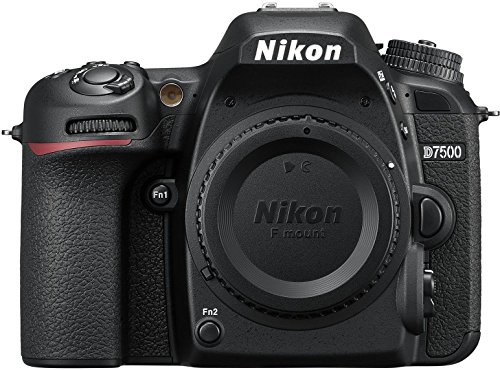
Nikon D7500 — F-mount DSLR route
The D7500 is in this guide for a specific and common person: the photographer with a shelf of F-mount lenses bought over a decade, who shoots concerts in rooms where those lenses have always coped. It is a DX-format digital SLR body, which means an optical viewfinder, a mirror box, and direct native use of that existing glass with no adapter in between. There is a real pleasure in the optical view at a gig — the stage seen directly, with no electronic preview intervening — and a generation of concert photographers built their portfolios through exactly this window.
Judged coldly as a low-light tool, the DX sensor gives away area to every full-frame body above it, and the D7500 owner compensates the traditional way: fast F-mount primes, which exist in depth and circulate widely, and exposure discipline learned from the film era. In small and mid-size rooms with decent rigs, that combination still produces galleries any outlet would run. The DSLR’s stills-first design also means no compromises made for video, and its handling will be muscle memory to anyone arriving from an earlier Nikon SLR.
The limits are structural rather than fixable. Mirrorless bodies have moved the state of the art for focusing in murk and for silent shooting in quiet acoustic sets, where a mirror’s clack can draw a glare from the front row. Buy the D7500 because your lenses and your hands already speak its language, and it will serve faithfully; buy it expecting it to out-shoot the Z bodies in a blacked-out club, and the physics of sensor size will correct you within one set.
- Format, as listed: DX-format digital SLR body
- Viewfinder type, as listed: SLR design (optical path)
- Included lens: Not stated in the listing title — verify with the maker’s documentation
- Sensor resolution: Not stated in the listing title — verify with the maker’s documentation
- Video specification: Not stated in the listing title — verify with the maker’s documentation
Strengths
- Native home for an existing F-mount lens collection, no adapters involved
- Optical viewfinder gives a direct, lag-free view of the stage
- Stills-focused DSLR handling that long-time Nikon shooters already know
Trade-offs
- DX sensor area trails the full-frame picks when the rig goes truly dark
- Mirror noise rules out the silent-shooting discretion of the mirrorless bodies
- An older design generation beside the Z-mount cameras ranked above it
Best for: F-mount owners shooting clubs and theatres with fast primes already in the bag. Not suited for: newcomers with no legacy glass, who should start in the Z system instead.
Review the D7500 body listing on Amazon for the current terms before adding it to your kit.
What Should You Pack Alongside the Body for a Three-Song Pit Call?
The body is only the centre of a concert kit. Around it, pack for the three failures that ruin gigs: running out of light, running out of storage, and running out of time. For light, one fast prime is worth more than any accessory — a bright standard or short telephoto prime turns the Z 5 or Z50 II from adequate to confident in a dark club, and gives the Z 8 and Z6 III the subject separation that defines professional frames. For storage, carry more card capacity than the set list could possibly demand and a second battery even if you never touch it; the night you need it, there is no shop open at encore time.
For time, prepare the unglamorous kit: ear protection that lets you work the pit safely, a small torch for cable-strewn stage edges, gaffer tape, and a bag you can work from without putting it down in a crowd. Set the camera before the house lights drop — white balance strategy chosen, drive mode set, cards formatted — because the first song is not the moment to browse menus. Photographers who treat the pit like a cockpit, with a checklist and everything in reach, come home with the frames that photographers still configuring a body in song two never saw.
How Do You Expose for a Stage That Will Not Sit Still?
Start from the shutter speed the music demands. A ballad singer can be held at moderate speeds; a punk drummer’s sticks need far faster ones, and the honest method is to set the fastest speed that freezes your subject, open the lens to its widest useful aperture, and let sensitivity climb to whatever the exposure requires. On the full-frame bodies in this guide, that climb is exactly what the sensor is for. Metering needs suspicion: a dark stage with one bright performer fools evaluative metering into overexposure, so many concert shooters work manually, expose for the lit face, and let the room fall to black around it — which is usually the picture you wanted anyway.
Colour demands equal pragmatism. LED rigs shift hue faster than any auto white balance can follow, so shoot RAW stills whenever the assignment allows and settle colour in the edit, where a magenta-soaked face can be talked back to skin. When the venue wants files immediately, the Z50 II’s colour presets and the hybrid bodies’ picture controls earn their keep by baking a sane look in camera. Either way, review the first song’s frames on the rear screen at full magnification — checking focus on an eyelash, not the general vibe — and adjust before the pit window closes.
How Does the Right Body Change Between a Basement Club and an Arena?
Venue scale quietly rewrites the ranking. In a basement club you stand close enough to read the set list taped to the floor, the light is whatever two fixtures and a haze machine can manage, and the winning virtues are sensitivity and a fast lens at conversational distance. That is Z 5 and Z50 II territory, and even the D7500 with a bright prime feels at home, because the distances forgive a smaller sensor and the atmosphere forgives almost everything else. Nobody in a basement needs 200mm of reach; they need one clean frame of a singer lit by a single amber bulb, and the discipline to expose for that bulb rather than the room.
Move up to a theatre and the equation shifts toward range and steadiness. You shoot from a fixed seat or a sound-desk platform, the stage is a designed picture rather than a scramble, and a stabilised long zoom like the Z5 II kit’s becomes the most practical tool in the building. Theatre light is also more honest — proper rigs, proper gels, a lighting designer who wants faces readable — so files need less rescue and the differences between bodies narrow to handling and reach.
The arena inverts everything again. Distances grow, production light turns theatrical in scale, and the pit becomes a timed, marshalled environment where reliability is the whole product. Burst depth, focus certainty through haze and pyro smoke, and files that survive being wired to an editor before the encore ends — that is the Z 8’s home ground, with the Z6 III beside it when the same night also needs motion. Reading this list by your own venue mix, rather than by the biggest room you might shoot once a year, is how the right body chooses itself.
Which Lens Pairings Bring Out the Best in Each of These Bodies?
Glass decides what a concert body is allowed to be. On the Z 8, the classic professional pairing is a fast standard zoom for the pit’s wide chaos and a bright telephoto for isolating the singer from the backline; the body has the focus speed and sensor to exploit both, and skimping on glass in front of it is like fitting economy tyres to a sports car. The Z6 III asks for the same respect, with the addition that video work rewards lenses that focus quietly and breathe gently — qualities worth checking in the maker’s documentation before a hybrid shooter commits.
The Z5 II kit inverts the question, because its 24-200mm zoom is the pairing, chosen for range. Its natural companion purchase is a single fast prime for the darkest rooms, turning the kit into a two-lens system that covers everything from festival daylight to club murk. The Z 5 follows the same logic a step behind: the money its body saves belongs in one bright prime, and owners who make that trade consistently out-shoot owners who bought a bigger body and kept a slow zoom. For the Z50 II, the two included lenses teach the focal lengths; the upgrade that matters is again the fastest prime near the length you use most. The D7500’s advantage is depth of choice — decades of F-mount primes circulate at every budget, and a concert kit built from two well-chosen used primes and this body remains a legitimate working rig.
One pairing rule crosses every body here: do not duplicate focal lengths before you have covered light. A second zoom overlapping the first adds weight; a prime two stops brighter adds photographs. Buy for the frames you currently cannot make — usually the dark-room frames — and the kit grows in the right direction.
Side by Side: The Six Concert Nikons on the Points That Decide a Purchase
| Camera | Format as listed | Package | Concert calling card |
|---|---|---|---|
| Nikon Z 8 | Full-frame mirrorless hybrid | Body (see listing) | Flagship certainty for paid arena and theatre work |
| Nikon Z6 III | Full-frame mirrorless | Body (see listing) | 6K/60p internal RAW video for hybrid assignments |
| Nikon Z5 II kit | Full-frame, 24.5MP, 4K | 24-200mm stabilised zoom included | Pit-to-balcony range with no lens changes |
| Nikon Z 5 | Full-frame mirrorless | Body (see listing) | Most compact full-frame route into dark rooms |
| Nikon Z50 II kit | Compact mirrorless | Two lenses included | Festival weight with fast wireless turnaround |
| Nikon D7500 | DX-format DSLR | Body only | Native F-mount home for legacy glass |
When Does a Second Body Stop Being a Luxury at Gigs?
Sooner than most photographers expect. The pit window is measured in songs, and a lens change inside it costs the chorus you were sent to capture; two bodies, one wearing a wide zoom and one a telephoto, convert that lost chorus into a shoulder swap. That is the working logic behind the pairings this list suggests almost by itself: a Z 8 doing flagship duty with a Z6 III or Z 5 carrying the alternate focal length, sharing the Z mount so every lens fits either body and a failure in one still leaves a complete kit standing. Even the Z50 II kit has a second-body role in this scheme — as the light, discreet camera for the acoustic support set while the main body rests.
The budget version of the same idea is sequencing rather than simultaneity. Buy the body that covers your hardest regular room first, shoot it for a season, and let the gaps you actually feel — not the ones a forum predicts — dictate the second purchase. Photographers who follow that order discover their second body is often smaller than they imagined, because its job is narrow: cover the wide end, or sit on the balcony rail, or handle the video brief. A second body bought to a brief outperforms a second body bought to a fantasy, and it is lighter to carry through a festival gate at noon.
Insurance thinking belongs in the same conversation. A single body is a single point of failure on the one night a shutter or a dropped camera cannot be rescheduled around. Professionals insure the kit and carry the spare; serious amateurs can approximate the same resilience by keeping an older body in the bag rather than selling it toward the new one. The D7500 many upgraders already own makes an admirable emergency reserve behind a new Z body, even if it never fires a frame all season.
How Do Quiet Acoustic Sets Change the Brief Entirely?
Not every concert is a wall of amplification. The unplugged theatre set, the string-quartet crossover show and the singer-songwriter evening invert the usual problems: light is often warmer and steadier, but silence becomes a specification. A mirror slapping in a hushed hall is audible twenty rows back, which is why the mirrorless bodies dominate this list and why the D7500, for all its virtues, sits out the quietest work. Electronic shutters and silent modes turn the Z bodies into tools an usher never notices, and that invisibility protects both the performance and your welcome at the venue next season.
Acoustic sets also reward patience over bursts. The decisive frame is a held note and a closed eye rather than a leap, so the photographer’s craft shifts toward anticipation and stillness — bracing properly, breathing out, taking three frames where the arena habit takes thirty. Sensitivity demands drop with the slower pace, and here the crop-sensor picks close much of their gap to the full-frame bodies, because a steady subject at moderate sensitivity is a problem every camera on this list solves well. If your concert calendar leans acoustic, weight the ranking toward handling, quiet operation and the lens you will live on, and the Z 5 or Z50 II may serve you as completely as the flagship serves the arena pit.
What Should You Check on the Listing Before You Pay?
Four confirmations protect a concert purchase. First, whether the offer is body only or a kit, and if a kit, exactly which lens — the Z5 II and Z50 II listings in this guide are kits, and their value lives in those lenses, so the bundle contents deserve a careful read. Second, model status: the listings here state USA Model where applicable, which matters for warranty service on a body that will be worked hard. Third, what ships in the box beyond the camera — battery, charger, strap — because a body arriving without a charger the night before a show is a small disaster with a known prevention. Fourth, the seller and returns terms, since a camera bought for a specific tour date needs a remedy if it arrives wrong.
One more check belongs on the list for kit buyers specifically: confirm the lens in the bundle is the lens the review discusses, because manufacturers sell the same body in several bundle shapes and marketplace listings occasionally mix photographs between them. The Z5 II’s appeal collapses if the long stabilised zoom is not the glass in the box, and the Z50 II’s convenience argument depends on both of its lenses actually being present. Thirty seconds reading the includes list protects the entire logic of a kit purchase.
Then do the arithmetic nobody enjoys: body, one fast lens, two cards, a spare battery, and a bag that closes in the rain. That total, not the body’s headline figure, is the real price of entering concert work with any pick on this list, and it is why the ranking keeps returning to value shapes like the Z 5 plus a prime. A complete mid-tier kit in your hands this season beats a flagship body with a slow zoom in almost every room you will actually stand in.
Which Mistakes Ruin More Gig Photos Than Any Camera Choice?
The first is trusting the kit zoom’s long end in a dark room and wondering why every frame is soft or noisy: a versatile zoom is a range tool, not a light tool, and the fix is a fast prime, not a different body. The second is shooting the whole set from one spot. The pit rewards movement — three songs spent crouched at the drum riser is a gallery of one angle — so plan two or three positions per song and rotate. The third is chimping through entire songs, head down in the rear screen while the singer does the one thing the whole night will be remembered for; glance, confirm, and get your eyes back on the stage.
Two quieter mistakes deserve mention. Arriving without checking the venue’s camera policy wastes more assignments than any technical error — some rooms restrict lens length or require the house photographer’s escort. And neglecting hearing protection is a career-shortening habit in an environment measured in sustained high volume; the photographers still working pits in their fifties are the ones who treated earplugs as part of the kit from the start.
What Does a Working Night Look Like, From Soundcheck to Filing?
The photographers who make concert work look easy run a routine. They arrive during soundcheck, when the room is lit and empty, and use those minutes to learn the stage: where the singer stands, which side the guitarist favours, where the follow spot actually reaches. Test frames at soundcheck settings become the baseline exposure for the night, noted rather than guessed. They confirm the pit rules with security before the crowd arrives — how many songs, which side, whether the photo pit even exists at this venue — because negotiating access during the first chorus costs the frames the pass was issued for.
During the set, the routine narrows to shooting and glancing: shoot the moment, glance at magnification between songs, adjust one variable at a time. The bodies in this guide reward that rhythm differently — the Z 8 forgives nearly everything, the Z50 II asks you to protect its exposure more carefully — but the rhythm itself is body-independent craft. After the set, the professional habit is immediate triage: flag the dozen frames that matter while the show is still in your ears, because an editor waiting on three images does not benefit from your full card, and neither does your own judgement at one in the morning. Back those flags up before sleep; a concert card is unrepeatable in a way a reshootable product session never is.
Finally, file your own notes with the images — venue, lighting quirks, which body and lens carried the night. Six months later, returning to the same room, that note is worth more than any single specification in this guide, and it is how a photographer turns a ranking of cameras into a body of work.
Final Recommendation
Match the body to the rooms you actually shoot. Arena and theatre professionals should buy the Z 8 and stop shopping; hybrid shooters filing video should take the Z6 III and its internal RAW. The Z5 II kit is the smartest single purchase for travelling reviewers, the Z 5 remains the calm budget door into full-frame, the Z50 II kit serves festival roamers beautifully, and the D7500 honours an F-mount cabinet. Whichever you choose, spend the next money on one fast prime before anything else. A great concert photograph is a face pulled out of darkness at the exact second the song turned — buy the combination that puts that second within your reach most often.
Frequently Asked Questions
Can I shoot a concert well with the crop-sensor bodies on this list?
Yes, in small and mid-size rooms with fast lenses and careful exposure. Plenty of respected club galleries are shot entirely on crop-sensor bodies, because positioning and timing contribute more to a concert frame than the last increment of shadow cleanliness. The full-frame advantage becomes decisive mainly when the room is both dark and large, which is a narrower slice of most photographers’ calendars than marketing suggests. The Z50 II and D7500 give away shadow headroom to the full-frame bodies, so their owners lean on bright primes and accept busier shadows in the very darkest clubs.
Why is there no flash advice anywhere in this guide?
Because most venues ban flash outright, and even where it is tolerated it flattens the stage lighting that gives concert photographs their atmosphere. Every pick here was ranked on available-light ability instead.
Which single lens should a first-time concert shooter add?
A fast prime near your most-used focal length. It gathers the light kit zooms cannot, teaches you to move your feet for composition, and transforms any body on this list in dark rooms.
Does the Z6 III’s RAW video matter for stills photographers?
Only if your assignments include clips. If they do, internal RAW is the difference between footage that grades cleanly under LED colour and footage that fights you. If they never do, the Z 8 or Z 5 lines serve you better.
Is the D7500 a sensible first concert camera today?
Only for someone inheriting or already owning F-mount lenses. A newcomer starting from zero builds a longer-lived kit by entering the Z system with the Z50 II or Z 5.
How many songs do photographers usually get, and how should that shape the choice?
The common pit allowance is the first three songs with no flash, and that constraint is an argument for certainty over cleverness: the body that focuses first time in haze, holds a burst without pausing, and exposes predictably earns its place in those ten minutes. It is also why preparation outweighs specifications — a mid-tier body in the hands of a photographer who scouted the stage at soundcheck will out-produce a flagship carried by someone still learning the room during song two. Buy the most reliable body your regular work justifies, then spend your remaining effort on access, positioning and timing, which is where concert portfolios are truly built.
Related Guides
Keep building your low-light kit with our companion reading: best cameras for low light photography, best nikon lenses for portraits and best camera bags for photographers.
The same body that earns its keep at the stage door can serve the bench, and our guide to the best nikon cameras for microscopy explains where its limits honestly sit.
The walkthrough and the stage set are both exercises in available light, and our guide to the best point and shoot cameras for real estate judges the compact side of that craft.
Related guides
- Best Kids Smartwatches for Texting and Calling: Six Watch-Phones Under Parent Control
- Best Fast Charge Qi Wireless Chargers: Qi2 at 15W and Qi2.2 at 25W
- Best Airbnb Security Cameras: Compliant Outdoor Cameras and Noise Sensors for Hosts
- Best 5.5 Inch Android Phones: Compact Phones That Still Fit One Hand


