What's inside
- Key Takeaways
- Quick Picks
- What makes a camera good for portraits, specifically?
- APS-C or full-frame for portraits on a budget?
- How do the six compare for a portrait-first buyer?
- Which lens should you buy first for portraits?
- What mistakes do new portrait photographers make with new cameras?
- How do you light a portrait when the budget is nearly zero?
- What does a portrait session actually look like, start to finish?
- How do you direct someone who is not a model?
- Can one of these cameras grow into paid portrait work?
- How does depth of field really behave across these sensor sizes?
- What happens when portraits move indoors and the light goes?
- What about photographing yourself — the self-portrait case?
- Why should portrait photographers print?
- How do group portraits change the rules?
- A note on the second-hand door into this list
- And the pets?
- How do you protect the portraits after you have taken them?
- One decision left: which mount do you want to grow old with?
- Final Recommendation
- Frequently Asked Questions
- Related Guides
As an Amazon Associate I earn from qualifying purchases. This post may contain affiliate links at no extra cost to you.
gizmoverdict.com is reader-supported. When you buy through links on our site, we may earn an affiliate commission.
Where to buy: Amazon lists every camera below under the name shown; some are body-only and some include a kit lens, and the listing in front of you is the authority on which you are looking at.
Portrait photography has a reputation for expensive taste — full-frame bodies, fast glass, studio lights — which makes the search for the best affordable portrait cameras more interesting than it first appears, because the secret of the genre is that faces are forgiving subjects. Skin does not need 60 megapixels. What a portrait needs is a lens that can blur a background, autofocus that finds an eye and stays there, and colour that treats skin kindly. Every camera in this guide does those three things; they do them at prices that start at the genuinely modest Canon EOS R100 and rise to the “affordable full-frame” tier of the Sony a7 III and Nikon Z 5, which would have been called professional cameras not long ago.
The single most important sentence in this guide is this one: budget for a fast prime lens alongside whichever body you choose. The kit zooms bundled with the Canon R50 and R100 are honest daylight lenses, but their apertures are too slow to melt a background at portrait distances. A 50mm f/1.8-class prime — the famous “nifty fifty,” available in every mount represented here — transforms any of these bodies into a portrait instrument for a modest additional sum, and it is the purchase that separates buyers who feel the upgrade from buyers who wonder what the fuss was about. Body-only picks like the Sony a6700, ZV-E1 and Nikon Z 5 assume that lens purchase from the start.
Ranked below, then, are six routes into serious portraiture: two Canon APS-C kits that make starting easy, Sony’s advanced APS-C a6700, two full-frame bodies that anchor the affordable end of that format, and the ZV-E1, a video-first full-frame camera that earns its place for the growing tribe who shoot portraits and portrait-video with the same tool. Each review is honest about what “affordable” compromises remain — because the genre rewards honesty: a portrait is the one photograph whose subject can tell you exactly how it turned out.
Key Takeaways
- A fast prime lens matters more than the body upgrade: pair any pick here with a 50mm f/1.8-class prime and backgrounds melt the way portraits promise.
- Eye autofocus is the modern portrait superpower, and every camera here has a version of it — the Sonys and the R50 are the most tenacious.
- The Canon EOS R100 is the cheapest honest start; the R50 adds a flip screen, better video and friendlier handling for a step more.
- Sony’s a6700 is the enthusiast APS-C pick: 26MP, superb eye AF and a deep lens catalogue, body-only.
- The a7 III and Nikon Z 5 are the affordable full-frame doors — shallower depth of field and low-light grace, at yesterday’s professional level.
- The ZV-E1 is video-first: a 12.1MP full-frame sensor tuned for 4K portrait video, with stills as a strong second talent.
Quick Picks
| Pick | Badge | Why it earns its place |
|---|---|---|
| Canon EOS R50 with 18-45mm Lens Bundle | Best for most beginners | A friendly 24.2MP APS-C body with reliable eye AF, a vari-angle screen and a kit lens to start today. |
| Sony Alpha a6700 (Body) | Best APS-C enthusiast | 26MP, class-leading eye autofocus and 4K video in a compact body with the deepest affordable lens shelf. |
| Sony ZV-E1 (Body) | Best for portrait video | Full-frame 4K video pedigree with beautiful skin rendering, for creators whose portraits move. |
| Canon EOS R100 with 18-45mm Kit | Lowest-cost start | The least expensive route into interchangeable-lens portraiture that still deserves the name. |
| Sony Alpha a7 III Kit | Best affordable full-frame | 24.2MP full-frame, legendary eye AF and battery life, at a price that keeps falling into “affordable” territory. |
| Nikon Z 5 | Best full-frame value body | Nikon’s compact full-frame gateway: in-body stabilisation, dual card slots and lovely colour for stills-led shooters. |
What makes a camera good for portraits, specifically?
Three capabilities, in this order. First, background separation, which is a lens-and-sensor product: a fast aperture on a longer lens, helped by a larger sensor, throws a distracting room or street into softness so the face owns the frame. This is why the prime-lens advice in the introduction outranks everything else — an f/1.8 prime on the cheapest body here separates better than the kit zoom on the dearest. Second, eye autofocus: modern systems detect a subject’s eye and hold focus there through movement, which at f/1.8 — where depth of field is measured in centimetres — is the difference between a portrait session and a focusing exercise. All six cameras offer it; the Sonys execute it with the least supervision.
Third, colour and light behaviour for skin. Portraitists are ruthless about skin tones, and the brands here have decades of reputation invested in them: Canon’s warmth, Nikon’s pleasing neutrality, Sony’s recent and much-improved colour science. Add the practicalities — a screen that flips for self-portraits and low angles, flash or continuous-light friendliness, and JPEGs that flatter straight out of camera for the many buyers who will never open a RAW file — and you have the full scoring sheet this guide used.
What did not score: headline megapixels beyond sufficiency, burst rates beyond a child’s sprint, and weather sealing beyond a light drizzle’s worth of reassurance. Portraits are made slowly, close, and with the subject’s cooperation — the spec sheet of a portrait camera should read like it knows that.
APS-C or full-frame for portraits on a budget?
Full-frame’s portrait advantage is real but narrower than folklore claims. The larger sensor gives roughly a stop more background blur at the same framing and aperture, and cleaner high-ISO files when the reception venue turns candlelit. The a7 III and Z 5 deliver both, and their files have a pliability in editing that APS-C shooters can feel. But an APS-C body with an f/1.8 prime blurs beautifully, costs less as a system, and its lenses are smaller — the R50 or a6700 with a fast prime is a kit you carry to the family gathering rather than a kit you schedule.
The honest deciding factors are trajectory and total budget. If portraiture is the hobby’s centre and growth is likely — weddings for friends, paid family sessions — full-frame’s lens shelf and low-light grace repay the entry price. If portraits share the camera with travel, kids’ sport and general life, APS-C’s size and price leave money for the lens, the light and the backdrop that improve portraits more than sensor area does. Nobody in this guide’s six will be the reason a portrait fails; light and lens might, and both are cheaper to fix than a body swap.

Canon EOS R50 with 18-45mm Lens Bundle — Best for most beginners
The R50 understands its buyer: someone whose phone portraits have started to feel like a ceiling, who wants the real thing without a manual-reading apprenticeship. Canon built it as the friendly face of the RF system — a compact 24.2MP APS-C body, a vari-angle touchscreen that flips for self-portraits and video, guided menus that explain themselves, and eye autofocus that simply works while you think about the person instead of the camera. The bundled 18-45mm kit lens covers the everyday range from day one, so the box opens into photographs rather than into a shopping list.
For portraits specifically, the R50’s virtues compound. Canon’s colour science flatters skin straight out of camera, which matters enormously to beginners posting JPEGs the same evening. The eye AF holds a child’s eye through the small weaves and lunges that defeat older systems. And when the fast prime arrives — the RF 50mm f/1.8 is the canonical pairing — the same body steps up a full genre, producing the creamy background separation that made its owner want a camera in the first place.
Compromises are the honest kind. The kit lens is slow, so indoor portraits push ISO until the prime is bought; the body is light on physical dials for the enthusiast it may create; and its video, while capable, is a step behind the a6700’s. None of that argues against it as the starting point most beginners will actually enjoy — and enjoyment, in a first camera, is the feature that decides whether there is ever a second.
- Sensor: 24.2MP APS-C
- Included lens: RF-S 18-45mm kit zoom
- Screen: vari-angle touchscreen
- Autofocus: eye detection
- Video: 4K (oversampled from 6K at lower frame rates)
Strengths
- The friendliest serious start in this guide.
- Canon skin tones flatter straight out of camera.
- Flip screen serves self-portraits and video alike.
Trade-offs
- Kit lens too slow for background blur — the prime is essential.
- Few physical controls for growing enthusiasts.
- Battery life is adequate rather than generous.
Best for: beginners and families stepping up from phone portraits.
Not suited for: a buyer who already knows they want full-frame depth of field.
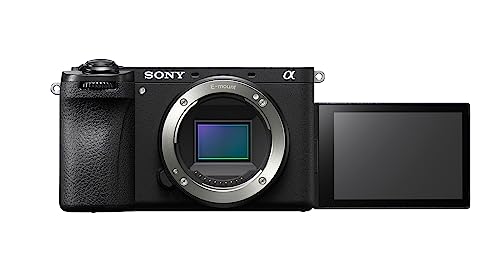
Sony Alpha a6700 (Body) — Best APS-C enthusiast
The a6700 is what happens when a manufacturer stops treating APS-C as the budget shelf. Its 26MP back-illuminated sensor, AI-assisted autofocus that recognises eyes, faces, heads and whole bodies, and 4K video credentials borrowed from Sony’s cinema line make it the most capable APS-C camera in this guide by a clear margin — and for portraits, that autofocus is the story. At f/1.8 on a fast prime, depth of field shrinks to the depth of an eye; the a6700 finds the nearer eye, holds it through a laugh, a turn, a toddler’s feint, and hands you files whose focus is boringly, wonderfully correct.
Sony’s E-mount is the other half of the argument: the deepest affordable lens catalogue in the mirrorless world, including fast APS-C primes from Sony, Sigma and Tamron that were designed for exactly this body class. A portraitist building on the a6700 never meets a lens wall — the 56mm f/1.4-class portrait primes for this mount are beloved for a reason, rendering the classic short-telephoto portrait look at prices full-frame shooters envy.
It is sold body-only, it costs enthusiast money, and its menu system rewards an owner who sets it up deliberately rather than wandering it. For the photographer who has outgrown a starter body — or intends to skip the starter stage entirely — the a6700 is the APS-C ceiling, and a portrait camera you can grow old with.
- Sensor: 26MP APS-C, back-illuminated
- Autofocus: AI-based subject and eye recognition
- Video: 4K up to 120p
- Mount: Sony E, extensive fast-prime catalogue
- Format: body only — lens required
Strengths
- Eye autofocus that removes focus anxiety at wide apertures.
- The best affordable portrait-prime selection of any mount here.
- Video credentials far beyond portrait duty.
Trade-offs
- Body-only price is only the beginning of the system cost.
- Menus and customisation demand a deliberate setup hour.
- Small body plus big primes can feel front-heavy.
Best for: enthusiasts who shoot portraits seriously and also make video.
Not suited for: a first-camera buyer who wants to shoot the day the box arrives.
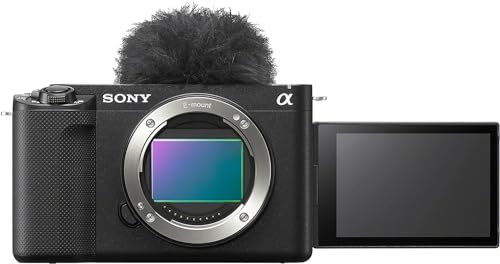
Sony ZV-E1 (Body) — Best for portrait video
The ZV-E1 asks a question the other five do not: what if your portraits move? Built on the same 12.1MP full-frame sensor family as Sony’s cinema cameras, it is a video-first machine — 4K recording with exceptional low-light cleanliness, colour tuned for skin, and creator features like product showcase and breathing compensation — that also takes stills. That sensor resolution, modest on paper, is a deliberate design: fewer, larger pixels are why its footage stays clean when a portrait session becomes an evening interview under one soft light.
For the hybrid creator — the portraitist whose clients also want a film, the family historian who shoots the birthday in both formats — the ZV-E1 collapses two purchases into one small body, and its autofocus shares the a6700’s subject-recognition intelligence, holding eyes in video where focus errors cannot be reshot. Paired with a fast E-mount prime, its shallow-depth, full-frame video look is the aesthetic half of social media is currently chasing.
The stills compromises are real and should be weighed without flinching: 12.1MP leaves little cropping room, there is no viewfinder for the stills purist, and the body is optimised for a screen-led workflow. If your portraits are prints, choose the a7 III below. If your portraits are watched, the ZV-E1 is not the compromise in this list — it is the specialist at the top of it.
- Sensor: 12.1MP full-frame, video-tuned
- Video: 4K up to 60p (120p via update path)
- Autofocus: AI subject and eye recognition
- Viewfinder: none — screen-led design
- Sold as: body only — add an E-mount lens
Strengths
- Full-frame portrait video with superb low-light cleanliness.
- Skin-tuned colour and creator-focused features.
- Compact body for a full-frame tool.
Trade-offs
- 12.1MP stills limit cropping and large prints.
- No viewfinder for traditional stills shooting.
- Premium pricing within an “affordable” list.
Best for: creators whose portrait work is primarily video with stills alongside.
Not suited for: a stills-first portraitist who crops and prints large.

Canon EOS R100 with 18-45mm Kit — Lowest-cost start
The R100 exists to answer a price question honestly: what is the least a real portrait camera can cost? Its answer is a 24.1MP APS-C sensor in a small, simple body with the same RF mount as Canon’s flagships and the 18-45mm kit lens in the box. The sensor is the point — it is a genuinely capable imaging chip, the same class as the R50’s, and with a fast prime in front of it the R100 produces portraits whose quality will embarrass the price for years.
What the saving costs is experience rather than image. The rear screen is fixed rather than flipping, the controls are simplified, the video is a generation plainer, and the camera teaches less as you go — the R50’s guided friendliness is replaced by a more traditional, get-on-with-it interface. For a self-directed learner, a student, or a second body, none of that is disqualifying; for a nervous beginner who wants the camera to help, the R50’s premium is tuition worth paying.
Judge the R100 as the floor of serious portraiture, not as a toy: eye-detection autofocus is present, Canon colour is present, the RF lens shelf — including that essential fast 50mm — is fully open to it. A tight budget spent here plus a prime is a better portrait kit than a loose budget spent on a fancier body behind a slow kit zoom, and this guide will keep repeating that arithmetic until it stops being true.
- Sensor: 24.1MP APS-C
- Included lens: RF-S 18-45mm kit zoom
- Screen: fixed
- Autofocus: eye detection
- Mount: Canon RF — full lens shelf access
Strengths
- The cheapest legitimate entry into system-camera portraits.
- Sensor quality punches far above the price.
- Small and light enough to actually be carried.
Trade-offs
- Fixed screen limits self-portraits and odd angles.
- Simplified controls and plainer video.
- Kit lens still needs the prime beside it.
Best for: students and tight budgets that still want real portrait capability.
Not suited for: beginners who want the camera to coach them as they learn.

Sony Alpha a7 III Kit — Best affordable full-frame
Few cameras have a résumé like the a7 III’s. On its launch it redefined what a full-frame camera at its price could do; years later, at the prices it now changes hands for, it anchors the phrase “affordable full-frame” in this guide’s title. The 24.2MP sensor remains excellent — dynamic range that rescues window-lit portraits, high-ISO files that stay graceful at reception lighting — and its Eye AF was the feature that taught a generation of portraitists to stop worrying about focus and start directing the person in front of them.
The kit form here includes a standard zoom to begin with, and the portrait path from it is the familiar one: add the fast prime — Sony’s 50mm and 85mm f/1.8 lenses are the canonical portrait pair for this body — and the a7 III becomes the camera that shoots weddings for friends, family sessions for paying clients and personal work indistinguishable from bodies costing twice as much. Battery life, a famous a7 III strength, removes the spare-battery anxiety that haunts smaller rivals through a long session day.
Age shows in the trimmings rather than the files: the menus are the older Sony generation, the rear screen’s touch behaviour is limited, and video is 4K/30 in a world that has moved on. A stills-led portraitist will not care. As the entry ticket to full-frame portraiture with a professional back catalogue of lenses and knowledge behind it, the a7 III remains, stubbornly, the value benchmark.
- Sensor: 24.2MP full-frame
- Video: 4K up to 30p
- Autofocus: Eye AF, wide coverage
- Burst: up to 10fps
- Battery: class-leading endurance
Strengths
- Full-frame files with professional dynamic range.
- Eye AF and battery life built for session work.
- Enormous lens and knowledge ecosystem behind it.
Trade-offs
- Older menus and limited touchscreen behaviour.
- Video ceiling of 4K/30 dates it for hybrid shooters.
- Kit zoom still wants the fast prime beside it.
Best for: aspiring semi-pro portraitists and wedding-second-shooters on a budget.
Not suited for: a hybrid creator whose paid work is half video.

Nikon Z 5 — Best full-frame value body
The Z 5 is Nikon’s quiet argument that full-frame should be calm. A 24.3MP sensor, in-body image stabilisation — which none of the other bodies here at this level matched on arrival — dual card slots for session security, and a proper electronic viewfinder, in the most compact full-frame body of this six. For the stills-led portraitist it is a deeply reassuring tool: stabilisation steadies the fast prime at dusk, the second slot backs up a paid session as it happens, and Nikon’s colour and ergonomics carry the goodwill of a century of portrait lenses.
Nikon’s Z-mount portrait glass is the connoisseur’s footnote that becomes a headline in use: the Z 50mm and 85mm f/1.8 S lenses are optically superb, and the Z 5 behind either produces portraits with a rendering quality that embarrasses the system’s modest positioning. Eye-detection autofocus for people (and animals, for the pet-portrait sideline) keeps the working experience modern where it counts.
Its compromises are the video column — 4K footage carries a crop that makes wide work awkward — and a modest burst rate that sport shooters will notice and portraitists will not. As the stills-first full-frame value in this guide, the Z 5 is the pick for the photographer who knows their genre and declines to pay for other genres’ features.
- Sensor: 24.3MP full-frame
- Stabilisation: in-body (IBIS)
- Storage: dual card slots
- Autofocus: eye detection for people and animals
- Sold as: body only; lens bought separately
Strengths
- In-body stabilisation and dual slots at a value price.
- Superb Z-mount portrait primes available.
- Calm, confident ergonomics and viewfinder.
Trade-offs
- 4K video crop limits hybrid use.
- Modest burst rate for action work.
- Body-only — budget the lens from the start.
Best for: stills-first portraitists who value steadiness and backup.
Not suited for: creators who need uncropped 4K video from the same body.
How do the six compare for a portrait-first buyer?
| Camera | Sensor | Sold as | Portrait superpower | Watch out for |
|---|---|---|---|---|
| Canon R50 | APS-C 24.2MP | Kit with 18-45mm | Friendliness + Canon colour | Slow kit lens |
| Sony a6700 | APS-C 26MP | Body only | AI eye autofocus | System cost grows fast |
| Sony ZV-E1 | Full-frame 12.1MP | Body only | Portrait video in low light | Stills resolution |
| Canon R100 | APS-C 24.1MP | Kit with 18-45mm | Price of entry | Fixed screen |
| Sony a7 III | Full-frame 24.2MP | Kit | Files + Eye AF + battery | Ageing menus/video |
| Nikon Z 5 | Full-frame 24.3MP | Body only | IBIS + dual slots | 4K video crop |
The pattern worth seeing: the two cheapest rows are complete cameras on day one, and the four dearer rows are beginnings of systems. Neither is better — but knowing which purchase you are making is the whole of buying well in this category.
Which lens should you buy first for portraits?
The 50mm f/1.8, in whichever mount you chose, and it is not close. On the full-frame bodies it is the classic environmental portrait lens — wide enough to include a room’s story, fast enough to blur it into context. On the APS-C Canons and Sony it behaves like a 75–80mm short telephoto, which is the traditional head-and-shoulders portrait length the great studio lenses were built around. Either way it costs a fraction of any other upgrade in this guide and improves portraits more than all of them — backgrounds soften, available-light shooting indoors becomes practical, and the camera’s eye AF finally has the shallow depth of field it was designed to manage.
Second lens, when the budget returns, is the 85mm f/1.8 on full-frame (or the 56mm-class f/1.4 primes on APS-C): the dedicated portrait length, flattering to faces because the working distance flattens perspective kindly, and the lens most working portraitists in this price class actually live on. Buy it after the 50mm has taught you your style — some photographers discover they are environmental storytellers who rarely leave the wider lens, and they have saved a purchase by learning in the right order.
A word for the kit zooms, which deserve defence as well as caveats: at their long end, in daylight, stepped back with the background far behind the subject, they produce perfectly pleasant portraits, and they are how most owners learn framing. The prime does not replace that learning; it rewards it. Shoot the kit lens for the first month, note the focal lengths your favourite frames used, and let that diary confirm which prime your photography has been asking for.
What mistakes do new portrait photographers make with new cameras?
Shooting everything at f/1.8 is the rite of passage. The new prime’s blur is intoxicating, and the first month of portraits arrives with one eye sharp, one soft, noses dissolving — because at portrait distance f/1.8 depth of field is centimetres deep and any sway, yours or theirs, spends it. Learn the aperture ladder deliberately: f/2.8 for a moving child, f/4 for two faces that must both be sharp, f/1.8 for the still, single subject it flatters. The cameras’ eye AF helps enormously, but it cannot focus on two planes at once, and knowing that is the difference between a style and a habit.
Second is neglecting light while worshipping gear. A window, a doorway, the open shade of a porch — portraiture’s great lights are architectural and free, and an R100 beside a north-facing window will outshoot an a7 III under a ceiling bulb every day of the week. Turn the subject until the light models the face, put the background far and plain, and the camera you own becomes the camera in the advertisements. Third is forgetting the person: direction, conversation and patience produce expressions, and expressions are the entire content of a portrait. The photographers whose work you admire are, without exception, better at the talking than at the settings.
How do you light a portrait when the budget is nearly zero?
Start with the window, because it remains the finest portrait light most homes will ever contain. Place your subject a metre from a large window, turned so the light falls across the face at roughly forty-five degrees, and you have the soft, directional modelling that studio softboxes exist to imitate — the window is a huge, soft source, and softness is what flatters skin. A net curtain or a bright overcast day improves it further by diffusing the sun’s hard edge. Every camera in this guide, down to the R100, will produce gallery-pleasant portraits in that light with no accessory more exotic than a chair.
The second light costs almost nothing: a reflector, which can be a white bedsheet on a chair, a sheet of foam board, or a collapsible disc bought cheaply, placed opposite the window to lift the shadow side of the face. The ratio between the two sides is your style dial — reflector close for gentle, bright portraits; reflector absent for moodier, sculptural ones. Learn that one relationship and you understand eighty percent of portrait lighting, because studio lighting is mostly the window-and-reflector idea with the weather removed.
When you do buy light, buy one light and a way to soften it: an affordable LED panel or a small flash with an umbrella, used off-camera at the same forty-five degrees the window taught you. The cameras here all cooperate happily with simple triggers and continuous lights, and continuous light has a beginner’s superpower — you see the portrait before you take it. Add lights one at a time, months apart, and your lighting will grow like your lens collection should: by evidence, not by bundle.
What does a portrait session actually look like, start to finish?
Before the subject arrives: battery charged, card formatted, eye AF on, aperture set a stop inside your lens’s maximum until you know the person is a still one. Scout the light while you wait — the window’s direction, the porch’s shade, the plainest background in the building — because a subject should never watch their photographer wander. Two locations is plenty; portrait sessions die of options more often than of limitations.
During the session, shoot in movements rather than poses. Ask for a story, a recollection, the joke about how they met, and photograph the face that the story produces; the frames between poses are where portraits live. Work the aperture ladder the mistakes section described, move your own feet more than you move the subject, and check focus at magnification on the first frames from each new position — a thirty-second check that has saved more sessions than any other habit in this guide. With children, invert everything: follow, crouch, let the a6700’s or R50’s eye AF earn its money, and accept the glorious frame among the forty energetic ones as the session’s honest yield.
Afterwards, cull ruthlessly and edit gently. Delete the blinked and the blurred without nostalgia, keep the expressions, and resist filters that repaint skin into porcelain — the person in the portrait should be recognisable to the people who love them, on their best day rather than in their most processed hour. Deliver fewer photographs than you shot, every one of them deliberate, and your sitters will ask you back, which is the only review a portrait camera ultimately needs.
How do you direct someone who is not a model?
Almost nobody you photograph will know what to do with their hands, their chin or their expression, and they will be quietly anxious about all three — the portraitist’s first skill is making that anxiety boring. Give the hands a job: a cup, a railing, a pocket, each other’s hands. Turn the body a few degrees from the camera and bring the face back to the lens, because a body square-on reads as a passport photograph while an angle reads as a portrait. Ask for the chin slightly forward and down — it feels absurd, photographs beautifully, and explaining that it feels absurd is itself a reliable way to get a real laugh, which you should be ready for, because the laugh is the frame after the one you posed.
Work in conversation, not commands. “Stand there and smile” produces the smile people wear for officials; a question about their favourite trip produces the smile their family recognises. Photograph through the conversation rather than interrupting it, praise specifically — “that one, exactly that expression” — and show the back of the camera early, because a subject who has seen one good frame relaxes into ten more. These are not soft extras around the photography; on any given afternoon they contribute more to the result than the difference between the cheapest and dearest camera in this guide, which is why the guide can recommend the R100 with a straight face.
Can one of these cameras grow into paid portrait work?
Yes, and the path is well-worn. Family sessions, graduation portraits, headshots for local businesses — the bread and butter of working portraitists — sit comfortably within the a7 III’s and Z 5’s abilities, and within the a6700’s for daylight work. The upgrades paid work actually demands are not a new body: they are the second card slot the Z 5 already has, the backup body an R50 becomes when you upgrade, insurance, and the unglamorous software of booking and delivering galleries. Clients cannot see your sensor size; they can see whether you were calm, whether the gallery arrived when promised, and whether grandma looks like herself.
The honest ceiling to know: high-volume studio work and the darkest wedding venues will eventually argue for newer flagship bodies and faster zooms, and a working photographer will make that argument with revenue, at the right time. Starting affordable is not a limitation on that path — it is how most of the path’s travellers began, and the portfolio you build on an R50 will be indistinguishable, frame by frame, from the one you would have built on anything else in this guide.
How does depth of field really behave across these sensor sizes?
Equivalence confuses every buyer once, so here it is in working clothes. Depth of field — how much of the scene is acceptably sharp — depends on the physical size of the aperture opening, not just the f-number printed on the lens. An f/1.8 lens on the APS-C bodies gathers its light through a smaller physical opening than an f/1.8 on the full-frame bodies, so at the same framing the full-frame portrait blurs its background roughly a stop more strongly. Photographers summarise this by saying the APS-C f/1.8 behaves, for blur, like about f/2.7 on full-frame — still a great deal of blur, still transformative beside a kit zoom at f/5.6, just not the maximum physics allows.
Distance is the other half of the equation, and it is free. Background blur grows as the subject gets closer to the camera and as the background gets further behind the subject — which is why the same kit lens that disappoints in a small room can produce lovely separation in a garden with the subject stepped well away from the hedge. Teach a beginner those two moves — closer in, background further back — and their portraits improve before any lens is bought. The fast prime then multiplies a technique that already exists, instead of substituting for one that does not.
Focal length completes the picture. Longer lenses compress perspective and flatter facial features, which is why the 85mm class is the portraitist’s classic on full-frame and the 56mm class on APS-C: the working distance they impose renders noses, ears and chins in the proportions faces look best in. The 50mm on full-frame — or 35mm-class on APS-C — tells more of the room’s story and suits the environmental style. Neither is correct; they are two dialects of the same language, and most portraitists end up fluent in both.
What happens when portraits move indoors and the light goes?
Evening is where the sensor sizes send their invoice. At a candlelit dinner or a reception hall, ISO climbs into the thousands, and the full-frame bodies’ files hold colour and detail a clear step longer than the APS-C pair’s — the a7 III and Z 5 were built for exactly this penumbra, and the ZV-E1’s big-pixel sensor is cleaner still, which is its whole design argument. The APS-C cameras remain usable — a fast prime at f/1.8 gathers surprising light, and modern noise has a grain-like character that portraits tolerate gracefully — but their owners learn to hunt for light pools and to expose carefully, because underexposed high-ISO files are where noise breeds.
Flash changes the verdict for everyone. A modest speedlight bounced off a ceiling or wall manufactures window light anywhere, at any hour, and every body here can fire one; the beginner who masters bounce flash on an R100 will outshoot the available-light purist on an a7 III in most real rooms. This is the recurring sermon of the whole guide in a new key: in portraiture, light is the senior partner, the lens is the junior partner, and the body — any of these six bodies — is the office they share.
What about photographing yourself — the self-portrait case?
A meaningful share of portrait buyers are buying a camera to be in front of, and the six divide sharply here. The R50’s fully flipping screen and friendly video features make it the natural self-portraitist’s Canon; the a6700’s screen articulates for the same purpose with more power behind it; the ZV-E1 was designed for a creator talking to it at arm’s length. The Z 5 and a7 III, built around viewfinders, serve the self-shooter less gracefully — their screens tilt rather than flip forward — and the R100’s fixed screen rules the genre out almost entirely. Remote control by phone app, available across the modern bodies here, completes the solo workflow: compose on the phone, trigger from the pose, review without walking back.
The technique mirrors the directed session with the roles merged: window light, a tripod or a shelf, the camera’s self-timer or app trigger, and patience with yourself as the least cooperative subject you will ever direct. It is also, quietly, the best training a portraitist can do — an hour spent being the anxious person in front of the lens teaches more about directing everyone else than a month of photographing the willing.
Why should portrait photographers print?
Because portraits are the genre printing was invented for. A face on a phone screen is a message; the same face printed at A4 and framed is an heirloom, and the difference changes how subjects value the photograph and how photographers bother to make it. The good news buried in this guide’s prices is that every body here — including the R100 — resolves far more detail than an A4 or A3 print can display, and even the ZV-E1’s 12.1MP files print handsomely at the sizes portraits actually live at. The megapixel race is a landscape photographer’s anxiety; the portraitist’s print is limited by paper, light and nerve, not by the sensor.
Print one portrait a month, badly at first, from the camera you already own. You will learn your colour, your sharpening and your own taste faster than any screen teaches them, and the wall where the prints accumulate becomes the truest review of the camera you bought — kinder than the internet’s, and considerably more useful.
How do group portraits change the rules?
The family formal is portraiture’s examination paper, and it fails more beginners than any other assignment — usually on depth of field. Three rows of relatives cannot share an f/1.8 plane of focus; the aperture that flatters one face abandons the back row. Work at f/5.6 to f/8, arrange the group in as few depth planes as chairs and steps allow, focus on the middle row’s eyes, and let a smaller background blur be the price of everyone’s face existing. This is also where the kit zooms stage their comeback: at f/8 in daylight, the bundled 18-45mm on either Canon is optically in its comfort zone, and the photograph’s success will be decided by arrangement, timing and the photographer’s voice, not by glass.
Light and logistics scale with heads. One window lights a couple beautifully and a dozen people unevenly, so groups migrate outdoors into open shade — the porch shadow, the tree’s edge, the overcast day that beginners curse and portraitists pray for — where the light is broad, kind and free. Take the formal frames first while patience is stocked, then let the group dissolve into the candid clusters where the day’s beloved photographs usually hide. Every camera here handles this assignment; the ones with eye AF simply let you spend your attention on the choreography, where it belongs.
A note on the second-hand door into this list
Several of these cameras — the a7 III above all — circulate in a healthy used market, and a careful second-hand purchase is a legitimate way to climb a tier for the same money. The checks are quick: shutter count against the body’s rated life, sensor spots visible in a plain bright frame at a small aperture, a viewfinder and screen free of damage, and a battery that holds a session’s charge. Buy from sellers with returns, because a weekend of testing is worth more than any listing description.
The counterweight is warranty and wear on the newest models: the R50, a6700 and ZV-E1 are recent enough that the new price buys years of supported life, firmware updates and a maker’s guarantee, which for a first serious camera has a value beyond the arithmetic. Decide which buyer you are — gambler on condition, or payer for certainty — and either route lands you on this page’s shortlist, which is rather the point of an affordable guide.
And the pets?
Briefly, because the inbox insists: pet portraiture is portrait photography at double speed with a subject immune to direction, and the tools that matter are the same eye AF — the Z 5 and the Sonys detect animal eyes explicitly — a fast prime for indoor light, and a squeaky toy held beside the lens by an assistant you remembered to recruit. The R50 and a6700 make families’ favourite pet photographs in this guide’s experience, not because of any pet mode, but because their focusing keeps up with a subject who has never once been told to hold still, by anyone, successfully.
How do you protect the portraits after you have taken them?
Portraits are the least replaceable files a photographer owns — landscapes wait, grandparents do not — and the six cameras here divide quietly on insurance. The Z 5’s dual slots can write every frame to two cards at once, which is why session photographers love it; every other body here asks you to supply the discipline instead: copy the card the same evening, keep the copies in two places, and treat the camera card as a delivery van rather than a vault. Cloud backup, an external drive, the laptop itself — the technology matters less than the habit, and the habit is cheapest to build with your first paid or precious session rather than after your first loss.
The same care extends to the camera’s small life: a sensor-cleaning routine before spots start appearing in bright backgrounds at small apertures, a bag that keeps the fast prime’s front element from keys and coins, and batteries rotated rather than abandoned flat for a season. None of it is glamorous. All of it is the difference between a camera that is ready on the one afternoon the whole family is finally in the same room, and a camera that becomes a story about the portrait that was never taken.
One decision left: which mount do you want to grow old with?
Bodies are replaced; lens collections linger, and a portraitist’s second year is shaped by the mount chosen in the first week. Canon’s RF shelf is growing fastest at the affordable end and its colour is the beginner’s friend; Sony’s E-mount is the deepest and most competitive, with third-party primes keeping prices honest; Nikon’s Z-mount is the smallest of the three here and, lens for lens, arguably the finest optically. None of these is a trap — a portraitist can build a life’s work on any of them — but the choice deserves one deliberate minute, because it is the only decision in this guide that gets more expensive to change the longer you live with it. Choose for the lenses you will actually buy, at the prices they actually are, and the body argument settles itself.
Final Recommendation
Start where your life is. The Canon R50 is this guide’s default for most readers — friendly, capable, complete in the box — with the R100 as the same door at a lower price for the self-reliant. Enthusiasts who know they will stay with APS-C should stretch to the a6700 and never think about autofocus again. Full-frame belongs to the a7 III for the semi-pro path and the Z 5 for the stills purist who values steadiness and backup, while the ZV-E1 serves the creator whose portraits are films first. In every case, reserve the money for the fast prime before upgrading anything else, learn the window light in your own home before buying any other light, and remember what the genre keeps teaching everyone who practises it: the camera is the smallest part of a portrait, and these six are all, genuinely, big enough.
Frequently Asked Questions
Do I really need full-frame for good portraits?
No. Full-frame buys about a stop of extra background blur and cleaner high-ISO files, which matter at the margins — candlelit venues, very large prints. An APS-C camera with a fast prime produces portraits that professionals deliver to clients every week; light, lens and direction each outrank sensor size in the making of a portrait. Buy full-frame when your work reaches those margins regularly, not a season before.
Why does everyone recommend a 50mm f/1.8 lens?
Because it is the cheapest lens that transforms any of these cameras: the wide aperture blurs backgrounds and admits the light for indoor portraits, the focal length flatters faces on both sensor sizes here, and every mount in this guide has an affordable version. It is the highest-value purchase in portrait photography, full stop.
Can I shoot portraits with the kit lens?
Yes, with technique: zoom to the long end, step back, put distance between your subject and the background, and shoot in good light. The results will be pleasant and sharp; what the kit lens cannot give you is the strong background melt or low-light ease of a fast prime, which is why the prime is a planned purchase rather than an emergency. Many photographers’ favourite early portraits were kit-lens portraits taken exactly this way, outdoors, with the background given room to fall away.
Which of these is best for photographing children?
The a6700 and R50, for their eye autofocus — children move in the exact ways that defeat older focusing systems, and both cameras hold a child’s eye through motion that would blur a lesser setup’s best efforts. The R50 adds the friendlier price and handling for a family camera; the a6700 adds speed and video depth.
Is the ZV-E1’s 12 megapixels enough for portraits?
For screen display and moderate prints, comfortably — and its low-light cleanliness is a genuine portrait asset at evening events. For heavy cropping or very large prints it is the wrong tool, which is why this guide positions it as the video-first pick and steers stills-led buyers to the 24MP bodies. Plenty of working creators shoot entire portrait channels on this sensor class and their audiences have never once asked about megapixels, because the face was sharp, the light was kind and the moment was real.
What else should a beginner budget for besides the camera?
The fast prime first, then a decent memory card and a second battery, then — only then — light: a simple reflector or an affordable LED panel teaches more portrait craft than any further lens. Editing software can wait; every camera here produces JPEGs worth sharing on day one. Spend in that order and every purchase will be felt in the very next session, which is more than most camera shopping can honestly promise.
Related Guides
Continue with the best 500 dollar photography cameras, the best affordable canon cameras and the best affordable full frame cameras.
Related guides
- Best Canon Point and Shoot Digital Cameras: PowerShot Picks From Pocket Compacts to Travel Zooms
- Best Balancing Stabilizers for Mirrorless Cameras: Payload, Balancing and Native Vertical Shooting
- Best Basic Phones Camera Buyers Can Trust: Flip Phones and Simple Handsets That Still Take a Photograph
- Best Sony Full Frame Cameras for Astrophotography: Sensitivity vs Resolution


