What's inside
- Where to buy
- Key Takeaways
- Quick Picks
- How Did We Rank Nikons for Action Work?
- What Actually Wins Sports Photographs: Focus, Reach, or Light?
- Does Your Sport Happen Outdoors at Noon or Indoors at Night?
- Which Full-Frame Z Bodies Lead the Nikon Sports Line?
- What Does the Step From Enthusiast to Professional Really Buy?
- What Do the Value Kit, the Stylist, and the DSLR Offer?
- How Do the Six Compare as Sports Tools?
- Which Lenses Turn a Nikon Body Into a Sports Kit?
- What Do Sports Beginners Most Often Get Wrong?
- How Do You Prepare a Nikon Kit for a Full Day of Sport?
- How Do You Practise Sports Photography Between Matches?
- Final Recommendation
- Frequently Asked Questions
- Related Guides
As an Amazon Associate I earn from qualifying purchases. This post may contain affiliate links at no extra cost to you.
gizmoverdict.com is reader-supported. When you buy through links on our site, we may earn an affiliate commission.
Where to buy
The best nikon cameras for sports are chosen under a discipline this guide will not relax: a sports camera lives or dies on numbers — burst depth, autofocus behaviour, buffer stamina — and those numbers will only be quoted here when a verified listing title states them. Read the six listings below and you will notice something instructive: the titles are rich in positioning and poor in frame rates. Nikon sells these bodies on their class, their sensors, and their video, and leaves the stopwatch figures to the specification pages. So this guide does the honest thing. Where a title states a figure — one camera below carries its resolution and its 6K video in its name — the figure is used. Where it does not, the spec boxes write not stated, and the cameras are judged on what can be truthfully assessed: sensor format, system depth, handling class, and the role each body plays in a working sports kit.
One absence must be named before the picks, because every Nikon sports shooter will look for it: the flagship tier above the Z8 does not appear in this guide, because no listing for it could be verified in this round’s pool — the six cameras below are the Nikon sports story that checked listings can actually tell. That story is still a good one. It runs from a professional hybrid body built for agency work, through two generations of full-frame all-rounders, to a compact crop-sensor kit with two lenses, a retro-styled full-frame body, and the last of the enthusiast DSLRs — a spread that maps almost perfectly onto the way sports photographers actually enter and climb this system.
Key Takeaways
- None of the six listing titles states a burst rate, so this guide quotes no frames-per-second figure for any pick — each spec box records that silence plainly, to be filled from the listing page or the maker’s documentation.
- The Z8 is the professional anchor of the six, described in its listing as a professional full-frame stills and video hybrid; the Z6 III is its newer-generation sibling with 6K/60p internal RAW video stated in its title.
- Two crop-sensor routes serve reach-hungry sports: the Z50 II kit with two lenses, and the D7500 DSLR body — on DX sensors, a telephoto lens frames tighter, which field sports played across big grounds quietly reward every single weekend of the season.
- The Z5 II kit states its lens outright — a 24-50mm zoom — making it the only mirrorless pick here whose out-of-box configuration is fully described in its title.
- The Z f trades sports-first ergonomics for iconic styling on a full-frame sensor, and this guide grades it as the photographer’s camera that can shoot sport rather than the sports camera pure and simple — a distinction that will decide, for many readers, whether it is the most enjoyable body in this guide or the one whose charms belong to a different kind of Saturday entirely, spent at street festivals and family gatherings with the match as only one stop among several.
Quick Picks
| Pick | Badge | Why it earns its place |
|---|---|---|
| Nikon Z6 III | The modern all-rounder | Full-frame stills and video with 6K/60p internal RAW recording stated in its listing. |
| Nikon Z8 | The professional hybrid | Nikon’s pro-class full-frame body for shooters whose sports work is also their living. |
| Nikon Z50 II with Two Lenses | The reach kit for starters | A compact DX body with two lenses in the box, colour presets, and easy wireless sharing for the whole grateful team. |
| Nikon Z5 II with 24-50mm | The full-frame value kit | A 24.5MP full-frame body with its everyday zoom included, per its listing. |
| Nikon Z f | The stylist that can shoot sport | Full-frame capability in an iconic retro body, for photographers first and sports second. |
| Nikon D7500 Body | The DSLR loyalist’s route | A DX-format SLR body for shooters invested in F-mount glass and an optical viewfinder. |
How Did We Rank Nikons for Action Work?
We ranked on role before specification, because the verified titles support role far better than they support stopwatch claims. The first question was class: is this body built and positioned for professional action work, for enthusiast all-round use, or for entering the system? The second was format: full-frame for low-light arenas and shallow depth, DX crop for the free reach it grants telephoto lenses at field sports. The third was system: what does the body open — the Z-mount’s growing native telephoto catalogue, the two-lens head start of the Z50 II kit, or the vast second-hand ocean of F-mount glass behind the D7500?
Throughout, the guide applies one evidentiary rule without exception: continuous shooting speeds are quoted only where a listing title states them, and no title here states one. That will frustrate readers who came for a frame-rate league table, and the frustration is accepted as the price of honesty — a burst figure borrowed from a review of a different configuration, or from memory of a launch announcement, is exactly the kind of borrowed certainty that misleads a buyer comparing bodies across a season. The listing pages and Nikon’s documentation carry the current figures; this guide’s job is to tell you which bodies deserve your shortlist and what each will ask of you. Ask, in particular, what each body asks of your lenses, your cards, and your Saturdays, because a sports camera is never bought alone — it is bought into a system of glass and habits, and the photographers who thrive in this discipline are the ones who chose the system, not merely the body, with their eyes open from the start.
What Actually Wins Sports Photographs: Focus, Reach, or Light?
Ask a working sports photographer what decides a keeper and the answer is rarely the camera’s headline speed. It is the autofocus system’s willingness to stay on a player’s eye through a tangle of limbs, the lens’s reach against the far touchline, and the sensor’s composure when the floodlights are the only light there is. Burst rate matters — a faster camera samples more moments from the same action — but it samples them through the other three factors, and a modest burst behind a locked focus beats a heroic burst of almost-focused frames every Saturday of the season. This is why the full-frame bodies dominate the top of this guide: their sensors hold high-sensitivity files together in indoor arenas and under lights, and their class brings the processing that modern subject-detection autofocus runs on.
Reach is the second factor, and it is where the crop-sensor picks earn their dignity. A DX sensor records the centre of the image a lens projects, so a telephoto of a given length frames like a longer lens — the sideline photographer’s favourite arithmetic, because long glass is the most expensive line in any sports budget. The Z50 II kit and the D7500 both exploit this, in mirrorless and DSLR dialects respectively. Light is the third factor, and it cuts the other way: the same crop that multiplies reach gathers less light than full frame, so the DX bodies ask more of their lenses’ apertures in an evening stadium. Every pick below is a different settlement among those three forces, and the right settlement depends on whether your sport is played at noon on a field or at night under lights.
A fourth force deserves naming because beginners chronically under-buy it: the photographer’s own stamina and the kit’s weight. A body and lens combination that feels heroic in the shop becomes a negotiation by the third hour of a tournament day, and frames are lost to tired arms as surely as to slow focus. Compact bodies like the Z50 II, and disciplined kits built around one long lens rather than three, are partly endurance equipment. Judge every pick in this guide with a full day in your hands imagined honestly — the match you photograph in the last ten minutes counts exactly as much as the one in the first ten, and it is usually the better game.
Does Your Sport Happen Outdoors at Noon or Indoors at Night?
No single question sorts these six cameras faster. Outdoor daytime sport — football on grass, athletics, cricket, motorsport in daylight — is a reach problem played in generous light, and it is the natural home of the DX picks: the Z50 II kit’s two lenses and the D7500’s F-mount telephoto economics both solve the framing problem while the sun pays the exposure bill. The full-frame bodies shoot this sport superbly too, but their defining advantages are unemployed at noon, and the budget they consume could have bought the longer lens the noon game actually rewards.
Move the same sports indoors or under floodlights and the ranking inverts. Light becomes the scarce resource, shutter speeds must stay high to freeze motion, and the bill lands on the sensor: full-frame bodies hold their files together at the sensitivities the evening demands, while crop bodies lean on their lenses’ apertures until the kit lens becomes the system’s ceiling. Basketball, ice hockey, gymnastics, evening football — this is the territory the Z6 III, Z8, Z5 II, and Z f were built for, and a buyer whose season is mostly played after dark should weight the format decision accordingly. Many working kits end up bilingual, a full-frame body for the night game and a DX body stretching the telephoto by day, and the six picks below contain both halves of that eventual settlement.
Which Full-Frame Z Bodies Lead the Nikon Sports Line?

Nikon Z6 III — The modern all-rounder
The Z6 III’s listing is the most forthcoming in this guide: a full-frame mirrorless stills and video camera, black, USA model, with 6K/60p internal RAW recording stated outright. That video figure matters to the modern sports shooter more than it once did, because the job has quietly become hybrid — the same Saturday produces stills for the report and motion for the club’s channels, and a body that records high-grade video internally, without external recorders, keeps the kit to one bag. For stills, the third-generation Z6 sits in Nikon’s line as the all-rounder: full-frame sensor for floodlit work, a body sized for a long lens on a monopod all afternoon, and the current generation of Nikon’s autofocus and processing thinking.
Its burst rate, per this guide’s rule, is recorded as not stated in the listing title — confirm it on the listing page, where it belongs, alongside buffer figures. What can be said without a stopwatch is that the Z6 III is positioned by Nikon as the enthusiast-to-professional bridge of the Z system, and its sports credentials rest on that positioning: subject-aware autofocus of the current generation, a full-frame sensor’s low-light headroom, and a mount with native telephoto options at several levels of ambition. For the club photographer, the semi-pro, the parent who shoots a talented teenager’s season like it matters — it does — this is the body around which a serious Nikon sports kit most sensibly forms.
The honest reservation is the mirror image of its strength: an all-rounder is, by definition, not the flagship of any single discipline, and shooters whose income depends on the fastest-moving professional sports should read the Z8’s section below before deciding. Everyone else should note how completely the Z6 III covers the brief — stills, serious video, full-frame light gathering, current autofocus — in one body at the middle of the range, which is precisely where the best value in a camera system usually hides.
One more consideration belongs to the hybrid era specifically: a body bought for stills alone is now the exception, because clubs, schools, and sponsors all ask for motion. The Z6 III’s stated 6K RAW capability is the only video promise in this guide made in a title, and for a shooter whose next season will certainly include filming — interviews at the fence, a striker’s walkthrough of a goal, the documentary texture around a matchday — that promise, verifiable in the listing itself, may reasonably outrank every unstated figure in this entire comparison.
- Format: full-frame mirrorless, per the listing
- Video: 6K/60p internal RAW recording, stated in the title
- Burst rate: the title publishes no figure — the listing page carries the current specification
- Model: USA model, black, per the title
- Role: current-generation all-rounder for stills-led hybrid sports work
Strengths
- The only pick whose title states a serious video specification, and 6K RAW is a serious one.
- Full-frame sensor headroom suits floodlit and indoor sports where light runs out first.
- Current-generation positioning brings Nikon’s latest autofocus thinking to the middle of the range.
Trade-offs
- Its title omits the burst and buffer figures sports buyers most want — check the listing page.
- An all-rounder concedes the last measure of specialisation to the professional body below.
- Native long glass for the Z mount remains a significant second investment.
Best for: serious club and semi-pro shooters building one hybrid Nikon kit for stills and film.
Not suited for: a sports shooter who needs the burst specification settled by the title before considering a body.

Nikon Z8 — The professional hybrid
The Z8’s listing calls it a professional full-frame mirrorless stills and video hybrid camera, Nikon USA model — and professional is the load-bearing word. In Nikon’s line the Z8 is the body that brings flagship-class capability into a smaller, more affordable shell than the top tier, and it has become the working camera of agency and freelance sports photographers who need one body to cover a cup final, a press conference, and a commercial shoot in the same week. Its sports case rests on that class: the processing headroom for relentless autofocus, the build for daily professional punishment, and the video specification that lets it serve broadcast-adjacent work without a second body in the bag.
Per this guide’s rule, its continuous shooting figures appear nowhere in its title and are therefore not quoted here — a professional buyer will read them on the listing page beside buffer depths and card formats, which is where such figures belong. What the guide can truthfully add is context about the class: bodies at this level are bought as systems, with fast cards, fast glass, and a second body eventually, and the Z8’s value is that it anchors such a system without demanding the flagship tier’s price of entry. Photographers stepping up from the Z6 class feel the difference not in one specification but in the absence of ceilings — the moment that would have been missed is simply, routinely, captured.
There is a quieter professional argument for the Z8 that rarely reaches buying guides: standardisation. Agencies and studios that run several bodies need files, colours, menus, and handling to match across photographers, and a body of this class is bought in pairs and threes for exactly that reason. The solo shooter benefits from the same gravity — accessories, batteries, and knowledge accumulate around a body the whole profession uses, and when something fails at an away fixture, the borrowed replacement is likely to be this camera’s twin.
The Z8 is also the pick that makes the guide’s opening honesty note concrete. Yes, there is a tier above it in Nikon’s imagination; no, it could not be verified into this pool; and the working truth is that the Z8 is the professional Nikon most sports photographers actually buy, because it delivers the flagship experience at the point where the cost curve bends. If your sports photography earns money, or honestly intends to, this is the body the other five are measured against.
- Class: professional full-frame mirrorless hybrid, per the listing
- Stills and video: both named as the body’s brief in the title
- Continuous shooting speed: absent from the title; confirm it in Nikon’s documentation
- Model: Nikon USA model, per the title
- Role: the working professional’s anchor body for a Z-system sports kit
Strengths
- Professional class in every system that matters to action work: processing, build, and video.
- Flagship-tier experience without the flagship tier’s cost of entry.
- Anchors a growing kit — fast glass and cards bought for it stay relevant for years.
Trade-offs
- The listing title states no performance figures at all; professionals must spec it on the listing page.
- Its class expects investment around it — cards, glass, and eventually a second body.
- More camera than a weekend youth-league brief can justify.
Best for: working and aspiring professional sports photographers standardising on the Z system.
Not suited for: casual sideline shooters, whose money works harder in the kits further down this guide.

Nikon Z50 II with Two Lenses — The reach kit for starters
The Z50 II listing promises a compact mirrorless stills and video camera with two lenses in the box, easy colour presets, and wireless photo sharing, USA model. For a sports beginner, the two-lens kit is the story: a new shooter needs a standard zoom for the near action and a telephoto for the far side of the pitch, and a kit that includes both removes the most common beginner’s stall, which is owning a camera that cannot yet reach the game. The lens focal lengths are not stated in the listing title, and this guide will not invent them — the listing page enumerates the pair, and a buyer should read it there. What the DX format guarantees, whichever the exact pair, is the crop dividend: on this compact sensor, the telephoto frames tighter than its numbers suggest, and field sports played across big grass rectangles reward exactly that.
The presets and sharing in the title are not sports features in the stopwatch sense, and they matter anyway. A parent or a club volunteer shooting a youth season succeeds by delivering photographs the same evening, and wireless sharing plus friendly colour presets shorten the distance between the final whistle and the team’s group chat. The Z50 II’s compactness is a genuine sports virtue too: it rides in a small bag to away fixtures, draws no attention at school events, and leaves its owner fresh at full time in a way a professional rig does not.
Its ceilings are the DX format’s own: in a floodlit evening match the smaller sensor asks its lenses for light they may not have, and the kit telephoto’s aperture will set the practical limit of the whole system after dark. Buy it for daytime and well-lit sport, for learning the craft on real games, and for the reach-per-cost that no full-frame kit in this guide can match — and know that the lenses and habits it teaches transfer upward if the hobby turns serious.
Parents shooting a child’s season deserve one specific reassurance about this kit: its ceiling is higher than a school career. The same body that learns its trade at under-twelve fixtures on Saturday mornings will still be framing tightly at academy level years later, because reach and simplicity do not expire as the players grow — only the photographer’s anticipation needs to keep pace, and that, fortunately, is trained free of charge at every match.
- Format: compact DX (APS-C) mirrorless, per the listing’s positioning
- In the box: two lenses (focal lengths not stated in the title — see the listing page)
- Features named: easy colour presets, wireless photo sharing
- Burst performance: the title is silent — read the full listing before comparing bodies
- Model: USA model, per the title
Strengths
- Two lenses in the box solve the beginner’s reach problem on the first day.
- The DX crop dividend stretches the telephoto’s framing across big fields.
- Sharing and presets suit the same-evening delivery rhythm of youth and club sport.
Trade-offs
- The listing title does not name the lenses’ focal lengths, so confirm the pair on the listing page.
- Crop-sensor light gathering trails the full-frame picks under floodlights.
- Kit lenses’ apertures, not the body, will set the system’s evening limits.
Best for: parents, club volunteers, and new sports shooters who need reach and simplicity together.
Not suited for: night-match specialists, who should start with the full-frame bodies above.
What Does the Step From Enthusiast to Professional Really Buy?
Between the Z6 III and the Z8 there is no single specification that explains the professional tier, and buyers hunting for one will misread both cameras. What the step buys is the removal of ceilings in a dozen places at once: processing that keeps subject detection composed when the frame fills with crossing players, buffers that do not fill during the one sequence the match will be remembered by, build that treats rain, knocks, and daily transport as routine, and controls laid out for hands that work by memory in the dark. None of these appears in a listing title. All of them appear, eventually, in a working photographer’s archive — usually as the absence of the failure that used to cost a frame a month.
The step also buys time, which is the professional’s real currency. A body that needs no menu-diving between sports, that tethers and transfers at the speed a picture desk demands, that simply continues while the light changes and the weather turns, returns minutes to every assignment — and minutes, across a season, are photographs. Enthusiasts should not read this as an instruction to buy the Z8: the enthusiast’s binding constraint is usually glass, position, and practice, in that order, and the Z6 III leaves more budget for all three. Professionals should not read it as permission to economise: the first time a ceiling costs a client a picture, the saving is repaid with interest. The two bodies are not better and worse; they are answers to two different questions about what your photography must never fail to do.
What Do the Value Kit, the Stylist, and the DSLR Offer?

Nikon Z5 II with 24-50mm — The full-frame value kit
The Z5 II’s listing is the most complete kit description in this guide: a mirrorless camera with a 24-50mm zoom lens, described as a compact full-frame 24.5MP/4K camera with a lightweight wide-to-standard everyday zoom. Every element of that sentence earns its place. Full-frame and 24.5MP settle the sensor question with figures actually stated. The included 24-50mm settles the out-of-box question — this camera photographs from the day it arrives, at widths suited to indoor sports’ near action, team environments, and the documentary half of a sports photographer’s day. And the second-generation badge matters: the Z5 II brings the current era of Nikon’s processing and autofocus thinking to the value end of the full-frame line, which is where sports buyers on a budget should want the money spent.
For sports specifically, read this kit as a body purchase with a starter lens attached. The 24-50mm is an everyday zoom, not a sideline telephoto; the sports kit forms when a longer Z-mount lens joins it, and the body’s full-frame sensor will reward that lens under lights in a way the DX picks cannot match. Until then, the kit covers the near game superbly — courtside at basketball, the finish-line enclosure, the podium and the mixed zone — the working territory where a great deal of paid sports photography actually happens.
There is a discipline worth naming for Z5 II buyers specifically: resist judging the kit by its zoom’s reach at the first match. Judge it by the frames from the near territory it was bought for, and let the telephoto decision be made from evidence — a month of knowing exactly which moments escaped, at which distance, in which light. Kits assembled from evidence outperform kits assembled from anxiety, and this body’s honest completeness makes it the easiest in the guide to build that way.
Its burst figure, like every pick here, appears in no title and is left for the listing page to supply. What recommends the Z5 II without that number is the completeness of everything else its title does state, at the friendliest point of entry into full-frame Nikon. For a shooter whose sports are indoor, near, or documentary — and whose budget must also stretch to a telephoto later — it is the most rational first full-frame step in this guide.
- Sensor: full-frame, 24.5MP, as stated in the listing
- Kit lens: 24-50mm zoom included, per the title
- Video: 4K, as stated in the title
- Burst rate: not among the title’s claims; the maker’s documentation states it
- Positioning: compact full-frame with a lightweight everyday zoom
Strengths
- The only mirrorless pick whose title fully states sensor, resolution, video, and included lens.
- Full-frame light gathering at the value end of Nikon’s line, with current-generation processing.
- A working camera from the box for near-action and documentary sports coverage.
Trade-offs
- The included zoom is an everyday lens; sideline reach requires a telephoto purchase.
- Burst and buffer figures must be confirmed on the listing page, as with every pick here.
- Value positioning means the professional bodies above hold ceilings this one does not claim.
Best for: budget-conscious shooters entering full-frame Nikon for indoor and near-action sport.
Not suited for: far-touchline field sports until a telephoto joins the kit.

Nikon Z f — The stylist that can shoot sport
The Z f’s listing sells three things: a full-frame mirrorless stills and video camera, iconic styling, and the Nikon USA model badge. The styling is not a euphemism — the Z f wears the design language of Nikon’s classic film bodies, with machined dials for the exposure fundamentals, and it is bought by photographers who want the act of shooting to feel like something. The sports question is whether that romance survives contact with a rainy touchline, and the honest answer is: mostly, with ergonomic caveats. Under its retro skin the Z f is a modern full-frame Z body with the current autofocus era’s capabilities, so the action work it can do is real — it will track a runner, hold a cyclist, and gather floodlit frames with a full-frame sensor’s composure.
The caveats live in the hands. Dials that delight on a street corner are slower furniture than the deep grip and customisable controls of the Z6 III or Z8 when a long telephoto is mounted and the action will not wait; a big lens on a slim, flat-fronted body is a balance act over a four-quarter game. Sports photographers who shoot in short, intense bursts — athletics finals, a gymnastics rotation, a boxing undercard — will feel the compromise least. Those who live on a monopod for three hours will feel it most.
So the Z f’s verdict writes itself as a matter of identity. If you are a photographer who also shoots sport, it may be the most enjoyable body in this guide and entirely capable of your action work. If you are a sports photographer first, the same money in a Z6 III buys ergonomics shaped by the discipline. Either way, its full-frame sensor and modern internals mean the choice is about hands and heart, not about capability — a luxury of a dilemma, and this guide is content to leave it with you.
One practical footnote: the Z f’s dials make it the best teaching body in this guide. A young photographer raised on its shutter and sensitivity dials learns exposure as a physical habit rather than a menu outcome, and that fluency shows in sports work as an instinct for the light changing across an evening match. Some professionals keep a body like this precisely because it keeps them honest — a sentimental reason that produces unsentimental results.
- Format: full-frame mirrorless, per the listing
- Design: iconic styling, as the title puts it — classic dial-led handling
- Continuous speed: the title gives no number — check the listing page for the figure
- Model: Nikon USA model, per the title
- Role: photographer’s full-frame body with genuine sports capability
Strengths
- Modern full-frame capability, including current-era autofocus, in a body people love to carry.
- Dial-led handling slows the shooter down in the good way for considered sports coverage.
- Shares the Z mount’s telephoto catalogue with every other mirrorless pick here.
Trade-offs
- Slim retro ergonomics balance long telephotos less happily over a full match.
- The title states no performance figures; spec them on the listing page.
- Its premium is partly aesthetic, which pure sports budgets may not forgive.
Best for: photographers first, who shoot sport among other subjects and value the handling ritual.
Not suited for: monopod professionals living at long focal lengths for hours at a time.
Nikon D7500 Body — The DSLR loyalist’s route
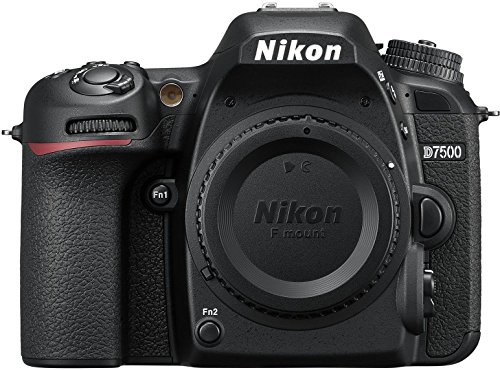
The D7500 is this guide’s representative of the other Nikon: a DX-format digital SLR body, sold as a body only, from the era when the optical viewfinder was king. Its listing states format and little else, so the familiar rule applies — burst and buffer figures appear nowhere in its title and are not quoted here. What can be said truthfully is what the D7500 represents in a 2026 sports kit: the mature end of the F-mount system, behind which stands one of the deepest lens catalogues ever made, including decades of sports telephotos circulating second-hand at prices the mirrorless era rarely matches. For a shooter who already owns F-mount glass, or who is building a field-sports kit on a strict budget from the used market, the D7500’s body is the inexpensive key to an expensive-looking kingdom.
The DX format repeats its familiar bargain: the crop stretches every telephoto’s framing — the sideline dividend again — while asking more of lenses under lights. The DSLR experience itself is the other half of the proposition. An optical viewfinder shows the game with zero lag and no battery cost, the body’s battery life belongs to a more frugal era of camera design, and the handling is the distilled result of fifty years of sports photographers’ feedback. Against that stand the mirrorless era’s gifts — silent shooting, subject-detection autofocus of the newest kind, video of the Z6 III’s stated class — which the D7500 does not claim and this guide will not claim for it.
Buy the D7500 as a deliberate, eyes-open choice: for F-mount continuity, for used-telephoto economics, for the optical finder, and for daytime field sports where its crop and its craft are in their element. Do not buy it as a cheaper Z camera, because it is a different instrument from a different, honourable school — and schools, in sports photography, are chosen for the games they play best.
The used-market route deserves a buyer’s caution to match its promise: inspect any second-hand telephoto for fungus, focus accuracy, and mount wear, and buy the D7500 body itself from a seller whose shutter history you can trust. Do that diligence once and the F-mount economy is real — professional glass from a decade ago, at prices that let a club photographer field a kit no mirrorless budget at this level can imitate.
- Format: DX-format digital SLR body, per the listing
- What ships: body only — lens required (F-mount)
- Burst rate: not stated in the listing title — verify with the maker’s documentation
- System: F-mount, with its deep new and second-hand telephoto catalogue
- Role: the DSLR route into Nikon sports on a lens-led budget
Strengths
- The F-mount’s second-hand telephoto market makes serious reach affordable.
- Optical viewfinder immediacy and frugal battery habits suit long days outdoors.
- DX crop stretches telephoto framing for field sports, as with the Z50 II.
Trade-offs
- Body only: a lens is a required second purchase before anything can be shot.
- It predates the mirrorless era’s subject-detection autofocus and silent shooting.
- The listing title states almost nothing — every figure must be confirmed on the listing page.
Best for: F-mount owners and budget builders assembling reach from the used telephoto market.
Not suited for: buyers wanting current mirrorless autofocus and video in their sports body.
How Do the Six Compare as Sports Tools?
| Camera | Format | What the title states | Burst (per title) | Sports role |
|---|---|---|---|---|
| Nikon Z6 III | Full frame | 6K/60p internal RAW video | Not in title | Modern all-rounder |
| Nikon Z8 | Full frame | Professional hybrid positioning | Not in title | Working professional anchor |
| Nikon Z50 II Kit | DX crop | Two lenses, presets, sharing | Title silent | Beginner reach kit |
| Nikon Z5 II Kit | Full frame | 24.5MP, 4K, 24-50mm included | Title silent | Value full-frame entry |
| Nikon Z f | Full frame | Iconic styling | Not stated | Photographer’s body, sports-capable |
| Nikon D7500 | DX crop | DSLR body only | Not stated | F-mount loyalist route |
The burst column is the most honest table furniture in this guide: six identical entries that tell you exactly how much the titles promise and invite you to the listing pages for the rest. Everything else in the table separates cleanly — format divides the light-gatherers from the reach-multipliers, and the stated column shows which makers’ listings do their own explaining.
Which Lenses Turn a Nikon Body Into a Sports Kit?
No body in this guide photographs a match by itself, and the lens plan deserves the same honesty as the body choice. Sports reach is bought in focal length and aperture together: length to fill the frame from the touchline, aperture to keep shutter speeds honest under lights. The Z-mount’s native telephoto zooms now cover the working ranges at several levels, and the system’s teleconverters stretch them further for the longest fields. The F-mount behind the D7500 offers the same ranges across decades of used stock, which is why that older body remains a rational sports purchase: the glass, not the body, is where sports money compounds.
Sequence the purchases like a professional: body first with whatever kit lens applies, then the longest, fastest telephoto the budget can honestly carry, then the unglamorous multipliers — fast cards that keep the buffer breathing, a monopod that keeps the photographer standing at full time, a second battery for the cold evening fixture, and a bag that organises all of it so thoroughly that packing for an away match becomes a two-minute ritual instead of a morning’s anxiety. Photographers who invert that order, buying accessories before reach, discover that no monopod ever framed a winger. And whatever the mount, rent or borrow a long lens for one match before buying: an afternoon at your actual sport, at your actual distance, teaches more about the reach you need than any guide, this one included, can calculate for you.
What Do Sports Beginners Most Often Get Wrong?
The first mistake is buying burst rate as a substitute for position. The photographer standing in the right place with a modest camera out-shoots the photographer fifty metres from the action with a flagship, because sport is photographed from anticipation, not reaction. Learn your game’s geometry — where the play will be in three seconds — before upgrading anything. The second mistake is shooting everything at the widest aperture and longest length, then wondering why focus wanders: a touch of depth and a step back in focal length forgive more than they cost. The third is neglecting the settings apprenticeship: continuous autofocus, the right area mode, and a shutter speed discipline for your sport should be rehearsed at a training session, not discovered at a final.
The fourth mistake is a buying one, and this guide’s titles expose it: assuming the specification you care about is in the box’s headline. As the comparison table shows, burst figures live on listing pages and in documentation, not in titles — so the careful buyer reads the full listing for the exact configuration on offer, confirms the figures that decide the purchase, and only then compares bodies. Skipping that step is how a photographer ends up owning a beautiful camera whose one unstated number was the one that mattered.
A fifth mistake belongs to the mirrorless era alone: leaving the camera on its factory settings and blaming the body. Modern Nikons ship configured for a generalist, and their sports behaviour — autofocus sensitivity, area logic, viewfinder response — is substantially set by menus the manual explains and the touchline punishes you for skipping. One evening with the documentation, configuring the body for your sport before the season starts, is worth more than the price difference between several of the bodies in this guide.
How Do You Prepare a Nikon Kit for a Full Day of Sport?
Preparation begins the night before, with the unglamorous liturgy every working sports photographer recognises: batteries charged and counted, cards formatted in the body that will use them, sensor checked against a bright sky for the spots that only appear at small apertures, and the bag packed in the order the day will consume it — body and long lens on top, rain cover where a hand can find it without looking. Set the camera’s banks or memories at home, where there is time to think: one configuration for your sport’s standard light, one for the floodlit finish, each with its autofocus area and sensitivity ceiling already decided. The photographer adjusting fundamentals on the touchline is donating attention the game will not refund.
On the day, arrive early enough to photograph the warm-up as a rehearsal rather than a bonus. The warm-up is where the light is measured honestly, where the background’s clutter announces itself — the advertising board, the steward’s jacket, the gap in the fence that will photobomb a hundred frames — and where your shooting position is chosen with evidence instead of hope. Shoot the first period or innings conservatively, confirming focus on near action before trusting the system at the far end, and review at full magnification during the first natural pause: a softness discovered at half time can be fixed; the same softness discovered at home is a season’s regret. Finish the day by backing up before anything else, while the cards’ story is still fresh, and log which body and lens made which frames — the log that teaches you, over a season, what your kit actually needs next.
How Do You Practise Sports Photography Between Matches?
The camera you buy is only half the apprenticeship, and the other half is free. Practise panning on traffic, cyclists, and trains — anything that moves predictably at speed — until the motion of following a subject lives in your shoulders rather than your thoughts. Practise the far harder skill of anticipation at any game you can watch without a camera: call the pass before it is made, notice where the space opens, learn the rhythm by which your sport builds its moments. Then attend a lower-stakes match with the camera and shoot it like a final, reviewing every frame that evening with the cruelty of an editor: focus judged at full magnification, backgrounds judged as harshly as subjects, and the almost-frames studied hardest, because an almost-frame is a lesson with the answer attached.
Build one more habit that separates the photographers whose archives improve yearly, the ones whose tenth season is visibly better than their first rather than merely longer: the contact-sheet review with a notebook, kept honestly and reread before every purchase. Write down, per match, the three recurring failures — the focus that front-ran the runner, the shutter that froze everything except the ball, the position that put the sun in the wrong half — and let those notes, not the shops, write your next purchase list. Followed for a season, that notebook will tell you whether your kit needs reach, light, speed, or nothing but more Saturdays, and it will usually vote for the Saturdays.
Final Recommendation
Match the body to the level at which your sports photography actually operates. The Z8 is the professional anchor and the right purchase when the work earns money; the Z6 III is the guide’s centre of gravity, the current-generation all-rounder around which most serious Nikon sports kits should form. Enter full-frame on a budget through the Z5 II kit, enter the system itself through the Z50 II’s two-lens reach kit, choose the Z f when the photographer’s heart outvotes the stopwatch, and take the D7500 when F-mount glass and used telephoto economics write your budget. Confirm every burst figure on the listing page before money moves — then go and stand in the right place, because the best Nikon for sports has always been the one whose photographer knew where the game was going next, and was already pointing there when it arrived. Buy the body once, buy the longest honest lens the budget allows, and spend the difference in seasons rather than accessories: the archive you build across those seasons, frame by patient frame, is the only specification that will still matter when every camera in this guide has been replaced twice over.
Frequently Asked Questions
Why does this guide not quote frames per second for these cameras?
Because none of the six verified listing titles states a burst rate, and this guide quotes performance figures only from the titles it verified. The figures exist — on the listing pages and in Nikon’s documentation — and any buyer comparing these bodies should read them there, for the exact configuration on offer, before deciding.
What settings should a beginner lock in before a first match?
Continuous autofocus with a subject-aware area mode, a shutter speed fast enough to freeze your sport’s quickest gesture, and auto sensitivity with a sensible ceiling for the light you are in. Rehearse those three at a training session, review the results at full size that evening, and adjust one variable at a time — the photographer who changes everything after every match learns nothing from any of them.
Full frame or DX crop for field sports on a budget?
DX crop, honestly chosen. The Z50 II kit and the D7500 both turn a telephoto’s framing tighter for free, which is the most expensive problem in field sports solved by arithmetic. Full frame wins when the light fails — evening and indoor sport — which is why the guide’s full-frame bodies lead for floodlit work.
Does the Z50 II kit’s second lens suit sports?
The kit’s two-lens structure is built around a standard zoom plus a telephoto pairing, which is the beginner’s sports combination; the listing title does not state the focal lengths, so confirm the exact pair on the listing page. The DX format then stretches the telephoto’s reach across the pitch.
Can the Z f really shoot sports, or is it a style piece?
Both, in that order of honesty: it is a modern full-frame Z body with current autofocus capability, fully able to shoot action, wearing ergonomics designed for delight rather than for three hours behind a long telephoto. Short, intense sports coverage suits it; marathon sideline work suits the Z6 III and Z8 better.
Is a DSLR like the D7500 still a sensible sports buy?
Yes, as a lens-led strategy. Its own title states little, but the F-mount system behind it holds decades of affordable sports telephotos, its optical finder and battery economy suit long outdoor days, and its DX crop multiplies reach. Buy it for the glass economics, not as a discount substitute for a mirrorless body.
Related Guides
Keep building the action kit: compare our guide to telephoto lenses for field sports, weigh up the best cameras for indoor and low-light sports, or browse our roundup of mirrorless cameras for hybrid photo and video work.


