What's inside
- Where to buy
- Key Takeaways
- Quick Picks
- How did we choose the best 5.5 inch android phones that remain?
- What happened to the 5.5-inch phone?
- How do the compact contenders compare?
- How do you use a compact phone one-handed like a professional?
- What mistakes do small-phone buyers keep making?
- How does living with a compact phone change your habits?
- What did the true 5.5-inch generation teach us?
- Who benefits most from choosing a compact phone?
- How do the modern compacts handle photography, gaming and work?
- A second look at each pick: the detail that decides it
- How do you stretch a compact phone’s battery through a long day?
- How do you measure your own hand before ordering?
- What about foldables and other small alternatives?
- How should you case and carry a compact phone?
- Will small phones ever come back?
- What is the secondhand checklist specific to small phones?
- Final Recommendation
- Frequently Asked Questions
- Related Guides
As an Amazon Associate I earn from qualifying purchases. This post may contain affiliate links at no extra cost to you.
gizmoverdict.com is reader-supported. When you buy through links on our site, we may earn an affiliate commission.
Where to buy
Small phones now live mostly in the renewed and remaining-stock market, so follow the link on a pick’s name to reach its listing and check the stated condition and size figures there. This guide to the best 5.5 inch android phones begins with a confession the industry owes you: almost nobody makes a true 5.5-inch phone any more. Screen sizes drifted upward year after year until the compact phone became a specialist taste. What survives — and what this guide ranks — are the smallest credible Android phones you can still buy, from genuine sub-6-inch veterans to the compact flagships whose narrow bodies deliver the one-handed feel that the 5.5-inch generation perfected.
Why do people still search for this size? Because a phone is held far more than it is watched. A handset around five and a half inches can be operated with one thumb: the far corner of the screen is reachable, the top of the display is a stretch rather than a shuffle, and the whole device disappears into a jeans pocket, a clutch bag or a runner’s belt. For smaller hands, for older users whose grip is less certain, for anyone who types one-handed on a moving bus, size is not a preference but an ergonomic fact. The industry optimised for video; this guide optimises for the hand.
A word on measurements, because they mislead. Screen size is quoted diagonally, and modern phones stretch their displays taller and narrower than the 5.5-inch generation did, so a 6.1-inch phone of today can be barely wider than a 5.5-inch phone of 2016 — and width, far more than diagonal, is what your thumb and your pocket actually experience. That is why this ranking includes two kinds of pick: true small-screen veterans, the Galaxy S10e and Pixel 4a, whose displays sit below six inches, and the narrow modern flagships whose bodies preserve the compact feel. The older true-5.5 classics — the Galaxy S7 edge, the LG G4, the OnePlus 3 generation — are honoured in the text below as prose-only history, because their software support has ended and recommending them as purchases would be nostalgia dressed as advice.
Key Takeaways
- No current phone measures exactly 5.5 inches; the honest modern compact class runs from about 5.8 to 6.2 inches in tall, narrow bodies that feel smaller than their numbers suggest.
- The Samsung Galaxy S10e is the truest survivor of the small-phone era: a genuine sub-6-inch flagship with a flat screen, a headphone jack and a side fingerprint reader.
- Google’s Pixel 4a remains the lightest, simplest compact option, though its ended support limits it to undemanding duties.
- The Galaxy S23 is the compact to buy if you want years of life left: flagship power, a proper zoom camera and a long update runway in a 6.1-inch frame.
- Judge compact phones by width and weight, not diagonal inches; a narrow 6.1-inch phone is easier one-handed than a wide older 5.8-inch one.
- Every pick here is a renewed or remaining-stock purchase, so condition grade and battery state deserve the same attention as the model name.
Quick Picks
| Pick | Badge | Why it earns its place |
|---|---|---|
| Samsung Galaxy S10e | Best True Small Phone | A genuine 5.8-inch flagship from the last era that took compact phones seriously, complete with flagship cameras and sealing. |
| Samsung Galaxy S23 | Best Compact for the Long Term | Modern flagship speed, zoom and support in a narrow body that still works one-handed. |
| Google Pixel 4a | Best Featherweight | The lightest, simplest small Android ever made, with a camera that still delights at snapshot duties. |
| Google Pixel 8 | Best Compact Camera | Google’s finest processing in a rounded, pocketable body with years of updates ahead. |
| Samsung Galaxy S24 | Best Compact Screen | The brightest display in this guide squeezed into a slim frame, with the longest support runway here. |
| Google Pixel 7a | Best Compact Value | Wireless charging and a fine camera at the friendliest price of the modern compacts. |
How did we choose the best 5.5 inch android phones that remain?
We started with the tape measure, but the honest version of it: body width and weight first, screen diagonal second. A phone earns the compact label here if an average hand can reach across its display and if it rides unnoticed in ordinary pockets. Beyond size, the usual tests applied with extra weight on two factors. Software support mattered doubly, because small-phone buyers keep their phones — the big-phone upgrade treadmill never tempted them — so a compact with years of patches is worth far more than one at the end of its road. And battery expectations were set realistically: small bodies hold small cells, so we favoured models whose efficiency and charging make peace with that physics rather than pretending it away.
We also drew a firm line under the past. The true 5.5-inch generation — Samsung’s Galaxy S7 edge with its curved 5.5-inch panel, LG’s leather-backed G4, OnePlus’s early metal phones — were lovely objects, and collectors and tinkerers still trade them. But their software support ended years ago, their batteries have aged beyond grading, and their network radios predate current carrier requirements. They appear in this guide as context, not as picks. Everything ranked below can still be bought, activated and used as a real phone today, which is the minimum a recommendation owes its reader.
What happened to the 5.5-inch phone?
It was absorbed. A decade ago, five and a half inches was the large size, the phablet territory that smaller phones were measured against. Then bezels shrank, displays stretched into taller proportions, and the industry discovered that a 6.1-inch screen could live in a body barely larger than the old 5.5-inch models, because the screen now fills the face the bezels once occupied. Buyers rewarded the bigger canvas, manufacturers followed the money, and the dedicated small phone was left to a loyal minority. The survivors in this guide are that minority’s remaining options: two genuine small veterans and four narrow flagships that inherited the compact mission by accident of geometry.

Samsung Galaxy S10e — Best True Small Phone
The S10e is the last of a species: a flagship Samsung built deliberately small, at a time when the company still believed small deserved flagship hardware. Its 5.8-inch screen is flat — no curved edges to catch reflections or accidental touches — and the body around it is narrow, light and reassuringly grippable. Inside sits a proper flagship package of its era: a fast processor, a dual camera system with an ultrawide lens, water resistance, wireless charging, a memory card slot and even a headphone jack, a feature list that reads like a letter from a more generous time.
Honesty about age is required. The S10e’s software support has wound down, so it should not be the vault for your banking and your life; treat it as a delightful light-duty phone, a media and messaging companion, a device for a younger user or a second line. Its battery was modest when new and renewed units vary, so the seller’s grading matters. Within those boundaries, nothing else in this guide delivers the authentic small-flagship feel so completely. For the compact purist, this is the one that still makes the heart beat faster.
- Display: 5.8-inch AMOLED, flat
- Cameras: dual system with ultrawide
- Extras: headphone jack, card slot, wireless charging
- Build: IP68 water and dust resistance
- Unlock: side-mounted fingerprint reader
Strengths
- The only genuine sub-6-inch flagship experience in the guide
- Feature generosity modern phones have abandoned, jack and card slot included
- Flat screen that cases and protectors fit without drama
Trade-offs
- Software support has effectively ended, limiting sensitive use
- Small battery, and renewed units vary in stamina
- Performance is yesterday’s flagship, not today’s
Best for: Compact purists and light-duty users who value feel over future-proofing. Not suited for: Anyone needing a secure primary phone for years ahead.

Samsung Galaxy S23 — Best Compact for the Long Term
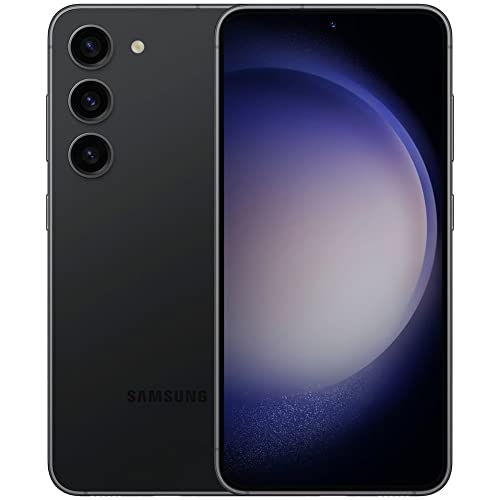
If the S10e is the compact past, the S23 is its present tense. The 6.1-inch screen sounds like a betrayal of this guide’s title until you hold the phone: the body is narrow, the weight is modest, and the whole device works one-handed in a way its diagonal figure never advertises. Inside is an uncompromised flagship — a swift Snapdragon chip, a triple camera with real optical zoom, an IP68 build and a bright 120Hz display — with Samsung’s update support still stretching years into the future.
As a renewed purchase the S23 is the compact for planners. Its remaining support life is the longest story in this guide alongside its S24 sibling, its accessory ecosystem is enormous, and its size has made it a favourite of owners who keep phones until they die. Battery life is the one compact tax: the cell is small, heavy days end near empty, and a renewed unit’s battery state should be checked as carefully as its screen. For the buyer who wants the small-phone life without the small-phone compromises in capability or longevity, this is the answer.
- Display: 6.1-inch AMOLED, 120Hz, narrow body
- Cameras: triple system with optical telephoto
- Chip: flagship Snapdragon of its generation
- Build: IP68 water and dust resistance
- Support: years of Samsung updates remaining
Strengths
- Full flagship capability in a genuinely one-handable body
- Zoom camera that no true small phone ever offered
- Long remaining support makes it a keeper, not a stopgap
Trade-offs
- Small battery shows its limits on travel and gaming days
- Renewed prices reflect its desirability
- Charging speeds are unhurried
Best for: Small-phone loyalists who refuse to give up flagship power or longevity. Not suited for: Two-day battery seekers or the largest hands.

Google Pixel 4a — Best Featherweight
The 4a is the phone minimalists still talk about with affection. It weighs almost nothing, its 5.8-inch screen sits in a soft-touch body that seems moulded for one hand, and its single camera produced — and still produces — photographs that shame phones with three times its hardware, because Google’s processing was already magical in its generation. There is a headphone jack, a rear fingerprint reader exactly where a finger lands, and software of a simplicity that modern phones have forgotten how to offer.
The caveats are the calendar’s. The 4a’s support has ended, its processor is leisurely by current standards, and its small battery in a renewed unit will not impress. None of that matters for the duties it suits: a light messaging and photography phone, a child’s supervised handset, a festival and travel spare you would not mourn, a bedside media device. Bought cheaply through the renewed market with its role understood, the 4a remains what it always was — the small phone as a quiet work of design, proof that a handset can be loved for what it leaves out.
- Display: 5.8-inch OLED
- Camera: single lens with Google processing
- Weight: among the lightest Android phones ever sold
- Extras: headphone jack, rear fingerprint reader
- Storage: 128GB on the listed configuration
Strengths
- Featherweight one-handed comfort nothing modern matches
- Snapshot camera that still punches absurdly high
- Simple software with zero learning curve
Trade-offs
- Support has ended, so keep sensitive accounts off it
- Modest speed and battery by current standards
- No water resistance or wireless charging
Best for: Minimalists, light users and anyone wanting a charming spare. Not suited for: Primary-phone duty with banking and years of service expected.

Google Pixel 8 — Best Compact Camera
The Pixel 8’s rounded, pebble-like body makes its 6.2-inch screen feel smaller than the S23’s on paper, because there are no sharp corners arguing with your palm. It is the compact for photographers: Google’s processing at its mature best, with night and portrait work that still embarrasses newer and larger rivals, wrapped in a phone that slips into a jacket pocket and works one-handed on a platform edge. The Tensor chip drives Google’s call and transcription intelligence, and the support promise stretches years ahead, giving this renewed buy an unusually long second act.
Daily life with it is easy to summarise: bright screen, dependable camera, clean software, ordinary battery. The battery is the recurring footnote of every compact, and the Pixel 8’s is fine rather than heroic, though its efficiency in light use surprises owners pleasantly. There is no telephoto, so its zoom is computational. For the buyer whose compact phone exists mainly to document a life — children, travel, food, friends — those footnotes barely register against the camera’s daily brilliance.
- Display: 6.2-inch OLED in a rounded compact body
- Main camera: 50MP with Google computational photography
- Chip: Google Tensor with AI features
- Software: long update commitment from Google
- Storage: 128GB on the listed configuration
Strengths
- Best stills camera of any phone in this guide
- Rounded body that feels smaller than its dimensions
- Years of updates and Google intelligence features
Trade-offs
- No optical zoom for distant subjects
- Battery is a one-day proposition, like most compacts
- Warms under sustained gaming more than the Samsungs
Best for: Photographers with smaller hands or smaller pockets. Not suited for: Zoom photographers or two-day battery hunters.

Samsung Galaxy S24 — Best Compact Screen
The S24 takes the S23’s compact formula and turns the screen up to a brightness that rewrites outdoor use. Reading maps in hard sunlight, reviewing photos on a beach, glancing at messages through sunglasses — the display simply refuses to be defeated by weather. The body stays narrow and flat-sided, the flagship chip stays swift, the triple camera keeps its real zoom, and Samsung’s seven-year support promise from launch gives this renewed phone the longest protected future in the guide.
Choosing between the S24 and the S23 is the pleasant dilemma of this ranking. The S24 costs more renewed because it is younger; what the premium buys is chiefly time — extra years of updates, a fresher battery in most units, the brighter panel. Buyers who keep phones longest should pay it without blinking. Buyers on a two-to-three-year cycle can take the S23 and never feel short-changed. Either way, the S24 proves the industry’s best compact argument: a phone does not need to be large to be complete, only narrow, bright and properly supported.
- Display: 6.2-inch AMOLED, exceptionally bright
- Cameras: triple system with optical telephoto
- Chip: flagship Snapdragon of its generation
- Support: seven-year promise from launch
- Build: flat-sided, IP68 sealed
Strengths
- Outdoor screen legibility that leads this guide
- Longest remaining lifespan of any pick here
- Complete flagship hardware in a slim, narrow frame
Trade-offs
- Highest renewed prices among the modern compacts
- Improvements over the S23 are refinement, not revolution
- Small battery remains the compact class tax
Best for: Outdoor workers, travellers and long-term keepers who think small. Not suited for: Buyers chasing the lowest possible renewed price.
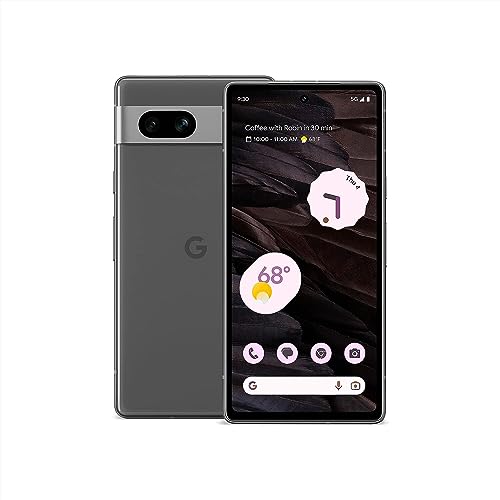
Google Pixel 7a — Best Compact Value
The 7a brought flagship Pixel virtues to a friendly price when new, and the renewed market has made it the value compact of this guide. Its 6.1-inch screen sits in a body that most hands wrap comfortably, its camera carries the family processing that made Pixels famous, and it offers wireless charging — a feature the small-phone class rarely includes at any price. For a buyer stepping down in size from a large phone, the 7a is the gentlest landing: nothing about it feels like a punishment.
Its compromises are age-related rather than size-related. The support window, while still open, is shorter than the Pixel 8’s and the Samsungs’. The chip of its generation runs warm under sustained load, and charging is slow by wire as well as by pad. Judged as a two-to-three-year compact bought at a keen renewed price, though, the 7a’s balance of camera, comfort and cost is hard to argue with, and it remains the pick we would hand a friend who wants small and sensible without a treasure hunt.
- Display: 6.1-inch OLED, 90Hz
- Main camera: high-resolution with Pixel processing
- Charging: wired plus wireless
- Chip: Google Tensor of its generation
- Storage: 128GB on the listed configuration
Strengths
- Camera quality far beyond its renewed price
- Wireless charging in a compact, affordable body
- Comfortable size that converts big-phone sceptics
Trade-offs
- Shorter remaining support than the newer picks
- Slow charging and a warm-running chip under load
- Battery condition matters most on an older renewed unit
Best for: Value seekers who want compact comfort and a real camera. Not suited for: Five-year keepers or heavy gamers.
How do the compact contenders compare?
| Phone | Badge | Screen size | Standout quality | Main compromise |
|---|---|---|---|---|
| Samsung Galaxy S10e | Best True Small Phone | 5.8 inches | Authentic small flagship | Support ended |
| Samsung Galaxy S23 | Best Compact for the Long Term | 6.1 inches | Flagship power, zoom, support | Small battery |
| Google Pixel 4a | Best Featherweight | 5.8 inches | Lightness and simplicity | Age and ended support |
| Google Pixel 8 | Best Compact Camera | 6.2 inches | Photography | No telephoto |
| Samsung Galaxy S24 | Best Compact Screen | 6.2 inches | Brightness and lifespan | Renewed premium |
| Google Pixel 7a | Best Compact Value | 6.1 inches | Camera and charging per cost | Shorter support |
Two eras share this table. The veterans win on purity of size and lose on time; the modern compacts win on capability and support while conceding an inch of diagonal that their narrow bodies mostly disguise. Your own priority — the feel in the hand today, or the years of service ahead — decides which era deserves your money.
How do you use a compact phone one-handed like a professional?
Small phones reward technique. Start by enabling your phone’s one-handed mode — both Samsung and Google bury one in accessibility or gestures settings — which shrinks the interface toward your thumb for the moments when the other hand holds a rail, a lead or a child. Arrange your home screen by thumb geography rather than alphabet: the apps you open fifty times a day belong in the bottom corner arc your thumb sweeps without stretching, and everything else can live a swipe away. Learn the keyboard’s one-handed shrink mode for typing on the move, and set up the side key or a gesture for the camera, because compact phones are bought by people who live actively and photograph quickly.
Then choose accessories that respect the size. A slim case preserves the pocketability you paid for; a bulky armoured case quietly converts your compact into the large phone you avoided. A ring or grip strap divides opinion, but for runners, climbers and parents it can be the difference between one-handed confidence and a cracked screen. Finally, resist the giant-phone habits: a compact’s battery and screen are happiest with brightness on automatic, video reserved for Wi-Fi where possible, and a small power bank carried on the days — travel, festivals, long hikes — when any phone would struggle. Technique cannot repeal physics, but it can make physics feel generous.
What mistakes do small-phone buyers keep making?
The first is shopping by diagonal alone and rejecting a narrow 6.1-inch phone that would have fitted their hand better than the wide 5.8-inch model they bought instead. Width and weight are the numbers that govern comfort; the diagonal is a marketing figure. The second mistake is the opposite nostalgia: buying a genuinely old small phone, however charming, as a primary device, and discovering that ended support and tired batteries are not quirks but walls. The S10e and 4a in this guide are recommended with their limits printed in daylight for exactly this reason.
Third, buyers forget that small phones are renewed-market phones now, and skip the renewed checks: battery state, condition grade, lock status. Fourth, they buy the case after the drop. Compact phones are carried more casually, slipped into smaller pockets and used in motion more than their giant siblings, so their accident rate is higher even as their repair bills are lower. Fit the case on day one. Fifth, people assume compact means compromised and overcorrect by buying a huge phone they then operate two-handed with resentment for three years. The hand knows what it wants. Listen to it in the shop, with your own thumb, before the internet’s opinion gets a vote.
How does living with a compact phone change your habits?
Owners report a consistent pattern: the phone gets carried more and consulted less. It rides in a shirt pocket or a running belt without negotiation, so it is present for the walk, the ride and the match rather than left in a bag. Notifications get triaged faster because the screen invites glances rather than sessions. Photography becomes more spontaneous and less cinematic — the compact is whipped out for the moment, not staged for the production. And media consumption migrates back to televisions, tablets and laptops, which many owners describe as a relief disguised as a limitation.
There are honest frictions. Split-screen multitasking is cramped, documents and spreadsheets demand zooming, and video shared with a friend means huddling closer. Mobile games designed for large canvases feel diminished. Buyers whose work lives in documents should weigh those frictions heavily. Buyers whose phone is a communicator, camera and companion tend to find that the compact’s constraints curate their usage toward the things they valued anyway — which is why this small category, declared dead every year, keeps refusing to die.
What did the true 5.5-inch generation teach us?
It is worth pausing over the ancestors, because they explain what compact buyers are really mourning. The Samsung Galaxy S7 edge of 2016 wrapped a 5.5-inch curved display in a body that felt impossibly slim, and for a season it was simply the most desirable object in phones. LG’s G4 paired its 5.5-inch screen with a leather back and a camera that photographers respected. OnePlus built its early reputation on 5.5-inch metal phones that undercut the flagships. Google’s Nexus and early Pixel lines hovered around the same territory. These were not small phones apologising for themselves; they were the mainstream at its most confident, sized for the hands that bought them.
What killed them was not failure but arithmetic. As bezels vanished, the same body could host a much larger diagonal, and marketing departments discovered that screen size was the easiest number to sell. Each generation stretched a little taller, and the hand — which did not grow — quietly lost the negotiation. The veterans ranked in this guide, the S10e and the 4a, were the last designs drawn before that arithmetic became absolute, which is why their owners hold onto them with such disproportionate loyalty. They are not merely phones; they are evidence that the industry once optimised for a different variable.
There are practical lessons in the history too. The 5.5-inch generation proved that camera quality, water resistance and premium materials all fit in compact bodies when manufacturers choose to fit them, which demolishes the modern excuse that small must mean basic. It also proved that battery size is the one compromise physics will not negotiate, a truth every compact since has had to manage rather than solve. When you read the picks above, you are reading two strategies for living with that inheritance: the veterans, which accept age as the price of purity, and the narrow flagships, which accept diagonal inches as the price of time.
Who benefits most from choosing a compact phone?
Runners and cyclists make the clearest case. A compact rides in a belt or an armband without slapping against the body for ten miles, tracks the route, plays the podcast and still has the size to be operated at a water stop with one sweaty hand. The S23 and Pixel 8, with their water resistance and remaining support, are the serious athletes’ picks here; the 4a is the beloved beater for training runs where loss would sting less. Size, in this world, is a safety feature as much as a comfort, because a phone that stays pocketed stays unbroken.
Older users benefit differently. A smaller, lighter phone is easier to grip securely, easier to lift to the ear, and less fatiguing across a long call with family. The trade is screen size for text, which the modern compacts answer with excellent displays and system-wide text scaling; a narrow 6.1-inch screen at a comfortable font size shows less per screen than a giant’s, but what it shows is legible, and the phone is still in the hand at the end of the call rather than set down halfway through from tiredness. For many older buyers, that endurance of grip matters more than any specification in this guide.
Professionals who work with their hands — tradespeople, medics, warehouse and field staff — form the third constituency. Their phone lives in a chest pocket or a belt holster, gets used with gloves half-removed, and must be operable in the gaps of physical work. Compact flagships suit them precisely because they are complete phones that happen to be small: full camera capability for documenting work, full network support, water resistance against site weather, in a body that does not snag, sag or demand a free hand they do not have. The renewed prices of the S23 and 7a make that professional logic affordable as well as practical.
How do the modern compacts handle photography, gaming and work?
Photography is where the narrow flagships silence the idea that compact means cut-down. The S23 and S24 carry the same camera philosophies as their larger siblings, zoom included, and the Pixel 8’s processing is the best in this guide at any size. Only the veterans ask for photographic patience: the 4a’s single lens remains a snapshot artist, and the S10e’s dual system is versatile but visibly of its era in low light. A compact bought for the camera should be a modern compact; a compact bought for the hand can be either era, provided its photographic duties are honest ones.
Gaming splits along battery lines rather than power lines. The S23, S24 and Pixel 8 all have the processing muscle for demanding titles, and their smaller screens are, if anything, kinder to frame rates. The constraint is endurance and heat in a small chassis: long sessions drain and warm a compact faster than a large phone with more room to breathe. Casual and medium gaming suits them perfectly; the marathon ranked player should either accept a power bank as standard kit or reconsider size altogether. The veterans, meanwhile, game the way they do everything — charmingly, within limits that modern titles increasingly refuse to respect.
For work, the compact’s story is about presence. It is the phone that is actually with you — in the pocket, on the ladder, at the bedside — rather than the tablet-sized device left charging in another room. Email, messaging, scanning, two-factor approvals and quick document glances all thrive at this size. Extended document editing and spreadsheet surgery do not, and the professional whose day is spreadsheets should read this guide as a warning rather than an invitation. Everyone else may discover that the best work phone is the one that never gives them a reason to leave it behind.
A second look at each pick: the detail that decides it
The S10e’s fingerprint reader is its secret weapon
Buried in the S10e’s power button is a fingerprint reader that owners consistently praise years later, because it unlocks the phone in the same motion as picking it up, with cold, warm or slightly damp fingers that defeat fancier in-screen sensors. It is a reminder that the small-flagship era solved ergonomics in ways the industry later traded for spectacle. Combined with the flat screen and the headphone jack, it makes the S10e feel like a phone designed by people who used phones. If your compact use is outdoors, gloved or hurried, that reader alone can justify forgiving the model its age — provided, as this guide keeps insisting, the phone’s duties stay light and its accounts stay unimportant.
The S23 disappears in a suit pocket
Formal clothing is the compact’s home turf. The S23 slides into a suit’s inside pocket without bending the line of the jacket, sits in a shirt pocket without announcing itself, and emerges presentable, which is more than can be said for the slab phones that have colonised boardrooms. Professionals who dress formally and move between meetings, sites and airports describe the same relief: the phone stops being luggage. Add the zoom camera for documenting whiteboards, sites and presentations at a distance, and the S23 becomes the compact that working life, not just hand size, argues for.
The 4a is the phone you lend without anxiety
Every household needs a lendable phone: for the visiting relative, the teenager whose own phone is in repair, the friend whose battery died at the crucial moment. The 4a is perfect for the role — capable enough for maps, messages and photos, cheap enough renewed that lending it is an act of generosity rather than risk, and simple enough that a borrower needs no tutorial. Owners who bought it as a stopgap report keeping it for years in this supporting role, long after its primary-phone days ended, which may be the most honest longevity story in this entire guide.
The Pixel 8 rewards the one-handed photographer
Photography with a child in one arm, a lead in one hand or a coffee in the other is the compact’s natural habitat, and the Pixel 8 is its champion. The rounded body locks into a single hand, the camera opens fast, and Google’s processing forgives the wobble and haste that one-handed shooting guarantees. The resulting images — sharp, balanced, alive — are the ones that fill family albums, and they were taken precisely because the phone could be operated in the conditions real life provides. A larger phone would have stayed in the bag. The moment would have stayed unphotographed.
The S24’s brightness is an accessibility feature
It is easy to file screen brightness under luxury, but for users with ageing eyes or outdoor jobs it is closer to accessibility. The S24’s display remains readable where other screens wash into mirrors: on a sunlit building site, in a bright hospital corridor, on a boat. Combined with Samsung’s text scaling and high-contrast options, that brightness makes the S24 the compact most likely to be chosen by someone whose eyes, not just whose hands, have opinions. Its premium renewed price buys the longest support in the guide as well, so the accessibility argument and the longevity argument point at the same phone.
The 7a is the compact that converts sceptics
Most 7a owners did not set out to buy a small phone; they set out to buy a good cheap Pixel and discovered the size as a side effect. Then the conversion happens: pockets feel roomy, one-handed use returns, and the big phone they came from starts to feel like furniture. The 7a’s role in this guide is that gateway — the pick for the reader who is compact-curious but unwilling to commit to a veteran or pay a flagship’s renewed premium. Its wireless charging and capable camera mean the experiment costs them nothing in features, which is exactly how sceptics get converted.
How do you stretch a compact phone’s battery through a long day?
Begin with the screen, the compact’s biggest drinker: automatic brightness, a dark theme on these OLED panels, and a modest screen timeout reclaim more endurance than any battery-saver toggle. Follow with the radios — a phone hunting for signal in a weak area burns its small cell quickly, so Wi-Fi calling indoors and downloaded maps and media for travel both pay double dividends. Then audit the background: restrict the two or three apps that sync constantly and matter least, and let the phone’s adaptive battery learn for a week before judging its character.
Carry strategy matters as much as settings. A pocket-sized power bank — the kind that itself fits the compact philosophy — turns the class’s one weakness into a non-issue on the dozen hardest days of the year, at a fraction of the cost of choosing a bigger phone for those days alone. And when a renewed compact’s battery finally ages past usefulness, remember that every model in this guide is popular enough for affordable battery replacement. A fresh cell in an S23 or a 7a is a renewal in the literal sense, and it is how compact loyalists keep their favourite size alive across the years the industry would rather sell them a larger phone.
How do you measure your own hand before ordering?
There is a simple test that settles compact questions better than any review. Hold your current phone and, without adjusting your grip, try to touch the top far corner of the screen with your thumb. If you can, your hand tolerates that phone’s width; if you must shuffle the phone down your palm, you are already living the two-handed compromise this guide exists to end. Compare that experience against the widths of the picks here — all published in their listings — and favour the models at or below the width your thumb just approved. Then check the pockets you actually wear: a phone that fits your hand but not your jeans has only solved half the problem.
Weight deserves the same personal audit. Twenty grams sounds like nothing in a specification table and feels like a great deal at the end of a long video call or a day of carrying. The veterans in this guide built their followings partly on lightness, and the modern compacts keep faith with that tradition compared with their larger siblings. If you can, spend five minutes in a shop holding your shortlist before ordering renewed; the hand delivers its verdict instantly, and it is the one verdict in phone buying that never needs a second opinion.
What about foldables and other small alternatives?
Flip-style foldables deserve an honourable mention in any compact discussion, because folded, they are the smallest full-power phones money can buy. They sit outside this ranking for honest reasons: their prices, new or renewed, belong to a different conversation; their folding screens demand more careful ownership than the glass slabs above; and their unfolded size reveals their true allegiance — they are large phones that fold, not small phones that stay small. The buyer whose priority is a tiny pocket footprint above all else should investigate them with eyes open about cost and care. Everyone else will find the picks in this guide simpler to own and far simpler to replace.
There is also the strategy of the deliberate downgrade: keeping a large phone for desk and sofa, and one of this guide’s veterans as the out-of-house phone, with a shared number arrangement or a cheap second line. It sounds indulgent until priced — a renewed 4a or S10e costs less than many people spend on cases and insurance for a flagship — and it solves the size dilemma by refusing to ask one device to be both cinema and companion. Compact loyalists increasingly describe exactly this two-phone peace treaty, and the renewed market makes it the most affordable it has ever been.
How should you case and carry a compact phone?
The compact’s whole purpose is defeated by armour, so case it with restraint: a slim, grippy case that protects corners and lifts the screen a fraction off flat surfaces preserves both the phone and its point. Clear cases suit the veterans, whose designs are half their charm. For runners and riders, a belt or band that fits the phone’s actual size — one of the quiet perks of compact ownership is that standard sports accessories fit again — beats any pocket improvisation. And insure by arithmetic rather than habit: at renewed prices, a spare veteran in a drawer can cost less than a year of premiums, which is the compact market’s final, practical joke on the flagship economy.
Will small phones ever come back?
The honest forecast is: partially, and under a different name. The base models of the big flagship lines have quietly become the compact class — the standard Galaxy S and standard Pixel are the smallest phones their makers sell, and both appear in this guide because their narrow bodies carry the compact torch whether marketing admits it or not. Manufacturers have learned that a meaningful minority will pay flagship prices for flagship power in a manageable body, and that minority is vocal, loyal and underserved, which is usually where product lines eventually return. What is unlikely to return is the true sub-6-inch flagship as a distinct model; the economics of separate small hardware have been tested by several brands and found unforgiving.
For today’s buyer, the forecast changes nothing practical. The renewed market holds years of compact stock, the narrow flagships keep the size alive at the top of the market, and battery replacement keeps a favourite handset young. If anything, compact buyers are better served now than at any point since the size wars began — provided they know where to look, which is the entire reason this guide exists. Buy the size your hand asks for, support it with a fresh battery when it needs one, and the question of whether small phones come back becomes academic: for you, they never left.
What is the secondhand checklist specific to small phones?
Beyond the standard renewed checks, compact veterans deserve three extra minutes of scrutiny. First, the battery report matters more here than anywhere: ask for it, read it, and price a replacement into any unit whose health is vague, because a small cell at eighty percent is a genuinely short day. Second, inspect the frame’s corners under bright light — small phones are dropped from pockets at hip height onto hard floors with metronomic regularity, and corner dents are their autobiography. Third, test the buttons and, on the S10e, the side fingerprint reader with your own fingers, since compact ergonomics live in those details and a worn reader undermines the phone’s best trick. Pass those checks and a renewed compact is not a gamble but a genre of bargain the big-phone market simply cannot offer.
Final Recommendation
For most readers, the Galaxy S23 is the compact to buy: it is the only phone here that asks for no apologies in capability, support or daily feel, and its renewed price buys flagship years rather than flagship memories. The S24 extends the same idea for keepers with a longer horizon. The Pixel 8 is the photographer’s compact, the 7a the value compact, and the S10e and 4a remain the purest expressions of the small-phone idea for buyers who understand exactly what age has taken from them.
The 5.5-inch phone, as a catalogue category, is gone — but the thing it stood for, a handset sized for the human hand rather than the showroom wall, survives in every pick above, waiting for the buyer who measures a phone by holding it.
A final word of encouragement for the hesitant: size regret is the most one-sided regret in phone buying. Owners who go smaller almost never report missing the canvas they gave up, while owners who go larger complain about pockets, grips and drops for the life of the device. If your hand has been asking for a smaller phone, it has been asking for a reason, and this guide’s six answers cover every budget and every level of caution with which you might finally listen to it.
Frequently Asked Questions
Does anyone still make a true 5.5-inch Android phone?
Not in the mainstream US market. The smallest current Android phones cluster around six inches and above, in tall narrow bodies. The genuine sub-6-inch options are previous-generation models like the Galaxy S10e and Pixel 4a, bought renewed or from remaining stock. Occasional niche and imported models still appear below that line, but they typically compromise on network bands, software support or both, which is why this guide builds its recommendations from the proven names above instead.
Is a 6.1-inch phone really a compact phone?
By body, often yes. Modern displays are taller and narrower than the old 16:9 generation, so a 6.1-inch phone can be barely wider than a 5.5-inch phone from 2016. Judge by the width in millimetres and the weight, and try the thumb-reach test in person where you can. The distinction matters because pockets, hands and one-handed reach all respond to the body, not the brochure — and by the body’s measure, the modern base flagships in this guide are the legitimate heirs of the 5.5-inch era rather than impostors borrowing its name.
Will a compact phone’s battery last all day?
For light and moderate users, yes — the modern compacts here are efficient, and their smaller screens sip power. Heavy users, gamers and travellers should expect to charge in the evening or carry a small power bank, which is the standing trade for a pocketable body. Remember too that battery state varies on renewed units, so a compact that disappoints in its first week may simply be a good phone wearing a tired cell — and a replacement battery, widely available for every model here, restores the day far more cheaply than a replacement phone.
Do compact phones hold their value?
Surprisingly well, because their buyers are loyal and their supply is finite. A well-kept S23 or Pixel 8 in the renewed market commands strong money precisely because no new equivalent is coming to undercut it. Buy a modern compact in good condition, keep its battery healthy, and its resale or hand-me-down value will reward the care. The veterans tell the same story from the other end: clean S10e and 4a units in good cosmetic shape are increasingly sought after by the loyalists described throughout this guide.
Are the older small phones safe to use?
For light duties, with awareness. The S10e and Pixel 4a no longer receive regular security updates, so we would not use them for banking or as a vault for sensitive accounts. As messaging, media and photography companions they remain delightful, and their prices reflect their station. Keep them behind a screen lock, install apps only from the official store, and let a supported phone in the household carry the accounts that matter; divided that way, an old compact’s remaining risks shrink to a level most owners can accept with open eyes.
What should I check when buying a renewed compact?
Battery condition first, because small cells show wear soonest; then screen condition, lock status and the seller’s return window. Confirm the exact model and storage on the listing, since compact lines often shared names across configurations and regions. Add one compact-specific check to the list: examine the corners and buttons closely, because small phones live in pockets and get dropped in motion more than their larger siblings, and their condition grades sometimes flatter that history.
Related Guides
Compact curious but still comparing? These guides approach small budgets and smart value from other directions: best 2 year old android phones for former flagships of every size at renewed prices, best affordable android phones for all-round value, and best mid range android phones if a larger modern handset is acceptable after all.


[…] If the size question is what brought you here, these three reads keep pulling at that same thread from different ends: the best compact Android phones you can buy today, small phones with the best battery life, and how to judge phone size by body measurements, not screen inches. […]
[…] this guide has persuaded you to look one rung higher, these companions continue the search: best affordable android phones for the strongest all-round value just above this class, best mid range android phones for a fuller […]