What's inside
- Key Takeaways
- Quick Picks
- How Did We Assemble This Mid-Range Six?
- What Should a Mid-Range Buyer Refuse to Compromise On?
- Why Does the Carrier-Band Check Matter More Here Than Anywhere Else?
- What Separates a Good Mid-Range Phone From a Great One?
- Which of the Best Mid Range 5G Phones Deserve the Closest Reading?
- How Do the Six Stack Up Against Each Other?
- Whose Life Does Each of These Phones Fit?
- Physical SIM, eSIM, or Both: Which Arrangement Suits You?
- How Do You Verify an International Phone Before Ordering?
- What Goes Wrong Most Often in the Mid-Range?
- How Long Can a Mid-Range Phone Sensibly Serve?
- Final Recommendation
- Frequently Asked Questions
- Related Guides
As an Amazon Associate I earn from qualifying purchases. This post may contain affiliate links at no extra cost to you.
gizmoverdict.com is reader-supported. When you buy through links on our site, we may earn an affiliate commission.
Where to buy: the six handsets ahead are sold through their Amazon listings, and with this particular category the listing deserves a slower read than usual, because two of the six are international models whose compatibility notes matter as much as their screens. Verify the carrier language on the page, then check price on Amazon once the version in front of you is the version you meant to buy.
The search for the best mid range 5g phones runs into a fork that most roundups politely step around, so this one will walk straight into it. Half of the interesting mid-range hardware sold to American buyers now arrives as international dual-SIM models — the Galaxy A56 and A57 in this guide are exactly that — while the other half arrives as purpose-built US versions like the Galaxy A36, the Pixel 10a and Motorola’s stylus phone. Both roads lead to good phones. They differ in warranty plumbing, in which carrier bands are guaranteed, and in who answers the phone when something breaks. Everything below is organised around that fork, because choosing your road matters more than choosing your handset.
International listings carry their compatibility in their titles, and the honest ones say it plainly: these are GSM-family devices, happiest on T-Mobile and the prepaid brands that ride its network, with no promise made to CDMA-legacy networks. A buyer on the right network gains real advantages — two physical SIM slots, generous storage at the tier, and models that sometimes never receive a US release at all. A buyer on the wrong network gains a beautiful paperweight with an excellent screen. The mid-range is where this lesson is cheapest to learn on paper and most expensive to learn from a delivery box, so the guide returns to it until it sticks.
Nothing here should be read as a warning against the tier itself. The mid-range is where phone engineering currently does its most honest work, because the money is too tight for theatre and every component must justify its place to a sceptical product manager. Screens at this level are genuinely lovely, batteries are sized by people who expect two-day weekends, and cameras have crossed the line from adequate to enjoyable. What the tier cannot offer is certainty by default: certainty must be checked, band by band and warranty by warranty, and that checking is a skill this guide intends to teach alongside the recommendations.
Our Top Picks
Key Takeaways
- The American mid-range now splits into US-version listings and international dual-SIM listings, and the split changes warranty and band guarantees.
- International Galaxy A56 and A57 models bring two SIM slots and 256GB of storage, aimed at GSM-family networks.
- The carrier-band check is not fine print at this tier; it is the purchase, and it takes five minutes with your network’s published band list.
- Nothing’s Phone (3) is the tier’s restless inventor, with four 50MP cameras and a 5150mAh cell per its listing.
- The Galaxy A36 US version and Pixel 10a are the low-drama routes, trading dual physical SIMs for domestic warranty clarity.
- Motorola’s 2024 G Stylus remains the pen-equipped value play even with a newer sibling on sale elsewhere.
Quick Picks
| Pick | Badge | Why it earns its place |
|---|---|---|
| Samsung Galaxy A56 5G Dual SIM | International all-rounder | A 6.7-inch 120Hz AMOLED, 256GB and two SIM slots make it the traveller’s Samsung at this tier. |
| Samsung Galaxy A57 5G Dual SIM | Newest Galaxy route | The fresher A-series arrival for buyers who want the latest model number in Samsung’s global line. |
| Google Pixel 10a | Calmest ownership | Seven years of Pixel Drops and Call Screen remove two of the mid-range’s usual anxieties at once. |
| Nothing Phone (3) | Design rebel | Four 50MP cameras, a Glyph interface and a Snapdragon 8s Gen4 for buyers bored of black slabs. |
| Motorola Moto G Stylus 5G 2024 | Pen on a budget | The previous year’s stylus model still delivers handwriting and 5G for note-driven shoppers. |
| Samsung Galaxy A36 5G US version | Safest Samsung bet | A US-version Galaxy with a domestic warranty for buyers who want Samsung without import homework. |
How Did We Assemble This Mid-Range Six?
Deliberately, and with the fork in the road kept visible rather than averaged away. We wanted the shortlist to show American buyers the actual shape of their market in 2026, which meant admitting strong international models alongside domestic ones and labelling each with its true nature. Every phone here is a current listing for an unlocked handset; every claim about bands, storage or cameras traces back to words its own listing uses. Where a listing speaks of GSM compatibility, the review says GSM. Where a listing promises a US warranty, the review repeats that promise and weighs it.
Variety of intent guided the final selection as much as specifications did. Samsung appears three times because Samsung genuinely occupies three different mid-range arguments — the global dual-SIM pair and the domestic safe pair’s representative — and pretending otherwise to achieve brand diversity would have misrepresented the shelf. Google contributes the software argument, Nothing the design argument, and Motorola the handwriting argument. A reader should finish the Quick Picks table already knowing which argument sounds like their own life.
We also policed the tier’s borders. Devices that are flagships in a trench coat were excluded, as were entry phones wearing mid-range adjectives. What remains should each be defensible as the centre of a sensible buyer’s shortlist, and the detailed reviews below are written to be argued with: each names the buyer it serves and the buyer it will disappoint, because a mid-range recommendation without a named disappointment is marketing wearing a guide’s clothes.
What Should a Mid-Range Buyer Refuse to Compromise On?
Three things, in our judgement, sit below the waterline of acceptable savings. The first is network fit, already argued at length: a phone that cannot hear your carrier properly is not a bargain at any figure. The second is storage sized for your real habits rather than your aspirational ones, because storage cannot be upgraded later on most of these handsets and its shortage arrives as a daily tax on photography, travel downloads and app updates. The third is a maker whose update policy you can state in one sentence after reading their materials; if you cannot discover the policy, you have discovered the policy.
Everything else at this tier is negotiable in good conscience. A plastic frame that keeps weight down, a camera array with one honest lens and modest companions, a charging pace that asks for an overnight cable rather than a theatrical sprint — these are the reasonable currencies in which mid-range value is paid. The art of shopping this tier is knowing which list a given compromise belongs to, and the picks above were chosen because their compromises all sit in the negotiable column while their waterline items — bands where stated, storage where generous, support where promised — hold firm. Judge rival phones you meet elsewhere by the same two columns and the tier becomes navigable without us.
Why Does the Carrier-Band Check Matter More Here Than Anywhere Else?
Because the mid-range is where international models flourish, and international models are built for the world’s most common network recipe rather than America’s idiosyncratic one. The physics are unforgiving: a radio either contains the amplifier and antenna tuning for a given frequency or it does not, and no software update can solder in a missing band. A GSM-family handset on a GSM-family network is a complete phone. The same handset asked to live on a network whose main 5G layer it cannot hear becomes a phone that works in some neighbourhoods and sulks in others, which is the most frustrating failure mode of all because it masquerades as bad luck.
The check itself is mercifully short. Find your carrier’s published list of 5G bands, find the candidate phone’s band list on the maker’s global specification page, and confirm the overlap includes the band your carrier uses for wide-area mid-band coverage in your region — not merely a low-band layer that technically counts as 5G while delivering yesterday’s pace. T-Mobile’s network, and the prepaid labels riding on it, are the natural home of the international picks in this guide, and their listings gesture at exactly that compatibility. Buyers on other networks are not excluded from this guide; they are directed, firmly, toward its US-version picks.
Roaming adds a second verse to the same song. International models tend to carry broad band lists for the regions they were designed to roam, which is why frequent travellers often find a dual-SIM import serves them better abroad than a domestically tuned handset does. The A56 in a jacket pocket in Lisbon or Bangkok is in its element. The discipline is simply to make the band decision at the desk, with documents open, rather than at the airport, with a departure board open.
Warranty geography deserves the same desk treatment. An international model’s warranty is typically honoured through the seller or the maker’s global channels rather than a US service network, which can mean posting a phone away and waiting. Some buyers accept that trade happily for dual SIMs and storage; others would rather have a domestic warranty and one SIM. Neither temperament is wrong. What is wrong is discovering your temperament in month seven, mid-claim, which is why this guide keeps asking the question early and often.
What Separates a Good Mid-Range Phone From a Great One?
Specifications at this tier have converged to a remarkable degree: big AMOLED screens, batteries around five thousand milliamp-hours, main cameras with confident numbers attached. Convergence means the differences that matter have migrated to places spec sheets describe badly. Software behaviour is the first of them. How a phone handles notifications, how gracefully it ages under two years of app updates, how promptly its maker ships security patches — these decide whether a handset feels like an ally in year two, and they are exactly what the Pixel’s seven-year promise and Samsung’s mature One UI are selling beneath their hardware.
Build honesty is the second separator. A mid-range phone that admits its frame material and sealing plainly, as Samsung’s water-resistance note does for the A56, respects the buyer more than one that borrows flagship adjectives for a plastic reality. Weight distribution matters too, in the hand at the end of a long day, and no listing can tell you about it; this is the tier where handling a display unit, if a shop near you stocks one, still earns its bus fare. The third separator is the maker’s service geography, already discussed for imports but equally real domestically: a brand with authorised repair in your city is a feature, even if it never appears in a comparison table.
The fourth separator is restraint in the camera department. Mid-range makers love adding lenses the way restaurants add garnishes, and a fourth camera with a token resolution contributes less than a well-tuned main sensor would. Nothing’s uniform 50MP approach and Google’s coaching philosophy both represent attempts to spend the camera budget on coherence instead of count. When you test any phone from this guide, shoot the same dim room with every lens it offers; the maker who respected you will be obvious within four frames.
Finally, there is the separator nobody markets: how the phone behaves at twenty percent battery, in weak signal, with a hundred apps installed and a storage warning glowing. Mid-range greatness is performance under mild adversity, because mild adversity is the climate of real ownership. The picks in this guide were chosen by people who kept asking that unglamorous question, and the detailed reviews below will keep asking it on your behalf.
Which of the Best Mid Range 5G Phones Deserve the Closest Reading?

Samsung Galaxy A56 5G Dual SIM — International all-rounder
The A56 is the phone that makes the international route look easy, and on the right network it genuinely is. Samsung’s listing describes an unlocked handset with 8GB of memory and 256GB of storage, two SIM slots, a 6.7-inch AMOLED running at 120Hz, water resistance and Android 15, finished in Graphite. That is a complete, modern specification with no obvious cavity where the savings were hidden, and the dual-SIM tray transforms it for anyone running a work line and a personal line, or a home SIM beside a travel SIM, without carrying two devices.
Its audience is precise: the GSM-network buyer, most naturally on T-Mobile or one of its prepaid relatives in the United States, who travels enough to value the second slot and reads compatibility notes as a matter of habit. For that reader the A56 may be the strongest pound-for-pound handset in this entire guide, pairing Samsung’s mature software with storage that domestic rivals at the tier often reserve for pricier configurations. The camera system, framed by Samsung as the A-series’ current standard, will handle the documentary load of ordinary life with the colour confidence the brand is known for.
The caveats are the ones this guide has been rehearsing. Band coverage must be verified against your specific carrier, the warranty path runs through international channels rather than a US service counter, and buyers on networks outside the GSM family should walk past it to the A36 without a backward glance. None of that diminishes the phone; it defines its parish. Within that parish, the A56 is a thoroughly grown-up device that asks only for a literate buyer.
- Memory and storage: 8GB and 256GB
- SIM arrangement: dual SIM, international model
- Screen: 6.7-inch AMOLED at 120Hz
- Software at listing: Android 15
- Build note: water resistant, per Samsung
- Colour named in listing: Graphite
Strengths
- Two SIM slots unlock travel and two-line routines.
- 256GB removes storage anxiety for most owners.
- The 120Hz AMOLED is a screen from a class above.
Trade-offs
- US buyers must verify bands before anything else.
- Warranty service follows international rather than domestic channels.
- Networks outside the GSM family are not its home.
Best for: T-Mobile-family subscribers who travel or run two numbers.
Not suited for: buyers whose carrier sits outside the GSM world.
One underappreciated pleasure of the A56 deserves mention: the 120Hz refresh rate changes the felt quality of everything mundane. Scrolling a long itinerary, flicking through photographs at a border crossing, reading a novel in a departure lounge — the panel’s fluidity quietly upgrades each, and returning to a 60Hz screen afterwards feels like reading through a flyscreen. Samsung has been generous with display technology in this line for years, and the generosity compounds daily in ways a camera sample never demonstrates.
Travellers on compatible networks can check price on Amazon from the A56’s listing, after the band homework described above is done and dusted.
Samsung Galaxy A57 5G Dual SIM — Newest Galaxy route
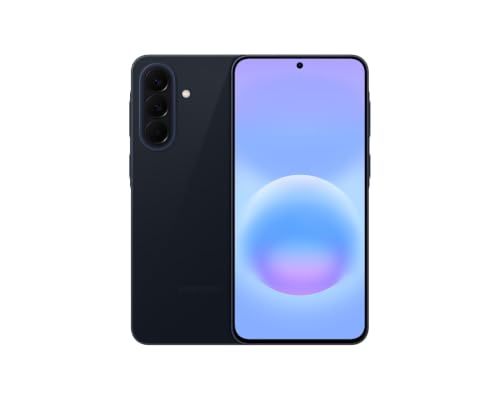
If the A56 is the established argument, the A57 is the same argument restated by a newer model, and some buyers simply prefer to start their ownership at the front of a product line’s life. Its listing offers 256GB of storage with 8GB of memory, dual SIM, factory unlocking for global use and an Awesome Navy finish. The phrase factory unlocked for global in the title is doing honest work: this handset was born to roam, and its natural owner thinks in time zones.
Choosing between the two international Samsungs is less about a spec-sheet duel — the listings keep their cards close — and more about buying posture. The A57 suits the reader who keeps phones long enough that starting with the newest generation’s software baseline matters, and who values being early in a model’s support story. The A56 suits the reader who prefers a model whose quirks are documented across a year of owner reports. Both ask the identical band-and-warranty questions, and both reward the same GSM-network, travel-heavy reader.
What the A57 should not be is an impulse purchase by a buyer who has not yet decided which network they live on. Its virtues are all conditional on compatibility, and conditional virtues evaporate when the condition is unmet. Treat it as the connoisseur’s version of the A56’s proposition: same parish, newer pew, and the same requirement to read the parish noticeboard before sitting down.
- Memory and storage: 8GB and 256GB
- SIM arrangement: dual SIM, international model
- Unlock status: factory unlocked for global use
- Colour named in listing: Awesome Navy
- Positioning: newest A-series generation here
- Network family: GSM, per the listing’s framing
Strengths
- Starting with the newest generation lengthens the support runway.
- Global factory unlocking suits multi-country routines.
- Storage and memory match the tier’s generous end.
Trade-offs
- Early-model ownership means fewer owner reports to consult.
- The same band verification burden as any import applies.
- Domestic warranty convenience is not part of the package.
Best for: globally mobile buyers who like beginning at a line’s newest chapter.
Not suited for: shoppers who want a model’s behaviour documented before they commit.
There is also a resale and hand-me-down angle to starting with the newest generation. A phone bought at the front of its line’s life tends to remain the family hand-me-down of choice two years later, still current enough to run a teenager’s world without complaint, and its global unlocking means the recipient’s network, whatever it is, stands a fair chance of welcoming it. The A57’s navy finish, meanwhile, is the rare mid-range colour that survives fashion cycles without dating itself by spring.
Readers who favour the freshest Galaxy can check price on Amazon through the A57 listing, keeping the GSM compatibility note in view as they go.

Google Pixel 10a — Calmest ownership
Amid the band charts and import caveats, the Pixel 10a stands in this guide like a deep breath. It is a US-market Google handset whose listing promises a battery beyond thirty hours by Google’s own measure, Camera Coach, Gemini and Gemini Live, Call Screen, car crash detection and seven years of Pixel Drops in the Obsidian 128GB configuration. Where the international Samsungs ask the buyer to do homework, the Pixel asks the buyer to do almost none, and simply to keep the phone for a very long time.
That calm has a texture worth describing. Call Screen filters the day’s nonsense before it reaches you. The update promise removes the low background hum of wondering when support ends. Camera Coach turns the camera from an exam into a lesson. Owners coming from older Pixels will find the philosophy familiar, and owners arriving from other brands often describe the same discovery: a phone that seems to have been designed by people who answer their own support lines. The hardware plays a supporting role to that software, competently and without scene-stealing.
The reservations are equally clear-eyed. Storage in the listed configuration is 128GB with no second SIM tray of the physical kind the travellers above are celebrating, and Google’s battery figure belongs to Google’s testing rather than to your commute. Buyers whose lives require two physical numbers should look back at the Samsungs; buyers whose lives require peace should stay right here. In a guide full of conditions, the Pixel is the unconditional recommendation, and that is a deliberate editorial choice rather than an oversight.
- Storage: 128GB in Obsidian
- Battery claim: beyond thirty hours, per Google
- Support: seven years of Pixel Drops stated
- Assistant features: Gemini and Gemini Live
- Call tools: Call Screen and car crash detection
- Camera help: Camera Coach guidance
Strengths
- The longest stated support window in this six.
- Call screening removes a daily irritation entirely.
- US-market status keeps bands and warranty uncomplicated.
Trade-offs
- No physical dual-SIM tray for two-number traditionalists.
- The battery headline is a maker claim to be read as such.
- 128GB is the listed ceiling for this configuration.
Best for: owners who want the mid-range without the mid-range homework.
Not suited for: travellers committed to two physical SIM cards.
Google’s crash detection, easy to skim past in a feature list, deserves a slower thought. A phone that can recognise a severe car accident and summon help when its owner cannot is a safety device wearing a handset’s clothes, and for parents equipping a new driver or children equipping an ageing parent, that single line may outweigh every camera argument in this guide. Features like it are why the Pixel’s software-first philosophy should not be mistaken for an absence of hardware ambition; the ambition is simply aimed at different emergencies.
Anyone craving the quiet life can check price on Amazon at the Pixel 10a’s listing, where the Obsidian configuration is the one under review.

Nothing Phone (3) — Design rebel
Nothing built its name on refusing to make the same black rectangle as everyone else, and the Phone (3) carries that refusal into the upper mid-range with unusual confidence. The listing cites a Snapdragon 8s Gen4, 256GB of storage, Android 15, four 50MP cameras, an AMOLED display, a 5150mAh battery and the Glyph interface — the light language on the phone’s back that signals calls, timers and notifications without waking the screen. In a tier of sensible shoes, this is the pair with coloured laces, except the engineering underneath the styling is entirely serious.
Four cameras sharing a 50MP description is a statement about consistency: Nothing wants whichever lens you choose to feel like the same camera, rather than a hero lens trailed by apologetic companions. Whether that ambition survives contact with your photograph roll is a question only your roll can answer, but the intent is the most interesting camera philosophy in this guide. The Glyph, similarly, divides opinion productively: some owners use it daily to keep the phone face-down and their attention elsewhere, while others disable it within a week and simply enjoy the hardware.
As an unlocked 5G handset sold for the US through this listing, it avoids the import caveats that shadow the Samsungs above, though buyers should still perform the ordinary band courtesy-check against their carrier. Its maker is younger than the giants elsewhere on this page, which cuts both ways: software arrives with an enthusiast’s energy, and the service network is thinner on the ground. Buy it for delight with your eyes open, and it is the mid-range phone most likely to be asked about across a café table.
- Chip named in listing: Snapdragon 8s Gen4
- Storage: 256GB
- Cameras: four 50MP units, per Nothing
- Battery: 5150mAh
- Signature feature: Glyph interface lighting
- Software at listing: Android 15
Strengths
- The camera array aims for consistency across every lens.
- Glyph alerts genuinely reduce screen-checking for some owners.
- Performance silicon sits at the tier’s ambitious end.
Trade-offs
- The maker’s service footprint is smaller than Samsung’s.
- Glyph styling will charm some buyers and grate on others.
- Its design-first identity overshadows quieter virtues in reviews.
Best for: buyers who want mid-range money to buy visible personality.
Not suited for: traditionalists who prefer their phones anonymous.
The 5150mAh battery figure, slightly larger than the tier’s customary round number, hints at Nothing’s understanding of its audience: people who attend gigs, festivals and long creative days, and who use the Glyph’s face-down discipline partly to make the charge last. A phone designed to be looked at less, lasting longer between charges, is a coherent philosophy rather than a styling exercise, and coherence is the quality that separates this maker from the novelty acts that crowd funding pages and vanish by winter.
Design-curious readers can check price on Amazon on the Phone (3) listing, which sets out the 256GB black configuration described here.

Motorola Moto G Stylus 5G 2024 — Pen on a budget
Last year’s stylus Motorola earns its seat in a 2026 guide the honest way: by remaining the cheapest route into a proper pen-equipped 5G phone that American buyers can order without import complications. The listing describes an unlocked, made-for-US handset with 8GB of memory, 128GB of storage and a 50MP camera in a Caramel Latte finish. A newer G Stylus exists elsewhere in this batch of guides, and its presence there does not erase the value logic here; it sharpens it, because previous-generation models are where careful shoppers harvest disproportionate capability per coin.
The pen remains the argument. It slides from the body, asks for no pairing or charging, and turns the phone into a notebook that is always in the correct pocket. Meeting sketches, annotated screenshots, measured drawings on a renovation site, a signature on a delivery form: the stylus converts the phone from a screen you watch into a surface you write on, and for the right owner that conversion is worth more than a faster chip. Motorola’s restrained Android keeps the experience brisk and the note tools close at hand.
Age imposes its taxes, and they should be itemised. A 2024 model starts its software clock earlier than its 2026 rivals, so its remaining support runway is the shortest in this six, and its camera and performance, while perfectly serviceable, were tuned for last year’s expectations. Buyers who replace phones every couple of years will never feel those taxes. Buyers planning a five-year tenure should pay them in advance by choosing the Pixel instead. The G Stylus 2024 is a sprinter’s bargain, and sprinters should buy it happily.
- Memory and storage: 8GB and 128GB
- Main camera: 50MP, per the listing
- Input: integrated stylus, stored in the body
- Market: unlocked, made for US networks
- Finish named in listing: Caramel Latte
- Vintage: 2024 model year
Strengths
- The pen experience undercuts every rival’s accessory maths.
- Made-for-US status avoids the import checklist entirely.
- Previous-generation positioning sharpens its value story.
Trade-offs
- Its software runway started a year before the others.
- Storage is half the allowance of the dual-SIM Samsungs.
- Performance targets last year’s mid-range expectations.
Best for: note-takers on a two-to-three-year replacement rhythm.
Not suited for: buyers planning to keep a phone half a decade.
The Caramel Latte finish is worth a sentence of its own, because warm, pale colours disguise the micro-scratches of a working life far better than glossy black does, and a phone bought partly for its price will likely be carried without the flagship ritual of cases replaced monthly. Practical beauty is still beauty. Combined with the pen and the US network tuning, the package reads as a tool designed by people who watched how last year’s owners actually treated the device, which is the highest compliment a second-generation bargain can earn.
Pen devotees watching their budget can check price on Amazon via the G Stylus 2024 listing, where the Caramel Latte US model is specified.

Samsung Galaxy A36 5G US version — Safest Samsung bet
Every guide needs a phone for the reader who has followed the compatibility discussion with growing unease and wants Samsung’s badge without Samsung’s import homework, and in this guide that phone is the A36 in its US version. The listing is explicit about its credentials: an unlocked Android handset with an AMOLED display, a rugged design, 128GB of storage and a US one-year warranty, from the 2025 A-series line. It is the domestic answer to the A56’s global question, and its existence is why nobody in this guide is forced into homework they did not volunteer for.
Compare it honestly with its international cousins and the trade is symmetrical. You surrender the second physical SIM slot and the 256GB allowance; you receive band certainty across US networks, a warranty honoured through domestic channels, and the calm of a phone whose entire biography is American. For a buyer on Verizon’s or AT&T’s network, or simply for a buyer who values a service counter over a SIM tray, that is not a compromise but a preference correctly identified. The rugged design language also suits owners whose phones work for a living.
Within Samsung’s own range the A36 plays the role of the sensible sibling, and sensible siblings accumulate quiet virtues: a deep accessory market, familiarity for anyone arriving from an older Galaxy, and software that behaves exactly as the shop assistant described. It will not be the phone a café stranger asks about, as the Nothing might be, nor the phone a traveller praises in an airport, as the A56 might be. It will be the phone that simply works, on your network, with your warranty, and for a great many readers that sentence is the entire review they needed.
- Storage: 128GB in the listed configuration
- Display: AMOLED panel, per the listing
- Design language: rugged, per Samsung
- Version: US model with US one-year warranty
- Colour named in listing: Awesome Black
- Lineage: 2025 A-series
Strengths
- US version status settles the band question outright.
- The domestic warranty keeps claims close to home.
- Rugged design suits owners whose phones earn their keep.
Trade-offs
- One SIM path rather than the imports’ two physical slots.
- Storage trails the 256GB international pair.
- Its specification plays safe where rivals experiment.
Best for: Samsung loyalists on any US network who dislike fine print.
Not suited for: two-line travellers who need twin physical SIMs.
There is a final, unfashionable virtue to record: predictability of accessories and repairs. Because the A-series sells in enormous numbers through American channels, the A36’s cases, protectors, replacement screens and local repair knowledge will be abundant for years, in a way that imported or niche models cannot promise. Ownership is a long tail of small needs, and the phone whose small needs are everywhere met is, in the only sense that compounds, the cheapest phone on this page to live with.
Readers who prefer their Samsung domestic can check price on Amazon at the A36’s US-version listing, warranty language and all.
How Do the Six Stack Up Against Each Other?
| Phone | Version story | Storage | Signature trait |
|---|---|---|---|
| Galaxy A56 5G Dual SIM | International, GSM family | 256GB | Two SIM slots and a 120Hz AMOLED |
| Galaxy A57 5G Dual SIM | International, factory unlocked globally | 256GB | Newest generation of the global A line |
| Google Pixel 10a | US market | 128GB | Seven years of Pixel Drops |
| Nothing Phone (3) | Unlocked for US sale | 256GB | Four 50MP cameras and Glyph lighting |
| Moto G Stylus 5G 2024 | Made for US | 128GB | Integrated pen at a value position |
| Galaxy A36 US version | US model, domestic warranty | 128GB | Samsung certainty without import steps |
The table’s middle column is the one to study. Version story predicts more about your ownership experience — which networks welcome you, where a warranty claim travels, whether a second SIM fits — than any camera figure in this guide, and it is the column most roundups leave blank.
Whose Life Does Each of These Phones Fit?
Meet the consultant, whose phone is a passport with a screen. She lands in a new country monthly, buys a local SIM at the airport kiosk, and keeps her home number alive on the second slot for the bank codes that still arrive by text. For her the A56 or A57 is not a compromise purchase but the correct professional tool, and the band audit this guide prescribes is simply part of her packing ritual, performed between the passport check and the travel insurance. The domestic picks would serve her worse in every airport she visits.
Meet the new parent, whose mid-range budget competes with a pram, a car seat and a sudden expertise in washing machines. His phone must photograph a baby in lamplight, survive being dropped by someone three feet tall, and never once make him think about bands. The Pixel 10a was designed for this man by people who clearly employ parents: the coaching camera, the screened calls during nap time, the updates that arrive for years after the pram is sold. His second choice, the A36, earns its place by warranty and toughness rather than tenderness.
Meet the student nurse, whose shifts begin before dawn and whose notes never stop. She annotates anatomy diagrams on the bus, photographs whiteboards at clinical placements, and needs a phone whose battery treats a twelve-hour day as a warm-up. The G Stylus 2024 speaks her language literally, pen in hand, while its previous-generation positioning respects a student budget in a way the newer stylus model cannot quite match. Her upgrade cycle is set by her course length, which makes the shorter support runway a footnote rather than a flaw.
Meet, finally, the design-literate freelancer, whose phone appears in client meetings and therefore works as a portfolio piece whether he admits it or not. The Nothing Phone (3) is his pick before the specifications are even read, and the specifications, read afterwards, relieve him of any need to apologise for choosing with his eyes. His clients will ask about the lights on the back. His invoices will not suffer for it.
Physical SIM, eSIM, or Both: Which Arrangement Suits You?
The SIM question has quietly become three questions wearing one coat. A physical tray accepts the little card carriers have issued for decades, and its virtues are tactile: swap it between phones in seconds, hand it to a border agent, buy one from an airport kiosk with cash. An eSIM is a profile downloaded into the phone’s own circuitry, and its virtues are logistical: activate a travel plan from a hotel bed, hold several profiles at once, lose nothing when a tray is dropped in an airport carpet. Dual physical trays, the international Samsungs’ arrangement, remain the traveller’s classic because two kiosk-bought cards can coexist without either network needing to support anything clever.
American domestic phones have been drifting toward eSIM emphasis, which is why the US picks in this guide do not promise twin trays. For many buyers that drift is painless, even pleasant: a second line from a travel eSIM provider can be added to a Pixel or a US Galaxy in minutes, with no tray required. The friction appears at the edges — a rural carrier slow to support eSIM transfers, a workplace that still issues physical cards, a parent who wants to move a number between handsets at a kitchen table without a carrier’s app mediating the moment. Know which edge cases are yours before deciding that the SIM arrangement is a detail.
There is also a resilience argument for the physical card that frequent flyers recite like a creed: when a phone dies abroad, a physical SIM can be lifted into a borrowed handset and the number lives again within minutes, while an eSIM profile may require account logins, carrier support hours and a working internet connection to resurrect. None of this makes one arrangement morally superior. It makes the arrangement a genuine feature, comparable to storage or sealing, and at the mid-range — where the international models make twin trays available at friendly prices — it may be the feature that decides your shortlist before cameras are even mentioned.
Our practical counsel is unfashionable in its simplicity. If your life is domestic and your carrier handles eSIM gracefully, buy the US pick that suits your other needs and never think about trays again. If your life crosses borders or phone numbers, buy the tray, do the band audit, and enjoy the small ceremony of the airport kiosk for years to come.
How Do You Verify an International Phone Before Ordering?
Work through five checks in order, pen in hand. First, name your carrier and find its official 5G band list; screenshots are your friend. Second, open the phone maker’s global specification page for the exact model code in the listing, not a sibling with a similar name. Third, confirm the overlap includes your carrier’s principal mid-band layer, since low-band-only overlap produces the 5G icon without the 5G experience. Fourth, read the listing’s own compatibility sentence aloud; the A36 international listings in this batch of guides name T-Mobile and its MVNOs explicitly, and that kind of sentence is the seller telling you the parish boundary. Fifth, confirm the warranty route and the returns window in writing before paying, so a mistake costs postage rather than the purchase.
Two further habits separate careful import buyers from the comment-section casualties. They read the returns terms before the product description, because a generous returns window converts residual band uncertainty from a gamble into an experiment with a known cost. And they test the phone on arrival the way a pilot walks around an aircraft: calls in both directions, data in a weak-signal corner of the house, a drive across the neighbourhoods their life actually visits, the second SIM slot exercised with any spare card. A phone that passes a week of that scrutiny has answered the compatibility question in the only court whose verdict matters, which is geography itself.
If any check fails, stop and choose a US-version pick instead; the guide stocks them precisely for this moment. If all five pass, order with the confidence of someone who has done what the disappointed reviewers in every import listing’s comment section did not. Keep your screenshots until the phone has survived a week on your network, including a trip across town, because band behaviour is ultimately proven by geography rather than by paperwork.
What Goes Wrong Most Often in the Mid-Range?
A quieter failure deserves its own paragraph because it hides inside a sensible instinct: buying the newest model number as a substitute for thinking. The A57’s freshness is a real virtue for the right buyer, yet a reader whose network cannot host it, or whose life has no second SIM to feed it, gains nothing from the digit’s novelty. Model numbers are not grades. The same warning applies in reverse to readers who dismiss the 2024 Motorola purely for its year; a phone’s calendar age matters only through the support runway and battery freshness it implies, and both can be weighed calmly rather than feared superstitiously.
The signature failure is the unexamined import: a dual-SIM bargain ordered at midnight, discovered at noon to be a stranger to its owner’s network. Close behind comes its mirror image, the over-cautious purchase, where a traveller who genuinely needed two physical SIMs buys a domestic single-SIM phone because a forum frightened them, and spends years juggling a second handset. Both errors come from skipping the same five-minute audit, in opposite directions.
Storage misjudgement runs third. Buyers compare the 128GB and 256GB columns as though the difference were abstract, then meet it concretely in a camera that refuses to record a school play. The tier’s other chronic mistake is treating last year’s model as damaged goods; the G Stylus 2024 in this guide demonstrates how a previous generation, honestly priced by the market, can be the cleverest buy on the page for the right replacement rhythm. Finally, readers forget that mid-range software support varies enormously by maker, and discover the variance only when an app they need announces it no longer supports their phone. Ask the update question at purchase, while it is still a question with choices attached.
How Long Can a Mid-Range Phone Sensibly Serve?
The tier’s honest answer has improved beyond recognition in a few years. A mid-range handset bought carefully in 2026 — bands verified, storage sized generously, maker with a real update policy — can serve four years without apology, and the Pixel’s stated seven years of drops pushes the theoretical ceiling higher still. The constraint is rarely the processor, which idles through most of what owners ask of it, and more often the battery’s slow fade or a storage ceiling chosen too tightly at purchase. Both constraints are visible in this guide’s listings, which is why the 256GB models keep earning approving paragraphs: storage bought on day one is the cheapest longevity money can buy.
Buyers should also understand what the end of a mid-range phone’s life actually looks like, because it is seldom a dramatic death. It is a banking app withdrawing support, a camera that feels slow beside a partner’s newer handset, a battery that requests a mid-afternoon top-up. Planning the replacement rhythm around those soft signals — three years for the stylus bargain, four or more for the Samsungs and the Nothing, longest of all for the Pixel — turns the next purchase into a decision made at leisure rather than at a repair counter with a dead phone in hand. Leisurely decisions are the entire point of guides like this one.
Final Recommendation
A closing word on confidence: the mid-range is the tier where research pays the highest interest, because the gap between a well-chosen handset and a careless one is measured in years of daily friction rather than in benchmark decimals. You have now done the research that matters — roads, bands, trays, runways — and the remaining choice is a matter of taste, which is exactly where a phone decision should end up.
Decide your road first and the handset follows. GSM-network travellers should take the A56 for its documented maturity or the A57 for its newer start, having done the band audit this guide keeps prescribing. Everyone else can relax into the domestic lane: the Pixel 10a for the longest, quietest ownership, the A36 for Samsung certainty on any US network, the Nothing Phone (3) for personality with real engineering beneath it, and the G Stylus 2024 for handwriting on a budget. The mid-range rewards readers who know which country their phone thinks it lives in, and yours, having read this far, is about to be one of the informed ones.
Frequently Asked Questions
Will an international Galaxy work on my US carrier?
It depends entirely on band overlap. These dual-SIM Galaxy models are GSM-family devices, most at home on T-Mobile and its prepaid offshoots; on other networks you must verify the specific 5G bands before ordering, or choose the A36 US version and skip the question.
What does dual SIM actually let me do?
Run two numbers on one handset: a work line beside a personal line, or your home SIM beside a local travel SIM. Calls, messages and data can each be assigned to a line, and one can rest while the other works.
Is a 2024 phone like the G Stylus still a sensible buy?
For a buyer on a two-to-three-year rhythm, yes: its pen, screen and 5G support remain entirely serviceable, and previous-generation positioning works in your favour. Long-tenure buyers should weigh its shorter remaining support runway.
Why does the Nothing Phone (3) have four cameras with the same megapixel count?
Per its listing, all four cameras are 50MP units, a consistency play intended to make switching lenses feel seamless rather than like stepping down. Judge it by your own test shots in varied light once it arrives.
Are international models cheaper for a reason I should fear?
Their pricing reflects regional distribution and the absence of US carrier certification costs, not hidden defects. The real costs are the ones this guide names: your own band homework, and a warranty path that runs through international channels if something fails.
Which of these is best for gaming?
The Nothing Phone (3), with the Snapdragon 8s Gen4 named in its listing, carries the tier’s most ambitious performance silicon here. The Samsungs and Pixel will play popular titles comfortably, but sustained gaming is the Nothing’s home turf.
Does the Pixel 10a support two physical SIM cards?
The listed configuration is a US-market handset without the twin physical tray the international Samsungs offer. Buyers needing two physical SIMs should choose from the dual-SIM picks; buyers needing two numbers may still have eSIM options depending on carrier.
Related Guides
For the broader landscape beyond this tier, start with Best 5G Phones, and if two numbers are your whole reason for shopping, go straight to Best Dual Sim 5G Phones; camera-led readers in this budget neighbourhood will also want Best Camera Phones Under 500 Dollars. One-hand-friendly handsets are collected in the best small 5g phones.



[…] same international Samsungs appear in their tier context in Best Mid Range 5G Phones, the OnePlus pair face the full flagship field in Best 5G Flagship Phones, and the compact dual-SIM […]