What's inside
- Key Takeaways
- Quick Picks
- How Did We Choose These Six Phones?
- What Should You Check Before Buying Any 5G Phone?
- How Should You Think About the Tiers on This Page?
- What Do 5G Bands Actually Mean for Your Daily Signal?
- Which of the Best 5G Phones Earned a Detailed Look?
- How Do the Six Compare Side by Side?
- Which of These Phones Fits the Shape of Your Day?
- How Do You Set Up a New 5G Phone Without Regrets?
- How Long Should a Phone Bought in 2026 Reasonably Last?
- What Mistakes Do 5G Phone Buyers Keep Making?
- What About Cameras, Honestly, at This Level?
- Final Recommendation
- Frequently Asked Questions
- Related Guides
As an Amazon Associate I earn from qualifying purchases. This post may contain affiliate links at no extra cost to you.
gizmoverdict.com is reader-supported. When you buy through links on our site, we may earn an affiliate commission.
Where to buy: each phone below links out to its Amazon listing, where you can check price on Amazon once you have confirmed the storage size and the colour you actually want. Listings for unlocked handsets shift between sellers more often than carrier-store pages do, so treat the listing itself, rather than any roundup including this one, as the final word on what is in the box.
Finding the best 5g phones in 2026 is less about hunting for raw speed than it used to be, because the modem stopped being the dividing line a while ago. Every handset on this page connects to fifth-generation networks, yet the six of them serve six quite different buyers: two Samsung A-series models anchor the sensible middle, a pair of Motorolas chase battery life and a bundled stylus respectively, the Galaxy S25 FE reaches upward toward flagship territory, and Google’s Pixel 10a bets everything on software longevity and call handling. The honest work of this guide is matching those temperaments to people, not crowning a single winner.
A word about how this shortlist was assembled, because it shapes what you will not find here. We built it from clean, current United States listings for unlocked phones, which means some famous names are absent for reasons that have nothing to do with quality. Current iPhones and the flagship Pixels, for instance, surface on Amazon mostly as renewed units, and this guide does not link renewed stock as though it were new. What remains is a field you can genuinely order today, with a United States warranty behind most of it, and that constraint makes the recommendations more useful rather than less.
Network language needs untangling before any names are discussed. Sub-6GHz 5G is the coverage layer: it travels far, penetrates walls reasonably well, and delivers speeds comfortably beyond good 4G. Millimetre-wave 5G is the capacity layer found in dense city centres, stadiums and airports, where it can be startlingly fast across short distances. Plenty of affordable handsets cover sub-6 only, and for most buyers that trade is invisible in daily use. Where a listing states band support we say so; where it stays silent, we refuse to guess, and we suggest you check the maker’s specification page against your carrier’s published bands before money changes hands.
Our Top Picks
Key Takeaways
- Sub-6GHz coverage matters more to most buyers than millimetre-wave bragging rights, because it is the layer you will actually reach from home, work and the road.
- Unlocked United States versions carry the simplest warranty and carrier story; that is why this shortlist leans on them so heavily.
- Samsung’s A37 brings an IP68 rating and a 5000mAh cell to the value tier, a combination that used to cost considerably more.
- Motorola splits its appeal cleanly: the G Power line courts battery-first buyers while the G Stylus adds a pen and double the storage of its sibling.
- The Pixel 10a’s headline promise is time itself, with seven years of Pixel Drops stated in its listing and call-screening tools few rivals bother to match.
- Nothing here is a renewed unit dressed up as new stock; every linked pick points to a current listing for a current model.
Quick Picks
| Pick | Badge | Why it earns its place |
|---|---|---|
| Samsung Galaxy A37 5G | Best all-round value | An IP68-sealed Samsung with a 5000mAh battery and a US warranty, pitched at buyers who keep phones for years. |
| Samsung Galaxy A17 5G | Lowest-cost Samsung route | The entry rung of the Galaxy ladder still offers a large AMOLED panel and expandable storage for media hoarders. |
| Motorola Moto G Power 2025 | Battery-first pick | Built for people who measure a phone by how rarely it asks for a charger, with a 50MP main camera along for the ride. |
| Motorola Moto G Stylus 2025 | Pen included | A bundled stylus and 256GB of storage make it the note-taker’s shortcut through the mid-range crowd. |
| Samsung Galaxy S25 FE | Step-up choice | Flagship-adjacent Samsung hardware and AI photo editing for buyers who found the A-series a touch plain. |
| Google Pixel 10a | Software longevity | Pixel Drops promised for seven years, Call Screen and Gemini features give this modest handset an unusually long horizon. |
How Did We Choose These Six Phones?
We started from the listings rather than from launch-day press coverage. A phone earned consideration only if its Amazon listing described a current, unlocked model intended for the United States market, with the maker’s own warranty language attached. That single filter removed a surprising amount of noise: grey imports with ambiguous band support, older models still circulating at yesterday’s positioning, and renewed units wearing optimistic descriptions. What survived was then sorted by the job each phone plainly wants to do, judged from its listing’s own claims about battery, cameras, storage and durability.
Balance mattered as much as individual merit. A shortlist of six near-identical Samsung slabs would have been easier to write and useless to read, so the final six deliberately span three makers and several philosophies. Samsung contributes reach and polish, Motorola contributes endurance and its stylus niche, and Google contributes a software promise nobody else at this level phrases quite so boldly. Where a listing gave us a hard figure, such as the A37’s 5000mAh battery or the S25 FE’s 4900mAh cell, we used it. Where it offered only adjectives, we kept our own language equally restrained.
We also argued, at length, about ordering, because a shortlist is a claim about what matters. The A37 leads not because it wins any single contest but because it places respectably in all of them, and a general guide owes its readers that kind of honesty before it indulges specialists. The specialists are indulged immediately afterwards, in positions two through six, and a reader who recognises a strong personal priority — endurance, a pen, software years — should feel licensed to promote the matching pick to the top of their own list regardless of ours. Rankings are maps, and maps do not choose your destination.
Finally, we weighted ownership over novelty. A phone bought in 2026 will likely still be in a pocket in 2029, so update horizons, warranty clarity and the availability of a US version counted heavily in the ordering. That is also why the guide keeps returning to carrier bands: the best handset in the world is a poor purchase if it cannot see your network’s main 5G layer, and no camera or screen can compensate for that failure.
What Should You Check Before Buying Any 5G Phone?
Begin with your carrier’s band map, not with the phone. United States networks lean on different slices of spectrum, and an unlocked handset that delights a T-Mobile customer may underperform on another network if a key band is missing. US-version listings like the Samsungs and Motorolas here are built for that domestic patchwork, which is precisely their quiet advantage. If you travel, glance at the bands used at your usual destinations too; sub-6 support is broad worldwide, though the exact frequencies differ by country.
Next, decide what you think a battery figure promises. A 5000mAh cell in an efficient mid-range phone generally outlasts a similar number in a flagship pushing a brighter screen and a hungrier processor, so capacity alone never tells the whole story. Read maker battery claims as claims. Google’s thirty-plus-hour figure for the Pixel 10a, for example, is Google’s own framing of its own testing, useful for comparing Pixel against Pixel and less reliable as a cross-brand yardstick. Your usage pattern, screen brightness habits and signal strength will move the real number more than a few hundred milliamp-hours either way.
Storage deserves a colder eye than it usually gets. The A17’s expandable storage is a genuine differentiator if you download video for flights or keep a large offline music library, while the fixed 128GB in several rivals asks you to live in the cloud. The Moto G Stylus answers differently again, simply shipping 256GB from the start. None of these approaches is wrong; the mistake is discovering which one you bought after the return window closes. Photographers and parents of small children, who generate media fastest, should be the most conservative here.
Lastly, weigh the unglamorous paperwork. A stated US warranty, like those attached to the Samsung listings on this page, turns a cracked component in month nine from an argument into a process. Software support windows matter the same way: a phone receiving years of updates stays safer and stays compatible with banking and work apps for longer. These are dull virtues right up until the moment they are the only ones that count.
How Should You Think About the Tiers on This Page?
Phone ranges are ladders, and ladders are climbed one honest rung at a time. The bottom rung, where the A17 stands, buys competence: a proper screen, a warranted name, a camera that behaves in daylight, and the full 5G handshake with American networks. What it refuses to buy is headroom, the spare capacity that keeps a phone feeling quick in its third year when apps have grown heavier and the battery has aged a little. Readers who replace phones frequently, or whose demands are genuinely light, can stop at this rung without apology and spend the difference on the things phones photograph rather than the phones themselves.
The middle rungs, occupied by the A37 and the two Motorolas, buy exactly that headroom plus one defining luxury each. Samsung spends it on sealing and all-round polish; Motorola spends it on stamina in one model and on a pen with double storage in the other. This is the tier where most buyers should live, because the law of diminishing returns has not yet begun its steep climb and every extra unit of currency still converts into something touchable: a brighter panel, a tougher body, a calmer evening because the battery is nowhere near empty. If you are unsure where you belong, belong here, and let a specific need — waterproofing, a stylus, marathon endurance — choose among the three rather than a vague hunger for more.
The upper rung on this page, shared by the S25 FE and the Pixel 10a, buys two different kinds of future. The FE buys performance future: internals that will still feel brisk when today’s mid-range silicon wheezes, and camera processing that flatters the moments you cannot retake. The Pixel buys calendar future: a stated seven years of software drops, which is a promise about 2033 made in a product listing today. Neither future is imaginary, but they suit opposite anxieties. The reader who fears a slow phone should climb toward the FE; the reader who fears an abandoned phone should climb toward the Pixel; the reader who fears both should sit down with the A37 and notice how much of each fear it already answers.
What no rung on this page buys, deliberately, is the folding, flipping, ultra-zooming theatre of the true flagship class, which this guide’s sister pages handle separately. That omission is a feature. A shortlist that tries to span from first phones to folding flagships ends up advising nobody, and the discipline of a defined field — clean US listings, unlocked, current — is what allows the comparisons above to stay honest. Readers whose appetites run to the theatrical will find their page elsewhere in this series; readers who need a phone, capital-T, capital-P, are home.
What Do 5G Bands Actually Mean for Your Daily Signal?
Band numbers look like accountancy and behave like geography. Low-band 5G reuses frequencies similar to those that carried 4G into farmhouses and basements, so it reaches far and passes through walls, at speeds that feel like a good day on LTE rather than a revelation. Mid-band is where the technology earns its name for most city and suburb dwellers: a genuine leap in capacity and pace, with coverage measured in neighbourhoods rather than postcodes. High-band millimetre-wave delivers the headline speeds from posters, across distances measured in streets, and mostly where crowds gather. A phone’s band list is therefore a prediction about where it will feel fast, and the prediction only holds if the bands match the towers your carrier actually built near your life.
This is why the unlocked-versus-carrier distinction deserves more respect than it gets. A carrier-sold phone is tuned, tested and sometimes quietly restricted for one network’s exact band recipe, while an unlocked US version is built to roam across the national patchwork with its dignity intact. Buy unlocked and you keep the freedom to move networks when a better plan appears, to drop in a local SIM abroad, or to hand the phone down to a relative on a different carrier. The six phones here were chosen partly for that freedom. It is also why grey imports, however glossy, sit outside this guide: a handset missing your carrier’s core mid-band may still display a 5G icon from a low-band signal while delivering none of the pace you paid for.
One more piece of vocabulary will protect you at checkout: the difference between a phone that supports 5G and a plan that includes it. Older plans occasionally gate the fastest layers, and some budget tariffs throttle video or hotspot traffic in ways that masquerade as poor reception. If a new handset disappoints on day one, test it with a known-good SIM before blaming the hardware. Readers who treat bands, plans and handsets as three separate questions rarely stay disappointed for long.
Which of the Best 5G Phones Earned a Detailed Look?
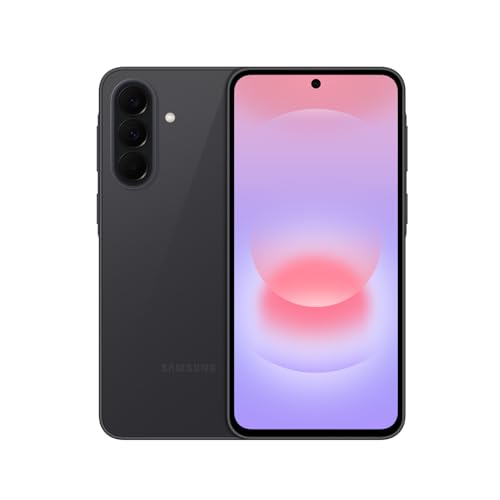
Samsung Galaxy A37 5G — Best all-round value
The A37 is the phone this guide would hand to a relative who asked for one sensible recommendation and no homework. Its listing describes a 2026 US-version handset with an AMOLED display, a triple-camera array, a 5000mAh battery and an IP68 rating, which is a striking amount of flagship vocabulary at an A-series address. That sealing matters in ordinary life far more than in marketing: rain on a commute, a spill at a café table, dust at a worksite. Phones die from afternoons like those, and the A37 is armoured against them in a way most value handsets are not.
There is also a steadiness to choosing the current A-series Samsung that spec sheets understate. One UI will feel familiar to anyone arriving from an older Galaxy, the accessory ecosystem is bottomless, and the stated US one-year warranty keeps ownership paperwork simple. The triple camera should be read honestly: at this level you are buying a competent main camera with supporting lenses for flexibility, not a zoom system to rival an Ultra. For family photographs, documents and the occasional landscape, that is the correct allocation of money. Shoppers tempted by cheaper no-name imports should sit with the A37’s band and warranty clarity for a moment before chasing a marginally larger screen elsewhere.
- Display: AMOLED panel, per the listing
- Battery: 5000mAh
- Storage: 128GB
- Sealing: IP68 rated
- Version: US model with US one-year warranty
- Colour named in listing: Awesome Charcoal
Strengths
- IP68 protection is rare at this rung and genuinely useful.
- The 5000mAh cell suits two-day light use patterns.
- US version status simplifies both bands and warranty claims.
Trade-offs
- 128GB is fixed, so heavy media collectors must budget cloud space.
- The supporting cameras play second fiddle to the main lens.
- Charging pace is unremarkable next to faster-wired rivals.
Best for: buyers wanting one durable, warrantied Samsung to keep for three or more years.
Not suited for: shutterbugs expecting flagship zoom reach from a mid-priced triple array.
Consider also how the A37 will age in the hand. A slim profile is promised in the listing, and slim phones with big batteries usually achieve the trick through efficient internals rather than hollow construction, which bodes well for how solid it feels after a year of pockets and car mounts. The AMOLED panel should keep outdoor map reading civilised, and Samsung’s software offers the mature one-handed modes that large screens demand. None of this is glamorous. All of it is the substance of a phone you stop noticing, in the best sense, because it simply keeps up with the day you planned rather than the one its limitations impose.
Tempted by the charcoal finish? Head to the A37’s listing to check price on Amazon and confirm the storage tier before you commit.

Samsung Galaxy A17 5G — Lowest-cost Samsung route
Every ladder needs a first rung people can actually reach, and in Samsung’s 2026 range that rung is the A17. Its listing promises a large AMOLED display, a high-resolution main camera, super fast charging and expandable storage, wrapped in what Samsung calls a durable design and sold with a US manufacturer warranty. The presence of Circle to Search in the feature list is a small tell about the times: even the entry Galaxy now leads with an AI-flavoured search trick, because that is what shop counters demonstrate.
Judge the A17 by the jobs it will really be given. It is a first smartphone for a teenager, a replacement for a cracked handset when money is tight this month, a second phone for a delivery driver, a gentle upgrade for a parent whose current device predates 5G entirely. For those duties its compromises are well chosen. Expandable storage quietly solves the problem that kills cheap phones first, which is a full memory and a camera that refuses to open, while the big AMOLED keeps reading, maps and video pleasant. What it will not do is flatter a demanding gamer or a low-light photographer, and pretending otherwise would waste your money more surely than any rival could.
- Display: large AMOLED, per the listing
- Storage: 128GB with expansion supported
- Charging: Samsung’s super fast charging language
- Search feature: Circle to Search included
- Warranty: US one-year manufacturer cover
- Colour named in listing: Black
Strengths
- Expandable storage extends the phone’s useful life cheaply.
- A large AMOLED at the entry rung beats many LCD rivals.
- The US warranty separates it from anonymous import bargains.
Trade-offs
- Performance headroom is the thinnest on this page.
- Camera ambition stops at competent daylight work.
- The design prioritises toughness over thinness or flair.
Best for: first-time buyers and families equipping several people without multiplying the bill.
Not suited for: mobile gamers or anyone who edits video on their handset daily.
There is a dignity argument for the A17 that spec culture misses. Not everyone wants their phone to be a hobby, a status signal or a second job of settings menus; some people want a trustworthy rectangle that handles calls, photographs of grandchildren, bus times and banking without drama, and that can be replaced without grief if it meets a pavement. The A17 is engineered for that reader. Its maker has spent the savings on the screen and the warranty rather than on exotic materials, and its feature list, Circle to Search included, keeps it conversational with the rest of the modern Galaxy range instead of feeling like a punished relation.
If the A17 sounds like the right size of purchase, its Amazon page is where to check price on Amazon and pick between the storage configurations on offer.

Motorola Moto G Power 2025 — Battery-first pick
Motorola’s Power line has survived a decade of fashion cycles by serving one constituency faithfully: people who regard a low-battery warning as a personal insult. The 2025 edition arrives unlocked and made for the US market, with 8GB of memory, 128GB of storage and a 50MP camera, finished here in a Leaf Green that at least spares it from the black-slab anonymity of its peers. The listing does not print a battery capacity figure in its title, and we will not invent one; the line’s reputation and the phone’s positioning do the talking, and endurance is plainly the brief.
The buyers who love these phones share a recognisable day. They drive for a living, work outdoors, hike on weekends, or simply refuse to organise their evenings around a wall socket, and for them a phone that fades by dinner is broken regardless of its camera. Motorola’s near-stock Android also plays well with this crowd, since it wastes little effort on duplicated apps and decorative menus. The 50MP main camera handles the documentary side of such lives capably: site photographs, receipts, family moments in decent light. Set it beside the Samsungs and you trade polish and sealing for stamina and simplicity, a bargain many pockets will accept gladly.
- Memory and storage: 8GB and 128GB
- Main camera: 50MP, per the listing
- Market: unlocked, made for US networks
- Finish named in listing: Leaf Green
- Software character: Motorola’s lightly touched Android
- Series brief: endurance-led Moto G Power line
Strengths
- Endurance-first tuning matches its audience precisely.
- Clean Android keeps the interface quick to learn.
- Made-for-US status keeps carrier activation uncomplicated.
Trade-offs
- No water-resistance rating is advertised in the title.
- Display and camera sit a class below the Samsung pair.
- Update horizons from Motorola are typically shorter than Google’s.
Best for: drivers, tradespeople and travellers who charge opportunistically rather than nightly.
Not suited for: buyers who want the longest possible software support window.
Ownership economics favour this Motorola in quieter ways too. Because the G family avoids exotic parts, cases, screen protectors and eventual repairs tend to stay in the realm of the reasonable, and the phone’s honest construction tolerates the knocks of a working life without demanding kid gloves. Buyers cross-shopping it against the A17 should ask which scarcity they fear more: running low on charge in the field, or running low on polish at the desk. The G Power answers the first fear completely and the second not at all, and there is no shame in either priority — only in buying one phone while secretly needing the other.
Drivers and weekend hikers alike can check price on Amazon through the G Power’s listing, where the Leaf Green finish and storage options are laid out.

Motorola Moto G Stylus 2025 — Pen included
A stylus changes how a phone gets used in ways that benchmark charts never capture. The Moto G Stylus 2025 keeps Motorola’s pen tradition alive at a friendly tier, pairing the built-in stylus with 8GB of memory, a generous 256GB of storage and a 50MP camera, in a Pantone colour the listing calls Surf The Web. Sketching a room layout, annotating a screenshot for a colleague, signing a form without printing it, jotting a measurement in a hardware aisle: these small acts accumulate into a different relationship with the device.
Honesty about the pen’s ceiling matters, though. This is a passive stylus experience rather than the pressure-sensitive, hovering instrument of Samsung’s discontinued Note lineage, and artists expecting palm rejection and tilt nuance should calibrate accordingly. What it offers instead is immediacy: the pen lives in the body, asks for no charging, and is present at the exact moment a thought needs capturing. Doubling the storage relative to its G Power sibling also makes this the Motorola for people who keep everything. Students, field technicians, real-estate agents and compulsive list-makers form its natural congregation.
- Memory and storage: 8GB and 256GB
- Main camera: 50MP, per the listing
- Input: bundled stylus stored in the body
- Market: unlocked, made for US networks
- Finish named in listing: Pantone Surf The Web
- Series brief: note-taking Moto G variant
Strengths
- The integrated pen enables notes without accessories or charging.
- 256GB of storage is the roomiest allowance in this Motorola pair.
- Near-stock Android keeps the note apps responsive and uncluttered.
Trade-offs
- The stylus lacks the pressure finesse of premium pen systems.
- No sealing rating is promoted in the listing title.
- Its camera, while capable, repeats the G family’s modest ambitions.
Best for: list-makers, students and field workers who think with a pen in hand.
Not suited for: digital artists who need pressure-sensitive drawing fidelity.
Practical pen habits are worth imagining before purchase, because the stylus rewards routine rather than occasional brilliance. The shopper who circles items on a photographed whiteboard, the nurse who sketches a dressing change for a patient, the landlord who marks scuffs on a move-in photograph: these users will reach for the pen daily, and daily tools justify themselves. If your notes live happily as typed lists, the pen becomes a novelty that surfaces twice a year, and the G Power’s endurance would serve you better. Motorola, to its credit, prices the choice between its own siblings gently enough that honesty with yourself is the only real cost of choosing.
Note-takers curious about the pen can check price on Amazon on the G Stylus listing, which also confirms the 256GB configuration described above.

Samsung Galaxy S25 FE — Step-up choice
The FE badge, Fan Edition in Samsung’s telling, exists for buyers who read flagship reviews with longing and flagship prices with alarm. The S25 FE’s listing offers 128GB of storage, a large display, a 4900mAh battery, a high-resolution camera with AI photo edits, and the reassurance of a US one-year warranty on an unlocked US handset. It is the point in this guide where the conversation shifts from adequacy to appetite: a brighter, faster, more camera-serious Samsung that still stops short of Ultra money and Ultra bulk.
Who should make this step rather than save with the A37? The buyer who photographs constantly and will actually use the AI editing tools, who notices the difference between a good screen and a great one because they read and watch on the phone for hours, and who intends to keep the device long enough that the stronger hardware pays its rent in years three and four. The 4900mAh figure sits a whisker below the A37’s cell on paper, yet the FE’s more efficient flagship-grade internals complicate any simple conclusion from that number alone. What is simple is the positioning: this is the enthusiast’s Samsung on the page, and its JetBlack finish is dressed accordingly.
- Storage: 128GB in the listed configuration
- Battery: 4900mAh
- Camera pitch: high-resolution sensor with AI photo edits
- Display described as large in the listing
- Version: unlocked US model, US one-year warranty
- Colour named in listing: JetBlack
Strengths
- Flagship-flavoured processing lifts games and camera work alike.
- AI editing tools give casual photographers visible wins.
- US warranty and unlocked status keep ownership friction low.
Trade-offs
- The battery figure trails the cheaper A37 on paper.
- 128GB fills quickly for keen videographers.
- It asks a clear premium over the A-series for its polish.
Best for: Samsung loyalists who want near-flagship flavour without Ultra pricing or size.
Not suited for: bargain hunters whose needs the A37 already covers completely.
The FE also functions as insurance against a particular kind of regret: the kind that arrives eight months after a sensible purchase, when a friend’s flagship handles a dim restaurant or a fast-moving toddler noticeably better and the savings suddenly feel theoretical. Phones are among the most-used objects a person owns, touched hundreds of times daily, and the FE’s extra fluency compounds across all those touches. Set against that, its compromises are the survivable kind — storage you can supplement with cloud tiers, a battery figure that real-world efficiency may redeem. Buyers who recognise themselves in the regret scenario should listen to it; buyers who do not should save confidently with the A37.
Anyone leaning toward the FE step can check price on Amazon at its listing, where the JetBlack unlocked configuration is the one described here.

Google Pixel 10a — Software longevity
Google’s pitch for the Pixel 10a reads less like a hardware specification and more like a promise about time. The listing leads with a battery claim of thirty-plus hours, Camera Coach and Gemini, then adds the line that should make long-term owners sit up: seven years of Pixel Drops. Add Gemini Live, Call Screen and car crash detection, and the picture is of a modest handset whose intelligence and support window punch far above its hardware weight. The Obsidian 128GB configuration listed here is the sensible one.
Call Screen deserves its own sentence of appreciation, because anyone plagued by robocalls understands its value instantly: the phone interrogates unknown callers so you do not have to. Camera Coach similarly reframes the camera conversation away from megapixels toward guidance, helping ordinary users frame better photographs in the moment rather than rescuing poor ones later. The honest counterweights are that Google’s battery figure is a maker claim measured under Google’s conditions, and that Pixel hardware has historically traded some raw performance and charging drama for its software grace. Buyers who keep phones longest, and who value a phone that answers spam so they need not, will find this the most future-facing pick on the page.
- Storage: 128GB in Obsidian
- Battery claim: thirty-plus hours, per Google
- Support: seven years of Pixel Drops stated
- Assistant features: Gemini and Gemini Live
- Call tools: Call Screen and car crash detection
- Camera help: Camera Coach guidance
Strengths
- Seven years of drops is the longest horizon in this six.
- Call Screen quietly removes a daily modern annoyance.
- Camera Coach helps beginners more than extra megapixels would.
Trade-offs
- The battery figure is a maker claim, not a lab guarantee.
- Hardware drama is muted beside the FE’s flagship flavour.
- Storage is fixed at the listed 128GB configuration.
Best for: patient owners who keep a phone until the updates run out.
Not suited for: spec-sheet racers who upgrade every year regardless.
There is an environmental footnote to the Pixel’s case that deserves daylight. The greenest phone is usually the one already in your pocket, and the second greenest is the one you keep longest, so a seven-year support horizon is not merely a consumer perk but a genuine reduction in how often hardware must be manufactured, shipped and discarded. Google’s crash detection and screening tools also return value in the currency of attention, which is the resource modern phones most relentlessly spend. If the 10a’s hardware seems plain beside the FE, remember what it is optimised for: not the unboxing afternoon, but the two thousand ordinary days that follow it.
Long-haul owners can check price on Amazon via the Pixel 10a listing, where the Obsidian 128GB model is the configuration under discussion.
How Do the Six Compare Side by Side?
| Phone | Maker’s headline | Storage | Distinguishing trait |
|---|---|---|---|
| Samsung Galaxy A37 5G | 5000mAh battery, IP68 | 128GB | Sealed durability at a value tier |
| Samsung Galaxy A17 5G | Large AMOLED, expandable storage | 128GB plus expansion | Cheapest Galaxy entry with US warranty |
| Moto G Power 2025 | 50MP camera, endurance brief | 128GB | Battery-first Motorola philosophy |
| Moto G Stylus 2025 | 50MP camera, bundled pen | 256GB | Only pick with an integrated stylus |
| Samsung Galaxy S25 FE | 4900mAh, AI photo edits | 128GB | Flagship flavour below the Ultra tier |
| Google Pixel 10a | Seven-year Pixel Drops promise | 128GB | Call Screen and software longevity |
Read the table as a map of priorities rather than a league ladder. The two Motorolas answer questions the Samsungs do not ask, about stamina and handwriting, while the Pixel answers a question about years. The A37 remains the centre of gravity: remove every other phone from the page and it would still satisfy the median buyer, which is exactly what a good default recommendation should do.
Which of These Phones Fits the Shape of Your Day?
Picture the commuter first, because so many phones are bought by her. Her day is a train carriage with patchy signal, a podcast downloaded at dawn, a boarding pass, forty photographs of nothing in particular and a battery that must survive until the last connection home. For her the A37’s sealed body and honest cell are the safe marriage, though the Pixel’s screening earns its keep against the scam calls that plague station platforms. She should care least about camera theatre and most about the phone being awake, connected and unworried at 11 p.m. in a city she did not plan to be in.
The field worker’s day looks different in every particular. Gloves, dust, ladders, a phone consulted with wet hands and photographed through, a van that doubles as an office and a charger. Endurance and legibility rule his shortlist, which is why the G Power exists, and why the A37’s IP68 keeps winking at him from across the page. His photographs are evidence rather than art, so a competent 50MP main camera suffices, and his real camera requirement is speed: the shutter must fire when the moment does, because the moment is a leaking joint or a delivered pallet and it will not pose twice.
Then there is the household photographer, the keeper of birthdays and first days of school, whose phone is the family archive whether she applied for the job or not. Her priorities invert the field worker’s: camera consistency first, storage second, everything else negotiable. The FE’s editing tools and stronger hardware court her openly, while the Pixel’s coaching features argue that guidance beats horsepower for the photographs she actually takes. Either will serve; the A17, with respect, will eventually frustrate her, and a phone bought to document a childhood should not be the one component of the childhood that disappoints.
Finally, picture the student, for whom the phone is library, lecture recorder, social headquarters and bank branch in one cracked-screen package. The G Stylus speaks to her note-taking directly, the Pixel to her budget across a degree’s worth of years, and the A17 to the brutal arithmetic of fresher finances. Her case is the strongest argument for reading this guide by use rather than by rank: the best phone for her is the one that survives four years of seminars and still runs the apps her first employer demands, and three different picks on this page can claim that title depending on which lectures she attends.
How Do You Set Up a New 5G Phone Without Regrets?
Start before the phone arrives by confirming your carrier line is ready for a SIM swap or an eSIM transfer, and back up the old handset completely while it still works; migration tools are happiest when the source device is alive and unlocked beside its replacement. During setup, resist restoring every app you ever installed. A new phone is the one natural moment to audit your digital clutter, and reinstalling only what you recognise keeps storage and battery healthier from day one. Turn on automatic updates immediately, since the security patches in the first months matter more than any wallpaper decision.
While the transfer runs, sort the physical side of ownership. Order the case and screen protector to arrive with the phone rather than a week behind it, check whether your existing charging bricks speak the fast-charging language your new handset prefers, and locate the SIM ejector tool or a humble paperclip before you need one at a kitchen table at midnight. If your old phone is being traded in or handed down, factory-reset it only after the new device has run for a full day with your accounts, photographs and two-factor codes confirmed working; premature wiping is the one setup error that cannot be undone with patience.
Then spend ten deliberate minutes on connectivity settings. Confirm the phone is preferring 5G where your plan includes it, check that Wi-Fi calling is enabled if your home signal is patchy, and place a test call to a patient friend to verify voice quality on your actual network rather than a shop’s. Photograph something in daylight and something indoors, not to judge the camera harshly but to learn its habits while the return window is still open. Finally, fit a case before the first outing. It is the cheapest sentence in this guide and the one most often regretted when ignored.
How Long Should a Phone Bought in 2026 Reasonably Last?
Longevity has three separate clocks, and confusing them causes most upgrade regret. The hardware clock measures the battery’s slow fade and the screen’s survival; modern cells typically hold a useful charge for several years of daily cycling, and a mid-life battery replacement can reset that clock cheaply for a phone otherwise loved. The software clock measures updates, and it is the one makers now print in listings, as Google does with its seven years of Pixel Drops, because it decides when banking apps, work tools and security patches stop arriving. The network clock measures whether the radios still match the towers, and it is why buying a 5G phone today, rather than a leftover 4G bargain, is the quietly correct decision: the bands in these handsets will remain the bands carriers build on for the foreseeable future.
A realistic expectation, then, is four to six years of dignified service from the middle of this page, longer from the Pixel if its support promise is honoured in full, and a shorter but still respectable run from the A17, whose lower headroom will show sooner under heavier apps. Readers can stretch any of these clocks with unglamorous habits: keep the battery between empty and full rather than worshipping either extreme, let updates install promptly, leave a margin of free storage so the system can breathe, and replace a tired case before it stops absorbing the falls it exists to absorb. None of this requires technical confidence. It requires only treating the phone as the multi-year appliance it is, rather than as a disposable fashion with a screen.
When a phone does reach its end, the manner of its leaving matters to the next purchase. A handset retired because its software clock expired, while its hardware still shines, argues for weighting update promises higher next time — a Pixel argument. A handset retired with a swollen battery and a cracked back argues for sealing and build — an A37 argument. Your current phone’s obituary, written honestly, is the most personalised buying guide you will ever read, and we recommend composing it before consulting any shortlist, including this one.
What Mistakes Do 5G Phone Buyers Keep Making?
The classic error is buying a phone for a network it cannot fully use: an import with the wrong bands, or a carrier-locked unit bought in haste. The second is paying for millimetre-wave support you will encounter twice a year while skimping on storage you will curse weekly. A third is trusting a single battery number across brands, when maker claims are each measured in their own maker’s laboratory of optimism. Buyers also routinely forget the boring accessories of modern life, discovering too late that a new phone’s port, case size or charging brick requirements differ from the drawer full of cables they already own.
A subtler mistake is ignoring the support horizon. A bargain handset abandoned by its maker after a short window becomes expensive quickly when a banking app drops it or a security flaw goes unpatched, which is why this guide keeps circling back to warranties and update promises. The final error is the opposite of all the others: overspending from anxiety. If your days are messages, maps, photographs and video calls, the middle of this page will serve you beautifully, and the money saved buys years of cloud storage, a good case and a celebratory dinner besides.
What About Cameras, Honestly, at This Level?
Camera talk at this tier needs a translator. A 50MP main sensor, like those in the two Motorolas, describes pixel count rather than photographic destiny; what governs your results is the sensor’s size, the lens quality and the processing that rescues ordinary light. Samsung’s triple array on the A37 adds framing flexibility — an ultrawide for interiors and group photographs — which in practice delights owners more often than raw resolution does. The FE steps the whole apparatus up a class, and its AI editing features acknowledge a truth about modern photography: half the craft now happens after the shutter, in the computational darkroom, and tools that remove photobombers or straighten horizons serve real memories.
The Pixel reframes the question again. Camera Coach is Google admitting that most disappointing photographs fail at composition, not capture, and offering a tutor at the moment of aiming rather than a filter at the moment of regret. For the reader whose camera roll is a family archive, that guidance may be worth more than any sensor in this guide. For the reader photographing products, documents or properties, consistency and colour honesty matter more, and Samsung’s processing has a long record of delivering both without fuss. Video, meanwhile, is the great leveller: every phone here records perfectly serviceable footage for sharing, and none should be bought as a cinema camera. Buy the stills behaviour you love; the video will follow adequately behind it.
Final Recommendation
Choose by temperament and the decision makes itself. The Galaxy A37 5G is the default we would defend anywhere: sealed, warrantied, sensibly priced in spirit and balanced in every direction. Battery devotees should take the Moto G Power, pen thinkers the G Stylus, and Samsung fans with flagship appetites the S25 FE, while the Pixel 10a rewards anyone who measures a phone’s life in years of support. The A17 keeps the ladder’s first rung honest for tight budgets. When the delivery van pulls away and the new handset lights up on your own network, the right pick will feel less like a purchase and more like a quiet correction to your daily routine.
Frequently Asked Questions
Does every phone here work on every US carrier?
Unlocked US-version phones cover the major networks broadly, but band support still varies by carrier, so verify your network’s main 5G bands against the maker’s specification before ordering, especially if you are on a smaller regional provider.
Is millimetre-wave 5G worth paying extra for?
For most people, no. It shines in stadiums, airports and dense downtown blocks, yet sub-6GHz carries everyday life. Pay for it only if your routine genuinely lives in those crowded venues.
Why are there no iPhones among the linked picks?
Current iPhone models appear on Amazon US chiefly as renewed units, and this guide links only clean listings for new stock. Apple’s phones remain excellent; they are simply bought through Apple and the carriers rather than through the listings used here.
How long will these phones keep receiving updates?
Google states a seven-year Pixel Drops promise for the 10a, the longest promise on this page. Samsung’s recent ranges also commit to multi-year support, while Motorola’s windows are typically shorter, so check each maker’s current policy if longevity leads your decision.
Does an unlocked phone work with prepaid carriers too?
Generally yes, provided the prepaid brand runs on a network whose bands the phone supports; most prepaid labels in the US ride on one of the three national networks. Check the prepaid brand’s own compatibility checker with the phone’s model number before ordering to be certain.
Will a case for an older Galaxy fit these new models?
Almost never. Button placement, camera islands and dimensions shift between generations, sometimes by millimetres that matter. Budget for a fresh case and screen protector sized for the exact model year named in the listing.
Should I choose 128GB or look for more storage?
Light users who stream everything can live happily with 128GB. If you record long videos, download media for travel or keep years of photographs on-device, favour the G Stylus’s 256GB or the A17’s expansion slot.
Related Guides
Readers comparing across budgets may also enjoy Best Mid Range 5G Phones, while brand loyalists can narrow the field with Best 5G Samsung Phones, and travellers juggling two numbers should see Best Dual Sim 5G Phones. Big screens judged as viewfinders are compared in the best camera big screen phones.
Related guides
- Best Basic Phones Camera Buyers Can Trust: Flip Phones and Simple Handsets That Still Take a Photograph
- Best Sony Full Frame Cameras for Astrophotography: Sensitivity vs Resolution
- Best Affordable Android Tablets: Five True Android Slates and One Fire OS Specialist, Clearly Labelled
- Best 400 FPS High Speed Cameras: The Honest Truth About Burst Slow Motion



[…] see how these Galaxies fare in open competition, visit Best 5G Phones; for the summit in wider company, read Best 5G Flagship Phones; and small-hand shoppers should […]
[…] the broader landscape beyond this tier, start with Best 5G Phones, and if two numbers are your whole reason for shopping, go straight to Best Dual Sim 5G Phones; […]