What's inside
- Key Takeaways
- Quick Picks
- How Did We Choose These Dual-SIM Six?
- Physical Dual SIM, SIM Plus eSIM, and Dual eSIM: What Is the Actual Difference?
- What Are the Real-World Jobs a Second SIM Actually Does?
- Which of the Best Dual Sim 5G Phones Earn a Closer Look?
- Should Travellers Use Travel eSIM Services Instead of a Second Physical SIM?
- How Do the Six Compare in One View?
- How Does the Dual-SIM Travel Routine Work, Step by Step?
- How Do You Set Up Two Lines Without Chaos?
- What Mistakes Do Dual-SIM Buyers Keep Making?
- Final Recommendation
- Frequently Asked Questions
- Related Guides
As an Amazon Associate I earn from qualifying purchases. This post may contain affiliate links at no extra cost to you.
gizmoverdict.com is reader-supported. When you buy through links on our site, we may earn an affiliate commission.
Where to buy: every handset below is an international or dual-SIM listing of one kind or another, so the compatibility sentence inside each listing is part of the product. Read it as carefully as the screen size, then check price on Amazon once you know the phone and your network are on speaking terms.
The best dual sim 5g phones live, in 2026, in a peculiar exile from the American mainstream, and this guide begins by admitting it. Two physical SIM trays — the original, simplest way to run two numbers on one phone — have become a feature of international models, because US-market handsets have largely moved their second line onto eSIM profiles or dropped it into a settings menu. The six phones below therefore share a family resemblance their buyers must understand before any of them is judged: five are international Galaxy and Motorola listings with GSM tuning, and the sixth pair of seats belongs to OnePlus flagships whose dual-SIM builds serve the same two-number congregation from the premium end.
That exile has a silver lining, and it is why this category thrives despite it. International dual-SIM models are built for the way most of the world actually uses phones: a home number and a work number, a local SIM bought at an airport beside the number the bank insists on texting, a personal line that sleeps while the business line performs. Their buyers are travellers, immigrants keeping a thread to a first home, professionals who refuse to carry two handsets, and small-business owners whose entire office is a pocket. For those readers, the phones below are not curiosities; they are the correct tools, sold through the only channels that still stock them.
The terms of trade will be repeated until they are reflexes, because they are printed in the listings themselves. GSM-only means GSM-only: these handsets are built for GSM-family networks, with no CDMA compatibility, which in the United States points them at T-Mobile and the prepaid brands riding its network — one listing in this guide says exactly that, in its title, about its own phone. Band verification before purchase is not pessimism but literacy. Warranty routes run through sellers and international channels. Buyers who accept those terms knowingly will find this the most useful page in the batch; buyers who skip them will find the comment sections of these very listings, which are full of people who skipped them.
Key Takeaways
- Physical dual-SIM is an international-listing feature in 2026; US models mostly answer with SIM plus eSIM or dual eSIM instead.
- Every linked pick here is GSM-family: T-Mobile and its MVNOs are the natural US home, and CDMA networks are out, exactly as the listings state.
- The Galaxy A36 international listing names its compatibility outright — T-Mobile networks and their MVNOs in the United States.
- The Moto G57’s listing carries the bluntest caveat in the guide: GSM only, no CDMA, international version.
- OnePlus 15 and 13 bring dual-SIM to flagship altitude, with 512GB of storage each and, on the 13, the fastest stated charging here.
- The 4G-only Galaxy A16 dual-SIM listings were deliberately excluded from this guide, because a 5G shortlist should contain 5G phones.
Quick Picks
| Pick | Badge | Why it earns its place |
|---|---|---|
| Samsung Galaxy A56 5G Dual SIM | Balanced traveller | A 6.7-inch 120Hz AMOLED and 256GB make it the complete mid-range two-SIM Galaxy. |
| Samsung Galaxy A36 5G Dual SIM international | Clearest compatibility label | Its listing names T-Mobile and its MVNOs directly, the most honest sentence in the category. |
| Samsung Galaxy A57 5G Dual SIM | Newest two-SIM Galaxy | The freshest generation of Samsung’s global A line for buyers starting a long tenure. |
| OnePlus 15 Dual-SIM | Flagship endurance | A 7300mAh battery and 512GB of storage for two-number power users. |
| OnePlus 13 Dual-SIM | Flagship pace | Hasselblad cameras and 80W wired charging for the two-line professional in a hurry. |
| Motorola Moto G57 Dual-SIM | Value dual-SIM | Motorola’s international two-SIM route with 256GB, labelled GSM only in its own title. |
How Did We Choose These Dual-SIM Six?
By insisting on three things that the category’s listings do not always volunteer together: a genuine second SIM arrangement rather than a marketing echo of one, 5G radios rather than a 4G handset in a 5G guide’s clothing, and compatibility language honest enough to quote. That third test excluded more phones than the first two. It is also why the 4G-only Galaxy A16 dual-SIM listings, which a lazier roundup might have admitted for their trays, are absent here by deliberate decision: a reader shopping this keyword deserves radios that match it, and the A16’s exclusion is mentioned in the guide section below so the reasoning is on the record.
Range was the second principle. Dual-SIM buyers are not one tribe but several — the traveller, the two-line professional, the diaspora household, the budget fleet buyer — and a shortlist spanning the A36’s accessibility, the A56’s balance, the A57’s freshness, Motorola’s value and OnePlus’s flagship altitude gives each tribe a door with its own name on it. Samsung’s triple presence reflects the shelf’s reality: no maker has committed to the physical dual-SIM form in this market as Samsung’s global line has, and pretending otherwise for variety’s sake would mislead the very readers the guide serves.
We also weighed the unglamorous question of what happens in year two of a two-line life, because dual-SIM phones are rarely impulse-kept for a season; they become infrastructure. Infrastructure rewards the makers with the deepest software cultures and the broadest accessory and repair ecosystems, which is part of Samsung’s triple presence here, and it rewards storage bought generously at the start, which is why this guide keeps returning to the 256GB and 512GB figures with approval. A second line doubles a phone’s administrative surface; the picks above were chosen to keep that surface calm.
Finally, every claim in the reviews traces to a listing’s own words: storage and memory figures, screen sizes and refresh rates where printed, charging wattages where printed, and the GSM caveats quoted in the spirit the sellers wrote them. Where a listing is silent — on a Motorola camera figure, for instance — the review is silent in the same place, because a dual-SIM guide lives on trust about fine print, and fine print is where invented details go to be discovered.
Physical Dual SIM, SIM Plus eSIM, and Dual eSIM: What Is the Actual Difference?
Three architectures compete under the dual-SIM banner, and they behave differently in the wild. The physical dual tray, carried by most of this guide, holds two nano-SIM cards: two numbers, both native, swappable in seconds, indifferent to whether either carrier has heard of eSIM. It is the architecture of airports and border towns, because a kiosk-bought card works the moment it clicks in. Its cost is the tray itself, a slot in the phone’s body that US makers have increasingly decided to spend on other things.
SIM plus eSIM keeps one tray and adds a downloaded profile for the second line. It is the compromise architecture of current US flagships: the primary number rides a card, the travel or work number arrives by QR code. Its weakness appears at the edges — a carrier slow to issue eSIMs, a workplace still handing out plastic, a dead phone whose eSIM cannot be lifted into a borrowed handset at midnight in a foreign city. Dual eSIM removes the tray entirely and holds both lines as profiles; it is the tidiest architecture and the most dependent on carrier cooperation, which is why this guide’s physical-tray phones exist as its counter-argument.
Standby behaviour deserves its own clarification, because two numbers are only useful if both can be reached. Modern dual-SIM phones typically run both lines in standby, letting calls and texts arrive on either, while data is assigned to one line at a time with a setting to switch. That arrangement covers nearly every real routine: the work line rings during work, the home line stays alive for the bank’s codes, and the travel SIM takes over data at the border while the home number keeps receiving the messages that matter. Readers should confirm the standby behaviour of their chosen model in its maker’s documentation, since the details are exactly the kind that listings abbreviate.
A word about messaging apps belongs in this architecture tour, because for many two-line owners the second number lives or dies inside them. The major messaging platforms register to a number, and dual-SIM phones commonly let the owner run the app for one line natively and, on many Android models, a cloned instance for the second — a detail worth confirming in the maker’s documentation for your exact model, since it decides whether the work line’s messages arrive in their own room or not at all. Phone calls forgive improvisation; messaging ecosystems reward the buyer who checks this one setting before the tray is even loaded.
None of the three architectures is the future defeating the others; they are tools for different geographies of life. The physical tray’s congregation is simply the one this guide serves, because it is the congregation the US market has stopped serving — and a guide’s highest use is to stand where the market’s attention has wandered away from its customers.
What Are the Real-World Jobs a Second SIM Actually Does?
It helps to understand why the American mainstream wandered away from the tray, because the reason was not contempt for travellers. Carrier-subsidised selling rewarded phones configured for one network’s eSIM future; waterproofing engineers disliked apertures; and the domestic market, where most buyers keep one number for decades, simply never organised itself into a constituency for the second slot. The congregation that did need it — disproportionately immigrant, mobile and entrepreneurial — was also the least likely to be consulted by product planners. The international listings in this guide are the market’s self-correction, arriving by the side door, and they deserve to be shopped with the seriousness their buyers bring to them.
The travel job is the famous one, and it deserves its fame in concrete terms. A traveller lands, buys a local SIM at the kiosk with cash, and gains local data at local prices for maps, rides and translation, while the home number stays alive in the second tray for the messages that must find it — the bank’s verification, the family’s news, the airline’s gate change. Before dual-SIM, that traveller chose between ruinous roaming and a home number switched off in a hotel safe. The tray abolished the choice, and every phone in this guide is, among other things, a small monument to that abolition.
The work job is quieter and larger. A second line separates the professional self from the personal one without a second handset’s cost, weight and charging cable: clients reach the work number, which can be silenced at six without silencing the family; the personal number stays off the business cards and out of the directories. For sole traders, tradespeople, drivers and clinicians on call, that separation is not a luxury but a boundary, and boundaries are mental-health infrastructure. The phones here sell the boundary at every altitude from the G57’s value to the OnePlus flagships’ altitude.
The diaspora job is the most human of the three. A phone number is an address in the modern world, and for the immigrant, the expatriate and the internationally married, the first country’s number is an address at which banks, governments, schools and grandmothers still call. Keeping it alive in a second tray, beside the number of the life being built, is a small monthly act of fidelity that dual-SIM phones make nearly free. When this guide speaks of two-column lives, this column — the one measured in belonging rather than in business — is the one its writers think of first.
There are lesser jobs that still justify the tray: a data-only bargain SIM from a second network to cover a dead zone on a commute; a spare line for selling household goods without publishing a personal number; a teenager’s first phone sharing a parent’s handset history. The category’s breadth of purpose is why its exile from the US mainstream puzzles its congregation so much, and why the international listings that serve it deserve guides written with this much care about their fine print.
Which of the Best Dual Sim 5G Phones Earn a Closer Look?

Samsung Galaxy A56 5G Dual SIM — Balanced traveller
The A56 is the centre of gravity of this guide, the dual-SIM phone against which the others are conveniently measured. Samsung’s listing describes an unlocked international handset in Graphite with 8GB of memory, 256GB of storage, a 6.7-inch AMOLED at 120Hz, water resistance and Android 15 — a complete mid-range specification that happens to carry two SIM trays, rather than a specialist device that apologises for everything except its trays. That completeness matters, because a two-number phone is still a phone, used for everything phones are used for, on both of its numbers.
Its natural owner runs a life in two columns. Perhaps the columns are work and home, with the work line silenced at weekends by a settings toggle rather than by carrying a second handset to the beach. Perhaps they are home and abroad, with a travel SIM that has lived in the second tray across four countries. Perhaps they are the two halves of a diaspora: a US number for the life being built and a first country’s number for the family group chat and the bank that still texts it. The A56 serves all three biographies without asking which one is yours, and its screen and storage are generous enough that neither column feels like the poor relation.
The terms are this guide’s refrain, sung here in the A56’s key: GSM-family tuning, happiest on T-Mobile and its prepaid relatives in the US; bands to verify against your carrier’s published list; warranty service through international or seller channels rather than a domestic counter. The mid-range guide elsewhere in this batch reviews the same phone in the same parish, and the consistency is deliberate. Within its parish, the A56 is the dual-SIM purchase we would defend first at a dinner party of sceptics.
- SIM arrangement: dual SIM, international model
- RAM and storage: 8GB paired with 256GB
- Display: 6.7-inch AMOLED, 120Hz refresh
- Build note: water resistant, per Samsung
- Software at listing: Android 15
- Finish in the listing: Graphite
Strengths
- A complete mid-range phone that happens to hold two lines.
- 256GB gives both numbers’ media room to live.
- The 120Hz AMOLED flatters the long days travellers keep.
Trade-offs
- GSM tuning excludes CDMA-legacy networks outright.
- Warranty journeys run through international channels.
- Band verification is the buyer’s homework, as ever.
Best for: two-column lives on GSM networks, at home or abroad.
Not suited for: buyers whose carrier lives outside the GSM family.
One practical pleasure of the A56 deserves its own mention for the two-line reader: a 6.7-inch canvas is a switchboard with room to breathe. Two messaging threads, two call logs and a calendar that spans both lives are simply easier to administer on a larger screen, and the 120Hz fluidity keeps the administration from feeling like paperwork. Buyers torn between this and the smaller A36 international should ask whether their second line is an occasional traveller’s tool or a daily second job; daily jobs deserve the larger desk.
Two-line readers on compatible networks can check price on Amazon from the A56’s listing, after the band check this guide keeps prescribing is complete.

Samsung Galaxy A36 5G Dual SIM international — Clearest compatibility label
This A36 listing contains the most honest sentence in the entire dual-SIM category, and it deserves to be quoted in spirit on the record: the device is compatible with T-Mobile networks and its MVNOs in the United States. No fog, no asterisk, no invitation to gamble — the seller has drawn the parish boundary on the title itself. The phone behind the sentence is a Samsung Galaxy A36 5G in international unlocked form, with 8GB of memory, 256GB of storage and dual SIM, in Black: a specification a full step above what its accessible positioning might suggest.
That clarity makes this the guide’s recommended starting point for the first-time dual-SIM buyer on the T-Mobile family of networks, a congregation larger than outsiders realise once the prepaid brands are counted. The A36’s own virtues — Samsung’s software culture, the A-series’ sensible engineering, storage generous enough for two numbers’ worth of photographs and downloads — arrive without the ambiguity that haunts the category. A buyer who fits the named networks can proceed with an unusually clean conscience; a buyer who does not has been saved money by a title’s honesty, which is also a service.
Distinguish this listing carefully from the US-version A36 reviewed in this batch’s mid-range guide, because the two are cousins, not twins. That one carries a domestic warranty and a single-SIM domestic brief at 128GB; this one carries twin trays, 256GB and international terms. Neither is the real A36 and the other a pretender — they are the same model wearing two citizenships, and the dual-SIM reader’s citizenship is this one. Read the title, honour the sentence in it, and the phone will honour you back across two numbers.
- Memory and storage: 8GB and 256GB
- SIM arrangement: DualSIM, international unlocked
- Compatibility stated: T-Mobile networks and its MVNOs in the US
- Colour named in listing: Black
- Lineage: Galaxy A36 5G, A-series
- Citizenship: international version
Strengths
- The listing’s own compatibility sentence removes the guesswork.
- 256GB at this rung is a generous two-number allowance.
- Samsung’s A-series maturity steadies a first dual-SIM purchase.
Trade-offs
- The named parish is T-Mobile’s family, not every US network.
- International warranty routing replaces the domestic counter.
- Buyers must not confuse it with the US-version A36.
Best for: T-Mobile and MVNO subscribers buying their first twin-tray phone.
Not suited for: subscribers of networks the listing does not name.
There is a lesson in this listing that outlives the phone itself: compatibility stated in a title is the seller and buyer agreeing to be adults. Readers who learn to demand that sentence — and to walk away from listings that will not provide it — will shop the entire international category more safely long after the A36 is retired. In that sense this pick is the guide’s teaching model as well as a recommendation, and its seat near the top of the order is earned on pedagogy as much as on hardware.
T-Mobile-family readers can check price on Amazon at this A36 listing, whose title’s compatibility sentence should be read once more before ordering.
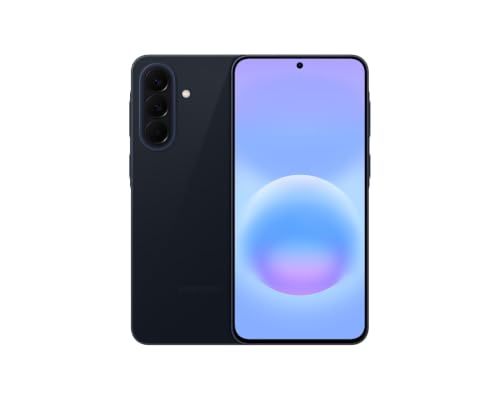
Samsung Galaxy A57 5G Dual SIM — Newest two-SIM Galaxy
The A57 is the A56’s argument made by the next model year, and in a dual-SIM context that freshness carries a specific weight: a two-number phone tends to be kept, because migrating two lines, two messaging histories and two banking relationships is a chore nobody schedules for fun. Starting that tenure with the newest generation of Samsung’s global A line — 256GB of storage, 8GB of memory, dual SIM, factory unlocked for global use, in Awesome Navy — is a rational response to the chore. Buy the newest tray, and the tray’s owner postpones the migration day furthest.
Its listing is the most laconic of the three Samsungs here, offering its essentials and trusting the line’s reputation for the rest, which places a duty on this review to be equally plain about what is known and what is inferred. Known: the configuration, the unlocking, the global intent, the colour. Inferred, from the A-series’ established character: a large AMOLED-class screen experience, Samsung’s mature software, and the documentary camera competence the family is known for. Buyers who need every detail itemised before committing should compare the A56’s fuller listing; buyers who prioritise the newest starting line will accept the brevity as the price of being early.
The parish is the family’s: GSM tuning, T-Mobile-family hospitality in the US, band verification as the buyer’s sacrament, warranty through international channels. Within it, the A57 is the choice of the long-tenure traveller and the two-line professional who thinks in four-year arcs. Its navy finish, like the A56’s graphite, is chosen for a life of airports rather than of catwalks, and there is a rightness to that: dual-SIM phones are the working tools of the internationally mobile, and tools should dress for work.
- Unlock status: factory unlocked for global use
- SIM arrangement: dual SIM, international model
- RAM and storage: 8GB paired with 256GB
- Network family: GSM, per the listing’s framing
- Finish in the listing: Awesome Navy
- Positioning: newest A-series generation here
Strengths
- The newest starting line for a long two-number tenure.
- Global factory unlocking suits multi-country routines.
- Storage matches the tier’s generous end.
Trade-offs
- Its listing is sparer than the A56’s fuller account.
- Early-generation ownership means fewer owner reports.
- The familiar GSM and warranty terms apply unchanged.
Best for: globally mobile buyers beginning a long tenure.
Not suited for: detail completists who want every spec itemised pre-purchase.
Buyers hesitating between the two international A-series generations should consider the household cascade one final time. A dual-SIM phone retired from a traveller’s pocket becomes the family’s travel phone, then the visiting relative’s handset, then the spare that saves a holiday when a slab meets a swimming pool — and at each descent, the twin trays keep earning. Starting that cascade with the newest generation, as the A57 invites, is the closest thing this category offers to buying once and benefiting for a decade.
Long-arc travellers can check price on Amazon through the A57’s listing, keeping its global-unlocked framing in view throughout.

OnePlus 15 Dual-SIM — Flagship endurance
The OnePlus 15 brings the dual-SIM congregation something its mid-range members cannot: flagship altitude without surrendering the second line. Its listing specifies a Snapdragon 8 Elite Gen 5, 16GB of memory, 512GB of storage, dual-SIM support in an unlocked Android handset, and a 7300mAh battery in Infinite Black. Read those figures as a biography of its intended owner: a person whose two numbers are both busy, whose days are long enough to test any battery, and whose storage must hold two lives’ worth of photographs, documents and downloads without negotiation.
Endurance is the trait that transforms dual-SIM ownership at this level. A two-line phone that dies at seven in the evening takes two households, two businesses or two countries offline with it, which is why the 15’s reservoir matters more here than it does in the flagship guide where this phone also appears. Paired with flagship processing, it makes the 15 the dual-SIM pick for the consultant whose second line is a client in another time zone and whose first line is a family that expects answers — the owner for whom a missed call is not an inconvenience but a small professional event.
Terms, as always in this guide, travel with the praise. Dual-SIM buyers should confirm band support for their networks in the maker’s documentation, since flagship listings speak more of performance than of parish boundaries, and should note that this listing does not print charging wattages in its title — its sibling below does, and readers for whom refill speed outranks reservoir size should weigh the pair against each other. What the 15 promises, it promises in the largest figures in this guide, and for the two-number power user those figures are the argument entire.
- Battery: 7300mAh
- SIM arrangement: dual-SIM, unlocked
- Processor per listing: Snapdragon 8 Elite Gen 5
- RAM and storage: 16GB paired with 512GB
- Finish in the listing: Infinite Black
- Positioning: current OnePlus flagship generation
Strengths
- The reservoir keeps two busy lines alive through long days.
- 512GB houses two lives without storage diplomacy.
- Flagship silicon serves the heaviest multitaskers here.
Trade-offs
- Charging figures are not printed in the listing title.
- Band confirmation rests with the buyer, as with all six.
- Its flagship scale exceeds the mid-range picks’ handiness.
Best for: two-number power users whose days outlast ordinary batteries.
Not suited for: buyers who want the smallest, simplest twin-tray phone.
The 15 also reframes what a work phone can be for the internationally mobile executive. A single handset that holds the office line and the home line, outlasts the longest travel day in the industry, and stores the entire working archive without a cloud negotiation is not merely a convenience — it is the difference between travelling with an office and travelling away from one. Readers whose employers issue a separate work handset may envy, from behind their two-device burden, exactly the integration this phone sells.
Power users running two lines can check price on Amazon on the OnePlus 15 listing, which sets out the 512GB dual-SIM configuration.

OnePlus 13 Dual-SIM — Flagship pace
Where the 15 stores time, the 13 manufactures it, and its listing is admirably specific about the machinery: 80W SUPERVOOC wired charging and 50W AIRVOOC wireless charging, printed outright, alongside a Snapdragon 8 Elite, 16GB of memory, 512GB of storage, dual-SIM support in an unlocked handset and an advanced Hasselblad camera in Black Eclipse. For the two-line professional whose phone is a switchboard, that charging pair changes the risk calculus of the whole arrangement: a dual-SIM phone refilled in minutes is a phone whose two numbers are, for practical purposes, always on duty.
The Hasselblad partnership gives the 13 the guide’s most photography-serious camera story among the flagship pair, with a colour philosophy aimed at naturalism rather than spectacle. Two-line owners are often two-role owners — the consultant who photographs sites for clients on one line and children for family on the other — and a camera that serves both roles without a settings pilgrimage earns its place in a phone that is already carrying double duty. The 2025 generation’s maturity is a further quiet asset: a year of owner reports stands behind this model, in a category where documentation is a form of wealth.
Its terms mirror its sibling’s. Confirm your networks’ bands in the maker’s materials before ordering; remember that the headline charging figures belong to OnePlus’s own charging system and its accessories; and weigh the previous-generation position honestly — the 15’s silicon is newer, the 13’s story is fuller. Between the two, this guide declines to crown a winner and instead names the question: do your days need charge stored, or charge summoned? Answer that, and the OnePlus half of this shortlist resolves itself.
- SIM arrangement: dual-SIM, unlocked
- Wired refill: 80W SUPERVOOC, per OnePlus
- Wireless refill: 50W AIRVOOC, per OnePlus
- Processor per listing: Snapdragon 8 Elite
- RAM and storage: 16GB paired with 512GB
- Camera partnership: Hasselblad
- Finish in the listing: Black Eclipse
Strengths
- Stated charging speeds lead this entire guide.
- Hasselblad tuning serves the photographing professional.
- A documented model year steadies the purchase.
Trade-offs
- Peak charging assumes the maker’s own kit.
- It is the older sibling beside the 15’s newer silicon.
- Band homework remains the buyer’s, as throughout.
Best for: two-line professionals who charge in stolen minutes.
Not suited for: overnight chargers who never feel time pressure.
A note for the photographically inclined two-liner: the 13’s Hasselblad story is not decoration on a switchboard phone, because the two-line life is disproportionately documented — sites photographed for clients, properties for listings, whiteboards for teams, and family for the other line’s entire purpose. A camera tuned for natural colour serves the documentary half of that life with unusual fidelity, sparing its owner the garish corrections that lesser processing bakes into evidence. Tools should be honest in both their radios and their colours; the 13 aims at both.
Busy switchboard-owners can check price on Amazon via the OnePlus 13 listing, where the Black Eclipse dual-SIM model is specified.

Motorola Moto G57 Dual-SIM — Value dual-SIM
Motorola’s entry closes the guide at its most accessible rung, and its listing contains the bluntest compatibility sentence of the six, which this review quotes in the spirit it was written: GSM only, no CDMA, factory unlocked, international version. The phone is the Moto G57 in Pantone Green, with 256GB of storage and 8GB of memory — a configuration that respects its buyer, since a two-number phone at the value end still has to hold two numbers’ worth of life. Motorola’s presence here also widens the guide’s software palette, offering its clean, lightly touched Android to readers who find Samsung’s abundance a room too full.
The G57’s congregation is the value end of every tribe this guide serves. The small-business owner equipping a handful of drivers with two-line handsets; the student abroad for a year, whose home SIM must stay alive for bank codes while a local SIM does the daily work; the family that keeps a spare dual-SIM phone in a drawer for visiting relatives, whose own numbers arrive from other continents. For each of them, the Motorola’s combination of twin trays, generous storage and an honest label is the entire requirement, and flagship altitude would be money spent impressing people who will never see the phone.
Its caveats are the category’s, stated once more without decoration. GSM only means the CDMA-legacy networks are closed to it, exactly as its title says; US life for this phone means the GSM family, with T-Mobile’s network the natural home; bands should be verified; warranty follows the international route. Motorola does not print a camera figure in this listing’s title, so this review makes no camera claims beyond the documentary competence the G family is known for — a restraint the reader should read as the guide keeping its word about fine print, in the pick where fine print matters most.
- Memory and storage: 8GB and 256GB
- Compatibility stated: GSM only, no CDMA
- Unlock status: factory unlocked, international version
- Colour named in listing: Pantone Green
- Brand brief: Motorola’s clean Android
- Positioning: value end of this guide
Strengths
- The bluntest, clearest compatibility label in the six.
- 256GB at the value rung respects two-number lives.
- Motorola’s restrained software keeps the phone feeling brisk.
Trade-offs
- No CDMA compatibility, by its own title’s declaration.
- Camera detail is not itemised in the listing.
- International warranty routing applies as with its peers.
Best for: value buyers, fleets and year-abroad students on GSM networks.
Not suited for: anyone whose carrier is a CDMA-legacy network.
The Pantone Green finish earns a practical footnote of its own: in a fleet or a family, a phone that is visibly not black is a phone that is visibly whose, and the small confusions of shared charging cables and identical slabs dissolve. Colour as administration is beneath the dignity of flagship reviews and exactly the kind of thing that matters in the G57’s real world of drivers, students and spare drawers. Motorola, which has made a small art of cheerful finishes on working phones, understands its congregation once again.
Value-led two-line buyers can check price on Amazon at the G57’s listing, GSM-only label and all, before making the match with their network.
Should Travellers Use Travel eSIM Services Instead of a Second Physical SIM?
The travel eSIM services that advertise in every airport podcast deserve a fair hearing in a dual-SIM guide, because they compete for the same second line. Their virtues are real: a data plan bought from a sofa, activated on landing, with no kiosk queue and no plastic. For a single-trip traveller carrying an eSIM-capable phone, they are often the correct answer, and nothing in this guide begrudges them the fare. The physical tray’s counter-argument begins where the eSIM’s assumptions end: in the countries where the kiosk is still the infrastructure, in the hands of travellers whose home bank insists on a physical number’s continuity, and in the dead-phone midnight where a card can be lifted into a borrowed handset and a profile cannot.
There is also a household-economics difference that frequent travellers feel within a year. Local physical SIMs, bought at local prices, remain the cheapest data in most of the world, while travel eSIM convenience carries a traveller’s premium in its per-gigabyte arithmetic; the occasional traveller happily pays for the convenience, and the monthly traveller just as happily queues at the kiosk. The two tools also combine gracefully — several phones in this guide’s wider family tree can hold a physical home SIM beside downloaded travel profiles — so the mature position is not allegiance but inventory: know both tools, and let the destination choose between them.
What should not survive the comparison is the idea that the physical tray is obsolete because a newer method exists. Technologies of belonging age slowly; the bank code, the grandmother and the border kiosk are not early adopters, and the phones in this guide exist to serve the world as it is, at the speed it actually moves. Buy the tray for the world that is, and let the profiles accumulate alongside it as the world changes.
How Do the Six Compare in One View?
| Phone | SIM story | Storage | Defining trait |
|---|---|---|---|
| Galaxy A56 5G | Dual SIM, international | 256GB | The balanced traveller’s Galaxy |
| Galaxy A36 5G international | DualSIM, T-Mobile family named | 256GB | The clearest compatibility label |
| Galaxy A57 5G | Dual SIM, factory unlocked globally | 256GB | The newest two-SIM Galaxy |
| OnePlus 15 | Dual-SIM, unlocked flagship | 512GB | 7300mAh of two-line endurance |
| OnePlus 13 | Dual-SIM, unlocked flagship | 512GB | 80W charging for busy lines |
| Moto G57 | Dual-SIM, GSM only stated | 256GB | The value route with an honest label |
Storage tells a quiet story in this table: every pick offers at least 256GB, because the category’s makers understand that two numbers generate two lives of media. The SIM story column, meanwhile, is the one to read twice — it is the purchase, in four words per phone.
How Does the Dual-SIM Travel Routine Work, Step by Step?
One preparation is so small that guides omit it and travellers regret it: pack the SIM ejector tool, or a paperclip of honourable stiffness, in the bag that stays with you rather than the luggage that tours the carousel. The entire dual-SIM travel system depends on a two-centimetre piece of wire at the moment of arrival, and airport shops know it. Readers who have performed the tray ceremony with a borrowed earring at a foreign arrivals desk will recognise the scene; readers who pack the tool will never join them.
Before departure, the routine is paperwork. Confirm your home number will roam for texts even if you never use its data, because the verification codes are the cargo that matters; note your carrier’s roaming text charges so the cargo’s price is known; and photograph both SIMs’ numbers and your passport’s page, stored somewhere a lost phone cannot take them. Check the destination’s SIM-buying rules — some countries register SIMs to passports at the kiosk, a five-minute ceremony that surprises the unprepared — and confirm your phone’s bands against the destination’s main networks with the same two-list method this guide teaches for home.
On arrival, the ceremony is short. Power down, tray out, local SIM into the second slot — or the first, if your home SIM is an eSIM profile — and power up into a phone that now speaks two countries. Assign data to the local line immediately, before the phone helpfully roams a week’s budget in a taxi queue; label the lines Home and the city’s name, because at midnight on day three you will not remember which number the hotel has; and send one message home on the home line, proving the thread is alive. The whole ritual takes less time than the passport queue that preceded it.
During the trip, the discipline is mostly about resisting the home line’s data. Keep its data roaming off, let its texts arrive like letters, and do the heavy lifting — maps, uploads, video calls — on the local line’s generous allowance. On return, reverse the assignments, keep the travel SIM labelled in an envelope with its country and date, and you will have begun the small, satisfying archive every frequent traveller accumulates: a drawer of tiny cards, each one a place the phone has been a citizen of.
How Do You Set Up Two Lines Without Chaos?
Decide the constitution before the phone arrives. Name each line by its role — the labels work and personal, or home and travel, exist in the settings for a reason — and assign the defaults deliberately: which line dials out, which carries data, which receives the messaging apps’ registrations. Register your banking and two-factor services with full knowledge of which number they will text, and keep that number’s SIM in the phone or safely stored, because a bank code sent to a SIM in a drawer in another country is the dual-SIM life’s signature small tragedy.
Housekeeping for the second line deserves the same deliberateness as its setup, because a neglected line decays in small, expensive ways. Calendar a reminder to keep any prepaid travel or secondary SIM alive with the minimum activity its carrier requires, since a lapsed number can be reassigned and a reassigned number takes your two-factor codes to a stranger. Review, once a season, which services still point at which number, and move them consciously when a line is retired. Two numbers are a system, and systems reward the owners who schedule their maintenance rather than discover it.
Then rehearse the border crossing at home. Switch the data line to the second SIM and live on it for an evening; confirm both numbers ring; send messages from each and confirm the recipients see the right sender. Set the work line’s hours if your phone offers scheduling, so the second number’s discipline is automatic rather than a nightly act of will. Finally, tell the important humans which number is which, in one message, saved — because a dual-SIM phone organises your lines, but only communication organises your callers.
What Mistakes Do Dual-SIM Buyers Keep Making?
The category’s founding error is network blindness: ordering a GSM-only handset for a CDMA-legacy carrier, against the plain statement of its own listing title. The G57’s title and the A36’s compatibility sentence exist because sellers grew tired of the returns; read them as the kindness they are. Second comes its cousin, assumption of universality — believing dual SIM means every network everywhere, when each model carries a specific band recipe that must be matched to specific towers. Third is the drawer tragedy described above: a bank’s codes faithfully texting a SIM that is not in any phone.
One further error deserves naming — silence: failing to tell the second line’s callers that the number exists in a new arrangement, so the work line’s clients keep ringing a retired handset and the travel line’s hotel never learns the local number. A dual-SIM migration is a change of address for half your correspondents, and like any change of address it works only when the postcards are sent. One group message per line, sent on moving day, prevents a month of crossed wires — a sentence of effort this guide offers in exchange for the many it has spent on bands.
A fourth error is buying a 4G dual-SIM handset for a 5G need because the tray looked right; this guide excluded the 4G-only Galaxy A16 listings for exactly that reader’s protection. A fifth is neglecting the second line’s housekeeping — letting the travel SIM expire between trips, or the work line’s voicemail fill unheard — because two numbers are two responsibilities wearing one screen. The dual-SIM life rewards the organised out of proportion to the effort, and mildly taxes everyone else, which is perhaps the most honest summary of the category ever written.
Final Recommendation
A closing reflection for the reader who arrived here carrying two phones and a mild resentment of both: the single handset with two numbers is one of the few technology purchases that reliably subtracts from a life rather than adding to it — one charger, one pocket, one device to update, insure and eventually replace. The phones above perform that subtraction at every level of ambition and budget, provided their one condition, the network match, is honoured. Honour it, and the second phone in your bag becomes a museum piece by the end of the month.
Match the phone to the shape of your two numbers. T-Mobile-family newcomers should start with the A36 international for its labelled clarity; established travellers should take the A56 for balance or the A57 for a newer start to a long tenure; value buyers and fleets should take the G57 with its blunt, honest GSM-only banner; and two-line power users should climb to the OnePlus 15 for endurance or the OnePlus 13 for pace. Do the band check, honour the listings’ own sentences, and the second number in your life will stop feeling like a second phone’s burden — it will simply be the other half of a single, well-run pocket.
Frequently Asked Questions
Can I use one of these phones on Verizon or another CDMA-legacy network?
The listings answer plainly: models like the G57 state GSM only, no CDMA, and the international Galaxies are GSM-family devices. Treat CDMA-legacy networks as outside these phones’ parish, and choose a US-version handset instead if that is your carrier.
What is an MVNO, and why does the A36 listing mention them?
An MVNO is a prepaid or budget brand that sells service on a larger network’s towers. The A36 international listing names T-Mobile and its MVNOs because those brands share T-Mobile’s network and therefore its compatibility — good news for prepaid subscribers.
Can both numbers receive calls at the same time?
Both lines can typically stand by simultaneously, so calls and texts can arrive on either; data runs on the line you assign. If a call is active on one line, the other’s behaviour varies by model, so check the maker’s documentation for the exact standby arrangement.
Why was the Galaxy A16 left out of this guide?
Because its dual-SIM listings are 4G-only models, and this is a 5G shortlist. It is mentioned here so readers who meet it elsewhere understand the omission was a decision about radios, not about the phone’s other merits.
Will using two SIMs drain the battery much faster?
Two lines standing by costs a little power, since the phone listens for two networks, but for most owners the difference is a footnote beside screen and signal strength. The endurance picks in this guide — above all the OnePlus 15’s 7300mAh cell — exist for owners who would rather not think about the footnote at all.
Can I keep my home number and use a local SIM for data only?
That is the classic arrangement this guide is built around: the home SIM stays in one tray receiving calls and texts, while the local SIM takes the data assignment in settings. Just remember to disable data roaming on the home line so the phone does not spend on the wrong account.
Do I still need to check bands if a listing says factory unlocked?
Yes. Unlocked describes the phone’s freedom from a carrier contract, not a guarantee that its radios match your carrier’s frequencies. The band check is five minutes with two published lists, and it is the difference between this category’s delights and its disappointments.
Related Guides
The same international Samsungs appear in their tier context in Best Mid Range 5G Phones, the OnePlus pair face the full flagship field in Best 5G Flagship Phones, and the compact dual-SIM Galaxy is measured for small hands in Best Small 5G Phones.
Related guides
- Best Canon Point and Shoot Digital Cameras: PowerShot Picks From Pocket Compacts to Travel Zooms
- Best Balancing Stabilizers for Mirrorless Cameras: Payload, Balancing and Native Vertical Shooting
- Best Basic Phones Camera Buyers Can Trust: Flip Phones and Simple Handsets That Still Take a Photograph
- Best Sony Full Frame Cameras for Astrophotography: Sensitivity vs Resolution


