What's inside
- Key Takeaways
- Quick Picks
- How Did We Order Samsung’s Own Ladder?
- What Changes as You Climb From A-Series to S-Series?
- What Do One UI and Galaxy AI Mean for a Samsung Buyer?
- How Do Cameras Change as You Climb the Ladder?
- Which of the Best 5G Samsung Phones Deserve a Rung-by-Rung Reading?
- How Does the Whole Ladder Look in One View?
- Which Galaxy Belongs to Which Kind of Samsung Loyalist?
- How Long Will Each Rung of the Ladder Serve?
- What Does Each Rung Really Cost to Own?
- How Do You Move Up the Ladder Without Waste?
- What Mistakes Do Samsung Buyers Repeat?
- Final Recommendation
- Frequently Asked Questions
- Related Guides
As an Amazon Associate I earn from qualifying purchases. This post may contain affiliate links at no extra cost to you.
gizmoverdict.com is reader-supported. When you buy through links on our site, we may earn an affiliate commission.
Where to buy: a single-brand guide lives or dies by its version labels, so note that four of the six Galaxies below are US models with domestic warranties, one is an international dual-SIM variant, and one folds in half. The listing for each states its own citizenship; read that line, then check price on Amazon for the exact phone you have chosen.
Shopping for the best 5g samsung phones is really an exercise in reading one company’s ladder, because Samsung builds a Galaxy for nearly every rung a buyer can stand on. This guide climbs the whole ladder in order: the Galaxy A17 at the foot, the A37 above it, the S25 FE where value starts wearing flagship clothes, the compact Galaxy S25 in its international dual-SIM form, the folding Z Flip7 FE as the ladder’s eccentric landing, and the S26 Ultra at the top, looking down at the rest of the range with a Privacy Display. Six phones, one badge, and a set of trade-offs that become clearer the higher you climb.
A single-brand shortlist has one great virtue over the mixed guides elsewhere in this batch: the software, the ecosystem and the ownership culture stay constant while the hardware changes, which lets the comparison isolate what your money actually buys as you ascend. One UI will greet you at every rung. Galaxy AI appears in force near the top and in whispers lower down. The differences that remain — sealing, cameras, screens, folding hinges, warranties, SIM arrangements — are therefore the true content of the Samsung decision, and this guide treats them as such rather than pretending the brand choice is still open.
Two of the six require the version literacy this batch of guides keeps teaching. The Galaxy S25 linked here is the international dual-SIM model, a GSM handset whose listing says so in its title, while the Z Flip7 FE, the A-series pair, the FE and the Ultra are US versions with domestic warranty language. Neither kind is a trick; each is a different citizenship with different paperwork, and the reviews below keep the passports visible. Samsung’s range is wide enough that no reader needs to buy a citizenship that does not suit them.
Our Top Picks
Key Takeaways
- Samsung’s ladder runs A17, A37, S25 FE, S25, and S26 Ultra, with the folding Z Flip7 FE as a sideways step rather than a rung.
- The A37 is the range’s sealed sweet spot, pairing an IP68 rating with a 5000mAh battery in a US version.
- The Galaxy S25 in this guide is the international dual-SIM model: GSM tuning, two physical SIMs, and band homework for US buyers.
- The S25 FE and Z Flip7 FE share a 4900mAh figure in their listings, one in a slab and one in a folding body.
- Galaxy AI and AI photo editing headline the upper rungs, while the A17 keeps the entry honest with expandable storage.
- Every linked pick here is a current listing; four carry explicit US warranty language in their titles.
Quick Picks
| Pick | Badge | Why it earns its place |
|---|---|---|
| Samsung Galaxy S26 Ultra | Top of the ladder | The complete 2026 Samsung flagship, with Privacy Display and a US warranty on an unlocked handset. |
| Samsung Galaxy S25 FE | Flagship flavour, gentler rung | AI photo edits and a large display for Galaxy fans who stop short of Ultra territory. |
| Samsung Galaxy S25 | Compact international | A 6.2-inch dual-SIM Galaxy for GSM-network buyers who dislike enormous phones. |
| Samsung Galaxy Z Flip7 FE | The folding detour | Samsung’s flip format at its most approachable rung, with FE hardware beneath the hinge. |
| Samsung Galaxy A37 5G | Sealed value | IP68 protection and a 5000mAh cell make this the A-series rung most owners should start from. |
| Samsung Galaxy A17 5G | First rung | The entry Galaxy with a large AMOLED and expandable storage for buyers equipping a family. |
How Did We Order Samsung’s Own Ladder?
By the distance between what each rung promises and what it quietly omits, which is the only honest way to rank siblings. Samsung’s marketing would order them by price and stop; a guide owes the reader the omissions column as well. The A17 omits headroom but keeps the warranty and the screen. The A37 omits flagship cameras but keeps the sealing that flagship buyers assume. The FE omits the Ultra’s theatre but keeps the intelligence features. The S25 omits domestic citizenship in this listing but keeps the compact flagship body. The Flip omits slab-phone simplicity and keeps joy. The Ultra omits nothing except a low price, which is its own kind of omission.
Claims discipline mattered as much here as anywhere in this batch. Battery figures are quoted only where listings print them — 5000mAh on the A37, 4900mAh on the FE and the Flip — and left as the maker’s adjectives where they do not. Update-policy discussion stays general, tied to Samsung’s established practice of multi-year support on its recent ranges, rather than inventing per-model year counts the listings do not state. A single-brand guide is where invented precision would be easiest to hide, and therefore where it is most firmly refused.
We also tested the ladder against a simple substitution: if a reader’s budget allowed exactly one rung higher than their instinct, would the guide advise the climb? For the A17 buyer whose photography is ambitious, yes — the A37’s sealing and camera flexibility repay it for years. For the A37 buyer eyeing the FE out of vague aspiration rather than camera need, no — the guide would rather they bank the difference. For the FE buyer eyeing the Ultra, the answer depends entirely on whether privacy, display and the fullest AI suite map to their working week. A ladder guide that always says climb is a sales brochure; this one says climb when the next rung holds something with your name on it.
Finally, we ordered with the hand-me-down economy in mind. Galaxies cascade through families: today’s Ultra becomes a partner’s phone, then a teenager’s, then the spare in the kitchen drawer, and each rung’s durability and support prospects were weighed with that cascade in view. A ladder is not only climbed by its first buyer; it is descended, slowly and usefully, by everyone after them.
What Changes as You Climb From A-Series to S-Series?
The A-series and S-series divide is the spine of Samsung’s range, and it is worth understanding as a philosophy rather than a price gap. A-series phones are engineered for the median day: screens that please, batteries that forgive, cameras that document, bodies that survive. Their compromises are chosen by people who study return rates. S-series phones are engineered for the memorable day: the wedding in low light, the document that must be flawless, the game that must not stutter, the screen that must be read at noon in August. Their premiums buy performance in the tails of the distribution, the best and worst days rather than the average one.
Materials and sealing tell part of the story. The A37’s IP68 rating shows the A-series borrowing flagship armour where it counts most, against water and dust, while the S-series adds the subtler luxuries: brighter panels, faster processing, more ambitious camera systems, and on the Ultra a display that guards its own privacy. Software tells another part. One UI spans both families, yet Galaxy AI’s fullest toolkit lives upstairs, and the FE exists precisely to smuggle some of that toolkit downstairs at a friendlier rung.
The practical question for a climber is which days dominate their life. A buyer whose phone photographs receipts, grandchildren and holiday sunsets in kind light is buying tails they will never visit when they pay S-series money. A buyer whose phone is a work instrument in bad light and worse weather is buying exactly those tails. Samsung, to its credit, builds honestly for both readers, and this guide’s affection is distributed accordingly: the A37 is praised as warmly as the Ultra, in a different vocabulary, because each is the correct answer to a different question.
There is also a sensory gradient that spec sheets flatten into nothing. Higher rungs feel different in the hand — denser, cooler, more deliberate in their buttons and seams — and since a phone is handled hundreds of times a day, that tactile dividend is not vanity but ergonomics compounding quietly. The A-series counters with its own sensory argument: lighter bodies, forgiving textures, colours with names like Awesome Charcoal that admit the range’s playful streak. Neither gradient is the correct one; they are the same company speaking to the hand in two registers, and a buyer who handles both in a shop will learn in ten seconds which register their own hand prefers.
Longevity expectations climb the ladder too. Higher rungs carry the processing headroom and the maker’s flagship support culture that keep a phone feeling current in year four, while the A-series trades some of that horizon for accessibility today. Neither trade is a trap. The trap is only in mismatching the trade to the tenure: a five-year keeper buying the A17 will feel its ceiling, and a two-year upgrader buying the Ultra will sell its best years to a stranger.
What Do One UI and Galaxy AI Mean for a Samsung Buyer?
One UI is the constant that makes a one-brand guide possible. It is Samsung’s interface layer over Android, and across this entire ladder it behaves like a familiar house whose rooms grow grander as you climb: the same gestures, the same settings geography, the same Samsung account holding your notes, photographs and backups in one place. For owners arriving from any earlier Galaxy, every phone in this guide will feel learned within an afternoon. For owners arriving from elsewhere, One UI’s reputation is for abundance — features layered generously, sometimes to the point where a settings search becomes a small expedition — and for a customisation depth that rewards the tinkerer for years.
Galaxy AI is the variable. In its fullest form, at the ladder’s top, it is a suite of assistance woven through the camera, the browser, the notes app and the call screen: edits suggested and performed, pages summarised, photographs tidied. The FE carries a meaningful share of that suite — its listing’s AI photo edits are the visible tip — while the A-series models carry selected features such as Circle to Search on the A17. Buyers should therefore treat Galaxy AI not as a badge a phone either has or lacks, but as a dial that turns with altitude, and ask themselves how often they would actually turn it.
The ecosystem beyond the phone deserves its paragraph, because Samsung sells a constellation and the phone is its sun. Galaxy watches, buds and tablets interlock with any rung of this ladder, sharing calls, health data and clipboard contents with a fluency that single-device reviews cannot capture. A buyer already wearing a Galaxy Watch has a genuine, non-superficial reason to stay inside this guide rather than wander the mixed-brand pages, and a buyer contemplating the constellation should know the A37 runs it as happily as the Ultra does. Ecosystems are often described as traps; from inside, on a good day, they feel like furniture that knows your name.
How Do Cameras Change as You Climb the Ladder?
Samsung’s camera story is a staircase inside the staircase. At the foot, the A17’s high-resolution main camera is a daylight instrument: honest, quick and happiest outdoors or in kind interior light, which covers the majority of photographs its owners will ever take. The A37’s triple array adds the staircase’s first real luxury, choice of framing — an ultrawide for the room that will not fit, a main lens for everything else — and framing choice, once experienced, is the camera feature owners miss most when it is taken away.
The FE and Flip share the next landing, where the high-resolution camera gains the AI editing suite as its partner. This pairing changes what a camera is for: less a recording device, more a small studio that records and then improves, and for family photography the improvement half may matter more than the recording half. The S25’s 50MP system, in its compact flagship body, adds the S-series’ processing maturity and low-light confidence, the point on the staircase where dim restaurants stop being apologies.
At the summit, the Ultra’s AI camera is Samsung’s fullest statement — the system the other rungs are measured against in the maker’s own showrooms. What the staircase teaches, read whole, is that Samsung does not ration competence cruelly: every rung photographs its owner’s life recognisably, and altitude buys low light, reach and computational rescue rather than basic adequacy. Buyers should locate their own photography on that map — daylight documenter, family archivist, low-light enthusiast — and let the map, not the megapixels, assign their rung.
Which of the Best 5G Samsung Phones Deserve a Rung-by-Rung Reading?
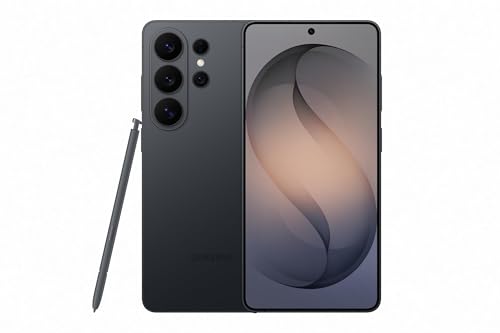
Samsung Galaxy S26 Ultra — Top of the ladder
Every ladder needs a top rung that justifies the climb’s existence, and the S26 Ultra justifies Samsung’s with unusual completeness. The listing describes an unlocked 256GB handset in Black with a Privacy Display, Galaxy AI, an AI camera, Super Fast Charging 3.0, a battery its maker calls durable, and a US one-year warranty. Within a Samsung-only guide its role sharpens: this is not merely the best Galaxy here, it is the standard that reveals what each lower rung has traded away, and the reviews below will keep glancing upward at it.
The Privacy Display is the feature that most distinguishes this Ultra within its own family story. Lower Galaxies show their screens to the whole train carriage; this one narrows the audience, a small act of discretion that suits the banking, medical and work content flagship phones now carry. Galaxy AI, meanwhile, functions as the range’s ceiling for software assistance — the fullest version of the editing, summarising and organising tools that appear in diluted form down the ladder. Buyers deciding between the FE and the Ultra are, in large part, deciding how much of that intelligence they intend to use weekly.
For the Samsung devotee, the verdict writes itself, and this review’s remaining duty is to name the reader who should resist. If your Galaxy history is a trail of A-series contentment, the Ultra’s surplus may go genuinely unused, and the A37’s sealing plus the FE’s intelligence may divide the Ultra’s virtues between them at friendlier total cost. The Ultra rewards the owner whose days actually visit the tails — the dark venues, the heavy multitasking, the privacy-sensitive work — and merely impresses everyone else, at a price where impression alone is a poor return.
- Version: US model, US one-year warranty
- Screen signature: Privacy Display
- Charging language: Super Fast Charging 3.0
- Storage tier listed: 256GB
- Intelligence: Galaxy AI with an AI camera
- Finish in the listing: Black
Strengths
- The range’s ceiling for display, intelligence and camera ambition.
- Domestic warranty keeps the flagship purchase paperwork-simple.
- Privacy Display answers a distinctively modern anxiety.
Trade-offs
- Its battery is praised in adjectives rather than figures.
- The price funds several A-series phones for a family.
- Owners with gentle needs will leave its surplus untouched.
Best for: devotees whose work and photography visit the extremes weekly.
Not suited for: contented A-series owners upgrading from habit alone.
There is a status dimension to the Ultra that guides usually pretend away, and honesty is cheaper: it is the Galaxy that boardrooms and film sets recognise, the one whose camera island announces its tier across a table. Buyers unmoved by such signals should discount them to zero and judge the phone on its display, intelligence and warranty, where it still wins its rung. Buyers who know the signals matter in their profession are not being shallow for pricing them in; they are being accurate about the world their phone works in.
Those set on the summit can check price on Amazon at the S26 Ultra’s listing, where the unlocked US configuration is set out in full.

Samsung Galaxy S25 FE — Flagship flavour, gentler rung
The FE occupies the most argued-over rung in Samsung’s ladder, because it must answer a hostile question from both directions: why not save with the A-series, and why not stretch to the Ultra? Its listing makes the case in the vocabulary of the S-series — 128GB of storage, a large display, a 4900mAh battery, a high-resolution camera with AI photo edits, durability, and a US one-year warranty on an unlocked handset in JetBlack. Fan Edition, in practice, means the flagship’s greatest hits remastered at a volume more households can afford to play.
The AI photo edits are the rung’s signature, and they deserve a fair description. These are the tools that remove the stranger from the holiday photograph, rescue the horizon, and tidy the shot you cannot retake — the computational half of modern photography, offered here without the Ultra’s full admission price. Paired with the S-series processing character, they make the FE the ladder’s best answer for the household photographer who found the A37 competent and wants one class more of camera confidence for the years of birthdays ahead.
Its honest limitations are a matter of arithmetic and appetite. The 4900mAh figure sits marginally below the A37’s cell on paper, though the FE’s more efficient flagship-grade internals complicate any naive ranking from that number alone, and 128GB will ask keen videographers to keep a cloud tier warm. What the FE never feels is unfinished: it is a complete S-series experience with the theatre trimmed, which is why this guide places it as the ladder’s best-balanced rung for buyers who photograph seriously and budget sanely.
- Battery: 4900mAh
- Camera pitch: high-resolution sensor with AI photo edits
- Storage tier listed: 128GB
- Version: unlocked US model, US one-year warranty
- Display described as large in the listing
- Finish in the listing: JetBlack
Strengths
- S-series camera intelligence without the Ultra’s full commitment.
- AI editing tools deliver visible wins for family photographers.
- US warranty and unlocked status keep ownership straightforward.
Trade-offs
- The cell figure trails the cheaper A37 on paper.
- Storage will pinch committed videographers.
- It lacks the Ultra’s Privacy Display signature.
Best for: Galaxy fans who photograph constantly and budget deliberately.
Not suited for: buyers whose camera use is purely documentary.
The FE also plays a strategic role in Samsung’s own range that benefits its buyer: it is the model the S-series faithful are steered toward when the Ultra’s price provokes a wince, which means it receives the marketing, the accessory love and the software attention of a volume flagship rather than a niche experiment. Volume is a virtue in phone ownership that spec sheets never list. It means the case you want exists, the repair shop has seen your model, and the forum thread about your exact problem already has an answer with photographs.
Household photographers can check price on Amazon through the S25 FE’s listing, where the JetBlack unlocked model is the configuration reviewed.

Samsung Galaxy S25 — Compact international
The Galaxy S25’s listing must be read as two facts at once, because both are the reason it is here. Fact one: this is Samsung’s compact flagship form, a 6.2-inch 120Hz AMOLED handset with 50MP cameras, 256GB of storage and 12GB of memory — the smallest true S-series phone in this guide, and a refuge for buyers who find the Ultra’s acreage faintly absurd. Fact two: the listed model, SM-S931B/DS in Navy, is the international version, dual SIM and factory unlocked for GSM networks. The review that follows holds both facts in view at all times, and so should its buyer.
For the GSM-network reader — most naturally on T-Mobile or its prepaid relatives in the US, and on most networks worldwide — the international S25 solves two problems in one purchase. It delivers the compact flagship body that US lineups increasingly neglect, and it carries the twin physical SIMs that two-number lives and travel routines run on. Samsung’s flagship camera and display craft arrive undiluted by the model’s citizenship; what changes is the paperwork, not the phone’s talent.
The paperwork, stated plainly once more: verify your carrier’s bands against this model’s before ordering, expect warranty service through international or seller channels rather than Samsung’s US network, and do not assume every US-model behaviour around eSIM carries across. Buyers for whom those sentences read as bureaucracy should take the FE or the Ultra and enjoy their domestic calm. Buyers for whom they read as a fair exchange for size and SIMs have found the most distinctive rung on this ladder.
- Model code: SM-S931B/DS, per the listing
- Memory and storage: 12GB and 256GB
- Screen: 6.2-inch AMOLED at 120Hz
- Cameras: 50MP, per the listing
- SIM arrangement: dual SIM, factory unlocked GSM
- Colour named in listing: Navy
Strengths
- True flagship craft in the guide’s most wieldy Galaxy body.
- Two physical SIMs serve travellers and two-line professionals.
- 256GB doubles the FE’s listed allowance.
Trade-offs
- Band verification rests with the buyer, as imports require.
- Warranty routing is international rather than domestic.
- Its compact screen is a virtue only if you share its taste.
Best for: GSM-network buyers who want a flagship that fits a hand.
Not suited for: shoppers who want US warranty counters and carrier tuning.
Its 6.2-inch size deserves a defence in an age that equates flagship worth with acreage. A smaller flagship is not a lesser one; it is the same craft fitted to a human hand rather than to a media-consumption fantasy, and its owners report the daily dividends in the vocabulary of pockets, one-handed replies and un-dropped phones. Samsung’s willingness to keep a compact S-series alive, even if this listing reaches us through international channels, is one of the range’s quiet distinctions, and the small-phone guide elsewhere in this batch leans on this very model for the same reason.
Compact-flagship hunters on compatible networks can check price on Amazon at the S25’s international listing, model code and all.

Samsung Galaxy Z Flip7 FE — The folding detour
Every ladder benefits from one rung that is not a rung at all, and in Samsung’s range that is the Flip. The Z Flip7 FE’s listing describes a 256GB AI smartphone in JetBlack with a large display, a 4900mAh battery, a high-resolution camera with AI photo edits, durability language and a US one-year warranty on an unlocked handset — the FE recipe, folded. What the listing’s vocabulary cannot convey is the format’s central pleasure: a full-size phone that closes into a pocketable square, ending the era of the protruding slab in a tight pocket or a small bag.
The flip format changes behaviour in ways owners consistently report and slab reviews consistently miss. A phone that closes is a phone that can be finished with — snapped shut at dinner, set down closed on a desk — and the cover-screen glance replaces the full unlock for a hundred daily micro-checks. Folded halfway, it stands itself up for video calls and hands-free photographs, a tripod trick no slab in this guide can imitate without accessories. These are not specifications; they are manners, and for the right owner manners are the product.
Honesty requires the format’s taxes to be itemised beside its charms. A folding phone asks its owner to accept a hinge as a moving part in a way no slab does, to treat the inner display with a gentler hand, and to accept that the crease exists whether or not it bothers them — most owners stop seeing it; some never do, and both reports are truthful. The FE positioning keeps the experiment’s cost of entry at its most approachable within Samsung’s folding family, which is the correct way to try a format: with the maker’s mainstream hardware underneath and a domestic warranty behind the hinge.
- Format: folding flip design
- Battery: 4900mAh
- Storage tier listed: 256GB
- Camera pitch: high-resolution sensor with AI photo edits
- Version: unlocked US model, US one-year warranty
- Finish in the listing: JetBlack
Strengths
- The folded footprint solves real pocket and bag problems.
- Half-folded standing enables hands-free calls and photographs.
- FE hardware keeps the format’s entry rung mainstream.
Trade-offs
- The hinge is a moving part slabs simply do not have.
- The inner screen asks for gentler treatment than glass slabs.
- Its battery must serve a folding design’s packaging puzzle.
Best for: buyers whose pockets, bags and habits suit a phone that closes.
Not suited for: owners who treat handsets roughly and cases as optional.
One more Flip behaviour is worth recording for the undecided: the closed phone changes its owner’s relationship with notifications. A slab face-up on a table is a slot machine of interruptions; a Flip closed is a quiet object that can be opened with intent. Several owners describe the format, unexpectedly, as a digital-wellbeing feature wearing a fashion costume. If your slab’s interruptions have begun to feel like a second job’s correspondence, the Flip’s hinge may be the most productive component in this entire guide.
Flip-curious readers can check price on Amazon via the Z Flip7 FE listing, where the JetBlack US configuration is detailed.
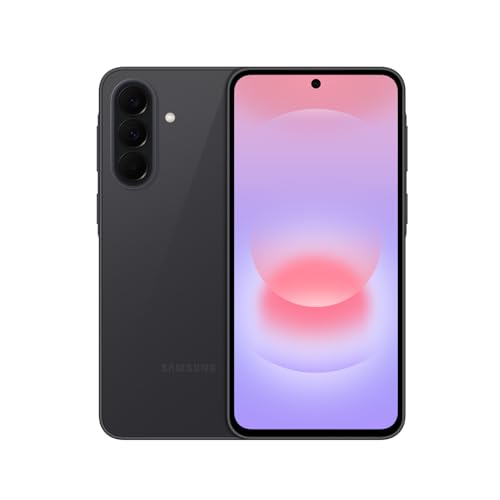
Samsung Galaxy A37 5G — Sealed value
If this guide had to nominate the rung where Samsung’s ladder offers the most ownership per unit of currency, the A37 would be the nomination, and the reason is printed in its listing: an IP68 rating and a 5000mAh battery, alongside an AMOLED display, a triple camera, 128GB of storage and a US one-year warranty on a slim US-version handset in Awesome Charcoal. Sealing is the flagship virtue that matters on the widest range of ordinary days — rain, spills, dust, the beach bag — and finding it here, rather than reserved for the S-series, rearranges the ladder’s value map.
The A37’s buyer is the range’s quiet majority: the owner who keeps a phone three or four years, photographs family and work without theatrical ambitions, and wants the device to survive the life it documents. Samsung’s software familiarity greets them, the accessory market swallows them comfortably, and the domestic warranty keeps the paperwork boring in the best sense. In the mixed-company guide elsewhere in this batch, the A37 plays the all-round value role against Motorola and Google; within its own family, it plays something subtler — the proof that Samsung’s middle has learned the flagship’s most useful trick.
Its compromises are the family’s usual ones, honestly kept. The triple camera’s supporting lenses serve flexibility rather than reach, the storage is fixed at the listed tier, and Galaxy AI’s presence here is a whisper beside the FE’s conversation and the Ultra’s oration. A buyer who needs those things knows which rungs hold them. A buyer who needs a sealed, warranted, long-lived Galaxy for the median day has arrived at the correct review, and can stop climbing with a clear conscience.
- Sealing: IP68 rated
- Battery: 5000mAh
- Display: AMOLED panel, per the listing
- Storage tier listed: 128GB
- Version: US model with US one-year warranty
- Finish in the listing: Awesome Charcoal
Strengths
- IP68 sealing is the ladder’s best value-per-virtue story.
- The 5000mAh cell suits two-day light-use rhythms.
- US version status simplifies bands and claims alike.
Trade-offs
- Fixed storage asks cloud discipline from media hoarders.
- Camera ambition stops at the competent and flexible.
- Galaxy AI features are thinner here than upstairs.
Best for: three-to-four-year keepers who want flagship armour at A-series cost.
Not suited for: zoom photographers and AI-tool maximalists.
The A37 also benefits from a timing truth about the A-series: Samsung iterates it annually with the discipline of a company that sells it by the tens of millions, so each generation’s quirks are engineered out in public and the current model arrives pre-debugged by its predecessors’ owners. Buying the mature middle of a high-volume line is the least glamorous strategy in consumer electronics and, actuarially, one of the most successful. The A37 is that strategy with an AMOLED screen.
Value hunters can check price on Amazon on the A37’s listing, where the Awesome Charcoal US model is the one under review.

Samsung Galaxy A17 5G — First rung
The A17 holds the ladder’s foot with more grace than entry phones usually manage. Its listing promises a large AMOLED display, a high-resolution camera, super fast charging in Samsung’s phrasing, expandable storage, Circle to Search and a durable design, sold with a US one-year manufacturer warranty in Black. Read that list slowly and notice what is absent from it: any apology. This is a complete modern Galaxy — 5G, AMOLED, a named warranty — priced by its position rather than shamed by it, and for millions of buyers worldwide this rung is not the bottom of Samsung’s range but the whole of it.
Expandable storage is the A17’s most underrated sentence. The failure that retires cheap phones earliest is a full memory strangling the camera and the update system, and a card slot defers that failure for the price of a sandwich. Families equipping several children, grandparents graduating from hand-me-downs, small businesses buying a fleet for drivers — these are the A17’s natural constituencies, and for each of them the combination of a big screen, a trusted badge and a domestic warranty outweighs the headroom they will never use.
The rung’s limits should be stated in the same breath as its virtues, because a guide that flatters the cheapest phone betrays its buyer. Performance headroom is the thinnest in this guide, camera ambition ends at good daylight, and the support horizon, while respectable, is not the flagship culture’s. A buyer whose life is calls, messages, maps, photographs in kind light and the occasional video will never meet those limits. A buyer who games seriously or edits video daily met them before finishing this paragraph, and should climb to the A37 with our blessing.
- Storage: 128GB with expansion supported
- Display: large AMOLED, per the listing
- Search feature: Circle to Search included
- Charging language: Samsung’s super fast charging
- Warranty: US one-year manufacturer cover
- Finish in the listing: Black
Strengths
- Expandable storage postpones the classic cheap-phone death.
- A large AMOLED lifts it above LCD-equipped entry rivals.
- The US warranty separates it from anonymous imports.
Trade-offs
- Performance headroom is the range’s thinnest here.
- Low-light photography is beyond its brief.
- The design favours durability over elegance.
Best for: families, fleets and first-time Galaxy owners on a firm budget.
Not suited for: gamers and daily video editors.
There is a final A17 scenario that deserves daylight: the small-business fleet. A dozen A17s in a dozen drivers’ hands, all identical, all warranted domestically, all replaceable tomorrow from the same listing without an IT department’s tears — that is a procurement virtue no flagship can imitate, because a flagship fleet is a capital project and an A17 fleet is a line item. Samsung’s range earns its dominance in such unglamorous rooms as much as in any keynote theatre.
Budget-minded Galaxy buyers can check price on Amazon at the A17’s listing, which confirms the expandable-storage configuration.
How Does the Whole Ladder Look in One View?
| Galaxy | Rung | Listing’s key figure | Defining trait |
|---|---|---|---|
| Galaxy S26 Ultra | Summit | Privacy Display | The complete flagship statement |
| Galaxy S25 FE | Upper middle | 4900mAh, AI photo edits | S-series intelligence, gentler cost |
| Galaxy S25 | Compact flagship, international | 6.2-inch 120Hz AMOLED | Small flagship with two SIMs |
| Galaxy Z Flip7 FE | Sideways | 4900mAh in a folding body | The pocketable experiment |
| Galaxy A37 5G | Middle | 5000mAh, IP68 | Sealed value for long keepers |
| Galaxy A17 5G | Foot | Expandable storage | The honest entry Galaxy |
One brand, six answers. The table’s real lesson is that Samsung’s rungs are spaced by philosophy rather than by cruelty: each step up buys a named capability, not merely a warmer feeling, and a buyer who can name the capability they need can stop climbing the moment they reach it.
Which Galaxy Belongs to Which Kind of Samsung Loyalist?
Consider the upgrading parent, whose last three phones were Galaxies and whose next one will be chosen in a single distracted evening unless a guide slows her down. Her photographs are the family archive, her phone lives in a bag with keys and a water bottle, and her tolerance for learning a new interface is zero and falling. The A37 was built for her biography: sealed against the bag’s hazards, familiar in the hand, warrantied without drama. If her photography ambitions have grown with the children, the FE is her one-rung promotion, and either choice will feel like coming home.
Consider the travelling professional whose loyalty to Samsung is really loyalty to the dual-SIM Galaxies of his youth, bought in other markets and missed ever since American lineups went eSIM-quiet. The international S25 is his review, written in his vocabulary: model codes, GSM tuning, a compact flagship body that survives a jacket pocket. He does not need this guide’s warnings, because he wrote the warnings’ first drafts in a decade of airport purchases; he needs only the confirmation that the listing is what it claims to be, which the review provides.
Consider the style-led buyer who has carried slabs for a decade out of inertia and felt a small, irrational joy the first time a Flip snapped shut in a shop. Joy is data. The Flip7 FE’s review exists to tell her the joy is purchasable without abandoning Samsung’s mainstream hardware or domestic warranty, and its taxes — the hinge, the gentler handling — are priced in plain language beside the charms. If she reads the taxes and still smiles, the guide’s work is done.
Consider, finally, the patriarch equipping a household: his own Ultra, a partner’s FE, two teenagers on A17s, a spare A37 in the drawer that has saved three birthdays. Samsung’s ladder is the only range in this batch of guides that can furnish that entire household under one software culture, one accessory ecosystem and one parent’s hard-won troubleshooting knowledge. That is not a specification. It is the reason single-brand guides exist.
How Long Will Each Rung of the Ladder Serve?
Tenure planning is where a single-brand guide can be unusually concrete, because the variables are the maker’s own habits. Samsung’s recent ranges have established a culture of multi-year software support, strongest at the flagship end and respectable through the A-series, and a buyer can reasonably plan around it: the Ultra and the S-series models are four-to-six-year instruments for owners who replace a battery mid-life; the FE and A37 are three-to-five-year companions; the A17 is a two-to-four-year servant whose ceiling will be felt first by its most ambitious owner. These are planning horizons drawn from the range’s character, not promises extracted from listings, and they should be read as the former.
The hardware clocks differ by rung in ways the reviews have seeded. Sealing, as on the A37, extends a phone’s tolerance of its owner’s life; the Flip’s hinge introduces a component whose longevity is a matter of treatment rather than time; the Ultra’s processing surplus keeps its software clock from ever being embarrassed by its hardware. A family cascade exploits all of this: a phone bought at the top can serve three owners across six years, which reframes its price as a household subscription rather than a personal indulgence. Samsung’s ladder, uniquely in this batch, is designed by its maker to be descended as gracefully as it is climbed.
What Does Each Rung Really Cost to Own?
Beyond the handset, each rung drafts its own entourage of expenses, and the wise climber prices the entourage. The Ultra’s entourage is the most demanding: a case worthy of its glass, charging kit that honours its fastest language, and a protection plan whose maths finally make sense at flagship repair prices. The Flip’s entourage is smaller but more specific — cases designed for a folding body cost more and forgive less, and a spare is a genuine recommendation rather than an upsell. The FE and S25 sit in the comfortable middle where the accessory market is deepest and cheapest per unit of quality.
The A-series entourage is the ladder’s bargain: cases and protectors in every colour and material, replacement parts in every repair shop’s catalogue, and a resale or hand-me-down value buoyed by the badge’s ubiquity. Even the S25’s international citizenship has an ownership-cost footnote — its accessories are the global model’s, plentiful worldwide, while its warranty journey may cost postage and patience rather than money. Totalled honestly, the ladder’s rungs are closer in true cost than their ticket gaps suggest, which is one more reason to choose by fit rather than by the drama of the initial number.
How Do You Move Up the Ladder Without Waste?
Start from your current Galaxy’s obituary, as this batch’s guides keep advising, because a Samsung owner has the luxury of a known baseline. If the old phone died by water, the A37’s sealing is your rung. If it died by fullness, note which picks expand or double storage. If it died by software abandonment, climb toward the rungs where Samsung’s flagship support culture lives. Then exploit the family’s great convenience: your One UI habits, your accessories knowledge and your Samsung account all transfer upward intact, so the upgrade cost is only ever the hardware, never the relearning.
Time the climb to your own calendar rather than to launch season. A rung bought three months after its launch arrives with mature software and a settled market position, and the previous S-generation’s listings — as the S25’s presence here proves — remain coherent purchases well into their successor’s year. Finally, hand the old Galaxy down deliberately rather than drawer-ing it: a wiped, updated A-series phone is a teenager’s treasure and a grandparent’s liberation, and the ladder’s economics improve every time a rung serves two owners.
What Mistakes Do Samsung Buyers Repeat?
Before the errors, a word about the family’s most common false economy: buying one rung too low to save a sum that daily use will tax back within a year. The buyer who needs the A37’s sealing and buys the A17 has not saved money but deferred a replacement; the photographer who needs the FE’s camera and buys the A37 will feel the shortfall at every family event. Samsung’s rungs are priced closely enough that the honest rung is usually the economical one over any tenure longer than a year, which is the closest thing to a universal law this guide can offer.
The family’s signature error is rung confusion: buying the FE while picturing the Ultra’s camera, or buying the A17 while picturing the A37’s sealing, because the names differ by a syllable and the photographs look alike. Read the model in the listing title as though it were a surname. Second comes citizenship confusion, the mirror error around the S25’s international listing — a fine phone bought by the wrong network’s subscriber. Third is storage nostalgia, assuming a card slot exists because an older Galaxy had one, on models where the listing does not promise it.
A fourth mistake is buying the Flip as a novelty rather than as a format, by readers whose rough handling or dusty workplaces will punish a hinge; the Flip rewards the deliberate and taxes the careless more than any slab in this guide. And a fifth, gentlest error is over-climbing from loyalty: the devotee who buys the Ultra because it is the flagship, when their own history says the FE would have served identically. Samsung builds the ladder wide so that loyalty need not mean extravagance; the most loyal purchase is the rung that fits.
Final Recommendation
One parting thought for the reader still torn between two rungs: the difference between adjacent Galaxies is real but rarely life-changing, while the difference between a phone matched to its owner and one bought by altitude anxiety is felt every single day. Samsung’s range is deep enough that fit is always available somewhere on it. Trust the reviews’ named disappointments as much as their named virtues — a rung that will disappoint you in a way you recognise is the wrong rung however fine its screen — and let the ladder do what ladders are for, which is to be climbed exactly as far as the view you need, and no further out of mere momentum.
Climb only as high as your days require. The A17 equips a family honourably, the A37 is the sealed sweet spot most Samsung buyers should call home, and the S25 FE adds camera intelligence for the household photographer. The international S25 serves the compact-flagship traveller on GSM networks, the Flip7 FE delights the buyer whose life suits a phone that closes, and the S26 Ultra crowns the range for those whose work visits the extremes. Whichever rung your foot lands on, it will still be there, solid and familiar, when the next Galaxy itch arrives years from now.
Frequently Asked Questions
What is the difference between the A-series and the S-series?
Philosophy and tails. A-series phones optimise the median day — screens, stamina, documentation — while S-series phones spend their premium on the extremes: low light, heavy multitasking, brighter panels and Samsung’s fullest Galaxy AI toolkit. Both run One UI and share the ownership culture.
Is the Galaxy S25 in this guide a US model?
No, and its review says so repeatedly: the linked listing is the international dual-SIM model, SM-S931B/DS, factory unlocked for GSM networks. US buyers should verify bands and expect international warranty routing, or choose one of the US-version picks.
Does the Z Flip7 FE share much with the S25 FE?
Their listings rhyme — 4900mAh, AI photo edits, high-resolution cameras, US warranties — but the Flip wraps that recipe in a folding body with a hinge, a cover-screen routine and a gentler handling requirement. Same kitchen, very different dining room.
Which Galaxy should a long-term keeper choose?
The A37 for sealed value across a three-to-four-year tenure, or the S26 Ultra for the flagship support culture and headroom across an even longer one. The A17 serves shorter, lighter tenures best.
Which Galaxy has the best battery life?
By the figures the listings print, the A37’s 5000mAh cell is the largest number in this guide, with the FE and Flip at 4900mAh; the Ultra’s battery is described by its maker as durable without a figure in the title. Real endurance also follows efficiency and screen size, so treat the A37 as the stamina favourite and the Ultra as the unmeasured contender.
Can I use a Galaxy Watch or Buds with any of these?
Yes. Samsung’s wearables pair across the ladder, from the A17 to the Ultra, which is one of the quiet arguments for staying inside one brand’s range: the constellation works at every altitude, even if the flagship rungs add a few extra integrations.
Do all six phones support 5G?
Yes; every pick in this guide is a 5G Galaxy. The relevant question is never whether a rung supports 5G but whether its version — US or international — matches your carrier’s bands, which is why the reviews keep the citizenship of each model visible.
Related Guides
To see how these Galaxies fare in open competition, visit Best 5G Phones; for the summit in wider company, read Best 5G Flagship Phones; and small-hand shoppers should compare the S25 against the field in Best Small 5G Phones.



[…] devotees can trace the full Samsung ladder in Best 5G Samsung Phones, big-screen camera hunters belong in Best Camera Big Screen Phones, and readers whose flagship must […]