What's inside
- Where to buy
- Key Takeaways
- Quick Picks
- How did we judge cards that live inside the machine?
- Who still benefits from a card over motherboard audio?
- What should you check inside the case before ordering?
- Internal or external — the honest rematch
- What has the graphics card done to internal audio?
- Six cards for the last open slot, reviewed
- What about the microphone your desktop keeps asking for?
- What happens to the card when the PC around it changes?
- How do the six compare side by side?
- How should you install and set up an internal sound card?
- What mistakes do desktop sound card buyers keep making?
- Final Recommendation
- Frequently Asked Questions
- Related Guides
As an Amazon Associate I earn from qualifying purchases. This post may contain affiliate links at no extra cost to you.
gizmoverdict.com is reader-supported. When you buy through links on our site, we may earn an affiliate commission.
Where to buy
The desktop PC is the last machine that still offers its audio a home indoors, and the best desktop sound cards are the ones that make that home worth having. All six picks below are internal PCIe cards with live Amazon listings, and they span the format’s whole modern story: a current flagship, two generations of Creative’s gaming-and-listening flagships, a sensible budget slot-filler, a minimalist hi-fi card built around an ESS converter, and one genuine legacy listing whose age this guide will discuss without flinching.
Why install a card at all, in an era of capable motherboard audio and excellent external DACs? Three honest reasons survive scrutiny. Your onboard path may be noisy in your specific build, with interference that follows your graphics card’s mood. Your headphones may want more drive and cleaner amplification than a motherboard header budgets for. Or your speakers may need the multi-channel analog outputs that no dongle provides. If none of those sentences describes your machine, this guide will happily talk you out of buying anything — the final recommendation says so outright. If one of them does, the slot is waiting.
Installation is part of the product here, so it is treated as content rather than fine print: every card below wants a PCIe slot — usually a x1 — and the reviews note front-panel header and case-fit considerations where they matter. A sound card is one of the last PC components a owner installs with their own hands and a screwdriver, and there is a particular satisfaction in that which the external boxes cannot offer. This guide respects the ritual while keeping its eyes open.
Key Takeaways
- An internal card still earns its slot for three jobs: silencing a noisy onboard path, driving demanding headphones, and feeding multi-channel analog speakers.
- Creative’s AE-X is the flagship — a hi-res PCIe card at 32-bit/384kHz for listeners building a PC to keep.
- The Sound Blaster Z SE is the mainstream gaming answer: 24-bit/192kHz, a stated 116dB SNR, ASIO support and a 600Ω headphone amp in its listing.
- The AE-5 Plus in Pure Edition form brings SABRE32 Ultra-class conversion at 32-bit/384kHz with a stated 122dB SNR and included RGB LED strips.
- The Audigy FX V2 is the budget slot-fill — a plain step up from onboard audio without flagship ceremony.
- GLOTRENDS’ ST113 is the hi-fi minimalist: ESS SABRE32 ES9018K2M conversion, driver-free setup, isolated optical output — while the X-Fi Xtreme Audio is a legacy listing to buy with open eyes.
Quick Picks
| Pick | Badge | Why it earns its place |
|---|---|---|
| Creative Sound Blaster Z SE | Best for most desktops | 24-bit/192kHz conversion, 116dB SNR and a 600Ω headphone amp per the listing, with discrete 5.1 and virtual 7.1 for gaming rigs. |
| Creative Sound Blaster AE-X | Best flagship card | Creative’s hi-res PCIe flagship at 32-bit/384kHz with desktop app support — the build-to-keep choice. |
| Creative Sound BlasterX AE-5 Plus Pure Edition | Best conversion figures | SABRE32 Ultra-class 32-bit/384kHz conversion, a stated 122dB SNR, Xamp bi-amplification and RGB LED strips in the box. |
| Creative Audigy FX V2 | Best budget slot-fill | The Audigy line’s current budget card — a straightforward internal upgrade over onboard audio. |
| GLOTRENDS ST113 | Best minimalist hi-fi card | ESS SABRE32 ES9018K2M DAC, driver-free setup and an isolated optical output for feeding better gear downstream. |
| Creative X-Fi Xtreme Audio PCIe | The legacy listing | A Sound Blaster X-Fi-era card still in the catalogue — serviceable for older builds, bought with driver-age honesty. |
How did we judge cards that live inside the machine?
On the evidence of their listings first, because a card’s own title is the contract its maker is willing to sign. Where a listing states conversion figures — the Z SE’s 116dB SNR and 600Ω amplifier, the AE-5 Plus Pure Edition’s 122dB SNR and SABRE32 Ultra-class converter — those figures anchor the review. Where a listing is terse, as the Audigy FX V2’s is, the review judges role and lineage rather than inventing a specification to admire.
Second, on fit for the internal life. A desktop card is bought for a specific machine and a specific tenure, so each review weighs the card’s demands — slot, software, the era of its drivers — against the build it will inhabit. The X-Fi’s entry is the clearest example: a card can be honestly made and honestly sold, and still be the wrong purchase for a current Windows installation if its driver story belongs to another decade. That is not a scandal; it is a specification, and it is printed here like one.
Longevity of support was the silent fourth criterion, and it sorted the list more than any figure did. A sound card’s hardware may be timeless, but its welcome in a current operating system is renewed by its maker’s driver page, year after year. The current Creative lines carry that welcome as a matter of course; the ST113 declines to need it; the X-Fi’s entry is honest about what happens when the welcome lapses. A buyer is purchasing a support horizon as surely as a converter, and the reviews price it in.
Third, on the division of labour with the outside world. Internal cards compete not only with each other but with every external DAC in our other guides, so each review states plainly which buyer the slot serves better than the desk would — the tidy-desk absolutist, the multi-channel speaker owner, the one-PC listener — and which buyer should walk past the slot to the USB port instead.
Who still benefits from a card over motherboard audio?
Start with the listener whose onboard audio misbehaves. Motherboard sound has improved enormously, but it remains a tenant in a hostile building: audio traces routed past power delivery, in cases whose graphics cards sing along with the frame rate. If your headphones reveal a hiss that breathes with the machine’s workload, the fault is architectural, and a card engineered with shielding and its own layout discipline — the flagships below exist for exactly this — is a structural fix rather than a bandage.
Then the headphone owner with appetites. A motherboard header is designed to make ordinary headphones loud; a dedicated card’s amplifier is designed to make demanding headphones correct. High-impedance studio headphones are the classic case — the Z SE’s listing states a 600Ω amplifier outright, which is the manufacturer naming the constituency — and current-hungry designs benefit in kind. If your headphones sound thin and polite from the motherboard at comfortable volumes, the amplifier is the missing organ.
A fourth beneficiary rarely gets named: the second-hand builder. The used-PC market is full of capable towers whose audio was their original owner’s afterthought, and a sound card is among the cheapest ways to civilise such a machine — one slot, one driver install, and a five-year-old workstation sounds like it was specified by someone who cared. Refurbishers know this; the Audigy tier exists in their parts bins for a reason.
Finally, the speaker owner with channels. A surround speaker system with analog inputs — front, centre, surrounds, subwoofer — needs a source that speaks that language, and an internal card with discrete multi-channel outputs remains the tidiest way to feed one from a PC. The Z SE’s discrete 5.1 in its listing speaks to exactly this reader. Streaming-era buyers with soundbars and receivers fed by HDMI may never need it; owners of good analog surround sets need it absolutely.
What should you check inside the case before ordering?
The slot, physically. Modern graphics cards occupy two or three slots of territory and smother the little x1 slots motherboard makers tuck beneath them; a sound card that cannot breathe or cannot fit is a return in a static bag. Open the case, identify a genuinely free PCIe slot with clearance for the card’s length and any lighting or daughterboard ambitions, and confirm the slot’s lanes will not be missed by storage or capture hardware already promised them.
The front panel deserves a thought. Many builders connect the case’s front headphone jack through the sound card so that the good conversion serves the convenient socket as well as the rear bracket; cards and cases differ in their header arrangements, so decide whether front-panel audio matters to your habits and verify the pairing before the build rather than during it. Rear-bracket listeners can skip the whole question, which is its own kind of luxury.
While the case is open, perform one act of foresight: note which slot you used and why, on a label inside the panel or in the build’s notes. Cases outlive memories, and the next person to open this machine — often you, three years later, mid-upgrade — will bless the annotation when a capture card or a second network adapter comes asking for territory. Internal hardware is a long conversation between a builder and their future self, and sound cards, which stay for years, are its longest sentences.
Power and tidiness close the inspection. Most sound cards sip power from the slot itself, but lighting-equipped models and tidy builders should confirm any auxiliary expectations in the listing or manual, and route the card’s neighbourhood cables with the same care given to any audio path — away from power runs where the layout allows. Five minutes with a torch now is the cheapest audio upgrade in this entire article.
Internal or external — the honest rematch
Every reader of this guide is quietly refereeing a contest with our external sound card roundup, so let the contest be judged openly. The external box wins when the listener’s life is plural: several machines, a console, travel, a knob within reach, headphones swapped at the desk’s edge. It also wins the simplest noise argument, by leaving the building where the interference lives. A listener whose week matches that description should not be seduced by the slot’s tidiness — the box will serve more of their hours.
The internal card wins when the life is singular and settled. One tower, used daily, in a room where desk surface is precious and cables are a genuine aesthetic offence: the card disappears into the machine and takes the whole subject with it. It wins the speaker argument outright, since multi-channel analog outputs are its native language and an external box’s rare trick. And it wins the permanence argument — nothing to unplug, lend, lose or knock behind the desk at the exact moment a call begins.
The tiebreaker is tenure. A card’s value amortises across the life of one build; a box’s value amortises across several. Builders who replace PCs whole every three years will extract less from a flagship card than keepers who upgrade around a stable core for six. Neither answer is the sophisticated one — the sophisticated act is knowing which household you run, and this guide has tried to describe both honestly enough for the recognition to happen.
What has the graphics card done to internal audio?
It is worth understanding the modern case’s weather, because it explains both the internal card’s challenge and its engineering. A contemporary graphics card is a power station that thinks: hundreds of watts switched in patterns that follow the frame rate, fans that hunt and surge, coils that can sing audibly under load. Motherboard audio lives downwind of all of it, and the whine that tracks your mouse or your frame rate — familiar to anyone who has worn sensitive headphones on a gaming PC — is that weather made audible.
Dedicated cards fight the weather with the tools of their trade: ground planes and layout discipline, shielding over the sensitive stages, conversion chosen for its composure, and in the flagships’ case, stated signal-to-noise figures that amount to a public promise about the result. The fight is winnable — the AE-X and AE-5 Plus exist because their maker believes it is won — but it is fought inside your specific case, with your specific graphics card, which is why this guide’s setup section insists on a stress-test listen before the return window closes. Trust, but verify under load.
The story has a hopeful coda. As onboard audio improved, it raised the floor for everyone, and the cards responded by specialising — amplification, channels, conversion figures, driver features — rather than merely existing. The six products above are what a mature category looks like: no filler, each one a distinct answer to a named desktop life.
Six cards for the last open slot, reviewed
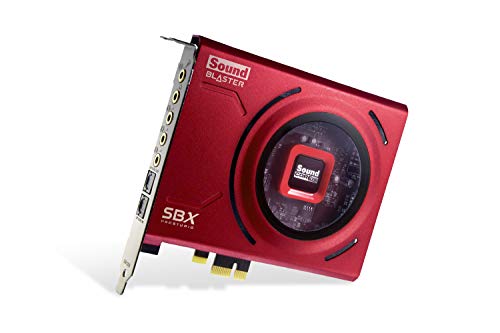
Creative Sound Blaster Z SE — Best for most desktops
The Z SE is the card this guide expects most readers to buy, because its listing reads like the mainstream desktop’s actual wish list: internal PCIe gaming sound card and DAC at 24-bit/192kHz, a stated 116dB SNR, ASIO support named outright, a headphone amplifier rated to 600Ω, microphone EQ, discrete 5.1 with virtual 7.1, and Dolby Digital Live with DTS among its talents. That is not a specialist’s instrument or a legacy rescue — it is the complete modern answer for a tower that games, listens and talks in roughly equal measure.
The ASIO mention deserves its line, because listings so rarely make it. For the desktop that moonlights in music software — the gamer who records, the editor who mixes — a stated low-latency driver path is the difference between a card that merely plays and a card that participates. Combined with the microphone EQ, which exists for the streamer’s and squad player’s voice rather than the audiophile’s silence, it marks the Z SE as the card designed by people who watched how desktops are actually used in this decade.
Speaker owners are served as seriously as headphone owners. Discrete 5.1 outputs feed a real analog surround set without adapters or apologies, while the virtual 7.1 handles the headphone hours. A card that covers both halves of a gaming room’s life — the speakers for the film, the headset for the match — earns its slot against rivals that specialise in one and improvise the other.
Against the flagships above it in this guide, the Z SE’s trade is altitude for completeness. The AE-X and AE-5 Plus state higher conversion ceilings; the Z SE answers with the broader everyday feature set at the mainstream station. For the one-card desktop that must do everything respectably, that is usually the correct exchange, and it is why this card, not a flagship, wears the “most desktops” badge.
Streamers give the Z SE its most appreciative audience, and it is worth seeing the card through their schedule: game audio out to the audience, their own voice EQ’d and clean in the monitor mix, a surround set for the off-air film, one device remembering all of it. Equipment that collapses three jobs into one slot earns a streamer’s loyalty the way it earns anyone’s — by removing a failure point from a live hour.
- Role: internal PCIe gaming sound card and DAC
- Conversion: 24-bit/192kHz, stated 116dB SNR
- Amplifier: headphone amp rated to 600Ω, per the listing
- Driver note: ASIO support stated in the listing
- Outputs: discrete 5.1, virtual 7.1, Dolby Digital Live and DTS support
Strengths
- The most complete everyday feature set in the guide.
- Stated ASIO support courts the recording-adjacent desktop.
- Discrete surround outputs and a serious headphone amp in one slot.
Trade-offs
- Conversion ceiling sits below the two flagships’ stated figures.
- Gaming breadth means software depth some listeners will never open.
- Like every internal card, it serves this PC and no other.
Best for: gaming desktops that also listen, talk and occasionally record. Not suited for: laptop lives or purity-first two-channel minimalists.
Mainstream builders can review the Z SE’s Amazon listing and match its outputs against the speakers and headphones already in the room.

Creative Sound Blaster AE-X — Best flagship card
The AE-X is Creative’s current flagship statement inside the case: a hi-res PCIe sound card whose listing states 32-bit/384kHz conversion and desktop app support, positioned without apology at the top of the internal line. Its buyer is not comparison-shopping against dongles; they have already decided that their PC’s audio will be built in, permanent and as serious as the graphics card — and they want the best version of that decision the catalogue offers.
Flagship conversion inside a modern case is an engineering argument, and the AE-X is Creative making it with its chest out: that careful board design and shielding can keep hi-res conversion honest in the electrical weather of a gaming tower. The stated 32-bit/384kHz ceiling is the headline of that argument — headroom far beyond any source material’s needs, purchased as insurance that the converter is never the chain’s limiting factor.
The desktop app completes the integration story. An internal flagship lives through its software — profiles, processing, the control surface that replaces the absent physical knob — and Creative’s mature application ecosystem is part of what the premium buys. Owners who keep a PC for five or six years, upgrading around a stable core, will feel the AE-X’s value compound: one installation, one control point, no desk territory surrendered, no cable added to the rat’s nest behind the monitor.
Its boundaries are the format’s, stated once for all internal cards and felt most keenly at flagship prices: the AE-X cannot follow a laptop, cannot serve the console, and will retire with the build that hosts it. The listener whose computing life is one beloved tower will call that focus. Everyone else should buy the external equivalent and keep their options portable.
There is also a statement being made by the machine that contains one. A flagship sound card is invisible in every photograph of a battlestation, yet its owner knows the build was finished properly — that the component nobody sees was chosen with the same seriousness as the ones with lighting. Quiet correctness is a taste, and the AE-X is its current flagship.
- Role: flagship internal PCIe sound card
- Conversion: hi-res at 32-bit/384kHz, per the listing
- Control: desktop app support
- Installation: PCIe slot, invisible once installed
- Audience: build-to-keep desktop listeners
Strengths
- The highest conversion ceiling Creative states for an internal card.
- Total integration — no box, no cable, no desk footprint.
- A flagship’s software ecosystem behind the hardware.
Trade-offs
- One machine only, for the life of that machine’s slot.
- Premium station for gains some listeners’ headphones cannot reveal.
- Volume lives in software unless peripherals provide a knob.
Best for: permanent high-end desktops and tidy-desk listeners. Not suited for: multi-device households or frequent PC changers.
Flagship hunters can check the AE-X’s listing on Amazon and confirm their build has a slot worthy of its station.

Creative Sound BlasterX AE-5 Plus Pure Edition — Best conversion figures
If the AE-X is the flagship by rank, this Pure Edition of the AE-5 Plus is the flagship by numbers. Its listing specifies a SABRE32 Ultra-class DAC at 32-bit/384kHz, a stated 122dB SNR — the highest figure in this guide — the Xamp discrete headphone bi-amplifier, Dolby Digital and DTS support, and, in a flourish only a gaming-era flagship would attempt, RGB LED strips included to light the case. The Pure Edition takes the AE-5 Plus recipe and turns it toward the showcase build.
The conversion figures deserve their context. A stated 122dB signal-to-noise ratio describes a background so quiet that the limiting factor in any real room becomes the room itself — the listener’s own environment will hiss, hum and tick long before this card does. For the headphone listener performing forensic mix checks or simply savouring quiet passages, that is the point of the flagship tier: the hardware’s silence stops being a variable in anything you hear.
The Xamp bi-amplifier is the other half of the argument, dedicating separate amplification to each channel so demanding headphones are driven with authority rather than adequacy. Pair that with the Dolby and DTS handling for the machine’s entertainment hours, and the Pure Edition covers the same dual citizenship as its siblings — with the volume turned up on both the conversion and the theatre.
Owners of the standard AE-5 Plus considering this edition should understand the exchange plainly: the Pure Edition is the same flagship recipe presented for the showcase build, with the lighting kit included and the presentation turned up. The conversion story — the part your headphones will testify about — is the SABRE32 Ultra-class heart both share, and it is that heart, not the garnish, that justifies the tier.
And the lighting? Judge it as the build culture it serves. A windowed case with a considered lighting scheme is a piece of furniture its owner enjoys looking at, and a flagship card that contributes its strips to that scheme understands its habitat. Listeners in windowless office towers will simply leave the strips in the box, having bought the card for the numbers — which remain, strips or no strips, the strongest stated in this article.
- Role: PCIe gaming sound card and DAC, Pure Edition
- Conversion: SABRE32 Ultra-class, 32-bit/384kHz
- Stated SNR: 122dB — the guide’s highest
- Amplification: Xamp discrete headphone bi-amp
- Extras: Dolby Digital and DTS support, RGB LED strips included
Strengths
- The strongest stated conversion figures in the guide.
- Bi-amped headphone drive for demanding cans.
- Showcase-build manners, lighting included rather than improvised.
Trade-offs
- Its numbers exceed what many rooms and headphones can reveal.
- Gaming theatre is ballast in a silent office build.
- Internal-only, like every card here — one PC, one tenure.
Best for: showcase gaming towers and headphone listeners chasing stated purity. Not suited for: minimalists, multi-machine lives, or quiet-office builds.
Numbers-first buyers can inspect the Pure Edition’s Amazon page and weigh its stated figures against their headphones’ appetites.

Creative Audigy FX V2 — Best budget slot-fill
The Audigy FX V2’s listing is the shortest in this guide — a name, a brand, a product — and there is something fitting about that. The Audigy line has been Creative’s sensible tier for two decades, the card bought to make a computer sound properly without ceremony, and the V2 continues the tradition: an internal PCIe upgrade for the machine whose onboard audio has become its weakest sense, sold on the strength of the badge’s long memory rather than a paragraph of specifications.
Its constituency is enormous and unglamorous. The family PC whose jack crackles. The office tower driving speakers for presentations through a wheeze. The budget gaming build where every saved unit went to the graphics card and the audio was left to fend for itself. In each case the requirement is identical — clean, working, better-than-onboard sound from a card that installs in minutes and asks nothing further — and the Audigy name has been filling that prescription since some of its buyers were in school.
Honesty about tier is this review’s main duty. The FX V2 does not carry the flagships’ stated conversion figures, their bi-amped headphone stages or their software depth, and a listener building a critical-listening tower should climb to the Z SE or beyond. What it offers is the steepest part of the improvement curve: the jump from onboard audio to a real card, which is larger — audibly, measurably, in hiss and in drive — than any jump between the cards above it in this guide.
Buy it as infrastructure and it will not disappoint. Buy two, if the household has two tired towers; the Audigy’s whole philosophy is that good sound inside a PC should be a commodity, and a quarter-century of the line’s existence suggests the philosophy has customers.
Landlords of shared machines — the parent whose tower serves three children’s homework and games, the small office whose one PC is also the presentation machine — form the FX V2’s silent majority. For them the card’s virtue is that nobody will ever think about it again, and in shared infrastructure, being forgotten is the highest available honour.
- Role: budget internal PCIe sound card
- Lineage: Creative’s Audigy sensible tier, current V2 model
- Promise: a straightforward step up from onboard audio
- Installation: single PCIe slot, minimal ceremony
- Best habitat: family, office and budget gaming towers
Strengths
- The largest improvement-per-commitment step in the guide.
- A two-decade lineage of doing exactly this job.
- Installs and disappears — infrastructure, not hobby.
Trade-offs
- No flagship conversion figures or amplifier heroics.
- Its listing’s brevity means fewer stated promises to lean on.
- Critical listeners will outgrow it toward the Z SE.
Best for: tired towers and budget builds needing honest sound. Not suited for: critical listening or demanding headphones.
Budget builders can find the Audigy FX V2 on Amazon and give their tower’s weakest sense its long-overdue upgrade.

GLOTRENDS ST113 — Best minimalist hi-fi card
The ST113 approaches the internal card from the opposite direction to every Creative in this guide. GLOTRENDS specifies an ESS SABRE32 ES9018K2M DAC, driver-free setup, and an isolated optical output for clean, noise-free hi-fi audio — and stops there. No lighting, no game modes, no software suite queuing for your attention. It is a card for the listener whose desktop is a music machine first and who wants its digital audio handled with a minimum of theatre.
The isolated optical output is the design’s thesis. By handing audio to an external amplifier, receiver or DAC over a connection with no electrical continuity, the ST113 steps out of the PC’s noise argument entirely — ground loops and interference have no path across a beam of light. For a desktop feeding a proper hi-fi system, that makes this modest card arguably the most audiophile object in the article, because it knows its place in the chain and performs it perfectly.
Driver-free operation completes the philosophy. The card asks the operating system for nothing proprietary, which means it cannot be orphaned by a neglected driver page and will greet a fresh Windows installation as an old friend. In a guide where one pick must be discussed in terms of driver archaeology, the ST113’s immunity to the entire subject is a genuine, purchasable virtue.
Its sacrifices are the mirror of its virtues. There is no headphone-amplifier story to rival the Creative flagships, no surround processing, no microphone culture — the card is a playback source, full stop. Listeners who need their card to be a gaming station should look up this page; listeners who need it to be a clean, silent doorway between a PC and a hi-fi should stop here.
A note for the vinyl-minded desktop: many listening PCs now serve as the digital half of a hybrid system, feeding the same amplifier a turntable uses. A card whose optical output can join that amplifier without introducing the PC’s electrical personality into the phono stage’s neighbourhood is doing hi-fi a genuine courtesy, and the ST113’s isolation is exactly that courtesy, engineered.
- Role: PCIe hi-fi sound card
- Converter: ESS SABRE32 ES9018K2M DAC, per the listing
- Signature output: isolated optical for noise-free feeds
- Setup: driver-free
- Character: playback purist, no gaming layer
Strengths
- Optical isolation sidesteps PC noise by physics, not by filtering.
- Driver-free design cannot be orphaned by software neglect.
- A named ESS converter at the heart of a restrained design.
Trade-offs
- No gaming processing or surround culture whatsoever.
- Headphone drive is not its story — external amplification awaits.
- Minimalism offers tweakers nothing to adjust.
Best for: music-first desktops feeding hi-fi systems or receivers. Not suited for: gamers, surround speaker owners, or mic users.
Purists can view the ST113’s listing on Amazon and picture its optical output landing on the amplifier across the room.

Creative X-Fi Xtreme Audio PCIe — The legacy listing
Every catalogue keeps a ghost, and this is ours: the Sound Blaster X-Fi Xtreme Audio, a PCIe card from the X-Fi era — the listing identifies it as the SB1040 — still present in the retail catalogue long after its generation passed. This guide includes it neither as a joke nor as a trap, but because legacy listings are a real feature of shopping for internal cards, and a reader deserves a worked example of how to think about one.
The X-Fi name once headlined Creative’s ambitions, and the Xtreme Audio was its accessible tier — a card that brought the era’s processing ideas to ordinary desktops. In a period-correct machine, or a retro build recreating a mid-2000s gaming PC with historical fidelity, it remains a coherent purchase: the right card for the software and operating systems of its time, which is the only tense in which it should be judged.
The caution is drivers, and it must be stated without varnish. A card of this vintage belongs to an earlier Windows world, and a buyer installing it in a current system should expect to verify — before purchase, in Creative’s archives and owner reports — exactly what support exists for their operating system, accepting that the answer may be “community ingenuity” rather than an official driver. On a current Windows build intended as a daily machine, the Audigy FX V2 or Z SE is simply the rational purchase, and this guide says so in the legacy card’s own review because that is where the reader needs to hear it.
Buy the X-Fi, then, the way you would buy any vintage component: deliberately, for a machine of its era or a collection that honours it, with the support homework done and the expectations set to period-correct. Bought that way it is a piece of PC audio history that still makes sound. Bought carelessly for a modern tower, it is a lesson — and lessons, as this guide keeps noting, are the most expensive way to learn specifications.
Collectors should store the lesson with the card: every product in this guide is a future legacy listing. The flagships above will one day be bought the way the X-Fi is bought now — knowingly, for period machines, by people who understand what they are holding. Buying current, supported hardware today is simply how you ensure that your own tower never needs the archaeology lesson early.
- Role: legacy PCIe sound card, X-Fi generation
- Model: SB1040 Sound Blaster X-Fi Xtreme Audio, per the listing
- Era: mid-2000s design, still catalogued
- Best habitat: period builds and retro machines
- Caution: verify driver support for your OS before purchase
Strengths
- Authentic period hardware for retro and legacy builds.
- The X-Fi era’s processing character, preserved in a slot.
- Still catalogued — available rather than merely remembered.
Trade-offs
- Driver support belongs to an earlier Windows generation — verify first.
- Modern Creative cards outclass it on every stated figure.
- A daily modern tower is simply the wrong home for it.
Best for: retro builds, period machines and collectors. Not suited for: current Windows desktops needing supported, modern audio.
Retro builders can look up the X-Fi Xtreme Audio’s listing on Amazon — after doing the driver homework its own review insists on.
What about the microphone your desktop keeps asking for?
Playback monopolises sound-card conversation, but the modern desktop talks as much as it listens — squad chat, work calls, the podcast recorded at the same desk — and an internal card is part of that voice whether it auditioned for the role or not. The Z SE’s listed microphone EQ exists because Creative knows its card will carry voices professionally; the general principle extends across the guide. A card that takes the microphone input off the motherboard’s noisy path and gives it clean gain and sensible processing improves how the whole world hears you, which for many owners is the upgrade their colleagues notice first.
Set the voice chain up with the same one-processor discipline as the listening chain. The card’s EQ, the operating system’s enhancements and the call app’s own noise suppression will happily stack into an underwater mess if all three are left enthusiastic; choose the card’s tools as the authority, set the app to plain, and speak at a level that lets the gain live in its calm middle. A thirty-second recording played back honestly will teach you more than any panel of sliders.
Headset owners should note the front-panel question returning in vocal form: the convenient front jack is where headsets live, and whether that jack is served by the card or by the motherboard decides whether your voice gets the card’s clean path or the case’s longest, noisiest cable run. It is a small wiring decision with a daily audience — make it deliberately, at installation, while the case is open and the manuals are out.
What happens to the card when the PC around it changes?
Internal cards live interesting second lives, and planning for them is part of buying well. The commonest story is the cascade: a flagship retires from the main tower when a new build arrives, and descends to the second machine — the partner’s PC, the children’s gaming rig, the media tower under the television — where it remains absurdly overqualified and completely delightful for another five years. A card bought at the Z SE’s station or above is rarely thrown away; it is inherited, and households that understand the cascade buy the first card one tier prouder than the first machine strictly needs.
The cascade has a paperwork corollary nobody enjoys: drivers and accounts. When a card moves machines, its software should be installed fresh from the maker’s current page rather than carried over on a cloned drive with three years of accumulated settings. Ten minutes of cleanliness at the migration saves the genre of ghost problems — profiles for headphones long sold, outputs routed to jacks that no longer exist — that make good cards seem haunted.
And when the card finally retires for real, it leaves the build’s biography complete. A PC assembled with a considered sound card was assembled by someone who finished the job; that care tends to show in the cable management, the dust filters, the backups. Components are small biographies. The slot is where a builder’s thoroughness either appears or does not, and the six cards above are, among their other virtues, six ways to make it appear.
How do the six compare side by side?
| Pick | Station | Conversion note | Signature strength | Watch out for |
|---|---|---|---|---|
| Sound Blaster Z SE | Mainstream gaming | 24-bit/192kHz, 116dB SNR stated | Completeness: ASIO, 600Ω amp, discrete 5.1 | Below flagship ceilings |
| Sound Blaster AE-X | Flagship | 32-bit/384kHz stated | Integration and flagship conversion | One-PC tenure |
| AE-5 Plus (Pure Ed.) | Flagship, showcase | SABRE32 Ultra, 122dB SNR stated | Figures plus Xamp bi-amp | Theatre exceeds quiet builds’ needs |
| Audigy FX V2 | Budget | Not stated in listing | The onboard-to-card leap | Supporting-tier hardware |
| GLOTRENDS ST113 | Hi-fi minimalist | ESS ES9018K2M named | Isolated optical, driver-free | Playback only |
| X-Fi Xtreme Audio | Legacy | X-Fi-era design | Period authenticity | Driver age on current Windows |
How should you install and set up an internal sound card?
Power the machine fully down and unplug it — the ritual is not superstition, it is how slots and cards survive each other. Seat the card in the chosen x1 slot with even pressure, secure the bracket screw, and connect the front-panel header if your build uses one, consulting both manuals for the pin block rather than improvising. Close the case only after a first boot confirms the card is recognised; experienced builders have all once reassembled an entire machine around an unseated card, and the story is only funny in retrospect.
Install the maker’s current driver and control software from their own site, not from the disc or archive the internet offers, then make the card the system’s default playback and recording device. Disable the onboard audio in the BIOS if your board allows it and you intend the card to rule alone — a single authoritative audio path ends the entire genre of “my game used the wrong output” evenings.
While the software is open, perform the dullest and most valuable ritual in PC audio: rename nothing, change nothing, and simply save or screenshot the working state. Driver suites accumulate profiles the way browsers accumulate tabs, and the owner who can recognise the known-good configuration — this output, this rate, this processing chain — can restore it after any update’s enthusiasm in under a minute. The screenshot is the sound card’s insurance policy, and it costs one keypress.
Finish with verification listening. Play a familiar recording at matched level against your memory of the onboard path, then stress the machine — a game, a render — and listen for the interference you bought the card to exile. Test the microphone path in the app you actually use, set its level once, and note the working configuration somewhere durable. A sound card properly installed disappears for years; the twenty minutes of ceremony is what buys the disappearance.
What mistakes do desktop sound card buyers keep making?
The physical mistake leads: ordering before opening the case. Slots smothered by graphics cards, brackets colliding with drive cages, headers that do not reach — the internal card is the one PC purchase that can be defeated by geometry, and a torch and two minutes prevent the entire category of disappointment.
Second is buying a flagship to fix a problem a budget card solves, or a budget card to serve a flagship’s headphones. Diagnose in one sentence — noise, drive, channels, or simple death — and let the sentence choose the tier. Third is neglecting the driver question on mature products: a card’s support era is a specification, and the X-Fi entry in this guide exists to teach the homework. Fourth, owners leave onboard audio enabled and spend months blaming the new card for output that was never routed through it.
A sixth mistake is subtler and entirely modern: installing the card, hearing the improvement, and then routing every application back through the old defaults one update at a time, until six months later the flagship is driving nothing but the system sounds. Audio defaults decay. The owner who checks the device list after major updates — ten seconds, twice a year — keeps the purchase; the one who does not ends up reviewing a card they have not actually heard since spring.
Fifth, and most quietly, buyers forget the room and the headphones are still the senior partners. A flagship card feeding indifferent headphones in a noisy room will sound like its circumstances. The card purifies the path; what travels the path, and what receives it, remain the listener’s older responsibilities.
Final Recommendation
Most desktops that need a card need the Z SE: complete, current, and honest about every job a modern tower does. Builders keeping a machine for years should step up to the AE-X for the flagship’s integration, or to the AE-5 Plus Pure Edition when stated conversion figures and showcase manners lead the brief. The Audigy FX V2 remains the correct answer for the tired tower and the tight budget, the ST113 for the music-first minimalist feeding real hi-fi, and the X-Fi for the period build that knows exactly what it is. And if your onboard audio is quiet, your headphones are easy, and your speakers are two — close this guide and keep your money, because the best desktop sound card is occasionally the one your motherboard already gave you, and a guide that cannot say so cannot be trusted when it tells you to buy.
Frequently Asked Questions
Is an internal card better than an external DAC?
Different, not better. The internal card wins on integration, invisibility and multi-channel analog outputs; the external DAC wins on portability, physical controls and distance from the case’s electrical weather. Listeners with one permanent tower lean internal; listeners with several machines lean external. Our external guide covers the other side of that coin in full.
Will a sound card improve my gaming?
It can improve your information. Cleaner conversion and headphone drive make positional cues and quiet details easier to read, and the gaming cards here add surround processing for headphones and speakers alike. It will not improve your aim, your reflexes or your rank — but hearing the footstep you previously missed is a real, purchasable advantage, and it is the honest size of the claim.
Do I need to disable onboard audio?
It is the tidy path. Leaving both enabled invites applications to choose the wrong device at the worst moments; disabling onboard in the BIOS makes the card the machine’s single audio authority. If you keep onboard alive for a specific reason — a separate chat path, a spare jack — do it deliberately and name the devices clearly in your settings so future-you understands the arrangement.
What slot does a sound card need?
Typically a PCIe x1 slot, the small one — though the cards will also sit in larger slots when the small ones are smothered. The real check is physical: clearance from the graphics card, room for the card’s length, and a bracket position that suits your cables. Open the case before ordering; geometry is the one specification no listing can state for your machine.
How long will a sound card stay current?
Longer than almost anything else in the build. Conversion improves slowly and a good card’s drivers are its main ageing factor — which is why this guide weighs maker support and, in the ST113’s case, driver-free design so heavily. The X-Fi entry shows the far end of the curve: hardware can outlive its software welcome, so buy from lines with living support and the card will likely retire with the motherboard, undefeated.
Should I connect my case’s front headphone jack to the card?
If you use the front jack, yes — that is how the card’s conversion and amplification reach the socket your headset actually visits, instead of leaving it on the motherboard’s path. Builders who live on the rear bracket can skip the header cable entirely and keep the case tidier. The mistake is the accidental middle: a front jack connected by habit to whichever header was closest, discovered months later when the “card” someone has been praising turns out to have been bypassed by their own headset all along.
Can a sound card drive speakers directly?
It can feed powered speakers and multi-channel analog speaker systems — the Z SE’s discrete 5.1 exists for exactly that — but passive speakers still need an amplifier or receiver between the card and the cones. Think of the card as the source and the brain, never as the muscle; muscle is a separate, honourable purchase.
One last builder’s courtesy, offered free: photograph your working installation before you close the case for the final time — the slot used, the header connected, the cables as they lie. Future upgrades, future troubleshooting and future owners all inherit that photograph’s clarity, and the machine that can be understood at a glance is the machine that gets maintained instead of replaced. Sound cards reward the documented build the way they reward the tidy one: silently, for years.
Related Guides
Listeners who prefer their audio outside the case should compare Best External Sound Cards, producers weighing the slot for studio work belong in Best PCI Sound Cards for Music Production, and purists chasing the finest headphone drive can continue to Best Sound Cards Audiophile. The same fixes in pocketable USB form are ranked in the best laptop sound cards.


