What's inside
- Where to buy an unlocked phone without buying a carrier headache
- Key Takeaways
- Quick Picks
- How did we decide which unlocked phones belong here?
- What does “unlocked” actually mean — and what does it not mean?
- How do you check LTE bands before you buy?
- Which affordable unlocked LTE phones are worth your money? The six picks
- How do the six compare on the things unlocked buyers actually check?
- What traps do cheap “unlocked” phones set for the unwary?
- How do you move to an unlocked phone without losing your number, photos or sanity?
- What mistakes do unlocked-phone buyers keep making?
- Does eSIM change what “unlocked” means?
- Why does this guide talk about LTE when 5G exists?
- Three households, three right answers
- How long should an unlocked phone serve before you replace it?
- What should you do in the first hour with a new unlocked phone?
- What paperwork should you keep after buying unlocked?
- Final Recommendation
- Frequently Asked Questions
- Related Guides
As an Amazon Associate I earn from qualifying purchases. This post may contain affiliate links at no extra cost to you.
gizmoverdict.com is reader-supported. When you buy through links on our site, we may earn an affiliate commission.
Our Top Picks
Where to buy an unlocked phone without buying a carrier headache
Each name below links to that phone’s own Amazon listing, and on an unlocked phone the listing deserves a slower read than usual: check the condition, the variant and any network notes before you check anything else, because two of these six phones are Renewed listings and one is a deliberately multi-network model. The best affordable unlocked LTE smartphones share one virtue that has nothing to do with cameras or screens — they belong to you. An unlocked phone takes your choice of carrier, your choice of plan, your SIM when you land in another country, and your business when you decide a better deal exists across the street. That freedom is the product. Everything else in this guide is about not fumbling it.
The fumble has a standard shape. A shopper buys a phone advertised as unlocked, discovers it was unlocked from a carrier whose network differs from theirs, and ends up with a handset that technically accepts the SIM and practically sulks — missing the LTE bands their carrier leans on in their neighbourhood, dropping to slower data, or refusing features like Wi-Fi calling. The phone was unlocked. The purchase was still wrong. So this guide spends as much time on bands, variants and listing language as on the phones themselves, because in this category the education is worth more than the ranking. Six phones follow, all affordable, all genuinely unlocked, and each suited to a slightly different traveller through the carrier maze.
Key Takeaways
- Unlocked means the phone accepts other carriers’ SIMs — it does not guarantee it supports every carrier’s LTE bands well, and that gap is where bad purchases live.
- Check your carrier’s main LTE bands against the phone’s supported bands before buying; five minutes of checking beats a month of dropped signal.
- The Galaxy A15 5G and Moto G Power 2025 are new, US-market unlocked phones — the lowest-risk routes into carrier freedom here.
- The TCL 50 XE is listed as unlocked across Verizon, T-Mobile and AT&T, a rare explicit multi-network promise at this level.
- The Nokia G310 and Pixel 8a here are Renewed listings: fine value, with condition and battery expectations set before, not after, purchase.
- A phone that was carrier-locked and later unlocked is not the same product as a factory-unlocked US model — the listing language tells you which you are holding.
Quick Picks
| Pick | Badge | Why it earns its place |
|---|---|---|
| Samsung Galaxy A15 5G | Safest first unlocked phone | A new US A-series Samsung with broad carrier acceptance and software support that outlasts most budget rivals. |
| Motorola Moto G Power 2025 | Best for long days off-grid | Motorola’s battery specialist, factory unlocked for the US market, built for people whose carrier is whichever signal reaches the job site. |
| TCL 50 XE NxtPaper 5G | Most explicit multi-network listing | Sold as unlocked for Verizon, T-Mobile and AT&T, with a matte reading-friendly screen as a bonus. |
| HMD Fusion | Most interesting hardware idea | A US-version HMD phone with attachable Smart Outfits and a repairable streak, unlocked out of the box. |
| Nokia G310 5G (Renewed) | Cheapest credible entry | A Renewed HMD-built Nokia for light duties — verify the battery and grade on arrival and it serves honestly. |
| Google Pixel 8a (Renewed) | Best camera per commitment | A Renewed route into Google’s camera and update support, unlocked, for buyers comfortable with inspected resale. |
How did we decide which unlocked phones belong here?
Three filters did the work. The first was status: every phone had to be sold unlocked in a verifiable listing, with the variant identifiable — US version, factory unlocked, or explicitly multi-network — because an unlocked guide that cannot tell you which unlocked phone you are buying has failed before it starts. The second filter was LTE reality. This guide is about LTE smartphones, so each pick needed to be a credible LTE performer on US networks, not merely a phone with a SIM slot and a prayer; where a model has a network caveat, the caveat is printed in its own section rather than buried. The third filter was ownership sense: update support, repairability and the maker’s track record, because an unlocked phone is usually bought by someone intending to keep it and move it between plans, and a phone abandoned by its maker punishes exactly that plan.
We also deliberately mixed conditions. Four of these listings are new phones and two are Renewed, and that mix mirrors how affordable unlocked phones are actually bought — many buyers cross-shop a new budget model against a renewed phone from a class above. Where condition differs, we say so at every point it matters: the table, the pick’s own section, and the comparison. A renewed phone bought knowingly, with its battery checked and its returns window understood, is a rational purchase. The same phone bought unknowingly is a complaint waiting to happen, and this guide’s job is to make sure you are always the first kind of buyer.
What does “unlocked” actually mean — and what does it not mean?
An unlocked phone has no software lock tying it to one carrier. You can insert another carrier’s SIM, activate service, and the phone will not refuse. That is the whole of the promise, and it is a valuable one: it is what lets you chase a better plan, use a local SIM abroad, hand the phone to a family member on a different network, or sell it into a wider market when you upgrade. Factory-unlocked phones are built and sold that way. Carrier-unlocked phones began life locked and had the lock removed after the carrier’s conditions were met — a legitimate status, but one worth confirming, because a phone whose unlock was never completed can relapse into arguments at the worst moment.
What unlocked does not promise is compatibility. A phone speaks a set of radio bands, like a radio receiving certain stations, and carriers broadcast LTE on their own sets of bands, which differ — sometimes significantly — between networks and between city and countryside. A phone can be perfectly unlocked and still missing the band your carrier uses to cover your suburb, which produces the classic symptom: the phone works, the data is mysteriously mediocre, and the owner blames the carrier, the phone, or both, when the real culprit is a band mismatch nobody checked. Nor does unlocked promise features: Wi-Fi calling, visual voicemail and hotspot behaviour can vary by carrier and model even when basic service works. The next section turns that warning into a five-minute checklist.
How do you check LTE bands before you buy?
The procedure is dull and decisive. First, find your carrier’s principal LTE bands — every major carrier publishes them, and they are stable facts rather than marketing. Note especially the bands your carrier uses for wide-area coverage, because those are the ones that decide whether the phone works at your home, your workplace and the roads between, rather than merely in a city centre. Second, find the candidate phone’s supported LTE bands for the exact variant on the listing — variant matters, because the same model name can hide regional versions with different radios, and the listing’s fine print is where the variant declares itself.
Third, compare with a bias toward the coverage bands. A phone missing a high-capacity band may be slightly slower downtown; a phone missing your carrier’s coverage band may be a paperweight at home. Fourth, if you are on a network that historically used CDMA — Verizon’s legacy being the famous case — confirm the phone is approved for that network, because SIM acceptance and network approval are different gates and both must open. Fifth, keep the receipt and test in your real places during the returns window: your kitchen, your office, your commute. Signal is geography, and no chart fully substitutes for standing in your own hallway watching the bars. Every pick in this guide is a phone we can defend through that checklist, but the checklist itself is the part of the guide to keep.
Which affordable unlocked LTE phones are worth your money? The six picks

Samsung Galaxy A15 5G — Safest first unlocked phone
If this is your first unlocked purchase and you want the fewest possible surprises, start here. The Galaxy A15 5G in this listing is a new, unlocked US A-series phone with 128GB of storage, which means it was built for this market’s networks rather than adapted to them: the band support is the US set, the carrier approval questions have US answers, and Samsung’s software arrives in its American configuration. For a buyer leaving a carrier-locked phone for the first time, that boring correctness is the feature. You insert your SIM — from any of the big networks or the many smaller carriers that rent their towers — and the phone behaves like a phone bought from that carrier, minus the lock and the instalment plan.
The ownership story supports the low-drama brief. Samsung’s update commitment on the A line runs for years, the battery is generously sized for the class and the platform sips it, and One UI’s menus are the ones half the country already knows. As a handset it is a patient performer rather than a quick one — apps open with a breath rather than a snap — and the cameras are daylight-and-social tools. But an unlocked phone is a long-term asset, and the A15’s combination of network fit, support runway and stamina is precisely what long-term assets are made of. It is also the easiest phone here to hand to a less technical family member, because Samsung’s ubiquity means help is never far away: every phone shop on every street knows this software.
One caution, and it applies to the whole Samsung budget shelf: buy the variant you mean to buy. Listings for international A-series models circulate widely and look similar at a glance, with different band sets and no US warranty story. This listing is the US A-series phone; if you wander to a different listing for the same model name, re-check the variant before assuming anything in this section followed you there.
- Line: Samsung Galaxy A series, A15 5G, US version
- Listing condition: New, unlocked
- Memory and storage: 128GB storage as listed
- Network character: US-market band set, broad carrier acceptance
- Software: Samsung One UI with multi-year update support
Strengths
- US variant correctness removes the band-guesswork that haunts unlocked buying.
- Long update support suits the keep-it-and-move-it unlocked ownership style.
- Frugal platform and healthy battery make it a calm daily driver on any network.
Trade-offs
- Performance is steady rather than swift under heavy multitasking.
- Plastic build and ordinary cameras mark its budget origins plainly.
- Similar-looking international listings make variant-checking essential discipline.
Best for: First-time unlocked buyers and families standardising on Samsung. Not suited for: Power users who will feel the modest processor within a week.

Motorola Moto G Power 2025 — Best for long days off-grid
Unlocked freedom matters most to people whose work ignores network boundaries — the driver crossing three counties, the rural buyer whose carrier choice is dictated by whichever tower reaches the farm, the traveller who swaps SIMs the way others swap playlists. The Moto G Power 2025 is their phone on this list: a new, factory-unlocked, Made-for-US handset whose Power-line identity is built around a large battery in the 5,000mAh class, sold here in Leaf Green with 8GB of memory and 128GB of storage. Motorola has sold unlocked phones in the US longer and more straightforwardly than almost anyone, and its G line’s band support is aimed squarely at American networks, which is exactly the boring virtue this category rewards.
The battery and the unlock reinforce each other in a way worth spelling out. Weak signal is the greatest battery drain a phone faces, and the people who most need carrier freedom are often the people working at coverage edges — where the freedom to choose the locally stronger network is itself a battery feature, because a phone comfortably attached to a near tower sips where a phone straining for a far one gulps. Put the big cell together with the right carrier for your geography and the stamina multiplies. Add Motorola’s clean software, free of the duplicate app stores and bundled clutter that complicate carrier phones, and the G Power becomes the list’s most self-reliant handset: no lock, no bloat, no daily charging ritual.
Its limits are the familiar Motorola ones. The camera is a daylight companion, not a night one; the update runway is shorter than Samsung’s or Google’s; the body is large because the battery is. If your unlocked life is urban, gentle and camera-led, the Pixel below serves it better. If your unlocked life involves distance, weather and the occasional one-bar valley, this is the phone that treats those as normal working conditions.
- Line: Motorola Moto G family, Power variant, 2025 model year
- Listing condition: New, unlocked, Made for US
- Memory and storage: 8GB RAM, 128GB storage as listed
- Network character: US-focused band support across major carriers
- Battery character: Large cell in the 5,000mAh class the Power line is known for
Strengths
- Carrier freedom plus a big battery is the rural and road worker’s ideal pairing.
- Motorola’s clean software avoids carrier bloat entirely.
- Made-for-US positioning keeps band support honest for American networks.
Trade-offs
- Camera trails the Pixel 8a’s, especially after dark.
- Update commitment is shorter than the Samsung and Google picks.
- Large body for the large battery — pocket fit is worth checking.
Best for: Rural buyers, drivers, field workers and carrier-switchers in weak-signal country. Not suited for: Camera-first urban users, who should take the Pixel route instead.
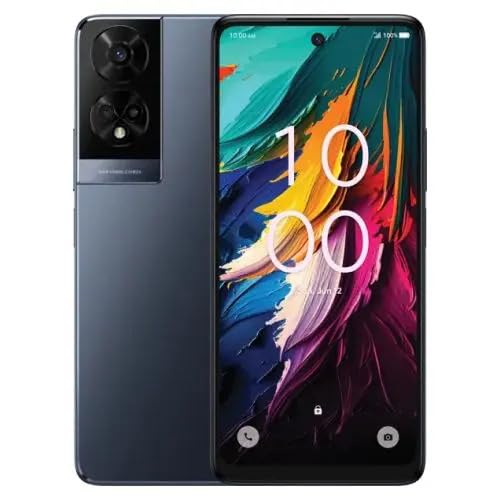
TCL 50 XE NxtPaper 5G — Most explicit multi-network listing
Most unlocked listings make you work for the network story. This one prints it on the tin: the TCL 50 XE is sold as unlocked for Verizon, T-Mobile and AT&T — all three national networks named in the listing itself. For a buyer whose household is split across carriers, or whose next carrier is not yet decided, that explicitness is worth real money, because it converts the band-checking homework of the earlier section into a much shorter exercise. TCL’s phone is the 128GB XE variant with the company’s NxtPaper display, a matte, paper-textured panel that cuts glare and is genuinely easier to read for long stretches than the glossy screens around it.
The phone behind the listing is an honest budget instrument. Performance is everyday-grade, the battery is sized for its class, and the software is TCL’s light take on Android. What elevates it here is the combination of the multi-network promise with that display: imagine the family administrator buying one model for three different carriers, or the student who reads for hours on whichever network the campus favours. The matte screen also flatters battery life in reading-heavy use, since legibility at lower brightness is the NxtPaper trick, and lower brightness is lower draw on every commute.
Caveats, plainly: an “unlocked for” listing still deserves the returns-window test in your own places, particularly if you use a smaller carrier riding on one of the big networks, because approval lists and MVNO quirks can differ from the parent network’s. TCL’s update track record is also the shortest story on this list, and its accessory ecosystem is thin. Buy it for the flexibility and the screen, verify it in your hallway and your office during the return period, and it is one of the most rational purchases in this guide.
- Line: TCL 50 series, XE NxtPaper variant
- Listing condition: Unlocked for Verizon / T-Mobile / AT&T as listed
- Memory and storage: 128GB storage as listed
- Network character: Explicit three-network unlocked positioning
- Distinguishing feature: Matte NxtPaper display for glare-free reading
Strengths
- The clearest multi-carrier promise of any listing in this guide.
- Paper-like screen suits readers and reduces brightness-driven battery drain.
- One model can serve a household split across different networks.
Trade-offs
- MVNO approval can differ from the parent networks — test during returns.
- Update support and accessory choice are the thinnest here.
- Matte panel softens video contrast versus glossy rivals.
Best for: Multi-carrier households, undecided switchers and heavy readers. Not suited for: Buyers wanting the longest software runway or flagship-style video.

HMD Fusion — Most interesting hardware idea
The HMD Fusion is the phone on this list with an actual idea. HMD — the Finnish company behind Nokia-branded phones — built the Fusion around two unfashionable virtues: repairability and modularity. The phone accepts attachable “Smart Outfits”, snap-on backs that add functions like extra lighting for photographs or gaming controls, and its construction follows HMD’s repairable design language, aimed at owners who would rather replace a screen or battery than a phone. This listing is the US Version, 128GB in Noir Black, unlocked — the three words “US Version, unlocked” doing the heavy lifting for this guide’s purposes, because they place the Fusion’s radios and approval squarely in the American market.
Why does repairability belong in an unlocked-phone guide? Because the unlocked buyer is statistically the keeping buyer — the person who declines carrier instalment cycles and expects a phone to serve across plans and years. A phone designed to be opened, repaired and refreshed fits that owner like a glove: the battery that fades in year three becomes a part, not a funeral. The Fusion’s core specifications are mid-budget honest — a large screen, an everyday processor, a camera tuned for social sharing — and HMD’s software is commendably clean. It will not outrun anything else here; it is designed to outlast, which is a different competition.
The risks are ecosystem risks. Smart Outfits are only as valuable as their availability, and a small maker’s accessory line can thin out over time; buy the outfits you want with the phone, not on a promise. HMD’s update support is respectable rather than class-leading, and resale values for smaller brands trail Samsung and Google, which matters if your unlocked strategy involves selling on. But as a statement of what an affordable unlocked phone can be — yours, fixable, adaptable — the Fusion is the most characterful purchase in this guide, and its US-version unlocked status means the character comes without network gambles.
- Line: HMD Fusion, US Version
- Listing condition: Unlocked, US version as listed
- Memory and storage: 128GB storage as listed, Noir Black finish
- Network character: US-market variant with US band set
- Distinguishing features: Smart Outfit modular backs, repairable design
Strengths
- Repairable construction suits the long-keeping unlocked owner perfectly.
- Modular outfits let the phone grow functions instead of being replaced.
- Clean software and an explicit US-version listing keep ownership simple.
Trade-offs
- Accessory ecosystem is small — buy desired outfits at purchase time.
- Resale value trails the Samsung and Google names on this list.
- Core performance is everyday-grade, not a step up in speed.
Best for: Fix-it-yourself owners and long keepers who hate the upgrade treadmill. Not suited for: Resale strategists or buyers wanting a deep accessory catalogue.

Nokia G310 5G (Renewed) — Cheapest credible entry
Carrier freedom does not have to begin with a new phone. The Nokia G310 listing here is a Renewed unit — an HMD-built handset, model TA-1573 with 128GB of storage in blue, inspected and resold — and as an entry ticket to unlocked LTE life it has a clear, limited, honest job: give a light user, a teenager, a spare-phone drawer or a grandparent a working, unlocked 5G-capable handset without new-phone money. Judged on that job, it earns its place. Judged as a flagship substitute, it would fail, and this guide will not pretend otherwise in either direction.
The renewed condition drives every expectation. The battery is a used battery, so plan for a dependable day of light use rather than heroics, and check its health when the phone arrives while the returns window is open. The software runway for a phone of this generation is short now — security support is in its later chapters — so buy it as a two-year tool, not a five-year heirloom. Within those fences, the G310’s virtues are the HMD virtues: clean Android without bloat, a straightforward interface, and hardware from the maker’s repairable-minded period. For a first unlocked phone whose owner is still learning what they need, there are worse teachers than a cheap one that works on any network.
One practical note on renewed unlocked phones generally, using this listing as the example: confirm the unlock on your actual SIM during the returns window, on your actual carrier, in your actual places. Renewed stock can originate from different channels, and the ten minutes it takes to verify your SIM, your data and your Wi-Fi calling is the cheapest insurance in this entire guide. Do that, and the G310 is exactly what it claims to be — the lowest-cost credible door into carrier freedom on this list.
- Line: Nokia G series by HMD, G310 5G (TA-1573)
- Listing condition: Renewed — inspected resale unit, not new
- Memory and storage: 128GB storage as listed, blue finish
- Network character: Unlocked; verify your SIM and carrier in the returns window
- Software: Clean Android; support runway is short at this stage of its life
Strengths
- The lowest-cost route here to an unlocked, big-name 5G phone.
- Uncluttered software is kind to first-time and older users.
- Ideal as a spare, starter or travel phone where loss would not sting.
Trade-offs
- Used battery health varies — inspect on arrival, use the returns window.
- Remaining software support is limited; buy it as a near-term tool.
- Basic screen and camera, even by affordable standards.
Best for: Spares, starters and light users entering unlocked life cheaply. Not suited for: Anyone needing years of updates or guaranteed all-day stamina.

Google Pixel 8a (Renewed) — Best camera per commitment
The second Renewed listing in this guide plays a different position from the first. The Pixel 8a — this one a Renewed, unlocked 128GB phone in Obsidian — is a way to buy into the tier above: Google’s camera processing, Google’s long update support, and the Pixel software experience, at a renewed price that undercuts the new mid-range. For the unlocked buyer this matters doubly, because Pixels are among the most carrier-agnostic phones sold in the US: Google’s unlocked models are the reference devices carriers test against, and their band support and feature behaviour across networks is as close to universal as this market offers.
The camera argument needs no inflation. Pixel processing turns a modest sensor into photographs that embarrass phones from a class up — night scenes that hold together, skin tones that stay human, a point-and-shoot reliability that suits people who take pictures of their lives rather than of test charts. Add Google’s update runway, which stretches years beyond this phone’s renewed discount, and the 8a becomes the thinking buyer’s shortcut: yesterday’s near-flagship experience, still supported like a current phone, free to live on any carrier you choose. The Tensor-powered features — call screening, transcription, photo cleanup tools — are the kind of software value that does not appear on a spec table and dominates daily use within a month.
Renewed discipline applies in full. Inspect the battery, confirm the grade matches the listing, check the screen for the wear that photographs hide, and verify your SIM and features inside the returns window. Pixels of this generation also charge at a measured pace, so overnight charging is the rhythm. Accept those terms and the 8a is the most capable phone in this guide — the one whose ceiling is highest, bought at the moment its price fell to meet this list.
- Line: Google Pixel a-series, 8a generation
- Listing condition: Renewed — inspected resale unit, unlocked
- Memory and storage: 128GB storage as listed, Obsidian finish
- Network character: Google unlocked models are broadly carrier-agnostic in the US
- Software: Long Google update runway, Tensor-powered call and photo features
Strengths
- Camera quality from the class above, at a renewed price.
- Update support that will outlast most new budget phones’ support.
- Pixel unlocked models behave well across US carriers and features.
Trade-offs
- Renewed condition varies — battery and screen need arrival inspection.
- Charging pace is unhurried; plan around overnight fills.
- A generation old, so the newest Pixel features arrive here later or not at all.
Best for: Photographers and software lovers buying smart rather than new. Not suited for: Buyers who want a factory-fresh battery and box, or fast charging.
How do the six compare on the things unlocked buyers actually check?
| Phone | Condition | Network story | Ownership note |
|---|---|---|---|
| Galaxy A15 5G | New | US variant, broad acceptance | Long Samsung support |
| Moto G Power 2025 | New | Made-for-US unlocked | Big battery for weak-signal life |
| TCL 50 XE | New listing | Named for all three big networks | Test MVNO fit in returns window |
| HMD Fusion | New listing | US Version unlocked | Repairable, modular outfits |
| Nokia G310 | Renewed | Unlocked; verify your SIM | Short support runway |
| Pixel 8a | Renewed | Carrier-agnostic Pixel | Long Google support remains |
The pattern in the table is the guide in miniature: new US-variant phones minimise network risk, renewed phones minimise cost, and the two renewed entries split into a budget tool (the Nokia) and a capability shortcut (the Pixel). None of the six is a trap — but each becomes one if bought for the wrong job, which is why the sections above keep returning to your carrier, your places and your keeping horizon rather than to benchmark scores.
What traps do cheap “unlocked” phones set for the unwary?
The deepest trap is the carrier-locked phone in unlocked clothing: a handset bought on a carrier deal, never properly unlocked, resold with optimistic language. It accepts your SIM at first — many locks only bite later, or on a network change — and the failure surfaces after the returns window, which is not a coincidence. Buy from listings whose unlocked status is the headline, keep the paperwork, and test on your real SIM immediately. The second trap is the international variant sold without the word international anywhere prominent: different bands, different warranty, sometimes different software. The variant check from earlier in this guide is the entire defence, and it takes less time than reading this paragraph twice.
The third trap is subtler — the phone that is unlocked and band-correct but not approved for your network’s advanced features, so Wi-Fi calling silently never works and the hotspot is throttled by policy rather than hardware. If those features matter to you — and for rural users Wi-Fi calling is often the difference between a usable phone and a decorative one — verify them by name for your carrier and model before the returns window closes. The fourth trap is financial rather than technical: paying new-phone money for a renewed phone because the listing’s headline buried the condition. Both renewed phones in this guide carry their condition in their names here; demand the same clarity from any listing you buy from, anywhere.
How do you move to an unlocked phone without losing your number, photos or sanity?
The migration itself is gentler than its reputation. Your number belongs to your account, not your phone: you keep the same SIM or request a fresh one from your chosen carrier, and the number follows. Before the old phone goes anywhere, back it up — cloud backup switched on and completed, photographs verified in the cloud with your own eyes, and messaging archives exported where the app requires it. Two-factor authentication deserves a deliberate half hour: move authenticator apps properly, keep the old phone alive on Wi-Fi until every account has been re-proven on the new one, and only then wipe and retire it.
On arrival day, sequence matters. Charge the new phone, update it fully on Wi-Fi before inserting anything, then move the SIM, then restore. Test in this order: a call, a text, mobile data away from Wi-Fi, Wi-Fi calling if you use it, and the hotspot if you rely on it. Then take the phone to the places your life happens — the office corner with one bar, the relative’s house in the valley — inside the returns window, while your options are still open. An unlocked phone bought this way is a decade-long habit of freedom; bought carelessly, it is a fortnight of forums. The difference is entirely in the checking, and the checking is entirely in your hands.
What mistakes do unlocked-phone buyers keep making?
Assuming “unlocked” ends the compatibility question is the founding mistake, and every other error in this category is its child. Close behind: buying on bands alone and forgetting feature approval, so the phone works except for the one feature the household needed. Then comes skipping the returns-window field test — the phone is perfect at the kitchen table on Wi-Fi and unproven everywhere that matters. Renewed buyers add their own classic: never inspecting the battery because the phone “looks new”, as though cells aged cosmetically. And the final mistake is buying the phone before choosing the plan, when the whole point of unlocked is that the plan market is open to you — shop the carriers first, with the phone as the flexible half of the decision.
Does eSIM change what “unlocked” means?
eSIM moves the SIM from a tray to a download, and it sharpens rather than replaces everything above. An unlocked phone with eSIM can hold several carrier profiles at once — your main number, a travel profile bought at the airport, a work line — and switch between them in settings. That is carrier freedom at its most fluid, and it is increasingly the way the phones in this class are used by travellers. But eSIM does not repeal the laws of bands: a downloaded profile on the wrong-band phone is still the wrong-band phone, and a carrier can still decline to provision a model it has not approved. Treat eSIM as a convenience layered on top of the same checks, not as a substitute for them.
There is also a caution specific to eSIM and renewed or second-hand phones: a phone’s eSIM capacity can be occupied by a previous owner’s profiles, and carrier locks can hide in provisioning even when the physical SIM slot behaves. When you buy renewed — as with the Nokia and Pixel in this guide — part of the arrival inspection should be opening the SIM and eSIM settings, confirming the phone reports itself as unrestricted, and removing any profiles that are not yours. Two minutes in that menu is the digital equivalent of checking the glovebox of a used car, and it occasionally finds exactly what you would hope not to leave there.
Dual-SIM life deserves a word for the households that live it: one number for work, one for family; one carrier for the city, another for the countryside property. Unlocked phones make that life possible without carrying two handsets, but data behaviour follows the profile you designate, and the second line’s standby drain, while small, is real. If you run two lines, the battery-headed picks in this guide — the Moto G Power above all — absorb that cost most gracefully.
Why does this guide talk about LTE when 5G exists?
Because LTE is the load-bearing network of daily life, and this keyword asks about it honestly. Most of these phones also speak 5G, and in strong 5G coverage they will use it — but LTE remains the layer that covers the countryside, penetrates the buildings and carries the majority of ordinary sessions, and a phone’s LTE band set is therefore the truest measure of its carrier fit. A phone can advertise 5G in letters an inch tall and still be a poor unlocked purchase if its LTE bands miss your carrier’s coverage layer; conversely, a phone with complete LTE support and modest 5G will feel excellent almost everywhere you actually stand. Judge the foundation before the penthouse.
There is a battery corollary that road users learn quickly. On fringe coverage, a phone hunting for a weak 5G signal can spend charge faster than the same phone settled on a stable LTE connection, which is why several phones here let you prefer LTE in settings. For the unlocked buyer crossing patchy country, that setting is not nostalgia — it is range management, trading peak speed you cannot hold for a connection you can. The freedom to make that trade is, once again, a freedom unlocked phones put in your hands rather than the carrier’s.
Three households, three right answers
Consider the family administrator in a split-network household: two parents on different carriers for historical reasons, a teenager about to get a first phone, a grandparent whose flip phone just died. For that household the TCL 50 XE’s named three-network listing is not a curiosity — it is a purchasing policy, one model to learn, one case to stock, deployed across three networks without a compatibility meeting. The administrator’s second choice, for the parent whose phone is also the family camera, is the renewed Pixel 8a, accepting the inspection ritual in exchange for photographs worth keeping.
Consider the rural contractor whose office is a truck. Coverage maps lie politely in her county; what matters is which carrier’s tower stands on which ridge, and the freedom to be on the right one this year and the other one next year if a new tower changes the answer. Her phone is the Moto G Power — unlocked, made for the US market, with the battery to survive the one-bar valley days when any phone works hard — and her spare, riding in the glovebox with a prepaid SIM from the rival network, is the renewed Nokia G310, because the cheapest insurance against a dead zone is a second network in a cheap phone.
Consider finally the graduate leaving a family plan for a first job in a new city. His constraint is money, his asset is time, and his strategy is to buy the phone outright and shop plans like a mercenary. The Galaxy A15 is his anchor — new, supported for years, correct on every US network he might sign with — and the knowledge in this guide is his real purchase: he will never again sign a contract whose exit costs more than his phone did. Three households, three different picks from the same six, and not one of them needed a benchmark chart to decide.
How long should an unlocked phone serve before you replace it?
The unlocked purchase only pays its full dividend across time, so the keeping horizon deserves the same rigour as the band check. A sensible target for the new phones in this guide is four years of service: the Samsung and the class’s better-supported models carry update commitments in that territory, batteries in gently used phones typically remain serviceable across it, and the arithmetic of buying outright only beats carrier instalments decisively when the phone outlives the contract you declined to sign. Plan the ownership backwards from that horizon. Buy the storage tier your next four years need, not your last four; put the phone in a case on day one, because a cracked screen in year three is the most common assassin of the four-year plan; and learn, in year one, what a battery replacement for your model costs, so the year-three decision is a price you already know rather than a crisis.
The renewed phones run on a shorter clock and should be bought with it stated aloud: two good years from the Nokia is a success, three from the Pixel 8a — whose software runway is unusually long for a renewed purchase — is a triumph. Neither figure is a criticism. A cheap phone that serves two years and hands its owner the knowledge of what they actually need has done more for that owner’s next purchase than any review could. The failure mode to avoid is not a short-lived phone; it is a phone bought with a five-year expectation on a two-year reality, because every disappointment in this market is an expectation error before it is a hardware error.
Finally, remember that an unlocked phone’s end of life is worth more than a locked one’s. When you do upgrade, the old phone sells into the whole market rather than one carrier’s corner of it, becomes the family spare without a network argument, or travels abroad as the local-SIM handset while your new phone stays safe in a hotel. That residual usefulness is part of what you bought on day one — the last instalment of the freedom this entire guide is about, paid out years after the receipt faded.
What should you do in the first hour with a new unlocked phone?
Resist the urge to restore everything at once. The first hour has a checklist, and it is mostly verification disguised as setup. Confirm the phone’s identity against the listing — model, storage, and, for renewed units, the condition grade — while the discrepancy window is widest. Update the software fully on Wi-Fi. Insert your SIM and walk the feature list: call, text, data off Wi-Fi, Wi-Fi calling, hotspot. Open the battery page and, on a renewed phone, record the health figure as your baseline. Then, and only then, restore your digital life onto a machine you have proven is the machine you paid for, on the network you chose, in the places you live. An hour of method at the start is what separates the unlocked buyer from the unlocked gambler, and it is the cheapest hour in the phone’s entire life with you.
What paperwork should you keep after buying unlocked?
Keep three things, in a folder you can find in two years: the listing itself or a screenshot of it, showing the unlocked claim and the variant; the receipt; and, for renewed phones, the condition grade and battery terms as sold. That small archive is your leverage in every future dispute — with a seller over a lock that surfaces late, with a carrier over an approval question, with a buyer when you sell the phone on and they ask, reasonably, for proof that it is what you say it is. Unlocked ownership is a chain of trust, and paperwork is how your link in the chain stays strong. Photograph the phone’s identifiers page too, and store the whole set with your other household documents rather than in the phone itself, for the obvious reason.
One last discipline ties the whole purchase together: diarise a one-month review. Thirty days in, ask whether the phone has dropped a call your old one held, whether any feature silently failed, and whether the battery matches the promise — while warranties are young, support lines are sympathetic and your notes from the first-hour checks are still fresh. Freedom maintained beats freedom merely bought.
Final Recommendation
Start where your risk is lowest. If you want one recommendation to act on today, take the Galaxy A15 5G: a new US unlocked phone with years of support, the purchase most likely to simply work on whichever carrier you choose next. Take the Moto G Power instead if your map is rural and your days are long, the TCL if your household straddles networks, and the HMD Fusion if you intend to keep and repair a phone for years. The two renewed phones are for buyers who enjoy a calculated trade: the Nokia as the cheap, honest spare, the Pixel 8a as the clever shortcut into a better camera and a longer software life. Freedom, in this category, is not the absence of homework — it is homework done once, at purchase, instead of rent paid monthly forever.
Frequently Asked Questions
Will an unlocked phone work with my carrier?
Almost always for basic service, provided the phone supports your carrier’s main LTE bands — which is why this guide insists on the five-minute band check. All six picks are US-oriented unlocked phones, but “almost” is doing work in that sentence: verify your carrier’s coverage bands against the exact variant, and test in your real places during the returns window.
What is the difference between factory unlocked and carrier unlocked?
A factory-unlocked phone was built and sold without a lock. A carrier-unlocked phone began locked and had the lock removed once the carrier’s conditions were met. Both are legitimately unlocked, but with a carrier-unlocked phone it is worth confirming the unlock completed properly — a test with another network’s SIM settles it in a minute.
Can I use an unlocked phone on a smaller carrier or MVNO?
Usually yes — smaller carriers rent the big networks’ towers, so a phone that fits the parent network generally fits them. The exceptions are approval lists and feature quirks, which is why the TCL section advises testing MVNO fit during the returns window even though its listing names all three national networks.
Does unlocked mean I can use the phone in other countries?
It means other countries’ SIMs will be accepted. Whether the phone covers the local bands abroad varies by model, and US-market phones are tuned first for US networks. For a trip, an unlocked phone plus a local or travel eSIM is still the cheapest connectivity strategy — just expect solid LTE rather than every local band.
Is a Renewed unlocked phone a safe buy?
It is a buy with homework attached: read the grade, check the battery health on arrival, verify your SIM and your key features, and keep the returns window sacred. The Nokia G310 and Pixel 8a in this guide are both Renewed listings, flagged as such everywhere they appear, and both are rational purchases for the right job.
Why do some unlocked phones cost less than the same phone from a carrier?
Carrier pricing is entangled with plans, promotions and instalment structures, so the comparison is rarely apples to apples. The unlocked phone’s real saving is strategic rather than arithmetic: you can move to any plan, any carrier, at any time, and that option reprices every future negotiation with every network.
If I travel abroad twice a year, which pick suits me best?
The renewed Pixel 8a and the Moto G Power split the travelling vote. The Pixel’s carrier-agnostic behaviour and camera make it the better city-break companion, and its eSIM convenience suits airport profile-swapping. The Moto’s battery and US-band solidity suit the road-tripper who roams domestically more than internationally. Either way, buy a local or travel data profile on arrival rather than roaming by default — the unlocked phone you bought is precisely the tool that makes that saving possible, and using it is the dividend.
Can I keep my current plan and just change the phone?
Yes — that is the most common unlocked move of all. Your plan, number and account stay untouched; only the handset changes. Move the SIM or have your carrier provision the new phone, and service continues. It is worth telling the carrier nothing more than necessary: no new contract is required to change a phone, whatever a sales script implies.
Do unlocked phones get software updates as fast as carrier phones?
Generally as fast or faster, because the update comes from the maker without a carrier approval layer in between. Google and Samsung unlocked models are typically in the first wave of their own rollouts. It is one of the quiet, compounding advantages of the unlocked life: fewer intermediaries between you and every improvement the maker ships.
Related Guides
Companion reading for the carrier-free life: affordable smartphones chosen for battery life, the best alternatives to Samsung Galaxy phones, and small Android smartphones for readers who want freedom in a compact body.
Related guides
- Best Basic Phones Camera Buyers Can Trust: Flip Phones and Simple Handsets That Still Take a Photograph
- Best Sony Full Frame Cameras for Astrophotography: Sensitivity vs Resolution
- Best Affordable Android Tablets: Five True Android Slates and One Fire OS Specialist, Clearly Labelled
- Best 400 FPS High Speed Cameras: The Honest Truth About Burst Slow Motion


