What's inside
- Key Takeaways
- Quick Picks
- How Did We Define “Smaller” for This Guide?
- Why Did Phones Get So Big — and What Did We Trade Away?
- What Does a Smaller Phone Give Up — Honestly?
- Who Actually Lives the Small-Phone Life?
- What Do Grip, Weight and Balance Really Decide?
- The Six Smaller Phones, Examined One by One
- Can a Small Phone Still Be a Serious Camera?
- What About Cases, Chargers and the Compact Accessory Life?
- How Do the Six Compare on the Ruler?
- Which Mistakes Do Small-Phone Buyers Make?
- How Can You Make a Larger Phone Behave Smaller — and a Small Phone Last Longer?
- How Should You Measure Your Own Hand’s Verdict?
- Are Smaller Phones the Right First Phones and Hand-Me-Downs?
- What Would Make the Industry Build Small Phones Again?
- A Note on Buying the Renewed Compacts With Confidence
- Final Recommendation
- What Is It Like to Move Down From a Big Phone?
- Frequently Asked Questions
- Related Guides
As an Amazon Associate I earn from qualifying purchases. This post may contain affiliate links at no extra cost to you.
gizmoverdict.com is reader-supported. When you buy through links on our site, we may earn an affiliate commission.
Where to buy: Three of these phones are renewed units — an iPhone 13, a Pixel 8a and a Galaxy S24 — and one is a GSM-only international model, the Zenfone 10. Every size in this guide is the phone’s real screen size, stated beside its name wherever it appears, and one pick, the Galaxy S24, is flagged honestly as a smaller phone that stretches the word “affordable” rather than fitting it.
The search for the best affordable smaller smartphones comes from hands, not from specifications. Somewhere in the last decade the standard phone grew past the point where a thumb could cross it, pockets began to reject it, and a quiet population of buyers — smaller hands, runners, cyclists, people who type one-handed on trains, people who simply miss the phones of 2016 — started asking why every good handset now requires two hands and a grip like a climbing hold. This guide is for them, with one honest admission up front: the industry has largely stopped making small phones, so “smaller” in 2026 means the compact end of a large-phone world — a fact this guide will keep repeating, because pretending otherwise is how buyers end up holding a 6.7-inch “compact” and feeling cheated by a word.
That admission shapes the list. Nothing here is tiny; the smallest screen is 5.9 inches, which would have been a phablet in the era that coined the word. What these phones offer instead is proportion: bodies a thumb can genuinely traverse, weights that do not drag a jacket pocket, widths that sit in a palm rather than perching on fingers. And because small phones are now niche products, several of the best routes to one run through renewed stock — last generation’s compact flagships, inspected and resold — which is why renewed labels appear so often below, always attached to the phones they describe.
Six phones make the cut, spanning two operating systems, three conditions and one shared refusal to require two hands. One true compact flagship, two renewed 6.1-inch favourites from Apple and Google, a renewed Samsung flagship that is small by its family’s standards and priced beyond strict affordability, Google’s current 9a at the upper edge of what “smaller” can honestly mean, and one prose-only ghost — the little iPhone that proves how small phones used to be, included as a compass point rather than a purchase. Sizes first, then everything else: that is the order this guide keeps.
Key Takeaways
- “Smaller” in the current market means 5.9 to 6.3 inches of screen; the genuinely tiny phones of a few years ago survive only as renewed or second-hand stock.
- The Zenfone 10, at 5.9 inches, is the only true compact flagship here — and it is a GSM-only international model, so its carrier limits matter as much as its size.
- The iPhone 13 and Pixel 8a, both 6.1 inches and both renewed, are the balanced small buys: modern power in one-handable bodies.
- The Galaxy S24 at 6.2 inches is small and superb but a renewed flagship — included with a clear “beyond strict affordable” label.
- The Pixel 9a at 6.3 inches is the ceiling of “smaller”: buy it for its camera and support, not for compactness alone.
- One pick is prose-only — the iPhone 13 mini, the last true mini — kept as a size reference because no verified listing for it sits in this site’s pool.
Quick Picks
| Pick | Badge | Why it earns its place |
|---|---|---|
| ASUS Zenfone 10 (5.9″) | The true compact | A flagship in a genuinely small body — GSM-only international model, so check your carrier first. |
| Apple iPhone 13 (6.1″, Renewed) | The small iPhone route | Apple’s balanced 6.1-inch design as an inspected renewed unit, with years of iOS support ahead. |
| Google Pixel 8a (6.1″, Renewed) | Small with the best camera | A renewed Pixel whose photography and software outclass everything else at this size. |
| Samsung Galaxy S24 (6.2″, Renewed) | Small, flagship, beyond brief | A renewed flagship that is compact for its class — superb, and labelled as a stretch on affordability. |
| Google Pixel 9a (6.3″) | The upper edge of smaller | A new phone at the largest size this guide allows, bought for camera and support more than compactness. |
| iPhone 13 mini (5.4″, prose-only) | The compass point | The last true mini, included without a link to show what the category has lost. |
How Did We Define “Smaller” for This Guide?
By the body, not only the brochure. Screen size is the headline, but one-handed life is decided by width and weight: a narrow 6.2-inch phone can be more usable than a wide 6.1, and a light 6.3 can trouble a pocket less than a dense 6.1. The picks were therefore screened on all three, with a ceiling of 6.3 inches of screen for admission and a preference for the narrow, the light and the grippable. Every size printed in this guide is the manufacturer’s stated diagonal for that exact model, repeated consistently so comparisons stay honest.
Affordability was applied with one deliberate exception, declared rather than hidden. Five picks sit inside a value reading of the word; the Galaxy S24, a renewed flagship, sits outside it and is labelled as such at every appearance, because small-phone shoppers kept landing on it and deserved a guide that discussed it honestly instead of pretending it was a budget phone. A label is not an apology — it is information, and it lets the reader decide whether compactness at flagship quality is worth flagship-adjacent money.
Condition and network caveats were treated as part of a phone’s size story, because a compact phone that cannot join your carrier, or whose renewed battery has faded, is not small in the ways that matter — it is a small problem. The Zenfone’s GSM-only status and the renewed trio’s condition are therefore introduced in the first paragraph of this guide, not discovered in the last.
Why Did Phones Get So Big — and What Did We Trade Away?
The growth was rational at every step, which is what makes it hard to reverse. Bigger screens sell streaming and games better in a shop’s first thirty seconds; bigger bodies house bigger batteries, and battery life tops every satisfaction survey; bigger frames fit more camera hardware, and cameras decide flagship comparisons. Each year’s small increase was defensible, and the sum of them is a market where the “compact” option is a size that once headlined as a plus model.
What was traded away is mostly felt in motion. One-handed typing on a train, thumb-typing a reply while carrying shopping, a phone that vanishes into a running belt or a cycling jersey, a handset a smaller hand can hold through a long call without fatigue — these are real utilities, and they diminished quietly rather than being voted away. Small-phone buyers are not nostalgics refusing progress; they are users whose progress was measured on axes the industry stopped optimising.
The compromise the market has settled on is visible in this list: compactness survives as a premium or a previous-generation virtue. You can have small and flagship if you accept renewed, small and new if you accept a niche maker like ASUS, or small-ish and sensible from Google’s A-series. What you cannot easily have is small, new, mainstream and cheap all at once — and a guide that pretended otherwise would be selling the reader a phone that does not exist.
What Does a Smaller Phone Give Up — Honestly?
Battery volume, first of all. Physics is not negotiable: a smaller body holds a smaller cell, and while efficient processors and modest screens claw much of it back — the Zenfone 10’s endurance is famously disproportionate — no compact phone here will match a big battery-led handset across a two-day trip. Smaller buyers charge a little more often, and the honest ones plan for it with a bedside cable and a car charger rather than with denial.
Screen real estate for split tasks comes second. Reading, messaging and photography lose nothing at 6.1 inches; spreadsheets, split-screen multitasking and video editing timelines genuinely do prefer the larger canvas. Typing is a personal border: some thumbs are more accurate on a narrower keyboard, others cramp. And the camera hardware ceiling is real — the largest sensors and longest zooms live in the largest bodies, though the Pixels in this guide demonstrate how far computation can close that gap for ordinary photography.
Heat is the quieter item. Compact bodies shed warmth less easily, so sustained gaming or long 4K recording sessions throttle sooner in a small phone than in a large one with more surface to breathe through. For the communication-and-camera life most small-phone buyers actually live, none of this bites; for the mobile gamer reading this guide out of curiosity, it is the paragraph that should redirect you to a bigger handset with your blessing.
Who Actually Lives the Small-Phone Life?
Start with the people whose work happens in motion. Nurses and carers carry phones in scrub pockets sized by uniform designers who never met a modern flagship; couriers and riders need a handset that leaves the pocket one-handed, gloved, in the rain; tradespeople on ladders and under floors want a phone that can be operated with the free hand and dropped into a chest pocket without a second thought. For all of them, the difference between 5.9 and 6.7 inches is not aesthetic. It is the difference between a tool and an encumbrance, repeated forty times a shift.
Add the athletes the industry keeps photographing and rarely designing for. A runner’s belt, a cyclist’s jersey pocket, a climber’s harness — each has a hard size ceiling, and each is currently served by phones that were designed for sofas. The smaller picks here, the Zenfone above all, slide into those kits without negotiation, and their owners tend to become the most loyal in this entire market, because the alternative is not a bigger phone but a worse run.
Then there are the hands themselves. Smaller hands are not a niche — they are roughly half the population’s, plus most teenagers, plus older users whose grip strength and joint comfort have changed with the years. A phone that requires a shifting, stretching grip is a phone that gets dropped, and a dropped phone is an expensive one whatever its sticker said. When this guide treats one-handed reach as a headline specification, it is correcting a decade in which the industry’s default hand belonged to someone else.
Finally, the minimalists: people who want the phone to be a tool that finishes its job and returns to the pocket, not a portal that colonises the evening. A smaller screen is a subtle ally in that project — perfectly capable for messages, maps, music and photographs, mildly less seductive for the endless scroll. Several readers will recognise that as a feature no specification table will ever list, and it is a legitimate reason to choose from this page rather than from a flagship ranking.
What Do Grip, Weight and Balance Really Decide?
Ergonomics has a vocabulary worth borrowing. Reach is the thumb’s comfortable arc, and it covers perhaps two-thirds of a modern large screen — which is why software one-handed modes exist. Shelf is the finger, usually the little finger, that ends up supporting the phone’s bottom edge, and the ache it reports after a long evening is data. Churn is the constant micro-regripping — the small climbs and shifts — that a wide phone demands and a narrow one does not, and churn is where drops are born, mid-adjustment, over hard floors.
Weight distribution matters as much as weight itself. A phone balanced toward its centre rides calmly in the hand; a top-heavy one levers against the fingers and feels heavier than its grams. The picks here were chosen partly on this invisible axis: the iPhone 13’s even density, the Pixel 8a’s rounded kindness, the Zenfone’s sheer smallness all reduce the hand’s workload in ways a scale cannot rank. When you test in a shop, test for a full minute, not a glance — fatigue is a slow witness and it tells the truth.
Materials vote too. Glossy glass backs are beautiful and treacherous; matte finishes and textured frames are the compact buyer’s friends, because a small phone’s whole promise collapses if it needs a bulky case to stay held. If you know a case is inevitable in your life, prefer the grippy slim kind and re-run the reach test with it fitted. The object you are buying is the object as carried, not as photographed.
The Six Smaller Phones, Examined One by One

ASUS Zenfone 10 (5.9″) — The true compact
At 5.9 inches, the Zenfone 10 is the only phone in this guide that a 2016 buyer would recognise as normal-sized, and ASUS built it without a gram of apology: a flagship processor, a bright high-refresh AMOLED, a gimbal-stabilised camera, a headphone jack, and a battery whose endurance embarrasses phones half an inch larger in every direction. It is the standing refutation of the claim that small phones must be weak phones — what they must be, apparently, is made by a company stubborn enough to keep building them.
Its caveat is printed on its passport: this is the international version, GSM unlocked, with no support for CDMA networks. On GSM-based carriers it is the finest small phone money can reasonably buy; on the wrong network heritage it will not serve at all, and no affection for its size changes that. ASUS’s software is admirably close to stock with one-handed gestures designed by people who clearly use the phone, and the pool configuration pairs generous storage with ample memory. If your carrier is GSM and your hand is tired, this is the guide’s headline answer — check the carrier first, then stop compromising.
- Screen: 5.9 inches, AMOLED, high refresh
- Variant: international, GSM unlocked — no CDMA support
- Configuration: 256GB storage, 8GB memory, per the pool listing
- Character: compact flagship, headphone jack, gimbal camera
Strengths
- Genuinely one-handed in a market of two-handed defaults.
- Flagship speed and battery life that defy the small body.
- Thoughtful one-handed software from a maker committed to the size.
Trade-offs
- GSM-only: unusable on CDMA-heritage networks.
- International variant — warranty and band checks belong to the buyer.
- Update support is shorter than Google’s or Apple’s in this list.
Best for: GSM-carrier customers who want a real compact flagship. Not suited for: CDMA-network households, or anyone unwilling to verify compatibility.
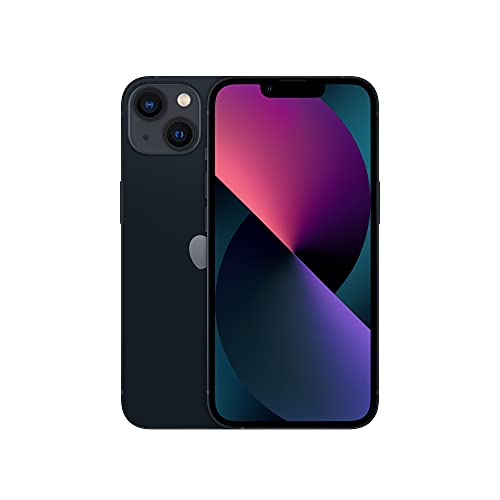
Apple iPhone 13 (6.1″, Renewed) — The small iPhone route
The iPhone 13’s 6.1-inch design became Apple’s template for a reason: it is the largest screen that still behaves like a one-handed phone for most adults, flat-sided, light enough to forget in a pocket, and balanced in a way the bigger Pro models never attempt. This pool listing is a renewed unit — inspected, pre-owned stock — which is how an iPhone of this calibre enters an affordable guide at all. The condition is the discount, stated plainly.
What the renewed buyer receives is the iPhone ecosystem at its most sensible: a bright OLED, a dual camera that still handles family photography beautifully, Apple’s long iOS support runway stretching years ahead, and the accessory and resale universe that surrounds every iPhone. Battery health is the individual unit’s variable, as with all renewed purchases, and the return window is the tool for managing it. For an Android-curious household’s first iPhone, a teenager’s upgrade, or a loyalist replacing a dying older model, the renewed 13 at 6.1 inches is the calm, correct answer — small by modern standards, enormous in support.
- Screen: 6.1 inches, OLED
- Condition: renewed, unlocked — inspected pre-owned unit
- Storage: 128GB, per the pool listing
- Character: Apple’s mainstream size, long iOS runway
Strengths
- The most one-handable iPhone of the modern, large-screen era.
- Years of iOS updates keep a renewed purchase current and secure.
- Cameras and video remain excellent for everyday family use.
Trade-offs
- Renewed battery health varies by unit; inspect during the return window.
- The display refreshes at the standard rate — no high-refresh smoothness.
- Apple’s older charging connector may not match a USB-C household.
Best for: iPhone loyalists and ecosystem newcomers who want the manageable size. Not suited for: buyers who need a sealed box, or Android households unwilling to switch worlds.

Google Pixel 8a (6.1″, Renewed) — Small with the best camera
The Pixel 8a matches the iPhone’s 6.1-inch footprint and then wins the photography argument outright. Its renewed listing — pre-owned, inspected stock, labelled as such everywhere in this guide — places Google’s computational camera, a fluid 120Hz OLED and the Tensor G3’s intelligence into the smallest Android body in this list alongside the Zenfone. Where the Zenfone is the engineer’s compact, the 8a is the photographer’s: school plays, dim kitchens, pets mid-leap, all rendered with a confidence nothing else at this size attempts.
Google’s software completes the case: call screening that silences the spam economy, transcription that turns voicemails into reading, and a support window measured in many years, which matters doubly on a renewed phone because it guarantees the second owner’s future as firmly as the first’s. The body’s rounded shape sits kindly in a palm, the size suits one-handed use on public transport, and the compromises are the renewed usuals — battery history, cosmetic grading, leisurely charging. For Android buyers who want small without giving up the camera, this is the pick the guide would defend in an argument.
- Screen: 6.1 inches, OLED, 120Hz refresh
- Condition: renewed, unlocked — inspected pre-owned unit
- Storage: 128GB, per the pool listing
- Character: camera-led, Google software, long support
Strengths
- The best camera at this size in the guide, by a clear margin.
- A long support calendar protects the renewed investment.
- One-handable body with a genuinely fluid screen.
Trade-offs
- Renewed condition: battery wear is the unit’s own story.
- Charging is slow, and the phone warms under sustained camera use.
- No storage expansion beyond the listed capacity.
Best for: Android photographers with smaller hands or smaller pockets. Not suited for: buyers who prioritise a brand-new battery over camera quality.

Samsung Galaxy S24 (6.2″, Renewed) — Small, flagship, beyond brief
This pick carries its warning in its badge: the Galaxy S24 is a flagship, renewed or not, and including it under the word “affordable” requires the label it wears throughout this guide — a stretch pick, present because small-phone shoppers kept arriving at it and deserved an honest discussion rather than a pretence that it competes on price with the A-series world. What it offers is the finest 6.2-inch phone Samsung has made: a brilliant high-refresh display, flagship processing, a versatile camera system, and a body that is compact precisely because its siblings are enormous.
As a renewed US-version unit, it adds the domestic certainty the Zenfone cannot: no variant puzzles, a network story as plain as they come. Samsung’s long update programme protects the purchase, the build is glass-and-armour elegance, and the size — 6.2 inches, slim and light for its class — is the one at which many former small-phone loyalists have made their peace. Buy it knowingly, as the premium compact it is, and it may be the most satisfying phone in this guide. Buy it believing it is a budget phone and the disappointment will be of your own manufacture; the guide has done its part by labelling it, repeatedly and in advance.
- Screen: 6.2 inches, AMOLED, high refresh
- Condition: renewed, US version, unlocked
- Storage: 128GB, per the pool listing
- Label: flagship — beyond this guide’s strict affordability brief
Strengths
- Flagship screen, speed and cameras in a genuinely manageable body.
- US-version renewed stock avoids all variant and network puzzles.
- Long Samsung support keeps the premium purchase rational for years.
Trade-offs
- It is not an affordable phone in the strict sense, even renewed.
- Renewed variability applies to battery and cosmetics as always.
- At 6.2 inches it is compact for a flagship, not compact like the Zenfone.
Best for: buyers whose real brief is “small and excellent” and whose budget quietly agrees. Not suited for: strict affordability shoppers, who should stay with the renewed 8a or the Zenfone.

Google Pixel 9a (6.3″) — The upper edge of smaller
The Pixel 9a tests this guide’s honesty from the other direction: at 6.3 inches it is the largest phone admitted, included because Google’s A-series is where so many value shoppers land, and because its width and weight remain kinder than many 6.1-inch rivals of a few years ago. It is labelled here as the ceiling of “smaller,” not as a compact phone, and readers whose hands demanded this guide should weigh it last among the five linked picks — or first, if camera and longevity secretly outrank size in their real priorities.
On every axis except compactness, it is formidable: the best camera in this guide alongside its renewed sibling’s, the longest support runway, a bright fluid screen, and the pool’s generous 256GB storage in a new, unlocked phone with no condition caveats at all. It is, in truth, the sensible person’s phone wearing a smaller-guide guest badge. Buy it if your hand can make peace with 6.3 inches — many can, especially with a grippy case adding control rather than bulk — and you will own the most complete device on this page. Buy it hoping it will feel like the Zenfone and you will be disappointed by geometry.
- Screen: 6.3 inches, OLED, high refresh — the guide’s size ceiling
- Condition: sold new, unlocked
- Storage: 256GB, per the pool listing
- Character: camera and support leader, compact only by courtesy
Strengths
- A new phone with no renewed caveats and the longest support here.
- Camera quality that forgives the size compromise daily.
- Generous storage removes a whole category of management.
Trade-offs
- Six-point-three inches is two-handed territory for smaller hands.
- It answers a different brief — value flagship — more than a compact one.
- Charging remains leisurely beside faster rivals.
Best for: buyers whose “smaller” is relative and whose priorities quietly rank camera first. Not suited for: true compact seekers, for whom the Zenfone exists.
iPhone 13 mini (5.4″, prose-only) — The compass point
The final pick has no link, deliberately: no verified listing for the iPhone 13 mini sits in this site’s pool, so it is discussed in prose only, as the category’s compass point. At 5.4 inches it was the last true mini from a major maker — a flagship-powered phone that disappeared into a jeans pocket and a one-handed life entirely, beloved by exactly the readers of this guide and discontinued anyway, because the wider market kept choosing larger screens with its wallet.
It earns its paragraph as a measurement standard. Every phone above can be judged against it: the Zenfone comes closest in spirit, the 6.1-inch pair split the difference, and the 9a shows how far the mainstream has drifted. If you already own a 13 mini, the honest advice of this guide is to keep it while its support lasts and its battery serves — nothing new replaces it directly. If you are hunting one on the second-hand market beyond this site’s listings, apply every renewed discipline this guide teaches: battery health first, condition second, price last. The mini is gone from the catalogues; it is not gone from our pockets, and this guide salutes it in prose because prose is what it has left.
- Screen: 5.4 inches — the smallest in this guide by a wide margin
- Availability: no pool listing; discussed prose-only, no link
- Character: the last true mini from a major maker
- Role here: size reference and ownership advice, not a purchase link
Strengths
- Unmatched one-handed size with flagship power of its era.
- Light enough to vanish into running gear and evening pockets.
- A devoted owner community keeps knowledge and cases available.
Trade-offs
- Discontinued: any unit found is used, with a battery history.
- The smallest battery here; heavy days need a top-up.
- No purchase link in this guide — it is context, not inventory.
Best for: existing owners deciding whether to keep it (yes, while support lasts) and size absolutists hunting second-hand. Not suited for: buyers who want a linked, warrantied purchase from this page.
Can a Small Phone Still Be a Serious Camera?
The evidence on this page says yes, with one structural exception. The two Pixels demonstrate the modern settlement: sensor size matters less than it did, because computational photography — stacking frames, modelling depth, rescuing shadows — does the work that glass once did, and software fits in any body. The iPhone 13’s video remains a benchmark for the class. The Zenfone answers with hardware cleverness, a gimbal that stabilises the whole camera, achieving in a small body what electronic tricks approximate elsewhere. For the photography of actual lives — people, food, places, documents, dogs — nothing in this guide will embarrass its owner.
The exception is reach. Telephoto lenses need physical length, and small bodies run out of it first; the zoom photographs of distant stages, wildlife and sports from the stands belong to the large flagships and their folded optics. A buyer whose photography is mostly distant subjects should hear that plainly and size up without regret. A buyer whose subjects are within arm’s reach of their life — which is most photography, most days — gives up almost nothing by choosing the phone that fits their hand, and gains a camera that is present, one-handed and instant, which is the first virtue a camera can have.
There is also a handling dividend rarely mentioned: a small phone is a steadier phone. One hand wrapped properly around a compact body, the other free or braced, produces sharper night photographs than two fingertips pinching a slab at arm’s length. The best camera is the one you can hold still, and on that measure the little phones in this guide quietly outscore their larger cousins more often than the spec sheets would ever admit.
What About Cases, Chargers and the Compact Accessory Life?
Compact phones enjoy one accessory advantage and suffer one disadvantage. The advantage is physics: smaller phones need less energy to fill, sit on smaller wireless pads, fit car mounts and gimbals designed before the slab era, and travel in pockets of bags that larger phones have exiled themselves from. The disadvantage is catalogue depth — case makers follow volume, so the Zenfone’s case selection will never rival an iPhone’s, and a buyer who loves exotic cases should weight the iPhone and Galaxy ecosystems accordingly.
Charging habits deserve a sentence at this size. Compact batteries fill faster in absolute minutes even at modest wattages, which suits the top-up rhythm — a quarter-hour at the desk, a splash in the car — that small-phone owners naturally adopt. Paired with a battery-health setting that caps overnight charging, that rhythm keeps a small cell healthy for years, answering the category’s oldest criticism with behaviour rather than hardware.
And a word for the strap, the ring and the grip: on a compact phone these are not apologies but completions. A slim phone with a discreet finger loop is, for many hands, the true end-state of the one-handed quest — secure on a platform edge, relaxed in the grip, quick into the pocket. The flagship world sells size as the future; the compact world, at its best, sells fit. Accessories are where fit gets finished.
How Do the Six Compare on the Ruler?
| Phone | Screen size | Condition / variant | Affordability position | One-hand verdict |
|---|---|---|---|---|
| Zenfone 10 | 5.9″ | International, GSM-only | Within brief | Genuinely one-handed |
| iPhone 13 | 6.1″ | Renewed | Within brief | One-handed for most adults |
| Pixel 8a | 6.1″ | Renewed | Within brief | One-handed, rounded and grippy |
| Galaxy S24 | 6.2″ | Renewed, US version | Beyond brief — flagged | Compact for a flagship |
| Pixel 9a | 6.3″ | New | Within brief | The ceiling of “smaller” |
| iPhone 13 mini | 5.4″ | Prose-only, discontinued | Reference only | The true mini standard |
Which Mistakes Do Small-Phone Buyers Make?
The first is shopping by screen diagonal alone. Two phones can share a diagonal and differ completely in the hand because width, thickness, weight distribution and edge shape decide grip; a tall, narrow phone often beats a shorter, wider one for thumb reach. Whenever you can, hold the phone — or its predecessor, or anything in the same body — before committing, and perform the only test that matters: unlock it, reach the far corner, and type a sentence with the hand you actually use, in the posture you actually use it.
The second mistake is romanticising the mini era into a purchase the present cannot support. A discontinued small phone bought at any cost, with a tired battery and a shortening support runway, can be a worse ownership than a sensible 6.1-inch renewed phone with years of patches left. Love the 13 mini as this guide does — and still check its battery health like an accountant, because sentiment is not a specification.
Third, buyers forget that cases change size. A rugged case can add the very millimetres the compact purchase was made to avoid, turning a Zenfone into an ordinary handful. If protection is non-negotiable in your life, shop the phone-plus-case as the object, and prefer slim, grippy cases that add control instead of armour on phones whose entire point is their dimensions.
Finally, do not let the size brief smuggle in a network or condition mistake. The smallest phone here is GSM-only; three others are renewed. Each caveat is survivable with open eyes — and each has stranded buyers who read the dimensions and skipped the rest of the listing. Small print matters most on small phones; read all of it.
How Can You Make a Larger Phone Behave Smaller — and a Small Phone Last Longer?
If your chosen phone sits at the guide’s upper edge, software can reclaim some one-handed life: enable the one-handed mode that shrinks the interface toward a corner, move your most-used apps to the thumb-side of the home screen, learn the gesture for pulling the notification shade from the fingerprint sensor or a home-screen swipe, and set keyboard height and reachability options honestly rather than heroically. A ring or strap grip, unfashionable as it may be, converts a two-handed phone into a secure one-handed one for train platforms and crowded pavements.
For the small phone itself, longevity is mostly battery stewardship, because compact cells work harder per cycle: keep the phone out of heat, use the maker’s charge-limiting option if you charge overnight, and treat a mid-life battery replacement — where the design allows it — as planned maintenance rather than failure. The Zenfone and the Pixels reward this care with years of service; even the discontinued mini, on a fresh battery, remains a perfectly modern communication device while its software support runs.
How Should You Measure Your Own Hand’s Verdict?
Forget hand-size charts; run the three tests of your actual life. The pocket test: does the phone sit in the pocket you use most, through sitting, stairs and a bicycle, without announcing itself? The commute test: can you read, scroll and reply through one stop-start journey with your weaker hand while the stronger holds a rail, a bag or a child? The evening test: after a day of ordinary use, does your hand feel the phone — in the wrist, in the pinky that shelves it — or has it vanished into the day?
A phone that passes all three is small enough, whatever its diagonal says, and a phone that fails the commute test will be quietly resented for years regardless of its camera. This is why the guide ranks the Zenfone first for true compact seekers despite its network caveat, and why it refuses to call the 9a compact despite loving the phone: geometry is personal, and the tests are yours to run.
Are Smaller Phones the Right First Phones and Hand-Me-Downs?
Often, and the reasoning is practical rather than sentimental. A first phone for a younger teenager will live in school-bag pockets, be operated by smaller hands, and be dropped with a frequency no adult matches. A compact renewed phone — the iPhone 13 or Pixel 8a here — fits the hands, survives the social requirements of the age, and carries years of security support, which matters more on a young person’s device than on anyone’s. The renewed route also caps the financial damage of the statistically likely loss, which every parent pricing a first phone understands in their bones.
For older relatives the argument inverts in an interesting way: small is right for the hand and the pocket, but the screen must serve eyes that may prefer larger text, which shrinks the usable information per screen. The 6.1-inch pair thread that needle best — compact bodies, displays large enough for comfortably enlarged text — while the true mini asks too much of ageing eyes and the 6.3-inch 9a, ironically, may serve a grandparent better than it serves a purist. Match the phone to the person’s actual senses, and let the category labels fall where they may.
Either direction, the hand-me-down discipline from our other guides applies with extra force at this size: reset fully, replace a tired battery where the design allows, fit the grippy case, and hand over a phone that feels cared for. A compact phone passed down with its battery renewed is not a compromise gift; for many recipients it is the first phone that ever truly fit their hand.
What Would Make the Industry Build Small Phones Again?
Money, spoken clearly. Makers discontinued the mini lines because the broader market, offered the choice at the till, chose larger screens in overwhelming numbers — a preference measured in purchases, not in the affectionate essays small phones inspire. The niche survives where a maker can charge for it or differentiate with it: ASUS’s persistence with the Zenfone line, the compact tier inside Samsung’s flagship family, Google’s A-series holding a moderate line. Each exists because a definable audience buys enough of them, at margins that justify the tooling.
The hopeful reading is that the audience is organisable. Every renewed compact bought, every Zenfone chosen over a larger rival, every 13 mini kept in service and counted in a maker’s longevity statistics is a small vote recorded where votes are tallied. This guide cannot manufacture a market; it can only point its readers at the surviving options and say, accurately, that the options are better than their scarcity suggests. Buy the small phone that fits your life, and the spreadsheet may yet notice.
A Note on Buying the Renewed Compacts With Confidence
Three of the five linked picks here are renewed, and small phones reward the renewed ritual more than most categories, because their buyers care about exactly the things inspection reveals: battery health, which decides whether a compact cell still delivers its day; button and port condition, which small hands notice; and screen state, which at this size is the whole front of the phone. Run the first-week tests this guide’s sibling pages teach — a full day unplugged, a long call, a pocket day, a night photograph — inside the return window, and a renewed compact becomes as rational a purchase as any new phone on this page.
It is also worth favouring, among renewed sellers, the ones who state a minimum battery standard in words. That single sentence of a listing tells you more about the programme behind it than any photograph of the device, and on a small phone — where the battery is the specification time attacks first — it is the sentence your money is really buying.
Final Recommendation
If small is truly the brief and your carrier is GSM-based, the Zenfone 10 is the answer the market still offers: flagship power in a 5.9-inch body, bought after the compatibility check its international status demands. If small means the balanced mainstream, choose between the renewed pair at 6.1 inches by ecosystem and by camera — the iPhone 13 for Apple’s world and its long calm support, the Pixel 8a for photography and Google’s intelligence. The renewed Galaxy S24 waits for the reader who admits, as this guide has on their behalf, that the real brief was small and excellent; and the Pixel 9a serves the buyer whose “smaller” was always relative, delivering the most complete new phone here at the category’s ceiling.
And the little iPhone with no link gets the last word it has earned: if one still lives in your pocket, you do not need this guide at all — you are the reason it was written, and the market owes you a successor it has not yet built.
Whatever you choose from this page, choose it with your hand as the final reviewer. Specifications can be compared on a screen, prices can be weighed on a spreadsheet, but the verdict that decides the next three years is delivered in the first minute the phone is in your palm, on a platform, with a bag in the other hand — which is where every phone in this guide was designed, in its different way, to be.
What Is It Like to Move Down From a Big Phone?
The first week teaches the truth in stages. Days one and two feel like a toy — the lightness reads as cheapness until the hand recalibrates, and video looks small because the comparison is fresh. By day four the recalibration completes and the direction of astonishment reverses: pockets close properly, the thumb arrives everywhere without travel, and picking up the old phone feels like lifting a serving tray. Most down-sizers who survive the first week do not go back, and most who go back cite one specific thing — a game’s screen, a spreadsheet habit, a video-first life — rather than a general regret.
The practical migration is painless between the ecosystems represented here, with the usual advice applying double at a size change: live with the new phone as your only phone for the full return window before selling or handing down the old one, because the verdict that matters is the one your hand delivers on day ten, not the one your eyes deliver in the shop. Size is the most reversible specification in this guide to judge wrongly and the easiest to judge correctly — the window exists, so use all of it.
Frequently Asked Questions
How do I stop a small phone from feeling cramped for typing?
Give the keyboard its best chance before blaming the phone: enable swipe typing if you have never tried it, since a narrow keyboard rewards gliding over tapping; turn on the one-handed keyboard mode that shifts the keys toward your thumb; and raise the keyboard’s height a notch in settings, trading a sliver of screen for accuracy. Most former large-phone owners find their typing speed fully recovered within a fortnight, and many find their error rate improved, because a thumb that can reach every key without stretching is a more accurate instrument than one commuting across a slab.
Is 6.1 inches really a “small” phone now?
By the current market’s standards, yes — it sits at the compact end of a range whose centre of gravity is well above it, and in the hand it remains a one-handed size for most adults. Purists are entitled to their objection, and this guide shares it enough to include the 5.4-inch mini as a reference. But a buyer shopping today must shop in today’s market, where 6.1 inches is what small looks like on a shelf.
Why are so many picks renewed?
Because compact phones have become previous-generation and niche products. The current catalogue offers few small phones new, so the honest route to a 6.1-inch iPhone or a compact Pixel runs through inspected renewed stock, and the route to a compact Samsung flagship does too. Renewed is stated wherever it applies, with battery health named as the variable to check — it is the category’s reality, not this guide’s preference.
Does a smaller phone always mean a worse battery?
It means a smaller battery, which is not the same sentence. Efficient processors and right-sized screens let the Zenfone 10 and the Pixels here deliver full days for typical users, and the iPhone 13’s endurance is respectable. What small phones cannot do is match the multi-day stamina of large battery-led handsets. If your life is measured in days between sockets, size up; if it is measured in hours between home and office, every pick here suffices.
Will the Zenfone 10 work on my carrier?
Only if your carrier is GSM-based. The Zenfone 10 in this guide is the international GSM-unlocked version and does not support CDMA networks, so the check is binary and quick: GSM carrier, proceed with the usual band verification; CDMA-heritage network, choose another pick. No other phone in this guide carries that restriction — the Samsungs, Pixels and iPhone are domestic-market devices.
Should I buy the Galaxy S24 in an “affordable” guide?
Only with the label understood: it is a renewed flagship included because small-phone shoppers kept choosing it, and it is flagged throughout as beyond the strict affordability brief. If your budget honestly stretches and your priority is a compact flagship with a US-version network story, it is arguably the most satisfying phone here. If the budget is the point, the renewed Pixel 8a delivers most of the experience with the affordability intact.
I run and cycle with my phone. Which pick survives my life best?
The Zenfone 10, if your carrier is GSM-based — it is the only phone here that genuinely disappears into a running belt or jersey pocket while still offering flagship speed for tracking apps and a camera worth carrying up the hill. If your network rules it out, the renewed Pixel 8a is the fallback: still pocketable at 6.1 inches, with the camera for the summit photograph. Whichever you choose, budget for the grippy case and the strap; at running pace, fit and retention are the same feature.
Is a smaller phone a worse phone for older eyes?
Not inherently — what older eyes need is text size and contrast, both adjustable, on a screen large enough to hold a readable page once the text is enlarged. That is why this guide steers grandparents toward the 6.1-inch pair rather than the 5.4-inch mini: the bodies stay kind to hands and pockets while the displays, with text enlarged, still show a useful amount at a glance. Set the text size with the recipient, not for them, and the compact phone becomes an accessibility win rather than a compromise.
What happened to truly small phones like the mini?
The market voted with its wallet for larger screens, generation after generation, until the mini lines were discontinued despite devoted followings. Their owners now form the readership of guides like this one, managing batteries and support runways to extend beloved devices, or migrating to the 5.9-to-6.1-inch class when the old phone finally retires. If a major maker revives a true mini, this page will celebrate it; until then, the picks above are the honest landscape.
Related Guides
Size is one axis of the decision — the one your hand will grade every day, long after the unboxing is forgotten — and our neighbouring smartphone guides cover the others: best affordable smartphones for the full value field at every size, best affordable GSM smartphones if the Zenfone’s network question needs a deeper answer, and best 90Hz smartphones for how screen smoothness compares across these compact panels and their larger rivals.
Related guides
- Best Sony Full Frame Cameras for Astrophotography: Sensitivity vs Resolution
- Best Basic Phones Camera Buyers Can Trust: Flip Phones and Simple Handsets That Still Take a Photograph
- Best Affordable Android Tablets: Five True Android Slates and One Fire OS Specialist, Clearly Labelled
- Best Kids Smartwatches for Texting and Calling: Six Watch-Phones Under Parent Control



[…] a week, and trust the evidence of your own days. Size neighbours live in best 6.5-inch smartphones, best small phones and best smartphones for one-handed use — each written, as this one was, with the sizes printed […]