What's inside
- Key Takeaways
- Quick Picks
- How Did We Build a Size Guide That Refuses to Fudge Sizes?
- What Does a Tenth of an Inch Actually Feel Like in the Hand?
- How Do the Six Stack Up, Size First?
- How Should You Choose Inside the 6.3-to-6.7 Band?
- How Do You Set Up a Big-Screen Phone for One-Handed Sanity?
- What Mistakes Do Size Shoppers Make Most Often?
- Final Recommendation
- Why Did 6.5 Inches Become the Centre of the Phone World?
- A Closer Second Look at Each Phone in This Band
- What Else Changes as Screens Grow Inside This Band?
- How Do Pockets, Bags and Workplaces Vote on Size?
- What Should You Do in the Shop, or in the Return Window, to Be Sure?
- Frequently Asked Questions
- Related Guides
As an Amazon Associate I earn from qualifying purchases. This post may contain affiliate links at no extra cost to you.
gizmoverdict.com is reader-supported. When you buy through links on our site, we may earn an affiliate commission.
Where to buy: Every phone below links to a verified listing in this site’s pool, with its true screen size printed wherever it appears. One pick — the Galaxy A35 5G — is a renewed unit, and the Galaxy A55 is a Latin American GSM variant rather than a US version; both facts are flagged throughout, because in a size guide, honesty about details is the whole job.
The search for the best 6.5-inch smartphones begins with a confession this guide will repeat until it sticks: almost nothing on sale today measures exactly 6.5 inches. The industry drifted. Screens crept upward a tenth of an inch at a time until the old “standard large phone” of 6.5 inches became a neighbourhood rather than an address — a band stretching roughly from 6.3 to 6.7 inches, inside which phones feel like siblings. So this guide does the honest thing. It gathers the strongest phones in that neighbourhood, prints each one’s true diagonal in every table and heading, and never rounds a 6.6 or a 6.7 down to 6.5 to make the category look tidier than reality.
Why does this size band matter enough to shop by? Because it is where the modern compromises balance. A display around six and a half inches shows two columns of a document, a map with context around the route, a video large enough to share across a train table, and a keyboard that does not punish thumbs — while the body wearing it still, mostly, submits to one-handed use and a normal pocket. Drop to the low sixes and you gain grip but lose the sense of a canvas; climb toward seven and you gain cinema but start planning your day around a slab. The 6.5 neighbourhood is the median of modern phone life, which is why so many best-sellers live here.
Our six picks map the band truthfully. From Samsung, a Galaxy A55 at 6.6 inches — an international Latin variant, GSM, flagged clearly — and a renewed Galaxy A35 also at 6.6 inches. TCL’s 50 XE NxtPaper sits at 6.6 inches with its matte reading screen. Two phones sit a step above the frame and are labelled as such rather than squeezed into it: the Moto G Stylus 5G at 6.7 inches and the Nothing Phone (2a) at 6.7 inches. And one sits a step below, deliberately, for readers who flirted with 6.5 but suspect they want smaller: the Pixel 9a at 6.3 inches. Every number in this guide can be checked against the manufacturer’s own sheet, because a size guide that fudges sizes is worthless.
Key Takeaways
- Exactly-6.5-inch phones have nearly vanished; the honest category is the 6.3-to-6.7-inch neighbourhood around that mark.
- True sizes are printed for every pick: three phones at 6.6 inches, two at 6.7, one at 6.3 — none is mislabelled as 6.5.
- The Galaxy A55 listing is a Latin GSM variant, not a US version; check band fit before buying it for US use.
- The Galaxy A35 pick is a renewed unit; the other five listings are new.
- Body width and bezel size change how big a phone feels as much as the diagonal does.
- A stylus, a matte screen and a compact option make this band serve very different readers.
Quick Picks
| Pick | True size | Badge | Why it earns its place |
|---|---|---|---|
| Samsung Galaxy A55 5G | 6.6 inches | Premium-feel midranger | A metal-framed Samsung with an AMOLED screen — but a Latin GSM variant, so read its network note. |
| Samsung Galaxy A35 5G (Renewed) | 6.6 inches | Renewed Samsung value | The same screen class and Samsung software at refurbished economics. |
| TCL 50 XE NxtPaper 5G | 6.6 inches | Reader’s screen | A matte, paper-like panel that kills glare for text-heavy days. |
| Motorola Moto G Stylus 5G (2024) | 6.7 inches | Stylus in the band | A built-in pen for notes and sketches, in a body a step above the 6.5 frame. |
| Nothing Phone (2a) | 6.7 inches | Design-led option | A distinctive transparent-backed phone with clean software, also above the frame. |
| Google Pixel 9a | 6.3 inches | The smaller step | Google’s camera and updates in the most pocketable body here, below the frame by design. |
How Did We Build a Size Guide That Refuses to Fudge Sizes?
We started from manufacturer specifications rather than listing headlines, because marketplace titles round, truncate and occasionally inherit the wrong model’s numbers. Each phone’s diagonal was checked, and the guide prints the checked figure even when it embarrasses the category — the two 6.7-inch phones are described as above the frame in their own sections, not hidden in fine print. We then weighed what the diagonal conceals: width, which decides thumb reach; bezel, which decides how much of the front is actually picture; and weight, which decides whether a big screen is a pleasure at minute forty or a wrist complaint.
Condition and origin got the same treatment as size. The A35’s renewed status and the A55’s Latin-variant origin both change what a buyer should expect, so both travel with the phones through every table rather than appearing once and vanishing. Beyond honesty checks, we balanced the six across real differences — a stylus, a matte panel, a compact body, two flavours of Samsung, one design statement — so the guide answers “which phone around 6.5 inches fits my life?” instead of ranking six near-identical rectangles by benchmark.
What Does a Tenth of an Inch Actually Feel Like in the Hand?
Less than you fear and more than the spec sheet suggests, because diagonal is a lazy measurement. Two phones with identical diagonals can differ by several millimetres in width depending on aspect ratio and bezels, and width is what your thumb negotiates with. A tall, narrow 6.6-inch phone can feel more manageable than a squat 6.4-inch one; a phone with curved edges can feel slimmer than its numbers while also feeling more slippery. This is why the guide names width-class behaviour in each section — which phones suit one-handed reach, which demand two hands for typing at speed — rather than pretending the diagonal settles the question.
Weight tells the other half of the story. Around this size, phones range from the comparatively light Pixel 9a to sturdier metal-framed hardware like the A55, and thirty grams is nothing in a shop and something real on a video call held at arm’s length. Cases add their own millimetres and grams, which is why a phone at the top of this band in a rugged case becomes, in practice, a small tablet’s commitment. None of this argues against the band; it argues for choosing inside it with your hand’s testimony included, ideally by holding a similar-sized phone — any phone — for ten minutes of real use before deciding which end of 6.3-to-6.7 suits you.

Samsung Galaxy A55 5G — 6.6 inches, Latin GSM variant
The Galaxy A55 is the phone Samsung builds when it wants the midrange to feel like a flagship’s younger sibling: a metal frame, a bright 6.6-inch Super AMOLED display with a smooth refresh rate, water resistance, and cameras that behave like they were tuned by people who also make the expensive ones. In the hand it is the most premium object in this guide, and its screen — vivid, legible outdoors, easy on video — is the one the others are quietly measured against. Performance from its Exynos platform covers everything short of maximal gaming without complaint, and Samsung’s update policy gives it a long, supported life.
Now the paragraph that matters most in this section: this listing is the Latin American variant, a dual-SIM GSM model described as US-compatible for LTE rather than a US version. That means band coverage and carrier behaviour are not identical to a US A55 — on GSM networks it can serve well, but buyers should verify their carrier’s bands against the A556E’s list before ordering, and CDMA-legacy expectations do not apply. Buy it knowingly and it is a lot of phone; buy it assuming it is the US model and you have set a trap for yourself. The guide’s job is to make sure nobody does the second thing.
- Display: 6.6-inch Super AMOLED, high refresh rate
- Storage: 128GB, dual-SIM
- Origin: Latin variant (A556E), GSM unlocked — not a US version
- Build: metal frame with water resistance
- Software: Samsung One UI with multi-year updates
Strengths
- Flagship-adjacent build and screen quality at a midrange station.
- Samsung’s camera tuning and update runway travel with it.
- Dual-SIM flexibility suits travellers and two-line households.
Trade-offs
- Latin GSM variant — US buyers must verify band fit first.
- Not the US model, so carrier-specific features may not all appear.
- The metal frame adds a little heft over plastic rivals.
Best for: buyers on GSM networks who verify bands and want Samsung’s most polished midrange feel. Not suited for: anyone who needs a guaranteed US-version handset out of the box.

Samsung Galaxy A35 5G (Renewed) — 6.6 inches, renewed
The Galaxy A35 answers a simple question: how much of the A55 experience survives at a refurbished discount? Most of it, as it happens. The same 6.6-inch class of Super AMOLED display, the same Samsung software and update philosophy, a capable main camera with optical stabilisation, and a body that, while plastic-framed where its sibling uses metal, still carries water resistance and a tidy, modern design. This listing is renewed — a refurbished unit in Awesome Navy — so the purchase includes the usual first-week checks, and in exchange the phone’s value equation tilts hard in the buyer’s favour.
Daily behaviour is pure mainstream Samsung: quick enough for the apps people actually live in, a battery that finishes the day, and an ecosystem of cases and support that makes ownership boring in the best way. Its Exynos chip is a step below the A55’s, felt mainly in heavy games and rapid-fire photo processing, and the renewed battery in any individual unit deserves the early health check this guide keeps prescribing. For a reader who wants the 6.6-inch Samsung screen and software without either the A55’s variant questions or its newer-phone pricing, the A35 renewed is the pragmatic door.
- Display: 6.6 inches of Super AMOLED with a high refresh rate
- Storage: 128GB
- Condition: renewed — refurbished unit, not factory-new
- Cameras: stabilised main camera, capable everyday system
- Software: Samsung One UI with years of updates
Strengths
- Most of the A55’s screen and software experience at refurbished economics.
- A US-market model, so no variant homework is required.
- Water resistance and Samsung support make ownership low-drama.
Trade-offs
- Renewed units vary in battery wear and cosmetic grade.
- Performance sits a clear step below the A55.
- Plastic frame feels less premium than its sibling’s metal.
Best for: Samsung fans who want the big AMOLED and long support at a renewed discount. Not suited for: buyers who want a sealed box or the A55’s metal build.
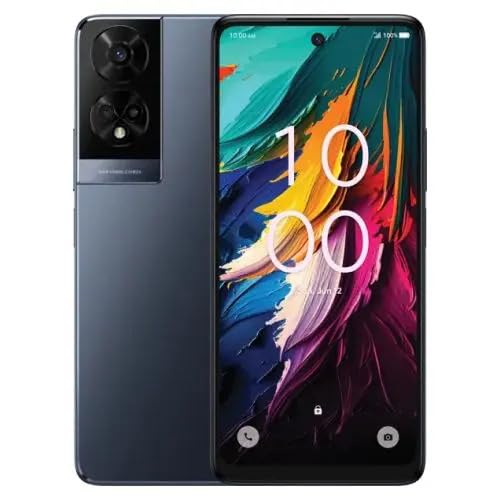
TCL 50 XE NxtPaper 5G — 6.6 inches, matte screen
At the same 6.6-inch diagonal as the two Samsungs, the TCL 50 XE makes the opposite display argument: instead of gloss and saturation, a matte NxtPaper panel with a paper-like texture that swallows reflections whole. Read the news on a bright platform, study on a sunlit bus, follow a long document without the mirror of your own face floating in it — the TCL is calm where AMOLED phones are dazzling, and for text-led lives calm wins days. It remains a full smartphone screen, colour and touch intact, simply finished like paper rather than like a showroom television.
The phone beneath the panel is an honest budget 5G handset, unlocked for the three national carriers its listing names, with 128GB of storage and performance aimed at communication, browsing and streaming. Its cameras document rather than dazzle, its software support window is shorter than Samsung’s, and its battery covers a normal day. None of that is the point of the device. The point is that within this size band, it is the only screen designed for readers — and readers know exactly who they are.
- Display: 6.6-inch matte NxtPaper, anti-glare paper finish
- Storage: 128GB
- Compatibility: unlocked for Verizon, T-Mobile and AT&T per listing
- Reading modes: optional reduced-colour paper-style view
- Network: 5G with LTE fallback
Strengths
- Glare-free reading that glossy rivals cannot imitate at any price here.
- Gentler long-session comfort for study, news and documents.
- Broad carrier compatibility across the three named networks.
Trade-offs
- Video loses the punch and black depth of the AMOLED picks.
- Shorter software support than Samsung or Google.
- Camera output is the most modest in this line-up.
Best for: readers and outdoor text-workers who choose screens by daylight behaviour. Not suited for: video-first buyers who want maximum contrast and colour.

Motorola Moto G Stylus 5G (2024) — 6.7 inches, above the frame
First, the label this guide insists on: at 6.7 inches, the Moto G Stylus sits a step above the 6.5 frame, and we list it as such rather than rounding it home. What it offers in exchange for that extra tenth is the only built-in stylus in this guide — a pen that lives inside the body, ready for margin notes, quick sketches, signed forms and the particular satisfaction of handwriting on a screen that is large enough to receive it. Students annotating slides, warehouse staff marking photos, and anyone whose thoughts arrive faster by hand will understand why this phone has a cult.
Motorola wraps the pen in a sensible new handset made for the US market: a big, smooth-scrolling display, a large battery, clean near-stock Android with genuinely useful gestures, and cameras that handle daylight documentation well. The stylus is a precision-enough tool for notes and markups rather than a digital artist’s pressure-sensitive brush, and Motorola’s update cadence trails Samsung’s — the two honest asterisks. Neither dents the core fact: if a pen matters to you, this is the only door in the band, and the extra tenth of an inch is partly what makes the pen useful.
- Display: 6.7 inches — above the 6.5 frame, labelled as such
- Storage: 128GB with 8GB RAM
- Condition: new, made for the US market
- Stylus: built-in pen stored in the body
- Battery: large cell for full, busy days
Strengths
- The only integrated stylus here, always present because it lives in the phone.
- Big, smooth display that gives handwriting and split-screen room to breathe.
- Clean software and US-market simplicity with no variant homework.
Trade-offs
- At 6.7 inches it is the joint-largest phone in the guide.
- The pen suits notes and markup, not professional illustration.
- Update support is shorter than Samsung’s or Google’s runway.
Best for: note-takers, students and field workers who think with a pen in hand. Not suited for: buyers strict about staying at or under 6.6 inches.

Nothing Phone (2a) — 6.7 inches, above the frame
The second phone we refuse to round down: the Nothing Phone (2a) measures 6.7 inches, and its reason for existing is that phones became boring. Its transparent back and Glyph light interface — a pattern of LEDs that signals calls, timers and notifications in silent, glanceable code — make it the only handset in this guide with a genuine point of view. Under the theatre sits a well-judged midranger: a bright, smooth AMOLED display, a clean and distinctive Android skin with a dot-matrix personality, and performance that covers daily life with headroom.
The (2a) is the friendlier-priced expression of Nothing’s idea, which means plastic where the flagship uses glass and a camera system that is good rather than great — daylight shots please, dim rooms reveal the budget. Battery life is a quiet strength, and the Glyph lights turn out to be more useful than a gimmick has any right to be, especially for people who keep phones face-down in meetings. It is, like the Moto, above the 6.5 frame; unlike the Moto, it makes no apology, because design this deliberate is itself a size decision. Buy it if looking at your phone should occasionally make you smile.
- Display: 6.7 inches — over the 6.5 line, and flagged as over it
- Storage: 256GB with 12GB RAM in this listing
- Design: transparent back with Glyph light interface
- Software: Nothing OS, clean and distinctive
- Cameras: capable main system, midrange in low light
Strengths
- A personality no other phone here attempts, lights included.
- Generous storage and memory in this configuration.
- Clean software that stays quick and uncluttered over time.
Trade-offs
- Also 6.7 inches — the joint-largest body in the guide.
- Low-light photography is where its price class shows.
- The Glyph system delights some buyers and leaves others cold.
Best for: design-led buyers who want a big screen with a genuine identity. Not suited for: camera-first shoppers or anyone who finds light-up backs frivolous.

Google Pixel 9a — 6.3 inches, below the frame
Every size guide needs an escape hatch, and the Pixel 9a is this one’s: at 6.3 inches it sits below the 6.5 frame, included deliberately for readers who suspect the band is still too big for their hand. What Google packs into the smaller body is the strongest argument that size and capability have divorced — the best camera in this guide, powered by the same computational photography as Google’s flagships, a bright OLED display, a battery that embarrasses larger phones, and a seven-year update commitment starting from this new, unlocked 256GB listing.
The trade is purely spatial. Video is a little less cinematic at 6.3 inches, split-screen apps feel like a compromise, and two-thumb typing is snugger. In exchange you get a phone that reaches across its own screen, rides in any pocket, and can be used one-handed on a train strap without the pinky-shelf gymnastics the 6.7-inch pair demand. If your hands are smaller, your pockets are shallower, or your patience for slabs has run out, the 9a is not a consolation prize — it is the pick the rest of the guide must argue against, and several readers will find the argument fails.
- Display: 6.3 inches — below the 6.5 frame, by deliberate inclusion
- Storage: 256GB in this listing
- Condition: new, unlocked
- Camera: Google’s flagship-grade computational photography
- Support: seven years of updates from new
Strengths
- The best camera and longest support in the guide, in the smallest body.
- Genuine one-handed usability returns at this size.
- Battery stamina that contradicts its compact frame.
Trade-offs
- Smaller canvas for video, documents and split-screen work.
- Two-thumb typing is tighter than on the 6.6-inch picks.
- Charging is unhurried beside the fastest rivals in its class.
Best for: smaller hands and compact-phone loyalists who refuse to surrender camera quality. Not suited for: readers who came here specifically for the largest screen in the band.
How Do the Six Stack Up, Size First?
| Pick | True size | vs 6.5 frame | Condition / origin | Defining strength |
|---|---|---|---|---|
| Galaxy A55 5G | 6.6 in | Slightly above | New, Latin GSM variant | Premium build and AMOLED |
| Galaxy A35 5G | 6.6 in | Slightly above | Renewed, US model | Samsung value with support |
| TCL 50 XE NxtPaper | 6.6 in | Slightly above | New, US carriers | Matte reading screen |
| Moto G Stylus 5G (2024) | 6.7 in | Above the frame | New, made for US | Built-in stylus |
| Nothing Phone (2a) | 6.7 in | Above the frame | New, unlocked | Design and Glyph lights |
| Pixel 9a | 6.3 in | Below the frame | New, unlocked | Camera and compactness |
Notice what the table admits freely: nothing here is exactly 6.5 inches, because the market no longer sells that phone in any meaningful numbers. The neighbourhood is the category. Choose within it by the hand, the eye and the habit — pen, paper-matte, compact, premium — and the diagonal will take care of itself.
How Should You Choose Inside the 6.3-to-6.7 Band?
Use your current phone as the measuring instrument. If its screen feels right but its battery or camera has aged, shop the same diagonal and let the A35 or A55 argue for your money. If you regularly shift your grip to reach the top corner, or your thumb aches after long sessions, step down toward the Pixel 9a and notice how much of “big phone” was habit rather than need. If you watch long video daily, annotate documents, or split the screen between a call and a note, step up toward the 6.7-inch pair and accept the two-handed truth with good humour.
Then choose by the feature that survives novelty. A stylus is used weekly or never; a matte screen matters every sunny day or not at all; Glyph lights delight their owners for years or get switched off in week two. Be honest about which person you are — the guide has deliberately made each pick the champion of one honest trait rather than crowning a bland all-rounder, because in a band this tight, personality is the specification.
Finally, respect the paperwork picks: verify the A55’s bands against your GSM carrier before ordering, and schedule the A35’s renewed inspection — battery, screen, cameras — inside its first week. The other four are straightforward US or unlocked listings that ask nothing unusual of their buyers.
How Do You Set Up a Big-Screen Phone for One-Handed Sanity?
Every phone in this guide ships with reachability help that most owners never enable. Turn on the one-handed mode — a gesture shrinks the interface toward your thumb — and learn its trigger before you need it on a train. Move your most-used apps to the lower half of the home screen and let the top row hold widgets and occasional tools; arrange the keyboard with its one-handed or floating option if you type on the move. On the Samsungs, the side panel and routines can put your frequent contacts and apps along the edge your thumb already visits.
Choose the case for grip, not drama: a textured or matte case adds less width than a rugged armour shell and saves the micro-adjustments that tire a hand across a day. If you pick the stylus phone, spend ten minutes learning its quick-note gesture — pen out, screen wakes to a note — because that single habit is half the reason the phone exists. And set display zoom one notch smaller if your eyes allow it: the extra content per screen is the quiet dividend of this size band, and most owners leave it unclaimed.
What Mistakes Do Size Shoppers Make Most Often?
Trusting the headline number is the first: listings round, categories stretch, and a “6.5-inch class” label can hide anything from 6.3 to 6.8 — which is why this guide prints a checked diagonal for every pick and flags both phones that sit above the frame. The second mistake is ignoring the variant in the fine print, and the A55 is the standing example: a Latin GSM model is a fine phone bought knowingly and a frustrating one bought by assumption. Read origin lines the way you read sizes.
The third mistake is buying for the hand you wish you had. Large phones are returned by people who loved the screen in the shop and resented the body by Friday; if you cannot test the exact model, test its size class with any similar phone for a full day, case included. The fourth is forgetting that a renewed phone — the A35 here — deserves its inspection week, battery first. And the last is assuming bigger screens mean better phones: the smallest pick in this guide has its best camera, which should end that argument permanently.
Final Recommendation
Start with the renewed Galaxy A35 if you want the band’s mainstream centre — the big Samsung AMOLED, the long support, no variant questions — at refurbished economics. Step up to the A55 for the premium build if its GSM variant fits your carrier, choose the TCL if your screen time is reading, the Moto if your hand thinks in handwriting, the Nothing if design still matters to you, and the Pixel 9a if your hand has been quietly voting for smaller all along. The right phone in this neighbourhood is the one whose true size — printed honestly above, never rounded into a lie — matches the life it will be carried through, and on that standard, the smallest phone here might be the biggest answer of all.
Why Did 6.5 Inches Become the Centre of the Phone World?
Because three industries voted for it at once. Video pushed screens up: once phones became the default television for commutes and kitchens, every tenth of an inch paid rent in immersion. Batteries pushed with it — a larger body holds a larger cell, and the mid-sixes are where a full day’s battery fits without the phone becoming a brick. And app design settled the argument: the two-pane layouts, floating keyboards and picture-in-picture habits of modern software assume a canvas in this band and merely tolerate smaller ones. The result is a centre of gravity so strong that even this guide’s “compact” alternative, at 6.3 inches, would have been a giant a decade ago.
Understanding that history protects you from a marketing trick: manufacturers advertise diagonal growth as progress, generation after generation, long after the practical gains flattened. Within the 6.3-to-6.7 band, what you feel day to day is not the diagonal but the fit — width against thumb, weight against wrist, bezel against picture. That is why this guide spends its words on hands and habits rather than celebrating tenths, and why the most satisfied owners in this category are usually the ones who chose a size and stopped thinking about it, because the phone disappeared into the life it was serving.
There is a generational footnote worth knowing: foldables have begun stealing the “big screen” argument from slabs entirely, which is quietly freezing slab sizes where they are. The 6.5 neighbourhood is therefore not a waypoint on the road to ever-bigger phones; it is close to the settled answer for a one-piece handset, and a phone bought here today is buying into a stable idea rather than a passing one.
A Closer Second Look at Each Phone in This Band
Live with the Galaxy A55 for a month and the metal frame is the detail that keeps registering — the cool edge in the morning, the solidity setting it down on a counter. It feels like a phone that expects to be kept, which makes its variant homework the only friction in an otherwise grown-up ownership story. GSM buyers who clear that one check get the most conventionally premium object in the guide.
The renewed A35’s second look is about how little the refurbishment matters after week one. Once the battery check is done and the case is on, it is simply a big-screen Samsung doing Samsung things — the renewed label fades from consciousness while the saving remains in the bank. That fading is the strongest argument for renewed midrange phones generally, and this model is their tidy ambassador.
With the TCL, the second look happens outdoors, as it must: a month of sunny commutes either converts you to matte screens permanently or reveals that your life was indoors all along. Owners in the first group become evangelists, because nobody else in the price class is even attempting the thing the TCL does every day without being asked.
The Moto G Stylus, revisited, lives or dies by a single drawer-like question: is the pen out of its silo daily, or did it stay parked after the first fortnight? For annotators the answer stays daily, and the phone becomes irreplaceable at its price; for everyone else it is a fine big Motorola carrying a passenger. Know yourself before the pen casts its vote.
Nothing’s (2a) asks a parallel question about its lights. A month in, owners either read the Glyph patterns like a second language — that flash pattern is the school, that one is the courier — or they have silenced the whole system and kept a handsome, clean, big phone. Both outcomes are respectable; only the first justifies choosing it over the Samsungs.
And the Pixel 9a’s second look is the shortest: a month after “settling” for the smaller phone, most owners cannot remember what the extra tenths were for. The camera keeps winning moments, the hand keeps not aching, and the size debate quietly closes. If any paragraph in this section is likely to describe your future, let it vote accordingly.
What Else Changes as Screens Grow Inside This Band?
Typing changes first. At 6.3 inches, two-thumb typing is a snug, fast, error-prone-in-a-familiar-way experience; at 6.7, the keyboard spreads into something closer to a small tablet’s, with room for number rows and fewer collisions — one reason message-heavy workers gravitate upward. Reading changes next: the larger phones show several more lines per page and make PDF margins survivable, though the TCL’s matte finish matters more to readers than any tenth of an inch. Gaming and video reward size straightforwardly, with the caveat that the biggest bodies also tire the hands holding them horizontally through a long session.
Photography has a subtler relationship with size. The viewfinder grows, which genuinely helps framing, and larger bodies can carry larger camera hardware — but in this guide the smallest phone owns the best camera, a reminder that computation has decoupled image quality from body size. Battery follows size more obediently: bigger bodies hold bigger cells, yet bigger screens drink more, and the net effect in this band is a wash decided by each maker’s efficiency rather than by the diagonal.
Accessibility deserves its sentence too. Larger text settings on a 6.6 or 6.7-inch screen preserve more content per screen than the same settings squeezed onto a compact phone, which is why this band is often the kind choice for ageing eyes — with the Pixel 9a’s display-zoom options as the compact counter-offer. Size, in other words, is an accessibility feature as much as a media one, and choosing it for a parent or for your future self is a legitimate, even wise, way to shop this category.
How Do Pockets, Bags and Workplaces Vote on Size?
The most honest size test is not in a shop; it is in your own clothing. A 6.7-inch phone in a rugged case is a commitment that front jeans pockets register immediately, that cycling jerseys reject, and that small clutch bags simply refuse. Tradespeople who carry phones in chest pockets or tool belts feel the larger picks’ weight as a tool’s weight — acceptable, even reassuring — while runners and gym-goers feel the same grams as a nuisance looking for an armband. None of these votes is wrong; they are merely yours, and they outrank any reviewer’s hand size, including this guide’s.
Workplaces add their own clauses. Clinicians and warehouse staff who sanitise or glove up prefer phones that tolerate cases and one-handed grabs — an argument for the middle of the band. Drivers mounting phones on dashboards should remember that the largest picks plus a mount can crowd a windscreen’s lower corner, and that the stylus phone’s pen is a gift during parked paperwork. Office workers living on video calls will feel the bigger screens pay them back daily in faces that read clearly across a desk.
And households vote too: a phone that will be handed to a child for a car journey, or shared with a partner for navigation, earns its size in shared legibility. The band’s centre — the two Samsungs and the TCL at 6.6 — is where most of these everyday votes converge, which is precisely how 6.5 became the famous number in the first place: not by being anyone’s maximum, but by being nearly everyone’s compromise.
What Should You Do in the Shop, or in the Return Window, to Be Sure?
Run a ten-minute simulation with the exact phone or its size twin. Type a long message at your normal speed and count the errors and the grip shifts. Open a map, plan a route, and try to reach the far control one-handed. Read a full article standing, as if on a train, and watch a minute of video at arm’s length. Then put the phone in your actual pocket, sit down, stand up, and climb a few stairs. Discomfort announces itself within these ten minutes with remarkable honesty; so does delight.
Online buyers get the same test across the return window, with one addition for this guide’s two flagged picks: the A55 buyer confirms carrier behaviour — calls, data, messaging — on their own SIM in the first days, and the A35 buyer runs the renewed checklist of battery health, screen uniformity and camera function. Both checks are quick, both are decisive, and both convert the two most complicated listings in the guide into ordinary, confident purchases.
Frequently Asked Questions
Is any phone in this guide exactly 6.5 inches?
No, and the guide says so rather than rounding. The six picks measure 6.6, 6.6, 6.6, 6.7, 6.7 and 6.3 inches — the neighbourhood the market actually sells around the old 6.5 mark.
Will the Latin-variant Galaxy A55 work on my US carrier?
It is a GSM dual-SIM model described as US-compatible for LTE, not a US version. It can serve well on GSM networks, but verify your carrier’s bands against the A556E before ordering; that check is part of this pick’s purchase.
Does the renewed Galaxy A35 carry any extra risk?
The standard renewed kind: unit-level variation in battery health and cosmetics. Test both in the first week while returns are simple, and its long remaining Samsung support does the rest.
Is 6.7 inches too big for one-handed use?
For most hands, full one-handed reach is unrealistic at 6.7 inches; plan on two hands for typing and use one-handed modes for the rest. If that trade bothers you in a day of testing a similar-sized phone, the 6.3-inch Pixel 9a is the guide’s deliberate alternative.
Which pick is best for reading?
The TCL 50 XE, without a contest inside this band — its matte NxtPaper panel is the only screen here designed around glare-free text. If your reading happens mostly indoors at night, the AMOLED picks’ deeper contrast becomes the counter-argument.
Does the Moto G Stylus pen work like a flagship stylus?
It is a capacitive-style built-in pen aimed at notes, sketches and markup rather than pressure-sensitive art. For handwriting and annotation it is genuinely useful and always present, which is the advantage that matters.
Does a bigger screen in this band drain the battery faster?
Mildly, and the makers compensate with larger cells, so the practical spread across these six is about efficiency rather than inches. The Pixel 9a — the smallest phone here — is among the stamina leaders, while the big Moto G Stylus counters with one of the largest batteries in the guide. Judge endurance model by model, not by diagonal.
Are curved screens better at this size?
They feel slimmer and look dramatic, but every pick in this guide uses a flat or nearly flat panel, which most owners ultimately prefer for typing accuracy, cheaper protectors and fewer accidental touches. The band has quietly standardised on flat glass, and we count that as the market learning from its own experiment.
What size should I buy for a parent with ageing eyes?
Start at 6.6 inches — either Samsung, with display zoom enabled at setup — because the larger canvas keeps text big without hiding content. If the parent’s hands are small or arthritic, the lighter Pixel 9a with its own zoom settings is the kinder compromise; set it up for them, font and all, before handing it over.
Why does this guide include a phone below the range at all?
Because honest shopping includes the exit ramp. A measurable share of readers who search this category discover, on reflection or on testing, that they want smaller — and a guide that hides the best compact option to protect its own title would be serving itself, not them. The 9a is labelled below-frame everywhere it appears.
Do tablets or foldables make this size band pointless?
No — they bracket it. A foldable is a part-time tablet with a price and a crease; a tablet stays home. The 6.3-to-6.7 slab remains the always-with-you screen, which is why this band, and the honest numbers inside it, will matter for years.
How do I measure my current phone to compare?
Measure the lit screen corner to corner, not the body — or simpler, search your model’s specification for its display diagonal, then hold that number against the checked figures in this guide rather than against category labels. If your current phone is a 6.1 and feels small, the jump to 6.6 is larger in the hand than the half-inch suggests, because width grows with it; if yours is already 6.7 and feels normal, everything from the A55 down will feel easy. Anchoring to your own handset converts this whole category from guesswork into arithmetic.
Does screen size affect photo quality when reviewing pictures?
It affects your judgement of them. A soft photo can hide on a 6.3-inch screen and confess itself on a television, while the bigger panels here — especially the two AMOLED Samsungs and the Nothing — show focus and noise honestly enough for a first cull. Serious photographers should still judge keepers on the largest screen they own; everyone else can trust that what looks sharp on these displays will look sharp anywhere phones are viewed.
Which of these six is easiest to repair or live with long-term?
Samsung’s scale gives the A35 and A55 the deepest bench of cases, protectors and repair shops, and their update policies stretch furthest alongside Google’s. The Pixel 9a matches them on software years. The TCL, Moto and Nothing are all serviceable mainstream devices, but their accessory shelves are thinner — a small, real cost of choosing personality over ubiquity.
A final note on the number in this guide’s title: 6.5 inches survives as a search term because it names a feeling — a phone that is big enough for everything and small enough for life — more than a measurement. The six phones above deliver that feeling at 6.3, 6.6 and 6.7 inches respectively, and the guide’s loyalty is to the feeling, reported with honest numbers. Choose the one your hand believes, and the search term will have done its job.
What about screen protectors and cases at these in-between sizes?
Buy them by exact model name, never by the category number — a protector cut for a 6.6-inch Samsung will not forgive a 6.7-inch Motorola, and “fits 6.5-inch phones” is not a specification any careful seller uses. The mainstream picks here, both Samsungs and the Pixel, enjoy the deepest accessory benches; the TCL, Nothing and Moto are served well enough online, with the stylus phone’s cases needing a pen-friendly design that keeps the silo accessible. Order the case with the phone, sized from the model number on the listing, and the in-between sizes stop being a problem at all.
Is the difference between 120Hz and 90Hz visible at this size?
In scrolling, yes, mildly — text stays a touch more legible in motion on the faster panels, and the effect is easier to see on larger screens simply because more content is moving. It should never outrank size fit, camera or battery in your decision, and several picks here let you drop to a lower rate to save power. Treat refresh rate as seasoning: pleasant when present, invisible once you stop comparing side by side.
Should I wait for phones to return to exactly 6.5 inches?
No — the drift was one-directional and the band is the destination, not a detour. Waiting would trade years of use against a tenth of an inch you will stop perceiving within a week, while the phones above already deliver everything the 6.5 idea ever promised. Buy the neighbourhood, enjoy the house.
Do larger phones in this band cost more to insure or repair?
Screen repairs scale gently with size and with brand ubiquity rather than with the diagonal alone — a Samsung or Pixel panel is a routine, competitively priced job almost anywhere, while the Nothing and TCL panels may mean a posted part and a short wait. None of the six is exotic enough to fear, and a good case plus a protector remains cheaper than any repair menu ever printed. If clumsiness is a known trait, let the mainstream picks’ repair benches vote in their favour.
Can a 6.6 or 6.7-inch phone still fit a car mount and a gimbal?
Standard mounts, yes — the whole band sits inside the grip range of mainstream car holders, bicycle mounts and phone gimbals, though the heaviest combinations at 6.7 inches deserve the sturdier end of those accessory ranges. Check the mount’s stated width and weight comfort against your exact model, case included, and this entire size class travels without drama.
What is the quickest way to decide between the two Samsungs?
Ask two questions. Is your network GSM with bands the Latin A55 covers, and do you value the metal build enough to do that homework? Two yeses point to the A55. Anything else — a wish for the US model, a tighter budget, an indifference to frame materials — points to the renewed A35, which keeps the same screen class and software while removing every complication except the inspection week.
What if I am buying for someone else?
Default to the centre of the band and the least complicated listing: the renewed A35 if the budget leads, the TCL if the recipient reads outdoors, the Pixel 9a if their current phone is small and they never asked for bigger. Include the receipt, mention the return window without embarrassment, and let their hand cast the deciding vote — a gift phone that fits is remembered fondly, while a gift phone that fights its owner is remembered accurately.
How long do phones in this band typically stay comfortable to use?
Size does not age; software does. The picks with the longest declared support — the Samsungs and the Pixel — will feel current for the longest stretch, while every phone here has the performance headroom for years of ordinary apps. What dates a big phone fastest is a tired battery, which is why the renewed A35’s first-week battery check and the whole band’s mainstream repair options matter more to longevity than any diagonal. Buy the size your hand likes, keep the battery healthy, and the band will serve as long as you ask it to.
Is there a “right” size for watching films on trains and planes?
The 6.6-to-6.7 end, honestly — on a tray table or in two hands at chest height, the larger panels here turn a commute into a cinema seat, and their batteries outlast the journey. The Pixel 9a counters with the screen you can hold longest without fatigue on a crowded service where elbows are contested. Both answers are defensible; the train, as much as the hand, gets a vote.
Related Guides
One parting test, offered in the spirit of the whole guide: whichever phone you choose, hold it during the first evening’s ordinary rituals — cooking with a recipe on screen, messaging from the sofa, reading in bed — and notice whether your hand ever comments. Silence from the hand is the sound of the right size, and every phone above is capable of earning it for the right owner. Measured honestly and matched to a real hand, a phone in this band stops being a specification and becomes what it was always supposed to be: unnoticeable, in the best way, for years. Neighbouring sizes and shapes live in best 6-inch smartphones, best 7-inch smartphones and best smartphones with a stylus.


