What's inside
- Key Takeaways
- Quick Picks
- How Did We Choose Phones for a GSM Brief?
- What Does GSM Mean on a Phone Listing in 2026?
- Unlocked, GSM-Unlocked and Carrier-Unlocked: Are They the Same?
- What Do Bands Actually Mean, in Plain Language?
- eSIM or Physical SIM: Which Serves a GSM Buyer Better?
- The Six GSM Phones, Examined One by One
- Why Does Voice Calling Have Its Own Compatibility Question?
- How Do Smaller Carriers and Prepaid Networks Fit the GSM Picture?
- How Do the Six Compare on Network Terms?
- Which GSM-Buying Mistakes Strand People With the Wrong Phone?
- How Do You Check a Phone Against Your Carrier Before Buying?
- How Does Dual SIM Change Life for Cross-Border Users?
- How Should You Handle Roaming and Travel Data Without Regret?
- What Changes When You Move a GSM Phone Between Households?
- One More Scenario: The Student, the Expat and the Second Number
- Final Recommendation
- A Short Field Guide to Reading Any Phone Listing’s Network Claims
- Frequently Asked Questions
- Related Guides
As an Amazon Associate I earn from qualifying purchases. This post may contain affiliate links at no extra cost to you.
gizmoverdict.com is reader-supported. When you buy through links on our site, we may earn an affiliate commission.
Where to buy: A pair of picks below are international GSM variants — a Galaxy A55 sold as a Latin variant and a Zenfone 10 that is GSM-only — and their network limits are stated wherever they appear, in the table, the headings and the comparison. A GSM phone bought for the wrong network is not a bargain at any price, so this guide spends as many words on compatibility — bands, locks, variants, voice certification — as on the phones themselves.
The hunt for the best affordable GSM smartphones starts from a practical anxiety: will this phone actually work on my network? GSM began life as a mobile standard — the system behind SIM cards and easy handset swapping across most of the world — while parts of the US market historically ran on CDMA networks that tied phones to carriers more tightly. The old networks have largely retired, but the vocabulary survived, and “GSM unlocked” on a modern listing is really a promise about freedom: the phone takes a SIM, is not locked to one carrier, and carries the bands to work across GSM-based networks at home and abroad, from a city-centre office to a village two continents away.
That promise has fine print, and the fine print is this guide’s subject. An international variant may support GSM carriers beautifully while lacking a band your local network leans on, or omitting CDMA-legacy compatibility entirely — which matters on networks whose coverage still leans on older infrastructure in places. A phone can also be “unlocked” in the sense that no carrier owns it, yet still be a regional variant whose warranty and band set assume another continent. None of that makes such phones bad purchases; the Galaxy A55 and Zenfone 10 below are excellent devices. It makes them purchases that must be matched to a network deliberately.
The six picks therefore divide into two honest families. Four are straightforward US-friendly unlocked phones: a TCL that advertises compatibility with all three national networks, an HMD built as a US version, Nothing’s unlocked (2a), and Google’s Pixel 9a sold new. Two are GSM specialists — the A55 Latin variant and the GSM-only Zenfone 10 — included because travellers, dual-SIM users and GSM-carrier customers will get more from them than from any domestic model, provided their network is the right one. Read your carrier first, then the phones — and keep reading the carrier’s answer all the way to the checkout, because in this one category the network is half the product.
Key Takeaways
- “GSM unlocked” today means SIM-based freedom from carrier locks — but band support still decides real-world coverage, phone by phone.
- The Galaxy A55 here is a Latin variant: dual-SIM GSM, US-compatible LTE per its listing, not a US version — check your carrier’s bands before buying.
- The Zenfone 10 is GSM-only and does not support CDMA; on GSM carriers it is superb, on CDMA-legacy networks it is the wrong phone.
- The TCL 50 XE states compatibility with Verizon, T-Mobile and AT&T in its listing — the broadest stated welcome in this guide.
- The HMD Fusion (US Version) and the new Pixel 9a are the low-risk picks: domestic variants, unlocked, no band homework required.
- A carrier-locked phone at a discount is not an unlocked phone; the lock, not the discount, is the fact that follows you.
Quick Picks
| Pick | Badge | Why it earns its place |
|---|---|---|
| Samsung Galaxy A55 5G (Latin Variant) | Dual-SIM GSM traveller | A polished mid-ranger in its Latin GSM form, with two SIM slots for people who live across borders. |
| ASUS Zenfone 10 (GSM, International) | GSM-only pocket flagship | A compact powerhouse that supports GSM networks only — glorious on the right carrier, wrong on the wrong one. |
| TCL 50 XE NxtPaper 5G | All-network welcome | Its listing names Verizon, T-Mobile and AT&T, and its matte screen suits heavy readers. |
| Nothing Phone (2a) | Unlocked all-rounder | Clean software, a fast screen and an unlocked 5G radio for GSM carriers, with real design character. |
| HMD Fusion 5G (US Version) | Domestic and repairable | The US version of HMD’s modular phone — no variant ambiguity, and fixable by design. |
| Google Pixel 9a | New, unlocked, effortless | Google’s current value flagship, sold new and unlocked, with the longest software runway here. |
How Did We Choose Phones for a GSM Brief?
Compatibility evidence came first, ahead of every other virtue. Each pick’s listing or established model specification had to say something concrete about its network position: a stated carrier list, a US-version designation, a GSM-only declaration, a dual-SIM variant identity. Phones whose network story could not be pinned down did not enter the list, because a GSM guide that guesses at compatibility fails at its only job. Where a pick carries a limitation — the Zenfone’s missing CDMA, the A55’s Latin-variant status — that limitation is treated as part of the product, printed everywhere the phone is recommended.
Affordability was judged as in this site’s wider value guides: cost across the ownership, with support calendars and battery stories weighted heavily, and no prices printed, because network-specific deals churn too fast for a printed figure to stay honest. All six are unlocked listings; none requires a contract, a carrier’s permission or a prayer.
The final filter was usefulness to the actual GSM shopper, who tends to be one of three people: a traveller or dual-national who swaps SIMs across borders, a customer of a GSM-based carrier or its smaller virtual networks who buys phones outright, or a bargain-hunter eyeing an international variant and wondering what the catch is. Each pick below is introduced through the eyes of the shopper it serves, and warned against in the hands of the shopper it does not.
What Does GSM Mean on a Phone Listing in 2026?
Strictly, GSM is a second-generation mobile technology whose original networks have been switched off in the US. Nobody buying a phone today will ever place a call over a 2G GSM signal at home. Yet the term persists on listings because it became shorthand for an entire ecosystem: SIM-card phones, built to standards shared across Europe, Asia and most of the Americas, interchangeable between carriers in a way the old CDMA ecosystem — historically anchored by Verizon and Sprint in the US — was not.
On a modern listing, then, read “GSM” as a statement of family, not of radio technology. A GSM phone is a phone from the SIM-based world: it expects a SIM or eSIM, it is built around the band plans of GSM-descended LTE and 5G networks, and it is most at home on T-Mobile and AT&T and the many smaller networks that ride on them. A “GSM unlocked” phone adds the second promise: no carrier lock binds it, so the SIM in the tray can be yours, a travel SIM, or a local SIM bought in an airport on another continent.
The mirror-image warning also survives from the old divide. A GSM-only international phone may simply not speak to networks whose heritage is CDMA, and even on GSM carriers, an international variant’s band selection is tuned to its home region. Modern US networks have largely converged on LTE and 5G standards that narrow these gaps every year — which is why several picks here work across all three national carriers — but “largely” is doing real work in that sentence, and the pick sections below say exactly where each phone stands.
Unlocked, GSM-Unlocked and Carrier-Unlocked: Are They the Same?
Not quite, and the differences are where buyers get stung. “Factory unlocked” describes a phone sold free of any carrier lock from birth — most picks here. “Carrier unlocked” describes a phone that began life locked to one network and was later released; it works elsewhere, but its band set and software were chosen by the original carrier, and its update schedule may still follow that carrier’s calendar. “GSM unlocked” adds the family statement: the phone is unlocked and belongs to the GSM/SIM world, which quietly implies it was never built for CDMA-heritage networks at all.
The practical questions cut through the vocabulary. Will it activate on my carrier — asked of the carrier’s own compatibility checker, using the phone’s exact model number? Does it carry my carrier’s main LTE and 5G bands, including the ones used outside cities? Will features like Wi-Fi calling and visual voicemail work, since carriers sometimes reserve their polish for phones they sell? And if it is an international variant, whose warranty answers when something breaks? A phone that passes those four questions is unlocked in every sense that matters; a phone that fails one is a compromise to enter knowingly.
Beware, finally, the locked phone wearing an unlocked price tag’s confidence. Carrier-locked handsets are often discounted precisely because the lock is valuable to the carrier, and a locked phone cannot join another network until its terms are satisfied — a fact some marketplace listings mention in the smallest available print. Every pick in this guide is an unlocked listing; if you wander beyond it, read the lock status before the colour options.
What Do Bands Actually Mean, in Plain Language?
A band is a slice of radio spectrum, identified by a number, on which a carrier broadcasts its signal in a given place. Your phone must be able to listen on the slices your carrier uses where you live, work and travel — and phones are built with a selected set of ears, chosen for the region they were made to serve. A US model carries the full American set; a Latin variant carries the Americas’ shared core plus its home region’s emphases; a global traveller like the Zenfone carries a wide international set tuned away from CDMA heritage entirely.
Two practical consequences follow. First, a phone can work beautifully in a city — where carriers deploy many overlapping bands — and disappoint on a rural road served by a single extended-range band the phone lacks. Compatibility is therefore partly geography: the checker says yes for the nation, but your roads cast the deciding vote. Second, 5G adds its own band map layered over LTE’s, so a phone can be fully 4G-compatible and partially 5G-compatible with the same carrier. None of this requires expertise to handle; it requires the humility to run the exact model through the carrier’s checker and to test your own weakest-signal places during the return window, which is the ritual this guide keeps recommending because it works.
It also explains the shape of this guide’s list. The phones with domestic US identities — the Pixel, the HMD US version, the TCL with its three named networks — carry band sets drawn for the whole American map, which is why their homework level reads “low.” The international pair carry maps drawn elsewhere, superbly for their own geographies. Neither is a defect. A map is only wrong when it is not yours.
eSIM or Physical SIM: Which Serves a GSM Buyer Better?
The eSIM is a rewritable chip built into the phone, loaded with a carrier profile by QR code or app instead of by a plastic card. For the GSM shopper its virtues compound: a travel data plan can be bought and activated from a departure-lounge chair; a second line can live alongside a physical SIM even in a single-slot phone; and there is no tray to lose, no pin to misplace, no airport kiosk queue. Google’s Pixel line has championed the arrangement, and pairing a home physical SIM with travel eSIMs is now the default choreography of the well-prepared traveller.
The physical SIM keeps its own honest advantages. It moves between phones in seconds — a lifeline when a handset dies and a spare must serve tonight — it works on every carrier on earth without an activation portal, and it asks nothing of a phone’s software. Households that hand phones down, and users whose carriers are small or old-fashioned in their systems, often find the card’s dumb reliability worth more than the eSIM’s elegance.
The mature position is to want both and to check what your chosen phone actually offers, because the combinations vary: SIM plus eSIM, dual physical SIMs as on the A55 variant, or eSIM-forward designs. For the cross-border reader, dual capability of either flavour is the feature; for the domestic reader, it is insurance for a future trip. Either way, the tray-and-chip question belongs on the same checklist as bands and locks — asked before purchase, answered from the exact model’s specification.
The Six GSM Phones, Examined One by One

Samsung Galaxy A55 5G (Latin Variant) — Dual-SIM GSM traveller
Begin with the phone that most needs its label read carefully. This Galaxy A55 listing is the A556E Latin variant: a dual-SIM, GSM-unlocked international model described as US-compatible on LTE — not the US retail version of the phone. Within those terms it is a genuinely attractive device: Samsung’s most polished A-series design of its generation, a bright 120Hz AMOLED screen, a metal frame that feels a class up, and two SIM slots that let a traveller keep a home number and a local number alive in the same handset.
The variant status shapes who should buy it. On GSM-based carriers, with the band check done, it behaves as the premium mid-ranger it is, and for people whose lives straddle the US and Latin America it may be the single most suitable phone in this guide — the variant is built for exactly that geography. On a network whose coverage leans on bands the variant omits, or for a buyer who needs a US warranty’s simplicity, the same phone becomes the wrong tool. Samsung’s software support is strong, the camera is capable and stabilised, and the battery is a full-day unit; none of that rescues a mismatched network, which is why this pick leads the guide: it teaches the guide’s lesson by example.
- Variant: Latin A556E, dual-SIM GSM unlocked — not a US version
- Listing position: US-compatible LTE; verify your carrier’s bands
- Display: AMOLED, 120Hz refresh
- Storage: 128GB, per the pool listing
Strengths
- Dual SIM slots serve cross-border lives no single-SIM rival here can.
- The most premium build and screen in Samsung’s A-series of its year.
- Strong Samsung support and a stabilised camera round out a complete phone.
Trade-offs
- Regional variant: band coverage and warranty are the buyer’s homework.
- Not the choice for CDMA-heritage network expectations.
- Buyers wanting a domestic retail unit should look at the Pixel or HMD picks.
Best for: dual-SIM travellers and GSM-carrier customers who verify bands before buying. Not suited for: anyone who wants US-retail simplicity or whose carrier check fails.

ASUS Zenfone 10 (GSM, International) — GSM-only pocket flagship
The Zenfone 10 is the most powerful phone in this guide and the most explicit about its limits: an international version, GSM unlocked, which does not support CDMA networks. Read that sentence as the whole review in miniature. On a GSM carrier, this is a compact flagship with a top-tier processor, a superb 5.9-inch AMOLED running at high refresh, a headphone jack that refuses to die, and a size that respects pockets and one-handed use. On the wrong network heritage, it is an elegant paperweight, and no discount redeems it.
ASUS built the Zenfone 10 for people who never accepted that small must mean compromised: flagship silicon, generous memory and storage in this pool configuration, a battery that embarrasses larger phones, and a gimbal-stabilised camera that punches far above the phone’s footprint. Its software is close to stock with thoughtful one-handed touches. The GSM-only caveat is not a flaw in the phone; it is a property of its intended world, which is most of the planet. US buyers on GSM-based networks get a genuinely special device; everyone else gets a clear, honest warning, delivered here as loudly as the praise.
- Variant: international version, GSM unlocked — no CDMA support
- Display: 5.9-inch AMOLED, high refresh
- Configuration: 256GB storage with 8GB memory, per the pool listing
- Character: compact flagship, headphone jack, gimbal camera
Strengths
- Flagship performance in the only genuinely small body in this guide.
- Battery life that defies its dimensions.
- A clean software build with one-handed design taken seriously.
Trade-offs
- GSM-only: unsuitable for CDMA-heritage networks, full stop.
- International variant — warranty and band checks are the buyer’s duty.
- ASUS’s update calendar is shorter than Google’s or Samsung’s.
Best for: GSM-carrier customers who want a small, serious flagship. Not suited for: anyone on a CDMA-heritage network, or buyers who skip compatibility checks.
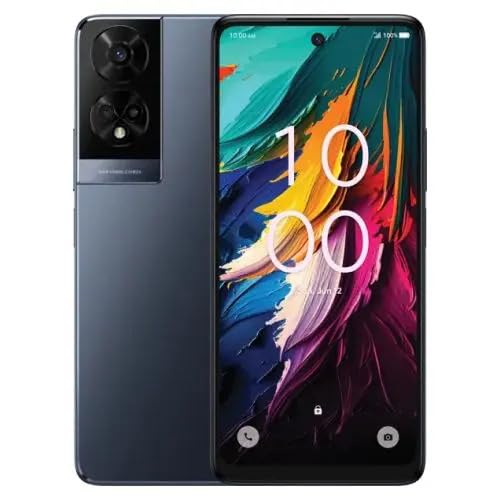
TCL 50 XE NxtPaper 5G — All-network welcome
After two picks wrapped in caveats, the TCL 50 XE arrives like a deep breath: its listing states compatibility with Verizon, T-Mobile and AT&T — all three national networks named outright. That breadth is rare at any price and remarkable in an affordable phone, because it means the network conversation can end at the listing rather than beginning there. Whatever your carrier today, and whichever you flee to after the next price rise, this phone is built to come with you.
The phone behind the welcome is TCL’s reading-first design: a matte NxtPaper display at 90Hz that trades glossy saturation for glare-free comfort, paper-like reading modes, 128GB of storage and everyday performance tuned for browsing, messages and video. It is not a photographer’s phone and not a gamer’s, and its colours are deliberately muted by the anti-glare finish. But as an affordable GSM-era all-rounder — the phone for the network-hopper, the prepaid-plan optimiser, the reader — it occupies ground nothing else in this guide contests. Freedom, in this category, is a specification; the TCL lists it in the title.
- Listing position: unlocked for Verizon, T-Mobile and AT&T
- Display: matte NxtPaper, 90Hz refresh
- Storage: 128GB, per the pool listing
- Character: reading comfort, network flexibility
Strengths
- The broadest stated carrier compatibility in the guide, straight from the listing.
- Matte screen comfort for long reading sessions indoors and out.
- An easy phone to move between carriers and prepaid plans.
Trade-offs
- Muted colours and a modest camera limit its media ambitions.
- Performance is everyday-grade rather than future-proofed.
- The paper-like finish is an LCD treatment, not true e-ink.
Best for: network-switchers, prepaid-plan shoppers and heavy readers. Not suited for: buyers who want vivid colour and camera power above flexibility.

Nothing Phone (2a) — Unlocked all-rounder
Nothing’s Phone (2a) is the pick for the GSM shopper who wants the network question settled quietly and the phone itself to be the interesting part. It is an unlocked 5G handset at home on GSM carriers, with a 120Hz AMOLED display, a processor with real headroom, and the pool’s generous memory-and-storage configuration keeping it fluent for years. Its transparent back and glyph lights give it a personality no other affordable phone attempts, and its software is the cleanest in this guide — close to stock Android, free of duplicate apps and advertising.
As with every unlocked phone, the sensible ritual applies: confirm your carrier’s activation and band support for the exact model, particularly if your network is a smaller virtual carrier riding on a national host, since feature support like Wi-Fi calling can vary there. Nothing’s support commitment is respectable rather than class-leading, and the camera is good rather than great, but the whole package coheres: this is the phone in the guide most likely to be enjoyed daily rather than merely used, and enjoyment, across a three-year ownership, is a form of value accountants underrate.
- Network position: unlocked 5G, aimed at GSM carriers
- Display: AMOLED, 120Hz refresh
- Configuration: 12GB memory, 256GB storage, per the pool listing
- Character: glyph design, clean software, brisk performance
Strengths
- The most complete everyday experience among the GSM picks.
- Headroom in memory and storage protects a long ownership.
- Design and software personality that survive the honeymoon period.
Trade-offs
- Carrier feature support should be verified on smaller virtual networks.
- Camera trails the Pixel 9a’s, especially after dark.
- No card slot; the internal storage is the whole provision.
Best for: GSM-carrier customers wanting an unlocked phone with character and pace. Not suited for: buyers who need a domestic-variant warranty story above all.

HMD Fusion 5G (US Version) — Domestic and repairable
The HMD Fusion removes the variant question entirely by being the US version: an unlocked domestic model whose network position needs no translation. That alone earns it a place in a GSM guide, because a large share of GSM shoppers are not travellers at all — they are ordinary US buyers who want an unlocked phone without a research project attached. The Fusion answers them, and then adds its own eccentricity: a modular design accepting snap-on outfits, and a construction meant to be opened and repaired by its owner.
Performance sits at the sensible end of the scale: a 128GB phone for communication, browsing, photography and video, with clean software and a design philosophy that treats longevity as a feature. The modular outfits — extra battery, gaming controls, lighting for content creation — let one phone bend toward a hobby without a replacement. In a guide about matching phones to networks honestly, the Fusion is the low-drama option: US version, unlocked, repairable, and priced by its maker’s value instincts. Buyers whose carrier is a mainstream GSM network or its virtual offspring can order it with the least homework in this entire list.
- Variant: US Version, unlocked — no regional ambiguity
- Storage: 128GB, per the pool listing
- Design: modular outfits, owner-repairable construction
- Character: clean software, longevity-first philosophy
Strengths
- The simplest network story here: a domestic unlocked variant.
- Repairability stretches the phone’s affordable years further.
- Modular accessories adapt the phone instead of replacing it.
Trade-offs
- Performance is modest beside the Zenfone and Pixel picks.
- The outfit ecosystem is young; each accessory is a separate purchase.
- Screen and camera are everyday-grade rather than guide-leading.
Best for: US buyers wanting unlocked freedom without variant homework, and repair-minded owners. Not suited for: performance seekers, who should take the Zenfone on GSM or the Pixel anywhere.

Google Pixel 9a — New, unlocked, effortless
The Pixel 9a closes the list as the reference answer: Google’s current value phone, sold new and unlocked in this pool listing with 256GB of storage, carrying no variant caveats worth the name. Its network story is the modern, boring, wonderful one — an unlocked US-market phone that activates on the national carriers and their virtual networks with the least friction in the guide, and roams the GSM world abroad with Google’s band support behind it.
Everything else about the 9a reinforces the word “effortless.” The camera is the best in this guide by a distance that matters at family events and in dim rooms. The software is Google’s cleanest expression, with call screening and transcription quietly saving time weekly, and the support commitment is the longest here — the property that turns an affordable phone into a five-year decision rather than a two-year one. The display is bright and fluid, the size manageable, the whole device a study in removing reasons to think about your phone. If the GSM question is the only research you wanted to do, the 9a is the phone that lets you stop researching.
- Network position: unlocked, US-market model, sold new
- Storage: 256GB, per the pool listing
- Display: bright OLED, high refresh
- Support: the longest software runway in this guide
Strengths
- Best camera and best support in the guide, in a new unlocked phone.
- The least network friction of any pick, at home and abroad.
- Google’s software features compound in value over a long ownership.
Trade-offs
- It asks the largest commitment of the six, in exchange for the longest service.
- Charging speeds remain unhurried by flagship standards.
- No card slot, though the generous internal storage softens the point.
Best for: buyers who want the GSM question and every other question answered in one new phone. Not suited for: the strictest budgets, or dual-SIM travellers who need the A55’s slots.
Why Does Voice Calling Have Its Own Compatibility Question?
Because modern calls no longer travel the way they once did. Voice now rides the LTE and 5G data networks themselves — the technology called VoLTE — and carriers maintain lists of phones certified to place those calls on their systems. A phone can show full signal bars for data while its calls fail or fall back awkwardly if the carrier does not recognise the model for voice service. This is the trap that replaced the old CDMA-versus-GSM wall: less visible, more bureaucratic, and entirely checkable in advance.
The practical reading is simple. A phone sold by or certified for your carrier places calls without negotiation. A domestic unlocked model from a major maker — the Pixel, the HMD US version, the TCL here — is broadly recognised and rarely argues. An international variant may need the carrier’s confirmation that voice service is enabled for that exact model, and on some networks a setting buried in the phone’s menus must be switched on by hand. None of this is a reason to fear the international picks; it is a reason their homework sections in this guide are longer. Five minutes with the carrier’s checker covers voice as well as data — ask it both questions while you are there.
Emergency calling deserves its own sentence, because it concentrates the mind: any phone should reach emergency services, but a handset fighting its network helps nobody in a crisis. If a compatibility check returns ambiguity for a phone intended for an elderly relative or a lone worker, treat the ambiguity as a no and choose one of this guide’s low-homework picks instead. Some savings are not worth the scenario in which they are tested.
How Do Smaller Carriers and Prepaid Networks Fit the GSM Picture?
Most smaller carriers are guests on a national host’s network, and their customers inherit the host’s band map — with an activation system of their own laid on top. That layering explains the prepaid world’s folk wisdom: some unlocked phones activate in minutes, others argue for an afternoon, and the difference is rarely the radio. It is whether the smaller carrier’s systems recognise and welcome the exact model. GSM-family phones have historically had the smoother ride here, because the SIM-based world’s whole design assumes handsets arriving from anywhere.
For the prepaid shopper, this guide’s practical order follows from that reality. The TCL, whose listing courts all three national networks, and the Pixel 9a, whose domestic identity every system knows, are the path of least resistance. The Nothing and the HMD follow closely. The international pair remain excellent for prepaid customers on GSM hosts — after the checker has blessed the exact variant — and poor gambles for anyone who skips that blessing. Prepaid savings are real money across a year; spending ten minutes to protect them is the best-paid ten minutes in this entire purchase.
How Do the Six Compare on Network Terms?
| Phone | Network position | SIM story | Homework level | Best matched shopper |
|---|---|---|---|---|
| Galaxy A55 (Latin) | GSM unlocked, Latin variant, US-compatible LTE | Dual SIM | High — verify bands | Cross-border traveller |
| Zenfone 10 | GSM-only international, no CDMA | Dual SIM class | High — GSM carriers only | Compact-flagship seeker on GSM |
| TCL 50 XE NxtPaper | Unlocked for Verizon, T-Mobile, AT&T per listing | Standard | Low | Network-switcher, reader |
| Nothing Phone (2a) | Unlocked 5G, GSM carriers | Standard | Low–medium | Design-led everyday user |
| HMD Fusion | US Version, unlocked | Standard | Lowest | Homework-averse buyer |
| Pixel 9a | Unlocked US model, new | SIM + eSIM class | Lowest | Set-and-forget owner |
Which GSM-Buying Mistakes Strand People With the Wrong Phone?
The classic stranding is buying an international variant for a network it never courted. The listing says “unlocked,” the price says “bargain,” and the phone arrives unable to activate, or activating with coverage full of holes where a missing band mattered. The defence is unglamorous and total: run the exact model number through your carrier’s compatibility checker before money moves, and treat a failed or ambiguous result as the answer, not as a challenge. The Zenfone 10 in this guide is a superb phone; on the wrong network it is a superb phone that cannot make calls, and both halves of that sentence deserve equal print.
The second mistake is confusing “works” with “works fully.” A phone may activate and browse while Wi-Fi calling, visual voicemail, or a carrier’s fastest 5G bands quietly refuse to engage, because carriers extend their polish preferentially to models they certify or sell. If those features are load-bearing in your life — Wi-Fi calling in a basement flat, say — verify them by name for the exact model, not by family resemblance.
Third, buyers forget the travel direction. A US-variant phone is not automatically a world phone, and an international variant is not automatically a US phone; the two optimise for different band maps. Decide which geography will judge the phone harshest — your daily commute or your annual month abroad — and buy for that geography, renting or borrowing for the other if needed.
Finally, do not let a locked phone’s discount impersonate value. A locked handset is a subscription wearing a phone’s clothes: the saving is repaid in inflexibility the first time a better plan, a move abroad or a family hand-me-down arrives. Unlocked costs more on the day and less across the years, which is the arithmetic this entire guide runs on.
How Do You Check a Phone Against Your Carrier Before Buying?
Use the carrier’s own tools, in this order. First, the online compatibility checker, fed with the exact model number — for the A55 here, that means the A556E variant identity, not the words “Galaxy A55.” Second, the band comparison: list your carrier’s principal LTE and 5G bands, including any rural or extended-range band your area depends on, and confirm each against the phone’s specification. Third, a call or chat with the carrier naming the features you cannot live without, and a screenshot of the answer.
Smaller virtual networks — the prepaid brands riding on national hosts — deserve one extra step, because their activation systems can be pickier than their hosts’. Their own checkers and support forums will usually name the exact models known to activate cleanly. The TCL and the Pixel, with the broadest stated welcomes here, are the picks that most often sail through such checks; the international pair deserve the full ceremony, and reward it when the answer is yes.
After the phone arrives, test like a sceptic during the return window: calls in your weakest-signal room, data at your commute’s dead spots, Wi-Fi calling on and off, a photograph sent over the mobile network. Compatibility is a property of places, not of paperwork, and the places that matter are yours.
How Does Dual SIM Change Life for Cross-Border Users?
Two active numbers in one phone dissolves a whole category of travel friction. The home number stays reachable for the bank’s verification text and the family’s call; the local SIM carries cheap data and local calls at local prices; and neither requires a second handset, a pocketful of SIM ejector pins, or the nightly ritual of deciding which phone to charge. The Galaxy A55’s dual-SIM Latin variant exists precisely for this life, which is why its regional identity is a feature to its intended buyer rather than a caveat.
Modern variations refine the pattern: many phones pair a physical SIM with an eSIM, letting a travel data plan be added from an app in a departure lounge. However your chosen phone implements it, the discipline is the same — label each line clearly in settings, set which line carries data before the roaming charges teach you, and keep the home line’s data off abroad unless you have read its roaming terms with a lawyer’s attention.
How Should You Handle Roaming and Travel Data Without Regret?
Roaming regret follows a script so reliable it deserves pre-emption. The phone lands, wakes, and helps itself to the foreign network at home-carrier roaming rates, while its owner is still reading the arrivals board. The defences are set before departure: download the maps, music and shows the trip needs; decide the data strategy — home roaming pass, travel eSIM, or local SIM on arrival — and configure which line may use mobile data, with the home line’s data roaming switched firmly off unless the pass covers it.
Of the three strategies, each suits a different trip. The home carrier’s roaming pass is the effortless option for a short visit and keeps your number fully alive for data as well as calls. A travel eSIM undercuts it for data on longer stays while leaving the home line on calls and texts only — the dual-line arrangement the A55 and the Pixel-class phones handle so gracefully. A local physical SIM remains the heavy user’s answer for a month in one country, at the price of a new number for local data life while the home SIM rests in a wallet or a second slot.
Whichever strategy you choose, the GSM phone’s freedom is what makes the choice yours at all. A locked phone roams on its owner’s terms or not at all; an unlocked one treats each border as a shopping opportunity. That, more than any single specification, is what the shoppers behind this keyword are buying — and why the verification homework, tedious as it is, pays for itself the first time the plane lands.
What Changes When You Move a GSM Phone Between Households?
Unlocked GSM phones are the hand-me-down aristocracy, because their next owner is rarely on the same carrier as their last. A parent on one network upgrades; the phone descends to a teenager on a prepaid plan riding a different host; later it travels to a grandparent whose carrier is a third. At each step, a locked phone would have demanded paperwork, waiting periods or fees, while the unlocked one asks only for a SIM and a reset. Families that buy unlocked are, often without realising it, buying their future selves flexibility.
The reset discipline matters as much as the lock status. Remove accounts, sign out of the messaging and payment services, factory-reset, and hand over a phone that greets its new owner with a setup screen rather than with your photographs. Then pass along what you learned about it — its band quirks if it is an international variant, its battery habits, its case — because a hand-me-down with a briefing outlasts one without. The A55 and Zenfone in this guide, with their regional identities, especially deserve that briefing: in the right relative’s hands, on the right network, they are gifts; in the wrong ones, they are puzzles.
One More Scenario: The Student, the Expat and the Second Number
Three buyers write to guides like this one more than any others, and each maps to a pick. The student leaving for a year abroad needs a phone that shrugs at borders: the A55’s dual SIMs, bought after a band check for the destination, or the Pixel with a travel eSIM layered over a home line. The expat settling permanently needs the opposite emphasis — a phone whose band map and warranty will belong to the new country in time, which is why the international variants, so caveated for US buyers, become the natural first choice in their hands. And the professional adding a second number for work needs separation more than hardware: two lines, one handset, work calls silenced at weekends by a setting rather than by a second device left in a drawer.
Notice what all three scenarios share: the network arrangement is the purchase, and the phone is its vehicle. That is the GSM category in one observation, and it is why this guide graded homework levels alongside cameras and screens. Do the homework once, in the right order, and every one of these six phones becomes what its listing promises.
Final Recommendation
Match the phone to the network first and to your taste second, and this category stops being risky. If your life crosses borders, the Galaxy A55 Latin variant — bands verified — is the dual-SIM answer, and the Zenfone 10 is the compact flagship for confirmed GSM-carrier customers who want power in a small body. If your network may change with your next bill, the TCL 50 XE’s three-network welcome is the flexibility pick, while the HMD Fusion’s US-version simplicity and the Nothing Phone (2a)’s all-round polish serve buyers who want unlocked freedom without a research project.
The Pixel 9a is the recommendation when the budget reaches it: new, unlocked, the best camera and the longest support, with a network story so undramatic it can be forgotten — and in this category, forgettable is the highest praise a network story can earn.
Whichever of the six you choose, perform the closing ritual this guide has repeated because it deserves repeating: verify the exact model with your carrier, test your own weakest-signal places inside the return window, and keep the screenshots. Freedom in a phone is not a feature that arrives in the box; it is a match you confirm between a handset and a network, and ten careful minutes are all that separate the buyers who enjoy it from the buyers who post the one-star reviews warning everyone else.
A Short Field Guide to Reading Any Phone Listing’s Network Claims
Listings speak a dialect worth learning once. “Unlocked” alone promises freedom from a lock and nothing about bands. “Unlocked for” followed by carrier names — the TCL’s formulation — is the strongest sentence in the dialect, a direct claim you can hold the seller to. “International version” tells you the band map and warranty were drawn elsewhere; it is information, not apology. “US version” is its mirror image and the quietest reassurance available. “Compatible with” is the dialect’s hedge: it usually means the bands substantially overlap, and it earns the checker ritual rather than blind trust.
Model numbers are the dialect’s proper nouns, and they outrank every adjective. The same commercial name can cover a domestic model, a Latin variant and an Asian variant with three different band maps; the A55 in this guide is the A556E, and that string of characters is the phone, for network purposes. Train yourself to shop by it — paste it into the carrier checker, search it beside the word “bands,” insist the basket contains it — and the entire confusing vocabulary of GSM shopping collapses into a single verifiable fact. Sellers who print model numbers prominently are telling you they expect to be checked; sellers who bury them are telling you something too.
Frequently Asked Questions
I am buying for a relative who will never check bands. Which pick is safest?
The HMD Fusion US Version or the Pixel 9a, in that order of simplicity. Both are domestic unlocked variants whose activation story is as close to automatic as this category offers, so the relative’s experience begins with a working phone rather than a troubleshooting session. Between them, choose the Pixel if the budget allows and the relative photographs grandchildren; choose the Fusion if the household values repairability and the lowest-drama purchase in the guide. What you must not do is hand a relative an international variant as a surprise, however good the phone is.
Does GSM still matter now that the old networks are switched off?
As a technology, no; as listing vocabulary, absolutely. “GSM” now signals the SIM-based phone family and its band heritage, distinguishing phones built for the GSM-descended world from models tied to CDMA-heritage networks. The word tells you which family a phone belongs to; the band list and the carrier checker tell you whether that family includes your network. Read both, in that order.
Will an international GSM phone work on my US carrier?
Often yes on GSM-based carriers, sometimes partially, and occasionally not at all — which is why the answer must come from your carrier’s checker fed with the exact variant’s model number, as with the A55’s A556E identity in this guide. “Partially” usually means a missing band or an uncertified feature, tolerable for some buyers and disqualifying for others. Never let a listing’s global confidence substitute for your network’s specific answer.
What is the difference between GSM unlocked and factory unlocked?
Factory unlocked describes a phone never bound to a carrier. GSM unlocked adds the family: the phone is unlocked and belongs to the GSM/SIM world, typically an international model not built for CDMA-heritage networks. A factory-unlocked US model like the Pixel 9a here is the broader citizen; a GSM-unlocked international model like the Zenfone 10 is a superb specialist. Both are legitimately unlocked — for different maps.
Can I use two SIMs to keep my number while travelling?
Yes — that is dual SIM’s founding purpose, and the Galaxy A55 Latin variant in this guide is built for it. Keep your home line active for calls and verification texts, add a local SIM or travel eSIM for data, and set the data line deliberately in settings before you land. The arrangement saves the cost and fragility of carrying two phones and keeps the home number’s lifelines — banking codes above all — uninterrupted.
Is a carrier-locked phone ever a good affordable buy?
Only if you are certain the carrier deserves your next several years and the lock’s terms are fully understood — and even then, the saving is usually repaid in lost flexibility when plans, addresses or family needs change. This guide lists unlocked phones exclusively because the GSM shopper’s defining need is freedom of network. A lock is not a discount on that freedom; it is the absence of it.
Does an unlocked GSM phone get software updates normally?
Yes — updates flow from the maker, not the carrier, for factory-unlocked phones, which is one of their underappreciated virtues: no carrier approval queue stands between a security patch and your handset. International variants update on their home region’s schedule, which can run ahead of or behind a US calendar, and carrier-unlocked phones sometimes retain their original carrier’s timing. For security, what matters is the maker’s commitment length, and on that measure the Pixel and Samsung picks here lead the field.
What happens to my GSM phone if I move abroad permanently?
It becomes the argument for having bought it. An unlocked GSM-family phone usually transitions to a local SIM in the new country with nothing more than the band check this guide teaches — the same ritual, run in the opposite direction. The international pair here were born for that move; the domestic US models travel nearly as well, since modern band sets overlap widely across the GSM world. The phone you would have to leave behind is the locked one, which is the entire point in a single sentence.
How do I know if my smaller prepaid carrier will activate a phone?
Ask the carrier, by exact model, through its own checker or support channel, and keep the answer in writing. Virtual networks can be stricter than the national networks hosting them. Phones with the broadest stated compatibility — the TCL 50 XE and the Pixel 9a here — clear these checks most often, while international variants deserve, and reward, the full verification ceremony before purchase.
Related Guides
Network settled — checker passed, SIM in, signal strong in the rooms that matter — the other questions remain, and our neighbouring smartphone guides take them up: best affordable smartphones for the wider value field without the network filter, best affordable smaller smartphones if the Zenfone’s compact argument appealed to you, and best 90Hz smartphones for the screen-smoothness side of the decision.



[…] network question that outranks every other — and our neighbouring smartphone guides explore them: best affordable GSM smartphones if network compatibility is your first filter, best affordable smaller smartphones for value in a […]