What's inside
- Where to buy a 7.9-inch tablet in a world that quietly moved to 8.3 and beyond
- Key Takeaways
- Quick Picks
- How did we judge a category whose defining size no longer exists?
- What killed 7.9 inches, and should you mourn it?
- Six small tablets, six true sizes: the table this category owes you
- How do you choose between 8.0, 8.3, 8.7 and 8.8 inches in practice?
- What goes wrong for small-tablet buyers?
- How does a small tablet earn its keep across a real travelling week?
- What about children, parents and the family small tablet?
- Which accessories respect the point of a small tablet?
- What do books, comics and documents actually look like at these sizes?
- How long will each of these stay supported, and does it change the ranking?
- Small tablet or e-reader: which paperback-shaped device should a reader buy?
- How should you handle these machines before paying for one?
- What will you actually do with the extra half-inch — or miss without it?
- Final Recommendation
- Frequently Asked Questions
- Related Guides
As an Amazon Associate I earn from qualifying purchases. This post may contain affiliate links at no extra cost to you.
gizmoverdict.com is reader-supported. When you buy through links on our site, we may earn an affiliate commission.
Where to buy a 7.9-inch tablet in a world that quietly moved to 8.3 and beyond
The best 7.9 inch tablets are a ghost category, and this guide begins by admitting it in the open, because the shoppers typing that phrase deserve a map of what actually happened to their size. Seven point nine inches was, for years, the connoisseur’s diagonal: the original iPad mini’s screen, the size of a paperback’s page, the tablet that disappeared into a coat pocket and reappeared on trains, in cockpits and at bedsides. Then the industry edged the glass outward. Apple itself — the company that invented the class — now sells the mini at 8.3 inches, having trimmed the bezels and grown the panel into the space. Android’s small slates settled at 8.7 and 8.8. The 7.9-inch shelf did not get a successor; it got a memorial. So the six entries below are the honest neighbourhood of the size, drawn by someone who loved the old address too: the current iPad mini at its true 8.3 inches, two 8.7-inch Android slates, an 8.8-inch gaming specialist, an 8.0-inch Amazon veteran from 2020 wearing its year openly, and the original 7.9-inch iPad mini itself, prose-only, because it is the machine the search phrase remembers and it can now only be met second-hand.
Why does half an inch either way matter enough to build a guide on? Because at this end of the market, size is not a statistic — it is the entire product. A small tablet is bought to be held in one hand for an hour, to fit the pocket that a phone outgrew and a 10-inch slate never entered, to be the book that is always along. Diagonal growth sounds trivial until it is expressed as width in a grip or weight across a chapter: the step from 7.9 to 8.7 inches is the step from “forgotten in the hand” to “present in the hand”, and some readers will feel it every evening. Others will not feel it at all and will simply enjoy the larger page. This guide’s job is to place each pick’s true diagonal next to its name everywhere — headings, spec lists, the comparison table — so that the reader who cares can shop by the millimetre and the reader who does not can shop by the machine.
The personalities divide cleanly. The iPad mini A17 Pro is the class’s flagship and its betrayer in one body: it abandoned 7.9 and became the best small tablet in the world anyway. Samsung’s Tab A9 and Lenovo’s Tab One, both 8.7, are the Android answers at gentle prices — one polished, one plain. Lenovo’s Legion Tab at 8.8 is the specialist: a gaming machine with flagship muscle in a small frame, priced like it knows it. The Fire HD 8 from 2020 is the budget ghost, still listed, still serviceable for Amazon-shaped lives, and labelled with its year wherever it appears so nobody mistakes it for a current model. And the original mini closes the list as history with a warning label, because the second-hand market for it is real and a buyer should enter it knowing about batteries and abandoned software, and about the strange tenderness a perfect size can inspire in otherwise sensible people. Every size in this paragraph is the size on the box; in a guide about a vanished diagonal, that is the least a reader is owed.
Key Takeaways
- No current tablet is 7.9 inches; the size survives only in the discontinued iPad mini generations, covered here as a prose-only entry.
- Today’s iPad mini is 8.3 inches — stated in its heading and table row — and it is still the finest small tablet made, running iPadOS.
- The Android neighbourhood of the size is 8.7 inches: Samsung’s Tab A9 for polish, Lenovo’s Tab One for plain value.
- Lenovo’s Legion Tab measures 8.8 inches and is a gaming flagship in miniature, with the price and the power to prove it.
- The Fire HD 8 linked here is the 2020 model and is labelled with its year in every position; it suits Amazon-centric, light duties only.
- Shoppers who truly need exactly 7.9 inches are shopping second-hand, and the guide’s final pick explains the battery and software checks that market demands.
Quick Picks
| Pick | Badge | Why it earns its place |
|---|---|---|
| Apple iPad mini A17 Pro — actually 8.3 inches | The heir, at a bigger size | The mini grew up and out of the class it founded; nothing else this small is this complete, fast or long-supported. |
| Samsung Galaxy Tab A9 — actually 8.7 inches (international listing) | Android polish in a pocketable frame | Samsung’s software and update care in the size that goes everywhere, sold as an international model. |
| Lenovo Tab One — actually 8.7 inches | The plain, honest small slate | An HD small tablet for reading, dashboards and bedside duty, priced for a named narrow job. |
| Lenovo Legion Tab Gen 3 — actually 8.8 inches | A gaming flagship in miniature | Snapdragon 8 Gen 3 muscle and a fast screen in the only small body that takes games seriously. |
| Amazon Fire HD 8 — 8.0 inches, 2020 model | The budget veteran, year labelled | A 2020 Amazon slate still listed for light streaming and reading inside Amazon’s world, bought with open eyes. |
| Apple iPad mini (7.9-inch generations) — prose-only | The genuine article, discontinued | The true 7.9-inch machine exists only second-hand now; the entry maps its charms and its risks without a link. |
How did we judge a category whose defining size no longer exists?
By loyalty to the intent behind the size rather than the digits. The shopper typing “7.9 inch” wants a tablet that behaves like the old mini behaved: one hand, any pocket, a page-sized screen, no ceremony. So the judging weighted grip and weight alongside the diagonal, treated every pick’s true size as a headline fact rather than a footnote, and ranked the machines by how completely they deliver the small-tablet life in 2026 — software support, screen quality, pace and the honesty of their listings included. That method crowns a tablet that is technically too big for the category, the 8.3-inch mini, because betraying the number while honouring the intent serves the reader better than crowning a worse machine for measuring correctly. It also admits the 2020 Fire with its year attached, because budget shoppers will meet it in the wild and a guide that pretends otherwise abandons them to the listing’s own framing.
Two disciplines run through the whole list. The first is that no pick borrows the 7.9 figure: each carries its real diagonal in its heading, so a reader skimming only headings still receives the truth. The second is that age is labelled as plainly as size — the Fire’s 2020 vintage and the original mini’s discontinued status are stated wherever those picks appear, because in the small-tablet market the second-hand and old-stock currents run strong, and a buyer deserves to know which river they are standing in before they wade.
What killed 7.9 inches, and should you mourn it?
The bezel killed it. The 7.9-inch panel lived inside a frame with generous borders; as engineering trimmed those borders, makers faced a choice between a smaller body with the same screen or the same body with a bigger one, and the market’s answer was unanimous — buyers in shops reach for the larger picture. Apple stretched the mini to 8.3 while barely growing its footprint, Android’s small slates standardised on the 8.7-inch glass that factories cut in volume, and the paperback-perfect diagonal became a rounding error in a supply chain. There was no conspiracy against small tablets; there was a spreadsheet about panel yields, and 7.9 was not on it.
Whether to mourn it depends on what your hands remember. Readers who loved the old mini’s exact grip will find the 8.3-inch successor close enough within a week — the body grew less than the screen did — and will gain a decade of speed and support for the adjustment. Purists hunting the precise diagonal are really hunting a feeling, and feelings are legitimately bought second-hand if the risks in the final pick are respected. Everyone else should treat “7.9” the way this guide does: as the name of a neighbourhood, roughly eight to nine inches, one hand, any pocket — a neighbourhood that is, on the evidence below, in excellent health even though its founding address has been demolished.

Apple iPad mini A17 Pro — Actually 8.3 inches: the heir that outgrew the class
Let the size correction lead, since this guide exists to make it: the current iPad mini is an 8.3-inch tablet. Apple grew the screen by shrinking the frame around it, so the body in the hand is barely larger than the 7.9-inch originals — and then filled that body with the A17 Pro chip, a bright and colour-rich display, support for the modern Pencil line, and the longest software runway in the small-tablet world. The result is not really a compromise candidate in this category; it is the category’s ceiling. Reading, gaming, note-taking with the pencil, video calls, the deep bench of iPadOS apps designed for exactly this machine — the mini does the whole repertoire at flagship pace, in a body that still disappears into a jacket. If the budget reaches it, the research for most buyers honestly ends here, with a four-tenths-of-an-inch apology attached.
The costs are the Apple costs, and they should be weighed rather than waved at. The ecosystem is iPadOS entire: its app store, its file habits, its accessory prices, its repair channels. The pencil and cases that complete the mini experience are further purchases at premium levels. And a buyer whose household runs on Android apps bought and paid for will restart that library from zero. None of that dents the machine; it merely locates it. The mini is the pick for the reader who wants the small-tablet idea executed without a single weak component, and who can accept that the execution now measures 8.3 inches — because in the hand, across a month of evenings, that number will matter far less than everything else this tablet gets right.
- True size: 8.3 inches — not 7.9; the body barely grew
- System: iPadOS, with the longest update runway in this guide
- Performance: A17 Pro — flagship pace for games and apps
- Storage: 128GB on the listed model
- Extras: modern Pencil support, excellent speakers and cameras for the size
- Character: the complete small tablet; premium in every direction
Strengths
- No weak category: screen, speed, software and support all lead the class.
- Pencil support turns it into a genuine pocket notebook.
- Resale and longevity are the strongest of any pick here.
Trade-offs
- It is 8.3 inches — the purist’s objection, printed rather than hidden.
- Accessories complete the experience at Apple prices.
- iPadOS is a walled garden Android households must emigrate into.
Best for: the buyer who wants the small tablet done definitively — reading, notes, games and years of updates in one pocketable machine.
Not suited for: Android-invested households, or a shopper whose budget must also cover a household’s other needs.
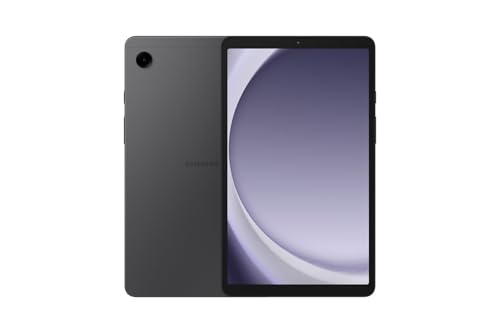
Samsung Galaxy Tab A9 — Actually 8.7 inches: Android polish that fits a coat pocket (international listing)
The Tab A9 is Samsung’s answer to the mini, scaled to a friendlier budget and — in the spirit of this guide — measured honestly at 8.7 inches. What the extra fractions buy is a screen that breathes a little easier for video and split tasks; what they cost is a degree of the old mini’s invisibility in a grip. In return the A9 brings the things Samsung reliably brings: the most finished Android software in the small class, update care that outlasts rival budget slates, a metal-feeling body that survives being the household’s most-borrowed object, and microSD expansion for the travel library. For bedtime chapters, passenger-seat maps, a market stall’s till app or a waiting room’s worth of child entertainment, it is the Android small tablet that asks the fewest apologies.
Its listing carries the international note that follows this model through the programme: the verified listing is an international one, and for a WiFi tablet the practical homework is warranty routing and region setup rather than anything about networks. Performance is modest — this is a slate for one leading app and a supporting cast, not a juggling act — and the screen resolution is the gentle HD-plus grade of its class rather than a sharpness record. Within those fences, the A9 is the easiest Android recommendation on this page: the small tablet for people who want Samsung’s manners in a body that still goes everywhere a paperback goes, give or take the eight-tenths of an inch this guide declines to hide.
- True size: 8.7 inches — the Android neighbourhood of 7.9
- Memory: 4GB RAM; single-lead-app use suits it
- Capacity: 64GB, card slot alongside for the travel library
- Listing note: an international variant — warranty path and region setup deserve a look
- Software: One UI, with the strongest update care in its class
- Build: light, slim, genuinely pocketable
Strengths
- The most polished Android experience at this size and price region.
- Update commitment protects a multi-year ownership.
- microSD slot keeps media libraries off the internal storage.
Trade-offs
- Eight-tenths of an inch larger than the size in the search phrase.
- Modest processor shows with heavy multitasking.
- International listing adds pre-purchase paperwork checks.
Best for: Android readers and travellers who want the mini idea with Samsung software and a gentler bill.
Not suited for: gamers chasing flagship frame rates, or purists measuring diagonals with a ruler and a grudge.

Lenovo Tab One — Actually 8.7 inches: the plain small slate for named jobs
The Tab One shares its 8.7-inch diagonal with the Samsung above and almost nothing else in temperament. Where the A9 is a small all-rounder, the Tab One is a small specialist in civilian clothes: an HD screen, modest hardware and simple software, aimed at the jobs where a tablet is a fixture — the bedside reader, the kitchen display, the workshop manual viewer, the spare screen a grandparent video-calls from. Its 4GB of memory is honestly matched to that life; nothing in its brief asks a second app to stay alive, and the machine repays the modest brief with a modest price and an uncomplicated manner.
Judged as a rival to the mini it would be a category error, and this analysis declines to make it. Judged as the cheapest respectable way to put a decent small screen in a fixed place, it is a tidy piece of work — light, inoffensive, easy for a less technical household to live with. The HD panel softens fine print compared with sharper rivals, so heavy readers of small type should sit with the A9 or the mini instead; the Tab One’s natural texts are headlines, recipes, lyrics, manuals and the large-type settings it handles perfectly well. Buy it for a named job and it will do that job for years without ever being discussed again, which is the highest praise a utility tablet can earn.
- True size: 8.7 inches behind an HD panel
- Memory: 4GB, proportioned for one job at a time
- Capacity: 64GB plus a card slot
- Software: uncluttered Android with few maker additions
- Build: compact and light; happy on stands and brackets
- Character: a fixture, not a companion
Strengths
- The gentlest price here for a respectable small screen.
- Simple software suits less technical owners and fixed installations.
- Size fits mounts and small surfaces the mini-class also serves.
Trade-offs
- HD resolution is soft for long small-print reading.
- Little headroom if the job grows ambitions.
- Speakers and cameras are serviceable only.
Best for: a named, narrow role — bedside, kitchen, bench or counter — at the smallest sensible cost.
Not suited for: a household’s one and only tablet, where the role changes hourly.

Lenovo Legion Tab Gen 3 — Actually 8.8 inches: a gaming flagship that happens to be small
Every category has one machine that embarrasses the others on a single axis, and in the small-tablet world the Legion Tab is that machine for power. Inside its 8.8-inch frame — the largest diagonal here, stated as plainly as the rest — Lenovo fitted a Snapdragon 8 Gen 3, a dozen gigabytes of memory and a fast, bright screen, producing the only small tablet that treats demanding games as a native language rather than a favour. Handheld gaming is the brief: the size that fits two hands and a pair of thumbs, the cooling and the pace to hold frame rates, the speakers to finish the illusion. Commuters who game seriously have quietly adopted this class of device as the dedicated machine their phone’s battery thanks them for.
The specialisation cuts both ways, and the analysis should say where. The Legion costs flagship money — several times the Tab One above — and spends it on pace, not on the mini’s ecosystem polish or Samsung’s update theatre; Lenovo’s software story is gamer-flavoured and its long-term patch cadence is a question to check rather than assume. Battery life under gaming load is measured in sessions, not days. And its 8.8 inches, while still one-handable for reading, is the size on this page furthest from the 7.9 ghost. None of that matters to its tribe. For the player who wants a small screen with a big engine, there is exactly one pick in this guide, and this is it.
- True size: 8.8 inches, fast high-resolution panel
- Performance: Snapdragon 8 Gen 3, 12GB RAM — the muscle pick
- Storage: generous internal capacity for a game library
- Software: gaming-tuned Android; check update policy
- Build: two-hand gaming grip, strong speakers
- Character: a handheld console that also does tablet work
Strengths
- Flagship gaming pace no other small tablet here approaches.
- Fast screen and speakers complete the handheld illusion.
- Doubles as a powerful general tablet when the games close.
Trade-offs
- Flagship pricing for a specialist’s brief.
- Battery drains in sessions under full gaming load.
- The largest, heaviest body in a guide about smallness.
Best for: serious mobile gamers who want a dedicated small machine with desktop-class muscle.
Not suited for: readers and light users, who would be buying a racing engine to fetch the shopping.
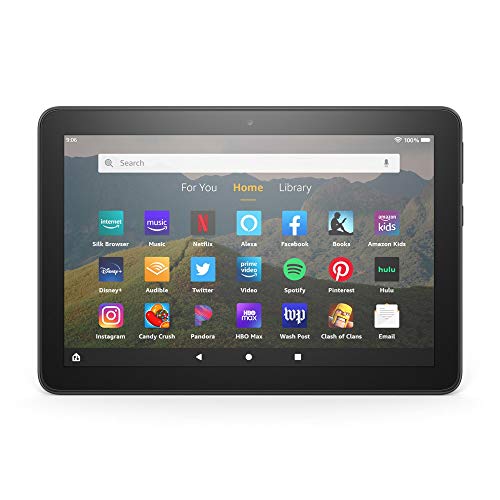
Amazon Fire HD 8 (2020) — 8.0 inches, and a 2020 model: the budget veteran
The year is part of this pick’s name in this guide, and it will stay there: this is the Fire HD 8 from 2020, an 8.0-inch Amazon tablet still circulating in listings years after its launch, at prices that make it the impulse-buy end of the small-tablet world. What it offers is Amazon’s universe in a handy size — streaming from the services Amazon favours, Kindle reading, Alexa in the corner, a simple interface that non-technical owners find genuinely kind — inside a body light enough for a child’s hands and cheap enough that a cracked screen is an annoyance rather than an insurance claim. For a holiday tablet, a kitchen streamer, a spare for the guest room, that proposition still computes.
The caveats are structural and must not be softened. Fire OS is not Android as the rest of this guide means it: there is no Google Play Store by default, so apps outside Amazon’s storefront are a project rather than a purchase. The hardware is 2020 hardware — 32GB of storage, a processor that was modest when the decade was young, a screen that serves video kindly and text adequately. Software support for a model of this age is a wasting asset. Buyers inside Amazon’s ecosystem, buying for light and named duties, get a bargain with a known shape. Buyers expecting a general Android tablet will feel every fence within the first evening, and the year in the heading exists to make sure they were told.
- True size: 8.0 inches — the closest current listing to 7.9
- Vintage: 2020 model — labelled in every mention in this guide
- System: Fire OS — no Google Play Store by default
- Storage: 32GB with microSD expansion
- Performance: light duties only — streaming, reading, Alexa
- Character: the disposable-in-a-good-way holiday and spare tablet
Strengths
- The lowest cost of entry to a decent 8-inch screen.
- Simple, forgiving interface for less technical owners.
- Kindle and Amazon streaming are native and effortless.
Trade-offs
- Fire OS fences out the Google app world by default.
- 2020 hardware and support runway show their age.
- 32GB demands the memory card from day one.
Best for: Prime households wanting a light-duty spare, holiday or child’s streaming tablet at the floor price.
Not suited for: anyone needing Google apps, school platforms or a multi-year main tablet.
iPad mini, 7.9-inch generations — Prose-only: the genuine article, now second-hand only
Here, at the end, is the only true 7.9-inch tablet in the guide — and it has no link, because Apple discontinued the size years ago and the machines that carry it now change hands in the second-hand market, where a responsible guide maps the territory rather than pointing at a listing. The 7.9-inch minis, above all the later generations with their laminated screens and pencil support in the final model, remain lovely objects: the exact paperback footprint, the grip a generation of readers memorised, an app library that still largely runs. For a purist, a collector, or a reader whose muscle memory is non-negotiable, a good example is a defensible purchase — with the word good doing heavy work in that sentence.
The risks are the age risks, and they are concrete. Batteries in machines of this vintage have lived whole lives; an example that cannot hold a long evening is a mains-powered reader, whatever the listing implies, so battery health questions and a returns window matter more than cosmetic grading. Software support has ended or is ending for these generations, which fences them out of a growing list of current apps and out of security patches entirely — acceptable for an offline reader, unacceptable for a tablet holding banking and email. Price discipline completes the picture: the moment a second-hand 7.9-inch mini approaches the cost of the current small Androids above, the nostalgia is being billed at a rate the hardware cannot honour. Buy the feeling knowingly, cheaply and for light duties, and it can still delight. Buy it as a main tablet in 2026 and the decade will explain the error.
- True size: 7.9 inches — the only genuine entry in this guide
- Status: discontinued; second-hand market only, prose-only here
- System: iPadOS, at or near end of support depending on generation
- Battery: age-variable — the first thing to interrogate
- Role fit: offline reading and light, low-risk duties
- Price rule: must stay far below current small tablets to make sense
Strengths
- The exact size and grip the search phrase remembers.
- Later generations remain pleasant readers with deep app back-catalogues.
- Good examples can be genuinely inexpensive.
Trade-offs
- Battery health is a lottery without a returns window.
- Software and security support have ended or are ending.
- No link and no warranty — the buyer is their own quality control.
Best for: the committed purist or collector who wants the true diagonal and accepts the vintage terms.
Not suited for: a main household tablet, a child’s school machine, or anything holding sensitive accounts.
Six small tablets, six true sizes: the table this category owes you
| Pick | True size | System | Temperament |
|---|---|---|---|
| iPad mini A17 Pro | 8.3-inch | iPadOS | The complete flagship, slightly grown |
| Galaxy Tab A9 (international) | 8.7-inch | Android | Polished pocketable all-rounder |
| Lenovo Tab One | 8.7-inch | Android | Plain fixture for named jobs |
| Lenovo Legion Tab Gen 3 | 8.8-inch | Android | Gaming muscle in miniature |
| Fire HD 8 (2020) | 8.0-inch | Fire OS | Budget veteran, Amazon-shaped |
| iPad mini 7.9 generations (prose-only) | 7.9-inch | iPadOS (legacy) | The original, second-hand only |
Only the bottom row measures what the search phrase asked for, and it is the row without a link. That is not a failure of the table; it is the table’s news. Every other row is a living alternative at a stated size, and the reader can now choose between the true diagonal with vintage terms and the modern machines with honest measurements.
How do you choose between 8.0, 8.3, 8.7 and 8.8 inches in practice?
Use your hands before your head. The 8.0-inch Fire is the last of the truly forgettable grips — the size a child, a small hand or a coat pocket swallows whole — and its compromises are software and age, not shape. The 8.3-inch mini is the connoisseur’s compromise: a visibly larger page inside a body that kept the old manners, the size for readers who log hours daily and want the text to breathe. The 8.7-inch pair trade a measure of pocket invisibility for a screen that splits the difference between book and video; they are the sizes for people whose small tablet is also their travel television. The 8.8-inch Legion is a gaming grip first — two hands, thumbs up — that moonlights as the most powerful reader here. Notice that none of these choices is really about the diagonal as a number; each is about which object your hand wants to meet at 11 p.m., and the only reliable test is imagining the last hour of your day with each of them in it.
There is also the question of what the small tablet replaces, which quietly decides its size. Bought to replace a phone for reading, even the 8.8-inch Legion feels like liberation. Bought to replace a paperback, the 8.0 and 8.3-inch picks feel native and the larger pair feel like hardbacks — welcome on a table, noticeable in a coat. Bought to replace nothing, as a household’s extra screen, the mid-sized Androids earn their keep by being unremarkable in every pocket and bag they enter. Name the predecessor honestly and the diagonal chooses itself more often than any review can choose it for you.
Weight deserves the sentence specifications usually deny it. In the small class, tens of grams are a chapter’s worth of wrist; the lightest machines here disappear, the heaviest announce themselves, and the gaming pick’s muscle is paid for partly in the hand. Readers with any wrist, shoulder or grip considerations should weight the lightest rows of the table more heavily than any performance column — a tablet that hurts is a tablet on a shelf, and a shelf is the most expensive place a tablet can live.
What goes wrong for small-tablet buyers?
The expensive error here is buying the ghost — paying current money for old stock presented without its year, which is why the Fire in this guide wears 2020 in its name. The second error is the opposite vanity: dismissing every pick for failing a diagonal test the industry itself abandoned, and ending with no tablet at all while the perfect 7.9-inch successor fails to exist for another year. The third is ecosystem surprise — the Fire bought for Google apps, the iPad bought for an Android library — a fence discovered on the first evening that a minute of reading would have revealed. The fourth is under-buying storage in a class where several picks start at 32 or 64GB and where the small tablet’s whole job is to carry a library. And the fifth is gifting by nostalgia: handing a parent the discontinued mini because it was once beloved, and handing them, with it, a dying battery and an unsupported system. Affection is a fine reason to buy the prose-only pick for oneself; it is a poor reason to make it someone else’s main machine.
How does a small tablet earn its keep across a real travelling week?
Picture the commuter first, because the small tablet is the commuter’s native device. On the train it is one hand for the tablet and one for the rail, a novel at standing density, a downloaded episode that fits the forty minutes exactly. In the airport it is the boarding-pass-and-book machine that never needs a tray table of its own. In the hotel it becomes the second screen beside a laptop, the video call home, the map studied over breakfast. Notice that every scene in that week is a scene a 10-inch tablet performs slightly worse and a phone performs slightly smaller; the small class exists in the seam between them, and the picks above divide that seam by budget and ecosystem rather than by competence. The mini performs the week flawlessly at flagship cost; the A9 performs it with Android manners; the Fire performs the streaming and reading acts of it for the price of the train tickets.
The traveller’s checklist follows from the scenes. Storage matters out of proportion, because the small tablet is the device that must hold the journey’s library offline — films for the flight, books for the week, maps for the dead zones — which is why the 32GB Fire needs its card and why the mini’s 128GB is a feature, not a figure. Battery honesty matters likewise: every pick here survives a day of travel use, but the gaming Legion under gaming load plays by session rules, and the second-hand mini plays by whatever rules its aged battery dictates. And a case that props the screen at tray-table angle is worth more on the road than any specification in this guide, because the road is where angles are scarce and laps are the furniture.
What about children, parents and the family small tablet?
Small tablets are the family’s natural hand-me-downs and first devices, and the class’s honesty questions multiply there. For a child, the governing facts are supervision tools, durability and the app fence: the Fire’s parental controls and cheap replaceability make it the pragmatic first tablet despite its vintage label, provided the household lives in Amazon’s world; the A9 offers the fuller Android library with Samsung’s family controls for a child graduating to school platforms; the mini is the premium answer where the household is already Apple’s and the device will be inherited downward for years. In every case a bumper case is not an accessory but part of the product, and the guide’s recurring storage sermon applies double, because a child’s downloaded library grows like the child.
For older parents the virtues invert: the small tablet is the video-call machine that does not intimidate, the photograph viewer that fits the lap, the large-print book that weighs less than the hardback it replaces. Here the Tab One’s simplicity and the A9’s polish compete honestly, the mini’s price is justified only where family support is Apple-fluent, and the worst purchase on the page is the well-meant second-hand relic — an unsupported system in the hands of the person least equipped to nurse it. Buy the elder in your life the supported machine and set it up on a visit; that combination is worth more than any diagonal ever printed on a box.
Which accessories respect the point of a small tablet?
The point is smallness, so the accessories must be audited against it. A folio that adds a few millimetres and wakes the screen earns its bulk; a armoured case that doubles the weight spends the product’s whole advantage on protection against a life the tablet may never lead — unless the owner is a child, in which case the armour is the product and the tablet is its contents. A strap or a ring grip serves the one-hand reader better than any stand; a stand serves the traveller and the kitchen. The pencil, for the mini, is the one accessory that changes the device’s category, from reader to notebook, and buyers tempted by it should handle the combination before paying, because handwriting on an 8.3-inch page is a love-it-or-leave-it geometry. Chargers follow the household rule from elsewhere in this programme: the small tablet travels, so its cable should live in the travel bag rather than migrating nightly to a phone. None of these purchases will thrill anyone, and together they decide whether the small tablet is used daily or admired briefly — the fate that separates every pick in this guide from the drawer of almost-right devices every household keeps.
What do books, comics and documents actually look like at these sizes?
A novel is the small tablet’s home fixture, and every pick here renders one beautifully — a page at a time, type sized to the reader, the device forgotten by chapter two. The differences emerge with fixed-layout content. Comics and manga sit at the class’s sweet spot: a single page fills an 8-to-8.8-inch screen at near-print size, which is why this category quietly owns the comics-reader market, and why the sharper screens — the mini above all — flatter line art that softer HD panels merely serve. PDFs split the class by intent: a flowing document with reflowable text is fine anywhere, while a fixed A4 page shrunk to eight inches is a zoom-and-pan lifestyle that only the patient and the young-eyed should volunteer for; students with seminar PDFs should test their tolerance on the largest of these small screens or accept that their true category is ten inches and up.
Two-page spreads deserve a sentence of their own, because they are where the small class gracefully surrenders. Cookbooks, atlases, textbooks and magazines composed as spreads want width no pick here can counterfeit, and the reader whose library is built of them should hear this guide say so plainly rather than discover it over a atlas. The small tablet is a page machine, not a spread machine — a distinction as honest as any diagonal in the table, and one that sends a minority of readers to the larger guides with this one’s blessing.
How long will each of these stay supported, and does it change the ranking?
Support is the invisible specification that reorders this table over time. The mini stands first by years: Apple’s small flagship will receive iPadOS updates long after several rivals here have gone quiet, which converts its premium into the lowest cost-per-supported-year on the page for a keeper. Samsung’s A9 follows with the strongest Android commitment in the small class. Lenovo’s pair sit in the middle distance — respectable, quieter, to be checked model by model at purchase — and the 2020 Fire and the discontinued mini close the ranking, their support stories already largely written. A buyer planning a two-year light-duty life can ignore this section entirely; the tablet will be replaced before support matters. A buyer planning to hand the device down a family line, or to keep it as the household’s reader for half a decade, should let this section vote — because an unsupported tablet does not stop working, it stops being safe to sign into things with, and that slower expiry is the one that catches households by surprise.
There is a buying-timing corollary. Small tablets refresh on quieter cycles than flagships, and the models here are mature listings rather than launch-week gambles; prices drift with seasons and bundles rather than with hype. The disciplined move is to buy the pick that fits, when the need exists, with the case and card in the same basket — and to resist waiting for a 7.9-inch revival that no roadmap promises. The neighbourhood is stable, the residents are known, and the guide you have just read is unlikely to need new names for some time.
Small tablet or e-reader: which paperback-shaped device should a reader buy?
The question arrives in every small-tablet household eventually, because the e-reader is the other paperback-sized screen and it does one thing — text, outdoors, for weeks per charge — better than anything in this guide. A reader whose life is novels in gardens and on beaches, whose eyes tire on lit panels, and whose library is a single bookstore’s, may honestly be better served by the dedicated device, and this guide loses nothing by saying so. The small tablet’s answer is everything else: colour for comics and magazines, the web, video, calls, apps, the library across every store rather than one. Households that read across formats, or that need the screen to be a citizen of the whole internet, belong here; households that read novels in sunlight belong there; and a surprising number of devoted readers eventually own both, using each where it is unbeatable, which is the market’s own verdict on the comparison.
Within this guide, the picks closest to the e-reader’s spirit are the lightest and simplest — the Tab One as a fixture, the Fire inside Amazon’s reading world — while the mini and the Legion justify themselves precisely by being everything an e-reader refuses to be. Knowing which side of that line your reading life sits on is worth more than any single specification in the table, and it is a question only your last ten books can answer.
How should you handle these machines before paying for one?
Literally handle them, because the small class is bought by the hand more than by the eye. In a shop, pick each candidate up the way you would at home — one hand, from a surface, without the security tether’s assistance if the staff allow — and hold a page open for a full minute. The minute is the test: the tablet that disappears passes, the tablet that negotiates fails, and no specification predicts which will be which for your grip. Turn it sideways, thumb the page forward, imagine the train’s sway and the bed’s pillows. Check where the buttons fall against your fingers and whether the case you will actually buy restores or ruins the balance. Then, and only then, look at the screen figures and the prices, in that order — because in this category the hand votes first, and a guide that began by correcting a diagonal can hardly object when the reader’s own measurements overrule everyone’s.
What will you actually do with the extra half-inch — or miss without it?
It is worth ending the analysis where the category began: with the half-inch itself, examined without romance. Gaining it — stepping from the ghost’s 7.9 to the living 8.3 or 8.7 — buys a page that holds more lines before the turn, a video frame that fills more of the eye, a keyboard that mistypes less, and a split view that graduates from parlour trick to tool. Losing it costs a degree of pocket invisibility and a grip ideal that a generation memorised. For most readers the exchange is plainly favourable, which is why the industry made it without asking. For the minority whose use is one-handed, hours-long and daily — the night reader, the standing commuter, the clinician on rounds — the cost is real and recurring, and their correct move is the lightest living machine, not the truest diagonal: in this list, that means weighing the mini and the Fire by the gram and letting the ruler go.
That is the mature settlement with a vanished size: honour what it was for, measure what replaced it honestly, and buy the behaviour rather than the number. The six entries above were chosen to make that settlement easy to reach from any direction — flagship, budget, gaming, vintage — and the table’s plain column of true sizes is the only memorial the 7.9-inch era needs.
Final Recommendation
Let the size go, and keep the idea. The iPad mini at its honest 8.3 inches is the finest small tablet in the world and the recommendation for anyone whose budget reaches it; the Tab A9 carries the same idea into Android with Samsung’s polish, the Tab One strips it to a useful fixture, the Legion Tab supercharges it for players, and the 2020 Fire HD 8 serves Amazon households at the floor with its year worn openly. The true 7.9-inch mini remains available to those who want the artifact itself, second-hand and on vintage terms this guide has spelled out. A paperback-sized screen that goes everywhere is still one of technology’s kindest ideas — it simply answers to slightly larger numbers now, and a buyer who knows the real figures can choose the idea with open eyes and a clear grip. Measure your hand’s happiness, not the ghost’s diagonal, and the small tablet you carry for the next four years will feel less like a compromise than like a homecoming.
Frequently Asked Questions
Will a case for my old 7.9-inch mini fit any of these?
Almost certainly not, and the near-misses are the frustrating part: the current mini’s body is close to the old one without sharing its dimensions, button placement or camera position, and the 8.7-inch Androids are different objects entirely. Budget for a new case with any pick here, and treat a seller’s claim of cross-generational fit as a claim to verify against exact model numbers rather than diagonals.
Can I still buy a new 7.9-inch tablet?
No current model from a major maker measures 7.9 inches. The size survives in discontinued iPad mini generations sold second-hand, which is why this guide covers them as a prose-only entry with battery and software warnings attached.
Is the iPad mini too big now at 8.3 inches?
In the hand, barely — Apple grew the screen mostly by shrinking the bezels, so the body is close to the old mini’s. On paper it has left the 7.9 class, and this guide says so in its heading; in a coat pocket, it still behaves like the machine people loved.
Which small Android tablet is closest to the mini experience?
Samsung’s Tab A9 at 8.7 inches, for its software polish and update care. It is larger and less powerful than the mini, but it is the Android pick that asks the fewest apologies in daily use.
Is the 2020 Fire HD 8 still worth buying?
For light Amazon-shaped duties — streaming, Kindle reading, a child’s or guest’s spare — at a suitably low price, yes. For Google apps, school platforms or a main tablet expected to serve for years, its age and Fire OS fences say no.
Why did my old small tablet feel smaller than these if the difference is under an inch?
Because diagonal is the least honest way to feel a size change. The growth from 7.9 to 8.7 inches adds considerably more width and height than the single number suggests, and screen area grows faster than the diagonal does — the larger panel can hold roughly a fifth more page. Your hand is reporting area and width truthfully; the specification is reporting one diagonal line. Trust the hand, and use the table in this guide to know exactly which living size your hand is choosing.
What should I check on a second-hand 7.9-inch iPad mini?
Battery endurance in person, the exact generation and its software ceiling, screen condition under a white page, and a returns window. Keep the price far below current small tablets; the nostalgia premium is the trap.
Related Guides
A closing note on measuring, since this guide has made a theme of it: if you are comparing a tablet you already own against these picks, measure your current screen’s diagonal yourself — corner to corner of the lit area, not the glass — before concluding it is the size memory claims. Owners are routinely surprised by their own devices, and a shopper who knows their true starting point reads the table above as a map rather than a riddle. Browse onward to small Android tablets that still fit a pocket, the best tablets for reading in bed and our favourite compact tablets for travel.



[…] written, and in a category built on a borrowed badge it is the fitting final habit. Continue with the best tablets for drawing and annotation, our favourite large-screen tablets for work and the eye-friendly tablets we recommend for long […]