Our Top Picks



What's inside
- How the Z geometry actually changes camera position
- Payload ratings and what they hide
- Friction knobs, locking knobs, and the difference between them
- Arca-Swiss compatibility at both ends
- Aluminium, carbon, and the honest weight trade-off
- The pan base: small feature, large convenience
- Low angles without inverting a centre column
- Overhead and tabletop work
- Macro and product photography in detail
- Vlogging and video-adjacent use
- Compared with a ball head
- Compared with a geared head
- Limits that deserve honest emphasis
- Setup routine that prevents most disappointments
- Reading specification sheets like an engineer
- Field craft: slopes, stairs, and awkward architecture
- Beyond stills cameras: monitors, lights, and small instruments
- Maintenance that keeps hinges honest
- Buying priorities by photographer type
- Common mistakes and quiet corrections
- What good value looks like in this category
- Ergonomics during long sessions
- Compatibility with L-brackets, cages, and rails
- Weather, temperature, and altitude considerations
- Learning curve and practice drills
- Insurance, transport, and everyday care of the wider kit
- Check prices on Amazon
- Decision summary
As an Amazon Associate I earn from qualifying purchases. This post may contain affiliate links at no extra cost to you.
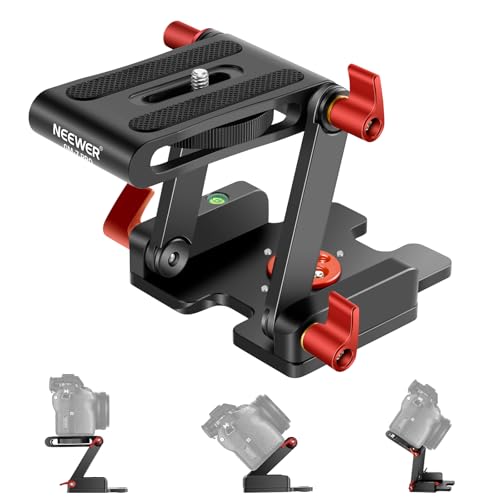
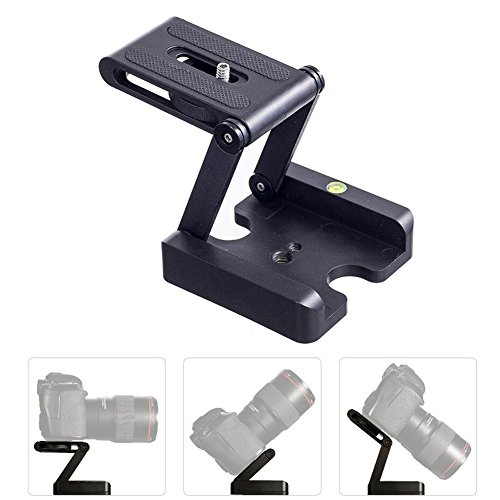
A Z-flex tilt head sits between a tripod and a camera and folds into a shape that resembles the letter Z. Two flat plates join through hinged arms, so the camera platform can rise, drop, lean forward, or swing back without moving the legs underneath. That simple geometry solves a familiar frustration: a conventional tripod wants its centre column raised for height and lowered for ground work, yet many scenes need the lens somewhere in between, offset from the column, or pointed at an angle the column cannot reach. With a Z head the operator repositions the camera body itself, keeping the tripod footprint stable on the floor, on a table, or on uneven ground outside.
Photographers reach for this accessory for three recurring jobs. Low-angle work places the lens close to soil, water, or pavement while the legs stay spread for support. Overhead work lifts and tilts the camera above a desk for flat-lay and product compositions. Awkward-angle work fills the gap when a subject sits below a railing, inside a cabinet, beside machinery, or above a crowd line where extending a column would wobble. None of these jobs requires exotic equipment, but each punishes a support that flexes, creeps, or forces the photographer into a crouch that shakes the whole rig.
This guide explains how to judge a Z-flex head on the points that decide whether it earns space in a kit bag: rated payload against real camera and lens combinations, friction knobs versus positive locking knobs, Arca-Swiss compatibility at both ends of the unit, aluminium versus carbon construction, the value of a rotating pan base, and the limits that appear with long telephoto glass. Short comparisons with ball heads and geared heads close the technical sections, followed by setup routines for macro, product, and video work. Specifications quoted here follow manufacturer specification sheets and published measurements rather than impressions gathered from brief handling, and readers should confirm the figures for a specific production version before committing to a purchase.
How the Z geometry actually changes camera position
Picture two rigid plates connected by two short links. The lower plate bolts to the tripod. The upper plate carries the camera. When the links lie flat, the assembly adds only a few centimetres of height. When the links rotate, the upper plate travels in an arc, moving forward and upward, or backward and downward, depending on direction. Because both links move together in better designs, the camera platform can stay level while its position changes, a behaviour sometimes described as a parallelogram action. Cheaper single-hinge designs behave more like a simple folding bracket, tilting the platform as it moves and forcing the operator to re-level after every adjustment.
The practical consequence is reach without relocation. A tripod placed at the edge of a stream can hold a camera out over the water for a reflection shot while the feet remain on dry stone. A desk setup can hold a camera directly above a cutting board, a circuit board, or a sketchbook without a boom arm crossing the frame. A nature photographer can drop the lens to the height of a mushroom or a beetle without inverting a centre column and working with controls upside down. In each case the legs stay where footing is safest, and only the small head negotiates the final position.
Payload ratings and what they hide
Static load, working load, and off-centre load
Payload figures look reassuringly precise, yet manufacturers measure them under different conditions. A static rating may describe a weight the head can hold on a bench without collapsing, which says little about a camera cantilevered forward on a windy hillside. A working rating, when offered, better reflects a load the hinges can hold at an angle without slow drift. Off-centre load matters most for this product category because the entire point of the design is to move the camera away from the tripod axis. A combination that feels secure when centred can begin to creep once the platform leans thirty degrees and gravity gains leverage through the extended arms.
A sensible rule from our research is to treat the printed maximum as a ceiling for centred, static use and to plan around roughly half to two thirds of that figure for tilted work with ordinary mirrorless or DSLR combinations. A camera body near seven hundred grams, a standard zoom near six hundred grams, plus a plate, a microphone, or a small monitor can approach two kilograms before accessories multiply. Add a fast telephoto and the total climbs quickly, while the centre of gravity moves forward of the platform and multiplies hinge stress beyond what the scale alone suggests. Weight distribution, not weight alone, decides stability in this category.
Matching the head to common combinations
Compact mirrorless bodies with a kit zoom or a small prime sit comfortably on almost any well-made Z head, leaving generous margin for tilt. Mid-size bodies with a 24-70mm class zoom occupy the middle ground where hinge quality separates adequate units from frustrating ones. Full-frame bodies with a 70-200mm class lens, a macro lens on extension tubes, or a video rig carrying a monitor and microphone push toward the top of the range, and some combinations simply belong on a different support. Lens collar use changes the picture: a telephoto mounted by its own foot centres the mass over the platform and reduces forward leverage, making a borderline combination noticeably calmer.
Readers comparing figures should also note where the rating applies. Some makers quote the load for the camera platform alone, others for the complete assembly including the pan base locked. Temperature plays a quiet role as well, because lubricants thicken in cold conditions and friction settings that felt right indoors can feel stiff on a frosty morning. None of this appears in a headline number, which is why the sections below on knobs, materials, and locking behaviour deserve as much attention as the kilogram figure printed on a box.
Friction knobs, locking knobs, and the difference between them
A friction knob sets resistance. Turning it changes how firmly the hinge resists movement, allowing the operator to position the camera with one hand while the joint neither flops nor freezes. A locking knob, by contrast, clamps the joint at a chosen angle and expects the camera to stay there through shutter vibration, cable tugs, and minor bumps. Better Z heads provide both functions, sometimes combined in a single control with a separate limiter, sometimes as distinct knobs on opposite sides of the hinge. Understanding which control does what prevents the classic error of loosening a lock completely when only a touch more friction was wanted, sending an expensive body nose-diving toward a tabletop.
Knob size and texture matter during real sessions. Small smooth knobs become slippery with gloves, sunscreen, or rain. Larger knurled knobs can be found by touch while the eye stays on a composition. Placement matters too: a knob that sits against the camera plate when the head folds flat may block full closure, while a knob positioned on the hinge axis stays accessible through most of the travel range. Published measurements of knob diameter rarely appear in listings, so photographs showing scale beside a camera plate offer useful clues when specification sheets stay silent.
Drift, creep, and how to recognise a weak hinge
Drift describes slow angular movement after locking. Creep often begins within seconds, as internal surfaces settle under load, and continues until friction and gravity balance. A head that drifts with a light combination will drift faster with a heavier one, and no knob technique fully cures undersized hinge surfaces. When evaluating published information, look for hinge disc diameter, the number of locking points, and whether both arms lock or only one. Dual-arm locking spreads clamping force and reduces the twisting that single-point designs can allow when a long lens hangs off the front.
Counterbalance thinking helps even without springs. Positioning the camera so its mass sits slightly behind the hinge axis reduces the torque the lock must resist. Sliding the plate forward or backward in the clamp by a centimetre can transform a marginal setup into a settled one. For macro work at high magnification, where a millimetre of drift ruins focus stacking alignment, many photographers pair a Z head for gross positioning with a focusing rail for fine movement, letting each tool handle the scale it manages best.
Arca-Swiss compatibility at both ends
Most Z heads accept an Arca-Swiss style plate on top and present either a flat base with a threaded socket or their own Arca profile underneath. The top clamp deserves scrutiny first. A screw-knob clamp grips a wider variety of plate widths than a lever clamp, though lever designs close faster and show their locked state at a glance. Safety stops, small pins or raised lips that prevent a plate sliding out of a loosened clamp, add genuine protection during tilted work where gravity pulls along the clamp axis rather than across it. A clamp without stops demands stricter habits, especially when the platform points downward for overhead compositions.
The underside connection decides how the head behaves on different supports. A standard threaded socket fits tripod heads and monopod plates directly, while an integrated Arca foot lets the whole Z unit slide into a ball head clamp for combined movements. That stacking approach, Z head above a ball head, gives enormous positioning freedom but raises the camera further from the support axis and compounds any flex in the lower head. Many field photographers instead mount the Z unit directly to tripod legs through a levelling base, sacrificing some freedom for a shorter, stiffer load path.
Plate length interacts with balance. A longer plate allows the camera to slide for centre-of-gravity adjustment, useful when swapping between a short prime and a longer zoom during one session. Captive screws that cannot fall out when loosened, rubber pads that protect a camera base, and engraved centre marks for repeatable placement all appear in better implementations. Readers building a kit around quick-release standards used elsewhere in their bags will value consistency: one plate system across bodies, lens feet, and accessories removes adapters and the wobble adapters introduce. Anyone filming with compact bodies for online video, including setups discussed alongside best 1080p vlogging cameras with flip out screens, benefits from that consistency when swapping between a Z head, a gimbal, and a desktop stand during a single production day.
Aluminium, carbon, and the honest weight trade-off
Machined aluminium dominates this category for good reason. It tolerates knocks, threads hold up under repeated plate changes, and hinge discs can be made large without exotic cost. The penalty is mass: a sturdy aluminium Z head can weigh as much as a small prime lens, which matters on long approaches to a location. Carbon fibre arms appear on a minority of models, cutting weight and damping vibration slightly differently, but carbon construction shifts cost upward and demands care around clamping points where overtightening can damage fibres. Hybrid designs use carbon for straight arms and aluminium for hinges and clamps, placing each material where its properties help most.
Surface finish influences field behaviour more than catalogue photographs suggest. Hard anodising resists the scratches that bare aluminium collects from grit, and dark finishes reduce reflections when photographing shy wildlife at close range or reflective products under controlled lighting. Drainage and cleaning deserve a thought for outdoor use: open hinge designs rinse clean after a beach session, while enclosed mechanisms keep grit out initially but can trap moisture. Manufacturer specification sheets sometimes state an operating temperature range and water resistance notes for the mechanism; those lines reward reading.
Stiffness is a system property
No head performs in isolation. A rigid Z unit on spindly travel legs still sways, and a modest head on a heavy studio stand can feel rock solid. Leg diameter, leg lock condition, ground softness, and even the strap flapping in wind all feed the final sharpness of a long exposure. Judging a Z head fairly means considering the support chain beneath it. Photographers who already own sturdy legs often discover that a mid-range Z head satisfies them completely, while the same unit disappoints on a lightweight travel tripod asked to hold a camera out over a gorge. Budget allocation across the whole support system usually beats concentrating every resource on one component.
The pan base: small feature, large convenience
Many Z heads include a rotating base marked with degree graduations. Once the tilt geometry places the camera at the right height and angle, the pan base rotates the whole assembly horizontally without disturbing the fold. Panoramas benefit first: level the base, set the tilt, then sweep through overlapping frames with the platform maintaining its attitude. Product turntable sequences benefit similarly, because the camera can stay fixed in height while rotating to match a repositioned subject, or the subject can stay put while the camera circles through a planned series of angles.
A pan lock separate from the tilt locks keeps adjustments independent. Without it, loosening the base to rotate can allow a folded assembly to shift under gravity. Graduations support repeatability for composite work, architectural documentation, and real-estate sequences where returning to a recorded angle saves setup time. Smoothness of rotation varies with bearing design; a plain friction washer feels adequate for stills, while video panning exposes every notch and catch. Dedicated video work still belongs on a fluid head, yet a smooth pan base under a Z unit handles locked-off shots with occasional reframing perfectly well.
Low angles without inverting a centre column
Ground-level photography exposes the Z head at its best. Legs spread wide, head folded downward, camera hovering centimetres above the surface with the screen tilted for viewing: the arrangement keeps controls in their normal orientation and the memory card and battery doors accessible. Inverting a centre column achieves similar height but flips the camera, complicates cable routing, and places the tripod body between photographer and subject. For fungi, seedlings, shorebirds, pets, and architectural details near pavement level, the folded configuration shortens setup and encourages experimentation with small height changes that dramatically alter foreground relationships.
Stability at ground level depends on leg spread and surface. Short legs or a tabletop tripod under a Z head creates a compact low rig for macro subjects on a bench or forest floor. Mud, sand, and leaf litter swallow small feet, so a ground sheet or a flat board under the legs preserves the geometry the photographer set. Cable releases and interval timers reduce the need to touch the rig during exposure sequences, and a two-second delay or electronic first-curtain shutter trims vibration that a cantilevered camera might otherwise amplify.
Overhead and tabletop work
Flat-lay photography, cooking documentation, craft tutorials, and electronics repair guides all need a camera looking straight down. A boom arm does this job in studios, but a Z head on a tripod positioned beside a table reaches a surprising distance inward, especially when the legs stand on the floor and the fold extends the camera over the surface. The load path deserves respect here: a fully extended horizontal reach multiplies torque at the base, so heavier combinations call for a leg pointed in the direction of the load, a counterweight on the opposite side, or a sandbag on the leg set. Tethering the camera strap to the tripod adds a final safety line against an accidental slide from the clamp.
Lighting interacts with overhead geometry. A camera directly above a glossy subject reflects in the surface unless lights sit at oblique angles, and the head itself can cast shadows when a key light sits behind the rig. Raising the fold slightly and tilting the platform, rather than extending fully flat, often clears both problems while keeping the composition recognisably top-down. Recipe and workshop creators who publish step sequences value the repeatability: mark the fold angles, record the pan graduation, and the same framing returns session after session. Creators comparing camera bodies for this kind of channel work may also browse best 50x superzoom digital cameras when a fixed-lens alternative tempts them for simpler travel assignments, though interchangeable-lens bodies on a Z rig remain the flexible choice for controlled tabletop sets.
Macro and product photography in detail
Precision at high magnification
Macro photography magnifies every weakness in a support. Depth of field shrinks to millimetres, focus breathing shifts composition, and the slightest hinge settle moves the plane of focus off a stamens tip or a watch gear tooth. A Z head contributes gross positioning: raising the camera to flower height, tilting down a slope to parallel a subject plane, or offsetting sideways to clear a lighting stand. Fine focus then belongs to a rail or to the lens focus ring used with live view magnification. Photographers stacking focus brackets should lock every control before the sequence, route cables so they hang without pulling, and allow a pause after touching the rig so vibration decays before the first frame.
Scheimpflug thinking, tilting the camera to align the focus plane with a receding subject, tempts macro and product photographers alike. A Z head tilts the whole camera, which changes perspective and focus plane together in a coarse but useful way for tabletops that slope away. True tilt lenses handle optical plane control more elegantly, yet the head-based approximation helps when a product row recedes and stopping down alone cannot hold both ends acceptably sharp at the desired aperture.
Product sets and repeatability
Commercial product work prizes consistency across dozens of items. A Z head locked at a recorded configuration frames each new object at the same height and angle once the object sits on a marked position. Cosmetics, tools, footwear, and packaged foods all photograph efficiently in such a pipeline. The pan graduations and hinge scales, when present, turn memory into numbers. Where scales are absent, a strip of tape and a fine marker create reference points that survive a long shooting day. Dust control, background sweeps, and polarising filters for glare management contribute more to final quality than further support upgrades once the rig holds still.
Vlogging and video-adjacent use
Video creators use Z heads less for movement than for placement. A camera perched above a monitor, angled down toward a desk, or tucked at an unusual height in a small room gains freedom from a folding head that a plain ball head cannot match without a forest of arms and clamps. Flip screens pair naturally with the fold, because the platform can tilt the body while the screen rotates for self-monitoring. Microphone and light placement still needs planning: accessories mounted on the camera move with every hinge adjustment, changing shadows and audio perspective, so locking the geometry before final lighting checks avoids hunting for exposure after each reposition.
Movement during recording remains the weak point. Hinges designed to hold position do not glide like fluid cartridges, and mid-shot adjustments usually show as steps or shudders. Creators who need pans and tilts within a take should keep a fluid head for that work and reserve the Z unit for static placement, second-camera angles, or overhead inserts. A locked-off overhead camera recording hands at work, controlled remotely and left untouched during takes, plays exactly to the strengths of the format. Monitoring through a phone application or a field monitor prevents the nudges that reaching for camera controls would cause.
Compared with a ball head
A ball head offers speed. One knob frees a sphere that points the camera anywhere within its range, and experienced users compose in seconds. The same freedom makes precise small corrections harder, because loosening the ball releases every axis at once. A Z head moves more deliberately, one plane at a time, and holds intermediate positions along its fold without constant knob attention. For landscape photographers working from a comfortable standing position, the ball head often remains the faster tool. For low, overhead, or offset positions, the Z geometry reaches places a ball head on a fixed column cannot reach at all, regardless of ball quality.
Weight and bulk comparisons vary by model, but folding flat gives the Z design a packing advantage in shallow bags and laptop-style cases. Ball heads travel as a lump with protruding knobs; Z units slide into flat pockets originally meant for documents or filters. Photographers who hike with a tripod strapped outside a pack notice knob snag; photographers who carry supports inside luggage notice thickness. Neither consideration decides image quality, yet both decide whether the support actually travels to the location.
Compared with a geared head
Geared heads move the camera through worm drives on separate axes, delivering minute, repeatable adjustments prized in architecture and studio still life. They also weigh more, cost more, and move slowly across large angle changes. A Z head cannot match geared precision at the arc-minute level, and its hinges introduce more potential flex than a solid geared block. The choice hinges on the dominant task. Precision alignment of verticals across a building facade belongs to gears. Varied positions across a day of mixed subjects, many near the ground or over a table, belongs to the fold. Some studios keep both, mounting whichever the assignment demands on the same legs through a shared quick-release standard.
Three-way pan-tilt heads occupy a middle path, with separate handles for each axis and moderate precision at moderate cost. Their handles protrude and their range at extreme low angles still depends on column tricks. Against that field, the Z head distinguishes itself purely through geometry: no other common head type relocates the camera platform through space in quite the same way. Buyers should therefore judge it as a positioning tool first and a pointing tool second, because pointing alone can be handled by simpler devices.
Limits that deserve honest emphasis
Long telephoto lenses and balance
A long telephoto concentrates mass far ahead of the platform, and the fold amplifies its leverage with every degree of tilt. Even when total weight sits within a published rating, the moment arm can overwhelm hinge friction and produce slow nose-down drift. Using the lens foot helps, balancing the combination near its midpoint, but a 400mm or 600mm class lens on a folded head over uneven ground remains a compromise rather than a recommendation. Wildlife photographers tracking moving subjects also lose the fluid following action of a gimbal, which suspends a big lens at its balance point and lets it float. For static work with moderate telephotos, a Z head performs respectably; for dedicated long-lens work, purpose-built supports exist for sound mechanical reasons.
Wind exposes the same weakness. A cantilevered camera presents area to gusts and sits at the end of a lever that converts breeze into movement. Lowering the fold, shielding the rig, weighting the legs, and shortening exposure times all mitigate the problem, but a centred load on a simple head will always ride out rough weather more calmly. Coastal and mountain photographers should factor exposure to weather into the decision, particularly for long-exposure seascapes where seconds of integration record every tremor.
Vibration and long exposures
Every joint in a support chain adds a potential resonance. A Z head introduces at least two hinge interfaces beyond a fixed head, and long exposures at telephoto focal lengths reveal the cost. Mirror slap on DSLR bodies, shutter shock on some mirrorless bodies, and footfalls on wooden floors all travel through the fold. Electronic shutter modes, remote releases, and a hand resting lightly on a leg to damp oscillation form a practical toolkit. Published measurements of settling time, where available from independent laboratories, offer more guidance than marketing language about rigidity.
Setup routine that prevents most disappointments
A methodical first setup pays back every session afterward. Begin with the tripod legs at a moderate spread and the Z head folded flat. Mount the camera with its longest intended lens, slide the plate until the combination balances near the platform centre, and mark that position. Work the fold slowly through its range while supporting the camera with one hand, noting where torque peaks and where the combination wants to fall forward. Set friction so movement requires deliberate pressure but never a jerk to start. Lock each hinge in turn and watch the live view image for settle after release; a small shift that stops immediately is normal settling, while continuing motion signals overload or an under-tightened clamp.
Repeat the routine at the angles actually planned: fully lowered for ground work, raised and tilted for overhead, and mid-fold for general use. Photographers often discover that a combination behaves at two positions and misbehaves at a third, knowledge far better gained at home than beside a nest site or during a client session. Record knob positions or photograph the scales. When a second body or lens joins the kit, repeat the balance marking rather than assuming the earlier plate position transfers. Five minutes of this discipline prevents the slow drift that otherwise gets blamed on the head alone.
Reading specification sheets like an engineer
Specification sheets reward slow reading. Dimensions given folded and unfolded reveal whether the unit fits a bag and how much height it adds, which matters when a tripod already stands near a doorway or tent ceiling. Hinge material, bearing type, and the presence of steel inserts around threaded holes indicate service life. The thread size of the base socket, commonly the larger tripod standard with an adapter for the smaller, should match the intended support without stacking adapters that add flex. Maximum load should be read alongside the test posture if stated; a load quoted for the flat position cannot be assumed for the extended position.
Warranty terms and spare part availability separate long-term tools from disposable accessories. Knobs get lost, clamp springs weaken, and friction surfaces polish smooth over years. Makers who sell replacement knobs and plates support ownership beyond the first season. Instruction diagrams showing the fold sequence also matter more than they appear to, because forcing a hinge against its intended direction can bend a link or strip a limiter. A clear manual signals a maker who expects the product to be used hard and maintained rather than replaced.
Field craft: slopes, stairs, and awkward architecture
Real locations rarely offer a flat floor and a subject at standing height. On a slope, orient one leg downhill, keep the fold on the uphill side where gravity assists rather than fights the lock, and shorten the downhill leg so the base starts level. On stairs, a Z head lets the camera overhang a landing while legs occupy two steps, though safety margins shrink and a spotter or strap becomes wise. Inside vehicles, greenhouses, workshops, and historic interiors where tripods may be restricted or space is tight, the compact fold on a small table tripod often gains permission where a full boom would be refused.
Architectural photographers working in stairwells and balconies value the offset the fold provides: the camera can lean past a balustrade for a clean vertical while legs remain on solid flooring. Event photographers use a raised fold above seated rows for a clear stage line without a ladder. Each scenario shares a principle: keep the support on the most stable surface available and let the head bridge the final awkward distance, rather than balancing legs on the precarious surface merely to gain a conventional position.
Beyond stills cameras: monitors, lights, and small instruments
The same geometry serves accessories. A small field monitor on a Z head above a camera cage adjusts independently of the recording body. A lightweight LED panel gains downward angles for tabletop demonstrations without a dedicated stand. Birders mount a spotting scope low for seated observation, and workshop technicians position inspection cameras over assemblies. Some of these neighbouring uses overlap with fixed surveillance planning, and readers outfitting a studio corner for continuous monitoring may compare dedicated options in best 4k ip cameras rather than adapting a folding camera head to a permanent installation. For temporary observation of a bench, a nest box, or a 3D printer, however, the folding head on a clamp or small tripod remains a flexible improvisation.
Weight discipline applies even more strictly to accessory stacking. Each added arm, clamp, and device lengthens the lever and multiplies hinge load. A monitor that feels trivial in the hand becomes significant at full extension. Keeping accessories on separate small supports, or mounting them low near the base, preserves the head capacity for the camera it was bought to carry. Cable management follows the same logic: route leads down the legs with slack loops so a snagged cable pulls on the tripod rather than tipping the folded platform.
Maintenance that keeps hinges honest
Grit is the enemy of friction surfaces. After beach, desert, or construction-site sessions, brush the hinges, work the fold through its range to shed particles, and wipe plates before grit grinds into clamp jaws. Most mechanisms need no lubrication, and adding oil where the maker designed dry friction can ruin holding power; follow the manual rather than workshop instinct. Check knob tightness on their spindles periodically, because a knob that spins on its shaft mimics hinge failure while being a thirty-second fix. Inspect plate screws for the same reason, and retire plates whose dovetail edges have rounded enough to rock in the clamp.
Storage folded flat protects link alignment and saves space, but long storage under spring or friction tension is unnecessary; back the friction off, leave locks snug rather than strained, and keep the unit dry. Salt air corrodes fasteners quietly, so coastal photographers benefit from a freshwater wipe after sessions and occasional inspection under the base plate. A head maintained this way holds its settings season after season, which matters because familiarity with one tool’s behaviour under load is itself a form of reliability.
Buying priorities by photographer type
Landscape and nature photographers
Prioritise hinge holding power at low angles, a clamp with safety stops, and weather-tolerant construction. Much landscape use happens at dawn on wet ground, so knobs operable with gloves and a base that sheds mud rank above elegant minimalism. Weight matters on approaches, yet a slightly heavier head that holds a tilted wide-angle composition without creep will produce more keepers than an ultralight unit nursed through every exposure. Pair the head with legs that spread independently to near horizontal, otherwise the fold’s low promise goes unrealised.
Studio and product photographers
Prioritise repeatability: engraved scales, firm locks, and a pan base with clear graduations. Studio units rarely travel far, so mass is a lesser concern than rigidity and smooth adjustment under heavier medium-format or full-frame combinations with macro lenses. A second identical head for a B-camera or detail setup streamlines multi-angle product sessions. Tethering compatibility, cable clearance around the clamp, and a platform large enough for battery grips deserve checks against the specific bodies in use.
Content creators and hybrid shooters
Prioritise speed of reconfiguration and compatibility with the plates already used on gimbals, sliders, and desktop stands. A creator moving between overhead demonstrations, talking-head framing, and detail inserts in one afternoon benefits from friction settings that allow repositioning without full unlocking. Screen clearance at steep tilts should be verified against the intended body, because a platform edge can block a flip screen on some combinations. Those also running a fixed room camera for streaming support chats sometimes consult best 1080p ip cameras for a separate always-on viewpoint, keeping the main camera free on the folding head for composed shots.
Travel photographers
Prioritise folded thickness, knob profiles that resist snagging, and a clamp that tolerates plates from several makers, since rentals and borrowed gear appear on the road. A travel Z head often substitutes for both a ball head and a low-angle adapter, justifying its place through versatility rather than any single specification. Check airline baggage realities: the head travels happily in checked or cabin bags, but its plates and tools should follow local rules for cabin luggage. Durability of finish matters when the unit shares a bag with metal accessories for weeks.
Common mistakes and quiet corrections
Overloading by optimism leads the list. A combination that holds for a ten-second indoor trial may drift during a four-minute exposure sequence as temperature and vibration work on the hinges. Testing the exact intended configuration for the exact intended duration, at home, reveals the truth cheaply. The second mistake is stacking adapters: a quick-release on a plate on a riser on a head multiplies interfaces until the assembly wobbles like a spring. Every interface removed stiffens the chain noticeably.
Neglecting balance ranks third. Sliding a plate a centimetre costs nothing and can halve hinge torque, yet many users mount a camera at the plate’s default position and fight drift with ever-tighter knobs. Fourth comes forgetting the strap or a safety tether during overhead work, where a clamp error drops a camera onto the subject or surface below. Fifth is judging the head on a table indoors and assuming equal behaviour on a hillside in wind; field conditions deserve a field trial during the return window that many retailers allow, handled respectfully and kept clean.
A subtler mistake involves expecting the fold to replace composition skill. Moving a camera through space changes foreground and background relationships powerfully, and new users sometimes fold simply because the option exists, producing odd perspectives that a step sideways would have improved. The head serves intent: decide the viewpoint the subject needs, then use the geometry to reach it precisely. When the viewpoint is ordinary, an ordinary centred position on the same head works perfectly well and carries the least mechanical compromise.
What good value looks like in this category
Value concentrates in hinge quality, clamp security, and honest ratings rather than accessory bundles. A spare plate and a storage pouch are pleasant; a hinge that still locks crisply after two years is essential. Mid-priced aluminium units from makers who publish complete specifications generally serve longest, while the cheapest unbranded folds often reveal play at the pivots within months. At the upper end, carbon arms and sealed bearings suit professionals whose heads work daily in harsh environments. Between those poles, buyers should allocate funds first to the head, then to a quality plate for each body, then to legs if the existing set cannot spread low enough to exploit the fold.
Second-hand purchases deserve pivot-specific inspection. Work each hinge through its travel feeling for gritty patches, lock at several angles and press the platform for movement, and examine dovetail edges for rounding. Cosmetic scuffs matter little; mechanical play matters entirely. A used premium unit with tight pivots outperforms a new budget unit with loose ones, and replacement knobs from the original maker can refresh a worn example economically.
Ergonomics during long sessions
Support equipment shapes posture, and posture shapes endurance. A photographer kneeling on wet ground for an hour, neck craned toward a fixed rear screen, finishes the session with avoidable aches and a shorter attention span for composition. The fold changes that equation by bringing the camera to a workable height while keeping the viewpoint low, especially when paired with a tilted screen or an angled finder accessory. Standing beside a raised fold for a high viewpoint beats balancing on a step stool with a conventional head, both for safety and for steadiness, because a photographer on solid ground transmits less sway through the legs.
Control layout interacts with posture as well. Knobs reachable from behind the camera suit a photographer standing at the tripod, while knobs on the side suit tabletop work where the operator sits alongside. Sessions alternating between positions favour symmetrical controls or generous knob size over minimalist styling. Gloves, cold fingers, and low light all argue for controls distinguishable by touch: a large knurled lock, a smaller smooth friction dial, a lever for the clamp. Makers rarely describe control feel in specification sheets, so photographs showing knob profiles and spacing offer the best remote evidence before a purchase.
Compatibility with L-brackets, cages, and rails
Modern camera rigs rarely present a bare baseplate. L-brackets wrap the body with dovetails on two faces, letting the camera mount horizontally or vertically in the same clamp. A Z head clamp must open wide enough for bracket thickness and clear the bracket’s vertical arm when the platform tilts. Video cages add rails, handles, and accessory shoes that shift the centre of gravity upward and sideways; a combination balanced without a cage can lean noticeably once a top handle and monitor join. Verifying clearance through the full fold, with the actual cage fitted, prevents the discovery that a handle collides with a hinge at the precise angle a production requires.
Nodal rails and macro rails mount in the same clamp and extend the camera forward for panorama pivot correction or fine focus travel. Each rail lengthens the load path, so hinge capacity should be reassessed with rails fitted rather than assumed from body weight alone. Conversely, a short rail can serve as a balance aid, sliding a heavy lens backward until the assembly rests neutrally. Photographers who rotate between vertical product shots and horizontal group frames during one assignment will appreciate how an L-bracket keeps the camera over the platform centre in both orientations, avoiding the sideways flop that a side-tilted ball head imposes.
Weather, temperature, and altitude considerations
Cold thickens lubricants and stiffens friction mechanisms, while heat thins them and can make a marginal lock feel vague. Photographers working across seasons should set friction at the temperature of the location rather than in a warm vehicle, and recheck locks after the rig acclimatises. High altitude adds ultraviolet exposure that ages rubber pads and printed scales, a slow effect worth noting for mountain guides who store gear in sunlit vehicles. Rain demands a cover strategy for the camera first, but the head benefits from a shake and dry before storage, because trapped moisture between hinge discs invites corrosion that first appears as rough travel and later as unreliable locking.
Salt spray deserves special mention because it penetrates joints invisibly. A folding head used at the coast should be wiped with a damp cloth after sessions, worked through its range to distribute any protective film the maker applied, and stored unfolded occasionally so hidden surfaces dry. Desert dust behaves oppositely, lodging dry in every interface; compressed air and a soft brush clear most of it, while forcing a gritty hinge accelerates wear. These habits sound fussy until a hinge seizes during a paid assignment, at which point prevention reveals its value.
Learning curve and practice drills
New owners benefit from deliberate practice away from unrepeatable subjects. A simple drill involves framing a household object from five positions: centred at standing height, lowered to near floor level, raised and tilted for a downward view, offset sideways past a table edge, and rotated on the pan base through a short panorama series. Repeating the sequence while timing each transition builds the muscle memory that field conditions demand. A second drill practises failure recovery: loosening the wrong knob deliberately, with a hand guarding the camera, teaches the grip that prevents a real accident from becoming a drop.
Photographers transitioning from ball heads often over-loosen Z hinges at first, expecting ball-like freedom and finding sequential movement instead. Slowing down and planning the fold before touching a knob transforms the experience; the geometry rewards intention. Within a few outings most users develop a personal order of operations, typically base level first, fold second, clamp balance third, fine pointing last. Documenting that order in a field notebook, alongside plate positions for each lens, shortens setup for repeat locations such as hides, studios, and favourite viewpoints.
Insurance, transport, and everyday care of the wider kit
A folding head travels inside bags where rigid heads once demanded their own case, and that convenience encourages photographers to carry support into places they previously worked handheld. The benefit compounds over a season: more supported frames at dawn and dusk, fewer compromised exposures at slow shutter speeds, and more deliberate compositions at awkward heights. Protecting the investment is straightforward. A padded wrap prevents hinge edges from scarring neighbouring equipment, plates stay attached to bodies rather than loose in pockets, and a small brush lives in the same compartment for grit duty at the end of each outing.
Household insurance schedules and professional equipment policies alike reward an inventory that lists support gear with serial details where present, purchase records, and photographs of condition. A head may seem too minor to document until a bag disappears from a vehicle; complete records simplify claims for every item, large or small. Travellers should also note that tripod heads occasionally attract attention during security screening because dense machined metal looks unusual on a scanner, so packing the unit accessibly in cabin baggage saves repacking time at checkpoints.
Finally, consider the household of accessories that grows around any support system: spare plates for a second body, a longer plate for a telephoto foot, a levelling base for the main legs, and perhaps a tabletop tripod for travel. Keeping these pieces to one dovetail standard preserves the interchangeability that makes the folding head useful across assignments. Each addition should justify itself through a recurring task rather than novelty, because every extra interface adds weight and a potential point of play. A lean kit, understood deeply, outperforms a sprawling one handled hesitantly.
One last practical note concerns rented and borrowed gear. Photographers hiring a body for a specialist assignment should confirm plate compatibility before the rental day, because an unfamiliar bracket profile can waste the first hour of a booking. Carrying one universal screw-knob clamp plate in the kit solves most mismatches quietly and weighs little.
Check prices on Amazon
Live listings for the shortlist in this guide are pulled from Amazon below, so prices and availability are always current at the moment you look.


Decision summary
Choose a Z-flex tilt head when the work repeatedly asks for camera positions a column cannot reach: near the ground, over a table, offset from a safe footing, or tucked into architectural corners. Confirm that the intended camera and lens combination sits comfortably inside a realistic working load, not merely under a headline maximum. Prefer dual friction and locking control, an Arca clamp with safety stops, and construction matched to the environment, aluminium for durability and value, carbon where carrying weight dominates. Value a pan base for panoramas and repeatable product angles. Respect the limits with long telephoto lenses, wind, and long exposures, and keep dedicated supports for those specialities. Judged on those terms, the folding head becomes one of the most versatile items in a support kit, quietly expanding the viewpoints available on every outing.
Some pages on this site contain retailer links arranged under affiliate arrangements, and purchases made through those links may earn a commission that supports the work of researching and maintaining guides like this one, at no additional cost to the reader; product selection and the conclusions above remain editorial decisions based on specifications, published data, and the needs described in each section, regardless of any such arrangement.
Folded flat in a bag or raised over a workbench, a well-chosen Z head earns its keep the first time the perfect viewpoint turns out to be somewhere a tripod column simply cannot go.
Related guides
- Best 1080p IP Cameras: PoE Domes, Turrets, Bullets and a PTZ That Earn Their Cable
- Best AC Powered Wireless Security Cameras: Wi-Fi Data, Mains Power, Zero Sleep
- Best Sony Full Frame Cameras for Astrophotography: Sensitivity vs Resolution
- Best Canon Point and Shoot Digital Cameras: PowerShot Picks From Pocket Compacts to Travel Zooms


