Our Top Picks
 Pentax D FA F2.8ED SDM WR 15-30mm f/2.8DFA 15-30mm F2.810.9 x 6.81 x 4.96 inches1.75 poundsCheck on Amazon
 HD PENTAX-D FA 24-70mmF2.8ED SDM WR High-Performance StandardDFA 24-70mm F2.84.3 x 3.48 x 4.3 inches1.75 poundsCheck on Amazon
 HD PENTAX-DA★11-18mmF2.8ED DC AW Ultra-wide-angle zoom lens 17-27.5mmHD DA 11-18mm F2.86.5 x 6.2 x 4.8 inches1.6 poundsCheck on Amazon

What's inside
- First decision: image circle and camera body
- HD Pentax-DA 11-18mm f/2.8 ED DC AW: the fast crop flagship
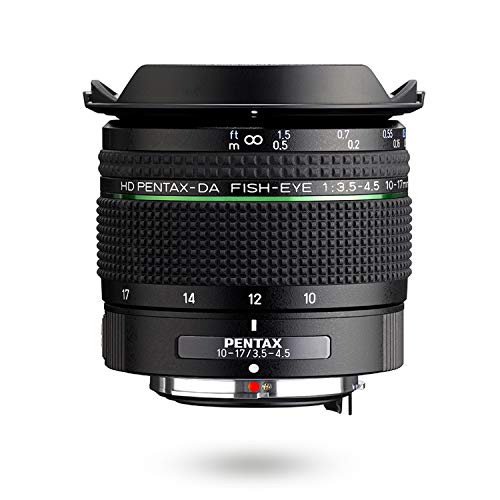
- smc Pentax-DA 10-17mm f/3.5-4.5 ED Fish-Eye: deliberate curvature
- smc Pentax-DA 12-24mm f/4 ED AL IF: the measured landscape choice
- Sigma 10-20mm f/3.5 EX DC HSM: constant aperture value
- Tamron 10-24mm f/3.5-4.5 Di II: range and lightness
- Irix 11mm f/4 Firefly and Blackstone: manual focus, extreme rectilinear width
- HD Pentax-D FA 15-30mm f/2.8 ED SDM WR: full-frame authority
- Rectilinear versus fisheye: choosing a rendering
- Weather sealing: AW, WR, and honest expectations
- Autofocus motors: DC, SDM, PLM, HSM, and screw drive
- The filter problem at extreme angles
- Astrophotography: aperture, coma, and the night workflow
- Sharpness patterns and sensible apertures
- Distortion, vignetting, and profile corrections
- Interiors, architecture, and real estate discipline
- Composition with extreme width
- Close focus and near-far drama
- Flare behaviour and backlighting
- Video considerations for Pentax shooters
- Used-market guidance for discontinued K-mount glass
- Recommendations by body and assignment
- Care, storage, and longevity
- How the candidates handle colour and contrast
- Street and documentary work at extreme width
- Panoramas and virtual tours from a single wide lens
- Pairing the wide lens with the rest of a Pentax kit
- Checks to run during a return window
- Understanding sample variation and review evidence
- Environmental work: coasts, deserts, and winter
- Learning to see at ultra wide angles
- Check prices on Amazon
- Decision summary
As an Amazon Associate I earn from qualifying purchases. This post may contain affiliate links at no extra cost to you.
An ultra wide lens changes how a Pentax camera sees a room, a coastline, or a night sky. On an APS-C body such as the K-3 series, focal lengths near 10mm to 12mm open angles of view that feel closer to stepping backward through a wall than to zooming out. On a full-frame K-1 or K-1 Mark II, the same drama begins nearer 15mm. Choosing among the K-mount options means sorting image circles, apertures, focus motors, weather sealing, and distortion character, because no single lens leads every category and several designs date from different sensor eras.
The candidates in this guide span native Pentax designs and the most relevant third-party K-mount glass. The HD Pentax-DA 11-18mm f/2.8 ED DC AW serves APS-C shooters who need speed and sealing. The smc Pentax-DA 10-17mm f/3.5-4.5 ED Fish-Eye bends the world deliberately. The smc Pentax-DA 12-24mm f/4 ED AL IF covers a classic landscape range. Sigma’s 10-20mm f/3.5 EX DC HSM and Tamron’s 10-24mm f/3.5-4.5 Di II bring third-party value and availability to crop bodies, while the Irix 11mm f/4 offers a manual-focus rectilinear extreme for both formats with a K-mount version. Crowning the full-frame side, the HD Pentax-D FA 15-30mm f/2.8 ED SDM WR pairs a fast constant aperture with the wide end K-1 owners most often request.
Figures throughout follow manufacturer specification sheets and published measurements, and readers should verify the exact variant under consideration, because several of these lenses passed through coating updates, mount revisions, or regional naming differences during long production lives. No lens here needs a purchase decision based on a single headline specification; the sections below weigh each design against landscapes, interiors, travel, and astrophotography so the trade-offs stay visible.
First decision: image circle and camera body
Pentax K-mount lenses divide by the size of the image they project. DA lenses are designed for APS-C sensors, DA L and DA variants share that crop coverage, and D FA lenses cover full-frame sensors as fitted to the K-1 family, while older FA designs also cover the larger format. Mounting a DA lens on a K-1 body triggers crop behaviour: the camera can record a reduced APS-C area automatically or, on some combinations, record the full frame with dark corners that vary by focal length and focus distance. For occasional use that compromise may suffice, but a dedicated full-frame kit deserves glass that illuminates the whole sensor at every setting.
The reverse pairing works gracefully. A D FA lens on an APS-C body uses only the central, usually strongest, portion of its image circle, though the effective angle narrows by the crop factor of roughly one and a half. The D FA 15-30mm on a K-3 body behaves approximately like a 23-45mm lens in field-of-view terms, which abandons the ultra wide territory entirely. Body ownership therefore dictates the shortlist before any other feature is considered: crop shooters choose among the DA and DC designs plus crop-format third-party zooms, while K-1 shooters look to the D FA 15-30mm, the Irix 11mm, and selected full-frame legacy glass.
Equivalent angles without the confusion
Manufacturers quote diagonal angles of view for the format a lens was designed to cover. An 11mm APS-C lens and a 16mm full-frame lens frame a scene similarly, which explains why crop ultra wides carry shorter numbers for comparable drama. When comparing across formats, multiply the crop lens focal length by about 1.5 for an equivalence estimate, then judge depth of field and noise separately because those follow sensor size and aperture together. Photographers who run both a K-1 and a crop body sometimes accept one full-frame wide zoom for the flagship and a compact crop zoom for the lighter kit, rather than forcing one lens to serve two masters imperfectly.
HD Pentax-DA 11-18mm f/2.8 ED DC AW: the fast crop flagship
This lens occupies the premium position for APS-C Pentax photography. A constant f/2.8 aperture across the zoom range supports indoor work and night skies, while the AW designation signals all-weather construction beyond the more common WR grade, with sealing intended to match flagship bodies during rain, dust, and cold assignments. The DC motor drives internal focusing quietly and quickly by the standards of screw-drive predecessors, and the optical formula uses ED elements to restrain the colour fringing that high-contrast edges at wide angles tend to provoke.
Handling details reward attention. A zoom lock prevents barrel creep during transport, a focus clamp introduced on this design holds the focus ring against accidental movement during long exposures, and the hood incorporates a window for rotating filters without removing the hood. The front element accepts screw-in filters of a large diameter, a practical advantage over bulbous designs discussed later. Weight sits in the serious category for a crop lens, reflecting the fast aperture and sealing, yet on a gripped K-3 class body the balance feels purposeful rather than front-heavy. For crop shooters wanting one ultra wide to cover events, landscapes, and astro attempts, our research places this design at the top of the native shortlist.
smc Pentax-DA 10-17mm f/3.5-4.5 ED Fish-Eye: deliberate curvature
A fisheye follows different rules. Instead of correcting straight lines, this compact zoom maps the world with strong barrel curvature, reaching a full diagonal fisheye effect at 10mm on APS-C and softening toward a milder rendering near 17mm. Subjects placed centrally stay comparatively natural while edges sweep dramatically, a look suited to skate culture, concerts, tight interiors presented expressively, and creative landscape work where a foreground anchor bends the horizon around it. Photographers can also de-fish in software, straightening lines at the cost of edge resolution and some field of view, effectively gaining an occasional ultra wide from a lens bought for character.
The variable aperture and older optical coatings date the design, yet its small size keeps it in bags long after larger zooms are left at home. Close focusing ability adds playful near-far distortion, exaggerating foreground subjects against sweeping backgrounds. Autofocus relies on the camera body’s screw-drive mechanism on this design, bringing audible focusing and speed that trails ring-motor lenses. Buyers should choose it as a creative instrument first, not as a substitute for a rectilinear landscape zoom, because correcting every frame grows tiresome when straight architecture dominates an assignment.
smc Pentax-DA 12-24mm f/4 ED AL IF: the measured landscape choice
Before the 11-18mm arrived, this zoom defined serious wide work on Pentax crop bodies. The range starts slightly less wide, which some landscape photographers actually prefer because 12mm on APS-C still frames expansively while taming the foreground exaggeration that extreme angles impose. Constant f/4 keeps exposure consistent through the zoom, internal focusing keeps the front element stationary for filter use, and the optical design earned a durable reputation for even sharpness across the frame when stopped down to typical landscape apertures.
Age shows in the details rather than the images. Screw-drive autofocus sounds mechanical beside modern motors, the coatings predate the latest HD generations, and weather sealing is absent, so rain work demands a cover and caution. Availability now depends largely on the used market, where condition varies and prices float with collector interest. A clean example remains a rational purchase for a tripod-based landscape photographer who focuses manually or deliberately, values the 24mm long end for tighter compositions, and does not need f/2.8 for night work. Paired with a standard zoom, it anchors a two-lens crop landscape kit of considerable capability.
Sigma 10-20mm f/3.5 EX DC HSM: constant aperture value
Sigma offered K-mount shooters two generations of 10-20mm crop zooms, and the f/3.5 constant-aperture version stands as the stronger specification. Hyper Sonic Motor focusing brings quiet operation welcomed by video-adjacent shooters, the build carries the EX finish of Sigma’s former premium line, and the 10mm short end reaches wider than the native 11-18mm, albeit with the distortion and corner demands that extra millimetre implies. Availability in K mount was always thinner than in larger mounts, so used examples surface irregularly and deserve mount verification before money changes hands; a listing photographed from the front alone cannot confirm the bayonet variant.
Optically, published measurements show the familiar ultra wide pattern: strong central performance, corners that improve markedly by f/5.6 to f/8, and lateral colour fringing that raw converters correct reliably through lens profiles. The lens accepts front filters, keeping polariser and neutral density workflows conventional. For a crop shooter who finds the flagship native zoom beyond budget, a verified K-mount copy of this Sigma represents the most balanced third-party route, provided the buyer accepts that future body compatibility rests on Sigma’s legacy support rather than Pentax’s own roadmap.
Tamron 10-24mm f/3.5-4.5 Di II: range and lightness
Tamron’s crop ultra wide trades a variable aperture for the longest reach in this group, extending to 24mm where compositions begin to resemble a standard wide view. That flexibility suits travel photography, where one lens might cover a cathedral interior and then a street scene without a change on the body. Two generations exist across mounts, with the later model bringing revised styling and coatings; K-mount availability again concentrates in the used market, and the exact generation should be identified by model code before purchase.
Expectations should be calibrated honestly. Corner performance at 10mm and wide apertures trails the class leaders, autofocus speed is adequate rather than swift, and the lighter build reflects materials chosen for portability. None of this disqualifies the lens for its intended audience. A travelling photographer who prints moderately, publishes online, and stops down for landscapes will rarely encounter its limits, while gaining a single-lens wide solution that keeps a kit bag small through airports and mountain huts. Paired bodies with in-body stabilisation, a Pentax signature across both crop and full-frame lines, compensate for the slower aperture during handheld interior work at moderate shutter speeds.
Irix 11mm f/4 Firefly and Blackstone: manual focus, extreme rectilinear width
The Irix 11mm f/4 occupies rare territory: a rectilinear lens of genuinely extreme width offered in Pentax K mount, covering full-frame sensors while remaining usable on crop bodies as an approximately 16.5mm-equivalent view. Rectilinear projection at 11mm stretches corners dramatically, and near objects at frame edges elongate in ways that demand careful composition, yet architecture stays straight, which no fisheye can claim uncorrected. The lens is manual focus only, with a wide, damped ring, a focus lock, engraved distance and depth-of-field scales, and a click at infinity that night photographers appreciate when composing under darkness.
Two build variants share the optics: Firefly with a lighter composite barrel and Blackstone with a metal housing and engraved markings filled for visibility. Weather sealing appears at the mount and key junctions, unusual diligence in a third-party manual lens. The protruding front element prevents conventional screw-in filters, so Irix provides a rear gelatin filter slot, and square filter systems require a dedicated adapter arrangement. Distortion control is a headline claim of the design, and published measurements support low geometric distortion for the focal length, making the lens a genuine option for interiors and architecture on a K-1 where the native zoom’s 15mm short end cannot reach the same span.
HD Pentax-D FA 15-30mm f/2.8 ED SDM WR: full-frame authority
For K-1 owners, this lens defines the native ultra wide standard. The 15-30mm range covers the span most full-frame landscape and event photographers actually use, the constant f/2.8 aperture supports wedding receptions and night scenes alike, and SDM focusing operates with the quiet authority expected of a flagship zoom. WR sealing matches the K-1’s own weather resistance, enabling a system that shrugs at drizzle during coastal and mountain assignments. The optical design controls flare creditably for a lens whose front element gathers light from extreme angles, and corner performance at landscape apertures satisfies large-print ambitions.
Compromises are physical rather than optical. The lens is large and heavy, the front element bulges beneath a fixed petal hood, and screw-in filters are impossible without an oversized adapter system holding large square filters in front of the glass. Event photographers accept the mass for the capability; hikers count every gram and may look longingly at slower alternatives that the K-mount catalogue offers only sparsely in full-frame coverage. On balance, our research treats this zoom as the default recommendation for K-1 shooters whose work centres on wide scenes, with the Irix 11mm as the specialist extension when 15mm cannot encompass the subject.
Rectilinear versus fisheye: choosing a rendering
Rectilinear lenses map straight scene lines to straight image lines, preserving architecture and horizons at the cost of stretching objects near corners. Fisheye lenses preserve angular relationships differently, bending lines that do not pass through the centre. Neither rendering is more truthful; they answer different compositional intentions. A property photographer needs rectilinear discipline so walls meet credibly. A music photographer in a cramped venue may prefer fisheye energy that embraces the squeeze. Owning both, as many Pentax shooters do with the compact 10-17mm beside a rectilinear zoom, costs less bag space than in most systems because the fisheye is genuinely small.
Software correction blurs the boundary without removing it. De-fishing a 10mm frame yields an extremely wide rectilinear image with soft, stretched corners, acceptable for web publication and small prints. Correcting a rectilinear zoom’s mild barrel distortion, by contrast, costs almost nothing, because profiles adjust geometry precisely and the underlying resolution survives. Photographers planning heavy correction should expose carefully for the edges, since stretching amplifies noise and vignetting there. Readers whose wide ambitions extend to wildlife context shots, where an environmental portrait of a bird includes its habitat, may cross-reference best birding cameras and lens for the long-lens side of a combined field kit.
Weather sealing: AW, WR, and honest expectations
Pentax built its reputation partly on sealed systems, and the letters after a lens name encode the protection level. AW, all weather, denotes the more extensive sealing fitted to flagship DA and D FA star-grade lenses, with numerous gaskets and construction intended for sustained rain and dust. WR, weather resistant, covers a broader range with sealing adequate for showers and splashes. Third-party claims vary by maker and model, and a lens without a mount gasket breaks the system chain even on a sealed body, because the bayonet junction is a primary entry path for moisture.
Sealing resists weather; it does not waterproof equipment. Changing lenses in rain admits more water than any gasket prevents, zoom actions can draw moisture past seals over time, and drying gear after a wet session remains essential practice. Cold-weather ratings matter for the 11-18mm AW, whose design brief included low-temperature operation for winter landscapes and aurora work. Photographers who regularly shoot waterfalls, surf zones, or desert dust should weight sealing heavily in the choice, while studio-bound interior specialists can safely trade it for other virtues.
Autofocus motors: DC, SDM, PLM, HSM, and screw drive
Pentax lens names carry their focus technology openly. DC motors, fitted to the 11-18mm, sit in the lens and drive focusing quietly with good reliability. SDM, used in the 15-30mm, employs an ultrasonic-type motor in the lens for near-silent operation prized at events. PLM, a pulse motor found on some newer DA zooms outside this ultra wide group, prioritises speed and smoothness for video. Screw drive, found on the 12-24mm and 10-17mm, transfers power from a motor in the camera body through a mechanical linkage: dependable, compatible with decades of bodies, but audible and sometimes slower to settle at the low-contrast targets wide lenses often face.
Manual focus quality deserves equal billing in a category where depth of field forgives small errors and night work demands focusing without autofocus assistance. The Irix builds its entire interface around the hand, while the native zooms provide quick-shift manual override, letting the photographer refine focus immediately after autofocus without flipping switches. Focus-by-wire systems on some modern designs change the feel again, introducing electronic coupling whose precision depends on implementation. For astrophotography, a mechanical ring with a reliable infinity position simplifies the dark workflow considerably.
The filter problem at extreme angles
Filters expose the sharpest practical divide in this group. Lenses with flat front elements and standard threads, including the 11-18mm, 12-24mm, Sigma, and Tamron zooms, accept polarisers and neutral density filters directly, though ultra wide geometry can vignette when thick filter stacks intrude into the field. Slim-profile filters reduce that risk. Bulbous designs, the D FA 15-30mm and Irix 11mm, cannot accept screw-in filters at all; their owners adopt large square filter systems on dedicated holders, rear gelatin filters where a slot exists, or in-camera solutions such as the K-1’s pixel-shift and interval composite modes for motion smoothing that long exposures would otherwise provide.
Polariser behaviour at ultra wide angles needs expectation management regardless of mount. A polariser darkens sky unevenly across a very wide field because polarisation varies with angle to the sun, producing a patchy gradient in clear conditions. Landscape photographers often reserve polarisers for foliage, water reflections, and wet rock at these focal lengths, where the effect stays uniform, and leave skies to graduated filtration or exposure blending. Neutral density filters, by contrast, behave predictably and remain central to coastal long-exposure work on any of these lenses fitted with a suitable holder.
Astrophotography: aperture, coma, and the night workflow
Night-sky photography stresses an ultra wide lens in ways daylight never approaches. Stars at frame corners reveal coma, where points flare into comet shapes, and astigmatism that smears them into short lines. A fast aperture gathers light during the short exposures that prevent star trailing, which is why f/2.8 designs dominate serious Milky Way work on both formats here. The 11-18mm at its short end and the 15-30mm at 15mm both serve this role on their respective bodies, with published measurements and sample analyses available for photographers who want to examine corner behaviour at full aperture before committing.
Practical technique contributes as much as optics. Focusing through magnified live view on a bright star, then securing the ring, beats trusting a scale when precision matters. Pentax bodies add a distinctive advantage through the Astrotracer function available with the GPS unit or built into certain models, shifting the sensor to follow sky motion and permitting longer exposures without trailing, which relaxes the aperture demand slightly and lets a slower lens produce cleaner files at lower sensitivity settings. Foreground elements stay sharp only within limits during tracked exposures, so blending a separate foreground frame remains a standard part of the craft.
Vignetting at full aperture darkens corners that editing can brighten at a noise cost, and stopping down one stop typically improves coma, vignetting, and corner definition together, at the price of sensitivity or exposure length. The night photographer’s real choice is therefore per-assignment rather than absolute: open up for a single-frame capture of a fleeting aurora display, or stop down for a tracked, blended production when time and conditions allow. Tripod discipline, dew management on a front element that faces the sky, and spare batteries for cold nights complete a workflow that specification sheets only begin to describe. Travel shooters comparing fixed-lens alternatives for casual night work sometimes glance at best 50x superzoom digital cameras, though interchangeable K-mount glass retains decisive advantages in light gathering and corner quality.
Sharpness patterns and sensible apertures
Ultra wide lenses concentrate their optical struggle at the corners, where the design must stretch an image circle across oblique ray angles. Central sharpness on every lens in this guide reaches high levels by moderate apertures, and even wide open the centres serve events and astrophotography credibly. Corners follow a familiar curve: soft or smeared at maximum aperture on the more ambitious designs, tightening by f/4, and reaching their best between f/5.6 and f/8 on most of these zooms. Beyond f/11 diffraction begins to soften the whole frame on APS-C sensors, and full-frame bodies tolerate roughly one stop more before the same effect dominates.
Field curvature complicates flat test charts versus real scenes. A lens that renders a brick wall unevenly may photograph a three-dimensional landscape beautifully, because the curved focus surface aligns with foreground corners sitting closer to the camera. Experienced wide-angle photographers focus a third into the scene, rely on depth of field at working apertures, and review corners at full magnification after the first frames of a session to confirm the chosen settings. Pursuing laboratory perfection at the expense of a missed tide or fading light misunderstands the tool; these are lenses for being present in expansive places.
Distortion, vignetting, and profile corrections
Rectilinear zooms in this class typically show barrel distortion at their short ends, lessening through the range and sometimes crossing into mild pincushion at the long end. Modern raw converters apply manufacturer or community profiles that correct geometry and vignetting in one step, with raw files from Pentax bodies carrying the metadata those profiles need. Corrections cost a small amount of corner resolution and occasionally crop a sliver of the frame, so composing with slight headroom at the edges protects intended framing. JPEG shooters can enable in-camera corrections on supported native lenses, accepting the processing time the body requires.
Chromatic aberration divides into lateral colour fringing at contrasty edges, which profiles remove almost completely, and longitudinal colour error in out-of-focus areas at wide apertures, which they cannot. ED and specialised low-dispersion elements in the flagship zooms address both, and the difference shows in backlit branches against bright skies, a classic ultra wide torture scene. Purple fringing from older coatings on the 12-24mm and 10-17mm cleans up acceptably in current software, one reason these veterans remain viable despite their age.
Interiors, architecture, and real estate discipline
Interior photography punishes tilted cameras, because vertical lines converge the moment the sensor plane leans. An ultra wide lens on a levelled tripod, raised or lowered to the height that keeps walls parallel, produces the calm geometry property clients expect. The K-1’s tilting screen and composition adjustment features assist, while crop bodies benefit from a geared head or careful levelling with the electronic level displayed in live view. Vertical compositions exploit the wide angle differently, stacking foreground floor detail against ceiling height in atriums, stairwells, and places of worship.
Stitching offers an alternative when a single frame cannot hold a space without distortion drama: a longer focal length, overlapped frames, and careful rotation around the entrance pupil produce files of immense resolution and natural perspective. The ultra wide remains faster for most assignments, and speed decides commercial viability. Video walkthroughs add another demand, favouring quiet motors and minimal focus breathing; creators filming rooms on Pentax bodies may also maintain a separate streaming viewpoint informed by best 1080p vlogging cameras with flip out screens, reserving the K-mount kit for composed stills and deliberate clips.
Composition with extreme width
Ultra wide lenses reward a disciplined foreground. Without a near element anchoring the frame, a 10mm or 15mm view dissolves into distant scenery shrunk by perspective, and the photograph feels emptier than the location felt in person. Placing the camera close to textured rock, a weathered fence line, flowers, or architectural detail restores depth, because the near object looms while the background recedes in layers. Photographers often work lower than instinct suggests, since a modest drop in camera height enlarges foreground presence dramatically at these angles.
Leading lines gain power and risk in equal measure. Boardwalks, shorelines, railway platforms, and colonnades pull the eye convincingly, yet a line entering exactly at a corner can drag attention out of the frame. People at the edges stretch noticeably, so group photographs at ultra wide settings place subjects toward the centre and leave breathing room at the sides. Vertical foregrounds such as door frames or tree trunks near an edge lean under rectilinear projection; stepping back a pace and cropping slightly in editing often yields a calmer result than filling the frame in camera at any cost.
Close focus and near-far drama
Minimum focus distances on these zooms sit surprisingly short, letting a flower, product, or rock pool dominate the foreground while the wide field holds its environment. The 10-17mm fisheye is famous for this trick, and the rectilinear zooms perform their own version with straighter surroundings. Working that close demands care with shadows, because the camera and photographer block light at centimetre distances, and with front-element safety, because a protruding optic near abrasive rock or curious animals invites damage. A protective filter on threaded designs earns its place in such fieldwork even when a photographer normally shoots bare glass for maximum flare resistance.
Depth of field at ultra wide focal lengths deceives newcomers pleasantly: at f/8, a crop body focused a metre away renders a scene acceptably sharp from very near to infinity. That generosity enables fast documentary work in markets, festivals, and transit hubs where focusing time is scarce. It also hides sloppy focus that betrays itself in large prints, so the habit of confirming focus distance on the scale or through magnification remains worthwhile. Hyperfocal tables and lens scales offer starting points, refined by reviewing output at the print sizes a photographer actually produces.
Flare behaviour and backlighting
Pointing a wide lens toward the sun includes the sun in many frames whether intended or not, and coatings decide whether the result is an attractive sunstar with mild veiling or a cascade of ghosts across the image. Modern HD coatings on the flagship zooms suppress reflections impressively, while older smc coatings on the 12-24mm and 10-17mm produce more visible artefacts that some photographers accept as period character. A clean front element matters enormously, because dust and grease that stay invisible in front-lit scenes bloom under backlight.
Sunstars form as aperture blades shape the diffraction pattern around a bright point, and blade count and geometry differ across these designs, giving each lens a recognisable signature at f/11 to f/16. Landscape photographers who prize that effect study sample galleries for the specific lens rather than assuming all stars render alike. Hoods help with off-axis light but cannot shade a light source inside the frame; a hand held just outside the field, flagged carefully, sometimes rescues a composition that a hood cannot.
Video considerations for Pentax shooters
Pentax bodies occupy a stills-first position in video, yet ultra wide lenses still serve creators filming interiors, workshops, and travel sequences. Quiet DC, SDM, and HSM motors reduce recorded focusing noise when a body microphone is used, while screw-drive lenses announce every adjustment. Focus breathing, the slight framing change as focus travels, varies by design and matters for pull-focus work; internal focusing zooms in this group generally behave respectably. Stabilisation from the in-body system smooths handheld wide shots noticeably, and the wide field itself forgives small movements that a telephoto would amplify.
Studios that keep a Pentax kit for stills often protect the room and its equipment with a separate monitoring setup, a niche where best 4k ip cameras addresses a different job entirely from creative glass. Keeping those roles separate clarifies budgets: money for a lens buys image quality in the portfolio, while monitoring hardware guards the space where the portfolio gets produced. Creators should resist stretching one purchase across both purposes and ending with a compromise at each.
Used-market guidance for discontinued K-mount glass
Several lenses in this guide circulate mainly second-hand, and K-mount examples demand specific checks. Confirm the mount physically or through seller photographs of the bayonet and contacts, because identical barrels shipped for multiple systems. Inspect the rear element and aperture lever, exercise the zoom through its range feeling for grit or uneven resistance, and shine a light through the optics looking for fungus webs, haze, or separation at element edges. Electronic contacts should be clean and sprung, and the lens should report focal length correctly to the body so stabilisation and metadata behave.
Sample variation exists in every production line, and ultra wide zooms reveal decentering as one soft corner that never sharpens while its opposite corner performs well. A simple brick-wall or distant-skyline sequence at several apertures, reviewed at full magnification corner by corner, exposes the fault within a return window. Sellers who provide such captures inspire confidence. Prices fluctuate with Pentax community demand and the scarcity of K-mount third-party stock, so patience usually beats urgency, except for the flagship native zooms whose used supply stays thin because owners keep them.
Recommendations by body and assignment
APS-C landscape and travel
The 11-18mm f/2.8 leads when budget allows, combining speed, sealing, filters, and modern coatings in one native package. A used 12-24mm f/4 serves the deliberate tripod photographer at lower cost, while the Sigma 10-20mm f/3.5 splits the difference with quiet focusing and a wider short end. The Tamron suits travellers who prize reach and low weight over corner perfection. Any of these pairings with a mid-range zoom and a fast prime builds a crop kit that covers most assignments a photographer will meet.
APS-C night and events
Constant f/2.8 makes the 11-18mm the natural event and astro choice on crop bodies, holding shutter speeds in dim venues and gathering sky light efficiently. The fisheye complements it for creative frames rather than replacing it. Photographers covering weddings on crop Pentax bodies gain working room in small preparation spaces and chapels where stepping back is impossible, though care with edge distortion around people remains essential, and a standard zoom still handles the majority of a ceremony.
Full-frame K-1 kits
The D FA 15-30mm f/2.8 is the anchor recommendation, with the Irix 11mm f/4 as the specialist for extreme interiors, architecture demanding straight lines at maximum span, and distinctive landscape perspectives. Legacy full-frame wide primes can fill gaps for photographers who enjoy manual focus and accept older coatings, but zooms dominate practical K-1 wide work. Budget planning should include the filter holder system the 15-30mm requires if neutral density work is planned, because that accessory cost surprises many new owners.
Creative and hybrid kits
Photographers who shoot across subjects rather than within one genre often assemble two of these lenses deliberately: a rectilinear zoom for dependable coverage and the fisheye for character, or a flagship zoom plus the Irix for reach beyond the zoom’s short end. Duplication at similar focal lengths is not waste when the renderings differ fundamentally. What matters is that each lens answers a recurring assignment in the photographer’s actual diary, not a hypothetical one.
Care, storage, and longevity
Wide lenses invite adventurous locations, and their front elements pay for the adventure. Rinse salt and sand with air before wiping, store with caps fitted and a desiccant in humid climates, and keep a microfibre cloth dedicated to optics separate from general cleaning rags that carry grit. Zoom mechanisms ingest dust over years; operating the barrel periodically distributes lubricant and reveals stiffness early. Firmware and lens data updates through the body, where supported, keep corrections current for native glass.
Long production runs and a loyal user community give K-mount optics an unusually long working life, with independent repairers familiar with the common designs. A lens bought carefully, used attentively, and stored dry can serve across several body generations, which reframes the purchase from an expense into infrastructure for a photographic practice. That longevity also supports the used market that keeps discontinued designs in circulation, a virtuous arrangement for a mount whose catalogue evolves deliberately rather than rapidly.
How the candidates handle colour and contrast
Coating generations leave fingerprints on colour rendition. The HD coatings on the two flagship zooms deliver neutral transmission with restrained flare, so skies hold saturation under backlight and shadow detail survives high-contrast scenes. Earlier smc coatings render slightly warmer and flare more readily, traits that film-era Pentax shooters recognise and some actively prefer for portrait-adjacent wide work. Third-party designs follow their own coating philosophies: Sigma’s multi-layer approach of the EX era controls ghosting respectably, Tamron’s coatings vary by generation, and Irix applies its own multi-coating tuned for the strongly curved front element of the 11mm.
Contrast at the pixel level interacts with sensor generation. Current Pentax bodies resolve enough detail to expose micro-contrast differences that older sensors masked, which partly explains why a lens praised a decade ago can draw mixed reviews today. Judging sample images therefore requires matching the body used for the samples to the body a buyer owns, or at least accounting for resolution differences when comparing corner crops across reviews. Published measurements taken on optical benches sidestep sensor variables and deserve weight alongside photographic samples for exactly this reason.
Street and documentary work at extreme width
Documentary photographers value ultra wide lenses for environmental storytelling: a market vendor framed within the stall, a mechanic inside the workshop, a commuter isolated within a station’s architecture. Working close becomes an ethical as well as optical choice, because proximity at these focal lengths is unmistakable and subjects generally know a camera is present, unlike the detached compression of a telephoto candid. Zone focusing suits the genre well; set a moderate aperture, prefocus at a judged distance, and the generous depth of field covers a moving scene while the photographer concentrates on timing and position.
Shutter discipline matters because wide lenses encourage slower handheld speeds that stabilisation seems to permit, yet subject movement blurs regardless of how steady the camera sits. A vendor’s hands, a child’s turn, or a flag in wind all demand honest shutter speeds. The fast flagship zooms buy one stop of flexibility over their f/4 and variable-aperture rivals in these moments, a practical advantage that spec-sheet comparisons sometimes undervalue beside optical scores. Small bodies with the compact fisheye or the Tamron zoom also attract less attention in sensitive environments, a documentary virtue no measurement captures.
Panoramas and virtual tours from a single wide lens
A single ultra wide frame sometimes still falls short, and stitching extends every lens in this guide. Rotating the camera on a levelled head through overlapping vertical frames produces panoramas with natural perspective and resolution far beyond a single capture. Vertical orientation uses the lens’s stronger central band across the sweep and increases the final image height. Overlap of roughly a third between frames gives stitching software enough shared detail, and manual exposure and focus locked across the sequence prevent visible seams where brightness or sharpness would otherwise step between neighbours.
Virtual tour production for property and hospitality clients builds on the same discipline, adding precise levelling and consistent white balance across a sphere of captures. The rectilinear zooms simplify this work because their geometry profiles correct cleanly, while fisheye frames demand specialised stitching that rewards experience. Photographers entering that market should budget for a panoramic head and indexing rotator alongside the lens, since parallax errors from rotating around the tripod socket rather than the lens’s entrance pupil ruin close interior stitches no matter how fine the optics are.
Pairing the wide lens with the rest of a Pentax kit
An ultra wide rarely works alone. On crop bodies, the classic companions are a standard zoom beginning near 16mm or 18mm, which overlaps the wide zoom’s long end for seamless coverage, and a fast prime near 35mm or 50mm for low light and subject isolation. On full-frame bodies, a 24-70mm class zoom or a set of limited primes continues the story from where the 15-30mm stops. Filter thread consistency across a kit reduces the number of adapter rings and holders a photographer carries, another quiet argument for staying within one lens family where possible.
Bag planning deserves the same rigour as optical selection. Ultra wide zooms are disproportionately bulky for their focal lengths because their front groups must gather an enormous field, so a bag that swallows a standard kit may balk at adding the D FA 15-30mm. Weighing the full working kit, bodies, lenses, support, and filters together, exposes whether a photographer’s ambitions match their willingness to carry the load up a fell or through an airport. The best lens in this guide is ultimately the one present when the wide scene appears, and presence follows portability as much as performance.
Checks to run during a return window
New lenses deserve a structured first week. Photograph a detailed distant scene at every aperture and focal length, review corners systematically, and confirm that no single corner lags its opposite number persistently, which would suggest decentering worth exchanging. Verify autofocus accuracy at wide settings on both near and distant targets, because calibration errors hide inside generous depth of field until a critical assignment at full aperture exposes them. Exercise the zoom and focus rings through cold mornings and warm afternoons if the climate allows, listening for grit and feeling for uneven resistance.
Record the serial number, retain packaging until the checks pass, and register the product where the maker offers registration. Photographers who follow this routine exchange the occasional defective sample calmly and then forget the process for years, because a verified good copy of any design in this guide tends to stay good. The routine costs an hour and converts uncertainty into the confidence that lets a photographer trust the lens at a cliff edge at dawn, which is where ultra wide Pentax glass most often earns its reputation.
Understanding sample variation and review evidence
Readers comparing opinions across publications will meet disagreements about the same lens, and sample variation explains many of them. Ultra wide zooms contain numerous elements whose alignment tolerances interact, so one copy can render a left corner noticeably better than another copy renders its own. Reputable reviewers disclose when a maker supplied a sample and when a second copy confirmed the findings. Photographers should weight conclusions drawn from several copies, and from measurement systems that report both sides of the frame separately, more heavily than a single enthusiastic or disappointed account based on one unit bought in haste.
Evidence hierarchies help busy buyers. Manufacturer specification sheets settle factual questions about dimensions, element counts, minimum focus, and sealing designations. Optical bench measurements settle comparative questions about resolution and aberrations under controlled conditions. Photographic samples settle questions of rendering character, flare personality, and sunstar shape that benches describe poorly. Owner reports accumulated over years settle reliability questions that no launch-period review can answer. Consulting each source for the questions it answers best produces a decision sturdier than any single verdict, however confidently delivered.
Environmental work: coasts, deserts, and winter
Coastal photography exposes wide lenses to spray, sand, and wind in combination. Sealed flagship zooms tolerate the spray, but every design suffers when sand reaches the zoom barrel, so extending the barrel under a jacket or behind a windbreak during gusts becomes habit. A blower used before retracting the barrel prevents grains from being drawn inside. Desert work adds fine dust that penetrates zips and settles on front elements within minutes; the same blower discipline applies, and wiping a dusty element dry is forbidden practice among careful photographers because the particles scratch coatings.
Winter brings condensation as the silent threat. Moving a cold lens into a warm room coats internal and external surfaces with moisture, so sealing the kit inside a bag before entering lets temperatures equalise slowly and keeps condensation on the bag rather than the glass. The AW-rated 11-18mm was designed with cold operation in its brief, and its focus clamp prevents the slow focus drift that long winter exposures at night can otherwise introduce when lubricants stiffen and rings move under their own cable or glove contact. Batteries for the body fade faster than any lens in the cold, so the wide-angle night photographer packs warmth for the camera and patience for the sky in equal measure.
Learning to see at ultra wide angles
New owners commonly pass through a phase of disappointment, because the lens that promised drama delivers frames where everything looks small and distant. The correction is positional rather than technical: move closer, then closer again, until a foreground element occupies a startling share of the frame, and the promised drama appears. Deliberate exercises accelerate the adjustment. Spend a session photographing one object from a fixed position at every focal length of the zoom, then repeat while holding framing constant by moving, and compare how perspective, rather than magnification, transforms the result.
A second exercise restricts the photographer to the single widest setting for a full outing, forcing compositions that exploit the angle instead of retreating from it. A third studies edges: before pressing the shutter button, scan each corner for intrusions, stretched figures, and leaning verticals, because ultra wide frames are won or lost at their borders. Within weeks these habits become reflexes, and the lens that once felt unwieldy starts to feel like the natural way certain places look. That fluency, more than any specification advantage, separates the photographers who keep an ultra wide in the working bag from those who sell it within a season.
One further consideration is timing a purchase around body plans. A photographer intending to move from a crop body to a K-1 within a year might rationally buy the full-frame zoom first and accept its narrower effective view temporarily, rather than buying a crop flagship and reselling it soon after. The reverse logic suits a committed crop shooter who values compact travel: the APS-C flagships deliver their full design intent on the bodies they were built for, and carrying full-frame glass for a format never used adds weight without reward. Honest forecasting about the next body, more than any optical chart, often settles which shelf of this catalogue deserves the investment.
Accessories complete the picture at modest cost: a quality blower, a spare rear cap for lens changes in the field, a rain cover sized for a bulky wide zoom, and a filter pouch that keeps large square filters separated and clean. None of these items photographs anything by itself, yet each protects the lens or the session at the moment weather, dust, or haste would otherwise end the day early.
Check prices on Amazon
Live listings for the shortlist in this guide are pulled from Amazon below, so prices and availability are always current at the moment you look.

Decision summary
Start with the sensor. Crop bodies choose among the DA 11-18mm f/2.8 for flagship performance, the DA 12-24mm f/4 for measured landscape value, the Sigma 10-20mm f/3.5 and Tamron 10-24mm for third-party balance of cost and reach, and the DA 10-17mm fisheye for deliberate curvature. K-1 bodies build around the D FA 15-30mm f/2.8 and add the Irix 11mm f/4 when rectilinear width beyond 15mm becomes necessary. Weigh sealing for the environments actually visited, filter systems for the techniques actually practised, and motor type for the focusing style actually used. On those grounds each lens in this guide finds a photographer it serves genuinely well.
Readers should know that this publication participates in affiliate arrangements with selected retailers, and that following a retailer link from these pages and completing a purchase may generate a commission supporting the research and production of future guides, without changing the price paid or the editorial reasoning set out above, which rests on specification sheets, published measurements, and the documented needs of Pentax photographers.
Whichever K-mount wide lens earns a place in the bag, the first frame worth keeping usually comes from stepping closer to the foreground and letting that immense angle earn its drama honestly.
Related guides
- Best 1080p IP Cameras: PoE Domes, Turrets, Bullets and a PTZ That Earn Their Cable
- Best AC Powered Wireless Security Cameras: Wi-Fi Data, Mains Power, Zero Sleep
- Best Sony Full Frame Cameras for Astrophotography: Sensitivity vs Resolution
- Best Canon Point and Shoot Digital Cameras: PowerShot Picks From Pocket Compacts to Travel Zooms


