What's inside
- Where to buy
- Key Takeaways
- Quick Picks
- How Did We Judge Cameras for Listing Work?
- Why Is Real-Estate Width Really a Lens Decision?
- Which Bodies and Kits Build the Strongest Listing Setup?
- What Do the Full-Frame Bodies and the Action Camera Add?
- How Should a Small Agency Standardise One Camera Kit?
- How Do the Six Compare as Listing Tools?
- What Listing-Photo Mistakes Cost Agents the Click?
- How Do You Shoot a Small Room So It Looks Honest and Large?
- In What Order Should a Listing Shoot Actually Run?
- Where Do Phones and Drones Fit Around These Cameras?
- Final Recommendation
- Frequently Asked Questions
- Related Guides
As an Amazon Associate I earn from qualifying purchases. This post may contain affiliate links at no extra cost to you.
gizmoverdict.com is reader-supported. When you buy through links on our site, we may earn an affiliate commission.
Where to buy
The best wide angle cameras for real estate are not really cameras at all — they are lens decisions wearing camera bodies, and this guide will keep saying so until it saves you a purchase. A listing photograph has one job: show a room’s true shape generously enough that a buyer books a viewing, without stretching it into a lie the viewing then exposes. The width that does that job lives in the lens, measured at its shortest focal length and judged against the sensor behind it. Of the six picks below, two are camera bodies sold without any lens at all, two are kits whose included zooms start at honest but modest widths, one is a 360 camera that captures the whole room and lets you choose the view afterwards, and one is an action camera whose ultra-wide eye suits exteriors and video walkthroughs. Every claim in the sections that follow traces to a verified listing title, and where a title is silent — and one famous body below is nearly silent — the spec boxes record the silence instead of filling it with brochure memory.
That lens-first honesty changes how the money should be planned. An agent who buys a body-only camera has bought half a tool; the wide lens that completes it is a second, deliberate purchase, and the guides below treat it that way rather than pretending the box contains a finished kit. Conversely, a kit lens that starts at 24mm on a full-frame body may serve a working agent for years, while the same number game played on a crop sensor starts narrower than the number suggests. Read the picks with your actual rooms in mind — the box-bedroom in a terrace is a different problem from a barn conversion’s great room — and with your honest workflow in mind too, because the 360 camera and the mirrorless bodies below serve two genuinely different ways of producing a listing. One more ground rule before the picks themselves: no camera in this guide will be praised for a width it does not actually deliver in the configuration being sold, and no kit will be blamed for a limitation its listing never hid — the titles were read closely, and the judgements below are only ever as generous, or as severe, as those titles and the physics of sensors allow them to be.
Key Takeaways
- Width is bought in the lens, not the body: the Sony ZV-E10 II and Alpha 7C II listings are bodies, and both need a wide lens bought separately before either can photograph a room.
- Sensor size rewrites the kit-lens numbers — the Canon R50’s 18-45mm kit sits on an APS-C sensor, so its wide end behaves considerably narrower than the R8’s 24-50mm kit on a full-frame sensor, where 24mm is a true wide view.
- The Insta360 X4 Air sidesteps the whole argument by capturing 360 degrees in 8K and letting the listing’s framing be chosen after the shoot.
- The GoPro HERO13 Black brings an action camera’s ultra-wide view and 5.3K video to walkthroughs and exteriors, with compatibility with HB-Series lenses stated in its listing.
- Every interchangeable-lens pick here leaves the wide-lens decision to you, which is precisely why this guide grades the starting point of each path instead of pretending any box is a finished real-estate kit — and why the most useful question you can ask of any listing is not how wide its camera is, but how wide its camera is on the morning your first shoot begins, with everything you have actually bought sitting on the passenger seat beside you.
Quick Picks
| Pick | Badge | Why it earns its place |
|---|---|---|
| Sony ZV-E10 II Body | The lens-first starting point | A 26MP APS-C body with an E-mount, ready to become a listing camera the moment a wide lens joins it. |
| Canon EOS R50 with 18-45mm Kit | The ready-from-the-box kit | Ships with its 18-45mm zoom fitted, so an agent can shoot a first listing the day it arrives. |
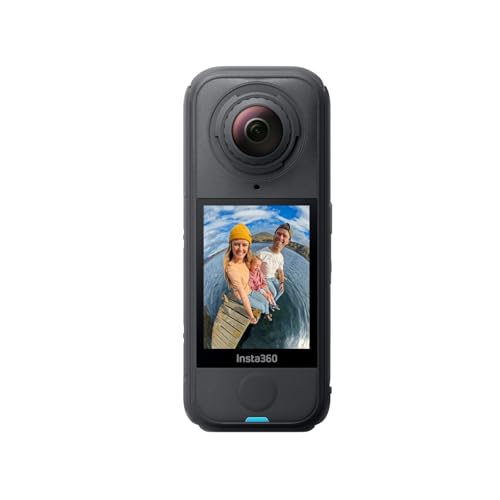
| Insta360 X4 Air | The whole-room capture | A 165g 8K 360 camera that records everything and lets you frame the listing views afterwards. |
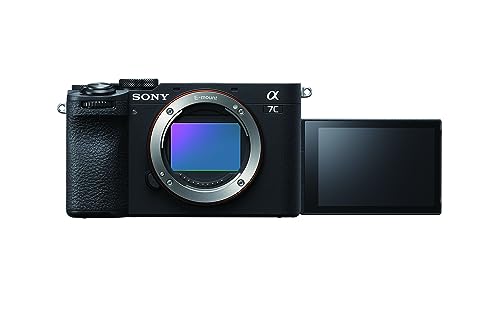
| Sony Alpha 7C II | The full-frame compact body | Full-frame image quality in a small body, for agents pairing serious glass with a discreet camera. |
| Canon EOS R8 with 24-50mm Kit | The true-24mm kit | Full-frame sensor behind a kit zoom that starts at a genuinely wide 24mm from the very first day of work. |
| GoPro HERO13 Black | The walkthrough specialist | 5.3K video and an ultra-wide action view for video tours, exteriors, and awkward spaces. |
How Did We Judge Cameras for Listing Work?
We graded each pick on the only wide-angle question that matters — what is the widest honest view this purchase puts in an agent’s hands, and what else must be bought before it does? That produced three classes. Body-only cameras were judged as foundations: sensor, mount, and the width of the lens ecosystem they open. Kit cameras were judged on their included lens’s short end translated into real-world width, because an 18mm start on a crop sensor and a 24mm start on a full-frame sensor are not the different numbers they appear to be — the full-frame kit is, in practice, the wider camera out of the box. Capture-everything cameras were judged on a different axis entirely: how completely they record a room and how much framing work they move from the shoot to the desk.
Video mattered as the second criterion, because modern listings are half moving image: every pick here records 4K or better per its listing, and the walkthrough has become the format that separates a browsed listing from a booked viewing. We also weighed the working realities of agency life — a camera that rides in a car boot between appointments, gets handed to a colleague, and must produce consistent colour across a whole house in mixed light. Consistency, finally, is why this guide keeps returning to the lens: rooms in one listing are compared against each other by buyers with sharp eyes, and a set of photographs that changes width and character room by room reads as carelessness even when each frame is fine alone. We also read every listing the way a sceptical purchaser would, twice: once for what it promises, and once for what it conspicuously does not. The Alpha 7C II’s nearly bare title and the R8 kit’s unstated resolution figures are recorded in their spec boxes not as pedantry but as buying information, because the distance between a title’s confidence and its silence is often the most honest product description available — and a guide that fills silences with borrowed figures would be selling the reader the same inflated room, in prose, that it warns photographers against selling in pictures.
Why Is Real-Estate Width Really a Lens Decision?
Stand in the corner of a twelve-foot bedroom with a camera and the geometry is unforgiving. To show both side walls, the bed, and a hint of the window in one frame, the lens must see a field of view that only genuinely short focal lengths provide — and whether a given focal length is genuinely short depends on the sensor behind it. The same lens that is a mild wide on a full-frame body becomes a standard view on a crop sensor, because the smaller sensor records only the centre of the image the lens projects. This is why experienced listing photographers talk in full-frame-equivalent terms, and why this guide insists on translating every kit’s numbers before praising or blaming them.
Width also has an honesty limit, and professionals feel for it instinctively. Push too wide and the room inflates: the bed stretches toward the corners, the ceiling bows, and the buyer’s viewing turns into a small betrayal that colours everything the agent says afterwards. The working sweet spot for interiors is wide enough to hold the room’s shape and its key furniture in one frame from a corner or a doorway, shot level so vertical lines stay vertical, with enough restraint that the photograph promises exactly what the viewing delivers. Every camera below can work inside that discipline — the bodies with the right lens chosen, the kits within their stated ranges, the 360 camera by selecting a moderate view from its sphere, and the action camera when its widest modes are used with a level head and a careful hand.
The last piece of the lens story is that lenses outlive bodies in an agent’s kit. Bodies are replaced as sensors and video improve; a good wide lens, bought once for a mount you commit to, serves across those replacements. That is the real argument for the two body-only picks in this guide despite their incomplete boxes: they are invitations to buy the lens deliberately, once, at the width your housing stock actually needs, rather than accepting whatever a kit bundle decided a general photographer might want.
Measure your own stock before choosing, because the right width is an empirical fact about your listings rather than an opinion. Take the smallest three rooms you photographed last season and ask what view would have held them honestly: most agents discover their work clusters at one width with occasional excursions wider, which argues for a main lens at the cluster and a plan — a wider lens to borrow, a 360 pass — for the excursions. Buying for the excursion instead saddles every ordinary room with a view wider than it needs, and ordinary rooms are where your reputation is actually built.
Which Bodies and Kits Build the Strongest Listing Setup?

Sony ZV-E10 II Body — The lens-first starting point
Begin with the fact its listing states in its first line: this is a camera body. The ZV-E10 II arrives with a 26MP APS-C Exmor R sensor, a Sony E-mount, 4K recording up to 60fps, and a three-way articulating touchscreen — and no lens whatsoever. For real-estate work that is not a defect to apologise for but a decision to make with open eyes: this body becomes a wide-angle camera only when you mount a wide lens on it, and Sony’s E-mount offers one of the deepest wide-lens catalogues in the crop-sensor world, including compact ultra-wide zooms and primes built for exactly the corner-of-the-bedroom problem. Buy the body for its sensor, its video, and its mount; budget the lens as a separate, equally important purchase; and do not book a listing shoot for the day the body alone arrives.
Judged as a foundation, the body is strong. The 26MP APS-C sensor is a generous canvas for listing stills that will be viewed on portals and phones, and its low-light behaviour in lamp-lit evening shoots sits a class above the small-sensor alternatives. The articulating touchscreen earns its keep in interiors more than vloggers ever needed it to: shoot from waist height in a hallway, from above a kitchen counter, or from the low corner that makes a small room read honestly, all while watching the frame instead of contorting behind the camera. The 4K60 video covers the walkthrough half of the modern listing with room to spare.
The buyer this body suits is the agent building a kit deliberately — perhaps already owning E-mount glass, perhaps planning to add a wide zoom now and a fast prime for detail shots later. Its weakness as a real-estate purchase is purely the incompleteness of the box, and this guide will not soften that: as it ships, it cannot photograph anything. Paired with a genuinely wide lens, though, it becomes the most flexible crop-sensor route in this roundup, and the mount’s depth means the lens you buy for it will still be useful when the body is eventually replaced.
A practical word on choosing that lens, since the body forces the question: for listing work the deciding figure is the shortest focal length, read through the APS-C narrowing this guide keeps translating, so shop by the equivalent view you need rather than the number on the barrel. A zoom that reaches genuinely wide at its short end and settles at a normal view at its long end covers a whole house without a lens change mid-shoot, which matters in occupied homes where every minute of fuss is borrowed from the vendor’s patience.
- What ships: camera body only — no lens in the listing
- Sensor: 26MP APS-C Exmor R, as stated in the title
- Mount: Sony E-mount (wide lens bought separately)
- Video: 4K up to 60fps per the listing
- Screen: 3-way articulating touchscreen
Strengths
- The E-mount’s wide-lens catalogue lets you choose exactly the width your housing stock needs.
- A 26MP APS-C sensor and 4K60 video cover stills and walkthroughs from one body.
- The articulating screen makes low-corner and over-counter interior angles practical.
Trade-offs
- Body only: the wide lens is a second purchase, and the camera shoots nothing until it arrives.
- APS-C width maths applies — a lens’s focal length reads narrower here than on the full-frame picks.
- No kit convenience for an agent who needs to shoot a listing this week.
Best for: agents building a deliberate E-mount kit who will choose their wide lens as carefully as the body.
Not suited for: anyone expecting to photograph a room the day the box is opened.

Canon EOS R50 with 18-45mm Kit — The ready-from-the-box kit
The R50 kit is the opposite philosophy in one box: body and lens together, ready to work. Its listing states a 24.2MP APS-C sensor, 4K video, and the RF-S 18-45mm F4.5-6.3 IS STM lens in the kit. Now apply this guide’s central lesson to that lens. Eighteen millimetres sounds wide, and on a full-frame body it would be; on the R50’s APS-C sensor, the recorded view narrows to roughly what a 29mm lens sees on full frame. That is a useful general view — fine for exteriors, room-setting shots from a doorway of a generous room, and detail work — but it is at the modest end of what listing photography calls wide, and in a small second bedroom it will feel like the walls are following you as you back up. Agents should buy this kit knowing exactly that: the included lens starts at a polite width, and a wider RF-mount lens is the natural first upgrade when small rooms dominate the portfolio.
Within that honest framing, the R50 kit is a friendly, capable tool. The sensor’s 24.2MP is ample for portal use, the kit lens’s range walks from its wide end to a short telephoto useful for compressing a garden or picking out a fireplace, and Canon’s colour rendering flatters interiors with the warm, clean look buyers respond to. As a first listing camera for a small agency or a self-shooting landlord, it removes every excuse: charge it, learn the wide end’s limits on your own home first, and shoot.
The upgrade path deserves the final word, because it redeems the kit’s modest start. Canon’s RF mount accepts genuinely wide lenses, and the R50 body will drive them happily for years; the kit lens then retires to travel and general duties. Bought as a platform with that plan in mind, the R50 is a sensible foundation. Bought as a finished wide-angle answer on the strength of the number 18 alone, it will disappoint in exactly the small rooms where agents most need width — which is why this guide translates numbers instead of admiring them.
None of this should overshadow what the R50 kit does well on day one for the right stock: larger homes, new-build show units, and exteriors-led listings play to its included range, and its friendly automation lets a negotiator who photographs occasionally produce a consistent, portal-ready set without a photography course. Match the tool to the stock honestly and the kit’s modest wide end is a footnote; mismatch them and it becomes the headline of every small flat you shoot.
- Sensor: 24.2MP APS-C CMOS, per the listing
- Kit lens: RF-S 18-45mm F4.5-6.3 IS STM included
- Wide end in practice: 18mm on APS-C — a moderate wide view, roughly a 29mm full-frame feel
- Video: 4K, as stated in the title
- Pitched uses in the listing: vlogging, content creation, photography
Strengths
- A complete, working camera from the box — body, lens, and no second purchase required to start.
- The RF mount leaves a clear upgrade path to genuinely wide lenses later.
- Friendly handling and colour make it an easy first listing camera for small teams.
Trade-offs
- The kit lens’s wide end is modest for small interiors once the crop sensor’s narrowing is counted.
- The kit zoom’s aperture range asks the sensor to work harder in dim rooms.
- Serious listing work will likely budget a wider lens within the first season.
Best for: new listing shooters who need a complete kit now and accept a wider lens as a planned upgrade.
Not suited for: agents whose stock is mostly small flats, where the kit lens’s wide end will feel cramped daily.
Insta360 X4 Air — The whole-room capture
The X4 Air declines to participate in the focal-length argument at all. Its listing describes a lightweight 165g camera recording 8K 360 video, with an invisible selfie stick effect, replaceable lenses, FlowState stabilisation, and the company’s shoot-first-frame-later philosophy. In a property, that philosophy translates beautifully: walk through the home once with the camera held high, capture every room as a complete sphere, and choose each listing view afterwards at your desk — the corner angle, the doorway angle, the view that shows the garden through the window — all from the same pass. For virtual tours and for agents covering many rooms against the clock, no conventional camera in this guide competes with that economy of effort.
The 360 route carries honest costs that a professional should weigh. A reframed view from a 360 capture spends only part of the sensor on your final frame, so stills resolution per view sits below what the mirrorless picks deliver, and discerning buyers zooming into a kitchen’s finish will see the difference. The workflow also moves effort rather than deleting it: framing, levelling, and exporting each view is desk time that a well-shot conventional set does not demand. And a 360 camera sees everything, including the photographer unless the invisible-stick trick is used carefully, the clutter in the corner you meant to exclude, and the mirror that catches the rig — rooms must be dressed for a witness that cannot look away.
Where the X4 Air shines brightest is as the second tool in a listing kit and the first tool for tours. Shoot the hero stills on a mirrorless body, then walk the X4 Air through for the tour, the social cut, and the floor-plan-friendly record of every room’s true shape. At 165g it lives in a jacket pocket between appointments, its replaceable lenses answer the scratch anxiety that 360 cameras used to carry, and its stabilisation keeps walkthrough footage calm. Agents whose portals reward virtual tours will find it pays for its place quickly; agents whose market runs on stills alone should rank it as a luxury until the tour work arrives.
One handling habit decides whether the X4 Air’s footage looks professional or queasy: move like a guest, not a surveyor. Walk at half your normal pace, keep the camera at a consistent height on its stick, and turn your whole body rather than swivelling the rig when a room opens to the side. The sphere forgives framing mistakes completely and movement mistakes not at all, which inverts the usual camera discipline in a way that takes one practice house to learn and then serves every listing afterwards.
- Capture: 8K 360 video, per the listing
- Weight: 165g, as stated in the title
- Lenses: replaceable, per the listing
- Stabilisation: FlowState, named in the title
- Workflow: shoot first, frame later, in the maker’s AI-powered app
Strengths
- One walkthrough captures every room completely; framing decisions move to the desk.
- Pocket-light at 165g, so it rides along even when the main kit stays in the car.
- Replaceable lenses remove the old 360 anxiety about a scratched dome ending the camera.
Trade-offs
- Reframed stills spend part of the sensor, so per-view detail trails the mirrorless picks.
- The camera sees everything — rooms must be dressed for a full sphere, photographer included.
- Desk time for reframing and export replaces the field time it saves.
Best for: tour-led listings and agents covering many rooms per shoot who frame at the desk.
Not suited for: stills-only portfolios where buyers zoom into finishes and expect mirrorless detail.
What Do the Full-Frame Bodies and the Action Camera Add?
Sony Alpha 7C II — The full-frame compact body
The Alpha 7C II’s listing is the shortest in this guide — a full-frame interchangeable lens camera in black — and the honest response to that brevity is to say clearly what can and cannot be claimed from it. What the title establishes: this is a full-frame body, it takes interchangeable lenses, and it is the compact member of Sony’s Alpha line. What it does not establish: any lens in the box, any video figure, any resolution — the spec box below records those silences, and the listing page is where a buyer confirms the details. For real-estate purposes, the full-frame fact alone carries the argument, because on a full-frame sensor a wide lens is wide in the simple, old sense: a lens of a given focal length delivers the field of view its number has always promised, with no crop narrowing to translate.
That simplicity compounds with depth of choice. Sony’s full-frame E-mount catalogue of wide zooms and primes is the deepest in this guide, and the 7C II’s compact body keeps the working package discreet — useful in occupied homes, where a smaller camera and a single wide lens feel like a visit rather than a production. Full-frame sensors also bring their low-light composure to evening shoots, when lamps are on, windows are darkening, and the listing needs the warm, lived-in look that sells winter viewings. None of that requires inventing figures: it follows from the sensor format the listing does state and the design of the model line.
The discipline this pick demands mirrors the ZV-E10 II’s, one class up: it is a body, and the wide lens is a separate, deliberate purchase that should be planned and budgeted as the actual wide-angle decision. Agents who already own full-frame Sony glass will find this the most natural pick in the guide. Agents starting from zero should compare its total cost — body plus a genuinely wide lens — against the R8 kit below, which reaches a true 24mm from its box, before deciding which full-frame door to walk through.
There is also a resale-and-continuity argument that practical firms weigh: full-frame bodies and their lenses hold their place in a kit for many seasons, and a photographer who learns one mount deeply — its menus, its colour, its lens personalities — produces the consistency that the standardisation section of this guide argues for. The 7C II asks for that commitment up front and repays it slowly, which is either its flaw or its virtue depending on how long your firm keeps its gear.
- Format: full-frame interchangeable lens camera body, per the listing
- Lens included: none stated in the listing title — treat as body only and confirm on the listing page
- Resolution and video figures: the title states neither — the listing page carries both
- Colour of this listing: black
- Mount family: Sony E-mount full-frame system (lens bought separately)
Strengths
- Full-frame width maths: a wide lens delivers its stated view with no crop translation.
- The deepest wide-lens ecosystem in this guide stands behind the mount.
- Compact body keeps occupied-home shoots discreet and single-lens simple.
Trade-offs
- The listing title is nearly bare, so every supporting figure must be confirmed on the listing page.
- Body-only economics: the wide lens is a second, significant purchase.
- Full-frame glass generally costs and weighs more than the crop-sensor alternatives.
Best for: agents committed to Sony full-frame glass, or building toward it, who want a compact body.
Not suited for: an agent who needs the listing page to settle every specification before committing.

Canon EOS R8 with 24-50mm Kit — The true-24mm kit
Here is the kit that makes this guide’s central lesson pay. The R8 listing pairs a full-frame mirrorless body with the RF 24-50mm f/4.5-6.3 IS STM lens — and because the sensor is full-frame, the lens’s 24mm wide end is a true 24mm view, the classic listing width that holds a room’s shape from a corner without theatrics. Set that beside the R50 kit above: the Canon with the smaller number on its lens is, in the rooms that matter, the narrower camera, and the R8’s apparently modest 24 is the genuinely wide tool. An agent can shoot a full listing on this kit the week it arrives — exteriors at 24, rooms at 24, details and portraits of the garden as the zoom walks to 50 — with no second purchase standing between the box and the work.
The full-frame sensor brings the rest of its class advantages to interiors: composed low-light files for evening shoots, generous resolution for the cropping that straightening verticals sometimes demands, and colour depth that holds a white kitchen and a warm hallway in the same set without either looking wrong. The kit lens’s aperture range is the honest compromise — in dim rooms the sensor’s sensitivity does the heavy lifting — but for portal-bound listing work that trade is well judged, and the lens’s compactness keeps the whole kit car-friendly.
Longer term, the R8 is also a platform. Canon’s RF catalogue includes wider zooms for the day a portfolio of small flats demands more than 24mm, and the body will not be the limiting factor when that day comes. But the R8’s distinction in this guide is that the upgrade is optional rather than necessary: of the two kits here, it is the one whose included lens already speaks listing width fluently. For a working agent choosing one Canon box to earn money with this season, that completeness is the argument.
- Sensor: full-frame (the listing’s kit lens figures read true on it)
- Kit lens: RF 24-50mm f/4.5-6.3 IS STM included, per the title
- Wide end in practice: a true 24mm view — classic listing width from the box
- Resolution and video figures: absent from the title — confirm them on the listing page
- Colour of this listing: black
Strengths
- The only kit here whose included lens starts at a genuinely wide, listing-ready view.
- Full-frame low-light composure suits lamp-lit evening photography.
- A complete platform: the wider-lens upgrade is available later, not required now.
Trade-offs
- The kit lens’s aperture range leans on the sensor in the dimmest rooms.
- Full-frame kits sit at the serious end of this guide’s class, with matching running costs in glass.
- Agents needing wider than 24mm for tiny flats will still shop the RF wide catalogue eventually.
Best for: working agents who want one complete Canon kit that shoots listings properly from day one.
Not suited for: buyers whose portfolios demand ultra-wide views of very small rooms as the daily norm.

GoPro HERO13 Black — The walkthrough specialist
The HERO13 Black enters this guide through the video door. Its listing states 5.3K60 video, 27MP photos, waterproof action-camera construction, and compatibility with the HB-Series lenses — GoPro’s swappable lens system, which includes ultra-wide options built for exactly the hold-it-high-and-walk style of property video. An action camera’s native view is already very wide, wider than any kit lens here, and for the moving half of a listing — the walkthrough that starts at the kerb, flows through the hall, and ends in the garden — that width plus electronic stabilisation produces the flowing, room-revealing footage buyers now expect to find under the stills.
Stills are where honesty must govern. A 27MP action-camera frame is a fine exterior and a serviceable record shot, but its small sensor and fixed ultra-wide perspective are not the tools for the hero interior photograph a portal displays at full width; verticals bow at the edges if the camera is tilted, and fine finishes soften. Used as the listing’s stills camera of last resort — the awkward understairs WC, the loft hatch view, the exterior in the rain its waterproofing laughs at — it earns its place. Used as the main stills camera, it undersells the property and, in the end, the agent.
The HERO13’s real estate is therefore a supporting role played superbly. Pair it with any mirrorless pick in this guide: the body shoots the stills, the GoPro walks the tour, mounts anywhere, survives the weather on exterior day, and slips into a pocket between houses. Its lens compatibility, stated in the listing, lets the wide view be tuned rather than accepted. Production teams and high-volume agents who already shoot this way will recognise the workflow instantly; solo agents should buy it when their portals start rewarding video, not before.
Sound is the HERO13’s quiet contribution to a tour: a walkthrough filmed in near-silence feels surveilled rather than visited, while the soft ambient track of a real house — footsteps, a garden through an open door — makes the footage feel inhabited. Record the house as it sounds on a viewing day, keep narration for the agent’s own pieces to camera, and the little action camera’s video will carry a warmth that its specification list never mentions.
- Video: 5.3K60, as stated in the listing
- Photos: 27MP per the title
- Construction: waterproof action camera
- Lens system: compatibility with HB-Series lenses stated in the title
- Role in this guide: walkthrough video and awkward-space support, not the main stills body
Strengths
- Ultra-wide, stabilised video is purpose-built for flowing property walkthroughs.
- Waterproof and pocketable — exteriors in any weather, interiors without a second bag.
- Swappable HB-Series lens compatibility lets the field of view be chosen, not endured.
Trade-offs
- Small-sensor stills cannot carry a portal’s hero interior photograph.
- The fixed ultra-wide perspective bows verticals if the camera is tilted carelessly.
- It complements a listing kit rather than constituting one.
Best for: video-led listings, exterior days, and tight spaces no mirrorless body can be pointed into.
Not suited for: agents expecting one device to shoot both the tour and the hero stills.
How Should a Small Agency Standardise One Camera Kit?
An agency’s photographs are compared not only against rival listings but against the agency’s own, house by house, on the same portal page. A buyer scrolling a street where your firm lists three homes will notice, without knowing why, if one set of rooms looks wider, warmer, and calmer than the others. Standardising the kit is how that consistency is bought. It does not require the dearest camera in this guide; it requires the same camera, the same wide lens or kit, the same height, and the same settings discipline in every photographer’s hands, so that a listing’s look belongs to the firm rather than to whoever was free that afternoon.
Practically, that argues for the complete kits in this guide when several staff shoot: the R8 kit’s true 24mm from the box gives every photographer the same starting view without a lens decision per person, and the R50 kit does the same one class down, provided its narrower wide end suits the firm’s stock. Body-only routes standardise beautifully too, but only when the firm buys the same wide lens for every body — a discipline that also creates a shared pool of spares when a lens is dropped the morning of a launch. Whichever route is chosen, write the settings down: one exposure approach, one white-balance habit, one shooting height, taped inside the kit bag. The camera sections above grade the tools; this unglamorous card is what makes six different photographers into one listing style.
How Do the Six Compare as Listing Tools?
| Camera | What ships | Widest honest view | Listing role |
|---|---|---|---|
| Sony ZV-E10 II | Body only | Decided by the wide lens you add | Flexible APS-C foundation |
| Canon EOS R50 Kit | Body + 18-45mm | Moderate wide (18mm on APS-C) | Complete starter kit, wider lens later |
| Insta360 X4 Air | 360 camera | The entire room, framed afterwards | Tours and whole-room capture |
| Sony Alpha 7C II | Body only | Decided by the wide lens you add | Compact full-frame foundation |
| Canon EOS R8 Kit | Body + 24-50mm | True 24mm on full frame | Listing-ready from the box |
| GoPro HERO13 Black | Action camera | Ultra-wide native view | Walkthroughs and exteriors |
Read down the widest-view column and the guide’s argument reads itself back: two entries say the width is your decision to make, two give you a number that needs translating, one gives you everything and asks you to choose later, and one gives you more width than stills photography can honestly use. None of those is the wrong answer for every agent — but each is the wrong answer for some agent, and the translation work in the pick sections exists so you can tell which.
What Listing-Photo Mistakes Cost Agents the Click?
The expensive mistake is buying width by the number on the lens without asking which sensor sits behind it — the error this guide opened with, and the one that leaves an agent pressing their back into a hallway wondering why the 18mm kit cannot see the bedroom. The second mistake is the opposite excess: shooting everything at the widest possible setting until rooms inflate, beds stretch, and viewers arrive at the viewing with a quiet sense of having been managed. Portals reward the click, but vendors and buyers reward the agent whose photographs the viewing confirms.
Technique mistakes cost as much as gear mistakes. A tilted camera bows every vertical in the room, and no lens width excuses it — level the body, shoot from waist height, and let the room’s own lines prove the photograph honest. Mixed light left uncorrected turns one room tungsten-orange and the next daylight-blue within a single listing, which reads as two different houses. And the quietest mistake of all is the unprepared room: the wide lens, whichever camera carries it, will faithfully include the clutter in the corner, the bins by the door, and the photographer’s reflection in the mirror, at a width that makes sure nobody misses them.
How Do You Shoot a Small Room So It Looks Honest and Large?
Begin before the camera: open every door fully or close it, raise blinds, switch on the lamps, and remove exactly the objects that are not part of the room’s story. Shoot from the doorway or the corner that shows two walls and the window if there is one, at waist height, with the camera level enough that the door frames stand straight. Take the frame at the width that includes the room’s defining furniture whole — a bed cropped by the frame edge looks accidental, while a bed shown complete, even tightly, looks like a room that fits its purpose.
Work the light like a professional: expose for the window’s brightness and let the room’s shadows fall a little deep rather than blowing the glass to white, because a buyer reads a blown window as a room with something to hide. Shoot each room in a consistent sequence and at consistent settings so the set feels like one house visited once. Finish with the discipline of review: check each frame at full size for the tilted vertical, the mirror reflection, the stray cable — the wide lens forgives nothing, and the time to discover its honesty is at the property, not at the portal deadline.
Bathrooms and kitchens deserve their own sentence, because they are the rooms where width and honesty fight hardest. In a bathroom, shoot from the doorway at the height of the mirror’s centre, accept that the room is small, and let fixtures shown complete and clean make the argument; a bathroom stretched by an ultra-wide into a ballroom fools nobody and photographs like an apology. In a kitchen, the money frame runs along the worktop line toward the window, and the wide view earns its keep by showing the run of units and the door to the garden in a single, truthful sweep. Small rooms photographed straight are a professional’s signature — anyone can make a big room look big.
In What Order Should a Listing Shoot Actually Run?
Sequence is the invisible half of listing quality, and the cameras in this guide slot into a running order that experienced property photographers follow almost without thinking. Exteriors first if the light is kind, while the street is quiet and the front elevation is free of other people’s cars. Then the hero rooms in descending order of importance — the main living space, the kitchen, the principal bedroom — while your eye is fresh and the house is at its most dressed. Detail frames belong in the same pass as their room, shot immediately after the wide view, because returning for them later costs more time than taking them costs now.
The moving formats run last, and for a practical reason: the walkthrough and the 360 pass both require the house to be exactly as the stills showed it, and running them after the stills means nothing has been disturbed by tripod feet or opened cupboards in between. Walk the tour at a steady, unhurried pace with the GoPro or the X4 Air held high and level, pausing at thresholds the way a visitor would. Finish with the unglamorous frames that complete a buyer’s confidence — the boiler, the board, the parking, the view from the landing window — and review the whole set on the camera before leaving, because the cheapest reshoot in property photography is the one that happens before you have driven away.
Where Do Phones and Drones Fit Around These Cameras?
Two neighbouring tools knock on this guide’s door and deserve an honest answer rather than a pick. The phone in the agent’s pocket now carries an ultra-wide camera of its own, and for a rental listing shot against a deadline it can be the pragmatic tool. Its limits show exactly where this guide’s cameras begin: the phone’s ultra-wide is a small-sensor, fixed-aperture device whose corners smear and whose low-light rooms go noisy, and its files vary in colour from the same phone’s main camera in ways a careful buyer notices across one listing. A phone is a fine understudy. It is not yet the lead, and an agency whose brand is photographic quality should treat phone stills as the exception that proves the kit’s rule.
The drone sits at the other extreme: nothing in this guide sees a plot, a roofline, or a rural setting like a camera in the air, and for country homes, land, and anything sold partly on its surroundings, aerial frames have become close to obligatory. But a drone answers none of the interior questions this guide exists for, its use is wrapped in airspace and privacy rules that vary by place, and its footage complements rather than replaces the walkthrough. Buy the room camera first, the tour tools second, and the drone when the portfolio’s exteriors start asking for it — in that order, each purchase makes the next one’s work easier to sell.
Final Recommendation
Choose by the width you will actually hold on the first morning of work. The Canon EOS R8 kit is the only purchase here that delivers a true listing width from its own box, and for a working agent who wants one complete Canon tool it is the straightforward recommendation. Build deliberately instead and the two Sony bodies divide by ambition: the ZV-E10 II as the flexible crop-sensor foundation, the Alpha 7C II as the compact full-frame one — each waiting on the wide lens that is the real purchase. The R50 kit suits the beginner who accepts its modest wide end as a starting point with an upgrade planned. Add the Insta360 X4 Air when tours enter your market and the GoPro HERO13 Black when walkthrough video does, and the kit is complete. Whichever door you choose, walk through it knowing the number that matters is the view at the wide end after the sensor has had its say — because buyers do not book viewings of lenses or bodies, they book viewings of rooms, and the room your photograph promises is the room your reputation will be measured against at the door.
Frequently Asked Questions
Is 24mm wide enough for real-estate photography?
For most rooms in most housing stock, yes — a true 24mm view, like the R8 kit’s on its full-frame sensor, is the classic listing width. Very small rooms, narrow bathrooms, and tight hallways can ask for wider, which is when a wider lens joins a body, or the 360 camera’s whole-room capture earns its place.
Why does the same focal length look narrower on the R50 than on the R8?
Because the R50’s APS-C sensor is smaller and records only the centre of the image its lens projects, cropping the view. The R8’s full-frame sensor records the whole projected image, so its 24mm is a true wide view while the R50 kit’s 18mm behaves like a moderate wide. The lens numbers are honest; the sensors interpret them differently.
Can a 360 camera replace a mirrorless camera for listings?
For tours and whole-room records, it can lead. For the hero stills a portal displays, a reframed 360 view spends only part of its sensor on your frame, so detail trails a mirrorless body with a proper wide lens. Most strong listing kits run both: mirrorless for stills, 360 for the tour.
Does the Sony ZV-E10 II come with a lens for interiors?
No. Its listing is for the body only, and this guide has treated it that way throughout: budget a wide E-mount lens as a separate purchase, and do not schedule a listing shoot until the pair is in your hands. The same body-only discipline applies to the Alpha 7C II.
Are action cameras acceptable for property video?
Yes, for the walkthrough half of a listing. The HERO13 Black’s ultra-wide view and stabilisation suit flowing tours and exteriors, and its lens compatibility is stated in its listing. Keep it level to protect the verticals, and let a mirrorless camera carry the stills, where its small sensor cannot match a larger body’s interior quality.
What else belongs in a listing kit besides the camera?
A tripod for level, repeatable frames; a second battery and card; a microfibre cloth for the wide lens’s front element, which sits close to every room’s dust; and a small level or the discipline to use the camera’s own. The wide lens sees everything, including a kit that was not ready. Add a roll of painter’s tape for marking your shooting positions in a house you will photograph twice — once for stills, once for the tour — and a doorstop for the door that will not stay at the angle the room needs, and you have the entire supporting cast: cheap, light, and responsible for more saved photographs than any camera upgrade in this guide.
Related Guides
Build the rest of the property kit: compare our guide to cameras for virtual tours and floor plans, add the best lighting gear for interior photography, or browse our roundup of compact cameras for professional work.
Related guides
- Best Balancing Stabilizers for Mirrorless Cameras: Payload, Balancing and Native Vertical Shooting
- Best Canon Point and Shoot Digital Cameras: PowerShot Picks From Pocket Compacts to Travel Zooms
- Best 1080p IP Cameras: PoE Domes, Turrets, Bullets and a PTZ That Earn Their Cable
- Best Basic Phones Camera Buyers Can Trust: Flip Phones and Simple Handsets That Still Take a Photograph


