What's inside
- Key Takeaways
- Quick Picks
- How Did We Grade Alexa Claims in This Roundup?
- Comparison Table
- What Is the Difference Between Alexa in the Bar and Alexa in the Room?
- How Do You Set Up an Alexa Soundbar So It Behaves?
- What Mistakes Do Alexa Soundbar Buyers Make?
- How Does Alexa Change Music Listening Through a Soundbar?
- What About Privacy, Guests and the Household’s Rules?
- How Will These Bars Fit an Alexa Home That Keeps Growing?
- Which Household Profiles Fit Which Bar Here?
- How Do You Verify an Unstated Alexa Claim Properly?
- What Does the Television Itself Contribute to Voice Control?
- How Does a Voice Bar Behave During Films Themselves?
- What Should Happen in the First Week With a Voice Bar?
- How Do You Keep Voice Control Welcome for Years?
- Final Recommendation
- Frequently Asked Questions
- Related Guides
As an Amazon Associate I earn from qualifying purchases. This post may contain affiliate links at no extra cost to you.
gizmoverdict.com is reader-supported. When you buy through links on our site, we may earn an affiliate commission.
Where to buy: The six bars below link to listings verified in this site’s product pool. Alexa support is graded strictly from each listing’s own title: one bar states it outright, one begins a built-in claim its recorded title cuts short, and four say nothing about Alexa at all — and those four are labelled accordingly rather than waved through on reputation.
Anyone shopping for the best tv soundbars that work with alexa usually imagines a simple scene: the film pauses, a voice from the sofa asks for the volume down or the lights dimmed, and the room obeys. That scene depends on a specific piece of hardware — a microphone in the bar and the assistant built into its software — and it is remarkable how many premium bars, fully capable of shaking the room, cannot perform it. Voice ecosystems are commitments manufacturers make model by model, and the listing title is where that commitment is either declared or conspicuously absent.
This roundup therefore reads its six pool picks the way a contract lawyer would. The Bose Smart Soundbar 900 declares Alexa built-in in so many words. The Bose Smart Soundbar 600’s recorded title breaks off mid-phrase at a “Built-in” claim, leaving its Alexa status to be confirmed in Bose’s documentation. The two Sonos bars, the Samsung S60D and the JBL Bar 800 print no Alexa claim in their titles whatsoever, and each is marked not-stated below — excellent speakers, several of them, but speakers whose place in an Alexa-run household must be verified rather than presumed.
Key Takeaways
- Only the Bose Smart Soundbar 900 states Alexa built-in in its listing title — the one unconditional confirmation in this set.
- The Bose 600’s recorded title truncates at “Built-in,” so its Alexa claim cannot be quoted from the title as recorded; check Bose documentation before relying on it.
- Sonos Beam Gen 2, Sonos Arc Ultra, Samsung S60D and JBL Bar 800 state no Alexa feature in their titles — Alexa support is not stated for those four and must be verified with each maker.
- Alexa in a bar can mean two different jobs: the bar answering commands itself, or the bar being controlled by a separate Echo elsewhere in the room — decide which job the household wants.
- Sound quality and voice support are independent axes; the strongest pure speaker here is not automatically the strongest Alexa citizen.
- Whichever bar is chosen, the microphone question should be a household decision, with mute controls understood before the first film night.
Quick Picks
| Pick | Badge | Why it earns its place |
|---|---|---|
| Bose Smart Soundbar 900 | Clearest Alexa Confirmation | Dolby Atmos with Alexa built-in, stated in exactly those terms in its title. |
| Bose Smart Soundbar 600 | Compact Bose, Alexa To Verify | Dolby Atmos and Bluetooth in a smaller Bose bar whose recorded title cuts off at a built-in claim. |
| Sonos Beam Gen 2 | Small-Room Favourite, Alexa Unstated | A compact bar of proven quality whose bare title offers no Alexa wording to quote. |
| Sonos Arc Ultra | Grandest Sonos Bar, Alexa Unstated | Sonos’s flagship Atmos bar, its title naming the format and nothing about any assistant. |
| SAMSUNG S60D | All-in-One Samsung, Alexa Unstated | 5.0 channels with wireless Dolby Atmos and Q-Symphony, and no Alexa in the title. |
| JBL Bar 800 | Detachable Surround, Alexa Unstated | 5.1.2 with detachable rears and a 10-inch subwoofer; Alexa absent from its title. |
How Did We Grade Alexa Claims in This Roundup?
The grading rule was deliberately unglamorous: a bar’s Alexa status is what its own listing title in the verified pool can support. Stated plainly, as the Bose 900 states it, earns a confirmation. A title that trails off before the relevant words — the Bose 600’s recorded text ends mid-phrase — earns a verify flag, because quoting a claim the record does not finish would be invention wearing a citation’s clothes. Silence earns a not-stated flag, however famous the brand or however plausible the feature seems, because plausible features are precisely the ones that disappoint at setup time.
Audio quality was assessed on a separate ledger, from the facts the titles do confirm: channel layouts, Atmos support, subwoofer arrangements, surround strategies. That separation is the guide’s spine. A bar can top the audio ledger while failing the Alexa one, and readers deserve to see both scores side by side instead of a blended verdict that hides the trade. No prices or fixed ratings appear anywhere in the assessments, per standing policy; both drift too fast to anchor a decision meant to last.
Finally, each bar was placed in the household that would actually buy it — the Echo-dotted flat, the Samsung loyalist’s lounge, the Sonos multi-room home — because Alexa’s value is entirely contextual. A bar that cannot speak Alexa is a flaw in one house and an irrelevance in another, and the verdicts below are written to let both households recognise themselves.
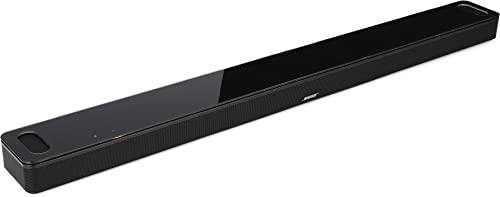
Bose Smart Soundbar 900 — Clearest Alexa Confirmation
The 900 is the only bar in this set whose title does the reader’s work completely: Dolby Atmos with Alexa built-in, plus Bluetooth connectivity, declared in a single breath. That declaration means the bar itself listens and answers — volume, playback, questions, smart-home commands routed through the television’s own speaker — without a separate Echo device deputised to speak for it. For the household whose living room has no shelf space or appetite for another puck-shaped gadget, that integration is the entire product: the voice point and the sound system are the same object, sitting where the sound already lives.
As a speaker, the 900 carries Bose’s flagship single-bar brief from its generation: Atmos presentation from one enclosure, using the company’s spatial processing to widen and lift the soundstage beyond the cabinet, with dialogue handled by a brand that has built its reputation on vocal clarity. Films sound composed rather than forced, and the bar’s Bluetooth gives it the second life as the room’s music speaker that television bars now lead by default. It is, in short, a premium bar that happens to answer — and in this roundup, the answering is the headline qualification.
The ownership considerations are the standard ones for a listening device, and they deserve daylight. A built-in assistant means a microphone that can be muted, and households should locate that control during setup and agree where the bar’s ears are welcome. Bose’s implementation also means the bar’s smart behaviour rides on the household’s Amazon account and network, so the first evening should include the unglamorous steps: account linked, room named sensibly in the Alexa app, and a test of the three commands the household will genuinely use, spoken the way the household actually speaks.
Set against the other five, the 900’s position is almost unfairly simple. It is the recommendation for any reader whose Alexa requirement is firm, because it is the only pick whose own title removes the requirement’s risk. Everything else in this guide is a negotiation; this one is a signature.
- Format named: Dolby Atmos (per listing title)
- Alexa: built-in, stated in the listing title
- Connectivity named: Bluetooth (per listing title)
- Layout: single-enclosure smart soundbar
- Microphone: present by design; mute control should be located at setup
Strengths
- The set’s only outright Alexa confirmation
- Flagship-grade Atmos sound from one cabinet
- No separate Echo needed in the television room
Trade-offs
- Single enclosure cannot match separate-rear systems for surround
- Smart features depend on account and network health
- Premium positioning within this group
Best for: an Alexa household that wants the television room’s voice point built into its soundbar.
Not suited for: living rooms kept microphone-free on principle — the built-in Alexa voice point is precisely such a microphone.

Bose Smart Soundbar 600 — Compact Bose, Alexa To Verify
The 600 is the 900’s smaller sibling in spirit: a compact Bose bar with Dolby Atmos and Bluetooth, whose listing title — as recorded in the pool — begins a further claim with the words “with Built-in” and then runs out of road. Precision matters here. This guide will not finish Bose’s sentence for it. The recorded title does not show the word Alexa, so the honest spec entry reads: Alexa status not visible in the listing title as recorded — verify with Bose documentation. Buyers who confirm it there will very likely find the smaller bar they hoped for; buyers who skip the check are gambling on a truncation.
What the title does establish is attractive on its own terms. Atmos in a compact cabinet suits the smaller televisions and secondary rooms where the 900 would be oversized, and Bose’s tuning discipline — speech forward, presentation composed — scales down gracefully. The 600 is the bar for the Bravia-sized problem in a bedroom or study: a real television, watched properly, in a room where a flagship bar’s width and presence would be furniture first and audio second.
The comparison with its sibling is therefore two questions, not one. The audio question — how large is the room, how far is the seat — may favour the 600 honestly. The Alexa question cannot be answered from this page’s evidence and must be answered from Bose’s. A reader who settles both is buying well; a reader who lets the family resemblance settle the second question by assumption is repeating the exact error this roundup exists to prevent.
There is a broader lesson folded into this small bar, worth stating once: product families share design language, not feature lists. Manufacturers routinely vary voice support, connectivity and processing between siblings that look near-identical on a shelf. The 600 may well match its brother where it counts — but “may well” is a phrase for documentation to confirm, and the five minutes that confirmation costs is the cheapest insurance in this entire guide.
- Format named: Dolby Atmos (per listing title)
- Connectivity named: Bluetooth wireless (per listing title)
- Alexa: not visible in the listing title as recorded — verify with Bose documentation
- Layout: compact single-enclosure bar
- Position in range: smaller sibling to the 900
Strengths
- Atmos and Bose tuning in a compact footprint
- Suits smaller televisions and secondary rooms
- Bluetooth covers the room’s music duty
Trade-offs
- Alexa claim cannot be quoted from the recorded title
- Compact cabinet caps bass and maximum scale
- Family resemblance invites assumptions worth resisting
Best for: a smaller room that wants Bose Atmos sound, with the Alexa check made in Bose’s documentation first.
Not suited for: a purchase that must be Alexa-certain from the listing alone.

Sonos Beam Gen 2 — Small-Room Favourite, Alexa Unstated
The Beam Gen 2’s pool title is two words of brand and model and nothing else, and under this guide’s rules that silence is decisive for the headline question: no Alexa feature is stated in the listing title — verify with Sonos documentation. The distinction that matters for Sonos households is between the bar as an Alexa endpoint and the bar as a citizen of the Sonos app, and those are different citizenships. A home already orchestrated through Sonos may care little which assistant, if any, the bar names; a home orchestrated through Echo devices should treat the Beam’s Alexa status as an open question until Sonos’s own pages close it.
None of that diminishes the bar as a piece of audio equipment for small rooms. The Beam’s design brief — compact dimensions, polished speech-friendly tuning, Atmos handled through processing suited to its size — has made it the default recommendation for modest televisions for years, and its expansion path within the Sonos family lets a modest beginning grow surrounds and a subwoofer over time. In a bedroom or a small flat’s main room, it remains a deeply sensible object.
The Alexa-specific advice is procedural. Check the current Sonos documentation for this generation’s voice support in your region, because voice features vary by model generation and market in ways titles do not capture. If the answer satisfies, the Beam competes on its audio merits like any other pick. If the answer is silence there too, then an Alexa household should look to the Bose 900 above and let this bar serve the households whose ecosystems it matches.
It is worth adding that the Beam’s question is the commonest one this roundup will generate, precisely because the bar is so widely owned and recommended. The guide’s not-stated flag is not an accusation against the product; it is a description of the evidence, and the remedy — one documentation check — is proportionate to the risk.
- Product: compact soundbar (listing title gives name only)
- Alexa: absent from the listing title — consult Sonos documentation
- Ecosystem: Sonos app and multi-room family
- Scale: sized for smaller televisions and rooms
- Expansion: same-family surrounds and subwoofer available separately
Strengths
- Compact footprint fits where rivals cannot
- Speech-friendly tuning for everyday viewing
- Growth path inside a popular ecosystem
Trade-offs
- No Alexa wording anywhere in its recorded title
- Height effects are processed, not physical
- Bass depth waits on an additional subwoofer purchase
Best for: a compact room in a Sonos-leaning household, once the voice question is settled in documentation.
Not suited for: an Echo-run home that needs its bar addressable by Alexa from day one.

Sonos Arc Ultra — Grandest Sonos Bar, Alexa Unstated
The Arc Ultra is Sonos’s flagship statement — a Dolby Atmos soundbar built to anchor large televisions with a wide, tall, single-enclosure soundstage — and its listing title says exactly that and no more: the model, the format, silence on assistants. Alexa support: not stated in the listing title — verify with Sonos documentation. The juxtaposition is the roundup’s sharpest: arguably the most ambitious pure speaker in this set carries no quotable Alexa claim at all, which is why this guide refuses to blend its two ledgers into one score.
On the audio ledger, the Arc Ultra competes at the summit. Its brief is cinematic scale without satellite speakers: a broad front stage that can track a large screen honestly, height atmosphere from its processing and driver arrangement, and the low-end authority Sonos builds into this flagship class. For a household whose priority is the film experience and whose voice needs are served by an Echo in the corner, the Arc Ultra may be the correct purchase in this entire list — with the Alexa caveat understood as a division of labour rather than a defect.
That division of labour deserves a fair hearing, because it is how many real households actually run. A separate Echo device near the sofa can take commands, while the bar concentrates on sound; some owners prefer the microphone in a small, replaceable puck rather than in their flagship speaker. If that is the household’s settled architecture, the not-stated flag costs nothing. If instead the household wants the bar itself to be the room’s voice point, the flag is disqualifying until documentation lifts it, and no audio excellence should be allowed to argue otherwise.
Sonos’s ecosystem gravity applies at this end of the range too: the Arc Ultra is a foundation for a Sonos theatre that can grow, and households inside that gravity well will weigh the bar accordingly. The Alexa question simply has to be asked in the right order — ecosystem first, assistant second, documentation always — and asked before the flagship money moves.
- Format named: Dolby Atmos (per listing title)
- Alexa: the listing title offers no Alexa claim — consult Sonos documentation
- Layout: flagship single-enclosure bar
- Ecosystem: Sonos family, expandable theatre
- Scale: built for large televisions and rooms
Strengths
- Grandest single-bar soundstage in this set
- Flagship build and ecosystem foundation
- Cinematic scale without satellite speakers
Trade-offs
- No Alexa claim in its title despite the flagship brief
- Single enclosure still bounds true surround
- Premium commitment within this group
Best for: a film-first household whose Alexa duties already live in a separate Echo.
Not suited for: a home expecting the bar itself to answer Alexa commands unverified.

SAMSUNG S60D — All-in-One Samsung, Alexa Unstated
Samsung’s S60D brings a different architecture to the table: 5.0 channels in an all-in-one design, with wireless Dolby Atmos audio and Q-Symphony named in its title. Five ear-level channels with no subwoofer channel is a deliberate recipe — the bar carries its own low end inside the enclosure, trading the deepest bass for a single-box tidiness that suits design-conscious rooms and Samsung television pairings. On Alexa, the title is silent: not stated in the listing title — verify with Samsung documentation.
The Q-Symphony feature frames the bar’s natural household. On a Samsung television, the set’s speakers join the bar’s array, and the pairing behaves like one product; that coherence is the S60D’s home turf. An Alexa-loyal household with a Samsung screen therefore faces the roundup’s recurring fork in its purest form: the television match argues for this bar, the voice requirement argues for verification or for the Bose 900, and no amount of wishing merges the two arguments into one.
As an all-in-one, the S60D’s sound is the tidy middle of this set — wider and more atmospheric than the compact picks, less physically enveloping than the detachable JBL system or the flagship Arc Ultra, and free of every subwoofer placement conversation. For the large population of viewers whose diet is series, sport and streamed films at family volumes, that middle is not a compromise but a description of enough, delivered in one handsome box.
Verification advice for this model should include the region check: voice-assistant support on television audio products varies by market more than almost any other feature, and Samsung’s documentation for the buyer’s own country is the only version of the answer that matters. A bar can be Alexa-capable in one territory and silent in another, and the listing title’s silence gives no clue either way — which is, once again, the point of asking the document.
- Configuration: 5.0 channels (per listing title)
- Atmos delivery: wireless Dolby Atmos audio (per listing title)
- Design: all-in-one (per listing title)
- Television pairing: Q-Symphony (per listing title)
- Alexa: no Alexa wording appears in the listing title — consult Samsung documentation
Strengths
- Five channels and Atmos in a single tidy enclosure
- Q-Symphony coherence with Samsung televisions
- No subwoofer to place or power
Trade-offs
- Alexa unconfirmed by its title
- All-in-one bass trails subwoofer systems
- Best features assume a Samsung screen
Best for: a Samsung television household that prizes one-box tidiness and will verify the voice question.
Not suited for: an Alexa-first buyer unwilling to consult Samsung’s documentation.

JBL Bar 800 — Detachable Surround, Alexa Unstated
The JBL Bar 800’s party piece is physical: the ends of the bar lift away to become battery-powered surround speakers, converting a tidy weekday setup into a genuine 5.1.2 Atmos system — with the 10-inch subwoofer its title specifies — whenever the evening deserves it. Its title is generous with audio facts and empty of assistant claims: Alexa support is not stated in the listing title — verify with JBL documentation. A household seduced by the detachable theatre should perform that verification before falling completely, because the two features answer entirely different needs.
The detachable design solves the room problem that defeats most surround ambitions in ordinary houses. Rear speakers that live on the bar cannot clutter a dining space, cross a walkway with cables, or require furniture arranged around them; they appear for the film and dock away before breakfast. The cost is a rhythm of care — speakers must return to the bar to recharge — and households honest about their own tidiness will know immediately whether that rhythm is a delight or a doom.
Sonically, JBL plays the entertainer: the big subwoofer gives action material a physicality the all-in-one bars approximate, and the true rears place effects where effects belong. Against that, the Alexa ledger stays blank from this page’s evidence. The resolution for most buyers will be architectural — an Echo device in the room covers voice duties while the JBL covers cinema — and that is a perfectly respectable settlement, provided it is chosen rather than discovered.
Cross-shoppers from this site’s Google Home guide will recognise this bar wearing the same honest label there: a fine system whose smart-ecosystem membership is a documentation question, not a listing fact. Consistency on that point, across every roundup, is what lets a reader trust the confirmations when they do appear — as one does, gloriously, at the top of this page.
- Configuration: 5.1.2 channels (per listing title)
- Surround: detachable speakers (per listing title)
- Subwoofer: 10-inch (per listing title)
- Format named: Dolby Atmos (per listing title)
- Alexa: the listing title is silent on the subject — consult JBL documentation
Strengths
- Real surround that packs into the bar afterwards
- Largest subwoofer named in this set
- No rear cables in any configuration
Trade-offs
- Alexa unconfirmed by its title
- Detachable rears need a recharging routine
- Subwoofer cabinet claims real floor space
Best for: a cinema-loving room that transforms weekly, with voice duties handled by a separate Echo.
Not suited for: demanding one device serve as both cinema and voice point on faith — its Alexa support is unstated, so that double duty stays unverified.
Comparison Table
| Bar | Alexa status from title | Layout | Defining trait |
|---|---|---|---|
| Bose Smart Soundbar 900 | Built-in, stated | Single bar, Atmos | Confirmed voice point |
| Bose Smart Soundbar 600 | Title truncated — verify | Compact bar, Atmos | Smaller Bose sibling |
| Sonos Beam Gen 2 | Not stated | Compact bar | Sonos ecosystem entry |
| Sonos Arc Ultra | Not stated | Flagship bar, Atmos | Grandest single-bar stage |
| SAMSUNG S60D | Not stated | 5.0 all-in-one | Q-Symphony pairing |
| JBL Bar 800 | Not stated | 5.1.2, detachable rears | Surround on demand |
What Is the Difference Between Alexa in the Bar and Alexa in the Room?
The distinction decides most purchases in this category, so it deserves plain terms. A bar with Alexa built-in — the Bose 900’s confirmed arrangement — is itself a voice endpoint: it hears, it answers, it executes, and it can serve as the room’s controller for lights, timers and routines. A bar without a stated assistant can still live in an Alexa household, controlled by a separate Echo that sends it power and volume commands where the pairing allows, but the bar remains a destination rather than a participant. Both architectures work; they differ in furniture, in failure modes, and in which device the household talks to.
Households should choose by where the conversation naturally happens. If the sofa already hosts an Echo within easy speaking distance, the bar’s own microphone adds convenience but not capability, and the audio-led picks in this guide compete freely. If the television room has no voice point and the household wants one exactly where the entertainment lives, the built-in route earns its premium and the confirmed end of this list is the only honest shortlist. Confusing the two architectures at purchase time is how bars get returned for lacking a feature their titles never claimed.
How Do You Set Up an Alexa Soundbar So It Behaves?
Begin with the television connection — HDMI ARC or eARC — and prove ordinary TV sound before touching the Alexa app, so that any later confusion has a known-good foundation. Then add the bar inside the Alexa app deliberately: correct room, a name the household will say without thinking, and the bar set as the room’s preferred speaker where the app offers that choice, so that a request to play music in that room lands on the big system rather than on a small device in the corner.
Test the commands in their natural phrasing, from the natural seats, at film-night volumes — a microphone that hears whispers in a silent showroom may miss a request spoken over a loud action scene from the far end of the sofa, and discovering that during the returns window is information, while discovering it at Christmas is folklore. Finally, walk the household through the mute control and the privacy settings together. A voice system everyone understands is a convenience; one that only its installer understands is a surveillance argument waiting for its first dinner party.
What Mistakes Do Alexa Soundbar Buyers Make?
The first is brand transference: assuming a famous audio name implies a voice feature, when the titles in this very roundup prove otherwise four times over. The second is sibling transference, its close cousin — the Bose 600’s truncated title exists in this guide as a standing warning against completing a manufacturer’s sentence from family resemblance. The third is region blindness, since assistant support varies by market and a review written for another country can be confidently wrong for your own.
A fifth mistake is failing to test the microphone’s geography. Voice bars hear best within a sensible radius and in a direct line; a bar recessed into a media unit, or a sofa arranged at the room’s far edge behind a kitchen island, can leave the assistant straining in exactly the seat where commands matter most. Speak the household’s three essential commands from every seat during the first week, and let the results — not the brochure’s optimism — decide whether the bar’s position or the room’s Echo placement needs to change.
The fourth mistake is subtler: buying the voice point and neglecting the speaker. A bar that answers beautifully and sounds thin will be talked to daily and listened to resentfully, and the resentment wins within a year. The Bose 900’s position atop this guide rests on refusing that trade — confirmed Alexa and flagship sound in the same cabinet — and readers who cannot have both should decide, consciously, which one their household will forgive.
How Does Alexa Change Music Listening Through a Soundbar?
A voice-controlled bar changes the sociology of music in a room. Requests that once required a phone, an app and a moment of administration become spoken and instant, which means they happen more often, from more members of the household, at smaller scales — one song while cooking, the radio while tidying, a playlist lowered to background without anyone crossing the room. The confirmed Bose 900 is built for exactly that traffic, and its flagship sound means the casual listening it invites is not a degraded version of the serious kind.
The unstated four can join this life only as destinations: an Echo elsewhere can often direct music toward a preferred speaker, but the asking happens at the Echo, not at the bar, and households feel that geography more than they expect. Grandparents ask the television, because the television is where the sound is; children ask whichever device answered last time. A household designing its voice life should place the listening point where the asking will happen, and in the television room that argument points, once again, at the confirmed end of this list — or at a deliberate Echo placement that acknowledges the bar’s silence.
What About Privacy, Guests and the Household’s Rules?
A listening bar in the main room is a household policy decision disguised as a purchase. Guests deserve to know a microphone is present; children deserve rules they can repeat; and every adult deserves the mute control’s location memorised rather than buried in an app. The confirmed Alexa bar in this guide provides that control physically, and the households that thrive with voice equipment are the ones that treat muting as a normal courtesy — during calls, during confidences, during the film scenes where a stray phrase might wake the assistant — rather than as an accusation against the technology.
There is also a generational honesty to practise. Voice assistants record their mistakes as faithfully as their successes, and a household should review its voice history settings together in the first week, choosing retention and review options deliberately. None of this is an argument against the category; it is an argument for entering it as a household rather than as a gadget. The bars that fail socially are rarely the ones with poor microphones — they are the ones installed without a conversation.
How Will These Bars Fit an Alexa Home That Keeps Growing?
Alexa households accrete: a second Echo in the kitchen, smart plugs at Christmas, a doorbell that announces itself. A confirmed voice bar becomes more useful as that web grows, because it is the best speaker most homes own and routines naturally route their audio through it — morning briefings, doorbell chimes, the timer that speaks from the television’s position. An unstated bar, however fine, sits outside that growth, addressed only as a television accessory. Buyers should therefore price the confirmation not by today’s routines but by the household’s trajectory, since the difference between participant and destination compounds with every device added.
The same trajectory thinking disciplines the audio side. A bar is a five-to-ten-year object; assistant platforms revise themselves annually. The Bose 900’s purchase case survives that asymmetry because its sound justifies the cabinet even if the platform shifts, while a hypothetical bar bought only for its assistant would be a hostage to software fashion. Buy the speaker for the decade and the assistant for the present, in that order, and either ledger can disappoint slightly without ruining the purchase.
Which Household Profiles Fit Which Bar Here?
Profiles cut through the two-ledger problem faster than specifications do. The committed Alexa household — Echos in the kitchen and hall, routines running the mornings, a family that speaks to its rooms as a matter of habit — has exactly one candidate in this set, the Bose 900, and should stop deliberating once its room size fits. The Samsung household, loyal to its televisions and pleased by Q-Symphony’s coherence, faces the verification errand on the S60D and should run it honestly, ready to accept either answer. The Sonos household, with speakers multiplying room by room, will weigh the Beam and the Arc Ultra inside an ecosystem it already loves, and its Alexa question is really about which app the family opens — a question documentation and habit answer together.
The film-night household, finally, belongs to the JBL: a room that transforms, an Echo already on the shelf for voice duties, and no need for the bar to be anything but magnificent at its one job. Notice that every profile except the first treats the not-stated flags as scheduling rather than scandal — a check to run, a division of labour to choose. The flags only become failures when a household buys first and profiles itself afterwards.
How Do You Verify an Unstated Alexa Claim Properly?
Since five of these six picks require it, the verification method deserves its own instructions. Start with the maker’s product page for your exact model and region, and search it for the assistant’s name; marketing pages declare voice support prominently when it exists, because it sells. Continue to the model’s support or specifications section, where voice features are listed with their conditions — some bars support an assistant only in certain markets, some through a companion device, and those conditions are the actual product being bought. Treat retailer Q&A sections and review roundups as leads, never as verdicts, because both recycle claims across regions and generations.
Two traps await the verifier. The first is the sibling trap in documentary form: a support page for a neighbouring model, near-identical in name, whose features do not transfer. Confirm the model number character by character. The second is the vintage trap: voice support can arrive or retire through firmware and platform agreements, so a forum post from two years ago describes a product that may no longer exist in that form. Date every claim you rely on, prefer the maker’s current pages, and keep a screenshot of the confirmation with the receipt — a small archive that settles any later dispute about what was promised.
What Does the Television Itself Contribute to Voice Control?
More than buyers expect. Many modern televisions carry their own assistants, and a household may find its Bravia-class screen already answers to a voice — through its remote’s microphone button rather than across the room. That push-to-talk arrangement suits some households better than an always-listening bar, and it reframes this roundup for them: the bar’s job narrows to sound, the remote handles speech, and the unstated four compete purely as speakers. Other households want hands-free control from the sofa with the remote lost again, and for them only a listening bar or a nearby Echo completes the scene.
The television also mediates volume and power for every architecture here through HDMI control, which is why a bar with no assistant can still feel voice-governed when an Echo issues commands the television obeys. Understanding that chain — voice to Echo, Echo to television, television to bar — explains both why unstated bars remain viable in Alexa homes and why their viability has seams: each link is a place for a setting to drift, an update to intervene, or a command to arrive as volume when it meant power. Built-in support collapses the chain into the bar itself, and that collapse, more than any single command, is what the confirmed pick is selling.
How Does a Voice Bar Behave During Films Themselves?
The fear that a listening bar will interrupt films — answering a line of dialogue, chiming over a quiet scene — is common enough to deserve a direct answer. Wake-word systems are tuned conservatively and false activations are rare, but rare is not never, and households should know the recovery is trivial: a spoken stop, or the mute during a prestige drama whose script keeps saying words that sound like a name. More relevant is the opposite behaviour, the bar as film-night servant: pausing for the door, dimming the room’s lights through a routine, answering a whispered question about an actor without the phone’s glow breaking the dark. Those small services, repeated nightly, are the actual product of built-in Alexa — not a specification but a texture of evenings.
Volume behaviour during films is the other lived detail. A voice command to lower the volume lands precisely and repeatably in a way that hunting for a remote in sofa cushions does not, and for households with sleeping children that precision is worth real money. It is also, notably, the feature a separate Echo can often deliver to an unstated bar through the television’s HDMI control — one more reason the division-of-labour households in this guide are making a rational choice rather than settling.
What Should Happen in the First Week With a Voice Bar?
Treat the first week as calibration for the household rather than the hardware. Place the bar, complete the account linking, and then simply live: notice which commands get used, which seats the microphone hears well from, which phrases the family actually says. Adjust the room assignment and the preferred-speaker settings to match that observed life rather than the installer’s guesses. By the second week the novelty should have worn into habit, and habit is the correct end state — a voice bar still being demonstrated to visitors in month three is a voice bar whose household has not decided what it is for.
Keep the packaging and the documentation archive — including that screenshot of any verified Alexa confirmation for the unstated picks — until the week is survived. Voice integrations reveal their seams under real routines, not under setup screens, and the returns window exists precisely for the discovery that a region, a generation or a household rule makes the confirmed feature different from the imagined one. Households that grant the week rarely need the window; households that skip it sometimes need it urgently.
How Do You Keep Voice Control Welcome for Years?
Longevity in a voice household is mostly etiquette plus maintenance. Keep the bar’s firmware current, because assistant integrations are serviced through it; revisit the Alexa app’s room structure whenever furniture or devices move, since a bar assigned to a room it no longer sits in will confuse every routine that touches it; and re-teach new household members — partners, teenagers, grandparents in residence — the small command set the house actually uses, because a voice system known by one person is a party trick and known by everyone is infrastructure. The confirmed bar in this guide rewards that upkeep by becoming more central as the home grows smarter, while even the unstated bars benefit from the same discipline applied to the Echo that speaks for them. Voice control, like dialogue clarity in another of this site’s guides, succeeds when it becomes boring — and boring, in household technology, is the highest available compliment.
Final Recommendation
For the requirement as stated, the Bose Smart Soundbar 900 stands alone: Alexa built-in in its own title’s words, Atmos sound of flagship quality, and no verification errands between the reader and the purchase. It is the recommendation for every household whose voice-first living room is a plan rather than a preference. The Bose 600 may join it pending one documentation check, and smaller rooms should make that check before dismissing the more suitable cabinet.
The remaining four are purchases for households that have separated the voice job from the sound job — an Echo in the room, a bar chosen for its audio: the Arc Ultra for flagship staging, the JBL for transformable surround, the S60D for Samsung coherence, the Beam for compact Sonos rooms. Chosen that way, each is defensible. Chosen as presumed Alexa devices, each is a disappointment rehearsing itself — and the difference between those two futures is nothing more than reading titles the way this guide has, literally and to the last word.
Frequently Asked Questions
Which of these bars definitely works with Alexa?
On the evidence of its listing title, the Bose Smart Soundbar 900: Alexa built-in is stated outright. The Bose 600’s recorded title truncates before completing its built-in claim, and the other four titles are silent, so those five all require confirmation in their makers’ documentation before being treated as Alexa devices.
Can an Echo control a soundbar that has no Alexa built in?
Often, yes, within limits: a separate Echo can send basic commands to compatible equipment and can route audio requests to a preferred speaker. The experience varies in polish — some pairings wake the bar with the television and govern its volume gracefully, others manage power alone and leave volume to the remote — and the only reliable preview is the maker’s documentation for the specific bar, read with the household’s exact television in mind. Households planning to rely on this chain should test it thoroughly inside the returns window, from every seat, with the commands they genuinely intend to use. That arrangement makes the bar a controlled destination rather than a listening endpoint, and its exact abilities depend on the bar and the pairing — another documentation question, answered model by model.
Why do some premium bars omit voice assistants entirely?
Because manufacturers segment by ecosystem and by privacy preference. A flagship line may offer voice in one generation and withhold it in another, or build it into the models aimed at one retail channel while omitting it from a sibling aimed elsewhere, and none of those decisions can be inferred from cabinet design, price tier or brand prestige. The product page’s feature list is the only map of that segmentation, which is why this guide keeps sending its readers there — not as a disclaimer, but as the location of the actual specification. Some buyers actively prefer a speaker without a microphone; some product lines reserve voice for particular models or regions. The omission is a positioning decision, not a quality judgement — which is why this guide grades the audio and the assistant on separate ledgers.
Does Alexa support vary by country?
Yes, voice features are among the most region-dependent specifications in consumer audio. Language support, licensing arrangements and platform rollouts all vary by territory, and a model whose voice abilities are headline news in one market can be sold without them — sometimes in a cabinet that looks identical — in another. Travellers who buy electronics abroad and households reading reviews written for foreign editions should be especially careful, because the product in the review and the product in the local shop may share a name and a photograph while differing in exactly the feature this entire roundup is about. Always verify against the maker’s documentation for your own market, particularly when a listing title is silent: silence in a title proves nothing in either direction, but regional documentation settles the question definitively.
What should I check first if Alexa stops responding on the bar?
Confirm the microphone is not muted — the physical mute is the commonest culprit, often pressed during dusting and forgotten — then check the bar’s network connection and the Alexa app’s device status. If the bar has recently updated its firmware or the household has changed its router, a fresh pass through the app’s device setup, dull as it sounds, restores more voice features than any amount of power-cycling, because account links and room assignments are the layers those changes disturb. Firmware updates on the bar resolve a surprising share of voice faults, and they should be current before deeper troubleshooting begins.
Is a soundbar’s microphone always listening?
Assistant-equipped bars listen for their wake word by design, and all provide a mute control that disables the microphone. The listening itself happens locally until the wake word is detected; what a household is really governing with its mute habits and its app settings is what happens after that detection — which requests are acted on, what history is kept, and who in the home can review it. Those settings take ten minutes to walk through together during setup week, and they convert an abstract privacy worry into a set of concrete, chosen defaults. Households should treat the choice of where a listening device sits as a genuine household decision, use the mute without hesitation, and prefer bars — like the confirmed pick here — whose controls are easy to find and understand.
Can Alexa routines include the soundbar?
Where the bar is a confirmed Alexa endpoint, routines can target it like any other device in the home — a morning routine can route its briefing through the bar, an evening one can set volume and start a playlist. Routines are also where a voice bar quietly out-earns its specification, because a single spoken phrase can dim the lights, lower the volume and resume the film in one motion, a small ceremony that households come to rely on far more than they predicted on the day the box was opened. For unstated bars, routines reach only as far as the separate Echo and television control chain allows, which is another practical expression of the participant-versus-destination distinction running through this guide.
Should I choose the Bose 600 and simply check Alexa afterwards?
Check before, not afterwards — the order is the entire discipline, and it applies to every unstated pick in this guide, whatever the brand and however confident the showroom conversation felt at the time. Bose’s documentation will settle the 600’s status in minutes, and a buyer who confirms it there can purchase the smaller bar with the same confidence the 900’s title provides directly. A buyer who checks afterwards has converted a five-minute errand into a returns process if the answer disappoints.
Related Guides
Readers comparing voice ecosystems will also want our guides to soundbars that connect to Google Home, soundbars to match a Sony Bravia and soundbars for hearing dialogue clearly.


