Our Top Picks


What's inside
- What the AG-UX90 actually asks of a card
- The V30 group: cards rated for the AG-UX90’s 4K UHD modes
- SanDisk 128GB Extreme PRO — the headroom choice for 4K
- Gigastone 128GB SD Card 4K Camera Pro — 128GB with V30 at the centre of its pitch
- SanDisk 32GB Extreme PRO — V30 performance in a short-session size
- Gigastone 128GB SD Card 2-Pack Camera Plus — the matched pair for dual-slot days
- The U1 and Class 10 group: honest cards for HD work, not for 4K
- SanDisk 128GB Ultra — big capacity, HD assignment
- SanDisk 64GB Ultra SDXC — the mid-size HD workhorse
- SanDisk 32GB Ultra — the small HD card with a tougher build story
- Transcend 8GB SDC300S — a legacy card with a very narrow role
- Building a sensible card kit for the AG-UX90
- Final thoughts
- Check prices on Amazon
- Affiliate disclosure
As an Amazon Associate I earn from qualifying purchases. This post may contain affiliate links at no extra cost to you.
The Panasonic AG-UX90 is a serious working camcorder, and like every serious working tool it has one humble component that quietly decides whether a shoot succeeds or fails: the memory card. The AG-UX90 records its 4K UHD and Full HD footage to ordinary SD cards in the SDHC and SDXC formats, using the UHS-I bus. There is no exotic media bay and no proprietary cartridge to hunt down. That sounds simple, and it is, right up to the moment a card that looked perfectly adequate on a product page starts dropping frames, stopping a recording mid-take, or refusing to keep up with the camera’s higher-quality modes. Choosing the right card for this camcorder is mostly a matter of understanding one distinction — sustained write speed — and then matching capacity to the way you actually shoot.
This guide works through that distinction carefully, because the AG-UX90’s recording menu spans a wide range. At one end sit its 4K UHD modes, which push a lot of data at the card every second and demand a card with a guaranteed minimum write speed to match. At the other end sit its Full HD modes, which are far gentler and can live happily on slower, cheaper cards. A card that is a sensible purchase for an HD-only workflow can be the wrong purchase entirely for a 4K workflow, and the labelling on the packet does not always make that obvious, because the biggest number printed on most cards describes read speed, not the sustained write performance a camcorder actually depends on.
Eight cards are covered below. They fall into two honest groups. The first group carries the V30 video speed class and U3 rating that 4K recording calls for, in capacities from 32GB up to 128GB, including a two-card pack. The second group carries U1 and Class 10 ratings: perfectly legitimate cards for the AG-UX90’s HD modes, for backup duty, and for the second slot on a lighter day, but not cards we would point at the camera’s 4K UHD settings. We will say that plainly in each section rather than blurring the line, because a buying guide that pretends every card suits every mode is not helping anyone. One small card in the list, an 8GB model, gets an equally plain warning about how narrow its usefulness is on a camcorder of this class.
A note on how our research was put together: we checked each card’s published ratings against the speed classes the AG-UX90’s recording formats require, compared capacities against realistic shooting days, and read the specifications the way a working videographer would — looking past headline read speeds to the guaranteed minimums underneath. Where a figure appears below, it comes from the card’s own product listing or from the standard definitions of the SD speed classes themselves.
What the AG-UX90 actually asks of a card
The AG-UX90 records to SDHC and SDXC cards on a UHS-I interface. That single sentence settles several questions at once. It means full-size SD cards, not microSD cards in adapters, are the natural fit for its slots. It means the camera cannot take advantage of the faster UHS-II contact layout, so paying a premium for a UHS-II card buys speed the camera will never use; a well-chosen UHS-I card is the correct tool rather than a compromise. And it means the practical ceiling on performance is set by the UHS-I bus and by each card’s own sustained write rating, which is where buying decisions should concentrate.
Panasonic built the AG-UX90 around two broad families of recording modes. Its 4K UHD modes capture a picture with four times the pixels of Full HD, and they write correspondingly larger streams of data to the card, second after second, for as long as the take runs. Its Full HD modes write smaller streams and make smaller demands. Many owners use both: 4K for the main angle or for footage that will be cropped and reframed in editing, HD for long-form recording where file size and turnaround matter more than resolution headroom. A card collection for this camera should be planned around the most demanding mode you genuinely use, not the least.
The camcorder also offers dual-slot recording workflows, which makes card buying a question of pairs as much as singles. Two cards of the same capacity and speed class let you record in relay, rolling from one card to the next on a long event, or mirror footage for safety on a job that cannot be repeated. That is why this guide includes a two-pack and why several sections discuss how a card behaves as part of a pair, not just on its own. Weddings, conferences and documentary interviews all reward that kind of planning, because the moment a card fills up is never a moment of your choosing.
Sustained write speed is the number that matters
Every SD card carries two very different speed stories. The first is the headline figure — “up to” a certain number of megabytes per second — which almost always describes reading data off the card under ideal conditions. Read speed matters when you are copying footage to a computer at the end of the day, and a higher figure genuinely shortens that chore. The second story is the guaranteed minimum sustained write speed, expressed through the speed class markings: Class 10, U1, U3, and the video speed classes V10, V30 and above. Those markings are promises. A V30 card promises to sustain at least 30 megabytes per second of continuous writing without dipping below that floor, and that promise, not the headline, is what a camcorder leans on from the first frame to the last.
The arithmetic explains why the floor matters so much for 4K. A video stream is measured in megabits per second, and dividing by eight converts it to the megabytes per second a card must absorb. High-quality 4K UHD recording modes on cameras of this generation run at bitrates that translate into a continuous write load well beyond what a U1 card guarantees. A U1 or Class 10 card promises only a 10 megabyte per second floor. It may write much faster in bursts, and often does, but a long take is not a burst. As a card fills, as its controller manages wear and housekeeping, an unguaranteed card can sag toward its floor at exactly the wrong moment, and the camera responds the only way it safely can: it stops the recording or reports an error. A V30 card’s higher guaranteed floor keeps a healthy margin above what the 4K modes demand, which is why V30 and U3 are the markings to insist on for 4K work on the AG-UX90.
For Full HD the same arithmetic reverses the conclusion. HD streams on this class of camcorder sit comfortably below the 10 megabyte per second floor that U1 and Class 10 cards guarantee, even in the camera’s higher-quality HD settings. That is why the U1 cards in this guide are not being dismissed; they are being assigned to the job they are genuinely rated for. The mistake is not owning a U1 card. The mistake is loading one for a 4K ceremony because it happened to be the card in the bag.
Capacity, in shooting-day terms
Capacity planning starts from the same bitrate logic. At 4K bitrates, a 128GB card holds a few hours of footage — enough for most single-event shoots with margin to spare, and the size we would call the working standard for this camera. A 64GB card halves that, which still covers many interviews and short sessions. A 32GB card in 4K is a short-session card: fine for a planned sequence of takes, risky for anything unscripted. In HD modes every one of those numbers stretches several times further, which is why smaller cards remain practical for HD-focused owners. If you are comparing capacities across your whole kit rather than for this camera alone, our overview of best 128 gb sd cards puts the 128GB class in its wider context.
The 8GB card in this guide sits at the far end of that scale: on a camcorder like the AG-UX90, 8GB is a short-HD and trial-run capacity, not a working capacity, as its own section explains.
The V30 group: cards rated for the AG-UX90’s 4K UHD modes
The four cards in this first group share the markings that matter for 4K: UHS-I with U3 and, where the video class is stated, V30. Any of them can serve as a primary card for the AG-UX90’s 4K UHD recording, and the differences between them are about capacity, read speed for offloading, write headroom, and whether they come singly or as a pair. Read their sections with your dominant mode in mind: if 4K is your default, start here and only move to the second group for clearly HD-only duties.
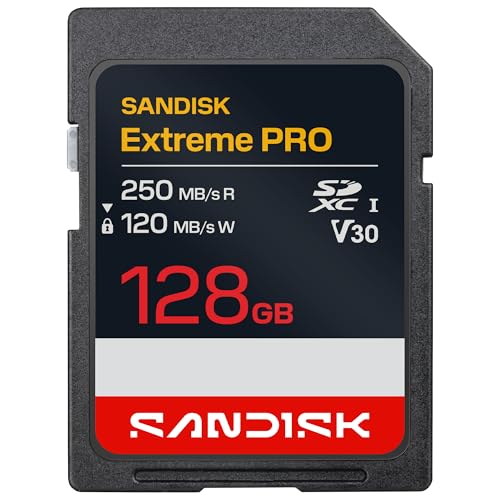
SanDisk 128GB Extreme PRO — the headroom choice for 4K
The SanDisk 128GB Extreme PRO is the strongest specification on this list, and it earns that position on the figure that matters most for this camera: a stated write speed of up to 120MB/s, sitting on top of its V30 and U3 ratings. The V30 marking is the guarantee — a sustained floor of 30 megabytes per second — while the higher write figure indicates how much headroom the card has above that floor in favourable conditions. For an AG-UX90 owner whose default setting is 4K UHD, that combination is exactly the profile to look for: a guaranteed floor comfortably above the camera’s continuous write load, plus room to spare for long takes on warm days and nearly full cards, which are the conditions under which marginal cards reveal themselves.
Its read speed, up to 250MB/s, is the highest here and speaks to the other end of the working day. Offloading a full 128GB of 4K footage is a real block of time in a production schedule, and a fast read speed, paired with a capable reader and port on the computer side, trims that block noticeably. Read figures are “up to” numbers and real transfers vary with hardware, but as a relative measure between cards bought for the same camera, this one sits at the front of the queue.
The 128GB capacity suits the AG-UX90’s 4K modes in the way described above: hours rather than minutes, a full event rather than a fragment of one. It is also the natural size for dual-slot strategies — two of these give you relay recording across a long day or mirrored recording when the footage is irreplaceable. The card carries the full set of markings a buyer should look for in one place: UHS-I, V30, U3, Class 10, and explicit 4K UHD and Full HD positioning in its listing. If your research notes for this camera have room for only one card recommendation, this is the one our research keeps returning to, because it asks you to make no compromises in either direction: rated for the hardest mode the camera offers, sized for a real shooting day, and quick to empty when the day is done.
Who should skip it? An owner who records exclusively in Full HD would be paying for guaranteed write performance their workflow never touches; the U1 cards below would serve them honestly for less. Everyone else should start their shortlist here.
Gigastone 128GB SD Card 4K Camera Pro — 128GB with V30 at the centre of its pitch
Gigastone’s 128GB 4K Camera Pro card makes its intentions plain in its name, and its ratings back the intention up: A1, V30, UHS-I and Class 10, with a read speed of up to 150MB/s. The V30 marking is what qualifies it for the AG-UX90’s 4K UHD modes, for the same reason as the card above — a guaranteed sustained write floor of 30 megabytes per second that sits above the continuous load those modes generate. The listing speaks directly to 4K UHD video and to camcorder use, naming compatibility with Canon, Nikon and Sony camcorders; the AG-UX90 works to the same SD standards, so a card built and rated to this specification is speaking the right language for Panasonic’s slots as well.
The A1 marking deserves a word of explanation, because it illustrates how to read card packaging critically. A1 is an application performance class concerned with how a card handles the small, random reads and writes that phone and tablet apps generate. It is harmless on a camcorder card, but it is not the figure doing the work here; sequential sustained writing is a camcorder’s whole world, and that is the V30 rating’s territory. Learning to separate the markings that matter for your device from the markings that merely fill the packet is a skill that will serve you across every media purchase, and this card is a tidy example: buy it for V30 and 128GB, treat A1 as decoration.
At 128GB it matches the working-standard capacity for 4K on this camera, holding hours of UHD footage and far more in HD. The read speed of up to 150MB/s keeps offloading brisk without claiming the top step on that particular ladder. In a two-card rotation it pairs sensibly with any other 128GB V30 card in this guide, though for relay recording we generally suggest matched pairs of the same model so behaviour stays predictable as one card hands over to the next.
Consider this card the straightforward value route into properly rated 4K media for the AG-UX90: the essential guarantee is present, the capacity is right, and nothing in its specification asks you to accept a weaker floor in exchange for a bigger headline elsewhere. For owners stepping up from a mixed drawer of older cards, standardising on a card like this — clearly rated, clearly sized — removes the guesswork that causes most card-related failures in the field.
SanDisk 32GB Extreme PRO — V30 performance in a short-session size
The SanDisk 32GB Extreme PRO carries the same family name and the same essential ratings as its 128GB sibling above — UHS-I, V30, U3, Class 10, positioned for 4K UHD — with read speeds up to 100MB/s and write speeds up to 90MB/s. Its listing explicitly mentions compatibility with cameras and camcorders. On specification alone it is fully qualified for the AG-UX90’s 4K UHD modes: the V30 floor is the qualification, and it is present and correct. The conversation about this card is not about speed at all. It is about the number 32.
Thirty-two gigabytes of 4K UHD footage is a short session. Planned work fits: a set of product takes, a single interview segment with a defined end, a ceremony’s key portion shot deliberately rather than continuously. Unplanned work does not fit, and 4K has a way of turning unplanned into urgent — the speech that runs long, the performance with an encore, the documentary subject who finally opens up twenty minutes after you expected to wrap. A card that fills mid-answer is not a neutral event on a camcorder; it is a lost ending. So this card’s honest role in an AG-UX90 kit is specific: the planned-take card, the second-slot card for shorter mirrored work, or the card for owners whose 4K shooting is genuinely brief and structured.
In Full HD the same 32GB stretches much further and the card becomes a comfortable general-purpose option, with its high write ceiling making it unbothered by anything the camera’s HD modes can produce. There is also a legitimate organisational argument for smaller cards that some videographers swear by: footage spread across several modest cards limits how much a single lost or damaged card can take with it, and cards can be swapped per segment and handed off for ingest one at a time. If that is your working style, this is the strongest small card on the list, because it is the only sub-128GB option here that keeps the V30 rating.
One more detail places it in the AG-UX90’s world precisely: as a 32GB card it sits at the top of the SDHC range rather than in SDXC territory, and the camera accepts SDHC as readily as SDXC, so there is no compatibility wrinkle to worry about. Buy it knowing exactly which job it is for, and it will do that job without a murmur.
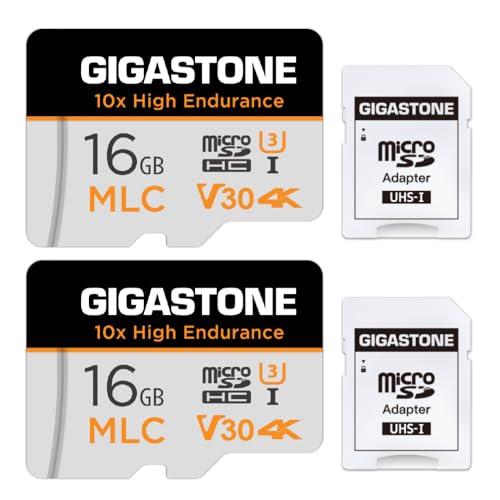
Gigastone 128GB SD Card 2-Pack Camera Plus — the matched pair for dual-slot days
This Gigastone offering is a two-pack of 128GB cards, sold under the Camera Plus line, rated UHS-I U3 and Class 10 for Full HD video in the listing’s own words, with speeds up to 150MB/s and two mini cases included. The U3 rating is the key credential: U3 guarantees the same 30 megabyte per second sustained write floor as the V30 video class, so these cards carry the performance guarantee the AG-UX90’s 4K UHD modes require, even though the listing leads with Full HD language. Reading past the headline phrasing to the rating itself is, once again, the whole skill of buying media for this camera.
The two-pack format maps directly onto how the AG-UX90 is used professionally. Dual-slot relay recording wants two cards of equal capacity so the handover arithmetic stays simple across a long event. Mirrored recording wants the same, so both copies fill at the same rate. Even single-slot shooters benefit from a matched spare that lives in the bag rather than in a drawer at home, because the most common card emergency is not failure but the discovery, on location, that yesterday’s footage is still sitting on the card you brought. Two mini cases are a small inclusion that supports exactly that habit: a card in a case in the bag is a card you can find, identify and trust.
Each card’s 128GB capacity is the working standard for 4K on this camera, so the pair together covers very long days without any mid-event ingest. The up-to-150MB/s speed figure keeps transfers moving at the end of the day. If you are assembling an AG-UX90 kit from scratch and want the media question settled in a single purchase — primary card, matching partner, cases to keep them in — this pack is the most direct answer on the list. Shooters who are also weighing much larger capacities for other devices in their kit can compare the landscape in our roundup of best 512 gb sd cards, though for the AG-UX90 itself, pairs of 128GB cards remain the more flexible pattern for most working styles.
A practical note on pairs: label them. A strip of tape and a number on each card turns rotation from a memory test into a system. Matched packs reward matched habits.
The U1 and Class 10 group: honest cards for HD work, not for 4K
The four cards below share a limitation that must be stated before any of their virtues: they are rated U1 or Class 10, which guarantees a sustained write floor of 10 megabytes per second. That floor is enough for the AG-UX90’s Full HD modes, with room to spare, and it is not enough to promise reliable service in the camera’s 4K UHD modes, whose continuous data load runs higher. Nothing in this section should be read as a 4K recommendation. What these cards offer instead is legitimate, useful service in the roles they are rated for: HD recording days, second-slot and backup duty, overflow media for long HD events, and the everyday work of a camera that spends much of its life in HD even in a 4K-capable owner’s hands. Judged on those terms, several of them are genuinely good buys. Judged as 4K media, they would be a false economy, because the footage put at risk by an under-rated card is always worth more than the saving.
SanDisk 128GB Ultra — big capacity, HD assignment
The SanDisk 128GB Ultra presents the most tempting trap in this guide, so let us disarm it carefully. It offers the joint-largest capacity here, a read speed of up to 195MB/s that is second only to the Extreme PRO at the top of the list, and a listing aimed at compact to mid-range cameras and camcorders. It is also rated U1 and Class 10. Its guaranteed sustained write floor is therefore 10 megabytes per second, and that single fact, not its capacity and not its read speed, decides its role with the AG-UX90: this is an HD card.
Within that role it has real strengths. A 128GB card in the camera’s Full HD modes holds a great deal of footage — long conferences, full school days, multi-hour events — making it a sensible choice for owners whose AG-UX90 spends its working life in HD, of whom there are many: plenty of delivery pipelines, house-of-worship setups, and internal communications teams still finish in HD even when the camera on the tripod could do more. The fast read speed shortens ingest of those long recordings, which matters when the same card must be emptied and returned to service quickly.
The danger is purely one of labelling in the shooter’s own mind. Because this card is large and quick to copy from, it is exactly the card that gets grabbed when a 4K job appears, by an owner who half-remembers that it was “the fast one.” It is fast at reading. Its write guarantee is the modest one. If your kit includes this card, mark its role on the label you stick to its case — HD — and let the V30 cards carry the 4K days. Used with that discipline, it is a perfectly sound member of an AG-UX90 kit. Used casually across modes, it is the most likely card in this guide to stop a recording that mattered.
SanDisk 64GB Ultra SDXC — the mid-size HD workhorse
The SanDisk 64GB Ultra SDXC is rated at 100MB/s with Class 10 and U1 markings and Full HD positioning, and it should be read the same way as its 128GB sibling above: a card whose guaranteed write floor suits the AG-UX90’s HD modes and does not suit its 4K UHD modes. Within that assignment, 64GB is a comfortable middle size. In HD it covers long sessions and full events for most users; it is large enough that capacity rarely becomes the day’s problem, and small enough that rotating two of them keeps footage sensibly divided across media.
There is a particular kind of AG-UX90 owner for whom this card is arguably the centre of the kit: the HD-first shooter with occasional 4K needs. The pattern works like this — a small number of V30 cards, from the first group in this guide, are reserved for 4K jobs, while cards like this one handle the everyday HD load, which for many working cameras is the majority of recorded hours. That division keeps the expensive guaranteed-write performance where it is actually used, keeps plenty of HD capacity in the bag, and makes the mode check before a shoot a physical act — which card did I load? — rather than a menu setting you have to remember to question.
Its 100MB/s headline figure relates to reading, and transfers of HD footage at that class of speed are undemanding by modern standards; the card will not be the bottleneck in a normal ingest routine. As an SDXC card it formats in the camera exactly as the AG-UX90 expects. Nothing about it is exotic, and that is rather the point: a mid-size, clearly rated HD card from the most established name in this market is a low-drama purchase for a low-drama job. Owners comparing mid-size media across formats sometimes also keep smaller devices in the same bag; our guide to best 64 gig micro sd cards covers the microSD side of that conversation for the devices that use it, while the AG-UX90 itself sticks to full-size SD, as it should.
SanDisk 32GB Ultra — the small HD card with a tougher build story
The SanDisk 32GB Ultra SDHC pairs a read speed of up to 100MB/s with two physical attributes its listing calls out directly: a water-resistant design and an impact-resistant build. Like the other Ultra cards here it is a U1-class, Class 10 proposition for recording purposes, which places it in the HD group for AG-UX90 use — its guaranteed write floor is not a 4K guarantee, and it should never be the card loaded when the camera is set to a UHD mode. Within HD work, though, its combination of modest capacity and physical resilience gives it a distinct niche.
That niche is the rough day. AG-UX90s work in places unkind to small plastic objects: building sites, sidelines in poor weather, boats, farms, festival fields, and the bottom of bags unloaded in the rain. Cards get dropped, pocketed, and put through weather nobody planned. A card whose listing emphasises resistance to water and impacts is not invulnerable, and no card should be treated as its own backup, but for the card that lives in the camera through the least controlled assignments, build resilience is a rational thing to weight. The footage on a card is usually worth far more than the card, and the likeliest threats to it in the field are physical rather than electronic.
At 32GB in HD, capacity is workable rather than generous — hours of HD rather than a whole festival — so this card suits defined sessions: a site visit, a match, a single service, a morning of interviews. It is also a sensible dedicated card for a specific recurring job, kept with that job’s other media and labelled accordingly. What it is not, despite the familiar Ultra name and the respectable read figure, is a smaller twin of the 32GB Extreme PRO above. The difference between those two 32GB cards is precisely the difference this whole guide exists to explain: one guarantees a 30 megabyte per second write floor and belongs in 4K work, the other guarantees 10 and belongs in HD. Same capacity, same brand family, different jobs.
Transcend 8GB SDC300S — a legacy card with a very narrow role
The Transcend 8GB SDC300S is an SDHC card rated Class 10 and UHS-I, positioned for 1080p Full HD and for compatibility with legacy DSLRs, trail cameras, digital camcorders and audio recorders. Its listing is honest about what it is, and this guide will be equally honest about what it is for an AG-UX90 owner: very little, and that little is specific. Eight gigabytes on a professional 4K camcorder is not a working capacity. In the camera’s HD modes it holds a short session at best, and in 4K it would be gone so quickly that the exercise is barely worth describing — quite apart from the fact that its Class 10 floor is an HD rating, not a 4K one, in the first place.
So why does it appear here at all? Because there are narrow, real jobs it can still do. A short HD trial run when setting up a new workflow, checking framing and audio on a short clip before the real media goes in. A brief, defined HD recording where the card will be emptied within the hour. A spare that lets the camera keep functioning as an HD device in an emergency when every proper card is full, faulty or forgotten — a few minutes of HD footage being worth considerably more than none. Owners who also run older equipment from the card’s own list — an ageing DSLR, a trail camera, an audio recorder — may find it earns its keep there and visits the AG-UX90 only in those pinch moments.
Beyond those edges, resist treating it as a bargain route into this camera’s media drawer. It is not a card to build a shooting day around, because the AG-UX90’s file sizes simply outscale it. If this is the card in your hand, the correct move is to buy from the groups above and let the Transcend serve the legacy devices it was listed for. A media decision made with open eyes, before the recording light comes on, is the only kind that protects footage.
Building a sensible card kit for the AG-UX90
Pulling the eight cards together into a working kit is mostly a matter of assigning each one to the modes it is rated for, and then making that assignment physical. A pattern that suits most owners looks like this. Two matched V30 cards of 128GB — either two of the SanDisk Extreme PRO, two of the Gigastone 4K Camera Pro, or the Gigastone two-pack as a ready-made pair — form the 4K core, covering relay and mirrored recording in the camera’s dual slots. A 32GB Extreme PRO joins them if your 4K work includes short, planned sessions or you like footage divided across smaller media. The U1 Ultras then take the HD load: the 128GB for long HD events, the 64GB as the everyday HD card, the 32GB Ultra for rougher assignments, with the little Transcend kept for trial clips and emergencies only. Shooters whose other devices use the smaller format may also find our notes on best 128gb u3 micro sd cards useful for the rest of the bag, but the camcorder’s own slots should always be fed full-size cards, not adapters, which add a needless point of failure to a recording that cannot be repeated.
Three habits protect that kit once it exists. First, format cards in the camera, not on a computer, before each job, so the AG-UX90 writes to a file structure it created itself. Second, label every card and case with its rating group and a number, so the mode check before a shoot is a glance rather than a guess — most card failures on professional cameras are actually selection failures. Third, offload promptly and keep two copies of anything irreplaceable before any card is formatted for reuse; a card is a transport medium, not an archive.
A quick decision guide
- Shooting 4K UHD as your main mode: choose from the V30 and U3 group only — the 128GB Extreme PRO for maximum headroom, the Gigastone 128GB 4K Camera Pro as the direct alternative, the Gigastone two-pack for a matched dual-slot pair, and the 32GB Extreme PRO for short planned sessions.
- Shooting mostly Full HD: the U1 Ultra cards are rated for your modes; pick capacity by session length, with 128GB for long events, 64GB for everyday work and the 32GB Ultra where physical resilience matters.
- Mixed 4K and HD work: keep the groups physically separate and labelled, load V30 media whenever there is any chance the day turns into a 4K day, and never let an U1 card drift into a UHD slot “just for this one take.”
- Very short HD clips and trial runs only: the 8GB Transcend can serve, with its limits understood; it is not a working capacity for this camcorder in any mode.
Final thoughts
The AG-UX90 makes its media requirements unusually easy to satisfy once they are understood, because the whole decision rests on one guaranteed number. If the card promises a sustained write floor of 30 megabytes per second — V30 or U3 — it belongs in the camera for any mode it offers, 4K UHD included. If it promises 10 — U1 or Class 10 — it belongs in the camera for Full HD work and nowhere near a UHD setting. Capacity then becomes a simple planning question about how long your sessions run, answered honestly: 128GB for working days, smaller cards for defined sessions, and 8GB for almost nothing on a camera of this class. The eight cards above cover that whole map, from the Extreme PRO’s generous headroom to the Transcend’s narrow niche, and our research notes keep returning to the same conclusion: buy the rating first, the capacity second, and the headline read speed last, and the AG-UX90 will repay you with the most boring and desirable outcome in video production — recordings that are simply all there, every time you press the button.
Check prices on Amazon
Live listings for the shortlist in this guide are pulled from Amazon below, so prices and availability are always current at the moment you look.


Affiliate disclosure
This guide sits on a site that earns its keep through affiliate links, and we would rather explain that plainly than tuck it away. If you follow a link from this page to a retailer and buy a card, the retailer may pay us a small commission on the sale. That payment comes out of the retailer’s side of the transaction, never out of your pocket as an added charge, and it does not change which cards appear in this guide or what we say about them — the U1 cards above were assigned to HD duty and the 8GB card was given its warning on the strength of their published ratings, and no commission arrangement would have altered a word of either judgement. Commissions of this kind are what allow us to research media specifications, speed classes and camera requirements and publish the results without a cover price. If you would rather not participate, you can always find the same products by searching the retailer’s site directly; the advice in this guide works exactly the same either way.