What's inside
- Key Takeaways
- Quick Picks
- How Did We Choose These Ham Radio Headsets?
- How Should You Compare Two Camps That Barely Overlap?
- Why Do Microphone Elements Matter as Much as Plugs?
- How Should You Set Up a Headset Station for a Contest or Net?
- What Mistakes Do Operators Make When Buying Ham Headsets?
- What Are the Connector Families an Operator Actually Meets?
- How Do Contesting, DXing, and Ragchewing Ask Different Things?
- What Changes When the Operating Is Public Service or Emergency Work?
- How Should You Care for a Headset That Lives in a Shack?
- What Should a New Licensee Buy First?
- Why Does Receive Audio Deserve as Much Attention as Transmit?
- How Do You Run a Net So Headsets Help Rather Than Hinder?
- What Is the Sensible Upgrade Path as Your Station Grows?
- How Should You Judge a Headset During Its First Week on the Air?
- Final Recommendation
- Frequently Asked Questions
- Related Guides
As an Amazon Associate I earn from qualifying purchases. This post may contain affiliate links at no extra cost to you.
gizmoverdict.com is reader-supported. When you buy through links on our site, we may earn an affiliate commission.
Where to buy: the six headsets below are sold through Amazon, and each linked name leads to the listing we verified. Read the connector wording in the full title before ordering, because here the plug and microphone element decide whether a headset works at all.
Amateur radio is a hobby built on being understood through noise, distance, and fading signals, which makes the headset a working tool rather than an accessory. Operators searching for the best headsets for ham radio usually fall into two camps without realising it. The first camp sits at a base station or a contest desk, chasing DX through pileups for hours, where a serious boom microphone and deep ear isolation decide how many contacts get logged. The second camp carries a handheld: repeater nets, club events, emergency-communications exercises, walks and public-service duties where the radio lives on a belt and the headset must speak its connector language. This guide serves both camps honestly and keeps them separate, because the single most expensive mistake in ham audio is buying a beautifully made headset that cannot electrically or physically connect to your rig.
That mistake has a name in this article: connector discipline. The two Heil picks below are IC models, built with electret microphone elements for Icom radios, and Heil sells different elements and plugs for other brands for good engineering reasons. The remaining four picks speak the Kenwood-style two-pin language, the K-port, that Baofeng, Retevis, and many similar handhelds share. A K-port headset does not fit an Icom or Yaesu handheld by optimism, and an Icom-electret headset does not become a Kenwood headset with a cheap adapter and hope. Match the element, match the plug, match the radio, in that order, and nearly every other decision in this guide becomes a pleasant question of comfort and budget.
Key Takeaways
- Connector and element matching outrank every other feature: the Heil picks are electret models for Icom, while the other four picks serve Kenwood-style two-pin K-port handhelds.
- Contesting and DX work reward the Heil tier, where microphone consistency and ear isolation protect a voice across a long operating session.
- Handheld and repeater work rewards the K-port tier, where two-packs, push-to-talk buttons, and volume controls suit nets and events.
- Never assume cross-brand fit: a K-port plug on an Icom or Yaesu handheld needs the correct adapter arrangement, and even then the microphone element must suit the radio.
- Push-to-talk discipline is a feature, not a limitation, because it keeps transmissions deliberate and prevents open-microphone embarrassment on a shared repeater.
- Comfort scales with operating time, so the right pick for a thirty-minute net differs honestly from the right pick for a forty-eight-hour contest weekend.
Quick Picks
| Pick | Badge | Why it is here |
|---|---|---|
| Heil Pro Set Elite IC Headset | The contest desk standard | A high-performance contesting and DX headset with an electret microphone element chosen specifically for Icom radios. |
| Heil Pro 7 IC Headset | Maximum isolation for loud shacks | An aviation-style noise-cancelling design with superior noise isolation, an electret element for Icom, and its own PTT switch. |
| BAOFENG K-Port Radio Earpiece Headset | The handheld starter two-pack | A K-port earpiece headset sold as a two-pack, listing a long family of Baofeng handhelds from the UV-5R onward. |
| Retevis EHK012 Radio Headset 2-Pack | Net and event workhorse | A two-pack with noise reduction and volume adjustment, aimed at Retevis handhelds and compatible Baofeng models. |
| GoodQbuy Overhead Radio Headset VOX-PTT | Full overhead coverage for handhelds | A noise-cancelling overhead headset with a VOX-PTT boom microphone for two-pin Kenwood and Baofeng radios. |
| HELETUL Single-Sided Boom Mic Headset | One ear on the room | A single-sided over-ear design with a boom microphone and push-to-talk, for two-pin radios where one ear must stay free. |
How Did We Choose These Ham Radio Headsets?
We sorted by radio first and by headset second, which is the reverse of ordinary shopping and the only order that works here. Every candidate had to declare its electrical home plainly: an electret element voiced for Icom in the Heil cases, or a Kenwood-style two-pin connection in the handheld cases. Products with vague compatibility language were set aside, however impressive their padding, because a headset that fits everything usually fits nothing well. Speaker-microphones and loose earpieces without a headband or proper headset form were also excluded as accessories rather than headsets, a distinction the pool for this guide enforces strictly.
Within each camp we judged the operating reality. Contest headsets were weighed on microphone consistency, isolation, and the ability to disappear during a long session. Handheld headsets were weighed on push-to-talk ergonomics, volume control at the headset, pack value for clubs, and whether one ear stays available for the room during events. The result is a deliberate split rather than a ranking war: two Icom desk headsets, four K-port handheld headsets, and a guide that will keep telling you which camp you are in until the habit sticks. Operators who also run disciplined voice procedure in other settings may enjoy the parallels in best wireless headsets for construction workers, where push-to-talk culture is likewise a safety feature.
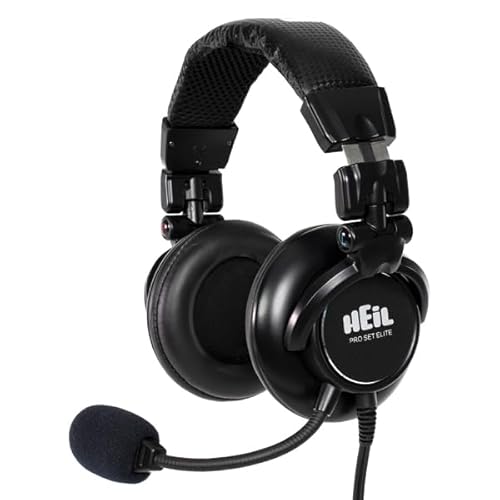
Heil Pro Set Elite IC Headset — The contest desk standard
Contesting is an endurance sport conducted at a desk. Across a weekend, an operator makes hundreds of transmissions that must each be intelligible the first time, because a repeat costs seconds and a misunderstood callsign costs the contact. The Pro Set Elite IC is built for exactly that arithmetic. Its verified title calls it a high-performance contesting and DX headset and specifies an electret microphone element for Icom radios, which is the crucial detail: Icom rigs expect an electret element with its particular drive requirements, and a headset voiced for that input delivers full, consistent modulation instead of the thin or distorted audio that follows a mismatched element.
Heil’s wider lesson is worth stating plainly, because it protects buyers of every brand. Heil sells different elements and connector arrangements for Yaesu, Kenwood, and other radios precisely because microphone inputs are not interchangeable, and the IC in this model’s name is a specification, not a trim level. A Yaesu owner should buy the variant made for Yaesu rather than this one and an adapter of good intentions. Judged inside its camp, the Elite offers the contest operator a settled, professional instrument: put it on, set levels once, and spend the weekend thinking about propagation instead of audio. For the DXer who works weak signals at the edge of the noise, that consistency is the feature.
- Microphone element: electret, for Icom radios, per the listing title
- Intended work: contesting and DX, per the listing title
- Form: full headset with boom microphone, Heil Pro Set Elite line
- Compatibility warning: this IC variant is not the Yaesu or Kenwood variant — match the version to your rig brand
- Push-to-talk arrangement: not specified in the listing title — confirm the switching arrangement for your station setup
- Isolation figure: not stated in the listing title — judge by design class and manufacturer documentation
Strengths
- An element matched to Icom inputs removes the commonest cause of disappointing transmit audio at a contest desk.
- Contest-first design priorities put microphone consistency ahead of decorative features.
- Buying the correct brand variant once is cheaper than adapting the wrong variant forever.
Trade-offs
- The IC specificity that makes it excellent for Icom makes it the wrong purchase for other brands’ base rigs.
- Serious contest equipment carries a serious price against the handheld picks below.
- Handheld owners gain nothing here; this is desk equipment for a base station chair.
Best for: Icom owners who contest, chase DX, or run long base-station sessions. Not suited for: Yaesu or Kenwood owners, who need their own Heil variants, or handheld operators.

Heil Pro 7 IC Headset — Maximum isolation for loud shacks
Some shacks are quiet studies. Others share a house with a television, a washing machine, a family, and a dog with opinions, while a fan and a linear amplifier add their own commentary. The Pro 7 IC answers the second kind of shack. Its verified title describes an aviation-style noise-cancelling headset with superior noise isolation and high-performance audio, again with an electret microphone for Icom radios, and it adds a detail the Elite’s title leaves open: a PTT switch is included. The aviation styling is functional heritage, since pilots and contest operators share a problem, hearing clearly and being heard clearly inside a loud box for hours at a stretch.
Isolation changes operating behaviour in ways newcomers underestimate. With the room pushed far into the background, receive volume can drop, weak-signal listening becomes less fatiguing, and the operator stops leaning toward the speaker grille as if proximity could add decibels. The included push-to-talk switch suits stations where the rig’s own controls sit awkwardly or where a consistent transmit gesture matters during fast contest exchanges. The same brand discipline applies with full force: this is the Icom electret model, and Heil’s other-element variants exist for other rigs. Choose the Pro 7 over the Elite when your environment, rather than your operating style, is the enemy.
- Microphone element: electret, for Icom radios, per the listing title
- Design: aviation-style noise-cancelling headset, per the listing title
- Isolation positioning: superior noise isolation, as described in the listing title
- Switching: PTT switch included, per the listing title
- Intended work: high-performance audio for contest and DX operating at a desk
- Compatibility warning: Icom variant — other brands require their matching Heil element and plug versions
Strengths
- Deep isolation defends concentration in shared, noisy homes where a dedicated quiet shack is fiction.
- An included PTT switch completes the station setup without a separate accessory hunt.
- The aviation-derived form is built for sessions measured in hours rather than minutes.
Trade-offs
- Strong isolation also shuts out the household, so doorbells and family negotiations need a household agreement.
- The sealed, aviation-style fit is warmer and more deliberate than a light headset for short nets.
- As with its sibling, the Icom electret specificity excludes other brands by design.
Best for: Icom operators in loud homes, shared spaces, or fan-noisy shacks who work long sessions. Not suited for: short handheld nets, or operators who must keep an ear on the room at all times.
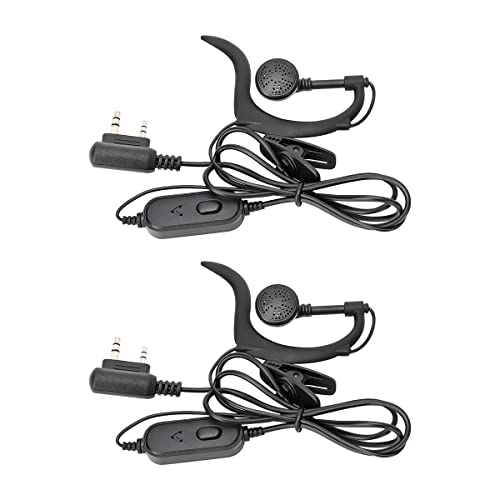
BAOFENG K-Port Radio Earpiece Headset — The handheld starter two-pack
Crossing into the handheld camp changes every priority. The radio is a Baofeng-class handheld, the connector is the Kenwood-style two-pin K-port, and the operating is nets, events, and repeater conversation rather than pileups. This Baofeng earpiece headset, sold as a two-pack, lists compatibility in its title across a wide family: UV-5R Mini, BF-F8HP PRO, 5RM, DM32, UV32, GM21, UV-5G Plus, K5PLUS, AR-152, UV-17R, BF-888S, GM-15PRO, UV-S9 Plus, and more in that lineage. That long list is the K-port ecosystem describing itself: one connector family serving a generation of affordable handhelds, which is why a two-pack makes sense for a new licensee equipping a go-kit or a couple running an event together.
Honesty about form matters here. An earpiece headset is the lightest way to move a handheld’s audio off its tinny speaker and onto your ear with a push-to-talk path, and it leaves you looking like event staff rather than a contest station. It will not isolate like the Heil pair, and it is not trying to. Its virtues are price of entry, pack quantity, and the simple upgrade in intelligibility that any ear-level audio brings on a windy street or a crowded hall. Keep the boundary discipline firm in the other direction too: this K-port design belongs to the Kenwood-style two-pin world, and an Icom or Yaesu handheld is a different connector conversation entirely, requiring the correct adapter arrangement and element match rather than force.
- Connector: K-port, Kenwood-style two-pin, per the listing title
- Pack quantity: 2-pack, per the listing title
- Radios named in title: Baofeng UV-5R family and many sibling models listed in the title
- Form: earpiece-style headset for handheld use
- Microphone and PTT: inline handheld arrangement typical of the class — confirm layout in the listing
- Compatibility warning: not an Icom or Yaesu handheld fitting without the correct adapter arrangement
Strengths
- Two headsets in one purchase suit couples, clubs, and go-kits that need a spare from day one.
- The title’s long model list removes most guesswork for owners of mainstream Baofeng handhelds.
- Earpiece lightness suits walking, marshalling, and event duty where a full headset would be theatre.
Trade-offs
- Minimal isolation means loud environments will still compete with the received audio.
- Earpiece comfort over many hours varies sharply between ears, so trial before an all-day event.
- K-port loyalty is absolute: other handheld brands need their own connector solutions.
Best for: new licensees and event volunteers with Baofeng-class handhelds wanting a simple two-pack start. Not suited for: contest desks, loud-environment isolation, or non-K-port handhelds.

Retevis EHK012 Radio Headset 2-Pack — Net and event workhorse
Retevis built its name on the radios that clubs, schools, and event teams actually buy in quantity, and the EHK012 follows that philosophy into audio. The verified title describes a two-way radio headset with microphone, noise reduction, and volume adjustment, sold as a two-pack, with compatibility naming the RT22, RT21, RT68, and H777 handhelds plus Baofeng models including the BF-888S, BF-F8HP, and AR-5RM, and the Pxton PX-777S. Two details separate it from the simpler earpiece above: noise reduction aimed at event environments, and a volume control at the headset, which sounds trivial until you have tried to adjust a belt-clipped radio while holding a clipboard, a banner, and a conversation.
The two-pack quantity again signals the intended buyer: not a lone operator accessorizing, but a small organisation standardising. A club running a public-service event can issue matched headsets, brief one set of controls, and keep a spare in the event box. Noise reduction in this class should be read sensibly, as processing and design that favour speech clarity in busy surroundings, not as silence machinery. For repeater nets from home, the same headset offers a civilised way to follow a long net without the handheld’s speaker addressing the whole house. As ever in this tier, the connector family is Kenwood-style two-pin territory shared with the listed Baofeng models, and Icom or Yaesu handheld owners must solve a different fitting problem rather than borrowing this one.
- Connector family: two-pin handheld fitting for the Retevis and Baofeng models named in the title
- Pack quantity: 2-pack, per the listing title
- Controls: volume adjustment at the headset, per the listing title
- Noise handling: noise reduction described in the listing title
- Radios named in title: RT22, RT21, RT68, H777, Baofeng BF-888S, BF-F8HP, AR-5RM, Pxton PX-777S
- Compatibility warning: no Icom or Yaesu handheld fit is claimed — treat those brands as a separate adapter question
Strengths
- Headset-side volume control removes the belt-fumbling that plagues event and net operation.
- Matched pairs simplify club issue, briefing, and spares for organised activities.
- Named compatibility across two popular handheld families covers a large share of club fleets.
Trade-offs
- Noise reduction in this class helps speech compete; it does not create contest-grade isolation.
- Organisations standardised on other connector families gain nothing from the pack value.
- Desk operators chasing DX will still want a Heil-tier microphone for transmit quality.
Best for: clubs, event teams, and net regulars using Retevis or compatible Baofeng handhelds. Not suited for: base-station contest work, or handheld brands outside the named two-pin family.
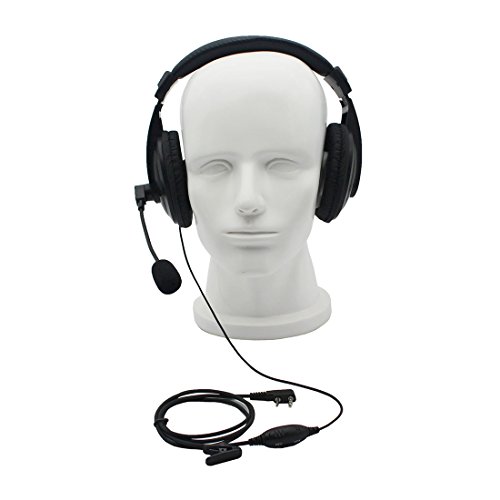
GoodQbuy Overhead Radio Headset VOX-PTT — Full overhead coverage for handhelds
Handheld operators are not obliged to choose between an earpiece and nothing. The GoodQbuy brings a full overhead headset, with a noise-cancelling boom microphone and both VOX and push-to-talk operation, to the two-pin handheld world. Its verified title names compatibility with two-pin Kenwood and Baofeng UV-5R radios and extends across Puxing, Quansheng, Wouxun, and HYT Nexedge handhelds, a roll call of the Kenwood-wiring ecosystem. For an operator working a noisy checkpoint, a parade route, or a windswept field-day site, sealed overhead cups and a boom parked at the mouth transform what a small handheld can do.
VOX, voice-operated transmission, deserves a careful paragraph because it is this pick’s headline and its hazard. With VOX, speaking keys the transmitter, freeing both hands for a clipboard, a rope line, or a bicycle. Set the sensitivity wrong, however, and the radio transmits your cough, your conversation with a bystander, and the passing lorry, to the entire net. Push-to-talk remains the disciplined default for shared repeaters, with VOX reserved for genuinely hands-busy tasks and tested sensitivity. The overhead form also suits operators who dislike in-ear fittings and want the same headset feel as a desk set while standing in a field. Readers who take calls for a living will recognise the same one-headset logic, at a quieter desk, in best bluetooth headsets receptionist.
- Form: professional overhead headset with boom microphone, per the listing title
- Transmission modes: VOX and PTT, per the listing title
- Noise handling: noise cancelling described in the listing title
- Connector family: two-pin, Kenwood and Baofeng UV-5R pattern named in the title
- Radios named in title: Kenwood, Baofeng, Puxing, Quansheng, Wouxun, HYT Nexedge handhelds
- Compatibility warning: two-pin Kenwood wiring is not an Icom or Yaesu handheld fitting
Strengths
- Full cups and a boom microphone give handheld operating a desk-headset feel in the field.
- VOX offers a genuine hands-free option for tasks where a free hand is the whole point.
- The compatibility list spans several two-pin brands beyond a single radio maker.
Trade-offs
- VOX demands careful sensitivity setup, or the net hears your environment instead of your intentions.
- Overhead bulk is real on a long walking event compared with an earpiece design.
- Two-pin discipline still applies: check your exact handheld’s wiring before ordering.
Best for: field-day, checkpoint, and event operators on two-pin handhelds who want full-ear coverage. Not suited for: discreet earpiece roles, or any handheld outside the Kenwood-style two-pin family.

HELETUL Single-Sided Boom Mic Headset — One ear on the room
Plenty of handheld work happens in conversation with people who are not on the radio: the event steward guiding a visitor while the net runs in one ear, the club member at a rally who must hear both the marshal channel and the person at the table. The HELETUL design answers with a single-sided over-ear headset, a boom microphone, and push-to-talk, described in its title with a big earmuff on the working side. Compatibility in the title names Baofeng, Retevis, Kenwood, and Arcshell two-pin radios, listing the UV5R, BF-888S, H-777S, RT21, RT22, and AR-6 among its handheld family.
The single-sided layout is a deliberate trade, not a missing part. You surrender stereo immersion and some isolation, and in exchange the uncovered ear keeps you socially and safely present: traffic, instructions from a colleague beside you, and the general sound of the place you are actually standing in. For net control at a club station it offers a particular pleasure, letting the operator hear the room’s reaction while the net runs privately in the covered ear. Push-to-talk keeps transmissions intentional, which suits shared repeaters where an open microphone is a social offence. Judge this pick by situational awareness rather than by isolation charts and it makes immediate sense for the public-facing half of the hobby.
- Form: single-sided over-ear headset with a large earmuff on one side, per the listing title
- Microphone: boom mic with PTT, per the listing title
- Connector family: two-pin, for the Baofeng, Retevis, Kenwood, and Arcshell radios named in the title
- Radios named in title: UV5R, BF-888S, H-777S, RT21, RT22, AR-6
- Isolation expectation: one ear open by design — situational awareness over sealing
- Compatibility warning: two-pin family only; Icom and Yaesu handhelds are a different fitting question
Strengths
- The open ear preserves real-world awareness for stewards, instructors, and net control operators.
- A boom microphone keeps transmit audio clearer than inline microphones dangling at chest level.
- Push-to-talk discipline suits shared repeaters and organised event channels.
Trade-offs
- Single-sided listening cannot match full headsets for weak-signal work in noisy places.
- One-ear audio takes a session of adjustment for operators used to both cups.
- The two-pin boundary excludes other handheld brands just as firmly as its siblings here.
Best for: event stewards, instructors, and net controllers on two-pin handhelds who must hear the room. Not suited for: DX chasing, loud checkpoints, or anyone wanting full isolation from a handheld set.
How Should You Compare Two Camps That Barely Overlap?
| Pick | Radio camp | Connection | Defining strength |
|---|---|---|---|
| Heil Pro Set Elite IC | Icom base and contest | Electret element, IC variant | Contest transmit consistency |
| Heil Pro 7 IC | Icom base and contest | Electret element, IC variant, PTT switch | Noise isolation |
| BAOFENG K-Port Earpiece Headset | Handheld nets and events | K-port two-pin | Two-pack entry value |
| Retevis EHK012 | Handheld nets and events | Two-pin | Headset volume control |
| GoodQbuy Overhead VOX-PTT | Handheld field work | Two-pin Kenwood pattern | Full cups plus VOX option |
| HELETUL Single-Sided | Handheld public-facing work | Two-pin | One ear stays on the room |
Read this table as two separate shortlists sharing a page. The Heil pair compete with each other on isolation and switching, for one specific brand of base radio. The four handheld picks compete on form and controls, for one specific connector family. Any cross-camp comparison is really a question about your operating: where do you sit, what do you hold, and who is listening? Operators curious how the same connector discipline plays out in aviation, a neighbouring world of strict radio procedure, can browse best aviation headsets with noise canceling for the professional end of that culture.
Why Do Microphone Elements Matter as Much as Plugs?
A plug that fits can still sound wrong, because radios feed and expect their microphones differently. Electret elements need a small supply voltage from the radio and deliver a healthy output level; dynamic elements generate their own signal and expect a different input design. Connect an element to an input voiced for another type and the results range from thin, quiet audio to distortion that no amount of speaking up will cure. This is why Heil’s brand-specific variants exist, why the IC designation on both Heil picks in this guide is an electrical statement, and why experienced operators ask about elements before they ask about ear cushions.
Adapters complicate rather than repeal this physics. An adapter can reroute pins, and some include the components needed to reconcile element expectations, but a random adapter bought on price alone may do neither correctly. The safe procedure is boring and reliable: identify your radio’s microphone input from its manual, choose a headset whose stated element and plug match it, and treat any adapter as a deliberate, researched component rather than a hopeful bridge. Operators who dictate notes and reports through headsets at a desk will find the same element-matching lesson, in miniature, in best headsets microphone dictation.
How Should You Set Up a Headset Station for a Contest or Net?
Set levels before the event, with a patient friend or a second radio as your witness. Transmit at your natural contest voice, neither whispering nor performing, and have your listener judge clarity rather than loudness: callsigns exchanged phonetically, a sentence with soft consonants, a number string. Adjust microphone gain until the report is clean at your ordinary effort, then mark the setting. Boom position matters as much as gain; the capsule should sit beside the mouth, close enough to favour your voice over the room, far enough to keep breath blasts out of the channel. Rehearse your push-to-talk gesture until it is silent habit, because the first hour of a contest is a poor classroom.
For handheld and net work, the setup ritual shrinks but does not vanish. Charge the radio, seat the two-pin plug fully, since a half-seated K-port connector is a classic source of intermittent audio, and run a thirty-second transmission check with net control or a fellow volunteer before the event begins. Decide in advance whether VOX is permitted on your net; many organised nets effectively ban it through bitter experience, and push-to-talk keeps you welcome. Finally, brief yourself on relief: who takes the net if you step away, and how the headset passes to them without a tangle of personal settings.
What Mistakes Do Operators Make When Buying Ham Headsets?
Buying by brand loyalty to the wrong variant leads the list: the Icom electret headset bought for a Yaesu desk, the K-port set bought for a handheld with a different socket, each purchased confidently and returned slowly. Second comes ignoring the element question entirely and blaming the radio for audio that was mismatched from the start. Third, operators buy contest isolation for social operating and then feel exiled from their own shack, or buy a single-sided event headset for weak-signal work and blame its open ear for the noise it was designed to admit.
VOX misuse earns its own dishonourable mention, from nets polluted by side conversations to batteries drained by a radio transmitting a windy hillside for an hour. Fifth, buyers forget the human channel: a headset chosen without regard to glasses, hearing aids, or a partner who also uses the station will be quietly avoided, and avoided equipment might as well not exist. The thread through every mistake is the same: the purchase was made from a photograph rather than from the operating reality. Name your radio, your element, your connector, and your typical session length before opening a single listing, and most of this guide’s warnings become unnecessary.
What Are the Connector Families an Operator Actually Meets?
The K-port earns its nickname honestly: it is the two-pin arrangement associated with Kenwood handhelds, carried into an enormous ecosystem of Baofeng, Retevis, Wouxun, and similar radios, with the speaker and microphone contacts sharing a paired plug. Its ubiquity is its virtue. Accessories are cheap, knowledge is widespread, and a club can standardise without a meeting. Its weakness is mechanical rather than electrical: the plug must seat fully, strain relief is modest on inexpensive leads, and a connector half a millimetre shy of home can produce audio that crackles only when you move, which is of course exactly when you need it.
Desk rigs live in a different world of round multi-pin microphone connectors, separate headphone sockets, and footswitch or hand-switch push-to-talk lines, varying by manufacturer and era. That variety is why Heil’s model names carry brand suffixes and why a serious station keeps a notebook page for its own wiring. Between the two worlds sit handhelds from Icom, Yaesu, and others with their own proprietary or threaded arrangements, sometimes waterproofed, sometimes combined with data functions, each demanding its own accessory language. The operator’s rule survives every case: the connector printed in the accessory’s title must name your radio’s family, and near-enough is a dialect, not a match.
Second-hand purchases deserve a special warning, because the used market mixes generations cheerfully. A headset described as fitting a famous handheld may fit only that model’s early production, or may arrive with a plug wired for a sibling brand that shares the shell but not the pin order. Buying used is a honourable ham tradition, and the defence is the same as on the air: verify before you transmit. Test a used headset at low stakes, on a simplex frequency with a friend, before it joins a contest, a net, or an emergency exercise where its failure would be public and consequential.
How Do Contesting, DXing, and Ragchewing Ask Different Things?
The contest operator is a sprinter in a marathon’s clothing: exchanges are seconds long, accuracy is everything, and the voice must survive being used at full competitive effort for a weekend. That profile rewards the Heil tier’s consistent element behaviour and positive push-to-talk, because a contest station cannot afford a microphone whose character changes with battery state or a switch whose action invites doubt. It also rewards isolation in proportion to the room, since the contest operator’s scarcest resource by hour thirty is not hearing but attention.
The DXer works at the opposite tempo, listening far longer than transmitting, straining at signals that surface from the noise for seconds at a time. For that operator the receive side of the headset carries the argument: a presentation that keeps weak audio intelligible at low volume, worn comfortably enough that the ears stay fresh for the hour when the rare one finally calls. Either Heil pick serves, chosen by room noise, and the DXer should be suspicious of any processing that flatters strong signals while smearing the faint ones at the threshold, since the threshold is the entire workplace.
The ragchewer, the hobby’s conversational heart, needs something subtler: a headset pleasant enough to forget during an hour-long discussion of antennas, gardens, and grandchildren. Over-isolation can actually work against this operator, sealing them away from the household they are happily coexisting with, and a lighter touch often wins. Handheld ragchewing on a local repeater is where the single-sided HELETUL quietly shines, keeping the operator present in their own room while the conversation travels. Matching the headset to the operating style you actually practise, rather than the one you admire, is the recurring moral of this guide.
What Changes When the Operating Is Public Service or Emergency Work?
Emergency-communications and public-service operating adds a chain of command to the technical questions. Headsets are issued, channels are assigned, and transmissions follow a discipline closer to the construction site’s radio culture than to a hobbyist’s evening net. In that world the K-port picks earn their keep through standardisation: matched pairs from Retevis or Baofeng let a team brief one control layout, swap a failed unit without re-teaching, and keep spares in the kit box. The single-sided design suits roles facing the public, while the overhead GoodQbuy suits checkpoints and noisy perimeters where missing a transmission has operational consequences.
Reliability checks become procedural rather than personal. A served agency exercise will expect a radio check at sign-in, and the operator whose two-pin plug was half-seated discovers it in front of the whole team. Build the habit the professionals use: connect, transmit a short test, listen for the reply, then stow the radio so the lead cannot work loose. Carry the spare headset from the two-pack rather than admiring it at home. In public-service work the best headset is overwhelmingly the one that was tested that morning, a standard any pick in this guide can meet and no pick can meet untested.
Field Day blends every theme in this article into one June weekend: contest tempo, portable stations, handheld coordination, generators humming beside the operating tents, and operators of every experience level sharing equipment. It is the single best argument for owning both a desk headset and a handheld set, and for labelling each with its radio in plain language on a tag. The tag habit sounds humble until three similar black headsets meet in a dark tent at two in the morning, when it becomes the difference between a smooth operator change and a transmitted apology.
How Should You Care for a Headset That Lives in a Shack?
Radio rooms are kinder than building sites and crueller than they look. Dust settles into foam, sunlight through a shack window ages plastics and cushions, and cables develop memory from being coiled the same way for five years. A headset that is hung on a hook rather than dropped on the desk keeps its headband shape and its dignity; a cable given a loose, generous coil rather than a tight wrap around the cups keeps its conductors unstressed at the strain reliefs, which is where nearly all wired headsets eventually fail. Once a season, wipe cushions, inspect the boom’s flex point, and run the listening check again, because slow drift in either direction of the audio path is invisible until it is embarrassing.
Spares follow the same philosophy as the radio kit itself. A spare cushion set, a spare lead where the design allows one, and the second headset from a two-pack stored where the operating actually happens convert most failures into thirty-second inconveniences. Operators who log their station changes should log headset changes too, noting which element variant belongs to which rig in the same notebook that records antenna work. When a future purchase arrives, that page answers the compatibility question from your own history rather than from a listing’s optimism.
Sharing a station with family or club members adds a social layer to care. Agree whose settings are the station standard, mark the boom position and gain that the standard uses, and let personal preferences live in a note rather than in silent adjustments. Many mysterious reports of a station sounding wrong trace back to three kind people each correcting the last person’s microphone position. A headset is part of the station’s voice, and a station, like an operator, should sound like itself every time it speaks.
What Should a New Licensee Buy First?
Sequence matters more than selection for the newly licensed. Your first radio is very probably a handheld, which places you in the K-port camp whether you planned it or not, and the correct first purchase is a modest one from that camp: a two-pack earpiece or the Retevis set if your club standardises on it, so that your earliest nets are heard privately and your transmissions sound considered. Resist the Heil tier until a base rig exists to deserve it, because a contest headset without a contest station is a trophy, and the money serves better in antennas, which improve every headset you will ever own.
When the base station arrives, buy its headset by brand discipline from the start. Identify the rig’s microphone element expectation from the manual, choose the matching Heil variant rather than the one on offer, and budget for the push-to-talk arrangement your operating position wants. That single disciplined purchase, made once, will outlast several radios in many shacks, provided later rigs are chosen with the same element family in mind or the headset’s variant is changed deliberately. The hobby rewards this kind of patience everywhere; audio is simply where impatience is most audible.
Clubs can help new members through both steps by keeping a small library of loaner headsets, one per common connector family, labelled with the radios they serve. A new licensee who has tried the earpiece, the overhead set, and the single-sided design across a month of nets buys with knowledge no review can fully transfer, including this one. Lending libraries also teach the connector gospel by touch, which is the way most radio knowledge has always actually spread.
Why Does Receive Audio Deserve as Much Attention as Transmit?
Operators lavish care on how they sound and then listen through whatever came in the box, which reverses the actual proportions of a radio life. Even a contest operator spends most of a session receiving, and a DXer may listen for an hour to transmit for a minute. Receive comfort therefore compounds: a headset that keeps band noise at a civilised level, presents voices without harsh edges, and sits lightly enough to be forgotten protects the operator’s attention across the whole session rather than during its briefest moments. When you audition the picks here, spend more of the trial listening to ordinary signals at ordinary strength than performing test transmissions, because that listening is the experience you are actually buying.
Volume habits belong in the same conversation. Amateur signals arrive at wildly different strengths, and the temptation to ride the volume control upward for the weak ones leaves the ears exposed when a strong local station answers. A headset with good isolation, like the Pro 7 IC in a loud room, narrows the range your ears must span, while disciplined use of the rig’s own gain controls does the rest. Operators who finish long sessions with ringing ears are receiving a message about their setup, not about their toughness, and the correct response is adjustment rather than pride. Hearing, once spent on a hobby, does not refill, and every other pleasure in radio depends on it.
How Do You Run a Net So Headsets Help Rather Than Hinder?
Net control is where headset virtues become audible to an entire community. The controller’s voice sets the net’s tempo and temper, so a clear microphone, a settled gain, and a boom that does not wander are civic contributions rather than personal luxuries. Controllers wearing full headsets should arrange a way to hear the room, a co-present helper, a door knock, a phone ringing with an urgent call, because a net that cannot be interrupted by reality eventually is. The single-sided pattern exists partly for this chair, and many controllers keep one for exactly that balance of net in one ear and world in the other.
Participants carry responsibilities too. Check in at a natural voice with the push-to-talk fully pressed before the first syllable, since a clipped callsign prefix wastes more net time than any other single fault. Release the switch cleanly at the end rather than trailing off, and leave a beat of silence after the previous station before transmitting, so relays and slower operators are not trampled. Headsets make all of this easier by keeping hands free and audio private, but the discipline itself is cultural, taught by example from the control chair. A well-run net is the hobby’s best advertisement, and most of what makes it sound well-run is travelling through somebody’s carefully chosen headset.
What Is the Sensible Upgrade Path as Your Station Grows?
Most stations grow in a recognisable order, and headset purchases go best when they follow it rather than leapfrog it. The handheld comes first, with a K-port headset matched to it. A mobile rig installed as a base often follows, and here the operator must pause, because mobile microphone arrangements differ again and yesterday’s handheld accessory will not migrate by wish. When a dedicated HF base arrives, the Heil decision presents itself properly for the first time, and by then the operator knows their room, their operating style, and their brand, which are the three facts the choice actually needs.
Growth also changes what a spare means. A one-radio station needs a spare headset; a multi-rig station needs a labelled headset per rig, because swapping a desk headset between an Icom and another brand’s radio mid-contest reintroduces every element and plug problem this guide has catalogued. Tags, notebook entries, and a hook per headset sound like administration, and they are, in the same way a logbook is administration: invisible during the good hours, priceless during the confusing ones. Buy for the station you have, label for the station you are becoming, and let each upgrade be a deliberate step rather than a hopeful one.
How Should You Judge a Headset During Its First Week on the Air?
Keep a small operating log for the first week, noting more than contacts. Record how your voice was reported on the first net, whether the boom stayed where you bent it, how your ears felt after the longest session, and whether the plug, switch, and controls behaved without being looked at. Ask one trusted operator, whose judgement you respect and whose receiver you trust, for an unvarnished audio report, and write down what they actually said rather than the compliment you hoped for. By the week’s end you will know whether you bought correctly, and if you did not, the notes will tell you which specific mismatch to fix rather than sending you shopping for a different everything.
Final Recommendation
Icom desk operators should choose between the two Heil picks by environment: the Pro Set Elite IC for the ordinary quiet shack and contest calendar, the Pro 7 IC when the room itself is the interference and its included PTT switch completes the station. Handheld operators should let the job decide among the K-port four: the Baofeng two-pack for a light, inexpensive start, the Retevis EHK012 for organised nets and events with headset-side volume control, the GoodQbuy when full overhead coverage and a VOX option suit field work, and the HELETUL when one ear must stay on the room. Match the element, honour the plug, and the next voice you hear fading at the edge of the band will have every chance of becoming a contact, because your station finally stopped arguing with itself.
Frequently Asked Questions
Can I use a Heil IC headset on a Yaesu or Kenwood rig?
Not as the right tool for the job. The IC models carry electret elements specified for Icom inputs, and Heil makes separate variants for other brands because those inputs differ. Buy the variant built for your rig rather than adapting the Icom version and accepting compromised transmit audio.
Will a K-port headset fit my Icom or Yaesu handheld?
Do not assume so. The K-port is the Kenwood-style two-pin pattern used by Baofeng, Retevis, and similar handhelds named in these listings. Icom and Yaesu handhelds use different arrangements, so treat any connection as an adapter research project with the element question included, never as a plug-it-in hope.
Is VOX a good idea on a repeater net?
Usually not. VOX keys the transmitter on any sufficient sound, including side conversations and wind, which a shared repeater broadcasts to everyone. Push-to-talk keeps transmissions deliberate. Reserve VOX for genuinely hands-busy tasks, with sensitivity tested in advance, where your net’s culture permits it.
What is the difference between the two Heil picks?
Emphasis. The Pro Set Elite IC is the contest and DX instrument in the classic mould, while the Pro 7 IC leans on aviation-style noise cancelling, deeper isolation, and an included PTT switch. Both are electret models for Icom; choose by how loud your operating environment is.
Why do the handheld picks come in two-packs?
Because handheld operating is social and organisational: clubs, events, emergency-communications teams, and couples equip more than one person. A matched pair standardises controls, provides an immediate spare, and costs less than two separate purchases in most cases.
How can I test my transmit audio before a contest?
Arrange a listening check on a quiet frequency or through a fellow operator’s receiver, transmit at natural effort with phonetics and number strings, and adjust gain and boom position until the report praises clarity rather than volume. Mark the winning settings so contest morning starts from knowledge, not hope.
Should I buy a footswitch for push-to-talk?
For a contest or high-rate desk station, often yes, once the headset itself is right. A footswitch frees both hands for logging and tuning while keeping transmissions deliberate, and many experienced operators consider it the natural partner of a Heil-tier desk headset. Confirm that your chosen headset and rig support the switching arrangement you intend, set it up before the event rather than during it, and keep the hand switch reachable as a backup, because the middle of a run is no place to discover a preference.
What should I label, and why does it matter so much?
Label each headset with the radio it belongs to and the element or connector family it serves, in words a tired operator can read at two in the morning. Stations accumulate near-identical black headsets across brands and generations, and the label is the only thing standing between a smooth operator change and a transmitted mistake. Clubs should extend the habit to loaner and event kits, where the person connecting the headset is least likely to know its history.
One final habit ties the whole article together: before any important session, contest, net, or exercise, put the headset on and make one unimportant transmission first. A friendly check-in, a call to a clubmate, a test into a quiet frequency with a listening friend, any of these proves the chain while the stakes are zero. Operators who build that ritual into their preparation almost never become the cautionary tale told at the next club meeting, and their headsets, whatever tier they came from, perform like the carefully matched equipment this guide set out to help you choose.
Keep the purchase record with the station log as well, noting the model variant and connector family in plain words. Future you, shopping for a cushion or a second unit years from now, will be grateful that present you wrote down which Heil variant and which two-pin family the station actually runs, instead of trusting memory to keep the alphabet of plugs and elements straight.
And if a clubmate asks why your headset carries a paper tag in a hobby full of electronics, lend them this article’s short answer: because the tag remembers the connector so the operator can forget everything except the contact in front of them.
That small tag, renewed whenever the station changes, is the cheapest accessory in this entire guide and the one most likely to still be earning its keep a decade from now, long after cushions have been replaced and radios have come and gone around it.
Bring the same patience to the purchase itself. Order from a listing whose title names your radio family in full, keep the packaging until the headset has survived a real session on the air, and file the receipt beside the station log rather than in an email folder you will never search again when a cushion or a lead needs replacing two winters from now.
Related Guides
Operators building a complete voice station may also find best headsets for podcasting wireless useful for its broadcast-microphone perspective, and best headsets for esports for a faster, younger culture solving the same problem of being understood under pressure.


