What's inside
- Where to buy
- Key Takeaways
- Quick Picks
- How did we choose these bone conduction headsets?
- Who is bone conduction actually for?
- The six entries in detail
- How does a training week actually treat these headsets?
- Bone conduction at a desk — the second life of a sports device
- Comparison table
- How do you fit and wear a conduction headset correctly?
- What should you expect from the sound, honestly?
- What do the generations and names in the Shokz line actually mean?
- How long do these headsets last, and how should you treat them?
- What mistakes do bone conduction buyers keep making?
- Buying for someone else — the gift question
- Final Recommendation
- A first fortnight with the format — what to expect
- Frequently Asked Questions
- What does the second-hand market look like for these?
- Related Guides
As an Amazon Associate I earn from qualifying purchases. This post may contain affiliate links at no extra cost to you.
gizmoverdict.com is reader-supported. When you buy through links on our site, we may earn an affiliate commission.
Where to buy
The best affordable bone conduction headsets are bought through Amazon and sports retailers, and all four linked models in this guide come from one manufacturer — Shokz — because at honest prices, this category effectively has one serious name. The two prose-only entries explain themselves: Mojawa is the credible challenger brand whose listings rotate too much to link responsibly, and the swarm of unbranded “bone conduction” products at the bottom of the market includes many that are not bone conduction at all, which is a warning this guide considers more valuable than a sixth link.
The technology first, in plain terms. A bone conduction headset does not put speakers in or over your ears. It rests small transducers on your cheekbones, just in front of your ears, and vibrates sound through the bones of your skull to your inner ear, leaving your ear canals completely open. You hear your music and your surroundings through two separate channels at once — the run, the ride and the office happen around a soundtrack rather than behind a seal. That openness is the entire reason the category exists, and it comes with physics attached: bass is inherently weaker than any sealed headphone, and at high volumes some sound leaks outward and the transducers tickle. This guide will not pretend otherwise, because the buyers who love these devices love them for what the trade buys — awareness — and the buyers who return them usually expected a normal headphone in a strange shape.
One boundary we will keep throughout: this is a guide to a listening format, not to a medical device. Bone conduction has legitimate clinical uses in other products and contexts, but nothing here is recommended for hearing conditions, and no safety outcome is guaranteed by wearing your ears open — awareness helps you notice the world; what you do with the noticing remains your responsibility, on roads above all.
Key Takeaways
- Shokz’s OpenMove is the affordable door into true bone conduction: the real technology, the open-ear benefit, and a fit and finish a step below its siblings.
- The OpenRun is the range’s proven athlete — lighter, IP67-rated against sweat and rain, and the model most runners end up recommending to other runners.
- OpenRun Air 2 trims weight to 26.4 grams per its listing and updates the sound generation, aiming at wearers who found earlier models noticeable after an hour.
- The OpenRun Pro 2 is the stretch pick at the ceiling of this guide: the strongest bass the format has produced, bought with money that exits the “affordable” idea for most shoppers.
- Mojawa’s Run Plus is the genuine alternative in prose — a real bone conduction design with its own ideas about bass, when its listings are available.
- Beware the generic shelf: many rock-bottom “bone conduction” listings are ordinary open speakers near your ears, with neither the conduction path nor the build of the real thing.
Quick Picks
| Pick | Badge | Why it is here |
|---|---|---|
| SHOKZ OpenMove | Best Affordable Entry | Genuine bone conduction at the friendliest price in the Shokz line — the honest way to learn whether the format suits you. |
| SHOKZ OpenRun | Best for Runners | IP67 weatherproofing, a secure wraparound fit and the range’s most proven athletic record. |
| SHOKZ OpenRun Air 2 | Best Lightweight Comfort | 26.4 grams and updated PremiumPitch 3.0 sound for wearers who prioritise forgetting the device is there. |
| SHOKZ OpenRun Pro 2 | Best Sound, Stretch Budget | The format’s bass ceiling and flagship refinements, at a price that tests this guide’s title. |
| Mojawa Run Plus | Prose-Only Challenger | A real alternative design with haptic bass ambitions, when you can find it listed by a reputable seller. |
| Unbranded “bone conduction” listings | Prose-Only Warning | Many are open speakers in disguise; know the test before spending anything on the generic shelf. |
How did we choose these bone conduction headsets?
Verification came first, and in this category verification is literal: is the product actually conducting sound through bone? Shokz — formerly AfterShokz — effectively built the consumer market and holds the engineering pedigree, so its line anchors the guide. Each linked model was checked against this batch’s verified pool, and the generational differences between them — fit, rating, transducer generation, weight — are the substance of their sections. Challenger products without stable, verifiable listings were kept in prose with the reason stated, and the generic shelf was treated as a consumer-protection topic rather than a source of picks.
Ranking weighed the format’s real axes. Security of fit while moving came first, because a conduction headset that migrates across your cheekbones loses both volume and its reason to exist. Weather and sweat resistance followed — these are exercise devices before anything else. Then came sound within the format’s honest limits, wearing comfort across an hour, and battery behaviour across a training week. No pick was rewarded for pretending the format’s physics away; several listings elsewhere promise sealed-headphone bass through open ears, and those promises disqualified their makers from consideration here.
Who is bone conduction actually for?
Runners and cyclists who train where traffic lives are the founding audience. An open ear hears the car before the mirror would show it, hears the cyclist calling a pass, hears the dog before the dog’s owner does. For many outdoor athletes that awareness is not a preference but a condition of training outdoors at all — some events and some jurisdictions restrict sealed earphones for exactly this reason, and bone conduction is the format that keeps the soundtrack while satisfying the spirit of those rules. Always check the specific rules of your event or your local roads rather than assuming any headset is permitted; the point here is the awareness the format preserves, and what you do with it.
The second audience discovered the format at desks. Office workers who must hear a colleague, a doorbell or a child wear conduction headsets the way the previous section’s earpiece users wear theirs — as an awareness tool — with the bonus of nothing in or on the ear to ache by mid-afternoon. People who simply dislike the plugged sensation of earbuds, or whose ears resent anything inserted, form the third group: for them the cheekbone route is not a compromise but a relief. Swimmers form a specialised fourth audience for the waterproof, onboard-storage branch of this family — none of the picks in this guide is a swimming model, and we flag that rather than let a water-resistance rating blur into swim-proof in a reader’s mind.
And the honest counterpoint: if your listening is about immersion — the bass line as a physical event, the film score that swallows a room, the game world that replaces this one — bone conduction will disappoint you at any price in this guide, and a conventional headphone is the correct purchase. The format trades exactly that immersion for presence in the real world. Buy the trade, not the novelty.
The six entries in detail
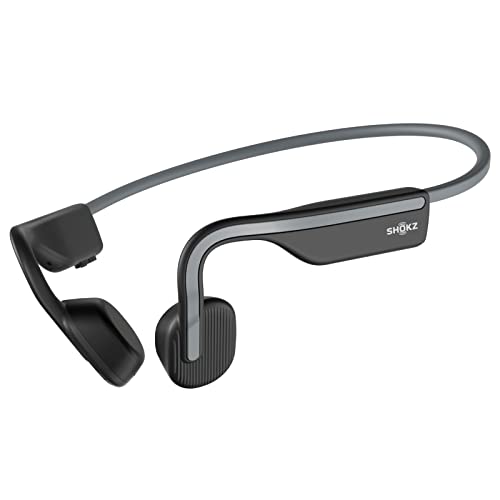
SHOKZ OpenMove — Best Affordable Entry
The OpenMove is where the format’s curious should begin, because it contains the whole idea without the refinements that inflate the rest of the line. The transducers sit where they should, the wraparound band holds them there through a run or a workday, and the sound is recognisably bone conduction in its honest form: voices and melodies clear and present, bass present as suggestion rather than force. For podcasts, audiobooks and the mid-tempo playlists of a training run, that presentation is not a watered-down version of the experience — it is the experience, and thousands of athletes run their whole seasons on exactly this model.
What the friendlier price leaves behind is polish. The OpenMove’s build feels more utilitarian than its siblings, its water resistance is aimed at sweat and light weather rather than the OpenRun’s fuller rating, and its charging and controls belong to an earlier generation of the line. None of those are hidden flaws; they are the visible seams of an entry model, and they matter most to buyers who already know they will wear the device daily for years. As a first conduction headset — the audition for a format some people never leave — it remains the most rational purchase in this guide.
- Form: wraparound bone conduction band, open-ear
- Use centre: running, workouts and everyday awareness listening
- Rating character: sweat-resistant, everyday weather
- Sound: clear mids and voice; modest bass by format physics
- Positioning: entry point of the Shokz range
Strengths
- The genuine technology at the range’s most approachable price
- Secure, simple fit that survives workouts without adjustment rituals
- Excellent for spoken word, where the format’s clarity shines
Trade-offs
- Finish and features trail the OpenRun generation noticeably
- Bass is a hint, not a foundation — music-first listeners be warned
- Weatherproofing is for training, not for downpours or swimming
Best for: first-time conduction buyers and podcast-led training. Not suited for: audiophiles, swimmers, or anyone expecting headphone bass.

SHOKZ OpenRun — Best for Runners
The OpenRun is the model the format’s reputation was built on in start-line conversations: light enough to forget, tight enough to stay, and rated IP67, which in practical language means sweat, rain and a rinse under the tap are non-events. Its listing bundles a sweat headband, a small tell that Shokz knows precisely whose head this is going on. Around the run itself, the OpenRun’s virtues compound — the band clears helmet straps and sunglasses arms with less negotiation than bulkier designs, the controls can be worked by a cold, gloved-ish finger, and the whole object disappears into the run in the way good equipment should.
Sound sits a generation above the OpenMove, with a fuller low end — fuller, note, within the format’s physics, which still means bass you perceive more than feel. The honest debits are the shared family ones plus a specific one: the OpenRun’s fit band comes in sizes in some markets, and buyers between sizes should order with a returns path in mind, because a conduction headset worn slightly loose is a quieter, buzzier version of itself. For the runner who has decided the format is theirs, this is the default recommendation of the entire category, and the one against which the two models above it must justify their extra money.
- Form: wraparound bone conduction band, open-ear
- Rating: IP67 — sweat and rain proof for training
- Fit: athletic, secure; size variants exist in some listings
- Sound: a step fuller than OpenMove, still format-honest
- Bundle note: sweat headband included per the listing
Strengths
- The most proven athletic record in consumer bone conduction
- IP67 rating that shrugs off weather and post-run rinses
- Fit and weight that vanish during the activity itself
Trade-offs
- Sizing matters — a loose band costs volume and adds buzz
- Bass remains the format’s polite suggestion, not a sealed driver’s punch
- At high volumes in quiet rooms, some sound escapes to nearby ears
Best for: runners and outdoor trainers who have chosen the format. Not suited for: swimmers, bass-led music listening, or quiet-office use at full volume.

SHOKZ OpenRun Air 2 — Best Lightweight Comfort
The Air 2’s headline is a number: 26.4 grams, per its listing. In most headphone categories a few grams are trivia; in a device that hangs its entire function on two contact points against your cheekbones, weight is comfort, and comfort across a two-hour run or a full workday is the product. Shokz pairs the diet with its PremiumPitch 3.0 sound generation and a bundled hair band in this listing — a small, telling accessory for the long-haired wearers whose fit feedback clearly reached the design team. The result is the conduction headset for people who liked the idea and disliked the sensation of the earlier hardware.
Position it carefully against its siblings. Against the OpenMove it is the refinement play — lighter, newer sound, friendlier long-wear manners. Against the OpenRun it trades a measure of that model’s battle-tested athletic specification for the weight saving, and a buyer whose training is measured in storms should weigh the ratings on each listing rather than assume the newer name wins every column. Against the Pro 2 below, it is the comfort-first alternative at a friendlier level. The Air 2 buyer is not chasing the format’s maximum sound; they are chasing the minimum presence, and for all-day wearers — athletes and desk workers alike — that is frequently the wiser chase.
- Form: wraparound bone conduction band, open-ear
- Weight: 26.4 grams per the listing
- Sound: PremiumPitch 3.0 generation
- Bundle note: hair band included per the listing
- Positioning: comfort-first refinement of the athlete line
Strengths
- The lightest wearing experience in this guide
- Newer sound generation with the format’s clarity intact
- Long-session comfort that suits workdays as well as runs
Trade-offs
- Check its weather rating against the OpenRun if you train in storms
- Still the format’s bass physics — lighter does not mean deeper
- Sits above the OpenMove’s entry price for refinements some won’t feel
Best for: all-day wearers and comfort-sensitive athletes. Not suited for: bargain-first buyers or storm-training specialists who need the OpenRun’s rating.

SHOKZ OpenRun Pro 2 — Best Sound, Stretch Budget
Every affordable guide deserves one honest stretch, and the OpenRun Pro 2 is this one’s. Shokz’s flagship attacks the format’s founding weakness — bass — with a dual-driver approach that pairs the conduction path with assistance aimed squarely at the low end, and the result is the fullest sound bone conduction has produced: still not a sealed headphone, never that, but a presentation where music’s foundation is present enough that playlists stop feeling like arrangements for voices only. Around that headline it adds the flagship trimmings of fit, finish and battery behaviour that a daily, years-long wearer will notice weekly.
The stretch must be named as plainly as the virtues. This model sits at the ceiling of what the word “affordable” can be asked to cover in this guide, and for many readers the OpenRun delivers ninety percent of the life for notably less commitment. The Pro 2 earns its place for a specific buyer: the one who has already lived with the format, knows the awareness trade is theirs for good, and wants the best sound the physics currently allows without leaving the category. First-time buyers should audition on the OpenMove or OpenRun and let the Pro 2 be the upgrade their experience orders, not the leap their curiosity gambles on.
- Form: wraparound bone conduction band, open-ear, flagship build
- Sound: dual-driver design aimed at the format’s bass ceiling
- Use centre: serious training and all-day wear
- Rating character: sweat resistant for workouts
- Positioning: the range’s top — a stretch beyond this guide’s premise
Strengths
- The most complete sound bone conduction currently offers
- Flagship fit and finish for daily, long-term wear
- Keeps the full open-ear awareness that defines the category
Trade-offs
- Price tests the “affordable” in this guide’s title — named honestly as the stretch
- Even here, bass will not satisfy a sealed-headphone listener
- Over-specified for a first audition of the format
Best for: committed conduction wearers upgrading for sound. Not suited for: first-time buyers or anyone whose budget was the point of the search.
Mojawa Run Plus — Prose-Only Challenger
Mojawa matters because monopolies make categories lazy, and the Run Plus is a genuine attempt at the format from outside the Shokz tent: a bone conduction sports headset with its own answer to the bass problem, using haptic-style low-end reinforcement to give music a physical edge that pure conduction lacks. Owners who find Shokz’s presentation too polite often find Mojawa’s more exciting, and its presence in the market has visibly kept the leader honest. If the category has a second name worth knowing today, this is it.
It is prose-only for a distribution reason rather than a quality verdict: its listings and availability rotate enough that a link from this guide could age into a different seller, a different bundle or a dead page, and the pool discipline of this batch only links what could be verified. A reader who finds the Run Plus through a reputable retailer with a returns path is buying a real alternative worth the experiment — particularly the music-led athlete for whom Shokz’s bass ceiling is the one sore point. Everyone else should treat Mojawa as the name to watch when their OpenRun eventually needs replacing.
- Form: wraparound bone conduction sports headset
- Distinction: haptic-leaning bass reinforcement
- Availability: listings rotate by seller and season
- Positioning: the credible challenger to the Shokz line
- Role here: alternative for music-led athletes to source carefully
Strengths
- A different, more physical take on the format’s low end
- Genuine conduction design, not a speaker in disguise
- Competition that benefits every buyer in the category
Trade-offs
- Availability and seller quality vary enough to demand care
- Smaller support and accessory ecosystem than the leader’s
- Not linked here because its listings could not be held stable
Best for: music-led athletes willing to source deliberately. Not suited for: buyers who want the safest retail path and the deepest support shelf.
Unbranded “bone conduction” listings — Prose-Only Warning
The bottom of this market has a counterfeit problem of a specific, instructive kind. Many of the cheapest products wearing the words “bone conduction” contain no conduction transducers at all: they are small ordinary speakers mounted near your ears in a wraparound band, playing sound through the air like any open earbud, only worse. They borrow the format’s shape and its awareness story while delivering neither its mechanism nor its particular clarity — and because the wearer can still hear the surroundings (any open speaker allows that), the disguise survives casual use and collects puzzled reviews about weak sound and heavy leakage.
The tell, before buying, is in the details: genuine conduction headsets rest pads flat against the cheekbones and their makers describe transducers, generations and patents; the disguised ones show visible speaker grilles aimed at the ear canal and copy that dissolves into generic superlatives. Price is a second tell — real conduction engineering has a floor, and listings far beneath the OpenMove are not miracles of efficiency. None of this condemns open-ear speaker bands as products; some are pleasant enough for what they are. It condemns buying one while believing you have bought bone conduction, and it is why this guide would rather leave its sixth chair to a warning than fill it with a link it cannot stand behind.
- Form: wraparound bands of widely varying honesty
- Common reality: air-conduction speakers near the ear, not cheekbone transducers
- Tells: speaker grilles, no transducer description, prices below the format’s floor
- Consequence: more leakage, less clarity, none of the true format’s mechanism
- Role here: consumer protection, deliberately unlinked
Strengths
- As open speakers, the better ones are cheap ambient listening for a desk
- The shape is comfortable and the ears stay open, as advertised
- They demonstrate, by contrast, what real conduction engineering costs
Trade-offs
- Not bone conduction — the core claim fails on the commonest versions
- Sound leaks more and resolves less than true conduction at the same volume
- Build, ratings and support are lottery-grade across the shelf
Best for: nobody shopping for bone conduction — buy one only as a knowingly cheap open speaker. Not suited for: every purpose this guide exists to serve.
How does a training week actually treat these headsets?
Exercise electronics live or die on their week, not their spec sheet, and the conduction week has a pleasant rhythm. The band goes on with the shoes — no earbuds to seat, no tips to wet, no case to pocket — and comes off into the same hook or drawer every time, because a wraparound band is large enough to have a home and too large to lose in a kit bag’s corners. Sweat, the assassin of in-ear devices, mostly minds its own business here: there is nothing in the ear canal to slip, and the OpenRun’s rating turns the post-run rinse into part of the routine rather than a risk. Charging settles into a twice-a-week top-up for most training loads, the kind of undramatic cadence that means the battery simply never becomes a topic — the highest praise endurance can earn.
The week’s frictions are smaller and stranger. Winter hats and buffs rearrange the fit daily and reward the thirty-second mirror check described earlier. Back-to-back sessions in rain test whether you remembered which model in this guide carries the stronger rating — a genuinely practical difference between the OpenMove and OpenRun that no amount of brand loyalty should blur. And the social friction is real: training partners wearing sealed earbuds inhabit a different acoustic world, so group runs develop a small etiquette — the conduction wearer becomes the group’s ears, calling traffic and instructions, a role most come to enjoy and some groups come to rely on.
Bone conduction at a desk — the second life of a sports device
It surprises people how naturally a running headset colonises a working day. The desk case rests on the same awareness: a home worker who must hear the door, the children and the delivery driver cannot seal their ears for eight hours, and earbuds that ache by lunch lose to a band that rests on bone and is forgotten by ten o’clock. Calls and focus music alternate through the same device, and the open ear means the headset never has to come off for a conversation — it just gets paused, which across a day is the difference between a tool that is worn and a tool that is managed.
The limits are the familiar ones wearing office clothes. In a genuinely noisy shared office, conduction gives you no shelter — your neighbour’s call is as audible as your playlist, and the format that protects a runner abandons a focus worker. Leakage at desk volumes is minimal but a silent library is the wrong venue at any level. And for the worker whose day is calls, the microphone arrangement here — competent, boomless — will lose to a dedicated boom headset on every windy or kitchen-adjacent call. The desk life of these devices is a real second career, not a universal one, and the buyers who thrive are those whose days are quiet-but-interruptible rather than loud.
Comparison table
| Model | True conduction? | Character in one line | Weather manners | Choose it when |
|---|---|---|---|---|
| SHOKZ OpenMove | Yes | The format, unadorned and fairly priced | Sweat and everyday weather | You are auditioning bone conduction itself |
| SHOKZ OpenRun | Yes | The athlete’s default, proven at scale | IP67 — rain and rinses welcome | Outdoor training is the main event |
| SHOKZ OpenRun Air 2 | Yes | Featherweight comfort with newer sound | Training-grade; check listing for specifics | You wear it for hours and feel every gram |
| SHOKZ OpenRun Pro 2 | Yes | The sound ceiling of the format, at its price ceiling | Workout-ready sweat resistance | You already live in the format and want its best |
| Mojawa Run Plus | Yes | The challenger’s bass-forward interpretation | Sport-rated; varies by listing | You find Shokz’s low end too polite |
| Unbranded listings | Often no | Open speakers wearing the format’s clothes | Claims outrun verification | Only as a knowingly cheap open speaker, never as conduction |
How do you fit and wear a conduction headset correctly?
Placement is the whole instrument. The transducers belong flat on the cheekbones, just in front of the ears — not on the ears, not drifting back onto the jaw hinge. Too far forward and volume falls away; too far back and the band’s pressure lands where it will ache. The wraparound band should sit above the ears and angle so the pads meet the bone squarely, and the test is simple: speech should sound centred and clear at moderate volume in a quiet room before you ever step outside. If you are straining the volume indoors, the fit is wrong outdoors waiting to happen, because every decibel of street noise will be fought with the volume control, and the format loses that arms race while leaking sound to everyone nearby.
Layering with the rest of your kit takes a minute’s choreography. Sunglasses and helmet straps compete for the same territory behind the ears; the usual peace treaty is headset first, glasses arms over the band, helmet straps routed outside both. Hats and headbands — including the bundled ones in two of these listings — can lift a transducer off the bone if they wedge underneath, so arrange them to sit behind or above the pads. Long hair is best gathered clear of the contact points, which is presumably why a hair band ships in one of these boxes. None of this is difficult; all of it is the difference between the format as reviewed and the format as returned.
What should you expect from the sound, honestly?
Expect clarity before weight. Voices — podcasts, calls, audiobooks, a commentator — arrive with a presence that startles first-time wearers, because the conduction path delivers midrange detail straight past the distractions of the ear canal. Melodies and rhythms are fully legible; a training playlist does its motivational work completely. What does not arrive is the physical low end: the kick drum as a thump in the chest, the synth line as pressure. The Pro 2 narrows that gap more than anything else here, and narrows is the correct verb — the gap is physics, and physics is not a firmware update away.
Expect the environment to be a band member. Traffic, wind and crowd noise share your ears by design, and at the volume where you can still hear a car approach — the only volume this format should be used at outdoors — some musical detail will always be traded for awareness in loud places. In quiet settings the reverse surprise waits: at high volume your music becomes faintly audible to the person beside you, and the transducers can tickle against the bone, which is the device’s way of saying the level is beyond its brief. Treat both signals as instrumentation. The wearers who love these headsets run them at moderate levels in the open world and let the world stay in the mix; that is not a limitation of the experience, it is the experience.
What do the generations and names in the Shokz line actually mean?
Shokz’s naming rewards a moment’s study, because the line is a ladder of refinements rather than a set of rivals. OpenMove is the entry rung — the technology in its straightforward form. OpenRun is the athletic standard, the rung where ratings, fit and sound reach the level serious training assumes. The Air branch chases lightness above the standard, trimming the wearing sensation for people whose sessions run long. The Pro branch chases sound above the standard, spending its budget where the format is weakest. A buyer who reads the ladder this way stops asking which model is “best” and starts asking which refinement their own use will actually feel — weather, weight or bass — which is the only version of the question with a useful answer.
The transducer generations matter inside that ladder. Each generation of Shokz’s conduction hardware has aimed at the same two targets: cleaner sound at a given volume, and less of the stray vibration and leakage that earlier models produced at theirs. That is why the Air 2’s PremiumPitch generation is a real selling point rather than a badge — the improvements live exactly where daily wearers feel them, in clarity during a podcast’s quiet passages and in a band that buzzes less when a run’s playlist swells. It is also why the second-hand market in older generations is a false economy for heavy users: the savings buy yesterday’s leakage and yesterday’s fit, the two things this format’s owners complain about most.
How long do these headsets last, and how should you treat them?
The wraparound band is both the durability story and the vulnerability. A quality band flexes thousands of times across its life — on, off, into bags, occasionally sat upon — and the reputable makers engineer the spring accordingly; the generic shelf’s bands are where cracks and dead transducers concentrate, one more reason the warning section exists. Treat the band like sprung equipment rather than a cable: no sharp folds, no twisting it into a pocket it does not fit, and it will repay the courtesy for years. The transducers’ contact faces wipe clean with a damp cloth; sweat salt left to accumulate is the slow enemy of both finish and fit.
Batteries follow the usual lithium arc — strong for the first years, gradually shorter thereafter — and because these are sealed sports devices, replacement means replacement of the whole unit, which argues for buying the model your use actually justifies rather than the cheapest experiment repeated twice. Owners who rinse, dry, park the band in one place and charge it on a rhythm routinely report the dull, happy outcome this category promises at its best: a device that simply keeps showing up, run after run, until the format itself feels less like a gadget and more like part of the kit — shoes, watch, headset, door.
What mistakes do bone conduction buyers keep making?
The first is expecting a headphone. Buyers who audition conduction against their sealed earbuds’ bass will return any model in this guide, including the flagship, and the format will be blamed for a mismatch the marketing encouraged. The second is buying the disguised generics described above and concluding the whole technology is a gimmick — the counterfeit poisoning the genuine article’s well. The third is fit neglect: wearing the band loosely, over hats, behind the ears, then reviewing the volume and comfort of a device that was never actually on their cheekbones.
Fourth is volume escalation outdoors, cranking past the awareness the format exists to preserve and leaking music across the pavement in the process — the device used exactly against its purpose. Fifth is assuming water ratings: sweat resistance, IP67 training proof and swim-proof are three different promises, and this guide’s picks make only the first two. And sixth is buying for a medical hope — a hearing situation, a safety guarantee — that no consumer listening product in this article is offered to serve. The format’s real gifts are enough: your ears open, your soundtrack on, your world audible. Buy it for those, precisely.
Buying for someone else — the gift question
Bone conduction headsets are unusually giftable and unusually risky at the same time. Giftable, because the format delights people who have never heard of it — a runner who has resigned themselves to one-earbud runs or silent solo miles receives awareness and a soundtrack in a single object. Risky, because fit is personal, the band’s sizing and pressure either suit a head or quietly do not, and a recipient who dislikes the sensation has no use for the device at any quality level. The safe pattern is to gift within the proven middle of the range — the OpenRun is the classic choice — from a seller whose returns the recipient can actually use, and to gift it to someone whose training or working pattern you have genuinely observed rather than imagined.
For younger athletes, add the volume conversation to the gift. An open-ear design makes it easy for a supervising adult to hear how loud is too loud — leakage is, in this one context, a feature — and the moderate maximum levels the format encourages are part of its family appeal. This guide offers no medical guidance on listening levels for anyone; it simply notes that a format which keeps the world audible also keeps listening habits visible, and many parents count that transparency as the reason the box gets bought.
Final Recommendation
For the reader this guide was written for — the runner, rider or worker who wants sound and surroundings together, at a price that respects the experiment — the OpenRun is the centre of gravity: proven, weatherproof, secure and fairly priced for a device that will live outdoors. Begin one step cheaper with the OpenMove if the format itself is still on trial, step sideways to the Air 2 if your wear is measured in long hours and grams matter, and step up to the OpenRun Pro 2 only when experience, not curiosity, tells you the format is yours and its best sound is worth the stretch. Keep Mojawa in view as the challenger, and keep the generic shelf at arm’s length until its products describe transducers instead of adjectives. Bone conduction does not replace your other headphones; it replaces the silence you used to train in — and for the right ears, that is the better bargain.
A first fortnight with the format — what to expect
Day one feels like a magic trick and slightly odd: music with nothing in your ears, a faint vibration on the cheekbones, and the strange double-exposure of a podcast laid over real life. By the third run the sensation recedes and the practical questions take over — where the band sits with your particular sunglasses, which volume your usual route actually needs, whether the controls have become memory yet. Most wearers report that the adjustment is measured in days, and that the moment the format clicks is usually an unremarkable one: a car heard early, a training partner’s sentence caught without pausing the music, a doorbell noticed through a podcast.
The fortnight also exposes the honest disappointments while returns are still easy. If your listening heart belongs to bass, you will know by now. If your environment is louder than your routes suggested — a commute that is really an hour beside heavy traffic — the awareness you bought will have shown its cost in musical detail. And if your head and the band simply disagree, no review’s enthusiasm should overrule your own cheekbones. A format this distinctive deserves a genuine trial rather than a doorstep verdict, and a fortnight of real use is exactly the trial the return window was invented for.
Frequently Asked Questions
Can other people hear what I am listening to?
At moderate volumes in ordinary environments, effectively no — the sound travels through your cheekbones, not the air. At high volumes, some leakage escapes, especially in quiet rooms, and the transducers themselves can become faintly audible to someone very close. This is one of the format’s self-regulating virtues: the level where leakage begins is roughly the level where you should turn it down anyway, for awareness outdoors and courtesy indoors.
Is bone conduction good for phone calls?
Yes for the wearer, with a caveat for the listener. You will hear callers clearly while keeping an ear on the world, and the Shokz models carry microphones tuned for speech. Your own voice reaches the microphone through the air like any headset, so in wind or heavy traffic your caller may struggle even while you hear them perfectly. For call-heavy work in noise, a boom-equipped headset from the Bluetooth category remains the stronger tool; for calls woven through a run or a workday, conduction is a delight.
Can I swim in these headsets?
Not in any pick in this guide. The OpenRun’s IP67 rating covers sweat, rain and rinsing — immersion within its tested limits — but swimming models are a separate branch of the family built around onboard music storage, since Bluetooth does not travel through water. If pool or open-water training is your purpose, shop that specific branch and treat any Bluetooth headset’s water rating as splash protection, however heroic the number sounds.
Why does the headset tickle or buzz at high volume?
Because the transducers are vibrating against your cheekbones, and at high levels that vibration becomes a sensation in its own right — the format’s built-in volume warning. It is not a fault in any model here; it is physics announcing the boundary of the design brief. Turn down until the tickle disappears and you have found the level the device was engineered around — which, outdoors, is also the level where your awareness of traffic stays intact.
Will bone conduction work with glasses, helmets and hats?
Generally yes, with arrangement. The band sits above and behind the ears where glasses arms and helmet straps also live, and the working order most wearers settle on is headset first, glasses over it, straps outside. Bulky frames and thick hat bands can lift a transducer off the bone and cost volume, so test your exact combination at home. The bundled headbands in two of these listings exist partly to manage hair and sweat without disturbing that contact.
Can I wear one with earplugs, and why would I?
You can, and in loud environments some wearers do — paradoxically, sealing the ear canal with plugs can make conducted sound seem fuller, because the inner ear receives the bone path with less competition from ambient noise leaking in. It is a legitimate trick for a noisy gym or a workshop-adjacent desk. It also deliberately cancels the format’s defining benefit, so it has no place on roads or anywhere awareness is the point. Treat it as an indoor curiosity the design permits, never as the outdoor configuration.
How is this different from open-ear earbuds that rest outside the canal?
Open-ear earbuds play sound through the air from a small speaker near the ear; conduction headsets in this guide transmit through the cheekbone itself, with no speaker aimed at the canal at all. The lived differences are leakage — air speakers spill more at a given loudness — and clarity of voices in wind and motion, where the bone path’s indifference to air movement helps. The disguised generics discussed in this guide blur exactly this line, which is why the cheekbone contact test matters: if nothing presses and vibrates against the bone, it is not conduction, whatever the listing calls it.
Is bone conduction safer than earbuds for running?
It preserves the input your safety depends on — you can hear traffic, calls and your surroundings with nothing sealing your ears — and this guide regards that awareness as the format’s core virtue. It does not make any runner safe by itself: volume discipline, route choice and attention do that work, and some events restrict all headphones regardless of type. We describe the feature; the judgement on the road remains, as it should, entirely yours.
What does the second-hand market look like for these?
Cautious, is the honest summary. A used conduction headset carries two invisible histories: the band’s flex life and the battery’s charge cycles, neither of which a photograph grades, plus a hygiene dimension that sports equipment worn against the skin always carries. The reputable models hold their value well enough that the gap to a new unit — with its warranty, its fresh pads-contact surfaces and its full battery — is often smaller than the risk justifies. Where a used purchase does make sense is the audition: a previous-generation OpenRun from a seller with returns can be a cheap way to learn whether the format suits your head before committing to the current line. Buy the lesson used if you must; buy the long-term device new, and let the warranty stand behind the band you will flex ten thousand times. The same logic extends to marketplace listings of current models at suspicious discounts. A conduction headset’s value lives in components a photograph cannot verify — transducer health, band spring, battery — and in a category already shadowed by disguised speakers, a too-cheap “Shokz-style” listing deserves more scepticism, not less. Buy from sellers whose returns you have read, keep the box through the fortnight trial described earlier, and test the cheekbone contact and the controls on the first evening. If a listing cannot tell you plainly what rests against your bone, it has answered the only question that matters, and the answer is to walk away and let the OpenMove’s honest price be the floor of your search. That floor is worth dwelling on for a moment, because it disciplines the whole category: genuine transducers, a sprung band engineered for years of flexing, seals that survive seasons of sweat and a company that answers for all of it cannot be manufactured for pocket change, and every listing pretending otherwise is selling a different, lesser object under this technology’s name. The affordable end of bone conduction is affordable relative to its own engineering — which is precisely why the four linked models here, all from the maker that defined the field, represent better value at their prices than a suspicious listing at half the OpenMove’s, wearing the same words. Readers who remember only one line from this guide should make it that one, because it generalises beyond this category: when a technology’s name becomes its marketing, the name stops guaranteeing the mechanism, and the buyer’s job becomes verifying the mechanism rather than shopping the name. Bone conduction rewards that verification more than most — the difference between a transducer on your cheekbone and a speaker near your ear is the difference between the experience this article describes and a puzzling disappointment that teaches you to distrust a genuinely useful invention. The genuine article, verified and well fitted, has a way of converting sceptics in a single run — the car heard in time, the conversation that did not require pausing, the long training session that ends without the ear fatigue that used to be its tax. Those small conversions, repeated across seasons, are why this once-niche technology now anchors start lines and open-plan desks alike, and why the four honest doors into it in this guide are worth their modest prices many times over for the wearers they fit. If you take the trial, take it properly: a week of your real routes and your real desk, fitted with the care the earlier sections describe, at volumes that keep the world in the mix. Judged on those terms — its own terms — the format either earns a permanent place in your kit or excuses itself honestly, and either outcome is a success for a guide whose only agenda is that the two of you should suit each other. Keep the packaging until the verdict is in, run the trial in the weather you actually train in rather than the weather you hope for, and let your own cheekbones — not a stranger’s enthusiasm, including the enthusiasm on this page — cast the deciding vote when the fortnight ends. That is the only review, in the end, that any wearer of any headset in this entire batch of guides will ever fully trust — their own.
Related Guides
Readers who take calls as seriously as training should compare our affordable Bluetooth headset picks, where boom microphones rule a different shelf. If your indoor listening deserves equal attention, our active noise cancelling headset guide covers the opposite philosophy — sealing the world out — and our look at gaming headsets with serious microphones serves the desk-bound hours in between. Gamers who want the opposite, a sealed stage, should see the best 7 1 gaming headsets.


