What's inside
- Key Takeaways
- Quick Picks
- How Did We Judge Generic Chargers for a Licensed Standard?
- Why Did the Phones of the QC Era Charge So Unevenly?
- How Does Quick Charge 3.0 Actually Work?
- What Happens to a QC Charger in a Car or a Workshop?
- QC 3.0 or USB-C PD: Which Language Does Your Phone Speak?
- How Do You Read a Generic QC Listing Without Regret?
- How Do the Six QC 3.0 Options Compare?
- What Should You Do With QC Chargers When the Fleet Finally Retires?
- How Do You Keep a Legacy Fleet Charging Well?
- Which Devices Beyond Phones Still Speak Quick Charge?
- How Does a QC Brick Behave as a Travel Charger?
- What Should You Look for in a QC Cable?
- How Do You Test Whether a Phone and Charger Are Really Negotiating?
- What About Safety With Chargers From a Cheaper Era?
- What Mistakes Do QC 3.0 Buyers Make Today?
- How Did Quick Charge Shape the Charging World That Replaced It?
- What Does a Sensible Bilingual Household Look Like?
- How Should You Gift or Hand Down a QC Setup?
- How Long Will QC 3.0 Chargers Remain Useful?
- Final Recommendation
- How Does Heat Age a Legacy Phone’s Battery?
- Frequently Asked Questions
- Related Guides
As an Amazon Associate I earn from qualifying purchases. This post may contain affiliate links at no extra cost to you.
gizmoverdict.com is reader-supported. When you buy through links on our site, we may earn an affiliate commission.
Where to buy: four picks below link to Amazon listings under the OKRAY and unbranded names shown, and two — Anker’s legacy PowerPort+ and Tronsmart’s QC 3.0 range — are covered in prose because our pool holds no verified current listing for them. Every linked listing here is generic-brand, and this guide judges them as implementations of a standard rather than as brands, for reasons the introduction explains.
To shop the best 3.0 quick charge wall chargers honestly, you first have to place the standard in its era. Quick Charge 3.0 is Qualcomm’s fast-charging system from the middle of the last decade: up to 18 watts, delivered over the familiar USB-A port, negotiated in small voltage steps so a phone could charge quickly without cooking itself. For years it was the fast charging that Android phones actually had — the badge on the box, the reason a better brick was worth buying. The phones that speak it are now the older and mid-range generations, plus a long tail of tablets, hotspots, power banks and accessories built around Qualcomm’s platform in its reign.
The present tense belongs to USB-C Power Delivery, which this batch of guides covers at length: higher ceilings, one connector for phones and laptops alike, and the programmable profiles behind Samsung’s current fast tiers. QC 3.0 has not become useless — far from it — but it has become specific. It is the right purchase for a household whose devices speak it, a waste for a household that has moved to USB-C, and a confusing one for a household that has not checked which language its phones speak. This guide is written for the first household, with constant signposts for the other two, because the kindest thing a QC 3.0 guide can do in this decade is tell some of its readers to buy something else.
There is a demographic truth underneath this category that explains its stubborn sales: phones live longer than they used to, and they live second and third lives. The flagship of five years ago is the teenager’s first phone today, the spare in the glovebox, the dedicated handset for a delivery driver or a grandparent. Every one of those second lives needs charging in its native dialect, and the households living them are not behind the times — they are the times, for a large share of the world’s phones. A guide that sneered at QC 3.0 would be sneering at the actual installed base of mobile devices, which is why this one treats the standard’s remaining fleet with the same seriousness the PD guides give the frontier.
A note on the linked picks: all four are generic implementations of a licensed standard. That is less alarming than it sounds — the standard itself is the engineering, and a compliant QC 3.0 charger is performing a defined negotiation with the phone — but it does mean the buying criteria shift from brand faith to specification literacy and safety discipline. We write about these units neutrally, focus on the standard’s behavior, and repeat the standing counsel for unbranded electrical goods: inspect on arrival, use attended first, retire at the first oddity. The two prose entries cover the branded history of the standard, for readers who prefer a name and can source one through the maker’s own channels.
Key Takeaways
- Quick Charge 3.0 is an 18W USB-A standard from Qualcomm’s era of dominance, built for older and mid-range Android devices.
- USB-C Power Delivery is the present standard; QC 3.0 is a legacy purchase that only makes sense for devices that speak it.
- All four linked picks are generic implementations, judged here on the standard’s behavior rather than on brand prestige.
- OKRAY’s two-pack is the household play in this class: a charger for the kitchen and a charger for the bag.
- Anker’s PowerPort+ and Tronsmart’s range are the standard’s branded history, covered in prose for readers who shop makers’ channels.
- Check your phone’s charging language before buying: a USB-C PD phone gains nothing special from a QC brick, and vice versa.
Quick Picks
| Pick | Badge | Why it earns its place |
|---|---|---|
| 18W USB Charger, 3A Quick Charge 3.0 Wall Charger | The Straightforward Single | One port, one standard, no bundle arithmetic: the plain QC 3.0 brick for a phone that speaks it. |
| OKRAY USB Charger Block, 2-Pack 18W QC 3.0 | Best Household Pair | Two QC 3.0 adapters in one purchase, enough to give an older Android household two fast posts. |
| Quick Charge 3.0 Wall Charger, 18W 3A USB A | Spare-Drawer Staple | A generic single aimed squarely at Samsung’s A-series and other QC-speaking mid-range phones. |
| Quick Charge 3.0, 18W USB Wall Charger QC 3.0 3A | The Long-Serving Listing | An older generic listing whose compatibility roll spans the iPhone and Galaxy generations of the QC era. |
| Anker PowerPort+ 1 Quick Charge 3.0 | The Branded Original | Anker’s discontinued-era QC flagship, covered in prose as the standard’s reference implementation. |
| Tronsmart QC 3.0 Wall Chargers | The Specialist’s Back Catalogue | A maker that built its name on Qualcomm charging, likewise discussed without a current verified listing. |
How Did We Judge Generic Chargers for a Licensed Standard?
By separating the standard from the implementation. The standard is Qualcomm’s: a phone and charger negotiate voltage in fine steps, the phone’s battery charges at up to 18W, and both sides must speak the protocol for any of it to happen. That negotiation is defined, testable and identical in spirit across every pick here. The implementation is everything around it — shell, prongs, port quality, thermal manners, the honesty of the listing’s figures — and that is where generic units differ from one another and from the branded history in the prose entries. We therefore ranked the linked picks on the humble virtues: clarity of specification, bundle logic, the breadth of devices the listing honestly addresses, and the absence of inflated claims. A generic charger that states “18W, QC 3.0, USB-A” plainly outranks one that wraps the same facts in superlatives.
One more lens deserves stating, because it decides close calls between the near-identical linked units: what happens in the household the week after purchase. A charger bought for a phone that is itself replaced within the year should be the cheapest honest unit, because its post will be rethought soon anyway. A charger bought for a fleet with years left — the A-series handset a parent will carry for three more years, the hotspot a rural home depends on — justifies the pair bundle and the spare, because its post will be used thousands of times. Duration, not drama, is the correct basis for choosing inside a standard where performance is defined and identical.
We also applied the era test. A QC 3.0 charger in this decade should be priced and purchased as legacy equipment — the right tool for specific devices, bought cheaply and without ceremony. Listings that price or posture like flagship technology misunderstand their own product. The picks below are the ones whose positioning matches the standard’s actual station in modern life.
Why Did the Phones of the QC Era Charge So Unevenly?
Owners of the era remember the scatter: two phones, both advertised as fast-charging, behaving entirely differently on the same brick. The scatter had causes this guide can now name calmly. Battery size set the denominator — the same 18 watts is a gale in a small phone and a breeze in a large one. Thermal design set the stamina, since a thin phone throttled its intake sooner than a thick one on a warm day. The maker’s own tuning set the curve, with some brands charging eagerly to a high percentage and others tapering early to protect longevity. And the cable lottery sat beneath everything, silently reclassifying good chargers as bad ones. Understanding that scatter matters today because the same four causes explain modern charging differences too, beneath PD’s larger numbers. A buyer educated by the QC era’s frustrations is, paradoxically, the best-educated buyer in the modern market — provided they update the vocabulary and keep the skepticism.
How Does Quick Charge 3.0 Actually Work?
Earlier USB charging offered a device a fixed voltage and let it sip. Quick Charge turned the charger into a negotiator: the phone requests voltage adjustments in small increments, and the charger complies across a range rather than at fixed steps, so the phone can hold an efficient, battery-kind charging curve as it fills. The 3.0 generation refined that negotiation’s granularity and efficiency compared with its predecessor, which is why QC 3.0 phones of its era charged noticeably faster than the generation before without the heat that brute force would have caused. The ceiling sits at 18 watts — a figure that transformed a phone’s first half hour in its day and looks modest beside modern PD numbers, which is precisely the perspective this guide keeps returning to: standards should be judged against the devices that speak them, not against the devices that replaced them.
Compatibility runs in a family tree worth understanding. QC generations were designed to be backward compatible, so a QC 3.0 charger serves QC 2.0 devices at their pace, and the phones of the QC era recognize their chargers by the protocol handshake rather than by brand. A device with no Quick Charge at all simply receives the port’s standard 5V offering, which is why these bricks still function as ordinary chargers for everything else in the drawer — including, at a gentle pace, the iPhones their listings cheerfully name. Nothing about that is magic, and a buyer who understands the handshake will never be confused by a compatibility list again.
What Happens to a QC Charger in a Car or a Workshop?
It becomes infrastructure for the devices that live there, which are disproportionately of its era. Workshops keep older phones as music players and camera monitors, hotspots as site internet, work lights and measuring tools from the standard’s years — a QC post on the bench serves them all natively, and its replacement cost makes it the right citizen for a dusty room. Cars tell a related story through their own adapters rather than wall bricks, but the household that standardizes its wall posts on the fleet’s language usually standardizes the car kit the same way, so the same phone is fast in both places. The principle is the one this whole batch of guides keeps circling: match the supply to the device population where the supply lives. A QC charger in a workshop of QC devices is not legacy equipment. It is current equipment for a population that has not changed, and it will remain current until the population does.
QC 3.0 or USB-C PD: Which Language Does Your Phone Speak?
Check before you buy, because the two systems are neighbors rather than rivals in most drawers. If your phone is a recent flagship of any major brand, it speaks Power Delivery over USB-C, and this entire guide is a history lesson for you — buy from our PD coverage instead. If your phone is an older Qualcomm-based Android, a mid-range model from the years when QC was the headline feature, or a device whose manual names Quick Charge, then a QC 3.0 brick is its native fast charger and a PD brick will feed it only at ordinary rates. Many households contain both languages: a newer phone on PD, an older handset, a tablet and a hotspot on QC. Those households should buy one good charger of each language rather than forcing either to impersonate the other, and the modest prices in this category make that bilingual settlement painless.
There are crossover footnotes. Some later Qualcomm phones speak both dialects to a degree, and USB-C’s ecosystem has absorbed much of QC’s former territory through PD’s own programmable profiles. None of that changes the shopping rule, which is to read your own devices’ specifications — the manual, the maker’s page, the charging notice on the lock screen — and buy for the fleet you own this year, not the fleet the marketing remembers.

18W USB Charger, 3A Quick Charge 3.0 Wall Charger — The Straightforward Single
The first linked pick is the category distilled: a single USB-A port, the QC 3.0 negotiation, an 18W ceiling, and a listing aimed at the long roll of Galaxy generations that defined the standard’s reign. There is no bundle to evaluate and no second port to divide anything, which makes it the easiest purchase in the guide to reason about. If a phone in your house speaks Quick Charge and needs a dedicated brick — by a bed, at a desk, in a workshop — this is the shape of the answer, and its generic branding is priced into the proposition.
Our expectations for it are the era’s expectations, stated plainly. It will charge a QC phone at the pace the standard promises, charge everything else at the ordinary 5V pace, and ask in return only the usual disciplines: a sound socket, a decent cable — QC runs over USB-A leads, and the drawer’s veterans vary — and an owner’s eye during its first weeks of service. Households often buy this class of charger the way they buy batteries, in small multiples for known posts, and a single-unit listing serves that habit without forcing a bundle’s arithmetic on anyone.
- Ports: one USB-A socket
- Standard: Quick Charge 3.0, up to 18W negotiated
- Fit: Galaxy generations of the QC era and peers
- Class: generic implementation of a licensed standard
- Role: the dedicated single post for a QC-speaking phone
Strengths
- Nothing to divide and nothing to configure: the standard, undiluted.
- Its single-purpose honesty makes it easy to place and easy to replace.
- Backward compatibility serves the older QC devices in the same drawer.
Trade-offs
- One port means one device, in an era of device crowds.
- Generic accountability: no brand stands behind the shell.
- USB-C PD phones gain nothing from it beyond an ordinary charge.
Best for: a known QC-speaking phone that needs its own post at a known place. Not suited for: any household whose phones have moved to USB-C Power Delivery.

OKRAY USB Charger Block, 2-Pack 18W QC 3.0 — Best Household Pair
OKRAY’s two-pack is the household form of the same idea: two 18W QC 3.0 adapters in one purchase, so an older-Android home can establish two fast posts at once — one where the phones sleep, one where the bags live — without a second shopping trip. The bundle logic is the same one this batch of guides keeps endorsing in other categories, applied to a legacy standard: coverage beats peak performance, because a charger in the right room outperforms a better charger in the wrong one, and pairs end the custody disputes that single bricks cause in shared homes.
The listing also mentions wireless chargers among its intended partners, which is a period detail worth smiling at and then taking seriously: QC bricks spent years powering the wireless pads of their era, many of which wanted a QC adapter to reach their own faster rates. A household with such a pad still in service has a second reason to keep a QC brick or two in the drawer. As ever with generic pairs, let the units earn trust in attended posts first, and enjoy the redundancy — when one eventually retires, the household’s QC coverage survives on the other.
- Bundle: two QC 3.0 wall adapters per purchase
- Standard: Quick Charge 3.0, 18W class per unit
- Ports: USB-A, one per adapter
- Fit: Galaxy generations and QC-era devices, plus period wireless pads
- Role: two fast posts for a QC-speaking household
Strengths
- Two rooms gain native fast charging for QC phones in one order.
- Redundancy is built in, which suits a legacy standard’s long twilight.
- The pair format matches how these chargers are actually consumed.
Trade-offs
- Each unit still serves one device at a time.
- Generic branding means the standard, not the maker, is the guarantee.
- Households down to one QC device may never need the second unit.
Best for: homes with two QC-speaking devices or two rooms that need them. Not suited for: a single-device household, which the plain single above serves cheaper.
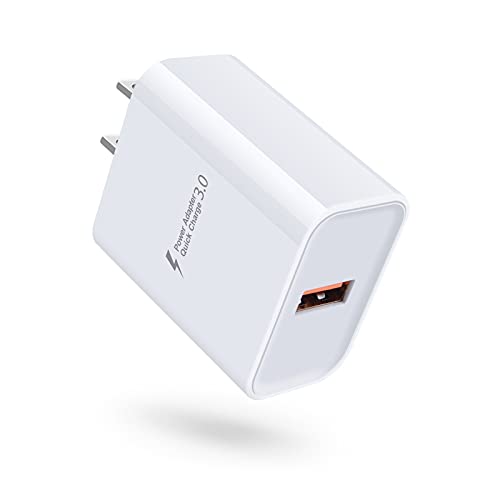
Quick Charge 3.0 Wall Charger, 18W 3A USB A — Spare-Drawer Staple
The third pick’s listing tells its story in its compatibility roll: Samsung’s A-series generations, the vast mid-range fleet that kept Quick Charge alive long after the flagships moved on. That fleet is this charger’s constituency — phones bought for value, kept for years, and still fast by the standard they were born with. A generic 18W QC 3.0 brick is exactly the replacement those phones need when their original adapters fray, vanish or retire to a car, and the listing’s plainness about its figures is, by this guide’s criteria, a point in its favor.
Mid-range phones of that era are also the devices most likely to be handed down — to children, to parents, to the drawer as the house spare — and each hand-down restarts the need for a working QC charger in a new room. Keeping one of these in the spare drawer is therefore less a purchase than a policy. As with every generic entry here, the policy includes inspection on arrival and attended first use; within those terms, this is the kind of unglamorous, correctly specified object that keeps an older fleet running for years past its expected twilight.
- Ports: one USB-A socket
- Standard: Quick Charge 3.0 at 18W, 3A class
- Fit: Samsung A-series and comparable QC mid-range phones
- Class: generic, plainly specified
- Role: replacements and spares for a handed-down fleet
Strengths
- It speaks the exact dialect a huge mid-range fleet was born with.
- Plain figures and a focused listing inspire more confidence than hype.
- An ideal spare: cheap to keep, instantly useful when a handset moves rooms.
Trade-offs
- No brand accountability beyond the listing itself.
- Its world is shrinking as the fleet it serves eventually retires.
- Modern USB-C devices should look to this batch’s PD guides instead.
Best for: A-series and other mid-range QC phones needing a replacement or spare. Not suited for: any buyer whose next phone is already a USB-C flagship.
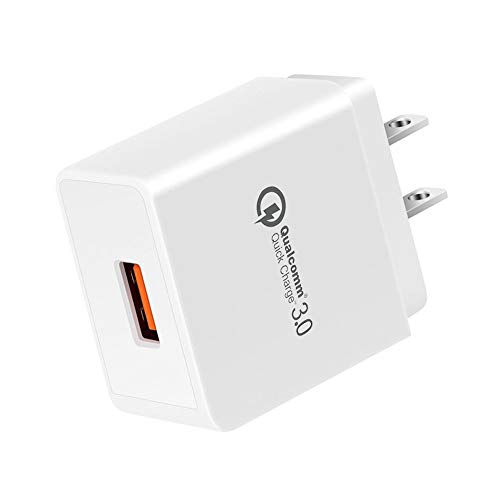
Quick Charge 3.0, 18W USB Wall Charger QC 3.0 3A — The Long-Serving Listing
Some listings are artifacts, and this one has served through enough phone generations that its compatibility roll reads like a museum label — iPhones of the numbered era, Galaxy models across the QC years. That longevity cuts two ways. It suggests a design that has satisfied the standard’s constituency for a long time, in the undramatic way utility products do. It also reminds the buyer that everything about this product belongs to its era, including the iPhone claim, which means an ordinary 5V charge for Apple devices that never spoke Quick Charge at all. Read with that translation in mind, the listing is honest enough, and the charger is the same proposition as its siblings: 18W of negotiated QC for the phones that ask, plain power for everything else.
We place it fourth among the linked picks not for any defect but because the pair above offers better household logic and the singles beside it state their cases more freshly. A buyer who finds this one first, checks its figures against the standard and buys it for a QC phone will not be making a mistake. In a category of near-identical implementations, that is close to a compliment, and it is the correct spirit in which to shop the whole generic tier: the standard is the product, and the listing is merely its current address.
- Ports: one USB-A socket
- Standard: Quick Charge 3.0, 18W and 3A class
- Fit: QC-era Galaxy models; ordinary charging for iPhones listed
- Class: long-running generic implementation
- Role: an interchangeable spare in the standard’s twilight
Strengths
- A long-serving listing implies a design its constituency kept reordering.
- The standard’s full negotiation is present for QC phones.
- It doubles as an ordinary spare charger for everything else.
Trade-offs
- Its iPhone compatibility is ordinary-speed, whatever the roll implies.
- Nothing distinguishes it from its generic siblings except its history.
- One port, one device, in a category the crowds have left behind.
Best for: a like-for-like replacement when a QC phone’s old brick finally retires. Not suited for: buyers seeking any feature beyond the standard itself.
Anker PowerPort+ 1 Quick Charge 3.0 — The Branded Original
In the standard’s reign, this was the charger reviewers pointed to: Anker’s single-port QC 3.0 flagship, with the brand’s fit, finish and support wrapped around Qualcomm’s negotiation. It belongs in this guide as the reference implementation — the proof of what the standard felt like from a maker competing on quality — and it appears in prose because the model belongs to a discontinued era and our pool holds no verified current listing for it. Readers who find old stock or a unit in a drawer should know they hold the genuine article of its time.
Its modern relevance is mostly as a measuring stick and a hand-me-down. A PowerPort+ still serving a QC phone today is doing honest work, and households that own one need nothing in the linked list until it retires. When it does retire, its owner’s choice is the era choice this guide keeps framing: replace like with like from the generic tier if the phone remains, or take the phone’s next upgrade as the moment to cross to Power Delivery entirely. Either way, the little Anker deserves its footnote in charging history, and this is it.
- Role: Anker’s legacy single-port QC 3.0 model
- Availability: prose-only; discontinued-era stock only
- Standard: Quick Charge 3.0 at the class’s 18W ceiling
- Fit: QC-era Android phones
- Character: the standard’s branded reference point
Strengths
- It defined what a quality QC 3.0 implementation felt like.
- Units still in service remain perfectly matched to QC phones.
- Anker’s era support made it the safe buy of its day.
Trade-offs
- No verified current listing means no purchase path through this guide.
- Its era has ended; new buyers should not hunt it as a flagship.
- Single port, single standard, in a PD world.
Best for: owners who already have one, and readers who value the standard’s history. Not suited for: a new purchase in this decade, which the linked tier serves.
Tronsmart QC 3.0 Wall Chargers — The Specialist’s Back Catalogue
Tronsmart built its name in the Qualcomm years, a specialist maker whose wall chargers chased each Quick Charge generation the way other brands chase phone launches. Its QC 3.0 models were the enthusiast’s alternative — bought by readers who followed charging the way others follow cameras — and the range earns its prose place here as the standard’s specialist chapter. Our pool holds no verified current listing for the line, so we describe it without linking, and readers who want one should work through the maker’s own channels and check that the specific model on offer is genuinely of the QC 3.0 generation.
The caution that applies to all legacy branded stock applies here with interest: a famous name from the era is not a warranty in the present, and a marketplace listing wearing the name deserves the same inspection as any generic unit. Bought carefully, a Tronsmart QC charger is a piece of the standard’s best history still doing its job. Bought carelessly, it is a logo. The distinction is the buyer’s homework, and it is the same homework this guide assigns for every legacy purchase, branded or not.
- Role: specialist maker’s QC 3.0 range
- Availability: prose-only here; use the maker’s channels and verify the model
- Standard: Quick Charge 3.0 implementations of the era
- Fit: QC-speaking Android devices
- Character: the enthusiast chapter of the standard’s history
Strengths
- A specialist’s implementations were among the era’s most considered.
- The range covered the standard’s generations thoroughly in its day.
- Enthusiast documentation from the era makes old models easy to research.
Trade-offs
- Prose-only status leaves sourcing and authenticity to the buyer.
- Legacy stock varies; not every listing wearing the name is equal.
- Like all QC hardware, it serves a shrinking fleet.
Best for: enthusiasts who know the standard and shop its history deliberately. Not suited for: a casual buyer, whom the linked generic tier serves with less homework.
How Do You Read a Generic QC Listing Without Regret?
Apply the three-question audit this batch uses elsewhere, translated into the era’s terms. First, are the figures stated as the standard’s figures — 18 watts, the QC 3.0 name, a USB-A port — without inflation into wattages the protocol cannot produce? A listing that promises more than the standard’s ceiling is telling you its relationship with the truth, and you should believe it. Second, is the compatibility roll plausible — QC-era Android families named specifically, rather than every phone ever made at full speed? Third, does the listing’s own language distinguish fast charging for QC devices from ordinary charging for the rest, or does it let a careless reader believe an iPhone will quick-charge? A listing that passes those three questions is a specification. A listing that fails them is a mood, and moods are not worth even this category’s modest prices. The four linked picks in this guide were chosen for passing, in a market where passing is not universal.
How Do the Six QC 3.0 Options Compare?
| Charger | Ports | Ceiling | Link status | Defining trait |
|---|---|---|---|---|
| Generic 18W QC 3.0 Single | 1 × USB-A | 18W | Linked | The standard, undiluted |
| OKRAY 2-Pack QC 3.0 | 1 each × 2 | 18W each | Linked | Two-room household pair |
| Generic QC 3.0 for A-Series | 1 × USB-A | 18W | Linked | Mid-range fleet spare |
| Generic QC 3.0 Long-Serving | 1 × USB-A | 18W | Linked | The era’s interchangeable unit |
| Anker PowerPort+ 1 | 1 × USB-A | 18W class | Prose-only | Branded reference of its era |
| Tronsmart QC 3.0 Range | Varies | 18W class | Prose-only | Specialist back catalogue |
The sameness of the ceiling column is the honest story of this category: the standard is the product, and every honest implementation delivers it. What varies is bundle, positioning and provenance — which is why this guide ranks on those virtues and refuses to invent performance differences the protocol does not permit.
What Should You Do With QC Chargers When the Fleet Finally Retires?
Demote them before you discard them, because a QC brick’s second career is as an ordinary charger, and ordinary charging never retires. The 5V offering that every one of these units provides will feed e-readers, torches, fans, toys and the whole small-device nation for as long as USB-A leads exist to carry it, which will be a very long time. A retired QC post in a guest room or a garage is not obsolete equipment; it is a utility demoted to gentler duty, like its cousins throughout this batch’s guides. Only when a household’s last USB-A cable leaves should the last QC brick follow it, and by then both will have served long enough that recycling them feels like a ceremony rather than a clear-out. Until that day, the correct inventory is one working QC charger per surviving QC device, one spare, and no guilt in either direction — neither for keeping the standard alive nor for letting it go when its fleet has gone.
How Do You Keep a Legacy Fleet Charging Well?
Treat the fleet as a system with a twilight plan. Keep one working QC charger per QC device in regular use, plus one spare for the household, because replacements are cheap now and will not become easier to find as the standard fades. Keep the cables with the chargers — QC speaks over USB-A leads, and a labeled QC kit in each room prevents the nightly hunt. Watch the phones’ own batteries with clear eyes: a handset whose battery has aged will charge to a smaller life no matter what feeds it, and blaming the charger for chemistry is the legacy era’s most common misdiagnosis. And decide the fleet’s succession in advance. When a QC phone retires, its replacement will speak Power Delivery, so the household’s next charger purchase belongs to the PD guides in this batch. Legacy equipment serves best when its owners know it is a bridge, and bridges are maintained, not expanded.
Which Devices Beyond Phones Still Speak Quick Charge?
More than the phone-focused listings suggest, and inventorying them is how a household learns whether this standard still earns drawer space. Power banks of the QC era both accept and offer the protocol, which makes them doubly fluent citizens of a legacy kit. Mobile hotspots and portable routers built on Qualcomm platforms often speak it. Older tablets, dash cameras’ parking-mode supplies, Bluetooth speakers from the standard’s reign, handheld consoles’ third-party docks, even some laptop stands and desk accessories of the period — the QC ecosystem was an empire, and empires leave infrastructure behind. A household that runs a hotspot in a rural home, a power bank rotation for field work, or a set of older tablets for children may find Quick Charge is not its past but its present, and for that household the picks in this guide are not legacy compromises at all. They are simply the correct chargers, bought at legacy prices, which is the happiest outcome this category offers anyone.
How Does a QC Brick Behave as a Travel Charger?
Well, within its language’s borders. It is small, light, speaks to the older phone in the bag and to the power bank that phone depends on, and asks only for a plug adapter abroad like every other charger in this batch. The travel question is really a fleet question: a traveler whose phone is a QC handset and whose tablet is a QC tablet can cross the world on one of these bricks and a spare, and many did for years. A traveler whose kit has gone USB-C should leave the QC brick at home as the house spare and pack from the PD guides instead. The one traveler who should pack both languages is the one supporting two generations at once — a parent traveling with a child’s older handset, a worker carrying a legacy work phone beside a modern personal one — and for that traveler the QC brick’s tiny size is its final virtue: bilingualism costs a few grams and one extra cable.
What Should You Look for in a QC Cable?
The cable is the standard’s forgotten half, because QC lived in the USB-A era when cables were treated as interchangeable string. They are not. The negotiation needs a sound data path as well as power conductors, and the drawer contains cables that charge slowly forever because they were built for sync speeds and thinner wire. A QC phone that refuses to show its fast notice on a known-good brick is usually indicting its cable. Keep the fleet’s cables as deliberately as its chargers: a good USB-A to USB-C lead, or A to Micro-USB for the oldest residents, in each room where QC is spoken, labeled if the household’s cables have begun to blur together. When a cable frays at the connector — the classic failure of the era, from years of bedside bending — replace it without nostalgia. The standard will outlast several generations of its cables, and planning for that is part of owning a legacy fleet gracefully.
How Do You Test Whether a Phone and Charger Are Really Negotiating?
Watch the phone, because it keeps the records. QC-era Android phones announce their fast state on the lock screen or in the battery settings, in their makers’ various wordings, and the announcement is the handshake made visible. Test from a low battery, where the standard does its best work, and give the phone a minute to settle into its curve before judging. If the announcement is absent, change one variable — the cable first, as the previous section advises, then the port or brick — and watch again. A phone that announces on one combination has told you the fleet is healthy and the failing element is the one you removed. This small diagnostic ritual, applied once, converts a drawer of suspicions into a known system, and it is the same ritual, in older clothes, that this batch’s PD guides teach for modern gear. The tools change dialects; the method does not change at all.
What About Safety With Chargers From a Cheaper Era?
The disciplines are identical to those for any charger in this batch, applied with slightly more attention because accountability is thinner at this end of the market. Inspect a new unit for shell integrity, firm prongs and a port that grips its cable properly. Use it attended for its first charges and learn its normal temperature, which should be warm and unremarkable. Keep it out of bedding, off soft furnishings while it works, and away from the bathroom’s steamier corners. Retire it for heat, smell, discoloration, looseness or intermittent behavior, without a second opinion from your optimism. None of this is a reason to fear a compliant generic charger; the standard’s negotiation is real engineering, and millions of these units have served their fleets quietly for years. It is a reason to buy with eyes open, in a category where the brand safety net is replaced by the owner’s attention — an exchange this guide has now offered you in every category where it applies.
What Mistakes Do QC 3.0 Buyers Make Today?
Buying the dialect their phone does not speak is the first, and it now cuts both ways: a PD phone on a QC brick charges ordinarily and disappoints, exactly as a QC phone on a plain PD brick does. Expecting modern speed from an 18W ceiling is the second; the standard was fast against 2015’s baselines and is merely adequate against today’s, and owners should calibrate to their devices’ era rather than to current advertising. The third is brand romanticism — paying flagship prices for legacy branded stock as if a discontinued name were a present-day guarantee. The fourth is the mirror error, dismissing generic implementations of a defined standard as inherently suspect, when the correct posture is neither faith nor fear but inspection. And the fifth is stocking up: a drawer of QC spares bought against a fleet that will retire within two years is not thrift, it is a museum with a power cord.
How Did Quick Charge Shape the Charging World That Replaced It?
It taught the industry that charging was a feature buyers would pay for, which was not obvious before it. In the fixed-voltage era, a charger was a commodity thrown into a box. Quick Charge made speed a headline, a reason to choose one phone over another and one brick over the free one, and every fast standard since — including the PD profiles and PPS ramps in this batch’s other guides — descends from that commercial discovery as much as from the engineering. It also taught buyers the habits this guide still teaches: that the charger, the cable and the phone form a system, that a lock-screen notice is a diagnostic, that wattage is a negotiated relationship rather than a flood. A reader who learned charging in the QC era learned it properly, and the PD era has rewarded those lessons rather than replacing them. There are worse legacies for a standard to leave than an educated generation of owners.
What Does a Sensible Bilingual Household Look Like?
Two small posts and a drawer with a plan. The modern phone charges from a PD brick by the bed; the older handset, the hotspot and the power banks charge from a QC post in the kitchen, where their cables live; the spare drawer holds one spare of each language, labeled, so a failure in either world is an errand of thirty seconds. Nothing impersonates anything else. Nobody plugs a flagship into the legacy post and complains, because the posts explain themselves by their cables, which cannot cross between the worlds without an adapter nobody owns. When the last QC device retires — a phone upgrade, a hotspot replaced — the QC post becomes a general spare post and the household is monolingual again without having spent a wasted dollar in the transition. That is the whole art of owning a fading standard: neither clinging nor discarding, just a fleet, a plan, and chargers matched to the devices actually plugged into them tonight.
How Should You Gift or Hand Down a QC Setup?
As a kit, never as a brick alone. A handed-down QC phone without its charger and cable arrives as a slow phone and a small mystery; the same phone with its matched brick and a sound lead arrives as a working system whose new owner never has to learn the word protocol. Parents equipping a child with a first phone from the family fleet should include the charger that phone was born with, or a fresh pick from this guide, and say the one sentence that matters: this is its charger, keep them together. Grandparents receiving a handset deserve the same kit and the same sentence, plus the spare, because their margin for a dead charger on a Sunday is thinner than yours. The generic tier’s prices make this generosity cheap, and a legacy fleet passed on as complete kits is the difference between hand-me-downs that feel like inheritance and hand-me-downs that feel like homework.
How Long Will QC 3.0 Chargers Remain Useful?
Exactly as long as the devices that speak the standard remain in service — which, for mid-range phones, handed-down handsets, hotspots and power banks, is routinely years beyond the flagship cycle that declared the era over. The chargers themselves do not expire, and their 5V afterlife extends their usefulness further still, as the demotion section above describes. The sensible planning horizon is the fleet’s, not the standard’s obituary: inventory your QC devices, estimate their remaining service honestly, and hold charger stock in proportion. A household with three QC devices in daily use has years of relevance ahead and should buy the pair and the spare without apology. A household with one aging handset should buy the single, enjoy it, and let the standard’s story in that home end with the handset’s retirement — which is not a failure of the technology, but the definition of a technology that did its work.
Final Recommendation
Let your fleet’s languages decide, and let this standard retire with dignity in your home. If a phone or two in the house speaks Quick Charge — an older Galaxy, an A-series workhorse, a hand-me-down that still earns its keep — then buy the OKRAY pair for two rooms or the plain single for one post, keep a spare from the A-series pick if hand-downs are your family’s way, and spend nothing more on the era than it asks. If your devices have crossed to USB-C, close this guide with our blessing and shop the Power Delivery coverage instead, because no QC brick will ever love your phones the way their native standard does. Standards, like the phones that carry them, deserve to be honored for what they were and released when their work is done — and the work of Quick Charge 3.0, for the fleet that remains, is not quite done yet.
How Does Heat Age a Legacy Phone’s Battery?
Gently but genuinely, and the QC era is where many owners first learned the lesson. Fast charging in any standard trades a little battery longevity for a lot of time, because heat is the tax on speed and batteries pay it in lifespan. The QC phones still in service have, by definition, already paid years of that tax, which is why their owners should be doubly thoughtful now: charge fast when the day demands it, charge ordinarily overnight when it does not, and keep an aging phone out of hot cars and sunny windowsills while it drinks. A legacy handset nursed this way can serve its second and third lives fully. One fast-charged on a dashboard through two summers will not, and no charger in this guide — generic or legendary — can refund chemistry. The standard’s intelligence was always about delivering speed kindly; the owner’s intelligence is about asking for it only when it is worth the tax.
Frequently Asked Questions
Will a QC 3.0 charger fast-charge a modern USB-C phone?
Generally no, not at that phone’s fast tier. Modern flagships negotiate Power Delivery over USB-C, and a QC brick’s USB-A port will offer them ordinary 5V charging instead. The phone will charge completely and unremarkably. For its real fast rate, it needs a PD charger and a USB-C cable, which the other guides in this batch cover.
Is Quick Charge 3.0 safe for a phone that does not support it?
Yes. The negotiation protects the device: a phone without Quick Charge never requests the higher voltages, and the charger supplies its standard 5V offering. That handshake is why these bricks remain useful as ordinary spares for everything in the drawer, including devices from brands that never adopted the standard.
Why do these chargers all top out at 18W?
Because that is the standard’s ceiling, set by Qualcomm for the QC 3.0 generation. Every honest implementation in this guide delivers the same maximum because the protocol defines it. Differences between units live in build, bundle and listing honesty — not in a secret faster variant, which does not exist within the standard.
Can I use a QC 3.0 charger with a USB-C cable and an adapter?
Adapters between connector families are a false economy in charging. The negotiation the standard depends on assumes its native USB-A path, and improvised adapters add resistance and uncertainty for no benefit. If a device needs USB-C, feed it from a USB-C PD charger. Keep each language on its own cable, as this guide recommends throughout.
Can a QC 3.0 charger power a wireless charging pad properly?
For the pads of its own era, often yes — many wireless pads of the QC years were designed to draw their faster input from a QC adapter, and they still expect one. A modern pad, by contrast, usually wants USB-C PD. Match the pad’s stated input requirement to the brick, exactly as you would match a phone, and the pairing will behave as its makers intended.
Are generic QC 3.0 chargers a false economy?
Not when bought with the discipline this guide describes: plain specifications, an inspection on arrival, attended first use, and retirement at the first sign of heat or inconsistency. The standard itself is licensed and defined, so a compliant generic unit performs the same negotiation as a branded one. What you give up is the brand’s accountability, and at this class’s prices many households accept that trade knowingly for spares.
Related Guides
Readers whose phones have crossed to the modern standard should continue with 45W USB-C chargers and the PPS question, while households running a mixed fleet may want the broader settlement in four-port chargers for family counters. If your QC devices are mostly small and numerous rather than fast and few, our survey of six-port stations for the whole device census covers their natural home.


