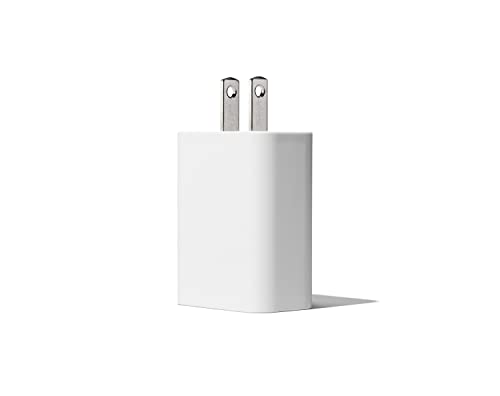
Our Top Picks


What's inside
- Why this console uses its own plug, and why that matters when you shop
- The original Nintendo adapter, model WAP-002, and how to read its label
- USB charging cables: the flexible route most owners end up using
- Third-party wall adapters: what separates a sound one from a risky one
- Power banks and portable charging away from a wall socket
- Charging in the car without cooking the console or the socket
- Charging cradles and docks: tidy desks, one important sizing warning
- Voltage, current, and what actually protects the battery
- Playing while plugged in, and other daily habits
- Travelling across regions: plugs, voltage, and imported consoles
- How to recognise the right plug in a drawer of wrong ones
- When the console will not charge: a short diagnostic order
- Check prices on Amazon
- Buying checklist and a closing word on keeping this console alive
As an Amazon Associate I earn from qualifying purchases. This post may contain affiliate links at no extra cost to you.
The New Nintendo 3DS XL looks, at a glance, like a machine that should accept whatever small charger happens to be lying in a drawer. It does not. The charging socket on the back edge of the console takes a flat, wide proprietary plug that Nintendo carried across a whole family of handhelds, and that plug matches nothing else in a modern cable bag. A USB-C lead from a phone will not fit. A Mini USB lead from an older camera will not fit. Even the charger from the original Nintendo DS and the DS Lite, machines that sit in the same product line and often in the same household, uses a different connector again and will not seat in the socket. Owners who understand that single fact at the start save themselves a drawer full of wrong orders, because every buying decision in this guide flows from the shape of that socket and from the modest electrical appetite behind it.
Affiliate disclosure: this page may contain links that earn the site a commission when a reader buys through them, at no extra cost to the reader. The recommendations and cautions set out below come from published Nintendo documentation, adapter label data, and the written specifications supplied by cable and charger makers. This site has not used the products described here in person, and nothing in the guide rests on first-hand handling of a charger or a console. Where a figure matters, such as an output rating or a charge time, it is taken from a document the manufacturer publishes, and readers can check the same figure on the label of their own adapter before they buy anything.
The practical problem is easy to state. Nintendo sold the New 3DS XL in many regions without an adapter in the box, on the stated reasoning that many buyers already owned a compatible charger from an earlier machine. That logic worked in 2015 for households upgrading from a DSi or an original 3DS. It works far less well now, when the console changes hands second-hand, when the original adapter has been lost in a house move, or when a parent buys the machine for a child who never owned the earlier hardware. The second-hand market makes the gap worse: listings routinely include the console alone, sometimes with a stylus and a memory card, rarely with the charger that the retail box itself often omitted. So a large share of New 3DS XL owners need to buy charging gear separately, and they need to buy the right gear the first time.
There is also good news buried in the proprietary design. Because the same connector served the Nintendo DSi, DSi XL, 3DS, 3DS XL, 2DS, New 3DS, New 3DS XL, and New 2DS XL, the pool of compatible adapters and cables is wide and mature. A charger sold for any one of those machines serves all of them, provided its electrical output is sound. That shared standard means buyers are not hunting for a rare part made for one model year. They are shopping in a deep, well-understood accessory category where the genuine Nintendo part is still easy to identify and where the better third-party options follow a known pattern. The sections that follow work through each charging route in turn: the original wall adapter, third-party wall adapters, USB charging cables, power banks, car chargers, and cradles, then the safety, travel, and troubleshooting questions that decide which route suits a given owner.
Why this console uses its own plug, and why that matters when you shop
Nintendo settled on the connector used here during the DSi era, and it kept the design through two hardware generations. The plug is a slim rectangular blade with a slightly keyed profile, wider than it is tall, that slides into the socket on the top rear edge of the New 3DS XL with the cable trailing away from the hinge side. The keying matters: the plug only enters one way round, and it should slide in with light finger pressure. Any plug that needs force, wobbles side to side once seated, or sits at a visible angle is the wrong plug or a damaged one, and pushing harder is how sockets get bent pins and cracked housings.
Contrast that with the two connectors buyers most often confuse it with. The Nintendo DS and DS Lite charger uses a smaller, squarer plug derived from a different design lineage, and it physically cannot enter the 3DS family socket. At the other end of the timeline, the Nintendo Switch family moved to USB-C, a reversible oval connector that carries far more power and also handles video and data. Nothing about the Switch charger helps a New 3DS XL owner: the plug shape is wrong, and its power delivery negotiation belongs to a different standard entirely. Owners who keep both consoles, which is common, end up maintaining two separate charging kits, and labelling the cables is a small habit that prevents a lot of fumbling.
Within the 3DS family itself, the compatibility is total. The adapter packed with a DSi charges a New 3DS XL. The cable sold for a 2DS charges a New 3DS XL. The cradle made for an original 3DS does not fit the larger XL shell, which is a mechanical point covered later, but the electrical standard never changed across the line. When you read a listing, the model names in its compatibility line should therefore name several of these machines. A listing that claims to fit the DS Lite as well as the New 3DS XL with a single plug deserves suspicion, because no single Nintendo plug does both; such listings usually ship one of the two and rely on buyers not checking.
The socket itself deserves a moment of attention because it shapes how gently you should treat every charger you buy. It is a shallow recess with contact surfaces inside, designed for a plug that is inserted and removed along one axis. Sideways leverage, the kind applied when a cable is yanked at an angle or when the console is lifted by its charging lead, stresses the solder joints that hold the socket to the board. Repairs for a torn charging port involve board-level soldering, which costs more than any charger in this guide. Choosing cables with a sensible length, a plug housing you can grip properly, and strain relief at the plug end is not cosmetic fussiness. It is the cheapest insurance available for the one part of the console that is awkward to fix.
Finally, note what the port does not do. It carries power only. It transfers no data, syncs no files, and plays no part in moving games or photos, which travel by memory card or local wireless instead. That single-purpose design simplifies buying: a charging cable needs two sound conductors and the right plug, nothing more, and any listing that advertises data features for a 3DS charging lead is describing a product its writer did not understand.
The original Nintendo adapter, model WAP-002, and how to read its label
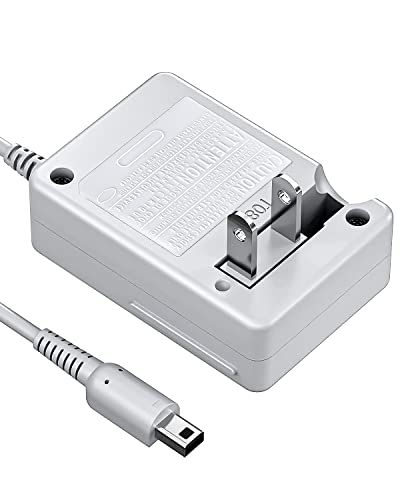
The reference point for this whole category is the adapter Nintendo itself supplied, model WAP-002. Its label states an output of DC 4.6 volts at 900 milliamps, and those two numbers define what the console was designed to drink. The voltage is unusual. It sits below the 5 volts that USB delivers, which is why the console’s internal charging circuit expects a source in that neighbourhood and why the genuine adapter remains the benchmark against which replacements are judged. The current figure, a little under one amp, is modest by phone standards, and it explains why the New 3DS XL charges contentedly from sources that would leave a modern tablet crawling.
Reading the label of any adapter, genuine or otherwise, is a skill worth thirty seconds. Input figures describe what the adapter draws from the wall and will typically list a range such as 100 to 240 volts for a model built to travel. Output figures describe what it hands to the console, and those are the numbers that must match the WAP-002 pattern: a voltage close to 4.6 volts for a dedicated adapter, or a clean 5 volts from a USB source feeding a proper charging cable with the correct plug. Polarity is fixed by the plug design on genuine and correctly made leads, so buyers rarely need to check it, but the output line should always be printed somewhere. An adapter with no printed output specification at all is an adapter to leave on the shelf.
Genuine WAP-002 units carry Nintendo branding moulded or printed on the housing, a model number that matches, and regulatory marks that are crisp rather than blurred. The cable is permanently attached on the classic design, of a moderate length suited to a bedside socket, and the plug at the console end has the keyed blade described earlier. Because the adapter served so many machines over so many years, genuine units circulate widely on the second-hand market, often bundled with a DSi or 3DS being sold for parts. For a buyer who wants the least possible uncertainty, a genuine used WAP-002 in visibly sound condition is a rational purchase, provided the cable jacket shows no splits near either end and the plug blade is straight.
Charge time with the original adapter sets expectations for everything else. The New 3DS XL battery, model KTR-003, holds 1750 milliamp hours, and Nintendo documentation puts a full charge from empty at roughly three and a half hours with the console off or asleep. That figure is the yardstick: a replacement setup that takes dramatically longer is delivering less current than it should, and one that promises to fill the battery in a fraction of the time is describing a capability the console’s own charging circuit will not accept anyway. The console, not the adapter, governs the rate once a minimum supply is met, which is why exotic fast-charge claims in listings are marketing noise for this machine.
One more label habit is worth forming. Photograph the label of the adapter you own and keep the picture with your console records. If the adapter is later lost, the photograph tells you exactly what to replace, and if a listing shows a label that differs from yours in voltage, you can walk away in seconds rather than after a parcel arrives.
USB charging cables: the flexible route most owners end up using
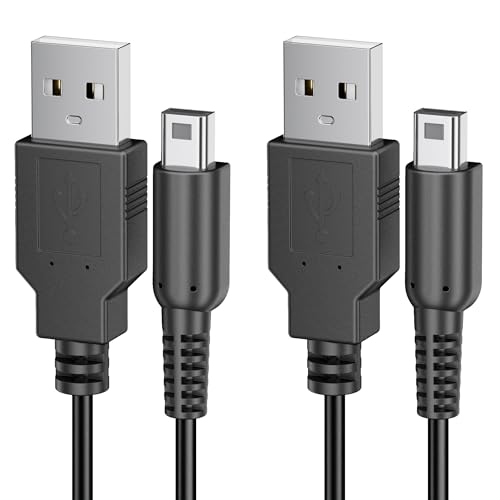
The most versatile option in the category is not a wall adapter at all. It is a charging cable with a USB-A plug at one end and the 3DS family plug at the other. Plug it into any sound USB source – a laptop port, a desktop tower, a games console, a powered hub, a power bank, a wall adapter with USB sockets – and the New 3DS XL charges. The console’s charging circuit handles the small difference between USB’s 5 volts and the native adapter’s 4.6 volts, a tolerance built into the design and relied on by Nintendo’s own later accessories. For owners who travel, work at a desk, or keep the console in a living room full of USB sockets, this single cable replaces a dedicated brick in most daily situations.
Cable quality varies more than cable marketing suggests. The conductors inside a very thin, very cheap lead can be so slight that voltage sags along a long run, and the console responds by charging slowly or, at the margin, by showing a charge light that flickers as the connection makes and breaks. A well-made cable is not heavy or exotic; it simply uses conductors of adequate gauge, moulds the proprietary plug with accurate dimensions, and adds strain relief where the cable meets each plug. Length is a trade worth thinking about: a short lead suits a power bank in a bag, a mid-length lead suits a desk, and a long lead suits a sofa, but the longest and thinnest bargain cables are exactly the ones most prone to sag. If a long run is essential, choose the longest cable from a maker who prints a specification, not the longest cable in the marketplace bin.
There is a behavioural point to know about charging from computers. A sleeping or powered-down laptop may cut power to its USB ports, so a console left plugged in overnight at a desk can greet you uncharged even though everything looked correct at bedtime. Powered hubs and wall adapters with USB sockets do not have this habit. Similarly, some older unpowered hubs share a small current budget across every socket, and a console plugged in alongside several other devices may draw less than it wants. None of this harms the machine; it simply explains the occasional mystery of a slow overnight charge, and the fix is always to move the cable to a source with a honest, unshared output.
Owners building a small charging station for several handhelds often pair these cables with a multi-port USB charger, and the arrangement works well because each console asks for so little. When you plan that setup, the guidance in our roundup of best 6 port usb fast chargers applies to the shared brick, while each console still needs its own correct lead. Keep the 3DS leads visually distinct from the phone leads in the same station, because the proprietary plug and a USB-C plug can look deceptively similar in poor light to a tired person, and the socket on the console will not forgive repeated wrong attempts.
A USB cable also gives you a diagnostic tool. If a console fails to charge from its wall adapter but charges happily from a computer through a USB lead, the adapter or its cable is at fault. If it fails from both, suspicion moves to the console’s socket or battery. That simple either-or test, which costs nothing once you own one cable of each type, resolves most charging mysteries before any money is spent, and it is a strong reason to own a USB lead even if a wall adapter remains your main charger.
Third-party wall adapters: what separates a sound one from a risky one
Plenty of owners still prefer a dedicated wall adapter, and the third-party market for the 3DS family is enormous. The better products in it share a recognisable profile. Their labels state an output that mirrors the original, either 4.6 volts at around 900 milliamps for a dedicated design, or a regulated figure the maker can explain. Their housings feel solid rather than hollow, their pins are straight and evenly finished, and the attached cable is neither stiff as wire nor limp as string. Their listings name the compatible Nintendo models accurately, including the New 2DS XL, and they carry the regulatory marks of the market they are sold in. None of these signals is glamorous, and together they are a reliable filter.
The risky end of the market fails in predictable ways. The most common fault is poor voltage regulation: a cheap adapter whose output wanders well above its printed figure under light load, or sags and ripples under a real one. The console’s charging circuit tolerates a range, not an adventure, and a supply that spikes or buzzes with ripple can leave the battery undercharged, make the console warm at the back plate, or in the worst accounts trip protection and refuse to charge at all. A second fault is mechanical: plugs moulded slightly off-size that need force, or that sit loose and cut out when the cable moves. A third is thermal: housings that run hot to the touch during a normal charge, which signals an inefficient design working harder than it should.
Heat deserves a plain rule. Any adapter, genuine or third-party, may grow mildly warm while charging; that is ordinary. An adapter that becomes too hot to hold comfortably, smells of hot plastic, ticks, buzzes audibly, or discolours its own housing is finished, whatever it cost and however new it is. Unplug it and replace it. The same rule applies to the console end: warmth around the battery cover during a charge is normal, localised heat at the socket is not, and a socket that is hot to the touch points to a damaged plug or port that should stop being used until it is inspected.
Certification marks are the buyer’s shortcut through all of this. In North America, look for a recognised laboratory mark; in Europe and the United Kingdom, look for the marks those markets require, printed sharply and matched by a named manufacturer or importer on the packaging. Counterfeit adapters copy the shape of marks but often print them blurred, misspell the supporting text, or omit the manufacturer entirely. Weight is a rough secondary clue, since a regulated supply with proper components has some heft, while the worst offenders feel like an empty shell, though weight alone should never be the deciding test.
Price, handled carefully, is information rather than a rule. This guide prints no prices, because they shift constantly, but the structure of the market is stable: a genuine Nintendo adapter and the reputable third-party brands cluster in one band, and the suspicious listings sit far below it. When an unknown seller offers the same promise for a small fraction of the usual cost, the saving is coming out of the components you cannot see. For a part that connects a lithium battery to the mains, that is the wrong place to economise, and the modest difference buys a labelled, certified, returnable product instead.
Power banks and portable charging away from a wall socket
A USB charging cable plus a power bank is the combination that untethers the New 3DS XL completely, and the arithmetic is friendly. The console battery holds 1750 milliamp hours. Even a compact power bank of the size sold for phones holds several times that, so a single bank can refill the console repeatedly across a long journey, with charge left over for other devices. The console asks for so little current that almost any bank can supply it without strain, including older banks whose outputs would struggle with a modern tablet. This is one category where the modest appetite of a 2015 handheld becomes a genuine advantage.
Two behaviours of power banks catch owners out. The first is automatic shutoff: many banks stop supplying power when the draw falls below a threshold, a feature meant to save charge when a device finishes. A handheld drawing a small, steady current near the end of its charge can dip under that threshold, and the bank switches off while the console still shows a nearly full but unfinished battery. If your bank has a low-current or trickle mode, described in its manual for earbuds and watches, that mode suits the 3DS family well. If it does not, the practical effect is minor – the console simply stops a little short of full – but knowing the cause prevents a hunt for a fault that does not exist.
The second behaviour involves pass-through arrangements and shared outputs. A bank charging two devices at once divides its attention, and while the console’s needs are small, a hungry phone on the neighbouring socket can slow the shared supply on cheaper banks. For travel days when both matter, charge them in sequence or use a bank with clearly separated outputs. Owners who also carry a Switch should keep the two consoles’ cables bagged separately; the Switch’s USB-C lead and the 3DS lead serve machines with very different expectations, and the bank that flatters the Switch is wasted on the 3DS, which will sip at its own pace regardless.
Cable choice matters more outdoors than at home. A short, sturdy lead is the right partner for a bank in a bag or a coat pocket, because long cables tangle, snag, and put sideways strain on the console socket when the bag moves. Some owners keep a dedicated short lead permanently in the console case, which also guarantees the right plug is always with the machine. If you are choosing portable storage or card capacity for the same travel kit, our guide to best affordable nintendo switch sd cards covers the memory side for the newer console many 3DS owners travel with alongside it.
Finally, treat a power bank session like any other charge with respect to heat. A console charging inside a closed bag on a hot day stacks two heat sources in insulation. Leave the case open or the console out of the bag while it charges, keep the bank out of direct sun, and never leave a charging lithium device buried under clothing in a parked car. These are dull precautions, and they are the ones that keep small batteries healthy for years.
Charging in the car without cooking the console or the socket
Car charging for this console follows the same pattern as every other route: the proprietary plug at the console end, and a suitable power source at the other. In practice that means either a USB charging cable plugged into a car USB adapter, or a dedicated car charger made with the 3DS plug on its lead. The first arrangement is more flexible, since a good dual-port car adapter also serves phones, and it is the one most families settle on. The console’s small draw means it can share the adapter with a phone without either device suffering, provided the adapter itself is a sound one.
Car electrical systems are noisier than household ones. Voltage in a vehicle swings with engine starts, and the cheapest unbranded car adapters pass more of that untidiness through than they should. The console tolerates a great deal, but a regulated adapter from a maker who prints a specification is again the sensible buy, and the comparison points in our survey of best 18w car chargers – regulation, port behaviour, and housing quality – translate directly even though the 3DS itself needs only a fraction of that output. Avoid adapters that feel feather-light, lack any printed rating, or arrive with a smell of hot plastic before they are even used.
Placement inside the car matters as much as the adapter. A console charging on a sunlit dashboard can overheat without any electrical fault at all, because the battery sits under a dark shell in direct sun. Charge it in a footwell, a shaded seat pocket, or an open bag, with the cable routed so it cannot wrap around a gear selector or slide under a pedal area. On long drives, charging while a passenger plays is perfectly workable, but the cable run should leave the player free to set the console down quickly; a lead stretched tight across the cabin is a snag waiting for a braking moment.
Engine-off behaviour is worth one check. Some vehicles cut power to their accessory sockets when the ignition is off, others leave them live. A console left charging in a car with live sockets will finish its charge and then sit connected, which harms nothing, but a forgotten power bank arrangement or a bank of devices left for days can flatten a marginal car battery. Know which way your own car behaves, a fact found in its manual, and unplug adapters when you park for a long stretch if your sockets stay live.
Dedicated 3DS car chargers, the kind with the proprietary plug moulded onto the lead, still suit owners who want a single-purpose item that lives in the glovebox. Judge them by the same label rules as wall adapters: printed output, a named maker, a plug that seats with light pressure. Their one advantage is simplicity for a child passenger, who cannot plug the wrong end into anything, and their one drawback is that they do nothing for any other device in the car.
Charging cradles and docks: tidy desks, one important sizing warning
A cradle holds the console at a display angle and feeds power through contacts or a fixed plug, so the machine lives in one visible place instead of trailing a cable across a desk. Nintendo made cradles for members of this family, and third parties followed. The sizing warning is simple: cradles are shell-specific. A cradle shaped for the smaller original 3DS will not accept the wider New 3DS XL body, whatever the listing implies, because the fit is mechanical rather than electrical. Check the model list for the exact words New 3DS XL before buying, and prefer a cradle whose power input is a standard socket or USB port, so a failed adapter does not retire the whole dock.
Voltage, current, and what actually protects the battery
The KTR-003 battery inside the console is a lithium cell of 1750 milliamp hours, and the charging circuit between the socket and that cell is the real guardian of its health. That circuit accepts the modest supply described earlier, tapers the current as the cell fills, and stops at full. This is why a bigger adapter cannot force a faster charge and why the oft-repeated fear of a too-powerful USB source is misplaced for regulated supplies: the console draws what it wants. The genuine risks are different – an unregulated supply whose voltage wanders, a damaged plug that connects intermittently, and heat. Keep those three away from the machine and the battery ages at the slow pace its chemistry sets.
Playing while plugged in, and other daily habits
Nothing in Nintendo documentation forbids playing while the console charges, and the machine is plainly designed for it: the socket sits on the rear edge, clear of both hands. Expect the charge to climb slowly during play, because the game is spending power at the same time the adapter replaces it, and expect mild warmth at the back plate. A session that leaves the battery roughly level is not a fault. For a flat battery and a long session, a wall adapter or a strong USB source holds ground better than a small power bank. When the session ends, leaving the console connected until the charge light goes out, then unplugging, is a perfectly sound routine; modern charging circuits do not need the ritual deep discharges that older battery types once demanded.
Travelling across regions: plugs, voltage, and imported consoles
The console itself is not region-locked in its charging needs, and an imported New 3DS XL drinks the same 4.6 volt supply as a domestic one. What changes across borders is the wall. A genuine WAP-002 variant made for one market may carry fixed pins and a narrow input range, so read its label before travel: an input line that spans 100 to 240 volts needs only a passive pin adapter abroad, while a unit marked for a single voltage needs a different adapter entirely, not merely a plug shape changer. The USB cable route sidesteps most of this, since a laptop or a dual-voltage USB travel charger works in any hotel. For a compact travel kit, a USB lead plus one of the twin-port adapters compared in our guide to best 2 port usb chargers covers this console and a phone from a single socket.
How to recognise the right plug in a drawer of wrong ones
Hold the candidate plug beside the socket. The correct one is a flat, wide blade, noticeably broader than a USB-C plug, with a housing that flares gently where it meets the cable. It should enter the socket in one orientation only, slide home with light pressure, and sit flush without rocking. The DS Lite plug is smaller and squarer; the Game Boy Advance SP and original DS plug is different again; phone plugs are metal ovals or rectangles with visible tongues inside. If a plug needs a wiggle, a push, or a second attempt at a new angle, stop: the right plug never argues. Owners who inherit a mixed cable drawer do well to tag the correct lead with coloured tape the day it is identified, because every future rummage then takes seconds.
When the console will not charge: a short diagnostic order
Work from the wall outward. First, try a different socket and confirm the adapter works with nothing between it and the wall, since a tired power strip hides many faults. Second, swap the charging route: a console that charges by USB cable but not by its adapter indicts the adapter, and the reverse pattern indicts the cable. Third, inspect the proprietary plug under bright light for a bent blade or a split housing, and look into the console socket for pocket lint, which a wooden toothpick lifts out gently. Fourth, watch the charge light behaviour: no light at all points to supply or socket, a light that blinks and dies can point to a battery that has sat empty for a very long time, which sometimes recovers after an undisturbed hour on a genuine adapter. Only after those steps should a battery replacement enter the conversation, and the KTR-003 is at least a user-accessible part under a screwed cover rather than a sealed unit.
Check prices on Amazon
Live listings for the shortlist in this guide are pulled from Amazon below, so prices and availability are always current at the moment you look.


Buying checklist and a closing word on keeping this console alive
Reduce the whole guide to the checks that matter at the moment of purchase. Confirm the plug is the 3DS family type by name, with the New 3DS XL or New 2DS XL listed among compatible models. Read the output line and match it against the WAP-002 pattern of 4.6 volts and 900 milliamps for a dedicated adapter, or choose a USB cable from a maker who prints a specification. Look for a named manufacturer and clean regulatory marks. Prefer a seller with returns, because the one test that settles everything – a plug that seats lightly and a charge light that burns steady – happens at your own desk. Keep one spare lead in the console case, and the machine is equipped for years.
The New 3DS XL has outlived the shop shelves that sold it, the adapter its box often omitted, and several generations of phone chargers that were never going to fit it anyway; give it the one modest, correct supply it was designed for, and it will keep its side of the bargain every time you open the lid.
Related guides
- Best Fast Charge Qi Wireless Chargers: Qi2 at 15W and Qi2.2 at 25W
- Best 3rd Party MacBook Chargers: 96W-Class Alternatives, the 100W Cable Rule, and the Apple Benchmark
- Best Chargers for Google Pixel 6 Pro: Six Bricks Judged on Output, Ports and Negotiation Language
- Best 12 Volt Battery Chargers: Smart Picks From 1 Amp to 15 Amp