Our Top Picks
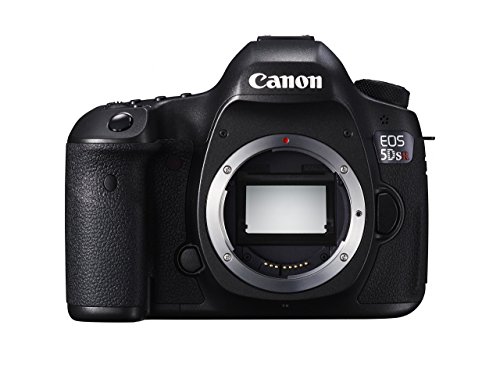
 Nikon D5300 24.2 MP CMOS Digital SLR CameraWiFi Camera- modelIP4454.9 x 3 x 3.9 inches1.1 poundsCheck on Amazon


What's inside
- What an optical low-pass filter actually does to light
- Moiré and false colour: the artefacts the filter prevents
- The sharpness trade-off, measured honestly
- Cameras that kept the filter, and cameras that cancelled it
- Pixel shift: the alternative answer
- Resolution changes the risk
- Video: where aliasing behaves differently
- Who should still choose a filtered camera
- Check prices on Amazon
- Buying checks before you commit
As an Amazon Associate I earn from qualifying purchases. This post may contain affiliate links at no extra cost to you.
This guide is reader-supported: when you buy through links on this page, the site may earn a commission that helps fund the research behind articles like this one. That support never decides which cameras are discussed, how their trade-offs are described, or which readers a given design is recommended for, and every specification mentioned here can be checked against the maker’s own published documentation before you spend anything.
An optical low-pass filter, usually shortened to OLPF and also called an anti-aliasing filter, sits directly in front of the image sensor and deliberately softens the finest detail by a tiny, controlled amount. That sounds like sabotage in an era obsessed with sharpness, yet the filter exists because a digital sensor samples the world on a rigid grid, and any scene pattern finer than that grid can be misread as a pattern that was never there.
Choosing a camera today therefore involves a question that specification sheets rarely answer plainly: does this body filter the light before sampling, does it cancel that filtering, or does it leave aliasing control to high resolution, software and the photographer’s technique? The answer changes how fabrics render, how buildings hold together at small apertures, how video behaves, and how much sharpening a raw file comfortably accepts.
This article works through the optics first, then the visible artefacts, then the real model families that took different paths, so that the final buying checks rest on mechanisms rather than slogans. Readers comparing sensor generations will also find useful context in best 1 cmos sensor cameras because sampling behaviour starts with the sensor design itself, long before any filter decision is layered on top of it.
What an optical low-pass filter actually does to light
A camera sensor does not see a continuous image. It records brightness and colour at discrete points arranged in rows and columns, and the lens projects a continuous wash of light onto that grid. When the projected detail contains repeating structure finer than the spacing between photosites, the sampling process cannot represent it faithfully, and the mathematics of sampling predicts that the excess detail folds back into false, lower-frequency patterns.
The OLPF intervenes before sampling happens. Most designs use one or more thin plates of birefringent material, commonly lithium niobate or quartz, which have the useful property of splitting a single incoming ray into two rays separated by a minute distance. One plate separates the image point horizontally and another separates it vertically, so each point of light becomes a small cluster of overlapping points spread across neighbouring photosites.
Birefringence is the key mechanism. Inside a birefringent crystal, light polarised in one plane travels at a slightly different speed from light polarised in the perpendicular plane, and a carefully cut plate exploits that difference to displace one component sideways. The displacement is tiny, on the order of the photosite pitch itself, which is exactly the scale needed: detail finer than the grid is blurred into the grid’s own resolution before it can be misread.
Many filter stacks combine two birefringent plates with a wave plate between them, plus an infrared-cut layer in the same assembly. The wave plate restores a predictable polarisation state between the two splitting stages so that the second plate separates the already-split points again, producing the familiar four-point spread. The whole stack is only fractions of a millimetre thick, yet it is a precision optical component, not a piece of frosted glass.
Because the spread is matched to photosite pitch, the filter’s strength is a design choice rather than a universal constant. A stronger filter displaces points further and suppresses aliasing more aggressively, at the cost of more softening. A weaker filter preserves more contrast at fine scales while accepting more risk. Two cameras with the same sensor can therefore behave differently if their filter stacks differ, which is one reason model variant letters matter so much later in this guide.
It helps to separate the filter’s job from the demosaicing job. The Bayer colour filter array assigns each photosite a single colour, and software later reconstructs full colour at every position. Aliasing can corrupt both the brightness structure and the colour reconstruction, which is why the artefacts discussed next appear in two families: shimmering geometric patterns and spurious colour. The OLPF calms both by ensuring the light arriving at the array contains less energy at frequencies the array cannot represent.
The Nyquist idea in plain language
Sampling theory says a grid can faithfully record detail up to half its sampling frequency, a boundary called the Nyquist limit. Detail just below that limit records well; detail above it does not simply vanish but reappears disguised as slower, larger patterns. A fence photographed from far away may seem to ripple with broad waves that belong to no fence ever built, because the fine spacing of its slats folded down into a false, coarse rhythm.
The filter is essentially a guard placed at that boundary. By attenuating the finest detail before the grid sees it, the guard keeps the recorded signal inside the range the grid can describe honestly. Engineers describe the same idea with modulation transfer curves: the filter trims response near and beyond Nyquist while leaving mid-frequency contrast, the contrast that makes an image look crisp at normal viewing sizes, largely intact.
That distinction between fine-frequency response and mid-frequency contrast explains why filtered cameras rarely look soft in ordinary prints. The eye judges sharpness mostly from edges and mid-scale texture, not from the extreme frequencies the filter trims. What the filter removes is disproportionately the detail most likely to be recorded wrongly, which is a far better bargain than the phrase ‘deliberately blurred’ suggests.
Moiré and false colour: the artefacts the filter prevents
Moiré is the visible signature of aliasing in stills: wavy interference bands, maze-like ripples and rainbow fringes that crawl across repeating textures. It appears when two grids interact, the grid of the subject and the grid of the sensor, and its shapes depend on the angle and spacing between them. Tilt the camera a degree or change distance slightly and the pattern reorganises, which is why it can vanish between one frame and the next.
False colour is moiré’s companion. Because the Bayer array samples colours at offset positions, high-frequency brightness detail can be misassigned as colour, producing magenta and green blotches along fine edges or confetti-like speckles in neutral textures. A grey tweed jacket can bloom with colour that exists nowhere in the cloth, and removing that colour in software without damaging genuine detail is fiddly, sometimes impossible at print quality.
Software moiré reduction works by desaturating or blurring the affected region, trading local accuracy for calm. It is a repair, not a prevention, and on deadline work the repair time multiplies across hundreds of frames. The filter prevents most of the damage at capture, which is the fundamental reason an entire class of working photographers continues to prefer filtered bodies despite the fashion for removing the filter entirely.
Fabrics and clothing
Woven textiles are the classic trigger because cloth is a manufactured grid. Suiting with a fine herringbone or birdseye weave, the tight ribs of a knitted tie, the mesh of a veil, the lace on a wedding dress and the repeating stitch rows of embroidery all present spatial frequencies that sit close to sensor sampling frequencies at common portrait distances. The result is rainbow banding across a jacket or shimmering waves across a bodice, usually worst exactly where the fabric is sharpest in the frame.
Distance governs the risk. Move closer and the weave’s frequency in the image falls below the danger zone; step back for a full-length group portrait and the same weave compresses into the aliasing band. Event photographers working at varied distances through a ceremony cannot always choose the safe distance, which is why fabric-heavy work rewards a filtered sensor more than almost any other genre.
Pattern scale matters as much as pattern type. A bold check with wide spacing records cleanly on almost any sensor, while a micro-check that looks nearly solid grey to the eye can be the worst offender, because its frequency lands precisely where sampling folds it into broad false bands. Clothing that appears plain at arm’s length is therefore not automatically safe at twenty paces.
Architecture and the built environment
Buildings supply grids at every scale: brick courses, louvred vents, metal railings, roof tiles, solar panel arrays, corrugated cladding and the mullions of a glass tower. Shot square-on from a distance, these structures can erupt in concentric ripples that no amount of careful focusing removes, because the artefact is not a focus error. It is the sensor reporting a pattern that the geometry of sampling invented.
Receding structures are especially vulnerable. A tiled roof photographed at an angle contains every frequency at once as its rows compress toward the horizon, so some band of the roof almost always sits at the aliasing frequency. The moiré then appears as a localised storm in one region while the rest of the frame looks clean, which makes it easy to miss on a small rear screen and painful to discover at full size.
City photographers who sell skyline work or document buildings for clients weigh this heavily. A filtered body renders distant brickwork and balcony rails with a calm that filterless bodies sometimes cannot match without software repair, and for architectural records the honest rendering of repetitive structure is the entire point of the photograph.
Screens, signs and modern surfaces
Photographing a screen with a camera places one pixel grid against another, and the interference between a display’s subpixel layout and the sensor’s array produces some of the most violent moiré in everyday shooting. LED video walls at events, departure boards, illuminated advertising panels and even a phone held in a subject’s hand can fill with crawling colour bands that shift with every small change in distance or angle.
Modern life keeps adding fine periodic surfaces: the perforated metal of speaker grilles and microphone windscreens, the dot matrix of printed halftones in magazines and posters, the woven carbon fibre of sports equipment, the mesh of a trampoline or a tennis net. Each is a manufactured grid waiting to argue with the sensor’s grid, and the argument gets louder as lenses get sharper and resolve the pattern more completely.
A stronger lens can therefore make moiré worse, not better. A soft lens acts as an accidental filter, smearing the finest detail before sampling; a superb modern prime delivers that detail at full contrast straight into the aliasing zone. This is why some photographers first met serious moiré only after upgrading their glass, and why the filter question cannot be separated from the lens question.
The sharpness trade-off, measured honestly
Nothing about the OLPF is free. Spreading each image point across neighbouring photosites reduces contrast at the finest recorded scales, and measurements in line pairs per millimetre show the effect plainly: a filtered sensor’s response falls earlier as frequency rises, while a filterless sensor holds contrast closer to the sampling limit. In practical terms, the filterless body resolves slightly finer genuine detail when the subject contains such detail and the lens can deliver it.
The size of that advantage is often overstated. At the frequencies where the two designs diverge, many lenses are already rolling off, apertures are diffraction-limited, or subject motion and focus error have blurred the capture more than any filter would. The filter’s penalty is real but narrow; the aliasing it prevents is broad and conspicuous. Judging the trade requires asking which failure a given kind of work tolerates worse.
Sharpening changes the arithmetic for stills. Because the filter’s softening is smooth and predictable, raw converters can restore much of the apparent edge contrast with capture sharpening, and the restored result is usually indistinguishable from a filterless capture at normal output sizes. What sharpening cannot do is remove moiré that was recorded as if it were real detail, since the converter has no way to know which patterns are false.
Diffraction offers a natural experiment. Stopping a lens well down softens the image through diffraction alone, and at those apertures filtered and filterless bodies converge: the lens has become the low-pass filter. Landscape photographers who work at small apertures for depth of field may therefore find the filter debate largely academic for much of their shooting, a point that returns in the who-should-buy discussion below.
Reading resolution figures without being misled
Resolution charts report the frequency at which contrast falls to a chosen fraction of its low-frequency value, and filtered bodies post lower numbers on such charts by design. Those numbers describe one narrow property, performance at the extreme edge of sampling, and say nothing about artefact behaviour. A body can win the chart and lose the wedding, because the chart’s test target is a cooperative subject that never wears a herringbone suit.
Per-pixel sharpness at one hundred percent magnification is the other misleading metric. Viewed at that scale, filterless files look crisper, but prints and screens at sensible sizes compress that difference toward invisibility while leaving moiré fully visible. The sensible comparison is at final output size, with the photographer’s real subjects, which is precisely the comparison the buying checks at the end of this article are built around.
There is also a noise dimension. Aggressive capture sharpening on filtered files can amplify fine noise slightly, and filterless files sometimes need less of it. At base sensitivity the difference is negligible for most work; at high sensitivity, noise dominates both designs and the filter question fades behind the larger problem of simply having enough light.
Cameras that kept the filter, and cameras that cancelled it
For most of digital photography’s history, the OLPF was simply standard equipment, fitted to virtually every Bayer-sensor camera without discussion. The interesting era began when manufacturers started offering the choice. The landmark was a pair of sibling bodies built around the same high-resolution sensor: one retained a conventional filter, while its E-suffixed twin used a filter stack engineered to cancel the filtering effect, letting early adopters feel the sharpness difference directly.
The cancellation design deserves explanation because it is widely misunderstood. The E approach did not simply leave the glass out. Its stack used the birefringent layers in an arrangement that split the image point and then recombined it, so the net displacement returned to near zero while the assembly still occupied the same optical space in front of the sensor. The body therefore kept the mechanical and optical geometry of its sibling while sampling almost as if no filter were present.
A later flagship from another maker pushed resolution higher still and again sold in two forms, the standard body with a filter and an R-suffixed variant with the cancellation arrangement. The pattern of paired variants became the industry’s honest compromise: identical bodies, identical sensors, a letter on the badge announcing which side of the trade the buyer had chosen. Heritage designs matter here, and readers tracing the lineage will find the filtered era well represented among best 35mm dslr cameras where the filter was simply assumed for a generation.
Other makers chose differently at different resolutions. Some kept filters across their whole range for years, reasoning that their buyers shot people and events. Some dropped the filter first on their highest-resolution bodies, where the finer sampling grid pushed the aliasing zone toward frequencies lenses rarely deliver, and kept filters on lower-resolution bodies where aliasing risk is structurally higher. The logic is consistent once resolution enters the picture, as a later section explores.
Pentax and the selectable simulator
One maker refused to make the choice permanent. Pentax built bodies whose sensor-shift mechanism could imitate the filter on demand: with the AA filter simulator switched on, the sensor moves by sub-pixel amounts during the exposure, spreading each image point across neighbouring photosites in a way that mimics a genuine optical filter. Switched off, the same body samples with full filterless crispness. Some versions offered graded strength, so the photographer could apply just enough simulation for the subject at hand.
The simulator’s elegance is that it converts a hardware decision into a per-shoot setting. A photographer can shoot a morning of landscapes unfiltered, then enable simulation for an afternoon ceremony full of woven clothing, using one body for both. Its limits are equally instructive: the motion happens during exposure, so it interacts with shutter speed and subject movement, and it cannot help video in the same way. Still, as a design philosophy it remains the most flexible answer anyone shipped.
The simulator also proved the underlying point experimentally for thousands of owners. With everything else held constant, toggling the simulation showed exactly what the filter costs and what it buys, on the photographer’s own subjects. Many owners report leaving it off for nature work and on for people work, which is the genre split this article keeps returning to, arrived at independently by users with a switch in their hands.
Pixel shift: the alternative answer
Multi-shot pixel-shift modes attack the problem from the sampling side. The body shifts the sensor by single-pixel and half-pixel steps across a sequence of exposures, capturing full colour information at every position and a denser sampling of the scene than any single frame allows. With sampling density multiplied, the aliasing zone moves far beyond the frequencies ordinary subjects and lenses produce, and false colour largely evaporates because colour is measured directly rather than reconstructed.
The results, on static subjects from a tripod, can be superb: textiles render without rainbow contamination, fine detail is genuine rather than sharpened, and the files withstand heavy cropping. Product photographers, reprographic work and architectural documentation all benefit, and the mode effectively delivers the filtered camera’s calm with the filterless camera’s detail, at the price of stillness and time.
Movement is the price. Anything that shifts between frames, leaves in a breeze, water, people, even clouds, creates its own artefacts at the seams of the composite, and most implementations need the camera locked down and the subject cooperative. Pixel shift is therefore an answer for controlled work, not a replacement filter for a ceremony or a street scene. It belongs in the decision as a capability to check for, especially for studio shooters, rather than as a universal solution.
Handheld high-resolution modes relax the tripod requirement by using natural hand movement across many frames, and they share some of the sampling benefits. Their merging is more forgiving of motion but less exact, and aliasing suppression varies with how the software weights the frames. Treat such modes as a helpful bonus with filtered-like tendencies, not as a guarantee, and judge them on your own repetitive subjects if the feature influences a purchase.
Resolution changes the risk
Moiré risk falls as resolution rises, for a simple geometric reason: a finer sampling grid pushes the Nyquist boundary to higher frequencies, and the world contains progressively less energy at those frequencies once lenses, diffraction and subject texture have had their say. A very high-resolution sensor may encounter aliasing mainly with exceptional lenses at optimal apertures on the most adversarial subjects, which is why several makers felt safe omitting the filter only on their highest-pixel bodies.
The corollary matters just as much. Lower-resolution sensors sample coarsely, so everyday textures, a jacket at conversational distance, a roof across the street, sit squarely in the aliasing band. This is why the filter’s removal was controversial on modest-resolution bodies and uncontroversial on flagships: the same design choice carries different risk at different sampling densities, and resolution-blind debates about filters miss the governing variable.
Video-centric and speed-centric bodies often use lower pixel counts deliberately, trading resolution for readout speed and low-light performance. Those are precisely the bodies where a filter earns its keep in stills mode, and several such designs retained it. When a specification sheet shows a modest pixel count paired with a filter, that pairing is engineering coherence, not timidity.
Crop factor enters through the same door, since smaller sensors pack photosites more densely at a given pixel count, which raises sampling frequency per millimetre of image. Readers weighing compact systems can usefully browse best all around crop sensor cameras with this in mind, because dense crop sensors shift the aliasing boundary in the photographer’s favour even before filter choices are considered.
Video: where aliasing behaves differently
Video raises the stakes because most sensors cannot read every photosite for every frame at full speed. Many designs skip lines or bin pixels to achieve frame rate, and both shortcuts coarsen the effective sampling grid dramatically. Detail that a stills frame would record safely can alias violently in footage: rooftops shimmer, jackets crawl, and fine architectural lines buzz as the camera pans, with the artefact moving in time as well as space.
A filter that seems gentle in stills terms can be valuable insurance in video, because it trims exactly the frequencies that line-skipped readout would fold into visible crawling patterns. Bodies designed with hybrid shooters in mind sometimes use stronger filtering for this reason. Conversely, oversampled video, where the sensor reads a high-resolution region and downscales it in the processor, suppresses aliasing computationally and reduces dependence on the optical filter.
The practical check is to learn how a candidate body produces its footage: full-width oversampled readout, cropped readout, or line-skipped readout behave very differently on patterned subjects, and the brochure rarely says which. Hybrid shooters who film ceremonies, conferences or property tours, all subjects rich in grids and textiles, should weight this section heavily and favour designs whose video pipeline is documented as oversampled or whose filter is known to be present. General hybrid context lives in best 4k mirrorless cameras for readers comparing current bodies across brands.
Rolling shutter and aliasing are separate faults that often appear together on the same difficult subjects, and it is worth not confusing them. Skewed verticals during a pan come from readout timing; shimmering false patterns come from sampling. A body can be excellent on one and poor on the other, and the fix for each lives in a different part of the design.
Who should still choose a filtered camera
Wedding and event photographers remain the clearest case. Their subjects wear the most aliasing-prone materials ever manufactured, veils, lace, satin with woven structure, fine suiting, sequinned and beaded surfaces that sparkle with periodic highlights, under time pressure that forbids reshoots and across hundreds of frames that forbid per-image repair. For this work the filter is not a compromise; it is the correct engineering, and the small sharpness cost is repaid in clean files delivered fast.
Anyone photographing people professionally at moderate distances faces a milder version of the same logic: corporate headshots against office architecture, school portraits, team photographs in kit with woven badges and sponsor lettering. The common thread is repetitive manufactured texture on or around people, photographed at distances that compress the texture into the danger band, with clients who will view the results large.
Journalists and documentary shooters add unpredictability to the argument. They cannot scout every surface, and their frames include departure boards, protest banners with halftone printing, stadium seating and LED advertising. A filtered body lowers the background rate of ruined frames across chaotic assignments, and reliability under surprise is a professional feature even when it never appears on a specification sheet.
Who gains from going filterless
Landscape photographers gain the most from filterless designs, because natural subjects rarely contain strict periodic grids. Rock strata, foliage, water and sand carry random texture that aliases far less readily, while the fine genuine detail in bark, grass and distant crags benefits from every scrap of sampling honesty. Add the small apertures landscape work favours, where diffraction filters anyway, and the filterless advantage narrows further, but at optimal apertures it is real.
Studio product and macro photographers also gain, with a caveat. Controlled lighting, static subjects and the ability to inspect and reshoot make aliasing manageable when it appears, and pixel-shift modes often wait in the same bodies for the truly difficult textures. The caveat is textiles and electronics as products: a studio shooting clothing catalogues or circuit boards is shooting grids for a living and should think like an event photographer, not like a landscaper.
Astrophotographers and technical shooters form a smaller filterless constituency. Celestial point sources reward exact sampling, and scientific or survey imagery values measured detail over cosmetic calm. For these users the filter’s spread is a genuine loss with no compensating benefit, since their subjects either cannot alias or must not be smoothed.
Check prices on Amazon
Live listings for the shortlist in this guide are pulled from Amazon below, so prices and availability are always current at the moment you look.


Buying checks before you commit
First, establish which variant you are actually looking at, because the filter decision is often encoded in a suffix. Bodies were sold in filtered and cancellation versions distinguished by a single letter, and listings, used advertisements and even retailer pages confuse them regularly. Check the badge in photographs, the exact model string in the menu’s firmware information, and the maker’s archived specification page for that precise variant before money moves.
Second, match the body to your dominant subjects rather than your aspirational ones. List what filled your last few hundred frames. If woven clothing, buildings or screens dominate, weight the filtered options; if natural texture and controlled studio work dominate, weight the filterless ones. The honest list settles most purchases, because the filter question is a subject question wearing a technical costume.
Third, factor in your lenses and apertures. Exceptionally sharp modern primes at their best apertures feed the aliasing zone generously, raising the value of a filter; a kit built on modest zooms or a style built on small apertures lowers it. Similarly, a body offering pixel shift or a selectable simulator buys flexibility that can substitute for choosing correctly in advance, and that flexibility has genuine value for mixed-genre shooters.
Fourth, for hybrid work, investigate the video readout method and, where possible, view sample footage containing rooftops, brickwork or an LED wall rather than the foliage and faces that dominate promotional reels. Artefacts hide in showreels and reveal themselves on grids. A body that is calm on those subjects will be calm on almost anything a working week contains.
Fifth, consider the used market’s information problem. Filtered and filterless twins look identical in the hand, firmware screens are the reliable witness, and a seller’s description written from memory is not. Factor a verification step into any used purchase, and remember that cases, boxes and original receipts usually carry the full model string even when an advertisement truncates it.
Finally, hold the whole decision in proportion. The filter is one variable among sensor, lenses, ergonomics and price class, and for most photographers it should break ties rather than dictate choices. It becomes decisive only when your subjects are unusually grid-rich or unusually grid-free. Knowing which of those photographers you are is the real purchase, and the camera that follows from that knowledge will serve for years without a second thought.
One under-discussed variable is the microlens array that sits over the photosites. Microlenses gather light into each well and soften the effective sampling aperture slightly, which grants a whisper of natural anti-aliasing even in bodies with no dedicated filter. Designs differ in microlens shape and gap, so two sensors with identical pixel counts and identical filter stacks can still alias a little differently, a reminder that the specification sheet never tells the whole sampling story.
Colour aliasing and luminance aliasing deserve separate attention because they fail differently. Luminance moiré shows as geometry, waves and mazes in the brightness structure, while colour aliasing shows as confetti and fringing in places that should be neutral. The colour form is usually more objectionable at small sizes because the eye forgives odd geometry in a busy texture more readily than it forgives magenta speckles on a grey suit.
Focus distance interacts with aliasing in a way beginners find counterintuitive: the same subject can be clean in a close portrait and contaminated in a wide group shot taken seconds later. As subject distance grows, the texture’s image shrinks, its frequency rises toward the sampling boundary, and patterns that were safely coarse become dangerous. Zooming with your feet is therefore also an aliasing control, whether the photographer thinks of it that way or not.
Print size changes the verdict on many borderline files. Moiré that screams at full magnification may sit below the resolution of a modest print and disappear entirely, while the same pattern in a large exhibition print becomes the first thing a viewer notices. Photographers who print big should judge sample files at print scale, and those who publish mainly to screens can afford a more relaxed view of mild aliasing.
The raw converter is a silent partner in every filter decision. Different converters demosaic with different sophistication, and some include dedicated moiré tools that target the colour form of the artefact quite effectively while leaving luminance patterns harder to shift. A filterless body paired with a strong converter is a different proposition from the same body paired with a basic one, so software belongs in the comparison even though it appears on no camera specification sheet.
Sharpening workflow matters in the opposite direction. Filtered files accept capture sharpening gracefully because their softening is smooth and uniform, but heavy-handed sharpening applied to filterless files can exaggerate the very aliasing the photographer hoped to avoid, hardening false patterns into the image. Gentle, masked sharpening that protects repetitive textures is good practice on either design and essential on filterless bodies used for people.
There is a historical irony in the filter debate: early digital cameras were criticised for softness that was partly their filters working as designed, and the criticism helped push the industry toward removal just as resolutions rose enough to make removal safer. The two changes are often confused in retrospect. Much of the crispness credited to filter removal in flagship comparisons belongs to the resolution increase that accompanied it.
Infrared and ultraviolet behaviour ride along with the filter stack, since the OLPF assembly usually includes the infrared-cut layer. Modified cameras for infrared photography have the whole stack replaced, which is why converted bodies behave differently in visible light too. It is a niche consideration, but buyers of used bodies should know that a converted camera is not merely a normal camera with a different filter decision; its entire sampling front end has been altered.
Lens designers assume a certain filter stack thickness in front of the sensor, because glass in the optical path shifts focus and affects aberrations, especially with wide-angle designs. This is the practical reason the cancellation variants kept a stack of equal thickness rather than leaving an empty space: the body had to remain optically identical for the lens system. The filter, in other words, is part of the lens mount’s optical environment, not an accessory.
Subject movement can act as an accidental filter. A veil drifting in a breeze, a handheld frame at a slow shutter speed, or a subject who will not sit still all smear fine detail across photosites and suppress aliasing naturally. This is one reason real-world moiré rates are lower than test-chart sessions suggest: the world wobbles, and the wobble helps. Static, tripod-mounted, perfectly focused captures of grids are the worst case, and they are rarer in practice than in reviews.
The angle between subject grid and sensor grid steers the artefact’s shape. Aligned grids produce broad, regular waves; grids at a few degrees produce sweeping diagonal bands; grids near forty-five degrees often produce finer, less objectionable patterns. Photographers stuck with a filterless body and a difficult building can sometimes rotate the camera slightly or shift position to move a catastrophic pattern into a tolerable one, a field expedient worth knowing.
Compression and delivery pipelines can resurrect artefacts that capture avoided. Aggressive downscaling without proper filtering folds high frequencies down in software, recreating moiré at export even from a clean raw file. Quality export filters exist precisely to prevent this, and photographers who see shimmer only in their web exports should suspect the resizing step before blaming the sensor. The sampling theorem applies at every resampling, not just the first one.
Bridal lace deserves its reputation as the supreme test subject. It combines fine periodic structure, high contrast between thread and shadow, and emotional importance: the dress is the one element of a wedding that absolutely must render beautifully. Photographers choosing a body primarily for weddings could do worse than to judge candidate files by lace and veil samples above every other criterion, since a body calm on lace will be calm on everything else the day contains.
Bird feathers present nature’s version of the same problem, with barbs arranged in near-periodic rows that can rainbow badly on filterless sensors at certain distances. Wildlife photographers are often assumed to be automatic filterless buyers, yet those specialising in small birds at moderate range meet aliasing more often than the assumption suggests. Distance again decides: at very long range the feather structure falls below resolution entirely, while the danger zone is the middle distance where barbs resolve almost, but not quite, cleanly.
City night photography mixes several triggers at once: LED signage with its own pixel structure, wet streets reflecting gridded lights, and buildings full of lit windows in regular arrays. The window grids usually sit far enough away to record as texture rather than pattern, but signage photographed directly is a genuine hazard for any sensor, filtered or not, because the display’s own pixels are large, contrasty and perfectly regular.
Forensic and evidentiary photography has its own stake in sampling honesty. A false pattern introduced by aliasing is, in evidentiary terms, a fabricated detail, and fields that photograph documents, textiles or serial-number engravings for the record have historically preferred conservative, filtered capture for exactly that reason. The stakes differ from art photography: an attractive lie is still a lie, and the filter is a truth-telling device.
Reproduction photography of printed material is the extreme case, because halftone dots are a perfect manufactured grid designed at frequencies guaranteed to fight a sensor. Copy-stand work against books, magazines and packaging demands either a filtered body, a pixel-shift mode, slight defocus, or a change of distance and angle, and experienced repro photographers keep all four remedies in rotation. Anyone digitising a printed archive should treat this section as the centre of the decision, not a footnote.
Sensor cleaning and maintenance intersect with the filter in a mundane way: the surface a photographer cleans, and the surface dust lands on, is the front of the filter stack, not the sensor itself. In filterless designs that surface still exists as a cover glass, so maintenance practice barely changes. The point is worth stating because a persistent myth holds that filterless bodies expose a bare sensor; they do not, and their cleaning is no more perilous than any other modern body’s.
Temperature and age do not meaningfully change a filter’s behaviour, which cannot be said of every camera component. The birefringent plates are stable crystals; their splitting distance today is their splitting distance in a decade. Buyers of older filtered bodies can therefore trust that the aliasing behaviour reviewed when the body was new still describes the body in hand, an unusual certainty in a market where shutters wear and sensors drift.
The debate also has a rental dimension. Photographers who own a filterless body for landscape work can rent a filtered body for a textile-heavy commission, and the rental cost is trivial against a reshoot. Framing the filter as a per-assignment choice, available through rental houses that stock both variants of classic bodies, frees owners from needing one body to be right for every subject they will ever meet.
Manufacturers’ naming tells the story of the transition if you read enough badges. The era of paired variants, distinguished by a letter, gave way to ranges where the filter quietly vanished from high-resolution lines and quietly persisted in video-focused and speed-focused lines. The badge archaeology matters for used buyers precisely because the current convention is silence: absence of a letter no longer guarantees either design, so the archived specification page remains the only trustworthy witness.
Finally, remember that aliasing is information loss wearing a disguise. Detail folded into a false pattern is not stored somewhere recoverable; no converter, however clever, can unfold it back into the true texture, because the false pattern is all the sensor recorded. Prevention at capture, by filter, by resolution, by distance or by angle, is the only complete remedy, and every other technique in this article is a negotiation with that fact.
Telephoto sports photography sits mostly outside the filter debate, because its subjects, kit fabrics aside, are dominated by large shapes, motion and shallow depth of field that blur fine periodic detail before the sensor can argue with it. The exception is the stadium itself: seating bowls, LED perimeter boards and mesh fencing all carry grids, and a sports photographer framing wide environmental shots of a venue meets the same triggers as an architectural shooter, through a longer lens.
Macro photography reverses several assumptions in this guide. At high magnification, diffraction arrives early as effective apertures shrink, and depth of field is so thin that only a sliver of the subject is critically sharp. Aliasing still occurs in that sliver when the subject is a woven textile, an insect wing with regular venation or a machined surface, but the working macro shooter’s larger enemies are focus and movement, and the filter choice fades behind them.
Insect wings deserve their own sentence in any aliasing discussion, because wing membranes carry vein patterns fine enough to shimmer and structural colour that already plays tricks with hue. A filterless body can add false pattern to genuine iridescence until the two are inseparable, while a filtered body renders the wing calmer and arguably more truthfully, at the cost of a little bite in the veins that are genuinely resolvable.
Textile and fashion photography beyond weddings makes the filtered case at industrial scale. Catalogue and e-commerce shooters photograph thousands of garments against deadlines, and their subjects are quite literally woven grids in every colour. Studios in this trade standardise on bodies and workflows that minimise per-image repair, and the filter’s small sharpness cost is invisible at catalogue sizes while its moiré suppression saves retouching hours every single week.
Fashion editorial work splits the difference interestingly: the same studio may shoot a campaign on a filterless high-resolution body for its crispness on skin and hair, then switch to filtered bodies or pixel shift for the lookbook frames where garments fill the image. The deciding variable is always which element of the frame carries the commercial weight, the face or the fabric, and professionals answer it per assignment rather than per career.
Skin itself never aliases, which is why portrait photographers working close can safely enjoy filterless bodies that would betray them at group distance. Hair is the intermediate case: individual strands are random enough at portrait distances, but tightly braided or patterned hairstyles photographed from further back can produce mild patterning. The portraitist’s rule of thumb is distance again; the closer the work, the freer the choice.
Real estate and interiors photography mixes the triggers quietly: window blinds, radiator grilles, woven upholstery, tiled splashbacks and the mesh of speaker systems all appear in ordinary rooms, usually at wide angles that compress them toward the danger frequencies. Agents view the results on screens where shimmer survives downscaling poorly, and a filtered body or an oversampled workflow keeps listings calm without post-production heroics.
School and graduation photography industrialises the event problem: hundreds of gowns, each with woven fabric and sometimes fine pleating, photographed at set distances under set lighting. At that scale even a small moiré rate becomes a large absolute number of spoiled frames, and the economics favour prevention overwhelmingly. It is no accident that high-volume portrait operations were among the last to abandon filtered bodies and among the least nostalgic for ultimate sharpness.
Concert photography adds LED walls as a permanent backdrop, and those walls defeat every sensor some of the time because their pixel pitch is coarse and contrasty. Photographers who cover live music learn to time frames between wall refreshes, angle the camera, or accept the bands as atmosphere. A filter softens the interference at the margins, but the honest advice is that no filter decision rescues a frame whose subject is itself a grid of lights; composition and timing do that work.
Surveillance and machine-vision imaging, distant cousins of the cameras in this guide, standardised the mathematics long ago: sampling systems are designed with optical filtering matched to pixel pitch as a matter of course, because false patterns in measurement imagery are not aesthetic flaws but data corruption. Photography inherited the same physics with more forgiving stakes, and the machine-vision world’s unanimity on filtering is worth remembering when the debate is framed as old-fashioned caution.
The second-hand market adds one more verification wrinkle: filter stacks can be replaced by conversion services, and a body converted for infrared and later converted back may carry a non-standard stack whose behaviour matches neither original variant. Sellers of specialist bodies usually disclose conversions, but a buyer chasing a specific variant for aliasing reasons should ask the conversion question explicitly, since the badge cannot answer it.
Mirrorless design changed the conversation’s venue rather than its content. Electronic viewfinders show a processed, downsampled preview in which moiré is often invisible, so the modern filterless shooter may not learn of contamination until the files reach a large screen. The discipline this imposes is chimping at full magnification on patterned areas after the first frames of a new subject, a habit that costs seconds and saves sessions on either design of body.
Lenses with exceptionally flat fields and high contrast at their peak apertures, the modern reference primes, are the filterless body’s sternest examiners. Pairing such a lens with a filterless sensor and a grid subject at the lens’s best aperture is the combination most likely to produce textbook moiré, and it is also the combination most product photography and architecture setups naturally assemble. Knowing that your sharpest lens setting is your riskiest setting is genuinely useful field knowledge.
There is a quiet middle path many working photographers actually live: own the filterless body for its resolution and speed, and manage aliasing behaviourally, with distance, angle, aperture and pixel-shift modes deployed per subject. This works when assignments are varied and time exists to think. It fails when the work is fast, repetitive and textile-heavy, which is why the recommendation in this guide keeps returning to the dominant subject rather than to the photographer’s skill or intentions.
For the reader who has followed the optics this far, the practical summary is short: match the sampling design to the subjects that fill your card, verify the exact variant before paying, and let grids in your own archive cast the deciding vote. A filtered camera chosen with open eyes is not an outdated camera; it is a deliberate instrument, and the photographers who choose one for textile-heavy, screen-filled, deadline-driven work will keep producing calm, honest files long after sharper-on-paper bodies have sent their owners hunting through software for repairs. Choose the body that makes your most common subjects look truthful, and let that truthfulness, rather than any chart, be the measure of the purchase.
Related guides
- Best Barn Cameras: 4G LTE, Long-Range Wi-Fi and Hub Systems Compared
- Best 400 FPS High Speed Cameras: The Honest Truth About Burst Slow Motion
- Best Airbnb Security Cameras: Compliant Outdoor Cameras and Noise Sensors for Hosts
- Best 1080p IP Cameras: PoE Domes, Turrets, Bullets and a PTZ That Earn Their Cable


