Our Top Picks
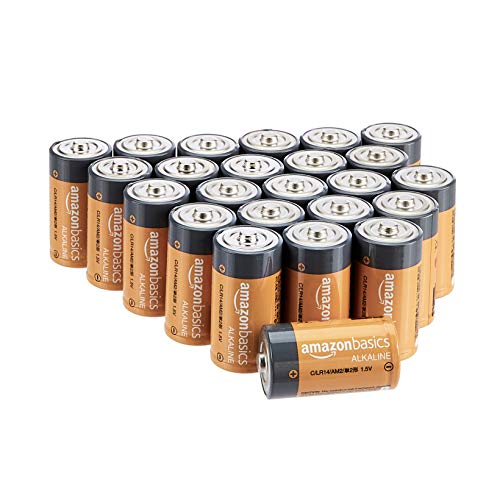 Amazon Basics C Cell Alkaline Long-Lasting All-Purpose Batteries24 Count (Pack of 1)0.2 poundsCheck on Amazon


What's inside
- The C cell refuses to retire, and physics explains why
- Where C cells still dominate the drawer
- Anatomy of an alkaline C cell
- Real capacity versus the AA adapter shortcut
- Load profiles across the devices that matter
- Shelf life, self-discharge, and the emergency-kit problem
- Leakage, the slow disaster inside stored equipment
- Brand tiers, store brands, and what the extra money buys
- Buying in bulk and rotating stock with discipline
- The rechargeable C alternative, briefly and fairly
- Testing a suspect cell and knowing when to retire it
- Special situations worth a moment of planning
- Internal resistance, the hidden number behind tired devices
- Zinc-carbon C cells and why alkaline displaced them
- Worked expectations for the three classic devices
- Institutions, landlords, and other bulk caretakers
- How temperature and storage quietly rewrite the datasheet
- Matching cell purchases to a realistic household inventory
- Frequently confused points, settled plainly
- Check prices on Amazon
- Putting the whole purchase together
As an Amazon Associate I earn from qualifying purchases. This post may contain affiliate links at no extra cost to you.
Readers should know upfront that this publication receives a small referral payment when certain links here lead to a completed purchase, which helps fund guides like this one.
The C cell refuses to retire, and physics explains why
Walk into a hardware store and the battery rack tells a story about modern priorities. Slim packs for remotes and game controllers dominate the eye-level shelves, while the chunky C cylinders sit lower, fewer in number, easy to overlook. Yet entire categories of dependable equipment still expect exactly that format: lanterns built for storm nights, portable radios with speakers worth hearing, flashlights sized for a gloved hand, and motorized toys from an era when playthings had genuine torque. Those devices were engineered around the volume inside a C can, and no amount of nostalgia-free minimalism changes the energy stored in that volume.
An alkaline C cell, designated LR14 under international naming, stands roughly fifty millimeters tall with a diameter near twenty-six millimeters. Inside that steel can sits several times the zinc and manganese dioxide carried by an AA cell. Manufacturer datasheets measured under standardized conditions commonly publish capacities in the neighborhood of seven to eight thousand milliamp-hours at modest discharge rates, though the delivered figure falls as current climbs. That reservoir is the entire point of the format, and understanding how it behaves under different loads separates a smart purchase from a hopeful one.
This guide examines the alkaline C on its own terms. It covers where the size still dominates, how real capacity compares with smaller cells placed inside adapter sleeves, what shelf life and self-discharge mean for equipment stored between emergencies, and why leakage stalks devices forgotten in cupboards. It also weighs bulk buying, brand tiers, and the rechargeable alternative briefly, all grounded in maker documentation, international primary-cell standards, and published owner experience with equipment that has run on C cells for decades.
Where C cells still dominate the drawer
Large flashlights remain the most visible stronghold. A torch body wide enough for C cells balances runtime, brightness headroom, and grip in a way slim tubes cannot imitate, which is why utility lights for workshops, farms, and emergency kits keep the format alive. Lanterns follow the same logic with higher stakes. A lantern expected to light a kitchen through a two-day outage must sip or gulp energy for many consecutive hours, and designers reached for C cells because four of them hold a serious reserve in a base that also keeps the lamp stable on a table.
Portable radios and boombox-style players form the second stronghold. Audio amplifiers draw meaningful current whenever volume rises, and speakers large enough to fill a workshop or a picnic site reward the deeper reservoir with evenings of play instead of an afternoon. Many beloved radios from the nineteen eighties and nineties still work perfectly, and their owners form a loyal C-cell constituency that values a battery able to honor the original design rather than forcing modifications onto equipment that never asked for them.
Toys, clocks, and the long tail of devices
Large motorized toys, ride-on accessories, and animated seasonal decorations draw current in pulses that punish small cells. A C-powered toy truck climbing carpet pile needs sustained motor current, and voltage sag in an undersized cell translates directly into sluggish wheels and disappointed children. Some wall clocks, flameless candle sets, and exercise or medical-adjacent household devices also specify C cells precisely because their makers wanted multi-season service intervals instead of monthly battery rituals for a product meant to fade into the background of daily life.
The long tail matters for buyers because it explains the market shape. C cells sell in smaller volumes than AA or AAA, so shelf turnover runs slower at many retailers, and date-checking becomes a genuine skill rather than a fussy habit. It also explains why per-cell prices look steep beside AA multipacks. Production runs are shorter, distribution is thinner, and the buyer is paying for a large quantity of active chemistry sealed inside each can, not merely for an unfashionable shape lingering out of habit.
Anatomy of an alkaline C cell
Alkaline chemistry generates electricity through reactions between a zinc anode and a manganese dioxide cathode, mediated by a potassium hydroxide electrolyte that also gives the family its name. In a C can, those materials occupy a generous cylinder with room for a robust separator, substantial current collectors, and a sealing assembly engineered to vent safely under abuse rather than rupture. Construction quality in that sealing assembly, invisible to the buyer, quietly determines much of the difference between brands when cells age inside warm equipment.
Nominal voltage sits at one and a half volts, matching its smaller alkaline siblings, which is why devices wired for a given number of C cells expect the same count regardless of brand. Fresh cells read slightly higher on a meter with no load, then settle under working current. The discharge curve slopes gradually through service life, a characteristic that lanterns and radios tolerate well because their circuits were designed around that slope decades ago. Knowing the curve exists helps owners interpret dimming or fading volume as a battery story before suspecting the device itself.
Capacity figures and the conditions hiding behind them
Capacity is not a fixed property like weight. It is the outcome of a test: a stated current or load resistance, a stated endpoint voltage, and a stated temperature, all defined by international standards so laboratories produce comparable numbers. At a gentle twenty-five milliamp drain, a quality alkaline C can deliver close to its headline figure. At currents approaching an ampere, delivered capacity shrinks substantially because internal losses grow and the chemistry cannot sustain reactions evenly throughout the larger electrode mass at high speed.
That conditional truth should govern expectations for every device in the house. A clock drawing microamps will extract nearly everything the can holds across several years. A lantern on its brightest setting will extract less total energy but deliver it at the pace the situation demands. Neither result indicates a defective cell. Owners who grasp the relationship stop chasing phantom faults and start matching settings to circumstances, running lanterns at medium brightness during outages to multiply runtime far beyond what the highest setting allows.
Real capacity versus the AA adapter shortcut
Adapter sleeves that let an AA cell occupy a C compartment are clever pieces of plastic, and their convenience is genuine in an emergency. The geometry fits, the voltage matches, and the device wakes up. What does not fit is the energy. An alkaline AA holds roughly a third or less of the capacity of a proper C cell under comparable conditions, so the adapted device runs for a correspondingly shorter stretch. Owners discover this during outages when a lantern fitted with sleeved AA cells fades before midnight while its neighbor with true C cells glows until breakfast.
Contact quality adds a second compromise. Each adapter introduces additional interfaces between cell terminal and device spring, and every interface is a future site for oxidation or looseness. In low-drain clocks the penalty may never surface. In a motorized toy pulling hard current, those extra junctions can warm, sag voltage, and produce erratic behavior that masquerades as a failing motor. Adapters earn their keep as a bridge during shortages, not as a permanent strategy for equipment whose runtime is the reason it exists.
Parallel adapters and other clever workarounds
Some sleeves accept two AA cells in parallel, doubling the smaller-format capacity while still falling short of a genuine C cell and multiplying the contact interfaces further. Others exist for rechargeable conversions, discussed later in this guide. Each workaround asks the owner to manage complexity that a correct cell simply deletes. For a seldom-used novelty device, that trade can be perfectly sensible. For storm lanterns, work radios, and the flashlight kept beside the electrical panel, buying the format the engineers specified remains the calmer and more reliable path.
Cost arithmetic rarely rescues the adapter plan either. Quality AA cells consumed three times as quickly, plus the sleeves themselves, approach or exceed the price of proper C cells across a year of regular use, while delivering a worse experience throughout. The honest exception is the household standardizing on rechargeables for environmental reasons, where adapters form part of a deliberate system. Even there, as later sections explain, purpose-built rechargeable C cells usually serve the device better than a small cell rattling inside a plastic overcoat.
Load profiles across the devices that matter
A lantern on low setting may draw a few dozen milliamps and run for days of evenings on one set. The same lantern switched to high can multiply that draw tenfold, compressing total delivered capacity through the rate effect described earlier. Radio listening sits between those poles, with draw tied to volume and speaker size. Motor loads behave differently again, pulling heavy current at startup and under strain, then relaxing once moving, a pattern that rewards cells with low internal resistance and punishes tired cells whose resistance has climbed with age.
Series wiring multiplies both power and consequences. Many C devices arrange cells in series to reach six volts or higher, which means the weakest cell governs the string. A single exhausted cylinder among fresh partners limits current, drags total voltage down, and risks being driven into damaging conditions by its stronger companions. That is why experienced owners replace the complete set together, from one pack with one date, rather than topping up a compartment with whatever single cell the drawer happens to surrender that day.
Intermittent use and recovery effects
Alkaline cells exhibit a modest recovery behavior: after a heavy session, resting allows chemistry inside the can to redistribute, and voltage rebounds somewhat by the next use. Owners of weekend radios know this pattern well, where a set that sounded tired on Sunday evening seems livelier the following Saturday. Recovery is real but finite, and it should never be mistaken for recharging. Planning replacements around it leads to devices dying mid-event, whereas treating recovered vigor as a bonus keeps expectations honest and spares stocked before genuine exhaustion arrives.
Temperature bends every load profile. Cold garages thicken electrolyte behavior and raise internal resistance, so a winter flashlight delivers less runtime than the identical light in spring. Heat does the opposite initially, then exacts payment through accelerated aging. Equipment stored in vehicles experiences both extremes across a year, which is why emergency kits deserve seasonal inspection and why cells for a car lantern should be refreshed on a schedule rather than trusted to a memory of some installation date long past.
Shelf life, self-discharge, and the emergency-kit problem
Manufacturers of premium alkaline C lines commonly publish storage guarantees stretching toward a decade under room-temperature conditions, meaning the cell should retain most of its capacity across that span on the shelf. Self-discharge in modern alkaline construction is low, typically a few percent per year at moderate temperatures according to maker storage data, thanks to improved zinc formulations and purer materials that suppress internal side reactions. Those numbers justify the classic emergency strategy: install fresh C cells in the storm lantern, note the date, and trust the reserve through several hurricane or blizzard seasons.
Trust still requires verification. A lantern sealed in a damp basement or a radio baked in a sunny porch ages its cells far faster than datasheet conditions assume. Semiannual checks, conveniently tied to clock-change weekends or seasonal equipment swaps, catch swelling, corrosion, or unexpectedly weak performance while replacement is still a calm errand. Spinning the lantern dial and playing the radio for a minute during each check also exercises device contacts and confirms the whole system, not merely the cells, stands ready for the night it is needed.
Households assembling charging capacity for other equipment sometimes ask whether C primaries can share the plan, and our survey of best 16 bay battery chargers shows how multi-bay units serve rechargeable fleets instead. Primary alkaline cells never enter a charger, under any circumstances, because attempting to recharge them risks leakage or rupture. Keeping that boundary bright in a household with teenagers and visitors prevents the single most dangerous misunderstanding in this entire product category, worse than any brand choice debated elsewhere in this guide.
Storing loose spares without creating tomorrow’s leak
Spare C cells should rest in original packaging or a divided organizer, terminals protected from contact with metal objects, in a cool dry place away from heating vents. Loose cells in a toolbox drawer can short against tools, dent their cans, and self-discharge quietly into uselessness. A labeled container near the equipment they serve beats a central battery jumble across the house, because the person changing lantern cells during an outage works by flashlight and memory, and neither performs well while hunting through unrelated drawers for cylinders of the right size.
Leakage, the slow disaster inside stored equipment
Every experienced owner of vintage radios carries a leakage story. A device stored with exhausted alkaline cells inside can suffer an escape of potassium hydroxide electrolyte, a caustic substance that creeps across battery compartments, corrodes springs and circuit traces, and leaves white crystalline deposits as evidence. The chemistry behind the failure is patient. As a cell depletes, internal gas generation and seal stress rise, and a cell left for years past exhaustion in a warm cupboard eventually surrenders at its weakest seal, often silently and completely before anyone opens the compartment again.
Prevention is almost embarrassingly simple compared with repair. Remove cells from equipment entering long storage, or replace them on a schedule that never leaves depleted cylinders sitting in place. Devices used seasonally, like holiday decorations and camping lanterns, deserve a removal ritual at season’s end. Where removal is impractical, installing fresh dated cells before storage and inspecting at mid-interval keeps risk low, because leakage overwhelmingly targets cells at or beyond exhaustion rather than healthy cells in the middle of their service life.
Cleaning a compartment after a leak
If the worst happens, work with gloves and eye protection, remove the damaged cells without scattering residue, and place them directly into a bag for appropriate disposal. Many manufacturer care guides describe neutralizing alkaline residue with a cloth lightly dampened by a mild household acid such as vinegar or lemon juice, followed by careful drying. Light corrosion on springs responds to gentle abrasion. Deep pitting, eaten traces, or residue that reached internal boards may end the device’s story, which is precisely why the prevention paragraphs above deserve more household attention than any cleaning technique.
Brand construction influences leakage odds at the margins. Flagship lines advertise improved seals and anti-leak designs tested under storage conditions, and those claims align with the general owner experience that premium cells misbehave less often in long installations. No design repeals chemistry, though. Even the finest alkaline C will eventually leak if abandoned depleted for long enough in hostile heat. The calendar, not the logo, is the primary defense, and households that internalize that ordering stop expecting packaging promises to substitute for inspection habits.
Brand tiers, store brands, and what the extra money buys
The C market divides roughly into three tiers. Flagship lines from the major battery houses offer the longest published storage guarantees, the most detailed datasheets, and construction aimed at leak resistance. Mid-tier and retailer store brands typically deliver respectable capacity at friendlier prices, sometimes with shorter storage claims. Unbranded discount cells occupy the bottom, with sparse documentation and wide variance between production runs. For a toy that empties cells in a month, the middle tier often represents the rational sweet spot, because calendar aging never gets a chance to matter.
Long installations reverse the calculation. A lantern or radio expected to sit ready for years extracts value from every month of storage guarantee and every increment of seal quality, while the purchase price difference amortizes into insignificance across that span. Published comparisons under standard loads generally show flagship cells delivering modestly higher capacity than budget rivals, but the honest gap lies in consistency. Variance between individual cells shrinks as tiers rise, and series-wired devices punish variance directly, since the weakest cylinder in the string dictates when the whole device fades.
Reading a C-cell listing like a skeptic
Look for the LR14 designation, a printed date far in the future, intact sealed packaging, and a manufacturer willing to publish discharge data. Be wary of listings that shout capacity numbers without stating test conditions, because a milliamp-hour figure divorced from its load and endpoint voltage is marketing decoration rather than information. Multipack unit pricing deserves a calculator moment as well, since C cells are frequently sold in twos, fours, and bulk trays whose per-cell economics differ more than shoppers expect at a glance.
Counterfeit risk shadows popular battery brands in every size, and C cells are no exception. Packaging misprints, suspiciously light cells, and dates that seem freshly printed on aged stock all warrant a walk-away. Reputable retailers with steady turnover remain the simplest defense. Readers managing rechargeable cylindrical cells for other equipment will recognize the same provenance discipline in our best 18650 chargers coverage, where undocumented cells cause even sharper problems and careful sourcing matters from the first purchase onward through years of service.
Buying in bulk and rotating stock with discipline
Bulk trays tempt anyone maintaining several C devices, and the savings can be genuine when the household actually consumes cells at pace. A community hall with lanterns, a scout group with radios, or a family with multiple large toys may cycle a tray within its prime window easily. A single-lantern household buying the same tray is lending money to a cupboard, because the final cells will install years later with much of their storage life already spent on a shelf instead of inside a device doing useful work.
Rotation converts bulk buying from gamble to system. Store packs with the earliest dates at the front, log purchase and installation dates on a card kept with the spares, and audit the collection twice yearly alongside emergency equipment checks. Cells approaching their printed limit can be promoted into high-drain toys that will empty them promptly and enjoyably, while fresh arrivals take over standby duty in lanterns and radios. That cascade extracts full value from every cylinder without ever asking an aging cell to guard an emergency.
How many spares does a household actually need
Count the devices, count the cells inside each, and hold one complete replacement set for the equipment that matters most, plus the set currently installed. For most homes that arithmetic lands between eight and sixteen spare C cells, not a case of forty-eight. Renters with one lantern and one radio need even fewer. The discipline scales upward gracefully for property managers, who should add location labels to each set so a caretaker changing cells in unit four is not silently consuming the reserve intended for the pump-house lantern across the property.
Seasonal purchasing can sharpen freshness further. Retailers rotate stock around storm seasons and holidays, and buying shortly after major restocking often yields the furthest dates on the shelf. Checking dates in store takes seconds: compare packs, choose the latest, and decline any pack whose date margin looks thin for the intended storage role. Online orders surrender that choice to the warehouse, which argues for ordering C cells from sellers with high turnover and clear freshness policies whenever the cells are destined for long standby rather than immediate toy duty.
The rechargeable C alternative, briefly and fairly
Nickel-metal hydride rechargeable C cells exist in two forms that shoppers must distinguish. True C rechargeables pack capacity approaching five thousand milliamp-hours or more into the full can volume. Converted designs hide an AA-sized core inside a C shell and deliver only the smaller cell’s capacity wearing a larger costume. Listings do not always make the distinction obvious, so the capacity figure is the tell: a rechargeable C claiming barely more than an AA rechargeable is almost certainly the converted kind, priced for its shape rather than its substance.
Voltage behavior differs from alkaline in ways devices may or may not forgive. Nickel-metal hydride cells deliver about one point two volts nominal, so a four-cell device designed around six volts receives closer to five, which some radios and lanterns accept gracefully and others answer with early low-battery complaints or reduced brightness. Self-discharge, once the chemistry’s weakness, has improved in low-self-discharge variants that hold charge across months of storage, making rechargeable C cells newly plausible for lanterns that see regular weekend use rather than pure emergency standby.
Economics favor rechargeables where consumption is heavy and predictable: children’s motorized toys in daily rotation, work lights used nightly, or audio gear at a market stall every weekend. Emergency standby favors alkaline primaries, whose decade-scale shelf readiness and freedom from charging routines suit equipment that may sit untouched for years. Many households sensibly run both systems in parallel, rechargeables feeding the hungry everyday devices while primaries stand guard in the storm kit, each chemistry assigned where its strengths matter most.
Charging infrastructure for larger rechargeable cells deserves its own planning, and high-current options are surveyed in our guide to best 10 amp battery chargers equipment for workshop and vehicle batteries. That category operates at a different scale from household cylindrical charging, yet the underlying lesson transfers directly: a charger matched poorly to its cells shortens their life, while a well-matched unit with proper termination keeps a rechargeable fleet healthy across hundreds of cycles and repays its cost through avoided primary purchases.
Environmental accounting without slogans
A rechargeable cell that completes hundreds of cycles plainly displaces hundreds of primaries, and for high-drain toys that displacement arrives within a single year. For a lantern used twice annually, a rechargeable may die of calendar age before completing fifty cycles, narrowing its advantage considerably. Honest accounting therefore follows usage, not virtue. Primaries removed promptly and recycled through local programs where available carry a modest footprint per hour of light delivered in standby roles, while rechargeables earn their clearest environmental victory in devices that devour cells relentlessly.
Testing a suspect cell and knowing when to retire it
A basic multimeter reading offers a first opinion: a fresh alkaline C shows around one and a half volts or slightly above at rest, while a cell sagging near or below one volt under a modest load has given its useful life. Resting voltage alone can flatter a tired cell, so a loaded check, even the informal test of installing it in a lantern and observing brightness beside a known fresh cell, reveals more truth. Devices with battery indicators translate the same information for owners who prefer not to own meters.
Battery testers designed for primary cells apply a small load and place the result on a good-replace scale calibrated to chemistry. They cost little and settle arguments about mixed drawer cells quickly. What no tester can judge is seal integrity or remaining shelf character, so a cell that reads well but shows any swelling, rust at the negative cap, or wrapper damage should retire immediately regardless of its voltage. Physical condition outranks electrical readings whenever the two disagree about a cell’s fitness for service.
Retirement and disposal done properly
Local rules for spent alkaline cells vary: some municipalities accept them in household waste, others route all batteries to collection points, and damaged or leaking cells deserve special handling everywhere. Check the local guidance once, note the nearest drop-off on the storage container, and tape terminals if the program requests it for transport. Never burn cells, never puncture them out of curiosity, and keep spent stock away from children who find the cylinders attractive as stacking toys long after adults have classified them as rubbish.
Partially spent cells removed from a lantern during an upgrade can finish their service in a low-drain clock or a child’s toy under supervision, provided they are marked so they never wander back into emergency equipment. Many households skip the cascade entirely and recycle removed sets whole, valuing the clean boundary over a few residual hours of energy. Either approach succeeds when it is deliberate. The failures come from unmarked cells drifting between roles until nobody remembers which cylinders guard the storm lantern and which ones merely survived it.
Special situations worth a moment of planning
Off-grid cabins and boats stretch every C-cell principle. Equipment sits for months, temperatures swing widely, and the nearest shop may be an hour away when a lantern fades. Such properties deserve true bulk discipline: dated logs, generous spares stored on site, and a standing rule that whoever uses the last fresh set writes the replacement order before leaving. Solar charging gear enters these conversations naturally, and our overview of best 12v solar trickle chargers explains how maintainers keep vehicle and cabin batteries topped up between visits, complementing rather than replacing the primary cells inside portable equipment.
Cold-weather work presents the mirror image. A survey crew or ice-fishing party relying on C-powered lights should warm spare sets inside a vehicle or jacket, rotate cells through devices as performance dips, and expect reduced runtime as a condition of the environment rather than a product failure. Back indoors, rested cells often recover enough for light duties, which makes a fine bonus and a poor plan. Planning winter outings around fresh primaries, with rechargeables reserved for base-camp routines where charging is practical, keeps the cold from writing the evening’s ending.
Vintage equipment and irreplaceable compartments
Collectors running classic radios and early electronic toys carry an extra duty of care, because a leak inside a forty-year-old compartment can destroy parts no supplier stocks anymore. Many collectors remove cells after every listening session, a ritual that sounds excessive until priced against a corroded chassis. Others install fresh flagship cells and inspect monthly. Either discipline respects the central fact that vintage gear cannot be reordered, while batteries can, and that asymmetry should govern how casually anyone leaves alkaline cylinders sleeping inside irreplaceable hardware.
Internal resistance, the hidden number behind tired devices
Every cell resists its own current flow to some degree, and that internal resistance rises as the chemistry depletes and ages. In a large C cell, low resistance when fresh is a genuine advantage of the format, because generous electrode area lets current move easily toward the terminals. A lantern that dims only slightly when switched to its highest setting is displaying that low resistance. Months later, the same switch produces a pronounced sag and the light warms noticeably slower to full brightness, evidence that resistance inside the cells has climbed even if a resting meter reading still looks deceptively respectable.
Motorized toys expose resistance mercilessly. A motor starting from rest demands a surge, and tired cells answer with a voltage dip that can stall the toy or reset simple electronics sharing the supply. Owners often blame gearboxes and switches, replacing parts while the real culprit sits in the battery bay wearing a familiar label. Swapping in one fresh set as a diagnostic, before any repair attempt, is the cheapest troubleshooting step in the entire C-cell world, and experienced repairers of vintage toys describe it as the first move rather than the last resort.
Pulse loads versus steady loads
Devices rarely draw current in the smooth line that datasheet tests assume. Flash units, motors, transmitters, and even LED lantern drivers with pulse-width dimming all sip or gulp in pulses. Alkaline chemistry tolerates pulsing reasonably well because rest intervals between pulses let reactions inside the can catch up, effectively recovering a little capacity that continuous draw would strand. That is one reason real-world runtime in an intermittently used lantern can exceed a naive calculation based on continuous-discharge tables, while a radio played continuously at high volume lands closer to the table’s prediction.
Understanding pulses also clarifies why two devices sharing identical cells report different lives. A seasonal decoration that wakes, twinkles for six hours, and sleeps is living a pulsed, rested existence that flatters alkaline chemistry. A pump or fan accessory drawing steady current through an entire night is conducting the harsher experiment. Matching expectations to the load pattern prevents both premature replacement of healthy cells and misplaced confidence in cells that a pulsed device made look stronger than they truly are.
Zinc-carbon C cells and why alkaline displaced them
Older shoppers will remember the cheaper zinc-carbon C cells that once shared the rack, sometimes labeled with words suggesting heavy duty despite delivering the lightest performance in the category. That chemistry offers lower capacity, a steeper voltage decline, poorer cold behavior, and a greater appetite for leaking as it ages. In low-drain clocks it can still function, which kept it alive in bargain channels, but for lanterns, radios, and motors it asks the device to work with a fraction of the energy an alkaline cell provides in the same steel can.
The price gap between the two chemistries narrows further once runtime enters the calculation. A zinc-carbon cell costing somewhat less while delivering half or a third of the service is not a saving; it is a subscription to more frequent changes and more chances to forget a depleted set inside a stored device. Alkaline’s dominance in the C size is therefore not a marketing outcome. It is the accumulated verdict of owners who compared cost per hour of light or music and quietly stopped buying the alternative for anything they cared about.
Reading labels that try to blur the distinction
Packaging language deserves a careful eye because some economy lines borrow alkaline-adjacent wording while the fine print names a different chemistry entirely. The reliable identifier is the designation printed on the cell itself: LR14 marks an alkaline C, while R14 marks its zinc-carbon counterpart. Checking that code takes two seconds in the store and settles the question regardless of how loudly the cardboard shouts about power or endurance. Households burned once by a mislabeled bargain usually become permanent code-checkers thereafter.
Worked expectations for the three classic devices
Consider a four-cell lantern used during outages and evening garden work. On a moderate setting drawing a few hundred milliamps, a fresh flagship alkaline set can reasonably deliver evenings of service stretching across a week of outages, with the understanding that brightness declines gradually rather than switching off without ceremony. The practical habit is to retire the set to toy duty when the lantern’s high setting begins to look tired, extracting the remaining energy where a graceful fade carries no consequences, instead of discovering exhaustion during a storm.
A portable radio playing at conversational volume tells a slower story. Current draw stays modest, the sloping alkaline curve maps neatly onto a volume control that owners unconsciously nudge upward across months, and a set can serve a workshop through an entire season of weekends. The warning sign is subtle: maximum volume shrinks and bass thins as voltage sags. Owners who recognize that signature change cells before a planned event rather than during it, keeping a dated spare set beside the radio instead of in a distant cupboard.
The toy truck test of honesty
Large riding and remote-controlled toys remain the sternest examiners of C cells because motors expose both capacity and resistance within minutes. A fresh alkaline set hauls a loaded truck up a carpeted slope without complaint. A half-spent set manages the flat floor and fails the slope, which children interpret as breakage and adults should interpret as a fuel gauge. Keeping toy cells and emergency cells in separate labeled groups prevents the demoralizing swap where a lantern set, quietly borrowed for a birthday afternoon, returns to standby duty with its best energy already spent on the lawn.
Institutions, landlords, and other bulk caretakers
Community centers, places of worship, schools, and rental portfolios hold C-powered equipment at a scale where casual habits break down. Exit-area lanterns, portable public-address radios, and maintenance flashlights scattered across a property need an inventory, not a memory. A simple register listing each device, its location, its cell count, and its last change date converts battery care from a person’s recollection into a property’s record, surviving staff changes and volunteer rotations that otherwise reset institutional knowledge to zero every few years.
Procurement for such fleets should standardize on one flagship or strong mid-tier line, bought from one reputable channel, so that every compartment in the building receives identical cells with identical dates. Standardization also simplifies the leakage conversation during inspections, because any device found with off-register cells signals an undocumented intervention worth understanding. The modest premium for consistency is repaid the first time a caretaker changes twenty sets in an afternoon without sorting brands, chemistries, and mystery dates pulled from three different drawers.
Seasonal decorations and the January ritual
Animated wreaths, singing figures, and lighted village pieces emerge each winter, consume C cells enthusiastically for six weeks, and then face eleven months of storage. The January ritual decides whether next December begins with music or with corrosion. Removing cells at packing time, noting any compartment that showed residue, and storing the decorations without their power source takes minutes per piece. Households that adopt the ritual report decorations surviving decades, while the classified advertisements of every January quietly fill with charming pieces sold as untested by owners who skipped it.
How temperature and storage quietly rewrite the datasheet
Datasheet figures are measured in laboratories held near comfortable room temperature, a courtesy real life rarely extends to a C cell. The lantern in a summer car boot experiences heat that accelerates every internal reaction, consuming shelf life at several times the laboratory pace even while the lantern sits unused. The radio in an unheated workshop faces the opposite distortion each winter, delivering shorter sessions not because its cells lost capacity permanently, but because cold chemistry cannot release energy at the usual rate until the device and its batteries warm indoors again.
Owners who understand the distortion stop making permanent judgments from temporary evidence. A cell that disappoints on a freezing campsite may still serve a clock honorably for a year at home. A set that performed heroically during a mild autumn outage may nevertheless be aging rapidly in its hot storage cupboard, deserving an earlier replacement date than its performance suggests. Context, recorded alongside dates in the battery log, turns confusing anecdotes into a coherent picture of how a particular household’s conditions treat its equipment.
Humidity, coastal air, and contact care
Salt air and persistent damp attack the outside of the cell and the device together. Terminals develop film, springs lose their brightness, and resistance creeps upward at every interface until a healthy cell appears weak. A gentle wipe of contacts during each change, plus storing spares in a sealed container with the household’s driest cupboard as home, slows the process considerably. Boats and beach houses justify shorter inspection intervals than inland homes, not because their owners bought inferior cells, but because their environment conducts a more aggressive experiment on identical hardware.
Matching cell purchases to a realistic household inventory
Begin with a census rather than a shopping list. Note every device that accepts C cells, where it lives, how many cells it holds, and whether its role is standby, seasonal, or daily. The census usually reveals surprises: a forgotten lantern in a hall cupboard, a radio in the garage still holding cells from a previous decade, a toy in the attic whose compartment nobody has opened since a house move. Each discovery is a small risk retired, because unknown devices with unknown cells are precisely where leakage does its undisturbed work.
Against that census, purchases become almost clerical. Standby devices receive flagship cells and dated log entries. Seasonal devices receive fresh cells at the start of their season and empty compartments at the end. Daily devices receive whichever tier the household’s consumption economics favor, replaced as sets and never mixed with standby stock. The census takes twenty minutes once, updates in seconds at each change, and quietly prevents nearly every failure mode described throughout this guide from ever gaining a foothold in the house.
When a device should be retired instead of refed
Occasionally the honest verdict falls on the device rather than its batteries. A lantern with a cracked compartment, springs fatigued beyond reliable pressure, or a switch that interrupts power unpredictably will waste good cells and fail at the moment of need regardless of what is installed. A radio whose battery bay shows repeated corrosion despite disciplined changes may have ventilation or seal problems inviting moisture inward. Replacing such equipment is not extravagance; it is recognizing that cells can only perform inside hardware that still honors its side of the partnership.
Sentimental equipment earns one careful restoration attempt: thorough cleaning, contact renewal where parts exist, and a monitored first set of cells inspected after a month. If corrosion returns or performance stays erratic, the device graduates to display duty without batteries inside, which collectors of classic radios adopt as standard practice. The shelf keeps the beauty, the cupboard keeps the working modern equivalent, and no alkaline cell is asked to risk its integrity inside a compartment that history has already judged.
Frequently confused points, settled plainly
Owners often ask whether mixing brands within one device matters if every cell is fresh. Electrically, similar fresh cells usually cooperate, but their discharge curves and aging rates diverge over months, so the string gradually becomes a mixed-age system even though it started life synchronized. The practical answer remains to install matched sets. Another recurring question concerns freezing spare cells to extend their life. Manufacturers do not recommend household refrigeration or freezing for alkaline primaries, because condensation during warming can damage wrappers and terminals, and ordinary cool storage already delivers nearly all the preservation that domestic conditions allow.
A third confusion involves reviving weak cells by warming them. Warmth temporarily lowers internal resistance, so a tired cell may indeed perform better for a short while after sitting near a radiator. Nothing has been restored chemically; the same depleted cell returns to weakness as soon as it cools or the load persists. Treating the warm-up effect as a diagnostic curiosity is harmless. Treating it as a maintenance strategy leaves lanterns unreliable precisely when reliability was the entire reason for owning them, and it delays the purchase of replacements that would have solved the problem outright.
Why two packs with the same label can behave differently
Production variation exists in every manufactured product, and batteries add distribution history on top of it. One pack may have spent a year in a cool warehouse while its twin crossed the country in summer trailers before reaching a hotter store. Both are genuine, both carry the same branding, yet their remaining reserves differ measurably. This is why date codes and purchase channels matter more than loyalty rituals, and why a single disappointing pack should prompt a channel review before a permanent brand verdict. Evidence gathered across several dated purchases always outweighs one anecdote, however vivid the memory of a lantern fading during an important evening.
The same realism applies to glowing testimonials for obscure labels. A cell that performs admirably in a high-drain toy, emptied within a fortnight, has demonstrated almost nothing about its behavior across three years inside a stored lantern. Standby service is the examination that reveals construction quality, seal integrity, and self-discharge discipline, and it cannot be hurried. Households choosing cells for emergency roles should therefore weight long-installation evidence heavily, even when short-term reviews of the same product read enthusiastically.
Keeping a simple battery log that actually gets used
Elaborate tracking systems fail because nobody maintains them, so the log that works is the one written on a card taped inside the cupboard where the spares live. Three columns suffice: device, date changed, and cell brand with its printed year. A pencil entry takes ten seconds during a change, and the card becomes the household’s memory across years, house moves, and changes in who handles maintenance. When a lantern underperforms, the card answers the first diagnostic question instantly, replacing guesswork about whether the cells are ancient with a fact anyone can read.
Reviewing the card once a year reveals patterns invisible in the moment. Devices that consistently exhaust cells early announce themselves across two or three entries, prompting investigation into their load, their storage temperature, or their own developing faults. Devices that coast for years confirm that their tier choice is right. That quiet feedback loop, maintained for the price of a pencil, is how ordinary households gradually reach the reliability that institutions achieve with registers and procurement policies, without adopting any of the paperwork those institutions require.
One last habit ties the system together: whenever a device receives fresh cells, glance at its neighbors sharing the same cupboard or kit. Equipment stored together tends to share age, environment, and neglect in equal measure, so a lantern opened for new batteries often reveals a radio beside it carrying cells of the same vintage. Checking both while the spares are already in hand costs a minute, and it prevents the staggered failures that make a household feel as though its equipment conspires to expire one item per week throughout an entire season.
Check prices on Amazon
Live listings for the shortlist in this guide are pulled from Amazon below, so prices and availability are always current at the moment you look.


Putting the whole purchase together
A sound C-cell decision starts with the device list, not the store shelf. Lanterns and radios bound for long standby want flagship alkaline cells with the furthest dates available, bought in quantities matched to one full change plus a reserve. Toys and work lights in weekly service can thrive on honest mid-tier cells bought more frequently in smaller packs, keeping stock young. Vintage equipment wants the best seals money can buy and an owner willing to inspect. Adapters stay in the drawer as emergency bridges, and rechargeables take over only where consumption is heavy enough to reward their routine.
Shoppers should also respect the humble details that decide outcomes quietly. Replace full sets together. Keep terminals clean and springs lively. Store spares cool, dry, packaged, and labeled. Remove cells before long storage, or inspect on a calendar that never lets a depleted set linger. Read the date before the price, and the datasheet before the slogan. None of these habits requires expertise, yet together they explain nearly all the difference between owners who praise their C-powered equipment for decades and owners who curse the same models after one preventable leak.
Value, finally, is measured in hours of dependable service per cell, not in the number printed on a multipack. A premium cell that guards a lantern faithfully through five storm seasons has cost almost nothing by the hour, while a bargain cell that leaks inside a beloved radio has cost more than any flagship pack on the rack. Buy for the role, rotate with discipline, and let the big cylinders do the unglamorous work they were sized for, season after season, without ever demanding attention at the worst possible moment.


