Our Top Picks

What's inside
- Why absorbed glass mat became the default motorcycle chemistry
- Cold cranking amps and what the number really promises
- How AGM construction handles vibration, lean, and rough roads
- Fitment first: case groups, dimensions, and terminal direction
- Matching the battery to cruisers, sport bikes, tourers, and small machines
- Charging systems, maintainers, and surviving the winter layup
- Lifespan, and the habits that quietly cut it short
- Before blaming the battery, examine the motorcycle’s charging system
- AGM versus lithium iron phosphate, the rival across the aisle
- Buying fresh: date codes, activation, and the shelf-life trap
- Installation habits and the first weeks of ownership
- Reading owner feedback without being misled by it
- Amp-hours, reserve, and the accessory drain nobody budgets for
- Jump-starting, bump-starting, and roadside judgement
- Group specifics riders actually meet in parts catalogues
- Temperature, altitude, and other environmental fine print
- When the motorcycle, not the battery, is the real purchase problem
- Recycling, transport, and retiring a battery responsibly
- Check prices on Amazon
- Check prices on Amazon
- Choosing with confidence for the seasons ahead
As an Amazon Associate I earn from qualifying purchases. This post may contain affiliate links at no extra cost to you.
How does a publication like this one pay its contributors? Partly through referral links: when a reader follows one and buys something, the retailer may return a modest commission to this site. Your checkout total stays exactly what it would have been anyway, and no manufacturer can purchase softer criticism, a better position in these pages, or silence about a weak warranty.
Why absorbed glass mat became the default motorcycle chemistry
Most modern motorcycles leave the factory carrying an absorbed glass mat battery, and that ubiquity reflects a practical truce between cost, reliability, and packaging freedom. Inside the case, fibreglass separators hold electrolyte suspended against the plates rather than letting acid slosh freely, so the unit tolerates angles, resists spillage, and survives the shaking that defines life bolted into a vibrating frame.
The design descends from sealed lead-acid engineering refined for vehicles that lean, bounce, and sit unused for weeks between rides. Riders rarely think about the battery while it works, which is precisely its job: deliver a violent burst to a starter motor, accept recharge from a modest charging system, then wait quietly under a seat through rain, heat, and neglect until the next key turn.
Choosing a replacement sounds simple because catalogues organise options by model and year. Yet two batteries sharing a fitment line can differ in cranking rating, terminal orientation, case height, and construction quality enough to change ownership completely. One starts a cold twin eagerly for four seasons; another, dimensionally identical, fades after a single winter of short trips and optimistic neglect.
Published manufacturer documentation for this class emphasises that AGM is a construction method rather than a performance guarantee. Plate thickness, lead purity, separator compression, acid volume, and case sealing all vary between production lines. Riders comparing only the letters on the label miss the engineering underneath, much as travellers comparing engine size alone would miss gearing, cooling, and fuel mapping entirely.
Owner feedback gathered across forums and retailer pages reinforces that spread. Reports cluster around a familiar pattern: recognised brands with traceable production deliver predictable service, while anonymous units gamble on thinner plates and optimistic ratings. Because a motorcycle battery is small, price differences between tiers stay modest in absolute terms, which makes the cheapest option a surprisingly poor place to economise.
This guide stays deliberately within motorcycle applications. Powersports batteries face packaging, vibration, and seasonal storage conditions unlike those in a car engine bay, and advice borrowed from automotive practice often misleads here. Dimensions shrink, charging systems weaken, accessories multiply, and winter layup stretches for months, so every recommendation below answers the realities of two wheels rather than four.
Cold cranking amps and what the number really promises
Cold cranking amps describe how much current a battery can deliver for thirty seconds at freezing temperature while holding voltage above a defined floor. Standards bodies formalised that definition so competing claims could be compared honestly, although enforcement across the aftermarket remains imperfect. For riders, the figure predicts whether a starter will spin briskly on the coldest morning the machine realistically faces.
Engine character transforms what an adequate rating looks like. A small single-cylinder commuter with modest compression asks little; a large-displacement twin with high compression and thick cold oil demands a surge that exposes any weakness instantly. Fuel injection adds its own requirement, because the pump, injectors, and engine computer all draw power during the same cranking event competing for voltage.
Voltage during cranking matters as much as raw current delivered. If the battery sags too deeply, electronic control units may reset, fuel pumps may stumble, and ignition energy falls precisely when a cold engine needs a fat spark. Riders experience this as a click, a slow groan, a dashboard reboot, or an engine that cranks yet refuses to catch despite sounding almost willing.
Manufacturers sometimes publish alternative ratings such as cranking amps measured at a warmer temperature, which naturally produces a larger, flirtier number. Comparing one brand’s cold figure against another’s warm figure manufactures a false winner. Careful shoppers align the test conditions before aligning their wallets, checking whether a headline number follows the colder standard or a friendlier private definition buried in footnotes.
Regional standards complicate comparisons further for imported machines. Japanese industrial conventions, European norms, and North American practice each frame cranking performance slightly differently, and conversion between them is approximate rather than exact. Motorcycle makers usually specify a minimum in the owner’s manual using one convention; matching or modestly exceeding that specification within the correct case size is wiser than chasing the largest number advertised anywhere.
Excess cranking capacity inside the same case size is not automatically wasted. A battery beginning life with headroom retains adequate starting ability after ageing has eroded some performance, effectively buying an extra season of margin. The trade-off appears in construction: squeezing higher output from identical volume can involve thinner plates optimised for burst power over deep endurance, so riders who also run accessories at standstill should weigh that balance thoughtfully.
Published owner reports from cold climates illustrate the rating in human terms. Machines garaged outdoors through northern winters start reliably on correctly specified units, while underspecified bargains fail theatrically on the first frosty commute despite behaving politely all summer. Warm weather forgives weak batteries by thinning oil and easing chemistry; January conducts the honest examination and publishes the results at the kerb.
How AGM construction handles vibration, lean, and rough roads
Vibration destroys batteries by loosening active material from plates, cracking internal connections, and worrying terminals against their seals. Motorcycles generate abundant vibration, particularly singles and twins whose pulses travel directly through compact frames. AGM construction fights back through compressed plate groups held firmly by the separator mat, reducing the shedding that gradually silts up conventional flooded cells and shorts them from within.
Mounting discipline still matters enormously. A battery rattling inside an oversized tray experiences impacts its internal compression cannot fully forgive, while a missing rubber pad or loose hold-down strap quietly shortens service life. Owners replacing a unit should inspect the tray, replace perished cushioning, and secure the new battery exactly as the motorcycle maker intended rather than improvising with folded cardboard and optimism.
Spill resistance unlocks the packaging freedom designers prize. Because electrolyte stays absorbed, an AGM unit can mount on its side or at an angle beneath sculpted bodywork without leaking acid onto frame paint and wiring. That freedom explains the odd orientations found under modern seats, where stylists won arguments that gravity-fed flooded designs would have vetoed immediately.
Riders benefit from that sealing during mishaps as well. A low-speed drop that leaves a flooded battery weeping acid across the machine may leave an AGM unit merely scuffed, though any crash hard enough to crack a case still demands replacement regardless of chemistry. Sealed construction reduces routine risk; it does not grant indestructibility, and swelling or case damage always ends a battery’s career on the spot.
Recombination chemistry handles normal charging gases internally. Oxygen generated at the positive plate migrates through the separator and recombines at the negative plate, so the battery needs no watering and vents only under abnormal pressure through a safety valve. That is why these units must never be opened: breaking the seal destroys the moisture balance the entire design depends upon for its working life.
Heat interacts with vibration to accelerate decline in tightly packaged machines. Batteries tucked near exhaust routing or inside black bodywork baking in summer sun endure thermal stress that shortens plate life even when mileage stays low. Heat shields fitted by the manufacturer belong back in place during replacement, and owners in hot regions should expect shorter service intervals than identical machines living in temperate coastal climates.
Fitment first: case groups, dimensions, and terminal direction
Motorcycle batteries follow case designations that encode approximate external dimensions and terminal layout, with families such as the YTX and YTZ series dominating modern fitment charts. The letters and numbers signal height, length, width, and variant details, yet near-identical codes can hide a few millimetres of difference that decide whether a seat latches or a battery door closes without force.
Measure the available space rather than trusting a chart blindly, especially on machines with previous-owner modifications. Airbox changes, alarm installations, and relocated electronics all steal room around the battery box. A replacement marginally taller than the original may press against the seat base, chafe its case on every bump, and eventually wear through insulation in a place nobody inspects until a short circuit announces itself.
Terminal polarity orientation deserves the same forensic care. Cables on most motorcycles are cut to reach one arrangement with little slack, so a reversed layout forces dangerous improvisation: stretched leads, inverted mounting, or terminals nudged perilously close to metal brackets. Fitment guides encode polarity in the code suffix on many lines, and confirming it against the old battery before ordering prevents an entirely avoidable Saturday disaster.
Terminal style varies beyond simple left or right placement. Some units use upright posts, others flat blades with captive nuts, and a few accept multiple configurations through adapters supplied in the box. Captive nuts that fall into the case recess during installation have frustrated generations of owners, so a dab of grease holding the nut in place during cable attachment is workshop wisdom worth repeating.
Cable condition influences starting performance as surely as battery health. Corroded lugs, green creep beneath insulation, and a loose engine earth strap all add resistance that mimics a weak battery. Replacing a battery without cleaning terminals to bright metal and confirming tight, protected connections wastes the new unit’s potential and can send an owner blaming a healthy purchase for an ancient wiring fault.
Hold-down design and vent routing, where applicable, complete the physical survey. Sealed AGM units generally need no vent tube, but the empty hose from a previous flooded installation should be removed or secured rather than left dangling near hot exhaust components. Small tidying decisions during installation prevent the rattles, chafing, and mystery smells that otherwise surface hundreds of miles later.
Matching the battery to cruisers, sport bikes, tourers, and small machines
Cruisers place distinctive demands on a starting battery. Big twins with long stroke and high compression draw heavy current through starters that turn slowly by design, and many cruisers sit for days between weekend rides. Their generous battery compartments usually accept the stronger variant within a fitment family, making the higher cranking option a rational upgrade for owners whose machines live outdoors or travel to cold rally mornings.
Chrome and accessory loads add a subtle second burden. Heated grips, auxiliary lamps, and audio equipment fitted to cruisers often run while the engine idles at low charging output, nibbling at reserves. An AGM unit with healthy reserve capacity tolerates that pattern better than a minimal unit chosen purely by catalogue minimum, particularly when short hops between stops never quite repay the starting debt.
Sport bikes invert the priorities. Their batteries shrink to save weight and fit beneath compact tail sections, leaving minimal reserve and little tolerance for parasitic drain from trackers or alarms. High-revving engines start easily when warm, so manufacturers specify small cases confidently, but owners who add electronics or store bikes between track days discover how quickly a tiny battery surrenders to neglect.
For sport machines, choosing the exact specified case and a reputable construction matters more than hunting extra cranking claims that may not fit beneath the seat anyway. Weight differences between competing AGM units of identical size are trivial, so riders chasing genuine mass reduction are really shopping in the lithium aisle, a comparison addressed later in this guide with its own caveats attached.
Touring motorcycles present the heaviest electrical ecosystem. Heated clothing sockets, navigation equipment, intercoms, luggage lighting, and high-output headlamps all draw on a system designed around a substantial battery and a healthy alternator. Riders planning long days in cold weather benefit from the strongest correctly fitting AGM available, because a failed start in a remote motel car park costs far more than the modest price gap between tiers.
Tourers also reward owners who think about communication gear alongside starting power, and comparisons of best motorcycle headsets sit naturally in that planning, since an intercom drawing standby current in a top case can become one more quiet drain on a battery already balancing heated gloves at dawn. Electrical discipline across every accessory keeps the starting reserve sacred for the one job only the battery can do.
Small commuters and scooters ask for proportion rather than excess. Their modest engines crank easily, their charging systems are often feeble, and their batteries are tiny enough that a single week of alarm drain can flatten them completely. For these machines, freshness matters more than headline ratings: a recently manufactured, correctly sized unit from a reputable line will outperform a theoretically stronger battery that sat discharged on a warehouse shelf for two years.
Dual-sport and adventure machines occupy a punishing middle ground. They vibrate, they fall over on trails, they run heated grips and auxiliary lighting far from assistance, and they may sit between expeditions. AGM’s tolerance for angle and impact suits them well, provided the chosen unit is secured against repeated off-road shock and its terminals are protected from the grit that infiltrates every unsealed corner of a trail-ridden motorcycle.
Charging systems, maintainers, and surviving the winter layup
More motorcycle batteries die from storage than from mileage. A machine parked in autumn with a partially charged battery enters winter already losing ground, because lead-acid chemistry self-discharges steadily and any alarm, clock, or tracker accelerates the slide. As charge falls, sulfate crystals form on the plates, and crystals left sitting for months harden into a form ordinary charging struggles to reverse.
A battery maintainer exists precisely to interrupt that decline. Unlike a crude trickle charger delivering constant current regardless of need, a proper maintainer monitors voltage, supplies small corrective charges, and rests between cycles, holding the battery at full charge without cooking it. Motorcycle-specific units suit the small capacities involved, since oversized automotive chargers can overwhelm a compact battery even while their labels promise intelligence.
Voltage targets matter for AGM in particular. Manufacturer documentation typically specifies a charging window slightly different from flooded practice, with absorption around the mid-fourteen volt region and float somewhat lower, varying by maker and temperature. Chargers offering a dedicated AGM or motorcycle mode follow those targets more faithfully than generic settings, and riders should confirm the mode exists before trusting a unit through an entire winter.
Owners researching maintenance hardware will encounter roundups of best 12 volt battery chargers that explain smart charging stages, desulfation claims, and temperature compensation in useful depth. The transferable lesson for riders is simple: a charger that reports what stage it is in, and that can be left connected safely for months, beats a powerful unit designed only to rescue a flat battery by Friday afternoon.
Connection method influences whether winter care actually happens. A fused pigtail lead permanently attached to the battery and tucked accessibly beneath the seat converts maintainer connection into a five-second habit rather than a bodywork-removal ceremony. Habits that require tools and patience in a cold garage quietly stop happening by mid-December, which is exactly when the battery needs the routine most.
Storage location and temperature shape the outcome too. A battery kept fully charged tolerates freezing weather remarkably well because charged electrolyte resists freezing, whereas a discharged unit can freeze, crack, and die permanently in the same cold snap. Indoor storage at stable cool temperatures remains ideal, but a maintained battery on the bike in an unheated garage survives far better than an ignored battery anywhere.
Riders without mains power at their parking spot still have options. Removing the battery for indoor maintenance is the classic answer, and modern compact cases make that chore manageable. Solar maintainers serve some outdoor situations, though their modest output must exceed the combined self-discharge and parasitic drain to accomplish anything beyond decorating the seat with good intentions.
Spring revival etiquette prevents a maintainer from masking deeper trouble. A battery that spent winter connected yet still cranks weakly is announcing internal decline, not requesting another month of life support. Likewise, a unit that grew warm, swollen, or smelly on charge should be retired immediately and handled as faulty goods, because those symptoms describe failure modes that storage hardware cannot negotiate with.
Lifespan, and the habits that quietly cut it short
Typical AGM motorcycle batteries deliver somewhere between three and five years of service, with wide variance explained almost entirely by treatment rather than luck. Machines ridden regularly on journeys long enough to recharge fully, stored on maintainers, and kept away from exhaust heat routinely reach the upper end. Machines surviving on five-minute hops and seasonal neglect often exhaust a battery before its second birthday.
Deep discharge is the most destructive routine event in a lead-acid life. Every episode of running a battery flat enough to need rescue strips active material and encourages sulfation, and repeated episodes compound rapidly. A single complete flattening, handled promptly with a proper recharge, may cost only a little life; a battery left flat for a month after a forgotten ignition key often never recovers its former cranking confidence.
Heat ranks as the silent second killer. Chemical ageing roughly accelerates as temperatures climb, so batteries living beside hot engines in desert traffic age on a faster clock than their odometers suggest. Owners in warm regions who accept shorter replacement intervals as local reality, and who choose batteries with strong warranties from sellers who honour them locally, adapt sensibly to physics rather than arguing with it.
Chronic undercharging from short-trip patterns deserves equal blame. A starter withdraws a large lump of energy; a five-minute ride may repay only part of it, especially with headlights, fuel injection, and heated grips drawing simultaneously. Repeating that deficit daily walks the battery down a staircase it cannot climb back up unaided, until one ordinary morning the starter’s groan surprises an owner who rode yesterday without incident.
Overcharging wounds from the opposite direction. A failing regulator-rectifier pushing excessive voltage into the system can dry out a sealed battery irreversibly, because lost moisture cannot be replaced through caps that do not exist. Signs include a battery that runs hot, a case beginning to bulge, headlamp bulbs failing repeatedly, and a sharp smell near the seat after rides, all demanding electrical diagnosis rather than another replacement battery.
Vibration neglect, corroded terminals, and loose mounting complete the roster of preventable killers already touched on during fitment. None of these factors appears on a specification sheet, yet together they explain why two riders buying the identical battery on the identical day report wildly different lifespans. The battery is a component inside a system, and systems reward owners who maintain the whole circuit.
Before blaming the battery, examine the motorcycle’s charging system
A new battery installed into a faulty charging system is a donation, not a repair. If the stator produces weak output or the regulator-rectifier fails to convert and control it properly, the replacement will discharge in service, suffer the deep-cycling damage described above, and be returned angrily as defective by an owner who never measured a single voltage. Basic checks prevent that expensive misunderstanding.
Resting voltage offers the first clue once a battery has sat for several hours after riding or charging. A healthy, fully charged AGM unit settles in a familiar band above twelve and a half volts, while readings notably lower suggest incomplete charge, parasitic drain, or internal failure. Multimeters capable of this measurement cost little and answer questions that guesswork cannot, making them among the highest-value tools a rider can own.
Charging voltage at the terminals with the engine running tells the second half of the story. At moderate engine speeds, the system should raise battery voltage into the mid-fourteen range without soaring far beyond it. Readings stuck near resting voltage indicate the bike is running on battery alone; readings climbing recklessly high indict the regulation side and explain cooked batteries and blown bulbs with uncomfortable clarity.
Parasitic drain measurement completes the diagnostic trio for machines that flatten while parked. With ignition off, current leaving the battery should be tiny, limited to clock memory and perhaps a modest alarm. Anything substantially larger means something aboard the motorcycle is drinking while it sleeps, and no battery, however fresh, can outlast a drain that never sleeps with it.
Starter circuit health also masquerades as battery failure. A worn starter motor, corroded solenoid contacts, or a tired starter relay can demand excessive current and crank slowly even with a strong battery fitted. Published workshop guidance urges checking voltage drop along cables during cranking before condemning the battery, because resistance hides inside connections that look respectable until measured under genuine load.
Owners who confirm the charging system first gain negotiating strength everywhere. Warranty claims become straightforward when a battery truly fails inside a healthy system, and money stops leaking into replacements that were never the disease. Diagnosis feels slower than shopping, yet it is the only route that ends with a motorcycle that starts reliably rather than a shelf of recently purchased disappointments.
AGM versus lithium iron phosphate, the rival across the aisle
Lithium iron phosphate batteries court riders with a dramatic party trick: they weigh a fraction of an equivalent lead-acid unit. For sport bikes and racers counting grams, that saving is real and immediately noticeable during installation. The chemistry also holds charge on the shelf impressively, suiting machines that sit for long stretches between outings without a maintainer attached.
Cold weather reverses the charm offensive. Lithium cells deliver reluctantly when chilled, sometimes requiring a warm-up ritual in which the headlamp or starter draws current to wake the pack before full cranking power arrives. Riders in northern climates publish accounts of sluggish first attempts on frosty mornings from packs that performed heroically all summer, a behavioural quirk that surprises owners expecting a straightforward upgrade in every dimension.
Charging compatibility demands homework before any lithium conversion. A healthy motorcycle charging system usually keeps voltage within lithium tolerance, but ageing regulators with sloppy control can endanger a chemistry far less forgiving of overvoltage than lead-acid. Quality lithium units include internal protection electronics for this reason, and riders should verify that protection exists rather than assuming every lightweight box contains it.
Gauging state of charge also changes character. Lead-acid voltage declines gradually enough that resting readings hint at remaining capacity, while lithium voltage stays stubbornly flat through most of its range and then falls off a cliff near empty. Owners accustomed to interpreting a multimeter like a fuel gauge must relearn the instrument, or accept surprises that arrive without the polite warning slope AGM provides.
Cost reframes the contest for ordinary road riders. Lithium units typically command a substantial premium over a quality AGM of the same fitment, and that premium buys weight saving plus shelf behaviour rather than guaranteed longer life in daily service. For a touring machine where two kilograms vanish beneath luggage and rider, AGM’s value, cold manners, and forgiving charging appetite usually win the rational argument comfortably.
Garage hardware overlaps between the chemistries more than marketing suggests, and riders maintaining several machines on shared equipment often browse collections such as best 3 bank chargers to manage a fleet from one bench outlet. Whatever chemistry sits in each bay, the charger mode must match it, because a lead-acid program and a lithium program pursue different voltage targets and termination logic.
Environmental and disposal pathways differ as well. Lead-acid recycling is among the most established material recovery loops in the vehicle world, with retailers routinely accepting old units during replacement purchases. Lithium packs require appropriate electronic-waste channels that vary by locality. Neither consideration should dominate a purchase, but riders replacing batteries every few years may reasonably favour the chemistry their local shops recycle without ceremony.
Buying fresh: date codes, activation, and the shelf-life trap
A lead-acid battery begins ageing the moment it is filled and formed, whether or not it ever meets a motorcycle. Stock that lingered in a distribution warehouse for many months arrives with part of its life already spent, particularly if nobody maintained its charge during storage. Checking manufacturing or shipping date markings, where a brand provides them, is therefore a genuine performance decision rather than pedantry.
Factory-activated units dominate the motorcycle market because they arrive sealed and ready, sparing buyers the acid-handling ritual older flooded designs demanded. That convenience places responsibility on the supply chain to rotate stock and maintain charge, responsibilities that high-volume reputable retailers discharge more reliably than occasional sellers clearing forgotten inventory through discount channels at prices that should prompt questions.
Some AGM batteries still ship dry with an acid pack for the buyer to install at first use, extending shelf life considerably before activation. Following the filling and resting procedure exactly matters: the mat needs time to absorb electrolyte fully, and an initial charge before service sets the battery up for its rated life. Rushing activation and riding immediately is a documented shortcut to permanently diminished capacity.
Voltage on arrival offers a quick freshness audit anyone can perform. A new unit reading near full charge has likely been maintained or recently formed; a new unit arriving deeply low has been neglected and may already carry sulfation damage. Reputable sellers replace such stock without argument, and buyers should raise the issue immediately rather than hoping a long charge will quietly undo months of warehouse neglect.
Warranty structure reveals how much confidence a brand places in its own distribution. Longer coverage with straightforward local claim handling signals a maker expecting few embarrassments. Short coverage hedged with proof-of-maintenance demands and mail-in procedures signals the opposite, whatever the carton graphics claim. Reading those terms before purchase takes minutes and defines the relationship if the battery fades during its second winter.
Installation habits and the first weeks of ownership
Charge the new battery fully before its first start whenever circumstances allow. Even a healthy factory-activated unit may sit below ideal charge after transit, and beginning service from full gives the motorcycle’s system a fair partner rather than a patient. That first patient charge, performed at a modest rate with an appropriate mode, is among the cheapest longevity investments available in motorcycling.
Connect the positive terminal first and the negative last, keeping tools clear of frame metal while tightening, and reverse the order during removal. This old workshop sequence prevents a spanner bridging from the live terminal to the chassis from turning installation into a welding demonstration. Insulating caps over terminals deserve refitting afterward, especially beneath metal seat pans and luggage racks passing close overhead.
Route cables so they neither chafe against tray edges nor strain against their terminals at full steering lock or suspension movement where relevant. A cable under constant tension worries its crimp joint with every vibration cycle, building the resistance that later masquerades as battery weakness. Gentle slack, clean routing, and a protective smear against corrosion keep the new battery’s current path as honest as its chemistry.
During the first weeks, pay attention to starting character rather than forgetting the battery entirely. A healthy installation settles into a consistent crank speed and sound that becomes the baseline against which future changes stand out. Owners who notice that baseline softening early can investigate drains, connections, or charging faults while corrections remain cheap, instead of meeting the problem later at a fuel station far from home.
Riders who also maintain a car in the same household sometimes share charging benches across vehicles, and product roundups like best 18w car chargers belong to a different conversation about cabin electronics, yet the shared discipline still applies: know what each device expects electrically before connecting it, label cables clearly, and never let convenience blur the difference between equipment meant for a dashboard socket and equipment meant for a battery.
Reading owner feedback without being misled by it
Published rider reports are most useful when they describe conditions rather than verdicts. A complaint naming short-trip commuting, an alarm, outdoor storage, and no maintainer is really a story about predictable sulfation wearing a battery’s name. A praise report describing daily highway use in a mild climate tells an equally conditional story, and neither transfers cleanly to a reader whose circumstances differ in every variable that matters.
Look for longevity reports anchored to calendar dates and mileage, ideally from owners updating an earlier post after several seasons. Initial impressions of any battery are nearly worthless because almost every new unit cranks eagerly in its first month. The informative moment arrives at the third winter, when construction quality and owner habits have finished negotiating and one of them has clearly won.
Failure patterns repeated across many independent reports deserve weight even when individual stories lack detail. If numerous owners describe the same model dying abruptly just beyond a particular age, or arriving with low voltage from a particular channel, the pattern itself is data. Conversely, a single dramatic account involving a crash, a fire, or an obvious installation error should inform caution without convicting an entire product line alone.
Manufacturer responses visible within feedback channels also teach quietly. Brands that answer complaints with diagnostic steps, warranty pathways, and production-date questions are behaving like companies expecting to be judged again next season. Brands that vanish, or whose storefronts churn names faster than batteries can fail, have already published the most honest review available anywhere on the internet.
Amp-hours, reserve, and the accessory drain nobody budgets for
Cranking figures dominate motorcycle battery marketing, yet amp-hour capacity quietly governs a different kind of reliability. That rating estimates how much energy the battery stores for sustained, modest draws: parking lights left burning, an alarm standing guard, a phone topping up at a campsite, or an engine computer sipping memory current through a fortnight of rain. Small motorcycle batteries hold strikingly little in reserve.
Do the arithmetic on a typical compact unit and the fragility becomes obvious. A parasitic draw that looks trivial on a multimeter, multiplied across twenty-three parked hours every day, can consume a meaningful slice of a small battery’s capacity before the weekend arrives. Riders baffled by Monday-morning failures after Friday-evening rides usually find the answer in that multiplication rather than in any defect of manufacture.
Accessory audits therefore belong in battery selection. List everything drawing current with the ignition off: factory clock and immobiliser, alarm, tracker, heated-grip controller with a lazy standby mode, USB socket wired directly rather than through a switched relay. Each entry is small; their sum decides whether a standard unit suffices or whether ownership discipline, rather than a bigger battery, must close the gap.
Wiring accessories through switched circuits is the cleanest correction available. A relay fed by an ignition-controlled source ensures navigation mounts, sockets, and auxiliary lighting die with the key, leaving only the motorcycle’s own modest standby appetite overnight. Many mysterious battery complaints have ended permanently with that single rewiring afternoon, no replacement battery required at all.
Reserve also matters during fault conditions on the road. If a charging system fails mid-journey, the battery alone powers ignition, injection, and lighting until it fades, and its amp-hour capacity sets the distance a rider can nurse the machine toward help. Touring riders crossing remote country may reasonably value that limp-home endurance as highly as cranking punch, and choose within their fitment family accordingly.
Manufacturers express reserve in different formats, and some publish only a ten-hour or twenty-hour rate figure that resists quick comparison with rivals using another basis. The honest approach is comparing like with like where possible and treating capacity as a secondary criterion behind fitment, cranking adequacy, freshness, and brand accountability, rather than as a headline worth distorting a purchase around.
Jump-starting, bump-starting, and roadside judgement
Even a well-kept battery eventually meets a morning it cannot handle, perhaps after lights were left on at a campsite or a drain went unnoticed during a busy month. Jump-starting from another vehicle demands care on a motorcycle, whose battery and electronics are small and whose terminals sit in cramped quarters where a careless clamp can short against the frame with theatrical consequences.
Workshop guidance consistently advises that the donor vehicle should not be running during a motorcycle jump, because a car’s charging system can push more aggressive voltage and current behaviour than the smaller machine expects. Connect positive terminals first, attach the final negative clamp to a solid engine or frame point away from the battery, start the bike, then remove leads in reverse order while keeping clamps from touching anything conductive.
Portable lithium jump packs have changed roadside practice for many riders, offering a controlled, compact rescue that fits beneath a seat or inside luggage. Their clamps and protection circuits suit small batteries well when used exactly as their makers direct. Owners should still recharge the pack after use and check its charge before long trips, since a forgotten jump pack ages into a decorative brick with impressive specifications.
Bump-starting remains a field expedient for machines whose design permits it, but modern fuel injection complicates the folklore. A battery too flat to run the fuel pump and engine computer cannot be rescued by pushing, however steep the hill, because the electronics never wake up to manage the engine once it turns. Riders of injected machines should treat bump-starting as a remedy for a weak battery, never for a truly empty one.
Repeated rescues are a message, not a lifestyle. A battery needing jumps more than once in a season is either being drained by an unaddressed fault, failing internally, or living on a charging system that no longer earns its name. Each deep flattening steals lifespan, so the economical response to the second jump is diagnosis and, where the evidence points there, replacement rather than another heroic roadside performance.
Group specifics riders actually meet in parts catalogues
Within the common fitment families, physical variants reward close reading of catalogue dimensions. Some lines offer a standard and a high-performance sibling sharing a footprint but differing in plate design and cranking output, letting owners of demanding twins upgrade without modifying the battery box. Others differ only in terminal arrangement, a distinction invisible in a thumbnail photograph and decisive in the garage.
Height is the dimension most often misjudged during cross-shopping between brands. Two units can share length and width while one stands several millimetres taller, which matters beneath seats that latch with millimetric enthusiasm. Owners should compare the candidate’s stated height against the removed battery measured directly, rather than trusting that a shared group label guarantees identical stature across every manufacturer interpreting it.
Weight offers a rough internal clue within the AGM world. Lead is the working material, so a unit dramatically lighter than established equivalents in the same case is unlikely to contain more of it. Builders can legitimately trim case mass or optimise plate alloys at the margins, but physics resists miracles, and a suspiciously featherweight AGM claiming superior cranking and capacity simultaneously deserves the same scepticism applied to inflated tool-battery labels elsewhere.
Terminal hardware supplied in the box varies more than riders expect. Some manufacturers include multiple bolt lengths and spacer blocks accommodating different cable lug thicknesses, while others assume the original hardware transfers across. Checking what arrives, and keeping the old bolts until the new installation is complete and torqued, prevents a finished job from being undone by one short bolt rolling into the darkness beneath a workbench.
Temperature, altitude, and other environmental fine print
Battery ratings are measured under laboratory conditions that no garage perfectly reproduces, and temperature bends real performance in both directions. Cold thickens engine oil and slows chemical reaction simultaneously, which is why a battery adequate in October can embarrass itself in January without having deteriorated at all. Riders in genuinely cold regions should treat the maker’s cranking specification as a floor to exceed modestly, not a target to shave.
Warm climates flatter starting while taxing longevity, an exchange riders often misread. A battery in a hot region may crank vigorously until very late in its life and then fail abruptly, because heat has been consuming plate material behind the scenes while daily starting gave no warning. Scheduled replacement before a long tour, once a hot-climate battery passes a certain age, is preventive wisdom rather than wastefulness.
Temperature-compensated charging exists because correct voltage shifts with battery temperature, and better maintainers account for it automatically or through a sensor. A unit charging in a freezing garage and one baking in a summer shed ideally receive slightly different treatment. Most riders need not obsess over decimals, but choosing a maintainer with some form of compensation is a quiet mark in favour of thoughtful engineering.
Dust, road salt, and pressure washing round out the environmental ledger. Salt spray corrodes terminals and cable lugs through winter, raising resistance precisely when cranking demand peaks, so a midwinter inspection and cleaning pays disproportionate dividends in cold countries. Pressure washers, meanwhile, should never be aimed at the battery area, because driven moisture finds every seal imperfection and leaves corrosion growing invisibly under insulation.
When the motorcycle, not the battery, is the real purchase problem
Occasionally a rider replaces batteries annually while neighbours enjoy four-year service from identical machines, and the pattern eventually indicts the motorcycle or its usage rather than the supply of batteries. A regulator running hot, a stator with a marginal winding, a tracker installed by a previous owner, or a commute too short to repay starting energy will consume any battery fitted, premium or otherwise, with complete impartiality.
Keeping a simple log transforms that suspicion into evidence. Note installation dates, any flattening incidents, maintainer habits, and the circumstances of each failure, and patterns emerge within a couple of seasons. A battery dying every spring points toward storage practice; one dying every midsummer points toward heat or overcharging; one dying at random intervals points toward drains or connections that only measurement will corner.
Professional diagnosis earns its fee at exactly this juncture. A workshop can load-test the battery, measure starter draw, scope the charging waveform, and hunt parasitic current with methodical speed that replaces speculation with culprits. Riders sometimes resist paying for diagnosis while happily funding a third battery, which is arithmetic worth examining honestly before the fourth purchase joins the sequence.
One more ownership scenario deserves attention before the practicalities of disposal: the motorcycle bought second-hand with an unknown battery already fitted. Its age, storage history, and abuse record are all mysteries, and its cheerful starting during a warm viewing proves almost nothing. Prudent buyers budget for a replacement or at least a proper load evaluation soon after purchase, treating the inherited unit as a suspect witness rather than a trusted component during the first season together.
Likewise, a machine returning to the road after years in storage should not be asked to prove itself on its ancient battery. Whatever charge that unit accepts during an optimistic afternoon is borrowed confidence, and its plates carry years of quiet corrosion that no charger can negotiate away. Starting a recommissioning project with a fresh, correctly specified battery removes one entire category of doubt from every subsequent diagnostic step the revival requires.
Recycling, transport, and retiring a battery responsibly
Every replacement creates a predecessor needing a destination. Lead-acid batteries are heavy, corrosive, and valuable as recyclable material, a combination that has produced mature return systems at most parts retailers. Handing the old unit across the counter during purchase is the simplest responsible path, often accompanied by a core charge arrangement that financially encourages exactly that behaviour from every customer.
Transporting a retired unit deserves a moment of care. Keep it upright, protect its terminals from contacting metal objects in a luggage compartment, and place it inside a sturdy container that would contain residue if an already damaged case wept. A battery that served faithfully for four years deserves a final journey that does not end with acid decorating the boot carpet of a borrowed car.
Damaged batteries require extra respect. A swollen, cracked, or leaking unit should not be charged again in hopes of squeezing out another season, and it should be handled with gloves and eye protection while being delivered promptly to a facility equipped for it. The modest residual value of a dying battery never justifies the chemical burns or electrical shorts its final weeks can distribute generously.
Households accumulating several retired powersports batteries in a garage corner should clear them periodically rather than building an informal archive. Forgotten units self-discharge, corrode at their terminals, and occasionally leak unnoticed onto shelves and floors. A single annual trip to a recycling point keeps the workshop tidier and returns a surprising amount of lead to an industrial loop that genuinely reuses nearly all of it.
Riders teaching younger family members to maintain their first small motorcycle can use disposal as part of the lesson. Fitting a battery, maintaining it through winter, recognising its decline, and returning it properly forms a complete ownership cycle, and learning that cycle early produces adults who neither fear batteries nor treat them as disposable mysteries to be replaced whenever a starter sounds momentarily unenthusiastic.
There is also value in photographing the old installation before disconnecting anything during a first replacement on an unfamiliar machine. Cable order, spacer placement, hold-down orientation, and the route of any accessory leads all become obvious in a picture and maddeningly ambiguous from memory an hour later, particularly when several previous owners have each contributed their own creative interpretation of tidy wiring beneath that particular seat.
Check prices on Amazon
Live listings for the shortlist in this guide are pulled from Amazon below, so prices and availability are always current at the moment you look.
Check prices on Amazon
- Mighty Max Battery YTX14-BS – 12 Volt 12 AH, 200 CCA, Rechargeable Maintenance Free SLA AGM Motorcycle Battery
- Energizer TX20HL AGM Motorcycle and Atv 12V Battery, 310 Cold Cranking Amps and 18 Ahr. Replaces: YTX20L-BS and others, Black
- Mighty Max Battery YTX12-BS -12 Volt 10 AH, 180 CCA, Rechargeable Maintenance Free SLA AGM Motorcycle Battery
- Pirate Battery YTX20HL-BS 310 CCA Maintenance-Free 12V 19Ah Battery Replacement for ATV, Harley Davidson Motorcycle, Jet Skis, Scooter, UTV, and More – Nut and Bolt (T3) Terminal
- Motorcycle Battery YTX20HL-BS, UPLUS EB20H-3 Snowmobile UTV ATV YTX20L-BS YUAM320BS Maintenance Free Sealed AGM Powersports Compatible with Yamaha Honda Suzuki Harley-Davidson Kawasaki Jet Ski
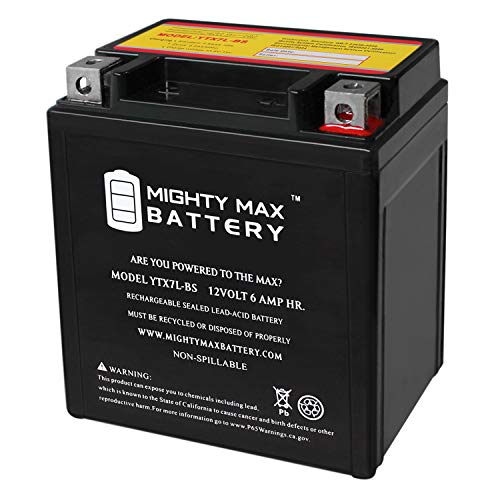
- Mighty Max Battery YTX7L-BS -12 Volt 6 AH, 100 CCA, Rechargeable Maintenance Free SLA AGM Motorcycle Battery
- Daakmax YTZ14S 12V 11.2Ah AGM Sealed Motorcycle Battery, Maintenance-Free, Compatible with Honda, Yamaha, BMW Motorcycles & Scooters
- Mighty Max Battery YTX20L-BS – 12 Volt 18 AH, 270 CCA, Rechargeable Maintenance Free SLA AGM Motorcycle Battery
- Yuasa YUAM72Z14 YTZ14S Factory Activated YTZ High Performance AGM Battery
- Mighty Max Battery YTX20HL-BS – 12 Volt 20 AH, 310 CCA, Rechargeable Maintenance Free SLA AGM High Rate Series Motorcycle Battery
Choosing with confidence for the seasons ahead
A sound purchase sequence for most riders runs in a dependable order. Confirm the exact case size, dimensions, and terminal orientation your motorcycle requires. Meet or modestly exceed the maker’s cranking specification using honestly comparable ratings. Favour a fresh unit from a traceable brand with local warranty support. Then verify your own charging system before installation so the new battery enters a healthy electrical home.
After purchase, the ownership habits in these pages matter more than the brand badge did. Keep the battery charged during layups, secure it against vibration, clean its connections, respect its dislike of deep discharge and exhaust heat, and investigate softening starts promptly. Riders who adopt that routine routinely watch an ordinary, correctly chosen AGM outlast a premium unit installed into neglect.
Resist both false economies at the extremes. The anonymous bargain with inflated ratings and no reachable maker gambles your mornings against a trivial saving, while the most exotic alternative chemistry solves weight problems most road riders never had. Between those poles sits the mature technology that starts the overwhelming majority of the world’s motorcycles every day, asking only for correct fitment and basic electrical kindness in return.
Picture the coldest, earliest, least convenient start your riding year will demand, and buy the battery that makes that particular morning boring.


