Our Top Picks
 Energizer AA Batteries Alkaline PowerAA - 32 Count (Pack of 1)7.56 x 4.21 x 1.22 inchesCheck on Amazon
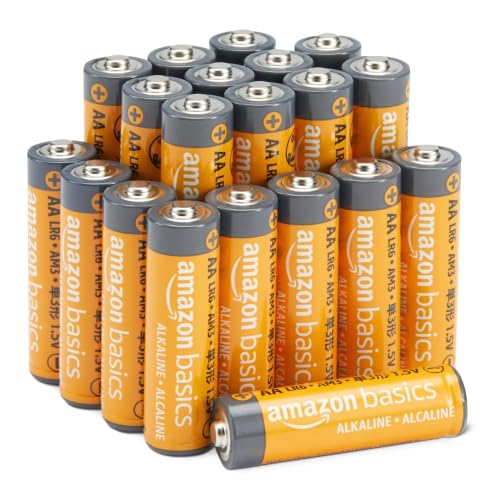 Amazon Basics 20-Pack AA Alkaline Batteries20 Count (Pack of 1)5.71 x 3.98 x 0.57 inches1.06 poundsCheck on Amazon
 Amazon Basics 48-Pack AA Alkaline High-Performance Batteries48 Count (Pack of 1)2.54 poundsCheck on Amazon

What's inside
- The battery that asks for nothing
- Inside the can: zinc, manganese dioxide, and an alkaline heart
- Shelf life and the meaning of the date on the wrapper
- Leakage: why it happens and how to live with the risk
- High-drain devices eat alkaline cells for breakfast
- Low-drain devices are where alkaline quietly excels
- Cold weather, hot cars, and the chemistry of seasons
- Torches and toys: two households within every household
- Bulk buying without bulk regrets
- Never recharge an ordinary alkaline cell
- Reading a specification sheet like a sceptic
- Premium lines, standard lines, and store brands
- The single-use lithium comparison, kept brief and honest
- Testing a suspect cell without laboratory equipment
- Storage architecture for the household battery drawer
- Disposal and recycling without guilt or confusion
- Special situations: travel kits, gifts, and grandparents
- What actually changed in modern alkaline cells
- A calm routine for a household that runs on AA
- Battery gauges lie politely, and here is why
- When the device manual and the battery aisle disagree
- Emergency kits deserve their own stricter standard
- Seasonal decorations and the January reckoning
- Teaching the next owner: labels, notes, and handovers
- Check prices on Amazon
- The last word on a humble cylinder
As an Amazon Associate I earn from qualifying purchases. This post may contain affiliate links at no extra cost to you.
A short note on links and money: this page contains referral links to outside sellers, and if a reader follows one and buys something, the site may earn a modest commission paid by the seller. The reader pays no extra because of that arrangement, the commission never buys a battery its place in this guide, and every cell discussed here would be judged by exactly the same standards if no link existed at all.
The battery that asks for nothing
An alkaline AA is the most undemanding power source in the modern home. It arrives awake, needs no charger, no cable, no account, and no instruction beyond matching the little diagram inside the battery compartment. It waits in a drawer for years without complaint, delivers its energy the instant a switch closes, and when it is spent it leaves through the household waste stream or a collection box, depending on local rules. In a gadget world addicted to firmware updates and proprietary docks, that simplicity is not a limitation. It is the product.
This guide treats the alkaline AA strictly as what it is: a single-use cell. Nothing here will suggest topping one up, reviving one, or squeezing a second life from a chemistry that was designed to give its energy once and retire. Households that also run rechargeable cells for other jobs will find those topics signposted where they belong, but the alkaline cell itself stays in its proper lane throughout — bought, stored, used, and replaced with a clear conscience and a fresh date code.
What separates a satisfying purchase from a disappointing one is rarely the logo on the wrapper. It is the match between cell and device, the freshness of the stock, the honesty of the storage, and the price paid per working hour rather than per shiny multipack. Those four themes organise everything ahead, from the chemistry inside the steel can to the quiet economics of the kitchen drawer.
Inside the can: zinc, manganese dioxide, and an alkaline heart
Cut an alkaline cell open in a laboratory — never at home — and the architecture reveals itself in layers. A steel can forms the body and the positive contact. Inside it sits a cathode ring of manganese dioxide blended with carbon, and inside that ring a gelled core of powdered zinc suspended in a concentrated potassium hydroxide solution, the alkaline electrolyte that gives the family its name. A brass nail runs down the centre collecting current from the zinc, and a seal assembly at the base keeps the chemistry contained while providing a safety vent should pressure ever build.
As the cell works, zinc oxidises at the core and manganese dioxide reduces at the ring, and electrons make their useful journey through your device between those two reactions. The nominal voltage is one point five volts, beginning nearer one point six when perfectly fresh and sliding gradually downward through the cell’s working life. That sloping discharge curve distinguishes alkaline behaviour from the flatter plateaus of some rival chemistries, and devices respond to the slope in different ways — some dimming politely, some cutting off abruptly while usable energy still remains inside.
Capacity under gentle drain reaches roughly two thousand five hundred to two thousand eight hundred milliamp-hours in a quality AA, though the figure depends heavily on how hard and how continuously the cell is worked. That dependence is not a defect in the chemistry; it is the chemistry. Understanding it is the difference between blaming a battery for a torch’s appetite and choosing the right cell for each appetite in the first place.
Shelf life and the meaning of the date on the wrapper
Manufacturers print a best-before or use-by style date on alkaline packaging, commonly seven to ten years from production for leading brands, and that date marks the point until which the maker stands behind a high retained charge — often around eighty percent of original capacity under proper storage. The cell does not die the morning after that date. It simply continues the slow self-discharge that has been proceeding since the day it was sealed, losing a few percent of its energy each year at room temperature.
Self-discharge in alkaline cells is mercifully slow compared with older chemistries, which is precisely why the format dominates emergency kits and standby remotes. Heat is the accelerator. A pack stored in a loft that bakes each summer ages far faster than the same pack in a cool hallway cupboard, even though neither has powered anything. Cold storage slows the chemistry further, but household refrigeration brings condensation risks when cells return to warm air, and makers generally advise plain cool, dry, room-temperature storage as the sensible default.
Shopping with dates in mind pays quietly. Retail stock rotates unevenly: the front of a peg hook may hold this year’s production while a discount bin hides packs several years older at a temptingly lower ticket. Divide the remaining years of dated life into the asking figure and the comparison sharpens wonderfully. A slightly dearer pack with eight fresh years ahead frequently delivers more working energy per coin than a bargain pack whose best years evaporated on a warehouse shelf. Check dates on bulk purchases with particular care, since a household buying forty cells is also buying the calendar those cells must survive.
At home, first-in-first-out rotation keeps the stock honest. Keep new packs behind or beneath the older ones, write the purchase month on the carton with a marker if the printed date is hard to read, and let the drawer itself enforce the queue. The ritual takes seconds and prevents the archaeological discovery of a forgotten pack a decade past its prime, usually at the exact moment a smoke alarm starts chirping at three in the morning.
Leakage: why it happens and how to live with the risk
Every honest discussion of alkaline cells must spend time with their one genuine vice. As an alkaline cell discharges — and especially after it has been drained completely and left sitting in a device — internal reactions generate small amounts of hydrogen gas. Pressure rises, seals age, and eventually the alkaline electrolyte may creep or burst past the base seal. The escaped potassium hydroxide solution is caustic, it corrodes contacts, it creeps across circuit boards in white or greenish crusts, and it can write off a beloved device if discovered too late.
Risk concentrates in predictable places. Fully exhausted cells left for months inside a forgotten torch are the classic case. Devices that draw a tiny standby current for years, slowly milking a cell to absolute emptiness, form another. Mixing an old cell with fresh ones in a multi-cell device guarantees the old cell reaches total exhaustion first and then gets driven further by its stronger partners, a process that can push it into reverse charge and dramatically raise the chance of a leak. Heat, once again, hastens every step of the story.
Prevention is mostly calendar discipline. Remove cells from equipment that will sit unused for a season. Replace multi-cell sets together, with cells from the same pack and date, never one at a time as individuals fail. Glance inside the compartments of little-used devices twice a year — the same rounds that check smoke alarms and holiday lights serve perfectly. Devices of real sentimental or monetary value deserve the most vigilance, and for a treasured radio or a child’s favourite toy that must stay loaded, set a replacement interval measured in months rather than waiting for performance to fade.
When a leak is discovered, handle the cell with disposable gloves, since the residue irritates skin. Remove it without flexing corroded contacts more than necessary, keep the residue away from eyes, and clean the compartment with a cotton bud barely dampened with a mild household acid such as lemon juice or vinegar, which neutralises the alkaline crust, followed by a dry bud to lift loosened deposits. Mild contact corrosion often polishes away with a pencil eraser. A device that took a heavy leak may still work after patient cleaning; one whose board drank deeply may not, and that asymmetry is the whole argument for prevention.
High-drain devices eat alkaline cells for breakfast
Some devices sip; others gulp. Digital cameras with hungry flashes, motorised toys that stall against carpet, game controllers with rumble motors and voice chat, portable speakers, and high-output torches all pull current at rates where alkaline chemistry struggles. Under heavy load the cell’s internal resistance wastes a growing share of its energy as heat inside the can, voltage sags early, and the device concludes the battery is empty while a substantial fraction of its chemical energy remains locked away, unreachable at that pace.
The symptom pattern is familiar to every parent of a battery-powered toy train: fresh cells, brief brilliance, rapid fade, then a puzzling recovery after a rest as the chemistry redistributes and voltage rebounds. That recovery is real but finite, and each rest-and-resume cycle extracts a little less. For genuinely demanding devices, standard alkaline cells are the economy choice only if bought very cheaply and changed without resentment. Premium alkaline lines, formulated with lower internal resistance and marketed for high-drain service, stretch the interval meaningfully and are worth their modest premium in cameras and controllers.
Honest expectations matter more than brand loyalty here. A set of alkaline cells in a hard-worked toy may deliver a weekend; the same cells in a wall clock deliver a year. Neither result indicates a faulty batch. Owners who find themselves feeding a particular device weekly should read the later comparison with single-use lithium cells carefully, because that is the contest where the alternative chemistry earns its higher shelf price most convincingly — and should also consider whether that one device is the household’s natural candidate for rechargeable cells instead, leaving alkaline to the jobs it performs gracefully.
Low-drain devices are where alkaline quietly excels
Remote controls, wall clocks, wireless mice between movements, bathroom scales, and simple radios share a gentle appetite: tiny currents, long rests, and an expectation that the cell installed today will still be working through next year’s seasons. This is alkaline’s home ground. Self-discharge is low, the sloping voltage curve troubles none of these undemanding circuits, and the cost per year of service becomes almost absurdly small. Fancy formulations add little here; a fresh, reputable standard cell is already the correct answer.
Standby and parasitic draws deserve a moment’s suspicion, because they blur the low-drain picture. A device that appears off may still sip current for a memory chip or a soft power switch, converting an expected three-year cell life into eighteen months. If a supposedly gentle device keeps eating cells, suspect the device before the battery brand, and consider removing cells during long idle stretches. Conversely, a clock that stops at the same season each year may be reporting cold or an ageing movement rather than a failing cell supply.
Smoke and carbon-monoxide alarms occupy a special category governed by their own manuals, which override any general battery advice. Some alarms specify alkaline cells, some specify lithium, some seal a decade-long cell inside a non-replaceable unit. Follow the alarm maker’s instruction exactly, test alarms on their recommended schedule, and treat the chirp as an instruction to act today. General guides, this one included, do not get a vote where life-safety equipment is concerned.
For the household’s wider charging picture — because most homes mix single-use cells here with rechargeable cells elsewhere — the overview in best aa and aaa battery chargers explains how nickel-based rechargeables behave in the same AA slots, which helps a family decide deliberately, device by device, which chemistry belongs where instead of drifting into a drawer where the two types mingle unlabelled and indistinguishable at a glance.
Cold weather, hot cars, and the chemistry of seasons
Alkaline cells dislike the cold in a specific, measurable way. As temperature falls, the electrolyte thickens, ion movement slows, internal resistance climbs, and the voltage delivered under any given load sags lower and earlier. A torch that ran happily through autumn evenings may fade within the hour on a frosty night, not because its cells emptied but because their chemistry slowed to a walk. Warm those same cells back to room temperature and much of the apparently lost capacity returns, which is why experienced winter walkers carry the spare set in an inside pocket and rotate warmth through the light.
Garages, sheds, and car boots in winter hover near the temperatures where this effect bites hardest, so equipment stored there — emergency torches, gate remotes, tyre inflators — should be checked with the season in mind. A cell that tests weak in a freezing garage may be perfectly serviceable, and a cell installed fresh in spring may be the one that disappoints in January. Judging alkaline health at room temperature, after the cell has rested indoors, gives the only fair reading.
Heat wounds more permanently. High temperatures accelerate self-discharge and the internal reactions that precede leakage, and unlike the cold’s temporary slowdown, heat damage does not reverse on returning to comfort. The dashboard in summer, the cupboard above the oven, and the loft under a dark roof all levy this tax silently. Emergency kits in cars deserve scheduled rotation — spring and autumn swaps are a popular rhythm — because the kit’s whole purpose is reliability on the worst day, not average performance on a mild one.
Outdoor devices that live through every season, from garden weather stations to fence-mounted lights, reward a twice-yearly battery ritual aligned with clock changes or similar memorable dates. Fresh cells before winter, inspection for early corrosion in spring, and contacts wiped dry at each visit will keep most installations boringly dependable, which is the highest praise outdoor equipment ever earns.
Torches and toys: two households within every household
Flashlights divide opinion about alkaline cells because torches themselves divide into castes. A modest household light used for meter cupboards and midnight corridors draws gently and gives alkaline cells months of dignified service. A high-output light with a turbo mode belongs to the high-drain discussion earlier in this guide and will humble the same cells quickly. The sensible household keeps both expectations in mind and stocks accordingly, rather than declaring the chemistry good or bad on the evidence of one extreme.
Toys present the leak-risk intersection of heavy drain and long neglect. A motorised toy drains its cells hard during play, then gets abandoned under a bed with those exhausted cells still installed — the exact recipe the leakage section warned against. A family rule that spent toys get their cells removed before storage prevents most toy casualties, and a quick parental sweep before birthdays and holidays catches the stragglers. Teaching children to hand over a toy that has gone sluggish, instead of shaking it and shelving it, turns battery care into an ordinary household habit rather than a specialist concern.
Board games with electronic timers, learning tablets aimed at young children, and seasonal decorations with battery packs all share the same pattern of intense bursts separated by long storage. Removing cells between seasons costs a minute and saves the contacts. Where a device’s compartment requires a screwdriver, that small friction is a design argument for doing the removal while the tool is already out for installation day, and for noting the date on a slip of paper kept inside the box lid.
Bulk buying without bulk regrets
Warehouse packs tempt every household that owns more than three remotes, and the arithmetic can genuinely favour them — with conditions. The per-cell figure in a large pack from a reputable maker usually undercuts small retail cards handsomely. The savings evaporate, however, if the pack outlives the household’s ability to use it before the printed dates approach, or if storage conditions quietly tax the stock. Count your realistic annual consumption first: remotes, clocks, mice, scales, toys, torches, and seasonal items together surprise most people, in both directions.
Divide the home into consumption tiers before choosing a pack size. Fast movers — controllers, favourite toys, a working torch — justify depth of stock. Slow movers — the clock that asks annually, the scale that asks every second year — argue against heroic quantities, because a cell spent in a clock delivers its value across years regardless of when it was bought, and a smaller fresh pack serves slow devices better than an ageing mountain. Many households land on a rolling reserve of a dozen or two cells, replenished when the reserve thins, rather than a single annual expedition.
Source matters as much as size. Bulk packs from established retailers with brisk turnover arrive fresher than identical-looking packs from slow corners of the internet, and counterfeit or grey-market cells do circulate in this category, wearing familiar colours with subtly wrong printing. A first bulk purchase from any new seller deserves the same caution as any first order: check dates, weigh a sample cell against the maker’s published figure if available, and try the pack in an undemanding device before trusting it to the emergency kit.
Larger households, landlords, and community halls that run many devices at once may find the logistics discussion in best 16 bay battery chargers relevant to their rechargeable fleets, while their alkaline stock follows the rotation discipline described here. The two systems coexist happily when each is labelled, dated, and stored in its own clearly separate box — a trivial organisational step that prevents the one unforgivable mix-up, which is placing a spent single-use cell into a charger meant for rechargeable cells.
Never recharge an ordinary alkaline cell
Because this guide sits among pages about chargers and rechargeable formats, the warning deserves its own heading in plain language. A standard alkaline AA is not designed to be recharged. Forcing current backwards through its chemistry generates gas and heat inside a sealed can whose vent was engineered as a last resort, not a routine feature. The outcomes range from leakage that destroys the charger and the cell, to rupture. Isolated historical products were built and sold specifically as rechargeable alkaline designs, with modified chemistry and matched chargers; their existence does not transfer to the ordinary cells in your drawer, which must never meet a charger under any circumstances.
Equally, never mix chemistries within one device. An alkaline cell paired with a nickel-based rechargeable in the same torch or toy creates mismatched voltages and capacities, guarantees uneven exhaustion, and raises the leak risk for the alkaline member while confusing any battery gauge the device possesses. Sets should match in chemistry, brand line, age, and charge state — a rule so cheap to follow that breaking it has no defence.
Children occasionally attempt to help by tidying loose cells into any charger-shaped object in the house. A household that owns both systems should store the charger and the single-use stock in different places, and should treat the separation as a safety feature on the same level as keeping medicines apart. The companion material at best 12 volt battery chargers covers the vehicle side of the charging world, where the same principle applies in larger form: every chemistry has its own charging rules, and borrowing rules across chemistries is where accidents begin.
Reading a specification sheet like a sceptic
Alkaline packaging speaks in adjectives, but the maker’s technical documents speak in discharge curves, and the curves are where truth lives. A proper datasheet shows how voltage evolves over time at several constant currents, and sometimes at pulsed loads resembling camera flashes or toy motors. Read the curve that resembles your device. At a gentle twenty-five milliamps, a quality AA may run for a hundred hours before voltage slides below a useful threshold. At one amp continuous, the same cell’s useful life compresses to a small handful of hours, with much of its nominal capacity stranded above the device’s cutoff or lost to internal heating.
Weight and dimensions offer quieter evidence. Genuine AA cells from major makers cluster tightly around twenty-three grams, with tightly controlled length and diameter so that springs and compartments designed decades ago still fit. A suspiciously light cell from an unknown brand is announcing reduced active material before it powers anything. A cell that fits a compartment reluctantly, or rattles in one that normally holds cells snugly, is reporting its own manufacturing tolerances.
Certifications and standards references printed on reputable packaging point to international test methods for primary cells, which define how capacity claims are measured and compared. A maker willing to cite the standard behind its figures is making a checkable claim. A maker offering only superlatives is making a mood. Prefer checkable claims, and prefer retailers whose listings reproduce the maker’s own specifications rather than inventing larger ones.
Premium lines, standard lines, and store brands
Major makers sell tiers: a flagship line tuned for high-drain endurance, a standard line for general service, and sometimes a value line for undemanding jobs. Independent comparisons published over the years converge on a consistent pattern. In low-drain service the tiers finish within a whisker of each other, because the chemistry’s limits are set by self-discharge and gentle reactions rather than by internal resistance. In high-drain service the flagship formulations pull clearly ahead, delivering noticeably more pulses, flashes, or laps of the toy circuit before voltage collapses.
Store brands complicate the picture agreeably. Large retailers commission cells from established factories, and their premium own-label alkaline lines frequently perform close to the famous names in published comparisons, at lower shelf figures. The catch is variability across years as contracts change hands, which makes date-checking and modest first purchases the wise approach. An own-label pack bought this year may not be last year’s cell wearing the same colours.
The practical allocation most households settle into looks like this: flagship or proven premium cells for cameras, controllers, and the working torch; standard or store-brand cells for remotes, clocks, scales, and mice. That split spends money only where the device can actually convert better chemistry into longer service, and it keeps the drawer’s average cost per year impressively low. Loyalty to one wrapper for every job is simpler, but the two-tier drawer is cheaper without being worse where it matters.
The single-use lithium comparison, kept brief and honest
Primary lithium AA cells — built on lithium iron disulfide chemistry and sold as premium long-life singles — are the alkaline cell’s only serious rival in the same slot, and they win several specific contests outright. They weigh roughly a third less. They hold a flatter voltage curve, delivering close to their full capacity even at heavy currents where alkaline fades. They shrug off cold that would humble an alkaline cell, continuing to work at temperatures far below freezing, and they carry shelf-life claims stretching toward two decades. Their leak record is also markedly better, which matters for devices that must stay loaded and forgotten.
Those virtues explain their strongholds: outdoor sensors through winter, trail cameras, high-drain cameras on trips where spares are heavy, emergency kits built for years of neglect, and cherished devices whose owners refuse leak roulette. The cost is the counterweight. A lithium AA typically costs several times its alkaline counterpart, and in a remote control or a wall clock that premium buys almost nothing, because the alkaline cell already delivers years of service there. Voltage also starts slightly higher, near one point eight volts fresh, which a small number of sensitive devices dislike; check the device manual before substituting in anything unusual or valuable.
The verdict most experienced households reach is a mixed drawer with clear assignments rather than a single winner. Lithium for the cold, the critical, and the power-hungry. Alkaline for the gentle, the numerous, and the everyday. Rechargeable nickel-based cells, where a household chooses them, for the relentless daily cyclers such as game controllers in heavy rotation. Each chemistry in the slot it flatters is the entire philosophy in one sentence, and it renders brand arguments mostly decorative.
Testing a suspect cell without laboratory equipment
A household multimeter, rested voltage, and a little patience expose most battery mysteries. A fresh alkaline AA reads around one point five five to one point six volts at rest. Under a modest load — simply by being installed in a working device for a minute — a healthy cell holds its voltage respectably, while a tired one sags dramatically and then creeps back up once removed, which is the classic signature of a cell that can still power a remote but not a motor. Voltage alone cannot certify capacity, since alkaline’s sloping curve makes mid-life readings ambiguous, but it separates the dead from the plausible instantly.
Simple battery testers that apply a small load while measuring give a fairer verdict than voltage alone and cost little; the drawer that holds the cells is a reasonable place to keep one. The bounce folklore sometimes demonstrated at kitchen tables — dropped cells bouncing differently by charge state — reflects a real physical change in the cell’s interior, yet it is far too crude and inconsistent to judge anything you care about. Treat it as a party trick, not an instrument.
When several cells from one pack behave oddly, suspect storage before manufacture. A pack that spent a summer in a hot delivery van or a shop window can underperform its printed date through no fault of the factory. Retailers with climate-controlled stock and brisk turnover quietly earn their slightly higher figures here. And when a single device kills every brand impartially, believe the device: a failing motor, a corroded contact adding resistance, or a standby drain will consume premium and budget cells with equal enthusiasm.
Storage architecture for the household battery drawer
Order prevents most alkaline accidents, because loose cells rolling among coins, keys, and foil can short against each other or against metal clutter. Keep cells in their original packaging until needed, or in a divided plastic box where each cell sits in its own compartment, terminals unable to bridge. Spent cells deserve a separate small container awaiting disposal, clearly distinct from the fresh stock, because a dead cell reinstalled by a helpful family member generates more confusion than any other battery event in domestic life.
Store the box somewhere cool, dry, and memorable — the hallway cupboard beats the garage for the temperature reasons already covered — and keep a marker and a small notebook or phone note alongside it. Record pack dates on arrival and note which devices received cells when, if you manage batteries for a large household or a small business. That modest ledger converts the vague sense that a device eats batteries into data: dates, intervals, and brands, ready to settle arguments and to expose the one gadget whose appetite deserves investigation.
Households with extensive USB-powered gear often consolidate charging in one place as well, and the survey at best usb c chargers is a useful companion for organising that side of the cupboard. The alkaline box, pointedly, belongs away from that charging station — close enough to remain convenient, separate enough that no tired evening ever introduces a single-use cell to a charger’s slot by mistake.
Disposal and recycling without guilt or confusion
Rules for spent alkaline cells vary by country and sometimes by city, because the chemistry’s modern formulation removed the mercury that once made household batteries a hazardous-waste headline. Many jurisdictions now permit ordinary household waste disposal for alkaline cells, while many also provide collection boxes at retailers, libraries, and civic sites that route them to recyclers who recover steel and zinc-bearing material. The local rule governs; a quick check of your council or municipal waste page settles it definitively for your address.
Whatever the route, tape or bag spent cells if they will travel loose among other waste or recycling, since a mostly-spent cell can still deliver a warming short against metal. Keep spent cells dry and out of children’s hands, not because they are dramatically dangerous but because leaked residue and small parts deserve respect. Never burn batteries, never dismantle them, and never place them in a fire-adjacent bin such as an ash container.
Recycling collection also solves the mixed-drawer problem at end of life: rechargeable cells, button cells, and lithium singles each carry their own disposal requirements, and collection points accept the assortment sorted by their staff. When in doubt, take the whole spent container to such a point rather than guessing stream by stream. The habit costs one errand a few times a year and closes the loop on every chemistry the household uses.
Special situations: travel kits, gifts, and grandparents
A travel kit built on alkaline AA cells has a logistical elegance that rechargeable systems envy. The cells are sold in every airport, petrol station, and village shop on earth, they tolerate being bought in a hurry, and they ask for no socket time in a hotel room. Pack spares in original packaging or a small divided case, keep them in hand luggage where temperature stays civilised, and buy locally at the destination if the trip runs long. For a camera or torch that devours cells, that worldwide availability converts battery anxiety into a minor shopping errand.
Gifts that eat batteries deserve a pack taped to the box, fresh-dated and of the correct chemistry, because the recipient’s first experience of a toy or gadget should not begin with a rummage through a drawer of doubtful cells. Grandparents’ houses benefit from the same kindness in reverse: a dated multipack left in a known drawer, a note naming which devices take AA, and spent cells removed during visits, quietly prevents the decade-old remote cell and the leaked torch that otherwise accumulate in houses where batteries are nobody’s hobby.
Rental properties, holiday homes, and boats share a pattern of intense use separated by vacancy, and alkaline discipline there is mostly removal discipline. Cells come out when the property empties, fresh cells go in when it fills, and the small cost of that rotation is insurance against arriving to corroded remotes and dead alarms. Where an alarm system must remain live between visits, its maker’s specified chemistry and replacement schedule govern, as the earlier safety discussion insisted.
What actually changed in modern alkaline cells
Today’s alkaline cell is not your grandfather’s, despite the identical silhouette. Mercury, once added to control internal gassing, has been engineered out of mainstream production in most markets. Cathode formulations grew denser and purer, zinc powders became more uniform, separators thinned without weakening, and seal designs improved enough that shelf-life claims roughly doubled across a generation. The result is a cell that stores longer, leaks less readily than its ancestors, and delivers more of its energy at demanding currents — improvements earned in materials science rather than in advertising copy.
Those gains explain why advice ages. Guidance written when cells self-discharged briskly and leaked enthusiastically overstates modern risks, while guidance that ignores leakage entirely understates a risk that, though reduced, never reached zero. The balanced position this guide has taken — respect the date, respect the drain, remove the exhausted, inspect the forgotten — matches the current chemistry as it actually behaves in drawers and devices today.
Manufacturing geography has shifted as well, with production spread across several continents and quality tracking the maker’s process control more than the plant’s postcode. That is another reason to judge by date, weight, published curves, and retailer reputation rather than by assumptions about origin. A well-made cell announces itself in measurements; a poor one announces itself in excuses.
A calm routine for a household that runs on AA
Gather the household’s AA population once, on a quiet afternoon, and write the list down: every remote, clock, mouse, scale, toy, torch, sensor, and seasonal decoration, with the number of cells each holds. That census, unglamorous as it sounds, transforms battery buying from reactive scrambling into a small, knowable system. Beside each entry note the drain character — gentle, moderate, or hungry — using the categories this guide has built, and let the census dictate both the stock level and the tier split between standard and premium cells.
Then set the rhythms. Fresh stock enters at the back of the box, oldest leaves first. Compartments of stored devices get inspected when the clocks change. Hungry devices get premium cells or a chemistry promotion; gentle devices get standard cells and long intervals. Spent cells collect in their own container and leave through the local route a few times a year. None of these steps requires expertise, equipment, or enthusiasm — only the decision that batteries are a system, however small, rather than a series of surprises.
Keep the census updated as devices arrive and depart, and let it absorb the household’s newer rechargeable gear on the same page, clearly marked, so the two chemistries never blur. A single sheet of paper, revised in pencil, outperforms every memory in the house. Within a year the list will have prevented at least one dead-remote evening, one leaked toy, and one emergency purchase at convenience-store figures, which is a respectable return on an afternoon’s paperwork.
Battery gauges lie politely, and here is why
Devices that display battery bars interpret voltage through assumptions, and alkaline’s sloping curve defeats tidy interpretation. A gauge calibrated for the flat plateau of a rechargeable cell may declare an alkaline cell half-empty while it is nearly fresh, because the fresh alkaline voltage sits higher and falls quickly to its long working plateau. Another device, calibrated generously, shows full bars until the slope steepens near the end and then collapses from confidence to chirping within a day. Neither gauge is broken; both are translating a language of gradual decline into a vocabulary of four blunt bars.
The practical response is to learn each important device’s dialect. Note how long the interval runs between the first low-battery warning and actual failure in your alarm, your sensor, or your camera, under your conditions. That observed interval, not the icon, is the number worth remembering, and it belongs on the household census beside the device’s name. Critical devices deserve replacement at first warning regardless, while a remote control may be allowed to coast on its warning for weeks of perfectly adequate service.
Photographers and field recordists learned this discipline long ago, swapping cells at warnings rather than at failures because the cost of a missed moment dwarfs the value of the energy remaining in a partly used cell. Their partly used cells then cascade into remotes and clocks at home, clearly marked, where their remaining slope is spent honourably. Cascading, done deliberately with a marker pen, is thrift; cascading by accident, from an unlabelled drawer, is how mismatched sets are born.
When the device manual and the battery aisle disagree
Manuals sometimes specify a chemistry with a strictness that surprises owners, and the reasons are usually electrical rather than commercial. A device designed around alkaline’s one point five volts and its particular internal resistance may behave oddly on the slightly lower voltage of a rechargeable substitute, misreading its gauge or shutting down early. Another device may forbid a certain chemistry because its charging dock attempts to replenish whatever sits in the compartment — a design under which a single-use cell must never be installed, for the reasons the safety section set out in full.
Read the manual’s battery page once, when the device arrives, and write its requirement onto the household census in the same sitting. That single transcription prevents years of guesswork by everyone else in the home, including future owners if the device is lent or given away. Where a manual permits several chemistries, the drain categories decide: gentle devices take alkaline without a second thought, hungry devices earn premium alkaline or the lithium alternative, and relentless daily devices make their case for rechargeable adoption on a separate page of the census.
Warranty language occasionally enters the discussion when a leak damages a device. Some battery makers operate goodwill programmes that assess or replace equipment damaged by their leaking cells, subject to inspection and conditions that vary by brand and region. Keeping the leaked cell and its packaging, photographing the damage before cleaning, and contacting the maker promptly preserves that option. It is a further argument for buying cells whose maker maintains a real customer-service address rather than a wrapper with no accountable name behind it.
Emergency kits deserve their own stricter standard
A household emergency kit fails differently from a household drawer, because it must perform after months or years of neglect, in bad weather, possibly in the dark, for people who are already having a difficult night. Alkaline cells serve well in such kits when the kit is maintained as a system: cells stored in original packaging inside a sealed bag, dates checked on a fixed annual occasion, and the kit’s torch and radio exercised briefly at each check so contacts stay bright and faults surface in peacetime rather than during a power cut.
Rotation is the kit’s lifeblood. When fresh cells enter the household stock, the kit receives the newest dated pack and its previous, still-dated cells graduate into everyday service. Nothing in the kit should ever approach its printed limit, because the whole point of the exercise is margin. Households in regions with severe winters may promote the kit’s most critical light to lithium singles for their cold endurance, while keeping alkaline for the radio and the lanterns, where its performance in sheltered indoor use remains entirely adequate.
Include in the kit a written card naming every device, its cell count, and its chemistry, plus a small reserve beyond the installed sets. In a genuine emergency that card spares a stressed household the arithmetic of compartments and polarities, and it helps a neighbour or relative assisting the home to keep devices running correctly. Preparedness literature calls this reducing cognitive load; grandparents call it labelling things properly, and both are describing the same kindness toward a future, tired version of yourself.
Seasonal decorations and the January reckoning
No category of device manufactures more alkaline casualties than seasonal decoration. Wreaths, window candles, animated figures, and strings of miniature lights arrive each year with battery boxes that were packed away the previous January holding exhausted cells, because nobody removes batteries during the emotional labour of undecorating. Eleven months of storage then give those spent cells every opportunity to leak into compartments that will not be opened until the next festive season, at which point the damage is discovered under time pressure and good cheer evaporates.
The fix belongs to the packing ritual rather than the unpacking one. As each decoration goes into its box, its cells come out, spent ones go to the disposal container, and serviceable ones go into a labelled envelope inside the same box, so next year’s setup begins with known quantities. A note on the box lid recording how many cells the item needs, and how long a fresh set lasted, converts the following season’s shopping into arithmetic. Decorations that run nightly for a month are hungrier than their size suggests, and premium cells or a chemistry promotion often pay for themselves across a single season in avoided mid-holiday replacements on ladders.
Outdoor seasonal items add weather to the equation. Battery boxes on wreaths and garden figures admit condensation as temperatures swing, and contacts corrode even when cells behave. A smear of diligence at packing time — compartments dried, contacts wiped, seals seated squarely — preserves both the decoration and its next set of cells. Indoor storage of the battery boxes, where the design permits detaching them, beats a freezing garage for every reason the cold-weather section established.
Teaching the next owner: labels, notes, and handovers
Batteries outlive arrangements. The tenant who inherits a landlord’s alarm, the relative who receives a gifted radio, the buyer of a secondhand camera — each steps into a battery story already in progress, usually without documentation. A household that labels its devices with the date cells were installed, on a small sticker inside the compartment lid, hands every future owner the essential fact in the essential place. It takes ten seconds with a marker and it prevents the archaeological guessing that leads to leaks in other people’s homes.
The same courtesy applies inside families. When a device travels to a child’s first flat, to a parent downsizing, or to a friend borrowing equipment for a trip, a sentence about its battery habits travels with it: which chemistry, how many, when last changed, and whether the spares in the bag are fresh or cascaded. Such sentences are the oral version of the household census, and they spread the calm, systematic approach this guide has described far more effectively than any lecture about electrochemistry.
Secondhand purchases deserve the same fresh start. A used camera, toy, or instrument arriving with cells already installed should have those cells removed and inspected before anything else happens, because their age, brand, and remaining charge are all unknown and their previous owner’s storage habits are a mystery the compartment may already be narrating in corrosion. Begin your ownership with a fresh, dated set from your own stock, record the installation on the census, and let the device’s battery history restart under management you can vouch for personally.
Workshops and garden sheds form a final frontier where alkaline cells serve in stud finders, laser measures, head torches, and radios that accompany long projects. These spaces swing wider in temperature than any room indoors, collect more dust, and invite longer forgetting, so their battery compartments deserve the strictest inspection rhythm in the property. A shed radio that falls silent in October may simply be cold, may genuinely be empty, or may be quietly leaking into its board; only opening the compartment distinguishes the three, and a household that opens compartments on schedule never has to guess which story it is living in.
Eventually every household accumulates a small museum of orphaned cells whose provenance nobody remembers. The honest treatment for a cell of unknown age and history is demotion to the least important device in the house, or disposal if its wrapper, weight, or voltage raises any doubt at all. Sentimentality has no vote in battery management; the drawer serves the devices, the devices serve the household, and unknown cells serve neither until they have re-earned trust in a clock that nobody minds stopping.
Check prices on Amazon
Live listings for the shortlist in this guide are pulled from Amazon below, so prices and availability are always current at the moment you look.

Energizer AA and AAA Batteries, 48 Count, Combo Pack Contains 24 Max Double A and 24 Max Triple A Batteries


The last word on a humble cylinder
The alkaline AA endures because it solves a modest problem completely: portable power, ready instantly, stored patiently, understood by everyone, available everywhere. It does not pretend to be rechargeable, it does not ask to be managed by software, and it does not punish a household that ignores it for a year, provided the ignoring happens within its dated life and outside a forgotten device. Respect those few conditions and it repays the respect with a reliability so plain that it becomes invisible.
So buy fresh, buy honestly matched to the device, store cool and separate, replace in sets, and let the spent ones leave by the proper door. Somewhere tonight a clock is crossing midnight on a cell installed so long ago that nobody remembers the occasion — and that quiet, unremembered faithfulness, ticking on above the mantel while the house sleeps, is exactly what a good disposable battery was always meant to deliver.