Our Top Picks
 Energizer Ultimate Lithium AA BatteriesAA 24 Count (Pack of 1)7.06 x 2.14 x 1.3 inches0.8 poundsCheck on Amazon
What's inside
- What single-use lithium actually means
- The two chemistries that matter
- Voltage behaviour and device compatibility
- Capacity under real drains, not brochure drains
- Cold, heat, and the weather outside the lab
- Leak risk and protecting the devices you care about
- Weight, and why grams become a feature
- A format-by-format tour
- Where primaries beat rechargeables, and where they lose
- Safety, storage, transport, and disposal
- A practical buying checklist
- The jobs these cells do best
- Mistakes that waste money or create risk
- Standards, names, and reading a datasheet
- Thinking in cost per hour of service
- Check prices on Amazon
- Closing judgement
As an Amazon Associate I earn from qualifying purchases. This post may contain affiliate links at no extra cost to you.
Some batteries sit in a drawer for years and still need to work the moment a smoke alarm chirps at three in the morning, a trail camera wakes up in falling snow, or a flash unit has to recycle fast during the only take that matters. That is the job single-use lithium batteries were built for. They are primary cells, meaning they are manufactured charged, used once, and replaced when exhausted, and their lithium chemistry gives them a combination of long storage life, strong performance in cold weather, light weight, and steady voltage that ordinary alkaline cells struggle to match. This guide explains what these cells actually are, how the two main chemistries differ, where each size earns its place, and where a rechargeable system is honestly the better answer.
Links on this page can earn this publication a commission when readers buy through them, and that support helps keep detailed buying research like this freely available to read. The recommendations and explanations below are based on published specifications, manufacturer datasheets, safety standards, and documented device requirements rather than on any commission arrangement, and no maker pays to be described favourably here.
What single-use lithium actually means
The phrase single-use lithium causes confusion because lithium appears in two very different battery families. Primary lithium cells are disposable by design. Inside them, lithium metal is consumed during discharge in a chemical reaction that cannot be reversed safely by applying a charging current. Rechargeable lithium-ion cells, by contrast, shuttle lithium ions back and forth between electrodes and never contain a slab of metallic lithium in the same way. The shared element in the name hides completely different behaviour, different voltages, and different safety rules, so the first buying decision is simply recognising which family a product belongs to.
On shop shelves the most familiar primary lithium products are cylindrical household sizes: AA, AAA, C, D, and the rectangular 9V block. Most of those use lithium iron disulfide chemistry and deliver a nominal 1.5 volts, which lets them drop into devices designed for alkaline cells. A second group uses lithium manganese dioxide chemistry and delivers a nominal 3 volts; the CR123A is the best-known example, along with related photo and security-device cells. Both groups are primaries, both are sold ready to use, and neither should ever be placed in a charger.
Primary lithium occupies a specific niche between alkaline and rechargeable options. Alkaline cells cost less upfront and handle undemanding jobs perfectly well, from wall clocks to television remotes that sip current for months. Rechargeables reward frequent, predictable use because their higher purchase price is spread across hundreds of cycles. Primary lithium costs more per cell than alkaline yet asks for nothing in return: no charger, no rotation schedule, no topping up before a trip. You pay for readiness, for performance at temperature extremes, and for runtime in demanding devices, and whether that trade makes sense depends entirely on the device in your hand.
It also helps to separate these cells from coin cells. Small lithium coin cells such as the CR2032 share the manganese dioxide chemistry family and appear in key fobs, watches, and motherboard clocks, but they serve tiny, low-drain loads and follow different buying logic. This guide mentions them only to draw the boundary clearly. The focus here stays on the larger cylindrical and block formats that power alarms, lights, cameras, sensors, and portable equipment where runtime and reliability are the real questions.
The two chemistries that matter
Lithium iron disulfide, written as Li-FeS2, is the chemistry behind nearly every 1.5-volt primary lithium AA and AAA on the market, including the well-known Energizer Ultimate Lithium family and comparable lines from other makers. The anode is lithium metal and the cathode is iron disulfide. During discharge the lithium oxidises and the iron disulfide is reduced, delivering energy at a voltage that starts a little high, settles quickly, and then holds remarkably steady. Because the nominal voltage matches the alkaline standard, device makers can approve these cells as direct substitutes, and many manuals for outdoor and safety equipment now name them explicitly as the preferred option.
Lithium manganese dioxide, written as Li-MnO2, pairs a lithium anode with a manganese dioxide cathode and produces roughly double the voltage of a single alkaline cell. The CR123A, roughly two-thirds the length of a standard cell and noticeably fatter than a AA, is the format most readers will meet. It powers tactical and everyday flashlights, older film and digital cameras, alarm-system sensors, and some medical and industrial devices. Two CR123A cells in series were once a common way to build a 6-volt pack inside a light, though many modern lights also accept a single larger rechargeable cell instead, which is exactly why reading the device manual matters before buying either type.
Alkaline chemistry, zinc and manganese dioxide with a potassium hydroxide electrolyte, remains the useful baseline for comparison. An alkaline AA is heavier, its voltage slides steadily downward from the moment a load is applied, and its internal resistance climbs sharply in the cold. None of that matters in a kitchen clock. All of it matters in a motorised device working outdoors in January. Primary lithium was commercialised precisely for those harder jobs, and the datasheets reflect it: wider operating temperature ranges, flatter discharge curves, and far longer rated storage lives than alkaline equivalents from the same brands.
A third primary lithium chemistry, lithium thionyl chloride, exists for industrial metering and memory backup, delivering high energy density at very low drains over decades. It is not a consumer shelf product, handles high current poorly, and can exhibit voltage delay after long storage, so it does not belong in a household buying decision. Mentioning it only helps to explain why a search for lithium batteries sometimes surfaces specialist cells with unfamiliar labels that should not be substituted into consumer devices, however impressive their stated capacity figures look.
Voltage behaviour and device compatibility
Voltage is where primary lithium rewards a careful read. A fresh Li-FeS2 AA shows an open-circuit voltage of around 1.7 to 1.8 volts before any load is applied, compared with roughly 1.6 volts for a fresh alkaline. Under a working load it settles near 1.5 volts and spends most of its life on a flat plateau before falling away near the end. For the overwhelming majority of devices that plateau is ideal: motors run at consistent speed, transmitters hold their range, and battery gauges behave sensibly. The slightly high starting voltage, however, explains the small print in some manuals.
A minority of devices, particularly older equipment with simple voltage-sensitive circuits, some delicate measuring instruments, and certain lights with minimal regulation, may object to the higher initial voltage or behave oddly until the cell settles. The practical response is boring but effective: check the manual or the maker support page for a statement about lithium primaries. Modern smoke alarms, weather stations, and camera flashes usually welcome them. If a maker explicitly excludes them, believe the maker, because a warranty argument is a poor substitute for a working alarm.
The flat discharge curve has a subtler consequence for battery indicators. Devices that estimate remaining life from voltage alone were calibrated for the alkaline slide, so a lithium cell can read as full for most of its service and then drop quickly at the end. That is not a defect in the cell; it is a mismatch between the gauge and the chemistry. In critical gear the sensible habit is scheduled replacement based on calendar and known runtime rather than trust in a four-bar icon, and keeping spares on hand because the warning window is shorter than alkaline users expect.
For 3-volt Li-MnO2 cells, compatibility is simpler and stricter. A CR123A only fits devices built for it, and its voltage cannot be faked by stacking smaller cells. Never attempt adapters, spacers, or paired coin cells to imitate one. Lights designed for two CR123A cells sometimes also accept one rechargeable lithium-ion cell of similar total length, but the voltages differ and the maker statement governs. Primary and rechargeable options in this format are alternatives chosen per device, not interchangeable parts to mix, and mixing one fresh and one depleted CR123A in the same light is a recognised way to overheat the weaker cell.
Capacity under real drains, not brochure drains
Capacity figures only mean something alongside the drain at which they were measured. A Li-FeS2 AA is commonly rated around 3,000 to 3,500 milliamp-hours at low, continuous drains, which already exceeds a typical alkaline AA under the same gentle conditions. The gap widens dramatically as the load grows. At the kind of current drawn by a camera flash, a motorised toy, a game controller with rumble motors running, or a bright flashlight, an alkaline cell may deliver only a fraction of its low-drain capacity because its internal resistance wastes energy as heat and its voltage sags below the device cutoff early. The lithium cell, with far lower internal resistance, keeps its voltage up and converts much more of its stored energy into useful work.
That difference changes how runtime comparisons should be read. In a low-drain remote control, a lithium AA might outlast an alkaline by a modest margin that hardly justifies its price. In a high-drain flash, the same lithium cell can deliver several times as many full-power cycles, which transforms the economics completely. Honest buying therefore starts with the load profile of the device, not with the biggest number on a packet. Ask what the device does: sip, pulse, or gulp. Primary lithium earns its premium in pulse and gulp territory, and merely ties in sip territory where shelf life becomes its main argument instead.
Pulsed loads deserve special attention because so many modern devices use them. Wireless sensors sleep for long stretches and then transmit in short bursts. Trail cameras idle for days and then fire a bank of infrared LEDs and write image files in a few expensive seconds. A chemistry with low internal resistance handles those bursts without the voltage dipping below the reset threshold that causes mysterious reboots and missed triggers. Many field reports of flaky outdoor electronics trace back not to faulty devices but to alkaline cells that looked adequate on a shelf label and collapsed under each transmission pulse once the weather turned cold.
Self-discharge ties capacity to the calendar. Primary lithium cells lose only a tiny fraction of their charge per year at room temperature, which is why makers can print storage lives of up to twenty years for leading AA and AAA lines, with the cells still retaining most of their original capacity at the end of that period when stored sensibly. Alkaline cells self-discharge faster and, more importantly, grow more leak-prone with age. Rechargeable nickel-metal hydride cells, even low-self-discharge types, still lose charge far faster than primaries and arrive at an emergency possibly half empty unless someone maintained them. For a kit that must simply work after years of neglect, the primary lithium discharge curve across time is its strongest argument.
Cold, heat, and the weather outside the lab
Temperature performance is the headline specification for many buyers, and here the datasheet claims are genuinely striking. Li-FeS2 cells are typically rated for operation down to about minus 40 degrees Celsius and up to about 60 degrees Celsius. Alkaline cells, by comparison, fade badly below freezing and may deliver only a small share of their room-temperature capacity at minus 20, because the water-based electrolyte thickens and reaction rates fall. Anyone who has watched a flashlight dim to a candle glow on a winter hike has met this chemistry lesson in person.
Cold affects more than total runtime. Voltage under load sags, so devices with a minimum operating voltage shut down while charge remains stranded in the cell. Warm the same alkaline cell back up indoors and it may revive, which is why winter gear failures feel so inconsistent. A lithium primary keeps its working voltage in the same conditions, so a weather station on an exposed wall keeps transmitting, a ski-tour headtorch stays bright, and a vehicle emergency kit stored in an unheated boot remains trustworthy. For readers in genuinely cold climates, this single property often settles the buying decision before any other feature is considered.
Heat deserves equal respect in the opposite direction. High temperatures accelerate self-discharge in every chemistry and shorten storage life, and primary lithium is not exempt, merely more tolerant. A glovebox that bakes through summer will age any cell stored in it, so emergency kits benefit from an annual glance and from storage in the coolest practical place. At the working end, lithium primaries handle warm environments, attics, and sunlit enclosures better than alkaline cells, which is one reason outdoor sensor makers specify them for equipment mounted where shade is not guaranteed.
Altitude and pressure rarely enter household buying, yet they illustrate the sealed construction of these cells. Primary lithium cylinders are built with robust seals and, in many designs, a vent that opens only under abuse conditions. They travel in aircraft cabins under the rules described later in this guide and serve in mountain and aviation-adjacent equipment where alkaline performance would be unreliable. The everyday translation is simple: the cell is engineered as a sealed energy store for hostile conditions first, and as a household commodity second, which is exactly the reverse of how alkaline cells evolved.
Leak risk and protecting the devices you care about
Ask anyone who maintains a drawer of older electronics and they will describe the white, crusty residue of a leaked alkaline cell, sometimes with corroded contacts and a device written off entirely. The cause is the potassium hydroxide electrolyte. As alkaline cells age, discharge, or sit depleted in a device, gas generation and seal stress can force that caustic liquid out, and it creeps across contacts and circuit boards. The damage is often worse than the value of the cell by orders of magnitude, which reframes the price comparison for anything expensive, sentimental, or hard to replace.
Primary lithium cells use a non-aqueous electrolyte and a different seal architecture, and makers of leading lines explicitly market them as leak-resistant, with some offering guarantees covering device damage from leakage within stated conditions. No honest guide should promise that any battery is incapable of leaking under abuse, crushing, or extreme age, but the field record and the chemistry both point the same way: the risk is far lower than with alkaline cells left in place for years. For a smoke alarm expected to sit untouched for a decade, a cherished radio, or a collectible torch, that risk reduction alone can justify choosing lithium.
Leak prevention also has a behavioural side that costs nothing. Whatever chemistry you choose, do not leave exhausted cells inside devices, do not mix old and new cells in the same compartment, and do not mix chemistries in a series string, because the weakest cell gets driven hardest and fails first, sometimes venting in protest. Store spares in their original packaging or a proper case so terminals cannot touch each other or loose metal objects. These habits matter even more for lithium cells because their higher energy content deserves respect, a theme the safety section returns to in detail.
There is an environmental footnote to leakage as well. A leaked alkaline cell contaminates the device and often the drawer or soil around a careless disposal. Lithium primaries are not benign rubbish either, and they belong in battery recycling streams rather than household waste in most jurisdictions, but their sealed, long-lived nature means fewer cells consumed and fewer failures across the same years of service. Counting cells used per decade of alarm protection, rather than cells bought per shopping trip, gives a fairer picture of both cost and waste for long-interval devices.
Weight, and why grams become a feature
A Li-FeS2 AA weighs roughly a third less than an alkaline AA, around fifteen grams against twenty-three or so, depending on brand. One cell in a remote control makes no difference anyone can feel. Eight cells in a flash unit, a portable radio, a handheld gaming setup, or a backpacking headtorch absolutely do, and the saving multiplies across a camera bag, a survey kit, or a go-bag stocked with spares. Weight also compounds with the runtime advantage: if lithium cells both weigh less per cell and last longer in a high-drain device, the carried weight per hour of service falls twice.
Backpackers and field technicians recognised this early, which is why lithium primaries became the default recommendation in ultralight and winter-trekking communities long before they were common in supermarkets. A winter trip is the perfect storm for batteries: cold that cripples alkaline output, darkness that stretches headtorch hours, and a pack weight budget that punishes every spare set. Primary lithium answers all three pressures at once. Similar logic applies to climbing, caving, and expedition photography, where resupply is impossible and failure is not an anecdote but a safety problem.
Weight matters at home too, in less obvious places. Wall-mounted sensors and alarms sit on small adhesive pads or single screws, and lighter cells reduce the load on those fixings over years. Ceiling smoke alarms are simply easier to service on a ladder when the replacement is light and the interval is long. None of these details would justify a purchase alone, yet together they explain why people who switch a whole household ecosystem to lithium primaries for critical devices rarely drift back for those specific jobs, even while keeping alkaline cells for the clock on the kitchen wall.
A format-by-format tour
AA: the default choice
The AA is where primary lithium makes its broadest case. It fits the largest population of devices on earth, from camera flashes and game controllers to outdoor sensors, smart locks, and medical-adjacent home equipment such as blood pressure monitors whose manuals permit it. In high-drain AA devices the performance lead over alkaline is at its widest, and in low-drain devices the twenty-year storage rating turns a packet of spares into a genuine long-term reserve. If a reader buys only one size after reading this guide, it will almost certainly be this one, in modest quantities matched to real devices rather than in bulk driven by a discount banner.
AAA: small cells, same logic
AAA lithium primaries repeat the AA story at smaller scale, with capacities around 1,100 to 1,250 milliamp-hours at light drains and the same cold and shelf-life advantages. They suit headtorches, compact torches, wireless mice that travel, laser pointers used for site work, and slim remotes for presentation gear that must not die mid-talk. Because AAA alkaline cells hold so little energy to begin with, the high-drain gap is proportionally large: a headtorch on a winter evening is the classic case where lithium AAA cells keep a regulated beam bright while alkaline output slides within the hour.
C and D: fewer choices, longer intervals
Lithium C and D cells exist but occupy a narrower market, aimed at larger torches, lanterns, radios, and some alarm and instrumentation roles where the device itself is built to stay in place for long periods. Availability is patchier than AA, prices per cell are higher in qualitative terms, and some products sold in these sizes are actually assemblies or use different lithium chemistries with 3-volt outputs, so label reading is essential. A true 1.5-volt Li-FeS2 cell in C or D format is a drop-in alkaline replacement; a 3-volt cell in the same silhouette is not, and confusing the two can damage equipment. Buy these sizes deliberately, from reputable makers, for named devices.
9V: the alarm specialist
The 9-volt lithium block, usually Li-MnO2 inside despite its household shape, is close to a purpose-built smoke and carbon monoxide alarm battery. Makers rate leading versions for up to a decade in alarm service, matching the recommended replacement life of the alarm unit itself, which enables the satisfying arrangement of fitting both on the same day and replacing both together years later. The same block serves wireless microphones, guitar electronics, multimeters, and garage and gate equipment where a long, unattended service interval matters more than the higher upfront cost compared with an alkaline 9V that may need swapping several times across the same span.
CR123A: lights, cameras, and security
The CR123A deserves its own paragraph in any tour because it never pretends to be an alkaline substitute. It is a 3-volt primary built for devices designed around it: weapon-adjacent and handheld torches where makers still specify primaries for absolute reliability, film cameras with motor drives, rangefinders, alarm sensors, and some night-vision and thermal accessories. Its strengths mirror the rest of the family, long shelf life, strong cold performance, and high pulse capability for bright LED output. Its buying rule is stricter, though: purchase recognised brands from authorised sellers, because this format attracts counterfeits more than household sizes do, and a counterfeit high-energy cell is a safety problem, not merely a disappointment.
Across all five formats, one sizing warning repeats. Lithium primaries match standard dimensions closely, but individual brands vary by fractions of a millimetre, and a few devices with tight compartments or unusual contact springs can be fussy. If a cell needs force to fit, stop and compare it with the cell that came out. Correct batteries slide home with ordinary pressure, and forcing any energy-dense cell into a compartment is a habit worth unlearning on the spot.
Where primaries beat rechargeables, and where they lose
Honesty about rechargeables makes the case for primaries stronger, not weaker. A household that uses AA cells daily in controllers, toys, and torches will spend less and throw away far less by running good nickel-metal hydride rechargeables in rotation. Those cells deliver a slightly lower nominal voltage of about 1.2 volts, which most modern devices accept happily, and anyone building that system should start with a proper charger comparison such as best aa and aaa battery chargers rather than the slow bundled charger in a value pack. For high-turnover devices on a predictable weekly rhythm, rechargeables are the rational default and primaries are the expensive habit.
Primaries win where the rhythm breaks down. Emergency equipment that sits for years, seasonal gear used for two intense weeks and then stored, devices installed in places that are awkward to reach, and safety equipment whose failure carries consequences all punish any system that depends on someone remembering to charge. A rechargeable cell also self-discharges on the shelf, so a spare set grabbed in a crisis may hold far less than its label suggests. Primary lithium removes the human maintenance step from the equation entirely, and for alarms, medical-adjacent home devices, and emergency lighting, that removal is the product being bought.
Scale changes the answer again for organisations and large households. A property manager maintaining dozens of sensors, or a venue running fleets of wireless equipment, has to weigh staff time spent swapping and charging against the simplicity of long-interval primaries. Facilities that do commit to rechargeables at scale need charging capacity to match, which is why high-bay-count solutions covered in best 16 bay battery chargers exist for exactly that rotation problem. Where no such system exists and nobody owns the chore, primaries quietly outperform a neglected rechargeable fleet, because a system that is theoretically cheaper but practically unmaintained delivers neither saving nor reliability.
Vehicle and equipment batteries belong to a different conversation altogether, and separating them avoids a common category error. The big lead-acid or lithium packs that start engines and run tools follow their own charging regimes, discussed in resources like best 12 volt battery chargers for automotive-scale batteries and best 10 amp battery chargers for faster workshop charging. Nothing in those guides applies to a primary AA, and nothing in this guide applies to them: primary lithium cells must never meet any charger, of any size, for any duration, a rule the next section treats as absolute.
The environmental ledger cuts both ways and deserves a straight answer. A disposable cell used once and recycled is wasteful in a device that burns through batteries weekly; a rechargeable used twice and abandoned in a drawer is no triumph either. The defensible pattern is matching: rechargeables for frequent, predictable loads where their cycle life is actually consumed, primaries for long-interval, critical, and extreme-temperature loads where each cell delivers years of service. Judged per year of device operation rather than per cell, a ten-year alarm battery compares favourably with a parade of short-lived alternatives, while a games controller still belongs firmly on rechargeables.
Safety, storage, transport, and disposal
Primary lithium cells are safe in normal use and unforgiving of specific abuses, and knowing the short list of abuses is part of owning them. Never recharge a primary cell. Charging forces current backward through a chemistry that cannot accept it, generating heat and gas inside a sealed can; chargers cannot detect the difference between a rechargeable AA and a lithium primary AA of identical shape, so the responsibility sits entirely with the person loading the bay. Keep primaries and rechargeables in separate, labelled storage so a tired household member cannot mix them up at midnight.
Never short-circuit a cell by letting its terminals bridge across keys, coins, or loose wire, and never carry loose CR123A cells in a pocket or a bag compartment full of metal objects. Use the original packaging or an inexpensive plastic case. Do not crush, puncture, dismantle, or expose cells to fire or to temperatures beyond their rating, and remove and retire any cell that is swollen, dented, hot without a load, or giving off an odour. Do not mix fresh and depleted cells, brands, or chemistries in one device, because reverse-charging of the weakest cell in a series string is a documented route to venting and rupture.
Children and button-shaped batteries are a separate emergency category, but the household rule generalises: store all cells out of reach, keep compartments screwed shut where the maker provided a screw, and treat any suspected swallowed battery as an immediate medical emergency. For the cylindrical sizes in this guide the more realistic household risks are short circuits in junk drawers and loose cells rolling into contact with foil or tools, both solved by cases and packaging rather than by vigilance alone.
Storage itself is simple. Keep cells cool and dry, ideally at ordinary room temperature, in their packaging, away from radiators and sunlit shelves. Refrigeration is unnecessary for modern primaries and introduces condensation risks when cold packaging meets warm air, so the old advice to chill batteries should be retired for this chemistry. Rotate stock by date, use the oldest first, and write the installation date on alarm batteries with a marker so a future replacement decision rests on a fact rather than a guess.
Transport rules follow international dangerous-goods frameworks because lithium cells ship as regulated articles. For personal travel, spare lithium batteries belong in hand baggage, with terminals protected, not in checked luggage, and damaged or recalled cells should not fly at all. Quantities for personal use are generally permitted by airlines under rules aligned with IATA guidance and national regulators, but anyone moving large quantities, or shipping devices commercially, needs the specific carrier rules rather than a summary in a buying guide. When posting cells, many carriers require them to be installed in equipment or sent by ground services, so check before wrapping a parcel.
Disposal closes the loop. Primary lithium cells are not household rubbish in most places; they belong at battery collection points, retailer take-back bins, or municipal hazardous-waste services, where their materials are handled safely. Tape the terminals of 9V blocks and CR123A cells before dropping them into a collection container, since those exposed terminals are the ones most likely to bridge against other cells in the bin. Never burn spent cells, and never stockpile a large jar of dead batteries in a metal container, which recreates the short-circuit problem at household scale.
A practical buying checklist
Start with the device, not the offer. Confirm the size, read the manual line about battery chemistry, and note any explicit approval or exclusion of lithium primaries. For alarms, note the recommended service interval so the cell and the unit can be planned together. For lights and cameras that take CR123A cells, confirm whether the maker specifies primaries only, or also sanctions a named rechargeable alternative, and buy to that statement rather than to forum folklore.
Next, match the chemistry to the job. Choose Li-FeS2 in AA, AAA, C, or D when the device was built for 1.5-volt alkaline sizes and the job involves cold, high drain, long storage, or leak sensitivity. Choose Li-MnO2 where the device demands it, principally CR123A equipment and 9V alarm blocks from reputable lines. If a listing for a household size does not state its chemistry and voltage plainly, treat that silence as a reason to walk away, because legitimate makers print both prominently and obscure sellers benefit from the confusion.
Buy recognised brands through authorised channels. The primary lithium market includes famous names with decades of datasheet history, and the saving from an unknown label is small against the risk of overstated capacity or poor seals. Check date codes and prefer fresh stock with most of its storage life remaining, particularly for emergency kits. Packaging should be intact, printing should be sharp, and weight is a surprisingly useful tell: a lithium AA that feels as heavy as an alkaline one deserves suspicion, since the genuine article is noticeably lighter in the hand.
Buy quantities that mirror real consumption. A household with two alarms, one weather station, and a pair of trail cameras needs a small, dated reserve, not a bulk carton ageing toward its own deadline. Bulk buying makes sense for organisations maintaining many identical devices on a documented replacement schedule, and very little sense as a response to a percentage-off banner. Finally, plan the end at the beginning: know where your local battery collection point is before the first spent cell needs it, and keep a small labelled container for spent cells so disposal is a routine errand rather than an archaeology project.
The jobs these cells do best
Smoke and carbon monoxide alarms sit at the top of the list because their requirements align perfectly with the chemistry: a decade of silent readiness, reliable operation in a cold hallway or a warm ceiling void, and a load profile of tiny sensing current punctuated by the one loud moment that must not fail. A 9V lithium block or lithium AA cells, chosen to match the alarm design, turn battery maintenance from an annual chore with a chirping reminder into a planned replacement aligned with the alarm unit itself. Any household that has changed an alarm battery on a chair, in the dark, in response to a 3 a.m. chirp, understands the value without further argument.
Outdoor sensors and weather stations come next. A rain gauge on a fence post or a temperature sensor on a shaded north wall lives through every frost the climate offers, transmits in pulses, and rewards its owner for choosing cells that do not need visiting each winter. Lithium primaries extend service intervals from months to years in such installations, and each avoided trip up a ladder or across a field is part of the real return on their price. The same applies to soil probes, frost alarms for growers, and remote water-level monitors on farms and smallholdings.
Trail cameras and security devices sharpen the argument with their pulse loads and their placement. A camera on a distant tree line that misses a week of activity because alkaline cells sagged in a cold snap has failed at its only job, and the cost of the wasted trip to retrieve empty cards dwarfs the saving on cells. Lithium AA cells are the near-universal recommendation of trail camera makers for this reason, with cold-weather runtime and fast wake-up performance that alkaline sets cannot sustain. Property owners running cameras through winter treat the chemistry choice as settled, and newcomers usually settle it after exactly one disappointing season.
Photography flashes and high-drain portable gear form the fourth classic use case. A speedlight recycling quickly and consistently through a wedding, a press call, or a school play changes what a photographer can promise, and lithium AA cells hold their recycle speed deep into their discharge where alkaline cells slow noticeably. Portable audio recorders, motorised blinds, smart locks on heavy doors, and electronic targets and timers share the pattern: strong current, intolerance of voltage sag, and a user who notices failure immediately. In each, the qualitative cost per hour of full-performance service favours lithium even though the cell itself costs more, because hours at full performance are what the device was bought to deliver.
Emergency kits tie the whole case together. A torch, a radio, a headtorch, and spare cells stored for a flood, a blackout, or a roadside night need two properties above all: they must work after years untouched, and they must work in whatever weather caused the emergency. Primary lithium is the only common household chemistry that offers both a twenty-year storage horizon and full cold performance, which is why preparedness guidance from public agencies and outdoor organisations so often specifies it for stored equipment. The kit is also where rotation discipline matters most: check dates annually, replace on schedule, and move ageing stock into everyday devices where it can still serve.
Mistakes that waste money or create risk
The most common mistake is buying lithium primaries for jobs that never needed them. A wall clock, a bathroom scale, and a rarely used remote will run for years on alkaline cells, and the lithium premium buys nothing measurable there beyond leak insurance that a yearly glance would provide anyway. The second mistake is the mirror image: saving money with alkaline cells in a winter trail camera or an exposed sensor, then paying for the failure in missed data, extra trips, and early replacements that erase the saving entirely. Both errors come from shopping by habit instead of by device.
Mixing cells is the dangerous mistake. A device holding four AA cells needs four cells of the same chemistry, brand family, and freshness, installed together and replaced together. Topping up a tired set with one fresh cell forces the weakest cell into deep discharge and possible reversal, and mixing a lithium primary into an alkaline set guarantees uneven behaviour because their discharge curves diverge so completely. When in doubt, replace the whole set and move the partially used cells, clearly marked, into a low-drain single-cell device to finish their service honestly.
Ignoring the gauge trap wastes good cells and strands others. Owners used to the alkaline slide may discard lithium cells that still hold most of their charge because a device reported oddly during the flat plateau, or trust a full reading days before a cliff-edge drop in a critical device. A simple handheld battery checker that applies a small load gives a more honest picture than a voltage-only icon, and scheduled replacement beats both for alarms and safety gear. Equally wasteful is hoarding: buying a decade of stock for devices that may be replaced in three years converts a shelf-life advantage into a drawer of expiring inventory.
Finally, treat miraculous listings as fiction. Unknown cells claiming capacities far beyond the established makers, household sizes labelled with rechargeable language and primary voltages in the same breath, and CR123A cells at prices that undercut every authorised channel are all patterns the market has seen before. The established physics of Li-FeS2 and Li-MnO2 sets real ceilings on capacity for a given size, and no anonymous label repeals them. Paying the ordinary price for a documented cell from a traceable seller is not caution for its own sake; it is how the specifications quoted throughout this guide become true in your device.
Standards, names, and reading a datasheet
A few reference points help readers decode packaging without a chemistry degree. Household sizes follow the IEC 60086 primary battery standard series, which governs dimensions, terminal configurations, and designation systems; within it, lithium iron disulfide AA cells carry the FR6 designation and AAA cells are FR03, while alkaline equivalents are LR6 and LR03. A packet or datasheet using the FR code is telling you the chemistry in standard language, and that code is a quick authenticity check when comparing unfamiliar brands. The CR designation in CR123A follows the same system: C denotes the lithium manganese dioxide chemistry family and R denotes a round cell.
Safety and transport documentation adds a second layer. Reputable primary lithium cells are evaluated under standards such as IEC 60086-4, which addresses safety of primary lithium batteries, and they pass the UN Manual of Tests and Criteria subsection 38.3 sequence required for transport, covering altitude simulation, thermal cycling, vibration, shock, short circuit, impact, and forced discharge. A maker who can point to those evaluations in a datasheet or a transport summary is operating inside the recognised framework; a seller who has never heard of them is telling you something important about their supply chain.
Reading a discharge graph, often printed in datasheets as a family of curves at different constant currents or constant resistances, repays a minute of attention. Look for how long the voltage stays above your device cutoff, not for the single headline capacity. Compare the lithium curve shape, high, flat, then falling, with the alkaline slope sliding from the start, and the practical story of this entire guide appears in one picture. Note also the temperature derating tables, which show capacity at low temperatures as a share of the room-temperature figure; lithium lines hold a far larger share at minus twenty and minus forty degrees, and those tables, rather than marketing copy, are where cold-climate buying should be decided.
Terminology on packets deserves the same calm scrutiny. Ultimate, advanced, and maximum are marketing tiers, not standards, and they shift meaning between brands and across years. The stable facts are chemistry, size code, nominal voltage, expiry or use-by date, and the maker name. Anchor decisions to those five, keep the receipt or a note of purchase dates for alarm installations, and the rest of the packaging can be enjoyed as decoration. Readers who build that habit will find every future battery purchase, primary or rechargeable, faster and less error-prone.
Thinking in cost per hour of service
Sticker comparison misleads with batteries because the unit being bought is not really a cylinder; it is hours of a device working properly. A fairer mental model divides the qualitative price of a set of cells by the service it actually delivers in a specific device, counting only hours at acceptable performance. In a camera flash, an alkaline set may begin with brisk recycle times and then slow steadily, so a large share of its nominal life is spent below the standard the photographer needs. A lithium set holds fast recycling for most of its life, so nearly all of its hours count as full-quality hours. Even without attaching any numbers, the ranking can reverse once hours are weighted by quality instead of counted raw.
The same reasoning applies to labour, which is a real cost even when nobody writes it down. Changing cells in a ceiling alarm, a loft sensor, or a camera mounted on a remote post takes time, travel, and sometimes equipment hire. A cell that stretches the interval between visits reduces the number of times that labour is spent across a decade, and for landlords, facilities teams, and anyone maintaining devices for elderly relatives, the avoided visits can matter more than the cells themselves. Conversely, in a device sitting on a desk, labour costs almost nothing, which is one more reason rechargeables and alkaline cells stay competitive in easy-reach, everyday roles.
Failure cost completes the picture. A missed alarm, a silent sensor during a freeze, a dead torch in an emergency, or a trail camera that slept through the only week that mattered each carries a consequence that dwarfs any plausible saving on cells. Rational buying weighs the probability and the price of failure, not in a spreadsheet but as a habit of mind: the more a device protects, records, or enables something irreplaceable, the more its battery choice should lean toward the chemistry with the widest margins. Where failure merely means reaching for a spare from the kitchen drawer, margins can be thinner and cheaper chemistries can serve without apology.
There is also a stocking cost to weigh against bulk enthusiasm. Money spent on a large reserve of any battery is money parked in a drawer, and even a twenty-year shelf life does not make an oversized reserve free. A modest, dated, rotating stock matched to the devices actually owned captures nearly all of the readiness benefit at a fraction of the commitment. Households do best by listing their primary-lithium devices, noting the size each takes and the date each set was installed, and keeping one full replacement set per critical device. That small discipline converts a vague sense of preparedness into a verifiable one, and it prevents the common discovery, mid-emergency, that the spares in the drawer fit nothing that is currently flashing red.
One last practical habit ties the stocking advice together: review the reserve whenever the clocks change or whenever a household battery is replaced for any reason. That twice-a-year glance catches expired packaging, a device that was retired while its spare set remained in the drawer, and a new device that arrived without a matching spare ever being bought. It also prompts a quick look at alarms and sensors, the devices least likely to announce a problem politely. Two minutes of routine attention preserves the central promise of this chemistry, which is not that it needs no thought at all, but that a very small amount of thought, applied occasionally, buys an unusually large amount of reliability in return for years afterwards without further effort or worry.
Check prices on Amazon
Live listings for the shortlist in this guide are pulled from Amazon below, so prices and availability are always current at the moment you look.


Energizer Ultimate Lithium AA Batteries (8 Pack), 1.5V Lithium Double A Batteries
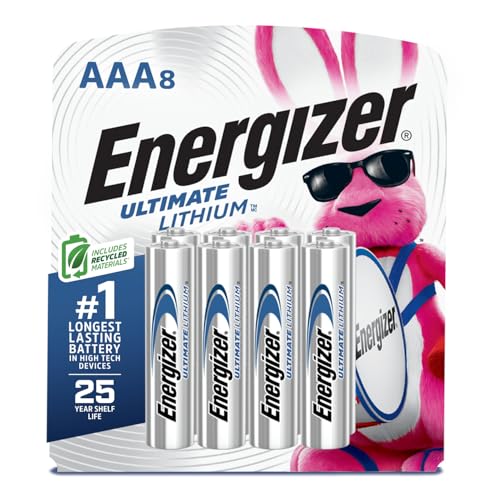
Energizer Ultimate Lithium AAA Batteries (8 Pack), Lithium Triple A Batteries

Energizer Ultimate Lithium AA Batteries (4 Pack), 1.5V Lithium Double A Batteries


Energizer Ultimate Lithium AA Batteries

Energizer Ultimate Lithium AA Batteries (2 Pack), 1.5V Lithium Double A Batteries
Closing judgement
Single-use lithium batteries are not a universal upgrade and should not be bought as one. They are a specialised answer to a recognisable set of problems: devices that must wait years and then perform instantly, equipment that works through hard winters, loads that punish voltage sag, and installations where a leak or a maintenance visit costs more than the battery ever will. In those places they are not the expensive option but the economical one, measured in years of unattended service, avoided failures, and hours delivered at full performance. Everywhere else, alkaline cells and a well-run rechargeable rotation remain perfectly respectable, and the thoughtful household will run all three systems side by side, each in the role its chemistry suits.
Choose by device, verify by datasheet, store with a little discipline, and recycle at the end, and a small drawer of lithium primaries becomes one of the most dependable corners of the whole house. When the power cuts on the coldest night of the year and the torch by the door answers at full brightness without having been touched since the last decade turned, that quiet click is the entire argument for these cells made in a single sound.


