What's inside
- Where to buy
- Key Takeaways
- Quick Picks
- What makes a camera drone genuinely affordable?
- How do you choose between the Mini 4K and the Mini 3?
- Which accessories genuinely earn their place in the bag?
- Comparison table
- What should a new pilot understand about drone rules?
- How do you get cinematic footage from an affordable drone?
- What mistakes do first-time drone buyers repeat?
- What changes when you fly over water or in coastal wind?
- Final Recommendation
- Frequently Asked Questions
- Related Guides
As an Amazon Associate I earn from qualifying purchases. This post may contain affiliate links at no extra cost to you.
gizmoverdict.com is reader-supported. When you buy through links on our site, we may earn an affiliate commission.
Where to buy
The four linked drones below are DJI models sold through their Amazon listings, and drone listings demand one specific check: which controller and how many batteries are in the box. The same airframe appears as a standard package and as expanded combos with extra batteries and charging hubs, and flight time per outing depends more on that bundle decision than on any specification in this guide. Each review names the configuration its listing centres on so the comparison stays honest.
The best affordable drones with cameras are defined in this guide by tier language rather than price tags, because prices in this category move with seasons and bundles while the tiers stay put. Affordable here means the entry and lower-middle shelves of the camera-drone world: machines a first-time pilot can buy without financing, learn on without terror, and — if the worst happens against a tree — replace without grief. Four of the six picks are DJI’s Mini family and its palm-sized cousin, because that family currently defines what affordable quality means; two further picks, discussed without links, represent the non-DJI budget world honestly, including where it trails.
Two framings need stating before any review. The DJI Neo is not a smaller Mini — it is a self-flying selfie drone, a different species that happens to share a maker, and it is judged on its own brief. The DJI Mini 5 Pro sits at the ceiling of this guide and arguably above the affordable tier altogether; it appears as the upgrade reference, clearly labelled, so readers can see what stepping up buys and decide whether their flying justifies it. Between those poles sit the Mini 4K and Mini 3, the twin hearts of the affordable class.
Key Takeaways
- The DJI Mini 4K is the affordable benchmark: a sub-249g camera drone with a stabilised 4K camera and the fewest complications in the class.
- The DJI Mini 3, in this listing’s DJI RC configuration, adds a controller with its own screen plus longer flights and HDR video for a step up in tier.
- The DJI Neo is a palm-launched selfie drone that follows you without a controller — a different tool, judged as one.
- The DJI Mini 5 Pro is the ceiling reference, priced and specified above the affordable tier; it shows what the upgrade buys, not what beginners need.
- Most of these drones sit under 249 grams, the weight line that keeps recreational flying simplest in many countries — but rules vary, change, and remain the pilot’s responsibility to check locally.
- Two non-DJI budget families are covered without links, because the affordable shelf is wider than one brand even where that brand leads it.
Quick Picks
| Pick | Badge | Why it earns its place |
|---|---|---|
| DJI Mini 4K | Best affordable drone overall | The complete starter package: real 4K on a three-axis gimbal, long transmission range and sub-249g simplicity. |
| DJI Mini 3 with DJI RC | Best step-up with screen controller | 4K HDR video, generous flight time and a controller that frees your phone, in the configuration this listing sells. |
| DJI Neo | Best self-flying selfie drone | A palm-sized follower that launches from your hand, tracks you and lands back — no controller required for its core tricks. |
| DJI Mini 5 Pro Fly More Combo with DJI RC 2 | Ceiling reference above the tier | A one-inch sensor and full obstacle sensing in a sub-249g body — the upgrade path, labelled honestly as beyond affordable. |
| Potensic Atom series | Prose-only: non-DJI contender | A budget family aping the Mini formula at lower prices, discussed for shoppers comparing beyond DJI without a link. |
| Holy Stone HS series | Prose-only: beginner-budget staple | The long-standing starter shelf’s other name, covered for the many beginners who meet it first. |
What makes a camera drone genuinely affordable?
Not the sticker alone — the total cost of the first year. A drone’s real price includes the spare batteries that turn twenty minutes of flying into an afternoon, the case that keeps it alive in a car boot, replacement propellers after the inevitable hedge incident, and the memory cards its 4K appetite consumes. This guide judged affordability on that whole ledger, which is why bundle configurations get named in every review: a combo with three batteries can be the cheaper purchase than a bare drone plus two later batteries bought singly, even when its shelf price looks higher.
The second test was photographic honesty. Affordable once meant a toy camera bolted to a toy aircraft; the modern Mini-class machines carry genuine three-axis gimbals and 4K sensors that produce footage a viewer cannot distinguish from far pricier drones in good light. Picks were ranked on that camera truth — stabilisation, dynamic range, transmission reliability — rather than on feature-list novelties, because a beginner’s footage quality is decided by the gimbal and the link, not by gesture controls.
Weight formed the third axis, and it is regulatory as much as physical. Aircraft under 249 grams occupy the lightest regulatory category in many jurisdictions, which historically has meant simpler or no registration for recreational pilots in several major markets — while rules differ by country, change over time, and in some places still require registration or remote identification regardless. This guide treats 249 grams as a convenience to verify against your local authority’s current rules, never as a legal promise, and the regulations section below returns to that caution in full.
Finally, we valued forgiveness. A first drone will be crashed, blown and misjudged; the affordable class earns its name when parts are cheap, the airframe tolerates knocks, and the manufacturer will still be answering the phone in three years. That last criterion quietly favours the established names, and the prose-only picks exist to show the alternative bargain with its eyes open.
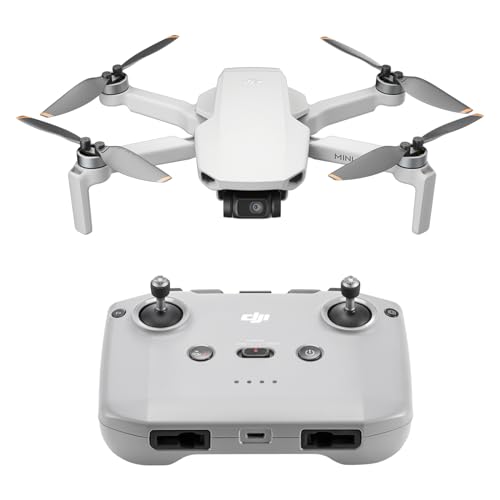
DJI Mini 4K — Best affordable drone overall
The Mini 4K is what the affordable drone looks like when a category matures: under 249 grams, a three-axis gimbal carrying a 4K camera, video transmission measured in kilometres rather than metres, automatic return-to-home, and wind resistance that lets a beginner fly on days that would ground lesser machines. It descends from DJI’s Mini 2 lineage — the drone that taught the world this formula — with the camera and link refined into the configuration that now anchors the entry tier.
Flight character is the first thing a new pilot notices, and it is reassuring in the specific way beginners need. The Mini 4K holds its position against gusts with a composure that makes the controls feel like suggestions the drone interprets intelligently rather than commands it obeys off a cliff edge. Satellite positioning keeps it parked in the sky while the pilot composes a photograph; the return-to-home function brings it back when the battery, the signal or the pilot’s confidence runs low. Learning to fly on a machine this well-mannered is like learning to drive in a car with excellent brakes — the skill forms faster because the fear is proportionate.
The camera rewards that calm. The gimbal erases the aircraft’s motion so completely that footage looks shot from a slow crane, and the 4K sensor delivers the detail that makes landscapes read as landscapes rather than green impressions. Photographers get proper stills for sharing and modest printing; videographers get a platform whose limitations — a fixed aperture mindset, dynamic range that asks for sensible exposure in harsh contrast — are the honest limits of the tier, not defects. Golden-hour footage from this drone routinely embarrasses clips from machines costing far more, because light matters more than lineage.
Ownership economics follow the guide’s affordability ledger kindly. Batteries are the main consumable and the standard package’s count should be checked on the listing; most pilots settle on two or three batteries as the practical fleet, rotating through a charging hub during a day out. Propellers are inexpensive and replaceable in minutes. DJI’s accessory and support ecosystem means a Mini 4K bought today has parts, tutorials and community answers waiting for every problem its pilot will ever meet — a form of value no specification table captures.
Who should step past it? Pilots who know they will film in vertical formats for social feeds, who want a controller with its own screen, or who already feel the ceiling of its camera — the Mini 3 below answers the first two, the Mini 5 Pro the third. But those are upgrades from a position of knowledge. As a first camera drone — or as the travel drone a mirrorless kit leaves room for — the Mini 4K is the recommendation this guide makes without hesitation: the affordable tier’s centre of gravity, done properly.
A closing practical note on the weight: at under 249 grams it sits in the lightest class in many regulatory systems, which keeps recreational flying comparatively simple in numerous countries. Comparatively and many are the operative words — check your own authority’s current requirements before flying, especially regarding registration and remote identification, because the rules have been revised repeatedly in recent years and differ across borders a drone can cross in a suitcase.
- Weight: under 249 g — lightest regulatory class in many jurisdictions
- Camera: 4K video on a three-axis mechanical gimbal
- Transmission: long-range digital link rated in kilometres
- Safety: automatic return to home, strong wind resistance for its size
- Role: first camera drone and travel companion
Strengths
- The complete formula — gimbal, 4K, range, manners — at the tier’s friendliest total cost.
- Position-holding composure makes first flights feel safe enough to learn from.
- A vast support and accessory ecosystem protects the purchase for years.
Trade-offs
- No obstacle sensing; the pilot is the collision-avoidance system.
- The camera’s dynamic range asks for care in harsh, contrasty light.
- Social-format vertical shooting is not this generation’s party trick.
Best for: first-time pilots, travellers and photographers wanting a real camera drone at the lowest sensible total cost. Not suited for: pilots needing obstacle sensing or dedicated vertical-video hardware.

DJI Mini 3 with DJI RC — Best step-up with screen controller
The Mini 3 in this listing arrives in its most desirable configuration: paired with the DJI RC, the controller with a built-in screen. That pairing changes the daily experience more than any camera figure on the box. There is no phone to clamp, no cable to fumble, no notification sliding across your view of a cliff edge, and no phone battery draining into the flight budget. You unfold, power on and fly — a ritual so much cleaner than the phone-based arrangement that pilots who try it rarely go back, and it is why this specific bundle, rather than the Mini 3 in the abstract, earns the step-up slot.
The aircraft itself improves on the Mini 4K in the directions experienced pilots request. Flight time stretches generously — the Mini 3 is known for endurance that lets a pilot wait for light rather than racing it — and the camera adds 4K HDR video, capturing skies and shadows in the same frame with a grace its sibling cannot match. The sensor’s design also suits vertical shooting for the social formats, rotating the framing question from an afterthought into a feature. For creators whose audience lives on phones held upright, that alone can justify the step.
In the air, the Mini 3 shares the family manners: sub-249g weight, assured position hold, the same return-to-home safety net. It likewise shares the family omission — no obstacle sensing — which matters less as pilot skill grows and matters enormously on the first weekend; new owners should learn in open spaces whatever the brochure’s confidence suggests. The RC’s screen brightness handles daylight respectably, and its sticks and dials give the camera’s gimbal the smooth inputs that cinematic pans are made of.
Bundle literacy applies here with force. The DJI RC configuration costs more than the phone-controller version of the same aircraft, and the premium buys the screen, the simplicity and a controller that stays with the drone rather than competing with your pocket’s other tenant. Pilots who already own a bright phone and fly casually may rationally save the difference; pilots who fly weekly, travel with the drone or film for an audience should pay it once and stop thinking about it, because the controller is the part of the system you touch every second of every flight.
Against the Mini 4K, the decision is a clean one: the Mini 3 with RC is the better tool in endurance, in HDR scenes and in daily handling, bought at a higher tier that remains inside this guide’s definition of affordable for a committed beginner. Against the Mini 5 Pro above the line, it concedes sensing and sensor size while keeping most of the footage quality most viewers will ever perceive. That middle position — noticeably better than the entry, sensibly short of the flagship — is exactly where step-up purchases should land.
One ownership note mirrors its sibling’s: under 249 grams keeps it in the lightest regulatory class in many places, with the same standing advice to verify current local rules on registration and remote identification rather than trusting any guide, including this one, as a legal source.
- Weight: under 249 g, in the family’s lightest class
- Controller: DJI RC with built-in screen included in this listing
- Camera: 4K HDR video on a three-axis gimbal, vertical-friendly shooting
- Endurance: extended flight time per battery for its class
- Role: committed beginners and creators stepping up from entry tier
Strengths
- The screen controller removes the phone from the flying ritual entirely.
- HDR video and long endurance answer the two commonest entry-tier complaints.
- Vertical shooting support serves social-format creators directly.
Trade-offs
- Still no obstacle sensing — skill and open spaces remain the safety system.
- The RC bundle’s premium is real money within the affordable tier.
- Phone-free flying means the controller is one more device to charge and carry.
Best for: creators and frequent flyers who will use the drone weekly and value endurance, HDR and a dedicated controller. Not suited for: the tightest budgets, where the Mini 4K delivers the essentials for less.

DJI Neo — Best self-flying selfie drone
The Neo must be judged as a different species, because that is what it is. The Minis are aircraft you pilot to a viewpoint; the Neo is a companion that launches from your palm, follows you, frames you and returns to your hand, with no controller required for its signature tricks. It weighs barely more than a large phone, its propellers wear full guards, and its entire design answers one question: how does a person who will never learn to fly still get aerial footage of their own life? Hikers, cyclists, skaters and parents are its constituency, and for them the Mini’s joys are irrelevant beside the Neo’s one great trick — it flies itself, around you, while you do the thing you actually came to do.
The follow modes are the product. Launch it, choose a behaviour — tracking from behind, circling, retreating to reveal the scene — and the Neo’s subject detection keeps you framed while its guards make close-quarters flight around people feel socially acceptable in a way exposed propellers never do. The footage is 4K, stabilised electronically and by the little gimbal’s assistance, and it has the unmistakable energy of a camera that moves through the world with you rather than observing it from a tripod in the sky.
Honesty about limits is this pick’s price of admission. The Neo’s world is close range: its transmission and endurance suit a companion orbiting its subject, not an explorer ranging over valleys, and wind that a Mini shrugs off genuinely troubles the little aircraft. Its camera, while 4K, serves motion and immediacy over landscape grandeur. Battery life per charge is measured in the length of a good sequence rather than an afternoon’s expedition, so owners carry multiples and think in scenes. None of this is failure — it is specialisation, and the guide scores the Neo against selfie drones, a class in which it stands nearly alone at this polish.
Controllers exist on a spectrum here: the Neo can be flown by phone for simple framing, by DJI’s conventional controllers for a fuller piloting experience, and by motion-control arrangements for play. Most owners, though, will live in the controller-free mode that defines it, and should buy it for that mode or not at all. A buyer who secretly wants to pilot should buy a Mini and be happy; a buyer who wants to be filmed should buy the Neo and be happier.
Its weight — far under the 249-gram line — and guarded design also make it the most approachable drone here around family life, though the standing regulatory caution applies unchanged: lightest-class convenience varies by country and changes over time, and close flight around people carries its own local rules everywhere. Check, then launch from your palm and walk into your own film.
In the guide’s economy, the Neo is the affordable tier’s lateral move: not cheaper capability, but a different capability at an accessible tier — the drone for people the rest of this page was never going to serve.
- Weight: palm-sized and far under 249 g, with full propeller guards
- Flight: controller-free palm launch, subject tracking and return to hand
- Camera: 4K video tuned for close-range following footage
- Endurance: short flights by design — carry spare batteries for a session
- Role: self-filming for sport, travel and family life
Strengths
- It films you, unaided — a capability no piloted drone in this guide offers.
- Guarded propellers and tiny weight make close, casual flight feel safe.
- Palm launch removes every setup barrier between an idea and a shot.
Trade-offs
- Range, endurance and wind tolerance are companion-scale, not explorer-scale.
- The camera serves immediacy over landscape image quality.
- Pilots who want to pilot will find its autonomy a limitation, not a feature.
Best for: hikers, riders, skaters and families wanting aerial footage of themselves without learning to fly. Not suited for: landscape explorers or anyone whose joy is the flying itself.

DJI Mini 5 Pro Fly More Combo with DJI RC 2 — Ceiling reference above the tier
Let the framing be explicit, as this guide promised: the Mini 5 Pro is not an affordable drone in the sense the Mini 4K is. It is included as the ceiling — the machine that shows what the Mini formula becomes when price restraint is lifted — in its Fly More Combo configuration with the DJI RC 2 controller, extra batteries and the kit that turns a drone into a working system. Readers should finish this review knowing exactly what the upgrade buys, and therefore whether their flying could ever spend it.
What it buys, first, is a one-inch camera sensor in a body still under 249 grams — a combination that rewrites the class’s image quality. The larger sensor’s dynamic range holds sunsets that split lesser cameras into white sky and black land; its low-light footage stays clean into the dusk hours when landscapes are at their best and small sensors are at their worst. For a travelling photographer, that sensor in a pocket-sized, lightest-class aircraft is a genuinely new capability, not an incremental one.
Second, it buys omnidirectional obstacle sensing — the Mini line’s historic omission, remedied. The aircraft watches in every direction, which transforms flight in wooded, built and otherwise obstacle-rich environments from a vigilance exercise into a collaboration. Combined with advanced return-to-home intelligence and tracking modes that follow subjects with cinematic discipline, the Mini 5 Pro is the first Mini that flies like the flagships while weighing like the beginners’ machines.
The Fly More configuration matters to the verdict because it answers the endurance question at purchase: multiple batteries, a charging hub, spare propellers and a bag, with the RC 2’s bright screen and modern transmission completing the system. Priced as a whole, the combo is the honest comparison against building the same capability around a lesser drone — and it remains, even so, a sum that belongs to committed photographers and working creators rather than to curiosity.
So the guide’s counsel is symmetrical. Beginners: do not start here, because the Mini 4K teaches the same craft at a fraction of the cost of your inevitable first mistakes, and its footage will delight you for a year. Experienced pilots whose Mini footage is limited by dusk noise, absent sensing or tracking ambition: this is your upgrade, and it is a large one. The affordable tier is defined by the drones around this pick; the Mini 5 Pro is the view from its top step, included so the step’s height is measured rather than imagined.
Regulatory notes follow the family pattern — under 249 grams, lightest class in many jurisdictions, verify locally — with one addition: capability this complete tempts pilots into environments where rules about people, property and airspace bind hardest. The drone’s intelligence assists the pilot; it does not transfer responsibility, which remains, as ever, entirely the human’s.
- Weight: under 249 g despite flagship-class equipment
- Camera: one-inch sensor with 4K video — the best image in this guide
- Sensing: omnidirectional obstacle detection and advanced tracking
- Bundle: Fly More Combo with DJI RC 2, extra batteries and charging hub
- Positioning: above the affordable tier — an upgrade reference, not a starter
Strengths
- One-inch-sensor image quality in a pocketable, lightest-class body is unmatched here.
- Full obstacle sensing changes what environments a Mini can be flown in confidently.
- The combo configuration arrives as a complete working system, not a starter kit.
Trade-offs
- Its price leaves the affordable tier this guide is organised around.
- Capability this dense is wasted on pilots still learning orientation and framing.
- More sensors and systems mean more to maintain, update and eventually repair.
Best for: experienced Mini pilots and travelling photographers ready for flagship imaging and sensing. Not suited for: beginners, for whom it multiplies the cost of every lesson.
Potensic Atom series — Prose-only: non-DJI contender
Potensic’s Atom line is the most serious attempt to build the Mini formula outside DJI, and it is discussed here without a link so the comparison stays informational. The resemblance is deliberate and flattering: sub-249g airframes, three-axis gimbals, 4K cameras and prices that undercut the DJI equivalents they shadow. For shoppers whose budget stops short of the Mini 4K, the Atom family is usually the first credible alternative they meet, and its better models are genuinely flyable, photographable machines rather than toys wearing a specification.
The gaps appear where ecosystems mature slowly: transmission polish in cluttered environments, app refinement, the depth of tutorials and community answers, and the resale and parts landscape three years out. None of those gaps shows on a first calm flight in an empty field — the Atom’s natural showcase — and all of them can matter across a year of ownership. That asymmetry is the honest summary: the alternative brands compete hardest on day one and concede ground across day three hundred.
Buyers for whom the Atom makes sense are clear-eyed about that trade: a tighter budget, a willingness to be their own support department, and flying ambitions centred on fair-weather landscapes rather than a growing creator practice. Buyers who suspect they will fly weekly for years usually find the DJI premium amortises into the cheaper ownership. Either decision can be right; this guide’s role is to make it an informed one, which is why the Atom appears here in prose rather than being pretended out of the market.
- Weight: sub-249g designs following the class formula
- Camera: 4K on three-axis gimbals in the stronger models
- Positioning: lower prices than the DJI equivalents they parallel
- Status: discussed for comparison; no purchase link in this guide
- Role: budget alternative for self-reliant pilots
Strengths
- The core formula — gimbal, 4K, light weight — at prices DJI does not match.
- Better models fly and film credibly in fair conditions.
- Competition from this family keeps the whole tier honest.
Trade-offs
- App, transmission and support ecosystems trail the market leader’s depth.
- Long-term parts and resale are less certain across years of ownership.
- Model names and variants shift quickly; verify the exact version’s specification.
Best for: budget-bound pilots who are comfortable self-supporting and fly in forgiving conditions. Not suited for: creators building a long-term practice on one ecosystem.
Holy Stone HS series — Prose-only: beginner-budget staple
Holy Stone’s HS range is the other name beginners meet first, occupying the shelf below the Mini class: inexpensive drones, some with respectable cameras and gimbals in the upper models, many simpler machines beneath them. It appears here without a link as the guide’s map of the true budget floor — the territory where a first taste of flying is bought cheaply, with expectations set accordingly.
The line’s honest role is apprenticeship. An HS drone teaches orientation, throttle discipline and the emotional skill of watching your aircraft drift toward a tree without panicking — lessons cheaper learned on an inexpensive airframe. Its cameras, particularly in the simpler models, document the learning rather than serving a portfolio: footage is shakier, dynamic range narrower, transmission shorter than the Mini standard. Graduates of the HS school typically arrive at a Mini 4K knowing exactly which limitations they are paying to escape, which makes their upgrade purchase unusually well informed.
Shoppers should read HS model specifications with extra care, because the range spans near-toys and genuine camera drones under similar names, and headline resolution figures in this tier have historically described recording modes more generously than the optics deserve. The questions that sort the range are the guide’s usual ones: is there a real multi-axis gimbal, what does the transmission actually reach in owners’ hands, and are spare batteries and propellers stocked like a system or sold like an afterthought?
For a child or a curious adult whose commitment is unproven, an HS-class purchase can be the wisest money in this entire guide — a small sum spent discovering whether drones are a hobby or a passing itch, before the Mini tier’s real money follows the answer. That is not a consolation role. It is how most durable hobbies begin, and the guide respects it enough to map it plainly.
- Positioning: the budget floor below the Mini class
- Range: from simple starter drones to gimbal-equipped camera models
- Cameras: serviceable for learning; below Mini-class polish in most models
- Status: discussed for orientation; no purchase link in this guide
- Role: low-cost apprenticeship and first taste of flying
Strengths
- The cheapest safe way to discover whether drone flying suits you at all.
- Upper models introduce real gimbals and GPS features at starter prices.
- Low replacement cost makes learning crashes financially painless.
Trade-offs
- Image quality and transmission trail the Mini class clearly in most models.
- Specifications vary widely within the range; careful model research is essential.
- Serious beginners often outgrow the tier within a single season.
Best for: the uncommitted curious, younger pilots and anyone buying a first taste before a real investment. Not suited for: buyers who already know they want publishable footage from day one.
How do you choose between the Mini 4K and the Mini 3?
Ask how the drone will actually spend its Saturdays. The Mini 4K pilot flies on trips and bright weekends, films the coast and the campsite, and edits the best ninety seconds for friends. The Mini 3 pilot flies most weeks, chases specific light, publishes to an audience and has already felt a shorter battery cut a shot in half. Both pilots are well served; they are simply at different depths of the same hobby, and the honest product recommendation follows the depth, not the desire for the newer box.
Then ask what your light looks like. HDR earns its premium in contrast — sea cliffs at noon, forest clearings, city skylines against bright sky — and is nearly invisible in the soft, even light of an overcast morning that landscape beginners wisely prefer. A pilot whose favourite conditions are gentle will rarely cash the Mini 3’s headline camera feature, while a pilot filming travel reels in hard Mediterranean sun will cash it on every flight. Specifications are only valuable in the conditions that activate them.
The controller question resolves many ties by itself. If flying through your phone feels like borrowing your own attention — the messages arriving, the battery draining, the screen dimming in sun — the DJI RC bundled with this guide’s Mini 3 listing is not an accessory but a correction. If your phone is new, bright and largely a camera already, the phone-controller route is respectable and the saving real. Decide with your actual phone in your actual hand, outdoors, at noon.
Finally, consider the second year. The Mini 3’s endurance and format flexibility give it more headroom to grow into, which matters for the pilot who suspects — correctly, usually — that this hobby deepens. The Mini 4K’s counter-argument is that it leaves budget for the batteries, filters and case that make any drone more capable in practice. A Mini 4K with three batteries and a filter set out-films a bare Mini 3 on most real trips. Spend on the system you will fly, not the badge you will describe.
Which accessories genuinely earn their place in the bag?
Batteries first, always, until you own enough that a day’s flying ends from light or appetite rather than charge — for most pilots that number is three. A charging hub that refills them in sequence turns a hotel evening into a full reset, and it is the least glamorous, most used object in most drone bags. Propellers second: a spare set weighs nothing and converts the season’s first hedge strike from a holiday-ending event into a two-minute pause, provided you also carry the small screwdriver the swap requires and have practised once at a kitchen table rather than first attempting it on a windy cliff.
Neutral-density filters are the accessory that separates footage from video. By slowing the shutter toward the cinematic ratio on bright days, they give motion its natural blur and stop the staccato, over-sharpened look that marks beginner reels shot at noon. A small set covering the common daylight range serves every drone in this guide’s DJI family, and learning to choose among them teaches exposure more enjoyably than any tutorial. A landing pad, by contrast, is situational — genuinely useful on sand, snow and long grass where debris and moisture threaten the gimbal, and pure theatre on a patio.
The case is the accessory nobody photographs and everybody needs. Drones die in transport more often than in flight: a gimbal knocked in a soft bag, a stick pressed against a screen, a battery shorted against keys. A structured case sized to the kit — aircraft, controller, batteries, filters, spares — is insurance bought once at a fraction of the aircraft’s price. Add a lanyard for the controller if you fly standing on anything more dramatic than a lawn, and the kit is complete: everything else sold for these drones is decoration, and decoration can wait until the flying has earned it.
Comparison table
| Drone | Weight class | Camera | Defining trait | Primary role |
|---|---|---|---|---|
| DJI Mini 4K | Under 249 g | 4K, three-axis gimbal | The complete affordable formula | First camera drone |
| DJI Mini 3 with DJI RC | Under 249 g | 4K HDR, three-axis gimbal | Screen controller, endurance | Step-up creator drone |
| DJI Neo | Far under 249 g | 4K, close-range design | Self-flying palm launch | Selfie and follow footage |
| DJI Mini 5 Pro Combo | Under 249 g | 4K, one-inch sensor | Full sensing, flagship imaging | Upgrade ceiling reference |
| Potensic Atom series | Under 249 g | 4K, gimbal models | Mini formula at lower prices | Budget alternative |
| Holy Stone HS series | Varies by model | Varies by model | The budget floor | First taste and learning |
What should a new pilot understand about drone rules?
Understand, first, that this section is orientation, not legal advice, and that the only authoritative source is your own country’s aviation authority as it reads today. With that said, the shape of the rules in many countries rhymes. Weight matters: aircraft under 249 grams — every DJI pick in this guide — fall into the lightest category in numerous systems, which has historically simplified recreational flying, in some places removing registration duties that heavier drones carry. But the details diverge sharply. Some jurisdictions require registration or a pilot competency process regardless of weight for camera drones; remote identification requirements have been introduced, phased and revised in major markets; and rules about flying near people, property, airports and at night bind every weight class everywhere.
The practical routine is short enough to have no excuse. Before flying a new drone, read your authority’s recreational page once, completely. Register or certify if it asks — the processes are usually online and inexpensive. Then fly by the universal courtesies that no jurisdiction waives: keep the drone in sight, stay clear of airports and emergency operations, respect heights and privacy, and never let a specification like obstacle sensing talk you into environments your judgement has not cleared. Travellers must repeat the homework per country; a drone legal at home can be restricted, registration-bound or effectively grounded across a border, and a suitcase is not an exemption.
Rules in this field change faster than drones do, which is precisely why this guide refuses to print confident legal summaries that would age into misinformation. The 249-gram line is a useful planning heuristic and a genuine convenience in many places. It is not a force field, and pilots who treat it as one eventually meet the authority that disagrees.
How do you get cinematic footage from an affordable drone?
Fly slower than feels necessary. The gimbal hides the aircraft’s vibration, but it cannot hide haste: gentle stick inputs, gradual accelerations and pans at a walking pace produce the floating, deliberate movement viewers read as cinematic, while enthusiastic flying reads as surveillance. Plan each shot as a single move — a reveal over a ridge, a slow orbit, a straight push toward a subject — execute it once cleanly, and resist stitching three manoeuvres into one battery’s ambition.
Light is the second discipline, and it is why experienced pilots fly early and late. Low sun gives landscapes the modelling and colour that midday flattens, and it forgives the dynamic-range limits of affordable sensors by narrowing the scene’s contrast into their comfort. Expose for the highlights, keep the sky intact, and let shadows fall where they will; footage can be lifted in editing more gracefully than a blown sky can be rebuilt.
Settings reward a small amount of learning. A shutter speed near twice the frame rate, helped by neutral-density filters on bright days, gives motion its natural blur; the flattest colour profile your model offers gives editing its headroom. None of this requires the flagship — the Mini 4K in practised hands at dawn will out-film a Mini 5 Pro flown harshly at noon, which is the most encouraging sentence in this guide for buyers on a budget.
What mistakes do first-time drone buyers repeat?
The classic is buying for the pilot they imagine rather than the one they are: the flagship sensing suite purchased to protect a beginner, when the same money in batteries and lessons-by-practice would have protected them better. Second comes bundle blindness — comparing bare prices, then discovering the second battery, the case and the card reader at full price over the following month. Third, new pilots fly their first batteries in wind that flatters no one, over water that forgives nothing, and learn the expensive version of the patience this guide preaches.
Fourth, buyers ignore the controller question until the phone rings mid-flight over a reservoir. Fifth, they treat the weight line as a legal conclusion instead of a research prompt, and meet their local rules from the wrong side. And sixth, they judge their first footage against cinema reels shot by professionals at dawn, rather than against their own first flight — the only comparison that measures progress. Every pick in this guide is capable of footage its owner can be proud of within a month of honest practice; the mistakes above are simply the toll booths on that road, marked here so you can drive around them.
What changes when you fly over water or in coastal wind?
Water is where affordable drones go to be lost, and the pattern is so consistent it deserves its own counsel. Over open water there is no safe forced landing, the surface confuses the downward sensors that help a drone judge its height at low altitude, and a headwind on the return leg has ended more flights than any obstacle. The disciplines are simple and absolute: fly out into the wind so the return rides it home, keep a battery reserve that would embarrass you over land, stay high enough that sensor confusion cannot become a descent, and never chase a shot low over surf with a drone whose replacement would ruin the holiday it was bought to record.
Coastal wind, meanwhile, is the affordable class’s honest examination. The Mini family’s wind resistance is genuinely impressive for aircraft this light — they hold lines and positions that would scatter lesser machines — but resistance is not immunity, and gusts at a cliff edge arrive in layers the forecast never mentioned. Read the drone’s own warnings as instruments rather than nagging: when a strong-wind alert appears, the correct response is altitude down, distance home, and the shot abandoned with good humour. Every experienced pilot’s reel contains a gap where that decision was made; the reels are long precisely because the decisions were.
None of this should frighten a beginner away from the coast, which is where these little cameras produce their most loved footage. It should schedule the ambition: master the field and the garden first, learn what your aircraft’s composure feels like as wind builds, and let the sea cliffs arrive in month two rather than minute twenty. Skill in this hobby compounds quietly, and the pilots who respect the sequence are the ones still flying — and still filming — when the second year comes around.
Final Recommendation
Buy the DJI Mini 4K if this is your first camera drone: it is the affordable tier perfected, light enough to travel anywhere, honest enough to teach on and good enough to keep for years as the small drone in a growing kit. Add the second battery before you add any other accessory, learn in open fields until the controls disappear from your thinking, and shoot at the edges of the day when the light does half the cinematography for you — that combination of modest hardware and growing craft is what this entire category, at its best, exists to make possible for people who thought aerial photography belonged to professionals with flight cases and film budgets. Step to the Mini 3 with its screen controller when endurance, HDR and weekly flying are already your reality, and take the Neo instead if the footage you dream about has you in it. Let the Mini 5 Pro wait until your flying can name what it lacks, and let the budget brands serve the uncommitted honestly until commitment arrives. The sky, it turns out, was never the expensive part — judgement is, and every drone in this guide is priced to let you buy exactly as much of it as you have earned.
Frequently Asked Questions
Do I need to register a drone under 249 grams?
It depends entirely on where you fly, and the answer has changed in major markets in recent years. Several jurisdictions exempt the lightest class from some registration duties for recreational use; others require registration, competency or remote identification features regardless of weight, and camera carriage can itself trigger requirements. Treat any general claim — including the marketing on a drone’s box — as a prompt to check your aviation authority’s current recreational guidance before your first flight.
How long do these drones actually stay in the air?
Manufacturers quote ideal-condition maxima; real flights in real wind with real manoeuvring return noticeably less, and experienced pilots plan sorties around a comfortable margin rather than the brochure figure. The practical answer is that an outing’s flying is measured in batteries, not minutes — which is why this guide keeps returning to bundle configurations and spare-battery counts as the specification that shapes a day.
Can a beginner fly the Mini drones without crashing?
Beginners crash; the question is whether the lessons are cheap. These aircraft help enormously — satellite position hold, automatic return home, wind composure — but none of the affordable picks except the ceiling-tier Mini 5 Pro can see obstacles for you. Learn in open spaces, fly high enough to clear the local trees, and treat the first batteries as tuition. Pilots who do that usually keep their first drone for years.
Is the Neo a real drone or a toy?
A real drone with a specialised job. Its 4K camera, subject tracking and autonomous flight modes are genuine technology, but its stage is close range and its flights are short by design. Judged as a self-filming companion it is excellent; judged as an exploring camera aircraft it is out of its element. Buy it for the job it was built for and it will not feel like a toy for a moment.
What is a Fly More Combo, and is it worth it?
DJI’s name for bundles that add the ownership essentials — extra batteries, a charging hub, spare propellers and a carry bag — around the aircraft and controller. For pilots who will fly regularly, the combo usually costs less than assembling the same kit piece by piece, and it removes the first month’s drip of accessory purchases. Occasional flyers can start standard and add batteries when their habits prove they need them.
What memory card does a 4K drone need?
A card rated for sustained high-speed writing — the fast microSD classes sold for action cameras and drones — because 4K video writes continuously at rates that expose slow cards as recording errors mid-flight. Buy capacity for your longest day rather than your average one, format the card in the drone before important flights, and offload after every outing rather than treating the card as an archive. Cards are the cheapest component in the entire system and the one whose failure costs the most, which is why experienced pilots carry a spare in the case and rotate them like batteries. Treat a card that has ever produced an error as retired, however young it looks, because the footage it next swallows will inevitably be the flight you cannot repeat.
Can I fly these drones commercially?
Commercial use lives under stricter rules than recreational flying in essentially every jurisdiction — different certification, different registration, sometimes different equipment requirements. A drone’s light weight does not convert commercial work into recreational rules. If earning from the aircraft is part of your plan, research your authority’s commercial pathway before buying, because it may influence which model and which records you need from the start.
Related Guides
Once the flying feels natural, the rest of the kit bag starts asking questions — a camera for the kayak, a camera for the commentary, a camera for the pocket on the days the drone stays home. Take the next step with our guides to action cameras for mounting on anything that moves, 4K vlogging cameras for creators on the ground and small travel cameras for the rest of the kit bag.


