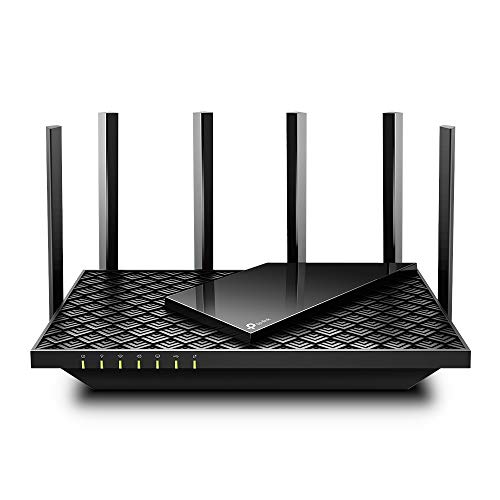
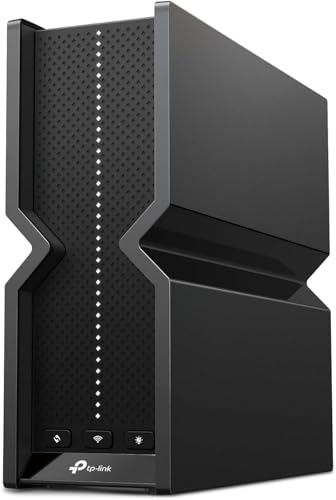
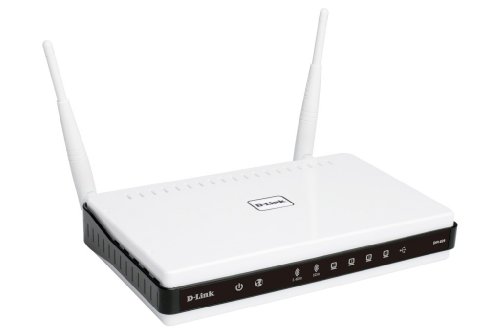
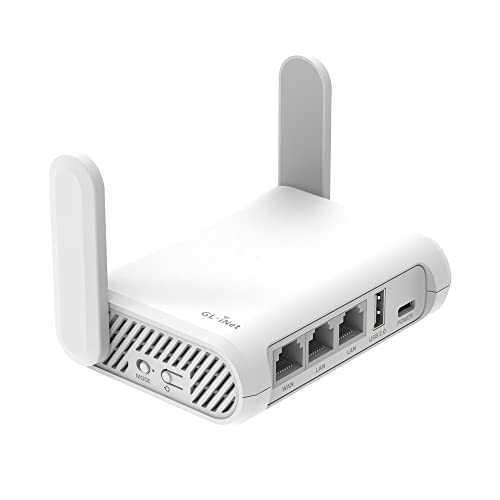
Our Top Picks




What's inside
- What actually kills a home router
- Thermal design: vents, heatsinks, fans, and processor temperature
- Power supplies: the replaceable part that decides lifespan
- Firmware support windows and end-of-life policy
- Reading release notes like an owner, not a marketer
- Build cues: weight, ports, antennas, and buttons
- Placement, dust, surge protection, and the small-UPS habit
- Warranty length as a signal, and what it does not prove
- Choosing between platforms: reading a spec sheet for lifespan
- When a working router must still be retired
- A pre-purchase checklist distilled from the documentation
- Environmental factors: climate, wiring, and the age of the house
- Keeping records: the maintenance log nobody writes and everybody needs
- Check prices on Amazon
- Second-hand and hand-me-down routers: a longevity shortcut with conditions
As an Amazon Associate I earn from qualifying purchases. This post may contain affiliate links at no extra cost to you.
Most home routers do not die in a dramatic puff of smoke. They fade. Reboots become weekly, then daily. A radio that once covered the back bedroom starts dropping clients at the hallway. The web interface slows to a crawl, a firmware update fails halfway, or the unit simply stops powering on one morning after a thunderstorm. Longevity, in this category, is less about raw wireless speed on launch day and more about how gracefully a machine handles years of heat, dust, electrical noise, and changing security expectations. This guide is about choosing a router that can stay in service for a long time, and about understanding the specific failure modes that shorten the life of the ones that cannot.
How this guide is funded matters, so it comes first: if you buy through links on pages like this one, the publisher may earn a commission from the retailer at no extra cost to you, and that income supports the research behind guides of this kind. Prices and availability change, recommendations here rest on published specifications, manuals, and support documentation rather than on any arrangement with a manufacturer, and no maker reviewed this text before publication.
The central idea is simple to state and harder to shop for. A durable router is a small computer that runs continuously, often in a warm corner, for five to ten years. Its processor, memory, flash storage, radios, power supply, and capacitors all age at different rates, and the weakest of them sets the real lifespan. Marketing pages rarely discuss any of this. They emphasize peak link rates measured under laboratory conditions, antenna counts, and app screenshots. Spec sheets, regulatory filings, teardown photographs published by manufacturers, and end-of-life notices tell a different, more useful story, and our research leans on those documents wherever they exist.
What actually kills a home router
Heat is the first and most consistent killer. Every router converts a portion of the electricity it draws into waste heat, and that heat has to leave the enclosure through vents, through the plastic shell itself, or through a metal heatsink coupled to the main processor. When heat cannot escape fast enough, internal temperatures climb, and elevated temperature accelerates nearly every chemical aging process inside the box. Solder joints expand and contract with each thermal cycle. Electrolytic capacitors dry out faster. Flash memory cells lose margin. A router that runs hot does not necessarily fail in its first year; it fails in its fourth, which is exactly the failure pattern owners describe when a once-reliable unit turns flaky without any change in how it is used.
Capacitor aging deserves its own explanation because it explains so many late-life symptoms. Electrolytic capacitors, the small cylindrical components on a router board, smooth the power delivered to the processor and radios. Their electrolyte slowly evaporates through the seals, a process that speeds up sharply as temperature rises; a widely used rule of thumb in electronics holds that service life roughly halves for every ten degrees Celsius of additional operating temperature. As capacitance falls and internal resistance rises, voltage rails get noisier. The router still boots, still passes traffic, but resets under load, loses settings, or corrupts a firmware write. These are the classic signs owners misread as software problems, when the underlying cause is a power section that can no longer hold a clean rail during a demanding moment.
The external power brick is the second weak point, and in many households it fails before the router itself. Bargain adapters use the cheapest possible capacitors in a sealed plastic shell with almost no ventilation, and they sit behind furniture where warm air pools. When a brick’s output sags or ripples, the router downstream shows the same confusing symptoms as a failing board: random reboots, radios that vanish, Ethernet ports that renegotiate speeds. Owners often replace the entire router when only the adapter has died. A model whose manufacturer publishes the adapter’s voltage, polarity, and connector size, and sells or documents a replacement, removes this whole class of premature retirement.
Surge damage is the third killer, and it arrives through more paths than the power cord. Lightning energy and utility switching transients can enter through the mains, but they also travel along cable and telephone wiring connected to a modem, and along long Ethernet runs to outdoor access points or cameras. A surge rarely destroys every component outright. More often it weakens a protection diode, a transformer winding, or a port’s isolation, and the port or radio dies weeks later for no obvious reason. Routers installed without any surge protection, in regions with frequent storms or unstable grids, accumulate this invisible damage until one more event finishes the job.
Firmware abandonment is the quietest killer because the hardware still works perfectly. A router is a network-facing computer, and vulnerabilities in its web server, its remote management features, its DNS handling, and its wireless stack are discovered every year. When a manufacturer stops issuing updates, each newly published vulnerability becomes a permanent exposure. The unit may route packets flawlessly for a decade, yet from a security standpoint its useful life ended the day support stopped. Any honest discussion of longevity has to treat the support window as a lifespan specification, as concrete as the processor model, because a router you must retire for safety reasons is retired all the same.
Flash wear and memory limits form a slower fifth pressure. Routers store firmware, configuration, and logs in flash memory that tolerates a finite number of write cycles. Chatty logging, traffic statistics written too aggressively, and repeated failed update attempts all consume that budget. Meanwhile, growing feature sets in successive firmware releases demand more RAM, so a model that shipped with a modest memory complement can become sluggish on late-life firmware even though its radios remain capable. Documentation that lists flash and memory sizes, which some manufacturers publish and many hide, helps a buyer judge how much headroom a platform really has.
Thermal design: vents, heatsinks, fans, and processor temperature
Start with the enclosure, because spec sheets show that thermal design varies more between models than radio specifications do. Look for vents on at least two surfaces, ideally intake openings low on the chassis and exhaust openings high, so that natural convection can move air through the case without any fan. A router with vents only on the bottom panel suffocates when placed on carpet or inside a cabinet. A router with a sealed glossy shell and no visible venting is relying entirely on conduction through plastic, which is a poor conductor, and its internal temperatures will reflect that choice every hour of every day it runs.
Heatsinks are the second thing to look for in product photographs and documentation. A substantial internal heatsink, often a finned aluminium plate bolted over the main system-on-chip with a thermal pad, spreads heat across a wide area and keeps the processor junction temperature far below its rated limit. Some designs use the metal shielding cans over the radio sections as auxiliary radiators. Others, regrettably, use a small stamped plate that covers only part of the die. Manufacturers rarely publish thermal data, but the physical size of the heatsink visible in official product imagery, and the total weight of the unit, correlate with how seriously the thermal problem was treated during design.
The processor itself sets the heat budget. High-clocked quad-core chips paired with multiple high-power radios can draw enough current that the enclosure becomes genuinely warm to the touch across its whole top surface. That is not automatically a problem if the cooling path was engineered for it, but it leaves less margin for a dusty room or a hot climate. Conversely, a mid-range platform with a modern, efficient process node may deliver all the throughput a typical household needs while running noticeably cooler. Longevity-minded buyers should be suspicious of flagship specifications crammed into the smallest possible sculpted shell, because physics collects its payment eventually regardless of styling.
Fans divide opinion, and both positions have merit. A small internal fan can hold processor temperatures dramatically lower than passive cooling in the same enclosure, which directly slows capacitor aging and thermal cycling. The cost is a moving part: fan bearings wear, dust accumulates on blades, and a failed fan in a design that assumed airflow can be worse than a fanless design that never needed it. If a model includes a fan, documentation that describes its speed control, its behaviour at low load, and whether the unit throttles gracefully when the fan stalls is worth more than the fan itself. Fanless designs avoid the moving part entirely but demand generous venting and heatsink mass to stay in the same temperature range.
Placement interacts with all of this, and the manual’s own guidance is often the best longevity advice in the box. Manufacturers typically specify an operating temperature range and warn against stacking the router on top of other warm equipment, enclosing it in unventilated furniture, or exposing it to direct sunlight. A router balanced on top of a games console or an amplifier lives in a stream of rising hot air and ages accordingly. Giving the unit open air on at least three sides, orienting it as the designer intended rather than wall-mounting a model whose vents assume a horizontal position, and keeping it out of attics and garages whose temperatures swing far outside living-room ranges are unglamorous habits that add real years.
Dust deserves mention here rather than later because it is fundamentally a thermal problem. Fine household dust settles on heatsink fins and vent slots, insulating exactly the surfaces meant to shed heat, and in homes with pets or nearby cooking the accumulation can be significant within a couple of years. A design with smooth external surfaces and accessible vents can be wiped and blown clear in a minute. A design with deep decorative grooves and recessed mesh traps grime where it cannot be reached. An annual cleaning, done with the unit powered down and a soft brush rather than a vacuum that can build static, belongs in the same maintenance category as replacing a smoke-alarm battery.
Power supplies: the replaceable part that decides lifespan
Because the adapter fails so often, its specifications deserve the same scrutiny as the wireless standard on the box. The manual or the label printed on the brick states the output voltage, the maximum current, and the polarity of the connector. A router that uses a common voltage and a standard barrel connector can be revived in minutes with a correctly specified replacement, including high-quality third-party supplies with better components than the original. A router that uses an unusual voltage, a proprietary plug, or a multi-pin connector locks the owner to a single source that may stop selling spares long before the router wears out.
USB-C power input, where it appears, changes this calculation favourably. A router that accepts power over a standard USB-C connection at a documented wattage can run from a wide range of quality adapters, from power banks during an outage, and from the same spare charger kept for a laptop. The documentation still matters: the port must be specified for the required voltage profile, and the owner must confirm that a substitute supply can deliver the full rated current, because an undersized supply produces the same sagging-rail symptoms as a dying original. But a standard input converts a single point of failure into a commodity part, and that is precisely the direction longevity favours.
Current rating headroom is a subtler point that spec sheets reveal. An adapter rated barely above the router’s maximum draw runs hot and ages quickly; one rated with comfortable margin runs cooler and lasts longer. When a manufacturer lists both the router’s power consumption and the adapter’s rating, compare them. A generous gap suggests the power section was designed by someone thinking about year five rather than the bill of materials in year one. Where the router supports alternative inputs, such as a DC jack alongside passive power-over-Ethernet on some prosumer models, that redundancy also gives the owner options when one path fails.
Cable strain is the mundane detail that ends otherwise healthy adapters. The thin cord where it exits the brick, and the plug where it meets the router, flex every time furniture moves or a cleaner passes. Adapters with moulded strain relief, right-angle plugs that sit flush against a wall, and cords long enough to avoid tension all survive longer in real rooms. When you buy a router, read the adapter’s photograph as carefully as the router’s: a replaceable, well-made brick with a standard connector is a longevity feature, even though it never appears in headline marketing.
Firmware support windows and end-of-life policy
If hardware aging sets the maximum possible lifespan, firmware policy sets the permitted one. Before buying, search the manufacturer’s support site for the model’s own page and for the company’s end-of-life list, which most reputable makers publish. That list, showing which older models no longer receive updates, reveals the company’s real behaviour better than any promise on a box. A maker whose previous generations received five or more years of security fixes has demonstrated a pattern. A maker whose support pages quietly stop at eighteen months has demonstrated one too, and the cheaper purchase price rarely compensates for replacing the whole unit years earlier than the hardware required.
Chipset platform matters because updates are built on it. Router firmware is assembled from the chip vendor’s software development kit, and when the chipset vendor ends support for a platform, router manufacturers often lose the ability to patch low-level components such as wireless drivers even if they wanted to continue. Platforms that were sold in large volumes across many brands tend to receive longer attention from their silicon vendors, and models built on them benefit indirectly. Release notes are the evidence to read: notes that mention driver updates, kernel updates, and named vulnerability identifiers signal a living platform, while notes that only ever adjust the companion app suggest the core is already frozen.
Automatic updates, handled well, extend practical security life for households that never log into an admin page. Documentation should state whether updates install automatically, whether they can be scheduled for quiet hours, whether the router preserves settings across an update, and whether a failed update can brick the unit or is protected by a dual-image recovery system. That last feature, sometimes called dual firmware or fail-safe partitioning, is a genuine longevity technology: the router keeps a known-good image to fall back on, so a power cut mid-update becomes an inconvenience instead of a funeral. Models that document a recovery mode, reachable through a reset procedure described in the manual, similarly forgive accidents that end lesser designs.
Local control is part of the same conversation. A router that can be fully configured through its own web interface keeps working when the manufacturer’s cloud service is retired, restructured, or simply down. A router that requires an account and a phone app for basic settings inherits the lifespan of that service, and services have shorter lives than hardware. Support documents that describe full local administration, offline setup, and the ability to export a configuration file describe a product that respects the owner’s timeline. Configuration export matters practically, too: when a unit finally is replaced, a documented backup-and-restore path turns a weekend of reconfiguration into an hour.
Openness to alternative firmware is a niche consideration that some buyers value and others should ignore. Certain models are documented by their communities as able to run third-party firmware long after official support ends, which can stretch secure service life considerably for a technically confident owner. This is not a recommendation to do so casually: installation can void warranty terms, mistakes can render a unit unusable, and the owner becomes their own support department. Treat it as a tiebreaker between otherwise equal models, and rely on the manufacturer’s own support record as the primary evidence, because a well-supported stock firmware beats an abandoned platform with theoretical options.
When comparing product families, readers weighing whole-home coverage against single-unit durability may also want to study best mesh routers before deciding which architecture suits their floor plan. Mesh kits complicate the longevity question because every node ages simultaneously and nodes are usually sold only as matched sets, so the support window and the adapter standard of the whole kit deserve the same scrutiny described above, multiplied by the number of boxes plugged in around the house.
Reading release notes like an owner, not a marketer
Release notes are an underused source of longevity evidence, and they are free to read before purchase. Download the firmware history for a model you are considering and look at the dates. A healthy platform shows a steady cadence: a launch period of frequent fixes, then security and stability updates at regular intervals for years. Warning signs include a long silence followed by a single update, notes that repeat identical boilerplate with no specifics, and a final entry whose language shifts to describing the release as maintenance or legacy. Compare two or three generations back from the same maker; the pattern you find there is the most honest forecast available for the model on sale today.
Also note what the updates contain. Fixes for remote-code-execution flaws, authentication bypasses, and DNS rebinding show that the vendor’s security process is finding and closing serious issues, which is reassuring rather than alarming; every complex router has vulnerabilities, and the dangerous ones are those nobody patches. Updates that add support for newer security standards, improve interoperability with current client devices, and backport fixes from newer platforms indicate an engineering organisation still investing in the installed base. A vendor that publishes a security advisory page, with severity ratings and affected versions, is demonstrating the institutional habits that keep old hardware safe.
The support download page tells a parallel story through its documents. A maker that keeps manuals, datasheets, and firmware for discontinued models available years after sale respects owners of aging equipment. One that deletes pages when a successor launches leaves owners of perfectly functional hardware unable to recover a lost manual or reinstall firmware after a reset. Before buying, try downloading the manual for a five-year-old model from the same brand. The ease or difficulty of that errand predicts your own experience in year five with uncomfortable accuracy.
Questions to ask of any support page
Concretely, a buyer can extract most of the longevity signal from four checks that take minutes. First, find the model’s first firmware date and its most recent one, and note the span. Second, open the end-of-life policy and read how much notice the company commits to giving before support stops, and whether that notice is a dated list or a vague assurance. Third, confirm that security updates are described separately from feature updates, since a vendor may freeze features while continuing patches, which is an acceptable and even desirable arrangement for an older unit. Fourth, check whether the support site offers a way to register the product for end-of-life notifications, so the retirement date reaches you rather than being discovered by accident.
Build cues: weight, ports, antennas, and buttons
Physical construction is the part of longevity a buyer can judge in a shop or from detailed photographs. Weight is the crudest signal and still a useful one: within a given product class, a heavier unit usually contains a larger heatsink, a more substantial power section, and a stiffer chassis, while an implausibly light unit has economised somewhere. Weight alone proves nothing, since dense filler is cheap, but combined with vent area and the adapter’s rating it forms part of a consistent picture. Spec sheets list dimensions and mass, so this comparison can be made from documentation without handling the product.
Ethernet ports reveal build philosophy at a glance. Ports with metal shielding, firmly anchored to the board and framed by a rigid cut-out, tolerate years of cables being inserted, removed, and tugged sideways by furniture. Ports that flex visibly when a cable is seated, or that sit in thin plastic apertures with play around the connector, will eventually develop intermittent links that masquerade as internet faults. The port’s internal contacts matter too, though they cannot be inspected from outside; documentation that specifies the port standard precisely, and a maker with a track record in networking hardware, are the practical proxies available to a buyer.
Antenna construction follows the same logic. External antennas on proper threaded connectors can be repositioned, replaced when a hinge cracks, and upgraded in some designs; antennas moulded permanently into the shell cannot. The hinge is the failure point, since it is flexed every time the unit is moved or dusted, and a hinge that goes loose leaves the antenna drooping at an angle the designer never intended. Internal antennas eliminate the hinge problem entirely and suit many homes, but they make the enclosure itself the antenna housing, so a cracked case after a fall can quietly degrade coverage. Neither approach is automatically better; what matters is whether the moving or exposed parts were built for repeated handling.
Buttons and switches are small, honest indicators. A power switch that feels positive, a reset recess that cannot be pressed accidentally by a cable, and a Wi-Fi or WPS button with a clear mechanical action suggest a hardware team that sweated details. Their absence is not disqualifying, since app control is now common, but a physical power switch has genuine longevity value: it lets the owner reboot cleanly without yanking the power cord, which stresses the connector and the adapter cable every single time. Rubber feet that keep the unit from sliding, and screw-secured case halves rather than glued shells, similarly hint at a product expected to be serviced, cleaned, and kept.
Ventilation and construction meet in the wall-mounting question. Some models document keyhole slots or a bracket for wall or ceiling mounting, with vents arranged to work in that orientation. Others warn against it. Mounting a passively cooled router vertically when its convection path assumed a flat surface can raise internal temperatures enough to matter across years. The manual’s mounting guidance, unglamorous as it is, should be treated as part of the specification, and a model whose documented mounting options match your intended installation starts its life with a thermal advantage over one forced into an orientation its designer never planned for.
Placement, dust, surge protection, and the small-UPS habit
Ownership habits can add or subtract years from the same hardware, and they cost little. Placement comes first: a central, elevated, open shelf beats a floor corner behind a sofa on every axis that matters, signal, temperature, and dust alike. Keep the router away from radiators, sunny window ledges, and the warm exhaust of other electronics. Leave the clearance the manual specifies around vents. If the only practical location is a media cabinet, choose a model documented for enclosed spaces or leave the cabinet door ajar during heavy use; a closed cabinet can run dramatically hotter than the room, and the router inside ages at the cabinet’s temperature, not the household’s.
Surge protection should cover every wire that reaches the router, not only the power cord. A quality surge protector on the mains supply is the baseline. Where cable or telephone lines feed a modem, protection rated for those lines closes a path that has killed many routers whose power was protected. Ethernet runs to outdoor equipment deserve particular respect, since a long exterior cable is an efficient collector of induced surges; documentation for outdoor gear often specifies grounding and surge devices, and following it protects the indoor router at the other end of the cable as much as the outdoor device itself.
A small uninterruptible power supply changes the router’s life in two ways. Obviously, it keeps the network running through short outages, which households more and more value for security cameras, smart locks, and anyone working from home. Less obviously, it conditions the power the router receives, shielding it from the sags, spikes, and abrupt cuts that stress power supplies and corrupt firmware writes. A router and modem together draw so little current that even a compact UPS sustains them for a long while, and the battery in the UPS becomes the sacrificial, replaceable component that absorbs abuse which would otherwise age the router’s own power section. Replacing a UPS battery every few years is cheaper and easier than replacing a router on the same schedule.
Reboot and update habits round out the picture. A router does not need ritual weekly reboots if it is healthy, and needing them is diagnostic information rather than a maintenance plan: increasing reboot frequency is the smoke that precedes the fire of a failing adapter or capacitor. Apply updates promptly but not recklessly; read the release note, confirm the update path preserves settings, and avoid updating during storms or when the household cannot tolerate an hour of troubleshooting. Keep a written record of the admin password stored securely, the configuration backup file, and the date of the last successful update, because the person maintaining the router in year six may not remember decisions made in year one.
Households comparing simpler dual-band designs for a flat or a small house can narrow the field through best 2 band wifi routers and then apply the support-window and thermal checks from this guide to whichever models survive that shortlist. The wireless specification determines whether a router fits your devices today; the construction and support determine whether it is still safely usable when those devices are replaced.
Warranty length as a signal, and what it does not prove
Warranty terms are a manufacturer’s own bet on its hardware, published in writing, and they deserve to be read that way. A company that warrants a router for a longer period expects fewer returns across that span, and has priced the product accordingly. Warranty length also correlates with spare-parts and adapter availability, since a maker supporting warranty claims must keep components in the pipeline. Read the terms rather than the headline: note whether the adapter is covered for the same period as the router, whether the warranty requires registration within a window after purchase, and whether advance replacement is offered or the household must survive weeks without a network while a unit travels for repair.
Equally, a long warranty does not extend the firmware support window, and the two must not be conflated. Hardware can be replaced under warranty in year four with an identical unit whose platform stops receiving security patches in year five. The warranty answers the question of who pays when the hardware fails; the end-of-life list answers whether the hardware is allowed to remain connected at all. A longevity purchase requires satisfactory answers to both, and a generous warranty paired with a short, vague support policy is a worse bet than a modest warranty from a maker with a documented decade of updates behind its older platforms.
Retain the receipt and the serial number somewhere other than the router box, which tends to be discarded. Registering the product, where the maker offers it, sometimes extends coverage and usually enrols the owner in recall and end-of-life notifications. If a unit does fail under warranty, the replacement experience is itself information: makers that cross-ship replacements and supply prepaid labels are demonstrating the support infrastructure that long ownership depends on, while makers that make claims deliberately arduous are telling you how the relationship will feel in year six.
The total-cost view of a long-lived router
Longevity is also an economic argument, and it survives honest arithmetic. A household that replaces an inexpensive router three times in nine years pays the purchase prices, but also pays in evenings spent reconfiguring networks, reconnecting dozens of smart-home devices, updating passwords stored in family phones, and troubleshooting outages that turn out to be dying hardware. A single better-built unit, bought once and maintained with a replacement adapter and a UPS battery along the way, usually wins that comparison even before considering the waste stream. The calculation reverses only when standards move so fast that the household genuinely needs new radio capabilities, which for most homes happens far less often than marketing cycles suggest.
Choosing between platforms: reading a spec sheet for lifespan
With the failure modes in mind, a spec sheet becomes a longevity document. Look first for the operating temperature range and the power consumption figures, then for the adapter rating and connector type, then for memory and storage figures where published. A model that discloses these numbers invites scrutiny and usually survives it. A model whose documentation hides everything except wireless throughput is asking to be judged on the one axis that matters least to lifespan. Compare the stated power draw against the enclosure size and venting: high draw in a tiny sealed shell is a thermal warning written in the manufacturer’s own numbers.
Wireless standards deserve a calm assessment. A newer standard brings efficiency improvements and, importantly, a younger platform whose support clock started recently. Buying the previous generation at a discount can be sensible, but check its launch date, because the support window is anchored to the platform’s age, not to your purchase date. A discounted model launched four years ago may have less secure life remaining than a current model costing more, and the price difference buys fewer years than it appears to. Conversely, a mature platform with a long, documented update history and a large installed base can be a safer longevity bet than a just-launched flagship whose maker’s follow-through is still unproven.
Port selection affects lifespan in a practical way: a router with enough Ethernet ports for the household’s fixed devices avoids a daisy-chain of cheap switches, each with its own bargain adapter aging in a warm corner. A multi-gig port or two provides headroom for faster broadband tiers and network-attached storage, delaying the day when port speed rather than hardware failure forces replacement. Readers planning for demanding households should examine best 3 band wireless routers alongside this guide, since a third radio changes both the thermal load inside the case and the platform’s likely support tier, and those trade-offs deserve to be weighed together.
Processor and memory headroom show up years later as interface responsiveness and update compatibility. Firmware grows over a product’s life as features are added and security libraries are updated, and a platform that began with generous RAM absorbs that growth gracefully. Documentation rarely advertises memory prominently outside enthusiast product lines, but regulatory filings, datasheets for the chipset, and the maker’s own comparison tables often reveal it. Where two otherwise similar models differ in memory, the better-endowed one is the longevity choice even if its headline wireless figures are identical, because the constraint that bites in year six is almost never the radio.
Security features have their own lifespan dimension. Support for current wireless encryption standards is table stakes, but look also for documented guest-network isolation, automatic security updates that cannot be accidentally disabled forever, protected management interfaces, and a track record of supporting two-factor protection for remote administration where offered. A router whose security architecture was modern at launch can be maintained; one that launched already behind, lacking current encryption or relying on deprecated protocols, will be retired early no matter how sound its capacitors remain.
When a working router must still be retired
The hardest longevity decision is retiring hardware that still works. The rule our research supports is unsentimental: when security updates stop, the countdown starts, and when the maker confirms end-of-life status, the router should be replaced on a planned schedule rather than after an incident. A machine that routes packets perfectly but carries unpatched vulnerabilities in its internet-facing services is not an asset; it is an exposure that grows with every vulnerability disclosure. Botnets are built substantially from exactly these devices, forgotten in cupboards, still faithfully forwarding traffic for everyone except their owners.
There are intermediate steps that reduce risk while a replacement is chosen. Disable remote administration from the internet if it is enabled. Turn off convenience features with poor security histories, such as universal plug-and-play, if the household can live without them. Place the aging router’s duties in perspective: a unit demoted to a wired switch or a local-only access point, isolated from direct internet exposure, presents a different risk profile than the same unit acting as the household’s border device, though even demoted roles deserve caution because a compromised internal device is still inside the network. Document the retirement date when support ends, the way one would note a passport expiry, and budget for the replacement before the date arrives.
Other retirement triggers are physical. A router that runs markedly hotter than it used to, that emits a new high-pitched whine from its power section, that shows swollen or leaking capacitors if the case is opened by a qualified person, or that requires more and more frequent reboots has announced its own end-of-life regardless of the support calendar. Likewise, a unit whose adapter has failed twice is telling you about the electrical environment or its own power design, and replacing the whole platform is wiser than feeding it a third brick. Retired units should be factory-reset to erase network credentials and passwords before recycling or disposal, a step manuals describe and owners routinely forget.
Finally, plan the succession rather than improvising it. Keep the configuration backup current, note which devices hold static addresses or special settings, and record the broadband connection type and any credentials the connection requires, stored securely. A planned replacement, done on a quiet afternoon with the old unit still available to consult, takes an hour. An emergency replacement, done at midnight with a dead unit and a household full of disconnected devices, takes a weekend and produces the rushed purchase that starts the whole short-lifespan cycle again. Longevity is partly a property of products and partly a property of how households buy them.
For big floor plans, outbuildings, or homes where many people stream and work simultaneously, the shortlist logic in best routers for large homes and heavy users pairs naturally with the durability screening in this guide, because high-load households punish weak power sections and marginal cooling faster than any other usage pattern. The busiest router in the street is also the one that can least afford an undersized adapter or a sealed shell, since its radios and processor spend their lives near the top of their range rather than idling.
A pre-purchase checklist distilled from the documentation
Before buying, confirm the adapter’s voltage, connector, and availability as a spare, and prefer standard inputs where the choice exists. Confirm the model’s position on the maker’s end-of-life list is absent, its firmware history spans a healthy cadence, and its maker publishes security advisories. Confirm the enclosure has real venting, the heatsinking looks substantial in official imagery, and the manual’s placement guidance matches the spot you intend to use. Confirm the warranty covers the adapter, the configuration can be exported, and full local administration works without dependence on a cloud account. Each confirmation takes minutes and each removes one of the common causes of premature replacement.
After buying, the checklist continues at lower intensity. Install surge protection on power and incoming lines, consider a small UPS, place the unit in open air, and set a calendar note to clean its vents and check for firmware news twice a year. Save the configuration backup after every significant change. Note the support end date if the maker publishes one, and begin watching for a successor a year before it. None of this is exciting, and that is rather the point: the routers that last a decade are usually attached to households that treat them as infrastructure, maintained lightly and predictably, rather than as gadgets replaced in a panic.
It is worth stating plainly what longevity is not. It is not keeping a router until it physically cannot route, ignoring the security calendar. It is not buying the most expensive flagship, whose price reflects radio features rather than power-section quality. It is not a guarantee extractable from any single specification. It is a pattern of evidence, gathered from support pages, manuals, release notes, adapter labels, and enclosure design, pointing toward a maker and a model that were built to be maintained. Buyers who learn to read that evidence stop shopping for speed alone and start shopping for time, which is the resource a router actually sells.
Environmental factors: climate, wiring, and the age of the house
The room a router lives in is only part of its environment; the building and the climate contribute the rest. Homes in hot regions start every router closer to its thermal limits, so vent area and heatsink mass matter more there than the same specifications do in a cool northern flat. Humidity brings its own slow chemistry, encouraging corrosion on port contacts and board surfaces, which is one reason routers in coastal properties or damp basements sometimes develop flaky ports years before identical units inland. Documentation that specifies an operating humidity range, and a conformal coating mentioned in enthusiast-oriented product literature, are quiet indicators that a maker designed for the wider world rather than a laboratory bench.
House wiring quality shapes the electrical side of the environment. Older properties with long cable runs, shared circuits with heavy appliances, or a history of flickering lights subject a router’s adapter to a diet of sags and spikes that a new-build home never serves. In such houses the case for a UPS or at least a good surge device stops being theoretical. The compressor starting in a refrigerator or an air conditioner on the same circuit produces brief disturbances many times a day; each one is trivial, but a power section absorbs them cumulatively for years. Owners who know their wiring is rough should weight the power-supply sections of this guide more heavily than the radio sections, because their environment will grade the adapter long before it grades the antennas.
Broadband infrastructure adds one more environmental variable. A router behind a fibre terminal lives a gentler electrical life than one connected through ageing telephone copper in a storm-prone district, where the line itself imports transients. None of this is under the buyer’s control, which is exactly why it belongs in the buying decision: the harsher the environment, the more valuable the boring virtues become, namely thermal margin, adapter quality, documented recovery modes, and a maker whose support operation answers the phone in year five.
Keeping records: the maintenance log nobody writes and everybody needs
A single page of notes, kept with the configuration backup, quietly extends a router’s useful life. Record the purchase date, the serial number, the adapter’s exact rating, the firmware version installed at setup, and the dates of each subsequent update. When a problem appears in year four, that log transforms guesswork into diagnosis: a fault that began immediately after an update points one way, while a fault that crept in over months of rising temperatures points another. Support staff, if the unit is still under warranty, resolve cases faster when the owner can state precisely when behaviour changed, and makers’ support portals often ask for exactly the version history that nobody remembers without notes.
The log should also record the environment decisions made at installation: where the unit sits, what protects its power, when its UPS battery was fitted, and when its vents were last cleaned. These entries look pedantic in month one and invaluable in year six, when a new fault must be judged against everything that has changed around the machine. Households that keep such a record tend to replace routers on evidence rather than frustration, which is the final habit separating long-lived networks from short ones. The record takes ten minutes to start and seconds to update, and it is the cheapest longevity accessory described anywhere in this guide.
Check prices on Amazon
Live listings for the shortlist in this guide are pulled from Amazon below, so prices and availability are always current at the moment you look.


Second-hand and hand-me-down routers: a longevity shortcut with conditions
A used router from a well-supported platform can be a rational longevity purchase, provided the buyer audits it like a small used car. Check the model’s remaining support window first, since a bargain with eighteen months of patches left is not a bargain at all. Inspect the adapter for heat discolouration and the case vents for dust loading, both of which describe the life the unit has already lived. Confirm that every port negotiates at full speed, that both radios appear with stable behaviour under a sustained file transfer, and that a factory reset completes cleanly and returns the unit to its documented setup flow. A seller who kept the original adapter, the box, and the purchase receipt is offering evidence about the previous ownership as much as about the hardware.
Hand-me-down units inside a family carry the same conditions with better information. A router retired by a relative who upgraded for speed may have years of secure life remaining, and its history is known rather than guessed. The receiving household should still reset it fully, update it before connecting anything sensitive, replace an elderly adapter on principle, and note the support end date in the maintenance log on day one. What neither route should involve is resurrecting a model already listed as end-of-life because it happens to be free. A free router that cannot be patched is the most expensive kind, paid for in exposure rather than money, and the correct destination for such a unit is the recycling stream after a full reset, not a child’s bedroom or a grandparent’s living room where it will be forgotten for another decade.
One last consideration belongs to households that work from home, where the router is no longer a leisure accessory but part of the employer’s invisible infrastructure. An outage that once meant a paused film now means a dropped client call, a failed upload before a deadline, or a day of wages argued over with an internet provider. That change in stakes argues for treating the spare-adapter drawer, the configuration backup, and even a modest standby unit from a supported platform as professional equipment rather than hobbyist excess. It also argues for rehearsing the replacement once, calmly, before it is ever needed under pressure: knowing where the broadband credentials live, which cable runs to which socket, and how the backup file restores takes the panic out of the one bad evening every long-lived network eventually has, and turns a crisis into a story told afterwards with some pride.
None of these habits requires technical brilliance, and that is precisely why they work. Long service life is rarely the product of one heroic decision at the checkout; it accumulates from dozens of small, correct ones spread across years of ownership, each removing a little heat, a little electrical stress, or a little uncertainty from the machine’s daily existence. The buyers who internalise that rhythm stop chasing launch-day specifications and start keeping infrastructure, and their networks quietly become the ones neighbours describe as never going down, which is the only performance figure that households remember in the end.
Choose the router whose documentation respects your future self, keep it cool, fed with clean power, and patched for as long as its maker allows, and it will repay that modest attention with years of unremarkable, dependable service.