What's inside
- Key Takeaways
- Quick Picks
- How Did We Balance Panel, Platform and Price Across Six Sets?
- Why Does 50 Inches Suit So Many Rooms So Well?
- Living With Each Platform: A Week in Five Software Countries
- Room by Room: Where Each 50-Inch Pick Belongs
- Can a 50-Inch Television Double as a Serious Monitor?
- Model Years at 50 Inches: What Actually Changes Between Them?
- Sound, Bars and the Second Phase of a 50-Inch Setup
- How Do You Audition a 50-Inch Set Without Fooling Yourself?
- What Does a 50-Inch Set Ask of a Household Over a Decade?
- Why Not 48, 49 or 55 Inches Instead?
- What Do Owners of This Class Talk About After a Year?
- A Word on Warranties, Registration and the Drawer of Records
- The Fifty-Inch Field at a Glance, Platform by Platform
- How Do You Choose and Set Up a 50-Inch Set for Your Room?
- Which Errors Do 50-Inch Buyers Keep Repeating?
- If the Decision Is Still Tied, Break It With These Three Questions
- Final Recommendation
- Frequently Asked Questions
- Related Guides
As an Amazon Associate I earn from qualifying purchases. This post may contain affiliate links at no extra cost to you.
gizmoverdict.com is reader-supported. When you buy through links on our site, we may earn an affiliate commission.
Where to buy: Fifty inches is the size where television families splinter — several picks below share their names with 43, 55 and 65-inch siblings on the same Amazon page — so the discipline that matters is variant discipline: choose the 50-inch option explicitly on the listing, then re-check the model code in your basket against the code quoted in the review you are buying from. It takes twenty seconds and prevents the most common disappointment in this entire size class.
The best 50 inch 4k smart tvs occupy the most honest territory in the television market. Fifty inches is large enough for 4K resolution to justify itself at normal seating distances, small enough to fit the alcoves, spare rooms and modest living rooms where 55 inches crowds the furniture, and — because it sits just below the sizes manufacturers use as flagships — it is where value concentrates. The six sets here are not cut-down flagships or inflated budget sets; they are the size class’s own natives, and they differ most interestingly not in their panels but in their platforms.
That platform spread is this guide’s organising idea. Google TV, Samsung’s Tizen-based system, Roku TV, Fire TV and LG’s webOS all appear across the six picks, which means the 50-inch decision is really two decisions: a picture decision and a software marriage. You will live with the interface daily for the set’s whole life, long after the panel’s specifications have faded into the background of your attention. Choose the platform your household already speaks, or the one whose temperament matches yours, and then let the picture arguments in the reviews settle the rest.
One pick requires an honest flag at the outset: the LG UQ7570 is a 2022 model still on sale, the elder of this group by several product cycles. It is included deliberately, as the older holdout — a webOS set from a major brand whose continued presence in listings tells its own story about durability of demand — and its review weighs what age costs and what it does not. Everything else here is a current or recent line, including two 2026 models, so the guide spans the class as it actually exists on the shelf today.
Key Takeaways
- Platform is the sharpest dividing line at 50 inches: Google TV, Tizen, Roku TV, Fire TV and webOS are all represented across six picks.
- The TCL Q65 is the all-round recommendation — QLED colour, Dolby Vision and Google TV in the class’s most balanced package.
- Samsung’s U8000H brings the most polished processing-for-the-money and Samsung’s Vision AI layer in a 2026 Crystal UHD set.
- Roku fields two routes in: its own Select Series hardware and Hisense’s E6SR, the value pick with a gamer-friendly feature set.
- The TCL F7D is the Fire TV option, with the strongest gaming-feature list among the platform-specific picks.
- The LG UQ7570 is a 2022 holdout — buy it knowingly, for webOS and brand, at a figure that reflects its seniority.
Quick Picks
| Pick | Badge | Why it earns its place |
|---|---|---|
| TCL Q65 50″ | Best overall | QLED colour, Dolby Vision and Atmos, and Google TV’s breadth in one balanced 50-inch package. |
| Samsung U8000H Crystal UHD 50″ | Best picture processing | Crystal Processor 4K upscaling and colour boosting give ordinary broadcasts an unusually composed look. |
| Roku Select Series 50″ | Best smart platform | Roku’s own 2026 hardware: a QLED panel under the calmest interface in the class. |
| Hisense E6SR 50″ | Best value | Dolby Vision, Game Mode Plus with VRR and ALLM, and Roku TV at the sharp end of the class. |
| TCL F7D 50″ | Best for gaming features | A Fire TV QLED with Auto Game Mode and motion handling aimed at console players. |
| LG UQ7570 50″ (2022) | Older holdout pick | The 2022 webOS survivor — an honest older set for LG loyalists who know exactly what they are buying. |
How Did We Balance Panel, Platform and Price Across Six Sets?
The selection began with the platform map, because a 50-inch guide that accidentally recommended four Google TV sets would fail its readers. We ensured each major ecosystem had its strongest native representative, then judged within platforms on panel merit: QLED colour where offered, HDR format support — Dolby Vision above all, since it is the format streaming services actually use — and gaming features, which at this size increasingly decide purchases for dual-purpose rooms.
Model-year honesty was the second filter. Listings in this class mix current lines with older stock, and the difference matters for software support and app longevity. Each pick’s year is stated in its review, including the 2022 LG, so no reader buys an older set under a misapprehension. Where two picks share a platform — the two Roku sets — they were kept only because they answer genuinely different briefs: Roku’s own hardware polish versus Hisense’s feature-per-budget aggression.
All specifications come from the verified listings checked on 2026-11-26. Where a listing’s language was promotional rather than technical — motion-rate branding is the usual suspect — the reviews say so and rest on the verifiable facts instead.
Why Does 50 Inches Suit So Many Rooms So Well?
Geometry, mostly. At the seating distances of typical secondary living spaces — two to two and a half metres — a 50-inch 4K picture fills the viewer’s attention without demanding the wall dominance of the 65-inch class, and its pixels stay fine enough that broadcast television’s imperfections remain politely invisible. It is also the largest size that still behaves like furniture rather than architecture: it fits standard media units, alcoves between chimney breasts, and the wall above a sideboard, and one person can reposition it without a logistics meeting.
The class has a second, quieter virtue: it is where manufacturers put their mature technology. The QLED panels, HDR implementations and platforms in this guide are proven designs in their second or third refinement, which means the software is sorted and the failure modes are known. Flagship sizes get the experiments; 50 inches gets the conclusions. For a television expected to serve a spare room, a first flat or a family room for the better part of a decade, that maturity is worth more than a specification headline.
Finally, 50 inches is the dual-purpose size. It is a credible main screen for a small household, a generous bedroom screen, and — with the gaming features several picks carry — a large-format monitor for a desk-adjacent console setup. Versatility is a specification too, and this class holds more of it per purchase than any other.

TCL Q65 50″ — Best overall
The Q65 takes the top slot the way its 43-inch sibling impressed in another of our guides: by declining to ration anything. The 50-inch version pairs a QLED panel with Dolby Vision and Dolby Atmos, HDR Pro+, Google TV with its full Play Store breadth, a voice remote and a Game Accelerator mode for enhanced gaming. It is a 2024 model, which in this class reads as maturity — the platform is settled, the panel is a known quantity, and the set has the calm of a design that has survived its first year of owners.
Picture quality is the foundation: quantum-dot colour gives streamed films and sport a richness that plain LED rivals at this size visibly lack, and Dolby Vision’s scene-by-scene tone mapping flatters everything the major services send it. Google TV will suit households in Google’s orbit and anyone who wants a media-player app installed natively. Nothing about the Q65 is the single best in this guide — Samsung processes broadcast a touch better, the E6SR games a touch harder — but as a single purchase answering every ordinary brief, it is the set with no apologies to make.
- Panel: 50-inch QLED, 4K UHD
- Formats: Dolby Vision, Dolby Atmos, HDR Pro+
- Gaming: Game Accelerator enhanced gaming
- Platform: Google TV, voice remote, works with Alexa
- Model: 50Q651G (2024)
Strengths
- The most complete format sheet in the class — Vision, Atmos and HDR Pro+ together
- Google TV’s app breadth future-proofs the set against new services arriving
- QLED colour at this size and station is the picture-quality bargain of the guide
Trade-offs
- A 2024 model, so the newest interface flourishes of the 2026 picks are absent
- Google TV’s recommendation rows will not suit viewers who want a bare grid
- Built-in audio, Atmos badge notwithstanding, still improves with a soundbar
Best for: one-television households wanting the balanced, no-wrong-answers purchase. Not suited for: Roku loyalists, whose muscle memory this interface will fight daily.
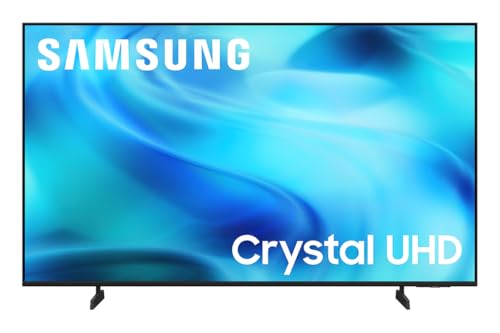
Samsung U8000H Crystal UHD 50″ — Best picture processing
Samsung’s Crystal UHD line is the company’s volume engine, and the 2026 U8000H shows where the volume goes: into processing. The Crystal Processor 4K, colour boosting and 4K upscaling are the listing’s headlines, and they address the content households actually watch — broadcast, sport and streamed shows at mixed resolutions — with a composure that spec-sheet rivals rarely match. Motion Xcelerator handles the panel’s motion presentation, and Samsung’s Vision AI Companion layers the company’s current interface intelligence on top.
The platform is Samsung’s own, which brings the brand’s free content channels and a polished, advertising-aware home screen that some love and others tolerate. Dolby Vision is the notable absentee — Samsung backs HDR10+ — and film collectors should register that before falling for the processing. For everyone else, the U8000H is the 50-inch set most likely to make ordinary Tuesday-evening television look quietly expensive, and in this class that is a rarer gift than any gaming badge.
- Panel: 50-inch Crystal UHD, 4K
- Processing: Crystal Processor 4K, Colour Booster, 4K upscaling
- Motion: Motion Xcelerator
- Platform: Samsung Smart TV with Vision AI Companion
- Model year: 2026
Strengths
- Upscaling polish flatters the broadcast and catalogue content most viewing consists of
- A current 2026 line, with the longest software runway in this guide
- Samsung’s ecosystem of free channels adds viewing without another subscription
Trade-offs
- No Dolby Vision — Samsung’s HDR10+ allegiance is the film fan’s sticking point
- Crystal UHD is an LED line, so contrast trails the QLED picks in dark scenes
- Samsung’s home screen carries more promotion than Roku’s restraint allows
Best for: broadcast-and-sport households who want their everyday picture handled beautifully. Not suited for: Dolby Vision collectors, whose libraries deserve a set that speaks the format.

Roku Select Series 50″ — Best smart platform
Roku’s own 50-inch Select Series is the interface argument made physical. The 2026 hardware pairs a QLED panel — a step up from the line’s earlier LED sets — with the platform Roku has refined into the industry’s calmest: a grid of apps, unified search that does not play favourites, free live television for news, sport and films woven into the guide, and a voice remote that does its job without theatre. Households with a Roku stick in a drawer already know this country; the Select simply gives it a better screen.
Bluetooth headphone mode through the Roku ecosystem deserves its mention for shared housing: late-night viewing at full volume in your ears and silence in the room is a feature that sells televisions to flatmates and parents of infants. Picture quality is honest QLED work — rich colour, 4K clarity — without the gaming arsenal of the Hisense or TCL picks. The Select is a viewing appliance in the best sense: it disappears into the evening, and at 50 inches with this software, disappearing is a genuine achievement.
- Panel: 50-inch QLED, 4K (2160p)
- Platform: Roku TV, manufactured by Roku
- Remote: voice remote included
- Extras: Wi-Fi and Bluetooth headphone mode, free live TV
- Series: Roku Select (2026)
Strengths
- The least demanding interface in the class, on hardware from the same company
- QLED panel quality lifts this generation of Select above its LED ancestors
- Private listening through headphones is a household-peace feature of the first order
Trade-offs
- Gaming features are basic beside the E6SR and F7D in this guide
- Roku’s closed ecosystem offers no sideloading or exotic app routes
- Design is neat rather than premium to the touch
Best for: mixed-age households and shared houses where the interface must never become the argument. Not suited for: console-led rooms, which will feel the missing gaming features nightly.

Hisense E6SR 50″ — Best value
The E6SR applies Hisense’s house strategy at 50 inches: take the checklist from a class above and attach it to the class’s sharpest positioning. Hi-QLED colour, Dolby Vision, Game Mode Plus with variable refresh rate and auto low-latency mode, DTS Virtual:X audio processing, AirPlay, and compatibility with both Alexa and Google Assistant — all running on Roku TV, all in a 2026 model. As with its 55-inch relative elsewhere in this batch of guides, the value here is not cheapness but refusal: a refusal to cut the features buyers later discover they needed.
The gaming support transforms the set’s versatility. A 50-inch screen with VRR and ALLM is a legitimate console display for a bedroom or a small flat, switching into its low-latency path automatically when the console wakes. Roku keeps the non-gaming hours friendly. What the E6SR concedes to the TCL Q65 is a measure of panel refinement; what it concedes to the Roku Select is the single-maker coherence. What it concedes to nobody is the feature-per-commitment ratio, which is why it wears the value badge in a guide full of sensible sets.
- Panel: 50-inch Hi-QLED, 4K UHD
- HDR: Dolby Vision
- Gaming: Game Mode Plus, VRR, ALLM
- Audio: DTS Virtual:X
- Platform: Roku TV, AirPlay, Alexa and Google Assistant compatible
Strengths
- Console support complete enough to anchor a bedroom gaming setup
- Dolby Vision at this station in the class is still rarer than it should be
- Roku software keeps the whole package approachable for non-technical viewers
Trade-offs
- Panel polish is a step behind the TCL Q65’s, visible mostly in demanding film scenes
- Hisense’s overlapping model names demand care to order the exact E6SR variant
- Sound processing helps, but the physical speakers remain small-set equipment
Best for: bedrooms and first flats where one screen must stream, broadcast and game without excuses. Not suited for: picture purists, who will spend film nights noticing the gap to the Q65.

TCL F7D 50″ — Best for gaming features
The F7D is this guide’s Fire TV representative, and TCL has aimed it at players. The 2026 set pairs a QLED 4K panel with Dolby Vision and Atmos, HDR10+, DTS support, an Auto Game Mode that engages when a console appears, and Motion Rate 240 with MEMC motion processing — TCL’s interpolation branding, to be read as motion smoothing rather than native panel speed. A voice remote with Alexa+ handles the Fire TV side, where Amazon’s free and live content ecosystem is at its deepest.
Fire TV is the platform readers will either choose deliberately or not at all: it integrates beautifully with Amazon accounts, Ring doorbells and Alexa routines, and its home screen promotes Amazon’s storefront with an enthusiasm Roku users find startling. For an Alexa household adding a gaming-capable 50-inch screen, those are features, and the F7D’s combination — QLED colour, Vision formats, automatic game behaviour — is unavailable anywhere else in this guide wearing Fire TV colours. Judge it as the ecosystem pick with a gamer’s streak, and it judges very well.
- Panel: 50-inch QLED, 4K UHD HDR
- Formats: Dolby Vision and Atmos, HDR10+, DTS
- Gaming: Auto Game Mode; Motion Rate 240 with MEMC (interpolated)
- Platform: Fire TV, voice remote with Alexa+
- Model: 50F7D (2026)
Strengths
- The only Fire TV route in this guide, with TCL’s QLED panel behind it
- Auto Game Mode removes the settings ritual from console sessions
- Dolby Vision and Atmos together give films their full streaming-era treatment
Trade-offs
- Fire TV’s promotional interface is the busiest in this guide
- Motion Rate branding should not be mistaken for a native high-refresh panel
- Alexa-centric design offers little to households in Google’s or Apple’s orbit
Best for: Alexa households wanting a 50-inch screen that games as willingly as it streams. Not suited for: interface minimalists, who will find Fire TV’s energy exhausting by the second evening.

LG UQ7570 50″ (2022) — Older holdout pick
Every guide should contain one honest antique, and the UQ7570 is this one’s: a 2022 LG, still listed and still selling, from the era when its AI-powered 4K processing and cloud gaming support were current headlines. Frame it plainly — this is the older holdout. Its webOS platform has been superseded by several generations of LG software, its panel technology belongs to its year, and buyers should expect the remaining software-support runway to be shorter than that of the 2026 sets beside it.
And yet it persists in listings because the fundamentals persist: a 50-inch 4K screen from a top-tier manufacturer, a platform many households already know from older LG sets, and the kind of pricing that seniority usually brings — check the live listing, as always, rather than assuming. For an LG loyalist replacing a faithful older set, or a buyer furnishing a room where the television’s job is broadcast, discs and a console rather than a decade of app evolution, the UQ7570 remains a coherent purchase. It is included with its age on its sleeve; buy it for what it is, and it will not pretend to be anything else.
- Panel: 50-inch 4K, AI-powered 4K processing
- Platform: webOS (2022 generation)
- Extras: cloud gaming support
- Model: 50UQ7570PUJ (2022)
- Status: older holdout — verify listing details and support expectations
Strengths
- LG’s panel quality and brand support behind the oldest badge in this guide
- webOS familiarity for households already running an LG elsewhere
- Seniority usually means a keener listing figure — verify it live rather than trusting the assumption
Trade-offs
- A 2022 model: app support and interface refinements will age out sooner than any rival here
- Picture technology has moved on — the QLED picks show visibly richer colour
- Gaming features reflect its year, not the current console era’s expectations
Best for: LG loyalists and simple briefs — broadcast, discs, a console — where platform youth is irrelevant. Not suited for: anyone buying a decade of streaming futures, who should take a current line.
Living With Each Platform: A Week in Five Software Countries
Google TV, on the TCL Q65, organises the week around discovery. Its home screen learns the household’s services and surfaces the next episode, the suggested film, the match about to start — an interface that feels like a concierge when it guesses right and like a shop window when it guesses wrong. The Play Store underneath means the week can also include the media-server app, the retro game, the regional service nobody else carries. Households that enjoy being suggested to will thrive; households that want a grid and silence should keep reading down the platform list.
Samsung’s system, on the U8000H, organises the week around polish and free content. The hub is quick, the free channels fill the grazing hours without a subscription, and the whole experience feels engineered by a company that has shipped this software to more living rooms than anyone. Its week has one recurring errand for film collectors — checking which HDR format a given title will play in — and one recurring pleasure: broadcast and everyday content handled with a processing confidence the household stops noticing because it never gives them reason to.
Roku TV, on the Select Series and the Hisense E6SR, organises the week around not thinking about the platform at all. The grid is the grid; search finds things across services without an agenda; the remote’s buttons are where muscle memory left them. Two different manufacturers’ hardware runs it in this guide, and the experience is recognisably the same country in both — which is precisely Roku’s promise to households that will own more than one television in their lives.
Fire TV, on the TCL F7D, organises the week around Amazon’s household: the voice remote that also runs the lights, the doorbell that can appear on the screen, the storefront woven into the shelves. For the Alexa-committed it is the most capable week in this guide; for everyone else it is the busiest. webOS, on the 2022 LG, organises the week around familiarity — a launcher bar, a pointer remote, a platform whose current absence from new LG flagships’ headlines does not diminish how many households already speak it fluently. Its week is the calmest argument for the holdout pick: nothing to relearn, nothing to re-teach the family.
Room by Room: Where Each 50-Inch Pick Belongs
TCL Q65 50″ — The small family’s main room. It is the set the household gathers around for films, trusts with the children’s streaming, and never apologises for when guests visit. Its completeness is a social quality: nobody’s use case — not the gamer’s evening, not the grandparent’s afternoon — finds it unprepared.
Samsung U8000H Crystal UHD 50″ — The broadcast household’s living room, where the evening is news, a drama and the football, and where upscaling quality is the difference between a picture that looks broadcast and one that looks expensive. It is also the natural set for the Samsung phone household, whose devices and television share an accent.
Roku Select Series 50″ — The shared house and the family with a wide age range. Its room is the one where the remote passes between a seven-year-old and a seventy-year-old in the same evening, and where private listening keeps the peace after bedtime. It belongs wherever the interface must be a treaty rather than a topic.
Hisense E6SR 50″ — The bedroom that is also a gaming den, in the first flat or the teenager’s room of the family home. The console lives there permanently, the Roku interface covers the streaming, and the value positioning leaves budget for the games themselves — a room whose owner will use every feature on its list.
TCL F7D 50″ — The Alexa household’s second room, or its main room where the smart home is the point. The set answers the doorbell, takes voice commands in stride and games willingly after the routines run. Its room is the one already wired into Amazon’s ecosystem, where the F7D completes a circuit rather than starting an argument.
LG UQ7570 50″ (2022) — The room with the simplest brief in the house: the guest room that shows broadcast and a film from a player, the relative’s room where webOS is already the known language, the holiday flat where the television works a month a year. Its seniority is irrelevant in these rooms, which is exactly why it remains on sale.
Can a 50-Inch Television Double as a Serious Monitor?
Increasingly, yes — and the picks here divide on the question in instructive ways. A desk-adjacent 50-inch 4K screen offers the pixel count of four 25-inch Full HD monitors in one panel, and for console play, video editing timelines and sprawling spreadsheets it is a genuinely productive object. The requirements are the gaming requirements wearing work clothes: low-latency behaviour on the input in use, which the E6SR’s ALLM and the F7D’s Auto Game Mode supply automatically, and clean text rendering, which means choosing the picture mode that disables the sharpening and smoothing a desk exposes mercilessly.
The cautions are ergonomic. Fifty inches at desk distance demands a deep desk and a chair that lets you sit back; text at native scaling is small, and operating-system scaling becomes part of the setup. Households tempted by the dual-purpose life should treat it as a bonus the gaming picks offer rather than a reason to buy — the television that is excellent on the wall and adequate at the desk beats the reverse arrangement for almost everyone, because the wall is where it will spend its decade.
Model Years at 50 Inches: What Actually Changes Between Them?
This guide spans 2022 to 2026, which makes it a useful place to explain what a model year buys in this class — because it is less than marketing implies and more than cynics admit. Panels change slowly: a QLED from 2024 and one from 2026 are cousins, and the differences appear in refinement — brightness discipline, colour tuning, viewing behaviour — rather than in kind. Processors change faster, and with them the interface’s speed in year three, which is where the newer sets quietly earn their premium: not on delivery day, when everything is quick, but on the thousandth evening, when the older chip’s deliberation has become a household joke.
Software support is the year gap that matters most. A 2026 set stands at the front of its manufacturer’s update queue; the 2022 LG stands nearer the back of its own, with the platform’s major reinventions already behind it. For a streaming-led household that difference compounds annually. For a broadcast-and-player household it barely registers, because the tuner and the HDMI ports do not age. This is why the guide can recommend the field’s oldest set and its newest sets in the same breath without contradiction: they are answers to different questions about time, and the reader’s own horizon — a decade of apps, or five years of broadcast — is the specification that decides between them.
The final year-effect is availability’s shadow: older models persist in listings at figures that reflect their seniority, and the discount is real money that can fund the soundbar, the mount or the first year of subscriptions. A holdout bought knowingly, at a seniority-adjusted figure, is one of the rational purchases in this entire category — which is a different thing entirely from a holdout bought unknowingly at a current-model figure, and the model-code discipline this guide keeps repeating is what separates the two.
Sound, Bars and the Second Phase of a 50-Inch Setup
Fifty-inch televisions have fifty-inch speaker enclosures, and the audio story across this field is uniform enough to summarise once: dialogue is clear, music is thin, films are diminished, and every set improves dramatically with external help. The formats are ready — Dolby Atmos support on the TCL pair, DTS Virtual:X processing on the Hisense, ARC and eARC connections across the class — so the second phase is a purchase, not a project. A compact soundbar under a 50-inch screen is also the one upgrade whose size matches the television’s furniture footprint, which is why this class, more than the giant sizes, tends to complete itself within the first year.
Sequencing advice mirrors the rest of the guide: panel and platform first, because they cannot be upgraded in pieces; sound second, because it can; and the small accessories — the correct HDMI cable for the console, the wall mount, the bias light for evening viewing — whenever the room asks for them. A 50-inch setup assembled in that order never contains a stranded purchase, and its total cost, spread across the phases, is the honest figure to compare against the all-at-once alternatives in larger classes.
How Do You Audition a 50-Inch Set Without Fooling Yourself?
The showroom failure at this size is subtler than at the flagship sizes: everything looks good, because at 50 inches in a bright store the differences hide in content the demo loop never shows. Bring your own tests in your head. Ask for a broadcast channel or a news feed — the upscaling test that separates the Samsung’s processing from the field. Ask for a dark scene from any film the store can stream, and stand at your room’s actual distance, not the marked line on the floor. Switch the picture mode away from the vivid preset before judging anything, because you are auditioning the panel, not the retailer’s chosen makeup.
At home, the return window audition is the same discipline in your own light: one dark scene, one bright broadcast, one game if a console lives there, and the interface test — three apps, one search, one input change — timed against your patience rather than a stopwatch. The sets in this guide were chosen to pass those ordinary tests in ordinary rooms, and a household that runs them in the first week will own its television with a confidence no specification sheet confers.
What Does a 50-Inch Set Ask of a Household Over a Decade?
Less than any larger class, which is part of its charm. Power draw is moderate, heat is negligible in ordinary rooms, and the set can be moved by one careful person — a fact whose value appears at every redecoration, house move and room reshuffle of the television’s life. Wall-mounting is a one-person-with-a-stud-finder job rather than a two-person expedition. The demands it does make are the platform’s: an account to maintain, updates to accept, a remote whose batteries and whereabouts become household administration. Households that have owned smart televisions know this rhythm; households new to it should expect the television to behave less like the appliances of their childhood and more like the phones in their pockets — capable, updatable, and occasionally in need of a restart that fixes everything.
The hand-me-down trajectory deserves its paragraph, because 50-inch sets are the most inherited objects in the modern home. A set that begins as a main screen becomes, five years on, the bedroom screen, the student-flat screen, the grandparents’ upgrade — and the picks that inherit best are the ones with simple platforms, standard connections and a factory reset that returns them to innocence in minutes. Roku’s sets inherit like champions; the LG inherits into LG households; the Google TV sets inherit with their app breadth intact. Buy with the second owner somewhere in mind and the purchase keeps paying households you have not met yet.
Why Not 48, 49 or 55 Inches Instead?
The neighbouring sizes each make a case worth answering. The 48-to-49-inch class, home to a few OLED and premium models, buys panel technology at the cost of screen area and usually at a figure above this whole field — a cinephile’s trade, legitimate and narrow. The 55-inch class buys presence and the flagship features’ first rung, at the cost of the furniture flexibility this guide celebrates; its strongest argument is a room that can take it, and its weakest is a room that almost can. Fifty inches persists between them because it is the largest size that still fits the standard media unit and the average alcove — a constraint of joinery, not of technology, and joinery outlives technology cycles.
Measure the furniture before mourning the size you did not buy. A 50-inch set that fits the room’s actual architecture, at the room’s actual distance, will be watched with more pleasure than a 55-inch set shoehorned onto a wall it dominates, and the money difference funds the soundbar that the bigger set’s owner is still saving for. Fit is a picture-quality feature; it simply never appears on a specification sheet.
What Do Owners of This Class Talk About After a Year?
Not the panels — the platforms, the remotes and the sound, in that order, which is why this guide weighted them as it did. The recurring praise is for interfaces that stayed quick and remotes that stayed findable; the recurring complaint is for the soundbar purchase postponed too long, and for the one app a household needed that its platform’s store carried late or never. A smaller, sadder theme is the variant that arrived wrong — the 55-inch sibling delivered to a 50-inch alcove — which is why the checkout discipline in this guide’s introduction is written in the tone of experience rather than theory.
The year’s other lesson is about the room settling around the set. A television chosen at the right size stops being discussed; it becomes the place the household’s evenings happen, and its brand is forgotten by everyone except the person who researched it. That anonymity is the class’s definition of success, and it is available from every row of the comparison table below — provided the platform was chosen for the household that exists, rather than the household the advertising imagined.
A Word on Warranties, Registration and the Drawer of Records
Register the set in its first week, while the order confirmation is still findable, and file three things together: the model code, the order record and a dated photograph of the screen showing a plain image. The photograph is the uniformity baseline that turns any later panel conversation from opinion into evidence, and the model code is the difference between support for your television and support for its similarly named cousin. Fifty-inch sets are light enough to be serviced and replaced without drama, which makes their paperwork, paradoxically, the part owners most often neglect — the process is easy, so nobody prepares for it. Prepare anyway; the households that do are the ones whose rare problems end quickly.
The Fifty-Inch Field at a Glance, Platform by Platform
| Pick | Platform | Panel | Headline strength |
|---|---|---|---|
| TCL Q65 50″ | Google TV | QLED | Complete format sheet and app breadth |
| Samsung U8000H 50″ | Samsung (Tizen-based) | Crystal UHD LED | Processing polish for everyday content |
| Roku Select Series 50″ | Roku TV | QLED | Calmest interface, private listening |
| Hisense E6SR 50″ | Roku TV | Hi-QLED | Gaming features at a value station |
| TCL F7D 50″ | Fire TV | QLED | Alexa integration with Auto Game Mode |
| LG UQ7570 50″ (2022) | webOS | 4K LED | Holdout value from a major brand |
Let the platform column lead. A household fluent in Roku has two excellent rows; an Alexa household has one clear row and several workable ones; a Google household likewise. The panel column rarely overturns a platform decision at this size, because every panel here is competent — the interface is what you will still be noticing in year three.
How Do You Choose and Set Up a 50-Inch Set for Your Room?
Measure first, and measure the right things: the wall or unit width against the set’s feet, the seating distance against the size — most 50-inch rooms settle between one and a half and two and a half metres — and the height of the screen’s centre against seated eye level. Then decide the platform question with the household in the room, literally: whose phone ecosystem dominates, whose parents must operate the remote, which voice assistant already runs the lights. Those answers choose the shortlist faster than any specification comparison.
Setup day has three rituals worth the minutes. First, the picture mode: choose the cinema or filmmaker-style preset for the main input, then check a dark scene and a bright one before touching anything else, because most of these panels are closer to right than their showroom defaults suggest. Second, per-input settings: game mode on the console’s port, motion smoothing low or off for film, and the light-sensor or adaptive options enabled if your room’s brightness swings through the day. Third, accounts and updates: let the set complete its first software update, sign in once, and then audit the home screen’s pre-installed apps while the interface is still new to you — deleting clutter is easiest before habits form around it.
Sound closes the setup. At 50 inches the speakers are adequate for news and thin for cinema, and every pick here connects to a soundbar by HDMI ARC or optical in minutes. If the budget forces a sequence, buy the television now and the bar at the next sale; the upgrade path is painless and the difference, when it lands, is the largest single improvement left available to this class.
Which Errors Do 50-Inch Buyers Keep Repeating?
Variant error leads the list, as the introduction warned: these families sell in five sizes from one page, and the basket inherits whichever variant was last touched. Confirm the 50-inch selection and the model code at checkout. The second error is platform blindness — buying on panel specifications alone and discovering that the household hates the interface, a mistake with a seven-year half-life. Spend as long choosing the software as the screen.
Age blindness is the third: listings mix model years shamelessly, and an older set — our LG holdout is the honest example — can be a fine purchase or a foolish one depending entirely on whether its age was priced and understood. Check the model year as deliberately as the size. Finally, do not overspend against the room: a 50-inch set in a large, bright, wide-seating living room is the wrong tool, and the money is better aimed at the larger classes covered elsewhere on this site.
One more tie-breaker hides in the household’s existing shelves: the streamer, console and soundbar you already own have platform loyalties of their own, and a television that speaks their language — casting standards, voice assistants, control protocols — removes a dozen small frictions that no single review can enumerate. Inventory the room before the television joins it, and let the ecosystem you have built cast the deciding vote between otherwise equal picks.
And if the tie persists after all of that, choose the newer model year. All else equal, the longer software runway is the tie-breaker with the longest shadow, because it is the one advantage that cannot be bought later at any price — a truth the 2022 holdout in this guide illustrates from the other side, honourably and by its own admission.
There is a final, unfashionable tie-breaker worth admitting into the record: buy the one the household can collect, return and service most easily. A television is a decade-long object bought in an afternoon, and the retailer’s delivery terms, returns process and local service network will matter on exactly the days when everything else about the purchase has been forgotten. The best set on paper, stranded by a miserable returns experience, loses to the excellent set whose seller made a problem painless — veterans of one bad return need no persuading on this point.
Notice what none of these tie-breakers consults: the specification that headlined the advertisement. That is deliberate, and it is the accumulated wisdom of this size class — at 50 inches, with six competent panels on the table, the differences that survive into year three are the human ones, and the household that chooses on them rarely revisits the decision at all.
Write the answers down if the household is choosing together at a distance — a shared note with the room’s measurements, the platform verdict and the shortlist of two survives the group chat’s entropy and prevents the most common ending to a family television decision, which is buying whichever set somebody’s colleague mentioned last.
Then sleep on the shortlist of two for exactly one night. Urgency in this class is almost always manufactured — by a countdown on a listing, by a household member’s impatience — and a decision that still looks right at breakfast is the one that will still look right at the television’s first anniversary.
Breakfast, in other words, is the final reviewer this guide employs — unpaid, unimpressed by countdown timers, and reliably right about which of the two finalists the household actually wants to live with.
If the Decision Is Still Tied, Break It With These Three Questions
First: which remote would your least technical viewer choose blindfolded? That answer eliminates half the table in most households, and it should — the interface is the television, daily, in a way the panel never quite is. Second: which room will this set serve in five years, not this year? A set bought for the main room with a bedroom’s future should favour the platforms and panels that inherit gracefully. Third: what will you actually watch in the first month — name the programmes, the services, the console — and check that list against the picks’ strengths one final time. A decision broken by honest answers to those three questions is a decision that survives contact with ownership, which is the only test this guide ultimately cares about.
Final Recommendation
Start with the TCL Q65 unless your household’s platform loyalties point elsewhere — it is the most complete 50-inch package in this guide, and its compromises are the ones fewest viewers will ever notice. Samsung households and broadcast devotees take the U8000H, Roku households take the Select for polish or the Hisense E6SR for value with gaming teeth, Alexa households take the TCL F7D, and the LG UQ7570 waits patiently for the buyer who values a known brand and a simple brief over software youth. Fifty inches rewards the deliberate shopper more than any other size, because everything here is good and the differences are about fit — so measure the wall, choose the platform together, and let the right television move in for the decade.
Frequently Asked Questions
Is 50 inches big enough for a living room?
For small to medium living rooms with seating up to about two and a half metres, yes — it is the main screen in millions of homes. Beyond that distance, or in wide rooms with angled seating, the picture’s authority fades and a 55 or 65-inch class serves better. Measure your seating distance honestly; it decides the size question more reliably than any showroom impression.
Which platform should I choose if my household is mixed?
Roku TV is the usual peace treaty: it favours no phone ecosystem, its search spans services evenly, and its interface is the easiest for guests and grandparents. Google TV is the choice when app breadth matters most, Fire TV when Alexa runs the house, and Samsung’s or LG’s platforms when the household already owns and likes them.
Does the 2022 LG still make sense to buy?
It can — knowingly. The UQ7570 remains a competent 50-inch 4K set from a major brand, suited to broadcast, discs and console use. What you give up is software runway: newer apps and interface refinements will leave it behind sooner than the 2026 picks. If the live listing prices that age in, and your brief is simple, it is a rational holdout purchase rather than a trap.
Can a 50-inch TV work for gaming?
Several of these genuinely can. The Hisense E6SR carries VRR and auto low-latency switching, the TCL F7D adds an Auto Game Mode, and the Q65 includes a game accelerator mode. None matches a dedicated high-refresh gaming set, but for console play in a bedroom or small flat, the E6SR in particular removes every practical obstacle.
Why do some picks lack Dolby Vision?
Because Samsung does not license it, backing HDR10+ across its range — the U8000H included. In practice both formats deliver adaptive HDR from the services that support them, and most viewers will never A/B the difference. Film collectors with Dolby Vision-mastered libraries are the exception, and they should weight the Vision-equipped picks — TCL, Hisense and Roku’s QLED — accordingly.
How do I know which model year a listing is selling?
Read the model code and the listing’s own year statements rather than the headline, which often survives from the family’s launch. This guide states each pick’s year in its specification list — 2026 for the Samsung U8000H, Roku Select and Hisense E6SR, 2024 for the TCL Q65, and 2022 for the LG UQ7570 — and matching the code on the listing to the code in the review is the reliable check. If the year differs, treat the review’s platform reasoning as guidance and verify the panel details against the listing itself.
Will a 50-inch set work in a bright room?
Moderately bright, yes; a wall of glass, cautiously. The QLED picks here hold colour well in ordinary daylight, and sensible placement — perpendicular to the main window rather than opposite it — does much of the work. Households whose room is bright in the serious sense should read this site’s dedicated bright-room roundup, where the engineering is heavier and the screens are larger, before asking a 50-inch set to fight a conservatory.
Related Guides
Stepping up a size, the roundup of 55-inch televisions in the fiercest budget tier covers the next class, while design-led rooms should browse the guide to frame-style sets that hang as artwork, and platform researchers can go deeper with the survey of Android-based televisions and the streamers that imitate them before the platform decision is locked.
Related guides
- Best 1080p IP Cameras: PoE Domes, Turrets, Bullets and a PTZ That Earn Their Cable
- Best 43 1080p TVs: Why 43 Inches Went 4K — and Where True Full HD Survives
- Best Doorbell Cameras No Subscription: Local Storage Picks, and the Ring/Blink Truth
- Best AC Powered Wireless Security Cameras: Wi-Fi Data, Mains Power, Zero Sleep



[…] designed to hang like framed artwork suits bright rooms with design ambitions, and the survey of Google TV sets for app-first households covers the platform side of several picks […]