Our Top Picks
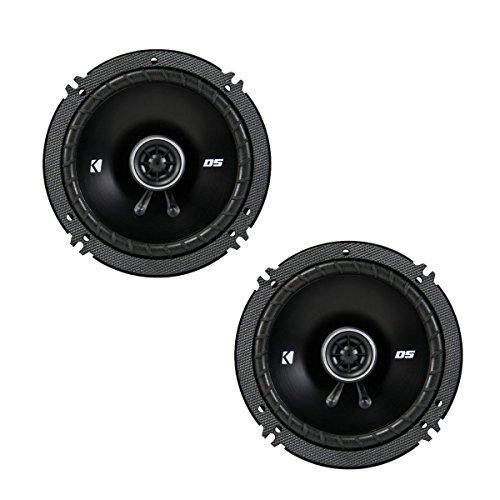
 Pyramid 3-Way Indoor Outdoor Speaker System5.25''W x 3.75''H x 3.75''D4.33 x 8.86 x 6.5 inches1.98 poundsCheck on Amazon
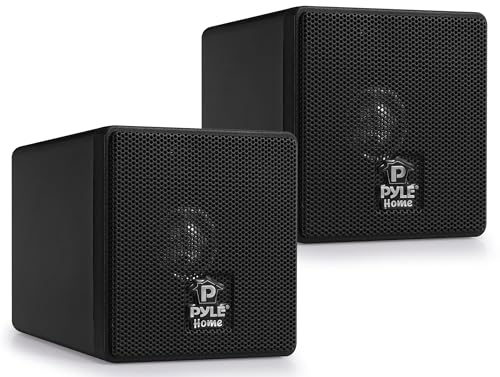
 Pyle Home 4” Mini Cube Bookshelf Speakers-Paper Cone4"5.4 x 9.9 x 5.3 inches3.85 poundsCheck on Amazon


What's inside
- Why Small Passive Speakers Still Earn Their Place
- What Small Means in Driver Terms
- Sensitivity: The Number That Matters More Than Wattage
- Impedance and Amplifier Matching
- How Much Amplifier Power Small Speakers Actually Need
- Cabinet Designs: Sealed, Rear-Ported, and Front-Ported
- Nearfield Desktop Listening Versus Small-Room Duty
- Crossover Design: The Invisible Half of the Speaker
- Binding Posts, Spring Clips, and Speaker Wire
- Placement: Height, Toe-In, and What the Speaker Sits On
- The Honest Truth About Bass From Small Cabinets
- Reading Specifications Without Being Misled
- Amplifier Features That Matter With Compact Speakers
- Living With Small Speakers Day to Day
- Check prices on Amazon
- A Practical Way to Choose
As an Amazon Associate I earn from qualifying purchases. This post may contain affiliate links at no extra cost to you.
This guide is reader-supported: when you follow affiliate links on this page and buy through retailers, a commission may be earned at no extra cost to you, and that support helps keep detailed, research-based buying guidance like this freely available to read.
Why Small Passive Speakers Still Earn Their Place
A passive speaker is, at its core, a cabinet, drivers, and a crossover network with no amplifier of its own. That separation sounds like an inconvenience until you consider what it buys you. The amplifier can be upgraded, repaired, or replaced without discarding the speakers. The speakers can move to a better amplifier years later without becoming obsolete. And because the manufacturer spends the entire budget on drivers, cabinet work, and crossover parts rather than splitting it with built-in electronics, a modest passive pair often devotes more of its price to the components that actually shape the sound.
Small passive speakers occupy a particular sweet spot in that arrangement. They fit on desks, shelves, stands, and sideboards where larger enclosures simply cannot go. They suit bedrooms, studies, dorm rooms, kitchens, and compact living rooms. They also tend to be forgiving about listening distance, because a listener in a small space usually sits closer, and a speaker designed for modest rooms does not need to fill a hall to sound complete at the seat.
The trade-offs are equally real and worth stating plainly at the outset. A small cabinet moves less air than a large one, so deep bass is limited by physics rather than by brand promises. A passive design also asks more of the buyer: you must choose an amplifier, connect speaker wire correctly, and think about placement instead of plugging in a single powered box. This guide works through each of those decisions in order, so that by the end you can assemble a small system that behaves predictably instead of hoping mismatched parts happen to agree with each other.
One more framing point matters before the technical sections. Small speakers are often marketed as starter products, as if they were merely a step toward something serious. That framing undersells them. A well-designed compact passive speaker, driven by a competent amplifier and placed with a little care, delivers imaging, midrange clarity, and tonal balance that satisfy many listeners for years. The goal is not to tolerate a compromise; the goal is to understand where the genuine limits sit and to choose inside them intelligently.
What Small Means in Driver Terms
In this category, small describes the woofer diameter more than any single cabinet dimension. The range runs from roughly 3-inch woofers at the miniature end through 4-inch and 4.5-inch designs, up to 5.25-inch woofers at the upper boundary. Beyond that, at 6.5 inches, the speaker is a conventional bookshelf model rather than a compact one, and it usually needs more space around it to perform as intended. Woofer diameter matters because it sets the cone area, and cone area together with excursion determines how much air the driver can move at low frequencies.
A 3-inch woofer lives in a genuinely tiny enclosure, sometimes barely larger than a grapefruit. Speakers in this class excel at nearfield desktop duty, where the listener sits an arm’s length away and playback levels stay moderate. Their midrange can be surprisingly articulate because a small, light cone responds quickly and breaks up at higher frequencies than a large cone does. The cost is bass: most 3-inch designs roll off somewhere in the region of 100 to 150 hertz, which means kick drums lose their foundation and male voices can sound thin unless a subwoofer fills in below.
Moving to a 4-inch or 4.5-inch woofer changes the character noticeably. Cone area grows substantially, cabinets gain a little internal volume, and bass extension typically reaches into the 70 to 90 hertz region in a ported design. That is enough to give acoustic guitar, piano, and most vocals a convincing body without assistance. For many desktop and small-room systems, this middle size is the practical default: compact enough for a shelf, substantial enough to stand alone for music that does not lean on deep electronic bass.
The 5.25-inch class is the heavyweight of the small category. These speakers approach the bass reach of full-size bookshelf models, often extending to around 55 to 70 hertz depending on tuning, and they play louder with less strain. The enclosure grows accordingly, commonly reaching depths that crowd a shallow desk. If your listening is mostly in a room rather than at a desk, and stands or deep shelves are available, the largest small speakers usually deliver the most complete performance per pair. If space is the binding constraint, the smaller sizes exist precisely because this class will not fit.
Tweeter pairing interacts with woofer size in ways spec sheets rarely explain. A small woofer crosses over to the tweeter at a relatively high frequency, often between 2.5 and 3.5 kilohertz, because the little cone stays well-behaved higher up. Designers exploit that freedom with compact dome tweeters in small faceplates, which keeps the driver spacing tight. Tight spacing matters at close listening distances: when woofer and tweeter sit near each other, their outputs blend into a coherent wavefront sooner, so a listener a meter away hears one speaker rather than two separate sources stacked vertically.
Sensitivity: The Number That Matters More Than Wattage
Sensitivity describes how loud a speaker plays for a given input, expressed in decibels. The conventional figure states the sound pressure level, in dB, measured one meter from the speaker when it receives 2.83 volts of input. Because 2.83 volts into an 8-ohm load equals one watt, the number is often loosely called the one-watt rating, though that shorthand misleads when impedance differs from 8 ohms, a complication the impedance section below takes up directly.
Small speakers typically post sensitivity figures between about 83 and 88 dB. That range looks narrow on paper and behaves anything but narrow in a room. Decibels are logarithmic: a 3 dB difference represents a doubling or halving of required amplifier power for the same loudness. A speaker rated at 84 dB needs roughly twice the power of an 87 dB model to reach the same level, and four times the power of a 90 dB model. When you shop for a compact amplifier with limited output, those few decibels decide whether the pairing has headroom or runs out of breath on musical peaks.
Why do small speakers tend toward lower sensitivity? The physics of compact design pushes that way. Extending bass from a small box requires the woofer to work against a stiff air spring and to accept equalization-like trade-offs in the crossover and tuning, and efficiency is the currency spent to buy that extension. Designers call the exchange Hoffman’s Iron Law in its informal form: of small size, deep bass, and high efficiency, a designer may pick two. A tiny speaker that claims both deep bass and very high sensitivity deserves skeptical reading of how each figure was measured.
Measurement conditions complicate comparisons further. Some manufacturers measure in an anechoic environment, others estimate in-room response, which typically reads a few decibels higher because walls reinforce the output. Some quote the figure for a pair, others for a single speaker. None of this makes sensitivity useless; it means you should treat it as a comparison tool within a brand’s own line first, and as a rough guide across brands second. A difference of 1 dB between competing models is within measurement noise. A difference of 4 dB is a genuine character trait that will shape your amplifier choice.
For desktop nearfield use, modest sensitivity is rarely a problem because the listening distance is short. Halving the distance to a speaker raises the level at your ears by roughly 6 dB in free-field terms, so a speaker that seems quiet on paper can play plenty loud at 80 centimeters. In a room, at three or four meters, the arithmetic reverses, and sensitivity becomes the first specification to check. Match the number to your geometry before you match anything else.
Impedance and Amplifier Matching
Impedance, measured in ohms, describes the load a speaker presents to an amplifier. Small passive speakers are sold with nominal ratings of 4, 6, or 8 ohms, and the word nominal deserves emphasis. Impedance is not a fixed value; it varies with frequency, dipping near resonance and at the crossover region, rising elsewhere. A speaker labeled 8 ohms might dip to 5 ohms at some frequencies, while a speaker labeled 4 ohms might dip toward 3. The nominal figure is a summary, and the minimum impedance, when a manufacturer publishes it, tells you more about how demanding the load really is.
Amplifiers care because lower impedance draws more current for the same voltage. An amplifier rated comfortably into 8 ohms may run hot, distort early, or trigger its protection circuit when asked to drive a 4-ohm load at high volume, especially if that load also has awkward phase angles. Most modern amplifiers and receivers handle 6-ohm speakers without drama. Four-ohm speakers deserve a deliberate check: look for an explicit 4-ohm rating in the amplifier’s specifications, ideally with power figures quoted into 4 ohms rather than a vague statement of compatibility.
The sensitivity shorthand from the previous section interacts with impedance in a way that flatters low-impedance speakers. Because sensitivity is quoted at 2.83 volts, a 4-ohm speaker draws two watts at that voltage, not one. Its sensitivity figure therefore reads about 3 dB higher than it would on a true one-watt basis. When you compare a 4-ohm model rated at 88 dB against an 8-ohm model rated at 86 dB, the real efficiency gap is smaller than the printed gap, and the 4-ohm speaker simultaneously asks more of the amplifier. Reading both numbers together prevents a common buying mistake.
Practical matching guidance is straightforward. With an 8-ohm or 6-ohm compact speaker, nearly any reputable stereo amplifier, receiver, or compact desktop amplifier will behave well. With a 4-ohm speaker, prefer amplifiers that publish 4-ohm power ratings and have visible heatsinking or a track record with low-impedance loads. Avoid stacking two pairs of low-impedance speakers on one amplifier output, since parallel wiring halves the impedance again. And if an amplifier offers an impedance selector switch, understand that on many receivers the lower setting mainly limits output to protect the unit; the manufacturer’s manual, not folklore, should guide that choice.
Long speaker cable runs add a small series resistance that interacts with low impedance, slightly altering the load and, in extreme cases, the frequency response. For the short runs typical of compact systems this is a footnote rather than a concern, and the wire section below quantifies it. The central point stands: impedance is about current and compatibility, not sound quality in itself. A 4-ohm speaker is not better than an 8-ohm speaker; it is simply a different electrical bargain that your amplifier must be equipped to accept.
How Much Amplifier Power Small Speakers Actually Need
Speaker listings advertise power handling, often as a recommended amplifier range or a maximum figure, and buyers routinely misread those numbers as requirements. A speaker rated for amplifiers up to 100 watts does not need 100 watts. It tolerates peaks in that region without damage. What your system actually needs depends on sensitivity, listening distance, room size, and how loud you genuinely listen, which for most people in small rooms is quieter than they imagine.
Work through the arithmetic once and it stays with you. Start with sensitivity: say 85 dB at one meter for one watt. Each doubling of power adds 3 dB, so 2 watts give 88 dB, 4 watts give 91 dB, and 16 watts give 97 dB at that meter. Move the seat to two meters and subtract roughly 6 dB. Add the second speaker and room reinforcement and gain some of it back. The conclusion surprises many shoppers: background and moderate listening in a small room often runs on the first watt or two, while spirited listening with dynamic peaks is comfortably served by an honest 20 to 50 watts per channel for typical compact speakers.
Headroom is the reason not to buy the smallest amplifier that barely suffices. Music is not a steady tone; a drum strike or an orchestral swell can demand ten times the average power for a fraction of a second. When an amplifier meets a peak it cannot supply, it clips, flattening the waveform and generating harsh distortion products that stress tweeters far more than clean power does. Paradoxically, speakers are more often damaged by underpowered amplifiers driven into clipping than by powerful amplifiers used sensibly. A moderately powerful amplifier loafing along stays clean, cool, and safe.
Power ratings themselves need decoding. Reputable figures state watts per channel with both channels driven, across a stated frequency range, at a stated distortion level. Vague single-number claims, especially for very cheap compact amplifiers, may describe one channel at high distortion over a narrow band. Class D desktop amplifiers have made genuine 30 to 80 watt performance affordable and small, and many suit compact passive speakers beautifully. Tube amplifiers sit at the other extreme: a low-powered tube design can delight with an efficient 8-ohm speaker at a desk and struggle audibly with an insensitive 4-ohm model across a room. The specification sheet, read carefully, predicts which story you will get.
If you are choosing between two system budgets, spend on the speakers first and the amplifier second, but do not invert the logic so far that the amplifier becomes an afterthought. A sensible split for a compact passive system puts the majority into the speakers, a solid share into an amplifier with adequate clean power and the inputs you need, and a small remainder into wire and placement accessories. That balance produces systems that sound composed rather than strained, which is the audible signature of correct matching.
Cabinet Designs: Sealed, Rear-Ported, and Front-Ported
How a cabinet manages the air behind the woofer shapes both its bass and its placement flexibility. The three approaches you will meet in this class are sealed enclosures, rear-ported enclosures, and front-ported enclosures, and each carries distinct consequences for a small speaker that will likely live near a wall or on a desk.
A sealed cabinet traps the rear wave of the woofer in a closed box. The trapped air acts as a spring that controls cone motion, producing bass that rolls off gradually, at roughly 12 dB per octave below the system resonance. Sealed speakers typically give up the last measure of extension and efficiency, and in exchange they offer tight, well-damped low frequencies and unusually flexible placement: a sealed box can sit close to a wall, or even on a shelf against one, without the boom that plagues ported designs. For desktop systems and for speakers that will partner with a subwoofer, whose crossover appreciates a gentle rolloff, sealed designs remain a quietly excellent choice.
A ported cabinet adds a tuned tube or slot that lets the enclosure resonate at a chosen frequency, reinforcing output near the tuning point and extending usable bass lower than the same driver would reach sealed. The rolloff below tuning is steeper, around 24 dB per octave, and the woofer unloads below that frequency, moving a great deal while producing little sound, which is one reason ported speakers dislike being fed deep bass at high levels without a subwoofer. Most compact speakers on the market are ported, because buyers compare bass reach and the port delivers more of it from a small box.
Where the port sits changes where the speaker can live. A rear-ported speaker fires its port output toward the wall behind it. Given breathing room, commonly at least 15 to 30 centimeters and preferably more, that arrangement works beautifully and keeps the front baffle clean. Squeeze a rear port against a wall or into a bookshelf cubby and the port’s output becomes erratic: bass swells, midrange clarity suffers through the port’s leakage, and the speaker sounds thick. A front-ported speaker vents toward the listener, tolerating placement on shelves and close to walls with far less penalty, which is why front ports are common on models aimed at desks and media consoles. A bottom or downward slot port appears occasionally and behaves similarly to the front arrangement for placement purposes.
Port noise is the remaining practical concern. At high playback levels with bass-heavy material, air rushing through an undersized or sharp-edged port can chuff audibly. Better designs flare the port ends and size the opening generously for the driver. In a small room at sensible volumes this rarely intrudes, but if your listening includes loud electronic music from a tiny ported speaker, expect physics to announce itself. Plugging a port with foam, a trick some manufacturers sanction with supplied bungs, converts the alignment toward sealed behavior and tames wall-proximity boom at the cost of some extension; it is a legitimate tuning tool, not a hack.
Nearfield Desktop Listening Versus Small-Room Duty
The same pair of speakers leads two different lives depending on where it works, and recognizing which life yours will lead sharpens every other choice in this guide. Nearfield listening means the speakers sit roughly 0.7 to 1.2 meters from your ears, usually on a desk, angled inward, with your head forming the third point of a near-equilateral triangle. Small-room listening means the speakers stand across the room, two to four meters away, filling a shared space rather than a single seat.
At nearfield distances, the direct sound from the speaker dominates what you hear, and reflections from walls arrive later and weaker by comparison. Imaging becomes precise almost by default: voices lock to the center, instruments occupy stable positions, and small placement adjustments produce clearly audible changes. Room problems that plague distant listening, such as long reverberation and strong standing waves at the seat, shrink in importance. What replaces them is desk behavior. A speaker sitting directly on a desk couples its vibrations into the surface and aims its output at your chest unless it is raised or angled, and the desk surface itself reflects sound upward into the direct path, combing the midrange.
Small-room duty reverses the priorities. The room becomes a partner in the sound, contributing warmth and spaciousness when it behaves and boom and blur when it does not. The speakers need enough sensitivity and power handling to sustain levels at three meters without strain, which pushes the choice toward the larger, more efficient end of the compact class. Listeners who mostly want a room system but are also weighing compact powered alternatives sometimes survey the broader landscape in guides such as the one covering best 2 0 powered speakers, and the comparison is useful mainly for clarifying whether separates or an all-in-one box suits the space.
Volume expectations differ honestly between the two settings. A desk listener rarely needs more than modest levels; the speakers are close, the environment is quiet, and fatigue arrives quickly at high volume in nearfield conditions. A room listener entertaining guests or following film dialogue over household noise needs peaks that a desk system never attempts. Neither expectation is wrong, but a speaker and amplifier chosen for one should not be assumed to cover the other without checking sensitivity and power against the actual distance.
Hybrid setups exist, and they are common in real homes: speakers on a desk by day, turned toward a reading chair in the evening, or a compact pair on stands that serves both a work desk and a small lounge. If your use splits this way, prioritize the nearfield setup when placing and aiming the speakers, because precision at the desk is harder to recover after the fact, whereas room listening forgives approximate aim. Choose the middle sizes, the 4.5-inch and 5.25-inch classes, which hold up at distance while still behaving at arm’s length.
Crossover Design: The Invisible Half of the Speaker
Every two-way speaker contains a crossover, an electrical network that divides the signal so the woofer receives low and mid frequencies while the tweeter receives highs. It is the least visible part of the design and arguably the most consequential. Two speakers using similar drivers can sound strikingly different because their crossovers differ, and manufacturers who publish crossover frequency and slope information are telling you something real about the engineering inside.
Crossover frequency in compact speakers usually falls between 2 and 3.5 kilohertz. A lower crossover point unburdens the small woofer in the presence region where ears are sensitive, but asks the tweeter to work harder lower down, which suits larger tweeters with low resonance. A higher point lets a small tweeter stay comfortable and exploits the little woofer’s clean upper range, at the risk of the woofer beaming, meaning its output narrows off-axis as frequency rises, just before handoff. Good designs balance these pressures rather than optimizing one number.
Slope describes how sharply the network filters each driver, quoted in decibels per octave and corresponding to filter order. Gentle first-order slopes use few parts and preserve phase relationships elegantly, but they demand drivers that behave well far outside their assigned bands. Steeper second-, third-, and fourth-order slopes protect the tweeter and control the woofer’s breakup more firmly, at the cost of additional components and more complex phase behavior through the crossover region. Neither philosophy wins universally; execution quality matters more than the label, which is why two speakers with identical published slopes can still diverge in clarity and cohesion.
Component quality inside the crossover is where budget speakers quietly save money. Air-core inductors avoid the saturation of iron-core parts at high levels. Film capacitors hold their values stably over years where electrolytic types drift. These parts cost more and occupy more board space, and in a small speaker every internal cubic centimeter is contested. When a manufacturer mentions film capacitors or air-core inductors in a compact model, that is a meaningful signal about where the budget went. When the crossover is a single capacitor on the tweeter, a design sometimes found at the very bottom of the market, expect limited power handling and a rough handoff.
Bi-wiring and bi-amping terminals occasionally appear on compact speakers, splitting the crossover into separately accessible sections. The audible case for bi-wiring a small speaker in a short-run system is weak, and the terminals mainly add cost and a pair of metal links that must stay tight. Single wiring done carefully serves these speakers fully. What does deserve attention is whether the crossover design supports the speaker’s intended use: models voiced for nearfield work often shape the response for close, on-axis listening, while room models assume more reflected energy. Reviews and measurements that show off-axis behavior help you tell one from the other before the speakers arrive.
Binding Posts, Spring Clips, and Speaker Wire
The connection at the back of the speaker is a small detail that affects daily life out of proportion to its size. Five-way binding posts are the better standard: chunky threaded posts that accept bare wire, spade lugs, and banana plugs, clamping the conductor firmly and allowing cables to be swapped in seconds. On compact speakers the posts are sometimes miniaturized or recessed into a terminal cup, and banana plug compatibility is worth confirming if you plan to use them, since a few very small models accept bare wire only despite wearing post-like hardware.
Spring clips are the alternative, found on budget models and on speakers designed down to a price or a size. A clip grips the wire when you press its tab, insert the conductor, and release. Clips work electrically when the wire is clean and fully seated, but they accept only thinner bare wire, they fatigue over years of use, and they make cable swaps fiddly. If a speaker you otherwise like has clips, the practical response is not rejection; it is to fit the wire once, carefully, with the ends neatly twisted or tinned, and then leave the connection undisturbed. Pin connectors made for clips can tidy the job and ease future changes.
Whatever the terminal type, polarity discipline matters more than hardware elegance. Connect amplifier positive to speaker positive on both channels, using the marked or ribbed conductor of the wire to keep track. Reversed polarity on one speaker does not damage anything, but it hollows out the bass and smears the center image in a way listeners describe as vague or phasey without knowing why. When a compact system sounds oddly thin after setup, checking polarity at all four terminals is the first diagnostic step, ahead of any equipment suspicion.
Wire gauge selection follows run length and impedance, and the governing idea is simple: keep the wire’s total resistance a small fraction of the speaker’s impedance so the amplifier, not the cable, controls the woofer. For the short runs of a desktop or small-room system, 16-gauge copper wire serves runs up to roughly 7 meters with 8-ohm speakers and remains acceptable for 4-ohm speakers over shorter spans. Runs approaching 12 to 15 meters, or 4-ohm speakers at any generous length, justify stepping to 14 gauge. Twelve gauge is rarely necessary in compact systems and mainly makes termination harder at small terminals.
Copper is copper for these purposes: oxygen-free labeling and exotic geometries offer no measurable advantage at these lengths, while copper-clad aluminum wire, sold cheaply in long spools, has higher resistance per gauge and should be treated as roughly one gauge thinner than its marking. Spend the small difference on genuine copper, cut both channels to equal lengths for tidiness even though the electrical case for matching lengths is negligible at these distances, and route the wire away from tight parallel runs alongside mains cables where practical. A clean, firm, correctly polarized connection with ordinary wire beats a careless installation of premium cable every time.
Placement: Height, Toe-In, and What the Speaker Sits On
Placement is the highest-value adjustment in any compact system because it costs nothing and changes everything. Three variables dominate: the height of the tweeters relative to your ears, the angle at which the speakers face you, and the surface or stand beneath them. A systematic pass through all three, in that order, transforms speakers that sounded merely acceptable into speakers that sound intentional.
Ear height comes first. A two-way speaker is designed to be heard with the tweeter near ear level, because the vertical dispersion through the crossover region is narrow: move far above or below the tweeter axis and the woofer and tweeter outputs no longer sum evenly, carving a dip into the response. On a desk, this usually means raising compact speakers on small stands, foam wedges, or even sturdy books so the tweeters meet your seated ear height. On shelves, it may mean flipping a speaker upside down when the shelf is high, a legitimate trick that puts the tweeter below the woofer and closer to ear level. In a room, stands of the correct height exist precisely for this geometry, and their stated height should be chosen so that speaker plus stand lands the tweeter at your seated ear position, commonly around 90 to 110 centimeters from the floor.
Toe-in is the angle each speaker turns toward the listener. Pointing the speakers straight ahead produces a wide, diffuse presentation with softer focus. Angling them to aim directly at your ears sharpens imaging and brightens the perceived treble, since tweeters are most energetic on axis. Angling them to cross slightly in front of you trades a little peak brightness for a wider sweet spot, useful when two people share a sofa. There is no universal correct angle because dispersion varies by design; speakers with waveguides often prefer less toe-in, while wide-dispersion domes tolerate more. Adjust in small increments, listening to a familiar vocal recording: the voice should hold a stable center position and a consistent tonal balance as you settle the angle.
The supporting surface shapes the bass and the clarity together. A speaker resting directly on a desk or shelf transfers vibration into that surface, which then radiates its own sound and blurs the lower midrange, while the surface reflection reaches your ears almost simultaneously with the direct sound. Isolation pads, small stands, or simple rubber feet break the mechanical coupling and lift the speaker into cleaner air. Dedicated stands add a further benefit in rooms: they free the speaker from shelf boundaries entirely, letting you position it for sound rather than for furniture. When stands are used, filling their columns with sand or similar material, on models designed for it, adds mass that resists resonance and makes the whole assembly harder to knock over.
Distance from walls completes the placement picture, tying back to the cabinet discussion. Every boundary near a speaker reinforces its bass; a speaker in free space moved against a wall gains low-frequency emphasis, and a corner multiplies the effect. Sometimes that reinforcement rescues a lean-sounding compact speaker, and sometimes it bloats it. The reliable method is to start with the manufacturer’s suggested distance, then move the speakers in small steps, noting where voices sound most natural rather than where bass sounds biggest. Natural voices, with chest and clarity in balance, mark the position where the boundary reinforcement is helping instead of overwhelming.
Symmetry deserves a final mention because small rooms tempt asymmetric layouts. The two speakers should see similar surroundings: similar distances to their nearest walls, similar surfaces beneath them, and a listening position centered between them. A system with one speaker near a corner and the other in open space will pull images toward the reinforced side and resist every electronic adjustment. When the room forces asymmetry, favor the centered listening geometry and accept the tonal difference, or use balance controls judiciously. Readers setting up a simple stereo pair will also find the layout discussion in the overview of best 2 0 passive speakers useful, because the same triangle geometry governs any two-channel arrangement.
The Honest Truth About Bass From Small Cabinets
Every compact speaker listing contains a frequency response figure, and the low number in that figure invites misreading. A claim of extension to 55 hertz might be measured at -10 dB, meaning the output at 55 hertz is already far below the midrange level and contributes weight only faintly. A claim measured at -3 dB is far more meaningful and far less flattering, which is why careful manufacturers state the tolerance alongside the range and careless ones omit it. When comparing models, compare like with like, and treat any bass figure without a stated tolerance as marketing decoration rather than engineering data.
The physical reason is unforgiving. Bass output requires moving air, and a 4-inch cone in a small box can only displace so much. At moderate volumes in a nearfield setup, a compact speaker’s bass often sounds complete because your ears are close, the room adds reinforcement, and much popular music concentrates its low-frequency energy between 60 and 120 hertz, a band good compact speakers reproduce credibly. The limits announce themselves with specific material: the lowest piano notes, large organ pedal tones, cinematic effects, and the synthesized sub-bass in electronic and hip-hop production that lives between 30 and 55 hertz. Those sounds emerge diminished or absent, and no placement trick or amplifier upgrade changes that outcome.
Distortion is the other half of the bass story. As a small woofer approaches its excursion limits near the bottom of its range, distortion rises steeply, and the speaker may produce audible doubling, where a 40-hertz tone generates harmonics that masquerade as bass while the fundamental stays weak. This is why some tiny speakers seem to have more bass than their size allows until a clean recording exposes the trick. Playing compact speakers within their comfortable range, and rolling off the deepest frequencies when a subwoofer is present, keeps the midrange clean, which matters more to overall quality than heroic low-end attempts.
A subwoofer is therefore not an admission of failure but a planned extension for listeners whose music or films demand the bottom octave. The compact main speakers, relieved of deep bass by a crossover in the amplifier or receiver, play cleaner and louder, and the subwoofer, placed for the room rather than for the desk geometry, handles the frequencies where location flexibility matters most. Systems built this way are exactly what the category covered by best 2 1 speakers describes, and many small passive pairs end their upgrade path there happily. Listeners whose taste runs to string quartets, acoustic jazz, podcasts, and most vocal music may never miss the subwoofer at all, and that is an equally valid endpoint.
Setting expectations correctly also protects your budget. Buyers disappointed by a compact speaker’s bass often replace it with a slightly larger compact speaker and gain 8 hertz of extension at the price of a full swap. The honest ladder is different: enjoy the small speaker for what it does superbly, and if the missing octave genuinely matters to your listening, add a subwoofer, which changes the system’s capability categorically rather than incrementally. Bass extension is the one area where this product class cannot be talked past its dimensions, and accepting that early leads to better purchases.
Reading Specifications Without Being Misled
A compact speaker’s specification block contains perhaps eight numbers, and by now you can read most of them critically. Sensitivity tells you loudness per unit of input, provided you note the impedance beside it. Impedance tells you the load, provided you look for a minimum figure. Power handling tells you tolerance, not appetite. Frequency response tells you reach, provided a tolerance is stated. The remaining skill is combining them into a prediction about a specific pairing rather than admiring them individually.
Consider two hypothetical compact models. The first pairs 87 dB sensitivity with an 8-ohm nominal load and a sealed cabinet reaching the low 80s in hertz. The second pairs 84 dB sensitivity with a 4-ohm load and a ported cabinet reaching the mid 60s. The second speaker plays lower; the first plays louder with less amplifier and sits happily against a wall. Neither is better in the abstract. The first suits a desk against a wall driven by a small amplifier; the second suits stands in a room driven by an amplifier with real 4-ohm capability. Specifications, read jointly, are a matching exercise between the speaker, the amplifier, and the room, and most disappointing purchases come from optimizing one number in isolation.
Dimensions and weight deserve the same joint reading. Depth is the dimension that collides with desks and shelves, and it must include clearance for the terminals and cables behind the cabinet, plus breathing room for a rear port where fitted. Add at least 5 centimeters behind any speaker for connectors, and more for rear ports. Weight correlates loosely with cabinet construction: a compact speaker that feels dense for its size usually has thicker panels and better bracing, which suppress the cabinet resonances that smear midrange detail. A strikingly light speaker is not automatically poor, since some materials are light and stiff, but featherweight cabinets at low prices rarely contain much bracing.
Finish and grille design finish the physical audit. Vinyl wrap, painted finishes, and real wood veneer all appear in this class, in ascending order of cost. Grilles protect drivers from fingers and dust; acoustically, a well-designed grille changes the sound only slightly, while a thick frame can diffract treble audibly. Many listeners remove grilles for serious listening and replace them for protection, which is a reasonable routine in homes with children or pets. Magnetic grilles make that routine effortless and are worth preferring when offered.
Warranty and support close the specification audit in a practical sense. Drivers in compact speakers are durable, and failures are uncommon, but crossover components age and accidents happen. A manufacturer with a reachable support channel and available replacement parts extends the working life of a passive speaker well beyond that of most electronics, which is one more argument for the format itself: a passive speaker bought carefully can remain in service through several generations of amplifiers and sources, and its specification sheet, understood properly, is the first evidence of whether it deserves that long tenure.
Amplifier Features That Matter With Compact Speakers
The amplifier half of the system carries features that interact with small speakers in specific ways, and a short tour prevents mismatched purchases. A subwoofer output with an adjustable crossover, sometimes labeled a high-pass filter for the main speakers, is the single most valuable feature if you ever plan to add a subwoofer, because relieving the compact speakers of deep bass cleans up their midrange audibly. Bass and treble tone controls, unfashionable in purist circles, earn their keep in real rooms by compensating for boundary reinforcement or a bright space, and a balance control rescues asymmetric placements.
Input selection matters more as systems accumulate sources. A compact amplifier with an optical input serves a television, a USB input serves a computer, and an analog input serves everything else, while Bluetooth adds casual streaming from a phone without a cable. None of these conveniences affects the speakers directly, but an amplifier that gathers your sources gracefully will be used more and upgraded later. Remote control of volume sounds trivial until the amplifier sits across the room; for desk systems it hardly matters, since the amplifier is within reach.
Headphone listeners should check whether the amplifier’s headphone output is a genuine circuit or an afterthought, and whether plugging in headphones mutes the speakers automatically. Speaker protection and clean turn-on behavior, the absence of thumps through the speakers at power-up, indicate careful design. Finally, physical size cuts both ways: compact amplifiers match compact speakers aesthetically and spatially, but extremely small chassis limit heatsinking, which circles back to the impedance discussion. A 4-ohm speaker driven hard wants an amplifier with thermal margin, whatever its footprint.
It also helps to recognize what this category is not. The speakers in this guide are home listening products, voiced for accuracy at domestic levels in domestic rooms. They are not public-address equipment, and the contrast is instructive: the designs surveyed in the roundup of best 15 inch passive speakers serve halls and events, trading refinement for sheer output from large woofers in big cabinets. Knowing that your compact pair belongs to a different discipline entirely, one measured in imaging and tonal honesty rather than coverage and throw, keeps expectations and comparisons pointed in the right direction.
Living With Small Speakers Day to Day
A few habits keep a compact system performing at its best once the initial setup settles. Dust is the quiet enemy of small drivers and of the terminals behind them; a soft brush across the cones and an occasional check that binding post nuts remain snug preserve both the sound and the connection. Terminals loosen gradually under vibration and thermal cycling, and a connection that was firm in the first week can develop resistance by the sixth month, so a twice-yearly tightening pass belongs in the same routine as changing a clock battery.
Room contents change the sound more than owners expect. A compact speaker tuned by ear in a bare room will sound warmer after a rug, curtains, and a filled bookcase arrive, because soft furnishings absorb the reflections that made the original setup seem bright. If you move house or rearrange the furniture substantially, repeat the placement routine rather than assuming the old positions still hold: wall distances, toe-in, and even the ideal tweeter height can shift with a different chair. Small speakers are unusually sensitive to these changes precisely because they are usually heard at close range, where small geometric differences remain audible.
Volume habits matter for longevity as well. Compact woofers announce their limits honestly, with a hardening of the sound and a loss of ease in the bass before anything is damaged, and learning to recognize that moment, then backing off slightly, extends the life of the drivers indefinitely. Leaving an amplifier idling at moderate settings, keeping the speakers out of direct sunlight that degrades surrounds over years, and avoiding the temptation to boost the bass control to compensate for the cabinet’s natural limits all belong to the same philosophy: work with the design rather than against it.
There is also a social dimension to compact systems that larger rigs rarely offer. A small pair on a desk invites shared listening at close quarters, late-night sessions at levels that respect thin walls, and easy relocation from room to room as life rearranges itself. Many owners find that the system they use daily is not the most capable one they own but the one that fits where they actually sit. That everyday usefulness, more than any single specification, explains why the compact passive format keeps its devoted following decade after decade.
Check prices on Amazon
Live listings for the shortlist in this guide are pulled from Amazon below, so prices and availability are always current at the moment you look.

A Practical Way to Choose
Bring the decision together with a sequence that respects the physics covered above. First, fix the listening geometry: measure your listening distance and the space the speakers may occupy, including the clearance behind them. Second, let that geometry set the size class, choosing 3-inch designs only for true nearfield duty, 4 to 4.5-inch designs for desks and shelves, and 5.25-inch designs when stands or deep surfaces allow. Third, check the wall situation honestly and favor front-ported or sealed cabinets when the speakers must live close to boundaries.
Fourth, read sensitivity and impedance together and select an amplifier that drives the resulting load with headroom to spare, remembering that a few decibels of sensitivity are worth more than a stack of advertised watts. Fifth, budget for the unglamorous parts: stands or isolation pads, decent copper wire of adequate gauge, and firm terminations. Sixth, plan placement before the boxes arrive, deciding where tweeters will sit relative to your ears and how toe-in will be adjusted, so the first listening session starts from a sane geometry rather than from wherever the speakers happened to land.
One last check costs nothing and catches the majority of disappointing setups: before committing, sketch the system on paper with real measurements, the shelf depth, the stand height, the distance from each speaker to its nearest wall, and the length of wire the run requires. Problems that are invisible in a shopping cart become obvious in a sketch, and solving them on paper, by choosing a shallower cabinet or a front port or a taller stand, is immeasurably cheaper than solving them after delivery day.
Finally, judge the result against the right standard. A compact passive system succeeds when voices sound human, when instruments hold their places, when you can listen for hours without fatigue, and when the speakers disappear into the room rather than calling attention to their own limits. Judged that way, the best small passive speakers are not shrunken versions of larger ambitions; they are complete instruments for the spaces most people actually live in, and a pair chosen with the care this guide describes will still be earning its shelf space long after the amplifier feeding it has been replaced twice over.