What's inside
- Key Takeaways
- Quick Picks
- How were these picks chosen?
- How the six cameras compare
- How do you choose a fast street camera?
- Walking with these cameras: our evaluation routine
- Common mistakes when buying a street camera
- The ethics of the candid frame
- Zone focus and the manual arts, briefly
- Carrying systems: straps, pockets and the daily habit
- Color, black and white, and the look of a street file
- Street photography while traveling
- Exercises that make a street photographer faster
- Printing and keeping a street archive
- Night streets and the last train home
- Weather on the street
- Teaching a young photographer with these cameras
- A note on phones, and why a dedicated camera still wins the street
- How a street kit grows over the years
- Final recommendation
- Frequently asked questions
As an Amazon Associate I earn from qualifying purchases. This post may contain affiliate links at no extra cost to you.
gizmoverdict.com is reader-supported. When you buy through links on our site, we may earn an affiliate commission.
Where to buy: Every camera in this guide is sold through Amazon in the United States, and the fixed-lens street cameras in particular drift in and out of stock as their reputations travel, so a model showing a long delivery estimate this month may restock the next. Each pick below carries a single Amazon link for checking the current listing, and two of the six are sold as bundles whose extra contents are named in their reviews.
The best fast cameras for street photography are not fast in the way sports cameras are fast. Nobody on a city street needs twenty frames per second; the decisive moment in street photography lasts half a second and involves no machinery louder than a raised eyebrow. Fast here means ready. It means a camera that is already on, already focused, already wearing the lens the photograph needs, small enough to be carried on the days when nothing was expected to happen, because those are the days the pictures happen. The six cameras in this guide were chosen by that definition. Two generations of RICOH’s GR line and Fujifilm’s X100VI form the fixed-lens core, cameras built around a single focal length and a snapshot philosophy. Fujifilm’s X-E5 and Sony’s a6400 answer for the interchangeable-lens school, and a KODAK budget compact closes the list with its limits stated as plainly as its price invites.
Street photography also imposes a social specification no datasheet records: discretion. A camera that looks like a tourist’s toy gets ignored in a crowd where a professional rig gets watched, challenged or performed for. Every pick here is compact, most are deliberately unremarkable in the hand, and that invisibility is not an aesthetic preference but a working tool, as real as autofocus. Judge the six by readiness first, discretion second and resolution third, and the ranking below will make sense as something other than a specification contest.
Key Takeaways
- Fast in this guide means ready: instant availability, quick autofocus and a lens already at its working aperture, not headline burst rates.
- The RICOH GR IIIx and GR IV plus the FUJIFILM X100VI are the fixed-lens core, differing chiefly in focal length: 40mm, 28mm and 23mm respectively.
- The Sony a6400 is the interchangeable-lens option, with Real-Time Eye Auto Focus named in its title and a 16-50mm lens in the box.
- The FUJIFILM X-E5 arrives with an XF 23mm f/2.8 lens and a 64GB card in its listing, a rangefinder-style body for system builders.
- The KODAK PIXPRO FZ55 is the budget pick, a 16MP point-and-shoot whose limits this guide states plainly rather than apologizing for.
- Every pick is compact enough for daily carry, because a street camera left at home photographs nothing at all.
Quick Picks
| Pick | Model | Badge |
|---|---|---|
| 1 | RICOH GR IIIx | Best snapshot camera |
| 2 | RICOH GR IV | Best wide-angle GR |
| 3 | FUJIFILM X100VI | Best all-round fixed lens |
| 4 | FUJIFILM X-E5 | Best rangefinder system body |
| 5 | Sony a6400 | Best autofocus tracker |
| 6 | KODAK PIXPRO FZ55 | Best budget pocket camera |
Focal length is the quiet organizer of this table. The 28mm cameras see the street as a stage, the 40mm camera sees it as a conversation, and the interchangeable bodies let their owners postpone the decision at the price of size and deliberation. The reviews below argue each case in turn.
How were these picks chosen?
The first filter was carry: a street camera must be small enough for a coat pocket or a small bag and light enough that carrying it daily is a habit rather than a resolution. The second was readiness, judged by the design philosophies the titles describe: fixed lenses already at a working focal length, in-body stabilization for the dim interiors where street life continues, snapshot positioning from RICOH, a hybrid viewfinder from Fujifilm, real-time eye autofocus from Sony. The third filter was honesty about tiers. The KODAK was admitted as the budget reality it is, a camera whose presence in a pocket beats a superior camera’s absence, with its ceiling described without varnish.
We also required the set to span the genuine philosophical divide of modern street photography: fixed-lens purists against system builders. Neither school is wrong, and a guide that pretended otherwise would fail half its readers. Photographers whose streets are also sidelines and ceremonies may find the readiness theme continued in our guide to the best nikon cameras for weddings, where the same instant-on discipline decides unrepeatable moments of a different kind.

1. RICOH GR IIIx — Best snapshot camera
The GR IIIx is the purest expression of this guide’s thesis. Its title calls it a premium digital compact and the ultimate snapshot camera, built around a 24-megapixel APS-C sensor and a 40mm F2.8 GR lens, with in-body shake reduction. Forty millimetres is the storyteller’s focal length: narrower than the classic 28mm street view, it frames two people and their exchange without swallowing the whole square, and it flatters the layered, conversational compositions that define a certain school of street work. The GR philosophy around that lens is radical readiness: a camera designed to be fired from the hip, focused by distance as much as by autofocus, carried in the pocket of whatever coat the weather chose, and utterly forgettable in appearance.
That forgettableness is engineered, not accidental. Nothing about the GR IIIx’s plain black slab announces value or intent, and crowds behave accordingly, which is to say they ignore it and continue being interesting. In-body shake reduction supports the dim café, the underpass and the last train home, where street photography continues after the light that flatters other cameras has gone. The fixed lens is the commitment the buyer makes: no zoom, no swap, one view of the world learned so thoroughly that framing becomes walking. Photographers who accept that discipline find the IIIx disappears into their seeing; photographers who need variety should read its fixed focal length as the honest limit it is and look at the system cameras below.
Strengths
- 40mm F2.8 lens frames street conversations without wide-angle distortion of people.
- Snapshot design philosophy prioritizes instant readiness over menus.
- In-body shake reduction extends the camera into dim interiors and evenings.
Trade-offs
- The fixed 40mm lens cannot widen for architecture or tighten for distance.
- No viewfinder is named in the title, so composition is a screen discipline.
- Its plain design is a tool for discretion, not a style statement.
Spec box
- Sensor: 24MP APS-C CMOS
- Lens: 40mm F2.8 GR lens, 35mm format equivalent
- Stabilization: In-body SR
- Positioning per title: Premium compact, ultimate snapshot camera
- Video: Not stated in the listing title
- Viewfinder: Not stated in the listing title
Best for: street photographers committed to the 40mm view who want a pocket camera that behaves like an extension of their eye. Not suited for: a trip where one camera must also shoot wide architecture and distant detail, since the fixed lens declines both assignments. Snapshot devotees can check price on Amazon while stock lasts.
2. RICOH GR IV — Best wide-angle GR
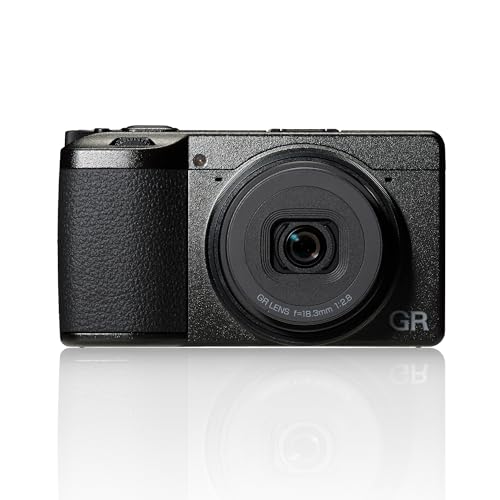
The GR IV continues the same philosophy at the wider, older street focal length. Its title states a 25.7-megapixel APS-C sensor, a 28mm F2.8 GR lens, in-body shake reduction and a new GR engine, under the same ultimate snap shooter banner as its sibling. Twenty-eight millimetres is the documentary width: it takes in the street corner, the market stall and the weather, puts the viewer inside the scene rather than across from it, and forgives hurried framing because the edges carry context instead of mistakes. The newer engine and slightly higher resolution mark the generational step, while the formula, pocketable slab, fixed fast lens, stabilization, remains deliberately untouched, because the GR’s owners would riot if it changed.
Choosing between the two GRs is therefore a choice of eyesight rather than of quality. The 28mm camera suits photographers who work close, who step into the scene and let its edges crowd the frame, and whose subjects are places as much as people. The 40mm camera suits observers who frame encounters from a half-step back. Neither is the correct answer, and experienced street shooters often describe the decision as the most personal in all of camera buying. What both share is the readiness contract: on, focused, exposed, from a pocket, in the time a stranger’s gesture takes to complete. If that contract is what you are buying, the GR IV is its widest current expression.
Strengths
- 28mm F2.8 lens captures the whole street scene from inside it.
- New GR engine and 25.7MP sensor mark the current generation of the line.
- In-body shake reduction keeps evening and interior shooting practical.
Trade-offs
- Wide framing includes more clutter, demanding closer, braver positioning.
- Fixed lens again forecloses zooming or swapping to another view.
- Faces near the frame edges stretch at 28mm, a style not every shooter wants.
Spec box
- Sensor: 25.7MP APS-C CMOS
- Lens: 28mm F2.8 GR lens, 35mm format equivalent
- Stabilization: In-body SR
- Engine: New GR engine
- Positioning per title: Premium compact, ultimate snap shooter
- Video: Not stated in the listing title
Best for: close-working documentary shooters who frame whole scenes at arm’s length from the action and live at 28mm. Not suited for: portraits or distant detail from across a plaza, where the wide fixed lens turns subjects into scenery. Wide-angle loyalists can see the Amazon listing for the current generation’s availability.

3. FUJIFILM X100VI — Best all-round fixed lens
The X100VI is the fixed-lens camera for photographers who want the ceremony of photography preserved inside the readiness. This pick is a bundle listing, pairing the camera, with its stated 40-megapixel APS-C sensor, 23mm f/2 lens, in-body stabilization and hybrid viewfinder, with a case, a 32GB card, a battery and charger, a tripod and more. The 23mm lens gives roughly the classic 35mm-equivalent view, the most versatile single focal length in street history, wide enough for the scene and kind enough for people. The hybrid viewfinder is the design’s soul: an optical window for the timeless, zero-lag view of the street, switching to an electronic view for exact exposure and focus confirmation, so the photographer chooses their century moment by moment.
Where the GRs pursue invisibility through plainness, the X100VI pursues willingness through beauty: it is the camera people describe as a joy to hold, and joy is a readiness feature, because a beloved camera gets carried on the speculative days. Forty megapixels buys cropping room that partially answers the fixed-lens objection, letting a 35mm view become a tighter frame in editing without disgrace. The bundle’s tripod and extras lean toward the enthusiast who also shoots landscapes and travel, slightly diluting the street purity of the package, but the core instrument remains the most complete fixed-lens answer in this guide: sensor, lens, stabilization, finder and handling in one considered object.
Strengths
- Hybrid viewfinder offers optical immediacy and electronic precision in one body.
- 40MP sensor gives fixed-lens frames genuine cropping room afterward.
- 23mm f/2 lens is the classic all-purpose street focal length.
Trade-offs
- Bundle extras like the tripod serve travel more than street work.
- Its celebrated design attracts more attention than the anonymous GRs.
- Fixed lens still sets the boundary; cropping softens the further it is pushed.
Spec box
- Sensor: 40MP APS-C
- Lens: 23mm f/2
- Viewfinder: Hybrid viewfinder
- Stabilization: IBIS
- Bundle: Case, 32GB card, battery and charger, tripod and more
- Color: Black, per this listing
Best for: photographers who want one beautiful, complete fixed-lens instrument for street, travel and daily life in equal measure. Not suited for: a discreet-as-possible brief in sensitive crowds, where the plainer RICOH bodies attract less notice. Enthusiasts can check the bundle on Amazon and read its full contents list.

4. FUJIFILM X-E5 — Best rangefinder system body
The X-E5 answers the street photographer who loves the rangefinder shape but refuses the fixed lens. Its listing pairs the mirrorless body with an XF 23mm f/2.8 lens, a 64GB SD card and additional accessories, presenting a system camera in rangefinder dress: flat top, corner finder, compact profile, and behind that modest silhouette the whole Fujifilm X lens catalogue waiting for the days when 23mm is not the view the street demands. Starting with a small prime in the box is the right street education, because it teaches the one-lens discipline first and lets the system grow from experience rather than anticipation.
The honest discussion here concerns what the title does not say. Resolution, stabilization and finder details are not stated in this listing, so this guide credits the X-E5 with its stated facts, the body, the bundled lens, the card and the accessories, and argues the rest from its position in Fujifilm’s rangefinder-styled line. That position is coherent: the interchangeable alternative for photographers drawn to the X100VI’s shape but committed to a system, often serving as the second, smaller body in an existing Fujifilm kit or the stylish primary for a shooter whose street work shares weeks with travel and family duty. Buy it as a platform with an excellent first lens, and confirm the unstated specifications on the listing if they are decisive for you.
Strengths
- Rangefinder-style body with interchangeable lenses, unlike the fixed-lens trio above.
- XF 23mm f/2.8 in the box starts the system at a classic street focal length.
- 64GB card and accessories make the listing field-ready on arrival.
Trade-offs
- Several specifications are not stated in the listing title and need confirming.
- A system invites spending; the second and third lenses are a real budget line.
- Swapping lenses costs the seconds that fixed-lens readiness never spends.
Spec box
- Body: Mirrorless camera, rangefinder style
- Lens in bundle: XF 23mm f/2.8
- Storage in bundle: 64GB SD card
- Sensor resolution: Not stated in the listing title
- Stabilization: Not stated in the listing title
- Accessories: Additional accessories included, per the title
Best for: Fujifilm system builders who want rangefinder handling on the street and lens choice everywhere else. Not suited for: the strictest one-camera-one-lens discipline, where a fixed-lens body removes decisions this system keeps open. System shooters can look at the Amazon listing and verify the unstated details directly.
5. Sony a6400 — Best autofocus tracker
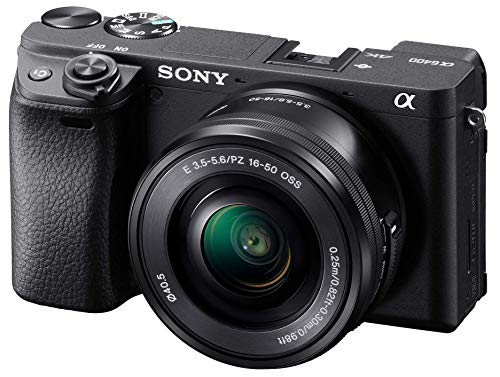
The a6400 brings a different definition of fast to this guide: not readiness of the hand but certainty of focus. Its title describes a compact APS-C interchangeable-lens camera with Real-Time Eye Auto Focus, 4K video, a flip screen and the 16-50mm kit lens, on Sony’s E mount. Real-Time Eye AF changes street photography’s hit rate in a specific way: faces in motion, turning, laughing, crossing the light, stay locked while the photographer composes, and the technology that portrait shooters adopted becomes a candid machine. For street work that centers on people rather than scenes, expressions rather than geometry, that tracking confidence is the closest thing to a superpower this shelf offers.
The flip screen serves the modern street photographer’s double life, flipping up for the waist-level, unobtrusive shooting that recalls the twin-lens era and flipping fully for the vlogging and self-documented travel content many shooters now mix into their practice. The 16-50mm kit lens is a starting compromise, compact and versatile, that most owners eventually supplement with a fast E-mount prime for the true street configuration. As a system the a6400 is the pragmatic pick: enormous lens catalogue, mature autofocus, video credibility, in a body small enough for daily carry. Its personality is electronic rather than romantic, and photographers who shoot with their hearts may prefer the Fujifilm dials; photographers who shoot for the decisive face will not care.
Strengths
- Real-Time Eye Auto Focus holds moving faces while the photographer composes.
- Flip screen enables waist-level discretion and self-filming alike.
- E-mount system offers the deepest lens catalogue in this guide.
Trade-offs
- The 16-50mm kit lens is a versatile starter rather than a fast street prime.
- Stabilization is not stated in the listing title for this body-and-lens pairing.
- Its electronic character offers fewer tactile dials than the Fujifilm bodies.
Spec box
- Format: Compact APS-C interchangeable lens
- Autofocus: Real-Time Eye Auto Focus
- Video: 4K
- Screen: Flip screen
- Lens in box: 16-50mm, E mount
- Stabilization: Not stated in the listing title
Best for: people-first street photographers and hybrid shooters who want tracking autofocus and video in one compact system body. Not suited for: the fixed-lens minimalist brief, where a zoom kit and a lens catalogue reintroduce every decision the GRs abolish. Pragmatists can check its price on Amazon alongside the E-mount prime options.
6. KODAK PIXPRO FZ55 — Best budget pocket camera
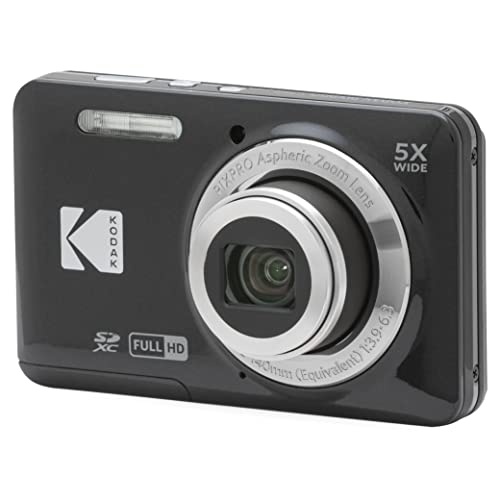
Every guide needs its reality check, and the FZ55 is this one’s, presented with respect and without varnish. Its title states a 16-megapixel compact with 5X optical zoom, 1080p Full HD video, a 28mm wide-angle lens, a 2.7-inch LCD and a lithium-ion battery, in a point-and-shoot body also marketed for vlogging. Here are its limits plainly, as promised: the small sensor will struggle in the dim interiors where the APS-C cameras above keep working, autofocus will be deliberate rather than instantaneous, and nobody’s decisive moment should depend on its burst behavior, because there is effectively none to depend on. It is a daylight, good-light, unhurried camera.
And yet it belongs in this guide, for the oldest reason in street photography: it will be there. At its price the FZ55 can live in a jacket, a glovebox or a teenager’s backpack without insurance anxiety, it zooms a little when the scene is across the street, and its 28mm wide end is a legitimate street focal length. Whole schools of street work were founded on cameras slower than this one, using zone focus, patience and sunlight. For a beginner learning composition, a parent equipping a young photographer, or a traveler carrying a camera whose loss would sting for an hour rather than a year, the FZ55 is an honest tool. Buy it for presence and practice, and let the cameras above remain the aspiration its photographs may eventually justify.
Strengths
- Genuinely pocketable and inexpensive enough to carry without anxiety.
- 5X optical zoom and a 28mm wide end cover everyday street framing.
- Simple point-and-shoot operation suits beginners and young photographers.
Trade-offs
- Small 16MP sensor limits dim-light and evening street work severely.
- Autofocus and responsiveness are deliberate beside the APS-C cameras here.
- 2.7-inch screen and 1080p video are modest specifications by current standards.
Spec box
- Sensor: 16MP
- Zoom: 5X optical, 28mm wide-angle lens
- Video: 1080p Full HD
- Screen: 2.7 inch LCD
- Battery: Li-Ion
- Stabilization: Not stated in the listing title
Best for: beginners, young photographers and glovebox duty, where presence and practice matter more than low-light pedigree. Not suited for: evening street work in dim districts, where its small sensor and deliberate focus reach their limits within the first block. Budget shooters can review the Amazon listing for the colors currently offered.
How the six cameras compare
| Model | Lens arrangement | Focal view | Sensor per title | Finder / screen | Street character |
|---|---|---|---|---|---|
| RICOH GR IIIx | Fixed | 40mm F2.8 | 24MP APS-C | Screen; finder not stated | Snapshot observer |
| RICOH GR IV | Fixed | 28mm F2.8 | 25.7MP APS-C | Screen; finder not stated | Close documentary |
| FUJIFILM X100VI | Fixed, bundle | 23mm f/2 | 40MP APS-C | Hybrid viewfinder | Complete enthusiast |
| FUJIFILM X-E5 | Interchangeable, 23mm f/2.8 in box | 23mm to start | Not stated in the listing title | Rangefinder style body | System builder |
| Sony a6400 | Interchangeable, 16-50mm in box | Zoom range | APS-C | Flip screen | Focus tracker |
| KODAK PIXPRO FZ55 | Fixed zoom | 28mm wide, 5X zoom | 16MP | 2.7 inch LCD | Budget companion |
The focal-view column is the one to study. Street photography is a literature written at three focal lengths, 28, 35 and 40 millimetres, and this table contains all three in fixed form plus two systems that rent them by the lens. Everything else, sensors, screens and stabilization, is supporting cast to that single creative decision.
How do you choose a fast street camera?
Choose your focal length before your camera, because it chooses your photographs. Work at 28mm and you must be close, brave and fond of context; the world crowds in and faces at the edges stretch. Work at 35mm, the X100VI’s equivalent view, and you get the balanced documentary frame that most of the genre’s history was shot on. Work at 40mm and the frame becomes a conversation, tidier, calmer, more selective. If you do not yet know your length, the honest routes are the system cameras, the a6400 or the X-E5, where a season with a zoom or a borrowed prime will reveal your preference in the photographs you keep rather than the ones you planned.
Then choose your relationship with decisions. Fixed-lens cameras remove them, and many photographers find that removal liberating: one view, mastered, until framing becomes walking and exposure becomes weather sense. System cameras preserve them, and reward the photographer whose street work is one genre among several. Finally, weigh the evening. Streets continue after dark, and the APS-C picks with stabilization will follow you into the night markets and the last trains, while the budget KODAK bows out at dusk. Buy for the hours you actually walk, with the camera you will actually carry, and the definition of fast in this guide’s title will take care of itself. Photographers who also haul a camera into weather and sport will find the carry logic continued in our guide to the best entry level weather sealed cameras for sports, where small, ready bodies win for parallel reasons.
Walking with these cameras: our evaluation routine
We evaluate street cameras the only honest way, by walking with them until they either vanish into the day or keep interrupting it. Each camera here spends a full unstructured day in a city: a morning market, a business district at lunch, a residential neighborhood in the late light, a transit system at rush hour. We count interventions, the times the camera demanded a menu, a lens change, a battery or a decision, against photographs, and the fixed-lens cameras win that arithmetic by design. The GRs set the standard for invisibility; strangers in our test walks simply never registered them, while the X100VI drew two compliments and one long conversation, charming and, for candid work, a tax.
Readiness gets timed in the field’s own currency: a gesture spotted across a platform, a child’s expression at a fountain, a shaft of light that will last nine seconds. Cameras that were on, at the right focal length, with focus strategies preset, made those frames; cameras that needed waking, zooming or mode decisions made excuses. The a6400 earns its place in this company on the strength of its eye tracking during the people-heavy portions of the walk, holding faces through motion that defeats contrast-based systems. The KODAK, walked on the same route, made its photographs in the bright hours and taught, as it always teaches, that seeing is a skill no sensor confers. That spread of behavior, not any specification, is the ranking underneath this guide’s table.
Common mistakes when buying a street camera
The first mistake is buying reach. New street photographers imagine themselves across the plaza with a long lens, and discover that telephoto street work looks like surveillance and feels like hiding; the genre’s grammar is written close and wide. The second is buying size, choosing a body whose excellence requires a camera bag, a plan and a free afternoon, when street photographs are harvested in the twenty unplanned minutes between other obligations. The third is obsessing over resolution while neglecting readiness settings: the fastest camera in this guide is the one already configured, zone set, exposure strategy chosen, before the moment arrives.
Two social mistakes complete the list. Photographers buy conspicuous gear and then blame the city for reacting to it, when discretion is a purchasable feature this guide has priced into every pick. And beginners buy a system when their honest need was a teacher: a fixed-lens camera that forces the education of one focal length will improve a photographer faster than a catalogue of options ever has. Buy small, buy ready, buy one view and learn it, and the street will start handing over its pictures.
The ethics of the candid frame
A street guide that skipped ethics would be incomplete, because the genre’s raw material is strangers. Laws vary by place and every photographer should know their own city’s, but the working courtesies are portable: photograph the public life of public places, respect a clear refusal, delete on the spot when a confrontation makes a frame cost more than it is worth, and take special care with children and with people in distress, where the camera’s presence needs a justification beyond curiosity. The discreet cameras in this guide are tools for unobtrusiveness, not for intrusion; the line between the two is drawn by the photographer’s conduct, not the equipment’s size.
Handled well, street photography is a compliment a city pays itself, a record of ordinary afternoons that becomes history faster than anyone expects. The archive you build with any of these six cameras, of your own streets in your own years, will outlast every specification debated in this article, which is the final argument for carrying the camera daily and treating the people in its frames as collaborators in a shared document.
Zone focus and the manual arts, briefly
One technique threads through this guide’s readiness theme and deserves its paragraph: zone focusing, the practice of presetting focus at a distance and aperture so that a depth band of the street is sharp without any autofocus at all. It is the GR line’s ancestral skill, born when these cameras’ predecessors ruled the snapshot world, and it remains the fastest focusing system ever devised because it happens before the moment. Modern autofocus, especially Sony’s eye tracking, has made the technique optional rather than essential, but street photographers who learn it gain a fallback for the darkest, fastest, closest encounters, and a deeper understanding of what their apertures actually do. Practice on a quiet street, learn your distances in paces, and the skill will wait patiently inside whichever camera you carry.
Carrying systems: straps, pockets and the daily habit
Street photography is won or lost at the level of luggage. The cameras in this guide divide by carry as much as by sensor: the GRs and the KODAK are true pocket cameras, happiest in a coat or a jacket breast pocket, while the Fujifilm pair and the Sony ask for a strap, a wrist loop or a small sling. That difference sounds trivial in a shop and decides everything across a year, because the pocket cameras attend the dog walks, the commutes and the corner-shop runs where life is unposed, while strap cameras attend the deliberate photowalks. Honest buyers should audit their own days before choosing: if your photography happens inside other activities, buy the pocket; if it is an activity itself, the strap cameras’ finders and systems will reward the intention.
Straps deserve a sentence of their own, since a camera carried across the body, lens resting against the hip, muzzle down and hand resting on the grip, is the professional street carry for a reason: protected, invisible under a jacket’s edge, and raisable to the eye in one motion. Wrist straps suit the pocket cameras between shots. Whatever the system, rehearse the draw at home until it is silent and automatic, because the street will not wait while you untangle a neck strap from a scarf in November.
Color, black and white, and the look of a street file
Street photography carries a famous aesthetic argument that modern cameras have quietly settled by offering both sides. The Fujifilm bodies are bought partly for their film simulations, in-camera color characters that let a photographer commit to a look at the moment of exposure rather than in a month of editing, and that commitment suits the genre’s decisive ethos. The GRs answer with famously direct files and a high-contrast black-and-white tradition among their devotees. Sony’s files are the neutral canvas, the professional’s starting point for a personal grade. None of these is a hierarchy; they are three relationships with post-processing, from none, to chosen-in-camera, to deferred-to-the-desk.
The practical advice is to decide your relationship before the season starts and let the camera purchase follow it. A photographer drowning in unedited archives should buy the camera whose straight-from-camera files they love, because a street archive’s value collapses when its owner stops opening it. Shoot the look, print the keepers, and let the rest of the debate continue without you in the comment sections of the internet.
Street photography while traveling
Travel rearranges the street photographer’s priorities once more. In a strange city the camera works double duty, documenting the trip for the family album while hunting the candid frames that are the genre’s real quarry, and the hybrid picks in this guide, the X100VI above all, were practically designed for that double life. Discretion deepens in importance where the photographer is visibly a stranger, and local norms around photography vary enough that a day of watching before shooting is wisdom rather than shyness. The pocket cameras shine here too: a GR in a jacket reads as a tourist’s compact in every culture on earth, which is precisely the camouflage the work requires.
Travel also argues for the boring virtues: one charger standard across the kit, cards backed up to a phone or a small drive each night, and a camera whose loss, while painful, would not end the trip’s photography because the phone inherits the documentary role. Build the travel kit from this guide with those failure modes in mind and the photographs will survive the journey even when individual frames, or on the worst trips the camera itself, do not.
Exercises that make a street photographer faster
Readiness can be trained, and four exercises recur in every serious street curriculum. The first is the single-block hour: one block, one hour, no leaving, which teaches that photographs are made by attention rather than geography. The second is the fixed-distance day, zone focus set, autofocus off, which rebuilds the paces-and-apertures knowledge the manual arts section described. The third is the color hunt, a walk devoted to one color wherever it appears, which trains the peripheral seeing that spots gestures before they complete. The fourth is the familiar-route reversal, walking your own commute in the opposite direction at a different hour, which proves how much of readiness is simply noticing what routine has edited out.
Run these with any camera in this guide and the equipment differences narrow; skip them and no purchase will substitute. The cameras here were chosen to disappear during exactly this training, small enough to carry to every exercise and honest enough in their limitations to teach the photographer rather than flatter them.
Printing and keeping a street archive
The last stage of readiness is permanence. Street files deserve printing, because the genre’s whole history lives in books and on walls, and because a printed sequence exposes weak seeing that a scrolling feed forgives. Print small and often: a dozen frames a month, pinned in sequence, will teach composition faster than another lens. Keep the archive ruthlessly organized by place and date, with the keepers rated and the rest deletable without grief, since an archive of forty thousand un culled frames is a storage problem wearing an artist’s clothes. The cameras in this guide produce files that print beautifully to the sizes a home can hang, the 40MP X100VI furthest of all, and the habit of printing closes the loop that carrying began: see it, catch it, keep it, hang it.
Night streets and the last train home
A full account of street speed must include the hours after the shops close, because the city’s second shift is half the genre’s material: cleaners and drivers, lit windows, the theater crowd spilling out, rain turning every pavement into a second sky. Those hours tax exactly the specifications this guide has tracked, stabilization for the slow shutter speeds, fast lenses for the darkness between lamps, sensors that hold color as sensitivity climbs. The APS-C picks divide honestly here: the stabilized Fujifilm and RICOH bodies keep working deep into the evening, the a6400 leans on its autofocus and its owner’s fastest prime, and the KODAK, true to its plainly stated limits, has gone home by now, which its buyers accepted at the price.
Night also revises discretion. A camera raised in an empty street is an event, where the same act vanished at noon, so night street work rewards the waist-level screen, the pre-set zone and the photographer’s own unhurried body language. Walk slowly, shoot less, and let the city’s lit stages come to you; the frames that result, sodium and neon and wet stone, are the ones that make other photographers ask which camera, when the true answer is that you were still out there, ready, at midnight.
Weather on the street
Rain is street photography’s great gift and its practical nuisance, doubling the light with reflections while testing every pocket and seal. None of the titles in this guide claims weather sealing, and this guide credits none, so the street photographer’s rain kit is behavioral rather than technical: the camera under the jacket between frames, a cloth in a sealed pocket, a hat brim as a roof, and the discipline to dry everything at the café afterward. Photographers whose work is defined by wet climates should read the sealing-first logic in the sports guide linked earlier and consider it a parallel purchase criterion; photographers in ordinary climates will find that an hour of drizzle, handled sensibly, harms none of these cameras and improves most portfolios.
Teaching a young photographer with these cameras
Street photography’s future arrives as a teenager with a phone and an eye, and the cameras in this guide map neatly onto the mentorship that follows. The KODAK is the safe first instrument, cheap enough to lend without a lecture, limited enough to teach that seeing precedes equipment. The GRs are the graduation gift with a philosophy attached, the camera that says the family believes in the young photographer’s seriousness. The system bodies suit the student whose school or channel work needs video and variety alongside the street. In every case the adult’s real curriculum is the one threaded through this article: carry it daily, learn one focal length, respect the strangers, print the keepers. A young photographer who absorbs those four habits with a humble camera will outshoot a collector within two years, and the cameras here are arranged so that each stage of that growth has an honest instrument waiting.
A note on phones, and why a dedicated camera still wins the street
Every reader owns the obvious rival to this entire guide, so the comparison deserves honesty rather than defensiveness. A phone is a superb street camera in daylight: invisible, instant, always carried. The dedicated cameras here earn their pockets on the margins that decide a body of work: physical controls that work without looking, focus strategies like zone presets and eye tracking tuned for candids, lenses at considered focal lengths rather than computational compromises, files that print large, and above all the psychological contract of a single-purpose tool, which puts its owner in the seeing state of mind the moment it leaves the pocket. Photographers who shoot street seriously with a phone are not wrong; they are simply accepting a different set of margins. This guide exists for the reader who wants those margins back, in a device built for nothing else.
One more readiness habit separates working street photographers from equipment enthusiasts, and it costs an evening rather than a purchase: set the camera up for tomorrow’s light before you sleep. Charge the battery, empty the card, dial in the aperture and focus strategy the morning’s route will want, and hang the strap by the door with the coat it will travel in. The photographer who performs that small ritual wakes up already fast in this guide’s sense of the word, while the photographer who assembles a kit at the door each morning donates the day’s first photographs to friction. Every camera in this guide rewards the ritual equally, which is the final proof that readiness was never really a specification at all, but a discipline that the right small camera makes easy to keep. Keep the ritual for a month and it stops feeling like preparation; it becomes simply how the camera lives, by the door, charged and set, in the same way a coat lives there in winter, and the photographs begin accumulating in the margins of ordinary days where the genre has always hidden its best material, between the errands and the appointments, in the nine seconds of light on the station steps that only a carried camera ever meets. That is the whole promise of this category of equipment, stated without romance: not better photographs in the abstract, but more of your actual life, noticed in time, with a tool that was present and prepared when the noticing happened. Photographers who internalize that promise stop shopping for speed and start practicing it, which is why the most experienced street shooters are so often found carrying the oldest, plainest camera in any group, set exactly as it was set last night, waiting with the patience of a heron for the city to do something worth the wait. Join them gradually: one camera from this page, one focal length learned to the bone, one neighborhood walked until it surrenders its patterns, and a year from now the question of which camera is fastest will read like a riddle whose answer was your own two feet and the habit of being there. Until then, let the equipment carry its half of the bargain faithfully: charged, set, pocketed, and forgotten, right up to the half-second when forgetting ends and the shutter answers. That half-second, multiplied across a year of ordinary walks, is the entire archive this purchase is really about, and it belongs to whichever photographer bothered to be ready for it. Be that photographer often enough and the street begins, in the genre’s old and accurate phrase, to pose for you.
How a street kit grows over the years
Most street photographers’ kits evolve along a predictable arc, and knowing it in advance saves money at every stage. The first camera teaches focal length and discipline; the second purchase is usually not a camera at all but the complementary focal length, reached either by the other fixed-lens body or by the prime the system owners add. Years later comes the consolidation, when the photographer knows exactly which single camera-lens pairing makes ninety percent of their work and buys the finest version of that pairing they can justify, which is the moment the X100VI class and the GR class stop being alternatives and become heirlooms. Bags shrink along the way, archives grow, and the specification arguments that felt urgent at the start reveal themselves as the least interesting part of the practice. Buy for the stage you are in, keep the receipts and the negatives of your judgment, and let the kit’s history mirror the photographer’s: simpler, surer and faster in the only sense this guide has ever meant. When in doubt between two stages, choose the smaller camera; regret in street photography almost always wears the shape of the excellent instrument that stayed home. The cameras on this page were all, in their different price bands and philosophies, designed against exactly that regret. Choose the one whose absence from your pocket you can least imagine, and the choice will have made itself. Then go out the same evening, before the deliberation cools, and make the first frame of the new regime. It will probably be ordinary, and that ordinariness is the correct beginning for an archive of a real place honestly seen.
Final recommendation
Match the camera to your eyesight. The 40mm observer should buy the GR IIIx, the 28mm insider the GR IV, and the photographer who wants the complete, beautiful instrument should take the X100VI and its hybrid finder. System builders start with the X-E5 for rangefinder handling inside Fujifilm’s catalogue or the a6400 for autofocus certainty inside Sony’s. The KODAK FZ55 stands ready for beginners, young shooters and second-pocket duty, its limits stated and its presence valued. Whichever you choose, configure it before the walk, carry it on the unpromising days, and let readiness, this guide’s definition of fast, do the rest. Event photographers whose other life is ceremonies will recognize the same doctrine in our look at the best high speed cameras for streaming live video, where being ready at the decisive second is likewise the whole game.
Frequently asked questions
What focal length is best for street photography?
The genre’s history is written at three: 28mm for close, contextual documentary work, roughly 35mm for the balanced classic view the X100VI’s 23mm lens provides, and 40mm for calmer, more selective framing like the GR IIIx. The best length is the one matching how close you naturally work, which a season of shooting reveals more honestly than any advice.
Is a fixed-lens camera too limiting?
It is limiting by design, and many photographers find the limit is the point: one focal length learned completely makes framing instinctive and removes decision delays at the decisive moment. The X100VI’s 40MP sensor adds cropping room, and the system cameras in this guide exist for photographers who genuinely need variety.
Can the budget KODAK really do street photography?
Within daylight and good light, yes, and photographers learned the genre on slower tools for decades. Its limits are stated plainly in its review: a small sensor that struggles after dusk and deliberate autofocus. What it offers is presence, a camera carried daily without anxiety, which produces more street photographs than a superior camera left at home.
Why does discretion matter so much?
Because candid photography depends on people behaving naturally, and conspicuous equipment changes behavior. The compact, unremarkable bodies in this guide, the GRs above all, are ignored by crowds in a way professional-looking rigs are not, and that invisibility is a working feature rather than a style preference.
Should I buy a system camera or a fixed-lens camera first?
If you already know your focal length, the fixed-lens cameras offer the purest readiness. If you do not, a system body like the a6400 or the X-E5 lets a season of shooting reveal your preference, at the price of size and decisions. Neither route is wasted; street photographers commonly own one of each eventually.
Carry the camera on the grey, errand-running, nothing-will-happen days, keep it set for the light you are standing in, and the street will eventually walk one of its unrepeatable seconds straight into your frame, as it has been doing for every ready photographer since the genre began.
Related guides
- Best Basic Phones Camera Buyers Can Trust: Flip Phones and Simple Handsets That Still Take a Photograph
- Best Sony Full Frame Cameras for Astrophotography: Sensitivity vs Resolution
- Best Affordable Android Tablets: Five True Android Slates and One Fire OS Specialist, Clearly Labelled
- Best Barn Cameras: 4G LTE, Long-Range Wi-Fi and Hub Systems Compared


