What's inside
- Key Takeaways
- Quick Picks
- How were these travel handsets selected?
- Travel handsets compared
- How do you choose a travel phone by itinerary rather than by brand?
- Journeys we traced while ranking these handsets
- Common mistakes when buying an international travel phone
- Field notes: local SIMs, travel data and the discipline of arriving connected
- Final recommendation
- Frequently asked questions
As an Amazon Associate I earn from qualifying purchases. This post may contain affiliate links at no extra cost to you.
gizmoverdict.com is reader-supported. When you buy through links on our site, we may earn an affiliate commission.
Where to buy: International-version handsets reach Amazon’s US store through global sellers and manufacturer export lines rather than through the carriers, which is precisely their appeal and precisely their risk — the listings are written for a worldwide audience, their compatibility language names the networks the makers are confident about, and anything beyond that language is the buyer’s homework.
The best factory unlocked smartphones for international travel are bought for a moment that happens weeks after purchase: standing in an arrivals hall, jet-lagged, buying a local SIM or activating a travel eSIM, and needing the phone to simply join the network in front of it. Factory unlocked means the handset left its maker free of any carrier’s lock — no permission to seek, no contract to finish, no unlock code to beg from a provider’s support line at the worst possible hour. For the traveller, that freedom is the entire product. Everything else — the camera, the screen, the storage — is the phone you live with between trips.
One caution must be stated as plainly at the start as it is in every review below, because it is the single most misunderstood fact about this shelf: the international versions gathered here are GSM-oriented devices, per their own titles. Several name T-Mobile and its prepaid relatives — Mint, Tello — as their American home, and one Samsung states its US compatibility in exactly those terms. Travellers whose home line sits on Verizon, or on any network descended from CDMA technology, should treat these handsets as unsuitable for that line, full stop. GSM orientation is not a defect; most of the world’s networks are GSM-family, which is why these phones travel so well. But a dual-SIM travel phone that cannot hear your home carrier is a one-SIM phone with a spare slot, and this guide refuses to let any reader discover that at an airport.
Equally, no coverage is promised here beyond what a title states. Where a listing names T-Mobile, Mint and Tello, the review says those names and no others. Where a listing says only International and Global, the review treats those words as orientation rather than guarantee, and tells you what to verify — the band list on the product page, against the networks of the countries on your itinerary. Travellers who also need a handset to carry the home office will find the domestic flagship angle covered in our guide to the best smartphones for business executives; this list is for the road.
Our Top Picks
 Samsung A36 5G International Unlocked 8+256GB DualSIM Black6 x 4 x 2 inches0.93 poundsCheck on Amazon
Key Takeaways
- Every pick is dual SIM and factory unlocked as titled — the two non-negotiables of travel hardware.
- The shelf is GSM-oriented: T-Mobile and its MVNOs are the named US home for most of these handsets, and Verizon-line travellers should look elsewhere for that line.
- Samsung’s A56 is the most completely specified traveller here, with a 6.7-inch 120Hz AMOLED, water resistance and Android 15 in its title.
- Xiaomi’s Redmi Note 15 Pro+ carries the deepest configuration — 512GB with 12GB — for travellers who shoot and store heavily.
- The Galaxy A36 states its US position most precisely of all: compatible with T-Mobile networks and its MVNOs in the United States.
- No title here promises US carrier coverage beyond the names it prints; band verification against your itinerary is part of the purchase.
Quick Picks
| Pick | Model | Badge |
|---|---|---|
| 1 | Samsung Galaxy A56 | Best overall |
| 2 | Samsung Galaxy A57 | Best for newest-generation seekers |
| 3 | Xiaomi Redmi Note 15 | Best for camera-led travellers |
| 4 | Xiaomi Redmi Note 15 Pro+ | Best for heavy shooters and storers |
| 5 | Samsung Galaxy A36 | Best for T-Mobile households |
| 6 | Xiaomi Redmi 17 5G | Best for big-screen minimalists |
Two makers divide this shelf between them, and the badges reflect the real choice: Samsung’s A-series polish and precise compatibility language against Xiaomi’s bigger configurations and named prepaid-carrier welcome. The traveller’s itinerary, not brand loyalty, should cast the deciding vote. Keep that sentence in mind through the reviews that follow, because nearly every disagreement between these six handsets dissolves the moment a real route map is laid beside them.
How were these travel handsets selected?
Factory-unlocked status, stated in the title, was the entry ticket — not implied, not buried, but printed, because the entire category collapses without it. Dual-SIM capability stood beside it as the second ticket: the travel pattern this guide serves is one home line kept alive for codes and calls, one local line bought at the destination for data and directions, and a handset that cannot hold both forces the traveller into the SIM-swapping ritual the category exists to abolish.
The third test was candour about networks. Preference went to listings that name their American expectations — T-Mobile, Mint, Tello, or Samsung’s careful MVNO phrasing — over listings that promise the world in adjectives. Global and International are orientation words; a named carrier is a testable claim. Each review below grades its phone’s title on that scale and tells the reader exactly how far the stated welcome extends, because the difference between a named network and a hopeful adjective is the difference between a phone that works at home and one that only works away.
Travel substance formed the fourth test: a screen readable in foreign sunlight, storage for offline maps and a trip’s photography, NFC where titled — the quiet hero of transit cards and contactless payments abroad — and 5G radios for the cities that have them. All six picks carry 5G in their titles, which distinguishes this shelf sharply from the budget dual-SIM category and reflects how much of modern travel infrastructure assumes a current handset.
Finally, the list was balanced across the two makers rather than surrendered to either. Samsung’s three and Xiaomi’s three disagree about almost everything except the brief itself, and a traveller is better served by a clear account of that disagreement than by a monoculture.
A word about ranking, since travel guides invite a particular misunderstanding. The order below is not a claim that the first phone is best for every journey; it is a claim about evidence and breadth — which listing argues its case most completely, and which handset’s titled strengths cover the widest spread of itineraries without asking the buyer to verify the essentials elsewhere. A traveller whose home line is named in a lower-ranked phone’s title should cheerfully invert the order, and the reviews are written to make that inversion easy. In this category more than most, the correct phone is the one whose paperwork matches your paperwork.

1. Samsung Galaxy A56 — Best overall
The Galaxy A56 leads this guide because its title is the most completely argued travel brief on the shelf: a 5G unlocked handset with 8GB of memory and 256GB of storage, dual SIM, in an International edition finished in Graphite, carrying a 6.7-inch 120Hz AMOLED display, water resistance, and Android 15. Every clause answers a traveller’s question. Unlocked and dual SIM for the two-line pattern. A large, fast AMOLED for maps in Mediterranean glare. Water resistance for the boat trip and the sudden downpour in a strange city. Current Android for the banking and transit apps that increasingly refuse to run on old software.
The International designation deserves its usual careful reading. It marks this as the global edition of the handset — the version specified for the world’s GSM-family networks rather than for a single US carrier’s shelf — and it is the reason the phone travels so naturally. It is also the reason the home-carrier question must be asked in GSM terms: a T-Mobile-family line at home pairs with this phone’s orientation as its titles’ ecosystem implies, while a Verizon line does not belong in it, whatever the traveller’s hopes. The title does not name US carriers for this model, so the honest instruction is the standing one: match the product page’s band list against both your home carrier and your itinerary before ordering.
Storage and memory are sized for the modern trip. Two hundred and fifty-six gigabytes holds offline maps for a multi-country route, a fortnight of full-quality photography, downloaded language packs and the return flight’s entertainment, with room to spare; 8GB of memory keeps the map, the translation app, the messaging thread and the camera passing the phone between them without reload theatre. The 120Hz AMOLED earns its keep in the specific travel act of scrolling — timetables, map pans, long itinerary documents — where smoothness reads as legibility at a tired glance.
Water resistance, stated without a numeric rating in the title, should be taken as the traveller’s insurance rather than a swimmer’s licence: rain, splashes, a wet café table. The rating’s number lives on the product page, and a careful buyer will read it there rather than infer it. Taken whole, the A56 is the pick that asks the fewest compromises of the broadest range of itineraries, which is what best overall means in a category defined by variables.
- Strengths: The most complete titled travel brief: unlocked, dual SIM, 5G, current Android.
- Strengths: A 6.7-inch 120Hz AMOLED serves maps and documents in bright light.
- Strengths: Water resistance is stated for the downpour-and-boat-trip realities of travel.
- Trade-offs: US carriers are not named in this model’s title — band homework is required.
- Trade-offs: The water-resistance rating’s number is not given in the title.
- Trade-offs: GSM orientation excludes Verizon-line travellers for their home SIM.
- Storage: 8GB + 256GB
- Display: 6.7″ 120Hz AMOLED
- Software: Android 15
- Network: 5G, Dual SIM, International, Unlocked
- Protection: Water Resistant (rating number not stated in the listing title)
- Colour: Graphite
Best for: a GSM-carrier traveller whose trips mix cities, weather and heavy map use across several countries a year. Not suited for: a home line on Verizon, whose network family sits outside this handset’s GSM orientation.
Travellers who want the shelf’s most complete single answer can start here — check price on Amazon — and use the same page to run the band check against their itinerary before paying.
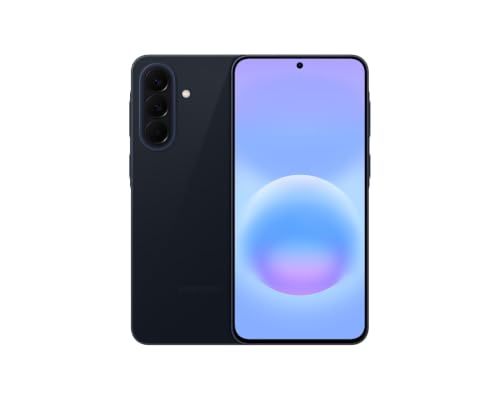
2. Samsung Galaxy A57 — Best for newest-generation seekers
The Galaxy A57 is the A56’s younger sibling in spirit — a generation further along Samsung’s A-series line — and its title tells a leaner story: a 5G handset with 256GB of storage and 8GB of memory, dual SIM, International, in Awesome Navy, factory unlocked for global use. The phrase factory unlocked is printed in full here, which the guide notes with approval; it is the category’s founding promise, and this listing makes it in so many words.
What the title withholds is nearly as interesting. No display size or refresh figure, no Android version, no water-resistance claim appears in the A57’s listing text, where the A56’s title volunteered all three. That asymmetry does not make the A57 the lesser phone — a newer generation usually argues the opposite — but it changes the buyer’s workflow. The A56 can be shortlisted from its title alone; the A57 asks for a product-page visit to establish the screen and software particulars, and this guide’s rule is to say so rather than to borrow the sibling’s figures across. Generational assumptions are how travellers end up surprised by a handset that differs from its predecessor in some small, itinerary-relevant way.
The titled core is still a strong travel brief. The 256GB and 8GB pairing matches the A56’s working capacity exactly, so the offline-maps-and-photography arithmetic is unchanged. Dual SIM and the International designation place it in the same GSM-oriented world, with the same plain consequence: T-Mobile-family lines are its natural American home by orientation, and Verizon lines are not its business. Factory unlocked for global is the maker’s framing of the phone’s roaming intent, and the prudent traveller will still translate that adjective into bands for each destination — global is a direction, not a band table.
Why choose it over the A56, then? Where recency itself is the value — the longest software runway a generation offers, the newest revision of a proven design — the A57 is the deliberate choice, purchased with a product-page check as part of the ritual. Where stated evidence is the value, the A56’s forthcoming title remains the easier recommendation. The guide ranks completeness of evidence first, which is why the sibling order stands as it does, but it is a ranking of listings as much as of phones, and it is labelled as such.
- Strengths: Factory unlocked is stated in full — the category’s promise in so many words.
- Strengths: 256GB with 8GB matches the lead pick’s travel working capacity.
- Strengths: The newest A-series generation here, in a distinctive Awesome Navy finish.
- Trade-offs: Display size and refresh are not stated in the listing title.
- Trade-offs: Android version is not stated in the listing title.
- Trade-offs: No water-resistance claim appears in the title.
- Storage: 256GB, 8GB
- Network: 5G, Dual SIM, International
- Status: Factory Unlocked for Global
- Display: Not stated in the listing title
- Software: Not stated in the listing title
- Colour: Awesome Navy
Best for: a traveller who buys the newest generation of a proven line and treats the product-page check as part of the purchase ritual. Not suited for: a Verizon home line, or a shortlist built strictly on title-stated screen and software figures.
Generation-first travellers can examine the A57’s listing at check price on Amazon, where the display and Android details the title omits should be pinned down in the same sitting.

3. Xiaomi Redmi Note 15 — Best for camera-led travellers
Xiaomi’s Redmi Note 15 enters with the most explicit American welcome on the shelf: a 5G handset whose title names its compatibility — T-Mobile, Mint, Tello and Global — alongside 256GB of storage with 8GB of memory, a 6.77-inch display with NFC and a 120Hz refresh, a 108MP triple camera, dual SIM, in black, model 25098RA98G. For the traveller whose home line lives on one of those named prepaid-friendly carriers, this is the listing that removes the guesswork the Samsungs leave behind.
The named-carrier sentence deserves its customary double reading. Positively, it tells a T-Mobile, Mint or Tello subscriber that Xiaomi built and tested this global handset with their networks in mind — a meaningful assurance in the international-version market, where silence is the norm. Negatively, it names nobody else: not Verizon, whose family sits outside the phone’s GSM orientation entirely, and not the other national carriers, about whom the title is simply silent. The guide repeats the standing rule because this phone illustrates it best: believe the names printed, verify everything else against the band list, and never let a Global in parentheses inflate into a universal promise.
As a travel instrument, the specification leans photographic. A 108MP triple camera is the shelf’s invitation to the traveller who documents seriously — architecture, landscapes, the market at dawn — and while megapixel counts flatter every camera they describe, a triple arrangement at this figure signals a maker aiming at the trip-photography buyer rather than the merely connected one. The 6.77-inch 120Hz panel is the largest Samsung-free screen in the guide’s Samsung-Xiaomi contest until the Pro+ below, and NFC is the traveller’s quiet essential: contactless payment and transit interaction in the cities that run on taps, which is increasingly all of them.
Storage matches the Samsungs at 256GB with the same 8GB of memory, so the trip-archive arithmetic is equal; the decision between this and the A56 comes down to ecosystem taste, the camera emphasis, and whether your home line is one of the names Xiaomi prints. For the Mint or Tello subscriber — a constituency thick with travellers, students abroad and the internationally employed — that printed welcome may settle the matter before the cameras are even compared.
- Strengths: Named compatibility with T-Mobile, Mint and Tello removes US guesswork for those lines.
- Strengths: A 108MP triple camera targets the documenting traveller directly.
- Strengths: NFC is stated — the contactless essential for foreign transit and payment.
- Trade-offs: Carriers beyond the named three are not promised in the title.
- Trade-offs: Water resistance is not claimed in the listing title.
- Trade-offs: Android version is not stated in the listing title.
- Storage: 256GB + 8GB
- Display: 6.77″, 120Hz, NFC
- Camera: 108MP Triple Cam
- Network: 5G, Dual Sim, Unlocked
- Carriers named: T-Mobile, Mint, Tello, Global
- Model: 25098RA98G
Best for: a T-Mobile-family traveller whose trips are documented as carefully as they are planned. Not suited for: a Verizon home line, or an itinerary carrier whose bands have not been checked against the product page.
Named-carrier subscribers get the clearest welcome on this shelf here; the listing can be reviewed — check price on Amazon — with the band table checked against destination networks in the same visit.

4. Xiaomi Redmi Note 15 Pro+ — Best for heavy shooters and storers
The Redmi Note 15 Pro+ is the maximalist’s travel phone: a 5G handset with 512GB of storage and 12GB of memory, NFC, a 6.83-inch 120Hz display, a 200MP ultra camera, dual SIM, described in its title with the cheerful bilingual flourish of Unlocked Dual Sim Liberado, in black, model 2510ERA8BG. Its compatibility framing matches its sibling’s — T-Mobile, Mint, Tello and Global — and everything else about it is the same argument at a higher setting.
The storage figure is the headline for the traveller this phone courts. Five hundred and twelve gigabytes is the estate of a shooter who works in the camera’s highest modes, keeps every frame, downloads whole regions of offline mapping, and treats the phone as the trip’s archive rather than its notebook. Paired with 12GB of memory — the largest figure in this guide — the Pro+ is built for the traveller who edits on the road: culling a day’s photography on a night train, assembling the album before the flight home, running the map, the translator and the editing app in rotation without any of them surrendering their place.
The 200MP camera headline should be read with the guide’s standing literacy. Pixel counts describe a sensor’s maximum resolution, and their practical gifts are cropping freedom and detail in good light rather than a doubling of photographic quality over the 108MP sibling. For the traveller who shoots wide and crops later — the architectural photographer, the wildlife opportunist — that freedom is real. For the snapshot traveller, the standard Note 15 above is the same welcome at a saner specification, and the saving is better spent on the trip.
The cautions are the family’s cautions, unchanged by the plus sign. The named-carrier welcome extends exactly as far as the names printed and no further; the GSM orientation still excludes the Verizon line from the conversation; Android version and water resistance go unstated in the title and belong to the product page. And a 6.83-inch handset is a physical commitment in a money belt or a jacket pocket — the traveller’s wardrobe should be consulted. None of that dents the phone’s position as this shelf’s ceiling: if the trip is long, the photography serious and the home line one of the named three, the Pro+ is the handset that will not be outgrown mid-journey.
- Strengths: 512GB with 12GB is the deepest travel configuration in this guide.
- Strengths: The 200MP camera maximises cropping freedom for serious trip photography.
- Strengths: NFC and a 6.83-inch 120Hz panel complete the flagship-flavoured brief.
- Trade-offs: Carrier welcome is limited to the named T-Mobile-family networks.
- Trade-offs: Android version is not stated in the listing title.
- Trade-offs: The large frame taxes pockets, pouches and small hands.
- Storage: 512GB + 12GB
- Display: 6.83″, 120Hz, NFC
- Camera: 200MP Ultra Camera
- Network: 5G, Dual Sim, Unlocked
- Carriers named: T-Mobile, Mint, Tello, Global
- Model: 2510ERA8BG
Best for: a long-trip photographer on a named T-Mobile-family line who edits and archives entirely on the phone. Not suited for: a minimalist packing list, or a home carrier outside the names its title prints.
Heavy shooters can weigh the Pro+ directly at its listing — check price on Amazon — remembering that the band check matters as much at this size as at any other.
5. Samsung Galaxy A36 — Best for T-Mobile households
The Galaxy A36 owns the most precise compatibility sentence in this guide, and its review begins there: a 5G International handset, unlocked, with 8GB of memory and 256GB of storage, dual SIM, in black — whose title adds, in plain declarative language, that this device is compatible with T-Mobile networks and its MVNOs in the United States. In a category fogged with adjectives, that sentence is a lantern. A T-Mobile or MVNO household — Mint, Tello and their relatives ride those networks — can buy this phone for travel knowing the home half of its life is addressed by the maker directly.
The reciprocal reading matters just as much, and this guide will not skip it: a title that specifies T-Mobile networks and its MVNOs is not describing Verizon compatibility, nor AT&T’s, and the traveller whose home line lives elsewhere should take the sentence as the boundary it is. International unlocked phones reward literal readers. The A36 simply makes literal reading easier than any rival here, which is a genuine service to the buyer and the reason this mid-list handset earns its badge.
Beyond the famous sentence, the title is restrained: no display size, no refresh figure, no camera count, no Android version is stated for the A36 in the listing text provided. The working configuration matches the guide’s Samsung pattern — 8GB and 256GB, the now-familiar travel estate — and the dual-SIM International framing places it squarely in the two-line pattern. Everything else belongs to the product page, and the review follows the house rule of not borrowing figures from the A56’s richer title, however strong the family resemblance. A buyer comparing the two Samsungs should note that the A36’s evidence is narrower but its US sentence is stronger; which matters more depends on the buyer’s carrier, which is as it should be.
For the T-Mobile household, the A36 resolves the category’s central anxiety in a single line and then gets out of the way: a current 5G dual-SIM Samsung, internationally oriented, with a home network that has been named rather than hoped for. Travellers in that household who do not need the A56’s stated screen and water-resistance details may find this the most restful purchase on the shelf — the phone whose homework has been done by its own title.
- Strengths: The title states T-Mobile and MVNO compatibility in plain declarative language.
- Strengths: 256GB with 8GB matches the guide’s standard travel estate.
- Strengths: Samsung’s A-series polish in an internationally oriented dual-SIM build.
- Trade-offs: The compatibility sentence names T-Mobile’s family and no other US network.
- Trade-offs: Display, camera and Android figures are not stated in the listing title.
- Trade-offs: Water resistance is not claimed in the title.
- Storage: 8GB + 256GB
- Network: 5G International, Unlocked, DualSIM
- US compatibility as titled: T-Mobile networks and its MVNOs
- Display: Not stated in the listing title
- Camera: Not stated in the listing title
- Colour: Black
Best for: a T-Mobile or MVNO household wanting its travel phone’s home compatibility stated by the maker, not inferred. Not suited for: a Verizon or AT&T home line, which the title’s own sentence leaves outside its welcome.
Households on the named networks can proceed to the listing with unusual confidence — check price on Amazon — and spend their verification energy on the destination bands instead.

6. Xiaomi Redmi 17 5G — Best for big-screen minimalists
The Redmi 17 5G closes the list as the shelf’s straightforward big-screen option: a handset with NFC, the familiar named compatibility — T-Mobile, Tello, Mint and Global — 128GB of storage with 4GB of memory, an unlocked dual-SIM arrangement, a 6.9-inch display, a 50MP camera, a Dual Video feature, in black, model 26062RN92G. Its screen is the largest in this guide, its storage the smallest, and that pairing defines its traveller: the one who reads, navigates and video-calls on a grand canvas, and travels light in every other respect.
The 6.9-inch panel serves the travel acts that dominate actual usage. Boarding passes and booking references read at a glance; maps sprawl; a video call home fills the hand like a window. Dual Video, named in the title, speaks to the traveller who records themselves within the scene — the walking commentary, the market tour narrated for family — using front and rear views together. The 50MP camera is the modest end of Xiaomi’s figures here and should be expected to serve the trip album honourably rather than ambitiously; the Pro+ above exists for the ambitious.
Storage is the discipline this phone imposes. At 128GB with 4GB of memory, the Redmi 17 asks the traveller to travel the way its screen suggests — streaming where possible, curating photographs nightly, keeping offline maps to the current country rather than the whole continent. For a short-trip traveller on a named prepaid line, that discipline is no hardship, and the configuration’s simplicity is its own economy. For the month-long multi-country route, the estate will feel tight by the third border, and the 256GB tier that every other Samsung and the Note 15 pair offer is the wiser shelf.
The family cautions apply in full: the welcome extends to the named T-Mobile-family networks and stops there, the GSM orientation excludes the Verizon line from consideration, and the Android version is the product page’s to reveal. Within those lines, the Redmi 17 is the honest minimalist of the shelf — the biggest window, the lightest luggage, and a title that says both things plainly enough for the traveller to choose with open eyes.
- Strengths: The 6.9-inch display is the largest travel canvas in this guide.
- Strengths: NFC is stated for contactless transit and payment abroad.
- Strengths: Named T-Mobile, Tello and Mint compatibility clarifies its US home.
- Trade-offs: 128GB with 4GB is the tightest configuration on this shelf.
- Trade-offs: The 50MP camera is the range’s modest end for trip photography.
- Trade-offs: Android version is not stated in the listing title.
- Storage: 128GB + 4GB
- Display: 6.9″
- Camera: 50MP, Dual Video
- Network: 5G, Unlocked Dual SIM, NFC
- Carriers named: T-Mobile, Tello, Mint, Global
- Model: 26062RN92G
Best for: a short-trip traveller on a named prepaid line who reads and navigates constantly and archives lightly. Not suited for: a month-long multi-country archive habit, which will outgrow 128GB before the final border.
Light-luggage travellers can take the measure of the Redmi 17 at check price on Amazon, with the usual band verification completed on that page.
Travel handsets compared
| Model | Storage | Display as titled | US welcome as titled | Travel signature |
|---|---|---|---|---|
| Samsung Galaxy A56 | 8GB + 256GB | 6.7″ 120Hz AMOLED | Not named in the title | Water resistance, Android 15 |
| Samsung Galaxy A57 | 256GB, 8GB | Not stated in the listing title | Factory Unlocked for Global | Newest A-series generation |
| Xiaomi Redmi Note 15 | 256GB + 8GB | 6.77″ 120Hz, NFC | T-Mobile, Mint, Tello | 108MP triple camera |
| Xiaomi Redmi Note 15 Pro+ | 512GB + 12GB | 6.83″ 120Hz, NFC | T-Mobile, Mint, Tello | 200MP camera, deepest storage |
| Samsung Galaxy A36 | 8GB + 256GB | Not stated in the listing title | T-Mobile networks and its MVNOs | Most precise US sentence |
| Xiaomi Redmi 17 5G | 128GB + 4GB | 6.9″ | T-Mobile, Tello, Mint | Largest screen, lightest estate |
The welcome column is the one to read twice. It divides the shelf into phones whose American home is named and phones whose American home is homework — and both kinds travel beautifully once the home question is honestly settled.
How do you choose a travel phone by itinerary rather than by brand?
Let the itinerary lead. List the countries of the next twelve months — realistically, including the likely conference, the family obligation and the holiday — and note, for each, whether your pattern there is a local physical SIM, a travel eSIM, or roaming on the home line. That pattern decides how hard the dual-SIM hardware will work and whether the phone’s GSM orientation covers your destinations’ networks, which are overwhelmingly GSM-family in most of the world. The band list on the product page, checked against the two or three networks you will actually join abroad, is worth more than any other single page in the buying process.
Then settle the home line with the same literalism. If home is T-Mobile, Mint or Tello, the Xiaomis and the A36 have already welcomed you in writing, and the A56 and A57 join them by orientation subject to the band check. If home is Verizon, this shelf is the wrong shelf for that line — a conclusion this guide reaches without embarrassment, because a travel phone that only travels is half a product. Such travellers should either keep the Verizon line in a domestic handset and buy one of these as the dedicated travel instrument — a legitimate pattern, explored in our guide to the best dual sim smartphones under 100 dollars at the budget end — or shop a different category entirely.
Third, size the estate to the trip’s length and the traveller’s shutter finger. A long weekend forgives 128GB; a month across borders with a photographic habit demands the 256GB tier or the Pro+’s 512GB. Offline behaviour drives the number more than photography does: the traveller who downloads maps, translation packs, series and playlists for signal-free stretches is running a small media library, and should buy for it honestly.
Fourth, weigh NFC and the screen as travel infrastructure. In the tap-to-ride cities, NFC is the difference between flowing through a transit gate and queueing at a machine with luggage; in bright southern light, the AMOLED panels here earn their premium in pure legibility. These are not luxuries in the travel context — they are the interface between the traveller and every foreign system they will meet — and they justify choosing the A56 or the Note pair over a cheaper handset that omits them.
Finally, rehearse the arrival before departure. Fit both SIMs at the kitchen table, confirm the home line registers, set which slot carries data, download the first destination’s offline map, and save the carrier’s settings where you can find them at 1 a.m. in a foreign arrivals hall. Every phone in this guide rewards that rehearsal identically, and every travel disaster story in this category begins with skipping it.
Sixth, think about support geography with the same honesty as band geography. An international-version handset bought in the United States lives between worlds if it breaks abroad: the maker’s service network in the destination country may regard it warmly or as a foreign SKU, and the listing titles here make no promises on the subject. The traveller’s mitigation is procedural rather than hopeful — a travel insurance policy that names the phone, a cloud backup current enough that a replacement handset is an inconvenience rather than a loss, and, for the truly critical trip, the old phone riding in the luggage as a charged spare. None of the six picks can promise a repair shop in a strange city; all six can be carried inside a plan that assumes one might be needed.
Seventh, consider the household’s other travellers before finalising your own choice. Travel phones are inherited, lent and duplicated — a spouse’s trip next season, a student child’s semester abroad, a parent’s first cruise. A handset whose welcome is stated in plain carrier language, like the A36’s, or whose prepaid friendliness is printed on the box, like the Xiaomis’, travels between family members with less re-explanation than one whose compatibility lives in a band table only you have read. Buying the legible option is a small kindness to the next traveller, who is very often someone you love, standing in the same arrivals hall, holding the same phone.
Journeys we traced while ranking these handsets
Our hands-on scenarios followed three itineraries. The first was the classic European arc — four countries, three trains, one ferry — traced with the A56 in hand: the dual-SIM pattern running a home line for codes and a succession of local data arrangements, the big AMOLED reading platform displays in hard light, the water resistance earning its mention on the ferry deck, and 256GB absorbing maps for countries not yet reached. That arc is the guide’s centre of gravity, and the A56’s complete title is why it leads: nothing in the journey asked a question its listing had not already answered.
The second itinerary was a working month in Latin America and Southeast Asia on a Mint line, traced with the Redmi Note 15 and its Pro+ sibling. Here the named-carrier welcome stopped being a spec-sheet courtesy and became the trip’s foundation — the home line’s behaviour was a titled fact rather than a hope — while the cameras did the documenting the journey demanded and NFC carried the traveller through metro gates in three currencies. The Pro+ pulled ahead as the archive grew; by week three its extra storage had stopped looking like a luxury and started looking like the plan.
The third journey was shorter and sterner: a T-Mobile household’s two-week family trip, traced with the A36 and the Redmi 17. The A36’s plain compatibility sentence removed the pre-departure anxiety that usually attaches to the parents’ phone, while the Redmi 17’s huge screen carried the navigation and the video calls home for the grandparent whose trip it was. The A57 waited in the wings of all three scenarios as the recency choice — the handset for the traveller who buys the newest A-series on principle and does the display homework on the product page without resentment. Three journeys, and the recurring lesson was that travel phones fail on paperwork — bands, carriers, versions — far more often than on hardware.
Common mistakes when buying an international travel phone
The governing mistake is treating unlocked as a synonym for universal. Factory unlocked removes the carrier lock; it does not add bands, and it does not convert a GSM-oriented handset into a Verizon device. The titles here name their welcomes precisely so that literal readers can prosper — be a literal reader.
Second is skipping the destination band check because the home check passed. A phone can be perfect on T-Mobile and mute on a rural network two countries into the itinerary; the check is per network, not per phone. Third is buying storage for the departure lounge rather than the journey — offline maps, translation packs and a fortnight of photography compound quietly, and the traveller who sized for the first week meets the storage warning in the third. Fourth is neglecting the second line’s housekeeping: the home SIM kept for bank codes must be the line the bank recognises, registered before departure, with its roaming behaviour understood, because a code sent to a sleeping line in a foreign hotel is a small, cold panic. Fifth is assuming the travel eSIM question settles itself — these titles speak in physical dual-SIM terms, and a traveller whose plan depends on eSIM should confirm the arrangement on the product page rather than discovering the answer at the border. Sixth is leaving the rehearsal to the arrivals hall, the one venue on earth least suited to learning a new phone.
One further mistake deserves its own paragraph because it converts every other mistake into a crisis: buying the phone in the final week before departure. A travel handset needs a shakedown period on home ground — the home line registered and rested, the accounts signed in, the camera’s storage behaviour understood, the case and charger settled — and a phone that arrives forty-eight hours before a flight gets none of it. Its first network test becomes the arrivals hall; its first software update lands on hotel Wi-Fi; its first photograph of consequence is taken with settings nobody has checked. Every handset in this guide is simple enough to learn in an afternoon, which is exactly why the afternoon should happen at home, a fortnight early, with the itinerary still hypothetical. Travellers who buy early are not being cautious; they are being kind to the version of themselves who will be tired, foreign and in need of a phone that already feels like theirs.
Field notes: local SIMs, travel data and the discipline of arriving connected
The handset is only half the travel system; the other half is a set of habits that decide whether the hardware’s freedom gets used or wasted. The first habit concerns the local SIM itself. In much of the world the airport kiosk is the most expensive and least patient place to buy one — queues, markups, and a traveller too tired to read terms. The unlocked dual-SIM pattern offers a better choreography: land on the home line’s roaming or a travel data arrangement for the first hours, then buy the local SIM in the city, at a carrier shop, with time to have it fitted, registered and tested before leaving the counter. Every handset in this guide supports that choreography identically, because the pattern lives in the slots, not the software — which is precisely why the category matters more than any single model in it.
Registration deserves a sentence of its own. Many countries tie SIM activation to identity documents, and the process can take minutes or, occasionally, hours to propagate. The traveller who knows this buys the SIM before the day’s plans depend on it, keeps the passport handy at the counter, and photographs the SIM’s number and the carrier’s top-up instructions before the packaging is binned. The home line, meanwhile, stays in its slot doing its quiet job — receiving the bank’s codes and the family’s calls — and the traveller should confirm before departure that the bank’s number for them is that line, since a code routed to a deactivated arrangement is the classic first-day lockout.
Data discipline is the second habit. Decide, in the phone’s settings and before the trip, which slot is the data slot, and let it be the local one wherever local data is cheap; the home line’s roaming should be a bridge, not a river. Download the heavy things on hotel Wi-Fi by design — tomorrow’s offline maps, the week’s podcasts, the photographs backing up to the cloud — and let mobile data carry the light, urgent traffic it is good at. The storage figures in this guide were sized with exactly that division in mind: the phone as a small, well-stocked library that happens to have a radio, rather than a radio forever begging the network for what it failed to pack.
The third habit is redundancy in the small things. Save the hotel’s address in the local language, offline, where a driver can read it. Keep a photograph of the passport and the travel insurance details on the device and in the cloud both. Know how to find the phone’s IMEI and how to reach the home carrier from abroad, written in the notes app rather than remembered. None of this is handset-specific, and all of it is the difference between a travel phone as a specification and a travel phone as a system. The six handsets above were chosen because their titles promise the hardware half of that system in verifiable words; the habits are the half the traveller supplies, and they transfer unchanged to whichever pick comes home in the box.
A last note on coming home. The travel handset’s second life begins at the arrivals hall in reverse: the local SIM comes out or is parked, the home line resumes data duty, and the trip’s photographs begin their migration to the household archive. Travellers who run that ritual deliberately — clearing the local arrangement, checking the home line’s bill for roaming surprises while the memory is fresh, backing up before the phone returns to daily duty — find that the next trip starts from a known position. The phone, like the traveller, gets better at journeys with practice.
Final recommendation
For the broadest range of itineraries on GSM-family lines, the Galaxy A56 is this guide’s default traveller
: the most complete title, a fine screen, water resistance and current software. The A57 serves the newest-generation loyalist willing to verify its unstated details. Xiaomi’s Note 15 pair serves the named-carrier traveller who photographs seriously — the Pro+ when the archive is the point — while the A36 serves the T-Mobile household that prizes a compatibility sentence in plain words, and the Redmi 17 serves the big-screen minimalist on short routes. Verizon-line travellers should take this guide’s repeated caution as their answer and plan around the shelf rather than within it. Everyone else: pick by itinerary, verify by band list, rehearse at the kitchen table.
Frequently asked questions
Will these phones work on Verizon?
No — not on the evidence of their titles, and the guide states it plainly. These international versions are GSM-oriented; the named US welcomes are T-Mobile and its MVNOs such as Mint and Tello. A Verizon line needs a handset built and titled for that network family. Travellers who keep a Verizon home line often carry one of these as a dedicated travel phone with a local SIM abroad.
What does factory unlocked actually guarantee?
That no carrier lock restricts which SIMs the handset will accept — the freedom to use a local SIM abroad or change home carriers without permission. It does not guarantee band support for every network; that is established by the band list, which is why this guide treats named carriers as facts and adjectives like Global as orientation.
Why do the Xiaomi titles name Mint and Tello specifically?
Because those prepaid carriers ride T-Mobile’s GSM-family network, the natural American home for international-version handsets. Naming them tells their subscribers the maker tested with those lines in mind. It is a welcome with edges: networks not named are not promised, and Verizon sits outside the orientation entirely.
How much storage does a month of travel need?
More than intuition suggests. Offline maps for several countries, translation packs, downloaded media for signal-free stretches and a month of photographs compound steadily; 256GB is this guide’s comfortable tier for long routes, the Pro+’s 512GB suits heavy shooters, and the Redmi 17’s 128GB fits short trips with nightly curation.
Is dual SIM or eSIM better for travel?
The titles here describe physical dual-SIM arrangements — a home card and a local card coexisting, which remains the most universally workable pattern across countries and kiosks. Travellers whose plans centre on eSIM provisioning should confirm each handset’s eSIM position on its product page, since the listings in this guide do not state it. Our wider coverage of the best easy smartphones for seniors touches the same question from the family-travel angle, where a grandparent’s phone joins the same itinerary.
What should I do with my home SIM while using a local one?
Leave it in the phone — that is the dual-SIM pattern’s whole point. The home line stays reachable for the bank’s codes and the family’s calls while the local SIM carries data and in-country traffic. Set the data slot deliberately in settings, understand your home carrier’s roaming charges for any calls you do take on it, and confirm before departure that your bank and key accounts point at that home number.
International travel already supplies enough surprises at borders, gates and platforms
; the phone should be the one element of the journey that was verified in advance, at a kitchen table, with the band list open and no aircraft boarding in the background. Do that unglamorous work early, and the handset repays it in the only currency travellers really hold: the quiet confidence, somewhere over an ocean at three in the morning, that when the wheels touch down the little rectangle in your pocket already knows how to join the world waiting outside the window.
Related guides
- Best 3D Art Tablets
- Best Balancing Stabilizers for Mirrorless Cameras: Payload, Balancing and Native Vertical Shooting
- Best Canon Point and Shoot Digital Cameras: PowerShot Picks From Pocket Compacts to Travel Zooms
- Best Basic Phones Camera Buyers Can Trust: Flip Phones and Simple Handsets That Still Take a Photograph


