Our Top Picks
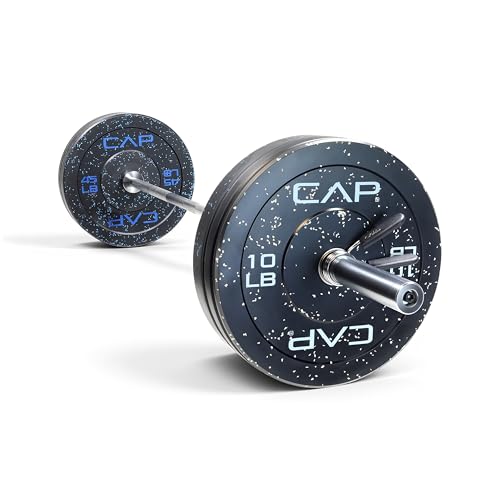
 CAP 260lb Economy Olympic Bumper Plate Weight Set260 lb - Set17.72 x 17.72 x 3.58 inches56.53 poundsCheck on Amazon


What's inside
- What a barbell set actually contains
- The three bar lengths hiding inside most sets
- Shaft diameter, grip and the feel of 28 to 29 millimetres
- Knurling: pattern, bite and the centre strip
- Steel numbers: tensile strength, yield and what PSI claims mean
- Plates first: cast iron, the traditional default
- Bumper plates and the meaning of durometer
- Calibrated steel: thin, exact and usually unnecessary at home
- Change plates and the arithmetic of small jumps
- Sleeve compatibility: the 2-inch rule and its exceptions
- Adding up total set weight without fooling yourself
- Collars: the small parts carrying a large responsibility
- Storage: trees, wall racks and keeping steel off the floor
- Floor protection, platforms and drop behaviour
- Coatings, corrosion and care in real garages
- Matching set composition to the main lifts
- Reading a specification sheet like an engineer
- Noise, neighbours and the social life of a home gym
- Second-hand bundles and inherited plates
- Common buying mistakes this category invites
- A decision sequence that holds up
- Check prices on Amazon
- Delivery day: inspection before the first session
As an Amazon Associate I earn from qualifying purchases. This post may contain affiliate links at no extra cost to you.
This guide was built from published specifications, manufacturer documents, owner manuals and engineering references covering bar steel, plate tolerances and sleeve construction, rather than from buying a shelf of sets and lifting on each one. Where a maker states a number, that figure is reported as a claim about design, not as a verified outcome in a garage. If you buy through links onward from the retailer, a commission may be paid to the publisher at no added cost to you, and that commercial relationship is disclosed here at the top so the reasoning below can be judged on its own terms.
What a barbell set actually contains
A barbell set is a bundle with a simple promise and a complicated interior. On the surface it pairs one bar with a collection of plates and a pair of collars, enough in theory to load, lift and progress without further purchases. Underneath that promise sit decisions about bar length, shaft thickness, plate material and sleeve diameter that determine whether the bundle suits a spare bedroom, a single garage bay or a purpose-built lifting corner. Two sets carrying the same headline total can behave quite differently once a lifter starts squatting weekly, pulling from the floor and pressing overhead.
Composition matters more than the carton photograph. Some bundles centre on a full-length Olympic bar and a spread of large plates aimed at deadlift progression. Others shrink the bar, trim the biggest plates and lean toward general strength work in a flat or apartment where floor space and neighbour tolerance shape every choice. A third family mixes bumper plates with a few iron change plates, trying to cover quiet training and precise loading in one purchase. Reading a set therefore starts with an inventory, not with the total printed in bold type.
Count the pieces yourself before believing any bundle description. List the bar weight separately, then each plate pair by denomination, then the collars, because collars are sometimes folded into a headline figure and sometimes left out entirely. A bundle described by piece count may inflate that count by treating every small disc and clip as an equal unit, which tells you nothing about whether heavy loading is even possible. What counts is loadable weight per side, the jumps available between one total and the next, and whether the bar itself can carry the ceiling you intend to reach.
The three bar lengths hiding inside most sets
The reference point for the category is the men’s Olympic bar: 20 kilograms, roughly 45 pounds, about 2.2 metres from end to end, with sleeves turned for plates having a 2-inch centre hole. That length exists for rack compatibility and for grip width on squats and presses, and its shaft spans the uprights of a standard power rack with room for plates outside them. In a home gym built around a rack, this is usually the bar a set should be organised around, because shorter bars can fail to rest safely across both J-cups.
Alongside it sits the women’s Olympic bar at 15 kilograms, shorter overall and built with a thinner shaft originally shaped around smaller hands in weightlifting. Plenty of home lifters of any description prefer that thinner grip for deadlifts, rows and overhead work, and the reduced starting weight helps when an empty 20-kilogram bar would already exceed a beginner’s press. The trade is loadable sleeve length: less room on each end means bulky bumper plates fill the sleeve sooner, capping the practical total earlier than the steel itself would.
Then come the shorter 5-foot and 6-foot bars bundled for tight rooms. A 6-foot bar can still work on many racks if the shaft between the collars remains wide enough, yet some examples narrow that inner span so much that racking becomes a balancing act. A 5-foot bar generally belongs on a bench stand or in free-standing work away from a full rack, and it suits curls, lighter presses and cramped corners rather than heavy squat duty. Measure your rack’s upright spacing and your room’s turning circle before treating a short bar as a space-saving triumph.
Garage geometry adds another wrinkle. A 2.2-metre bar needs clearance not only while lifting but while loading, because plates slide on horizontally and a lifter steps sideways to fit them. In a single-width garage shared with storage boxes or a parked bicycle, that loading dance can consume more width than the lift itself. Shorter bars reduce the problem while introducing the racking compromise described above, so the honest answer is usually to rearrange the room around the long bar or to choose a training style that genuinely fits the short one.
Why bar weight belongs in every calculation
Every working total includes the bar. A set loaded with 60 kilograms of plates on a 20-kilogram bar is an 80-kilogram lift, and programming written in percentages collapses if that base figure is guessed. Bundles built around a 15-kilogram bar or a light short bar shift every working weight downward, which is neither good nor bad until a lifter follows a plan assuming the heavier standard. Weigh an unmarked bar on a bathroom scale if its mass is unstated; guessing from appearance invites months of quietly wrong arithmetic.
Shaft diameter, grip and the feel of 28 to 29 millimetres
Most general-purpose Olympic bars place shaft diameter between 28 and 29 millimetres. That narrow band reflects a compromise refined over decades: thick enough to feel secure in a squat and stiff under load, slim enough to close a hand around during pulls. Dedicated deadlift bars often run thinner and longer with more flex, while stiff squat bars can run thicker, yet sets aimed at home buyers rarely specialise that far. When a bundle lists 28.5 millimetres, read it as a middle path intended to offend nobody across the main lifts.
Hand size changes how that compromise lands. Smaller hands may find 29 millimetres secure for squats but limiting for hook grip deadlifts, where thumb overlap shrinks as diameter grows. Larger hands sometimes prefer the fuller feel and notice little penalty when pulling. Because a set usually offers one bar only, diameter deserves more scrutiny than any cosmetic feature on the carton. If several people in a household will share the equipment, the thinner end of the standard band tends to accommodate the widest range of grips.
Shaft diameter also interacts with stiffness. A thicker shaft of identical steel flexes less under the same load, all else equal, though makers can alter that behaviour through steel choice and heat treatment. Whip, the springy oscillation some lifters enjoy in weightlifting movements, is a liability during a heavy squat walkout and a nuance most home sets sensibly avoid pursuing. For squat, bench press, deadlift and overhead press performed in a garage, a moderately stiff general bar remains the rational default.
Knurling: pattern, bite and the centre strip
Knurling is the cross-hatched texture cut or rolled into the shaft so hands and back can grip without relying solely on chalk. Makers describe it with loose vocabulary — mild, moderate, aggressive — that maps poorly between brands, so pattern geometry tells a clearer story. Fine, shallow diamonds give friction with limited skin damage during high-repetition sets. Coarser, taller points bite harder for maximal pulls yet can chew palms across a long session and shred the front of a shirt during cleans, a movement few set buyers prioritise.
Look for knurl marks as well as texture. Many bars carry smooth rings near the sleeves that act as visual references for consistent hand placement on presses and pulls. Those rings matter in a home setting without a coach calling adjustments, because repeatable grip width removes one variable from week to week. A bar lacking any marks forces lifters to estimate by eye or by counting knurl sections, a small annoyance that compounds across hundreds of sessions.
Centre knurl divides opinion neatly. That short textured strip in the middle of the shaft grips the upper back during squats and can stop the bar wandering on a sweaty shirt. The same strip scrapes the throat and chest when a bar rests across the front of the shoulders, and it can irritate skin during high-bar work in thin clothing. Sets marketed for general home training often include a passive centre section, present but gentler than the outer grip zones. Powerlifting-leaning bundles keep it pronounced. Decide by which position you use most, not by which description sounds tougher.
Knurl coverage near the ends deserves a glance too. If texture stops well short of the sleeves, wide-grip bench pressers may find fingers landing partly on smooth steel. Conversely, texture running almost to the collar can abrade a rack’s J-cup lining during reracking. None of these details appears in a headline total, yet each one shapes daily satisfaction long after the novelty of new plates fades.
Steel numbers: tensile strength, yield and what PSI claims mean
Specification sheets love pounds per square inch. Tensile strength describes the pulling stress at which steel ultimately breaks, while yield strength marks the point where it bends and fails to spring back straight. For a barbell, yield matters more in daily life, because a bar that survives but stays bent has still failed its owner. Figures around the middle of the published range for modern bar steel suggest sensible durability for home loads; extravagant numbers far beyond rivals deserve scepticism unless a maker explains the test behind them.
Capacity ratings need the same caution. A bar advertised with a four-figure load limit was not necessarily loaded that way repeatedly in a rack, dropped, and re-measured for straightness. Some ratings derive from static calculations, others from a single destructive pull. Treat capacity as a rough class marker — light, general, heavy-duty — rather than a promise that the sleeves, bearings and shaft will all shrug off that mass in a garage. A home lifter progressing gradually will rarely approach even a modest ceiling if the set’s plates run out first, which they usually do.
Steel finish and heat treatment influence corrosion and fatigue behaviour in ways a single PSI figure cannot capture. Two bars sharing a tensile number can age differently in a damp outbuilding because one carries a protective coating maintained properly and the other sits bare against wet air. That is why later sections of this guide dwell on coatings and storage: longevity in a home gym is an environmental story as much as a metallurgical one.
Spin, sleeves and the quiet engineering at each end
The sleeve is the rotating tube at each end of the bar where plates sit. Rotation matters because plates that spin independently reduce torque twisting through the wrists during fast lifts and help plates stay settled when a bar is turned in the hands. Two mechanisms dominate sets at ordinary budgets. Bushings — bronze or composite rings — give measured, durable rotation suited to squats, presses and deadlifts. Needle bearings spin more freely and feel livelier during snatches and cleans, at the cost of greater sensitivity to dust, impact and neglect.
For a bundle bought to support the four main lifts, bushing rotation is rarely a limitation. Bearings earn their place when Olympic lifting technique forms a large share of training, and even then sleeve maintenance becomes part of ownership. Excessively free spin can even feel unsettled during bench press for some lifters, though preference varies. Judge the mechanism against your programme rather than assuming the faster-spinning option must be superior.
Sleeve finish ranges from hard chrome to zinc and bare steel, with ribbed or smooth profiles. Fine ribs can help plates stay put and may add a faint zipping sound when loading; smooth sleeves slide plates on quietly, useful for early-morning sessions through thin walls. What matters most is the diameter staying true to the 2-inch Olympic standard along the loadable length, because undersized sleeves let plates wobble and oversized ones make loading a wrestling match. A plate that tilts under load shifts the centre of mass and rattles collars loose over a set.
End caps and retaining methods rarely feature in listings, yet a sleeve held by a well-seated snap ring tends to outlast one relying on a bolt that can loosen under repeated impact. If a maker publishes sleeve assembly details in its manual, that transparency is a good sign. Silence on the subject is common at bundle prices and simply means the buyer should inspect fasteners periodically, especially after any drop onto hard ground.
Plates first: cast iron, the traditional default
Cast iron plates are the oldest residents of the home gym. Dense, thin and usually finished in black paint or enamel over a machined centre hole, they pack the most weight into the least sleeve space. That thinness is their superpower: a sleeve crowded with wide bumpers reaches its limit quickly, whereas iron discs leave room for serious totals on the same bar. Iron also gives the smallest loading jumps per unit of storage footprint, since a tall stack occupies one corner neatly.
The drawbacks announce themselves on the floor. Iron dropped onto concrete transmits shock straight through, chips its own coating, and can crack either itself or the surface beneath. Even controlled deadlifts end with plates meeting the ground under load, so iron belongs on a platform or thick matting, not bare slabs. Noise follows the same physics: iron clangs, rattles during walkouts, and carries through walls in a way rubber never will. Households training early or late often rule iron out on courtesy alone.
Accuracy varies across the cast iron market. Budget discs can drift several percent from their stamped mass, which matters when a lifter believes a personal best rests on exact loading. Weighing each plate once and marking its true mass in chalk or paint pen is an old garage ritual that converts a cheap set into an honest one. Paired plates should also be matched by actual weight, not merely by label, so one side of the bar does not quietly outweigh the other during squats.
Bumper plates and the meaning of durometer
Bumper plates wrap a steel hub in solid rubber so the whole assembly can meet the floor without destroying either party. Their defining measurement, beyond mass, is durometer: a hardness scale for the rubber compound. Softer bumpers, toward the lower end of the ranges makers publish, absorb impact quietly and bounce less in a lively way but can feel wobbly when several are stacked on a sleeve, because each disc flexes slightly. Harder bumpers stand crisper, load more neatly, and transmit a sharper thud, while resisting the taco-like folding that afflicts very soft wide plates under heavy stacks.
Deadlift behaviour illustrates the trade clearly. A soft, thick 10-kilogram bumper loaded beside heavier plates can bend under load at the moment of liftoff, shifting stress onto its steel hub. Better designs reinforce the hub with a flanged insert anchored deep into the rubber. Manuals sometimes show a cutaway of that insert; when they do, compare its diameter and anchoring rather than the marketing adjectives around it. A small smooth disc glued into rubber will work loose sooner than a wide, mechanically locked hub.
Bounce deserves honest framing. All bumpers rebound somewhat when a loaded bar falls; compound, drop height and floor construction decide how much. Dead bounce claims in listings are relative, not literal. In a confined garage, a bar that rebounds sideways toward a wall or a parked car is a hazard regardless of plate quality, so controlled lowering remains the default technique and dropping stays an occasional safety valve rather than a training style, unless the space and platform were built for it.
The 450 millimetre standard and deadlift bar height
Full-size bumper plates share a 450-millimetre diameter, and that number quietly governs deadlift mechanics. With the bar resting on plates of that diameter, the shaft sits at the height used in competition and assumed by most coaching material — roughly the middle of the shin for many adults, low enough to demand hip hinge strength, high enough to allow a neutral back for typical limb lengths. The standard exists so the pulling position stays constant as weight rises: small plates and large plates present the same bar height, changing only the load.
Trouble starts when a set’s lighter bumpers shrink in diameter to save material. A 5-kilogram plate noticeably smaller than its siblings drops the bar lower whenever it is the largest plate on the sleeve, turning a light technique session into an unintended deficit deadlift. Beginners then learn a starting position they must unlearn at heavier weights. When comparing bundles, confirm that every bumper denomination shares the 450-millimetre diameter, or accept that the smallest discs are really change plates meant to ride beside a full-size plate, never to support the bar alone.
Iron sets play by a similar rule with different numbers: full-size iron discs approach the same diameter in heavy denominations and shrink as mass falls. That is normal and unavoidable for thin plates, and it is why deadlift blocks, a platform with a raised pulling surface, or a pair of full-size bumpers mixed into an iron set can stabilise bar height across all working weights. Mixed-material loading is perfectly legitimate at home, provided sleeve space and collar grip allow it.
Calibrated steel: thin, exact and usually unnecessary at home
Calibrated steel plates occupy the precision end of the market. Machined to tight tolerances, colour-coded under powerlifting conventions and thin enough to load enormous totals on a standard sleeve, they serve competitors who need certainty that 250 kilograms means exactly that. Their centre holes fit sleeves snugly — sometimes so snugly that loading requires patience and a slight rotation to coax each disc home.
Inside a set aimed at general home training, calibrated plates rarely appear, and that absence is sensible. Their cost per kilogram dwarfs cast iron, their thin edges are unfriendly to floors, and their precision exceeds the accuracy of bathroom-scale bodyweight tracking and daily readiness by a wide margin. A lifter pursuing a sanctioned total on a platform may justify them later as a targeted upgrade. As bundle filler they would distort the price of the whole package while solving a problem most garages do not have.
Change plates and the arithmetic of small jumps
Progress at home is usually limited not by the biggest plates but by the smallest increments available. Change plates — the 0.5, 1, 1.25, 2 and 2.5 kilogram discs, or their pound equivalents — determine whether a lifter can nudge a press upward by a manageable step or must leap by the smallest big-plate jump doubled across both sides. Overhead press progression in particular lives and dies on fractional loading, because a five-kilogram total jump can represent a tenth of the entire lift for a developing presser.
Audit any set for its change plate inventory before its headline mass. A bundle rich in large discs but containing nothing below 5 kilograms per side forces ten-kilogram jumps, a recipe for stalled benches and demoralised presses. Rubber-coated change plates with a 2-inch hole ride outside bumpers comfortably; small iron discs work equally well and cost less. Magnetic add-on weights exist as aftermarket accessories, though a set that needs them immediately to make sensible jumps was arguably incomplete from the start.
Fractional plates below half a kilogram per side serve advanced fine-tuning and record attempts. For most home programmes they are optional garnish. What is not optional is symmetry: change plates are sold and bundled in pairs, and a set missing one half of its smallest pair has a hole in its loading ladder exactly where beginners spend their first year.
Sleeve compatibility: the 2-inch rule and its exceptions
Olympic in this context is a measurement before it is a compliment. The sleeves measure nominally 50 millimetres, plates bored to match are described as having a 2-inch hole, and mixing them is effortless when tolerances are honest. Standard or 1-inch equipment forms a separate ecosystem with thinner bars, threaded spinlock ends in many designs, and plates that cannot migrate to an Olympic bar without adapters that nobody should trust under a heavy squat. A set must commit to one ecosystem; households already owning 1-inch plates should price the cost of abandoning them rather than discovering incompatibility on delivery day.
Some bundles muddy the water with so-called studio or light commercial bars whose sleeves sit between the two standards. Those orphans complicate every future purchase. The safest reading of any listing is a direct statement of sleeve diameter in millimetres, cross-checked against plate hole diameter stated the same way. When either figure is missing from a specification sheet, that silence is itself information about the maker’s confidence in its own tolerances.
Loadable sleeve length is the companion figure. It caps how many plates physically fit, and with wide bumpers it often caps the set’s real ceiling well below the bar’s rated capacity. Divide loadable length by the thickness of the plates you will actually use to find the true maximum per side. Listings that boast a huge capacity while fitting only three bumpers per side are selling a number the bundle cannot express.
Adding up total set weight without fooling yourself
Headline totals follow at least three conventions in the wild, and comparing across them without translation produces nonsense. Some makers state plate weight alone. Others add the bar. A few fold in collars or quote the shipping weight of the carton, which includes packaging and tells you nothing about training load. The only fair comparison rebuilds each bundle from its inventory: bar mass, plus twice the sum of one side’s plates, plus collars if you intend to count them, stated once and used consistently.
Worked plainly, a set carrying pairs of 25, 20, 15, 10 and 5 kilogram plates plus a pair of 2.5s and a 20-kilogram bar loads to 20 plus twice 77.5, which is 175 kilograms all-in. That same bundle might be advertised by plate mass alone as a rounder figure or by a carton weight that sounds grander still. Neither alternative number changes what a lifter can actually load for a top set, and the rebuilt figure exposes the real ceiling instantly: subtract the bar and halve the remainder to see the per-side reality your sleeves must hold.
Also ask what the ceiling means for your strongest lift. Deadlift totals outrun squat totals for most lifters, and both outrun the press by a wide margin, so a set adequate for pressing for years may cap deadlift progress within eighteen months. Buying headroom for the pull — one extra pair of large plates beyond today’s need — is usually cheaper inside a bundle than as a later standalone purchase shipped by weight. Freight on iron is unforgiving, and bundle pricing quietly absorbs some of it.
Growth planning should include the second lifter problem. Households where two people train together with different strength levels may find a single set monopolised by whoever loads heavier, with the other waiting for plates. A modest set plus a planned second bar sometimes serves a couple better than one enormous bundle, though that decision sits beyond any single product page and belongs in a household budget conversation.
Collars: the small parts carrying a large responsibility
Collars keep plates where they were loaded. Spring collars, the wire squeeze handles found in countless bundles, are light, quick and adequate for squats, presses and bench work where the bar stays level. Their grip weakens as sleeves get slick or as plates shift repeatedly during deadlifts, and a spring collar that walks outward mid-set announces itself with a widening rattle. Inspect the wire for fatigue and replace springs that no longer bite; they are consumables, not heirlooms.
Lock-jaw style collars clamp with a lever or a snap mechanism over a rubber-lined jaw, and they hold position far more stubbornly through repeated floor contact. For deadlift-heavy home training they are the sensible default, and their slightly slower operation is a trivial tax. Aluminium competition collars add calibrated mass and precision clamping at a price that makes sense only when every half kilogram is accounted for, though their build quality often spoils owners for anything flimsier.
Spinlock collars belong to the 1-inch ecosystem, threading onto grooved bar ends. Within that world they are secure and simple, but they are slow to change and wholly incompatible with Olympic sleeves. A set listing spinlocks is telling you, in hardware language, that it is not an Olympic set regardless of adjectives elsewhere on the page. Read collars as a compatibility fingerprint before reading anything else.
Whichever style ships in the box, lifting without collars on a tilting lift invites asymmetric sliding that can dump plates on one side. The bench press is the unforgiving case, because a lifter pinned under a bar cannot chase a wandering plate. Collar discipline is a habit formed on light warm-ups so it survives heavy attempts, and a good set makes that habit easy by including collars that operate with one hand and obvious feedback.
Storage: trees, wall racks and keeping steel off the floor
Plates stored on the floor lean against walls, scar paint, trip people in the dark and collect damp from concrete. A plate tree solves this with angled pegs arranged by denomination, and the better designs space those pegs for bumper thickness rather than assuming thin iron. Check peg diameter against your plate holes and peg length against your widest discs; a tree that fits only two bumpers per peg while your set carries four creates a floor pile beside an expensive ornament.
Wall-mounted plate racks reclaim floor area in narrow garages, transferring the load to studs or masonry that must genuinely support it. A full set’s plates can exceed the mass of two adults, and a wall system spreads that across fixings whose quality the rack maker cannot control. Renters and owners of fragile partition walls should favour a freestanding tree with a wide footprint, placed where a falling plate cannot reach a car door or a water heater.
Bars deserve vertical or horizontal holders rather than a permanent lean in a corner. A bar stored leaning puts its weight on one sleeve end, invites knocks that send it sliding, and occupies a surprising amount of wall. Cup-style floor holders and rack-mounted tubes keep the shaft upright and the sleeves clean. Whatever system you choose, keep plates sorted by mass with the heaviest low and central; a tree loaded top-heavy with large discs and empty at the base is a tip hazard in a busy garage.
Storage planning interacts with the internal layout of a training space in ways worth sketching on paper. Readers comparing connected training accessories may also find best android smartwatches fitness trackers under 100 useful background for the other side of a home gym, though no wearable will organise a plate pile for you. The tree belongs within one step of the rack or pulling area, because loading is a repeated carry performed dozens of times a week, and every extra metre becomes an excuse to leave plates scattered between sessions.
Floor protection, platforms and drop behaviour
Concrete feels indestructible until a loaded bar lands on it repeatedly. A garage slab can crack along control joints, spall at impact points and transmit vibration into the house frame, while the plates themselves suffer chipped edges and loosened hubs. A lifting platform — typically plywood layered over rubber matting, with a centre sheet where the lifter stands — spreads impact, defines the training zone visually and gives plates a sacrificial surface to punish instead of the building.
On a platform, iron plates become tolerable for controlled deadlifts, though never quiet. Bumper plates on the same surface can handle occasional genuine drops from waist height without drama. Without a platform, thick rubber stall mats over concrete are the minimum sensible arrangement for pulling, and even they cannot make iron drops respectable. Apartment lifters face a stricter calculus: vibration travels through joists to neighbours below, so deadlifts become slow-eccentric exercises, rack pulls from blocks replace floor pulls, or training relocates to a ground-floor space.
Drop behaviour differs by plate family in ways worth rehearsing mentally before the first heavy session. Bumpers rebound and can roll if the bar lands unevenly; iron stops dead but damages what it meets; calibrated steel behaves like iron with sharper edges. A lifter’s bailout plan for a failed squat belongs to the rack’s safety arms, not to the floor at all — set the safeties, always, at a height rehearsed with light weight. Floor protection is for deadlift gravity, not for improvising squat safety.
Ceiling height and overhead work
Overhead pressing imposes a vertical budget many buyers forget to measure. Your height plus arm reach plus the radius of the largest plate on the bar defines the minimum clear ceiling, with a margin for the slight jump some lifters add at lockout and for light fittings hanging below the nominal ceiling line. Garage door openers, hanging storage racks and low beams in basements all intrude into that budget. A lifter who cannot press standing can press seated or from a kneeling position, but a set bought assuming standing work in a low cellar will frustrate daily.
Plate diameter re-enters the calculation here. Full-size bumpers raise the bar’s ends higher at lockout than small iron discs do, so the clearance test should use the largest plates you own, not the load you press today. If the numbers fail, training the press with iron change plates and moderate discs reduces the diameter while keeping the load, a workaround available only to sets with enough small plates — another quiet argument for a generous change plate inventory.
Coatings, corrosion and care in real garages
Bar coatings balance grip, appearance and rust resistance, and no option wins all three. Black zinc gives a dark, mildly textured surface with decent corrosion protection and a feel close to bare steel; it wears at contact points over years, which most owners accept as patina. Cerakote, a ceramic polymer finish borrowed from firearms, resists corrosion strongly and introduces colour, while slightly muting knurl sharpness because the coating fills the texture’s valleys by a small margin. Stainless steel skips coating entirely, offering the most faithful knurl feel and excellent rust resistance at a price that pushes a bundle upward.
Bare steel and oxide finishes sit at the needy end of the spectrum. They feel superb and rust eagerly in humid air, demanding a light oil wipe and brush-down on a routine measured in weeks. Chrome looks bright and shrugs off moisture, though hard chrome can flake at knurl edges if applied poorly, and each flake is a tiny blade. In a climate-controlled spare room, coating choice is mostly about feel. In an unheated outbuilding near the coast, it becomes the difference between a bar that ages gracefully and one that blooms orange every spring.
Plate care is simpler but not optional. Iron plates chip at the rim when clashed together, and each chip exposes metal that rusts and then stains hands and clothing. Touching up chips with enamel, wiping plates down after chalky sessions, and keeping them off damp concrete extends their service indefinitely. Bumper rubber dislikes solvents and prolonged direct sun; clean it with mild soap, store it out of ultraviolet light where possible, and expect pale bloom on older rubber that brushes away harmlessly.
Humidity control beats any coating. A small dehumidifier, airflow after training, and the discipline of not leaving a bar loaded overnight — which also spares the sleeves constant bending stress at one point — do more for longevity than any premium finish. Sleeves left loaded compress collars and invite plates to sit crooked for days; unload the bar as the final act of every session.
Matching set composition to the main lifts
A useful set mirrors the loading patterns of squat, bench press, deadlift and overhead press rather than presenting an abstract total. Squats demand the bar, safeties you supply separately, and mid-range loading with moderate jumps. Bench press needs fine increments and trustworthy collars. Deadlift consumes the ceiling: every large plate in the bundle will eventually live on the bar for top sets, plus full-diameter support under the load. Press needs the smallest jumps and the lightest starting point, which is where a 15-kilogram bar or light change plates rescue an otherwise heavy-oriented bundle.
Consider a developing lifter’s first two years as four diverging curves. The press crawls upward in tiny steps. The bench climbs steadily. The squat jumps in satisfying chunks before slowing. The deadlift, for many builds, outruns everything and arrives at the set’s ceiling first, sometimes embarrassingly early if the bundle skimped on large plates. A set chosen with that divergence in mind carries depth in big discs, breadth in change plates, and a bar rated comfortably beyond the deadlift curve’s second-year destination.
Accessory movements fill the gaps between those curves and justify the smaller plates further. Romanian deadlifts, rows, lunges with the bar on the back, good mornings and floor presses all live in the middle denominations. A bundle whose plates cluster only at the extremes — huge discs and token small ones — leaves the middle weights awkward to assemble, forcing combinations of many small plates that consume sleeve length. Even denomination spacing is a design virtue invisible in a headline total.
Households tracking broader training metrics alongside barbell work sometimes cross-reference guides such as best fitness and music smartwatches when building out the rest of their kit, but no accessory purchase compensates for a loading ladder with missing rungs. The plates are the programme, in a literal sense: the jumps your set permits are the jumps your training will make.
One bar or the start of a collection
Many home gyms eventually add a second bar — a dedicated deadlift bar, a safety squat bar for shoulder comfort, or a short technique bar for a partner. A first set should not try to pre-empt that future. Its job is to provide one honest general bar and enough plates to keep four lifts progressing while the lifter learns which specialisation, if any, they actually want. Bundles that include novelty bars of doubtful stiffness instead of plate depth invert that priority, and the novelty usually ends up stored behind the tree within a year.
Reading a specification sheet like an engineer
Specification sheets reward a slow, suspicious reading. Separate measured facts — bar length, shaft diameter, sleeve diameter, plate diameter, individual masses — from derived claims such as capacity and from pure adjectives. A maker willing to publish tolerances, hub construction and coating type in plain tables is signalling confidence. A listing that substitutes lifestyle photography for the plate inventory table is asking to be judged as décor.
Cross-check units relentlessly. Bundles sold across markets mix kilograms and pounds in ways that flatter the total in whichever unit sounds larger, and plate denominations in the two systems do not align neatly: a 20-kilogram plate is not a 45-pound plate, though they sit close. A set described in pounds built around a kilogram bar creates loading arithmetic that will annoy you weekly. Pick one unit system for your training log and convert the set’s inventory into it on day one, marking plates if the stamps disagree with your log.
Warranty language is another quiet spec. Coverage for bending, sleeve failure and hub separation matters more than coverage for cosmetic finish, and exclusions for dropping reveal how the maker expects the product to be used. A bumper set whose warranty evaporates if plates are dropped has misunderstood its own category, or hopes you will not notice. Iron sets excluded from drop coverage are merely stating physics; bumper sets doing the same are stating a warning.
Noise, neighbours and the social life of a home gym
Training sound has three sources: plates clashing during loading, the bar meeting the floor, and the lifter. Rubber bumpers, a platform and collars that prevent plate rattle address the first two surprisingly well. Chalk buckets, music and conversation are household diplomacy rather than equipment questions. In terraced or semi-detached housing, scheduling heavy pulling at civilised hours does more for neighbourly peace than any durometer rating, and a set chosen for quiet — bumpers, lock collars, rubber-coated change plates — widens the hours that count as civilised.
Vibration is the stealthier neighbour issue. Sound through air is obvious; structure-borne thud through a shared wall or floor is felt rather than heard and can read as more intrusive than its volume suggests. Platform layers, dense matting and avoiding drops all damp that transmission. If a household member works nights and sleeps days metres from the garage, those layers stop being accessories and become the condition that makes the set usable at all.
Second-hand bundles and inherited plates
The used market circulates barbell sets constantly, and its bargains are real because freight costs punish sellers of heavy iron. Inspect a used bar by rolling it on a flat surface to reveal bends, spinning each sleeve to feel for grit or wobble, and checking knurl for packed rust rather than surface colour. Weigh the plates; a mismatched pair announces itself on the scale. Used bumpers deserve a squeeze and a hub tug, since rubber separating from its insert hides under an intact-looking face.
Mixing inherited plates with a new set works when the ecosystem matches and diameters are understood. Old iron beside new bumpers loads fine, with the bumper pair setting bar height and the iron adding mass inside it. What fails is mixing hole standards or assuming stamped masses across decades of manufacturing variance. Weigh, mark, and treat the combined inventory as a fresh set whose loading ladder you rebuild from measurements, not labels.
Readers who organise the rest of a training corner in parallel sometimes consult best activity smartwatches for the wearable side of their setup; the barbell side rewards the same habit of checking stated numbers against measured ones. A scale, a tape measure and ten minutes will tell you more about a used bundle than an hour of listing photography.
Common buying mistakes this category invites
The first mistake is buying the total instead of the ladder: a heavy bundle with coarse jumps that stalls the press within a month. The second is choosing a short bar to fit a room, then discovering it cannot rack safely for squats. The third is ignoring sleeve length and learning that the fourth bumper per side has nowhere to live. The fourth is treating capacity ratings as comparable across brands when each was derived differently. The fifth, quieter than the rest, is forgetting ceiling height until the first standing press meets a garage door opener.
A sixth mistake belongs to tidy minds: buying storage after the set arrives and spending a month stepping over plates while the tree is in transit. Order the tree, the bar holder and the platform materials in the same planning breath as the set itself. The gym that begins organised tends to stay organised, and the one that begins as a pile tends to stay a pile with better equipment in it.
Finally, beware the bundle padded with items of little training value — flimsy gloves, mystery straps, a poster — presented as added pieces to swell the count. Judge the bar, the plates and the collars. Everything else in the carton is packaging with ambitions.
A decision sequence that holds up
Start with the room: length for the bar and loading, ceiling for pressing, floor construction for dropping, wall strength for storage. Move to the bar: standard 20-kilogram Olympic if the room and rack allow, 15-kilogram if grip or starting load argues for it, short bars only with open eyes about racking. Then the plates: bumpers for floor kindness and quiet, iron for density and sleeve room, full diameter across bumper denominations, and a change plate inventory that permits small jumps on both the press and the bench.
Rebuild the total from the inventory and compare that rebuilt ceiling against a realistic two-year deadlift. Check loadable sleeve length against the plate thicknesses you chose. Confirm collars suited to pulling from the floor. Price the storage and platform the set requires as part of the set, because an unusable bargain stored in a damp pile is not a bargain. Readers rounding out a broader equipment picture may glance at best running smartwatches for the conditioning side of a programme; the barbell decision itself ends with the rebuilt inventory, not with any headline.
When two candidate sets survive that sequence, prefer the one whose maker published more measurements and fewer adjectives, whose plate ladder has no gaps at the weights you will use weekly, and whose bar coating matches the humidity of the room it will live in. Those preferences sound austere beside showroom language, yet they predict satisfaction a year later far better than any carton photograph.
Check prices on Amazon
Live listings for the shortlist in this guide are pulled from Amazon below, so prices and availability are always current at the moment you look.



Delivery day: inspection before the first session
Heavy bundles travel badly when packaging is optimistic, so the first hour of ownership belongs to inspection rather than lifting. Photograph the carton before opening it, then unpack onto a clean surface where small parts cannot roll under furniture. Collars, end caps and any hub bolts hide inside foam corners with remarkable consistency. Count every plate against the inventory you rebuilt during research, because a missing 2.5-kilogram pair is far easier to remedy in the first week than in the third month, when a seller can plausibly wonder where it went.
Roll the bar slowly across a level floor and watch the sleeves describe their circles. A straight bar turns smoothly with no rhythmic rise and fall at the middle; a bent one announces itself immediately. Spin each sleeve by hand, listening for grinding that suggests damaged bushings or debris inside the mechanism, and tug the sleeve outward to feel for excessive play. Run a palm lightly along the knurl to find burrs or sharp defects that a maker should replace rather than a customer should file down. Check that every plate slides onto both sleeves, since a single undersized hole turns one disc into a permanent resident of the storage tree.
Weigh the bar and a sample of plates, ideally one of each denomination, and record the figures inside the front cover of your training log. Where a plate deviates from its stamp by more than a trivial margin, mark the true figure on its face and pair it with the closest-matching partner on the opposite side of the bar. This small ceremony converts marketing numbers into your numbers, and every percentage-based session afterwards rests on ground you verified yourself rather than ground a carton asserted.
Assemble the platform, position the tree and load the bar once at a moderate weight simply to rehearse the geography: where plates travel, where collars wait, where you stand to load the far sleeve without stepping over the bar. That rehearsal, done calmly with light weight, reveals collisions between tree and rack, door swings that cross the loading zone, and light so poor that plate stamps cannot be read at dawn. Fixing those frictions before the first heavy week protects the habit you are trying to build, because a gym that fights its owner loses quietly, one skipped session at a time.
Choose the set whose smallest plates let your weakest lift keep inching forward long after its biggest plates have satisfied your strongest one.
Related guides
- Best 1080p IP Cameras: PoE Domes, Turrets, Bullets and a PTZ That Earn Their Cable
- Best 43 1080p TVs: Why 43 Inches Went 4K — and Where True Full HD Survives
- Best Doorbell Cameras No Subscription: Local Storage Picks, and the Ring/Blink Truth
- Best AC Powered Wireless Security Cameras: Wi-Fi Data, Mains Power, Zero Sleep


