What's inside
- Key Takeaways
- Quick Picks
- How Did We Choose These Activity Watches?
- What Actually Matters When Choosing an Activity Watch?
- How Do These Six Activity Watches Stack Up Against Each Other?
- How Do You Get Real Value From an Activity Watch?
- Which Buying Errors Do Activity Watch Shoppers Repeat Most Often?
- Final Recommendation
- Frequently Asked Questions
- Related Guides
As an Amazon Associate I earn from qualifying purchases. This post may contain affiliate links at no extra cost to you.
gizmoverdict.com is reader-supported. When you buy through links on our site, we may earn an affiliate commission.
Where to buy: Every watch below carries a link verified against this site’s own product pool, with each listing title recorded in the sources file. Read the badge beside each name first; in a category this broad, the right watch is the one whose strengths match your actual week.
The best activity smartwatches have a harder job than either pure sports watches or pure smartwatches, because activity is the word real life uses. It covers the marathon trainee and the lunchtime walker, the swimmer counting lengths and the parent whose ten thousand steps arrive via school runs and supermarket aisles. A great activity watch must track movement faithfully, make sense of it kindly, survive being worn all day and all night, and still behave like a pleasant object when no exercise is happening at all. The six watches in this guide each strike that balance at a different point, and the differences are more interesting than any single winner.
Three ecosystems meet here. Garmin brings the training heritage, with the Forerunner 265 for runners and the Venu 3 for everyone else. Fitbit, through the Versa 4 and inside Google’s Pixel Watch 3, brings the friendliest interpretation of daily movement and sleep. Samsung’s Galaxy Watch 7 offers the fullest Android smartwatch experience wrapped around serious activity tracking, while Amazfit’s Bip 5 undercuts everyone on price while keeping GPS and a fortnight-friendly battery. Your phone, your sport and your tolerance for charging will choose among them more honestly than any benchmark table.
A note on language runs through everything that follows. These watches estimate heart rate, energy, readiness and sleep stages, and this guide treats every one of those numbers as general wellness and training feedback for healthy adults, useful for spotting patterns and pacing effort. None of them is presented as diagnosing, measuring or ruling out any medical condition, because that is not what consumer activity watches do. Within that honest frame they are wonderful tools, and the pages below concentrate on what each does best, where each compromises, and whose wrist each belongs on.
Battery expectations deserve setting before the details begin. At one end, the Bip 5 and the Garmins measure endurance in many days; at the other, the Galaxy and Pixel watches ask for a charger roughly every day in exchange for their brighter, busier lives. Neither answer is wrong, but the wrong match is miserable: a runner who hates charging will abandon a daily-charge watch by March, and a notification-driven professional will find a simple tracker mute. Keep your own charging personality in mind as you read, because it predicts satisfaction better than any single specification.
Key Takeaways
- The Forerunner 265 is the runner’s reference; the Venu 3 is Garmin’s polished all-day alternative.
- Fitbit’s Versa 4 makes activity friendly for beginners, and its platform also powers the Pixel Watch 3.
- The Galaxy Watch 7 40mm gives Android owners the fullest smartwatch around serious tracking.
- Amazfit’s Bip 5 proves GPS activity tracking and long battery life need not cost much.
- Charging rhythm divides the list: Garmins and the Bip last days, Galaxy and Pixel ask near-daily top-ups.
- Every readiness, sleep and heart figure here is general wellness feedback, not a medical measurement.
Quick Picks
| Pick | Badge | Why it earns its place |
|---|---|---|
| Garmin Forerunner 265 | Runner’s reference point | AMOLED brightness wrapped around Garmin’s deepest run coaching for committed trainers. |
| Garmin Venu 3 | Polished everyday athlete | A handsome 45mm watch whose varied training tools hide under genuine elegance. |
| Fitbit Versa 4 | Friendliest first tracker | Slim, kind and legible activity tracking for people building a habit rather than chasing podiums. |
| Amazfit Bip 5 | Budget GPS overachiever | A huge screen, built-in GPS and multi-day battery at the friendliest tier in this guide. |
| Samsung Galaxy Watch 7 40mm | Android’s complete package | Wear OS breadth and Samsung health depth in the friendlier 40mm size. |
| Google Pixel Watch 3 45mm | Wear OS with a coach’s brain | The larger Pixel Watch fuses Fitbit activity intelligence with Google’s elegant hardware. |
How Did We Choose These Activity Watches?
Verification came before enthusiasm, as it does in every guide on this site. Each of the six watches was confirmed through the site’s product pool, with the exact listing title captured in the sources file, so the watch behind every link is the watch described in the text. Where a listing carried a condition such as Renewed, that word would appear everywhere the pick is named; in this particular six, the listings are standard retail versions, and the text treats them accordingly without inventing configurations, bundles or finishes that the titles do not mention.
Selection then followed the shape of real activity. We required credible GPS for outdoor movement, activity modes broad enough for the gym-and-pavement mixture most people actually do, sleep tracking comfortable enough to wear overnight, and an app that turns records into guidance rather than homework. Each watch also had to justify itself as an all-day object, since an activity watch abandoned in a drawer for being ugly, huge or constantly flat tracks nothing at all. The six survivors divide neatly by personality, which is why this guide resists crowning one of them for everybody.
Finally, we scored honesty of positioning. The watches that impressed us most know what they are: a runner’s instrument, a lifestyle tracker, a beginner’s companion, a budget overachiever. Marketing that promises laboratory insight from a wrist sensor was discounted wherever it appeared, because activity tracking earns trust by being approximately right about effort and consistent over time, not by pretending to clinical authority. The result is a list where the cheapest watch and the most specialised watch can both be the correct purchase, depending entirely on the life they are bought into.
One more filter deserves naming, because readers write to us about it constantly: comfort during sleep. An activity watch earns half its insight overnight, and a case that feels fine at noon can become a nightly negotiation at 2 a.m. The slimmer Versa 4 and the 40mm Galaxy Watch disappear in bed, the Pixel’s smooth pebble shape is kinder than its size suggests, and even the larger Garmins are light enough that most owners adapt within the fortnight. If you are a restless sleeper with small wrists, let this quiet criterion break ties that specifications cannot.

Garmin Forerunner 265 — Runner’s reference point
The Garmin Forerunner 265 is what happens when a running watch stops apologising for being a running watch. Its bright AMOLED screen brings the colour and clarity people associate with lifestyle smartwatches, yet everything underneath remains stubbornly athletic: structured workouts, race-aware training guidance, recovery feedback and the kind of GPS consistency that holds a pace honest through city blocks and tree cover alike. For the runner who trains four or five days a week and races a handful of times a year, this is the reference point against which the rest of this list is measured.
Daily training is where the 265 quietly separates itself. Morning readiness-style feedback gathers sleep, recent load and recovery into a suggestion a tired athlete can actually use, while the touchscreen and physical buttons combination means a sweaty mid-interval lap press never depends on a wet display responding correctly. Heart-rate and effort data are presented as training information for generally healthy adults pursuing fitness goals, which is the right frame for everything in this guide: these are coaching signals that help you judge effort, not instruments that pronounce on your health.
As an everyday watch it behaves better than its sporting brief suggests. Notifications arrive cleanly, music can live on the wrist for phoneless runs, and the case is light enough to forget during sleep, which matters because the recovery story depends on wearing it overnight. It will not run the sprawling app catalogue of a Galaxy or Pixel watch, and it does not pretend to. Buy the Forerunner for the athlete’s calendar first and the smartwatch conveniences second, and it will feel less like a compromise than like a decision made by someone who knows their priorities.
- Listing identity: Forerunner 265 running smartwatch, 46mm, Black/Powder Gray
- Display style: bright AMOLED with touchscreen plus physical buttons
- Training focus: structured run workouts, race guidance and recovery feedback
- Everyday kit: notifications, on-wrist music and sleep tracking
Strengths
- Run coaching depth that grows with a serious training calendar
- Button control stays reliable with sweaty hands and gloves
- Light enough to wear overnight, keeping recovery data continuous
Trade-offs
- Garmin’s app shelf is small beside Wear OS catalogues
- Lifestyle polish trails the Venu 3 in formal settings
- Best features reveal themselves only to people who actually race
Best for: a runner training most days with races on the calendar, who wants coaching that respects their ambition.
Not suited for: casual movers who would never open a training plan, and smartwatch-first buyers who want a large app store.

Garmin Venu 3 — Polished everyday athlete
The Garmin Venu 3 is Garmin’s answer for the person who wants one watch to follow them from a morning workout to a wedding without changing its personality. The AMOLED display is large and handsome, the case looks like a watch rather than a sports instrument, and yet the activity tracking underneath covers gym sessions, rides, swims and runs with the seriousness Garmin built its name on. It is the activity watch for people whose exercise is varied and whose taste in objects is not, which describes a large share of adults buying in this category.
Two features give the Venu 3 its particular flavour. A built-in speaker and microphone let it handle calls from the wrist when a paired phone is nearby, a small convenience that lifestyle users reach for constantly once they have it. Meanwhile the wellness side leans into sleep coaching and a body-battery style energy estimate that frames the day in terms of charge and drain, a metaphor many people find more usable than raw charts. As with every watch here, treat those numbers as general wellness feedback that helps you notice patterns in rest and effort, never as measurements of a medical condition.
Against the Forerunner 265, the Venu trades deep run-specific coaching for polish, voice features and broader everyday charm, while against the Versa 4 it offers a far richer training toolbox at a clearly higher tier of commitment. Battery endurance remains a Garmin strength, stretching across days that would have a Pixel Watch reaching for its charger twice. If your activity is a lifestyle rather than a race calendar, and you want the tracking to be genuinely good rather than decorative, the Venu 3 is the most balanced expression of that idea in this line-up.
- Listing identity: Venu 3 premium fitness smartwatch, 45mm, Black
- Voice kit: built-in speaker and microphone for wrist calls via phone
- Wellness focus: sleep coaching and body-energy style estimates
- Activity range: broad modes across gym, road, water and trail
Strengths
- Looks correct in settings where a sports watch feels like fancy dress
- Call handling from the wrist suits busy, phone-in-bag days
- Multi-day battery keeps sleep and activity records unbroken
Trade-offs
- Run coaching stops short of the Forerunner’s race depth
- Premium positioning makes it the considered purchase of the Garmins
- Touch-first control is less glove-friendly than button-led designs
Best for: an active adult whose exercise is varied and whose watch must also survive dinners, offices and weddings.
Not suited for: a racer who wants every training metric Garmin makes, or a bargain hunter watching the Bip 5 with interest.
Fitbit Versa 4 — Friendliest first tracker
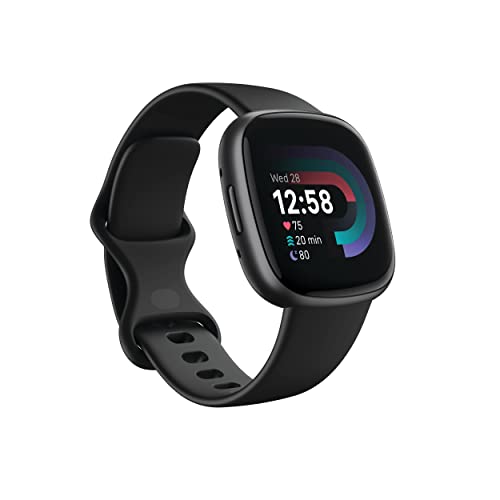
The Fitbit Versa 4 occupies a particular and honourable niche: the activity watch for people who want friendly, legible fitness tracking without being recruited into an athlete’s operating system. Its interface leads with the day’s movement, sleep and readiness in language a beginner can act on, the case is slim and unobtrusive on smaller wrists, and the whole experience feels designed by people who remember that most owners are trying to build a habit rather than win a age-group podium. For the walker, the casual gym member and the returning exerciser, that tone is a feature in itself.
Exercise handling covers the everyday repertoire well, with a wide spread of activity modes, phone-connected GPS behaviour to understand before you buy, and automatic recognition that quietly catches the walk you forgot to start. The Fitbit app remains one of the clearest places to watch trends in sleep and activity accumulate over months, though some deeper insights sit within Fitbit’s premium tier, a structure worth knowing about before purchase rather than after. Wellness figures throughout are best read as encouragement and pattern-spotting for general fitness, which is exactly how the Versa presents them.
Where the Versa 4 steps back from rivals is depth and independence. It is not the tool for structured marathon training, its smart features have been deliberately simplified compared with older Fitbit generations, and Android and iPhone owners alike should check which phone features are supported on their platform. None of that dents its real job. As a comfortable, motivating daily activity companion that will not intimidate its owner in week one or bore them in month six, the Versa 4 remains one of the easiest watches in this guide to recommend to the right person.
- Listing identity: Versa 4 fitness smartwatch, Black/Graphite
- Experience focus: clear daily activity, sleep and readiness summaries
- Exercise range: wide mode list with automatic walk recognition
- App story: Fitbit platform, with some deeper insights in its premium tier
Strengths
- Approachable interface that never lectures a beginner
- Slim case disappears on smaller wrists and under sleeves
- Trend views in the app reward consistency over months
Trade-offs
- Not built for structured race training or deep metrics
- Some phone features vary by platform and have been simplified
- Advanced insights may sit behind the premium subscription tier
Best for: a walker, gym newcomer or returning exerciser who wants encouragement presented in plain language.
Not suited for: a data-hungry athlete planning workouts to the watt, or anyone wanting a large third-party app catalogue.

Amazfit Bip 5 — Budget GPS overachiever
The Amazfit Bip 5 is the budget disruptor of this list, a watch whose enormous 1.9-inch screen and long battery life force an honest question on every rival: how much of what you charge for is the watch, and how much is the badge? Amazfit’s own operating system keeps things simpler than Wear OS, yet the essentials for activity tracking are present and correct: built-in GPS for recording runs and rides without a phone, a broad set of sport modes, Bluetooth calling through a paired phone, and Alexa built in for timers, questions and smart-home nudges from the wrist.
Living with the Bip 5 means accepting a different texture of smartwatch. The screen is big and readable rather than luxurious, the app ecosystem is a curated shelf rather than a sprawling store, and notifications are handled competently without the deep reply options of a Galaxy Watch. In exchange, the battery stretches toward the kind of multi-day endurance that changes behaviour: you stop planning around the charger, sleep tracking happens because the watch is simply still on your wrist, and the activity record becomes continuous instead of aspirational.
For activity purposes specifically, the Bip 5 suits the beginner-to-intermediate majority beautifully. Step, distance, pace and route records for walks, runs and rides are all here, presented in the companion app with enough clarity to show progress across a season. Heart-rate readings belong in the general wellness category, useful for noticing effort patterns during exercise rather than for any clinical purpose. If your budget is firm and your ambitions are about consistency rather than podiums, the Bip 5 may be the smartest money in this entire guide.
- Listing identity: Bip 5 smart watch with 1.9-inch screen
- Navigation: built-in GPS named in the listing title
- Assistance: Alexa built in, plus Bluetooth calling via paired phone
- System: Amazfit’s own operating system rather than Wear OS
Strengths
- Battery endurance measured in days reshapes charging habits
- GPS tracking at this tier embarrasses dearer rivals
- Large display keeps pace and distance readable at a glance
Trade-offs
- App catalogue is a curated shelf, not a full store
- Screen and case feel functional rather than luxurious
- Notification replies lack Wear OS depth
Best for: a budget-firm beginner or intermediate who wants routes, pace and consistency without flagship money.
Not suited for: a buyer wanting banking apps, deep replies and premium materials on the wrist.

Samsung Galaxy Watch 7 40mm — Android’s complete package
The Samsung Galaxy Watch 7 in its 40mm size is the activity watch for Android owners who refuse to choose between a real smartwatch and a real fitness companion. Wear OS brings Google’s app catalogue, proper notification handling and replies, and Samsung’s health platform layers activity tracking, sleep insight and body-composition style estimates over the top. The 40mm case is the friendlier size for smaller wrists and for sleeping, and it disappears under a cuff in a way the larger adventure watches in this guide never will.
Training with the Galaxy Watch 7 feels modern in the ways that matter day to day. GPS locks quickly for the lunchtime run, workouts can be built and followed on the wrist, and the watch nudges recovery and readiness in the language of energy scores rather than raw data tables. Owners of Samsung phones receive the fullest version of the experience, including some health features that are gated to that pairing, so buyers with other Android handsets should confirm which functions follow them. All such figures are wellness estimates for general fitness use, helpful for pacing a training week and noticing when rest is overdue.
Battery life is the honest cost of all this capability, measured in days plural only with disciplined settings, and nightly or near-nightly charging is the realistic rhythm. For many Android users that trade is gladly made, because the watch earns its place in every hour of the day rather than only during workouts. If your activity life is woven through a busy connected life, messages answered from the wrist, music streamed on a run, training logged without ceremony, the Galaxy Watch 7 40mm is the most complete Android expression of the activity watch idea here.
- Listing identity: Galaxy Watch 7 40mm Bluetooth, Green, US version
- System: Wear OS with Google’s app catalogue
- Health platform: Samsung activity, sleep and energy-style guidance
- Size note: 40mm case suits smaller wrists and overnight wear
Strengths
- Full smartwatch behaviour, replies and apps included
- Quick GPS and polished workout following for daily training
- Compact case wears comfortably through sleep and work alike
Trade-offs
- Some health features are fullest when paired with a Samsung phone
- Battery rhythm is near-nightly for active users
- iPhone owners cannot use it at all
Best for: an Android owner, especially with a Samsung phone, whose training is woven through a busy connected day.
Not suited for: an iPhone user, or anyone who regards daily charging as a deal-breaker.

Google Pixel Watch 3 45mm — Wear OS with a coach’s brain
The Google Pixel Watch 3 in 45mm is the thinking person’s Wear OS activity watch, and the larger size is the one to have. The bigger case buys a display with room to read splits at a glance and a battery that survives the full day of training and notifications with less anxiety than its predecessor inspired. Google’s design language remains the most elegant on this list, a smooth pebble of a watch that looks as natural with a blazer as with a running singlet, and the 45mm proportions finally give that design the presence it always wanted.
Activity tracking on the Pixel Watch 3 runs through the Fitbit platform, which means the friendly trend-watching of the Versa line is fused with Google’s smartwatch machinery. Run coaching has grown more serious, with readiness and cardio-load style guidance that helps an enthusiastic amateur avoid the classic pattern of heroic weeks followed by enforced rest. The watch presents its heart and recovery information as training and wellness guidance for generally healthy users, and within that frame it is genuinely useful, particularly the morning briefing that assembles sleep, readiness and the day’s suggested effort into one glance.
Ecosystem honesty matters here: the Pixel Watch 3 is an Android-only companion, happiest with a Pixel phone but workable with other Android handsets, and iPhone owners should simply look elsewhere in this guide. Charging remains a frequent ritual compared with the Garmins, and the glass-forward design asks for a touch more care than a rugged sports watch. In return you receive the most coherent blend of smart features and credible activity coaching Google has yet shipped, in the size that finally does it justice.
- Listing identity: Pixel Watch 3, 45mm, Matte Hazel Aluminum, Hazel Band, Wi-Fi
- Platform: Fitbit activity and sleep tracking inside Wear OS
- Coaching focus: readiness and training-load style daily guidance
- Size note: 45mm case gives splits and stats room to breathe
Strengths
- Morning briefing turns sleep and readiness into one clear suggestion
- Design elegance unmatched by any rival in this guide
- Run coaching has matured into genuinely useful structure
Trade-offs
- Android only, with the happiest experience on Pixel phones
- Glass-forward looks ask for more care than a rugged watch
- Charging is a frequent ritual beside the Garmins
Best for: an Android user who wants Fitbit’s friendly intelligence inside a beautiful, full smartwatch.
Not suited for: an iPhone owner, or a multi-day battery devotee who hikes away from chargers.
What Actually Matters When Choosing an Activity Watch?
Is GPS independence important for your kind of exercise?
A watch with its own GPS records a run, ride or hike completely without a phone, which changes the feel of exercise more than any statistic. Leaving the handset at home removes the bouncing pocket, the armband and the low-level awareness of messages, and many people discover their lunchtime run becomes the calmest part of the day. The Forerunner, Venu, Bip 5, Galaxy and Pixel in this guide all carry their own positioning, while the Versa 4’s arrangement leans on a connected phone for its route maps, a perfectly workable design for people who always carry one anyway.
Independence matters differently by sport. Trail runners and cyclists genuinely roam beyond the phone’s company, swimmers leave it in a locker by definition, and gym users never needed positioning in the first place. Judge the feature against your own map rather than a reviewer’s, and remember that GPS is also the hungriest radio on the watch: heavy route recording shortens every battery figure quoted for gentle daily use, on every brand, without exception.
How should you read readiness, recovery and energy scores?
Modern activity watches summarise the night and the recent training load into a morning number, an energy estimate or a suggested effort, and the healthiest way to use these scores is as a second opinion rather than a verdict. When the watch says you are drained and you feel drained, believe it twice and shorten the session. When it says you are primed and you feel wonderful, train with confidence. The interesting days are the disagreements, and even those are information: repeated low scores alongside good feelings may mean the algorithm dislikes your schedule, while a cheery score on a hollow-feeling morning is a reminder that no sensor knows about the argument, the deadline or the toddler.
Over months, the trend matters more than any morning’s figure. A resting heart-rate line drifting down across a training block, sleep duration stabilising, activity minutes accumulating: these slow signals describe fitness changing, and every platform in this guide presents them in its own dialect. Treat all of it as general wellness feedback for healthy adults, the frame this guide uses throughout. The moment a number worries you in a medical direction, the correct instrument is a clinician, not a different watch, and no activity tracker here claims otherwise.
Which matters more for activity, battery life or screen?
Battery and display pull against each other in every design here, and your answer reveals your tribe. The bright AMOLED screens on the Garmin pair, Galaxy and Pixel make stats readable in hard sunlight and maps genuinely useful, yet the always-on glow that shows them off is exactly what drains a small battery. Amazfit’s Bip 5 chooses endurance and a big, simpler display, and wins the devotion of people who charge weekly and smugly. Garmin splits the difference with efficient AMOLED management that still delivers days rather than hours.
Think in terms of your longest plausible day. A marathon, a long trail ride or a festival day of walking all punish a watch that entered the morning at forty percent, while an office worker beside a desk charger will never notice the Pixel’s appetite. Sleep tracking tips the scales further, since a watch charging overnight records nothing about the night. The right answer is the one that keeps the watch on your wrist for the hours you personally care about, and for most readers that consideration alone narrows this list to two or three names.
Should your activity watch match your phone above all else?
Ecosystem fit is the least glamorous and most decisive factor in this category. Apple owners are served by none of these six at their best and should shop in the all-around guide instead; Android owners should note that the Galaxy Watch 7 reserves its fullest health behaviour for Samsung phones, the Pixel Watch 3 is happiest with a Pixel, and the Garmin, Fitbit and Amazfit platforms are the true neutrals that treat every handset alike. A watch that fights your phone’s notification and reply systems will irritate you hourly, which no training feature can repay.
The companion app deserves the same scrutiny as the hardware, because it is where your activity history will live for years. Fitbit’s clarity, Garmin’s depth, Samsung’s integration and Zepp’s simplicity each suit different temperaments, and switching platforms later usually strands your history behind you. If you already own years of records in one ecosystem, that archive is a genuine argument for staying, and this guide’s per-pick app commentary is written to help you weigh it before the new box is opened.
What does a month of honest activity data teach you?
The first week with an activity watch is theatre: steps are chased, sleep is performed for the sensor, and every score is screenshotted. The first month is where the value hides. Patterns emerge that memory alone would never have caught, like the Thursday slump that follows Wednesday’s late training, the walk to the further coffee shop that quietly adds two thousand steps, or the way a short Sunday ride leaves Monday’s energy strangely improved. Every watch in this guide can surface these patterns; the platforms differ only in how gracefully they present them.
Month one also calibrates expectations about accuracy. You will learn which watch counts your particular stride honestly, how your device reads a restless night, and where its heart-rate trace wobbles during intervals, and that personal calibration matters more than any laboratory comparison. A device that reads your effort consistently, even if its absolute numbers differ slightly from a chest strap’s, gives you a stable language for your own training. Consistency is the currency of activity tracking, and it only reveals itself to owners who wear the thing daily.
Perhaps the month’s biggest lesson is behavioural. The streaks, rings and gentle nudges genuinely work on most people for a while, and the watches differ in how they behave when novelty fades: Fitbit and Pixel lean on encouragement, Garmin on goals and training structure, Amazfit on simple accumulation. Choosing the motivational dialect you will still respect in month nine is a legitimate buying criterion, and it is why this guide describes each platform’s personality as carefully as its hardware.
How do these watches handle swimming and the gym?
Activity is not all running, and the non-running hours separate thoughtful watches from run-only tools. In the pool, every pick here is built to be worn in the water for ordinary swimming, counting lengths and logging the session while the touchscreen misbehaves as all touchscreens do when wet, which is why button-led or lockable interfaces earn their keep. Open-water swimmers should favour the GPS-strong Garmins, while lane swimmers will find any of the six adequate for the simple arithmetic of distance accumulated.
In the gym the differences turn philosophical. Garmin’s strength modes attempt to follow sets and exercises, Fitbit and Pixel log the session cleanly and move on, and Samsung sits between the two with guided options for the mainstream machines. None of them replaces a training notebook for a serious lifter, and all of them handle the cardio floor, classes and circuits that make up most people’s gym life perfectly well. Judge this section by the exercise you actually do twice a week, not the triathlon you mention at parties.
Yoga, Pilates, rowing machines and the long tail of human movement are covered by mode lists on every watch here, with heart-rate and duration doing the honest work. The practical advice is unglamorous: start the mode, because an unlogged session still happened to your body but not to your trends, and trends are the entire reason the watch is on your wrist. Automatic recognition catches some forgotten starts on the Fitbit, Pixel and Samsung platforms, a small mercy that beginners in particular learn to love.
How do activity watches cope with travel and time zones?
Travel is the stress test nobody reviews, and activity watches reveal their character somewhere over an ocean. The frequent flyer wants three things from the wrist: the time corrected without a phone call home, sleep data that survives a red-eye and can be read sensibly afterwards, and a battery that does not demand a foreign socket hunt on the first evening. The Garmins and the Bip 5, with their multi-day endurance, treat a long weekend abroad as a rounding error, while the Galaxy and Pixel owners learn to pack the puck beside the passport as automatically as a toothbrush.
Jet lag also exposes the honesty of sleep and readiness scores. A watch that serenely reports excellent recovery after four hours of airline sleep is flattering its owner, while the better platforms register the disruption and soften their training suggestions for a day or two, which is the behaviour of a coach rather than a cheerleader. None of this is medical insight; it is pattern recognition applied to a visibly abnormal week, and travellers who train on the road learn to trust the watches that admit the journey happened.
There is a quieter travel virtue in the offline features. Music stored on the Forerunner or Venu, routes recorded without a data connection, and timers and alarms that work in airplane mode all keep the watch useful in the exact hours when a phone is conserving itself. Buyers whose work involves regular travel should weigh this unglamorous resilience alongside the headline training features, because the best activity watch is the one still functioning on the third day in a strange city.
How Do These Six Activity Watches Stack Up Against Each Other?
| Pick | Badge | Standout quality | Main compromise |
|---|---|---|---|
| Garmin Forerunner 265 | Runner’s reference point | Deepest run-specific guidance in this guide | Narrowest smartwatch catalogue here |
| Garmin Venu 3 | Polished everyday athlete | Best blend of elegance and training substance | Less specialised than its Forerunner sibling |
| Fitbit Versa 4 | Friendliest first tracker | Most welcoming activity experience here | Shallowest training depth of the six |
| Amazfit Bip 5 | Budget GPS overachiever | Unmatched value for GPS activity basics | Simplest smart features in this line-up |
| Samsung Galaxy Watch 7 40mm | Android’s complete package | Most complete Android smartwatch here | Most frequent charging on this list |
| Google Pixel Watch 3 45mm | Wear OS with a coach’s brain | Smartest fusion of Fitbit and Google here | Battery endurance trails the Garmin pair |
The comparison table compresses six personalities into four columns, so use it to eliminate rather than to crown. If daily charging offends you, the Galaxy and Pixel leave the conversation immediately, whatever their other charms. If your phone is a Samsung and your training is serious but varied, the shortlist writes itself around the Galaxy Watch 7 and the Venu 3. If money is the loudest voice in the room, the Bip 5 stands alone, and its compromises are the honest, visible kind that owners accept with open eyes.
Notice how the Garmin pair divide a single heritage. The Forerunner spends its budget on the runner’s inner life, coaching, structure and race craft, while the Venu spends the same inheritance on voice, polish and breadth. Owners who try to buy both qualities in one Garmin usually end up choosing by calendar: a year with a marathon in it points one way, a year of varied fitness and formal occasions points the other. Neither choice has ever made an owner unhappy who understood which year they were actually living.
The Fitbit thread ties two picks together across a price gulf. The Versa 4 and the Pixel Watch 3 share a platform soul, friendly trends and morning guidance, but the Pixel wraps it in a full Wear OS smartwatch with a bigger screen and a shorter leash to the charger. Readers who love the Versa’s attitude but want real apps are the Pixel’s natural audience, while readers who love the Pixel’s intelligence but hate charging should admit the Versa, or a Garmin, is their honest match.
How Do You Get Real Value From an Activity Watch?
How should the first fortnight of wear go?
Wear the watch constantly for two weeks before believing anything it tells you, including overnight, because every platform in this guide calibrates to your personal baselines during exactly that window. Scores computed before the watch knows your normal sleep, your usual resting pattern and your typical training load are educated guesses wearing a lab coat. Resist judging readiness figures in week one, keep your routine ordinary rather than performing wellness for the sensor, and let the device learn the unglamorous truth of your actual life.
Use the fortnight to fix fit and settings. The strap should sit snug above the wrist bone for exercise and can relax a notch for sleep, notifications should be pruned to the apps whose interruptions you genuinely welcome, and the always-on display decision should be made with your charging tolerance in mind. By day fifteen the watch should feel less like a new gadget and more like a quiet member of the household, at which point its data starts deserving your trust.
How do you turn tracked activity into a training habit?
Pick one number to care about for the next two months, and let the rest be background. Steps suit the walker rebuilding a routine, weekly active minutes suit the time-poor professional, and structured sessions suit the runner following a plan. A single chosen metric gives the watch a job in your life and gives you a fair test of whether tracking changes behaviour at all. Every platform here can pin that number somewhere visible, and the daily glance at one honest figure outperforms a dashboard of twelve ignored ones.
Review the chosen number weekly, briefly and without drama, ideally alongside the calendar that explains it. The low week with two funerals and a deadline is not a character flaw, and the high week on holiday is not a new identity. This boring, forgiving rhythm is what separates owners who are still tracking in year two from owners whose watch lives in a drawer beside a dead charger. The technology’s role is memory; the judgement, as ever, remains yours.
When is it time to upgrade or switch platforms?
An activity watch earns replacement when your life outgrows its answers, not when a shinier launch arrives. The Versa owner who enters a marathon has outgrown beginner coaching and should look at the Forerunner. The Galaxy owner who takes up trail weekends has outgrown daily charging and should look at Garmin or Amazfit endurance. Framing the switch around a changed life keeps purchases purposeful and stops the slow accumulation of abandoned devices that this category is famous for producing.
Before switching ecosystems, export or at least screenshot the history you care about, because years of activity records rarely migrate between platforms intact. Your trends are the one part of the old watch that cannot be replaced at any price, and five minutes of archiving protects them. Then buy the new watch for the athlete you have become, set it up patiently, and give it the same honest fortnight you gave its predecessor.
Which Buying Errors Do Activity Watch Shoppers Repeat Most Often?
Judging a watch by its first three days of scores. Every platform here needs a fortnight of ordinary wear to learn your baselines, and owners who panic at week-one readiness figures are arguing with a device that has not met them yet. Give the calibration period the patience it requires before drawing any conclusion about accuracy or usefulness.
Buying for the sport you fantasise about. The trail-running flagship worn by an occasional park walker is not a scandal, merely a waste, while the reverse mismatch, a gentle tracker asked to coach a marathon, genuinely fails its owner. Inventory last month’s actual exercise honestly and buy for that person; they are the one who will wear the watch.
Ignoring the phone pairing fine print. A Galaxy Watch bought for an iPhone is a paperweight, a Pixel Watch’s best behaviour leans toward Pixel phones, and reply options differ across platforms in ways that annoy daily. Five minutes confirming compatibility and feature support saves the single most common return in this category.
Treating wellness scores as medical readings. Readiness, energy and sleep figures are estimates built for pacing training and noticing patterns in a healthy life. The owner who starts diagnosing themselves from a wrist chart has misunderstood the tool, and the owner who feels genuinely unwell should consult a professional rather than a different brand of watch.
Letting the charger decide your data. A watch that sleeps on the charger records no sleep, and a watch left at home for a long run records no route. The owners with the richest, most useful histories are simply the ones whose charging routine fits their life, which is why this guide returns to battery rhythm in every single review.
Wearing the watch too loosely for exercise. Optical heart-rate readings depend on steady contact, and a watch sliding around a wrist during intervals produces the jagged, implausible traces that owners then blame on the brand. Snug above the wrist bone for training, relaxed for sleep, is the two-second habit that improves every number the device reports.
Chasing every metric at once. Owners who watch twelve dashboards improve none of them, while owners who pick a single number for a season, steps, active minutes or structured sessions, give the data time to change their behaviour. The watch can count everything; your attention cannot, and attention is the resource the whole exercise runs on.
Final Recommendation
If one name must lead this guide, it is the Garmin Venu 3, because the largest number of activity-watch buyers live varied, busy lives and need one handsome device that trains seriously, sleeps comfortably and behaves in polite company. Runners with races booked should overrule that choice in favour of the Forerunner 265 without a moment’s guilt, and Android devotees who want the full smartwatch symphony should take the Galaxy Watch 7 or Pixel Watch 3 according to their phone. The Versa 4 remains the kindest introduction to tracking ever sold, and the Bip 5 the easiest budget decision in the category.
Whichever badge you choose, wear it for a fortnight before judging it, pick one number to care about, and let the trends accumulate into the quiet knowledge of your own patterns. An activity watch cannot make anyone active, but the right one, matched to the right life, makes activity visible, and visible activity has a way of quietly becoming more activity, which is the whole modest, honest promise of this category fulfilled.
A closing thought for the undecided: borrow the decision from your calendar rather than your aspirations. Count last month’s swims, runs, rides, classes and long walks, note which phone sits in your pocket, and be honest about how often you are willing to charge a watch. The answers point at one name on this page with surprising reliability, and that name, worn daily and read with a little scepticism and a little gratitude, is the best activity smartwatch in the only sense that matters.
Frequently Asked Questions
Which of these watches is best for a complete beginner?
The Fitbit Versa 4 is the gentlest starting point, with plain-language summaries and an interface that encourages rather than overwhelms. The Amazfit Bip 5 runs it close for budget-conscious beginners who want GPS from day one. Both present activity as a habit to build, and either will serve a new exerciser better than a specialised runner’s watch full of metrics they cannot yet use.
Do I need a Samsung phone for the Galaxy Watch 7?
You need an Android phone, since the watch does not work with iPhones at all. It pairs with other Android brands, but Samsung reserves the fullest version of some health features for its own handsets, so the complete experience described in this guide assumes a Samsung pairing. Check the specific features you care about against your exact phone before buying.
How long do these watches really last between charges?
It divides the list cleanly. The Amazfit Bip 5 and the two Garmins are multi-day devices under ordinary mixed use, while the Galaxy Watch 7 and Pixel Watch 3 should be planned around near-daily charging, especially with always-on displays and GPS workouts. Heavy route recording shortens every figure, on every brand, so long training days deserve a full battery at the start.
Are the heart-rate and readiness figures medical measurements?
No. They are consumer wellness estimates, useful for pacing training, noticing effort patterns and watching long-term trends in a generally healthy life. Wrist sensors can wobble during intense or awkward movement, and no watch in this guide diagnoses or rules out any condition. Anything that worries you belongs in a conversation with a clinician, not in a comparison of smartwatch brands.
Can these watches track swimming?
Yes, the watches in this guide are built to be worn for ordinary pool swimming, and they log sessions with length and distance estimates. Touchscreens behave poorly when wet on every brand, so button-led control or screen locks are worth learning before the first session. Serious open-water swimmers should favour the GPS-strong Garmin models for route recording.
Should I switch from Fitbit to Garmin for better data?
Only if your training has outgrown friendly summaries. Fitbit’s platform, shared by the Versa 4 and Pixel Watch 3, excels at trends and encouragement, while Garmin adds structured training, race guidance and deeper session analysis. Remember that years of history rarely migrate between platforms, so archive what matters before switching, and switch for a changed athletic life rather than a marginal difference in sensor readings.
Can I leave my phone at home on a run?
With the Forerunner 265, Venu 3, Bip 5, Galaxy Watch 7 and Pixel Watch 3, yes: their built-in GPS records route, pace and distance independently, and several can carry music for the full phoneless experience. The Versa 4 is the exception in spirit, leaning on a connected phone for its route mapping, so habitual phoneless runners should choose one of the other five and enjoy the pocket-free freedom they were designed for.
Related Guides
Keep exploring with how readiness scores from different watch brands actually compare and choosing a running watch when training moves beyond 10k and the beginner’s guide to sleep tracking that stays honest, which sit alongside this guide in the same smartwatch collection.


