What's inside
- Where to buy
- Key Takeaways
- Quick Picks: Six Routes to a Proper 6×4 Print
- How did we judge printers by a single small print size?
- How do these 6×4 photo printers compare on method and manners?
- What is the real difference between dye-sub and inkjet snapshots?
- How do you get a phone photo to print well at 6×4?
- Which paper should you keep in the house?
- When should a household own both kinds of machine?
- How should you store and display 6×4 prints so they survive?
- What settings make the biggest difference at snapshot size?
- How do you build a family habit of printing photographs?
- What mistakes turn good photo files into disappointing prints?
- Final Recommendation
- Frequently Asked Questions
- Related Guides
As an Amazon Associate I earn from qualifying purchases. This post may contain affiliate links at no extra cost to you.
gizmoverdict.com is reader-supported. When you buy through links on our site, we may earn an affiliate commission.
Where to buy
The best 6×4 photo printers answer a deceptively specific wish: a real photograph, postcard-sized, borderless, in your hand minutes after the moment. The best 6×4 photo printers divide into two technologies with different souls. Dedicated dye-sublimation units such as Canon’s SELPHY line print nothing but snapshots and print them beautifully, with colours laid down in passes and a clear protective coat as the final act. General inkjet all-in-ones print 6×4 as one talent among many, trading the snapshot ritual for versatility that includes documents, larger photos and the family’s everyday paper traffic.
Size discipline defines this guide. A 6×4 print, the classic postcard format also described in inches as 4×6 depending on which side of the Atlantic names it, asks a printer for borderless coverage, honest colour at small scale and paper handling that treats glossy stock as a first-class citizen rather than an awkward guest. Machines that merely tolerate photo paper in a rear slot scored below machines whose trays, drivers and defaults respect the format. The SELPHY CP1500, the one dedicated snapshot machine in our verified pool, anchors the list as the format’s specialist, and the inkjets around it must justify their breadth against its focus.
Running costs are discussed qualitatively here, as everywhere in our printer coverage, because the honest comparison is structural rather than numerical. Dye-sublimation consumes a ribbon in step with its paper packs, so every print costs the same predictable slice of a matched pack. Inkjet costs wander with coverage, cleaning cycles and how much of the machine’s life is spent on text. Neither structure is secretly cheaper for everyone; they suit different printing rhythms, and the picks explain which rhythm each machine rewards.
Six entries follow: the SELPHY specialist, two HP Envy photo-leaning all-in-ones, Canon’s PIXMA TS7720 as the home all-in-one counterpoint, and two Epson entries that approach the snapshot from opposite directions, a wide-format photo machine that also prints small, and a dye-sublimation unit built for fabric and merchandise work whose technology is the SELPHY’s cousin. Read them as answers to one question asked six ways: how do you want the small print to fit into your household’s life?
A word about why this small size refuses to die in a century of enormous screens. The 6×4 print is the photograph at social scale: it passes hand to hand without ceremony, fits the wallet, the envelope, the fridge and the shoebox, and asks nothing of its viewer, no battery, no account, no light but the room’s. Every technology in this guide is ultimately competing to serve that social object, and the machines were judged partly on how gracefully they disappear behind it, because the best snapshot printer is the one nobody at the party notices.
Geography deserves a footnote too, because snapshot culture differs by household rather than by specification. Some families print for the album, some for the envelope to relatives abroad, some for the classroom wall and the team locker, and each destination quietly favours a different machine: the album rewards the sealed dye-sub finish, the envelope rewards whatever machine is actually loaded and ready, and the wall rewards the all-in-one whose prints can grow when a moment deserves enlarging. Name your destination before naming your printer, and the shortlist below will read like it was written for your house alone.
Key Takeaways
- The SELPHY CP1500 is the format’s true specialist: dye-sublimation, matched paper-and-ribbon packs and a protective final coat on every print.
- Inkjet all-in-ones earn their place when 6×4 duty shares the machine with documents, schoolwork and larger photo sizes.
- Dye-sub prints emerge dry and smudge-resistant immediately; inkjet snapshots reward a minute of patience before stacking.
- Cost rhythms differ structurally: matched packs make every snapshot cost the same, inkjet costs vary with coverage and cleaning.
- Borderless 6×4 with correct paper-type settings matters more to the result than any headline resolution figure.
Quick Picks: Six Routes to a Proper 6×4 Print
| Pick | Badge | Why it earns its place |
|---|---|---|
| Canon SELPHY CP1500 | The Snapshot Specialist | Dye-sublimation dedicated to small photos, with matched packs and a sealed, dry print every time. |
| HP Envy Photo 7975 | Photo-Leaning All-in-One | HP’s photo-branded Envy handles 6×4 snapshots inside a full home all-in-one for mixed households. |
| Canon PIXMA TS7720 | Canon’s Home All-Rounder | A wireless duplex all-in-one that gives Canon households their snapshot path plus daily printing. |
| HP Envy Inspire 7955e | The Steady Family Workhorse | A wireless all-in-one for families whose snapshots arrive steadily among school and home paperwork. |
| Epson Expression Photo HD XP-15000 | Wide-Format Overachiever | A wide-format photo machine whose 6×4 prints are the smallest thing it does beautifully. |
| Epson SureColor F170 | Sublimation for Makers | A dye-sublimation printer for transferring images to fabric and objects, the snapshot’s craft cousin. |
How did we judge printers by a single small print size?
We anchored the list on verified listings and then interrogated each machine with the same snapshot scenario: a phone photograph, printed borderless at 6×4, by a family member who will not read a manual. Machines were judged on how directly they serve that moment, how gracefully they handle glossy media, and what else they demand or offer the household around that moment. A dedicated unit wins the scenario outright; the all-in-ones win the surrounding week, and the scoring kept both truths visible rather than crowning a single philosophy.
Print method received unusual weight because at snapshot size it changes the object you hold. Dye-sublimation builds colour in continuous tones and seals it, producing the dry, instantly handleable print that feels like the lab photographs of memory. Inkjet lays microscopic dots whose quality depends on paper pairing and settings discipline. Neither is a fraud; they are different crafts, and this guide describes each pick in its own craft’s terms instead of pretending one metric ranks both.
We also weighed the paper path as a user experience. Snapshot printing is impulsive: a grandparent visit, a party, a school project discovered at 9 p.m. Machines that keep photo paper loaded and ready, or swap to it without a wrestling match, serve the impulse; machines that demand tray surgery for every glossy sheet quietly train their owners to stop printing photos at all. Readiness, more than peak quality, decides whether a photo printer gets used in its second year.
Finally, breadth was priced honestly. Every all-in-one here can print a document, and several can scan and copy, which matters in homes without another printer. The dedicated SELPHY cannot, and this guide does not apologise for it: focus is its feature. The two Epson entries stretch the category deliberately, one upward into wide-format artistry and one sideways into sublimation for objects, because some readers asking about 6×4 prints are actually standing at the start of a larger photo or craft journey and deserve signposts.
One judging habit shaped this list more than any other: we imagined each machine at the end of its first year rather than at its unboxing. The SELPHY at month twelve is unchanged, because it has almost nothing to age. The inkjets at month twelve are exactly as good as their households’ habits, their nozzles exercised by regular small print runs or sulking from neglect. That is why the guide keeps returning to rhythm over specification: at snapshot size, the machine you will still be using cheerfully next Christmas is the best machine, and the shortlist above was built by asking, of every entry, whether an ordinary family would still love it then.
Two small habits separate households whose snapshot printers thrive from those whose machines gather dust, and both cost nothing. The first is proximity: the printer lives where photographs are talked about, the kitchen or the family room, not in a study that requires a reason to enter. The second is readiness: paper in the tray or the pack in the machine, the preset saved, the path from phone to print rehearsed until a child can walk it. Every specification in this guide is subordinate to those two habits, because a ready machine of modest talents out-prints a perfect machine behind three obstacles, every week of every year.
Destinations, one last time, deserve the closing emphasis. A print with somewhere to be gets made; a print without a destination stays a file. So before the machine arrives, decide its first destinations in the household’s real geography, the album on the shelf, the envelope by the door, the frame that rotates with the seasons, and let those destinations pull the first hundred prints out of the camera roll. The printer is the easy purchase. The geography is the craft.

Canon SELPHY CP1500 — The Snapshot Specialist
The SELPHY CP1500 is the machine this keyword dreams about. It exists for one job, turning digital photographs into small, finished, physical prints, and its dye-sublimation engine performs that job with a ritual no inkjet imitates: the paper passes through the printer repeatedly as yellow, magenta and cyan layers are transferred from ribbon, then a final pass seals the image under a clear protective coat. What emerges is dry, glossy, fingerprint-forgiving and eerily reminiscent of the lab prints that filled shoeboxes for a century, because the underlying idea is the same, chemistry-adjacent colour built in layers rather than dots sprayed at paper.
Ownership runs on matched packs of paper and ribbon sized to each other, which gives snapshot printing a rare economic clarity: a pack contains a known number of prints and the ribbon to make them, and a half-used pack holds no mysteries. The machine itself is compact, travels between houses and parties without ceremony, and asks its owner for almost no maintenance personality, no nozzles to coddle, no cleaning cycles sulking in menus. Load the pack, connect the phone, print. For grandparents, party hosts and anyone whose photo printing happens in joyful bursts, that simplicity is the entire argument.
Its limits are the honest price of focus. The SELPHY prints small formats and nothing else: no documents, no enlargements, no scanning the birth certificate. Households needing one machine for everything should read on to the all-in-ones with respect rather than disappointment. But households that already own a document printer, or print documents rarely enough to borrow the library’s, will find the SELPHY does the beloved job, the photograph in the hand, better and more cheerfully than any generalist asked to moonlight at it.
The SELPHY’s party trick deserves a closer look, because it explains the machine’s cult. Guests photograph a moment, and minutes later hold it, finished and dry, while the moment is still warm. That immediacy changes photography’s social physics in a way no specification captures: prints become part of the event rather than homework after it, and people who would never open a printing app will queue happily at a SELPHY. Households that entertain, celebrate and gather should weigh that social magic as a headline feature, not a footnote.
One more constituency swears by this machine: sellers and celebrants. Market stalls print product photographs on the spot, wedding tables gain a print station guests actually use, and small celebrations acquire a favour more durable than cake. Anywhere a photograph must become an object in front of its subject, the SELPHY’s sealed, instant print has no rival in this list.
- Method: dye-sublimation with protective overcoat pass
- Consumables: matched paper-and-ribbon packs
- Output focus: snapshot sizes including 6×4 postcard prints
- Handling: prints emerge dry and ready to hold
- Extras: compact body suited to moving between rooms and homes
Strengths
- Continuous-tone colour with a sealed, durable finish
- Zero nozzle maintenance or cleaning ritual
- Predictable per-print rhythm from matched packs
Trade-offs
- Prints small photos only; no documents or scanning
- Tied to its own pack format and sizes
- Serious enlargements belong to other machines
Best for: Families, grandparents and party hosts who want real snapshots with the least possible machinery fuss.
Not suited for: One-machine households needing documents, copies and enlargements from the same purchase.

HP Envy Photo 7975 — Photo-Leaning All-in-One
The Envy Photo 7975 represents the pragmatic household answer: one machine on the shelf that prints the school form, copies the passport and still treats a 6×4 photograph as a headline talent rather than an afterthought. Its verified listing names it a wireless photo all-in-one, and that photo branding within HP’s home range signals where its paper handling and colour tuning aim. For a family whose snapshot printing is steady but not constant, sharing a machine with everyday documents, this balance is usually the correct shape of purchase.
At snapshot size its inkjet craft depends on the partnership between paper and settings, a theme this guide repeats because it is where home photo printing is actually won. Choose the correct paper type in the driver, let borderless 6×4 be a deliberate preset rather than a hope, and the Envy rewards you with prints that satisfy the fridge door, the family album and the classroom wall. Skip the settings and the same machine produces the dull, dark snapshots that convince households their printer cannot do photos, when in truth the conversation between file and paper was never properly introduced.
Against the SELPHY, the trade is ceremony for versatility. There is no sealed dye-sub finish and prints deserve a moment before stacking, but there is also no second machine to buy when life demands a boarding pass or a scanned signature. Households should choose this pick when the honest diary of their printing shows photos as a beloved minority of pages, and choose the specialist when photos are the majority and documents can fend for themselves.
A quieter virtue recommends this Envy to the family archivist: consistency across the household’s whole output. When the same machine prints the photograph, the permission slip and the birthday banner, its quirks become family knowledge, and every member learns the one driver, the one paper drawer, the one ink shelf. That shared fluency is worth real quality in practice, because prints made confidently by many hands outnumber prints made perfectly by one expert who is not home when the moment happens.
The Envy’s wireless manners deserve their sentence in a phone-first world: the family’s photographs live on phones, and a printer that meets those phones without cables, accounts or ceremony gets used in the moment the photograph is taken, which is when printing is most likely to happen at all.
- Method: inkjet all-in-one with photo positioning
- Functions: print, scan and copy for household duty
- Output focus: snapshots plus everyday documents
- Connectivity: wireless, per the verified listing
- Paper: photo media handled within the main workflow
Strengths
- One machine covers photos and household paperwork
- Photo-focused tuning within a generalist body
- Wireless printing suits phone-first family photography
Trade-offs
- No dye-sub sealed finish on snapshots
- Results depend on paper and driver settings discipline
- Inkjet maintenance habits apply between photo sessions
Best for: Mixed households wanting credible 6×4 prints from the same machine that handles daily documents.
Not suited for: Snapshot purists who print photos constantly and documents almost never.

Canon PIXMA TS7720 — Canon’s Home All-Rounder
Canon’s PIXMA TS7720 enters as the all-in-one for households whose loyalties or existing ink shelves point toward Canon. Its verified listing describes a wireless all-in-one with duplex document printing, and its snapshot role follows the PIXMA family’s long photo heritage: borderless small prints from the same machine that duplexes the homework. Where the HP above courts the photo buyer explicitly, the Canon presents as a balanced home appliance whose photo ability is part of its general competence, which for many families is exactly the right emphasis.
The duplex detail deserves its sentence because it reveals the machine’s intended life. This is a printer bought for the household’s whole paper economy, essays, forms, worksheets and the occasional photograph, and its 6×4 output should be judged as a strong citizen of that economy rather than against the SELPHY’s single-purpose brilliance. Given correct glossy media and the borderless preset, its snapshots satisfy the same fridges and albums; given plain paper and default settings, like every inkjet here, it will produce the pale imitations that give home photo printing an unfair reputation.
Buy the TS7720 when the household’s centre of gravity is documents with regular photo moments, when Canon’s interface and ink ecosystem are already familiar, or when duplex savings on school and work paper outweigh snapshot specialisation. It is the list’s reminder that most 6×4 prints in the real world come from machines like this, bought for everything and loved partly for their photographs, and that a guide serving real households must honour that pattern rather than only the specialist’s romance.
The Canon’s duplex habit has a photo consequence nobody advertises: households that print documents two-sided develop a paper discipline, stocks sorted, types labelled, the right sheet findable at 9 p.m., and that discipline spills onto photo nights. Snapshot quality in real homes correlates embarrassingly well with cupboard organisation, and a machine that organises the document half of life quietly raises the photo half. It is an unglamorous route to better prints, and entirely real.
Households choosing between this Canon and the HP entries should let one small thing decide: which machine’s everyday document life fits the house’s paperwork better, since the snapshots will satisfy on either. Photo quality at this level is a tie broken by Tuesdays, not by test charts.
- Method: inkjet all-in-one
- Functions: print, scan, copy with auto duplex for documents
- Output focus: everyday printing plus borderless snapshots
- Connectivity: wireless, per the verified listing
- Paper: mixed media household handling
Strengths
- Duplex document economy beside photo ability
- Balanced appliance for the whole household
- Canon ecosystem familiarity for existing owners
Trade-offs
- Photo role is competence, not specialisation
- Snapshot quality still hinges on settings and media
- No sealed dye-sub finish for instant handling
Best for: Document-centred households with regular photo moments and a preference for Canon’s ecosystem.
Not suited for: Photo-first buyers for whom documents are an afterthought.

HP Envy Inspire 7955e — The Steady Family Workhorse
The Envy Inspire 7955e sits close to its Envy Photo sibling in spirit, and its presence in this guide is deliberate: many households comparing snapshot-capable all-in-ones will meet both names, and the honest guidance is that the family resemblance matters more than the badge nuance. This is a wireless all-in-one built for the steady mixed diet of a working household, homework, forms, the occasional photograph printed properly on glossy stock when the moment asks. Its snapshots are a dependable feature of a dependable machine.
What distinguishes one family all-in-one from another in lived use is rarely a headline figure; it is the accumulation of small mercies. Paper that loads without a fight, a driver that remembers the photo preset, wireless behaviour that survives the router’s moods, ink that is findable in ordinary shops on a Sunday. The Inspire line was built around that household reality, and buyers choosing between the two Envys should weigh local availability, shelf price structures through their own channels and which body their household simply prefers to live with.
For the 6×4 question specifically, treat this pick as proof that the format does not require a photo-flagship purchase. A mid-range family all-in-one, given glossy paper and thirty seconds of settings attention, produces snapshots that delight the people they are actually for, relatives, children, friends on fridges, none of whom inspect dots. Reserve specialist money for specialist habits; if your household’s photo printing is joyful but occasional, this class of machine is not a compromise but a correct fit.
Consider this Envy the guide’s argument against perfectionism in family printing. The photograph that matters in ten years is rarely the technically finest one; it is the one that got printed at all, on the night, and went into the album or onto the fridge. A dependable all-in-one that the whole household can operate without a specialist produces that photograph reliably, while a fussier machine with a higher ceiling produces it only when its one fluent operator is present. Throughput of memories beats ceiling of quality, for most families, most years.
The Inspire also serves the household’s memory-keeper as a copier of old photographs, scanning grandparents’ prints for sharing while printing new ones for the album, a two-way bridge between the family’s paper past and its digital present that a dedicated snapshot machine cannot offer.
- Method: inkjet all-in-one
- Functions: print, scan and copy for family duty
- Output focus: mixed household printing with photo ability
- Connectivity: wireless, per the verified listing
- Paper: everyday plus glossy snapshot handling
Strengths
- Steady mixed-diet household performance
- Snapshots without a specialist purchase
- Wireless phone printing for family photographers
Trade-offs
- Photo ability is a feature, not the mission
- Inkjet care habits apply between uses
- Sibling models make the choice a matter of fine preference
Best for: Families printing photos occasionally among constant everyday paperwork.
Not suited for: Households whose printing diary is mostly photographs.
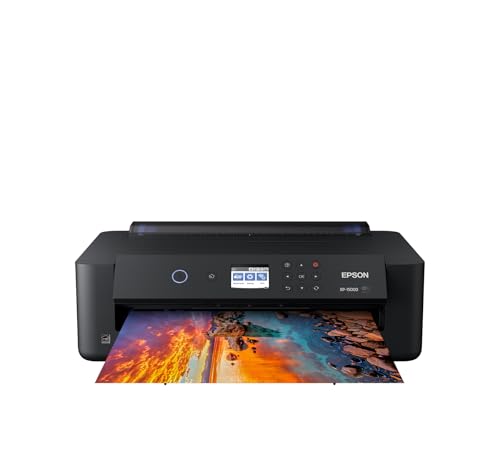
Epson Expression Photo HD XP-15000 — Wide-Format Overachiever
The XP-15000 approaches the snapshot from above. It is a wide-format photo printer, per its verified listing, built for enlargements and serious photographic output, and including it in a 6×4 guide serves the reader whose small-print question is actually the first step of a photography habit. For that reader, the snapshot is a proof: the same file checked at postcard size today becomes the framed enlargement next month, and a machine fluent at both scales lets the habit grow without a second purchase interrupting it.
At 6×4 itself, a machine of this class treats the size as light work, with colour machinery and paper handling designed for far more demanding output. The ownership costs are those of ambition: a larger body claiming real desk territory, a more elaborate ink system to feed, and capabilities that sit idle in households whose ambitions stay postcard-sized. Buying it purely for snapshots is buying a grand piano to play chopsticks, delightful if the recital is coming, wasteful if it is not.
So the guidance is biographical rather than technical. If your camera roll is becoming a portfolio, if the photography club, the exhibition wall or the framed gift is genuinely on your horizon, the XP-15000 turns this small-format purchase into the foundation of a photo practice. If none of that stirs, the SELPHY and the all-in-ones above will serve your snapshots with less desk, less upkeep and no guilt about unused grandeur.
The wide machine teaches one more lesson by its presence: paper becomes a creative decision at its level. Surfaces multiply, matte, gloss, fine-art textures, and the same file becomes different objects on different stocks, a discovery that re-enchants photographers who thought printing was a button. Even its 6×4 output benefits, because an owner who thinks in papers loads the snapshot with intention rather than with whatever sheet was nearest. Households ready for that conversation will find this machine a demanding, rewarding teacher.
Its snapshot output carries one subtle signature: headroom. A file printed at 6×4 from a machine built for enlargements arrives with its quality unstrained, and photographers proofing work for later enlargement can trust that what charms at postcard size was not flattered by the smallness.
- Method: wide-format inkjet photo printing
- Output range: enlargements down to everyday snapshots
- Functions: photo-focused, not a document all-in-one
- Footprint: large desk presence
- Ink system: multi-ink photo arrangement
Strengths
- Snapshot quality backed by serious photo machinery
- Grows with a photography habit toward enlargements
- Paper handling treats photo media as the main event
Trade-offs
- Far more machine than snapshots alone require
- Large footprint and elaborate ink upkeep
- No document all-in-one versatility
Best for: Photographers whose 6×4 prints are proofs on the way to enlargements and framed work.
Not suited for: Pure snapshot households with no enlargement ambitions.

Epson SureColor F170 — Sublimation for Makers
The F170 closes the list by following the word sublimation out of the photo lab and into the craft room. Its verified listing describes a dye-sublimation printer for standard sheet sizes, and its purpose is transfer: print a design in special inks onto transfer paper, then apply heat and pressure to move that image into polyester fabric, mugs, and other coated objects. A photograph printed this way is not a print to hold but an image waiting to become a shirt, a cushion or a team banner, which makes the F170 the right answer for a different question wearing similar words.
Including it protects two kinds of reader. The first is the snapshot seeker who meets sublimation while shopping and might buy transfer equipment expecting photographs, a mismatch this paragraph exists to prevent: the F170’s output on its own paper is an intermediate, not a keepsake. The second is the maker who arrived asking about small photo printers while actually dreaming of printed merchandise for a school fair, a sports club or a small shop. For that reader, this entry is the most important one in the guide, the signpost pointing at the technology their dream actually uses.
Judge it therefore as a beginning rather than a printer. Sublimation workflows include the heat press, the blanks, the learning curve of mirrors, temperatures and timing, and the F170 is the controlled, purpose-built entry into that workflow from a major maker. Households wanting photographs should choose above; households wanting their photographs on things should start here and budget for the press as the second half of the same idea.
The maker’s paragraph should end with the community this machine unlocks. Sublimation is a craft with fairs, clubs and small businesses attached, and the F170 is many owners’ first step from printing photographs of things to printing things themselves. A school team’s shirts, a club’s mugs, a market stall’s cushions: the object changes, and with it the meaning of the word print in that household. Readers who feel that tug while reading a photo printer guide have learned something true about their errand, and this entry exists to honour it.
For the maker, the honest budgeting note is that the printer is the smaller half of the craft’s cost; blanks, inks and the press itself write the rest of the ledger. Readers who enter with that ledger open-eyed tend to become the craft’s happiest citizens, building small product lines on a machine this guide filed, correctly, under beginnings.
- Method: dye-sublimation transfer printing
- Output: designs on transfer paper for heat application
- Sheet size: up to 8.5×11, per the verified listing
- Purpose: fabric and merchandise decoration
- Companion kit: heat press required to finish items
Strengths
- Purpose-built entry into sublimation crafting
- Backed by a major maker’s ecosystem of inks and media
- Turns photographs into wearable, sellable objects
Trade-offs
- Does not produce a finished photograph by itself
- Requires a heat press and blanks to complete anything
- Wrong tool entirely for albums and fridge doors
Best for: Makers and small sellers wanting images transferred onto fabric and objects.
Not suited for: Anyone whose goal is a photograph to hold, frame or post.
How do these 6×4 photo printers compare on method and manners?
| Pick | Type | Standout trait | Watch out for |
|---|---|---|---|
| Canon SELPHY CP1500 | Dye-sub dedicated | Sealed dye-sub snapshots, dry instantly | Small formats only |
| HP Envy Photo 7975 | Inkjet AIO | Photo talent inside a full AIO | Settings discipline decides quality |
| Canon PIXMA TS7720 | Inkjet AIO | Duplex all-rounder with photo competence | Generalist, not a specialist |
| HP Envy Inspire 7955e | Inkjet AIO | Dependable family snapshot ability | Occasional-photo positioning |
| Epson Expression Photo HD XP-15000 | Wide photo inkjet | Enlargement-class colour at any size | Oversized for snapshots alone |
| Epson SureColor F170 | Dye-sub transfer | Images destined for objects, not paper | Needs a heat press partner |
Method is the table’s honest axis. Dye-sublimation, in the SELPHY, produces the snapshot as a finished object with a sealed surface and a matched-pack cost rhythm, while every inkjet here produces the snapshot as one output among many, its quality riding on paper pairing and settings care. The F170 shares the SELPHY’s sublimation word but not its purpose, a distinction the table keeps visible because confusing transfer printing with photo printing is the most expensive misunderstanding available in this category.
Ask the table one question: what else, besides 6×4 photographs, must this purchase do? If the answer is nothing, the specialist wins and the comparison ends early. If the answer includes documents, copies or enlargements, the all-in-ones and the wide-format machine divide the territory by ambition, and the F170 waits for the reader whose real answer was merchandise all along.
One comparison the table flattens deserves air: setup weight. The SELPHY asks almost nothing of its owner across its whole life, while every inkjet here asks for the small ongoing attentions of its kind, and the wide-format Epson asks for the most of all. Households should price their own patience honestly alongside the machines, because a printer whose care rhythm matches its household gets used, and a printer that gets used is the only kind that produces albums.
What is the real difference between dye-sub and inkjet snapshots?
Hold both prints and the difference announces itself before any analysis. The dye-sublimation snapshot feels finished: dry the instant it emerges, glossy in a sealed way, resistant to the smudge of a thumbprint because its colour sits beneath a protective coat rather than on a surface. Its colour is built in continuous tones, each pass of the ribbon laying a transparent layer, so skies and skin graduate without the dot patterns that inkjet, however fine, uses to simulate the same smoothness. It is the closer relative of the traditional lab print, and the hand knows it.
The inkjet snapshot is a more variable object. On the right glossy paper with the right settings it is genuinely excellent, sharp and rich, and it can exceed the little dye-sub in fine detail. On the wrong paper or default settings it is dull and dark, and even at its best it wants a minute of drying respect before stacking or album sleeves. Its compensating glory is range: the same machine prints documents, larger photographs and the household’s whole paper life. Choose dye-sub for the object, inkjet for the repertoire, and do not let anyone sell you either as the other.
How do you get a phone photo to print well at 6×4?
Start by respecting the crop. Phone photographs are usually taller in proportion than the 6×4 frame, so something must give: either the printer crops the ends automatically or you choose the crop yourself in the app. Choosing yourself takes ten seconds and saves the tops of heads and the feet of monuments, the two casualties of automatic cropping in every family album. Where the app offers a fit or fill choice, fill suits most snapshots; fit preserves everything at the price of white borders that some households honestly prefer.
Then check the unglamorous settings that decide quality: the paper type named in the driver must match the paper physically loaded, the quality setting should be the photo option rather than the draft the machine uses for text, and borderless should be selected deliberately for full-bleed snapshots. Brightness deserves one adjustment, because prints reflect light while screens emit it, and a photograph that glows perfectly on a phone often prints a touch dark. A slight brightening, learned from one test print and then habitual, is the cheapest quality upgrade in home photo printing.
Which paper should you keep in the house?
For dye-sublimation, the answer is decided for you, and that is part of the charm: the matched pack pairs paper and ribbon in exact quantities, so the household stocks packs the way it stocks batteries, counting prints remaining at a glance. Keep one spare pack beyond the current one and the joyful burst, the birthday, the visiting cousins, never dies at print nineteen of twenty with the shops closed.
For inkjet snapshots, keep one good glossy 6×4 pack as the household standard and resist the drawer of half-used experiments. Paper and settings form a learned partnership: once a family knows how its chosen paper behaves, every print becomes predictable, while rotating papers resets the learning each time. Store the pack flat, in its wrapper, away from the printer’s warm exhaust and the kitchen’s steam, handle sheets by their edges, and load only what a session needs so the rest never gathers dust that prints as white specks.
When should a household own both kinds of machine?
More often than minimalists admit. The classic two-machine household pairs a document all-in-one, bought for work and school, with a SELPHY bought for joy, and each machine is better at its life than any single compromise would be. The trigger for the second purchase is usually a season of evidence: the all-in-one’s photo settings keep being wrong, the snapshot occasions keep arriving, and the family realises the photographs are not a feature of their printing but half of its meaning.
The reverse journey happens too, where a beloved snapshot specialist exposes the need for a document machine when home working arrives. Either way, the lesson of this guide is that 6×4 printing is a distinct household function with its own best tool, and households serve it best by naming it, whether they assign it to a dedicated corner of the shelf or to a well-configured all-in-one that has earned the role.
How should you store and display 6×4 prints so they survive?
Prints die by light, damp and enthusiasm, in that order. Albums and boxes kept in living spaces, neither attic-hot nor cellar-damp, preserve ordinary snapshots for the decades families actually need. Sleeves and album pages should be ordinary photo-safe stock from reputable makers, and the fridge door, for all its glory, should be understood as a rotating exhibition rather than an archive, since kitchen light and steam age whatever they display. Print two of the precious ones: one for the door, one for the dark.
Write on the back, in pencil, while you still remember: names, place, year. The unlabelled snapshot is a riddle bequeathed to grandchildren, and the ten seconds of pencil at printing time are the cheapest archival act in photography. Dye-sub’s sealed back and inkjet’s paper back both accept pencil gracefully, which is one more argument for printing at home, where the labelling happens in the same minute as the memory.
What settings make the biggest difference at snapshot size?
After paper type, which the earlier sections crowned, comes the quiet tyranny of the colour profile. Screens and printers speak different colour dialects, and the driver’s photo mode exists to translate between them. Printing a photo through a document mode is asking for a translation by someone who does not speak either language, and the dull results get blamed on hardware with metronomic regularity. Find the photo mode once, save it as the household preset beside the document preset, and teach the family the two buttons’ names.
Resolution anxiety, by contrast, deserves demotion. Modern phone files carry ample detail for the 6×4 frame, and the visible enemies at this size are darkness, crop and paper mismatch, not pixel counts. Owners who spend their attention on those three, in that order, produce snapshots indistinguishable in the hand from laboratory work, which is the only comparison the format has ever really asked for.
How do you build a family habit of printing photographs?
Habits beat intentions, so attach printing to a rhythm the household already keeps. A Sunday-evening ten minutes, phones out, each person choosing one photograph from the week, produces a year of fifty small prints per person without a single heroic session, and it keeps inkjet nozzles exercised as a side effect. The prints go straight into the album, the envelope to grandparents or the fridge rotation, and the album, growing weekly, becomes the household’s argument for its own habit, visible proof that the camera roll’s thousands have a curated, touchable essence.
Lower every threshold the habit meets. Paper loaded or one step away, the preset saved under a name a child can find, the machine living where the family lives rather than exiled to a study that requires an expedition. The SELPHY’s entire design philosophy is threshold removal, and all-in-one households should imitate it deliberately: a photo tray habit, a labelled paper pack at the machine’s elbow, a shortcut on the home screen. Friction, not quality, is what actually kills home printing, and friction is a design problem the household controls completely.
Finally, give the prints destinations, because destinations pull production. An album with empty sleeves, a grandparent expecting an envelope monthly, a wall frame that rotates with the seasons, a child’s project folder: each destination is a small promise that keeps the printer in the family’s weekly story. The households that print for years are never the ones with the finest equipment; they are the ones whose prints have somewhere to be, and building those somewheres is the real purchase this guide is quietly recommending alongside any machine.
One practical footnote for the album keepers: interleave the years. An album that mixes this year’s prints in strict sequence is a diary, but an album that occasionally places a grandparent’s reprinted childhood beside a grandchild’s new snapshot becomes a conversation across generations, and the all-in-ones above, which can copy the old while printing the new, are quietly built for exactly that interleaving. The snapshot’s deepest household function is not decoration but continuity, paper evidence that the family is one story told across many cameras, and a printer that serves both directions of that story earns its shelf twice over.
And when the album fills, start the second one without ceremony, because the habit matters more than the binding. Families who treat albums as cheap, ongoing and unfinished print more freely than families saving their prints for a perfect volume that never gets bought.
What mistakes turn good photo files into disappointing prints?
Printing photographs on plain paper with document settings is the error behind most disappointed households. The machine gets blamed, the category gets abandoned, and the actual fault, a conversation between file and paper that never happened, goes undiagnosed. One deliberate test print with glossy media and photo settings rewrites the whole story.
Ignoring the crop is the second error. Automatic centre-cropping amputates heads, feet and the dog with democratic indifference, and the resulting prints get blamed on the printer’s quality rather than its framing. Ten seconds choosing the crop in the app is the difference between a snapshot and a near-snapshot.
Stacking fresh inkjet prints is the third error, small and corrosive. Ink that looks dry can still mark its neighbour in a pile, and albums assembled in haste carry the evidence for years. Give inkjet snapshots their minute, and let dye-sub’s sealed finish remind you why its owners seem so relaxed.
Buying transfer equipment for photographs, or photo equipment for merchandise, is the fourth error, and the most expensive one available here. Sublimation transfer and snapshot printing share vocabulary and nothing else. Read the F170 and SELPHY entries side by side before money moves, and be certain which finished object you actually want to hold.
The final error is letting the photo printer starve. Machines that print rarely and irregularly, especially inkjets, repay neglect with clogged nozzles and faded first attempts. A household rhythm, a small print run every week or two, keeps ink moving and skills fresh, and turns the printer from an appliance of occasions into a habit of record.
Choosing a machine for the photographs you admire online, rather than the photographs your household takes, is a subtler error worth its own paragraph. Online snapshots are lit, curated and printed by enthusiasts; household snapshots are birthday candles, school corridors and dogs at speed. Every machine in this guide handles the household kind honourably, and buyers who audition with their own worst, dearest files, not with test images, choose the machine their real album needs.
Final Recommendation
Let the household’s diary decide. If photographs are the point and documents live elsewhere, the SELPHY CP1500 is the purest answer this category offers, a small machine doing one beloved thing with a sealed, dry, lab-like print every time. If photographs share a shelf with the household’s paperwork, either Envy or the PIXMA will serve both lives honourably, given glossy paper and thirty seconds of settings respect, and the XP-15000 waits for the household whose snapshots are growing into art.
Whichever machine arrives, print something small this week and put it where life happens, a fridge, a wallet, a classroom wall. The best 6×4 printer is not the one with the finest dots or the cleverest ribbon; it is the one that turns a camera roll’s quiet thousands into a handful of prints people actually touch.
Choose the machine, by all means, but choose the rhythm too: one small printing habit, weekly and social, will do more for your family’s photographs than any specification compared in this guide. The printers above are ready when you are, and the camera roll is already full of their first year of work.
Frequently Asked Questions
Is 6×4 the same as 4×6?
Yes, the same postcard format described from opposite sides, like a door measured by height or width depending on habit. Paper packs and printer presets may use either label, and a pack marked 4×6 is the correct stock for a guide titled 6×4. What matters is choosing the matching borderless preset so the image fills the sheet as intended.
Do dye-sub prints last as well as inkjet prints?
Both technologies produce prints that serve albums and frames for many years under ordinary indoor conditions, and the dye-sub’s protective overcoat gives it a particular resilience against handling, moisture spots and fingerprints in daily life. For most households the deciding factors are handling feel and workflow rather than longevity, since both outlast the shoebox they will live in.
Can I print 6×4 photos from my phone without a computer?
Yes, and for most households that is the main workflow. Every machine in this guide connects wirelessly or is built for direct phone printing, and the makers’ apps handle cropping, borderless selection and paper settings. The ten seconds spent choosing the crop in the app remain the owner’s job, and they are worth it.
Why do my home photo prints look darker than my screen?
Screens shine light at your eyes while prints reflect the room’s light back, so the same image almost always reads darker on paper. A slight brightness lift before printing, saved as your household habit after one test print, corrects most of the gap. Paper type mismatch exaggerates the problem, since the driver lays ink for the surface it believes is loaded.
What is the cheapest way to print lots of snapshots?
Structurally, match the technology to the rhythm. Matched dye-sub packs make heavy, bursty snapshot printing predictable, with every print costing the same slice of a pack. Inkjet spreads costs across a machine that also prints everything else, which suits steady mixed use. Either way, printing at home wins on immediacy and control; the honest comparison is against your household’s pattern, not a universal number.
Can I print snapshots at home for a school project tonight?
Yes, and this is the scenario home snapshot printing was born for. A dedicated SELPHY makes it a ten-minute errand including the choosing; an all-in-one makes it a short session of loading glossy stock and selecting the photo preset. Either way the project leaves the house with real prints in the morning, which is precisely the household superpower this entire category sells.
Related Guides
Snapshot printing neighbours the wider photo printer guides on this site, including large-format and sheet-size roundups. best 11×17 photo printers best 13 x 19 professional printers best 8 5 x 11 photo printers


