What's inside
- Key Takeaways
- Quick Picks: Best 4K Vlogging Cameras
- How We Chose These Picks
- Comparison Table
- What Should a Vlogging Camera Actually Be Judged On?
- What Changes After Six Months of Publishing?
- Which Vlogging Camera Fits Your Kind of Channel?
- What Mistakes Do Buyers Keep Making Here?
- Final Recommendation
- Frequently Asked Questions
- Related Guides
As an Amazon Associate I earn from qualifying purchases. This post may contain affiliate links at no extra cost to you.
gizmoverdict.com is reader-supported. When you buy through links on our site, we may earn an affiliate commission.
Where to buy: each linked camera below goes to its Amazon listing, where you can check exactly what the bundle includes — body only, kit lens, grip or cards — because vlogging cameras are sold in more configurations than almost any other category.
The best 4k vlogging cameras share a spec sheet and almost nothing else. A flip screen, a 4K badge and a microphone input appear on cameras that behave completely differently once you press record: one overheats politely after twenty minutes of 4K, another crops its frame so tightly your arm disappears, a third focuses on your face with a reliability that feels like hiring a camera operator. Vlogging is a performance recorded alone, usually in imperfect light, usually while walking, talking and thinking about something else — so the camera’s real job is to remove friction, and that is the standard this guide applies.
Six cameras make the list, spanning the three shapes vlogging hardware takes. Two Sony compacts with 1-inch sensors put everything in a coat pocket. A Canon compact with a fast lens joins them, sold here as a renewed bundle and described neutrally as such. Then the interchangeable-lens machines take over: Sony’s APS-C a6700 for creators who want one camera for stills and serious video, and the full-frame ZV-E1 for low-light and cinematic depth. A Panasonic travel zoom closes the list for vloggers whose trips matter more than their studio. Heat limits, microphone options and screen design are treated as headline features throughout, because on a vlog they are.
Key Takeaways
- Heat is the hidden recording limit on compact 4K cameras: several picks here will stop a long 4K take to protect themselves, so long-form creators should plan around clips, not lectures.
- A microphone input changes a vlog more than a resolution bump — voices recorded at the collar beat voices recorded at arm’s length on every camera in this list.
- Flip screens come in two philosophies: fully articulating screens that swing out for tripod work, and tilt designs that stay centred; your shooting style decides which annoys you less.
- The compacts win on absence — no lens decisions, no bag, no setup — while the mirrorless picks win on growth, low light and the ability to fix a weakness by changing one part.
- One pick, the Canon G7 X Mark III, is sold as a renewed bundle in the verified listing; the camera underneath is the same model reviewers praised, described here without new-stock promises.
Quick Picks: Best 4K Vlogging Cameras
| Pick | Badge | Why it earns its place |
|---|---|---|
| Sony ZV-1 II | Best vlogging compact for most creators | An 18-50mm-equivalent lens that finally frames arm’s-length shots properly, face autofocus you can ignore, and a pocketable 1-inch body. |
| Sony ZV-1 | Best value Sony vlogging compact | The original creator compact: 24-70mm lens, superb autofocus and the same 1-inch image quality, for creators watching the budget. |
| Sony ZV-E1 | Best full-frame vlogging camera | A 12.1MP full-frame sensor in a creator body: extraordinary low-light video, cinematic depth, and E-mount lenses for years of growth. |
| Sony Alpha a6700 | Best hybrid for stills and serious video | 26MP APS-C stills, oversampled 4K video, log profiles with LUT handling and a viewfinder — one camera for the whole channel. |
| Canon PowerShot G7 X Mark III (Renewed Bundle) | Best Canon compact — renewed bundle, stated plainly | The vlogger-loved 1-inch Canon with a fast f/1.8 lens and clean Canon colour, sold here as a renewed bundle with grip and card. |
| Panasonic LUMIX ZS99 | Best travel-zoom vlogging companion | A 24-720mm lens in a pocket body: the vlogging camera for travellers who need reach no wide compact can offer. |
How We Chose These Picks
Each camera was judged as a one-person production crew. Autofocus had to track a face that turns, gestures and occasionally walks out of frame without hunting in a way viewers can see. Stabilisation had to survive walking footage, because a vlog that swims makes audiences seasick regardless of resolution. Audio paths were mapped in full: the quality of the built-in microphones, whether a 3.5mm input exists for a proper lavalier or shotgun, and whether the hot shoe accepts a digital microphone that needs no cable. A camera failing two of those three tests did not make the list, whatever its sensor promised.
Recording endurance was checked with equal suspicion. Compact bodies trap heat, and several excellent vlogging compacts protect themselves by ending long 4K sessions early — a limitation stated plainly in each review rather than buried. We also weighed the unglamorous logistics: battery life per charge, whether the camera charges over USB while filming, card speeds that 4K bitrates demand, and how the camera behaves as a webcam, because most vloggers now stream or record podcasts with the same body. The ranking that follows is therefore six different balances of pocketability, endurance and image quality, not six rungs of one ladder. Finally, and without exception across all six finalists gathered together here,, every camera here was required to make a beginner’s second month easier than their first: menus that stop intimidating, settings that stay where they were left, and results that improve as technique improves rather than plateauing at the camera’s ceiling within a season of uploads.

Sony ZV-1 II — Best vlogging compact for most creators
The ZV-1 II exists because Sony listened to the one complaint every original ZV-1 owner shared: the lens was not wide enough. The 18-50mm-equivalent zoom on this second generation frames an arm’s-length vlog with room for the room — your kitchen, your street, your co-presenter’s shoulder — instead of cropping the world to your face and a sliver of background. For the walking, talking, gesturing reality of vlogging, that wider view is worth more than any processing trick, and it is the main reason this camera tops the list.
The rest of the package serves the same philosophy of disappearance. The 1-inch sensor delivers the low-light quality and background separation that phones imitate and compacts genuinely have. Face and eye autofocus hold on while you move, the flip screen frames from any angle, and the built-in microphone array with its windscreen handles quiet streets respectably until you add a proper microphone through the shoe or the input. Product showcase focus modes serve review channels by snapping to held objects and back to faces without a menu dive.
The honest limits are the compact limits. Long 4K takes in warm rooms will eventually meet the thermal ceiling shared by this class, and the fixed lens means the 50mm end is your longest reach forever. Battery life asks for spares on a full filming day. None of that dents the recommendation for its intended creator: someone whose channel is their life, filmed in clips, in real places, on the move.
Six months in, ZV-1 II owners tend to develop one habit that explains the camera’s retention rate: it lives on a tiny grip by the door, charged, card formatted, ready to leave the house in the same motion as keys. That readiness is a feature no benchmark measures. The wide lens also changes how owners film other people — interviews and family moments stop looking like interrogations shot from too close, because the frame finally includes the setting that gives a conversation its context.
- 20.1MP 1-inch stacked sensor
- 18-50mm equivalent f/1.8-4 zoom
- 4K video with face and eye autofocus
- Fully articulating touchscreen
- Microphone input and multi-interface shoe
Strengths
- Lens finally wide enough for real vlogging
- Autofocus trustworthy enough to forget
- Pocketable without giving up a big sensor
Trade-offs
- Thermal limits on long warm 4K takes
- Fixed lens caps your framing options
- Small battery wants spares on long days
Best for: life vloggers, reviewers and solo creators filming in clips, indoors and out, who want the camera to vanish.
Not suited for: long-form lecturers recording hour-long 4K takes, or creators planning a lens collection.

Sony ZV-1 — Best value Sony vlogging compact
The original ZV-1 remains the easiest recommendation in this category for a creator counting money carefully. Its 24-70mm-equivalent lens is tighter than its successor’s — you will hold it further away or accept a closer frame — but everything that made the line famous is intact: the 1-inch sensor’s clean 4K, autofocus that finds eyes and stays there, a proper flip screen, and a built-in microphone arrangement that embarrassed rivals at launch and still holds up in quiet spaces.
Where the ZV-1 earns lasting affection is reliability of outcome. Skin tones please without grading, the product-showcase focus behaviour serves unboxings and reviews, and the camera’s small size means it genuinely travels — in a jacket, in a handbag, on a mini tripod in a café corner. Channels are built on cameras that get carried, and the ZV-1’s second-hand and discounted presence makes it the most carried creator camera of its generation for good reason.
Buy it with its limits in view. The narrower lens asks for a small grip or selfie stick to frame comfortably at arm’s length, the thermal ceiling on long 4K sessions applies here too, and there is no viewfinder for bright-day stills. For a new channel, those are acceptable trades against the money saved for a microphone and a light — the two purchases that will improve your videos more than the newer body would.
The second-hand depth around the ZV-1 is a quiet advantage: cases, grips, windscreens and spare batteries circulate cheaply, and every filming problem you will ever meet has already been solved publicly by another owner. For a first channel, that community knowledge functions like a support contract. Buy the camera, spend the savings on a lavalier microphone and a small light, and your production value will embarrass creators who spent the whole budget on a newer body and filmed in the dark with its built-in microphone.
- 20.1MP 1-inch sensor, 24-70mm equivalent lens
- 4K HDR video recording
- Real-time eye autofocus and tracking
- Flip screen for self-framing
- Built-in directional microphone with windscreen
Strengths
- Creator-proven image quality for the money
- Autofocus among the best in any compact
- Huge accessory and advice ecosystem
Trade-offs
- Lens tighter than ideal at arm’s length
- Long 4K takes meet thermal limits
- No electronic viewfinder for bright days
Best for: new and budget-conscious creators who want proven 4K quality and autofocus without system-camera costs.
Not suited for: creators who film wide scenes in small rooms, where the tighter lens will fight them daily.
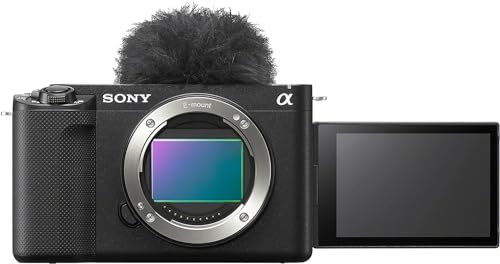
Sony ZV-E1 — Best full-frame vlogging camera
The ZV-E1 is what happens when a manufacturer stops adapting stills cameras for video creators and designs for them directly, around a full-frame sensor chosen for video first. Its 12.1MP sensor reads out fast, drinks light in evening streets and dim interiors where smaller sensors smear, and delivers the shallow depth that makes a talking head look like a film still. 4K recording up to 60p, serious log profiles and in-body stabilisation complete a package aimed squarely at creators whose aesthetic ambitions outgrew compact cameras.
Because it is an E-mount body, the ZV-E1 is also a beginning rather than a destination. The lens catalogue available to it is the deepest in this guide — wide vlogging zooms, fast primes for night work, specialist glass for every desk distance — and the creator-focused controls, product modes and AI-assisted framing features carry over from Sony’s compact line into this larger body. A channel can grow inside this mount for a decade without the body becoming the ceiling.
The costs are the honest full-frame costs. Lenses that do the sensor justice are larger and pricier than the body suggests, the shallow depth that flatters also punishes focus sloppiness when you move through frame, and determined 4K recording in heat still deserves respect rather than bravado. This is not the camera for a beginner’s first upload. It is the camera a successful channel buys when its look becomes its brand.
Owners stepping up to the ZV-E1 usually describe the same adjustment week: footage suddenly looks expensive, and every other part of the production — the room, the light, the audio — has to rise to meet it. Budget for that rise. A fast wide prime is the natural first lens for vlogging, and the camera’s low-light gift is wasted in rooms lit like offices. Treat the body as the anchor of a look you are deliberately building, and its price reorganises itself from extravagance into infrastructure.
- 12.1MP full-frame Exmor R sensor
- 4K video up to 60p, high-quality log profiles
- 5-axis in-body stabilisation
- E-mount interchangeable lenses
- AI processing unit for subject recognition
Strengths
- Low-light video nothing smaller here matches
- Cinematic depth with fast full-frame lenses
- Creator features in a serious body
Trade-offs
- Lens costs exceed the body cost quickly
- Shallow depth demands autofocus discipline
- Overkill for bright, casual channels
Best for: established creators filming in low light and cinematic styles who will invest in E-mount lenses.
Not suited for: beginners, minimalists, or anyone whose filming happens in good light at arm’s length.

Sony Alpha a6700 — Best hybrid for stills and serious video
The a6700 is the pick for creators who refuse to choose between a photography camera and a video camera. Its 26MP APS-C sensor shoots stills worthy of the thumbnails, prints and product photography a channel constantly needs, then turns around and records oversampled 4K video with the log profiles and LUT handling that colour-graders actually ask for. A proper electronic viewfinder — absent from every compact here — makes it a complete photographer’s tool as well as a vlogging body.
Video creators get the grown-up details: strong subject-recognition autofocus inherited from Sony’s flagship line, 4K at high frame rates for slow motion, and a body with the thermal mass and weather sealing to work longer and rougher than compacts dare. The flip screen serves vlogging and desk work, and the E-mount lens range at APS-C prices is broad enough to cover a channel from wide car vlogs to compressed interview framing without exotic spending.
It asks more of its owner than any compact: menus to learn, lenses to choose, a workflow to build. Creators who want to press record and think about content should look at the ZV-1 II instead. Creators who see the camera as a craft — and whose channels mix travel films, product reviews and photography — will find the a6700 the longest-lived purchase in this guide.
The a6700 rewards a particular discipline: build two saved setups, one for vlogging and one for stills, and the hybrid promise becomes real instead of theoretical. Its owners also tend to become the friend who shoots everyone’s thumbnails and product photos, because the stills side is genuinely that capable. If your channel’s growth plan includes photography-led platforms alongside video, this is the only pick whose second talent is a headline act rather than a bonus feature.
- 26MP APS-C sensor, stills and video hybrid
- 4K video with log profiles and LUT support
- AI-based subject recognition autofocus
- Electronic viewfinder and flip screen
- Weather-sealed magnesium body
Strengths
- Genuine stills camera as well as video body
- Grading-ready video with oversampled 4K
- Lens ecosystem at APS-C prices
Trade-offs
- Learning curve the compacts never impose
- Kit grows heavier with every lens added
- No built-in flash for casual stills
Best for: hybrid creators shooting photos and graded video who want one body to grow with for years.
Not suited for: press-record minimalists or pocket-only filmmakers.

Canon PowerShot G7 X Mark III (Renewed Bundle) — Best Canon compact — renewed bundle, stated plainly
The G7 X Mark III earned its vlogging reputation the slow way: creators carried it for years because its combination of a bright f/1.8-2.8 lens, a 1-inch sensor and Canon’s flattering colour made people look good with zero grading effort. That reputation is the camera’s, and it survives the listing format. The verified listing here is a renewed bundle — an inspected, restored camera packaged with a 64GB card, a stabilising grip and software by the seller — and this review describes the camera neutrally on those terms rather than pretending it left a factory yesterday.
In use, the Canon’s virtues are tactile and immediate. It is small enough to be the camera that is simply always there, the lens is fast enough for evening streets and restaurant light, and the tilting touchscreen frames overhead and low shots gracefully even though it does not swing out to the side like the Sonys. Live-streaming support built into the model suits creators who broadcast from the same camera they vlog with, and the microphone input — a feature this class often omits — lets your audio grow up without replacing the body.
The caveats pair with the format. Renewed stock means inspecting the camera on arrival, confirming the bundle contents against the listing, and using the return window if anything disappoints. The model’s 4K recording shares the compact class’s thermal modesty on long takes. Judged fairly — a proven creator compact, honestly sourced — it remains the Canon loyalist’s answer in a Sony-heavy category.
A practical routine for renewed purchases applies here with unusual force: film a structured test in the first days — focus at both lens ends, a warm 4K clip, the touchscreen across its range, every bundled accessory accounted for — while the return window is wide open. Renewed cameras that pass a deliberate first week almost always settle into ordinary, reliable service. The grip in this bundle also matters more than it looks; the G7 X body is smooth, and the grip turns one-handed filming from a juggle into a habit.
- 20.1MP 1-inch stacked sensor
- 24-100mm equivalent f/1.8-2.8 lens
- 4K video and live-streaming support
- Microphone input for external audio
- Renewed unit bundled with card, grip and software
Strengths
- Fast lens flatters low-light vlogging
- Canon colour needs no grading to please
- Microphone input rare among compacts
Trade-offs
- Renewed stock — inspect on arrival
- Screen tilts rather than fully articulating
- Thermal limits on extended 4K recording
Best for: Canon-preferring creators who want the proven compact and are comfortable buying renewed with checks.
Not suited for: buyers who need factory-new stock or side-flip screens for tripod framing.

Panasonic LUMIX ZS99 — Best travel-zoom vlogging companion
Every other camera in this guide frames the world from wide to short-telephoto. The ZS99 rewrites that assumption with a 24-720mm-equivalent lens — thirty times zoom — in a body that still fits a jacket pocket. For travel vloggers that range is a storytelling tool: compress a mountain ridge at dawn, isolate a street performer across a square, film wildlife without approaching it, then swing back to 24mm for the arm’s-length piece to camera. No interchangeable-lens creator rig this portable covers that span.
The trade is sensor size, stated openly. The ZS99’s smaller sensor cannot match the 1-inch compacts for low-light cleanliness or background separation, and its 4K serves bright travel days better than candlelit interiors. Panasonic counters with the practical travel kit: a tilting screen for self-framing, 4K photo modes that rescue stills from video bursts, and a body cheap enough — in worry terms — to take places a full-frame rig would never be risked. Travel footage is made of access, and this camera’s access is unmatched here.
Choose it when your channel’s subject is the world rather than your room. City guides, festival coverage, safari and coastline stories all feed on reach. Studio-bound creators should spend the same money on light and the bigger sensors above; wanderers will find the ZS99 the only pick that matches how they actually film.
ZS99 owners learn to film like hunters rather than portraitists: brace against walls at long zoom, shoot short bursts, and let the enormous range do the approaching that their feet cannot. The camera also moonlights as the family stills camera on trips where a phone’s digital zoom would dissolve into mush — the optical reach is as decisive for photographs as for video. Pack a slim case and a wrist strap; a camera this small and this capable gets carried everywhere, which is rather the point.
- 30x optical zoom, 24-720mm equivalent lens
- 4K video recording and 4K photo modes
- Compact pocketable travel body
- Tilting touchscreen for self-framing
- Optical image stabilisation for long-zoom shots
Strengths
- Zoom range nothing else here approaches
- Truly pocketable despite the reach
- Made for daylight travel storytelling
Trade-offs
- Smaller sensor trails 1-inch rivals at night
- Less background blur for talking heads
- Stabilisation works hardest at full zoom
Best for: travel creators whose stories need distant subjects framed from a pocket camera.
Not suited for: low-light indoor channels or blur-chasing portrait styles.
Comparison Table
| Pick | Defining traits |
|---|---|
| Sony ZV-1 II | 1-inch compact, 18-50mm lens, creator-first controls — the reference vlogging compact. |
| Sony ZV-1 | The original 1-inch creator compact — narrower lens, same dependable core. |
| Sony ZV-E1 | Full-frame 12.1MP creator body — the image-quality ceiling of this list. |
| Sony Alpha a6700 | 26MP APS-C hybrid — the system camera for creators who also photograph. |
| Canon PowerShot G7 X Mark III (Renewed Bundle) | 1-inch Canon compact, renewed bundle — the colour-first alternative. |
| Panasonic LUMIX ZS99 | 24-720mm travel zoom — the reach pick for vloggers who roam. |
What Should a Vlogging Camera Actually Be Judged On?
Marketing leads with resolution because resolution fits on a box. Creators who publish weekly judge differently, and the five tests below are the ones that decide whether a camera survives a year of uploads.
Heat and the twenty-minute question
Ask of any compact vlogging camera not whether it records 4K, but for how long, at what frame rate, in a warm room. Small bodies cannot shed the heat a 4K sensor generates, so manufacturers choose between larger bodies, lower bitrates or thermal cut-offs. For clip-based vlogging — thirty seconds here, two minutes there — a cut-off never appears in practice. For a creator filming forty-minute tutorials in one take, it is the single most important specification on the page, more decisive than dynamic range or colour science. Match the camera’s thermal honesty to your take length before anything else.
The screen you will actually frame with
A vlogging screen must do three jobs: show you the frame, show you the focus, and stay readable in daylight at arm’s length. Fully articulating screens swing to the side, which suits tripod filming and product shots but puts your eyeline slightly off-lens when you glance at it. Tilt-up screens keep the display centred above the camera, better for natural eyeline, worse for low and high angles. Neither is superior in the abstract; vloggers who mostly talk to a tripod and vloggers who mostly walk and talk will honestly prefer different designs, and both appear in the picks below.
Audio paths, mapped before purchase
Draw your audio chain on paper. Built-in microphones on the better compacts are genuinely usable for quiet rooms and hopeless beside traffic. A 3.5mm input opens the door to lavalier microphones that follow your voice anywhere and shotgun microphones that reject room echo. A digital hot-shoe connection removes cables entirely on cameras that support it. Then check the headphone question — several vlogging compacts omit a headphone jack, meaning you discover a dead microphone battery only when you review the footage. Creators who cannot monitor audio should build a ritual of test clips before every real take.
Stabilisation is three different features wearing one name
Optical stabilisation steadies the lens, in-body stabilisation shifts the sensor, and electronic stabilisation crops the frame to smooth what remains. Each costs something: crop factors that widen your needed lens, warping at frame edges, or reduced low-light grace. For walking vlogs, the practical test is simple — footage at your normal pace should look like a gentle glide, not a boat deck. The picks below describe which combination each camera uses and what it sacrifices, because a stabilisation figure without its crop penalty is half a specification.
The lens question compacts answer for you
A fixed-lens compact makes one decision permanently: its zoom range and aperture are your creative boundaries forever. The best vlogging compacts choose a range that flatters the job — wide enough for arm’s-length framing, bright enough for indoor light. Mirrorless cameras postpone the decision and charge you for the privilege in money, weight and choice paralysis. Neither answer is wrong, but they suit different creators: the compact serves the person who wants to think about content, the system camera serves the person who enjoys thinking about equipment. Know which person you are before the checkout.
Batteries, cards and the unglamorous kit list
A vlogging kit fails on logistics more often than on optics. Budget for spare batteries — small compacts especially sip rather than gulp their cells — and for cards fast enough for the 4K modes you will actually use, since a card that stalls a recording costs a take, not a statistic. USB charging while filming rescues long sessions and travel days. A small grip or mini tripod changes handheld footage more than a sensor upgrade does. The reviews below flag each camera’s appetite in these areas so the true cost of ownership is visible before the first upload.
Rent or borrow before the big body
The jump from compact to system camera changes your filming life in ways specifications cannot preview: bag weight, lens decisions, setup time before every take. Creators considering the a6700 or ZV-E1 should borrow, rent or borrow-again for one full filming week — not a shop test — and count how many clips the bigger rig discouraged as honestly as how many it elevated. If the count surprises you, the compact was the right camera all along, and knowing that before purchase is the cheapest wisdom in this guide.
What Changes After Six Months of Publishing?
Launch-day impressions fade. What follows is the ownership layer creators report once a camera has survived a season of deadlines, travel and neglect.
Autofocus trust is earned in bad rooms
Every camera here focuses beautifully in a bright test scene. Trust forms later, in the dim restaurant, the backlit doorway and the moment you hold a product between yourself and the lens and need the camera to choose correctly without being asked twice. Creators learn their camera’s habits — which face it prefers in a group, how it behaves when you glance away — and shoot around them so automatically they forget the learning happened. When you read the reviews below, weigh the autofocus descriptions against your worst room, not your best one, because that is where your channel actually lives.
The camera you carry beats the camera you own
A pattern repeats across creator careers: the technically superior camera stays home on the day something filmable happens, while the compact in the coat captures the clip the channel needed. Portability is not a convenience feature; it is a content strategy. This is the deepest argument for the 1-inch compacts in this guide, and the reason several large-channel creators keep one beside a full mirrorless rig. Judge each pick by where it will physically spend its days — bag, pocket, desk, or shelf — because that address predicts your archive better than any benchmark.
Colour workflow decides your evenings
Two creators with the same camera can spend wildly different evenings. One shoots a pleasing profile straight out of camera and uploads within the hour; the other shoots a flat log profile for grading flexibility and owes every clip a colour session before it can publish. Neither is wrong, but the second workflow must be chosen deliberately, not drifted into because a specification sounded professional. The a6700 and ZV-E1 reward graders with serious log options; the compacts reward publishers with finished-looking footage. Match the camera to the evening you actually want to spend.
Lenses are a subscription you pay in attention
Interchangeable-lens cameras keep asking questions: a wider lens for the car, a brighter lens for the evening, a quieter lens for the library. Each answer improves the channel and taxes the creator’s money and mind. Fixed-lens compacts ask nothing, which is why their owners often publish more. The honest middle path many creators settle on is one system body with exactly two lenses — a wide vlogging zoom and one bright prime — and a rule against a third. If that discipline sounds miserable rather than liberating, the compacts are telling you something about yourself worth hearing before you spend.
Your second camera matters sooner than you think
Channels develop a B-camera need early: a second angle for interviews, a backup when the main body is charging, a sacrificial camera for the kayak. The picks in this guide pair naturally — a ZV-1 as the pocket companion to an a6700 rig, the ZS99 as the travel understudy — and thinking about the pairing at purchase time prevents the colour-matching headaches of mixing brands later. You do not need to buy two cameras today. You need to avoid buying the first one in a way that makes the second one awkward.
Resale and longevity reward the boring choices
Creator cameras live hard lives and still hold value surprisingly well when they are mainstream models with healthy accessory ecosystems. The Sonys in this list benefit from deep lens and microphone ecosystems that keep them useful as B-cameras long after an upgrade. The renewed Canon makes the same point from the other direction: a discontinued favourite remains desirable enough to sustain a refurbishment market. Buying the camera a community already loves is rarely a financial mistake, even when a newer specification tempts you elsewhere.
Sound design is the upgrade nobody films
Watch any successful vlog with the picture off and a pattern emerges: the voice is close, dry and consistent, while the world supplies texture underneath. Creators achieve that with microphone placement, not camera choice — a lavalier under a collar, a shotgun just out of frame, a room treated with the soft furnishings it already owns. Every camera in this guide can record that voice well once the microphone is near it, and none can rescue a voice recorded across a tiled kitchen. When a budget forces a sequence, the order is microphone, then light, then camera, and the creators who follow it look professional a full upgrade cycle earlier.
Vertical, square and the frame you did not plan
Channels no longer publish in one shape. A take framed perfectly for a wide upload may crop brutally for vertical shorts, decapitating gestures and captions alike. Cameras with open-gate or flexible framing modes ease this, but the deeper fix is compositional: keep the subject centred with headroom, keep important action out of the edges, and let the crops fall where they may. When you test a pick from this list, record one take and export it in both shapes before deciding the framing feels right — your future shorts editor is also you.
The desk behind the camera matters
Audiences forgive a modest camera in a considered room and punish an expensive camera in a chaotic one. The background of a talking-head vlog is a set whether you design it or not: a shelf with intent, a plant, a practical lamp, and depth between you and the wall all read as production value at any sensor size. Several picks here — the compacts especially — are often bought to escape a disappointing room, when an afternoon of rearranging would have outperformed the purchase. Film a test in your actual space before blaming the camera you already own.
Which Vlogging Camera Fits Your Kind of Channel?
Channels differ more than cameras do, so here is the shortlist re-read through the formats that dominate creator platforms.
The daily life vlogger who films everywhere
Your camera lives in a jacket, films in kitchens, cars and cafés, and must never be the reason a moment went unrecorded. The Sony ZV-1 II is built for exactly this life: wide lens for arm’s-length framing, autofocus you can forget, and a body that asks nothing of you between clips. The original ZV-1 serves the same life on a tighter budget. What you give up is long-take endurance and lens flexibility; what you gain is a channel that publishes because filming never felt like an event.
The tutorial and review creator at a desk
Your camera sits on a tripod, faces a desk, and records long, deliberate takes under controlled light. Heat limits matter to you more than pocketability, and so does a screen that frames product shots and a microphone input for a proper desk setup. The Sony a6700 is your natural home: APS-C depth, serious video features, lens choices for every desk distance, and the stills quality to shoot your own thumbnails. Compacts will frustrate you by autumn; a system camera grows with the channel’s ambitions.
The travel creator who walks cities
You film while moving through places you may never revisit, in light you cannot schedule. Stabilisation and a useful zoom range outweigh studio refinements, and the Panasonic ZS99’s long lens lets you compress a skyline or isolate a detail no wide compact can reach. Pair it with disciplined clip lengths to respect compact heat limits, and carry the spare battery like a passport. If your travel films lean cinematic and low-light, the full-frame ZV-E1 argues its case instead — at a weight and cost that must survive your own packing list.
The streamer who also vlogs
Your camera doubles as a webcam, sits for hours, and needs clean output, dependable power and audio you can monitor. Mirrorless picks pull ahead here: the a6700 and ZV-E1 both serve streaming duties with the lens ecosystems to frame a room properly, and dummy-battery or USB power options end the battery clock that hangs over long broadcasts. Compacts can stream, but their heat behaviour across a three-hour session is a gamble this format should not take. Choose the body that treats your longest broadcast as a normal Tuesday.
The educator filming courses and workshops
Your takes are long, your room is fixed, and your audience pays for clarity rather than cinema. Prioritise the a6700’s endurance and lens discipline, light the desk once and properly, and let a proper microphone live permanently in the setup so recording a lesson costs you ninety seconds of preparation. Compacts tempt with price and punish with heat across a two-hour workshop; the system body’s boring reliability is the entire product here, and it is worth every gram of its extra weight.
What Mistakes Do Buyers Keep Making Here?
Buying 4K and uploading a badly lit 1080p-looking video
Viewers judge light and audio long before resolution. A vlog filmed against a bright window with the camera exposing for the sky looks amateur at any pixel count, while a well-lit 4K take from a modest compact looks professional. Before upgrading bodies, face a window or a soft light source, get the microphone closer, and lock exposure on your face. The creators who grow fastest usually improve their light a full year before they improve their camera, and their older footage shows exactly why.
Ignoring the crop hiding inside stabilisation and 4K modes
Several beloved vlogging specs quietly narrow your frame: electronic stabilisation crops, some 4K modes crop, and the two together can turn a wide lens into a portrait lens that cuts off your gesturing hands. Buyers discover this on their first walking take. Read each review’s framing notes, test the exact mode you plan to publish in, and frame with the crop rather than against it. A camera whose widest honest frame fits your arm and your background is worth more than a sharper camera that amputates both.
Recording long takes on a compact without a heat plan
The thermal cut-off never arrives during your test clips; it arrives at minute twenty-six of the interview you cannot reshoot. Creators who love compacts and long formats survive by working with the limit: film in segments with natural breaks, keep the camera out of direct sun, open the screen away from the body, and let it cool while you record a voice-over on your phone. Or accept the honest answer — a bigger body — and buy the mirrorless pick. What fails is hoping the limit was exaggerated. It was not.
Treating renewed and bundle listings as identical to new stock
The Canon G7 X Mark III in this guide comes through a renewed bundle listing: a checked, restored camera with accessories gathered by the seller. That can be sensible value, and it can also mean the grip, card and software in the box vary from what a factory kit would include. Read what the specific listing contains, confirm the return route, and judge the camera on its own merits — which are considerable — rather than assuming either the worst or the factory-fresh best. Neutral expectations, verified contents, no surprises.
Filming everything at the highest frame rate
High frame rates are for slow motion, not for talking. A creator who records ordinary conversation at maximum settings buys larger files, hotter cameras, faster cards and longer uploads in exchange for literally nothing the viewer can see. Settle on the frame rate your platform and region call standard, reserve the fast modes for the moments you intend to slow down, and watch battery life, heat headroom and storage pressure all improve at once. Restraint is a production skill.
Judging a vlogging camera by its stills specifications
Megapixel counts and burst rates sell cameras to photographers and mean almost nothing to a person filming themselves in a kitchen. A 26MP sensor and a 12MP sensor both produce superb 4K; what separates vlogging bodies is autofocus behaviour on faces, screen design, heat, audio paths and how the camera feels at arm’s length at minute forty of a filming day. Buyers who rank this category by stills numbers reliably purchase the wrong strengths and discover the missing ones on their first real shoot. Rank by the filming day, not the datasheet.
Final Recommendation
Most creators reading this guide should start with the Sony ZV-1 II: it is the camera that disappears, and a vlogging camera’s highest virtue is being forgotten while you talk. Creators who know they will outgrow a fixed lens should skip a step and buy the a6700, while the ZV-E1 waits for those whose films live in low light and shallow depth. The G7 X Mark III remains a fine compact bought with clear eyes about its renewed listing, and the ZS99 serves travellers whose stories need reach. Buy the camera whose limits you will never meet, not the one whose brochure you most enjoyed.
Your audience will never see your spec sheet — they will see whether you kept filming, in focus, in good light, with a voice they can hear, and that is the only ranking that has ever built a channel. One last discipline ties the list together: whichever body you choose, film your first ten uploads before judging it, because every camera in this guide has a learning curve measured in published videos rather than in specifications, and the creators who thrive are the ones who let the work, not the unboxing, form the verdict.
Frequently Asked Questions
How long can compact cameras record 4K before overheating?
It varies by model, mode and room temperature, which is precisely why this guide treats it as a per-camera question rather than a category promise. Compact bodies recording their highest-quality 4K modes in warm conditions commonly protect themselves somewhere in the twenty-to-forty-minute region, while cooler rooms, lower frame rates and shorter bursts extend that considerably. Mirrorless bodies with larger housings and, in the a6700’s class, more thermal mass run longer but are not immune during marathon sessions in direct sun. Film a full-length test in your real room before any take that cannot be repeated.
Do I need a microphone input for vlogging?
For quiet, close, indoor talking you can begin with the better built-in microphones in this list and publish respectable audio today. The input becomes necessary the moment your filming moves outdoors, into echoing rooms, or further than arm’s length from the camera — all normal vlogging territory. A modest lavalier microphone transforms intelligibility more than any camera upgrade at the same money. If you expect your channel to leave the desk, treat the input as required equipment and let it eliminate otherwise tempting cameras.
Is full-frame worth it for a vlog?
For most vloggers, no; for a specific kind, emphatically yes. Full-frame buys low-light cleanliness and shallow depth that APS-C and 1-inch sensors cannot fully imitate, and the ZV-E1 packages that in a body designed for creators rather than adapted from a stills camera. The costs are real: lenses grow larger and pricier, and the depth that looks cinematic also makes focus less forgiving when you move. If your films live in daylight and bright rooms, the smaller formats spend your money better. If they live at dusk, in bars and in mood, full-frame earns its keep.
What does renewed mean for the Canon G7 X Mark III listing?
Renewed describes stock that has been inspected, tested and restored for resale rather than shipped new from the factory, typically with a seller or programme guarantee standing behind it. The camera’s capabilities are those of the G7 X Mark III itself — a bright 1-inch compact long favoured by vloggers. What varies is the box: the verified listing here bundles the camera with a memory card, a stabilising grip and software, gathered by the seller. Check the listing’s own description and returns terms at purchase, and the arrangement is a reasonable route to a discontinued favourite.
Can these cameras replace a webcam for streaming?
The mirrorless picks can, properly and for long sessions, with clean output and continuous power options. The compacts are better treated as occasional streamers: they produce a lovely image for a meeting or a short broadcast, but heat across hours of continuous use is their known weakness, and a mid-stream shutdown is a professional embarrassment no image quality excuses. Dedicated streamers should also weigh a simple capture setup and room light, because at streaming bitrates the audience sees your lighting far more clearly than your sensor size.
Which memory cards do 4K vlogging cameras need?
Follow the camera’s own requirement for its highest modes rather than a generic rule: high-bitrate 4K recording demands fast, sustained write speeds, and a card that manages stills happily can still stall a video take. Buy cards rated for video work in the capacity that covers your longest filming day with room to spare, format them in the camera, and treat a second card as essential kit rather than an accessory. Card failures are rare and unforgettable; redundancy is the cheapest insurance in the whole bag.
Should beginners start with a compact or a phone upgrade path?
A phone you already own is a legitimate first camera, and this guide exists for the moment it starts limiting you: overheating on long takes, autofocus that will not hold a face, audio with no input for a proper microphone, and a lens fixed at one unflattering distance. The compacts here remove exactly those limits in one purchase. If your phone still films everything you ask of it, spend first on a microphone and light, and let this list wait — the right time to buy a vlogging camera is when you can name the specific shot your current gear cannot get.
Related Guides
Round out your creator kit with our neighbouring guides: best microphones for YouTube beginners, best ring lights and video lights for home studios and best laptops for video editing.


