What's inside
- Key Takeaways
- Quick Picks
- How Did We Choose Phones for the Class That Used to Be Normal?
- Why Did “Compact” Move to Six Inches?
- How Do the Six Compare for the One-Handed Life?
- How Should You Set Up a Compact Phone to Punch Above Its Size?
- What Mistakes Do Compact-Phone Buyers Make?
- Final Recommendation
- What Does a Compact Phone Change About an Ordinary Day?
- A Second, Slower Look at Each of the Six
- Which Compact Pick Suits Which Kind of Owner?
- How Do You Verify a Renewed Compact Phone in Its First Week?
- What About Cases, Grips and the Accessories That Undo Compactness?
- Frequently Asked Questions
- Related Guides
As an Amazon Associate I earn from qualifying purchases. This post may contain affiliate links at no extra cost to you.
gizmoverdict.com is reader-supported. When you buy through links on our site, we may earn an affiliate commission.
Where to buy: Four of the six phones below are renewed listings, and each is labelled as such in its heading, its table row and its spec box. One pick — the ASUS Zenfone 10 — is an international GSM-only version with no CDMA support, and that limitation is stated wherever it appears. Every link comes from this site’s verified pool, and every screen size printed here is the manufacturer’s real figure.
There was a time, not long ago, when the best 6-inch smartphones were simply called smartphones. A six-inch screen was the large option, the phablet’s opening bid. Then the industry spent a decade inflating, and the meaning of the number quietly inverted: today the six-inch class — honestly, the band from about 5.9 to 6.3 inches — is where compact phones live. These are the handsets for people who still believe a phone should be operable with one hand, should vanish into a pocket, and should not require a grip strategy. If that belief sounds like yours, this guide was written for you, with the sizes printed truthfully and the compromises named.
Let us be precise about the band, because precision is the courtesy this category owes its readers. Our six picks measure: 6.3 inches for the Pixel 9, 6.2 for the Galaxy S24 and the Pixel 8, 6.1 for the iPhone 16 and the iPhone 13, and 5.9 for the Zenfone 10 — the only phone here that dips below six, included because it is the most committed compact flagship of its generation and because its fans search this category by name. None is exactly 6.0 inches, because essentially nothing is; the class is a neighbourhood, and we would rather show you its real map than pretend otherwise.
What do you surrender at this size, and what do you refuse to? The honest surrender list is short: some video immersion, some split-screen comfort, a little typing sprawl. The refusal list is the story of this guide — modern compact phones no longer ask you to give up flagship cameras, bright OLED screens, water resistance, wireless charging or years of software support. Four of these six are full flagships of their generations, bought here mostly through renewed listings because that is how recent compact flagships are sold now. The other two — a new Pixel 9 and the specialist Zenfone — complete a line-up in which “small” has stopped meaning “lesser.”
Our Top Picks
Key Takeaways
- The six-inch class, roughly 5.9 to 6.3 inches, is where genuinely one-handed phones now live.
- True sizes are printed for every pick; none is exactly 6.0 inches, and the Zenfone 10’s 5.9 inches is labelled, not hidden.
- Four picks are renewed units — Galaxy S24, iPhone 16, Pixel 8 and iPhone 13 — and are flagged throughout.
- The Zenfone 10 is an international GSM-only model with no CDMA support; carrier fit must be checked.
- Compact no longer means compromised: flagship cameras, OLED screens and long support all appear in this band.
- The trade that remains is spatial — video scale, split-screen room and typing sprawl — not capability.
Quick Picks
| Pick | True size | Badge | Why it earns its place |
|---|---|---|---|
| Google Pixel 9 | 6.3 inches | New compact flagship | The band’s largest and newest option, sealed in the box, with Google’s camera intelligence. |
| Samsung Galaxy S24 (Renewed) | 6.2 inches | Renewed Android flagship | Samsung’s compact flagship formula at refurbished economics, with years of support left. |
| Apple iPhone 16 (Renewed) | 6.1 inches | Apple’s current compact | The mainstream iPhone in its hand-friendly size, renewed, with the class’s video benchmark aboard. |
| ASUS Zenfone 10 | 5.9 inches | The true compact | The smallest serious flagship here — an international GSM-only model, so read its network note. |
| Google Pixel 8 (Renewed) | 6.2 inches | Renewed Pixel value | Google’s camera and seven-year support story bought through a refurbished US listing. |
| Apple iPhone 13 (Renewed) | 6.1 inches | Proven iPhone value | The most familiar iPhone of its era, renewed, still swift and still supported. |
How Did We Choose Phones for the Class That Used to Be Normal?
We set two gates. First, the hand test in spirit: every pick must be genuinely usable one-handed by an average adult — reachable across the screen, secure in a walking grip, pocketable without negotiation. That gate is what exiles the 6.5-inch crowd to their own guide and keeps this one honest. Second, no capability apologies: each phone had to bring a flagship-grade camera, a quality OLED display and a support runway measured in years, because the modern compact buyer is not a budget buyer wearing smaller gloves — they are a full-spec buyer who happens to have a hand.
Within those gates we spread the six across both operating systems — four Android designs from Google, Samsung and ASUS against two iPhones — so the guide serves a hand size rather than a tribe. Condition demanded the usual transparency: four renewed listings, each flagged, each chosen partly because its model line retains years of updates, which is what makes refurbished flagships rational. And the Zenfone’s international status earned it the guide’s clearest warning label, because a compact phone that cannot join your network is a paperweight with excellent ergonomics.
Why Did “Compact” Move to Six Inches?
Because everything around the phone grew. Apps assumed more canvas, cameras added lenses that needed body volume, batteries swelled to feed brighter screens, and the small-phone buyer kept being offered the same compromise: accept last year’s insides in this year’s small shell. The market’s answer, visible in this guide, is that the definition of small simply migrated. A 6.1-inch iPhone today has a larger screen than the “Plus” phones of a decade ago, in a body that is barely bigger, thanks to bezels that all but vanished. The compact experience survived; only its number changed.
This matters practically because it resets expectations. Shopping the six-inch class no longer means hunting a niche device from a stubborn specialist — though the Zenfone 10 proudly remains one — but choosing among the mainstream flagships of Apple, Samsung and Google in their standard sizes. The standard iPhone is a compact phone now. The standard Galaxy S is a compact phone now. Recognising that turns a frustrating search for a dying category into a pleasant one among the best-selling handsets on earth, several of which appear above in renewed form at friendly economics.

Google Pixel 9 — 6.3 inches, the new flagship of the band
The Pixel 9 is the largest phone in this guide and the only one that arrives factory-new, and it uses its 6.3 inches to make the compact case at flagship strength. Google’s Actua OLED is bright and colour-faithful, the Tensor-powered camera system produces the stills and video that Pixel owners evangelise about, and the seven-year update commitment starts at zero with this sealed, unlocked 128GB listing. One-handed, it is the band’s stretch — most hands will manage it, smaller hands will notice the top corner — but in exchange it is also the band’s most complete all-round phone, the one that asks the fewest questions of its owner.
Daily life on the Pixel 9 is defined by Google’s small mercies: call screening that strangles spam, transcription that turns voicemail into reading, photo tools that rescue the shot you actually took. Its battery covers a full day without theatre, its charging is adequate rather than rapid, and its size keeps it honest in pockets that the 6.5-inch crowd has abandoned. If your definition of compact stretches to 6.3 — and for many buyers it turns out to, once the phone is in the hand rather than on a chart — this is the guide’s most straightforward recommendation.
- Display: 6.3-inch OLED, bright and smooth
- Storage: 128GB
- Condition: factory-new, unlocked
- Camera: Google’s computational system, stills and video
- Support: seven years of updates from new
Strengths
- The most complete new phone here, with no inspection ritual attached.
- Camera intelligence that flatters ordinary moments reliably.
- The longest fresh support runway in the guide.
Trade-offs
- The band’s biggest body; true one-handed reach is a stretch for small hands.
- Charging pace trails the fastest compact rivals.
- Tensor power favours smart features over gaming muscle.
Best for: buyers who want the newest flagship that still respects a pocket. Not suited for: the smallest hands, or anyone set on a sub-6.2-inch phone.

Samsung Galaxy S24 (Renewed) — 6.2 inches, renewed flagship
The Galaxy S24 is the compact Android flagship in its purest recent form: a 6.2-inch body that feels tailored rather than shrunk, a bright and excellent AMOLED display, a triple-camera system with a real telephoto — rare at this size — and Samsung’s seven-year support promise, most of which remains on this renewed US-version listing. It is the phone for the buyer who looked at giant Galaxies for years and kept asking why the good one could not simply be this size. It can, and through a refurbished listing it arrives at economics the original launch never offered.
The renewed terms are the familiar ones — verify battery health and cosmetics in the first week — and the phone repays the small effort with flagship manners: fast performance, water resistance, wireless charging, and a camera that handles everything from documents to distant stages. Its 128GB storage in this listing asks for a light offload habit if you film often. Among the renewed four here, the S24 is the Android centre of gravity: current enough to feel modern for years, proven enough that nothing about it is a surprise.
- Display: 6.2-inch AMOLED, among the brightest in class
- Storage: this listing is the 128GB configuration
- Condition: renewed US listing — refurbished unit, sold as renewed
- Cameras: triple system including telephoto
- Support: years of Samsung’s seven-year window remaining
Strengths
- A true flagship camera set, telephoto included, at a compact size.
- Long remaining support makes the renewed maths strongly favourable.
- Refined, water-resistant body that feels premium in one hand.
Trade-offs
- Renewed battery health varies by unit and must be checked early.
- 128GB is snug for heavy video habits.
- One generation behind the newest Galaxy in raw headroom.
Best for: Android buyers who want the complete flagship experience at hand-friendly size and renewed value. Not suited for: sealed-box purists or maximum-storage shoppers.

Apple iPhone 16 (Renewed) — 6.1 inches, Apple’s current compact
The standard iPhone is the world’s most successful compact phone, a sentence that would have baffled the industry a decade ago and is now simply arithmetic. At 6.1 inches, this renewed iPhone 16 carries Apple’s A18 chip, the camera system whose 4K video is the class benchmark, the Action button and Camera Control of its generation, and an OLED display that does everything asked of it beautifully. For the enormous population whose digital life already lives in Apple’s ecosystem, this is not a compromise pick — it is the default, renewed.
Its renewed status deserves the usual clear sentence: a refurbished unit, battery and cosmetics to be verified in week one, in exchange for current-generation Apple hardware at a friendlier figure than the sealed box. The iPhone’s particular ownership virtues compound quietly — the deepest accessory market in the guide, the longest software support culture, resale values that forgive indecision. Its 128GB storage in this listing is the constraint to plan around if you film heavily. For one-handed life inside Apple’s world, nothing else in this guide is really competing with it.
- Display: 6.1-inch OLED
- Storage: 128GB as listed
- Condition: renewed — a refurbished unit rather than factory-new stock
- Video: 4K recording that benchmarks the class
- Platform: Apple A18, long iOS runway
Strengths
- The most polished one-handed flagship experience for Apple households.
- Video and camera consistency that rivals envy openly.
- An accessory and support ecosystem without equal.
Trade-offs
- Renewed unit — battery health is a first-week verification, not a given.
- 128GB fills under a serious filming habit.
- Apple’s refresh-rate ceiling on the standard model trails Android rivals.
Best for: iPhone households who want the current generation in the size that fits a hand. Not suited for: Android households, or anyone unwilling to manage storage.

ASUS Zenfone 10 — 5.9 inches, international GSM-only
The Zenfone 10 is the compact flagship as a matter of principle. At 5.9 inches it is the only phone in this guide that a truly small hand can dominate completely, and ASUS built it without the usual small-phone apologies: a flagship Snapdragon chip of its generation, a smooth and bright display, a gimbal-stabilised main camera, a headphone jack — a deliberate anachronism its fans adore — and battery life that embarrassed larger rivals. It is the connoisseur’s pick, the phone compact loyalists name when they say the industry abandoned them, because ASUS demonstrably did not.
Now the warning, in the plainest terms this guide can manage: this listing is the international version, GSM unlocked, and it does not support CDMA. Its band coverage is built for global GSM networks rather than the full US carrier picture, so American buyers must verify their specific carrier and bands with real care — on some networks it will serve happily, on others it is the wrong purchase entirely, and no amount of ergonomic charm compensates for a phone that cannot join your network. Buy it as an informed specialist, for a GSM situation you have checked, and it is a jewel. Buy it casually and it is a lesson.
- Display: 5.9 inches — the smallest here, below six
- Storage: 256GB with 8GB RAM in this listing
- Origin: international version, GSM unlocked — NO CDMA support
- Camera: gimbal-stabilised main camera
- Extras: 3.5mm headphone jack, rare at any size
Strengths
- The only true one-hand-dominant flagship in the guide.
- Flagship performance and battery life without size apologies.
- A headphone jack and a cult following that maintains real knowledge.
Trade-offs
- International GSM-only model — US carrier fit must be verified, CDMA excluded.
- ASUS’s update window is shorter than Google’s or Samsung’s.
- Accessory and repair ecosystems are the thinnest here.
Best for: committed compact purists on verified GSM networks who prize the smallest serious phone. Not suited for: CDMA-dependent buyers or anyone who skips the band check.

Google Pixel 8 (Renewed) — 6.2 inches, renewed Pixel value
The Pixel 8 is the value mathematician’s compact: a renewed US-version listing of Google’s previous flagship, carrying the camera intelligence and the seven-year support commitment that define modern Pixels, at refurbished economics that undercut everything else with a comparable camera. At 6.2 inches it sits in the band’s sweet middle — fully one-handable for most, generous enough for video — and its Tensor-powered features, from call screening to photo unblur, remain the daily-use magic that benchmark charts cannot see.
Its renewed checklist is the standard one, with a Pixel-specific emphasis: check the battery in week one, because this generation’s stamina was good rather than legendary when new. In return you get a phone whose software future is longer than many new budget phones sold today, whose camera still wins family-photo comparisons against newer midrange hardware, and whose size respects the hand that holds it. For a buyer who wants Google’s brain and camera without the Pixel 9’s newer-phone figure, this renewed listing is the guide’s quiet bargain.
- Display: 6.2-inch OLED with smooth refresh
- Storage: 128GB in this listing
- Condition: renewed — US version, refurbished, not factory-new
- Camera: Google computational photography
- Support: seven-year commitment with years remaining
Strengths
- Flagship camera intelligence at the friendliest economics here.
- Long remaining support for a refurbished purchase.
- A size that splits the band’s difference gracefully.
Trade-offs
- Renewed battery condition is the unit-level variable to verify.
- Charging is leisurely beside faster rivals.
- Performance is a generation behind the Pixel 9.
Best for: value-led buyers who want Google’s camera and updates in a true compact. Not suited for: buyers who want the newest chip or a sealed box.
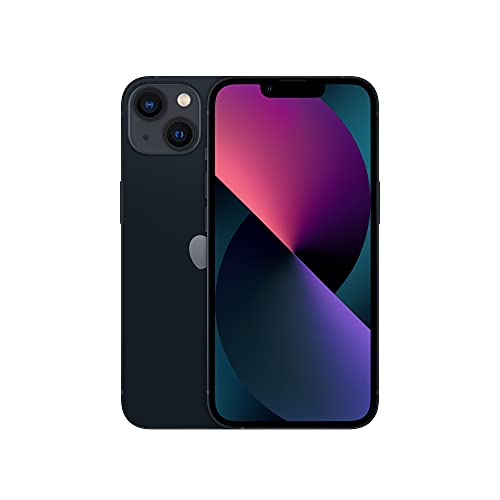
Apple iPhone 13 (Renewed) — 6.1 inches, proven iPhone value
The iPhone 13 might be the most owned phone shape of the decade, and this renewed listing in Midnight is the guide’s invitation to buy that proven formula at its friendliest economics. Its 6.1-inch OLED, its still-swift performance, its dual cameras with sensor-shift stabilisation and Cinematic mode video — all of it remains genuinely good, and Apple’s support culture means this older model continues to receive the current iOS and years of security care. For a teenager’s first iPhone, a parent’s upgrade from something ancient, or a spare that is far too good to call a spare, the renewed 13 is the low-risk answer.
Age imposes its honest notes. The notch-era design and Lightning port belong to an earlier Apple chapter — your newer cables will not fit, and the display’s refresh rate is the standard pace rather than the smooth flagship cadence. Battery health on a renewed unit of this age is the single most important check in this entire guide; a good unit delights, a tired one teaches. Buy from the listing knowing that, test in week one, and the iPhone 13 remains what it has been since launch: the sensible iPhone, now at a sensible refurbished figure.
- Display: 6.1-inch OLED, notch-era design
- Storage: 128GB in this listing
- Condition: sold renewed — refurbished handset, not a sealed unit
- Connector: Lightning — older Apple cables apply
- Support: still receiving current iOS and security updates
Strengths
- A proven, familiar flagship formula at refurbished economics.
- Performance and cameras that remain honestly good today.
- Apple’s support longevity keeps it safe and current.
Trade-offs
- Battery wear is the key risk on a renewed unit of this age — check it first.
- Lightning port and standard-refresh display date the design.
- No USB-C, no always-on display, none of the newer Apple furniture.
Best for: first iPhones, family hand-me-downs in reverse, and value-led Apple buyers. Not suited for: anyone who wants USB-C or the current design language.
How Do the Six Compare for the One-Handed Life?
| Pick | True size | Condition / origin | One-hand verdict | Defining strength |
|---|---|---|---|---|
| Pixel 9 | 6.3 in | New | Manageable stretch | Newest complete flagship |
| Galaxy S24 | 6.2 in | Renewed, US | Comfortable | Telephoto at compact size |
| iPhone 16 | 6.1 in | Renewed | Comfortable | Video benchmark, ecosystem |
| Zenfone 10 | 5.9 in | New, intl GSM-only | Total dominance | Smallest serious flagship |
| Pixel 8 | 6.2 in | Renewed, US | Comfortable | Camera value with support |
| iPhone 13 | 6.1 in | Renewed | Comfortable | Proven iPhone economics |
Read down the one-hand column and the band’s internal geography appears: the Zenfone alone promises total dominance, the 6.1-to-6.2 group promises comfort, and the Pixel 9 asks for a small stretch in exchange for being the newest complete package. None of these is a wrong answer — they are three honest definitions of compact, priced and conditioned differently.
How Should You Set Up a Compact Phone to Punch Above Its Size?
Begin by claiming the reachability features. On iPhones, Reachability slides the top of the screen down to your thumb; on the Pixels and Galaxy, one-handed mode does the same shrinking trick; on the Zenfone, ASUS built gesture shortcuts around the small body, including its clever side-sense touches. Spend one evening arranging the home screen for a thumb’s arc — daily apps low and toward your dominant side, folders for the rest — and the compact phone’s whole argument cashes out in comfort.
Then compensate for the canvas where it matters. Raise text size one notch if you read long documents, knowing the OLED panels here stay sharp; use picture-in-picture for video while messaging rather than split-screen, which is the mode this size class honestly does worst; and let voice dictation carry long messages, because every phone here transcribes well and a compact keyboard’s best feature is how rarely you must type on it. Add a slim, grippy case rather than armour — bulk is the one addition that can smuggle a compact phone back into two-handed territory.
What Mistakes Do Compact-Phone Buyers Make?
The first is shopping by nostalgia — hunting for the tiny phones of 2015 and rejecting the modern band for being “not really compact,” when the 6.1-inch phones here are smaller in the body than the 5.5-inch phones of that era. Judge the object, not the number’s history. The second is ignoring origin labels, and the Zenfone is this guide’s standing exhibit: an international GSM-only phone bought for a CDMA-dependent situation is a heartbreak that one careful minute prevents.
The third mistake belongs to renewed buyers who skip the battery check — on the iPhone 13 especially, where the model’s age makes unit variation the whole ballgame. The fourth is over-casing: wrapping a compact flagship in a rugged shell until it handles like the big phones its owner fled. And the last is assuming compact means settling — a belief the Pixel 9’s camera, the S24’s telephoto and the Zenfone’s flagship chip each refute from a different direction.
Final Recommendation
Let your hand arbitrate first and your ecosystem second. Apple households split between the renewed iPhone 16 for the current generation and the renewed iPhone 13 for proven value; Android households between the new Pixel 9 for the complete modern package, the renewed Galaxy S24 for the telephoto flagship, and the renewed Pixel 8 for the camera-led bargain. The Zenfone 10 stands apart for the verified-GSM purist who wants the smallest serious phone made in its era. Whichever you choose, you are buying back a one-handed life — and in a decade of ever-larger glass, that may be the most luxurious specification of all, because the best phone is the one that disappears into your day instead of rearranging it.
What Does a Compact Phone Change About an Ordinary Day?
More than its dimensions suggest, because a phone is handled hundreds of times a day and each handling is a tiny negotiation. A compact phone is answered one-handed while carrying a child, a coffee or a lead; it is checked on a crowded train without a grip change; it rides in a shirt pocket, a cycling jersey, the small pocket of a bag that larger phones have annexed as their own territory. Runners take it without an armband debate. Cooks glance at it with a floury thumb. The cumulative effect is a device that interrupts life less — which, for a growing number of buyers, is not a compromise they accept for the size but the entire reason for choosing it.
The costs appear in equally ordinary places. A recipe video propped across the kitchen is smaller. A spreadsheet pinch-zooms more often. A long article asks for more scrolling, and a film on a flight is a private pleasure rather than a shared one. None of these is hidden anywhere in this guide; they are the standing price of the one-handed life, and the six phones above were chosen because their owners consistently report the price feels fair. If your phone use is mostly media-first and two-handed anyway — desk, sofa, tray table — the larger classes will serve you better, and this guide’s honesty extends to saying so.
There is also a posture dividend nobody advertises. Smaller phones are used closer to the body with a relaxed wrist, while the largest slabs invite the two-handed hunch that physiotherapists have opinions about. We make no health claims here — only the observation that a phone your hand forgets is a phone your whole arm thanks you for by evening.
A Second, Slower Look at Each of the Six
Return to the Pixel 9 after the honeymoon and its size settles into a specific identity: it is the compact for people who do not think of themselves as compact people. Its 6.3 inches read as “normal phone” in every social situation, while its camera and software keep winning the moments that become family archives. Owners rarely praise its size at all — they praise everything else, which may be the deepest compliment a phone in this guide can earn.
The renewed Galaxy S24, a month in, reveals itself as the connoisseur’s renewed buy. Its telephoto — the feature compact phones historically sacrificed first — keeps being the reason a photo exists at all: the distant stage, the shy animal, the candid across the room. Renewed economics on a phone with this much flagship furniture and this many support years left is the closest thing this guide has to an arbitrage.
With the renewed iPhone 16, the second look is about invisibility of a different kind: it disappears into an ecosystem. The watch, the earbuds, the family sharing, the car — the compact iPhone is a node that never draws attention to itself, and its renewed status is forgotten by everyone except the bank account that benefited. Buyers who value that seamlessness will not be talked into an Android by any camera chart, and this guide does not try.
The Zenfone 10’s second look belongs to its faithful. A month of total one-handed dominance rewires expectations permanently; owners describe other phones the way tall people describe low doorways. Its community knowledge — which GSM situations it suits, which settings unlock its best battery — is deep precisely because the phone demands an informed owner. It is the only pick here that feels like joining something.
The renewed Pixel 8 settles into the role of the clever household’s second phone that keeps becoming the first. Its camera embarrasses newer hardware at family events, its support runway outlasts phones bought new beside it, and its size makes it the one that actually gets carried on walks. Value picks are supposed to feel like compromises by month two; this one feels like a tip someone shared with you.
And the renewed iPhone 13, revisited, is the guide’s lesson in sufficiency. Everything it lacks — USB-C, the smoothest refresh, the newest design — turns out to be absent from most owners’ daily complaints, while everything it has — speed, camera, support, familiarity — is present every hour. On a renewed unit with a healthy battery, it may be the most rational phone purchase in this entire document.
Which Compact Pick Suits Which Kind of Owner?
Picture the commuter who reads and messages through a standing journey, phone in one hand, rail in the other. Her shortlist is the Zenfone for total control or either iPhone for ecosystem calm, and her tiebreaker is the platform her life already runs on. Picture the parent who films school events from a folding chair and shares everything to a family chat before the lights come up: the Pixel 9’s camera and the iPhone 16’s video are her final, decided by which cloud her family already inhabits. Picture the professional whose phone is a work tool — documents, calls, a hotspot in a pinch — and who replaces phones when support ends rather than when fashion turns: the renewed S24 and renewed Pixel 8 are speaking directly to her, flagship furniture with years of runway at refurbished economics.
Notice, again, what is absent from every portrait: nobody chose by benchmark, and nobody regretted the screen size they tested honestly in the first week. The compact class rewards self-knowledge — about your hand, your network, your ecosystem — more reliably than any other corner of the phone market, which is why this guide spends so many words on fit and so few on crowning.
How Do You Verify a Renewed Compact Phone in Its First Week?
Four of these six phones arrive refurbished, so treat the first week as an audition with a script. Battery first: check the health figure where the system offers one, then live a normal day and judge the drain against your old phone’s memory of the same day. A healthy renewed flagship should feel unremarkable — remarkable is the warning. Screen second: display a plain white and a plain dark image in a dim room and look for uneven tint or burn-in ghosts, the refurbished screen’s two confessions. Cameras third: photograph something detailed in daylight and something dim in the evening, on every lens the phone has, and zoom into the corners.
Then the unglamorous systems: make a call from your weakest-signal room, charge from low and note anything oddly slow or hot, connect your car and your earbuds, and run the latest software update the phone offers. On the iPhone 13, add the Lightning port to the inspection — a pocket-worn connector is a known wear point on a phone of its age, and a cable that sits loosely is information. A unit that passes this week has effectively de-risked its discount; a unit that fails has done you the favour of failing early, while the return label is still free.
What About Cases, Grips and the Accessories That Undo Compactness?
The compact buyer’s accessory rule is subtraction: every millimetre and gram you add spends the very currency you bought the phone to save. Choose slim, textured cases that add grip without adding a frame; skip the wallet folios and armour shells unless your workplace genuinely demands them, in which case accept knowingly that your 6.1-inch phone now handles like a 6.5. Ring grips and pop sockets divide owners — they genuinely help one-handed reach on the 6.3-inch Pixel 9 and cost the phone its flat lie on a table — but they are removable experiments rather than commitments, and worth one try if your hand is small and your chosen phone is at the band’s top.
Charging accessories deserve a platform note: the two iPhones and the Android trio all live happily on modern USB-C or wireless pads — except the iPhone 13, whose Lightning port means keeping one older cable in the car and the kitchen drawer. It is a small tax, honestly stated in its section, and for many renewed-13 buyers it is the only daily reminder that their phone belongs to an earlier design chapter.
Frequently Asked Questions
Is any phone here exactly 6.0 inches?
No — the class is a neighbourhood. The six measure 6.3, 6.2, 6.1, 5.9, 6.2 and 6.1 inches, and each figure is printed wherever its phone appears rather than rounded to the category name.
Will the Zenfone 10 work on my US carrier?
Only if your situation is GSM and its bands fit — this is the international version with no CDMA support. Verify your carrier and bands before ordering; on the wrong network it will not serve, however charming its size.
Are the renewed flagships here risky?
They carry the standard renewed variable — battery health and cosmetics differ by unit — softened by long remaining support on the S24, both Pixels and the iPhone 16. Test in the first week; the iPhone 13 deserves the most careful battery check of the group.
Do compact phones have worse battery life?
Smaller bodies hold smaller cells, but efficient chips and modest screens close most of the gap; every pick here is a full-day phone for typical use. Heavy filming and gaming days will still end with a charger, as they do on phones of any size.
Which pick is best for small hands?
The Zenfone 10, if its GSM-only status fits your network — it is the only phone here a small hand can fully dominate. Otherwise the 6.1-inch iPhones are the most manageable mainstream option, with the Pixel 8 and S24 close behind.
Can these phones handle split-screen apps?
They run them, and for brief pairings — a video over a chat, a document beside notes — they suffice. Sustained split-screen work is the one task where the 6.5-inch class honestly wins, and heavy multitaskers should weigh that before choosing compact.
Is a compact phone a good choice for an older parent?
Often the best choice, with one setup caveat: enable the larger text and display-zoom options before handing it over, because the smaller canvas shows less per screen at big font sizes. The compensations are real — a phone a weaker grip can hold securely, that fits the pockets of the clothes they actually wear, and that the renewed iPhone 13 in particular makes familiar to anyone who has used an iPhone in the last decade.
Do these phones support wireless charging and water resistance?
The flagships among them, broadly yes — the iPhones, the Galaxy S24 and the Pixel 9 carry the water-resistance and wireless-charging furniture of their class, and the Pixel 8 keeps most of it. The Zenfone 10 is the minimalist of the group in this respect, trading some of that furniture for its size and its headphone jack. Check the exact model’s sheet for the feature you care about; none of it changes the size argument.
Will a compact phone feel like a downgrade from my big phone?
For the first three days, possibly — the canvas withdrawal is real, and most switchers report a short, honest adjustment. By the second week the one-handed ease has usually renegotiated the verdict, especially for people whose phone time is communication rather than cinema. If your usage is the reverse, believe this guide’s earlier warning and shop the larger class without guilt.
How long will the oldest pick here stay supported?
The iPhone 13 is the veteran of the group and still receives Apple’s current software, a testament to that company’s support culture; the renewed Pixel 8 carries a seven-year commitment from its launch with years left to run. In both cases the practical limit is more likely to be the individual unit’s battery than the software calendar — one more reason the first-week battery check anchors this guide’s renewed advice.
What is the single best test before committing to compact?
Borrow the size, not the phone: carry any handset in the 6.1-to-6.3 class for one ordinary weekend — your partner’s, a friend’s, a shop demo across a long browse — and run your real rituals on it. Messages on the move, a recipe, a map, a chapter of a book. Your hand will file its report without being asked, and every pick in this guide can be chosen confidently on the strength of it.
Does gaming suffer at this size?
Casual and mid-weight gaming, not at all — the chips in the Pixel 9, S24, iPhone 16 and Zenfone are flagship-grade, and their smaller screens are easier to drive, which can even help sustained performance. Dedicated mobile gamers who play competitively for hours are the exception who should shop larger: screen estate for controls and battery volume for marathons both live up the size ladder. Everyone else can treat gaming as a solved question in this class.
Why do renewed listings dominate this category?
Because compact flagships sell in enormous numbers when new and return to the market as refurbished stock in equally enormous numbers a season or two later — the iPhone and Galaxy standard sizes are among the best-selling phones on earth. That supply is the compact buyer’s good fortune: proven devices, deep accessory benches, and refurbished economics, provided the first-week checks in this guide are actually run.
What if my hands are large — is this class closed to me?
Not closed, but be honest about the typing. Large hands on a 6.1-inch keyboard produce a personal error rate that no autocorrect fully forgives, and the 6.3-inch Pixel 9 exists in this guide partly as your door. Many large-handed owners still choose compact for the pocket and the grip, accepting the keyboard as the tax; test it with a long message on a similar-sized phone before deciding which tax you would rather pay.
Are foldable phones the real future of compact?
They are a parallel future rather than this class’s replacement: a folding phone is compact in the pocket and enormous in the hand, which serves a different desire — the tablet that travels — at a different price and with a crease to accept. The six-inch slab remains the compact that is compact while you use it, and for the one-handed faithful that distinction is the whole faith.
A closing observation, offered without agenda: the buyers in this category are consistently the most satisfied owners in post-purchase surveys of phone shoppers generally — not because their phones are the most powerful, but because they chose by fit, and fit is felt every single hour. Choose your six inches the same way, by the hand and the week of testing, and the number on the category will have earned its keep.
Should I choose based on width rather than diagonal?
If you can find the figure, yes — width is the dimension your thumb actually negotiates, and two phones sharing a 6.2-inch diagonal can differ by a couple of millimetres across depending on aspect ratio and bezels. Manufacturers publish full dimensions, and the habit of checking width and weight alongside the diagonal will predict your comfort better than any single number. This guide prints the diagonal because it is the category’s language, but your hand speaks width.
What happens to my photos and apps when moving from a big phone?
Nothing dramatic — both ecosystems transfer completely, and the only visible change is layout: some apps show their compact arrangement, a few tablet-style two-pane views fold into one column. A handful of users find the simpler layouts a quiet relief. Your library, your messages and your habits all survive the shrink; only the stretch to the top corner disappears.
Is the Zenfone’s shorter support a deal-breaker?
For a buyer who keeps phones until support ends, it shortens the ownership runway compared with the Pixels and Galaxy here, and that should be priced into the decision. For the compact purist who upgrades on a shorter rhythm anyway, the Zenfone’s unmatched size and flagship manners outweigh the calendar. It is, like everything about that phone, a specialist’s calculation — made openly, with the network warning first.
Can a compact phone serve as my only computer-adjacent device?
For communication, media, documents and light creation, yes — these are full flagships, and paired with a Bluetooth keyboard for long writing they cover more of life than most owners expect. The honest boundary is sustained multi-window work and very large files, where a laptop or a larger screen remains the right tool. Most compact owners are not avoiding computers; they are simply refusing to carry a second one in their pocket.
What do I lose in camera terms by staying compact?
Less every year, and in this guide almost nothing: the S24 carries a real telephoto, the Pixel 9 and 8 carry Google’s flagship processing, the iPhone 16 carries the class’s video benchmark, and even the Zenfone stabilises its main camera with a gimbal. The historical compact tax — one lens, small sensor, apologies — has been repealed by computation. What remains is a screen-size tax on reviewing your shots, and the cure for that is the television or tablet you already own.
How do I stop a compact phone sliding out of small pockets?
The slim textured case recommended earlier does double duty here — friction is the whole solution, and glossy naked glass is the whole problem. Some owners add a fabric loop or a lanyard for active days; runners mostly solve it with the zip pocket that activewear provides. It is a charming problem, in its way: the large-phone class never asks it, because their owners are too busy negotiating the opposite.
Are software features like one-handed mode easy to find?
Yes, and worth the two minutes: search your settings for “one-handed” or “reachability” on any pick here and the toggle introduces itself. While you are there, enable the keyboard’s one-handed layout and the gesture for pulling the notification shade from the home screen rather than the top edge — three small switches that together convert a merely small phone into a genuinely one-handed one.
What should a first-time compact buyer expect in week one?
A brief, honest recalibration: more scrolling, smaller video, easier everything else. Most converts report the trade sealing itself the first time the phone is answered mid-staircase with a bag in the other hand. If by day seven the screen still feels like a cage rather than a relief, believe the evidence and exchange upward — the class is a preference, not a virtue, and this guide’s loyalty is to your hand’s verdict over its own title.
Do compact phones hold their value?
The mainstream ones do — the standard-size iPhones and Galaxies are the most liquid phones in the second-hand market precisely because everyone can use them, and the renewed listings in this guide are that liquidity working in your favour on the way in. The Zenfone is the exception that proves the rule: a thinner resale market, offset by a devoted one. Buy the phone for the years you will use it and resale becomes a pleasant footnote either way.
What is the best compact pick for photography walks?
The Pixel 9 if the walk is the day — its camera, its screen for reviewing, its battery for a long ramble. The Zenfone 10 if the walk is an hour stolen from other business, because it is the phone already in your pocket when the light turns. Photographers have a saying that the best camera is the one you have with you; this entire category is that saying, industrialised.
Can I use these phones with gloves or wet hands?
Touchscreens and gloves remain uneasy partners at every size, but compact phones help indirectly: a secure one-handed grip means the other hand can be the gloved one, and voice control on every pick here handles calls and messages without skin contact. Wet-hand use is similarly imperfect across the industry; the water-resistant flagships in this guide tolerate the conditions, even if the screen’s manners suffer while wet.
Do I need a screen protector more, or less, at this size?
Less urgently than the giants — a compact phone is dropped less often because it is gripped more surely, and it hides in pockets that do not eject it. A protector remains cheap insurance on any glass you own, renewed flagships included, but the size class itself is the first line of defence: the surest drop protection ever designed is a phone your hand never fumbles.
Is there a compact pick here for a teenager?
The renewed iPhone 13 is the household answer most families land on — familiar, supported, repairable everywhere, and priced by its renewed status at a level where a cracked screen is a bad week rather than a financial event. Android households make the same argument for the renewed Pixel 8, whose call screening alone earns parental gratitude. Either way, put the battery check and a real case at the top of the setup list.
What does “standard size flagship” mean for accessories?
Abundance. Because the standard iPhone and Galaxy sizes sell in the largest volumes on earth, their cases, mounts, lenses and docks exist in every style and at every price, in physical shops as well as online. The renewed picks inherit that abundance in full. Only the Zenfone asks its owner to shop online and plan ahead — the specialist’s familiar, acceptable tax.
Related Guides
And one last encouragement for the reader still hovering between classes: you are not choosing a phone size for the rest of your life, only for the life of one phone — and the renewed market that supplied half this guide will happily receive it back if your hand files a different report next time. Decide, test honestly for a week, and trust the evidence of your own days. Size neighbours live in best 6.5-inch smartphones, best small phones and best smartphones for one-handed use — each written, as this one was, with the sizes printed honestly and the reader’s hand treated as the final reviewer.
Related guides
- Best Canon Point and Shoot Digital Cameras: PowerShot Picks From Pocket Compacts to Travel Zooms
- Best Balancing Stabilizers for Mirrorless Cameras: Payload, Balancing and Native Vertical Shooting
- Best Basic Phones Camera Buyers Can Trust: Flip Phones and Simple Handsets That Still Take a Photograph
- Best Sony Full Frame Cameras for Astrophotography: Sensitivity vs Resolution


