What's inside
- Key Takeaways
- Quick Picks
- How Did We Judge Phones Against a Frame This Small?
- What Does Life at This Budget Actually Look Like?
- How Do the Six Routes Compare?
- How Do You Shop This Budget Without Getting Burned?
- What Mistakes Define This Category?
- Final Recommendation
- Who Actually Buys at This Level, and What Do They Need?
- How Long Can a Phone at This Level Honestly Last?
- A Second Look at the Three Linked Picks
- What Setup Habits Make a Budget Phone Feel Twice as Good?
- What About the Second-Hand Market Below Even This Guide?
- Frequently Asked Questions
- Related Guides
As an Amazon Associate I earn from qualifying purchases. This post may contain affiliate links at no extra cost to you.
gizmoverdict.com is reader-supported. When you buy through links on our site, we may earn an affiliate commission.
Where to buy: Three phones below carry links to verified listings in this site’s pool, each labelled with its honest relationship to the budget frame — closest to it, or above it but genuinely usable. Three further picks are prose-only discussions of the classes that truly live at this budget. No product prices appear in this guide, deliberately: at this end of the market they move too fast to print responsibly.
Let us talk plainly about the best $70 smartphones, because this is the category where plain talk saves the most disappointment. The budget in the search term is a frame, not a promise: it describes what a buyer hopes to spend, and the market’s answer at that level is a particular ecosystem with its own rules — carrier-locked prepaid phones, renewed older models, entry-level brands with names you may not know, and a set of trade-offs that are entirely survivable if you choose them knowingly and quietly miserable if you do not. This guide’s job is to make sure you choose knowingly.
Here is the landscape as it honestly stands. The phones that genuinely live inside a budget frame this small are mostly sold through carrier prepaid channels — locked to one network for a period, bundled with service plans, built to a price with cameras and performance to match. Alongside them sits the renewed market, where an older, better-made phone can drift down toward the frame carrying its age and its battery history with it. And just above the frame — we will label them exactly that way — sit the entry-level unlocked phones from major brands, which cost more than the frame allows but represent the first rung where a phone stops being a compromise exercise and becomes simply a good tool.
Our three linked picks map that landscape. The renewed Nokia G310 5G is the closest of the linked phones to the frame, a refurbished unit with a repairable design. The TCL 50 XE NxtPaper sits in the frame’s neighbourhood, its matte screen a genuine distinction at this level. The Galaxy A15 5G is above the frame, and we say so in its heading — it is here because it is the first phone in the line that we can recommend without a paragraph of asterisks, the “buy once” answer for buyers who can stretch. Around them, three prose-only sections cover the true in-frame classes — the Moto G Play class of carrier prepaid phones, the BLU class of ultra-budget unlocked brands, and the carrier-locked deal ecosystem itself — because a guide that only showed you the stretch options would be lying about where the frame’s real inhabitants live.
Key Takeaways
- The budget in this keyword is a frame, not a shelf: most phones truly inside it are carrier-locked prepaid models or renewed units.
- No product prices are printed here — at this level they change too quickly; qualitative labels mark each pick’s distance from the frame.
- The renewed Nokia G310 is the linked pick closest to the frame; the TCL sits in its neighbourhood; the Galaxy A15 sits above it, labelled honestly.
- Locked phones, older batteries and modest cameras are the frame’s standing trade-offs — survivable when chosen knowingly.
- The Moto G Play class and BLU class, covered prose-only, are where the in-frame market actually lives.
- Stretching above the frame buys the things this level cannot: updates, unlocked freedom and a battery that is new.
Quick Picks
| Pick | Relation to frame | Badge | Why it earns its place |
|---|---|---|---|
| Nokia G310 5G (Renewed) | Closest to the frame | Renewed and repairable | A refurbished, owner-fixable Nokia that reaches nearest the budget while staying a real phone. |
| TCL 50 XE NxtPaper 5G | In the frame’s neighbourhood | Matte-screen value | An unlocked phone whose glare-free reading screen is a genuine luxury at this level. |
| Samsung Galaxy A15 5G | Above the frame | The stretch that works | Above budget but a genuinely usable phone — new, unlocked, AMOLED, supported for years. |
| Moto G Play class (prose-only) | Inside the frame | Carrier prepaid staple | The big-battery prepaid phones that anchor this budget on carrier shelves; discussed without a link. |
| BLU-class unlocked phones (prose-only) | Inside the frame | Ultra-budget unlocked | The entry brands selling unlocked phones at this level, with trade-offs named plainly. |
| Carrier-locked deal phones (prose-only) | Inside the frame | The lock-in ecosystem | Promotional phones whose low entry cost is paid back in network lock and plan terms. |
How Did We Judge Phones Against a Frame This Small?
We began by refusing the category’s favourite fiction — that a normal phone exists at this budget with no asterisks — and instead ranked what each route actually delivers. For every pick we asked the questions this level deserves: Is it locked, and to whom, and for how long? Is the battery new, aged or replaceable? How many years of security updates, if any, stand behind it? Can it run the essential modern load — messaging, maps, banking, video calls, a ride-hailing app — without making its owner feel punished? A phone that answers those questions transparently earns its place here even when the answers are modest.
We also enforced the guide’s labelling discipline, borrowed from hard experience with budget categories: linked picks carry their distance from the frame in plain words, so no reader mistakes the A15 for an in-frame phone or the renewed Nokia for a new one. Prose-only classes carry no links and no invented listings, because the in-frame market moves through carrier shops and promotions that a static link would misrepresent within a month. What remains is a map with the terrain drawn honestly — cliffs labelled, roads graded — which is the most useful thing a budget guide can be.
What Does Life at This Budget Actually Look Like?
It looks like a phone that does the essentials with varying grace. Calls, messages, WhatsApp, maps, music streaming, mobile banking, email, a browser, a camera that documents rather than creates — all of it is available at this level, and for a great many people that list is not a compromise but a description of their entire phone life. The friction appears at the edges: apps open a breath slower, multitasking reloads rather than resumes, games above the casual tier are off the menu, low-light photos soften into impressionism, and storage fills with the operating system’s own appetite unless you are tidy.
The structural trade-offs matter more than the speed ones. A carrier-locked phone is a fine servant on its own network and a paperweight-in-waiting if you move, travel or fall out with that carrier. A renewed phone’s battery is a known unknown that the first week must resolve. An ultra-budget brand’s update policy may be a shrug, leaving the phone’s security frozen at its birthday. None of these is a reason to refuse the category — millions live here contentedly — but each is a reason to choose which trade-off you are accepting, rather than discovering it in month three.

Nokia G310 5G (Renewed) — closest to the frame
Of the three linked phones in this guide, the renewed Nokia G310 5G reaches closest to the budget frame — and the word “renewed” does as much work in that sentence as the word “closest.” This is a refurbished unit, not new stock, and its position near the frame is precisely what refurbishment buys: a better-made phone than the in-frame new market offers, carrying an individual history that your first week must audit. What the G310 brings to that bargain is unusual at any budget — a design built for repair, with a removable back and replaceable battery and screen, from HMD’s Nokia line, in a body meant to survive being treated as equipment.
That repairability is not a footnote at this level; it is the answer to the renewed buyer’s central fear. A tired battery in most phones is the beginning of the end; in the G310 it is a part, a few minutes and a kitchen table. The rest of the phone is honest budget hardware — a capable-enough platform for calls, messages, maps and light browsing, a camera for documentation, 128GB of storage that shames most in-frame rivals — wrapped in software that stays out of its own way. Buy it with the battery check scheduled and it is the frame’s most defensible linked resident.
- Relation to frame: closest of the linked picks
- Condition: renewed — refurbished unit, not factory-new
- Storage: 128GB, generous for this level
- Design: owner-repairable, replaceable battery and screen
- Network: 5G plus LTE, unlocked per listing
Strengths
- A replaceable battery turns the renewed gamble into a maintenance task.
- Better construction than the new phones that share its neighbourhood.
- Storage and software that respect the owner’s intelligence.
Trade-offs
- Renewed means battery health and cosmetics vary — audit in week one.
- Performance headroom is thin beyond the essentials.
- The camera documents; it does not delight.
Best for: practical buyers who want the frame’s value with a fixable, sturdy phone. Not suited for: anyone who needs a sealed-box guarantee or heavy app performance.
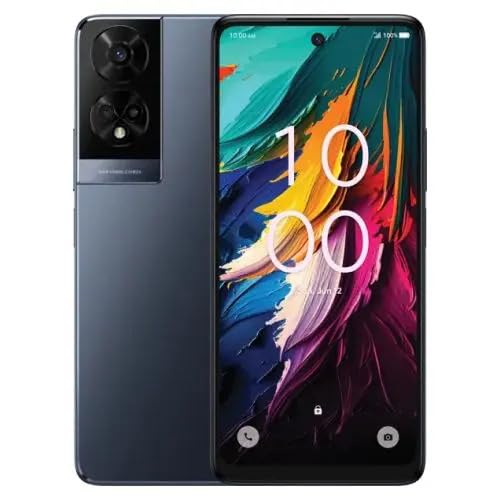
TCL 50 XE NxtPaper 5G — in the frame’s neighbourhood
The TCL 50 XE sits a step above the strict frame, in its neighbourhood, and it earns the step with the most distinctive screen at this end of the market: a matte NxtPaper display whose paper-like finish kills the glare that makes cheap glossy screens miserable outdoors. For the reader, the student, the bus-stop news consumer, that single trait can matter more than every other specification on this page combined — text stays text in full sun, and the phone stops fighting the sky. It is a new, unlocked phone for the three national carriers its listing names, which already separates it from the locked inhabitants of the true in-frame class.
Around the screen sits a mainstream budget 5G handset: 128GB of storage, performance aimed at communication and media, a battery for the day, cameras that serve. TCL’s update runway is shorter than Samsung’s — a standing consideration in this guide — and video on the matte panel trades punch for calm. But judged as what it is, a new unlocked phone near the frame with one genuinely premium-feeling trait, the 50 XE is the pick for buyers whose phone life is reading-shaped and whose budget can reach the neighbourhood rather than the strict line.
- Relation to frame: in the neighbourhood, above the strict line
- Display: matte NxtPaper, anti-glare paper finish
- Compatibility: unlocked for Verizon, T-Mobile and AT&T per listing
- Storage: 128GB
- Condition: new
Strengths
- Outdoor readability no glossy rival at this level can touch.
- New and unlocked — no lock-in, no refurbished unknowns.
- A screen gentle enough for hours of daily reading.
Trade-offs
- Above the strict frame, however close the neighbourhood.
- Shorter software support than the Samsung above it here.
- Video and camera output are service-class, not showcase-class.
Best for: readers and outdoor users who can stretch slightly for a new, unlocked phone. Not suited for: strict in-frame budgets or video-first buyers.

Samsung Galaxy A15 5G — above the frame, but a genuinely usable phone
The label is the review’s first sentence: the Galaxy A15 5G sits above this guide’s budget frame, and it is included because it marks the first rung where the asterisks stop. It is new. It is unlocked. Its Super AMOLED screen belongs to a class the in-frame market cannot reach, its battery is fresh and large, and Samsung’s update policy will keep it secure and current for years — four properties that, together, describe the difference between a phone you manage and a phone you simply use. If your budget can stretch past the frame, this is where the stretching should stop: the A15 is the buy-once answer.
Nothing about that recommendation requires exaggerating the phone. Its performance is tuned for the essentials and ordinary apps rather than games, its camera is a good daylight tool rather than an artist’s instrument, and its speaker will not fill a room. But in a category defined by hidden conditions — locks, aged batteries, frozen software — the A15’s plainness is its luxury. For a parent buying a first phone, a worker buying a reliable tool, or anyone whose last budget phone taught them what the frame’s trade-offs feel like from the inside, the stretch to this Samsung is the most rational move in the guide.
- Relation to frame: above the frame — the recommended stretch
- Display: Super AMOLED, vivid and bright for its class
- Storage: 128GB with microSD expansion
- Condition: factory-new, unlocked US A-series model
- Software: Samsung support measured in years
Strengths
- No lock, no refurbished unknown, no frozen software — the asterisks end here.
- A screen and battery that make the phone feel a class above its station.
- Support longevity that turns one purchase into years of service.
Trade-offs
- It breaks the frame — that is stated, not disguised.
- Everyday performance rather than gaming performance.
- A single speaker keeps media modest.
Best for: buyers who can stretch once for years of low-drama ownership. Not suited for: budgets that cannot move, however good the argument.
Moto G Play Class (prose-only) — the carrier prepaid staple
If you walk into a carrier’s prepaid shop with this guide’s budget in hand, the phones that will actually be offered to you belong largely to this class — Motorola’s G Play line and its direct equivalents from other makers. Their formula is consistent and, within its limits, honourable: a large screen, a very large battery that shrugs at two days, a clean-ish Android build, and cameras and processors trimmed to hit the shelf price of the prepaid wall. We discuss the class without a link because its natural habitat is the carrier bundle — phone plus plan, often locked for a period — and a static marketplace link would misrepresent how these phones are really bought.
Judged fairly, the class’s virtues are the ones its buyers feel daily: stamina, simplicity, and a brand with real support behind it. Its limits are equally consistent — modest performance that ages visibly, cameras for daylight documentation, and update support that is present but not generous. For a buyer whose network is settled and whose needs are the essentials, a G Play-class phone bought knowingly from their own carrier is a rational in-frame answer; for a buyer who changes networks or travels, the lock terms deserve reading before the battery earns its applause.
- Relation to frame: inside it, via carrier prepaid channels
- Status: prose-only — class discussion, no pool listing assigned
- Formula: large screen, very large battery, trimmed performance
- Lock status: commonly carrier-locked for a period — read the terms
- Software: Motorola’s light Android touch, modest update runway
Strengths
- Battery endurance that embarrasses phones several classes up.
- A real brand’s support and accessory ecosystem at in-frame money.
- Simple, uncluttered software for first-time smartphone owners.
Trade-offs
- Lock-in is the default; unlocking waits on the carrier’s clock.
- Performance and cameras are trimmed hard to reach the shelf.
- Bought as a bundle, the phone’s true cost hides inside the plan.
Best for: settled-network buyers who want in-frame stamina from a known brand. Not suited for: network-switchers, travellers, or performance seekers.
BLU-Class Unlocked Phones (prose-only) — the ultra-budget unlocked route
The second true inhabitant of the frame is the ultra-budget unlocked class, where BLU is the name American shoppers meet most often: phones sold unlocked at this level through ordinary retail, no carrier bundle required. Their proposition is freedom at the frame’s price — bring your own SIM, choose any compatible GSM network, owe nothing to a prepaid wall. That freedom is real, and for buyers on smaller carriers, dual-SIM households and travellers with local SIM habits, it can be the entire argument.
The trade-offs are the mirror image of the prepaid class’s. Hardware at this level is the thinnest in the guide — screens that wash in sun, cameras that document in good light only, processors that ask patience as a lifestyle — and software support is the class’s weakest paragraph, with updates that may arrive late or not at all. None of that makes these phones scams; it makes them appliances with a defined, modest job. Buy one as a backup, a child’s first phone, a travel handset or a bridge device, with expectations set to “essentials, slowly,” and the class delivers exactly what it promised.
- Relation to frame: inside it, sold unlocked at retail
- Status: discussed in prose as a class; no pool listing is assigned
- Networks: GSM-oriented; verify your carrier’s bands
- Software: the weakest update story in this guide
- Role: backup, first phone, travel or bridge device
Strengths
- Genuine unlocked freedom at the frame’s own level.
- No plan bundle, no lock clock, no carrier permission needed.
- Cheap enough to serve as a household’s spare without anxiety.
Trade-offs
- The thinnest hardware and dimmest screens in this guide.
- Security updates may be rare — a real consideration for banking.
- Cameras and performance define the floor of the modern market.
Best for: a spare, a first phone, or a travel SIM’s home. Not suited for: a primary phone carrying banking, work and a family’s photos.
Carrier-Locked Deal Phones (prose-only) — the lock-in ecosystem, explained
The third inhabitant is not a model but a mechanism, and understanding it is worth more than any single recommendation in this guide. Carrier promotions regularly place phones at or inside this budget frame whose hardware belongs a class above it — the catch being the terms: the phone is locked to the promoting network, the discount is recovered across a plan commitment, and leaving early means paying the difference or abandoning the device. Shopped with open eyes, these deals are how savvy, settled customers carry above-frame hardware at in-frame entry cost. Shopped casually, they are how a cheap phone becomes an expensive year.
Our advice is procedural rather than suspicious. Read the unlock policy before the promotion — how long until the phone can be unlocked, and what must be true of the account. Add the plan’s full commitment cost to the phone’s entry figure before comparing against the unlocked picks in this guide; the honest comparison is total against total. And ask the traveller’s question: if you leave the country or the network next year, what exactly do you own? A deal that survives those three questions is a good deal. One that wilts under them was a lease wearing a discount’s clothes.
- Relation to frame: inside it at entry, with plan terms attached
- Status: prose-only — a buying mechanism, not a single model
- Hardware: often a class above the frame’s usual residents
- Lock: tied to the promoting carrier until its terms are met
- True cost: entry figure plus the full plan commitment
Strengths
- Above-frame hardware reachable at in-frame entry for settled customers.
- The carrier’s shop, support and warranty stand behind the device.
- Predictable monthly arithmetic for households that budget that way.
Trade-offs
- Freedom is deferred — the phone is the carrier’s until the terms complete.
- Early exit converts the discount into a bill.
- Travel and network changes are friction by design.
Best for: settled, single-network households who read terms before signing. Not suited for: movers, travellers, and anyone whose carrier loyalty is unproven.
How Do the Six Routes Compare?
| Pick | Relation to frame | Linked? | Lock / condition | Defining strength |
|---|---|---|---|---|
| Nokia G310 5G | Closest to the frame | Yes | Unlocked, renewed | Repairable, replaceable battery |
| TCL 50 XE NxtPaper | Neighbourhood | Yes | Unlocked, new | Matte reading screen |
| Galaxy A15 5G | Above the frame | Yes | Unlocked, new | No asterisks, years of support |
| Moto G Play class | Inside the frame | Prose-only | Often locked, new | Prepaid stamina |
| BLU class | Inside the frame | Prose-only | Unlocked, new | Freedom at the frame’s level |
| Carrier deal phones | Inside at entry | Prose-only | Locked, plan terms | Hardware above its entry cost |
The table is the guide in miniature: three linked phones graded by distance from the frame, and three in-frame routes graded by the kind of condition attached. There is no route without a condition — there are only conditions you have read and conditions you have not.
How Do You Shop This Budget Without Getting Burned?
Start by deciding which condition you are willing to live with — lock, age, or thin hardware — because at this frame you are choosing a condition, not avoiding one. If your network is settled for years, the carrier routes open up and the G Play class or a read-the-terms deal can serve honestly. If your life involves SIM freedom, the unlocked routes — renewed Nokia, the TCL, the BLU class as a spare — are your territory. Then protect the purchase procedurally: buy from sellers with real return policies, because at this level the individual unit matters more than the model line, and schedule your checks inside the return window rather than after it.
The checks themselves are short and decisive. Battery: a full day of your real use, watched honestly. Software: connect to Wi-Fi and pull every update offered, then note the security patch level the phone reports — that date is the truest spec at this budget. Storage: see what remains after the system and preinstalled apps take their share, because headline capacity and usable capacity part ways fastest down here. And the essentials test: your banking app, your maps, your video call, your messaging — all installed and run once in week one, while the return label is still a live option.
What Mistakes Define This Category?
The first is believing a headline — a phone advertised against this budget whose fine print contains a plan commitment, a lock, or a “with trade-in” condition that quietly doubles the real cost. The second is its mirror: dismissing the whole category as junk, when the renewed and prepaid routes contain genuinely serviceable phones for people whose needs are the essentials. The third is buying an ultra-budget unlocked phone as a primary device for banking and family photos, a job its update support cannot honourably hold.
The fourth mistake is forgetting the total cost of ownership at exactly the level where it matters most: a locked phone replaced early, a renewed phone whose battery was never checked, a too-cheap phone re-bought within the year — each quietly costs more than the A15’s honest stretch would have. And the last is neglecting the free wins: a storage tidy, a lighter launcher, updates applied promptly and a case bought with the phone rather than after the first drop. At this budget, habits are features.
Final Recommendation
If the frame is immovable, choose your condition with open eyes: the renewed Nokia G310 is the linked pick that reaches closest, and its replaceable battery makes it the in-frame gamble we can defend; the carrier classes serve settled-network buyers who read their terms. If the frame can bend a little, the TCL buys new-and-unlocked peace with a reader’s screen. And if it can bend to the first honest rung, the Galaxy A15 ends the asterisks entirely. Whatever you choose, let it be chosen — lock, age and limits named in daylight — because at this end of the market, the buyers who thrive are not the ones who found a phone without compromises, but the ones who picked the compromises they could live with, and that clarity, more than any handset, is what a small budget most deserves.
Who Actually Buys at This Level, and What Do They Need?
The category’s real citizens are more varied than its reputation. There is the parent buying a first phone for a ten-year-old, where the correct specification is “survives the school bag, runs the family chat, and can be replaced without a household summit.” There is the worker whose employer reimburses nothing and whose phone must run a timesheet app, a maps app and a messaging app through a twelve-hour day — battery and durability outrank everything else in that hand. There is the grandparent whose entire requirement is video calls with grandchildren and a screen kind to ageing eyes, served beautifully by the prepaid class’s big displays and big batteries. And there is the organised minimalist who simply refuses to carry an expensive object, for whom this level is not a hardship post but a philosophy with a SIM card.
Notice what unites them: none of their lives is failed by this category’s trade-offs, because none of their lives runs on the things the trade-offs remove. The category fails only the buyer who arrives with flagship expectations at a frame-price — the gamer, the photographer, the five-year keeper of a primary device. Matching the phone to the actual life, which this guide has attempted pick by pick, is the whole skill of shopping down here, and it is a skill that transfers upward: every budget above this one is the same exercise with kinder arithmetic.
How Long Can a Phone at This Level Honestly Last?
Separate the two clocks every phone carries. The hardware clock is set by the battery and the screen: a new in-frame phone’s battery is good for a few years of daily charging before its decline becomes the story, a renewed phone’s clock started earlier and must be measured in week one, and the Nokia’s replaceable battery is the only design here that lets its owner reset that clock cheaply. The software clock is set by updates: Samsung’s years-long runway at the top of this guide, Motorola’s more modest prepaid cadence, and the ultra-budget class’s shrug. A phone is truly finished when either clock runs out — insecure or exhausted, whichever arrives first.
Planned honestly, the expectations sort themselves. The A15, bought above the frame, is a multi-year primary phone. The renewed Nokia, with a battery swap in its future, can serve a similar span for a lighter user. The prepaid class serves its plan cycle gracefully and should be judged at the renewal moment rather than clung to past it. The BLU class is a season-or-two appliance and proud of it. None of these is a failure mode — each is a lifespan stated in advance, which is all any buyer at any budget has ever actually been owed.
A Second Look at the Three Linked Picks
A month into ownership, the renewed Nokia G310’s story is the battery door. Owners of other budget phones speak about battery percentage the way nervous drivers speak about fuel gauges; the Nokia’s owner knows that if the cell ever truly tires, the fix is a part and a few minutes, and that knowledge quietly changes the relationship from consumption to maintenance. It is the only phone in this guide that can plausibly be handed down twice.
The TCL’s second look happens, as its first look did, outdoors: a month of platforms, gardens and bright kitchens in which the screen simply never became the problem. Its owners tend to become mildly evangelical, not about TCL, but about matte — the way converts to any sensible idea do. If your reading life is real, this phone’s neighbourhood premium is the best-spent stretch in the guide.
And the A15’s second look is the absence of a story. Nothing to report: the updates arrive, the battery behaves, the screen pleases, the phone is simply there, month after month, like a good kettle. In a category that generates anecdotes — locks discovered, batteries mourned, updates that never came — the phone with no anecdotes is the luxury item, and its position above the frame is the price of the silence.
What Setup Habits Make a Budget Phone Feel Twice as Good?
The first ten minutes matter disproportionately down here. Remove or disable the preinstalled extras you will never open — at this level, storage and memory reclaimed are performance gained. Choose the lighter versions of heavy apps where the makers offer them, move photos to free cloud or a computer on a monthly rhythm, and let the phone’s own storage manager run rather than fighting it. Set updates to install automatically overnight, because a budget phone kept current is measurably safer and often smoother than one frozen at its birthday.
Then tune for the life the phone will live. A worker’s phone wants its three essential apps pinned, its battery saver scheduled rather than desperate, and its maps downloaded for the home region over Wi-Fi. A grandparent’s phone wants text enlarged, the video-call app on the home screen’s first row, and every notification that is not family silenced. A child’s phone wants the parental controls configured before the handover, not after the first incident. None of this costs anything, and at this budget the setup is not an afterthought — it is half the product.
What About the Second-Hand Market Below Even This Guide?
Some readers will ask why the guide does not simply recommend buying a used flagship privately and being done. Because that market, for all its bargains, carries risks this guide cannot audit for you: stolen or financed phones that stop working, batteries at the end of their invisible lives, no return window when the microphone turns out to be dead. The renewed Nokia in this guide is the supervised version of that idea — refurbished, sold through a channel with returns, its condition checkable in a protected first week. Readers with the experience to buy privately already know who they are; readers without it should take the supervised route and sleep well.
Frequently Asked Questions
Can you really get a usable smartphone at this budget?
Yes, with the category’s conditions understood: the essentials — calls, messaging, maps, banking, streaming — are all served at this level. What you trade away is speed at the margins, camera ambition, update longevity and, on the carrier routes, network freedom.
Why are no prices printed in this guide?
Because prices at this end of the market shift with promotions, stock and refurbishment grades faster than any article can responsibly track. The qualitative labels — closest to the frame, neighbourhood, above the frame — tell you each pick’s relationship to the budget without printing a number that may be stale on arrival.
Is a renewed phone better than a new phone at this level?
Often, in hardware quality per unit of budget — the renewed Nokia is better built than the frame’s new residents — provided you run the battery and condition checks in the first week. The new in-frame classes counter with fresh batteries and warranties. It is a genuine trade, not a trick.
What does carrier-locked actually cost me?
Freedom, on a schedule: the phone works only on that network until the unlock terms are met, which complicates travel, network changes and handing the phone to someone on another carrier. If none of those is in your foreseeable life, the cost may never come due — which is exactly why the settled-network buyer can shop those deals rationally.
Which pick suits a child’s first phone?
The renewed Nokia, for its repairability and sturdiness, or a G Play-class prepaid phone if the household’s network is settled — both survive drops and losses with less financial pain, and both cover a child’s actual app life completely. Set the battery check and a real case as non-negotiables either way.
When is stretching above the frame the right call?
When the phone is a primary device expected to serve for years, when banking and work live on it, or when a previous in-frame purchase taught you its trade-offs personally. The Galaxy A15’s stretch buys updates, a new battery and unlocked freedom — the three things this level cannot otherwise bundle.
Is a cheap phone safe for mobile banking?
It depends on the software clock, which is why this guide keeps returning to it. A phone still receiving security updates — the Samsung most strongly, the renewed Nokia and the prepaid Motorola class within their windows — is a reasonable banking device. A phone whose updates have ended should be retired from banking duty to calls and media, however well its hardware still works. The rule costs nothing and is the single most important security habit at this budget.
What storage should I insist on at this level?
Treat 128GB — the figure all three linked picks carry — as the comfortable floor for a primary phone, because the system and essential apps consume a growing share before you take a single photo. In-frame classes with less can still serve as spares and first phones, especially with a memory card or a tidy cloud habit, but a primary phone below that floor will spend its life negotiating with its own storage warnings.
Can these phones run WhatsApp, maps and video calls properly?
Yes — that trio is precisely the essential load this guide tested its judgements against. Expect a breath more patience on app launches than a flagship allows, and keep the multitasking modest — a video call plus navigation is fine, a video call plus navigation plus a game is a negotiation the hardware will lose. Within the essentials, every route in this guide is a working phone.
Should I buy the phone or the plan first?
Decide the network first, because at this budget the network decision quietly decides the phone menu: settled on a carrier, the prepaid and deal routes unlock; undecided or freedom-first, the unlocked routes — renewed Nokia, TCL, or the A15 stretch — keep every door open. Households that reverse the order usually discover the lock afterwards, which is the one discovery this entire guide exists to prevent.
What is the best gift phone at this level?
The renewed Nokia for a practical recipient, the prepaid class for a settled-network grandparent, the TCL for a reader — and in every case, include the setup: accounts signed in, text sized, essential apps installed, case fitted. At this budget the configuration is half the gift, and a phone handed over ready is remembered very differently from a phone handed over as homework.
Do I need a case and screen protector more at this budget?
Counterintuitively, yes in one way and no in another. The financial pain of a cracked screen is lower — the whole phone costs what a flagship’s repair does — but the disruption pain is identical, and budget screens are not armoured glass. A simple case bought with the phone remains the cheapest insurance in the category. The honest exception is the Nokia, whose repairable design makes even a cracked screen a recoverable event rather than a funeral.
What happens when my carrier deal phone reaches its unlock date?
Request the unlock promptly and test it with another network’s SIM — an unlocked phone is worth more, works for travel and hand-me-downs, and loses nothing. Mark the date when you sign, because carriers rarely volunteer the reminder, and a phone unlocked on schedule is the deal working exactly as the savvy buyer planned. It is the happiest ending the lock-in ecosystem offers, and it belongs to the readers who read the terms.
Are refurbished and renewed the same thing here?
In this guide, “renewed” is the listing’s own word for a refurbished unit — inspected, restored to working order and resold, with condition varying by seller and grade. It is not new, it is not merely “used,” and the first-week audit described throughout this guide is the mechanism that converts its discount from a gamble into a strategy.
Which route suits a small business buying several phones?
Uniformity is the business virtue: one model, one setup, one spare. The renewed Nokia suits field roles where repairability is uptime; the A15 suits office roles where updates and longevity rule; the prepaid class suits fixed roles on a settled network. What a business should avoid is a drawer of assorted ultra-budget bargains, each with its own charger, quirks and update story — the savings evaporate into support time within a quarter.
What is the kindest way to hand a budget phone to a parent?
Fully configured, as the gift answer above insists — and with the frame never mentioned. Set the text large, the family on the home screen, the updates automatic, and let the phone present itself as what it is: a working, generous tool chosen with care. The dignity of the gift is in the setup, and it costs nothing but an evening.
How do I keep a budget phone fast after a year?
The same three habits, repeated: keep a fifth of the storage empty so the system can breathe, uninstall in anger anything you have not opened in a season, and let updates land rather than deferring them into a pile. Add a restart a week — the oldest advice in computing and still the cheapest performance tool ever shipped — and most phones in this guide hold their manners far longer than their reputations suggest. Decline at this level is usually clutter wearing the mask of age.
Is 5G worth caring about at this budget?
As a future-proofing checkbox, mildly — all three linked picks carry it, and networks will keep shifting capacity toward it. As a reason to choose one in-frame phone over another, barely: the essentials run identically on a good LTE connection, and coverage where you live matters more than the badge. Do not let a 5G logo talk you out of the battery, storage or update checks that decide real satisfaction down here.
What should I do on day one with a carrier deal phone?
Photograph the terms. Save the unlock date where future-you will see it, confirm the plan’s total commitment in writing, and set a calendar note for the unlock month. Then use the phone exactly as you would any other — the deal’s discipline is administrative, not daily. Buyers who do this one unglamorous thing are the ones who describe these promotions, accurately, as bargains.
Can a phone from this guide be a hotspot for a laptop?
For occasional duty — a train journey, an outage, a site cabin — yes, and the big-battery prepaid class and the Nokia both tolerate it well. As a household’s standing internet it is the wrong tool at this level: plan hotspot allowances, heat and the phone’s other jobs all push back. Treat it as the excellent backup it is.
Why does this guide keep returning to the first week?
Because at this budget the return window is the buyer’s laboratory, warranty and leverage in one. Every risk named in this guide — a tired renewed battery, a lock you did not expect, storage smaller than the headline implied — announces itself inside seven days of honest use, while remedies are free. The readers who thrive at this level are not luckier; they are simply the ones who test while testing is cheap.
What is the most common regret buyers report at this level?
Not slowness — lock surprise. The phone that could not travel, could not move to the cheaper network, could not be handed to a daughter on another carrier. It is the regret this guide was structured to prevent, which is why lock status appears in every pick’s spec box and comparison row rather than in a footnote. The second regret is the unchecked renewed battery, prevented by the same first-week discipline. Both regrets are administrative, and both are therefore entirely optional.
Does a budget phone photograph documents and receipts well enough?
Yes — document capture is the camera task this level genuinely masters, because it asks for daylight contrast rather than artistry, and every route here includes scanning-friendly software or a free app away from it. Receipts, forms, whiteboards, a child’s homework for the family chat: all comfortably within these cameras’ honest abilities. Save the camera anxiety for concerts and candlelight.
How do I choose between the Nokia and the TCL?
By the direction of your stretch and the shape of your days. The Nokia reaches toward the frame and brings repairability and a replaceable battery; the TCL steps above it and brings a new, unlocked phone with the reader’s screen. Indoor, maintenance-minded, budget-strict: Nokia. Outdoor, reading-heavy, warranty-minded: TCL. Both answers are respectable, which is why the guide refuses to collapse them into one.
What will this category look like next year?
Much the same, with the names rotated: last year’s entry models renewed downward, new prepaid staples on the carrier wall, the ultra-budget class holding its floor. The durable knowledge is not any model in this guide but the framework — frame versus neighbourhood versus stretch, lock versus age versus thin hardware, the two clocks, the first-week audit. Carry the framework and next year’s shelf reads as clearly as this year’s.
Should I insure or protect a phone at this level?
Formal insurance, almost never — the premiums court the phone’s whole value within a couple of years. Self-protection is the rational version: the case, the first-week audit, the backup of photos so the device itself is never the only copy of anything precious. At this budget, your data is the valuable object; the phone is its replaceable container, and treating it that way is oddly liberating.
What does “unlocked” not guarantee?
Band universality. An unlocked phone is free to join networks, but it must still speak your carrier’s frequencies — the standing check this batch of guides repeats for every variant and class. All three linked picks here are US-market listings, which keeps the question simple; the BLU class’s GSM orientation is the one place in this guide where the band check genuinely earns its keep.
How should a couple or household share this budget?
Buy two of the same phone rather than two bargains. Shared chargers, shared knowledge, one spare between you, and a setup learned once and applied twice — the household discount at this level is operational rather than monetary. It is also the arrangement that makes hand-me-downs frictionless when one partner stretches to the A15 later: the older phone descends intact, configured, and understood by everyone in the house.
What if the phone is for a small delivery or field business?
Then battery, durability and uniformity outrank everything, and the guide’s answer is the renewed Nokia bought in matching quantity — one model, one spare battery stock, one setup image — or the A15 where the role touches customers and payments. The prepaid class tempts with its entry arithmetic, but a fleet locked to one carrier is a fleet whose options end at that carrier’s coverage map, and field businesses live precisely where coverage maps get interesting.
Is buying last year’s model on clearance a fourth route?
It is the A15’s route generalised, and often the smartest shopping in the whole category: a discontinued but supported model, new in its box, discounted by the calendar rather than by any defect. When you find one from a maker with a real update policy, it is the stretch without the guilt — above the frame in spirit, honest in every particular that matters. This guide’s three labels still apply; clearance stock simply wears the “above the frame” label at its most comfortable.
Related Guides
One parting encouragement, because this category attracts more anxiety than any other in the batch: a small budget is not a small decision, and the care you have taken reading this far is exactly the care that makes small budgets perform like larger ones. Buy knowingly, test promptly, set the phone up properly — and then enjoy the quiet satisfaction of a tool that cost a frame and serves like a phone. Neighbouring budgets and basics live in best budget smartphones, best smartphones under 100 dollars and best prepaid phones.
Related guides
- Best Canon Point and Shoot Digital Cameras: PowerShot Picks From Pocket Compacts to Travel Zooms
- Best Balancing Stabilizers for Mirrorless Cameras: Payload, Balancing and Native Vertical Shooting
- Best Basic Phones Camera Buyers Can Trust: Flip Phones and Simple Handsets That Still Take a Photograph
- Best Sony Full Frame Cameras for Astrophotography: Sensitivity vs Resolution


