What's inside
- Key Takeaways
- Quick Picks
- How Did We Judge Phones That Are Two Years Old?
- What Does Renewed Actually Mean for These Phones?
- How Do the Six Phones Compare at Two Years Old?
- How Should You Inspect a Renewed Phone in Its First Days?
- Which Mistakes Do Buyers of Older Phones Keep Making?
- How Do These Phones Fare Against a Brand-New Mid-Range Model?
- Do Their Cameras Still Matter in a World of Newer Sensors?
- What About Gaming and Heavy Daily Performance?
- How Does the Hand-Me-Down Economy Change the Maths?
- What Should You Know About Carriers, eSIM and Travel?
- Is Buying a Two-Year-Old Phone the Greener Choice?
- What Accessories and Extras Should You Plan For?
- How Should You Time a Renewed Purchase?
- What Do Two Years Do to Resale Value From Here?
- Final Recommendation
- Frequently Asked Questions
- Related Guides
As an Amazon Associate I earn from qualifying purchases. This post may contain affiliate links at no extra cost to you.
gizmoverdict.com is reader-supported. When you buy through links on our site, we may earn an affiliate commission.
Where to buy: Every linked phone in this guide is an Amazon Renewed listing, and that word appears beside each pick wherever it is named, because a renewed phone is a different purchase from a new one and deserves to be shopped with different eyes. Check price on Amazon from the links, and read the condition notes on the listing itself before ordering.
The best 2-year-old smartphones occupy the smartest seat in the phone market, and it is worth understanding why before meeting the picks. A flagship two years after launch has already surrendered the steepest part of its depreciation to its first owner, yet its processor, screen and cameras were built to a standard that current mid-range phones still chase. What the second owner buys is not yesterday’s compromise; it is the day before yesterday’s flagship, usually through the renewed channel, inspected and resold with a guarantee standing behind it. The four linked picks here, a Galaxy, a Pixel and two iPhones, are all renewed listings, and this guide treats that status as a feature to be managed intelligently rather than a flaw to be whispered about.
Managing it begins with software, because a two-year-old phone’s remaining life is written in its update calendar more than in its hardware. The Pixel 8 was promised seven years of updates from its 2023 launch, an extraordinary runway that makes it younger in software terms than many newer phones. The Galaxy S23 carries Samsung’s commitment of four major Android upgrades and five years of security patches from its generation. Apple’s two entries follow the company’s unwritten but consistent tradition of supporting iPhones for many years beyond their launch. A phone whose updates end soon is old at any age; a phone with years of support remaining is merely seasoned.
A word about who should not shop here will save the wrong readers a paragraph’s worth of hope. Anyone who needs a phone’s warranty to run from the manufacturer’s own hand for a full term, anyone whose work forbids pre-owned devices, and anyone who simply takes pleasure in being a model’s first owner should buy new and enjoy it without a flicker of doubt from this page. The renewed argument is an economic one, not a moral one, and it loses its charm the moment it is pressed on a reader whose priorities it does not serve.
The second management task is the battery, the one component that genuinely ages on a calendar. A renewed phone’s battery has lived two years of someone else’s charging habits, and reputable renewed programmes test and grade accordingly, yet the buyer should still check the battery health figure on arrival, in the settings of an iPhone or through the diagnostic information on an Android handset, and should use the returns guarantee without hesitation if the figure is grim. Everything else in these phones, the glass, the chips, the camera modules, ages so slowly that two years registers as a rounding error.
Our Top Picks
Key Takeaways
- All four linked picks are renewed listings, inspected pre-owned phones rather than new stock.
- Remaining software support, not launch-year prestige, decides how old these phones really are.
- The Pixel 8 (Renewed) carries the longest update runway of the group by a wide margin.
- Check battery health on arrival and use the renewed guarantee if the figure disappoints.
- Two-year-old flagships routinely outclass current mid-range phones in cameras and screens.
- Storage cannot be expanded on any pick here, so choose the capacity as a final decision.
Quick Picks
| Pick | Badge | Why it earns its place |
|---|---|---|
| Samsung Galaxy S23 (Renewed) | Compact Android flagship | A Snapdragon-powered flagship in a genuinely one-handed size, renewed and unlocked. |
| Google Pixel 8 (Renewed) | Longest software runway | Seven years of updates promised from launch makes this renewed phone a long-term hold. |
| Apple iPhone 14 (Renewed) | Modern iPhone entry | The generation that added crash detection and kept the beloved size, renewed and unlocked. |
| Apple iPhone 13 (Renewed) | Value iPhone staple | Nearly the same daily experience as its successor for a gentler step in the renewed range. |
| OnePlus 11 | Prose-only charging sprinter | A two-year-old flagship worth knowing, discussed without a link for pool reasons. |
| Google Pixel 7 Pro | Prose-only telephoto option | The older Pixel with a zoom camera, covered in prose because the pool holds the Pixel 8. |
How Did We Judge Phones That Are Two Years Old?
Three tests decided the field. Remaining support came first: a candidate needed a credible path to years of further security updates, because an unsupported phone is a liability wearing a bargain’s clothes, and each pick’s support position is stated in its own section rather than averaged across the group. Performance headroom came second, judged by whether the phone’s processor still handles the current versions of demanding apps and games without the hesitation that makes owners shop again within the year. All four linked picks pass that test with room, since flagship silicon from their generation was built well beyond the needs of its launch year.
The renewed channel itself formed the third test. A pick needed to exist as a proper renewed listing, US version and unlocked where the pool says so, from a programme whose inspection and guarantee structure gives a buyer recourse. That is why the two prose entries are prose: capable phones both, but without a verified listing in this site’s pool, they are signposts for further shopping rather than recommendations with a link attached. The guide would rather hand a reader four trustworthy doors than six doors of which two open onto fog.
Price-position evidence was handled the way this site handles it everywhere: qualitatively, by tier and by the depreciation logic of the category, never by printing a figure that a marketplace can invalidate overnight. A reader who finds a linked pick positioned noticeably above comparable renewed units on the day should treat that as information, comparison-shop the grade carefully, and remember that in this channel the spread between a fairly priced excellent unit and an overpriced tired one can hide behind identical photographs.
Condition expectations were set honestly throughout. A renewed phone has been owned, and while grading programmes reject the battered and the faulty, a buyer should expect the possibility of faint marks that a new phone would never carry, and should weigh the guarantee and the price position as the compensation. Readers for whom a flawless, sealed box is part of the pleasure are shopping in the wrong article, and this guide says so at the start rather than after the disappointment.
What Does Renewed Actually Mean for These Phones?
Renewed, in the Amazon programme these listings belong to, describes a pre-owned product that has been inspected and tested to work and to look presentable, then sold with a guarantee that allows replacement or refund if it fails to perform as described. It is not a synonym for new, and it is not a synonym for broken; it is a middle state with paperwork. The four linked listings each carry that status in the pool record, US versions, unlocked, and this guide repeats the word at every naming so that no skim-reader can mistake what is being bought.
The practical inspection a buyer performs on arrival takes ten minutes and should never be skipped. Check the battery health figure first, since it predicts the phone’s daily stamina more than any other number. Then work through the cameras, the speakers, the microphones on a test call, the charging port, the buttons and the screen under a plain background where dead pixels and uneven wear announce themselves. Test the biometric unlock with your own finger or face. Anything that fails goes back through the guarantee promptly, while the window is wide open and the evidence is fresh.
Accessories deserve a sentence of their own: renewed phones commonly arrive with a charging cable but not necessarily with the original box, manuals or every bundled extra of a retail package, and none of these phones’ original retail boxes included a wall charger anyway in their generations. A buyer with a drawer of USB-C or Lightning cables will notice nothing; a buyer starting from zero should budget the small extra step of a charger as part of the purchase, in the same calm spirit as adding a case.

Samsung Galaxy S23 (Renewed) — Compact Android flagship
The Galaxy S23 earns its place by being the phone so many people describe and so few makers still build: a true flagship that fits one hand and one pocket without negotiation. Its renewed listing in the pool is the US version, 128GB, unlocked, in Phantom Black, and the hardware beneath that description remains formidable two years on. The Snapdragon 8 Gen 2 was the chip that restored Samsung flagships’ reputation for cool, efficient speed after a warmer generation, and it still dispatches current apps and games with the ease of a processor that was never the bottleneck in its own phone.
The screen and cameras complete the flagship argument. A bright 120Hz display of this size makes the phone feel current in the hand in a way spec sheets understate, and the triple camera system, with a proper telephoto that most mid-range phones omit entirely, keeps producing photographs that embarrass newer, cheaper hardware. Samsung’s software commitment for this generation, four major Android upgrades and five years of security patches counted from launch, leaves a meaningful runway still ahead, and the buyer should verify the phone updates itself to the latest available release during setup, as any well-kept renewed unit should.
Renewed cautions apply with their usual force. Inspect the battery’s behaviour across the first days rather than trusting a single percentage, since Android reports battery health less directly than an iPhone does, and lean on the guarantee if stamina is plainly short of the model’s known character. At 128GB with no expansion slot, heavy photographers should also confirm their cloud arrangements are in order, because this phone’s storage is a sealed decision.
- Listing status: Renewed, US version, unlocked
- Storage: 128GB, not expandable
- Processor generation: Snapdragon 8 Gen 2
- Display: compact flagship panel, 120Hz
- Support: four OS upgrades, five years security from launch era
Strengths
- Genuine flagship pace in a one-handed body
- Telephoto camera mid-range phones skip
- Efficient chip keeps battery behaviour civilised
Trade-offs
- Renewed battery needs checking on arrival
- Fixed storage with no card slot
- Support runway shorter than the Pixel’s
Best for: Android buyers who want a compact flagship and will inspect a renewed unit properly. Not suited for: buyers who need a sealed-box phone or maximum storage without cloud help.

Google Pixel 8 (Renewed) — Longest software runway
If one statistic could sell a two-year-old phone, the Pixel 8 owns it: Google promised seven years of OS, security and feature updates from its 2023 launch, which means this renewed handset will still be receiving software long after many phones bought new this year have been abandoned by their makers. Its pool listing is the US version, 128GB, unlocked, renewed, and for a buyer whose real question is “how long until I must do this again”, no other pick in the roundup answers as confidently.
The phone beneath the promise is the thinking person’s flagship. Google’s Tensor G3 was never the benchmark sprinter of its generation, and a renewed Pixel should not be bought as a gaming trophy; its talents are intelligence and photography. The computational camera remains the easiest in the business for producing a photograph worth keeping from a moment that allowed one tap and no skill, and the software features layered on top, call screening, transcription, photo cleanup tools, are the daily texture that owners cite when they refuse to leave the line.
Two renewed-specific notes belong here. First, the update runway makes battery condition the only real variable, so the arrival inspection matters more, not less: a healthy battery in this phone is a five-year plan, a tired one is an argument to exchange the unit through the guarantee while the window stands open. Second, Pixel features depend on region and carrier in places, and an unlocked US version is the right starting point for enjoying the full set at home.
- Listing status: Renewed, US version, unlocked
- Storage: 128GB, not expandable
- Processor generation: Google Tensor G3
- Display: bright Actua panel, 120Hz class
- Support: seven years of updates from 2023 launch
Strengths
- Update runway outlasts most new phones
- Point-and-shoot photography of rare consistency
- Software features compound over years of ownership
Trade-offs
- Chip prioritises intelligence over raw gaming pace
- Renewed battery inspection is essential homework
- Some features vary by region and carrier
Best for: buyers who keep phones longest and value software and camera intelligence over benchmark trophies. Not suited for: competitive mobile gamers shopping purely for frame rates.

Apple iPhone 14 (Renewed) — Modern iPhone entry
The iPhone 14’s renewed listing, 128GB in Midnight, unlocked, represents the point where Apple’s recent generations become available to buyers who let someone else pay the launch premium. The phone itself is a study in continuity: the A15 chip in its fuller graphics configuration, a bright 6.1-inch display, the dual-camera system that defined this tier, and the safety features this generation introduced, including crash detection and emergency satellite messaging in supported regions. Two years on, none of that reads as dated, because Apple designs its mainstream phones to be bought late and kept long.
Software is the quiet headline. Apple does not publish an end date for iPhone support, yet its track record across many generations shows mainstream models receiving major iOS releases for years well beyond the two this phone has already lived, and a renewed iPhone 14 bought today can reasonably expect to remain a current, secure device for a long further stretch. For families, that predictability compounds: a hand-me-down chain can be planned around this phone with unusual confidence.
The renewed inspection on an iPhone has one great convenience, the battery health percentage displayed plainly in settings, and buyers should use it as the listing’s report card, expecting a figure consistent with a well-graded unit and using the guarantee if it is not. Note also that the US iPhone 14 is eSIM-only, with no physical SIM tray, which suits most domestic buyers and deserves a thought from anyone whose carrier or travel habits still revolve around swapping physical cards.
- Listing status: Renewed, unlocked
- Storage: 128GB, not expandable
- Chip: A15 Bionic generation
- Display: 6.1-inch class flagship panel
- SIM: eSIM-only on the US model
Strengths
- Long, predictable Apple software support
- Battery health visible plainly in settings
- Safety features arrived with this generation
Trade-offs
- eSIM-only design unsettles physical-SIM travellers
- Display refresh stays at the classic rate
- Renewed condition varies unit by unit
Best for: iPhone buyers who want a modern, long-supported handset through the renewed channel. Not suited for: anyone who needs a physical SIM tray or a high-refresh display.
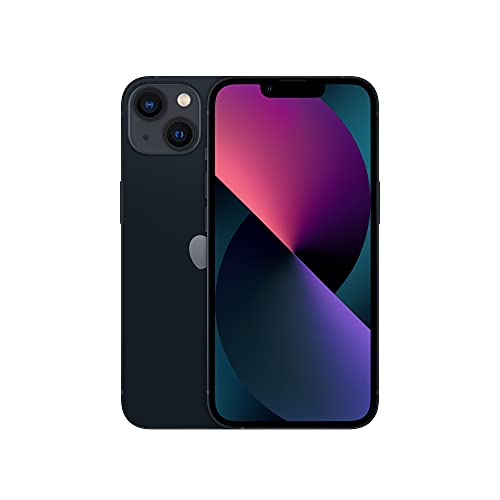
Apple iPhone 13 (Renewed) — Value iPhone staple
The iPhone 13 is the pick that makes long-time Apple watchers nod, because this generation has quietly become the default recommendation for a dependable iPhone at a gentle position in the range. Its renewed listing offers 128GB in Midnight, unlocked, and the phone behind it shares so much with the iPhone 14, the same display size and class, the same A15 family, a dual-camera system of very similar character, that the daily experience differs mainly in the successor’s added safety features and small camera refinements. Buyers who do not need those specific additions are looking at the value heart of this entire roundup.
Age deserves a precise word here, because the iPhone 13 is a season older than the article’s two-year headline if counted from its original launch, and this guide will not blur that. What rescues it is the same arithmetic applied to every pick: remaining usefulness, not birthday. Apple’s support history suggests this model still has years of iOS updates ahead of it, its chip remains comfortably ahead of daily demands, and its enormous production run means cases, parts and familiarity are everywhere. It is included as the elder statesman of the group, labelled as such, rather than disguised as a twin of the younger phones.
As with its successor, the battery health screen is the renewed buyer’s best friend, and the inspection routine is identical: read the percentage, test the cameras and speakers, confirm Face ID enrols happily, and let the guarantee do its job if anything disappoints. The iPhone 13 retains a physical SIM tray in its US version alongside eSIM, a small, real advantage for travellers and carrier-switchers that its successor surrendered, and for some buyers that single tray will settle the choice between the two Apples more decisively than any camera comparison.
- Listing status: Renewed, unlocked
- Storage: 128GB, not expandable
- Chip: A15 Bionic generation
- Display: 6.1-inch class flagship panel
- SIM: physical tray plus eSIM on US model
Strengths
- Daily experience nearly matches its successor
- Physical SIM flexibility the 14 surrendered
- Huge ecosystem of cases, parts and knowledge
Trade-offs
- Oldest phone in this roundup by launch
- Lacks the 14’s added safety features
- Battery figure needs the usual arrival check
Best for: value-first iPhone buyers who want the classic experience with SIM flexibility. Not suited for: buyers who want the longest possible runway and the newest safety features in one phone.
OnePlus 11 — Prose-only charging sprinter
The OnePlus 11 belongs in any honest survey of two-year-old flagships, and it appears here without a link because the verified pool behind this guide contains no listing for it, the same pool discipline that keeps every linked pick trustworthy. What the phone offers is a distinctive personality among its generation: flagship Snapdragon power of the same era as the Galaxy pick, a large, fluid display, and charging speeds that make the rest of this roundup look like they are filling through a straw. Owners who live in short bursts of top-up charging genuinely organise their habits around that party trick.
Its compromises are equally distinctive. The camera system, built with a famous photographic partner’s tuning, is capable without quite matching the Pixel’s consistency or the Galaxy’s versatility, and the brand’s software support commitments for the generation, while respectable, sit a step behind the Pixel 8’s extraordinary runway. Wireless charging, a feature its price tier leads buyers to expect, was omitted, which matters to exactly the people it matters to and not at all to everyone else.
Shoppers who find a reputable renewed or remaining-stock listing for it elsewhere should apply this guide’s full inspection ritual and support arithmetic before paying. The phone is a legitimate member of the class this article surveys; it is simply a member this site’s pool cannot currently hand you with a verified link, and that distinction is reported rather than smoothed over.
- Class: 2023 flagship generation
- Signature trait: exceptionally fast wired charging
- Camera: capable, tuned with a photographic partner
- Availability here: prose discussion, no link
- Support: respectable, shorter than Pixel’s runway
Strengths
- Charging speed reorganises daily habits
- Flagship power of its generation throughout
- Large, fluid display suits media lovers
Trade-offs
- No verified pool listing to buy from here
- Wireless charging omitted at a flagship tier
- Camera consistency trails the Pixel’s
Best for: charging-speed devotees willing to shop beyond this guide’s verified links carefully. Not suited for: buyers who want the one-click certainty of the four renewed picks above.
Google Pixel 7 Pro — Prose-only telephoto option
The Pixel 7 Pro is the older Pixel that still tempts photographers, because it carries something its successor in this guide does not: a dedicated telephoto camera in a Pro-tier body with a larger, sharper display. It is a prose entry because the pool verifies the Pixel 8 renewed listing rather than this one, and the guide’s rule is absolute, no verified listing, no link, however fond the author may be of the hardware.
Its position in the two-year-old conversation is genuinely interesting. The camera system remains excellent, the design feels premium in a way the standard Pixel 8 does not attempt, and its Tensor G2 chip handles daily life smoothly while conceding the gaming argument to Snapdragon rivals. What it concedes most importantly is time: launched a year before the Pixel 8, under the older, shorter update policy of its era, its remaining runway is respectable but plainly shorter than its successor’s seven-year promise, and in a category where this guide argues software is destiny, that difference is the whole ballgame.
Readers who prize the zoom lens and the larger screen, and who find a well-graded unit through a channel they trust, can still buy this phone happily with the inspection ritual performed and the support maths understood. Readers choosing between it and the linked Pixel 8 at similar range positions should let the runway decide unless the telephoto is a genuine weekly need, because lenses are used on Saturdays while updates protect every day.
- Class: 2022 Pro flagship generation
- Signature trait: dedicated telephoto camera
- Display: larger, sharper Pro-tier panel
- Availability here: prose discussion, no link
- Support: shorter remaining runway than Pixel 8
Strengths
- Zoom photography the standard Pixel lacks
- Premium build and display of its tier
- Camera consistency typical of the line
Trade-offs
- Older policy means fewer updates remain
- No verified renewed link in this guide
- Chip concedes gaming pace to rivals
Best for: photographers who value a telephoto and accept a shorter software runway knowingly. Not suited for: long-keepers, for whom the linked Pixel 8’s update promise is the decisive feature.
How Do the Six Phones Compare at Two Years Old?
| Phone | Status | Remaining story | Choose it when |
|---|---|---|---|
| Galaxy S23 | Renewed, linked | Solid support, compact power | Wanting a small Android flagship |
| Pixel 8 | Renewed, linked | Seven-year update promise | Keeping a phone the longest |
| iPhone 14 | Renewed, linked | Long Apple support tradition | Wanting modern iPhone safety features |
| iPhone 13 | Renewed, linked | Strong support, elder of group | Wanting value plus a SIM tray |
| OnePlus 11 | Prose-only | Respectable support, fast charging | Charging speed tops the list |
| Pixel 7 Pro | Prose-only | Shorter runway, telephoto gift | Zoom photography matters weekly |
How Should You Inspect a Renewed Phone in Its First Days?
Treat the first week as an examination the phone must pass, and schedule it deliberately rather than discovering faults across a month. Day one belongs to identity and health: confirm the model, storage and unlocked status match the listing, read the battery health figure where the platform shows one, and run the manufacturer’s own update so the phone stands on current software before your data moves in. Photograph the phone’s condition as it arrived, a small act that settles any later conversation about what the grading promised.
The middle days belong to the senses. Make calls in a quiet room and a noisy street, because microphones and earpieces fail in characteristically different ways. Shoot photographs with every lens, including a plain wall for uniformity and a night street for processing, and record a minute of video while walking to test stabilisation and sound together. Use the phone as your only phone: a fault that hides from benchmarks rarely hides from a commute, a payment terminal and a pair of wireless earbuds.
The final day belongs to the decision, made while the guarantee window is at its widest. A unit that has passed everything becomes simply your phone, and the renewed chapter closes. A unit with a tired battery, a suspect speaker or a screen that troubles you goes back without sentimentality, because the entire economic logic of renewed buying depends on the buyer’s willingness to enforce the standard the programme promises. Sellers of well-graded stock expect exactly this discipline and build their businesses around the returns it produces.
Which Mistakes Do Buyers of Older Phones Keep Making?
Judging by launch price instead of remaining life leads the list. A phone that was expensive two years ago can be a worse purchase today than a humbler model with longer support, because the calendar that matters runs forward from the purchase, not backward from the keynote. This guide’s order, runway first, is the correction, and it is why the Pixel 8’s software promise outweighs several rivals’ shinier launch stories.
Skipping the battery conversation runs second. Buyers research cameras for a week and never learn where the battery health screen lives, then blame the renewed concept when a tired unit needs a midday charge. The information is free, the check takes a minute, and the guarantee exists for the units that fail it; the only way to lose is not to look.
The third mistake is storage optimism. Every pick here is sealed at its listed capacity, in a period when applications, photographs and messaging archives all inflate annually. A buyer whose current phone overflows at the same capacity is not purchasing a fresh start by repeating the figure in a nicer body; they are purchasing the same warning screen with better cameras. Audit the old phone’s storage screen before ordering, and let its evidence, not hope, choose the size.
How Do These Phones Fare Against a Brand-New Mid-Range Model?
This is the comparison the whole category rests on, and it deserves to be made fairly, because the new mid-range phone has real arguments. It arrives sealed, with a battery at the first day of its life, a full warranty from its maker and, increasingly, update promises that have improved enormously at that tier. A buyer who values those things is not being fooled; they are buying peace of a particular kind, and some of the phones in this site’s other guides serve exactly that buyer honourably.
The two-year-old flagship counters with the things mid-range phones still ration. Its cameras are better in the ways photographs reveal, low light, zoom, video stabilisation, because flagship camera budgets buy sensors and lenses that do not trickle down in two years. Its screen is brighter and better calibrated, its body uses materials a tier up, its wireless charging, water resistance and speaker quality reflect a brief that never mentioned compromise. And its processor, the flagship silicon of its year, typically matches or beats the mid-range chip of the present in sustained work, because two years is a short time in silicon and a long one in product segmentation.
The honest verdict is that the contest turns on the buyer’s relationship with risk and inspection. The renewed flagship asks for an arrival check and offers a guarantee as its safety net; the new mid-ranger asks for nothing and charges for the privilege in hardware. Readers who will actually perform the ten-minute inspection should take the flagship’s hardware and never look back. Readers who know they will not, who would rather pay to have the question never arise, should buy new at the mid-range tier with this guide’s blessing and no lingering doubt.
Do Their Cameras Still Matter in a World of Newer Sensors?
Photography is where two-year-old flagships defend themselves most eloquently, because camera progress at the top of the market has become incremental in daylight and meaningful mainly at the edges. In ordinary light, the four linked phones produce images that sit comfortably beside current releases in any family album or social feed. At the edges, dusk, concerts, a child sprinting across a dim hall, the flagship sensors and processing of their generation still outmuscle newer mid-range hardware, which is precisely where memories tend to happen.
Video tells a similar story with a clearer hierarchy. All four linked picks record stabilised 4K footage that remains entirely respectable for family archives and content work, and the iPhones in particular carry a video reputation their makers built over generations. What newer flagships add, extreme zoom ranges, exotic frame rates, larger sensors for night work, is real but specialised, and a buyer should name the specific capability they would miss before letting it veto a renewed purchase whose camera will satisfy ninety-five days in a hundred.
The Pixel 8 complicates the comparison in its own favour, because its photography is substantially software, and software improves backwards: features and refinements released after launch have flowed into the phone through the very update programme that headlines its section. A camera that gets better while it sits in your pocket is a strange and wonderful argument for buying the phone with the longest runway, and it is not available to any handset whose maker has stopped paying attention to it.
What About Gaming and Heavy Daily Performance?
Flagship processors from this generation were built with headroom as a point of pride, and two years of app evolution have consumed only part of it. Current demanding games run well on the Galaxy’s Snapdragon and respectably on the others, with the usual hierarchy asserting itself: the Snapdragon and Apple’s A15 were the era’s pace-setters for sustained play, while Google’s Tensor prioritised its intelligence features and runs warm under the longest gaming sessions. A competitive player chasing maximum frame rates in the newest titles is the one buyer this guide consistently steers toward newer hardware; everyone else will find these phones unhurried by anything the app stores currently ask.
Daily performance is a less dramatic and more universal story. Messaging, browsing, photography, navigation, payments, the thousand small summoning of a modern day, all execute at the speed of the network and the user’s thumb rather than the processor’s ceiling. This is the deeper reason two-year-old flagships feel young: the workloads that define a phone’s perceived age plateaued years ago, and only the deliberately demanding corners of the app store still climb. A buyer whose life lives in those daily workloads is not settling by choosing from this page; they are declining to pay for headroom they will never visit.
Thermal behaviour deserves its honest sentence. Older flagships under sustained load in a hot car or a summer pocket will throttle like any phone, and a renewed unit’s cooling is only as good as its condition, which returns the conversation, as everything in renewed buying does, to the arrival inspection and the guarantee standing behind it.
How Does the Hand-Me-Down Economy Change the Maths?
Families should read this guide differently from solitary buyers, because a phone in a family rarely dies with its first owner. A renewed flagship bought today serves a parent for two years, then descends to a teenager whose needs it still exceeds, then perhaps to a grandparent whose video calls it handles beautifully, accumulating value at each landing that no specification sheet records. The long software runways prized throughout this article are what make that cascade safe: a phone still receiving security updates can be handed down without handing down a vulnerability.
The cascade also reframes the battery question. A battery at the health a renewed programme accepts may serve a primary user adequately and a lighter secondary user generously, and when it finally tires in year four or five, a replacement battery fitted by a reputable shop can reset the phone’s daily stamina for a fraction of a new handset’s cost, particularly on models as widely serviced as these. Owners planning a cascade should favour the picks with the deepest parts and repair ecosystems, which in this roundup means all four linked phones, each sold in the millions.
There is a household-budget corollary worth stating plainly. Buying renewed at the flagship tier, on a two-year rhythm offset from the launch calendar, lets a family run better hardware across every pocket than buying new at the mid-range tier on the same rhythm, for comparable total outlay. The cost is the inspection habit and the tolerance for yesterday’s design language. Many families, once shown the arithmetic, decide that is a trade they are delighted to make every single cycle.
What Should You Know About Carriers, eSIM and Travel?
All four linked listings are unlocked US versions, which is the correct starting point for domestic carrier freedom, yet unlocked is a beginning rather than a guarantee of identical experience everywhere. Certain features, Wi-Fi calling provisioning, visual voicemail quirks, the availability of particular 5G bands on smaller carriers, can vary, and a buyer on a regional or virtual carrier should confirm compatibility with the carrier directly, armed with the exact model, before the phone becomes their only phone.
The SIM divide between the two iPhones deserves repeating in a travel context. The iPhone 14’s US version is eSIM-only, which suits a world of QR-code travel plans and app-based provisioning, while the iPhone 13’s physical tray still accepts the local SIM bought at a foreign kiosk in thirty seconds. Neither is superior in the abstract; they are superior for different travellers, and the Android picks, which generally retain physical trays in their US versions alongside eSIM support in this class, split the difference for buyers who refuse to choose.
International buyers reading a US-focused guide should take one more caution away with them. These renewed listings are US versions with US band priorities, and a phone that is a delight on domestic networks may be merely adequate on another continent’s frequencies. The pool’s discipline, US versions, clearly stated, is a feature for its intended audience and a warning label for everyone else, and this guide preserves it in every pick rather than letting it blur.
Is Buying a Two-Year-Old Phone the Greener Choice?
It is one of the few consumer decisions where the economical and environmental answers point the same way, and the point deserves making without sermonising. Most of a smartphone’s lifetime environmental cost is incurred in its manufacture, in the mining, refining and assembly embodied in the device before its first owner ever charges it. Every additional year a well-made phone remains in service spreads that sunk cost thinner, and a renewed purchase is the mechanism by which flagship build quality, the very thing that makes long service possible, reaches the owners who will use it longest.
The renewed channel also disciplines the waste stream more intelligently than the drawer of forgotten phones in every house. A handset traded into a programme is tested, graded and returned to work, while its private-sale cousin too often becomes e-waste by neglect. None of this requires the buyer to be an activist; the savings argued throughout this guide are sufficient motive on their own. It simply happens that the purchase this article recommends for your wallet is also the one a lifecycle analysis would recommend for the planet, and a reader is entitled to enjoy that alignment when it occurs.
The one environmental caution is the mirror of the guide’s commercial caution: a phone bought with too little support runway left becomes waste sooner, whatever its build quality. Choosing the picks with years of updates ahead is therefore the green act as well as the shrewd one, yet another ledger in which the Pixel 8’s long promise and Apple’s support tradition pay their owners twice.
What Accessories and Extras Should You Plan For?
A renewed phone arrives as a phone, and the small ecosystem around it should be planned in the same order. A case comes first, not from fussiness but because a two-year-old flagship’s resale and hand-me-down value both depend on the condition its second owner preserves, and because replacement glass for a flagship costs flagship money regardless of what the phone itself cost. A screen protector fitted on day one is the cheapest insurance in the entire purchase, and both are abundantly available for models sold in these volumes.
Charging deserves a thought because these generations largely abandoned the bundled wall charger even when new. A buyer whose drawer lacks a suitable USB-C or Lightning charger and cable should add one from a reputable maker, sized to the phone’s fast-charging capability, since a flagship sipping through an ancient low-power brick will charge with a patience its specification never intended. Wireless charging pads, where the phone supports them, carry over between generations and are one of the quiet pleasures of staying within a flagship ecosystem.
Finally, plan the data move before the box arrives. Modern transfer tools from both platforms move photographs, messages and accounts with remarkable completeness when given an unhurried evening and a stable connection, and the renewed inspection week described earlier runs far more calmly when the phone is already living its real life, carrying your apps, your accounts and your commute, rather than idling as a specimen on the kitchen table.
How Should You Time a Renewed Purchase?
The renewed market has seasons, and a patient buyer can use them. Supplies swell after new flagship launches, when trade-ins flood the programmes and grading benches fill with exactly the two-year-old models this guide celebrates, and selection, colours, capacities, condition grades, is at its richest in those weeks. A buyer shopping then chooses; a buyer shopping in the thin months accepts. Neither is wrong, yet the difference between choosing and accepting is the entire pleasure of this market, so readers without urgency should let the launch calendar work for them.
Urgency has its own legitimate logic, of course: a broken phone does not consult calendars. The renewed buyer in a hurry should lean hardest on the guarantee, choose the listing whose condition notes are most specific, and perform the inspection week with extra rigour, because the cost of a hasty purchase in this channel is almost never the phone itself, which can be exchanged, but the days spent migrating data twice. Even in haste, the ten-minute arrival check remains non-negotiable; it is the hinge the whole value proposition swings on.
One timing trap deserves naming: waiting for a beloved model to become cheaper still. Renewed prices do drift downward, but the best-graded units of popular models sell through and do not return, and the saving achieved by waiting can be consumed entirely by accepting a worse grade later. When a well-graded unit of the right phone appears at a position your research says is fair, the disciplined move is to buy it and spend the saved deliberation on the inspection instead.
What Do Two Years Do to Resale Value From Here?
A buyer of a two-year-old flagship has already let the market’s steepest slope pass under someone else’s ownership, and the slope from here is gentler in a way that changes the ownership experience. The phone will continue to depreciate, everything does, but at the slower rate of a device whose value now rests on usefulness rather than novelty. An owner who sells or trades it in two more years will typically recover a more dignified fraction of this purchase than the first owner recovered of theirs, which quietly lowers the true cost of the whole arrangement below even its attractive sticker.
Condition stewardship is where the second owner controls that outcome. The case and protector urged earlier, the battery habits that avoid cooking the cells nightly on a hot pad, the retention of whatever paperwork the renewed listing provided: each preserves a grade, and grades are the currency of the next transaction. A renewed phone sold onward in excellent condition can fund a startling share of its own successor, at which point the two-year-old strategy stops being a purchase and becomes a system, a rolling position in flagship hardware that a household can maintain indefinitely at mid-range money.
That systemic view is the note this section wants to leave behind. The readers who benefit most from this category are not the ones who buy a single bargain and forget the method, but the ones who adopt the rhythm: buy seasoned flagships, inspect them like a professional, keep them beautifully, and let the launch calendar’s depreciation do the heavy lifting forever. The four linked phones are simply the current, verified places to step onto that moving walkway.
Final Recommendation
Let the runway choose. The Pixel 8 (Renewed) is the long-keeper’s phone, its update promise turning a two-year-old handset into the most future-proof purchase on the page. The Galaxy S23 (Renewed) answers the compact-Android longing with flagship completeness, while the iPhone 14 (Renewed) and iPhone 13 (Renewed) split Apple’s vote between modern safety features and classic value with a SIM tray. Whichever door you take, walk through it as an inspector first and an owner second, battery checked, senses tested, guarantee understood, because a two-year-old flagship bought with open eyes is not a compromise at all; it is the market’s best-kept open secret, still warm from someone else’s depreciation.
Frequently Asked Questions
Is a renewed phone the same as a refurbished one?
The words overlap in ordinary speech, and programmes differ in their details, but the listings here are renewed: pre-owned phones inspected and tested to work as described and sold with a guarantee. Read the specific listing’s condition notes, since the exact grading language is the seller’s contract with you.
How long will these phones keep receiving updates?
The Pixel 8 was promised seven years from its 2023 launch, the Galaxy S23’s generation carries four major upgrades and five years of security patches, and Apple traditionally supports its iPhones for many years without publishing an end date. In every case, years of runway remain, which is the premise of this guide.
What battery health figure should I accept?
Expect a figure consistent with a well-graded two-year-old unit and be suspicious of anything that feels plainly tired in real use, whatever the number says. If stamina disappoints during the guarantee window, exchange the unit rather than reorganising your life around a charger.
Are these phones unlocked for any carrier?
The linked listings are described as unlocked US versions in the pool records, which suits the major domestic networks. Confirm your carrier’s compatibility on the listing page before ordering, particularly if your carrier is a smaller regional or virtual operator.
Does a renewed phone come with a charger?
Expect a cable rather than a full retail accessory set, and read the listing’s contents line before assuming. These phone generations largely stopped bundling wall chargers even when sold new, so a reputable fast charger from your drawer, or one added to the order, completes the kit without any sense that the renewed channel short-changed you.
Is 128GB enough storage in a phone I cannot expand?
For most owners, yes, provided photographs are backed up to a cloud or computer and messaging archives are culled occasionally. Owners whose current phone already overflows at 128GB should treat that evidence seriously, because none of these picks accepts a memory card and the figure chosen at purchase is the figure lived with.
Will a two-year-old phone feel slow next to my friend’s new one?
In the daily workloads that fill a phone’s life, no; the flagship processors in this roundup still handle them at the speed of the network and the thumb. In the newest competitive games at maximum settings, a gap exists and grows, which is why this guide steers dedicated gamers toward newer hardware while recommending these phones to everyone else.
Should I buy a case for a phone that is already two years old?
Immediately. The phone’s remaining value, as a hand-me-down, a trade-in or simply a device whose glass you do not want to replace at flagship prices, depends on the condition you preserve from the day it arrives, and a case is the cheapest way to protect all three futures at once.
Can I trade in or return a renewed phone?
Renewed programmes operate with their own guarantee terms for replacement or refund when a unit fails to perform as described, which is separate from ordinary trade-in schemes. Read those terms on the listing, and complete your inspection while they protect you most strongly.
Related Guides
Continue with our guide to smartphones around the four-hundred-dollar budget frame, our roundup of current flagship phones worth buying new and our explainer on reading battery health before you buy.


