Our Top Picks



What's inside
- The Three Wireless Paths at a Glance
- Infrared Remotes and the ML-L3 Tradition
- 2.4GHz Radio Systems: Receiver and Transmitter Pairs
- Bluetooth Remotes and the SnapBridge Connection
- Third-Party Radio Triggers and Interval Remotes
- Body Compatibility: Terminals, Receivers and Mount Generations
- Bulb Mode and Long Exposures for Astrophotography
- Mirror-Up Mode, Electronic Front Curtain and Vibration Control
- Built-In Intervalometers Versus External Interval Remotes
- Radio Remotes as Wireless Flash Commanders
- Batteries, Rated Range and Shutter Lag
- Check prices on Amazon
- Buying Checklist and Final Recommendations
As an Amazon Associate I earn from qualifying purchases. This post may contain affiliate links at no extra cost to you.
A wireless shutter release removes the last physical contact between your hand and the camera at the exact moment the exposure begins. That contact matters more than most photographers expect, because a fingertip pressing a shutter button applies a small sideways and downward force to a body that may be sitting on a tripod head with a long lens acting as a lever. Specifications for modern Nikon bodies list shutter speeds as fast as 1/8000 of a second and as slow as thirty seconds before bulb timing takes over, yet none of that precision helps when the tripod legs are still ringing from a touch. A remote trigger separates the decision to fire from the mechanics of firing, and it does so through one of three distinct wireless paths, each with its own range, reliability and compatibility profile.
When a release fires without a cable, the camera can also sit in places your hand cannot comfortably reach, behind a hide, across a studio, above a crowd on a monopod, or beside a telescope on an equatorial mount. The three paths covered in this guide are the infrared remotes in the ML-L3 tradition, the 2.4 gigahertz radio systems built around a body-mounted receiver and a handheld transmitter, and the Bluetooth connection that newer Z-mount bodies maintain with a phone application. Third-party radio triggers form a fourth practical category because they undercut none of the physics but change the connector, the battery and the feature list. Understanding which path your specific body supports is the first buying decision, because a remote that cannot talk to your camera is only a small plastic ornament.
Some links on this page are affiliate links, and the site may earn a commission when a reader follows one and completes a purchase. That arrangement never changes which specifications get quoted here, because every range figure, battery type and terminal description below comes from manufacturer documentation and published datasheets rather than from sales copy.
The Three Wireless Paths at a Glance
Infrared remotes send a coded pulse of near-infrared light, typically from an LED behind a dark red plastic window at the front of the handset. The camera must see that pulse with a photosensor on its own body, which is why infrared control is always a line-of-sight technology with a practical ceiling measured in single-digit metres. Radio systems replace light with a 2.4 gigahertz carrier, the same crowded band used by Wi-Fi networks and microwave ovens, and they encode the shutter command as a short digital packet that walls, clothing and camera bags barely attenuate. Bluetooth Low Energy, the third path, pairs the camera with a phone or a small dedicated remote and trades raw range for a persistent two-way connection that can also transfer images and location data.
The practical differences show up quickly in the field documentation. Infrared handsets are usually rated for roughly five to eight metres from the front of the camera, and less from behind it, because many bodies place the infrared receiver only on the grip side of the front plate. Radio receivers in the WR-R10 and WR-R11a class carry published working ranges around fifty metres under favourable conditions, and some third-party systems quote one hundred metres across open ground. Bluetooth connections on recent bodies are specified for roughly ten metres, matching the nominal Class 2 radio profile, although the connection often survives longer distances across a quiet field and fails sooner inside a steel-framed building.
Each path also fails differently, and the failure mode matters when a moment cannot be repeated. Infrared fails silently when sunlight floods the sensor or when a jacket sleeve blocks the handset window, leaving the photographer unsure whether the camera fired at all. Radio fails through interference or a flat battery, but better systems confirm the shutter actuation with an LED on the transmitter or a half-press focus signal returning through the receiver. Bluetooth fails through pairing drops and phone sleep states, which the application usually announces on screen, giving the photographer a chance to reconnect before the subject moves away.
Infrared Remotes and the ML-L3 Tradition
The ML-L3 became the reference infrared remote for a generation of Nikon DSLRs because it weighs almost nothing, costs very little to manufacture, and runs for years on a single CR2025 lithium coin cell. Its protocol is simple: a burst of modulated infrared at a carrier frequency near 38 kilohertz encodes either an immediate release or a delayed release, depending on the drive mode selected on the camera body. The body firmware interprets the same pulse differently in each mode, firing at once in remote instant mode, waiting two seconds in remote delayed mode, or raising the mirror first in remote mirror-up mode on bodies that offer it. That division of labour keeps the handset cheap and pushes all intelligence into the camera.
Compatibility for infrared control depends entirely on whether the body carries an infrared receiver window, a small dark panel usually set into the front of the handgrip and sometimes repeated near the rear screen. Many D3000-series and D5000-series bodies include front and rear receivers, while the D7000-series line typically includes receivers on both faces as well. The enthusiast and professional F-mount bodies above that tier generally omit infrared reception altogether, because their designers assumed a cabled or radio workflow through the ten-pin terminal. Z-mount mirrorless bodies dropped the infrared receiver entirely, so no Z camera responds to an ML-L3 regardless of firmware version, a fact the body specification sheets state plainly in their remote control sections.
Sunlight is the infrared path’s natural enemy because the sun delivers enormous energy in the same near-infrared band the remote uses. A receiver trying to separate a 38 kilohertz pulse train from that flood behaves like a listener trying to hear a whisper beside a waterfall, and the documented symptom is a range that collapses from six metres indoors to two metres or less in hard midday sun. Photographers working with infrared remotes at weddings and events also learn that dark clothing absorbs the signal, that glass reflects it unpredictably, and that fluorescent lighting can inject interference at harmonics the receiver finds confusing. None of these limits makes the ML-L3 a poor tool; they define the envelope inside which it remains utterly reliable, which is close range, shaded conditions and a clear view of the receiver window.
Battery behaviour is the infrared handset’s quiet advantage, because the CR2025 cell only drains during the milliseconds of each transmission burst. Manufacturer guidance and long field experience agree that a cell can survive several years of occasional use, and the handset gives warning by shrinking its effective range before it dies outright. There is no pairing state to lose, no channel to configure and no firmware to update, so an infrared remote pulled from a drawer after eighteen months behaves exactly as it did when it was put away. For a second body kept as a backup, that indifference to storage is a genuine operational virtue.
2.4GHz Radio Systems: Receiver and Transmitter Pairs
Radio remote systems split the job between a receiver that mounts on or plugs into the camera and a transmitter that stays in the photographer’s hand. In Nikon’s own system the receiver units designated WR-R10 and WR-R11a draw their operating power from the camera body itself, which removes one battery from the field kit but ties their behaviour to the body’s power management. The matching handheld transmitter, the WR-T10, runs on a single CR2032 coin cell and presents three buttons that map to the shutter release’s half-press and full-press states plus a function control. Published documentation describes operation across three selectable channels, allowing several photographers to work the same venue without cross-firing each other’s cameras.
The WR-R11a revision changed the physical connection in a way that matters for buyers of used WR-R10 units. The earlier receiver attaches through the accessory terminal found on mid-range bodies or through an adapter on the ten-pin terminal of professional bodies, while the WR-R11a was produced in two variants, one for each terminal type, with a more secure locking collar. The specification sheets also credit the newer receiver with improved resistance to the flexing that could interrupt contact on a swinging camera strap. Anyone assembling a radio kit from mixed used parts should match the receiver variant to the body terminal first and worry about transmitter firmware second, because the electrical interface is the part that cannot be adapted cheaply.
Radio range figures deserve careful reading because manufacturers quote them under open-field conditions with fresh batteries and no competing transmitters nearby. A fifty-metre rating means the link budget survives fifty metres of free-space path loss at 2.4 gigahertz, where the signal weakens with the square of distance and suffers additional loss through every wall, body and rain shower in between. Inside a concrete venue the same system may manage fifteen metres reliably, which still exceeds anything infrared can offer through a crowd. Photographers who routinely trigger cameras behind glass at sports arenas or across water at regattas should treat the published figure as a ceiling and plan working distances at half that value for a dependable margin.
Channel discipline separates a smooth radio workflow from a chaotic one when several sets operate together. The Nikon system offers channels numbered five, ten and fifteen within its control band, and the documentation recommends agreeing a channel plan before an event rather than discovering conflicts during it. Third-party systems expand the choice considerably, with some offering fifteen or more channels plus coded group identifiers that function like a password for the link. Cross-brand triggering remains limited, however, because the packet formats are proprietary even though the carrier band is shared, so a transmitter from one ecosystem will not fire a receiver from another without a bridging cable into the camera’s wired release socket.
Bluetooth Remotes and the SnapBridge Connection
Newer Z-mount bodies maintain a Bluetooth Low Energy link with a phone running Nikon’s SnapBridge application, and that link carries a remote shutter function alongside image transfer and geotagging. The pairing process exchanges keys once, after which the body and phone reconnect automatically when both radios are awake, a convenience the application documentation describes in its connection guide. The remote screen on the phone offers a shutter button and, on bodies that support it, live view with touch autofocus, which turns the phone into both trigger and monitor. That dual role explains why many Z owners never buy a separate remote at all.
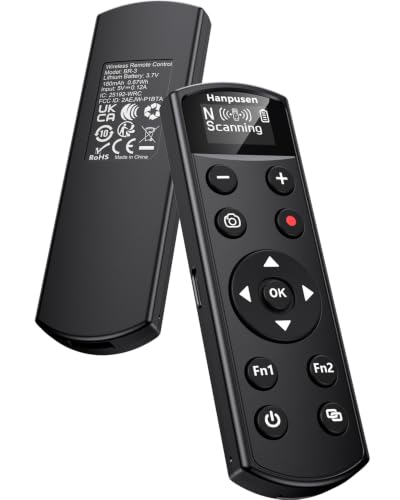
Bluetooth’s limits are structural rather than incidental. The connection inherits the phone’s sleep behaviour, so a screen that times out after thirty seconds can suspend the live view and add a wake-up delay before the next frame. The application also competes with every other demand on the phone’s radio, and a simultaneous Wi-Fi transfer of full-resolution files can crowd the link enough to make the shutter button feel lazy. Dedicated Bluetooth hand remotes avoid the phone entirely: small single-button units pair directly with compatible bodies, draw power from a CR2032 cell, and exist purely to send the release command, which makes them the closest Bluetooth equivalent of the old infrared handset.
Body support for the Bluetooth path follows the Z-mount generations closely. The Z 6 and Z 7 introduced the SnapBridge remote function to the line, and every subsequent Z body retains it, with the newer Expeed 7 models adding faster reconnection and more stable behaviour at the edge of range. The F-mount DSLRs with Bluetooth, such as the D500, D7500 and D850, use the radio primarily for the SnapBridge bridge to Wi-Fi and for location data, and their remote release support through the application varies by firmware in ways the compatibility tables spell out model by model. Checking that table before relying on a phone as your only remote is essential, because a body that transfers thumbnails happily may still refuse a remote release command.
Power consumption shapes the Bluetooth decision on long shoots. A body holding a Bluetooth link awake draws a small but continuous current, and the battery section of each Z manual warns that standby drain rises when wireless functions remain enabled between sessions. For a single evening of architectural work the cost is trivial, but a camera left paired in a bag for a week can greet its owner with a noticeably depleted pack. Radio receivers that draw body power behave similarly, while infrared reception costs the body almost nothing because the sensor is a passive listener powered at microwatt levels. Matching the wireless path to the shoot length is therefore partly an energy decision, not only a range decision.
Third-Party Radio Triggers and Interval Remotes
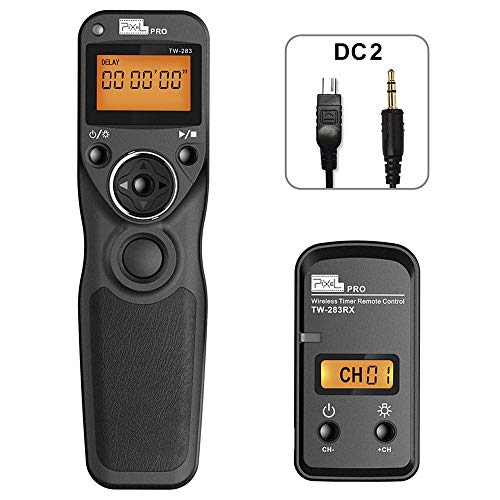
Third-party manufacturers built a large market on the gap between the infrared handset’s limits and the official radio system’s price, and their triggers now cover most Nikon bodies with model-specific cables. A typical third-party set pairs a hot-shoe or cable-connected receiver with a transmitter offering immediate release, bulb timing, a delay timer and a programmable intervalometer in one handset. The better units quote one hundred metres of open range, run the transmitter on AAA cells or a CR2032, and let the receiver double as a wired release when its own batteries die. Because the receiver connects through the camera’s release socket, these systems work on bodies with no native wireless receiver at all, which keeps older DSLRs fully remote-capable.
The cable is the detail that decides whether a third-party kit fits your body, since Nikon has used several release connectors across its range. Kits are sold with interchangeable leads, and the packaging lists the lead codes against body families, so the buyer’s job is matching the lead to the terminal rather than matching the radio to the brand. A lead that seats loosely will produce the most frustrating fault in remote photography, an intermittent connection that fires nine frames in ten and misses the decisive one. Documentation for the better kits includes a contact-cleaning and strain-relief routine, and following it matters more than any difference in radio specifications between rival sets.
Flash crossover is where third-party radio earns a second living, because many trigger receivers include a hot shoe or a sync port that fires a speedlight with the same packet that fires the camera. Systems designed for flash first and shutter second can still release a camera when the receiver is cabled to the body, reversing the usual arrangement. Photographers building a combined kit should confirm that the chosen ecosystem supports both directions, camera triggering and flash triggering, on the same channel plan. Readers comparing body choices for this kind of work may also want the broader context in best 35mm dslr cameras when weighing older full-frame bodies against newer options.
Reliability testing data published by the larger third-party brands describes thousands of actuations across temperature ranges from below freezing to summer heat, and those environmental figures are worth reading closely. Coin cells lose capacity in deep cold, sometimes delivering half their room-temperature endurance at minus ten degrees Celsius, which is why arctic and alpine photographers often prefer AAA-powered transmitters whose lithium cells hold up better. The receiver side matters less in the cold because body batteries sit inside a comparatively warm camera grip. A remote chosen for winter work should therefore be judged on its transmitter battery chemistry as much as on its headline range.
Body Compatibility: Terminals, Receivers and Mount Generations
Nikon bodies expose remote control through three physical arrangements, and identifying yours takes ten seconds with the manual’s terminal diagram. The ten-pin remote terminal, a round threaded connector on the front or side of professional bodies, carries release, autofocus and power lines and accepts the MC-30A style wired releases, the radio receiver adapters and various GPS and interval accessories. The rectangular accessory terminal on mid-range and entry bodies carries a smaller subset of the same signals and accepts the MC-DC2 style releases and their radio equivalents. Bodies with neither terminal rely on infrared reception or Bluetooth alone, which is why the smallest DSLRs pair naturally with the ML-L3 and the smallest Z bodies pair naturally with a phone.
The ten-pin terminal’s threaded collar deserves mention because it explains the professional system’s field reputation. A connector that screws home cannot vibrate loose on a camera bolted to a lighting truss or a vehicle mount, and its pins are large enough to clean with a pencil eraser in a dusty pit lane. The accessory terminal trades that security for size, using a small multi-pin plug that sits under a rubber flap, and its documentation warns against side loads that could lever the plug out of its socket. Radio receivers designed for the accessory terminal often add a hot-shoe foot purely as a mechanical anchor, borrowing the shoe for stability while the cable carries the actual signals.
Across the Z-mount range the accessory terminal survives on most bodies as the DC2-style socket, and the Z 9 class flagship adds the ten-pin terminal as part of its professional interface set. That means a single third-party radio kit with both lead types can serve an entire mixed fleet, while the official radio receiver must be bought in the variant matching each terminal family. The mirrorless bodies also change the power equation, because their receivers and Bluetooth radios share a battery that is already feeding an electronic viewfinder and a sensor that never fully sleeps. Battery endurance figures in the Z manuals are quoted with wireless functions in defined states for exactly this reason, and remote-heavy shoots should budget spare packs accordingly.
Legacy F-mount owners face one extra check, because a handful of older bodies route remote functions through the battery grip rather than the body itself. The vertical grips for several enthusiast DSLRs include their own shutter buttons and, in some cases, infrared receivers that extend the body’s native capability. A photographer who shoots with the grip fitted gains options that vanish when the grip comes off for a lighter hike. The grip manuals list these functions separately from the body manuals, so a complete compatibility picture sometimes requires reading both documents side by side. Shoppers weighing an affordable body for remote work will find the value end of the range surveyed in best affordable dslr cameras a useful companion to these terminal details.
Bulb Mode and Long Exposures for Astrophotography
Bulb mode hands the exposure length to the photographer entirely: the shutter opens when the release is fully pressed and closes when the command ends, whether that interval is forty seconds or forty minutes. Wireless control transforms bulb work because the alternative, holding a finger or even a locking cable release for the duration, invites exactly the vibration and fatigue that long exposures punish most. Radio and Bluetooth remotes with a bulb lock function let the photographer start the exposure with one press and end it with another, and interval-capable transmitters can hold the shutter open for a programmed duration with no attention at all. The camera manuals describe a related time mode on higher bodies, where one press opens the shutter and a second press closes it, duplicating the remote’s bulb lock inside the body firmware.
Astrophotography exposes every weakness in a triggering setup because the working conditions combine darkness, cold, dew and exposures measured in minutes. A remote that requires line of sight forces the photographer to stand in front of the telescope-mounted camera, blocking neither light nor warmth but risking a kicked tripod leg with every repositioning. Radio triggering removes the photographer from the rig entirely, allowing adjustments from inside a tent or car while the mount tracks. The documented enemy in this setting is dew settling on contacts and battery compartments, so experienced night photographers bag their transmitters, warm spare coin cells in an inside pocket, and confirm the link with a short daylight exposure before darkness falls.
Exposure length interacts with sensor behaviour in ways the datasheets quantify. Beyond a few minutes, dark current noise accumulates in the image, and most bodies offer a long-exposure noise reduction mode that captures a matching dark frame and doubles the total cycle time. A remote interval program must respect that doubling or the sequence will drift, with each frame starting later than the schedule assumed. The manuals state the dark-frame behaviour plainly, yet many failed star-trail sequences trace back to a timer that ignored it. Wireless remotes with a dedicated long-exposure interval mode usually expose a setting for the gap between frames, and that gap is where the dark-frame time belongs.
Star trails and tracked deep-sky work also reward remotes that can fire a sequence without waking the camera between frames. Each wake cycle on a mirrorless body reopens the shutter mechanism, re-energises the sensor and can nudge a delicately balanced mount by a fraction of a degree. Bodies that support silent or electronic shutter operation during sequences reduce that disturbance, and the remote’s job narrows to sending a clean start command at the right second. Photographers comparing mirrorless bodies for this discipline often start from the models gathered in best 4k mirrorless cameras and then check each candidate’s remote and silent-shooting specifications against their mount’s tolerances.
Mirror-Up Mode, Electronic Front Curtain and Vibration Control
The mirror slap of a DSLR is a mechanical event with a measurable signature: a large mirror accelerates, stops hard against foam buffers, and sends a shock through the body that peaks in the shutter speed range between roughly 1/8 and 1/60 of a second. Mirror-up mode separates that shock from the exposure by raising the mirror on the first press and firing the shutter on the second, giving the vibration several seconds to decay through the tripod. Wireless remotes make mirror-up practical away from the camera, because the two commands can be sent from wherever the photographer is standing, including from behind the camera where the rear infrared receiver on equipped bodies can see the handset. The body manuals note that mirror-up mode cancels automatically after about thirty seconds without a second command, a timeout that protects the sensor from accidental exposure to dust and light.
Electronic front-curtain shutter removes the second mechanical shock, the opening curtain’s travel, by beginning the exposure electronically and ending it with the physical rear curtain. Specification sheets list this mode on most recent Z bodies and on later F-mount models, with a documented caution about banding under certain artificial lighting and about rolling artefacts with fast-moving subjects. For the static subjects where remotes are used most, landscapes, architecture, macro stacks and product work, those cautions rarely apply, and the combination of electronic front curtain with a wireless release produces the lowest-vibration capture chain the hardware allows. Some bodies automate the pairing, offering an exposure-delay mode that waits a selectable interval after mirror-up before firing, which suits photographers who prefer a single press.
Macro photography at magnifications near life size magnifies vibration as literally as it magnifies the subject, so remote technique becomes the difference between a usable frame and a soft one. At 1:1 magnification a micrometre of camera movement prints as visible blur, and even the photographer’s pulse transmitted through a focusing rail can register. Wireless triggering lets the photographer step back from the bench entirely, removing breath and heartbeat from the mechanical system while the subject, often a live insect, settles. The technique sections of macro lens documentation recommend exactly this separation, pairing it with mirror-up or electronic front curtain and a delay that lets studio stands stop swaying after adjustment.
Street and documentary photographers use the same vibration logic in reverse, valuing a remote for discretion rather than stability. A camera resting on a café table or a low wall, fired from a phone in the photographer’s pocket, draws no attention and captures unposed behaviour that a raised camera would destroy. The bodies suited to that work are surveyed in best dslr cameras for street photography, and their remote options deserve the same scrutiny as their sensors. Infrared remotes serve this style well at table distances, while Bluetooth through a phone offers the most natural concealment because holding a phone attracts no notice at all.
Built-In Intervalometers Versus External Interval Remotes
Most current Nikon bodies contain a full interval timer in firmware, able to schedule a start time, an interval, a number of sequences and a number of frames per sequence, then assemble nothing but raw material for a time-lapse the photographer builds later. The firmware implementation has one decisive advantage: it lives inside the camera, so it cannot lose a radio link, run out of its own battery, or be left in another bag. Its documented limits are equally clear, because the interval menu on many bodies cannot set an interval shorter than the exposure plus processing time, cannot easily randomise timing, and offers limited bulb-ramping help for day-to-night transitions. For a straightforward sunset sequence those limits never bite, and the built-in timer is the rational choice.
External interval remotes, wired or radio-linked, exist for the cases the firmware handles awkwardly. A programmable transmitter can hold bulb exposures of differing lengths across a sequence, fire a pre-programmed number of frames with gaps measured in hours for construction documentation, and keep its schedule running while the camera body sleeps between widely spaced frames. Radio-linked versions add placement freedom, letting the photographer start, pause or extend a sequence without approaching a camera that wildlife has finally accepted. The specification differences to compare are the maximum interval, the maximum frame count, the finest timing increment, and whether the timer’s clock keeps running accurately across a full day, since cheap timers can drift by seconds per hour.
Choosing between the two is mostly a question of failure tolerance. A firmware timer fails only if the body battery dies, and the body reports its remaining capacity honestly on the top display. An external timer introduces a second battery, a second clock and a radio or cable link, each a small independent chance of an interrupted sequence. Professional time-lapse documentation therefore recommends the firmware timer for any sequence the body can express, reserving external units for bulb sequences, multi-day schedules and remote restarts. That hierarchy, simplest system first, is the same logic that governs most reliable field engineering, and remote triggering rewards it consistently.
Radio Remotes as Wireless Flash Commanders
The receiver sitting on a camera for shutter duty often shares its radio ecosystem with the flash triggers the same photographer uses for off-camera lighting, and the better systems exploit that overlap deliberately. Nikon’s radio-controlled flash system uses the same receiver family on the camera and compatible radio-equipped speedlights, allowing the WR-T10 class transmitter concept to extend into group flash control through the body’s menu when a receiver is fitted. The flash documentation describes remote groups, channel selection and modelling-light control travelling over the same 2.4 gigahertz link that carries shutter commands in the triggering configuration. A photographer invested in that ecosystem buys one radio language and speaks it to both the camera and the lights.
Third-party ecosystems make the crossover even more explicit, because their receivers are usually flash triggers first, with a camera-release cable port as a standard feature. One transmitter can then fire a remote camera and, a fraction of a second later or simultaneously by design, the flashes that light its frame, enabling self-portrait and remote-camera sports setups that would otherwise need two radio systems. The timing documentation for such setups warns about the camera’s own shutter lag entering the synchronisation budget, a detail covered in the lag section below. When the remote camera must catch a peak moment lit by flash, the trigger delay, the camera response and the flash duration all stack, and the published figures for each element let the photographer calculate whether the arrangement can work at all.
Optical flash control remains the older alternative, using the pop-up or commander flash’s pre-flashes to instruct remote speedlights, and it shares infrared’s line-of-sight fragility outdoors. Radio commanding displaced it for location work precisely because sunlight and distance defeat optical pulses at exactly the ranges where remotes matter most. The shutter remote buyer who also lights should therefore read the flash compatibility chapter of any candidate system before purchase. A trigger that releases the camera beautifully but speaks to no flash in the bag solves only half the wireless problem, and ecosystems are rarely cross-compatible after the fact.
Batteries, Rated Range and Shutter Lag
Coin Cells, AAA Packs and Body Power
Battery choices in remote systems follow a simple trade between size and service life. The CR2032 coin cell, three volts and roughly 220 milliamp-hours, powers most transmitters and Bluetooth hand remotes because it is thin, light and available in any pharmacy on earth. The CR2025 in the infrared handset is its slimmer sibling with slightly lower capacity, adequate because infrared transmissions are so brief. Receivers divide into body-powered designs, which sip from the camera pack through the terminal, and self-powered designs using AAA cells that keep working when the camera is off and can wake it for a scheduled frame. Each architecture suits a different workflow, and the manuals state the draw and expected endurance in actuations rather than hours, which is the honest unit for a device that sleeps between commands.
Reading Range Figures Honestly
Rated range is a laboratory number describing free-space performance, and translating it into a personal expectation requires derating for environment. A useful field rule from radio documentation is to halve the rated figure indoors, halve it again through heavy foliage or crowds, and treat the result as the dependable working distance. Antenna orientation matters as well, because the small antennas in receivers radiate unevenly, with nulls in predictable directions that the better manuals diagram. Rotating a receiver on its mount or raising a remote camera so its receiver clears a metal railing can recover a link that seemed out of range. None of this requires test equipment; it requires remembering that the published figure describes the best case and planning the shot inside a fraction of it.
Lag From Button to Exposure
Shutter lag in a remote chain has three components: the radio packet’s travel and processing time, the camera’s wake and metering response, and the mechanical sequence of mirror and curtains. Radio processing typically adds only a few milliseconds, effectively nothing beside a DSLR’s documented shutter lag of roughly forty to sixty milliseconds in a ready state. The real delays come from sleep states, because a body that has powered down its metering can take several hundred milliseconds to wake, focus and fire after the first command arrives. Photographers triggering remote cameras for sport therefore keep the remote body awake with periodic half-press signals, a feature the better transmitters automate with a selectable keep-awake interval. Mirrorless bodies in electronic shutter mode cut the mechanical component sharply, which is one reason remote wildlife rigs have migrated to them despite their heavier standby drain.
Half-Press Behaviour and Autofocus Over a Radio Link
Every Nikon release control, wired or wireless, is really two switches sharing one button, and the distinction governs how a remote interacts with autofocus. The half-press closes the first switch, waking the meter, starting autofocus with the lens motor, and holding focus while the photographer waits for the decisive arrangement of the scene. The full press closes the second switch and starts the exposure with whatever focus state the lens has reached at that instant. Radio transmitters reproduce both stages faithfully, which is why their buttons carry a noticeable two-stage travel copied from the camera body’s own release. Infrared handsets cannot hold a half-press state across a one-way light pulse, so bodies interpret their command according to the focus mode in force, usually acquiring focus and firing in a single automated sequence.
That difference changes technique with moving subjects at remote cameras. A radio operator can half-press to wake a sleeping body, let the autofocus settle on a perch or a finish-line marker, and then hold that state indefinitely while waiting for the subject to arrive. The documentation for professional radio systems describes focus retention during half-press lasting as long as the button is held, with the body metering continuously and the battery paying the corresponding price. Photographers who pre-focus a remote camera manually gain even more certainty, because the release then carries no autofocus delay at all, and the only remaining lag is the body’s mechanical response. Setting the lens to manual focus and taping the ring against accidental movement is a standard pitfall-avoidance step in remote rig documentation.
Focus confirmation feedback separates mature radio systems from basic ones. Better receivers return a signal to the transmitter when the camera achieves focus, lighting a small indicator so the distant operator knows the remote body is ready rather than hunting. Hunting happens most in the low light where remotes are popular, at dawn hides and evening stadiums, and an operator without feedback can fire a sequence of confidently unsharp frames. Where no feedback channel exists, the standard workaround is a pre-shoot routine: fire a frame, review it at the camera, adjust the focus point or the aperture for depth, and only then retreat to the triggering position. The extra walk is cheap insurance against a silent focus failure an hour later.
Weather Sealing, Dew and Field Reliability
Remote equipment lives outdoors in conditions that camera bodies are sealed against but small plastic handsets often are not. Manufacturer environmental ratings for transmitters and receivers typically specify operating ranges from minus ten to plus forty degrees Celsius, with storage ranges extending further in both directions. Humidity is the slower enemy, condensing inside an unsealed handset moved from a warm car into cold night air, and the resulting film on battery contacts produces intermittent behaviour that mimics radio interference. Field documentation for expedition equipment recommends sealing remotes in a bag with the air squeezed out before temperature transitions, letting condensation form on the bag instead of the electronics. A silica gel sachet in the remote pouch absorbs what moisture remains and costs almost nothing to maintain.
Rain raises a separate mechanical question at the receiver, because the terminal sockets on most bodies sit under rubber covers that a receiver plug displaces. A camera working under a rain cover tolerates this well, but an uncovered remote camera at a sports venue can channel water along the receiver cable toward the socket. Technicians who rig cameras in stadiums route cables with a deliberate drip loop, a downward sag that lets water fall off the cable’s lowest point instead of travelling into the connector. The same loop provides strain relief when the cable is brushed by passing crew. These are small rigging habits, invisible in specification tables, that decide whether a wireless setup survives a wet season or a single storm.
Sand and dust attack the coin-cell compartments of transmitters, whose sliding covers are rarely gasketed. A single beach shoot can leave grit in the battery tray that later prevents the cover from seating and the cell from making firm contact. The field remedy described in maintenance guides is a blower brush kept in the same pouch as the remote, used before every battery change rather than after a failure. Receivers that draw body power avoid the compartment problem on the camera side entirely, one more argument for body-powered designs in harsh environments. Photographers choosing between otherwise equal systems for expedition work should weigh these sealing details as heavily as range figures, because the environment, not the radio, ends most remote shoots early.
Multi-Camera Arrays and Synchronised Release
Radio remotes scale from one camera to many, and synchronised arrays are where channel planning and lag figures stop being academic. A receiver on each body, all listening to one transmitter channel, fires the whole array from a single press, producing the matched viewpoints used for sports finishes, scientific events and bullet-time style sequences. True simultaneity is limited by the variation in each body’s response, which the manufacturers’ lag figures bound to a spread of several milliseconds between identical models. For a sprinter crossing a line that spread is irrelevant, while for a bursting balloon study it defines the fastest event the array can freeze consistently. Array builders measure their actual spread with a rotating test target during setup rather than trusting the brochure figures.
Power management across an array deserves planning because ten receivers draw ten small currents and ten bodies wake on the same schedule. A rig left armed for a six-hour event needs either generous body batteries or mains adapters for the cameras, and the checklist for such rigs in professional documentation reads more like an electrical plan than a photography plan. The transmitter side stays simple, since one handset with a fresh coin cell can command the array all day. Labelling each receiver with its body number and channel before rigging prevents the classic array fault, a camera silently listening on the wrong channel while its neighbours fire. That labelling habit, borrowed from audio stagecraft where radio microphones multiply the same way, transfers to camera arrays without modification.
Security, Interference and Neighbouring Systems
The 2.4 gigahertz band is shared territory, and a remote link operating there competes with wireless networks, cordless peripherals and the control links of drones and model aircraft. Remote manufacturers answer with frequency agility or with fixed channels chosen in quieter parts of the band, and the documentation for professional systems explains which strategy each model follows. Frequency-agile systems hop between sub-channels many times per second, so a single congested frequency costs a packet occasionally rather than the whole link. Fixed-channel systems rely on the photographer selecting a clear channel at setup, which works well at a known venue and poorly at a festival where the spectrum changes hourly. Buyers who work crowded events should favour agility, while studio photographers gain nothing from it and can choose on other merits.
Accidental cross-triggering between neighbouring photographers is the interference problem owners actually meet, and it is solved socially as much as technically. Two radio sets on the same channel at one wedding will fire each other’s cameras, an outcome both amusing and professionally unacceptable, so working photographers announce channels the way radio microphone users announce frequencies. Coded systems with group identifiers reduce the risk further because the receiver obeys only packets carrying its code, even on a shared channel. Infrared remotes sidestep the entire question in one direction and worsen it in another: any compatible handset fires any listening body, which is why a second photographer’s remote can trigger your camera at a press event if both bodies face the same way. Knowing your system’s exposure to neighbours belongs on the pre-shoot checklist beside battery checks.
Deliberate security is rarely a concern for shutter control, since the worst outcome of a spoofed packet is an unwanted exposure, but the pairing records on Bluetooth systems deserve ordinary care. A body paired to a phone keeps that trust relationship until it is cleared in the menu, and a sold camera should have its pairing list wiped like any other personal setting. The reset procedures in each manual include a network settings reset for exactly this housekeeping purpose. Radio systems with physical channel switches carry no stored trust at all, which some owners count as a simplicity advantage when equipment circulates among assistants and rental houses.
Cost of Ownership Beyond the Purchase
The running cost of a remote system is dominated by batteries, spare leads and the occasional lost receiver cap rather than by the headline hardware. Coin cells bought singly at travel destinations cost several times their bulk price, so a working kit carries spares bought calmly in advance, stored in their blister cards to prevent the short circuits that loose cells suffer in a metal-filled camera bag. Spare terminal leads for third-party systems deserve the same foresight because a lead damaged on location cannot be improvised, while a transmitter with a flat cell can sometimes be replaced by a phone application as an emergency fallback. Owners who standardise on one ecosystem across several bodies also save on duplicated chargers, cables and learning time, an economy the specification tables never show.
Resale and longevity follow the terminal standards rather than the radio fashion of any given year. A receiver built for the ten-pin terminal fits decades of professional bodies and will fit their successors as long as the standard survives, which it has through several body generations already. Accessory-terminal equipment enjoys a similarly long reach across the mid-range lines of both mounts. Bluetooth hand remotes are the most exposed to obsolescence because they depend on pairing profiles that future firmware could revise, although the underlying standard’s backward compatibility has so far protected early units. Weighing that longevity belongs in any honest buying decision, since a remote often outlives the body it was bought for and should ideally serve the next one too.
Check prices on Amazon
Live listings for the shortlist in this guide are pulled from Amazon below, so prices and availability are always current at the moment you look.

Vello FreeWave Micro Wireless Remote Shutter Release for Select Nikon DSLRs

Nikon Bluetooth Camera Remote Control, Black (ML-L7)


Nikon D7500 20.9MP DSLR Camera with AF-S DX NIKKOR 18-140mm f/3.5-5.6G ED VR Lens, Black
Buying Checklist and Final Recommendations
Begin the buying decision with the body, not the remote, by confirming which of the three wireless paths your camera actually supports and which terminal it carries. Check the manual’s remote control section for infrared receiver placement, the terminal diagram for a ten-pin or accessory socket, and the wireless section for Bluetooth remote support, because those three facts eliminate most of the catalogue immediately. Decide next how far from the camera you genuinely work, since a studio portraitist and a wildlife photographer need different radios even when their bodies are identical. Match the battery system to your climate and your tolerance for spares, remembering that coin cells fade early in severe cold while AAA lithium cells keep working.
Then weigh the secondary functions that separate otherwise similar systems: bulb lock behaviour, interval programming depth, channel count for multi-photographer venues, flash ecosystem crossover, and a keep-awake function for remote sports work. Confirm that any third-party kit ships the correct lead for your terminal and that the lead is available separately as a spare, because cables fail more often than radios. Read the receiver’s mounting arrangement for security, since a receiver dangling by its cable beside a tripod leg will eventually be stepped on or swung into a door frame. Finally, buy from the ecosystem you expect to expand, because remotes, receivers and flash triggers accumulate into a system whose value lies in their shared language.
For infrared-equipped bodies used at close range, the simple handset remains the most reliable money in remote photography, asking only line of sight and a fresh coin cell every few years. For mixed fleets and serious field work, a radio system matched to your terminal type delivers the range, the wall penetration and the flash crossover that infrared cannot approach. For Z-mount owners who already carry a phone everywhere, the Bluetooth path costs nothing to start and reveals quickly whether a dedicated remote would earn its place in the bag. Whichever path you choose, practise the full sequence at home, in daylight, before the shoot that matters, because every failure mode described in this guide announces itself politely in rehearsal and rudely in production. A wireless release for a Nikon earns its keep the first time a once-only frame comes home sharp because your hand was somewhere else entirely.
Related guides
- Best 400 FPS High Speed Cameras: The Honest Truth About Burst Slow Motion
- Best Airbnb Security Cameras: Compliant Outdoor Cameras and Noise Sensors for Hosts
- Best 1080p IP Cameras: PoE Domes, Turrets, Bullets and a PTZ That Earn Their Cable
- Best AC Powered Wireless Security Cameras: Wi-Fi Data, Mains Power, Zero Sleep


