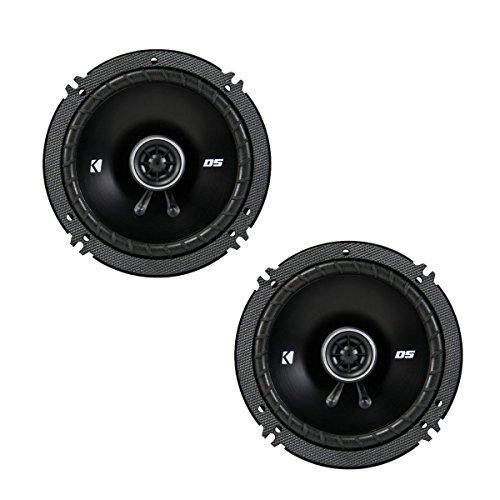
Our Top Picks


What's inside
- What separates the ranges in engineering terms
- C-CAM, RST and the idea of a rigid, light cone
- MPD tweeters and high-frequency design
- Bookshelf models: what the smaller cabinet gives and takes away
- Floorstanding models and the physics of larger rooms
- Centre channels: matching the speaker that carries the film
- On-wall, surround and effects speakers
- Impedance, sensitivity and what amplifier power really means
- Placement: ports, foam bungs, walls and toe-in
- Choosing between Bronze, Silver, Gold and Platinum
- System building, cables and the questions worth asking a dealer
- Reading a Monitor Audio specification sheet properly
- Ownership: running in, care and longevity
- Stands, subwoofer integration and measuring the result
- Check prices on Amazon
- Verdict: buy the range that fits the room, then place it properly
As an Amazon Associate I earn from qualifying purchases. This post may contain affiliate links at no extra cost to you.
Monitor Audio is a British loudspeaker brand, founded in 1972 and based in Rayleigh, Essex, and the name causes a persistent misunderstanding that this guide clears up at the start. This article is about that company’s home loudspeakers: the Bronze, Silver, Gold and Platinum ranges, in bookshelf, floorstanding, centre-channel and on-wall forms. It is not about studio monitor speakers, the nearfield loudspeakers used at mixing desks, and it is not about loudspeakers built into computer monitors. Those are different product categories with different design goals, different connections and different buying criteria. Keeping the distinction clear matters because a search for the brand can otherwise lead a reader toward powered desktop products when the equipment actually under discussion here is mostly passive hi-fi and home-cinema loudspeakers that need a separate amplifier or AV receiver.
That single fact shapes everything that follows. A Monitor Audio Bronze, Silver, Gold or Platinum loudspeaker is a cabinet, a crossover network and a set of drive units engineered to work as a system. It does not contain its own amplification in the conventional ranges covered here, it does not connect by Bluetooth or USB, and it does not make sound until an amplifier supplies current through loudspeaker cable. The quality of the result therefore depends on three linked decisions rather than one purchase: choosing a range whose driver materials and cabinet construction suit the room, choosing a model whose size and bass output suit the listening distance, and supplying amplification whose power and current delivery suit the loudspeaker’s impedance and sensitivity. Manufacturer documentation and published specifications are the basis for the figures quoted in this guide, because those documents state the dimensions, frequency responses, crossover frequencies, impedances and sensitivities that allow fair comparison between models.
The company’s ranges are arranged as a ladder, and understanding the ladder is more useful than memorising individual model names, which change between generations. Bronze is the entry point, using metal-cone drivers and well-finished but cost-controlled cabinets to bring the house sound within reach of a first separates system. Silver moves to stronger cabinets, more advanced cone profiles and a wider choice of floorstanding and centre models for larger rooms and more serious home cinema. Gold adds ribbon-derived high-frequency technology adapted into the company’s MPD tweeter in recent generations, more elaborate cabinet work and drivers intended for lower distortion at higher output. Platinum sits at the top, with the most advanced cone materials, the most rigid cabinets and finishes and prices that place it in specialist-dealer territory. Each step upward buys measurable things, not just a badge: stiffer cones, better-controlled breakup, more inert cabinets, more carefully matched crossovers and greater power handling.
What separates the ranges in engineering terms
Cabinet construction is the first separator, and it is easy to underestimate because a cabinet looks like a box. A loudspeaker cabinet has to do two contradictory jobs: hold the drivers rigidly in position so their cones move against a stable reference, and avoid storing and re-radiating energy as colouration. Thin panels flex under the pressure changes inside the cabinet, and that flexing adds a delayed, lower-level version of the music that blurs detail. Monitor Audio addresses this with progressively thicker front baffles, internal bracing that ties opposing panels together, and, in upper ranges, cabinet geometries and materials chosen to push panel resonances higher in frequency and lower in amplitude. When a specification sheet lists a heavier weight for a similarly sized Silver or Gold model than for a Bronze equivalent, much of that difference is cabinet and driver magnet mass, and it is a useful clue rather than a vanity figure.
The second separator is driver material and geometry, covered in detail in the technology section below. Lower ranges use C-CAM aluminium-magnesium cones with ceramic coating; upper ranges refine the cone profile, add stronger motors and, at Platinum level, use carbon-fibre and honeycomb structures in recent designs. The third separator is the crossover, the network that divides the signal between tweeter and bass or midrange drivers. A better crossover uses tighter-tolerance components, steeper or more carefully shaped slopes and better layout to keep drivers working inside the frequency band where each behaves well. Crossover quality rarely appears as a headline specification, yet it determines how seamlessly a two-way bookshelf model hands over from a large cone that beams at high frequencies to a small dome or ribbon-type tweeter that cannot reproduce low frequencies.
The fourth separator is choice within the range. Bronze typically offers a compact bookshelf, a larger bookshelf, one or two floorstanders, a centre channel and effects or on-wall options, enough to build a coherent stereo pair or a 5.1 system. Silver broadens that menu with additional floorstanding sizes and a larger centre for bigger screens. Gold and Platinum narrow the menu again toward fewer, more specialised models, because at those levels buyers are usually building a considered stereo system or a high-end cinema with matched channels rather than shopping for the widest possible catalogue. When comparing generations, check which centre channel belongs to which range and generation; mixing a centre from an older generation with newer left and right speakers can work electrically, but the voicing match that makes dialogue lock to the screen may be less exact.
C-CAM, RST and the idea of a rigid, light cone
C-CAM stands for Ceramic-Coated Aluminium Magnesium, and the name describes the construction precisely. The base cone is an aluminium-magnesium alloy, chosen because it is light and stiff for its weight. A ceramic alumina layer is then applied to the surface, raising rigidity further and damping the cone’s natural ringing. The engineering problem being solved is breakup: every cone behaves as a perfect piston only up to a frequency determined by its size and stiffness. Above that frequency the cone flexes in complex patterns, different parts moving in opposite directions, which produces peaks and dips in response and audible harshness. A stiffer, better-damped cone pushes breakup higher, ideally above the crossover point where the tweeter takes over, so the driver is never asked to reproduce frequencies at which it misbehaves.
RST, or Rigid Surface Technology, tackles the same problem geometrically. Instead of a smooth cone, the surface carries a pattern of dimples, originally inspired by the way origami folds stiffen a sheet. A dimpled surface resists flexing in the same way a pressed panel on a car body resists denting better than a flat sheet of the same thickness. Later RST II profiles refined the pattern and the cone’s surround and voice-coil coupling. The practical benefit stated in manufacturer literature is a cone that can be thinner and lighter while retaining rigidity, which improves transient response because a lighter cone starts and stops more readily under the control of the motor. For a listener, the relevant translation is not a slogan about speed but a specification consequence: midrange clarity at the crossover region, where the ear is most sensitive and where a large cone is most prone to colouration.
Platinum-level designs extend the same logic with different materials, including carbon-fibre cones and, in the flagship models described in company documentation, a honeycomb sandwich construction referred to as RDT, Rigid Diaphragm Technology. A sandwich of thin stiff skins around a light core achieves very high stiffness for very low mass, the same principle used in aircraft flooring and high-end bicycle frames. The point of rehearsing these technologies in a buying guide is that they explain the price ladder in physical terms. Each material step costs more to form, coat and assemble, and each is justified only if the rest of the system, cabinet, motor and crossover, is good enough to reveal the improvement. That is why the ranges should be compared as complete designs rather than by cone material alone.
MPD tweeters and high-frequency design
High frequencies present the opposite problem to bass: the radiating area must be small and light, yet it must move enough air to reach realistic levels without distortion. Traditional dome tweeters in the Bronze and Silver ranges use C-CAM domes, often gold-anodised in appearance, with vented magnet assemblies and, in several generations, a waveguide or Uniform Dispersion element intended to control how treble spreads into the room. Controlled dispersion matters because a tweeter that beams narrowly will sound bright only on axis and dull a seat to the side, while one that sprays treble widely at the top octave but narrowly lower down will interact unevenly with walls. A waveguide can smooth that transition so stereo imaging and tonal balance hold together across a sofa rather than at a single sweet spot.
The MPD, or Micro Pleated Diaphragm, tweeter used in Gold and Platinum ranges works differently. Rather than a dome moving back and forth as a piston, an MPD uses a pleated diaphragm whose folds compress and expand, squeezing air out at higher velocity than the diaphragm itself moves. The principle is related to the air-motion transformer. Because the diaphragm moves only a fraction of the distance a dome would need for the same output, it can remain in its linear range at higher levels, and its effective radiating area is larger than its footprint suggests. Manufacturer documentation quotes extended high-frequency response well beyond audibility for these tweeters; the audible argument for that extension is not that listeners hear the top octave of ultrasound, but that a tweeter operating comfortably within its range at 20 kHz, rather than at its limit, tends to show lower distortion and a smoother roll-off in the audible band.
Buyers comparing ranges should therefore look at the tweeter alongside the crossover frequency. A model crossing over lower asks the tweeter to handle more of the upper midrange, which favours a robust tweeter design and can improve dispersion because the smaller radiator takes over before the larger cone starts to beam. A model crossing over higher protects the tweeter and simplifies its job but demands more from the bass-mid driver at frequencies where breakup threatens. Neither choice is automatically superior; the published combination of crossover frequency, driver sizes and measured response in manufacturer literature tells you which compromise a given design has taken. This is also why a centre channel from the same range matters: its tweeter and crossover are voiced to match the left and right models, so pans across the front soundstage do not change character as they cross the middle.
Bookshelf models: what the smaller cabinet gives and takes away
Bookshelf loudspeakers in the Bronze and Silver ranges are the natural starting point for most rooms, and the name is misleading in one respect: they perform best on proper stands, not on a shelf. A stand places the tweeter at ear height when seated, decouples the cabinet from a resonant surface and allows the rear port, where fitted, room to breathe. Typical compact models use a bass-mid driver around 5.25 to 6.5 inches with a 1-inch tweeter in a two-way configuration, and published frequency responses commonly extend usefully into the 50 to 60 Hz region in-room, depending on generation and measurement conditions. That is enough extension for acoustic music, voices and most film effects at moderate levels in a small to medium room, provided expectations about deep bass are realistic.
The trade-off is displacement. Bass output at low frequencies is governed by how much air a driver can move, which is cone area multiplied by excursion. A single 6.5-inch driver in a compact cabinet cannot move as much air as the twin or larger drivers of a floorstander, so at high levels in a large room it will reach its limits earlier, showing strain as compression and distortion rather than as a clean stop. Sensitivity figures help here: a compact model quoted around 86 to 88 dB at 1 watt at 1 metre will need roughly four times the amplifier power of a model quoted 3 dB higher to reach the same level, because every 3 dB increase in sound pressure requires a doubling of power. In a bedroom or study at a listening distance of two metres, that hardly matters. Across a five-metre open-plan space at cinema levels, it matters a great deal.
Standmount models also offer a placement advantage that floorstanders cannot match: they can be moved. A buyer who is still learning a room can experiment with distance from the rear wall, toe-in angle and stand height before committing, and can add a subwoofer later to fill in the lowest octave while the bookshelf pair handles everything above the subwoofer crossover with less strain. Several Monitor Audio ranges pair naturally with the company’s own subwoofers, but any well-specified subwoofer with an adjustable crossover and phase control can be integrated if levels are set carefully. The bookshelf-plus-subwoofer route also suits rooms where a tall floorstanding cabinet would dominate visually or obstruct a walkway, a practical consideration that specification sheets do not capture but that decides many real purchases.
Floorstanding models and the physics of larger rooms
A floorstanding loudspeaker uses its greater cabinet volume and driver count to solve the displacement problem directly. Typical Silver and Gold floorstanders use two or three bass drivers, sometimes in a 2.5-way arrangement where the lowest driver works only at bass frequencies while the upper bass-mid driver continues into the midrange, or a full three-way arrangement with a dedicated midrange driver. A dedicated midrange unit is a genuine engineering advantage: freed from large bass excursions, a smaller midrange cone can reproduce voices and instruments with less intermodulation distortion, because the cone is not simultaneously trying to move far for a bass note and precisely for a vocal harmonic. Published crossover frequencies in three-way designs show this division clearly, with handovers in the few-hundred-hertz region and again in the low kilohertz region.
Larger cabinets also change port behaviour and bass tuning. A floorstander’s internal volume allows a lower port tuning for the same driver set, extending bass response, and several Monitor Audio designs use port technology intended to reduce turbulence noise, including rifled or flared port profiles described in company literature as HiVe, High Velocity, port technology. Port noise becomes audible as chuffing on deep, loud passages when air velocity in a narrow port turns turbulent; a larger, well-shaped port moves the same air more quietly. Even so, a floorstander that measures impressively in an anechoic specification still obeys room acoustics at home. Placed in a corner it will excite room modes strongly and can sound boomy regardless of pedigree, which is why the placement section of this guide applies with even more force to the biggest models in each range.
Choose a floorstander when the listening distance is roughly three metres or more, when the room volume is large enough that a compact model would be worked hard, or when full-range stereo music without a subwoofer is the priority. Choose against one when the only available position is hard against a wall in a small room, when neighbours below make deep bass a social problem, or when the budget spent on the larger cabinet would be better spent on the next range up in bookshelf form plus stands. That last comparison, smaller model from a higher range against larger model from a lower range, is the most instructive in the whole catalogue. The higher-range bookshelf will usually offer better drivers, tweeter and cabinet, while the lower-range floorstander offers more bass and output. Room size and listening distance, not prestige, should arbitrate between them.
Centre channels: matching the speaker that carries the film
In a home-cinema system the centre channel reproduces the majority of dialogue and much of the on-screen action, yet it is often bought as an afterthought. Matching means three things. First, the centre should come from the same range and generation as the left and right speakers, so its tweeter type, cone materials and voicing align; a voice panning from left to centre to right should not change timbre as it moves. Second, its dispersion should suit horizontal placement. A conventional two-way with vertically arranged drivers turned on its side would beam badly, so dedicated centre designs use arrangements such as a tweeter between two bass-mid drivers, or a three-way layout with a vertically oriented midrange and tweeter in the middle, to keep dialogue intelligible across several seats. Check the published design rather than assuming any horizontal box disperses evenly.
Third, the centre needs placement respect equal to the main pair. It should sit as close to screen height as the furniture allows, ideally with its tweeter near the ear height of seated listeners and its front baffle at or slightly ahead of the front edge of any cabinet it rests on. Placing a centre deep inside an enclosed TV unit traps its output in a resonant cavity, muffles consonants and defeats the purpose of buying a matched model. If the centre is rear-ported and must sit close to a wall or inside furniture, the foam bungs supplied with many Monitor Audio models can tame the resulting bass emphasis, as explained in the placement section. Amplifier or AV receiver setup then completes the job: set the centre’s level and distance correctly, choose a crossover to the subwoofer in the region the manufacturer suggests for the model’s size, commonly around 80 Hz for compact centres, and resist boosting dialogue by ear alone without checking overall balance at the main seat.
For readers building gradually, the sensible order is a stereo pair first, then the matching centre, then surround channels, then a subwoofer, or a subwoofer before surrounds if film impact matters more than envelopment. What should not happen is a substitution at the centre position with an unrelated brand chosen because it was discounted. The front three channels form one instrument. Surround channels are more forgiving of a different voicing because they mostly carry ambience and effects that do not need to blend seamlessly with a voice at the front, although same-range surrounds remain the ideal and simplify level and tonal matching.
On-wall, surround and effects speakers
On-wall models solve a different problem: how to get genuine loudspeaker performance where floor space or room layout rules out cabinets on stands or the floor. Monitor Audio’s on-wall and architectural offerings across generations include shallow cabinets designed to mount flush, sometimes styled to sit beside a wall-mounted television without projecting far into the room. The engineering compromise is internal volume. A shallow cabinet cannot produce deep bass from small drivers, so published frequency responses for on-wall designs roll off higher than their freestanding equivalents, and a subwoofer stops being optional and becomes part of the design assumption. In return, wall mounting fixes the speaker-to-wall distance at a known value, and a designer can voice the speaker for that boundary reinforcement rather than leaving the buyer to find it by trial.
Surround and effects channels in the Bronze and Silver ecosystems have included dedicated designs with switchable bipole and dipole operation in some generations. In bipole mode all drivers work in phase, giving a more localisable sound; in dipole mode opposing drivers work out of phase, creating a diffuse field that is harder to pinpoint, traditionally favoured for surround ambience in smaller rooms. Modern object-based audio formats generally favour direct-radiating surround speakers placed at defined angles, so a buyer planning a system around those formats should check current manufacturer guidance for the specific model rather than assuming a dipole default. Height channels for overhead formats add another placement discipline, with in-ceiling models from the company’s architectural lines often chosen so the visible room stays uncluttered.
A reader whose main system must double for music should keep the stereo pair as freestanding models even if every other channel goes on a wall or in a ceiling. Music in stereo uses only the front left and right speakers, and their placement for imaging, away from walls and symmetric about the listening seat, rarely coincides with the positions a television dictates for on-wall mounting. Splitting the difference usually satisfies neither use. It is better to place the stereo pair correctly for music and let the centre and surrounds serve the screen, accepting that film and music optimise slightly differently within the same room.
Impedance, sensitivity and what amplifier power really means
Two figures on a Monitor Audio specification sheet decide amplifier matching: nominal impedance in ohms and sensitivity in decibels. Impedance is not a fixed resistance; it varies with frequency, and the nominal figure, commonly 8 ohms or 6 ohms across these ranges, with a stated minimum that may dip lower, summarises a curve the buyer rarely sees. An amplifier must supply current as impedance falls, and a model whose minimum dips toward 4 ohms in the bass region asks more of the amplifier at exactly the frequencies where music demands most energy. This is why a loudspeaker can be described as an easy load or a difficult load even at the same nominal rating, and why manufacturer-recommended amplifier ranges in the documentation deserve attention rather than the common habit of matching wattage numbers alone.
Sensitivity is usually quoted as the sound pressure produced at 1 metre with 1 watt of input, or sometimes with 2.83 volts, which equals 1 watt only into 8 ohms and gives a flattering figure into lower impedances, so check which convention a given sheet uses before comparing brands. Work the arithmetic once and the figures become intuitive. A speaker at 88 dB for 1 watt produces 91 dB with 2 watts, 94 dB with 4 watts, 97 dB with 8 watts and so on, each doubling of power adding 3 dB, before subtracting losses as listening distance increases. Doubling distance in free conditions costs about 6 dB, though room reflections return some of that energy. A listener three metres from a pair of 88 dB speakers who wants peaks around 100 dB at the seat therefore needs an amplifier comfortably capable of tens of watts per channel into the speaker’s impedance, with headroom beyond that for clean transients.
Headroom is the part buyers most often underbuy. Average listening levels are modest, often below a watt, but music is dynamic: a drum strike or orchestral peak can demand twenty times the average power for a fraction of a second. An amplifier driven into clipping during those peaks produces harsh distortion that can damage tweeters, because a clipped waveform concentrates energy at high frequencies. A more powerful amplifier used sensibly is therefore usually safer for speakers than a weak one driven flat out, a point manufacturer guidance makes repeatedly. Equally, published maximum sound pressure and power-handling figures for each model set an upper bound that should be respected, particularly with floorstanders in large rooms where the temptation is to keep turning up. Match within the recommended range stated for the specific model, prioritise amplifiers with honest current delivery into low impedances, and treat wattage advertised without an impedance, distortion figure or frequency range as marketing rather than specification.
AV receivers versus stereo amplifiers
The same loudspeakers behave differently depending on the electronics category driving them. An AV receiver divides its power supply among five or more channels, and its per-channel rating is often quoted with only two channels driven, so a receiver and a stereo amplifier with identical headline wattage may deliver very different real output when a film soundtrack drives every channel at once. For a Bronze or Silver cinema system in a medium room, a receiver within the manufacturer’s recommended range remains entirely appropriate, provided its room-correction and bass-management setup is run carefully. For a Gold or Platinum stereo pair used mainly for music, a dedicated stereo amplifier with a stiff power supply will generally extract more control, particularly in the bass, where driver damping depends on the amplifier maintaining authority as impedance varies.
Bi-wiring and bi-amping terminals appear on many models in these ranges, with removable links between separate high-frequency and low-frequency terminal pairs. Bi-wiring replaces one cable run with two from a single amplifier output; its measurable effect is small and it should never displace spending on the speakers themselves, stands or room placement. Bi-amping, using separate amplifier channels for treble and bass sections, can offer real gains in a multi-channel system with spare receiver channels, but it demands careful level matching and the crossover inside the speaker still operates, so it is not the same as active crossovers. The terminal links must be replaced if a single cable run is used after experimentation, and they must be tight, because a loose link is a common and entirely avoidable cause of a missing treble or bass section that gets misdiagnosed as a faulty driver.
Placement: ports, foam bungs, walls and toe-in
Most freestanding Monitor Audio models are bass-reflex designs, using a port to extend low-frequency output from a given cabinet size. Many place that port on the rear panel, which makes distance to the wall behind the speaker an acoustic variable rather than a purely visual one. A rear port firing close to a wall receives strong reinforcement at bass frequencies, raising output but also risking boom and a thickened upper bass that masks midrange detail. Manufacturer guidance for rear-ported models generally starts around 30 to 50 centimetres from the rear wall for freestanding use, adjusted by ear and by room, with greater distances usually giving cleaner bass at the cost of less reinforcement. Side walls matter too: a speaker close to one side wall and far from the other will image unevenly, so symmetry about the listening position should be preserved where the room allows.
Foam bungs, supplied with many models in these ranges, are the intended tool when placement cannot be ideal. Inserting a bung into the port partly seals the cabinet, converting its behaviour toward that of a sealed box: bass extension reduces, but the roll-off becomes gentler and the excess energy near a wall is tamed, often restoring clarity to voices and bass lines even though the deepest notes quieten. Some designs offer a two-stage approach, with a bung that can be used whole or with its centre removed, giving an intermediate degree of damping. Using bungs is not an admission of failure and it is not harmful to the driver when done with the manufacturer’s own accessories; it is a tuning option designed for real rooms, including rooms where a centre channel must sit on furniture or a bookshelf pair must live in an alcove.
Toe-in, the angle at which speakers point inward toward the listener, balances treble level and stereo focus. Pointing a speaker directly at the listening seat gives the brightest, most focused presentation its tweeter and waveguide allow; angling it straighter into the room softens the top end and widens the area over which the sound stays coherent. Because dispersion designs differ between ranges, with waveguide-equipped models behaving differently from plain dome designs, the correct angle is the one found by small adjustments from the starting geometry in the manual: speakers and listener forming a triangle, tweeters at ear height, distances to rear and side walls as equal as the room permits. Change one variable at a time, and use a familiar vocal recording, because the human voice exposes tonal imbalance and image wander faster than effects-laden material does.
Room size, listening distance and choosing by scale
Room recommendations can be reduced to a few defensible rules drawn from the specifications. In a small room up to roughly twelve square metres, with a listening distance under two and a half metres, a compact Bronze or Silver bookshelf model, bungs available if walls are close, will fill the space without exciting the worst room modes, and money saved against a floorstander can fund stands and a better amplifier. In a medium room of twelve to twenty-five square metres, the larger bookshelf models and the smaller floorstanders from Silver and Gold come into their own, with the choice between them turning on whether a subwoofer is planned. In a large room beyond that, or an open-plan space where the effective volume is the whole floor, floorstanders with greater displacement and sensitivity, or bookshelf models firmly partnered with subwoofers, stop being luxuries and become the physically appropriate tool.
Listening distance interacts with these rules through direct and reflected sound. Close to the speakers, direct sound dominates and detail is high even at low levels; far away, the room contributes more, and a speaker with controlled dispersion and enough output capability keeps its composure. This is one reason a model that seems excessive on paper can be right for a long room: it is not about loudness for its own sake but about reaching the seat at a given level with the drivers and amplifier still in their comfortable range. Conversely, a large floorstander in a tiny room played nearfield wastes its bass capability, overwhelms the space at low frequencies and places the listener inside the distance the drivers need to integrate, so the sound never quite gels into a single image.
Choosing between Bronze, Silver, Gold and Platinum
Bronze is the right answer for a first separates system, a secondary room, or a home-cinema build where five or more channels must be bought at once and the per-speaker budget is genuinely constrained. Its C-CAM drivers and metal-dome tweeters deliver the family character, and its cabinets, while lighter than those above it, are finished to a standard that survives close inspection. The honest limitation is refinement under pressure: played hard in a large room, Bronze reaches its ceiling sooner, and its treble, though capable, lacks the extension and ease of the MPD designs. None of that diminishes its value at its level; it simply defines the ceiling that the higher ranges exist to raise.
Silver is where most considered buyers should start their shortlist, because it combines the widest model choice with cabinet and driver work that stands up in medium and larger rooms. If your system must do both stereo music and multi-channel film for years without an upgrade itch, a Silver stereo pair with its matching centre is the balanced allocation, and its floorstanders scale to rooms that would overwhelm Bronze. Readers weighing a compact powered alternative for a desktop should note that anyone comparing a nearfield setup for a small desk will find a different category entirely in best 100 watt studio monitors, which belongs to studio monitoring rather than to this brand’s passive ranges.
Gold suits listeners who have already solved the room and amplification and want the MPD tweeter’s high-frequency behaviour, stronger cabinets and greater dynamic composure without entering flagship pricing. Its models reward better sources and amplifiers, which is both the appeal and the warning: in a system where the electronics are the weak link, Gold will reveal that fact rather than flatter it, and the total system budget should be planned accordingly. Platinum, including its flagship designs with the most exotic cone structures in the catalogue, is for dedicated rooms and long-term systems where its finish, engineering and dealer support make sense; it is also the range where professional installation and room treatment stop being optional extras and become part of achieving what the speakers can do.
Across all four ranges, the second-hand and previous-generation market deserves a mention because these are durable products with no batteries or software to expire. A previous-generation Silver model with intact drivers, undamaged cones and its port bungs and terminal links present can be a rational purchase, provided the matching centre for a planned cinema system is also obtainable. Check cones for dents, because a creased metal cone cannot be undented to its original profile, check surrounds for cracking on older examples, and confirm that grilles, spikes and outrigger feet for floorstanders are included, since missing hardware is the most common hidden cost in used loudspeaker purchases.
System building, cables and the questions worth asking a dealer
Loudspeaker cable requirements are simple and frequently oversold. For the power levels and run lengths in domestic systems, a copper cable of adequate gauge, roughly 2.5 square millimetres for longer runs or lower-impedance models and somewhat less for short runs to bookshelf speakers, terminated cleanly or with well-fitted plugs, is electrically sufficient. What matters is secure, corrosion-free contact and a gauge that does not add meaningful resistance over the run, because added resistance interacts with the speaker’s varying impedance and slightly alters its frequency response while wasting amplifier power as heat. Budget saved here is better spent on the next range up, on stands that place a bookshelf model correctly, or on basic room soft furnishings that reduce flutter echo, all of which produce larger and more repeatable differences.
For a listener whose stereo pair must sit either side of a television in a living room, a compact two-channel arrangement without a subwoofer is often compared with a small powered pair, and shoppers exploring that simpler route can look at best 2 0 powered speakers for the self-amplified category that this brand’s passive ranges deliberately are not.
Dealer demonstrations remain valuable for loudspeakers in a way they are not for many electronics, because the interaction with a room cannot be downloaded. A useful demonstration uses your own familiar recordings, sets levels equal between models being compared, and changes only the speakers, not the amplifier or the volume, between excerpts. Rapid switching flatters brightness; longer listening at matched levels reveals tonal balance and fatigue. Ask which generation a demonstration model belongs to, whether the matching centre and surrounds for that generation are still available if cinema is planned, and what the manufacturer’s recommended amplifier range and minimum impedance figures are for the exact model, in writing from the specification sheet rather than from memory.
Home trial, where a dealer offers it, should be used to test placement rather than to chase first impressions. Run the speakers at moderate levels for several days, try the bungs if walls are close, adjust toe-in in small steps and live with a floorstander through the doorway and into its intended position before deciding, because large cabinets have a way of shrinking a room once installed. Keep packaging until the decision is final, both for returns and because original boxes with their moulded inserts are the only safe way to move or resell floorstanding speakers later.
Reading a Monitor Audio specification sheet properly
Published specifications reward a sceptical, structured reading. Frequency response figures mean little without their tolerance: a response quoted as extending to 40 Hz within a 6 dB window describes something quite different from the same figure within 3 dB, and in-room response will extend lower than an anechoic figure because boundaries reinforce bass. Sensitivity should be checked for its measurement convention, as noted earlier, and impedance for its stated minimum as well as its nominal value. Dimensions should be read with spikes, plinths and outriggers included where the manual separates them, because a floorstander’s footprint with outrigger feet can be several centimetres wider than its cabinet, which decides whether it fits beside a piece of furniture.
Weight, often skipped, is a useful cross-check on cabinet claims, and recommended amplifier power should be read as a range with both ends meaningful: the lower end indicates what will produce reasonable levels in a modest room, the upper end what the drivers can handle, and neither obliges the buyer to use all of it. Crossover frequencies reveal the design’s internal division of labour, drive-unit sizes explain the dispersion and displacement expectations, and the port location, front or rear, predicts placement flexibility before a model is ever brought home. Readers who prefer a passive stereo pair without separate amplification questions can compare the wider category in best 2 0 passive speakers, while remembering that every range discussed in this guide sits inside that passive tradition.
Finally, cross-check generation. Monitor Audio revises ranges periodically, and a review or listing for a previous generation may quote different drivers, dimensions and figures from the current model of the same name and number. The manufacturer’s own archived documentation for the exact generation is the authority, and a mismatch between a retailer’s copied specification and the manual is a reason to trust the manual. This discipline, checking the primary document for the exact version, is what separates a buying decision based on engineering from one based on accumulated internet paraphrase.
Ownership: running in, care and longevity
New loudspeakers change subtly over their first hours of use as driver suspensions loosen toward their designed compliance, a process manufacturers acknowledge and that requires nothing more exotic than normal listening at varied levels. There is no need for special signals or continuous overnight playback; the change is modest and largely complete early in ownership. What does matter from day one is correct wiring polarity, red terminal to red terminal on both channels, because a pair wired out of phase with each other produces a vague, bass-light image that no amount of running in will cure, and a simple check with a mono recording, which should image firmly in the centre, confirms it in seconds.
Cabinets in these ranges use finishes ranging from vinyl wraps and painted surfaces at Bronze level to real wood veneers and high-gloss lacquers higher up, and care follows the finish: dust with a soft dry or slightly damp cloth, keep cabinets out of prolonged direct sunlight that fades veneer unevenly, and never apply solvent cleaners to cone materials or tweeter domes. Metal cones should not be touched; a dented C-CAM cone or a pushed-in dome is a service matter, not a home repair. Grilles are acoustically transparent by design in manufacturer literature, and whether to listen with them fitted is a legitimate preference, though households with small children may reasonably treat grille removal as an unnecessary risk to exposed drivers.
Longevity is one of the quiet strengths of passive loudspeakers from an established maker. There is no firmware to abandon, no battery to swell and no wireless standard to expire; a pair bought today will connect to an amplifier bought in twenty years by the same two terminals. Foam surrounds on very old drivers can perish and crossovers can drift as electrolytic capacitors age, but at the timescales relevant to the current ranges the realistic ownership tasks are keeping terminals tight, keeping cabinets clean and keeping the manual and bungs somewhere findable. Systems that grow over time, adding a centre, surrounds or a subwoofer in later years, benefit from the range structure itself, since matching models were designed to be bought in stages.
For film nights where a full passive system is more than the room needs, some households keep a smaller secondary setup in another space, and the category covered by best 2 1 bluetooth speakers serves that casual role without pretending to replace a Bronze, Silver, Gold or Platinum front pair.
Stands, subwoofer integration and measuring the result
A bookshelf model is only as good as the stand beneath it, and stand choice is an engineering decision rather than a furniture afterthought. The stand should place the tweeter at seated ear height, which for most sofas and chairs means a stand in the region of 60 centimetres for a typical compact cabinet, should be rigid enough not to ring when tapped, and should present a top plate large enough to support the cabinet footprint without overhang that invites knocks. Mass matters because a heavy, well-damped stand resists the cabinet’s reaction forces as the bass driver moves, keeping the cabinet still so the cone’s motion goes into the air rather than into rocking the box. Blu-tack or the manufacturer’s supplied pads between cabinet and plate prevent both movement and the buzzing that a hard, uneven contact can introduce at bass frequencies.
Subwoofer integration follows a sequence that published crossover guidance makes straightforward. Set the main speakers to small in an AV receiver, or use the high-pass facility of a stereo amplifier where one exists, choose a crossover near 80 Hz for compact bookshelf models or lower, around 60 Hz, for large floorstanders that genuinely reach deeper, and set the subwoofer’s own low-pass control to bypass or its maximum when the receiver is managing the crossover, so the two filters do not stack. Phase and distance settings then align the subwoofer’s arrival with the main speakers at the listening seat; a subwoofer placed in a corner gains output from boundary reinforcement but may need its level reduced to compensate. The goal is a handover that cannot be located by ear, where bass appears to come from the main pair and the subwoofer reveals itself only by the absence of strain and the presence of weight on material that truly contains low frequencies.
Measurement microphones and room-correction systems, whether built into an AV receiver or run from a laptop, can verify what placement has achieved, provided their results are read as a map rather than obeyed as an oracle. A large peak at a single bass frequency usually indicates a room mode excited by both speaker and seat positions, and moving the seat or the speakers a modest distance often reduces it more honestly than heavy electronic cut, which applies everywhere in the room to fix a problem that exists mainly at one seat. Correction above the bass region should be applied cautiously, because a microphone at one point hears a different balance from two ears in a room, and flattening a loudspeaker that the manufacturer voiced deliberately can remove the character the buyer chose it for.
These finishing steps explain why two owners of the same model can report quite different experiences. The loudspeaker expresses its influence through the room and the setup around it, which is the ground the preceding sections have tried to make navigable from published evidence rather than folklore.
Check prices on Amazon
Live listings for the shortlist in this guide are pulled from Amazon below, so prices and availability are always current at the moment you look.


Verdict: buy the range that fits the room, then place it properly
The Monitor Audio catalogue rewards a methodical buyer. Decide the room and listening distance first, because they determine whether a bookshelf or floorstanding model is physically appropriate. Decide stereo or cinema second, because that determines whether a matching centre channel and its availability should drive the choice of generation. Choose the range third, by the driver technology, cabinet construction and tweeter design that the budget can support across every channel the system needs, not just the front pair. Then match amplification to the published impedance and sensitivity, place the speakers with the port, bung and toe-in guidance the manufacturer supplies, and let placement do the final tuning that no specification sheet can do on your behalf.
Bronze for value and first systems, Silver for the broadest balance of choice, scale and refinement, Gold for MPD treble and stronger cabinets in a resolved system, and Platinum for dedicated rooms where its engineering can be fully used: that ladder, understood as engineering rather than as prestige, is the whole story of the brand’s speaker ranges. The buyers who get the most from any rung of it are the ones who treat the specification sheet as the start of the decision and the room as the end of it.
Disclosure: Some links in this article lead to a retailer, and this site may earn a commission from qualifying purchases at no extra cost to you; every figure and design claim above is drawn from manufacturer documentation and published specifications rather than from any retail listing.
Choose the smallest Monitor Audio model that fills your room honestly, feed it clean power, and it will repay that restraint every time a voice settles exactly where the screen or the stage says it should be.