What's inside
- Where to buy
- Key Takeaways
- Quick Picks
- How did we choose these bicycle speakers?
- Why do cyclists choose speakers over earbuds at all?
- Which bicycle speakers compare most directly?
- How do you mount and set up a bike speaker so it stays put?
- What mistakes do bike speaker buyers make?
- Which riding styles get the most from a bar speaker?
- What should you check in the first week with a new bike speaker?
- How does a bike speaker change the sound of a ride itself?
- Final Recommendation
- Frequently Asked Questions
- Related Guides
As an Amazon Associate I earn from qualifying purchases. This post may contain affiliate links at no extra cost to you.
gizmoverdict.com is reader-supported. When you buy through links on our site, we may earn an affiliate commission.
Where to buy
All six speakers in this guide are sold through Amazon’s US store, and all six exist to answer a question earbuds answer badly: how does a cyclist hear music, podcasts or navigation prompts while keeping both ears open to the road? A small Bluetooth speaker on the handlebars, in a bottle cage or strapped to the frame plays outward into the air, leaving the rider’s ears unplugged and the sounds of traffic — the approaching car, the shouted warning, the bell behind — fully audible. That safety logic is the category’s reason to exist, and this guide treats it as the first specification, ahead of every driver and battery figure that follows.
The best bicycle speakers are therefore judged by a different scorecard than ordinary portable speakers. Mount security leads it: a speaker that rattles loose at speed, rotates on its strap over a pothole, or departs the bike entirely at the first kerb drop has failed at its only job, whatever it sounded like on the kitchen table. Weather sealing follows — an IP rating that shrugs off the rain shower a ride cannot outrun — and then battery life measured in rides rather than hours, controls that work in gloves, and sound that stays intelligible at low volume in moving air. Wattage, the headline of the portable-speaker world, sits near the bottom of this list, because a bike speaker played loud enough to impress is a bike speaker being used wrong.
Two honesty notes frame everything below. First, volume discipline: these speakers are for low-volume listening on quiet streets, trails and paths — a soundtrack under the ride, not a concert over it — both because the rider must keep hearing the road and because everyone sharing the path deserves the same courtesy. Second, law: rules about speakers and earphones while cycling vary by state and by country, and some jurisdictions restrict or prohibit particular setups. Nothing in this guide is legal advice; check your local rules before riding with any audio device, and where the law is silent, let the principle decide — ears open, volume modest, attention on the road that is trying to talk to you.
Key Takeaways
- The mount is the product: strap, clamp and cage fit decide whether a speaker stays on the bike at speed, over potholes and through a season of vibration.
- IP ratings are the second deciding spec — IP65 handles spray and showers, IPX7 and IP68 survive genuine soaking — because rides meet weather that forecasts miss.
- Keep both ears open and the volume low: these speakers exist so traffic stays audible, and they are made for quiet streets and trails, not arterial roads.
- The JBL Wind 3 is the handlebar specialist, purpose-built for the bar with an FM radio aboard for phone-free listening.
- Tribit’s StormBox Micro 3 is the weatherproof overachiever: IP68 sealing, a magnetic-and-strap mounting life, and a full day of rated playtime.
- Check your state and local rules on cycling audio before riding — they vary, and some restrict earphones or speakers in ways that surprise visitors.
Quick Picks
| Pick | Badge | Why it earns its place |
|---|---|---|
| JBL Wind 3 | Best handlebar specialist | A speaker designed for the handlebar itself, with Bluetooth for the phone and an FM radio for the rides where the phone stays home. |
| Onforu Portable Bike Speaker | Best simple and small | A mini IP65 speaker built for bikes and outdoor life generally — light, sealed against spray, and easy to move between rides. |
| Pro Bike Speaker with Handlebar Mount | Best navigation companion | IPX7 sealing, a proper handlebar mount and navigation broadcast — directions spoken aloud while the phone stays in a pocket. |
| Tribit StormBox Micro 3 | Best weatherproof all-rounder | IP68 sealing, long rated playtime and both magnetic and strap mounting, from a brand that specialises in small speakers. |
| Bluetooth Handlebar Speaker | Best straightforward bar speaker | A generic-listing wireless waterproof handlebar speaker for riders who want the simple version of the idea at a simple price. |
| UPPEL Bluetooth Bike Speaker Phone Holder | Best multi-tool mount | A phone holder that is also a speaker, an LED light, a horn and a microphone — the cockpit consolidation pick. |
How did we choose these bicycle speakers?
Mount first, as promised. We favoured speakers whose attachment is a designed system — a handlebar mount shaped for bars, a strap that cinches and stays cinched, a magnetic option for the frames and moments it suits — over speakers that merely include a loop and a hope. Vibration is the silent test every bike accessory sits daily, and a mount that survives a season of it without loosening, rotating or marking the frame is worth more than a decibel of extra output. Each pick below describes its mounting life in plain terms, including where that life is the pick’s weakest chapter.
Weather sealing was scored by the honesty of its rating. IP codes are real engineering language: the first digit speaks of dust, the second of water, and an X in place of a digit means that axis simply was not rated. IP65 shrugs off spray and rain from any direction; IPX7 survives immersion in shallow water for a limited time; IP68 goes further still. We weighted those ratings as promises about the ride home in an unforecast downpour — the moment a bike speaker either justifies itself or becomes a paperweight with a Bluetooth history — while remembering that seals age and that no rating invites deliberate abuse.
Sound was judged in the category’s own terms: clarity at low volume, in moving air, at arm’s length. A bike speaker’s working life is a podcast intelligible at modest level over tyre noise and a headwind, navigation prompts that land the first time, music that keeps a climb pleasant without swallowing the sound of the car approaching from behind. Speakers that chase maximum loudness were not rewarded for it. Battery was judged in rides per charge, controls in whether a gloved hand at a junction can pause or skip without a fumble, and every pick was kept inside the honesty frame: ears open, volume modest, local law checked.
Why do cyclists choose speakers over earbuds at all?
Because the road talks, and a cyclist needs to hear it. Traffic announces itself acoustically before it arrives visually — the tyre hum of a car approaching from behind, an electric vehicle’s near-silence broken by its warning sounds, a fellow rider’s bell, a pedestrian’s shout, the change in engine note that says a driver has seen you or has not. Earbuds, especially sealed or noise-cancelling ones, tax every one of those signals; some jurisdictions restrict them on bikes for exactly that reason, and many riders restrict themselves for the same reason without waiting for a statute. A handlebar speaker moves the audio off the ears entirely. The music is in the air, the ears are on the road, and the rider’s situational awareness keeps its full bandwidth.
There is a social layer too. A speaker shares: a riding partner hears the navigation prompt, a child on a tag-along hears the story, a group ride gets the same soundtrack at the same moment. Earbuds privatise; speakers socialise, at the cost of also sharing with everyone the path passes — which is why the volume discipline in this guide is not decoration. On a quiet trail at conversational level, a bike speaker is a companionable thing. On a crowded shared path at full tilt, it is a nuisance with a battery. The hardware is identical; the citizenship is the rider’s, and the best riders treat the volume control as part of the machine’s safety equipment.
Navigation may be the strongest practical argument of all. Turn-by-turn prompts spoken aloud, at the moment they matter, keep the phone in a pocket and the rider’s eyes on the road where they belong. Staring at a bar-mounted phone screen through an unfamiliar junction is its own hazard, and several picks here — the Pro Bike Speaker explicitly, the UPPEL by putting the phone and speaker in one unit — are designed around the spoken-prompt model. For touring riders and commuters on new routes, that feature alone can justify the category.

JBL Wind 3 — Best handlebar specialist
The Wind 3 is what happens when a serious audio brand designs a speaker for a bicycle instead of adapting one to it. JBL built this as a handlebar speaker from the first sketch — a compact black unit shaped and mounted for the bar, with Bluetooth for phone audio and an FM radio receiver aboard, which sounds like a small thing until a ride leaves phone signal behind, or a rider simply prefers to travel light and let the radio carry the morning. That dual-source design gives the Wind 3 two distinct lives: connected companion on the commute, self-sufficient radio on the weekend trail, and both lives begin from a mount designed for the place it lives.
JBL’s audio heritage shows in the priorities. A bar speaker’s sound is judged at arm’s length in moving air, and JBL voices its small speakers with a clarity that survives that — speech intelligible for news and podcasts, music present without needing volume to feel complete. In a category full of generic drivers in cheerful plastic, the Wind 3’s polish is noticeable in the details riders actually touch: controls placed for a thumb, a mount that feels engineered rather than improvised, a finish that survives being grabbed by a gloved hand five hundred times. It is the pick for the rider who wants the category’s idea executed by a company that has executed it many times before.
The specialist’s limits are the flip side of its focus. The Wind 3 is a handlebar citizen; riders wanting a speaker that also lives in a bottle cage, on a backpack strap or by a campfire should look at the more nomadic Tribit or Onforu. And like every pick here, it inherits the category’s discipline — it will play loudly enough to be a nuisance and a hazard, and its owner’s restraint is part of the specification. Within its brief, though, it is the most complete answer in this guide: the right mount, the right sources, the right brand, on the right part of the bike.
The radio deserves one more moment, because riders underestimate it until they use it. A commute with the news and traffic read aloud, a slow Sunday ride with a match commentary, a tour through farmland where the phone is conserving its battery for navigation — in each, a speaker that can entertain itself without the phone earns a loyalty out of proportion to the feature’s cost. It also makes the Wind 3 the most giftable pick here: it works completely for a rider who will never pair anything to anything, straight out of the box, which is a rarer virtue in connected audio than it should be.
- Mounting: handlebar speaker, designed for the bar
- Sources: Bluetooth phone audio and built-in FM radio
- Finish: black
- Brand: JBL small-speaker line
- Ride brief: commuting and trail listening at modest volume
Strengths
- Purpose-built for the handlebar rather than adapted to it — mount and controls feel designed.
- FM radio aboard frees rides from phone signal, data and battery anxiety.
- JBL’s small-speaker voicing keeps speech and podcasts clear at low volume in moving air.
Trade-offs
- A bar specialist: less nomadic than strap-anywhere rivals for off-bike life.
- Premium brand pricing against generic bar speakers doing the simpler version of the job.
- Still bound by the category rules — modest volume, ears open, local law checked.
Best for: regular riders who want the definitive handlebar speaker from an audio brand. Not suited for: riders wanting one speaker for bike, beach and backpack alike.

Onforu Portable Bike Speaker — Best simple and small
The Onforu is the category at its most uncomplicated: a mini Bluetooth speaker, IP65 waterproof, sold for bikes and for the outdoor life around them — showers, travel, the garden — and priced and sized so that owning it requires no deliberation. IP65 is a meaningful rating for a bike: dust-tight, and sealed against water jets and rain from any direction, which covers the weather a ride realistically meets. The mini format keeps the weight and the visual clutter near zero, and a speaker this small gets carried on rides where a larger unit would be left at home — which is, in the end, the only specification that guarantees it will be there when wanted.
Its sound brief is the honest small-speaker one: podcasts, radio, navigation and background music at the modest volumes this guide keeps prescribing. A mini driver will not fill a windy descent with a symphony, and the Onforu does not pretend otherwise. What it offers instead is presence without apparatus — clip or mount it, pair it, and the ride has a voice. For commuters whose route is quiet streets and whose listening is the morning news, that is not a cut-down version of the category; it is the category, correctly sized.
The trade-offs ride along with the simplicity. A speaker designed for bikes and everything else is a master of no single mount, so riders should confirm how it will attach to their bars or frame and test that attachment over the roughest street on the route before trusting it at distance. Battery and features are proportionate to the size and price — adequate, not lavish. But as the low-friction entry to speaker-over-earbuds riding, or as a second speaker for a second bike, the Onforu’s argument is hard to beat: it costs little, weighs little, seals properly, and asks nothing.
There is a discipline the Onforu’s simplicity teaches the whole category: the best bike speaker is the one that is on the bike. Elaborate mounts get left in garages, heavy speakers get left on shelves, and complicated pairing rituals get skipped on cold mornings. A mini speaker that lives in a jacket pocket or a saddle bag, that goes on in seconds and forgives being forgotten in the rain, accumulates more listening hours in a season than a technically superior rival that stayed home. Riders choosing between this and a grander pick should ask which one their laziest morning self will actually carry — and believe the answer.
- Sealing: IP65 waterproof — rain and spray proof
- Form: mini portable Bluetooth speaker
- Brief: bikes, showers, travel and outdoor use
- Sources: Bluetooth phone audio
- Ride brief: quiet-street commuting and background listening
Strengths
- IP65 sealing covers real ride weather without a flagship price.
- Mini size and weight mean it actually gets carried, ride after ride.
- General outdoor usefulness beyond the bike — shower, travel, garden.
Trade-offs
- Small-driver sound is for speech and background, not for filling a headwind with music.
- A generalist’s mounting life — confirm the attachment on your own bars before a long ride.
- Features and battery are proportionate to its size: adequate rather than generous.
Best for: commuters and casual riders wanting the simplest sealed speaker that works. Not suited for: riders needing maximum weatherproofing or a dedicated engineered bar mount.

Pro Bike Speaker with Handlebar Mount — Best navigation companion
This pick leads with the two specifications that decide real rides: a proper handlebar mount included as part of the product, and IPX7 waterproofing that survives immersion-grade weather, not merely spray. Around those, it builds the commuter’s and tourer’s feature set — Bluetooth 5.4 for a current, efficient phone connection, a silicone case that shrugs off the knocks of bar life, and navigation broadcast: turn prompts spoken aloud from the speaker, so the phone can stay in a pocket and the rider’s eyes can stay where the road needs them. For riders whose routes change daily, that last feature is not a garnish. It is the reason to buy this speaker rather than a louder one.
The mount deserves its paragraph, because it is the difference between a speaker with an accessory and a speaker system. A handlebar mount designed for this unit holds it at a fixed angle, keeps controls reachable, and — properly fitted — ends the slow rotation and rattle that plague improvised attachments. Riders should still do the category’s due diligence: fit it, then ride the roughest block of the regular route and check for movement, because bar diameters and finishes vary and a mount’s promise is only proven on your own bars. The IPX7 rating, meanwhile, retires the weather anxiety entirely for rain purposes; a downpour becomes an inconvenience for the rider, not a threat to the equipment.
As a newer, lesser-known listing, it lacks the long service record of the JBL and Tribit names, and its support story is the standard online-marketplace one. That is the honest price of its feature density at its price point. Riders who value the navigation-first design and the included mount will find the trade fair; riders who want a decade-deep brand behind a bar speaker already know which sections of this guide are theirs. For the tourer plotting unfamiliar lanes, though, this is the pick that was designed around the actual shape of their day.
The silicone case is a small specification with an outsized daily effect, and it is worth saying why. Handlebar equipment lives a life of knocks — leant against walls, clipped by gates, rattled over kerbs, grabbed and repositioned with gloved hands. A case that absorbs that treatment keeps the speaker looking and working like itself, and gives wet hands something to grip. Combined with the immersion-grade sealing, it makes this the pick least interested in being babied: a tool for riders whose bikes are transport first and treasure second, and whose speaker needs to share that philosophy completely.
- Mounting: handlebar mount included
- Sealing: IPX7 waterproof, with silicone protective case
- Connection: Bluetooth 5.4
- Feature: navigation broadcast — spoken turn prompts
- Ride brief: commuting and touring on changing routes
Strengths
- Spoken navigation keeps the phone pocketed and the rider’s eyes on the road.
- IPX7 sealing outclasses the spray-proof ratings of most rivals here.
- An included, purpose-matched bar mount rather than an improvised strap.
Trade-offs
- A newer name without the JBL or Tribit service history behind it.
- Mount fit still needs proving on your own bars and your roughest street.
- Feature-led value: riders who never navigate by voice pay for a talent they skip.
Best for: tourers and commuters riding unfamiliar routes by spoken directions. Not suited for: brand-first buyers or fixed-route riders who never need prompts.
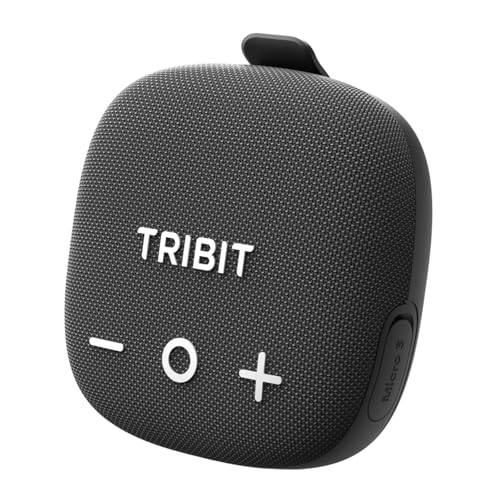
Tribit StormBox Micro 3 — Best weatherproof all-rounder
Tribit’s StormBox line has spent years as the connoisseur’s answer in small portable speakers, and the Micro 3 is its most ride-ready edition: IP68 sealing at the top of this guide’s weather table, Bluetooth 6.0, a rated playtime of up to 24 hours, and a mounting personality split between a magnetic attachment and a strap — a combination that lets it live on the bike, then come off and live everywhere else. The 13-watt rating is quoted here only to be put in its place: what matters for a rider is not the figure but the clarity it buys at low volume, and the Micro family’s reputation rests on sounding larger and cleaner than its footprint at exactly those levels.
IP68 deserves translation for the road. The rating promises dust-tightness and immersion resistance beyond the IPX7 standard — the kind of sealing that treats a ride through standing water, a dropped speaker in a puddle, or a week of trail dust as non-events. Combined with the long playtime, it makes the Micro 3 the pick for riders whose trips are measured in days: bikepackers and tourers who charge when they can and ride through whatever the sky files against them. The magnetic mounting option suits quick on-off use and metal surfaces around camp, while the strap does the serious holding at speed — riders should treat the magnet as convenience and the strap as the safety system, and test both before the first descent.
Its compromises are those of a premium all-rounder. It costs more than the simple picks, it is not a dedicated handlebar design in the JBL’s sense — its bar life depends on the strap arrangement rather than a shaped mount — and its talents off the bike (it is a genuinely fine travel and shower speaker) mean the household may keep stealing it. None of that dents its position here: for the rider who wants one small speaker, sealed against everything, that happens to be excellent on a bicycle among its other lives, the Micro 3 is the guide’s most complete portable.
Tribit’s playtime figure invites a translation into the currency riders actually spend: rides. A rated day of playback is a week of commutes, a long weekend of touring days, or a bikepacking leg between towns with power — and it changes behaviour, because a speaker you do not have to think about charging is a speaker that is simply always ready. Pair that stamina with the sealing, and the Micro 3 becomes the pick whose owners stop carrying the charging cable on trips under four days. In expedition terms, that is the difference between equipment and luggage, and it is why this little speaker keeps appearing in serious riders’ kits.
- Sealing: IP68 waterproof and dust-tight
- Connection: Bluetooth 6.0
- Playtime: up to 24 hours rated
- Mounting: magnetic attachment plus strap
- Ride brief: touring, bikepacking and all-weather riding
Strengths
- The strongest weather sealing here — downpours and puddles are non-events.
- A full day’s rated playtime suits multi-day rides between charges.
- Magnetic and strap mounting give it a life off the bike as well as on it.
Trade-offs
- Premium pricing among the small picks in this guide.
- Bar mounting is strap-based rather than a shaped handlebar mount — test it at speed.
- So good off the bike that it may keep being borrowed by the household.
Best for: tourers, bikepackers and riders who want one sealed speaker for every part of life. Not suited for: riders wanting a dedicated, shaped handlebar mount above all else.
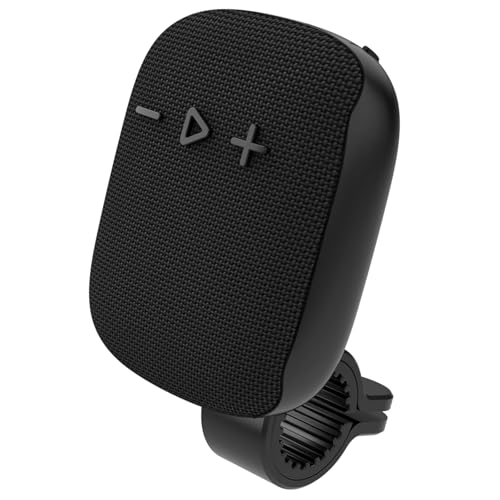
Bluetooth Handlebar Speaker — Best straightforward bar speaker
This is the generic-listing entry in the guide, and it is presented as exactly that: an unbranded wireless, waterproof handlebar speaker, sold on the simple proposition that the category’s core idea — a speaker, on the bars, playing from a phone — should be available without brand premiums or feature archaeology. For a second bike, a teenager’s runabout, a hire-and-share household machine or a rider testing whether bar audio suits them at all, that proposition has real merit. The concept does not require a famous badge to work; it requires a mount that holds, a seal that seals and a Bluetooth connection that stays connected, and a basic listing can deliver all three.
The buying discipline for a generic pick is different, and this guide will state it rather than pretend otherwise. Read the listing’s specifics with care — the mount type, the stated water resistance, the battery claim — because there is no brand reputation underwriting them, and check the unit on arrival over your own roughest street before the return window closes. Specifications from unbranded listings should be treated as claims to verify in the first week, not as the settled facts a JBL or Tribit rating represents. Riders who accept that bargain knowingly often end up perfectly served; riders who expected brand-grade assurance at a generic price are the ones who leave the angry reviews.
Sound expectations should be set by the category’s own rules, which flatter this pick: at modest volume, at arm’s length, carrying speech and background music on quiet streets, the gap between a basic driver and a famous one narrows considerably. The generic speaker’s true deficits appear at the edges — maximum weatherproofing, mount refinement, battery generosity, support when something fails — and a buyer whose riding never visits those edges may never meet them. As the guide’s honest baseline, it earns its place: it proves the idea, cheaply, for the riders the idea fits.
A generic pick also carries one underappreciated freedom: it is nobody’s ecosystem. There is no app to install, no account to create, no firmware journey to manage — it pairs with a phone the way speakers did before they became platforms, and it will pair with the next phone the same way. For riders whose relationship with technology is deliberately arms-length, or whose bike speaker serves children and guests more than themselves, that absence of apparatus is a feature the branded picks cannot match at any price. Simplicity, here, is not the budget option. It is the product.
- Type: wireless handlebar speaker, generic listing (no brand programme)
- Brief: waterproof portable audio for biking, hiking and camping
- Mounting: handlebar fitment — verify type on the listing
- Sources: Bluetooth phone audio
- Ride brief: casual and second-bike listening
Strengths
- The category’s core idea at its simplest price — ideal for a second bike or a first experiment.
- Handlebar-focused design rather than a general speaker with a loop.
- At modest volumes and quiet streets, the practical sound gap to branded rivals narrows.
Trade-offs
- No brand support story — the listing’s claims are yours to verify in week one.
- Mount, sealing and battery details vary by listing in ways branded specs do not.
- Edges of performance — weather, refinement, longevity — are where the savings live.
Best for: second bikes, young riders and anyone testing the bar-speaker idea cheaply. Not suited for: tourers staking a multi-day trip on unverified claims.

UPPEL Bluetooth Bike Speaker Phone Holder — Best multi-tool mount
The UPPEL takes the opposite design philosophy from every other pick: instead of a speaker that mounts to the bike, it is a bike cockpit that happens to include a speaker. Its headline act is a multifunctional phone holder — a ten-in-one unit combining the phone mount with a Bluetooth speaker, an LED light, a horn and a microphone among its functions. For the rider whose bars are already a negotiation between a phone, a light and a bell, that consolidation is genuinely attractive: one mount, one unit, the phone held where navigation can be glanced at, the speaker beneath it, the light and horn answering their own legal and practical needs in the same footprint.
Judged as a speaker, it should be judged fairly: the audio is a convenience feature within a mount system, voiced for prompts, calls and background listening rather than for impressing anyone, and riders whose first priority is sound quality should be reading the JBL and Tribit sections. Judged as a system, its case strengthens — the microphone makes phone calls genuinely usable at a stop or a crawl, the horn is the kind of loud, unambiguous signal a polite bell is not, and the LED light covers the be-seen duty every evening ride needs. Urban commuters, whose rides are a sequence of small logistical problems, are exactly the riders this consolidation was drawn around.
The multi-tool tax applies as ever: a unit doing ten jobs will be out-specialised in each by a dedicated device, its weight and bulk on the bars exceed any single-purpose pick here, and a failure in the unit is a failure of several functions at once. Phone fit should be verified against your handset’s size before ordering, as with any holder. But for the cockpit-minimalist commuter — one mount to rule the bars — the UPPEL is not a gimmick. It is a coherent answer to a real handlebar, and this guide respects it as such.
The UPPEL’s horn deserves a specific word, because it answers a real urban problem the other picks ignore. A bicycle bell is a polite instrument, designed for pedestrians on shared paths; it is nearly useless for the moment a car door opens or a van begins a turn across the bike lane. An electronic horn speaks at traffic volume, in traffic’s language, and a commuter who has used one in anger rarely goes back. That the horn arrives bundled with the phone mount, the light and the speaker — the whole urban survival kit in one clamp — is the UPPEL’s coherent thesis: the city rider’s bars should carry one well-chosen unit, not a museum of accessories.
- Type: multifunctional phone holder with Bluetooth speaker
- Functions: speaker, LED light, horn and microphone among its ten-in-one brief
- Mounting: handlebar phone-holder unit
- Sources: Bluetooth phone audio and calls
- Ride brief: urban commuting and cockpit consolidation
Strengths
- One bar unit replaces a phone holder, a speaker, a light and a horn.
- Microphone makes calls and voice interaction practical from the cockpit.
- The horn provides a genuinely assertive signal for urban traffic moments.
Trade-offs
- Speaker quality is a feature within a mount, not the product’s headline talent.
- The bulkiest bar presence here, and one failure can retire several functions.
- Phone fit must be checked against your handset before ordering.
Best for: urban commuters consolidating a crowded handlebar into one unit. Not suited for: sound-first riders or minimalists who want the bars bare.
Which bicycle speakers compare most directly?
| Speaker | Mounting | Sealing | Standout feature | Best rider |
|---|---|---|---|---|
| JBL Wind 3 | Handlebar, purpose-built | Weather-resistant design | FM radio aboard | The regular commuter |
| Onforu Portable | Portable, bike-friendly fitment | IP65 | Mini size, general outdoor life | The casual rider |
| Pro Bike Speaker | Handlebar mount included | IPX7 | Spoken navigation broadcast | The tourer on new routes |
| Tribit StormBox Micro 3 | Magnetic plus strap | IP68 | Full-day playtime, total sealing | The bikepacker |
| Bluetooth Handlebar Speaker | Handlebar fitment | Waterproof (verify listing) | The generic, simple proposition | The second bike |
| UPPEL Holder Speaker | Phone-holder unit | No IP rating stated | Light, horn and mic in one mount | The urban cockpit minimalist |
Read the sealing column as a weather promise and the mounting column as a staying-on promise; those two promises, kept, are most of what a bike speaker is. Features arbitrate only between speakers whose promises your riding believes.
How do you mount and set up a bike speaker so it stays put?
Begin with clean bars and the right position: within thumb’s reach of a grip, clear of cables and brake hoses, angled toward the rider rather than at the sky or the front wheel. Fit the mount or strap exactly as its maker intends — straps fully seated in their guides, clamps closed on the diameter they were sized for — then perform the category’s essential test before any real ride: shake the bike, lift the front wheel and drop it, ride the roughest block you know at moderate speed, and inspect for rotation, slip or rattle. A mount that moves in the test will move in the world, usually at a worse moment. Adjust, pad or reposition until the test is boring; boring is the goal.
Then set the audio life up with the same care. Pair the phone before the ride, not at the first junction. Load the playlist or podcast at home, set the navigation app’s voice prompts to the speaker, and choose a starting volume calibrated for a quiet street — the level can rise slightly with speed if the speaker’s controls are thumb-friendly, but the discipline of this category is to begin low. Gloves change everything about controls, so learn the pause and volume gestures in the gloves you actually ride in. A speaker whose buttons you cannot work in winter gloves will be operated by stopping, which is safe, or by fumbling, which is not.
Charging rhythm is the last piece of ownership. Small speakers die quietly in bags and garages between rides, so give yours a home by the charger and a habit — after the ride, on charge — rather than a hope. Riders who tour should note which picks sip power slowly enough for multi-day legs and carry a small power bank as the reserve. The speaker that is charged, mounted and paired without thought on a grey morning is the one that gets used all year; every piece of friction in that chain is a ride that goes silent.
What mistakes do bike speaker buyers make?
The first is buying by wattage, in a category where the winning specifications are a mount and an IP code. The second is trusting an untested mount at speed: the speaker that survives the driveway may depart over the first pothole on the descent, and the test ride exists precisely to promote that failure to a safe moment. The third is volume arrogance — riding shared paths and quiet streets at levels that make the rider a public address system, which is both discourteous and, where traffic needs hearing, genuinely unwise. The speaker is not the safety device; the open ears are, and volume spends them.
Fourth, ignoring the law of the place: audio rules for cyclists differ between states and countries, visitors get caught by home assumptions, and “the shop sold it” is not a defence anywhere. Fifth, expecting hi-fi: a small speaker in moving air at arm’s length is a companion, not a concert, and buyers who measure it against their home system will be disappointed by physics rather than by any product. Buy the mount, the sealing and the clarity at low volume, keep the level neighbourly and the ears open, and every pick in this guide will do the job it was actually designed for.
Which riding styles get the most from a bar speaker?
The commuter on quiet streets is the category’s centre of gravity. The route is known, the speeds are modest, the listening is news, podcasts and the day’s first music — and a speaker turns dead time into informed time without taking the ears off the traffic that shares the route. The Wind 3 and the Onforu divide this rider between them by temperament: the designed specialist versus the simple companion. What both give, that no earbud can, is the ability to hear the bus behind and the briefing at once, which is the entire commute proposition in one sentence.
The tourer and the leisure rider get a different gift: duration. A long ride’s middle hours are where a soundtrack earns its battery, where spoken navigation keeps a new route relaxed, and where a speaker shared between two riders becomes part of the day’s company. This is Tribit and Pro Bike Speaker territory — sealing for the weather a long day collects, stamina for the hours, prompts for the lanes nobody knows. The group rider, meanwhile, should be the category’s most conservative user: a speaker on a group ride is a public instrument, and the etiquette that governs it — ask the group, keep it low, kill it on climbs where conversation matters — is as much a part of the equipment as the mount.
And the utility rider — school run, shopping, the bike as a car replacement — gets the UPPEL’s version of the answer, where the speaker is one function in a cockpit that also holds the phone, lights the road and horns the junction. Each style’s correct pick differs, which is why this guide refused to crown by wattage: the bicycle is not one vehicle but several, wearing the same name, and a speaker honest about which bicycle it serves is worth six that pretend to serve them all.
What should you check in the first week with a new bike speaker?
Run the gauntlet deliberately. First, the mount audit: your roughest street, your steepest descent, a kerb drop you trust — then a fingertip check for rotation or slip, repeated after every ride for a week, because mounts settle and straps stretch in their first days. Second, the weather audit, within reason: a ride in ordinary rain, after which the speaker should be wiped, inspected and charged with its seals closed exactly as the maker instructs. Third, the audibility audit from the saddle: at your normal volume on your quietest street, can you hear a car approach from behind at the distance you expect? If the honest answer wavers, the volume comes down until it does not — that test, passed, is the speaker’s licence to stay on the bike.
Finally, audit the habits the speaker is forming. Is it charged when you reach for it, or dying in a bag? Are the controls working in your gloves, or are you stopping at junctions to fumble? Is the volume creeping upward week by week, as familiarity dulls your sense of how public the sound is? A bike speaker succeeds as a routine, not as a gadget, and the first week is when the routine is written. Riders who run these small audits end up with speakers that serve them for years; riders who skip them end up with a drawer of almost-right audio, which is the most common collection in cycling.
How does a bike speaker change the sound of a ride itself?
There is a quality-of-ride effect that no specification captures, and regular riders describe it consistently: a soundtrack at modest volume changes the perceived length of a journey. The familiar commute contracts; the long climb acquires a rhythm; the podcast makes the headwind leg the interesting one. Psychologists would call it attention management. Riders call it the reason the speaker gets charged. That effect is real, and it is also the honest boundary of the category’s promise — a bike speaker improves the ride you were already taking, at the volume the road allows, and asks nothing of the road in return except that you keep listening to it. Every pick in this guide was chosen to serve exactly that modest, durable pleasure, and to stay attached, sealed and charged while doing so.
Final Recommendation
A closing word on the discipline that runs through every section above, because it is the difference between this category at its best and its worst. A bicycle speaker is a guest — on the path, in the street, in the ears of everyone it passes. The riders who love these devices longest are the ones who treat that guest status as the operating manual: volume that stays in the rider’s own bubble of air, a mount checked like brakes are checked, a speaker that goes quiet at junctions, gatherings and anywhere the road needs a cyclist’s full attention. Bought and ridden that way, the six speakers here are not a distraction from cycling. They are one of its small modern pleasures, engineered to leave the road exactly as audible as it was before the music started.
Most regular riders should buy the JBL Wind 3: it is the category designed by specialists, mounted where it belongs, with a radio aboard for the rides that leave the phone behind. Tourers navigating by ear should take the Pro Bike Speaker and its spoken prompts; bikepackers and all-weather riders should take the Tribit StormBox Micro 3, whose sealing and stamina outclass everything else here. The Onforu is the simple, sealed answer for casual riding, the generic handlebar speaker is the honest experiment for a second bike, and the UPPEL belongs on the urban commuter’s bars where one unit doing ten jobs is worth more than any single job done beautifully. Whichever you choose, ride it the way this guide has insisted from its first page: ears open, volume low enough to hear the road think, and the local rules checked before the first mile.
Frequently Asked Questions
Is it legal to ride with a speaker on my bike?
It depends where you ride. Rules on speakers and earphones for cyclists vary by state and country — some jurisdictions restrict earphones specifically, some regulate audible devices, many are silent on handlebar speakers while prohibiting anything that covers the ears. This guide is not legal advice: check your local rules before riding, and wherever you are, keep the volume low enough that traffic remains clearly audible.
Are bike speakers safer than earbuds?
They remove the main mechanism of risk: nothing covers or fills the ears, so traffic sounds, bells and warnings reach the rider unimpeded. That advantage is spent if the volume climbs — a loud speaker can mask the road as effectively as a bud. Used at modest volume on quiet streets and trails, a bar speaker is the listening method that leaves a cyclist’s awareness intact.
What IP rating do I actually need?
IP65 covers rain and spray from any direction — the weather most rides meet. IPX7 adds immersion resistance for genuine downpours and drops in puddles, and IP68 goes further for touring and trail abuse. Match the rating to your climate and your routes, and remember that seals age: a rating is a new-product promise that careful ownership keeps honest.
How loud should a bike speaker be?
Loud enough for the rider, at arm’s length, to follow speech and enjoy music — and no louder. If pedestrians turn to look, if you cannot hear a car approaching from behind, if your riding partner cannot talk over it, the level is wrong for shared space. These speakers are at their best as a soundtrack under the ride, and every pick here has more volume than the discipline requires.
Will a handlebar speaker fit my bars?
Most bar mounts and straps accommodate standard handlebar diameters, but bars vary — oversized, tapered and shaped bars all exist. Check the mount’s stated range against your bars before ordering, and run the rough-street test after fitting. A mount that rotates or slips in the test needs adjustment or a different pick, not optimism.
Do bike speakers distract drivers or other riders?
At the modest volumes this guide prescribes, a bike speaker is audible for roughly a bicycle’s length around the rider — comparable to a conversation between two cyclists, which nobody considers a hazard. The distraction risk lives at high volume and in the rider’s own attention, which is why the rules keep returning: low level, quiet routes, and the speaker silenced whenever the road gets complicated. Ridden that way, it startles nobody and masks nothing.
Can I take a bike speaker off the bike and use it elsewhere?
Most riders do exactly that. The Tribit and Onforu are general portable speakers that happen to ride well, the JBL’s radio makes it a garden and workshop companion, and even the bar-mounted picks detach in seconds. Only the UPPEL is truly bike-bound, since its speaker lives inside a phone-holder unit designed for the bars. If off-bike life matters to you, weight it in the choice — a speaker used daily outlasts one used weekly.
How long do these speakers run between charges?
It varies by model and by volume — modest levels, as this guide prescribes, stretch any battery. The Tribit StormBox Micro 3 carries the longest rated playtime here, at up to a full day, which suits multi-day riding; the smaller and simpler picks are built around daily or per-ride charging habits. Treat every rating as a best case, build the after-ride charging habit, and battery life stops being a specification you think about.
Can I use a bike speaker for navigation only?
Yes, and many riders do — it may be the category’s best use. Spoken turn prompts keep the phone pocketed and your eyes on the road. The Pro Bike Speaker is designed around navigation broadcast, and any pick here will carry an app’s voice prompts over Bluetooth. Set the prompts up at home, at a volume tested on your quietest street, before the first unfamiliar route.
Related Guides
For speakers that leave the bike at home, the best bluetooth smart speakers guide covers the connected household versions, and for audio that projects across water instead of a cycle path, see the best boat tower speakers roundup. Motorised two-wheelers get their own intercom-grade answers in the best motorcycle headsets.



[…] the best floor standing stereo speakers guide covers the traditional two-channel route, while the best bicycle speakers roundup takes Bluetooth audio outdoors and onto the […]