Our Top Picks
 Focal Aria Evo X No. 4 Floorstanding LoudspeakerSingle16.5 x 14.6 x 45.25 inches77.16 poundsCheck on Amazon
 Focal Omada N°4 3-Way Floorstanding Speaker with Deep16.93 x 12 x 44.33 inches69.4 poundsCheck on Amazon
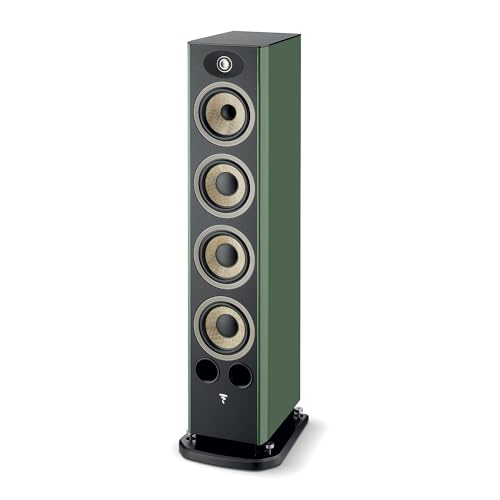 Focal Aria Evo X No. 3 Floorstanding LoudspeakerSingle14.6 x 11.6 x 45.25 inches63.93 poundsCheck on Amazon


What's inside
- How to read this Focal guide
- What a floorstanding speaker actually does differently
- Room size, placement, and the honest limits of towers
- Focal Aria Evo X No. 4 Floorstanding Loudspeaker, Each, High Gloss Black
- Focal Aria Evo X No. 3 Floorstanding Loudspeaker, Each, High Gloss Moss Green
- Focal Aria Evo X No. 3 Floorstanding Loudspeaker, Each, High Gloss Black
- Focal Aria K2 926 Ash Grey Limited Edition, Pair
- Focal Aria K2 926 Ash Grey Limited Edition, Sold Individually
- Focal Omada N°4 3-Way Floorstanding Speaker, Black High Gloss
- Focal Omada N°3 3-Way Floorstanding Speaker, Black High Gloss
- Focal Theva N°3-D Dolby Atmos Compatible 3-Way Floorstanding Loudspeaker, Black
- Amplification, sources, and system balance
- Stereo music versus home theater with Focal towers
- Finishes, formats, and buying checks
- Which Focal floorstanding speaker fits which listener
- Check prices on Amazon
- Disclosure
As an Amazon Associate I earn from qualifying purchases. This post may contain affiliate links at no extra cost to you.
Floorstanding speakers ask for a commitment that bookshelf models do not. They take up floor space, they shape how a room looks, and they become the visual and sonic anchor of a music system or a home theater. In return, a well chosen tower can fill a room with a sense of scale that smaller speakers struggle to match, present voices and instruments at a natural height, and give low frequencies more physical presence without relying entirely on a separate subwoofer. Focal is one of the names that comes up again and again in this category, and the current range covered in this guide spans several distinct families: Aria Evo X, Aria K2 in a limited edition finish, the newer Omada line, and Theva, including a model designed to work with Dolby Atmos playback.
This guide is product-first. Our research started from the specific models listed here, and each speaker below is discussed on the basis of what its published product title actually states, together with widely understood principles that apply to floorstanding loudspeakers in general. Where a title gives a detail, such as a finish, a three-way design, a driver size, or whether a speaker is sold individually or as a pair, that detail is used. Where a title does not give a detail, this guide does not invent one. That restraint matters with loudspeakers, because shoppers are often presented with long lists of figures that look precise but say little about whether a speaker suits a particular room, amplifier, and listening habit.
If you are also weighing towers outside the Focal range, our overview of best 1000 tower speakers puts this class of speaker in a broader context, and it can help you sense how Focal positions its floorstanding models alongside other approaches to cabinet size, driver layout, and system building.
How to read this Focal guide
The eight listings in this guide do not represent eight completely unrelated speakers. Some are different sizes within the same family, some are the same underlying model in a different finish, and one model appears both as a pair and as a single speaker sold individually. Reading the guide with that structure in mind prevents a common mistake, which is treating every listing as a separate recommendation tier. Instead, think in families first, then in size, then in finish and buying format.
Aria Evo X appears here as the No. 4 in High Gloss Black and as the No. 3 in two finishes, High Gloss Moss Green and High Gloss Black. Within the naming used in the titles, the No. 4 sits above the No. 3, and in general terms the larger model in a floorstanding range is the one intended for larger spaces and for listeners who want more low-frequency weight and output headroom from the towers themselves. The No. 3, as the smaller of the two positions in this pair of models, is the more natural starting point for medium-sized rooms and for systems where a subwoofer already handles the lowest octaves.
Aria K2 926 appears twice, once as a pair and once sold individually, both in Ash Grey and both described as a Limited Edition three-way floorstanding audiophile tower speaker. The Omada family appears as the N°4 and the N°3, both in Black High Gloss and both described as three-way designs, with the N°4 title emphasizing deep bass and refined treble and the N°3 title emphasizing powerful dynamics. Theva appears once, as the N°3-D in Black, described as a Dolby Atmos compatible three-way floorstanding loudspeaker with 6.5-inch drivers and sold individually.
Keeping those groupings straight makes the rest of the guide easier to use. You are not choosing among eight equal alternatives. You are choosing a family character and intended use, then a size within that family, then a finish and a purchase format that matches how you will build the system.
What a floorstanding speaker actually does differently
A floorstanding speaker, often called a tower speaker, is designed to stand on the floor at roughly listening height without a separate stand. That simple fact has several consequences. The cabinet can be taller and can hold more internal volume than a typical standmount cabinet, and that volume can be used to support lower bass extension, higher output, or both, depending on how the designer balances the design. The drivers can also be spread over a greater vertical distance, which is one reason many towers use a three-way layout.
In a three-way speaker, the audio range is divided among three groups of drivers. Broadly speaking, one section handles low frequencies, another handles the middle range where most vocal and instrumental fundamentals live, and another handles high frequencies. Dividing the work in this way is a general loudspeaker principle, not a claim about any single model in this guide beyond the three-way description given in several of the titles. The benefit, when the design is executed well, is that each driver can work in the range where it behaves most comfortably, rather than asking one driver to cover an extremely wide span.
Height matters for a second reason. When you sit down to listen, your ears are at a fairly predictable height, and a tower can place its high-frequency and midrange drivers near that height without stands, wall brackets, or furniture compromises. That does not guarantee good sound in every room, because placement relative to walls, corners, and furnishings still has a large effect, but it does remove one variable that bookshelf systems have to solve separately.
Finally, towers change the upgrade path. A pair of floorstanding speakers can serve as a complete stereo system for music with only a source and amplification added. The same pair can become the front left and right channels of a surround system later. A single additional consideration in this guide is the Theva N°3-D, whose title states Dolby Atmos compatibility, which points toward height-aware home theater use rather than plain stereo alone. Shoppers comparing complete surround packages may also want to read our guide to best 5 1 home theater speakers without receiver to understand how tower fronts fit into a larger channel layout.
Room size, placement, and the honest limits of towers
The most common floorstanding mistake is buying for the room you wish you had rather than the room you actually use. Large towers in a small room can overwhelm the space visually and can excite room resonances in ways that make bass sound heavy and indistinct, especially when the speakers must sit close to walls or corners. Smaller towers in a very large, open-plan space can have the opposite problem, sounding thin when asked to fill more air than they were intended to move, particularly at higher listening levels from a distant seat.
As a general principle, allow towers some breathing room when you can. Pulling speakers slightly away from the wall behind them, keeping them away from tight corners, and maintaining a roughly symmetrical arrangement relative to the listening position tend to help imaging and tonal balance. Exact distances depend on the room and the speaker, and no single figure in this guide should be treated as a rule for the models listed, because their published titles do not prescribe placement distances. Experiment within the space you have, and judge by familiar recordings rather than by a single impressive track.
Floor type matters as well. Hard floors reflect more sound than carpeted floors, and large areas of glass reflect more than curtains or upholstered furniture. A room that feels bright and echoing in conversation will usually present music in a similar way, regardless of which tower you choose. Soft furnishings, rugs, and sensible speaker positioning often do more for perceived clarity than swapping one capable tower for another.
Listening distance is the other half of the equation. In a typical domestic setup, the distance between the two speakers and the distance from each speaker to the main seat form a loose triangle. If the seat is much farther away than the speakers are apart, the stereo image can feel narrow. If the seat is very close, the sound can feel split into left and right events rather than a single scene. Towers reward a little patience during setup, and small movements can be audible, so it is worth adjusting in modest steps and listening after each change.
Focal Aria Evo X No. 4 Floorstanding Loudspeaker, Each, High Gloss Black
The Aria Evo X No. 4 listing describes a floorstanding loudspeaker sold as each, meaning a single speaker, in a High Gloss Black finish. That buying format is important to state plainly at the start, because a stereo listener needs two of them, and a home theater listener building a front stage needs to plan the center and surround channels around a pair of these as the left and right anchors. Buying as each is not a drawback; it is a common format for higher-end loudspeakers, and it gives flexibility for anyone replacing a single damaged speaker or building a system in stages. It does mean the shopper must check quantity carefully before ordering.
Within the Aria Evo X models in this guide, the No. 4 is positioned above the No. 3. In general terms, choosing the larger model in a tower range makes most sense when the room is on the larger side, when listening levels tend to be higher, or when the system will be used without a subwoofer for music and the owner wants the towers themselves to carry as much of the low-frequency workload as the design allows. None of that requires inventing figures for this speaker. It follows from the size hierarchy expressed in the naming itself and from how floorstanding ranges are normally structured.
The High Gloss Black finish gives this model a formal, reflective appearance that suits contemporary interiors and dedicated media rooms. Gloss finishes show fingerprints and dust more readily than matte finishes, and they reflect light from screens and windows, which is worth considering in a room used for film viewing in low light. In a living room that doubles as a listening room, that reflective quality can look striking. In a dedicated dark theater, some owners prefer less reflective surfaces near the screen. Neither preference is right in the abstract; it depends on the room.
Who should shortlist the No. 4? A listener building a serious stereo system around a pair of towers as the long-term centerpiece, a film fan who wants substantial front channels, and an owner with enough floor space to position larger cabinets without crowding walkways or furniture. Who should look at the No. 3 instead? Anyone whose room is moderate in size, whose speakers must sit closer to walls, or whose budget is better balanced by spending the difference on amplification, sources, or room treatment. Bigger is a tool for a particular job, not an automatic upgrade in every home.
Focal Aria Evo X No. 3 Floorstanding Loudspeaker, Each, High Gloss Moss Green
This listing is the Aria Evo X No. 3 sold as each, in High Gloss Moss Green. The finish is the headline difference from the black version of the same model covered later in this guide, and it deserves to be taken seriously rather than treated as an afterthought. Floorstanding speakers are large pieces of furniture that remain in view whether the system is playing or silent. A green gloss finish makes a deliberate design statement, suiting rooms with plants, natural materials, warm wood tones, or a more expressive interior scheme where black boxes would feel stark.
As the No. 3 in the Aria Evo X pairing in this guide, this model is the smaller step relative to the No. 4. In general terms, that positioning suits medium-sized living rooms, listening spaces where the seat is not unusually far from the speakers, and systems that include a subwoofer for film soundtracks. A slightly smaller tower can also be easier to position, easier to move during setup experiments, and less visually dominant in a multi-purpose room shared with family life.
Because the speaker is sold individually, a stereo pair requires two units, and anyone planning a matching front stage should confirm availability of the same finish for every channel they intend to match. Limited or distinctive finishes can be harder to match later if a system expands over time, so buyers who know they will add channels in the future may want to plan the full set early rather than assuming the same finish will always be easy to source.
Sonically, this guide makes no model-specific claims beyond its family and size position, because the published title does not provide the figures that would support them. The honest advice is to choose the No. 3 for its fit: room scale, placement freedom, and a finish that you will enjoy living with every day. A speaker you like looking at gets used more, and a system that fits the room gets set up better. Those practical factors shape long-term satisfaction as much as any specification table.
Focal Aria Evo X No. 3 Floorstanding Loudspeaker, Each, High Gloss Black
The High Gloss Black version of the Aria Evo X No. 3 covers the same position in the range as the Moss Green version above: a floorstanding loudspeaker sold as each, sitting below the No. 4 in size within this guide. The difference is finish, and for many buyers black will be the safer and more versatile choice. It pairs easily with black electronics, dark media furniture, and most television setups, and it tends to recede visually when lights are low, which many film viewers prefer.
Choosing between the two No. 3 finishes is therefore a room decision, not a performance decision that can be settled from the titles. Nothing in the published titles suggests treating one finish as a different speaker from the other. Buy the finish that matches the room you have and the system you intend to keep. If resale or later system matching is a concern, mainstream finishes are generally easier for a future buyer to integrate, while distinctive finishes appeal strongly to the smaller group of buyers who want exactly that look.
In system terms, a pair of No. 3 towers makes a coherent foundation for stereo music listening and can serve as front left and right speakers in a surround setup. Listeners assembling a larger immersive system may want to compare that path with the options in our guide to best 7 1 home theater speakers, which explains how front towers relate to surround and height channels when the channel count grows.
As with the other Aria Evo X listings, remember the buying format. Each means one speaker. Check the quantity in the cart, check that both units are the same model and finish, and keep packaging until placement is settled, because large gloss cabinets are awkward to repack once fully installed. Those mundane steps prevent the most common disappointments with tower purchases, which are logistical rather than musical.
Focal Aria K2 926 Ash Grey Limited Edition, Pair
The Aria K2 926 listing in pair form describes a Limited Edition three-way floorstanding audiophile tower speaker in Ash Grey, supplied as a pair. The pair format simplifies ordering for a stereo listener: one purchase covers left and right. The three-way description, stated directly in the title, places this model in the category of towers that divide the frequency range among three driver groups, following the general principle explained earlier in this guide.
The words Limited Edition and the Ash Grey finish signal that this is a special presentation of the model rather than a standard finish run. Limited editions appeal to buyers who value distinctiveness and who want a system that does not look identical to every other installation. Ash Grey is a lighter, softer tone than gloss black, and in general terms lighter cabinets can feel less heavy in bright rooms, rooms with pale walls, and Scandinavian-influenced interiors. They can also show scuffs differently than black gloss, so placement away from high-traffic edges is sensible.
The word audiophile in the title reflects how the model is presented: as a tower aimed at dedicated music listeners who build systems around two channels and care about stereo imaging, tonal balance, and long listening sessions. That positioning does not prevent film use, and a pair of capable towers can anchor a theater system, but the natural home for this listing is a music-first setup, possibly with a turntable, a streamer, or a disc player as the main source.
Because it is a limited edition, availability and finish matching deserve extra care. If you intend to expand beyond stereo later, consider at the time of purchase whether matching channels in the same presentation will be obtainable, or whether you are comfortable mixing finishes in a larger system. For a committed two-channel listener, that concern may never arise, and the pair format plus the distinctive finish are exactly the point.
Focal Aria K2 926 Ash Grey Limited Edition, Sold Individually
This listing is the same Aria K2 926 presentation, a Limited Edition three-way floorstanding audiophile tower speaker in Ash Grey, but sold individually rather than as a pair. Having both formats in the guide is useful because it highlights a question every tower buyer should ask: what exactly does one unit of purchase contain? Here the answer differs by listing, even though the model name and finish are the same.
Sold individually has clear advantages in the right circumstances. It allows a buyer to replace one speaker, to build a system in stages as budget allows, or to configure an odd number of channels for a front stage without buying an unwanted extra unit. It also requires discipline. A stereo buyer must order two, must confirm both are the same model and finish, and should be alert to the possibility that separate units could come from different stock batches, a mundane concern that matters more with a limited edition finish.
Comparing the pair listing and the individual listing is therefore an exercise in total system cost and convenience, not in choosing between two different speakers. Work out the full cost of the configuration you need in each format, include delivery considerations for large cabinets, and choose the format that matches how you will actually install the system. If both formats are available at the time you buy, the pair is usually the simpler path for a straightforward stereo setup, while the individual listing is the flexible path for staged or replacement purchases.
Placement and system advice for this model follows the same general tower principles covered throughout this guide: give the cabinets reasonable clearance from walls where the room allows, aim for symmetry around the listening seat, and match the speakers with amplification appropriate to a serious floorstanding system, judged by the amplifier guidance in its own documentation rather than by guesswork.
Focal Omada N°4 3-Way Floorstanding Speaker, Black High Gloss
The Omada N°4 listing describes a three-way floorstanding speaker in Black High Gloss, with its title emphasizing deep bass and refined treble. Those two phrases frame the promise of the model as presented: weight at the bottom of the range and polish at the top. As the N°4 in the Omada pairing in this guide, it occupies the larger position relative to the N°3, following the same size logic discussed for the Aria Evo X family. Larger rooms, longer listening distances, and listeners who want the towers to carry a full-range stereo presentation without immediate reliance on a subwoofer are the natural audience.
Three-way design, stated in the title, is the structural fact to hold onto. In general terms, a three-way tower separates low, middle, and high frequency duties, which supports the twin aims in the title: bass that is handled by drivers dedicated to that range, and treble that is handled by a driver dedicated to the top octaves, with the midrange covering the region where voices and most instruments carry their character. This guide does not add driver counts or measurements beyond that, because the title does not state them.
Black High Gloss gives the Omada N°4 a sleek, modern presence. In a room built around a large screen, black gloss towers can echo the finish of the display and media furniture, creating a unified front wall. Owners should still think about reflections during daytime listening and about routine dusting, since gloss black reveals dust quickly under angled light. A soft cloth and a habit of handling cabinets by their sides rather than their faces keep a gloss finish looking its best.
For shoppers deciding between Omada and Aria families, the titles suggest different emphases in presentation rather than a simple good-versus-better ladder. Omada is presented in this guide as a newer line, and its titles foreground bass depth, treble refinement, and dynamics. The sensible approach is to decide first whether you want the larger or smaller size for your room, then compare families within that size on the basis of finish, buying format, and overall system plans.
Focal Omada N°3 3-Way Floorstanding Speaker, Black High Gloss
The Omada N°3 is described as a three-way floorstanding speaker in Black High Gloss, with its title emphasizing powerful dynamics. Dynamics, in general loudspeaker terms, refers to the contrast between quiet and loud passages and the ability to reproduce sudden peaks, such as a drum strike or an orchestral swell, without the presentation feeling compressed or strained. A title that foregrounds dynamics speaks to listeners who value liveliness and impact, including film viewers and fans of large-scale music.
As the N°3, this is the smaller of the two Omada models in this guide. That makes it the more approachable option for medium rooms, for seating positions at moderate distances, and for households where a very large cabinet would dominate the space. A smaller tower that is well placed often delivers a more coherent result than a larger tower forced into corners, so the N°3 should not be read as a compromise. It should be read as the right-sized tool for a wide range of real living rooms.
The Black High Gloss finish matches the N°4, which helps anyone comparing the two sizes directly, because finish does not become a confounding variable. It also means a household could, in principle, standardize on a consistent look across Focal towers of different sizes in different rooms, though matching model families within a single surround system is the more important consideration for theater use.
System building around the Omada N°3 follows familiar lines. For stereo, add a source and suitable amplification and focus effort on placement and room arrangement. For home theater, treat the pair as front left and right channels and plan the rest of the system around them. Readers who are still deciding how many towers a room can support may find our roundup of best 8 home tower speakers useful for comparing tower footprints and system concepts across a wider field.
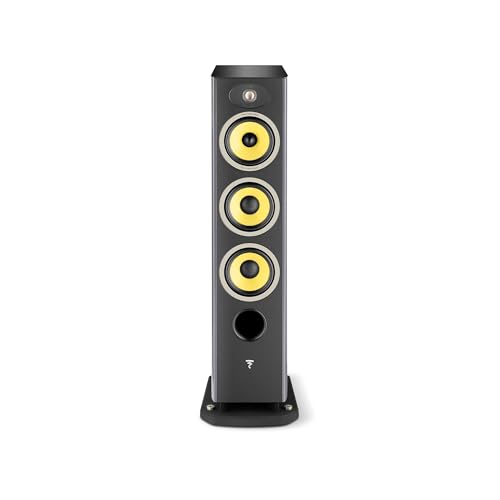
Focal Theva N°3-D Dolby Atmos Compatible 3-Way Floorstanding Loudspeaker, Black
The Theva N°3-D listing contains the most specific title in this guide, and its details deserve careful reading. It describes a Dolby Atmos compatible three-way floorstanding loudspeaker with 6.5-inch drivers, sold individually, in Black. Each element of that sentence carries a buying implication.
Dolby Atmos compatibility points toward immersive home theater use. Atmos systems add height information to the familiar surround layout, creating a sense that sound can move above as well as around the listener. A floorstanding speaker presented as Atmos compatible is intended to participate in that kind of system, which distinguishes the Theva N°3-D from the stereo-first reading that fits most of the other models in this guide. Buyers whose priority is film and television in an immersive layout should give this model particular attention, while buyers building a purely two-channel music system may not need that compatibility and can weigh the other families on size and finish alone.
The title states 6.5-inch drivers. That is the only driver dimension given for any model in this guide, and this article uses it only as stated, without extrapolating to driver counts or performance figures. Driver size in general terms relates to how a speaker moves air, but the overall result depends on the complete design, the cabinet, and the room, so the number is best treated as an identifying specification of this model rather than as a score to compare against unstated figures for the other speakers.
Three-way design is also stated, aligning the Theva N°3-D with the general three-way principle described earlier. Sold individually means, once again, that quantities must be planned deliberately: a pair for front left and right duties requires two units. The Black finish is the most neutral option in the guide, suiting theater rooms where the equipment should stay visually quiet and living rooms where black electronics already dominate.
In short, the Theva N°3-D is the theater-leaning choice in this lineup as presented by its title. If your system plan includes Atmos playback and you want floorstanding front speakers that are explicitly presented for that world, this is the listing designed to start that conversation.
Amplification, sources, and system balance
No tower in this guide plays on its own. Every passive floorstanding system needs amplification and a source, and the balance among those parts matters. A common spending error is to allocate nearly everything to speakers and leave too little for a competent amplifier and a reliable source, then blame the speakers for a presentation that is actually limited elsewhere. The opposite error also exists: elaborate electronics driving towers that are too small for the room. Balanced planning avoids both.
Amplifier matching should be based on the documentation for the specific speaker and amplifier under consideration, not on folklore. This guide deliberately avoids quoting power figures for these Focal models because their titles do not state them. What can be said in general is that an amplifier should be able to drive the speakers to the listening levels you actually use in your room without audible strain, and that features such as room correction, bass management, and multiple inputs may matter as much to daily satisfaction as raw output, depending on whether the system is stereo or surround.
Sources deserve equal honesty. Streaming services, disc players, turntables, and television outputs all feed towers in modern homes, often through the same amplifier or receiver. Think about how many sources you switch between, whether you need wireless convenience for casual listening alongside wired quality for focused sessions, and whether one remote can run the whole system. A system that is pleasant to operate gets used for more than special occasions.
Cables and accessories should be kept in proportion. Sensible, well terminated speaker cable of appropriate length, secure connections, and stable placement solve the real problems. Money beyond that point is usually better directed toward recordings, room furnishings that tame reflections, or a subwoofer if the system genuinely needs one for film effects.
Stereo music versus home theater with Focal towers
A pair of Focal towers can be the whole speaker system or the foundation of a larger one, and deciding which path you are on clarifies every other choice in this guide. Stereo listeners need two speakers, careful placement, and amplification with the inputs they use. Their upgrade path runs through sources, amplification, and room setup. Theater listeners need additional channels, a receiver or processor that can decode surround formats, and a plan for center dialogue clarity, surround placement, and possibly height channels.
Dialogue deserves special mention for theater builders. In film and television, the center channel carries most speech, so a theater built around tower fronts still needs a center speaker plan that keeps voices clear at modest volumes. Towers alone in a two-channel theater setup can work well, especially in smaller rooms, but anyone expanding to a full surround layout should budget for the whole system rather than treating the towers as the entire purchase.
Subwoofers sit across both worlds. Music listeners with larger towers may never feel the need for one. Film listeners often benefit from a dedicated subwoofer for effects channels regardless of tower size, because movie soundtracks contain low-frequency effects intended for that path. Adding a subwoofer also allows smaller towers such as the No. 3 and N°3 models to focus on the range above the crossover, which is one reason size decisions should be made with the full system in view.
Finishes, formats, and buying checks
Across this guide there are three finishes to consider: High Gloss Black on Aria Evo X and Omada models, High Gloss Moss Green on one Aria Evo X No. 3 listing, and Ash Grey on the Aria K2 926 limited edition, plus Black on the Theva N°3-D. Finish choice is partly taste and partly practicality. Gloss shows dust and fingerprints, light finishes change the visual weight of a large cabinet, and distinctive finishes reward owners who want the system to be part of the room design rather than hidden from it.
Buying format is the other check that must never be skipped. Listings here are sold as each, sold individually, or as a pair, and those phrases mean exactly what they say. Confirm the format on the listing you choose, confirm the quantity needed for your layout, and confirm that every unit in a matched set shares the same model name and finish. For limited edition models, confirm availability for the full set at the time of purchase if future expansion is part of the plan.
Delivery and installation planning matter with floorstanding speakers. They are tall, heavy, and awkward to carry through narrow halls and staircases. Measure doorways and the intended positions, decide who will help with unboxing and placement, and keep the packaging until you are certain the system is staying. Check cabinets on arrival for transit damage before signing off where the carrier requires it, and photograph any damage promptly if a claim becomes necessary.
Which Focal floorstanding speaker fits which listener
For a larger room and a music-first system built around a substantial pair of towers, the Aria Evo X No. 4 in High Gloss Black is the natural starting point in this guide, with the Omada N°4 as the alternative larger three-way option whose title emphasizes deep bass and refined treble. For a medium room, the No. 3 and N°3 sizes are the sensible center of the range: Aria Evo X No. 3 in either finish for the Aria path, and Omada N°3 for listeners drawn to the dynamics emphasis in its title.
For a buyer who wants a distinctive limited edition stereo pair, the Aria K2 926 in Ash Grey stands apart, with the choice between the pair listing and the individually sold listing determined by ordering convenience and system plans. For a theater builder whose plans include Dolby Atmos, the Theva N°3-D is the listing explicitly presented for that purpose, with its stated Atmos compatibility and 6.5-inch drivers.
None of these choices needs to be made in a hurry. Towers are long-lived purchases that often stay in a home through several changes of electronics and sources. Choose the family and size that fit the room, the finish you will enjoy, and the format that matches your layout, and the result is a system foundation that can serve music and film listening for years.
Check prices on Amazon
Live listings for the shortlist in this guide are pulled from Amazon below, so prices and availability are always current at the moment you look.


Disclosure
This article about Focal floorstanding speakers contains affiliate links, and GizmoVerdict may earn a commission if you buy through those links, at no additional cost to you. The product information in this guide is based on published manufacturer and retailer materials, including the product titles for each listed model, combined with general knowledge about floorstanding loudspeaker categories. No direct product trial was carried out for this article, and recommendations reflect research into specifications, formats, finishes, and intended system roles rather than first-hand use. Prices and availability can change, so please confirm current details on the product page before purchasing.

