Our Top Picks
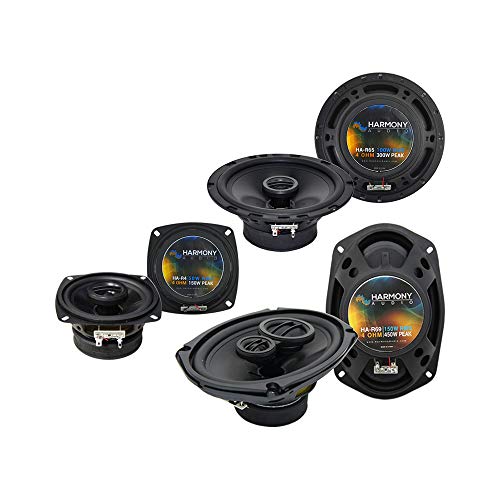
 Harmony Audio Speaker Replacement Package Fits Infiniti G35Rhythm Series16 x 10 x 8 inches10.1 poundsCheck on Amazon
 Harmony Audio Fits Infiniti G35 Sedan 2007 SpeakerRhythm Series16 x 15 x 8 inches13.6 poundsCheck on Amazon


What's inside
- The factory locations, walked one at a time
- The Bose question, worked through as a decision
- Choosing drivers, location by location in spirit
- The install, told as one continuous job
- One careful afternoon with a tape and a notebook
- Three failures, three different stories
- Crossovers, source units, and the controls on the wheel
- After the install: settling, checking, and living with it
- Check prices on Amazon
- Refreshing the whole car in stages
As an Amazon Associate I earn from qualifying purchases. This post may contain affiliate links at no extra cost to you.
The 2008 Infiniti G35 belongs to the V36 generation, a car that arrived when factory audio had stopped being an afterthought and had not yet become a fully sealed software ecosystem. Its cabin system sits in that interesting middle ground. The hardware is conventional enough that a careful owner can replace every driver with hand tools and patience, yet the wiring, the amplifier behavior, and the packaging inside the doors punish anyone who treats the job as a generic speaker swap. Sedan and coupe share a nameplate and a dashboard shape, but they do not share a speaker map, and that single fact explains a large share of the confused forum threads and returned parts boxes that surround this platform.
Affiliate disclosure: some of the product categories discussed in this guide are sold through retail programs that pay a referral fee when a reader follows a link and buys, and that fee helps keep this kind of documentation free to read. The guidance itself rests on published specifications, factory service documentation, and manufacturer literature rather than on personal use of the drivers named as examples, and no maker has reviewed or approved the recommendations that follow.
Start with what the car actually contains. The sedan carries a four-door layout with component speakers in the front doors, smaller drivers in the rear doors, and, on Bose-equipped cars, a rear deck arrangement that includes a dedicated low-frequency driver fed by the factory amplifier. The coupe compresses that idea into two long doors and a rear side panel and deck layout that gives the front stage more prominence and leaves less room for rear fill. Base audio cars use a simpler amplifier configuration and conventional drivers, while Bose cars add more channels, more processing, and a set of low-impedance speakers that were voiced as a system rather than chosen as individual parts.
That system thinking is the heart of the matter. A Bose-equipped G35 does not present its amplifier with the friendly, standardized load that most aftermarket speakers assume. The factory drivers sit near two ohms, roughly half the impedance of a typical four-ohm replacement, and the amplifier, its gain structure, and its tonal shaping were all settled around that load and around the sensitivity of the original cones. Slide a random four-ohm coaxial into one door and the car will still make sound. It will simply make less of it at that corner, with a tonal balance shifted by the interaction between the new driver and an equalization curve written for a different one. Multiply that decision by four or six locations and the result is a car that is quieter, duller, and oddly less coherent than the worn factory setup it replaced.
Fitment argues just as strongly for patience. The front doors accept a 6.5-inch class driver, but the mounting hole, the basket depth behind it, and the travel of the window glass all impose limits that a diameter figure alone never reveals. The factory driver sits in a molded arrangement that positions it correctly against the door card; an aftermarket basket of the same nominal diameter may sit deeper, tilt differently, or demand a spacer that then pushes its surround toward the trim. None of this is exotic. It is simply the ordinary geometry of a door that was designed around one specific speaker, and it rewards measurement far more than enthusiasm.
So the honest framing for this entire guide is that a G35 speaker project is first an electrical compatibility exercise, second a packaging exercise, and only third a shopping exercise. Readers who reverse that order tend to own impressive boxes. Readers who keep it in order tend to own a quiet cabin, a stable front stage, and an amplifier that behaves exactly as it did the morning before the work began, only feeding drivers that are not tired, torn, or water-stained. The sections that follow walk the car location by location, then take up the amplifier decision in full, then turn to driver selection, the physical work, a measuring routine, three failure stories, and a sensible order for anyone refreshing the whole car in stages.
The factory locations, walked one at a time
Front doors: the component pair that does most of the work
Open a front door on either body style and the visible story is a large grille low in the card and a small tweeter up near the mirror sail or the upper door area, depending on trim. Behind the grille lives a 6.5-inch woofer handling the midrange and midbass, crossed over to that tweeter so the pair together covers the range that carries voices, guitars, snare drums, and most of what a listener actually follows. Because the front pair sits close to the front occupants and fires across the footwells, it sets the stage width, the vocal position, and the general sense of whether the system sounds composed or scattered.
Depth is the quiet constraint here. The window glass descends into the door shell behind the speaker opening, and the clearance between the back of a magnet and that moving glass is measured in small margins rather than generous handfuls. A shallow replacement slides in with room to breathe. A deep, heavy motor structure may clear the glass at rest and still deserve a second look with the window run fully down, because that is the position where interference would announce itself. Installers who work on this platform habitually test window travel before the door card goes back on, and owners copying that habit save themselves the particular misery of finishing a tidy install and then hearing a magnet kiss glass on the first rainy day.
The factory mounting arrangement also deserves respect rather than reflexive replacement. The stock driver sits in a molded housing that seals against the door and angles the cone toward the cabin in a way the designers chose deliberately. Many successful installs keep the spirit of that arrangement by using an adapter bracket or a cut spacer ring that reproduces the mounting plane, rather than screwing a bare basket to uneven sheet metal and hoping the grille hides the compromise. A ring of closed-cell foam between the new driver and the card completes the seal, so the sound that should project into the cabin does not leak into the door cavity and soften the midbass.
Tweeter placement follows a similar logic of working with the car rather than against it. The factory position high in the door keeps the tweeter near ear level and reasonably on axis for the front seats, which is why most component sets for this car perform best when their tweeters go into the stock locations behind the original trim, even when the new unit needs a small cup, a strap, or a dab of careful fabrication to sit there. Surface-mounting a tweeter on top of the card can work, yet it changes both the look and the dispersion, and it exposes the little driver to sunlight and knocks. The stock pocket, used well, is usually the smarter answer.
Anyone comparing component sets for these doors will also want a broader sense of the category, and readers weighing the standard size on its own merits can start with best 6 1 2 car speakers before narrowing to the component question specifically.
Rear doors on the sedan: fill, not a second stage
The sedan’s rear doors carry smaller full-range drivers whose job is easy to misunderstand. They are not there to build a second front stage for the back seat, though rear passengers certainly hear them. Their real contribution is fill: a sense of space and envelopment that keeps the cabin from sounding as if every note were arriving from the dashboard. Factory sizing in this location runs smaller than the front doors, and the drivers are simpler, because the amplifier channels feeding them and the acoustic role assigned to them never demanded more.
Depth trouble is less common back here, partly because the rear windows and door geometry leave a somewhat friendlier cavity, but the same discipline applies. A replacement that is too deep or too wide in the basket can foul the inner skin or sit proud enough to distort the card. The wiser approach treats the rear doors as a voicing decision first. A rear driver that is dramatically brighter than the front pair will pull attention backward in a way most listeners dislike within a week, even if the first demo in the driveway sounded exciting. Matching the tonal character of the front, at a modest sensitivity, keeps the fill in its place.
There is also a legitimate argument for leaving healthy rear door speakers alone during a first stage. If the fronts are replaced with drivers the factory amplifier can feed properly, and the rears still play cleanly at moderate volume, the money a rear pair would have cost often does more good spent on door sealing and deadening at the front. Rear doors matter, and a failed or rattling rear driver should absolutely be addressed, but sequencing them after the front stage reflects how the car actually presents music to the driver.
The rear deck and the Bose low-frequency arrangement
On Bose sedans the rear deck carries the system’s low-frequency specialist, a dedicated driver sized and tuned for the parcel shelf, working with the deck as its baffle and the trunk volume behind it as a loose enclosure. This is not a subwoofer in the aftermarket sense of a boxed driver with its own large amplifier. It is a modest, efficient unit voiced to add weight under the midbass, crossed low, and powered by a channel of the factory amplifier that was specified with its impedance and excursion limits in mind.
Replacing that deck driver with a random free-air woofer is one of the more reliably disappointing moves on this platform. A driver that wants a sealed box will sound thin and uncontrolled on an open deck. A driver with the wrong impedance will draw the wrong amount of power from a channel that has little to spare, and may play noticeably quieter than the worn original. The candidates that behave here share a recognizable profile: free-air suitability stated plainly in the manufacturer literature, moderate power demands, and an impedance the factory channel can feed without strain. When those traits line up, the deck location rewards the effort with bass that stays tucked under the music rather than booming over it.
Deck work also carries a practical warning about rattles. The parcel shelf trim, its clips, and the third brake light housing all live close to the driver, and a fresh driver with healthy excursion will find every loose interface the old, tired one could not excite. A few strips of foam tape on contact points, applied while the trim is off, cost almost nothing and decide whether the finished job sounds solid or sounds like a loose parcel shelf with music attached.
The coupe: two long doors and a different rear story
Coupe owners should resist any guide, including careless passages in otherwise good ones, that simply copies the sedan map onto their car. The coupe’s long doors hold the same general front component idea, with generous presence and a tweeter position that gives the two-seat cabin a wide, close stage. Behind the seats, though, the layout changes: rear sound comes from side panel and deck locations shaped by the coupe’s roofline and its smaller rear quarters, and access to those locations involves trim work that differs in both sequence and temperament from the sedan’s rear doors.
The practical consequences are threefold. First, the front doors carry even more of the system’s total responsibility, so front driver quality and front door sealing repay investment sooner. Second, rear replacements on the coupe should be chosen with access time in mind, because a part that needs to come out twice costs a whole afternoon of trim removal. Third, the coupe’s cabin is smaller and its occupants sit closer to every driver, which makes tonal mismatches and level errors more obvious, not less. A coupe that gets a coherent front stage and a correctly matched deck or rear solution sounds intimate and precise. A coupe built from unrelated bargains sounds like several small radios arguing in a closet.
The Bose question, worked through as a decision
Every Bose G35 owner eventually arrives at the same fork, usually while staring at a cart full of speakers that all claim to fit. The factory amplifier is not a neutral power source waiting for better cones. It is a tuned partner to the original drivers, delivering modest power per channel, expecting loads near two ohms, and applying tonal correction that assumed the response of the speakers it was built to feed. Understanding that partnership, rather than resenting it, is what separates a satisfying result from an expensive shrug.
Consider what a single mismatched corner does. Suppose the left front door receives a four-ohm driver of ordinary sensitivity while the right front keeps its tired two-ohm original. The amplifier now delivers less power to the new side for the same input, the new driver’s response curve differs from the curve the equalization expected, and the listener hears the stage lean toward the older speaker, which perversely sounds louder even as it sounds worse. Fader and balance controls can mask part of that lean, at the cost of throwing away the centered image the system was built to hold. Owners often describe this outcome as the new speaker being disappointing, when the truer description is that one corner of a matched system was asked to speak a different electrical language from the other three.
The first coherent strategy, and the right one for most cars, is to keep the factory amplifier and match it honestly. That means choosing drivers whose impedance sits close to the factory load, whose sensitivity is high enough to make real volume from modest power, and whose voicing is smooth enough to live peacefully with the built-in tonal correction. Done in matched pairs at minimum, and ideally as a full front set, this path preserves the head unit, the steering-wheel controls, the factory turn-on behavior, and the entire wiring harness. It also keeps the budget pointed at the drivers and the door treatment, where the audible gains actually live. The ceiling of this approach is real: the factory amplifier will never deliver the headroom of a dedicated unit, and its tonal shaping can never be fully undone. Within that ceiling, though, a well-matched set sounds balanced at every volume a sane person uses on public roads.
A second path opens when the goal shifts from refreshing speakers to adding something the factory system never offered, most often a proper subwoofer or a head unit with modern phone integration. Here the factory amplifier stays, but its speaker-level outputs are tapped through a line-output converter to feed an aftermarket amplifier. The quality of that converter matters enormously on this platform, because the factory signal carries the system’s tonal shaping and, on some configurations, volume-dependent bass behavior. A converter with proper load handling and, where needed, bass restoration keeps the added amplifier honest. This route suits the owner whose door speakers are healthy or already matched, whose complaint is specifically about low-end weight or source flexibility, and who wants the factory look of the cabin untouched.
The third path is the full bypass: a new head unit or a clean signal source, aftermarket amplification for the cabin speakers, and drivers chosen freely at conventional impedance. Nothing about the result needs to sound worse; done well, it sounds better than either factory-based route, with real power, honest crossovers, and tuning control the Bose system never offered. The cost is complexity that arrives in several currencies at once. The factory amplifier’s integration with the car must be worked around rather than merely unplugged. The turn-on lead behavior has to be reproduced so the new amplifiers wake and sleep with the car. Steering-wheel controls need an interface module, correctly programmed, if the head unit changes. Antenna and climate-adjacent dash integration on this generation demands the right fitting kit and patience. None of these obstacles is a reason to refuse the bypass. They are reasons to schedule it as its own project with its own budget, rather than drifting into it one disconnected purchase at a time.
What does not work, and deserves to be said plainly, is the unplanned mixture: one premium coaxial here, a bargain woofer there, the factory amplifier feeding loads it never expected, and a powered subwoofer tapped from whichever wire was closest. Each part may be respectable. The system will not be, because a car audio system is judged by the ear as a single instrument, and the ear is merciless about level mismatches, tonal seams, and bass that arrives from a different balance philosophy than the midrange above it. Choose one of the three strategies, write it down, and let every later decision answer to it.
Choosing drivers, location by location in spirit
The component-versus-coaxial debate resolves itself quickly once the front doors are understood. A component set keeps the woofer low and the tweeter high, roughly where the factory designers put them, and it lets the crossover do its work away from the heat and splash of the lower door. A coaxial mounts its tweeter in front of the woofer cone, down by the occupant’s shins, where the dash and the listener’s own legs obstruct the very frequencies that give vocals their clarity. Coaxials earn their keep in rear locations and in budget rear fill, where convenience outweighs imaging. In the front doors of a G35, a component set is the architecture the car was built around, and honoring that architecture is the single easiest quality decision in the whole project. Readers comparing sets in this format will find the dedicated survey at best 6 1 2 component speakers useful alongside the fitment notes here.
Sensitivity deserves a slower explanation than it usually gets, because on factory power it decides how the car feels at ordinary volume. Sensitivity describes how much sound a driver makes from a given small input, and the spread between a dull driver and an eager one can equal the difference made by doubling amplifier power, which the factory amplifier cannot do. A high-sensitivity front set on the Bose amplifier will sound alive at the moderate levels where most driving happens, with voices forward and detail intact. A power-hungry set with impressive maximum ratings may never wake up on those same channels, sounding thick and distant right up to the point where the amplifier runs out of composure. Maximum power figures sell speakers. Sensitivity figures, read honestly, predict how they will behave in this specific car.
Cone material is where climate enters the conversation. A G35 door is a hostile little weather system: heat soak on a summer afternoon, cold snaps that stiffen every polymer, and humidity that lingers after rain. Polypropylene and treated composite cones shrug at that cycle, which is why so many durable factory and aftermarket drivers use them. Paper can sound lovely and, when properly treated, can survive for years, yet untreated paper in a door that has ever leaked is a countdown. Metal cones bring stiffness and a distinctive top-end character that some listeners love and others find fatiguing under factory tonal correction. There is no universal winner. There is only the match between a material’s temperament, the amplifier’s voicing, and the climate the car actually lives in.
The wet side of the door sharpens that thinking further. Doors are designed to let water enter at the window seal, run down inside the shell, and leave through drains at the bottom. The factory driver was shaped and shielded with that river in mind. A replacement dropped into the same opening without a thought for the water path can find its terminals corroding, its surround living in permanent damp, or its magnet structure collecting the silt that washes down the glass. A simple shield or baffle above the driver, fitted so it sheds water without enclosing the cone’s back wave, is cheap insurance drawn straight from installer practice on this platform. Checking that the drains at the door’s base are clear belongs to the same visit, since a blocked drain turns the whole lower door into a shallow pond with a speaker standing in it.
Rear locations invite restraint. The sedan’s rear doors and the coupe’s rear panels want drivers that blend: moderate sensitivity so they do not shout over the front stage, a smooth top end, and a size that truly matches the opening rather than one that can be persuaded into it with bent tabs. Owners sometimes move the old front drivers rearward in other cars; on the Bose G35 the impedance and mounting differences make that shuffle more trouble than it saves. Buy the rear location a modest, correct part, or leave a healthy rear driver in place until a later stage. Both choices beat a heroic improvisation.
Smaller-format component sets enter the picture for owners whose cars or adapter plans point toward the five-and-a-quarter class in a secondary location, or who are helping the same drivers serve a second vehicle in the household, and the comparison at best 5 25 component speakers covers that neighboring size on its own terms.
The install, told as one continuous job
The work begins before any screw turns, with the battery’s negative terminal off and a clear hour protected from interruption. Door cards on a car of this age come away in a known sequence: screws hidden behind the handle trim and in the armrest recess, a switch panel that lifts and unplugs, then a perimeter of clips that release with a trim tool worked close to each clip rather than a hopeful tug from a corner. Those clips were supple in 2008. They are not now. A bag of correct replacement clips, bought before the first card moves, converts the whole emotional register of the job, because a clip that snaps becomes a shrug instead of a crisis, and the card can be pulled with the steady force it actually needs.
With the card free and its harnesses unplugged, the vapor barrier tells the truth about the door’s history. A barrier that hangs intact, its butyl seal still tacky, means dry, undisturbed decades. A barrier torn and taped by a previous repair means the new install inherits someone else’s shortcuts, and the butyl line deserves renewal while access is this good. Behind the barrier sits the factory driver in its molded housing. Photograph the connector before touching it. Note which wire sits on which terminal. That thirty-second habit, repeated at every location, is the cheapest polarity insurance in car audio.
Out comes the factory unit, and the new driver’s trial fit follows immediately, before any wire is cut or any adapter is committed. The basket should sit flat on its bracket or spacer without rocking, the mounting screws should start by hand, and the window should run down and up while a helper watches the gap behind the magnet. Spacers earn a word of precision here: their job is to reproduce the factory mounting plane and to buy depth clearance, and they should be made of something that ignores water, such as a dense plastic or properly sealed board, rather than raw fiberboard that will drink the door’s weather and swell. An adapter bracket made for this chassis does the same work with less improvisation, and either solution is legitimate. What is not legitimate is stacking washers, tilting the driver, and calling the result custom.
Wiring separates careful installs from hopeful ones. Harness adapters exist for this car, and using them means the factory plug survives intact, the new driver connects with proper terminals, and the next owner inherits a car that can return to stock. Cutting the factory plug to twist wires together saves a small sum and creates a permanent ambiguity about which conductor was which. Polarity discipline matters more than wire romance: the documented wire colors in the factory service information define positive and negative at each corner, and those colors, not the relative thickness of a terminal or a guess from the other side of the car, are the authority. A small battery check or a polarity tester at low volume can confirm a cone’s direction of travel before the card goes on, and catching one reversed corner at this stage is the difference between tight bass and the hollow, swimming low end described later in this guide.
Sealing is the unglamorous work that listeners actually hear. The foam gasket around a factory driver is almost always perished by now, flattened and crumbling, and renewing that ring with closed-cell foam tape restores the boundary between the cone’s front wave and the door cavity behind it. The large access holes in the inner skin deserve the same attention. Covered with a proper solid panel or a heavy deadening sheet fitted as a lid, they stop the inner skin from behaving like a leaky wall between the speaker’s two sides. Covered with nothing, they explain why a strong new driver can still sound thin at the seat. Gasket first, access holes second, and the midbass that owners chase with ever larger drivers often appears from drivers they already own.
Deadening itself should be placed where physics pays for it. The outer door skin, a broad and lightly supported panel directly behind the woofer, rewards a modest coverage of quality damping material with a calmer resonance and a door that closes with a duller, more expensive sound. The inner skin around the speaker benefits from smaller pieces that stiffen the mounting neighborhood. Wallpapering every reachable inch adds weight, cost, and future repair misery for gains the ear stopped registering a layer earlier. A quarter to a third of the outer skin, well rolled down, plus attention at the mounting plane, captures most of what deadening can give this car.
Reassembly reverses the opening moves with two additions. Every clip position gets a sound clip, new where the old ones broke, and the card should seat with palm pressure around its edge rather than a fist. Then, before pride sets in, the full check: window travel, door lock and handle function, switch operation, and a listening pass at moderate volume with the fader and balance walked to each corner in turn. A corner that sounds distant or hollow gets its card pulled again while the tools are still out. That willingness to reopen a finished door is, in the end, what professional work actually consists of.
One careful afternoon with a tape and a notebook
Picture the Saturday before any order gets placed. The car sits in shade, one front door card already off from an exploratory morning, and the owner has a tape measure, a ruler with a straight edge, a phone for photographs, and a notebook page divided by location. Nothing about the next hour is glamorous, and everything about the finished install will trace back to it.
The first measurement is the one that vetoes the most seductive parts: mounting depth. With the window lowered, the distance from the mounting plane to the glass gets written down, and beside it the clearance to the inner skin where the glass is not the nearest obstacle. A driver whose published top-mount depth leaves only a hair of that space is not a brave choice; it is a future rattle with a delivery date. Against that number, whole families of deep, heavy woofers quietly leave the list, and the owner feels the peculiar relief of being saved from a return shipment by a ruler.
Next comes the opening itself. The cutout diameter and the pattern of the factory mounting points decide whether a candidate drops onto the stock plane, wants an adapter bracket, or needs a spacer ring cut to a specific thickness. The notebook records the factory housing’s standoff height too, because reproducing that plane keeps the new surround at a safe distance from the back of the door card. A beautiful driver whose basket flange is wider than the flat land around the opening fails here, on paper, in daylight, rather than at the workbench with the door in pieces.
Impedance gets its own line, verified rather than assumed. The markings on the factory driver, read during that exploratory removal, state what the amplifier expects to feed, and the factory service documentation confirms the figure for the system the car actually carries. If the car proves to be a base system rather than a Bose one, the whole driver shortlist changes character, and learning that on measuring day rather than install day is worth real money. The tweeter opening gets measured in the same pass: its pocket diameter and depth decide whether a candidate tweeter sits behind the stock trim or demands fabrication the owner may not want to sign up for.
The rear locations repeat the ritual in miniature, with the deck driver on a Bose sedan getting one extra note about the space beneath the shelf and the shape of its connector. By the end of the hour the notebook holds a small, hard set of numbers, and the shopping that follows becomes almost boring, which is precisely the point. Parts get chosen because they fit inside measured limits and match a documented impedance, and the pile of might-fit bargains loses its power. Every installer with a reputation guards a notebook like this one. The afternoon is the tuition; the numbers are the degree.
Three failures, three different stories
The vocal that would not sit in the middle
A sedan came back from a weekend front-door job with a complaint that sounded almost mystical: the singer refused to stand in the center of the dash, hovering instead somewhere over the left front tire. Balance adjustments dragged the image around without ever anchoring it. The owner suspected the new tweeters, then the crossovers, then the amplifier, in the order of their prices.
The actual afternoon of diagnosis went quieter than the speculation had. Both doors were played one at a time at matched settings, and the left corner was simply louder and fuller than the right at the same volume, which pointed away from placement and toward level. Off came the right card. The driver inside was a correct-looking part from the same product line as its partner, but its impedance marking told a different story: a higher-impedance variant had been boxed and shipped in place of the low-impedance model the pair was supposed to share. On the factory amplifier, that corner received less power and spoke more softly, and the stage obediently slid toward the louder side. The documented cause, once the part numbers were compared against the order and the manufacturer listing, was a mismatched driver in a matched-looking box. The fix was unglamorous: the correct variant fitted, levels equal, singer back on the dashboard where singers belong.
The bass that vanished when both doors played
Another car, a coupe this time, produced the opposite kind of puzzle. Either front door played alone gave respectable low end, the sort that thumps a palm held near the grille. Together, the pair sounded curiously hollow, as if the bass had been scooped out of the recording. The owner had already added deadening twice, reasoning that the doors must be leaking, and each addition changed nothing that mattered.
What changed it was a nine-volt battery and ten unhurried seconds per side. Touching the battery to a speaker lead should push the cone outward when polarity is right, and on the passenger side the cone pulled inward instead. Somewhere in a previous repair, that door’s leads had been reversed, and the two woofers had been working against each other ever since: one pushing while the other pulled, their low frequencies canceling in the cabin air. The wire colors at the connector, checked against the factory documentation, confirmed which conductor belonged on which terminal, and the correction took less time than the diagnosis had. Bass returned without a single new part, which is why polarity verification sits in this guide as a documented step rather than a superstition.
The amplifier that stayed awake all night
The third story belongs to a car that received a head unit and an added amplifier, and then began flattening its battery in two days of sitting. No lights were left on. No door stood ajar. The draw, traced with a meter at the fuse box after the car had been left alone long enough to fall fully asleep, narrowed to the audio circuit, and inside that circuit to the new amplifier, whose status light glowed patiently in a dark trunk at three in the morning.
Its turn-on lead had been tied to a circuit that looked switched on a quick daytime check but in truth stayed live long after shutdown, kept awake by the car’s own body electronics finishing their routines. The factory system handles wake and sleep through its own signaling, and any added equipment has to take its cue from a source that genuinely rests when the car rests. Moving the turn-on connection to a verified switched source, the one installer documentation for this platform points to for exactly this purpose, let the amplifier sleep with the rest of the car. The battery held its charge from that week onward. The moral is written in the meter readings rather than in any slogan: on a car whose electronics sleep in stages, a turn-on lead is a promise, and it should only be made to a circuit that keeps the same hours as the car.
Crossovers, source units, and the controls on the wheel
A component set brings its own crossover network, and where that little box lives inside a door turns out to matter more than its glossy finish suggests. Mounted low and unprotected, it sits in the weather path described earlier, collecting the moisture that runs down the glass and eventually corroding at its terminals. Tucked high in the door, secured so it cannot rattle against the skin, and with its leads dressed away from the window regulator’s travel, the same crossover will outlive the car. Owners fitting a set to the factory amplifier should also read the crossover’s documentation with a skeptical eye, because some networks assume a four-ohm world and a head unit’s flat output. On the Bose system the factory wiring already carries a shaped signal, and in many installs the factory tweeter feed and woofer feed are used as the manufacturer of the car intended, with the replacement drivers connected at their respective locations rather than re-engineered around an aftermarket network that duplicates work the amplifier has already done. The correct topology for a given set is the one its maker documents for a factory-amplified car, verified against the wiring information for this chassis, not the one that happens to use all the parts in the box.
Tweeter level switches, where a crossover offers them, deserve restraint for the same reason. The temptation in the driveway is to choose the brightest setting because detail feels like quality during a short listen. The factory tonal shaping already leans toward presence in this car, and a tweeter set hot on day one becomes the reason a system feels tiring on day thirty. The middle or lower setting, judged again after a week of ordinary driving, is where most of these cars settle happily. Ears adapt slowly and honestly; first impressions in a driveway are mostly enthusiasm wearing a lab coat.
Sooner or later many owners ask whether the head unit should change too, and the answer depends on what problem they are actually trying to solve. If the complaint is sound quality alone, speakers and door treatment answer it more directly, because the factory source is not the weakest link in a system whose drivers are perished. If the complaint is connectivity, navigation, or a failing factory unit, then the head unit becomes the project, and it should be scoped as one. This generation integrates the audio unit with dash functions in ways that make the fitting kit, the wiring interface, and the antenna connection part of the decision rather than accessories to be improvised later.
Steering-wheel control retention is the detail that decides whether a head unit swap feels factory or feels like a compromise renewed at every volume change. The buttons on the wheel speak to the car through a control path that an aftermarket unit cannot read natively, so an interface module translates, and that module must be the one documented for this chassis and programmed for the brand of head unit fitted. Programmed correctly, volume, track, and mode behave exactly as they did before, and the owner forgets the module exists, which is the highest praise any interface can earn. Skipped or misprogrammed, the same module leaves buttons dead or doubled, and the driver reaches for the dash knob with a small sigh that repeats for years. Budget for the module, program it on the bench where the instructions can be read in good light, and verify every button before the dash closes.
The turn-on behavior belongs to this same conversation, even for owners who never add an amplifier. The factory amplifier wakes on a signal from the head unit, and any replacement source must provide a proper remote output with the timing the car expects. A source that keeps its remote line alive after shutdown, or a wiring shortcut that borrows a convenient live feed, reproduces the sleepless amplifier story told later in this guide from the other direction. Installer documentation for the platform is explicit about which connections are genuinely switched, and an hour spent honoring that documentation is cheaper than a battery, every single time.
After the install: settling, checking, and living with it
New drivers change character slightly over their first weeks of use, not through any mystery, but because surrounds and spiders soften toward their working compliance with regular movement. A system judged harshly in its first hour deserves a second hearing after a fortnight of commutes before any part is condemned or any setting is chased. The practical habit is to leave the tone controls where they were, note anything that genuinely bothers the ear on real journeys, and make one adjustment at a time with a few days between changes. Systems tuned by daily reaction tend to orbit a good result without ever landing on it.
A month after the work, a short inspection repays its small effort. Door cards that were sealed and clipped correctly stay silent; a buzz that appears only on certain bass notes usually traces to a clip that did not seat or a harness resting against a panel, and it is far easier to correct while the memory of the trim sequence is still fresh. Window travel should be run once more on every door that was opened, and any sign of moisture inside a door, shown by misting or a musty smell, sends the owner back to the drains and the vapor barrier with the advantage of knowing exactly how the door comes apart.
There is also value in a plain listening reference that stays constant across the life of the system. A familiar recording, played at a familiar setting on a familiar road, becomes a measuring instrument of a humble kind. If that reference passage loses its center, thins at the bottom, or gains a rattle it never had, something in the car has changed, and the troubleshooting stories in this guide stop being entertainment and start being a checklist written in narrative form. Owners who keep that reference habit rarely let a small fault grow old.
Finally, resist the drift toward perpetual revision. A G35 with matched drivers, sealed doors, proven polarity, and an amplifier strategy that was chosen once and honored will deliver years of unremarkable, faithful service, and unremarkable is a compliment in this context. The car was built to be driven daily, in weather, with the music as company rather than as a project. The best compliment a finished install can receive is that its owner stopped thinking about it somewhere in the second month and simply started choosing albums for the road again.
Check prices on Amazon
Live listings for the shortlist in this guide are pulled from Amazon below, so prices and availability are always current at the moment you look.


Refreshing the whole car in stages
Few owners need every location renewed in a single month, and the G35 rewards a sequence that follows how the system is heard. The front doors come first, as a matched component pair chosen for the amplifier strategy already decided, together with gaskets, access-hole sealing, and the modest deadening described earlier. That stage alone decides whether the project has a future, because it is the stage the driver hears on every trip. If it disappoints, the honest move is to diagnose before spending further, since later stages cannot repair a front stage that is mismatched at its core.
Second in line comes whichever rear element the particular car leans on: the deck driver in a Bose sedan whose low end has gone papery, or the rear fill locations in a car whose fronts now expose how tired the back has become. Owners adding a head unit will find this the natural moment for it as well, once the speakers can reveal what a cleaner source offers, and the steering-wheel control interface and turn-on behavior can be settled as one wiring project rather than two. Odd sizes in the rear catalog get their hearing here too, and the oval-format survey at best 5×7 car speakers serves owners whose rear or secondary plans involve that shape.
The final stage is the one people are tempted to start with: added amplification, a dedicated subwoofer, or the full bypass for owners who chose that road at the outset. Arriving here last means the new power feeds drivers that were chosen knowingly, in doors that are sealed and quiet, with polarity proven and measurements on record. It also means the budget that remains can be aimed at a single clear goal rather than scattered across corrections. Cars finished in this order tend to share a quality that has nothing to do with any brand name on a box: they sound settled, as if each part had been introduced to the others before being asked to perform.
There is a discipline that ties the stages together, and it is worth stating before the last word. Keep the notebook. Record part numbers, impedance figures, wire colors, spacer thicknesses, and the date each door was opened. A G35 kept for years will ask for another driver someday, or a repair after a window regulator job disturbs a door, and the owner who can open a notebook instead of a forum thread will finish that work in an hour. Documentation is the least exciting accessory in car audio and the only one that appreciates.
When the last card clicks home on a finished G35 and the first track rises clean from both front doors at once, the cabin briefly stops being transportation and becomes the smallest listening room its owner will ever build on purpose.

