What's inside
- Key Takeaways
- Quick Picks
- How Did We Police the Budget Frame in This Guide?
- Why Do Some Towers Sell Singly and Others as Pairs?
- How Much Amplifier Do Towers at This Level Need?
- Where Should Tower Speakers Stand in a Real Living Room?
- Do You Still Need a Subwoofer With Towers Like These?
- Towers or Bookshelf Speakers Plus a Subwoofer at This Frame?
- What Does Stereo Imaging Add Up to in Practice?
- How Do Towers Live With a Household?
- What Should You Know About Buying This Class Second-Hand?
- How Should the First Week With New Towers Sound?
- Comparison Table
- What Should Theatre Builders Plan Beyond the Front Pair?
- Bi-Wiring, Spikes and Other Rituals — an Honest Word
- What Mistakes Do Tower Buyers at This Level Keep Making?
- What About Resale and the Decade View?
- Final Recommendation
- Frequently Asked Questions
- Related Guides
As an Amazon Associate I earn from qualifying purchases. This post may contain affiliate links at no extra cost to you.
gizmoverdict.com is reader-supported. When you buy through links on our site, we may earn an affiliate commission.
Where to buy: All six towers below link to listings verified in this site’s product pool. No individual product prices are printed in this guide — the figure in the title is a budget frame, explained immediately below, and each pick’s position against it is described in words and in its selling unit.
The best $1,000 tower speakers come with an arithmetic trap, and this guide will spring it in the first minute rather than the last: the thousand in the keyword is a frame for a pair of speakers, because towers are bought in pairs — but the market does not sell them uniformly. Some of the finest towers in this class are priced per single speaker, so a pair of them costs roughly twice the per-speaker figure and sails past the frame; others are sold as a matched pair inside the frame. Neither is a trick by the manufacturers — home-theatre builders genuinely buy towers singly when assembling multi-channel systems — but a buyer comparing a per-each price against a per-pair price is comparing a shoe against a pair of shoes. Every pick below therefore carries its selling unit in plain language, in its heading summary, its spec list and the comparison table.
With that discipline established, the frame becomes a genuinely interesting one. At pair-money around this level, the buyer chooses between two philosophies: the high-efficiency, high-excitement school led by Klipsch’s Reference Premiere towers, which are sold each and whose pairs therefore sit beyond the frame’s edge as stretch options — included here honestly labelled, because many readers will stretch — and the complete-pair school of the SVS Prime Tower and Fluance XL8F, which deliver two finished towers inside the frame. Between them sit Polk’s two offerings, the Signature Elite ES60 and the Monitor XT70, both sold as singles, the ES60 as the refined stretch and the XT70 as the single whose pair lands closest to the frame’s spirit. Six towers, two arithmetic realities, one rule: know your unit before you fall in love.
What does this class buy in sound? Towers at this level stop apologising. Bass reaches toward the bottom of music without a subwoofer’s assistance for most listening, dynamic swings in film scores arrive uncompressed, and the speakers remain composed at volumes that would have a bookshelf pair on stands sounding strained. They also become furniture — tall, deliberate objects that anchor a room’s layout — so placement, finish and the household’s tolerance for hi-fi as interior design all enter the decision alongside the sound.
Key Takeaways
- The $1,000 frame in this guide is per pair — and the Klipsch RP-8000F, RP-6000F, Polk ES60 and Polk XT70 are all sold per single speaker, so their pairs exceed the frame to different degrees.
- The SVS Prime Tower and the Fluance XL8F are sold as pairs, making them the two picks that complete a stereo system inside the frame as the keyword intends it.
- Per-each pricing is not a scam — home-theatre builders buy singles — but comparing an each price with a pair price is the costliest reading error in this category.
- Klipsch’s horn-loaded efficiency makes its towers the loudest here per amplifier watt; SVS and Fluance answer with neutrality and completeness respectively.
- At this level the room becomes part of the purchase: towers need breathing space from walls, and their bass will find every boom the room owns.
Quick Picks
| Pick | Badge | Why it earns its place |
|---|---|---|
| Klipsch RP-8000F | The stretch flagship — sold EACH | Klipsch’s big Reference Premiere tower; a pair exceeds the frame, and many buyers will decide the excess is the point. |
| Klipsch RP-6000F | The Klipsch sweet spot — sold EACH | The smaller Premiere tower with the same horn philosophy; its pair still passes the frame, by less. |
| Polk ES60 | The refined stretch — sold SINGLE | Signature Elite’s flagship tower with Polk’s Power Port bass design; priced per single speaker. |
| Polk XT70 | The value single — sold SINGLE | Monitor XT’s large tower; per-single pricing brings its pair nearest to the frame among the singles. |
| SVS Prime Tower | The complete pair — sold as a PAIR | SVS’s neutral, home-theatre-ready tower, sold as a matched pair inside the frame. |
| Fluance XL8F | The bass-complete pair — sold as a PAIR | A three-way pair with down-firing 8-inch woofers built in, sold as a pair inside the frame. |
Read the badges as accounting before you read them as praise: two of these six complete the brief as written, and four ask you to enlarge the brief — which may be the right decision, taken with open eyes.
How Did We Police the Budget Frame in This Guide?
Selection began with the verified pool’s tower listings, and each candidate was classified by selling unit from its own listing before any sonic judgement was allowed. That order matters: in this category the unit error is the expensive one, and a guide that buries “each” in fine print has failed its readers at the only moment that costs real money. The frame itself was treated as the keyword defines it — a pair’s budget — and picks were admitted in two honest classes: pairs that complete inside it, and singles whose quality justifies presenting them as stretches with their arithmetic stated wherever they appear.
No product prices are printed anywhere in the guide, per this site’s standing rule, so positions against the frame are described qualitatively — inside, at the edge, beyond — and the reader verifies the current figure on the listing, where the selling unit is also restated. Sonic judging weighed the things towers at this level are actually bought for: bass extension without a subwoofer, dynamic composure, vocal naturalness for the centre of the stereo image, and efficiency, because a tower that sings on a modest amplifier saves its owner a second purchase.
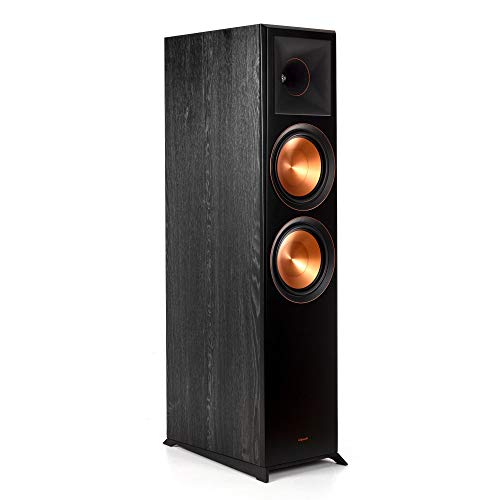
Klipsch RP-8000F — The stretch flagship — sold EACH
Begin with the accounting, because this speaker demands it: the RP-8000F listing is for one tower, sold each, so the stereo pair a music listener needs costs twice the unit figure and stands clearly beyond this guide’s frame. It is included at the head of the list anyway, labelled at every appearance, because a guide to towers at this altitude that omitted the RP-8000F would be protecting its readers from the speaker many of them are actually cross-shopping — and because for home-theatre builders, who may buy a single tower as part of a staged system, the per-each price is the relevant one. Judge it as what it is: the stretch flagship, bought knowingly.
The speaker itself is Klipsch’s Reference Premiere argument at full size: a horn-loaded tweeter whose efficiency lets modest amplifiers produce startling dynamics, and dual large woofers that give the tower genuine low-end authority for film and rock without subwoofer assistance at sane levels. The Klipsch character is presence — a forward, live, front-row balance that makes a concert recording feel like a seat near the stage and a film’s effects arrive with physical intent. Listeners whose taste runs to the back rows, to warmth and understatement, should hear the SVS below as the counter-argument; listeners who want the performance in the room will understand the RP-8000F within one chorus.
Its demands are space and honesty about volume. A big efficient tower in a small room is a thoroughbred in a hallway: the bass couples to every boundary, and the horn’s energy needs distance to integrate before it reaches the listening chair. Give it a medium-to-large room, a metre of breathing space, and an amplifier of quality rather than quantity — its efficiency makes wattage nearly irrelevant — and the RP-8000F delivers the most theatrical sound in this guide, at a pair price this guide will keep reminding you exceeds the frame.
- Selling unit: EACH — one tower per listing; a stereo pair costs two units and exceeds the frame
- Design: Floorstanding tower, Reference Premiere series, Ebony finish per the listing
- Tweeter: Horn-loaded Klipsch design — high efficiency
- Woofers: Dual large woofers (8-inch class per the model designation)
- Character: Forward, dynamic, front-row presentation
- Amplifier need: Modest power suffices — efficiency is the family trait
Strengths
- Dynamics and presence that make film and live music feel physical
- Efficiency frees the amplifier budget for quality over wattage
- A staged home-theatre build can buy singles as the system grows
Trade-offs
- Sold each — the pair is a stretch well beyond the frame, by design of this guide’s accounting
- Needs a medium-to-large room and space from walls to behave
- Front-row character will be too much for warmth-seeking listeners
Best for: home-theatre builders buying per-speaker, and music listeners with larger rooms who choose to stretch for the flagship.
Not suited for: buyers holding the pair frame strictly — the SVS and Fluance complete it without stretching.

Klipsch RP-6000F — The Klipsch sweet spot — sold EACH
The same accounting, one size down: the RP-6000F is sold each, its pair exceeds the frame, and the excess is smaller than its bigger sibling’s — which is precisely its position in Klipsch’s own range and in this guide. The RP-6000F is the Reference Premiere tower for the rooms most people actually have: dual 6.5-inch woofers per the listing, the family horn-loaded tweeter, and a cabinet that fits a living room without rearranging its furniture around two monuments. Many Klipsch owners regard this size as the range’s sweet spot, where the efficiency and the theatre remain while the physical commitment halves.
Sonically the family resemblance is complete. The horn gives the same immediacy — dialogue crisp at low volume, cymbals with genuine metal in them, dynamics that startle guests who expect background speakers — and the smaller woofers trade the flagship’s deepest authority for a slightly tidier integration in modest spaces. Rock, electronic music and film scores, the Premiere repertoire, all land with the intended punch. Classical listeners seeking a veiled, distant perspective will again be happier further down this list; the RP-6000F does not do distant.
As a purchase it suits the staged builder even better than its sibling: buy the pair as the stretch, or build a theatre channel by channel around singles, knowing the range offers matching centres and surrounds voiced to the same horn philosophy. In a stereo-first room of ordinary dimensions, this is the Klipsch this guide would stretch for — the point where the family’s excitement stops needing the family’s largest room to justify it.
- Selling unit: EACH — one tower per listing; a pair exceeds the frame, by less than the RP-8000F
- Design: Floorstanding tower, Reference Premiere series, Ebony per the listing
- Woofers: Dual 6.5-inch woofers, per the listing
- Tweeter: Horn-loaded Klipsch design
- Character: Immediate, dynamic, front-row — in a room-friendly cabinet
- Amplifier need: Low to modest power; efficiency does the heavy lifting
Strengths
- The Premiere experience in a size ordinary living rooms accept
- Sold singly, which suits staged home-theatre construction
- Efficiency keeps amplifier requirements and costs low
Trade-offs
- The pair still exceeds the frame — the stretch is smaller, not absent
- Forward balance is a taste some listeners will not share
- Deepest bass trails the flagship, as physics predicts
Best for: Klipsch-curious listeners in ordinary rooms, and staged theatre builders buying by the channel.
Not suited for: strict frame-keepers and listeners who prefer a laid-back presentation.

Polk ES60 — The refined stretch — sold SINGLE
Polk’s Signature Elite ES60 arrives with the same unit warning in different words: the listing describes a single tower, so its pair, like the Klipsches’, stands beyond the frame — and like them it earns its inclusion by being one of the class’s defining products, the refined counter-proposal to Klipsch’s theatre. Where the Premiere towers project, the ES60 polishes. Its listing describes a 1-inch tweeter with three 6.5-inch woofers and Polk’s Power Port, a flared port design intended to give ported bass without the chuffing and boom that give the technology a bad name, and the whole is voiced for the listener who plays everything — records in the morning, films at night, the radio in between — and wants one balance to serve all of it gracefully.
That balance is the ES60’s argument. The midrange is natural in the way that makes voices — singers, presenters, actors — sound like people rather than productions, and the top end is detailed without the horn’s spotlight. In a mixed-use living room where the towers flank a television and serve every content the household consumes, this even-handedness is a genuine luxury: nothing is exaggerated, so nothing tires. The Power Port’s contribution is placement forgiveness, allowing the ES60 to sit closer to a wall than most rear-ported rivals before its bass thickens — a practical mercy in real rooms, where towers live where the furniture allows.
Efficiency is more conventional here than the Klipsch pair, so the amplifier deserves a thought: a competent modern AV receiver or integrated amplifier of honest mid-range output drives the ES60 pair happily, while the very smallest amplifiers will leave its dynamics partly unexplored. As the refined stretch — a pair beyond the frame, bought for balance rather than spectacle — it is the pick for listeners who found the Klipsch sections exciting and exhausting in equal measure.
- Selling unit: SINGLE — one tower per listing; a pair exceeds the frame
- Design: Floorstanding tower, Signature Elite series, black finish per the listing
- Drivers: 1-inch tweeter with three 6.5-inch woofers, per the listing
- Bass design: Polk Power Port — flared port for cleaner, more placeable bass
- Character: Balanced, natural midrange, unforced detail
- Amplifier need: Honest mid-range power recommended
Strengths
- All-content balance that never tires across a day’s listening
- Power Port bass tolerates closer-to-wall placement than most rivals
- Natural vocal reproduction flatters film dialogue and singers alike
Trade-offs
- Sold single — the pair is a stretch beyond the frame
- Less sheer dynamic theatre than the Klipsch pair
- Wants a proper amplifier to show its dynamic range
Best for: mixed-use living rooms wanting one refined pair for music and film alike.
Not suited for: thrill-first listeners, and buyers for whom the frame is a hard ceiling.

Polk XT70 — The value single — sold SINGLE
The fourth single in the guide is the one whose arithmetic hurts least. The Polk Monitor XT70 listing describes a single large tower, and while its pair — like every single’s pair here — must be counted as two units, the XT line’s value positioning brings that pair closer to the frame’s neighbourhood than any other single in this list. Buyers who love the idea of a big tower system and hate the idea of the stretch should start their sums here. The XT70 is Polk’s Monitor-series flagship: a tall cabinet with multiple drivers, built to give a large room a large sound at the series’ accessible tier, in the listing’s Midnight Black finish.
Its virtues are scale and generosity. The XT70 plays big — wide, full, unbothered by volume in a family room — and its balance is forgiving of the recordings and sources everyday households feed it: streaming television, games, a turntable of well-loved records. It does not resolve detail like the ES60, and beside its sibling its finish and refinement read as the value tier they are; the XT philosophy spends the money on drivers and cabinet volume rather than on veneer and voicing hours. For a games-and-film room where the towers double as the household’s party system, that spending order is defensible, even shrewd.
Staged builders should note the XT70’s other convenience: a range built at this tier offers matching centres and surrounds at similarly accessible positions, so a pair bought today can grow into a full theatre without any channel’s price causing a wince. As the value single — counted honestly, twice, for a pair — it is the pick that brings big-tower ownership nearest to the frame while still admitting, in print, that nearest is not inside.
- Selling unit: SINGLE — one tower per listing; a pair is two units, nearest the frame among the singles
- Design: Large floorstanding tower, Monitor XT series, Midnight Black per the listing
- Character: Big, generous, forgiving balance for everyday sources
- Series position: Flagship of Polk’s accessible Monitor XT line
- Growth path: Matching XT centres and surrounds at the same accessible tier
- Amplifier need: Mainstream receiver power is well matched
Strengths
- Scale and volume for large family rooms at the value tier
- Forgiving of everyday sources, games and television
- The least painful pair arithmetic of any single in this guide
Trade-offs
- Still sold single — the pair exceeds the frame, modestly
- Detail and finish trail the ES60, its own sibling
- Big cabinet needs a room that can take its visual weight
Best for: games-and-film households wanting large towers with the gentlest stretch.
Not suited for: detail-led listeners, who should save toward the ES60 or the SVS pair.
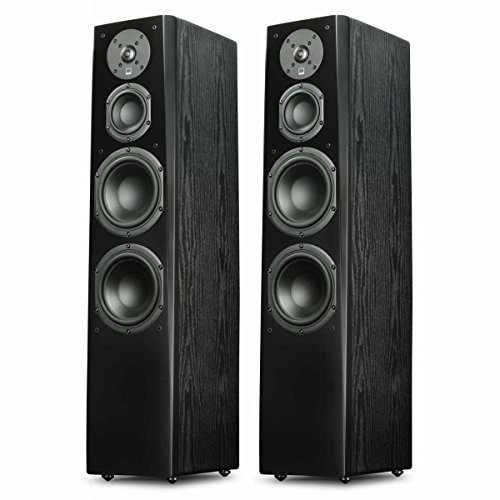
SVS Prime Tower — The complete pair — sold as a PAIR
After four singles, the relief of a pair: the SVS Prime Tower listing is for two towers, a matched pair in Premium Black Ash, and the frame in this guide’s title is met as the keyword intends — a complete stereo system inside the budget. That completeness is not the Prime Tower’s only virtue, but it frames the others, because SVS built its reputation on engineering discipline: drivers and crossovers designed with measurement as a first language, voicing aimed at neutrality, and a product line conceived from the start as a home-theatre ecosystem, with matching centre and satellite speakers sharing the Prime name and the same design brief.
Neutrality is the Prime Tower’s sound and its sales pitch. Where the Klipsches editorialize toward excitement and the Fluances toward warmth and scale, the SVS presents the recording’s own balance with minimal commentary — which makes it the easiest pick here to build a theatre around, because a centre channel’s first duty is to match its towers, and a neutral family matches itself. Film listeners gain dialogue that sits in the same acoustic world as the effects; music listeners gain the increasingly rare pleasure of hearing a recording’s production decisions rather than a speaker’s. Long listening sessions, the true test of neutrality, pass without the fatigue that forward speakers can impose by hour three.
The pair’s demands are conventional: an amplifier or receiver of honest mid-range capability, a little space from the wall behind, and a room large enough that two towers read as intention rather than invasion. Subwoofer integration, when film ambitions grow, is this brand’s home turf — SVS built its name on subwoofers, and the Prime towers are designed to hand over to one cleanly. As the complete pair inside the frame, engineered without a house sound to forgive, the Prime Tower is this guide’s recommendation for the buyer who wants the brief answered exactly as written.
- Selling unit: PAIR — two matched towers per listing, inside the frame
- Design: Floorstanding tower pair, Prime series, Premium Black Ash per the listing
- Voicing: Neutral, measurement-led — minimal house character
- Ecosystem: Matching Prime centre and satellites for theatre expansion
- Subwoofer path: Designed to integrate with the brand’s subwoofer speciality
- Amplifier need: Honest mid-range receiver or integrated amplifier
Strengths
- A complete pair inside the frame — the brief answered as written
- Neutral voicing makes theatre matching and long sessions effortless
- The cleanest upgrade path to a full matched surround system
Trade-offs
- Neutrality can read as restraint beside the Klipsch theatre
- Bass, while full, invites a subwoofer for the largest film effects
- Finish options are sober rather than decorative
Best for: frame-keepers who want a complete, neutral pair and a theatre growth path.
Not suited for: listeners who buy towers precisely for a strong house character.

Fluance XL8F — The bass-complete pair — sold as a PAIR
The second complete pair takes the opposite route to value: instead of neutrality, completeness of hardware. The Fluance XL8F listing describes a pair of three-way floorstanding towers with down-firing 8-inch woofers built into each cabinet — in effect, towers with their low-frequency reinforcement already installed, in Black Ash, sold as a pair inside this guide’s frame. The down-firing arrangement uses the floor as part of the design, spreading the lowest bass into the room from the cabinet’s base, and it gives the XL8F a claim none of the other pairs can make at this accounting: the deepest self-contained bass in the guide, no subwoofer invited, none required for music and most film.
Fluance’s voicing leans warm and generous, the profile of a speaker designed by a company that sells direct and builds its following on listeners who keep their speakers for a decade. The three-way design gives the midrange its own dedicated territory rather than asking a woofer to climb and a tweeter to stoop, and vocals benefit with a naturalness that belies the pair’s value positioning. Film nights gain the down-firing woofers’ room-filling weight; music gains a foundation that makes the towers sound larger than their footprint, which is not small — these are substantial cabinets, and a room should be measured for them as honestly as a budget.
Placement is the XL8F’s one stern requirement. Down-firing woofers interact with the floor and the nearby walls as a team, so the pair wants symmetrical space — equal distances to side walls where the room allows, and a little experimentation along the front wall before the spikes or feet are declared final. Carpets and hard floors will each take their share of the bass differently, and the owner who spends one evening sliding the towers in small increments will be repaid every night afterwards. As the bass-complete pair inside the frame, it is the pick for the listener whose brief ends at two boxes and a complete sound.
- Selling unit: PAIR — two towers per listing, inside the frame
- Design: Three-way floorstanding pair, Black Ash per the listing
- Woofers: Down-firing 8-inch woofers built into each cabinet, per the listing
- Character: Warm, generous, with the deepest self-contained bass here
- Placement need: Symmetrical space and patient front-wall positioning
- Amplifier need: Mainstream power; the design is not demanding
Strengths
- A pair inside the frame with subwoofer-class bass already aboard
- Three-way design keeps the midrange clear at all volumes
- Warm, long-ownership voicing from a direct-selling specialist
Trade-offs
- Substantial cabinets dominate small rooms visually and acoustically
- Down-firing bass demands placement patience to avoid boom
- Theatre expansion means matching from a smaller ecosystem than SVS or Polk
Best for: two-box listeners who want complete bass inside the frame and will never add a subwoofer.
Not suited for: small rooms, and measurement-first listeners who prefer the SVS neutrality.
Why Do Some Towers Sell Singly and Others as Pairs?
The split is a fossil of two markets sharing one product. Stereo music buyers think in pairs, and direct-focused brands like SVS and Fluance package accordingly. Home-theatre construction thinks in channels — a front left today, a centre next quarter, surrounds when the room is rewired — and the retail giants serve it with per-speaker listings that let a system be assembled in stages and replaced in singles after accidents. Neither convention is a trap in itself; the trap is purely arithmetical, a buyer reading a per-each figure through pair-trained eyes. The cure is the habit this guide has modelled on every page: find the unit words — each, single, pair — before reading a single sonic adjective.
There is a subtler consequence worth knowing. A pair bought as a pair is matched by the maker, from the same production run, which matters to imaging precision. Singles bought months apart usually match well enough in these modern ranges, but the staged builder should keep finish and revision in mind, because a range refreshed between purchases can leave a theatre with two generations flanking the television — audible to no one, perhaps, but visible to the owner forever.
One placement variable hides in plain sight: the television itself. A large screen between the towers is a reflective surface at the exact centre of the stereo image, and pulling the towers slightly forward of the screen’s plane — so their sound does not have to cross its face — sharpens the centre image for both music and film. It costs nothing, it looks deliberate, and it is the adjustment owners most often describe as the one that finally made the system click.
How Much Amplifier Do Towers at This Level Need?
Less than the anxiety suggests, and better than the bargain bin offers. The Klipsch pair’s horn efficiency means a modest amplifier reaches levels that would strain other systems — their owners should spend on amplifier quality and quietness rather than on wattage. The Polk, SVS and Fluance pairs are conventional in their appetites and pair happily with the honest middle of the receiver and integrated-amplifier market, where clean power and good bass control live. What none of these towers forgives is the bottom of the market: a struggling amplifier clipping into a revealing tower at a party is how tweeters die and evenings end.
Judge an amplifier for this class by its behaviour into real speaker loads at the volumes you actually use, its bass grip on the woofer array, and its noise floor during quiet passages — film dialogue at night exposes hiss that rock concerts conceal. If a subwoofer joins later, the receiver’s bass management becomes part of the purchase too, which is one more reason the staged builder buys the electronics with the same patience as the towers.
Where Should Tower Speakers Stand in a Real Living Room?
Start with the triangle: the two towers and the listening seat as its corners, roughly equal sides, tweeters near seated ear height by design in this class. Then negotiate with the room. Rear-ported and bass-generous towers — the Fluance above all — want space behind and beside them; begin with a generous gap from the front wall and walk them forward in small steps until the bass tightens without thinning. Symmetry is worth furniture arguments: equal distances to side walls give the stereo image a stable centre, and a rug between the towers and the seat tames the floor reflection that smears it. Toe-in is the final seasoning — a slight angle toward the listener sharpens focus, and the correct amount is the amount your favourite vocal recording approves.
Television rooms add their geometry: towers flanking the screen at a width the screen’s size justifies, the centre of the image at the screen’s centre, and no tower so close to a corner that its bass becomes the room’s weather system. Small rooms are not disqualified from towers — the RP-6000F and the pairs here serve in them happily — but they are disqualified from careless placement, because every excess a big room absorbs, a small room returns with interest.
Do You Still Need a Subwoofer With Towers Like These?
For music, mostly no — and the mostly is doing honest work. The pairs and singles in this guide reproduce the bass that music actually contains, down to the region where a kick drum’s weight and a bass guitar’s foundation live, and a stereo listener can live subwoofer-free indefinitely with any of them. Film is the exception that built the subwoofer industry: the lowest effects channel in modern soundtracks descends below what tower woofers reproduce at cinema levels, and a film-first household will eventually want those last hertz delivered by a specialist. The XL8F’s built-in down-firing woofers narrow the gap the most; the SVS pair is designed to close it by integration when the day comes.
The staged answer is therefore patience. Buy the towers, learn them on music and film for a season, and let the subwoofer decision be made by your own room’s evidence rather than by a bundle’s marketing. Many households discover the towers were the destination; the rest add a subwoofer as an upgrade they understand, which is the only kind worth buying.
Towers or Bookshelf Speakers Plus a Subwoofer at This Frame?
The frame’s eternal alternative deserves its hearing. The same pair-money buys excellent bookshelf speakers on stands with a competent subwoofer, and that combination wins specific arguments: the subwoofer can be placed where the room’s bass behaves rather than where the speakers must stand, small rooms keep their floor visually lighter, and the bookshelf pair often resolves midrange detail a notch finer. If the household’s listening is mostly nearfield, mostly at a desk-adjacent sofa, or mostly in a room where two towers would crowd the television wall, the alternative is not a compromise — it is the better architecture.
Towers win the counter-arguments. They present a unified, full-range image with no crossover negotiation between separate boxes, they fill larger rooms with an ease the smaller combination strains for, and they remove the subwoofer’s placement, cabling and integration from the household’s life entirely — the XL8F most completely of all. They also hold their dignity at parties and film nights without a helper box humming in the corner. The deciding question is the room’s size and the listener’s distance: beyond a few metres of listening distance, in a room that can give towers their air, the tower pair is the frame’s natural answer, which is why the keyword exists.
What Does Stereo Imaging Add Up to in Practice?
Imaging is the towers’ party trick that becomes a daily habit: a well-placed pair makes the speakers disappear and replaces them with a stage — the singer standing centre, the piano behind and left, the room of the recording audible around the instruments. The neutral SVS pair images with cartographic precision, the Klipsches with a larger-than-life stage that some listeners find thrilling and others find theatrical, the Polks between the two, the Fluance warm and wide. None of these is the correct amount; all are coherent artistic choices, and the listener’s favourite recordings are the only reliable judge, because imaging preferences are as personal as seat preferences at a concert.
What destroys imaging is never the speaker and almost always the setup: unequal distances, one tower in a corner and one in free space, a listening seat against the back wall where reflections arrive instantly. The staged buyer who cannot offer symmetry should weight the Polk ES60’s placement tolerance and the general virtue of patience more heavily than any imaging reputation, because a symmetrical modest setup out-images an asymmetrical ambitious one every night of the week.
How Do Towers Live With a Household?
A tower pair is the largest object most sound systems introduce into a home, and the purchase that ignores the household fails socially before it fails sonically. Finishes in this guide run from the Klipsch and SVS dark woods to the Polks’ black — sober, television-adjacent colours that disappear beside a screen, which is where towers spend their lives. Children and pets deserve a practical sentence: a tall cabinet on a hard floor should be stable, its grille left on where small fingers explore, and its spikes replaced by feet where a knocked tower could fall toward anyone small. None of the six is unusually fragile, but physics charges rent on height.
Dust, sunlight and heat are the slow negotiations. A tower beside a radiator or in direct afternoon sun ages its finish unevenly; a tower in a walkway collects hip-height scars. The owners who keep towers beautiful for a decade are simply the ones who placed them half a metre thoughtfully at the start. Sound and domesticity are not opponents in this category — they are the same decision, made once, carefully.
What Should You Know About Buying This Class Second-Hand?
Towers at this level circulate healthily on the used market, because owners upgrade, downsize and move house, and a careful used purchase can put a stretch pair inside the frame — the one legitimate route by which an RP-8000F pair answers this keyword’s arithmetic. The inspection is physical: drivers for cone damage and surround decay, cabinets for the corner dents that betray drops, terminals and crossovers for the crackle that a slow volume sweep reveals. Play each tower alone, at level, with material you know; a matched pair should sound like one speaker photographed twice.
Price the risk qualitatively but firmly: without warranty, a used tower is worth meaningfully less than its new equivalent, and a seller who cannot demonstrate the pair working is selling a story, not speakers. Singles appear used more often than pairs — theatre builders splitting systems — which tempts the staged plan; resist completing a pair across production eras unless finish and revision can be verified, for the reasons the selling-unit section gave. The linked listings in this guide are new and verified for buyers who prefer the arithmetic simple.
How Should the First Week With New Towers Sound?
Day one will disappoint slightly, and foreknowledge is the cure: new drivers are stiff, rooms are unlearned, and the placement is a first guess. Spend the first sessions on placement rather than judgement — the wall distance, the toe-in, the seat — with a handful of recordings whose sound you own in memory. By the week’s end the drivers will have loosened, your ears will have calibrated, and the towers will be playing the room instead of fighting it. Owners who review their purchase on day thirty almost always report a different, better speaker than the one that arrived; both reports are accurate, and the second is the one that matters.
Invite one honest listener during that first week — the friend who will say the bass is boomy before your ears have finished being polite about it. Outside ears hear a new system without the owner’s investment talking, and a placement flaw caught in week one is a decade of better listening bought for one cup of tea.
Keep a short listening diary if the hobby appeals — track, setting, impression — because towers at this level reward the owner who learns them deliberately, and because the diary becomes the evidence, a year later, that the frame was well spent. Resist rearranging the electronics in the same week; change one variable, live with it, and let the system assemble itself in your habits.
Comparison Table
| Tower | Selling unit | Pair vs frame | Design signature | Character |
|---|---|---|---|---|
| Klipsch RP-8000F | Each | Pair exceeds frame | Horn tweeter, dual large woofers | Front-row theatre |
| Klipsch RP-6000F | Each | Pair exceeds frame, by less | Horn tweeter, dual 6.5″ woofers | Theatre, room-sized |
| Polk ES60 | Single | Pair exceeds frame | Three 6.5″ woofers, Power Port | Refined all-rounder |
| Polk XT70 | Single | Pair exceeds frame, least of the singles | Large Monitor XT cabinet | Big and forgiving |
| SVS Prime Tower | Pair | Inside the frame | Measurement-led neutrality | The honest presenter |
| Fluance XL8F | Pair | Inside the frame | Three-way, down-firing 8″ woofers | Warm and bass-complete |
The frame column is the guide in one glance: two pairs complete the brief as written, four singles invite a deliberate stretch, and no row hides which is which.
What Should Theatre Builders Plan Beyond the Front Pair?
A tower pair bought for stereo today often becomes the front of a theatre within two years, and the planning is cheap now and expensive later. The centre channel is the next purchase that matters — it carries film dialogue, the majority of a soundtrack’s information — and it must come from the towers’ own family, because a centre that speaks in a different voice makes actors change accent as they cross the screen. Every range in this guide except the Fluance offers an obvious matched centre; Fluance owners building theatres should audition centres against their towers with dialogue-heavy material and trust their ears over brand loyalty. Surrounds follow, then the subwoofer, and the order is not arbitrary: dialogue before envelopment, envelopment before depth.
Receiver planning belongs in the same conversation. A theatre that will grow to five or seven channels should be powered from the start by a receiver with the channels and the bass management the finished system needs, because replacing electronics mid-build is the classic way a staged system costs more than a bought one. The tower pair, chosen with its family in mind, is the one component that never needs replacing in that growth — which is the deepest argument for stretching to the right singles when the theatre is the destination.
Bi-Wiring, Spikes and Other Rituals — an Honest Word
Tower ownership attracts rituals, and this guide’s duty is to price them honestly. Spikes on carpet can stabilise a cabinet and tidy its bass marginally; on hard floors, the supplied feet are the correct fitting and spikes are a scratch risk wearing a hi-fi costume. Bi-wiring — running twin cables to a tower’s split terminals — changes nothing that a single run of adequate cable does not, in any test its advocates have survived; bi-amplification with real separate amplifiers is a different, legitimate, and much more expensive conversation. Cable gauge matters at length and not at all beyond adequacy. Spend the ritual budget on recordings, room treatment in the form of soft furnishings, and the electricity of a thousand evenings’ listening, in that order.
What Mistakes Do Tower Buyers at This Level Keep Making?
The unit error stands first, by cost: a buyer who orders one RP-8000F expecting a pair has purchased a very good ornament. Second is the room error — towers chosen for a space that cannot give them distance from walls or from the listener, then blamed for boom that placement caused. Third is amplifier mismatch in the downward direction, pairing revealing towers with the cheapest amplification on the shelf and hearing its limits all evening. Fourth is judging towers at showroom volume, where the forward speaker always wins the demo and the neutral speaker wins the third month at home.
A fifth mistake is forgetting the household: towers are furniture with opinions, and a pair that dominates a shared living room will be resented at volumes no specification can fix. Measure the room, mock the footprint with cardboard if the cabinets are large, and let the people who live with the silhouette approve it before the boxes arrive. The best tower purchase is the one still being enjoyed, un-compromised and un-hidden, five years later.
What About Resale and the Decade View?
Towers at this level are among hi-fi’s most durable goods, mechanically and commercially. A mainstream pair from Klipsch, Polk or SVS holds a following in the used market that boutique experiments do not, because the next owner can hear them in a shop and match them with centres still in production. Fluance’s direct model trades some of that liquidity for its new-price completeness. None of this should lead a purchase — buy the sound — but the household that may move, downsize or emigrate within the decade can weigh it honestly: the famous pairs are the easiest to rehome at a fair fraction of their cost, and the frame, spent on a recognised pair, is partly a deposit rather than a pure expense.
Longevity also argues for the unglamorous virtues: standard connections, replaceable grilles, finishes that age evenly. Every pick here is conventional in the ways that matter to year ten, which is one more thing they share beneath their arguments about everything else.
And when the towers have settled, resist the upgrade itch for a full season; a system learned deeply is worth more than a system replaced quickly, and the frame you spent will still be audible, working, long after the itch has moved on to somebody else’s living room.
Final Recommendation
Hold the frame and the answer is a choice of temperament: the SVS Prime Tower pair for the listener who wants the recording unadorned and a theatre to grow around it, the Fluance XL8F pair for the listener who wants the bass complete and the subwoofer question closed. Stretch, and the stretch should be chosen by room and taste — the RP-6000F for Klipsch theatre in an ordinary room, the RP-8000F where the room and the appetite are both large, the Polk ES60 where refinement across all content outranks spectacle, the XT70 where scale matters and the stretch must stay gentle. Every one of those sentences began from the selling unit, and yours should too.
A pair of towers is the last hi-fi purchase most households make for a decade, so make it with the lights on and the arithmetic done — then turn the lights down, put on the record the room has been waiting for, and let two tall boxes justify every inch of floor they occupy.
Frequently Asked Questions
Why are there no prices in a guide about a $1,000 budget?
Because prices move and this site prints none for individual products; the frame is the keyword’s, and each pick’s position against it — inside, or beyond and by what logic — is stated in words. The listing itself shows today’s figure and, just as importantly, restates the selling unit beside it.
If I buy one single tower now, can I add its partner later?
Yes, and staged theatre builders do exactly this. Keep to the same model and finish, buy sooner rather than later to stay within the same production era, and remember that a lone tower is a mono speaker until its partner arrives — the pair is the product, however it is purchased.
Are the Klipsch towers too much for an apartment?
The RP-6000F, placed with a little care, serves apartment listeners well, and its efficiency is an asset at low volumes, where it stays detailed while neighbours sleep. The RP-8000F asks more of a room; in a small flat its bass will find the neighbours before it finds its balance.
Which pair is best if I will never buy a subwoofer?
The Fluance XL8F, whose built-in down-firing woofers were designed for exactly that household. The SVS pair is the choice when a subwoofer remains a possibility, since its ecosystem is built around adding one.
Do towers need special speaker cable or stands?
Neither. Towers stand on their own feet or spikes — carpet and hard floors each have their fitting in the box, typically — and ordinary speaker cable of sensible gauge carries the signal; spend on placement time before cable exotica, in that order, always.
How far from the wall should towers start?
Begin with clear space behind them — a generous gap rather than a token one — then move them in small steps toward the wall over several listening sessions, stopping where the bass is fullest without thickening. Bass-light rooms will settle the towers closer; bass-heavy rooms will push them out. The ES60’s Power Port tolerates the closest placement here; the XL8F rewards the most patience.
Is one tower from a pair ever sold separately for a centre channel?
Some builders do use a third identical tower as the centre behind an acoustically transparent screen — the ideal centre, in fact, since it matches perfectly. In ordinary rooms a horizontal centre from the same family is the practical answer, and a single tower bought for centre duty in a normal cabinet setup will not fit the furniture.
Can these towers serve as the front pair of a surround system?
That is half their purpose. The Klipsch, Polk and SVS ranges all offer matching centre and surround speakers voiced to their towers, and the staged route — pair first, centre second, surrounds and subwoofer as the room allows — is how most good home theatres are actually built.
Related Guides
Continue with best tower speakers for home theatre and best bookshelf speakers for the same budget and how to place tower speakers in a living room once the coordinators connect this guide to the wider speaker cluster.


