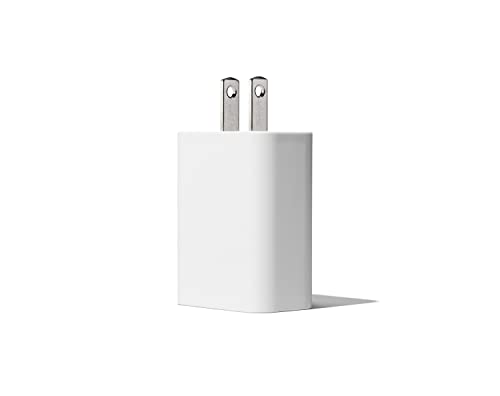
Our Top Picks
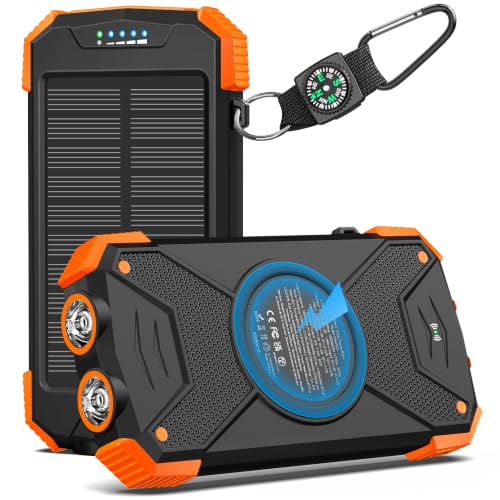
 charmast Portable Charger Power Bank with Reinforced Built-in5.67 x 2.64 x 0.71 inchesCheck on Amazon
 VRURC Portable Charger 4-Built-in-Cables 20000mAh Fast Charging Power6.14 x 2.75 x 0.75 inches0.8 poundsCheck on Amazon



What's inside
- Capacity classes and the weight math
- Rated capacity versus delivered capacity
- Trip energy budgeting, with the arithmetic shown
- Output power: fast charging and sharing ports
- Solar pairing: what folding panels can and cannot do
- Cold weather: lithium below freezing
- Water, dust, and the rain strategy
- Durability: housings, cables, and strain relief
- Pass-through charging and town stops
- Flying to the trailhead: the 100 watt-hour limit
- Storage, cycle life, and the off-season
- One big bank or two small ones
- Displays, indicators, and knowing what remains
- The small devices, one by one
- Group charging and shared banks
- Heat, altitude, and the other environmental edges
- Check prices on Amazon
- A decision framework by trip length and device load
As an Amazon Associate I earn from qualifying purchases. This post may contain affiliate links at no extra cost to you.
A portable charger on the trail is simply stored electricity carried on your back: a rechargeable lithium battery in a sealed housing, with one or more USB ports, whose entire job is to move energy into a phone, a headlamp, a watch, or a satellite messenger after the wall outlets of the world are miles behind. That simplicity is deceptive, because every gram of it is carried up every climb, and every watt-hour of it is finite in a way that home electricity never feels. Choosing well is an exercise in honest arithmetic about what your devices consume, how long you will be out, and what the weather will do to lithium cells along the way.
Before you pack a single watt-hour, a quick note on how this guide is funded: some links here are affiliate links, and a purchase through one of them earns us a commission from the retailer that supports the research behind the guide without changing what you pay. Our research compared manufacturer spec sheets, battery standards documents, airline carriage rules, and published documentation from device makers, and the figures below are presented as planning estimates drawn from those sources, since individual devices, temperatures, and charging cables all shift real results on any given trip.
Terminology helps. Hikers use portable charger, power bank, and battery pack interchangeably, and this guide does the same. What does not count, for our purposes, is a wall charger, which is useless beyond the trailhead unless paired with a bank, or a full power station of the kind carried in vehicles, whose smallest examples weigh more than an entire backpacking kit. The products in this category span a small handful of sizes, and nearly every buying decision reduces to picking the right size class and then choosing carefully within it.
Capacity classes and the weight math
Power banks are sold by milliamp-hours, a unit that describes electric charge rather than energy, and the distinction drives most of the confusion in this category. The energy a bank stores is measured in watt-hours, calculated as milliamp-hours multiplied by the nominal cell voltage of 3.7 volts, divided by one thousand. A 5,000 milliamp-hour bank therefore stores 5,000 times 3.7 divided by 1,000, which is 18.5 watt-hours. A 10,000 milliamp-hour bank stores 37 watt-hours. A 20,000 milliamp-hour bank stores 74 watt-hours. Those watt-hour figures are the honest currency for comparing banks, planning trips, and checking airline limits, because they describe energy itself rather than charge at one particular voltage.
The three capacity classes map onto three kinds of trip. The 5,000 milliamp-hour class, at 18.5 watt-hours, is the emergency reserve: roughly one full phone charge, carried by day hikers, trail runners, and overnight walkers who mostly need insurance against a dead phone at the trailhead car park. The 10,000 milliamp-hour class, at 37 watt-hours, is the backpacking default, enough for two to three phone charges and the small devices around them across a long weekend. The 20,000 milliamp-hour class, at 74 watt-hours, serves four- to seven-day trips, photographers, and hikers running several hungry devices, at a weight that must be justified rather than assumed.
Weight is where the classes separate. Typical current models weigh roughly ninety to one hundred twenty grams in the 5,000 class, one hundred eighty to two hundred thirty grams in the 10,000 class, and three hundred twenty to three hundred eighty grams in the 20,000 class. Exact figures vary with housing material, port count, and built-in cables, which is why the comparison that matters is grams per watt-hour. Dividing weight by stored energy gives a figure commonly between about five and six and a half grams per watt-hour for mainstream banks; a bank at the low end of that range is efficiently built, while one at the high end is carrying its weight in thick housing, extra ports, or a display rather than in cells.
Worked examples make the metric concrete. A 10,000 milliamp-hour bank weighing two hundred grams delivers 37 watt-hours, which is about 5.4 grams per watt-hour. A 20,000 milliamp-hour bank weighing three hundred fifty grams delivers 74 watt-hours, about 4.7 grams per watt-hour, which shows why larger banks are usually more weight-efficient per unit of energy: the housing, circuitry, and ports are shared across twice the cells. A tiny 5,000 bank weighing one hundred ten grams works out near 5.9 grams per watt-hour, the least efficient of the three and still worth carrying when the absolute weight, not the ratio, is what a short trip demands.
Ultralight hikers push this analysis further and count the cable, the stuff sack, and any solar panel in the same ledger, because the system weight is what the legs carry. A bank that saves twenty grams but needs a heavy proprietary cable gives the saving back. A bank with a built-in short cable deletes a separate cable from the kit entirely, which can make it the lightest complete solution in its class even if the bare unit is not the lightest on a spec sheet. Comparing complete charging kits, rather than bare units, is the method our research recommends for any weight-sensitive decision.
Rated capacity versus delivered capacity
No power bank delivers its full rated energy to a phone, and understanding why prevents the most common disappointment in this category. The cells inside store energy at 3.7 volts nominal, while USB charging delivers it at five volts or higher, so a conversion circuit must step the voltage up, and that conversion loses energy as heat. Further losses occur in the cable, in the phone’s own charging circuit, and in the phone’s conversion down to its battery voltage. The cumulative result is that roughly eighty to ninety percent of a bank’s stored energy typically reaches a device battery under good conditions, with quality banks and short cables at the top of that range.
Manufacturers handle this gap in two ways. Some quote only the cell capacity, the familiar 10,000 milliamp-hours, leaving the buyer to apply the discount. Others also publish a rated or output capacity, measured at five volts, which is always a smaller milliamp-hour number and is the more honest planning figure. A 10,000 milliamp-hour bank with a five-volt rated capacity around 6,000 to 6,500 milliamp-hours is behaving normally, not underperforming: 37 watt-hours stored, about 31 to 33 watt-hours delivered, and the rest spent on conversion. When a listing promises delivery figures that imply efficiency above the low nineties, the arithmetic itself is the warning.
Temperature, discharge rate, and battery age all move the delivered figure. Cold cells deliver less, fast charging converts slightly less efficiently than slow charging in many designs, and a bank that has lived through hundreds of cycles holds measurably less than it did when new. Planning with an eighty-five percent delivery assumption, and then carrying a small margin beyond it, produces trip budgets that survive contact with reality. Planning with the printed milliamp-hours taken at face value produces a phone that dies on the last evening, which is when it is most likely to be needed for the pickup message or the map out.
A related subtlety is that phones report their own batteries in milliamp-hours at their internal voltage, so a phone battery listed at 4,500 milliamp-hours stores about 17.4 watt-hours at 3.87 volts. Comparing that energy figure with a bank’s delivered watt-hours, rather than comparing milliamp-hours directly, gives the true count of full charges available. A 37 watt-hour bank delivering eighty-five percent offers about 31.5 watt-hours, which divided by 17.4 gives roughly 1.8 full charges for that phone, not the 2.2 charges a naive milliamp-hour division suggests. Every worked example in the next section uses this energy method.
Trip energy budgeting, with the arithmetic shown
Budgeting trail energy starts by listing every device and its realistic daily appetite. A smartphone is the dominant load and the most variable, because its consumption depends on how it is used: a phone in airplane mode serving as a camera and an occasional map check might use twenty to thirty percent of its battery a day, while a phone navigating continuously with the screen bright, tracking a route by satellite positioning, and uploading photographs can consume its entire battery in a day and ask for more. The honest method is to note your own phone’s battery percentage at the end of typical hiking days on shorter trips and plan from that observed figure rather than from hope.
The supporting cast is smaller but not negligible. A rechargeable headlamp used for an hour or two of camp chores and a night visit outside the tent might use ten to twenty percent of its modest battery per night, amounting to a full recharge every four or five nights. A GPS watch tracking activities all day commonly needs a recharge every two to four days depending on its size and settings. A satellite messenger sipping power while sending tracking points and a few messages can run a week or more, but heavy two-way messaging shortens that considerably. A camera with interchangeable batteries usually travels with spares instead of a bank, although mirrorless cameras that charge over USB-C increasingly draw on the same bank as the phone.
Now the worked example for a three-day trip. Take a phone with a battery of about 4,500 milliamp-hours, roughly 17.4 watt-hours, used moderately in airplane mode with navigation checks and evening photographs, consuming about half its battery per day. Across three days that is one and a half full phone charges, about 26 watt-hours that must arrive in the phone. Add a headlamp top-up of about 2 watt-hours and a GPS watch recharge of about 1.5 watt-hours, and the devices need roughly 29.5 watt-hours delivered. Dividing by an eighty-five percent delivery efficiency means the bank must store about 35 watt-hours, which lands almost exactly on the 10,000 milliamp-hour class at 37 watt-hours, with a slim margin. That is the arithmetic behind the common advice that a 10,000 bank suits a long weekend: it is not folklore, it is this sum.
Extend the same party to five days and the sum changes class. The phone now needs two and a half charges, about 43.5 watt-hours delivered. The headlamp needs a full recharge and a top-up, about 4 watt-hours. The watch needs two recharges, about 3 watt-hours, and a satellite messenger that has been messaging daily wants a top-up around 2 watt-hours. The delivered total is roughly 52.5 watt-hours, which at eighty-five percent efficiency requires about 62 watt-hours stored. A 10,000 bank at 37 watt-hours is now clearly insufficient, a single 20,000 bank at 74 watt-hours covers the trip with a workable margin, and two 10,000 banks cover it with redundancy at a small weight penalty, a trade examined later in this guide.
Heavier phone use rewrites both examples. If the phone is navigating with the screen on for six hours a day, budget a full charge per day: three days then need about 52 watt-hours delivered for the phone alone, pushing even the short trip into 20,000-class territory once the smaller devices are added. The variables that rescue such a budget are behavioral rather than technological: downloading maps in advance, using airplane mode between checks, lowering screen brightness, and letting a dedicated GPS device or watch carry the tracking load while the phone sleeps. Hikers who also maintain equipment at home will recognize the same budgeting habit from the solar trickle world described at best 12v solar trickle chargers, where stored energy is likewise planned in watt-hours against a daily draw.
Build the budget as a written list before any long trip, with a line per device, a daily figure, a trip total, and a margin of at least fifteen percent for cold, aging cells, and the day that goes wrong. The exercise takes ten minutes at home and replaces the two failure modes of trail charging, which are carrying a bank that dies on the penultimate day and carrying a bank twice as heavy as the trip ever required. Both errors are common, both are visible in the arithmetic in advance, and neither requires any new equipment to avoid.
Output power: fast charging and sharing ports
Input capacity decides how much energy you carry; output power decides how quickly it moves. Basic USB ports deliver five watts, the original USB charging rate, at which a modern phone gains charge slowly and may barely hold its level while navigating. Ten-watt ports, the older tablet standard, roughly double that pace. USB-C Power Delivery changes the scale: at eighteen to thirty watts, a compatible phone can recover half its battery in around half an hour, which transforms charging from an overnight background process into something that can happen during a lunch stop.
For hikers, fast charging has a specific tactical value beyond impatience. Time plugged in is time tethered, usually inside a tent or during a rest, and a bank that refills a phone in an hour of cooking and camp chores fits the rhythm of a trail day better than one that needs the whole evening. Fast charging also pairs with opportunistic power: twenty minutes at a cafe socket during a resupply, with a fast wall charger feeding the bank, is worth far more when both the bank’s input and output rates are high. Banks differ widely in input speed, and a large bank with a slow input can need most of a night in town to refill, which matters on itineraries built around brief stops.
Charging two devices at once divides the output, and the division rules are printed in fine print for a reason. Many banks advertise a combined maximum, so a unit offering thirty watts in total might give a phone eighteen watts alone but split to fifteen and fifteen, or less, when a watch or headlamp joins. Some designs drop the USB-C port out of its fast negotiated mode entirely when the second port is occupied, reverting everything to basic rates until the second device is removed. None of this is a defect; it is thermal and cost engineering. But a hiker planning to charge a phone and a camera battery together overnight should know whether the morning will bring two full devices or one full and one partial.
Port selection carries practical consequences. USB-C ports handle the modern fast protocols and the same cable often serves phone, headlamp, and watch chargers, which reduces the cable bundle. A legacy USB-A port remains useful for older headlamps, older messengers, and the proprietary charging cradles of many watches, which frequently terminate in USB-A. A bank with one USB-C and one USB-A port covers nearly every trail device made in the last decade, and a second USB-C port is worth having mainly for households whose small devices have all migrated. Cable quality participates in output too: a damaged or excessively long cable can prevent fast-charge negotiation and quietly demote a thirty-watt system to five watts, which is one reason short, sound cables are specified in the durability section below. Readers comparing the wall end of fast charging for town stops can consult best 100w chargers for the high-output adapters that refill a big bank fastest during a short break.
Low-current mode is the small feature that small devices need. Some banks switch themselves off when the draw falls below a threshold, interpreting a nearly full watch or a tiny headlamp as a finished phone and ending the session early. Banks intended for wearables provide a low-current or trickle mode, often activated by a double press of the button, that keeps the port awake for such loads. If your headlamp or earbuds have ever woken up half charged beside a bank that decided the job was done, this mode is the difference, and it should be on the checklist of any hiker whose kit includes several small rechargeables.
Solar pairing: what folding panels can and cannot do
Solar panels tempt hikers with the idea of energy that weighs the same on day six as on day one, and the physics is real but the marketing arithmetic needs translation. A folding panel’s wattage is rated under laboratory conditions: full sun of a standardized intensity, the panel square to the light, and cells at a controlled temperature. A panel rated at twenty-one or twenty-eight watts will produce that figure briefly on a clear midday in summer with careful aim, and considerably less across an ordinary day of walking, resting, and weather.
Real-world output across a hiking day commonly averages a third to a half of the rated figure during the hours the panel is deployed, and deployment is the catch. A panel strapped to the top of a pack while walking is tilted at whatever angle the trail dictates, shaded by trees, and turned away from the sun half of every switchback. The same panel propped on a rock during a long lunch in open country performs several times better. Solar therefore rewards itineraries with exposed terrain and unhurried midday stops, and it disappoints in forests, in deep valleys, in winter’s low sun, and on schedules that keep moving from dawn to dusk.
The central technique of solar charging on the trail is to charge the bank, not the phone. A phone connected directly to a panel charges in fits and starts as clouds pass, repeatedly waking its screen, renegotiating its charging rate, and sometimes refusing to resume after an interruption without being reconnected. A power bank accepts the variable input patiently, stores whatever the day provides, and then delivers it to the phone at a steady fast rate in the tent that evening. The bank acts as a buffer that converts unreliable sunshine into reliable charging, and published documentation from panel makers describes exactly this arrangement as the intended use.
Sun angle and temperature shape the harvest in ways a hiker can manage. Output falls steeply as the angle between the panel face and the sun widens, so re-aiming a deployed panel every half hour during a stop recovers a meaningful share of the day’s energy. Heat works against the cells: a panel baking on dark rock in still air produces less than its rating suggests because photovoltaic efficiency declines as cell temperature rises, while a panel with airflow beneath it and a breeze across it does better. Cold, bright days at altitude, counterintuitively, are among the best solar conditions on earth, provided the hiker stops long enough to use them.
Weight accounting decides whether solar belongs on a given trip at all. A folding panel in the twenty-watt class typically weighs four hundred to six hundred grams, more than the difference between a 10,000 and a 20,000 milliamp-hour bank. On a three-day trip the bigger bank is almost always the lighter solution. On a ten-day route without resupply, in open desert or alpine terrain, the panel’s daily harvest overtakes the stored alternative and keeps growing. The crossover is a calculation, not a philosophy: estimate the panel’s realistic daily delivered watt-hours for your terrain and season, multiply by days, and compare against the weight of simply carrying that energy in cells from the start.
Panels integrated into the power bank itself deserve a clear verdict. The small solar face built into some banks is far too small to recharge the bank in any useful timeframe; under ideal sun it provides a trickle suited to offsetting self-discharge, not to restoring a day’s phone use. Such a feature is harmless as an emergency gesture and misleading as a plan. A hiker whose safety depends on solar input needs a separate folding panel of meaningful size, a buffer bank, and a schedule that gives the system stationary hours in the light.
Cold weather: lithium below freezing
Lithium cells lose usable capacity as temperature falls, and the effect is large enough to plan around. Near freezing, a bank may deliver noticeably less than its room-temperature figure; well below freezing, the available capacity can fall by a fifth to a third, and the voltage sags earlier under load, which some phones interpret as an emptier source than the bank really is. The energy is not destroyed. Warm the bank back to room temperature and most of the capacity returns, which distinguishes cold loss from genuine discharge and makes warmth management the whole strategy.
The standard practices follow directly. The bank sleeps in the sleeping bag, or at minimum in an inside pocket of the insulation layer, rather than in a cold pack at the tent door. Before a charging session in the cold, the bank is warmed against the body for twenty minutes, because a warm bank both delivers more and accepts a solar or wall charge more safely. Charging lithium cells below freezing is itself restricted: quality banks and phones reduce or refuse charging current when their temperature sensors read near or below zero degrees, since charging a frozen cell can cause permanent internal damage. A bank that seems unwilling to take a charge on a frosty morning is protecting itself, and the remedy is warmth and patience, not a different cable.
Phones suffer the same physics with worse exposure, since they work outside the jacket for navigation and photographs. A phone that reads thirty percent at the tent can shut down within minutes when held into a cold wind at a summit, then recover charge indoors, because its battery voltage sagged under load at low temperature. The trail habits that help are keeping the phone in an inside pocket between uses, warming it before a critical navigation check, and treating its displayed percentage in deep cold as an optimistic estimate. Budget margins in winter should be wider for exactly this reason: plan the five-day summer budget, then add capacity or reduce loads for a three-day winter trip in the same country.
Condensation is the cold-weather companion problem. A freezing bank brought into a warm, humid tent or hut gathers moisture on and potentially in its ports as it warms. Letting it warm gradually inside a sealed bag or inside the sleeping bag reduces the condensation that forms on the device itself, and ports should be visibly dry before a cable is inserted. The same care applies to the phone and headlamp, and it costs nothing but a little foresight at the door of the hut.
Water, dust, and the rain strategy
Ingress protection ratings describe how a housing handles water and dust, and the second digit is the one hikers read. IPX4 indicates resistance to splashing from any direction, enough for rain on a pack and damp hands. IPX5 covers low-pressure water jets, and IPX6 covers powerful jets, while IPX7 indicates temporary immersion under stated conditions. Most mainstream power banks carry no rating at all, which does not make them fragile in ordinary rain inside a pack liner, but it does mean their ports and seams are open paths for water and that their place is inside the pack’s waterproofing system rather than strapped outside it.
Ruggedized banks trade weight for sealing: thicker housings, gasketed port covers, and sometimes a flap that must be opened before any cable connects. The covers are the feature that matters most in practice, because the open USB port is where water, grit, and pocket lint actually enter a bank, and a cover also keeps the port clean during the sandy, dusty days that precede the wet ones. A bank that will live in an outside pack pocket in a wet climate justifies its extra grams; a bank that lives in a dry bag inside the pack does not need them, and the weight is better spent on capacity.
Rain strategy is mostly procedural. Charging happens inside the tent, the hut, or at worst under a tarp, never with connections exposed to falling rain. Wet hands and wet cable ends are dried before connecting, because water in a connector under power corrodes contacts quickly and can trigger the bank’s or phone’s moisture detection, which may disable charging until the port dries. If a device does get wet, the correct sequence is power off, gentle drying, and time, measured in hours, before charging is attempted. Rice is folklore; airflow and patience are the method that published device documentation actually recommends.
Dust and sand deserve a sentence of their own because desert and beach hikers meet them more than rain. Fine grit in a USB-C port prevents full insertion, which prevents fast-charge negotiation and can damage the port’s internal tongue if forced. A blast of breath is the wrong tool since it adds moisture; a wooden toothpick or a puff from a small blower clears most debris safely. Port covers, again, prevent the problem rather than curing it.
Durability: housings, cables, and strain relief
A power bank’s trail life is decided less by its cells than by its mechanical details. Housings in textured polycarbonate shrug off the knocks of pack life and stay grippable with gloves or damp hands, while glossy finishes show every scuff and slide off wet rocks with enthusiasm. Metal housings feel premium and dissipate heat well but dent, weigh more at equal strength, and grow painfully cold to handle in winter. Rounded corners survive drops better than sharp ones, and a bank that has been dropped should be watched: swelling, a new rattle, a port that sits crooked, or unusual warmth during charging are all retirement signals for a lithium device, at home or on the trail.
Cables fail more often than banks, and they fail at the ends. The conductor bundle inside a cable breaks down where it bends sharply at the connector, which is why strain relief, the tapered sleeve where cable meets plug, is a genuine specification rather than a styling cue. Short braided cables, typically fifteen to thirty centimeters, suit trail charging well: the braid resists abrasion, the short length reaches from a bank in a hip-belt pocket to a phone in a chest pocket without a tangle, and short cables also lose slightly less energy and negotiate fast charging more reliably than long ones. Carrying one spare cable is cheaper insurance, in grams, than carrying a second bank for most trips.
Built-in cables divide opinion for mechanical reasons. A bank with an integrated short cable and connector deletes a separate item from the kit and cannot leave its cable at home, which is a real advantage at 5 a.m. in a dark tent. The cost is that when the built-in cable eventually frays, the bank’s usefulness falls with it unless it also offers a standard port, which better designs do. The same logic applies to banks with built-in wall prongs for home charging: convenient in town, dead weight on the trail, and one more hinge to break. Judge each integration by whether its failure leaves you with a working bank or a paperweight.
Connectors on the devices themselves need protection too. A watch charging puck, a headlamp’s small port, and a messenger’s cable are all proprietary single points of failure, and losing one converts a charged bank into useless weight. Experienced hikers keep the small charging accessories together in one bright pouch, count them out loud at every camp move, and photograph the kit laid out before a long trip so that a missing puck is discovered at home. None of this appears in product listings, and all of it determines whether the energy you carried is energy you can use. For the multi-device kits that benefit from an extra port at a hostel bunk, the comparisons at best 2 port usb chargers cover the compact wall adapters that pair with a bank during town nights.
Pass-through charging and town stops
Pass-through charging means a bank can be refilled from the wall while simultaneously charging a phone from its other port. On the trail this feature is irrelevant, but in town it compresses the resupply ritual: one wall outlet, one wall adapter, and by morning both the bank and the phone are full. Without pass-through, the same outlet must serve the devices in sequence, which can leave the second one short when the morning is rushed. Not all banks support the feature, some support it only at reduced rates, and a few manufacturers discourage habitual use because the bank’s cells experience more heat and more cycles when energy flows through them constantly. As an occasional town-night tool it is excellent; as a permanent home arrangement it shortens the bank’s life.
Town stops reward a deliberate routine. The highest-value minutes are the first ones, when the hungriest device meets the fastest charger, so the bank itself should usually take the wall adapter first if its input is fast, since a full bank can then charge everything else through the evening, including after checkout. Cafes, laundromats, libraries, and hostel kitchens are the classic charging venues on long trails, and the etiquette is simple: ask where staff prefer devices to sit, keep cables out of walkways, buy something, and never leave a device unattended in a public room. A small multi-port wall adapter turns one available socket into a full charging station without monopolizing the outlet strip that other travelers are eyeing.
Time budgeting at a stop uses the same watt-hour arithmetic as trip planning. A ninety-minute cafe stop with a thirty-watt adapter can return roughly forty watt-hours to a bank that accepts a fast input, which is more than an entire 10,000-class bank holds; the same stop through an old five-watt adapter returns under eight watt-hours. This spread is why input rate, a specification many buyers never read, can matter more on a resupply-based itinerary than a modest difference in capacity. The fast wall adapters that make such stops count are compared at best 3 0 quick charge wall chargers, covering the quick-charge standard that many banks and phones share.
Flying to the trailhead: the 100 watt-hour limit
Airlines and regulators draw the line for spare lithium batteries in cabin baggage at 100 watt-hours per battery, a figure every bank in this guide’s classes sits comfortably below: 74 watt-hours for the largest 20,000 milliamp-hour class, 37 for the 10,000 class, and 18.5 for the smallest. Batteries between 100 and 160 watt-hours generally require airline approval and are limited in number, and anything above that is not carried by passengers at all. Spare batteries and power banks belong in carry-on baggage, never in checked luggage, because a problem in the cabin can be reached and a problem in the hold cannot.
The practical detail is labeling. Security staff and airline agents may ask for the watt-hour figure, and a bank whose printed label states watt-hours directly passes without discussion, while a bank labeled only in milliamp-hours invites the manual calculation, milliamp-hours times 3.7 divided by one thousand, at the checkpoint. A bank whose label has worn illegible can be refused regardless of its actual size, which is a concrete reason to choose models with durable printed or embossed ratings and to keep the biggest bank of a set in a pouch where its label stays readable. Rules for damaged, swollen, or recalled batteries are absolute: such a battery does not fly and should not travel by any means until it is recycled.
Storage, cycle life, and the off-season
Lithium cells age fastest at the extremes, full and empty, hot and stored, so the off-season habit that preserves a bank is to store it at roughly half charge, commonly quoted as fifty to sixty percent, in a cool dry place. A bank stored fully charged in a warm cupboard through a summer loses capacity measurably faster than the same bank stored at half charge in a cool drawer, and a bank stored empty risks drifting below its protection threshold over months of self-discharge, from which some models never recover. Checking and topping the stored bank to about half every few months keeps it in the safe middle.
Cycle life frames the longer view. A lithium cell is commonly rated for several hundred full charge cycles before its capacity falls to about eighty percent of original, and partial cycles count proportionally, so two half discharges age the bank about as much as one full one. A hiker using a bank on twenty trip days a year will take decades to wear it out by cycling; calendar aging, heat, and storage habits will retire it first, typically over a span of years. That reality argues for buying the right capacity now rather than oversizing for a hypothetical future, since the oversized bank ages on the shelf at the same rate as the correct one.
End of life should be deliberate. A bank that swells, runs hot, loses capacity abruptly, or shows a cracked housing is finished, and it should go to a battery recycling point rather than a household bin, because the cells inside remain energetic and the materials are recoverable. Retiring a bank before a major trip, on suspicion rather than certainty, is cheap insurance: the middle of a five-day route is the worst available place to learn that a doubtful battery was indeed failing.
One big bank or two small ones
Redundancy is the argument that survives every spreadsheet. Two 10,000 milliamp-hour banks store the same 74 watt-hours as one 20,000 bank, weigh somewhat more in total because housings and circuits are duplicated, and charge the same devices at similar rates. What the pair buys is failure tolerance: a lost, drowned, or dead bank halves the reserve instead of ending it, and one bank can be charging from a solar panel at camp while the other walks to a viewpoint in a pocket. Groups benefit further, since the pair can be split between two packs so that a separated party member still holds power.
The single large bank wins on simplicity and efficiency. It is one object to charge in town, one object to warm in the sleeping bag, one object to count at camp moves, and its grams-per-watt-hour figure is better. Solo hikers on well-defined routes with a charged phone as a convenience rather than a lifeline usually prefer it. Solo hikers navigating by phone in remote country, where the phone is the map, the communicator, and the camera at once, have the strongest case for the redundant pair, because their margin for a single point of failure is genuinely thin.
Displays, indicators, and knowing what remains
Knowing how much energy remains is a planning function, and the tools for it range from four dots to a percentage display. Four-LED indicators divide the bank into quarters, which on a 20,000 bank means each dot represents more than a full phone charge, too coarse for fine decisions late in a trip. A numeric percentage display lets a hiker ration deliberately, deciding on day three whether the remaining forty percent funds two more days of navigation or one day of navigation and a margin of silence. The display costs a few grams and a little standby power, and on long trips that information is worth both.
Standby drain itself deserves a check before any long trip. A bank should lose only a small percentage of its charge over a month in a drawer; one that empties itself in weeks has a fault or an unusually hungry always-on circuit, and discovering that at home is far better than discovering it on day four. The pre-trip ritual that catches most problems is a full rehearsal: charge the bank completely a week before departure, use it to charge the phone once as a rehearsal, note the percentage consumed against expectations, then top everything to full the night before leaving. Surprises belong in that rehearsal, not on the route.
The small devices, one by one
Headlamps reward a closer look because their charging habits differ from phones. Most rechargeable headlamps carry a small battery of two to six watt-hours, charge at low current, and are exactly the devices that trigger a bank’s auto shut-off if no low-current mode is engaged. Their consumption is governed by brightness settings in a way phone consumption is not: a lamp’s highest mode can drain it in two or three hours, while its low mode, which is genuinely sufficient for reading and tent chores, can run for several nights. Planning a full headlamp recharge every four nights assumes disciplined use of the low modes, and a hiker who walks after dark regularly should budget a recharge every second night instead.
GPS watches are the most efficient navigators in the kit and deserve promotion to primary navigation for energy reasons alone. A watch records a track all day on a battery of one to two watt-hours, a fraction of what a phone spends doing the same job with its large screen lit. Shifting navigation to the watch and reserving the phone for map consultation at junctions and for photographs is the single largest energy saving available to most hikers, often cutting the phone budget in half. The watch’s proprietary charging cable, however, is the easiest item in the entire kit to forget, and it belongs in the same bright pouch as the other small cables, counted at every departure.
Satellite messengers occupy a special place because they are safety equipment rather than convenience. Their batteries are small, their standby consumption is tiny, and their appetite grows with message frequency and with tracking intervals set short. The planning rule for a messenger is different from every other device: its reserve is not spent on routine comfort. A hiker should be able to finish the trip with the messenger still holding enough charge for an emergency exchange, which in practice means topping it up early in the trip if it starts below full, and never letting it become the device that borrows from the phone’s share of the bank.
Cameras split into two camps. Models with removable batteries are best served by carrying a spare battery, which stores energy at an excellent grams-per-watt-hour figure and swaps in seconds. Models that charge over USB-C draw from the same bank as everything else and can be heavy users, since a large camera battery holds fifteen watt-hours or more, comparable to the phone. Photographers planning dawn and dusk sessions in the cold should also remember that camera batteries suffer the same low-temperature sag as every other lithium cell, and the spare belongs in an inside pocket, not in the pack’s cold outer lid.
Group charging and shared banks
Groups change the arithmetic and the politics. A party of four carrying one large bank each duplicates capacity that a shared plan would not need, because not every phone in the group is a navigation phone. A common efficient arrangement designates one or two devices as the group’s working electronics, kept charged from a shared bank carried by whoever’s pack has room, while the other phones stay off or in airplane mode as reserves and cameras. The total energy carried falls, the number of cables falls, and the consequence of one bank failing is cushioned by the reserve phones that were never spent.
Shared systems need agreed rules before the trail, not negotiations at a wet camp. Who carries the bank, whose device charges first when energy runs short, and what reserve is never touched except for the messenger and the walk out are decisions that take two minutes at the trailhead. The reserve rule matters most: a group that has spent its bank to empty on music and video by the third evening has converted a safety margin into entertainment, and the written budget from earlier in this guide, shared with the group, is the easiest way to keep the margin intact.
Heat, altitude, and the other environmental edges
Cold gets the attention, but heat ages lithium faster and deserts combine heat with the strongest sun. A bank left in a closed car at a trailhead in summer, or riding in a pack’s top lid under direct desert sun, can reach temperatures that accelerate permanent capacity loss and, at extremes, trigger protective shutdowns. The habits are simple: the bank rides inside the pack shaded by other gear, never on a hot dashboard, and charging pauses if the unit feels hot to the touch, since charging a hot battery compounds the stress. A light-colored stuff sack for the electronics pouch is a small, real mitigation in exposed country.
Altitude itself has little direct effect on lithium cells, but the conditions that accompany it, cold nights, intense sun, and large temperature swings between a sun-warmed afternoon and a freezing dawn, combine every stress in this section at once. High routes are also where the solar calculation improves and the cost of a dead phone rises, which is why alpine itineraries so often pair a substantial bank with a panel and treat the two as one system whose parts back each other up.
Check prices on Amazon
Live listings for the shortlist in this guide are pulled from Amazon below, so prices and availability are always current at the moment you look.


A decision framework by trip length and device load
Match the bank to the itinerary in three questions. First, how many days stand between reliable wall outlets, counting the travel days at both ends if the journey to the trailhead is long. Second, what does the written device budget total in watt-hours, using the energy method and an eighty-five percent delivery assumption. Third, what will the season do to the plan, with cold, short days, and heavy weather all arguing for a wider margin or a smaller load.
The profiles then resolve cleanly. A day hiker or overnight walker with a phone and nothing else is served by the 5,000 class, carried as insurance. A weekend backpacker with a phone, a headlamp, and a watch lands on the 10,000 class by arithmetic, not by fashion. A four- to six-day hiker with the same kit plus a messenger belongs in the 20,000 class, or in a pair of 10,000 banks if redundancy matters more than the extra grams. A week-plus expedition without resupply should build the system around resupply points, a solar panel with a buffer bank in open terrain, or staged caches where the rules allow them, because stored capacity alone grows heavier than the food by that horizon.
Device discipline can move a hiker down a class more cheaply than any purchase moves them up one. Airplane mode as the default, maps downloaded in advance, a watch carrying the satellite tracking while the phone sleeps, photographs reviewed at home instead of at every viewpoint, and a headlamp used at its lower settings for camp chores collectively cut the daily budget by a third or more. The lightest watt-hour is the one the plan never needs, and the second lightest is the one carried in an efficient bank chosen by grams per watt-hour rather than by the biggest number on the box.
Whichever class the arithmetic selects, buy for the unglamorous specifications: honest watt-hour labeling, a low-current mode for small devices, an input fast enough for your town stops, sound strain relief on a short cable, and a housing suited to where the bank will actually ride. Those details, verified against manufacturer documentation before purchase, are what separate a bank that quietly serves for years of trips from one that becomes a story told about the trip.
Carry the energy your written budget demands, keep it warm, keep it dry, and the quiet chemistry in your pack will still be answering on the last morning, when the map out matters most.
Related guides
- Best Fast Charge Qi Wireless Chargers: Qi2 at 15W and Qi2.2 at 25W
- Best 3rd Party MacBook Chargers: 96W-Class Alternatives, the 100W Cable Rule, and the Apple Benchmark
- Best Chargers for Google Pixel 6 Pro: Six Bricks Judged on Output, Ports and Negotiation Language
- Best 12 Volt Battery Chargers: Smart Picks From 1 Amp to 15 Amp